Table of Contents
Europe’s Grape System and the Foundations of Its Wine Diversity Why Europe Defines the World of Wine Grapes
Europe occupies a unique position in the global wine landscape. It is not only the historical birthplace of most of the world’s fine wine traditions, but also the genetic core of nearly all internationally important wine grape varieties. From Bordeaux and Burgundy to Rioja, Tuscany, the Mosel and beyond, European vineyards have shaped the global understanding of what wine is supposed to be in terms of structure, balance, and typicity.
At the center of this influence is Vitis vinifera, the species that dominates fine wine production worldwide. Almost every major international grape variety—whether Chardonnay, Cabernet Sauvignon, Merlot, Pinot Noir, Riesling or Syrah—originates from Europe. Even when these grapes are now cultivated in the Americas, Oceania or Southern Africa, their genetic and historical roots remain firmly European.
However, reducing Europe to a handful of globally known grapes would be a fundamental misunderstanding of its viticultural reality. Europe is not a simplified system of international varieties, but a highly fragmented and historically layered mosaic of thousands of cultivars. Each of these has been shaped by centuries of local adaptation, human selection, and geographical isolation.
What makes Europe truly exceptional is not only the fame of its leading grapes, but the density of its indigenous diversity. Small valleys, islands, mountain regions and coastal zones have preserved unique genetic material that often exists nowhere else in the world. This diversity forms the backbone of European wine identity and explains why no other continent can replicate its complexity.
The European Grape Structure: A Continental System
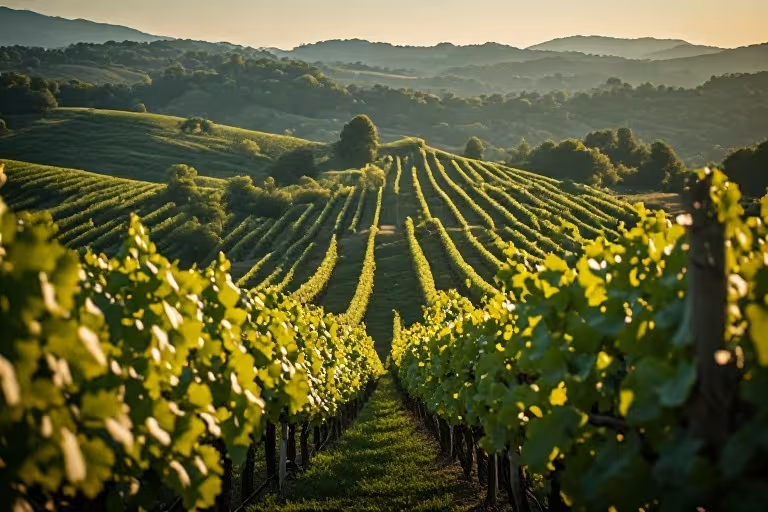
European wine grapes must be understood as a structured system rather than a simple catalogue of varieties. Over time, a clear hierarchy has emerged, shaped by the interaction between geography, climate, history and trade. This hierarchy helps explain why certain grapes became global icons while others remain strictly local.
International European Grapes
At the top of this hierarchy are what are commonly referred to as international grape varieties. These grapes originated in Europe but have since spread across virtually every wine-producing country in the world. Their success is not accidental: they combine adaptability, stable production, and a relatively predictable winemaking profile, which makes them suitable for a wide range of climates and viticultural approaches.
Cabernet Sauvignon is perhaps the most emblematic example. Originating from the Bordeaux region as a natural crossing between Cabernet Franc and Sauvignon Blanc, it has become the global benchmark for structured, age-worthy red wines. Its ability to produce consistent results in climates as diverse as California, Chile, Australia and South Africa explains its dominance.
Chardonnay occupies a similar position among white grapes. Unlike highly aromatic varieties, Chardonnay acts as a “transparent” grape, meaning its expression is heavily influenced by terroir and winemaking choices. This adaptability has allowed it to dominate regions ranging from Burgundy to Champagne and from northern Italy to southern England.
Other key international varieties include Merlot, Sauvignon Blanc, Pinot Noir and Syrah. Each of these grapes has achieved global recognition while maintaining a strong identity rooted in European viticultural history. Together, they form the backbone of modern international wine commerce.
National and Cross-Regional Grapes
Below the international level, Europe is structured around a group of grapes that are not necessarily global in scale but are essential at national and cross-regional levels. These varieties define entire wine cultures and are often deeply embedded in legal, historical and stylistic frameworks.
Tempranillo is a perfect example. In Spain, it is not just a grape variety but the structural foundation of Rioja and Ribera del Duero. Its ability to produce wines capable of long aging, especially when combined with oak maturation, has made it central to Spanish wine identity.
In Italy, Sangiovese plays a similar role. From Chianti Classico to Brunello di Montalcino, this variety defines Tuscan wine style through its high acidity, firm tannic structure and strong expression of place. Nebbiolo, although more geographically restricted, holds comparable importance in Piedmont, where it produces some of Europe’s most structured and age-worthy wines.
Riesling represents the Central European counterpart to these Mediterranean and Western European grapes. In Germany and Alsace, it defines a wide spectrum of styles ranging from bone-dry wines to some of the world’s most refined sweet wines, all while maintaining extraordinary acidity and aging potential.
These grapes are not global in the same sense as Cabernet Sauvignon or Chardonnay, but within Europe they are indispensable structural pillars of wine identity.
Regional Indigenous Grapes
One of the most distinctive characteristics of European viticulture is the presence of deeply localized indigenous grape varieties. These grapes are often confined to specific regions, appellations or even individual valleys, yet they play a crucial role in defining local wine identity.
Nebbiolo in Piedmont is one of the clearest examples. It is a grape that is notoriously difficult to cultivate outside its native environment, yet within Barolo and Barbaresco it produces wines of exceptional complexity, structure and longevity. Its strong connection to foggy autumn conditions and specific hillside exposures illustrates the importance of microclimate.
In Greece, Assyrtiko from Santorini represents another extreme expression of regional adaptation. Grown in volcanic soils and exposed to strong maritime winds, it retains high acidity even in hot conditions, producing wines with a distinctive saline and mineral character.
In Portugal, Touriga Nacional serves as a key component of both Port wine and high-quality dry reds from the Douro Valley. Despite relatively low yields, it contributes intensity, structure and aromatic depth that are essential to the region’s style.
These examples illustrate a broader pattern: indigenous grapes are not simply agricultural products, but cultural markers deeply embedded in specific landscapes.
Heritage and Rare Grapes
Beyond the well-known international and regional varieties lies another important layer of European viticulture: heritage and rare grape varieties. These cultivars often survived in marginal areas or were nearly abandoned during periods of agricultural modernization, but many are now being rediscovered.
Savagnin in the Jura region of France is a good example. It is closely associated with oxidative winemaking traditions such as Vin Jaune, and remains one of the most distinctive white grapes in Europe. Similarly, Baga in Portugal and Trousseau in eastern France have long been considered difficult to work with, yet they are now appreciated for their complexity and aging potential.
Mencía in northwestern Spain illustrates another interesting case. Once considered a minor variety, it has experienced a significant revival due to modern viticulture and renewed interest in Atlantic-influenced red wines.
The renewed attention given to these varieties reflects a broader trend in European wine: a shift toward biodiversity, authenticity and the rediscovery of forgotten genetic heritage.
Europe as the World’s Greatest Grape Diversity Zone
Europe’s extraordinary grape diversity is the result of a combination of historical, geographical and cultural factors that have interacted over thousands of years.
The long history of viticulture is perhaps the most important factor. Wine has been produced in Europe for more than two millennia, allowing continuous cycles of selection, mutation and adaptation. Unlike newer wine regions, Europe has had far more time for grape differentiation to occur naturally and through human intervention.
Geography has also played a decisive role. The continent’s fragmented landscape—characterized by mountain ranges, river valleys, islands and peninsulas—created natural barriers that limited the spread of grape varieties. As a result, isolated populations of vines evolved independently, leading to the development of highly localized cultivars.
Political fragmentation further reinforced this diversity. For centuries, Europe was divided into numerous small political entities, each with its own agricultural traditions, wine regulations and preferences. This encouraged the preservation of local varieties rather than large-scale homogenization.
Finally, monastic and rural agricultural systems played a crucial role in maintaining viticultural continuity. Monasteries in particular acted as repositories of agricultural knowledge and were instrumental in preserving many grape varieties through centuries of social and political change.
Together, these factors explain why Europe remains the richest reservoir of Vitis vinifera diversity in the world.
The Main White Grapes of Europe
White grape varieties occupy a central position in European wine production, particularly in cooler climates and coastal regions. While some are globally recognized, many remain strongly tied to specific environmental conditions.
International varieties such as Chardonnay, Sauvignon Blanc, Riesling, Pinot Gris and Chenin Blanc form the foundation of global white wine production. Their success lies in their adaptability and their ability to express a wide range of styles depending on climate and winemaking choices.
In Central and Northern Europe, varieties such as Grüner Veltliner, Furmint, Godello and Silvaner dominate. These grapes are typically characterized by high acidity, strong food-pairing ability and a clear expression of cool-climate conditions.
In Mediterranean regions, grapes such as Assyrtiko, Vermentino, Garganega, Verdejo and Trebbiano are better adapted to heat and drought conditions. They often combine freshness with herbal, citrus or saline profiles that reflect coastal or volcanic terroirs.
The Main Red Grapes of Europe
Red grape varieties dominate Europe’s most prestigious wine regions and define many of its most iconic wines.
International varieties such as Cabernet Sauvignon, Merlot, Pinot Noir and Syrah form the global foundation of red wine production.
At national level, grapes such as Tempranillo in Spain, Sangiovese and Nebbiolo in Italy, and Grenache across Southern Europe define entire wine cultures and classification systems.
Finally, regional indigenous grapes such as Xinomavro, Aglianico, Touriga Nacional, Mencía, Blaufränkisch and Baga illustrate the depth of Europe’s local diversity and its continuing importance in modern winemaking.
How European Countries Shape Grape Identity Europe Is Not One Wine System, but Many National Wine Worlds
Although European wine grapes are often discussed as a unified system, the reality on the ground is profoundly fragmented. Europe is not a single viticultural entity but a collection of deeply rooted national wine cultures, each of which has shaped the evolution, survival, and dominance of specific grape varieties.
This national dimension is essential to understanding why certain grapes became globally famous while others remained strictly local. In Europe, grape varieties are not simply agricultural choices; they are embedded in legal frameworks, historical traditions, and cultural identities that vary dramatically from one country to another.
France, Italy, Spain, Portugal, and Germany alone account for a large share of the world’s most important wine grapes, yet each of these countries organizes its vineyard landscape in a fundamentally different way. Some rely on a small number of dominant international varieties, while others preserve an extraordinary diversity of indigenous grapes that rarely cross national borders.
To understand European wine grapes properly, one must therefore move from a varietal perspective to a national perspective, where each country acts as a distinct viticultural ecosystem.
France: The Reference Model of International Wine Grapes
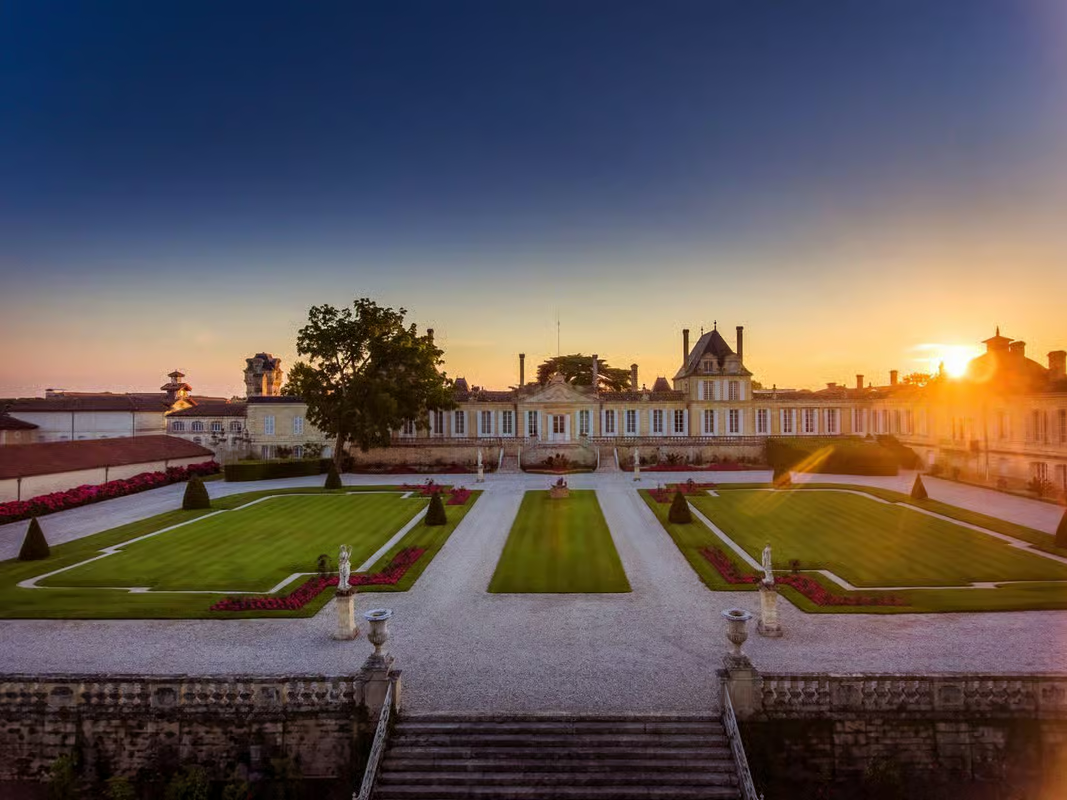
France occupies a central position in the global perception of wine grapes because it has historically functioned as a reference system for both classification and quality standards. Many of the world’s most widely planted grape varieties either originate in France or were defined through French viticultural tradition.
French wine culture is structured around a strong regional logic, where grape varieties are closely linked to specific appellations. This has created a system in which terroir expression is often prioritized over varietal abundance, resulting in a relatively controlled but highly influential set of dominant grapes.
In white wine production, Chardonnay stands as the most emblematic grape, particularly in Burgundy and Champagne, where it demonstrates its full range from still structured wines to world-class sparkling expressions. Sauvignon Blanc plays an equally important role in regions such as the Loire Valley and Bordeaux, where it contributes freshness, aromatic precision, and a strong acidic backbone. Chenin Blanc, although less globally recognized, remains one of France’s most versatile white grapes, capable of producing dry, sweet, and sparkling wines of remarkable complexity.
Red wine production in France is defined by a dual structure. On one side, Bordeaux relies heavily on Cabernet Sauvignon and Merlot, forming the architectural foundation of some of the world’s most structured and age-worthy blends. On the other side, Burgundy elevates Pinot Noir to its highest expression, focusing on finesse, transparency, and terroir sensitivity. In the Rhône Valley, Syrah dominates the north with powerful and structured wines, while Grenache-based blends shape the warmer southern regions.
France’s influence is therefore not limited to its grape varieties, but extends to the entire conceptual framework of modern wine classification.
Italy: A Fragmented Mosaic of Indigenous Grape Identity
Italy represents one of the most complex and diverse viticultural landscapes in the world. Unlike France, which tends to concentrate quality production around a relatively limited number of key varieties, Italy is defined by fragmentation and regional autonomy. Historically divided into numerous city-states and cultural zones, Italy preserved a vast number of indigenous grape varieties that evolved independently across its territory.
This structural fragmentation explains why Italy possesses one of the highest levels of grape diversity in Europe. Rather than being dominated by a single national grape system, Italian wine is built on regional identities that often function almost as independent wine worlds.
In white wine production, Pinot Grigio has achieved significant international recognition, particularly in the northeastern regions. However, Italy’s true identity lies in its indigenous white grapes, which vary dramatically from north to south. Garganega in Veneto, Verdicchio in the Marche, and Carricante in Sicily illustrate how climate and geography shape entirely different expressions of white wine across the peninsula.
Red wine production is equally diverse. Sangiovese serves as the backbone of central Italy, particularly in Tuscany, where it defines both everyday wines and some of the country’s most prestigious appellations. In the northwest, Nebbiolo occupies a highly specific and prestigious role in Piedmont, producing wines of great structure and aging potential. Further south, Aglianico becomes dominant in regions such as Campania and Basilicata, where it produces powerful, tannic wines adapted to warmer climates. Sicily adds another layer of diversity with Nero d’Avola, a grape that has become synonymous with modern Sicilian red wine identity.
Italy’s grape system is therefore less centralized than France’s, but significantly richer in indigenous expression, making it one of the most genetically diverse viticultural territories in the world.
Spain: Scale, Diversity, and Strong Regional Identity
Spain combines one of the largest vineyard areas in Europe with a strong reliance on native grape varieties. Its wine identity is shaped by dramatic climatic contrasts, ranging from Atlantic-influenced coastal regions in the northwest to extremely dry continental zones in the interior and Mediterranean climates in the east and south.
This diversity creates a complex grape landscape where both large-scale production and highly specialized regional wines coexist.
In white wine production, Albariño defines the Atlantic-influenced region of Galicia, producing aromatic wines with high acidity and a saline character. Verdejo plays a central role in the Rueda region, offering a combination of freshness and herbal complexity. At the more industrial level, Airén remains one of the most widely planted white grapes in Spain, historically used for bulk wine and distillation, although its importance in quality wine production is limited.
Red wine production is dominated by Tempranillo, the structural backbone of Spain’s most famous wine regions, including Rioja and Ribera del Duero. This grape adapts well to different aging regimes and styles, from youthful fruit-driven wines to long-aged oak expressions. Garnacha also plays a key role, particularly in warmer regions where it thrives under heat stress conditions. In the Mediterranean southeast, Monastrell becomes dominant, producing dense, structured wines adapted to arid climates.
Spain’s grape identity is therefore defined by a balance between large-scale viticulture and strong regional specialization.
Portugal: A Deeply Indigenous and Blend-Oriented System
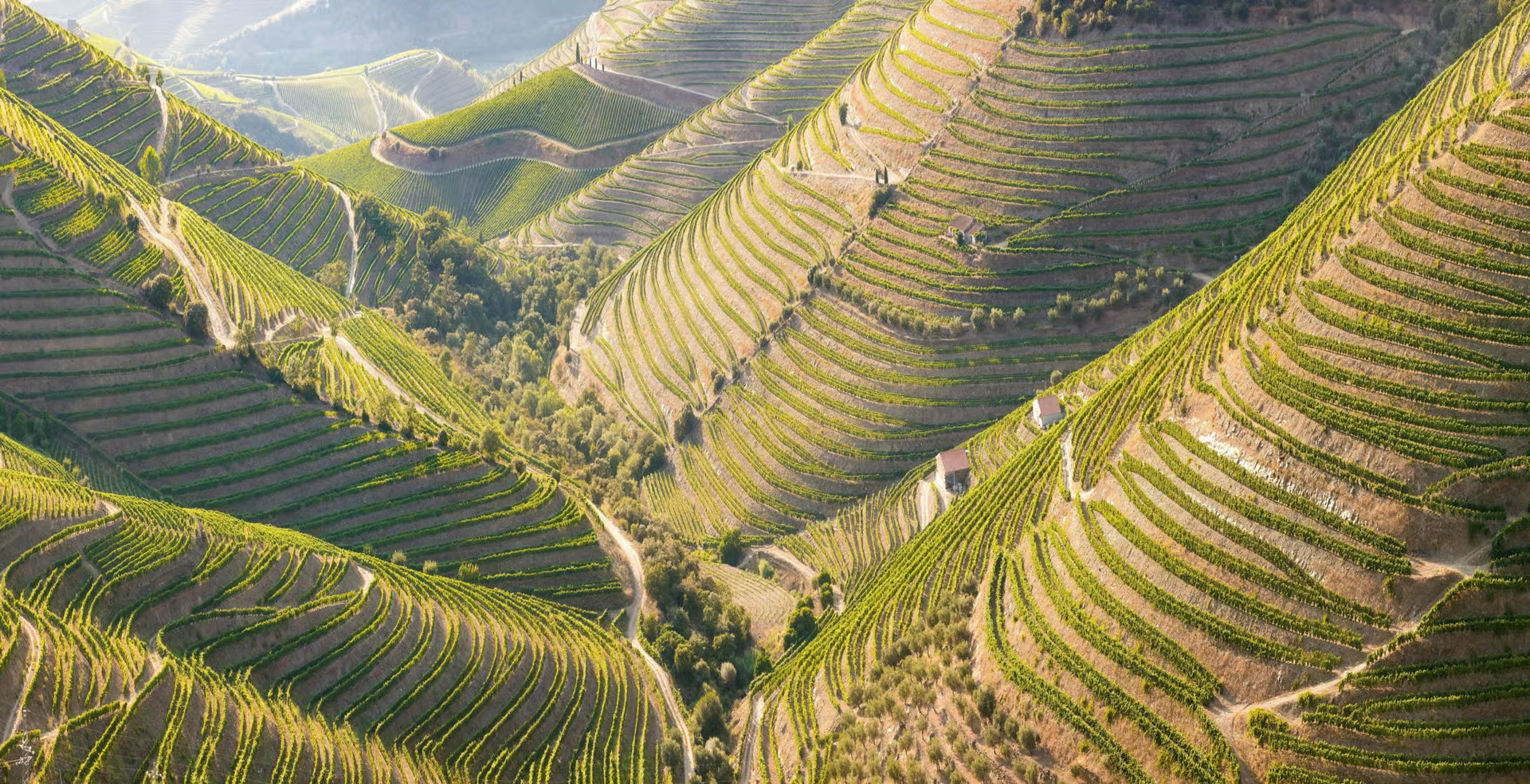
Portugal stands out in Europe for its strong reliance on indigenous grape varieties and traditional blending practices. Unlike many other European countries that have increasingly moved toward international varieties or single-grape wines, Portugal has maintained a highly localized and genetically distinct viticultural heritage.
White wine production is led by varieties such as Alvarinho in the Vinho Verde region, where it produces fresh and aromatic wines influenced by Atlantic conditions. Arinto is another key variety, valued for its high acidity and structural backbone across multiple regions. In Dão, Encruzado has gained recognition for producing some of the country’s most refined white wines.
Red wine production is strongly associated with the Douro Valley, where Touriga Nacional is considered the flagship variety. It is often blended with Touriga Franca, Tinta Roriz, and other indigenous grapes to produce both Port wine and high-quality dry reds. In Bairrada, Baga remains a defining grape, known for its high acidity and strong aging potential.
Portugal’s system is therefore fundamentally blend-oriented, with grape identity expressed through combinations rather than single-variety dominance.
Greece: One of Europe’s Oldest and Most Distinct Indigenous Grape Systems
Greece occupies a unique position within the European wine landscape, both historically and genetically. It is one of the oldest continuous wine-producing regions in the world and one of the richest in indigenous Vitis vinifera varieties. Unlike many Western European countries where international grapes have gained significant ground, Greece has preserved a strongly native grape identity, with most of its important varieties existing almost exclusively within national borders.
Greek viticulture is shaped by extreme geographical diversity. The country combines mountainous mainland regions, thousands of islands, volcanic soils, and strong maritime influences. This complexity has allowed a wide range of grape varieties to evolve independently, often adapted to highly specific microclimates.
In white wine production, Assyrtiko is the most emblematic Greek grape. Originating from the volcanic island of Santorini, it is particularly remarkable for its ability to maintain high acidity even in extremely hot and dry conditions. This structural resilience has made it one of the most distinctive white grape varieties in Europe. Alongside Assyrtiko, grapes such as Moschofilero and Roditis contribute to a broader spectrum of aromatic and fresh white wine styles, particularly in cooler or higher-altitude regions.
Red wine production is equally distinctive and deeply rooted in indigenous varieties. Xinomavro, primarily grown in northern Greece, is one of Europe’s most complex and structured native red grapes. It is often compared to Nebbiolo due to its high acidity, firm tannic structure, and strong aging potential, although its aromatic profile is entirely unique. In southern regions, Agiorgitiko plays a central role, particularly in Nemea, where it produces more approachable yet still structured red wines with ripe fruit characteristics.
What makes Greece especially important in the context of European grape diversity is not only the number of indigenous varieties, but their strong genetic isolation and regional specificity. Many Greek grapes have limited or no presence outside their native regions, making them critical to the preservation of Europe’s overall viticultural biodiversity.
In the broader European context, Greece therefore represents a living archive of ancient grape genetics, offering insight into pre-modern viticulture and reinforcing Europe’s role as the world’s most diverse grape-growing continent.
Germany: Riesling as a Defining Structural Identity
Germany presents one of the most focused grape systems in Europe, strongly shaped by its cool continental climate and river-based vineyard geography. Unlike more diverse countries such as Italy or France, Germany’s viticultural identity is concentrated around a small number of key varieties.
Riesling is the undisputed cornerstone of German wine production. It dominates major regions such as Mosel, Rheingau, Nahe, and Pfalz, producing wines that range from bone-dry styles to some of the world’s most refined sweet wines. Its defining characteristics—high acidity, aromatic precision, and exceptional aging potential—make it one of the most important white grape varieties globally.
Other white grapes such as Müller-Thurgau and Silvaner play secondary roles, often associated with specific regional or historical contexts.
In red wine production, Spätburgunder (Pinot Noir) has gained increasing importance, particularly in warmer southern regions. While still secondary to Riesling in overall significance, it represents Germany’s most successful red grape.
Germany therefore illustrates a highly specialized grape system where one variety dominates national identity.
Central, Eastern and Alpine Europe: The Less Visible but Highly Influential Grape Regions
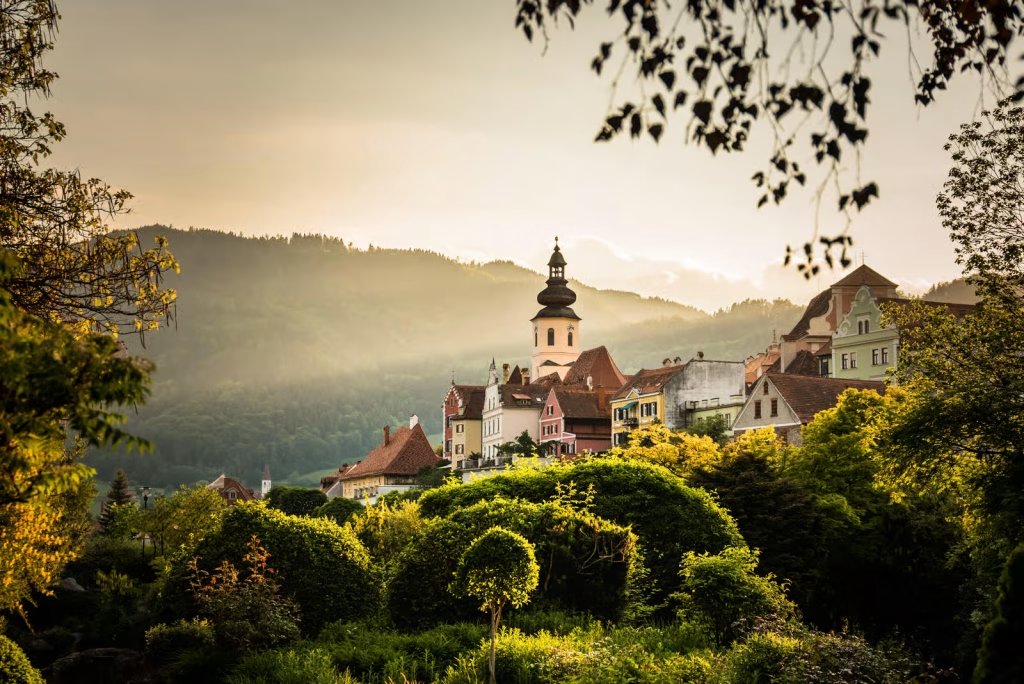
Beyond the major wine-producing countries such as France, Italy, Spain, Portugal, and Germany, a significant part of Europe’s grape diversity is concentrated in Central, Eastern, and Alpine regions. Although these countries often receive less international attention, they play a crucial role in preserving some of the continent’s oldest and most genetically distinct grape varieties.
In Austria, the wine landscape is strongly defined by cool-climate conditions and a focus on precision-driven white wines. Grüner Veltliner is the country’s flagship grape, producing styles that range from fresh and peppery everyday wines to more structured, age-worthy expressions. Alongside it, varieties such as Riesling and Zweigelt contribute to a balanced but highly distinctive national identity.
Hungary holds a particularly important place in European wine history due to the globally recognized Tokaj region. Here, Furmint dominates, producing wines with exceptional acidity and aging potential, especially in the production of Tokaji Aszú. This combination of botrytized sweetness and structural tension makes Hungary one of the most historically significant sweet wine regions in the world.
Further south and east, Slovenia and Croatia preserve a rich collection of indigenous varieties that reflect both Mediterranean and Central European influences. Grapes such as Rebula (Ribolla Gialla) and Malvazija illustrate the diversity of coastal and karst terroirs, while inland regions maintain more structured red and white varieties shaped by continental conditions.
In the Alpine zones and bordering regions, countries such as Switzerland maintain highly localized grape systems, often centered around small-scale production and rare indigenous varieties. Although production volumes are limited, the genetic and cultural value of these vineyards is significant, particularly for heritage varieties that have survived in isolated valleys.
Georgia, often considered the cradle of wine culture, extends Europe’s grape narrative into its deepest historical roots. Indigenous varieties such as Saperavi and Rkatsiteli represent some of the oldest continuously cultivated grape genetics in the world. The traditional use of qvevri fermentation further highlights the historical continuity of Georgian viticulture, which predates many Western European wine traditions.
Together, these regions form a less visible but essential layer of European viticulture. They act as reservoirs of genetic diversity and historical continuity, reinforcing Europe’s position as the most complex and historically layered wine grape system in the world
The Most Important Grapes in Europe by Influence, Vineyard Surface and Global Impact
When analyzing the most important wine grapes in Europe, it is essential to move beyond simple popularity or prestige. Importance in a European context is defined by a combination of three key factors: vineyard surface, historical influence, and global diffusion.
Some grape varieties dominate Europe in terms of sheer planted area, while others exert disproportionate influence through their role in international wine styles. A third group may have limited surface area but exceptional cultural or qualitative importance, shaping entire appellations or wine classifications.
Europe’s viticultural landscape is therefore not hierarchical in a linear way. Instead, it is a layered system where scale, tradition, and global recognition intersect.
The Global Structural Grapes: Europe’s Most Influential Varieties
A small group of European grape varieties has achieved global dominance. These grapes are not only widely planted across Europe but also form the backbone of international wine production worldwide. Their importance lies less in regional specificity and more in their ability to define universal wine styles.
Cabernet Sauvignon is arguably the most influential red grape in the world. Originating from the Bordeaux region, it has become the reference point for structured, age-worthy red wines across nearly every wine-producing country. Its ability to express both terroir and winemaking style has made it the most widely recognized red grape in global fine wine markets.
Chardonnay holds a similar position among white grapes. Its adaptability is exceptional, allowing it to produce radically different expressions depending on climate and winemaking choices. From the mineral-driven wines of Chablis to the rich, oak-influenced styles of Burgundy and beyond, Chardonnay has become a global standard for premium white wine production.
Merlot also plays a major role in global plantings, particularly due to its approachability and soft tannic structure. It is widely used both as a single varietal wine and as a blending component, especially in Bordeaux-style blends.
Sauvignon Blanc, Pinot Noir, and Syrah complete this group of globally influential European grapes. Each of them has achieved international recognition while maintaining strong roots in their original European regions.
Together, these varieties form what can be described as the structural backbone of modern global wine culture.
The High-Surface European Staples: Widely Planted but Regionally Anchored Grapes
Beyond the globally dominant varieties, Europe is also home to a group of grapes that occupy significant vineyard surface areas but remain more regionally anchored in terms of identity.
Tempranillo is one of the most widely planted red grapes in Europe, particularly in Spain. Its importance lies not only in its surface area but also in its central role in defining Spanish wine structure. In regions such as Rioja and Ribera del Duero, Tempranillo forms the backbone of both traditional and modern wine styles, capable of expressing everything from youthful fruit-driven profiles to long-aged, complex wines.
Grenache is another major European variety with extensive plantings, particularly across Spain, southern France, and parts of Italy. Its adaptability to warm, dry climates has made it a cornerstone of Mediterranean viticulture. It is often used in blends, contributing alcohol, fruit richness, and warmth, although it can also produce structured single-varietal wines in specific regions.
Airén, although less visible in the premium wine market, remains one of the most widely planted grape varieties in the world by surface area, primarily in central Spain. Historically used for bulk wine and distillation, it represents an important part of Europe’s agricultural viticultural reality, even if it is less prominent in quality-driven discussions.
These varieties demonstrate that vineyard surface does not always correlate directly with international prestige, but it remains a crucial factor in understanding Europe’s agricultural wine economy.
The Identity Grapes: Europe’s Regional Pillars of Wine Culture
A second category of importance in Europe is defined not by global spread or vineyard surface, but by cultural and stylistic dominance within specific regions. These grapes may not be widely planted across multiple countries, but they are essential to the identity of entire wine regions.
Sangiovese is the most important example in Italy. It defines the core of Tuscan wine production and forms the basis of iconic appellations such as Chianti Classico and Brunello di Montalcino. Its high acidity, firm tannic structure, and ability to reflect terroir make it one of Europe’s most structurally significant red grapes.
Nebbiolo, although geographically restricted to Piedmont, holds exceptional importance due to its role in producing Barolo and Barbaresco. It is a grape of precision and tension, deeply influenced by microclimate and vineyard exposure, and widely regarded as one of the most complex red grape varieties in Europe.
In Germany, Riesling plays a comparable role. It is not the most widely planted grape in Europe, but its influence is immense. It defines entire wine regions and sets global benchmarks for aromatic white wine quality. Its ability to produce wines ranging from bone-dry to intensely sweet, while maintaining high acidity and aging potential, makes it structurally unique.
These identity grapes illustrate that influence in Europe is not only measured in hectares, but also in cultural and qualitative weight.
Indigenous and Heritage Grapes: Europe’s Genetic Depth Layer
A further dimension of importance lies in Europe’s indigenous and heritage grape varieties. These grapes often have limited vineyard surface but represent an irreplaceable part of the continent’s genetic and cultural heritage.
Assyrtiko from Greece is a key example, combining volcanic terroir expression with extraordinary acidity retention in hot climates. Xinomavro, also from Greece, offers one of the most structured and age-worthy indigenous red profiles in Europe.
In Portugal, Touriga Nacional stands as a flagship variety, essential both in Port production and in modern dry red wines. In Austria and Central Europe, Grüner Veltliner and Blaufränkisch represent important expressions of cool-climate adaptation and stylistic diversity.
These grapes may not dominate global markets, but they are increasingly important in defining Europe’s response to climate change, biodiversity preservation, and the rediscovery of forgotten viticultural heritage.
A Multi-Layered Hierarchy of Importance
The most important grapes in Europe cannot be understood through a single metric. Instead, importance emerges from the interaction of three layers: global structural influence, vineyard surface scale, and regional cultural identity.
International varieties such as Cabernet Sauvignon and Chardonnay dominate global wine discourse. High-surface grapes such as Tempranillo and Grenache shape the agricultural reality of European viticulture. Identity grapes like Sangiovese, Nebbiolo, and Riesling define entire wine cultures at national or regional level.
Together, these layers form a complex hierarchy that reflects the true nature of European wine: diverse, historically rooted, and structurally interconnected across centuries of viticultural evolution.
White and Red Main grapes of Europe
30 Main White Grape Varieties of Europe
1. Chardonnay
Originally from Burgundy, France, Chardonnay is one of the world’s most versatile grapes. It produces wines ranging from crisp and mineral to rich and creamy, depending on climate and winemaking style. Common aromas include apple, citrus, peach, butter, and vanilla.
2. Sauvignon Blanc
Native to France’s Loire Valley and Bordeaux, Sauvignon Blanc is known for vibrant acidity and fresh aromas of citrus, gooseberry, herbs, and tropical fruits. It excels in cool-climate vineyards.
3. Riesling
Germany’s flagship white grape, Riesling is celebrated for its aromatic complexity, lively acidity, and remarkable aging potential. Styles range from bone dry to lusciously sweet.
4. Pinot Grigio
Known as Pinot Gris in France, this grape produces fresh, elegant wines with notes of pear, apple, citrus, and flowers. Italy has made Pinot Grigio famous for its light, refreshing style.
5. Albariño
A signature grape of northwestern Spain and Portugal, Albariño produces aromatic wines with citrus, peach, apricot, and saline mineral characteristics, making it ideal with seafood.
6. Vermentino
Widely grown in Italy, Corsica, and Sardinia, Vermentino offers lively acidity with aromas of citrus, herbs, white flowers, and Mediterranean spices.
7. Grüner Veltliner
Austria’s most important white grape produces fresh wines with green apple, citrus, white pepper, and herbal notes, often accompanied by a distinctive mineral finish.
8. Assyrtiko
Originating on the Greek island of Santorini, Assyrtiko is renowned for its crisp acidity, mineral character, and flavors of lemon, stone fruit, and sea breeze.
9. Moschofilero
An aromatic Greek variety producing elegant wines with floral aromas, citrus, rose petals, and refreshing acidity.
10. Malvasia
A family of ancient Mediterranean grape varieties producing aromatic wines ranging from dry to sweet, featuring floral, peach, apricot, and honey notes.
11. Furmint
Hungary’s flagship white grape, famous for the sweet wines of Tokaj but equally capable of producing complex, dry wines with citrus and mineral character.
12. Viognier
Originating in France’s Rhône Valley, Viognier is highly aromatic with notes of apricot, peach, orange blossom, and honeysuckle.
13. Gewürztraminer
Known for its intense aromas of lychee, rose petals, spices, and tropical fruit, Gewürztraminer creates full-bodied, expressive wines.
14. Chenin Blanc
Native to France’s Loire Valley, Chenin Blanc is exceptionally versatile, producing sparkling, dry, sweet, and dessert wines with excellent aging potential.
15. Trebbiano
One of Italy’s most widely planted white grapes, Trebbiano typically produces fresh, light-bodied wines with citrus and green apple flavors.
16. Verdicchio
An important Italian variety known for fresh acidity, citrus flavors, almond notes, and impressive longevity.
17. Arinto
Portugal’s Arinto is prized for vibrant acidity, citrus aromas, and remarkable freshness, even in warm climates.
18. Godello
A premium Spanish grape producing elegant wines with pear, citrus, minerality, and a rich texture.
19. Garganega
Best known as the principal grape of Soave, Garganega offers delicate aromas of white flowers, almonds, citrus, and peach.
20. Silvaner
Popular in Germany and Central Europe, Silvaner produces subtle, mineral-driven wines with herbal and orchard fruit characteristics.
21. Muscadet
Produced from the Melon de Bourgogne grape in western France, Muscadet is renowned for crisp acidity and distinctive mineral freshness.
22. Semillon
Originally from Bordeaux, Semillon contributes body, texture, and honeyed richness to both dry and sweet wines.
23. Picpoul
A southern French grape producing vibrant wines with lemon, green apple, and saline minerality.
24. Xinomavro Blanc
A rare white mutation of Greece’s famous Xinomavro, producing fresh wines with citrus and floral aromas.
25. Roditis
One of Greece’s most widely cultivated white grapes, Roditis offers refreshing acidity with citrus and orchard fruit flavors.
26. Debina
A traditional Greek variety from Epirus, known for crisp acidity and its use in both still and sparkling wines.
27. Cortese
The grape behind Gavi wines, Cortese produces elegant wines with citrus, almond, and floral notes.
28. Rkatsiteli
One of Europe’s oldest grape varieties, originating in Georgia, producing fresh wines with apple, quince, herbs, and excellent acidity.
29. Vidal Blanc
Although more widely associated with North America today, Vidal Blanc originated in France and is valued for aromatic, fresh wines.
30. Carricante
An indigenous Sicilian grape grown on Mount Etna, producing mineral-driven wines with citrus, herbs, and remarkable elegance.
30 Main Red Grape Varieties of Europe
1. Cabernet Sauvignon
Originating in Bordeaux, Cabernet Sauvignon produces structured wines with blackcurrant, cedar, tobacco, and excellent aging potential.
2. Merlot
One of the world’s most popular grapes, Merlot offers soft tannins and flavors of plum, cherry, chocolate, and herbs.
3. Pinot Noir
Native to Burgundy, Pinot Noir creates elegant wines with red cherry, raspberry, violet, and earthy complexity.
4. Syrah
Originating in France’s Rhône Valley, Syrah delivers dark fruit, black pepper, spices, and smoky notes.
5. Grenache
Known as Garnacha in Spain, this Mediterranean grape produces generous wines with strawberry, raspberry, herbs, and spice.
6. Tempranillo
Spain’s flagship red grape offers flavors of cherry, plum, tobacco, leather, and vanilla when oak-aged.
7. Sangiovese
Italy’s iconic grape forms the backbone of Chianti and Brunello wines, featuring sour cherry, herbs, and earthy elegance.
8. Nebbiolo
Responsible for Barolo and Barbaresco, Nebbiolo produces powerful wines with roses, tar, cherries, and exceptional longevity.
9. Barbera
A popular northern Italian grape producing vibrant wines with cherry, blackberry, and naturally high acidity.
10. Montepulciano
Widely grown in central Italy, Montepulciano produces rich wines with dark berries, plum, and soft tannins.
11. Aglianico
One of southern Italy’s finest grapes, known for structured wines with black fruit, spice, and remarkable aging ability.
12. Corvina
The principal grape of Valpolicella and Amarone, Corvina offers cherry, herbs, and dried fruit flavors.
13. Primitivo
An ancient Croatian-origin grape thriving in southern Italy, producing rich wines with blackberry, plum, and spice.
14. Carmenère
Originally from Bordeaux, Carmenère offers dark fruit, herbs, pepper, and chocolate notes.
15. Malbec
A traditional Bordeaux grape still cultivated in France, producing full-bodied wines with blackberry and violet aromas.
16. Touriga Nacional
Portugal’s premier red grape creates intensely aromatic wines with dark berries, flowers, and powerful structure.
17. Baga
A Portuguese variety known for deeply colored, tannic wines capable of long aging.
18. Xinomavro
Greece’s noble red grape combines tomato leaf, cherry, olive, and firm tannins with outstanding aging potential.
19. Agiorgitiko
One of Greece’s finest red grapes, producing velvety wines with red berries, plum, spice, and soft tannins.
20. Limnio
Among Europe’s oldest recorded grape varieties, Limnio produces medium-bodied wines with herbs, berries, and spice.
21. Mavrodaphne
A Greek variety best known for fortified sweet wines with dried fruit, cocoa, and spice.
22. Blaufränkisch
Popular in Austria and Central Europe, Blaufränkisch offers black cherry, pepper, herbs, and lively acidity.
23. Zweigelt
Austria’s most planted red grape produces fruit-forward wines with cherry, blackberry, and soft spice.
24. Kadarka
An important Hungarian and Balkan grape producing elegant, spicy wines with bright red fruit.
25. Saperavi
Georgia’s celebrated teinturier grape produces deeply colored wines rich in blackberry, plum, and spice.
26. Mencía
A leading Spanish variety producing fresh, floral wines with raspberry, violet, and mineral notes.
27. Carignan
A traditional Mediterranean grape producing concentrated wines with black fruit, herbs, and savory spice.
28. Cinsault
Common in southern France, Cinsault produces light, aromatic wines with strawberry, floral, and spice characteristics.
29. Dolcetto
A Piedmont classic known for approachable wines featuring blackberry, plum, almonds, and gentle tannins.
30. Tannat
Originally from southwest France, Tannat is famous for deeply colored, tannic wines with black fruit and exceptional aging potential.
The Historical Evolution of European Grape Distribution
Europe’s Grape Map Has Never Been Static
The distribution of wine grapes in Europe is the result of thousands of years of continuous transformation rather than a fixed historical map. Unlike regions where viticulture developed more recently, Europe has experienced multiple waves of expansion, collapse, reorganization, and revival that have constantly reshaped which grape varieties dominate which regions.
From Roman expansion to medieval monastic viticulture, from the devastation of phylloxera to modern globalization of wine styles, European grape distribution has been in constant evolution. Understanding this historical movement is essential to understanding why today’s European wine landscape is both highly structured and extraordinarily diverse.
Roman Expansion: The First Continental Spread of Grapes
The first major phase in the continental distribution of European grape varieties dates back to the Roman Empire. As Roman influence expanded across Europe, viticulture followed military roads, trade routes, and newly established settlements.
The Romans played a crucial role in spreading vine cultivation from the Mediterranean basin into regions such as Gaul, the Rhine Valley, and the Iberian Peninsula. While local wild vines existed in many areas, Roman agriculture introduced more systematic viticultural practices, including vineyard structuring, pruning techniques, and early varietal selection.
This period laid the foundation for many of Europe’s future wine regions. Although modern grape varieties did not yet exist in their current form, the ecological and agricultural framework for European viticulture was established during this era.
Medieval Period: Monasteries and the Structuring of Grape Identity
Following the collapse of the Roman Empire, viticulture in Europe became increasingly localized. The medieval period marked a decisive transformation in grape distribution, driven largely by monastic orders.
Monasteries played a central role in preserving viticultural knowledge and maintaining vineyard continuity. Benedictine and Cistercian monks in particular contributed to the systematic cultivation of vineyards across Burgundy, the Rhine Valley, and other key regions.
During this period, grape varieties began to diverge more significantly due to geographical isolation. Without centralized agricultural control, local selections became more dominant, and early forms of today’s indigenous varieties began to emerge.
Wine was no longer a unified imperial product but a regional expression of local conditions, labor, and tradition.
The Early Modern Period: Trade, Classification, and Regional Specialization
Between the 15th and 18th centuries, European wine production became increasingly influenced by trade networks and the rise of commercial viticulture. Cities such as Bordeaux, Porto, Venice, and Hamburg became important hubs for wine distribution.
This period saw the gradual emergence of recognizable regional identities tied to specific grape varieties. While still far from modern appellation systems, certain grapes began to stabilize in specific regions due to economic demand and local adaptation.
The development of maritime trade also allowed certain grape varieties to gain broader recognition beyond their original regions, although transportation limitations still constrained large-scale homogenization.
The Phylloxera Crisis: The Most Disruptive Event in European Viticulture
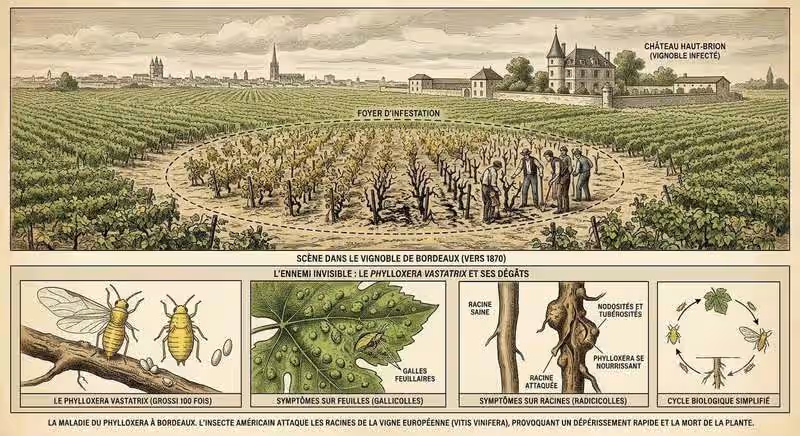
The most dramatic transformation in European grape distribution occurred in the late 19th century with the arrival of phylloxera, a root-feeding insect that devastated vineyards across the continent.
Within a few decades, vast areas of European vineyards were destroyed. France, Italy, Spain, and other major wine-producing countries experienced catastrophic losses, forcing a complete restructuring of viticulture.
The response to phylloxera fundamentally changed European grape distribution. The introduction of American rootstocks allowed European grape varieties to be grafted and replanted, but this process was not neutral. Many local varieties disappeared during replanting, while others were favored due to productivity, disease resistance, or commercial value.
As a result, the post-phylloxera period marked a significant reduction in grape diversity in many regions, alongside a consolidation of what would later become the dominant international varieties.
20th Century Modernization: Standardization and Global Varietal Expansion
The 20th century brought a new phase of transformation characterized by modernization, industrialization, and increasing global wine trade. During this period, a small group of grape varieties began to dominate international wine production.
Cabernet Sauvignon, Merlot, Chardonnay, Sauvignon Blanc, and other French-origin varieties spread rapidly across Europe and the world. Their success was driven by several factors, including adaptability, predictable vinification, and strong consumer recognition.
At the same time, many traditional and regional grape varieties declined in importance. In some cases, they were replaced by higher-yielding or more commercially viable grapes. This period contributed significantly to the homogenization of certain parts of the European wine landscape.
However, appellation systems such as France’s AOC structure and Italy’s DOC/DOCG system also helped preserve many traditional varieties by legally protecting their use in specific regions.
Late 20th Century Revival: Rediscovery of Indigenous Grapes
From the late 20th century onward, a significant counter-movement emerged across Europe: the revival of indigenous and heritage grape varieties.
As global wine markets became more saturated with international varieties, both producers and consumers began to show renewed interest in local identity, authenticity, and differentiation. This shift encouraged the rediscovery of grapes that had previously been marginalized or nearly abandoned.
In Italy, varieties such as Nero d’Avola, Verdicchio, and Carricante gained renewed attention. In Spain, Mencía and Godello experienced significant revival. In Portugal, Baga and other indigenous grapes regained importance. In Greece and Central Europe, ancient varieties such as Assyrtiko and Furmint gained international recognition.
This revival marked a rebalancing of European grape distribution, restoring part of the diversity lost during earlier periods of consolidation.
The 21st Century: Climate Change and Redistribution of Grape Zones
In the contemporary era, climate change has become one of the most important forces shaping European grape distribution. Rising temperatures, changing rainfall patterns, and increased weather variability are directly influencing which grape varieties can thrive in specific regions.
As a result, traditional boundaries between grape-growing zones are gradually shifting. Cooler-climate varieties are appearing in regions further north, while warmer-climate varieties are being reevaluated in historically hot regions.
This has led to renewed interest in drought-resistant, heat-tolerant, and late-ripening indigenous varieties, many of which were previously considered secondary or marginal. At the same time, traditional international varieties are being reinterpreted in new contexts, sometimes producing styles very different from their classical expressions.
Europe’s grape map is therefore once again in transition, continuing its long history of adaptation and redefinition.
A Continuously Evolving Viticultural Landscape
The history of European grape distribution is not a linear story but a layered process shaped by expansion, collapse, adaptation, and revival. From Roman viticulture to modern climate adaptation, each historical phase has left a permanent mark on the structure of European wine grapes.
Today’s European viticultural landscape is the result of this long evolution: a system where ancient indigenous varieties coexist with globally dominant grapes, and where historical traditions continue to interact with modern environmental challenges.
Rare Grapes, Biodiversity and the Future of European Viticulture
Europe’s Grape Diversity Is Not Only Historical, but Living
European wine grapes are often presented through their most famous international varieties, but this perspective hides a deeper reality. Europe is not only the birthplace of global grape varieties; it is also the largest reservoir of living viticultural biodiversity in the world.
Beyond Cabernet Sauvignon, Chardonnay, and Merlot lies an extraordinary network of rare, endangered, and locally preserved grape varieties. Many of these grapes exist only in small vineyard parcels, isolated valleys, or specific appellations. Some are still commercially relevant, while others survive only through the dedication of individual producers or experimental vineyards.
Understanding European wine grapes fully requires looking beyond dominance and into resilience, survival, and rediscovery.
The Hidden Layer: Rare and Endangered European Grapes
Across Europe, hundreds of grape varieties exist in extremely limited quantities. These grapes often never appear in global markets, yet they represent some of the most genetically important material in the entire Vitis vinifera species.
In France, regions such as Jura, Savoie, and parts of the Southwest preserve rare varieties like Savagnin, Trousseau, and Petit Manseng. These grapes often produce highly distinctive wines that do not follow international stylistic norms, which historically contributed to their marginalization.
In Italy, the situation is even more complex, with dozens of micro-regional varieties surviving in isolated vineyards. Grapes such as Picolit in Friuli or obscure local biotypes in Sicily and Campania reflect a deeply fragmented genetic landscape that has resisted full standardization.
Spain also contains a vast number of lesser-known grapes, particularly in Galicia, Castilla-La Mancha, and the Canary Islands. Many of these varieties were nearly lost during periods of agricultural modernization but are now being gradually recovered.
These rare grapes are not only cultural artifacts; they are also potential genetic resources for future viticulture.
Biodiversity as a Strategic Resource for European Wine
n recent decades, biodiversity has become a central concern in European viticulture. Unlike the mid-20th century, when efficiency and yield often drove grape selection, modern viticulture increasingly values genetic diversity as a form of resilience.
This shift is driven by several factors. Monoculture vineyards planted with a small number of international varieties have proven vulnerable to disease pressure, climatic stress, and market saturation. In contrast, diverse vineyards with multiple grape varieties tend to show greater adaptability and stability over time.
As a result, many European wine regions are actively reintroducing indigenous varieties that were previously abandoned. This process is not purely nostalgic; it is also strategic, aimed at building more resilient vineyard ecosystems.
Grape biodiversity is therefore becoming a central pillar of long-term European wine sustainability.
Climate Change and the Re-Evaluation of European Grape Varieties
One of the most important forces shaping the future of European wine grapes is climate change. Rising temperatures, altered rainfall patterns, and increased frequency of extreme weather events are forcing a reassessment of traditional grape suitability across Europe.
Some regions that historically relied on cool-climate varieties are now experimenting with grapes that were previously considered too late-ripening or heat-sensitive. At the same time, warmer regions are increasingly exploring drought-resistant indigenous varieties that can maintain acidity and balance under stress conditions.
This dynamic is accelerating interest in grapes such as Assyrtiko in Greece, Furmint in Hungary, and Touriga Nacional in Portugal, all of which show strong adaptability to changing climatic conditions. Similarly, traditional Mediterranean varieties like Grenache and Carignan are being reconsidered in new viticultural contexts.
Rather than replacing existing systems, climate change is reshaping the hierarchy of grape importance across Europe.
The Revival of Forgotten Grapes: A Cultural and Economic Shift
Alongside climate-driven adaptation, Europe is experiencing a strong cultural revival of forgotten grape varieties. This movement is driven by both producers and consumers seeking authenticity, uniqueness, and a stronger connection to place.
In many regions, winemakers are actively recovering old vineyard plots, propagating rare vines, and experimenting with historical blends. This has led to the re-emergence of grapes that had almost disappeared from commercial production during the 20th century.
These revivals are not limited to niche projects. In several cases, once-obscure varieties have become central to regional identities and have even achieved international recognition.
This trend reflects a broader shift in European wine culture away from standardization and toward differentiation through genetic diversity.
Genetic Research and the Mapping of European Grapes
Advances in genetic analysis have fundamentally changed the understanding of European grape origins. DNA profiling has revealed that many well-known varieties share complex parentage relationships, often involving spontaneous crossings between ancient cultivars.
This research has clarified the origins of key international grapes while also uncovering previously unknown relationships between regional varieties. It has shown that European viticulture is not a collection of isolated grapes but an interconnected genetic network that evolved over centuries.
As genetic mapping continues, it is likely that additional connections between indigenous varieties will be discovered, further reinforcing Europe’s role as the central repository of Vitis vinifera diversity.
The Future of European Wine Grapes: Between Globalization and Identity
The future of European grape varieties is defined by a tension between two forces. On one side, globalization continues to support the dominance of a small number of internationally recognized grapes. On the other, there is a growing movement toward regional identity, biodiversity, and heritage preservation.
This dual dynamic suggests that Europe will not converge toward uniformity. Instead, it will likely become even more stratified, with international varieties coexisting alongside a renewed emphasis on indigenous grapes.
Future vineyard planting decisions will increasingly balance economic performance with environmental adaptability and cultural identity.
In this context, Europe’s vast genetic heritage becomes not just a historical legacy but a strategic asset for the future of global wine.
Europe as a Living Genetic Archive of Wine
European wine grapes represent far more than a list of varieties. They form a living, evolving system shaped by thousands of years of human activity, environmental change, and cultural development.
From globally dominant grapes to hyper-local indigenous varieties, Europe contains the full spectrum of Vitis vinifera diversity. Its vineyards are simultaneously historical archives, economic systems, and experimental landscapes for the future of wine.
As climate, culture, and consumer preferences continue to evolve, Europe’s grape diversity will remain one of its most important assets, ensuring that its role as the world’s primary viticultural reference remains firmly intact.
Most frequent questions about Europe main grapes
What are the most important wine grapes in Europe?
The most important wine grapes in Europe include both internationally dominant varieties and key regional grapes. At a global level, Cabernet Sauvignon, Chardonnay, Merlot, Sauvignon Blanc, Pinot Noir, and Syrah are the most influential. Within Europe itself, varieties such as Tempranillo, Sangiovese, Nebbiolo, Riesling, Grenache, and Touriga Nacional play a defining role in national wine identities. Importance in Europe is not only based on popularity, but also on historical influence and vineyard surface.
Which European country has the most grape varieties?
Italy is widely considered the European country with the greatest number of indigenous grape varieties. Its long history of fragmented regional development has preserved hundreds of local cultivars, many of which exist only in specific provinces or appellations. France and Spain also have significant grape diversity, but Chardonnay, Merlot, Sauvignon Blanc, Pinot Noir, and Syrah are the most influential. Within Europe itself, varieties such as Tempranillo, Sangiovese, Nebbiolo, Riesling, Grenache, and Touriga Nacional play a defining role in national wine identities. Importance in Europe is not only based on popularity, but also on historical influence and vineyard surface.
What is the most planted grape in Europe?
The most widely planted grape in Europe depends on how it is measured, but Tempranillo and Grenache are among the most widely cultivated quality red grapes, while Airén has historically been one of the most planted grapes overall due to its large presence in Spain. For white grapes, varieties such as Chardonnay and Trebbiano also occupy significant vineyard areas.
Why are European grapes so diverse?
European grape diversity is the result of thousands of years of viticultural history combined with highly fragmented geography and cultural development. Mountains, islands, and isolated valleys allowed grape varieties to evolve independently. In addition, centuries of local winemaking traditions and limited historical mobility contributed to the preservation of many unique indigenous varieties.
What is the difference between international and indigenous grape varieties in Europe?
International grape varieties are those that have spread globally and are cultivated in many wine-producing countries, such as Cabernet Sauvignon and Chardonnay. Indigenous grape varieties are those that are primarily restricted to specific regions or countries, such as Nebbiolo in Italy or Assyrtiko in Greece. Indigenous grapes are often more closely tied to local terroir and cultural identity.
Are European grape varieties changing due to climate change?
Yes, climate change is significantly influencing grape selection across Europe. Warmer temperatures and changing weather patterns are pushing growers to reconsider traditional varieties and explore grapes that are more heat- or drought-resistant. At the same time, cooler regions are expanding the range of varieties they can successfully cultivate. This is leading to a gradual reshaping of traditional grape distribution patterns.
What role do rare grape varieties play in Europe?
Rare grape varieties play an increasingly important role in preserving genetic diversity and supporting long-term resilience in European viticulture. Many of these grapes were nearly abandoned in the 20th century but are now being rediscovered for their unique characteristics and adaptability. They are also important for maintaining cultural heritage and offering differentiation in a globalized wine market.