
Table of Contents
Cabernet Sauvignon The Global Standard of Structured Red Wine
Cabernet Sauvignon: The full-bodied, age-worthy red celebrated for its black fruit concentration, herbaceous notes, firm tannins, and powerful structure.
Cabernet Sauvignon, often shortened to “Cab,” is arguably the world’s most recognized and planted red grape. It is the core component of the prestigious wines of Bordeaux, where it lends structure and longevity, and is the undisputed king of Napa Valley, producing wines of unparalleled richness and intensity. Admired globally for its consistent quality, depth of color, and high tannin content, Cabernet Sauvignon produces wines that are built to age gracefully, evolving from primary fruit to complex tertiary notes over decades. It is the definitive ‘power red,’ prized for its ability to reflect terroir from gravel banks to volcanic soils.
Origin An Accidental Pairing and a Global Spread
French Roots and Early History The story of Cabernet Sauvignon’s origin remained a mystery until the 1990s. Despite its long association with Bordeaux, its parentage was only confirmed through DNA analysis.
The Accidental Cross DNA testing conducted by the University of California, Davis, revealed that Cabernet Sauvignon is the unexpected offspring of a spontaneous crossing between the red grape Cabernet Franc and the white grape Sauvignon Blanc. This event is believed to have occurred relatively recently, sometime in the 17th century in southwestern France. This genetic link explains its powerful structure (from Cabernet Franc) and its signature herbaceous/bell pepper notes (a trait shared with Sauvignon Blanc).
The Global Ambassador Cabernet Sauvignon’s ability to thrive in diverse climates, its thick skin (providing protection and color), and its consistent quality have made it the most successfully exported grape. It is grown on nearly every continent, establishing itself as the gold standard for luxury red wine production from the Médoc to the mountains of Chile.
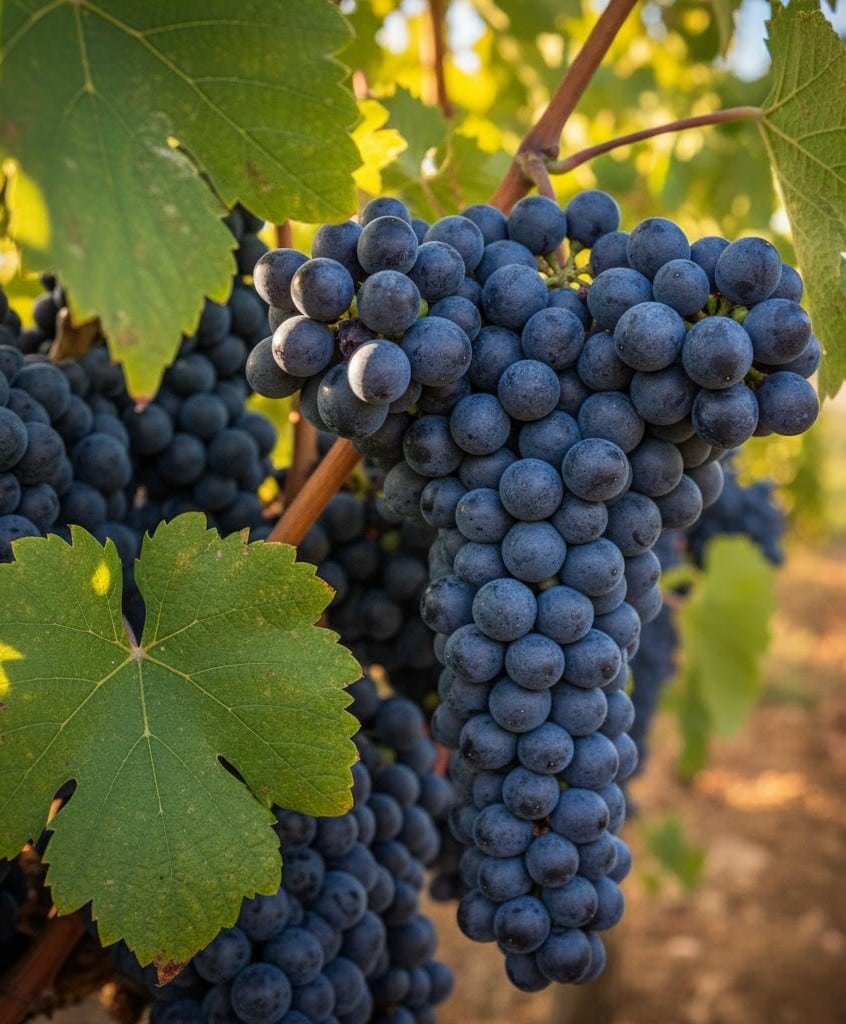
Characteristics of Cabernet Sauvignon hick Skin, Late Budding, and High Tannin
Vigor and Ripeness
Cabernet Sauvignon is a relatively late-budding variety, which helps protect it from spring frost, a major advantage for growers. It requires a long, warm, and dry growing season to fully ripen its thick-skinned berries, which is why it excels in sun-drenched regions.
Thick Skin and High Tannin
The Cabernet berry possesses a notably thick skin, resulting in wines with a deep, inky color and high levels of tannin. These tannins are the key structural feature that gives the wine its firm backbone, requires extended aging, and makes it an ideal partner for fatty red meats.
Acidity and Soil Preference
Cabernet Sauvignon naturally retains a good level of refreshing acidity. While adaptable, it particularly thrives on well-drained, often gravelly or rocky soils. In Bordeaux, the famous gravel banks provide excellent drainage and force the vines to struggle, concentrating the quality of the fruit. In regions like Napa Valley, volcanic and rocky soils produce wines of intense concentration.
Aromatic profile of Cabernet Sauvignon Savory Fruit, Herbs, and Leather
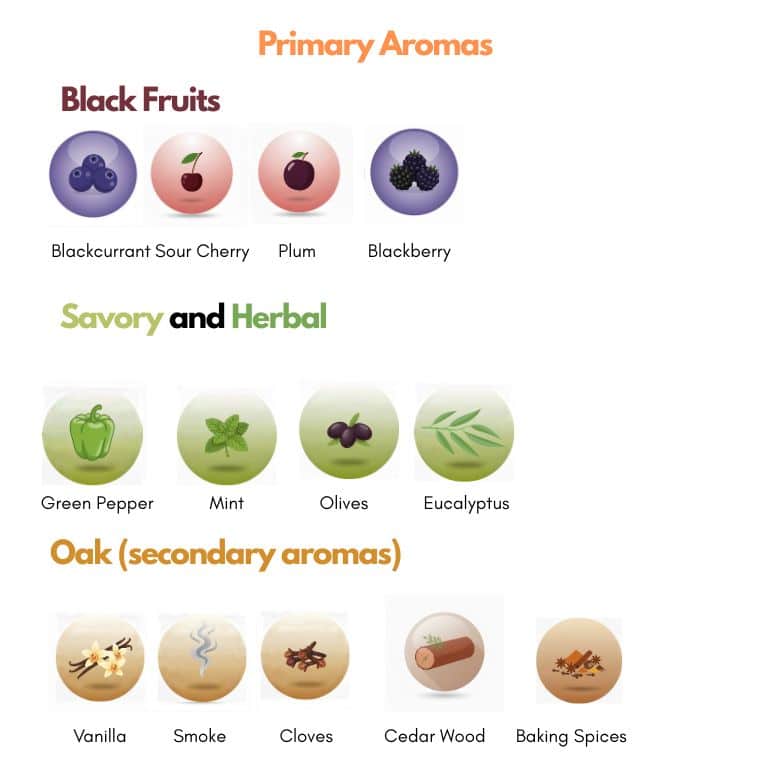
Cabernet Sauvignon wines are prized for their depth, concentration, and remarkable evolution with age.
Primary Flavors:
Black Fruits:
Dominant notes of blackcurrant (cassis), black cherry, blackberry, and plum.
Herbaceous/Savory:
Distinctive high-toned notes of green bell pepper (when less ripe), mint, eucalyptus, and black olive.
Oak-Derived (Secondary):
Vanilla, cedar, clove, smoke, and baking spice.
Structure:
Body:
Full-Bodied, characterized by its dense, weighty mouthfeel.
Acidity:
Medium to High, providing balance to the rich fruit and tannin.
Tannins:
High, firm, and often chewy, providing the structure for aging.
Aging Potential:
High-quality Cabernet Sauvignon is one of the world’s most age-worthy red wines. Wines from top estates in Bordeaux and Napa Valley are often structured to age for 10 to 30+ years, developing complex tertiary notes of tobacco leaf, leather, cigar box, forest floor, and dried fruit.
The Impact of Winemaking on Cabernet Sauvignon Style Oak and climate influence
The style of Cabernet Sauvignon is primarily defined by the climate of its origin and the use of oak:
Climate Influence (New World vs. Old World):
Cool Climate (Bordeaux, Coastal Regions):
Wines display more savory, earthy, and herbaceous (pyrazine) notes (e.g., green bell pepper, cedar), with a slightly leaner body and higher acidity.
Warm Climate (Napa Valley, Barossa, Maipo Valley):
Wines are characterized by riper, more concentrated black fruit flavors (e.g., cassis, black cherry jam), higher alcohol, and a fuller, richer body.
Oak Treatment (The Defining Factor):
New American or French oak barrels are the standard treatment for nearly all high-quality Cabernet Sauvignon. Extended time (often 12–24 months) in these barrels softens the aggressive tannins, adds notes of vanilla, cedar, mocha, toast, and spices, and contributes to the wine’s powerful structure and long-term aging potential.
Regions for Cabernet Sauvignon From Bordeaux to the New World
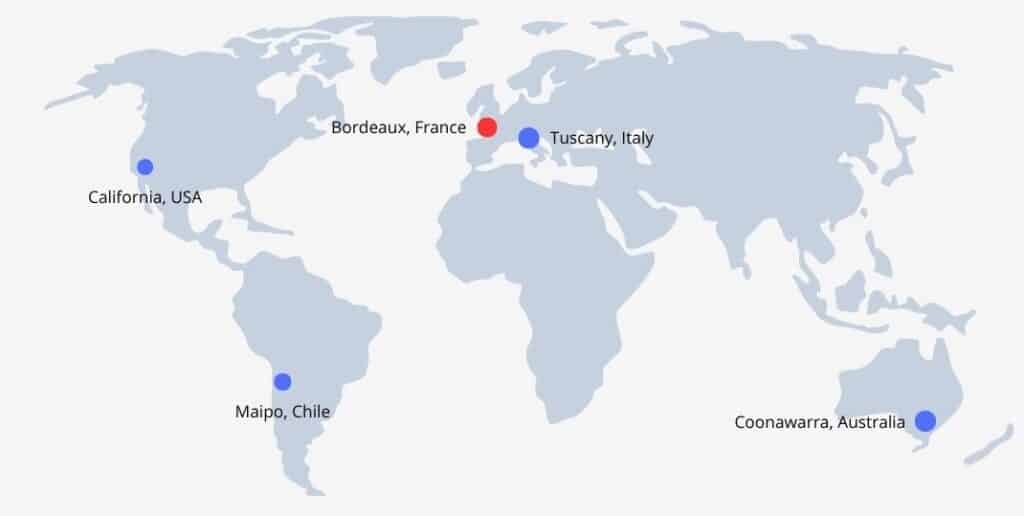
France (Bordeaux – Left Bank): The Classic Home
Pauillac, St-Julien, Margaux:
The pinnacle of Old World Cabernet. It is typically blended with Merlot and Cabernet Franc, showing structure, savory earthiness, high acidity, and a deep sense of terroir.
USA (California – Napa Valley): The Icon of Power
Oakville, Rutherford, Stags Leap District:
Often produced as a single-varietal wine, showcasing lush black fruit, intense concentration, and powerful oak influence, leading to a plush, opulent style.
Other Notable Regions:
Chile (Maipo Valley):
Produces world-class, value-driven Cabernet with distinct mint and eucalyptus notes.
Australia (Coonawarra):
Famous for its ‘terra rossa’ soil, yielding elegant Cabernet with signature notes of blackcurrant and fine tannins.
Italy (Tuscany – Super Tuscans):
Used to produce highly sought-after ‘Super Tuscans,’ often blended with Sangiovese, creating wines of immense complexity and structure.
Food pairing and service The Ultimate Steak Wine
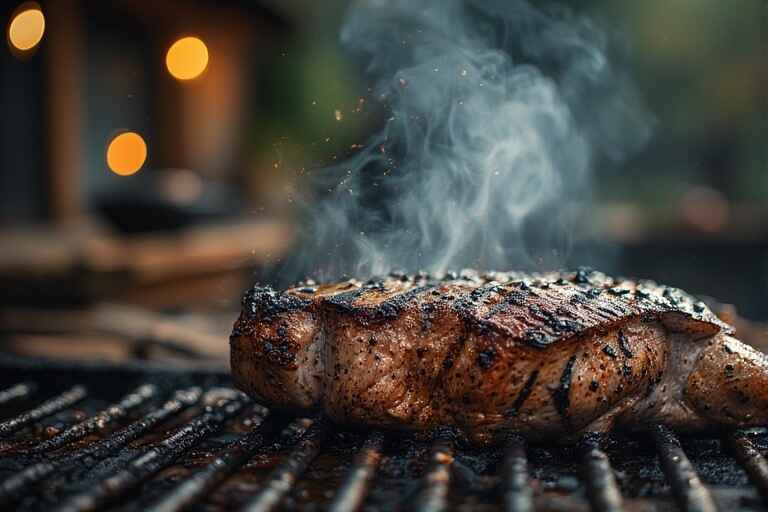
Cabernet Sauvigon’s high tanins make it a perfect pairing with steak
Cabernet Sauvignon’s high tannin, full body, and concentrated fruit demand food with structure and richness to balance the wine.
Service Temperature:
Serve slightly below room temperature, ideally between 16∘C and 18∘C (61∘F–64∘F). Decanting for one to two hours is highly recommended for younger, high-tannin examples to allow the aromas to open and the tannins to soften.
Food Pairings and Avoidances
The principle for pairing is to match the wine’s intensity and tannins with the food’s fat, protein, and richness.
Ideal Food Pairings
The fat and protein in these foods soften the wine’s aggressive tannins, while the wine’s acidity cuts through the richness of the food.
-
Classic Red Meats: Cabernet is the quintessential pairing for high-protein, high-fat red meats. It excels with rib-eye steak, prime rib, and richly sauced lamb.
-
Further Meats and Game: Look for dishes with a rich reduction sauce, like a beef tenderloin with bordelaise, or braised meats like short ribs or oxtail. Game meats such as venison or wild boar also provide a strong flavor profile.
-
Heavy Vegetarian and Earthy Dishes: Cabernet Sauvignon’s earthy notes pair beautifully with rich mushroom dishes. Consider a truffle pasta, a hearty mushroom risotto, or a robust lentil and bean stew. Grilled or charred vegetables like eggplant and bell peppers also work well.
-
Cheese: The best cheeses are aged, hard, and high in fat and protein to coat the palate and soften the tannins. Excellent choices include aged Cheddar (at least two years old), cured Manchego, and aged Gouda.
-
Complementary Flavors: Foods rich in umami (like soy-glazed beef) and dishes featuring rich, buttery sauces (like sauce au poivre with steak) enhance the pairing by balancing the tannins.
Foods to Avoid
Avoid anything that will make the high tannins taste metallic, overly bitter, or cause the wine to overpower the food.
-
Delicate and Lean Foods: Delicate fish, light salads, and low-fat proteins like plain grilled chicken breast or cod lack the necessary fat to balance the tannins, leaving the wine harsh and aggressive.
-
Spicy Cuisine: The heat from chiles exacerbates the alcohol and tannins, creating an unpleasant burning sensation. Avoid spicy Asian or Mexican cuisine.
-
Bitter or Acidic Ingredients: Dishes featuring large amounts of bitter vegetables like arugula or kale, and foods with high-acidity dressings (vinegar-based dressings), can clash with the wine’s tannins and acidity, making the wine taste flat and dull.
Challenges & Future Outlook
Cabernet Sauvignon remains the foundation of the global luxury wine market, but its future lies in balancing power with elegance.
The Search for Balance: As global temperatures rise, winemakers are focusing on canopy management and picking times to prevent grapes from becoming too ripe, which can lead to excessively high alcohol and ‘jammy’ flavors. The trend is toward wines that retain the classic structure without sacrificing freshness.
Vineyard Innovation: New clones and rootstocks are being tested to help the vine adapt to changing climate conditions while maintaining the characteristic concentration and structure that consumers expect.
Regional Expansion: Regions outside the established zones (e.g., Washington State, South Africa) are continuing to refine their styles, offering diverse expressions of the grape that challenge the dominance of Napa and Bordeaux while providing excellent value.
Ready to Dive into the World of Cabernet Sauvignon? Discover Our Tours! Don't just read about Cabernet Sauvignon—come and taste the structure!
You’ve learned about Cabernet Sauvignon’s robust structure, its signature black fruit and savory notes, and its evolution from an accidental cross to the world’s most dominant red grape. Now, it’s time to experience the power of the cellar’s most serious wine!
We offer exclusive wine tours focused on the leading Cabernet Sauvignon regions, where you can walk the gravelly banks of the Médoc and the volcanic hillsides of Napa Valley. Explore the complex art of oak aging and blending in the winery, and participate in comparative tastings that reveal how Cabernet transitions from a youthful, powerful behemoth to a nuanced, tertiary-driven masterpiece.
Our Cabernet-focused tours are designed for those who appreciate power, pedigree, and the patience required for a truly great wine. Prepare to fall in love with the ultimate long-distance runner of the wine world.