
Table of Contents
Sangiovese The Tuscan Titan of Savory Acidity
Sangiovese, the high-acid, medium-bodied Italian red famous for its rustic yet elegant balance of savory cherry fruit, herbal undertones, firm tannins, and its strong connection to food.
Sangiovese is the most widely planted red grape in Italy and the undisputed heart of Tuscan winemaking. It is the core component of world-renowned wines like Chianti Classico, Brunello di Montalcino, and Vino Nobile di Montepulciano. Beloved for its naturally high acidity, firm tannic structure, and deep, earthy complexity, Sangiovese produces wines that are serious, structured, and inherently food-friendly. It is the definitive ‘savory red,’ celebrated for its bright, sometimes tart, red-cherry profile and its ability to age, evolving into magnificent expressions of Italian terroir.
Origin A Central Italian Native and a Varied Legacy
Italian Roots and Early History: Sangiovese is an ancient indigenous Italian grape. While its exact origins are debated (likely stemming from the areas between Tuscany and Calabria), the name is often romantically linked to Sanguis Jovis (“the blood of Jove/Jupiter”), reinforcing its deep, almost mythological connection to the land.
The Varietal Challenge Sangiovese is highly mutable, exhibiting a vast number of clones and local variations across Italy. The two most famous are Sangiovese Grosso (the large-berried clone used exclusively for Brunello di Montalcino, which lends structure and longevity) and Sangiovese Piccolo (the smaller-berried clone used more widely across Chianti). This clonal diversity contributes to the regional variation in Sangiovese-based wines.
The Tuscan Identity Despite being grown throughout Central Italy (Umbria, Marche, Campania), Sangiovese finds its most celebrated and defining expression in Tuscany, particularly in the famed hills between Florence and Siena, where it thrives on rocky, calcareous soils.
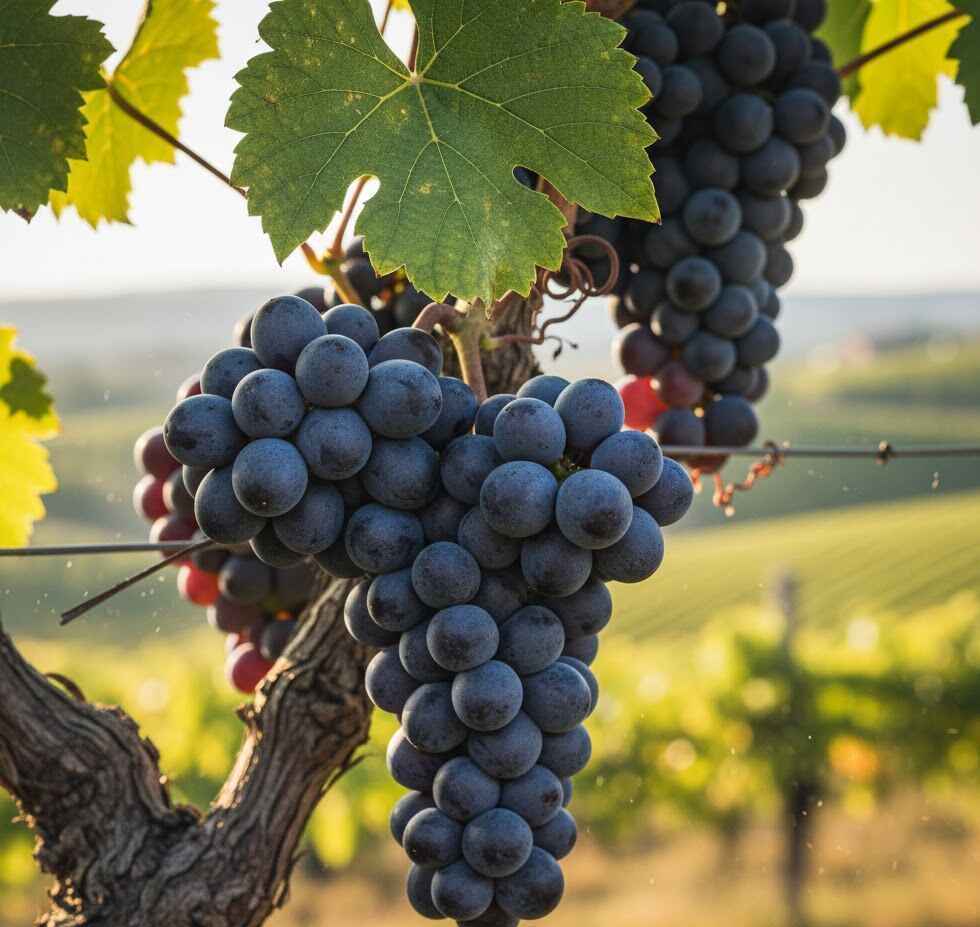
Characteristics of Sangiovese Thin Skin, Late Ripening, and High Everything
Vigor and Ripeness
Sangiovese is a highly vigorous, late-ripening variety that demands a long, warm growing season. Its tendency toward high yields must be carefully managed in the vineyard; if overcropped, the resulting wine becomes dilute and thin. Its late ripening makes it susceptible to rain and rot late in the season, requiring ideal conditions to achieve full phenolic maturity.
Thin Skin and Color/Tannin
Like Nebbiolo, Sangiovese has a relatively thin skin, leading to a medium-pale, translucent ruby color that often develops brick-orange hues early in its life. Crucially, while the skins are thin, they are loaded with high tannins, providing the wine with a firm, almost chewy structure.
Acidity and Soil Preference
Sangiovese naturally retains an incredibly high acidity, regardless of the climate. This acidity is the backbone of the wine, providing freshness, balance, and its legendary compatibility with rich Italian food. It performs best on rocky, mixed-clay and limestone soils (such as the Galestro and Alberese marl of Chianti Classico), as these poor soils restrict vigor and concentrate fruit quality.
Aromatic profile of Sangiovese Savory Fruit, Herbs, and Leather
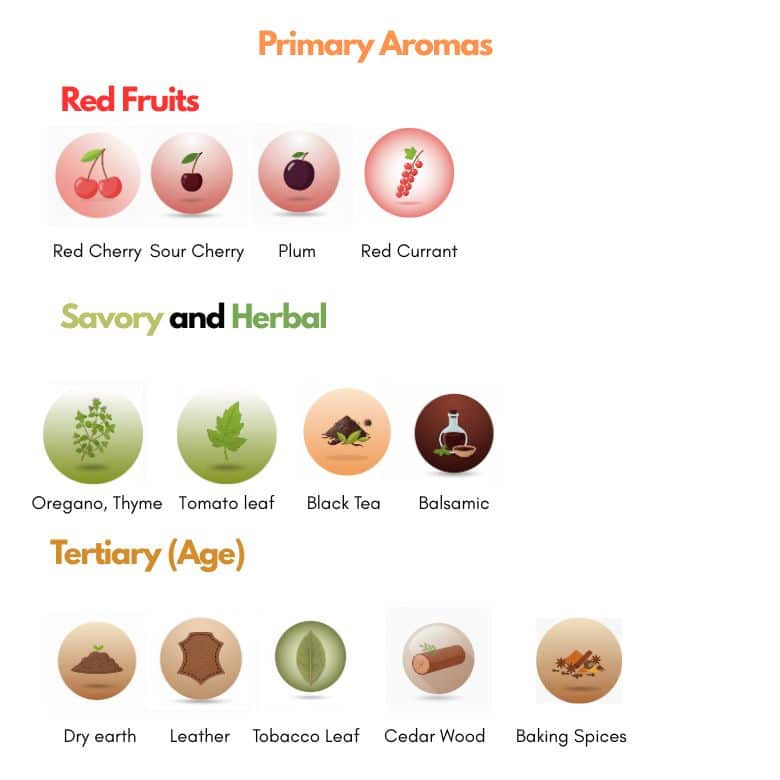
Sangiovese is prized for its high-toned red fruit and its unmistakable savory, earthy edge that perfectly complements its firm structure.
Primary Flavors (High-Toned):
Red Fruits: Signature notes of tart red cherry, sour cherry (amarena), plum, and occasionally red currant.
Savory/Herbal: Distinctive aromas of dried oregano, thyme, tomato leaf, black tea, and balsamic/tertiary notes.
Tertiary Flavors (Evolved/Aged):
Earthy: Tobacco leaf, cedar, old leather, iron, and dried earth.
Spice: Clove, sweet baking spice (from oak).
Structure:
Body: Medium to Medium-Full-Bodied, characterized by its dry, grippy, and savory texture.
Acidity: Very High (Tart/Lively), providing incredible tension and life.
Tannins: High, firm, and often drying/chewy in youth, demanding rich food.
Aging Potential:
High-quality Sangiovese (Brunello di Montalcino, Chianti Classico Riserva) is built for the long haul. These wines routinely age for 10 to 25+ years, developing complex, ethereal notes of leather and forest floor.
The Impact of Winemaking on Sangiovese Style traditional, modern or blend
Sangiovese is handled with both traditional and modern techniques, heavily focused on managing its formidable structure (acid and tannin).
Extended Maceration (Traditional): For age-worthy wines like Brunello and Riserva Chianti Classico, extended skin contact (up to 4 weeks or more) is traditional to extract maximum color, flavor, and tannin. These wines are then aged for long periods in large, neutral Slavonian oak botti to soften the tannins without imparting overwhelming oak flavor.
Modern Techniques (Chianti Classico): Many producers today use shorter macerations, warmer fermentations, and smaller French barriques (new or used) to produce a softer, fruitier, more international style that is approachable earlier, though this is often debated for potentially masking the terroir.
Blending Rules: Historically, Chianti wines included up to 30% white grapes (Trebbiano, Malvasia), which diluted the color and acid. Modern regulations now require a minimum of 80% Sangiovese in Chianti Classico, with the allowance of other red grapes (like Canaiolo or Cabernet Sauvignon) to add color, body, or structure.
Regions for Sangiovese The Tuscan Heartland and Beyond

Italy (Tuscany): The Throne
Brunello di Montalcino DOCG:
Produced from 100% Sangiovese Grosso. The most intense, structured, and longest-lived expression, legally requiring 5 years of aging before release.
Chianti Classico DOCG:
The historic heart of Chianti. Defined by its high acidity, savory character, and strong emphasis on terroir from the various subzones.
Vino Nobile di Montepulciano DOCG:
Offers a powerful, structured style, often blended with a small amount of local grapes like Canaiolo.
Maremma (Morellino di Scansano):
Warmer coastal region producing fruitier, more approachable styles.
Other Notable Regions:
Italy (Emilia-Romagna):
Produces lighter, fruitier styles known as Sangiovese di Romagna.
USA (California):
Significant plantings exist, often producing rich, fruit-driven interpretations that sometimes lose the grape’s signature tartness.
Australia:
Small, successful plantings in cool regions are achieving good balance and savory expression.
Food pairing and service The Ultimate Italian Food Wine
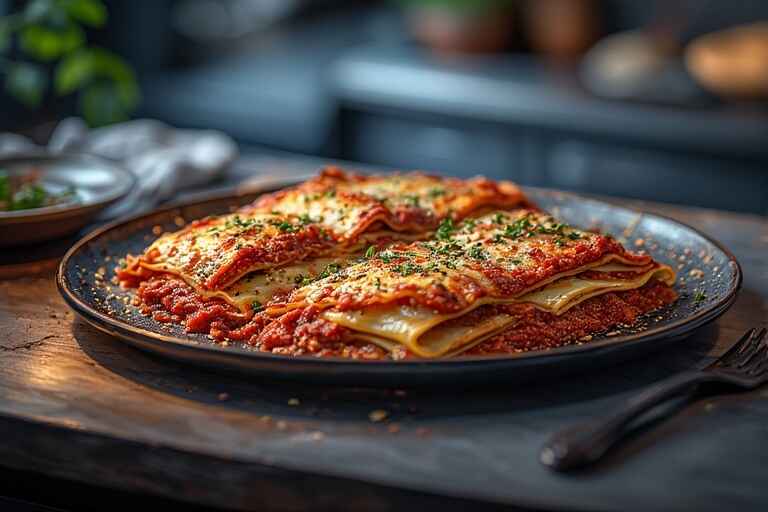
Lasagne and any tomato-based is a perfectly matching twith Sangiovese acidity
Sangiovese’s defining high acidity and firm tannin structure make it the quintessential pairing for the rich, tomato-based, and protein-heavy cuisine of Central Italy, where it acts as a perfect counterpoint to hearty dishes.
Italian & Tomato-Based Classics:
Sangiovese is a mandatory pairing for high-acid, savory dishes like pasta with ragù (especially beef or wild boar—cinghiale), traditional lasagna, and most styles of pizza. The wine’s acidity and tannin cut through fat and complement the high acidity of the tomato base.
Highly Seasoned & Fatty Meats:
The firm tannic grip and savory notes of Sangiovese are ideal for breaking down fat and balancing richness in protein dishes. This includes classic Tuscan fare like Florentine steak (Bistecca alla Fiorentina), slow-cooked beef short ribs, braised lamb, and anything cooked on the grill.
Cheese Pairings:
With its earthy and nutty undertones, Sangiovese is excellent with mature, hard cheeses. It pairs perfectly with the salty, savory characteristics of Pecorino Toscano, aged Parmigiano Reggiano, and even medium-aged cheddar.
Global Dishes:
Apply the same principle to international cuisine: Sangiovese shines when matched with dishes featuring savory herbs (rosemary, oregano), olives, and roasted vegetables. Look to other Mediterranean flavors like Greek Moussaka or hearty Spanish sausage and bean stews.
Avoid
Avoid delicate white fish or highly sweet desserts, which clash harshly with the wine’s tart, savory structure and high tannin.
Service Temperature
Serve slightly below room temperature, ideally between 17°C and 19°C (63°F–66°F). Decanting for at least an hour is highly recommended for younger or more structured examples to soften the tannins and allow the savory aromas to unfold.
Challenges & Future Outlook
Sangiovese’s status as a top-tier Italian wine remains secure, driven by the historic prestige of its finest zones.
Focus on Purity: There is a strong movement, especially in Chianti Classico, toward increased use of 100% Sangiovese and less reliance on international blending grapes, reinforcing its varietal identity.
Subzone and Clonal Specialization: Winemakers are increasingly focusing on the best clones (Sangiovese Grosso) and identifying specific subzones and single vineyards (UGA in Chianti Classico) to highlight precise expressions of Tuscan terroir.
Value vs. Prestige: While Brunello remains a luxury item, consumers are increasingly turning to the more accessible and excellent quality of Chianti Classico, particularly the Riserva and Gran Selezione tiers, for complex, age-worthy Italian red.
Ready to Dive into the World of Sangiovese? Discover Our Tours! Don't just read about Gamay. come and taste the soul of Tuscany!
You’ve learned about Sangiovese’s high acid, its firm structure, its signature savory cherry notes, and its unparalleled status as the heart of Tuscany. Now, it’s time to experience the most essential Italian food wine!
We offer exclusive wine tours focused on the Tuscan hills, where you can walk the galestro soils of Chianti Classico and the steep slopes of Montalcino. Explore the tradition of botti aging and the art of blending in the winery, and participate in comparative tastings that reveal how Sangiovese transitions from a bright, savory Chianti to the profound, leather-and-earth complexities of Brunello.
Our Sangiovese-focused tours are designed for those who appreciate structure, history, and the simple perfection of a wine paired with a perfect meal. Prepare to fall in love with the Italian titan.