
Beyond Beer and Chocolate: A Guide to Belgian Wine Regions
Belgium’s winemaking is a vibrant tapestry woven from a long, yet often-overlooked history in the Western Europe wine scene and a modern revival fueled by passion and innovation. From the rolling hills of Wallonia to the sandy plains of Flanders, this country offers a diverse and captivating range of wines. To drink Belgian wine is to taste the story of a cool-climate terroir and a new generation of vintners, a journey from crisp, elegant sparkling wines to characterful still reds and whites.
A Brief History of Belgian Viticulture: From Monks to Modern Day
Belgium’s winemaking story is one of quiet resilience, shaped by a challenging cool climate and periods of both flourishing and decline. It’s a narrative of a small country proving its potential, creating a distinct and authentic wine identity.
Medieval Monasteries and the Burgundian Influence
Winemaking in the region of modern-day Belgium dates back to the Romans, who established small vineyards, but it was during the Middle Ages that viticulture truly took hold. Monasteries played a crucial role, cultivating vineyards and refining techniques to produce wine for religious ceremonies and daily consumption. The stable and knowledgeable monastic orders, particularly in the Meuse and Mosel valleys, were instrumental in preserving winemaking traditions.
The height of this early winemaking came under the Duchy of Burgundy in the 14th and 15th centuries. The Dukes of Burgundy, renowned patrons of the arts and culture, also encouraged viticulture in their northern territories. This era saw vineyards flourish around cities like Brussels, Leuven, and Ghent, producing wines that were popular locally and even exported. The wines were typically light, acidic, and consumed young, well-suited to the region’s climate. This period cemented wine as a part of the local agricultural landscape and cultural identity.
Decline and Modern Revival
The legacy of Belgium’s medieval vineyards faced several challenges that led to their near-total disappearance. The Little Ice Age, a period of global cooling from the 16th to the 19th centuries, made ripening grapes difficult and unreliable. This climatic shift, combined with increasing competition from cheaper, more robust wines imported from France, the Low Countries, and Germany via newly established trade routes, made local winemaking economically unviable. Additionally, the rise of beer brewing, a craft deeply ingrained in Belgian culture and less susceptible to the cold, further marginalized wine.
By the 20th century, winemaking in Belgium was a forgotten art. However, a modern revival began in the late 1960s and gained significant momentum in the 1990s. A new generation of passionate winemakers, armed with improved clones, modern viticultural techniques, and a new understanding of their cool-climate terroir, began to plant vineyards on a commercial scale. They focused on hardy, early-ripening grape varieties and, crucially, sparkling wine production. This shift toward quality and innovation marked the beginning of Belgium’s modern wine story.
A Guide to Belgium Terroir
Terroir, a concept encompassing the unique combination of climate, soil, and topography, is the defining force behind Belgium’s wines. The country’s northern latitude means that a vineyard’s specific location, from its sun exposure to its soil composition, is critical for achieving ripeness and complexity.
Climate and Its Influence on Wine
Belgium’s wine country benefits from a maritime climate, which is heavily influenced by the cool, damp air from the North Sea. This results in a short, cool growing season, which is both a challenge and an advantage for winemakers.
The constant moisture from the sea leads to a high risk of fungal diseases, such as downy mildew and botrytis, requiring diligent vineyard management. Winemakers often have to use specific pruning techniques and fungicides to protect the grapes. However, this cool environment is precisely what gives Belgian wines their signature character. The mild, consistent temperatures ensure a slow and steady ripening process. This prolonged ripening allows grapes to develop complex flavors and aromas while maintaining the high acidity essential for balanced wines.
This is particularly crucial for sparkling wines, as high acidity provides the backbone and freshness needed for a crisp, effervescent final product. The majority of vineyards are planted on south-facing slopes, especially in the hilly Walloon region, to maximize sun exposure and mitigate the risk of spring frost, which can damage new buds.
Soils and Topography in Action
Belgium’s landscape is a testament to its geological diversity, with different soil types shaping the character of its wines. In the southern region of Wallonia, the terrain is characterized by rolling hills, particularly in the Hainaut and Liège provinces. Here, vineyards are often planted on calcareous and sandy loam soils. The limestone-rich soils provide excellent drainage and impart a subtle minerality to the wines. They are particularly well-suited for grapes used in sparkling wine production, such as Chardonnay and Pinot Noir.
In contrast, the northern region of Flanders features flatter terrain and a mix of soils, including sandy clay and loam. These soils, while fertile, require careful management to ensure proper drainage. The wines produced here, particularly in the Hageland region, tend to be more fruit-forward and approachable. The interplay of cool climate and specific soil types creates a unique expression in Belgian wines, providing a subtle, yet powerful sense of place.
Appellations and Classifications in Belgium
Belgium’s landscape, a mosaic of geological history, directly influences the terroir of its wines, with different soil types shaping their character. The country is broadly divided into two main wine-growing regions: Wallonia and Flanders, each with its own distinct topography and soil composition.
In the southern region of Wallonia, the terrain is characterized by rolling hills, particularly in the provinces of Hainaut and Liège. Here, vineyards are often planted on calcareous (limestone-rich) and sandy loam soils. The limestone provides excellent drainage, forcing the vine roots to dig deep for water and nutrients. This struggle often results in wines with a pronounced minerality and a focused, elegant profile. These soils are particularly well-suited for grapes used in sparkling wine production, such as Chardonnay and Pinot Noir.
In contrast, the northern region of Flanders features a flatter landscape and a different mix of soils, including sandy clay and loam. These soils, while fertile, can be heavy and require careful management to ensure proper drainage and prevent waterlogging. The wines from Flanders, particularly from the Hageland region, tend to be more fruit-forward and approachable, reflecting the richer, more fertile soil. This interplay of cool climate and specific soil types creates a unique expression in Belgian wines, providing a subtle yet powerful sense of place, or sens de lieu. The geological diversity of Belgium, from the chalky soils of Wallonia to the loamy plains of Flanders, is a testament to how even a small country can offer a wide range of wine styles.
Key Grapes and Wine Styles in Belgium
Belgium’s cool climate and diverse soil types have led to the cultivation of a unique range of grape varieties, from classic international grapes to robust hybrids. The country’s winemakers are increasingly demonstrating that high-quality, expressive wines can be produced in this northern latitude.
Belgium Most Important white Grape Varieties
Chardonnay
Chardonnay, a classic from Burgundy, has found a second home in Belgium. Its early-ripening nature and adaptability make it well-suited to the country’s short growing season. The limestone-rich soils of Wallonia, in particular, provide an ideal terroir for this grape, echoing the great vineyards of Champagne and Burgundy.
Wine Profile: Belgian Chardonnay is a prime example of a cool-climate expression. The wines are known for their high acidity and a lean, mineral-driven profile. Expect bright aromas of green apple, citrus, and pear, often with a subtle chalky or flinty minerality. Many producers utilize méthode traditionnelle (the same method used for Champagne) to create top-quality sparkling wines, where the grape’s crisp acidity is a key component. When aged in oak, Belgian Chardonnays can develop notes of spice, toasted nuts, and a rounder texture, while still maintaining their vibrant freshness.
Pinot Blanc
Pinot Blanc, a white mutation of Pinot Noir, is another grape that excels in Belgium’s climate. It ripens relatively early and produces wines with good body and a pleasant, low-acidity profile. It is often used in both still and sparkling white wines.
Wine Profile: Belgian Pinot Blanc wines are generally dry and light, with a delicate and subtle aromatic profile. They offer notes of pear, white peach, and a hint of fresh almond. While not as intensely aromatic as other grapes, its strength lies in its refreshing character and a clean, elegant finish. It serves as an excellent aperitif or a pairing for light seafood dishes and salads.
Auxerrois:
Closely related to Pinot Blanc and a cross between Pinot and Gouais Blanc, Auxerrois has a long history in the regions bordering Belgium, particularly Luxembourg and Alsace. Its ability to ripen well in cool climates and its resistance to certain diseases make it a reliable choice for Belgian vineyards.
Wine Profile: Auxerrois wines are known for being aromatic and full-bodied, offering a richer mouthfeel than many other cool-climate whites. They present flavors and aromas of apricot, peach, and honeyed notes, often with a touch of spice. Its inherent low acidity makes it a softer, more approachable wine, often enjoyed on its own or with lighter fare.
Solaris
Johanniter
his white hybrid grape, a cross between Riesling and a fungus-resistant grape, is highly valued for its aromatic qualities and disease resistance. It ripens relatively early, making it a reliable choice in Belgium’s northern climate.
Wine Profile: Johanniter produces wines that are similar in style to a light Riesling. They are known for their lively acidity and distinct fruit-forward character, with aromas of green apple, grapefruit, and fresh herbs. It is often vinified in stainless steel to preserve its crisp, clean profile, making it a refreshing and food-friendly wine.
Souvignier Gris
This is a promising white hybrid grape, a cross of Cabernet Sauvignon and Bronner. It has an excellent resistance to downy and powdery mildew, two of the biggest threats to Belgian vineyards. Its vigor and ability to produce high-quality grapes make it a favorite for sustainable viticulture.
Wine Profile: Souvignier Gris wines are typically full-bodied and well-structured, offering a more powerful expression than some other hybrids. They are characterized by a subtle spiciness and aromas of pear, quince, and a touch of honey. The wines often have a noticeable minerality and a long finish, making them a serious contender for premium still white wines.
Belgium Most Important red Grape Varieties
Pinot Noir
As the most planted red grape in Belgium, Pinot Noir benefits from the cool climate which allows for a slow, gentle ripening process. This preserves the grape’s delicate aromatic compounds and high acidity, preventing it from becoming overripe and jammy. The challenging conditions demand careful vineyard management, but the resulting wines are a testament to the dedication of Belgian winemakers.
Wine Profile: Belgian Pinot Noir is typically light-bodied and elegant, reminiscent of those from northern Burgundy or Germany. The wines are characterized by a bouquet of red berries—think cherry, raspberry, and strawberry—with earthy undertones of mushroom, forest floor, and damp earth. The tannins are soft and silky, and the high acidity makes them a versatile partner for food. Pinot Noir is also a critical component in many of Belgium’s sparkling rosé wines, adding structure and red fruit character.
Dornfelder
While a more traditional red grape from Germany, Dornfelder is a hybrid that is gaining a foothold in Belgium. It is known for its deep color and vigorous growth, making it a reliable choice for cool-climate red wine production.
Wine Profile: Belgian Dornfelder wines are typically deeply colored with a bold, fruit-forward character. They present flavors of blackberry, black cherry, and elderberry. With a soft tannin structure and moderate acidity, they are a more approachable and fruitier alternative to Pinot Noir.
Cabernet Dorsa:
A cross between Dornfelder and Cabernet Sauvignon, Cabernet Dorsa is a newer hybrid that is attracting attention. It combines the disease resistance and deep color of Dornfelder with some of the aromatic complexity of Cabernet Sauvignon.
Wine Profile: This grape produces deeply colored red wines with a good balance of fruit and structure. The wines offer notes of blackcurrant, cherry, and spice, with a subtle herbaceous character from its Cabernet heritage. It provides a more robust, full-bodied red option for Belgian winemakers.
Belgian Wine Regions: A Journey Through Belgiums Terroir
Belgium’s winemaking is best understood through its distinct regions, each offering a unique expression of the country’s diverse terroir and grape varieties. The following guide provides an overview of the country’s main wine regions and their sub-regions.
Hageland
Located in the center of Belgium, the Hageland region is a picturesque area of rolling hills in Flemish Brabant and Limburg. As Belgium’s first officially recognized wine region, it is celebrated for its sun-drenched, ironstone-rich hills, particularly the “Wijngaardberg” (Vineyard Mountain) near Wezemaal, where viticulture has a long history. The terroir here is a complex mix of loam, sand, and iron-rich sandstone, which provides excellent drainage and imparts a distinct minerality to the wines. The climate, while cool, benefits from the region’s gently rolling landscape, which provides south-facing slopes that capture maximum sunlight, allowing grapes to ripen fully.
Hageland is known for producing a diverse range of wines, from fresh and aromatic whites to light-bodied reds and a growing number of high-quality traditional-method sparkling wines. The region is not dominated by a single grape, instead showcasing a variety of international and hybrid grapes. Common white varieties include Chardonnay, Auxerrois, and Pinot Blanc, which yield crisp wines with notes of green apple and citrus. Red wines are primarily made from Pinot Noir and Dornfelder, which produce light, fruit-forward styles with soft tannins, ideal for early consumption. The region’s focus on quality over quantity, combined with its unique terroir, makes Hageland a prime destination for discovering new and exciting Belgian wines.
Wallonia
The Wallonia region is the largest and most important wine region in Belgium, home to the majority of the country’s vineyards and a diverse range of terroirs and wine styles. The region’s viticulture is spread across several provinces, with key areas along the river valleys of the Meuse and Sambre. The climate is a crucial factor, characterized by a cool continental influence with significant rainfall, which presents challenges but also provides the high acidity and freshness that define Wallonian wines. The soils are incredibly varied, ranging from the fertile silty and sandy-silty soils in the north to the more acidic, calcareous silty-stony soils of the Condroz, Famenne, and Calestienne parts of the region. This geological diversity is a key factor in the distinct styles of wine produced.
Wallonia is the heart of sparkling wine production in Belgium, primarily using Chardonnay, Pinot Noir, and Pinot Meunier. These “Crémants de Wallonie” or “Vins Mousseux de Qualité de Wallonie” are crafted using the traditional method, yielding wines with fine bubbles and complex notes of brioche, apple, and toasted nuts, which are gaining international recognition. Still wines are also a cornerstone of Wallonian production, with grapes like Chardonnay and Pinot Noir producing elegant, cool-climate expressions. The region has also embraced fungus-resistant hybrid varieties such as Solaris and Johanniter for white wines and Regent for reds, providing a sustainable approach to viticulture and contributing a wide array of aromatic profiles to the region’s portfolio.
Flanders
ound in the northern, Dutch-speaking part of Belgium, Flanders has a small but rapidly growing wine industry that specializes in cool-climate wines. The region’s history of winemaking has experienced a strong revival in recent decades, driven by climate change and an increasing domestic demand for local products. The terroir of Flanders is influenced by its proximity to the North Sea, giving it a maritime climate with mild summers and cool winters. The soils are diverse, with notable areas of loam, clay, and sandy soils that contribute to the unique characteristics of the wines. The most significant winemaking area is the Heuvelland (Hill Country) in West Flanders, where gentle slopes and a favorable microclimate create ideal conditions for viticulture.
Flanders is most famous for its crisp, aromatic white and sparkling wines. The high acidity from the cool climate is a signature characteristic, creating refreshing wines with a lively character. While the user’s text mentions Pinot Blanc, which is indeed a key grape, the region also excels with Chardonnay, Pinot Gris, and Müller-Thurgau. White wines often display fresh citrus, green apple, and stone fruit flavors with a distinct, sometimes saline, minerality. Sparkling wines, made using the traditional method, are highly prized for their fine bubbles and elegant structure. Though red wine production is smaller, Pinot Noir is grown to produce light-bodied, fruit-forward reds.
Liège
his historic region in Wallonia has a long-standing but recently revived tradition of viticulture. Located in the eastern part of the province, the Liège region benefits from a specific microclimate and a diverse range of soils, including chalk, clay, and limestone, which are particularly well-suited for grape cultivation. Contrary to the user’s initial text, the region is not famous for fortified wines, but rather for its focus on high-quality still and sparkling wines, often from organic and sustainable vineyards. The most notable producer is the “Vin de Liège” cooperative, which has pioneered the use of fungus-resistant grape varieties.
The vineyards of Liège primarily cultivate hybrid grapes that are well-adapted to the region’s climate. White varieties like Johanniter, Solaris, and Souvignier Gris are highly prized. Johanniter, a cross with Riesling, produces wines with lively acidity and notes of green apple and citrus, while Souvignier Gris, a more powerful grape, yields full-bodied wines with a subtle spiciness. The region also produces robust reds from grapes such as Cabernet Cortis and Pinotin, which provide a deeply colored, fruit-forward style with notes of blackcurrant and cherry. The wines from Liège are a testament to modern viticulture, combining innovation and respect for the land to produce distinctive, high-quality wines.
Hainaut
Situated in the heart of Wallonia, Hainaut is the key region for sparkling wine production in Belgium. The province is home to some of the country’s most famous vineyards and benefits from a high altitude and a cool, continental climate that is perfect for preserving the acidity and freshness of the grapes. The terroir is predominantly composed of chalky limestone soils, similar to the Champagne region of France. This unique combination of climate and soil provides the ideal conditions for growing classic sparkling wine grapes like Chardonnay, Pinot Noir, and Pinot Meunier.
Hainaut’s reputation is built on its high-quality “Crémant de Wallonie,” which is produced using the traditional method and is known for its finesse and elegance. The sparkling wines are bone-dry and exhibit a lively acidity, fine bubbles, and complex aromas of brioche, toasted nuts, and crisp green apple. While sparkling wines are the main focus, the region also produces exceptional still white wines from Chardonnay, which showcase a beautiful minerality and a lean, refreshing character. The high altitude and cool climate contribute to the wine’s notable acidity, and the winemakers’ dedication to quality has established Hainaut as the undisputed leader of Belgian sparkling wine, making it a must-visit for any fan of effervescent wines.
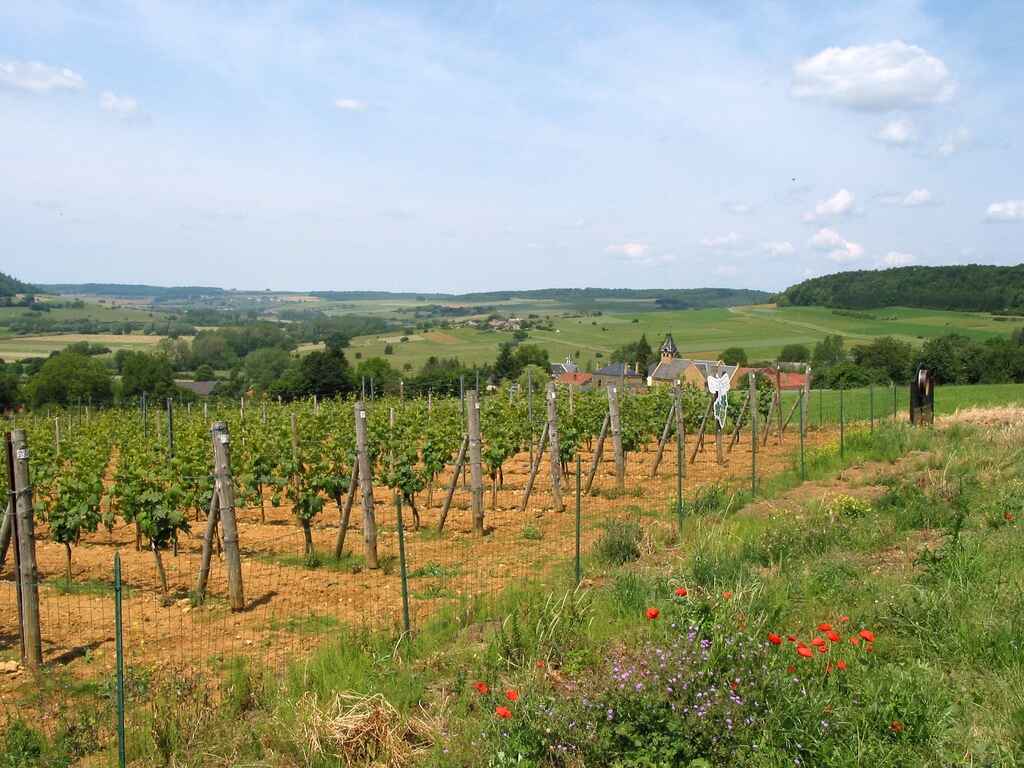
Vineyards in Liege region
Numbers that Tell a Story about Belgium Wine
Italy’s wine industry is not just about history and passion; it’s a global powerhouse, constantly adapting to global trends while cherishing its traditions.
Production Volume: In 2024, Belgian wine production was around 1.2 million litres, a decrease from the previous year due to adverse weather. However, the years 2022 and 2023 saw exceptional yields, with production reaching over 3 million litres.
Vineyard Area: Belgium’s wine industry has been expanding rapidly, with vineyard area increasing to approximately 958 hectares in 2024. This marks a significant increase from just over 800 hectares in 2022.
Winegrowers: The number of professional and amateur winegrowers is on the rise, reaching 321 in 2024, up from 290 in 2023. spectrum of wine styles and flavors, showcasing the country’s unique viticultural heritage. Roughly 75% of Italy’s vineyard is covered by 80 native grape varieties.
Quality Focus: A remarkable 70% of Italian bottled wines are classified as DOCG, DOC, or IGT, signifying a strong commitment to quality and adherence to specific production regulations. This high percentage underscores Italy’s dedication to quality control and geographical authenticity.
Food and Wine Pairing: A Guide to Belgian Cuisine
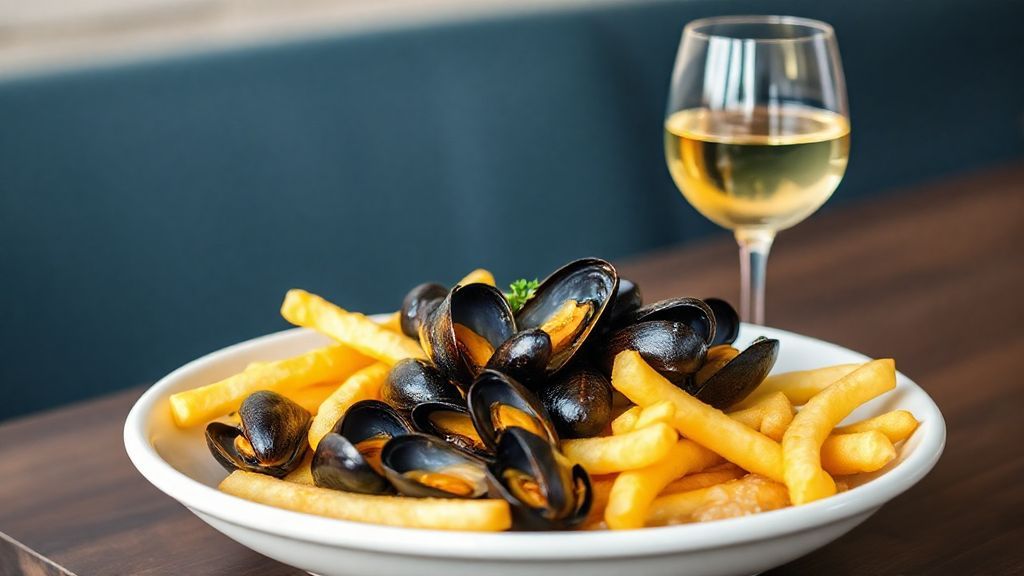
The iconic belgian mussels and french fries are perfrectly oairing with Pinot Blanc from Flandrs coastal region and its high acidity and mineral wines
The philosophy of Belgian wine and food pairing is rooted in the country’s rich culinary traditions. Belgium’s diverse regional cuisines, from the hearty stews of the Ardennes to the fresh seafood of the North Sea, have a natural affinity for local wines. A well-paired wine should elevate the dish, not overpower it, and vice versa.
The Art of Pairing: General Principles
Before diving into regional specifics, a few general principles can guide you. First, consider the weight of the wine and the food. A light-bodied wine, like a Pinot Noir, pairs well with delicate poultry, while a full-bodied Chardonnay needs a more substantial dish. Second, match the intensity of flavors. A dish with strong spices or a lot of garlic requires a wine that can stand up to it, like a bold Dornfelder. Third, balance acidity. High-acid wines cut through rich, fatty foods, cleansing the palate. A crisp Chardonnay is perfect with fried seafood, while a high-acid Pinot Noir works well with fatty duck.
Regional Pairings: A Culinary Journey
Wallonia: Elegant Wines and Hearty Dishes
The rolling hills of Wallonia, with their cool climate, produce wines with vibrant acidity and crisp character. The region’s cuisine is centered on hearty stews, game meats, and light preparations.
Chardonnay (Wallonia): The quintessential pairing for this zesty white is Waterzooi (a creamy chicken or fish stew). The wine’s high acidity cuts through the richness of the cream, while its fruit notes complement the fresh vegetables in the dish. It also pairs beautifully with fresh fish like trout (Forelle) or salmon.
Pinot Noir (Wallonia): This wine’s elegant, light-bodied style makes it a perfect match for Liège meatballs (boulets à la liégeoise) or simple pork dishes. The wine’s clean finish and subtle fruitiness cleanse the palate, making it ideal with grilled meats and stews.
Belgium Wine Regions
Belgium’s winemaking is best understood through its distinct regions, each offering a unique expression of the country’s diverse terroir and grape varieties. The following guide provides an overview of the country’s main wine regions and their sub-regions.
Hageland
Located in the center of Belgium, the Hageland region is known for its light-bodied, easy-drinking wines. The wines are typically made from a blend of local and international varieties, and are characterized by their freshness, fruitiness, and a distinct minerality. The region is a great place to discover new and exciting wines.
Wallonia
The Wallonia region is the largest and most important wine region in Belgium. It is a diverse region that produces everything from high-quality sparkling wines to light-bodied reds and whites. It is the heart of Chardonnay production, a sparkling wine made using the traditional method, but also excels in producing still wines from both international and local varieties like Pinot Noir and Auxerrois.
Flanders
Found in the northern part of Belgium, Flanders is famous for its crisp, aromatic white wines made from the Pinot Blanc grape. The region’s close proximity to the North Sea results in wines with high acidity, a refreshing character, and a distinct saline minerality.
Liège
This historic region in Wallonia is famous for its fortified wines, collectively known as Chardonnay. The wines are made from Chardonnay, Pinot Noir, and Pinot Blanc grapes, and their unique character comes from the terroir and climate. Styles range from the bone-dry Chardonnay to the rich and sweet Pinot Noir.
Hainaut
Situated in the heart of Wallonia, Hainaut is the key region for Chardonnay, a grape that produces fresh, aromatic, and full-bodied white wines with a characteristic bitter finish. The high altitude and continental climate contribute to the wine’s notable acidity and expressive character.