Table of Contents
Western Europe Wine Regulations at a Glance
Western Europe is the birthplace of many of the world’s most influential wine regulations. Over nearly two thousand years, vineyard management evolved from Roman land administration and medieval local ordinances into sophisticated legal systems designed to protect wine quality, geographical origin, and regional identity. Today, appellations such as AOC, PDO, and other geographical indications continue to preserve the heritage of some of Europe’s most celebrated wine regions.
This guide explores how Western Europe’s wine laws developed through successive stages of history—from Roman vineyard records and monastic quality standards to officially defined wine regions, protected appellations, and modern classification systems. You’ll discover how these regulations shaped not only the wines of France, Germany, Switzerland, Luxembourg, Belgium, and the Netherlands, but also became the global benchmark for protecting wine origin and authenticity.
| Feature | Western Europe Wine Regulations at a Glance |
|---|---|
| Origins | Roman vineyard administration followed by medieval monastic traditions, royal decrees, and regional wine laws. |
| Primary Objective | Protect wine quality, geographical origin, authenticity, regional reputation, and consumer confidence. |
| Key Milestones | Roman land records, medieval quality standards, officially recognized wine regions, appellations of origin, and modern European regulations. |
| Core Principles | Defined vineyard boundaries, authorized grape varieties, production rules, yield limits, traceability, and protected geographical names. |
| Major Regulatory Systems | French AOC, German Qualitätswein, Swiss AOC, Luxembourg Moselle quality regulations, and the European PDO/PGI framework. |
| Wine Classifications | Grand Cru, Premier Cru, Village appellations, classified vineyards, and other quality hierarchies recognizing exceptional terroirs. |
| Countries Covered | France, Germany, Switzerland, Luxembourg, Belgium, and the Netherlands. |
| Why It Matters | Western Europe established the legal foundations that continue to protect wine origin, regional identity, and quality standards across the global wine industry. |
Why Wine Became One of Europe's First Regulated Products
For centuries, wine was far more than a beverage in Western Europe. It was a staple of everyday life, a valuable agricultural commodity, an important source of tax revenue, and one of the region’s most widely traded products. As vineyards expanded and wines from certain areas gained strong reputations, governments, religious institutions, and local authorities recognized the need for rules that would protect quality, ensure fair trade, and preserve the identity of renowned wine-producing regions.
Unlike many agricultural products, wine carried significant economic value. Barrels were transported along the Rhine, Moselle, Loire, Rhône, Garonne, and other major rivers to supply growing cities and international markets. Successful wine regions generated wealth for growers, merchants, and rulers alike, making the wine trade an essential part of many local economies. Protecting this valuable commodity quickly became a legal and commercial priority.
One of the earliest concerns was consistency. Buyers wanted confidence that the wine they purchased met expected standards of quality, regardless of where it was sold. Local customs gradually evolved into formal regulations governing vineyard management, harvest practices, storage, and commercial transactions. Although these rules varied from one region to another, they shared the common objective of maintaining trust between producers and consumers.
As wine-producing areas became more widely recognized, the importance of origin also increased. Certain hillsides, river valleys, and villages consistently produced wines that were considered superior to others. Over time, these locations developed their own reputations, encouraging authorities to distinguish them from neighboring vineyards. This marked the beginning of a fundamental principle that still defines modern wine law: a wine’s identity is closely linked to the place where its grapes are grown.
Regulation also provided governments with an effective framework for administering the wine industry. Vineyards could be surveyed, ownership documented, production monitored, and taxes collected more efficiently when clear legal rules existed. Rather than serving only as restrictions, these early regulations created greater stability for growers, merchants, and public authorities, supporting the long-term development of the wine sector.
Perhaps the most enduring contribution of these early regulations was the gradual recognition that not all wines should be treated equally. Instead of regulating wine as a single commodity, Western Europe began to acknowledge differences in vineyard location, growing conditions, and traditional production methods. This shift laid the foundation for later systems that classified wines according to their geographical origin and quality.
Modern appellations, geographical indications, and quality classifications did not appear overnight. They are the result of centuries of legal evolution during which Western Europe progressively transformed wine from a simple agricultural product into one whose origin, production methods, and regional identity deserved legal protection. This journey would ultimately lead to some of the world’s most influential systems of wine regulation, many of which continue to define European wine today.
The First Wine Laws in Roman Western Europe
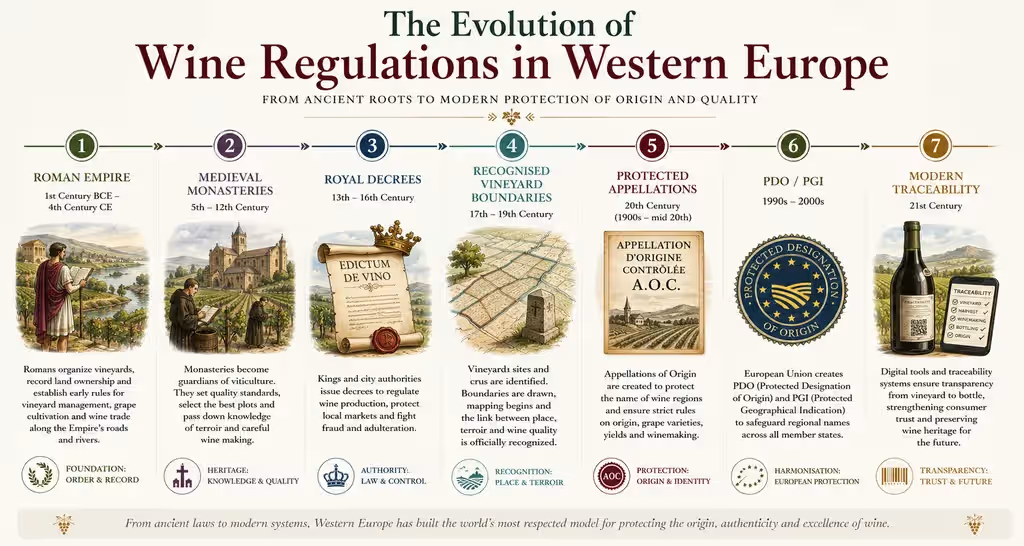
The earliest foundations of wine regulation in Western Europe were established during the Roman Empire. As Roman influence expanded across Gaul and the Rhine frontier, viticulture evolved from a local agricultural activity into an organized industry supported by laws governing land ownership, taxation, commerce, and agricultural production. Although the Romans did not create appellations of origin as they exist today, they introduced legal principles that would shape European wine regulation for centuries.
Roman authorities viewed vineyards as valuable economic assets. Productive vineyard land generated tax revenue, supplied military settlements and growing cities, and supported an expanding trade network stretching across Western Europe. To administer this industry efficiently, vineyards were surveyed, recorded, and incorporated into official land registers. These early cadastral systems established clear ownership rights and provided governments with a reliable framework for taxation and legal administration.
The expansion of vineyards was not left entirely to private initiative. Roman emperors occasionally intervened to regulate wine production when broader economic interests were at stake. During the late first century AD, Emperor Domitian attempted to restrict new vineyard plantings in the provinces in order to preserve land for grain cultivation. Although enforcement varied and many restrictions were later relaxed, the decree represents one of the earliest examples of government regulation directly influencing vineyard development. Nearly two centuries later, Emperor Probus reversed many of these limitations, encouraging renewed vineyard expansion throughout Gaul and the Rhine regions.
Roman law also encouraged greater standardization in wine commerce. Wine was traded across extensive river networks, particularly along the Rhine, Moselle, Rhône, and Saône, where merchants relied on recognized systems of weights, measures, contracts, and taxation. These administrative rules improved commercial stability and facilitated long-distance trade, allowing wine to become one of the empire’s most valuable agricultural products.
While Roman legislation focused primarily on administration rather than quality, it also introduced the idea that vineyards could be identified, documented, and managed as distinct agricultural properties. Surveyed boundaries, legal ownership records, and official taxation gradually reinforced the concept that individual vineyard sites possessed lasting economic value. This administrative recognition of vineyard parcels would later become an essential foundation for defining legally protected wine-growing areas.
Roman agricultural writers also contributed to the intellectual development of wine regulation. Authors such as Columella described how factors including soil, climate, slope, and cultivation methods influenced grape quality and wine character. Although these observations carried no legal authority, they encouraged a more systematic understanding of vineyard management that would influence medieval monasteries and later wine legislation.
When the Western Roman Empire declined, many of its political institutions disappeared, but its legal traditions endured. Systems of land registration, property law, agricultural administration, and commercial regulation continued to influence medieval rulers, religious institutions, and local governments. These Roman foundations provided the legal framework upon which Western Europe’s increasingly sophisticated wine regulations—and eventually its appellation systems—would be built.
Medieval Regulations That Protected Vineyard Quality
After the fall of the Western Roman Empire, responsibility for regulating vineyards gradually shifted from imperial authorities to monasteries, local lords, bishops, and growing medieval towns. Rather than creating a single legal system, these institutions developed numerous local regulations designed to improve wine quality, organize vineyard management, and protect the reputation of their wines. Many of these rules became the direct predecessors of later regional wine laws.
Monastic communities played a particularly important role. Benedictine and Cistercian monasteries owned extensive vineyards across Burgundy, Champagne, Alsace, the Rhine Valley, and the Moselle. Because wine was essential for religious ceremonies and an important source of income, monks introduced detailed rules governing vineyard work throughout the year. They established consistent pruning methods, organized harvest schedules, maintained cellar records, and developed disciplined winemaking practices that reduced variation between vintages.
Harvest regulations became increasingly common throughout medieval Western Europe. Local authorities often prohibited growers from picking grapes before an officially declared harvest date, ensuring that fruit reached sufficient ripeness before being brought into the winery. These regulations improved overall wine quality while preventing individual growers from harvesting prematurely to gain a commercial advantage.
Cities and regional authorities also began supervising the sale of wine more closely. Market regulations established standards for measuring wine, inspecting barrels, and collecting taxes. In many wine-producing towns, merchants could sell wine only after local officials had authorized its release. Although these inspections primarily served commercial and fiscal purposes, they also encouraged more consistent production standards.
As vineyard reputations grew, regulations increasingly focused on preserving quality rather than simply controlling trade. Local customs determined which grape varieties were best suited to particular areas, how vineyards should be maintained, and which production practices were considered acceptable. While these rules were rarely standardized across entire kingdoms, they reflected a growing awareness that consistent methods helped preserve the reputation of respected wine regions.
Written vineyard records became another important regulatory tool. Monasteries, noble estates, and municipal authorities documented vineyard ownership, production, harvests, and commercial transactions with increasing precision. These records reduced legal disputes, clarified responsibilities, and created a more organized framework for managing valuable vineyard land. They also preserved knowledge that could be passed from one generation of growers to the next.
Perhaps the most significant development of the medieval period was the gradual shift from regulating wine as a traded commodity to regulating the conditions under which it was produced. Authorities began paying greater attention to vineyards themselves—their location, cultivation, harvest timing, and production methods—rather than focusing solely on commerce. This evolution marked an important step toward the later concept of appellations, where production rules would become just as important as the finished wine.
Although medieval regulations remained largely local and varied considerably from one region to another, they established enduring principles that continue to influence European wine law today. Consistent vineyard practices, controlled harvests, documented production, and quality-focused regulations created the legal and cultural foundations upon which Western Europe’s future appellation systems would eventually be built.
The First Official Wine Regions
As the reputation of certain vineyards continued to grow, Western Europe entered a new phase in the history of wine regulation. Authorities no longer focused solely on controlling production or trade—they also began defining where prestigious wines could legitimately be produced. Over time, individual vineyards evolved into recognized wine districts, and loosely identified growing areas gradually became officially defined wine regions. This shift marked one of the most significant milestones on the path toward modern appellations of origin.
The earliest wine regions were rarely established through a single law. Instead, they emerged gradually as generations of growers observed that certain hillsides, valleys, and villages consistently produced superior wines. These areas acquired strong reputations, and their names became increasingly valuable in local and international markets. As demand grew, governments and local authorities found it necessary to clarify which vineyards were entitled to use those regional names.
In Burgundy, centuries of monastic observation helped identify exceptional vineyard sites with remarkable precision. Individual climats—small vineyard parcels distinguished by their soils, exposure, and microclimate—developed distinct identities that survived changes in ownership and political boundaries. Although legal protection would come much later, these clearly recognized vineyard names represented an early form of geographical classification that remains unique in the wine world.
Similar developments occurred along the Rhine and the Moselle. Vineyard names became closely associated with specific slopes overlooking the rivers, where differences in elevation, aspect, and geology consistently influenced wine quality. Merchants increasingly referred to wines by their vineyard or village of origin, reinforcing the commercial importance of clearly identified growing areas.
In France, many vineyards were enclosed by walls, creating the famous clos that are still found today, particularly in Burgundy and parts of Champagne. These enclosed vineyards often enjoyed established reputations for quality and were carefully managed according to consistent production practices. At the same time, lieux-dits—traditional place names referring to specific vineyard sites—helped distinguish one parcel from another, even within the same village. These geographical names gradually became part of the legal and cultural identity of many wine regions.
As vineyard names gained economic value, local authorities began documenting their boundaries with greater accuracy. Land surveys, cadastral records, and property registers provided increasingly precise descriptions of vineyard limits, reducing disputes between neighboring landowners while reinforcing the association between a wine and its place of origin. Geography was becoming a legal concept rather than simply a physical one.
By the eighteenth and nineteenth centuries, many of Western Europe’s most respected wine regions were already widely recognized, even though comprehensive appellation laws had not yet been created. Bordeaux, Burgundy, Champagne, Alsace, the Moselle, and parts of the Rhine had established reputations based on clearly identified vineyards, villages, and growing districts. These informal regional identities provided the essential framework upon which future appellation systems would be built.
The emergence of officially recognized wine regions fundamentally changed the purpose of wine regulation. Rather than regulating only how wine was produced or traded, authorities increasingly sought to protect where it came from. This principle—that geographical origin carries legal, economic, and cultural significance—would become the cornerstone of every modern appellation system developed in Western Europe.
From Vineyard Boundaries to Appellations of Origin
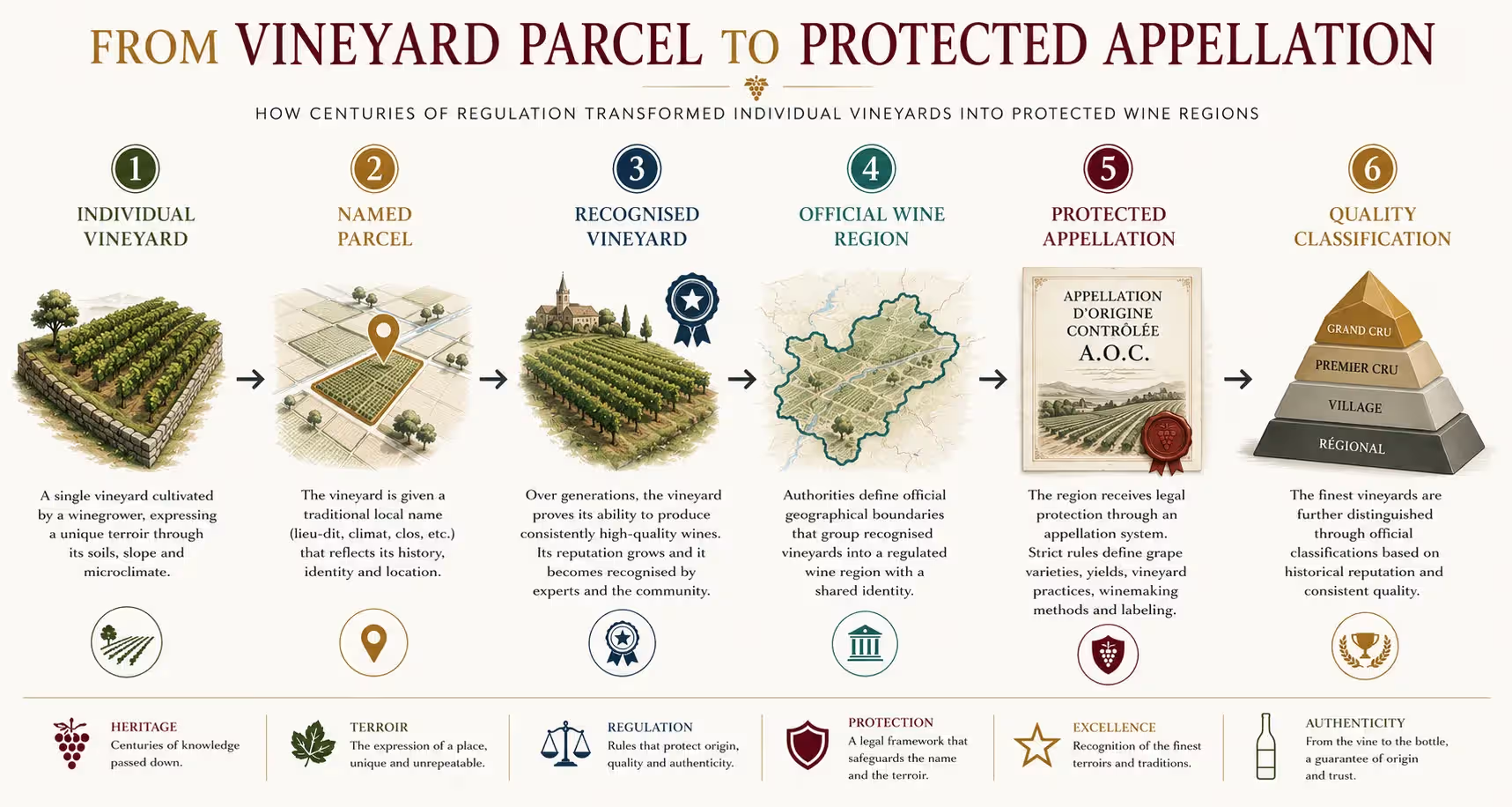
By the nineteenth century, Western Europe’s most prestigious wine regions were already defined by long-established vineyard boundaries, local traditions, and strong commercial reputations. However, these geographical identities still lacked comprehensive legal protection. As wine markets expanded and regional names became increasingly valuable, governments began transforming historical vineyard boundaries into officially protected production zones governed by detailed regulations. This marked the true birth of the modern appellation system.
The first step was to define production areas with legal precision. Instead of relying solely on historical customs or local knowledge, authorities mapped vineyard boundaries, identified eligible villages, and established official limits for each wine region. These delimitations ensured that only wines produced within clearly defined geographical areas could use the corresponding regional name, strengthening consumer confidence while protecting the reputation of established wine regions.
Regulations soon extended beyond geography. Legislators recognized that origin alone was not enough to guarantee authenticity or quality. Modern wine laws therefore introduced detailed production rules covering every stage of viticulture and winemaking. Appellation specifications gradually defined which grape varieties could be planted, maximum vineyard yields, pruning methods, minimum ripeness levels, harvesting practices, and approved winemaking techniques. Compliance with these standards became a legal requirement rather than a matter of local custom.
France became the leading example of this evolution. The creation of the Appellation d’Origine Contrôlée (AOC) system during the twentieth century transformed centuries of local practice into a unified legal framework. Vineyard boundaries that had been recognized for generations were officially codified, while production rules were standardized to preserve the identity and quality of each appellation. The system linked every protected wine to a precisely defined geographical area and a detailed set of production specifications.
Germany developed a complementary regulatory approach based on geographical origin and legally defined quality classifications. Wine regions such as the Mosel, Rheingau, Pfalz, and Mittelrhein received official recognition, while regulations established standards for vineyard registration, grape ripeness, labeling, and quality categories. Although the German system differs from the French model, both are built on the same fundamental principle: the identity of a wine depends on its place of origin and compliance with legally established production rules.
Switzerland adopted cantonal appellation systems reflecting the diversity of its wine regions, while Luxembourg introduced regulations protecting the vineyards of the Moselle Valley. Despite differences in administrative structure, these systems share common objectives: defining production areas, protecting geographical names, preserving regional traditions, and maintaining consistent quality standards.
Over time, appellation systems also introduced hierarchies within individual regions. Certain vineyards, villages, or districts received special recognition because of their long-established reputation and consistently superior quality. Designations such as Grand Cru, Premier Cru, village appellations, and classified vineyard sites reflected centuries of observation linking exceptional wines to specific locations. These classifications demonstrated that regulation could protect not only a region but also the finest terroirs within it.
Today, many of these national systems operate within the broader framework of Protected Designation of Origin (PDO) and Protected Geographical Indication (PGI). Although the terminology has evolved, the underlying principles remain remarkably consistent with those developed over centuries in Western Europe: clearly defined geographical boundaries, legally protected names, strict production rules, and independent controls designed to preserve authenticity, quality, and regional identity. Modern appellations are therefore not simply legal labels—they represent the culmination of centuries of regulatory evolution, transforming historic vineyard landscapes into some of the world’s most rigorously protected wine regions.
The Evolution of Wine Classifications
Protecting a wine’s geographical origin was only the first step in the evolution of Western European wine regulations. As authorities gained a better understanding of their vineyards, they also recognized that not every site within a protected region produced wines of equal quality. Over time, regulatory systems evolved beyond defining where wine could be made to identifying which vineyards consistently produced the finest wines. This gave rise to the wine classifications that remain a defining feature of many European wine regions today.
The earliest classifications were based on centuries of observation rather than scientific analysis. Growers, monasteries, merchants, and local authorities noticed that certain vineyard parcels repeatedly produced wines with greater complexity, longevity, and market value. Factors such as soil composition, slope, drainage, sun exposure, and local climate created measurable differences in quality, even between neighboring vineyards. As these reputations became firmly established, regulators began incorporating them into official classification systems.
Burgundy offers perhaps the clearest example of this evolution. Building upon centuries of monastic records and local knowledge, vineyards were progressively organized into a hierarchy reflecting their historical reputation and exceptional terroir. At the top are the Grand Cru vineyards, followed by Premier Cru sites, Village appellations, and broader Regional appellations. Rather than ranking individual producers, this system recognizes the intrinsic quality and historical significance of the vineyard itself, making Burgundy one of the world’s most terroir-focused regulatory models.
Other regions developed different approaches while pursuing similar objectives. In Bordeaux, the famous 1855 Classification ranked leading wine estates according to their established reputation and commercial value. Although distinct from the Appellation d’Origine Contrôlée system introduced later, the classification created a formal hierarchy that continues to influence the region’s identity and international reputation. Additional classifications were subsequently established for other parts of Bordeaux, further reinforcing the relationship between regulation and recognized quality.
Germany’s regulatory evolution followed its own path. While geographical origin remains fundamental, classifications increasingly emphasized vineyard identity and grape ripeness. Individual vineyard sites, known as Einzellagen, received official recognition, and modern quality systems distinguish exceptional vineyard locations through designations such as Große Lage. These classifications complement geographical protection by highlighting vineyards considered capable of producing wines of outstanding quality.
Although Switzerland, Luxembourg, Belgium, and the Netherlands have smaller wine industries, they have also developed quality hierarchies within their regulatory systems. Protected production zones, authorized grape varieties, and quality standards allow producers to distinguish premium wines while preserving the identity of their regional vineyards.
These classifications illustrate an important principle in Western European wine law: not all protected vineyards are considered equal. An appellation defines where a wine may be produced, while a classification recognizes the historical reputation and consistent quality of specific vineyards or estates within that appellation. Together, these complementary systems provide consumers with valuable information about both origin and expected quality.
Today, wine classifications remain among the most recognizable features of Western European wine regulation. They reflect centuries of observation, legal refinement, and respect for terroir, demonstrating that the region’s regulatory tradition extends beyond protecting geographical names to celebrating the exceptional vineyards that have shaped Europe’s greatest wines.
European Wine Regulations Today
Modern wine regulations in Western Europe are the result of centuries of legal and technical refinement. While today’s systems are far more detailed than the local ordinances and royal decrees that preceded them, they continue to pursue the same objectives: protecting geographical origin, preserving regional identity, ensuring consistent quality, and providing consumers with reliable information about the wines they purchase.
At the heart of modern regulation is the principle that a wine’s name carries legal significance. Protected geographical names may only be used by producers whose vineyards are located within officially defined boundaries and who comply with the production rules established for that appellation. These specifications govern every stage of production, from vineyard management and authorized grape varieties to maximum yields, harvesting practices, winemaking techniques, and labeling requirements.
European legislation has also created a harmonized framework that complements national wine laws. Across most of Western Europe, many wines are protected under the Protected Designation of Origin (PDO) and Protected Geographical Indication (PGI) systems. These designations provide legal recognition throughout the European Union while allowing each country to preserve its own historical classifications and regulatory traditions. Switzerland, although outside the European Union, operates comparable systems that similarly emphasize origin, authenticity, and quality.
Quality control now extends well beyond the vineyard. Producers must maintain detailed production records, document grape sourcing, and comply with traceability requirements that allow wines to be followed from the vineyard to the bottle. Independent inspections and certification procedures help verify that wines meet the specifications of their appellations before they are released to the market.
Labeling regulations have also become increasingly comprehensive. Modern wine labels provide standardized information about origin, vintage, producer, alcohol content, and, where applicable, the protected appellation or geographical indication. These rules improve transparency and help consumers distinguish authentic regional wines from generic products or misleading imitations.
Wine regulations continue to evolve in response to new challenges. Climate change is prompting discussions about authorized grape varieties, vineyard practices, irrigation policies, and the adaptation of production rules to changing environmental conditions. At the same time, sustainability has become an important regulatory focus, with many wine regions encouraging environmentally responsible vineyard management while preserving their historical identity.
Despite these modern developments, the philosophy underlying Western European wine regulation remains remarkably consistent with its historical origins. From Roman vineyard administration and medieval monastic records to today’s protected appellations and certification systems, the central principle has endured: the quality and identity of a wine are inseparable from the place where it is produced. Modern regulations therefore do more than establish legal standards—they preserve centuries of viticultural knowledge, safeguard regional heritage, and ensure that some of the world’s most celebrated wines continue to reflect the landscapes from which they originate.