
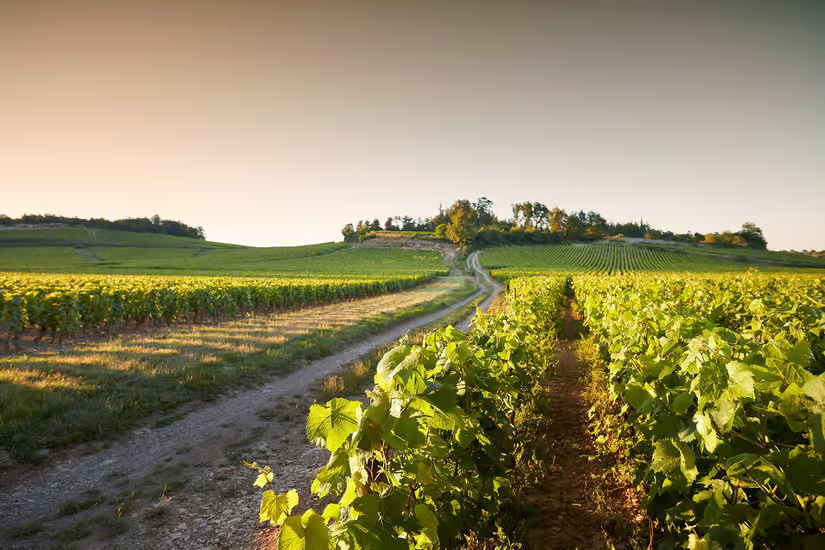
The Côte Chalonnaise wine region represents the soulful heart of Burgundy, situated gracefully between the renowned Côte de Beaune to the north and the rolling hills of the Mâconnais to the south. This narrow ribbon of vineyards, stretching approximately twenty-five kilometers in length and seven kilometers in width, offers a landscape defined by limestone ridges, lush valleys, and a mosaic of small-scale domaines that embody the authentic spirit of French viticulture. For the discerning traveler and the serious collector alike, the region promises an encounter with Pinot Noir and Chardonnay that balances rustic charm with sophisticated precision. Unlike its more famous neighbors, the Côte Chalonnaise maintains a sense of serene discovery, where the pastoral beauty of rural France meets the rigorous standards of Appellation d’Origine Contrôlée excellence.
Visitors are greeted by a terrain that is as geologically diverse as it is visually arresting, featuring sun-drenched slopes that have been cultivated for centuries. The promise of the experience here is one of intimacy; it is a place where one can still walk the vineyards with the winemakers themselves and taste the profound influence of the soil in every glass. As a geographical bridge within the Grande Bourgogne, it serves as a critical transition zone where the prestige of the north begins to merge with the warmer, southern influences of the Saône-et-Loire department. This guide serves as your professional gateway to understanding why this region is currently considered the most exciting frontier for high-value Burgundy investment and luxury wine tourism.
Step off the beaten path and into the vibrant heart of the 'Secret Burgundy.' Beyond the famous slopes lies a landscape of wild elegance and spirited character—uncover the soulful, sun-etched treasures of the Côte Chalonnaise.
Some of our Popular Tours in Côte Chalonnaise

Geology and Climate of the Côte Chalonnaise
The scientific profile of the Côte Chalonnaise wine region is characterized by its complex geological composition and its specific semi-continental climate. Geologically, the region sits on a continuation of the same limestone spine that forms the Côte d’Or, yet the landscape here is more broken and undulating. The soils are predominantly composed of Jurassic limestone and marl, with varying concentrations of clay and sand depending on the elevation and aspect. In the northern sector around Rully and Bouzeron, the limestone is closer to the surface, favoring the crisp acidity and mineral tension required for world-class white wines. Conversely, the iron-rich, heavy clay soils found in Mercurey provide the structure and power characteristic of its renowned red wines.
The climate is subject to the influence of the Morvan hills to the west, which provide a rain shadow effect, though the region remains susceptible to spring frosts and localized hailstorms. The average annual temperature and sunshine hours are slightly higher than in the Côte de Beaune, often resulting in an earlier harvest and excellent phenolic ripeness. This micro-climatic advantage allows for a consistent ripening of Pinot Noir, ensuring that even in cooler vintages, the wines of the Côte Chalonnaise maintain a generous fruit profile and balanced acidity. The varying altitudes, ranging from two hundred and fifty to three hundred and fifty meters, create a diversity of exposures that winemakers use to craft wines with distinct personalities, from the sun-drenched valley floors to the wind-swept upper plateaus.
Centuries of Viticultural Excellence in the Côte Chalonnaise The Historical Heritage
The history of the Côte Chalonnaise wine region is a profound chronicle of ecclesiastical influence, royal patronage, and resilient viticultural evolution. While the Romans were the first to recognize the potential of these limestone-rich slopes, it was the monastic orders of the Middle Ages that truly codified the landscape. The Abbey of Cluny, located to the south, and the Bishopric of Chalon-sur-Saône held significant landholdings here, meticulously documenting the specific qualities of different vineyard plots long before the modern concept of “climat” was finalized. During the reign of the Dukes of Burgundy, the wines of the Côte Chalonnaise, particularly those from Mercurey and Givry, were highly prized at the French royal court. It is frequently noted in historical archives that Givry was the preferred wine of King Henri IV, a testament to the region’s long-standing reputation for quality.
Following the French Revolution, the fragmentation of church estates allowed local families to acquire the land, leading to the rise of the independent vigneron culture that defines the region today. The nineteenth century brought both prosperity and challenge, as the arrival of the railway connected the region to the markets of Paris, yet the phylloxera crisis nearly decimated the ancestral vines. The twentieth century brought the formalization of the Appellation d’Origine Contrôlée system, which finally granted legal protection and international recognition to the unique identities of Bouzeron, Rully, Mercurey, Givry, and Montagny.
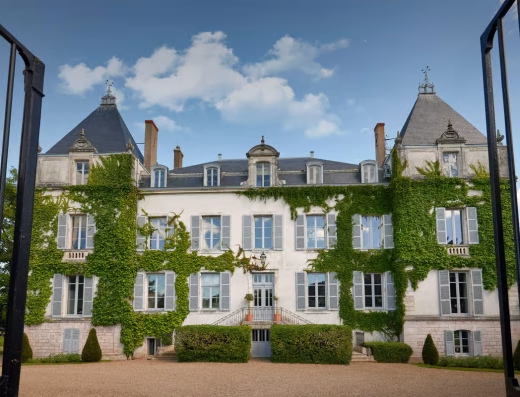
Today, the region stands as a guardian of traditional Burgundian values, offering a historical depth that rivals the more commercialized northern reaches of the province. Each village maintains its own architectural heritage, from the fortified houses of Mercurey to the elegant Renaissance château of Germolles, providing a physical link to the centuries of prosperity brought by the vine.
Côte Chalonnaise: Geology and Climate of the Region
The scientific profile of the Côte Chalonnaise wine region is characterized by its complex geological composition and its specific semi-continental climate. Geologically, the region sits on a continuation of the same limestone spine that forms the Côte d’Or, yet the landscape here is more broken and undulating. The soils are predominantly composed of Jurassic limestone and marl, with varying concentrations of clay and sand depending on the elevation and aspect. In the northern sector around Rully and Bouzeron, the limestone is closer to the surface, favoring the crisp acidity and mineral tension required for world-class white wines. Conversely, the iron-rich, heavy clay soils found in Mercurey provide the structure and power characteristic of its renowned red wines.
The climate is subject to the influence of the Morvan hills to the west, which provide a rain shadow effect, though the region remains susceptible to spring frosts and localized hailstorms. The average annual temperature and sunshine hours are slightly higher than in the Côte de Beaune, often resulting in an earlier harvest and excellent phenolic ripeness. This micro-climatic advantage allows for a consistent ripening of Pinot Noir, ensuring that even in cooler vintages, the wines of the Côte Chalonnaise maintain a generous fruit profile and balanced acidity. The varying altitudes, ranging from two hundred and fifty to three hundred and fifty meters, create a diversity of exposures that winemakers use to craft wines with distinct personalities, from the sun-drenched valley floors to the wind-swept upper plateaus.
Appellations of the Côte Chalonnaise
The Northern Sector: Bouzeron and Rully
In the northernmost part of the Côte Chalonnaise wine region, Bouzeron and Rully represent the pinnacle of white wine production. Bouzeron is the spiritual home of the Aligoté Doré, where the grape achieves a level of complexity and golden ripeness unseen elsewhere in Burgundy. Rully, meanwhile, is a dual-purpose appellation known for both its sophisticated still wines and as the historical center for Crémant de Bourgogne production. The vineyards here are often east-facing, capturing the morning sun to ensure a slow, steady ripening process that preserves acidity.
The Central Heartland: Mercurey and Givry
Mercurey and Givry are the titans of red wine production in the region. Mercurey is the largest appellation in the Côte Chalonnaise, encompassing a vast array of Premier Cru vineyards that produce wines of significant structure, deep color, and intense dark fruit flavors. Givry, slightly smaller and more sheltered from the wind, produces Pinot Noir with a more supple, silken texture and high aromatic intensity.
The Southern Reach: Montagny
The southernmost appellation, Montagny, is devoted entirely to white wines made from the Chardonnay grape. The vineyards are situated on a series of hillsides that offer a variety of exposures, resulting in wines that range from lean and mineral to rich and honeyed. Montagny is unique in that its classification system is based on the alcohol content and specific vineyard sites, with a high proportion of the region designated as Premier Cru.
Signature Grape Varieties of the Region
Pinot Noir
The primary red grape of the Côte Chalonnaise wine region, Pinot Noir, thrives in the marl-heavy soils of the central appellations. In this region, the grape produces wines that are celebrated for their vibrant red fruit aromatics, including cherry and raspberry, often complemented by earthy undertones and soft, approachable tannins. These wines typically exhibit an elegant aging potential, developing complex notes of forest floor and spice over five to ten years
Gamay
While Pinot Noir dominates the red wine landscape, Gamay maintains a traditional presence within the Côte Chalonnaise wine region, particularly in the production of Bourgogne Passetoutgrains. On the specific granitic incursions found near the southern borders, Gamay delivers a profile characterized by bright acidity, crunchy black fruit, and a distinct peppery finish. It serves as an essential component for regional blends, adding structure and vivacity to the softer Pinot Noir fruit
Chardonnay
Chardonnay finds its most prestigious expression in the limestone-dominant slopes of Rully and Montagny. The oenological profile of Chalonnaise Chardonnay is marked by a balance of ripe citrus fruit, floral notes, and a distinct flinty minerality. While some producers use oak to add breadth and vanilla nuances, the regional style often emphasizes purity and freshness.
Aligoté
Unique to this region is the village of Bouzeron, the only appellation dedicated exclusively to the Aligoté grape. This variety produces a wine of exceptional zest and nerve, characterized by high acidity and citrus-driven flavors that serve as a perfect expression of the cooler, stony slopes
Côte Chalonnaise Wine and Food Pairing The Culinary Heritage: Gastronomy and Local Pairing Traditions.
The culinary traditions of the Côte Chalonnaise wine region are deeply intertwined with its viticultural output, creating a symbiotic relationship where the plate and the glass are designed to elevate one another. This regional gastronomy is defined by the richness of Burgundian ingredients, including the prestigious Charolais beef and the game of the nearby forests.
The structured Pinot Noirs of Mercurey find their ultimate culinary partner in the “Boeuf Bourguignon,” a slow-cooked masterpiece where the wine’s natural acidity and firm tannins cut through the gelatinous richness of the meat and the savory depth of the red wine reduction. For the more delicate and silken reds of Givry, the local “Jambon Persillé”—a terrine of ham flavored with garlic and a high concentration of parsley—provides a classic regional pairing, as the wine’s fruit purity balances the salty, herbal profile of the charcuterie.
The white wines of the region, specifically those from the limestone slopes of Rully and Montagny, demand pairings that respect their mineral tension and aromatic complexity. The iconic “Escargots de Bourgogne,” prepared with a heavy infusion of garlic and parsley butter, are traditionally served with a glass of Rully Blanc, where the wine’s crispness cleanses the palate after each buttery morsel.
Furthermore, the creamy, pungent “Epoisses” cheese—often washed in Marc de Bourgogne—requires the structural weight and stone fruit notes of a Premier Cru Montagny to achieve a harmonious balance. Even the humble Aligoté of Bouzeron has its place in the gastronomic hierarchy, serving as the essential base for the “Kir” aperitif or as a vibrant accompaniment to fresh goat cheeses from the neighboring hillsides. The inclusion of Gamay adds another layer; the “Bourgogne Passetoutgrains” is the traditional choice for rustic pork-based dishes, where the Gamay’s black pepper nuances and high acidity provide a refreshing counterpoint to the fat.
What to Know before visiting Côte Chalonnaise wine region Plan Your Trip to the Côte Chalonnaise
International Access and Regional Arrival
To reach the Côte Chalonnaise wine region, international visitors primarily utilize Paris Charles de Gaulle Airport or Lyon-Saint Exupéry Airport. From Paris, the most efficient transit is the Train à Grande Vitesse departing from Gare de Lyon. Travelers should book tickets to the “Le Creusot-Montceau TGV” station, which serves as the high-speed gateway to the vineyards. This journey typically requires approximately one hour and twenty minutes. From the TGV station, the northern appellations like Rully and Bouzeron are reachable in twenty minutes by road. Alternatively, regional Intercités and TER (Transport Express Régional) trains connect Paris directly to Chalon-sur-Saône in two hours and thirty minutes. From the south, Lyon Part-Dieu offers direct rail links to Chalon-sur-Saône with a transit time of approximately one hour.
Local Navigation: Car Rentals versus Private Chauffeurs
The Côte Chalonnaise wine region is characterized by a fragmented landscape of small villages and isolated vineyard plots, making autonomous navigation a challenge for the uninitiated. While car rental agencies are available at the Chalon-sur-Saône train station and the Le Creusot TGV hub, the strict French road safety laws regarding alcohol consumption make a professional chauffeur-guide the preferred choice for serious oenophiles. A private driver-guide not only ensures legal safety but also provides the logistical advantage of navigating the narrow, often unmarked vineyard tracks that lead to the most prestigious Premier Cru estates. Professional wine tour operators in the region typically provide luxury vehicles equipped for wine storage, ensuring that purchases made at the cellar door are kept at a stable temperature throughout the excursion.
Optimal Timing for Viticultural Engagement
Choosing the correct season is vital for a meaningful visit to the Côte Chalonnaise wine region. The months of May and June (Spring) offer the most balanced experience, featuring mild temperatures and the visual spectacle of the vines in flower, with the added benefit of lower tourist volumes compared to the northern Côte d’Or. For those seeking the technical excitement of the winemaking process, September remains the peak season. During the harvest, the villages of Mercurey and Givry are alive with activity, though visitors must book appointments several months in advance as winemakers are preoccupied with the press. Conversely, a winter visit (January to March) provides a quiet, intimate atmosphere where cellar masters have more time for technical discussions, though the vineyards themselves remain dormant.
Professional Etiquette and Visitor Standards
A visit to the domaines of the Côte Chalonnaise is considered a professional engagement rather than a casual tourist activity. It is standard practice to book every tasting appointment at least two to four weeks in advance. When visiting smaller family estates, it is considered polite to purchase a minimum of three to six bottles if a tasting fee is not explicitly charged. In the cellars, visitors should be prepared for temperatures between twelve and fourteen degrees Celsius, necessitating appropriate layering even during the summer months. Furthermore, demonstrating a basic knowledge of the regional classification—specifically the distinction between Village and Premier Cru status—is highly regarded by local producers and often leads to more technical and exclusive tasting opportunities.