Table of Contents
The global wine landscape of Greece is currently undergoing a radical transformation. For decades, the industry was defined by a handful of “international” clones—Cabernet, Chardonnay, and Merlot—that created a standardized global palate. However, as climate change challenges traditional vineyards and consumers seek “authenticity” over “brand names,” the world is turning its gaze toward Greece. With a viticultural history stretching back over 6,500 years, Greece possesses one of the most diverse genetic libraries of Vitis vinifera on Earth.
This guide is an invitation to explore that library. We aren’t just looking at fermented juice; we are looking at biological survivors in specific terroir. Greek grapes have evolved in isolation, adapting to volcanic ash, mountain snow, and salt-laden winds. In the following sections, we will break down the “Noble” varieties that define the Greek identity, the “Rising Stars” that are changing the modern market, and the “Hidden Gems” that were nearly lost to history.
Discover our selection of wine Tours and tastings in Greece



The White Titans: A Masterclass in High-Altitude and Volcanic Freshness
The white wines of Greece are currently the darlings of the sommelier world. What makes them unique is their structural integrity. In many warm climates, white grapes lose their acidity as they ripen, resulting in “flabby” wines. Greek white varieties, however, have evolved to retain a sharp, crystalline acidity even under the Mediterranean sun. This section explores the grapes that have mastered the art of freshness in extreme conditions.
Assyrtiko: The Volcanic Warrior of the Aegean
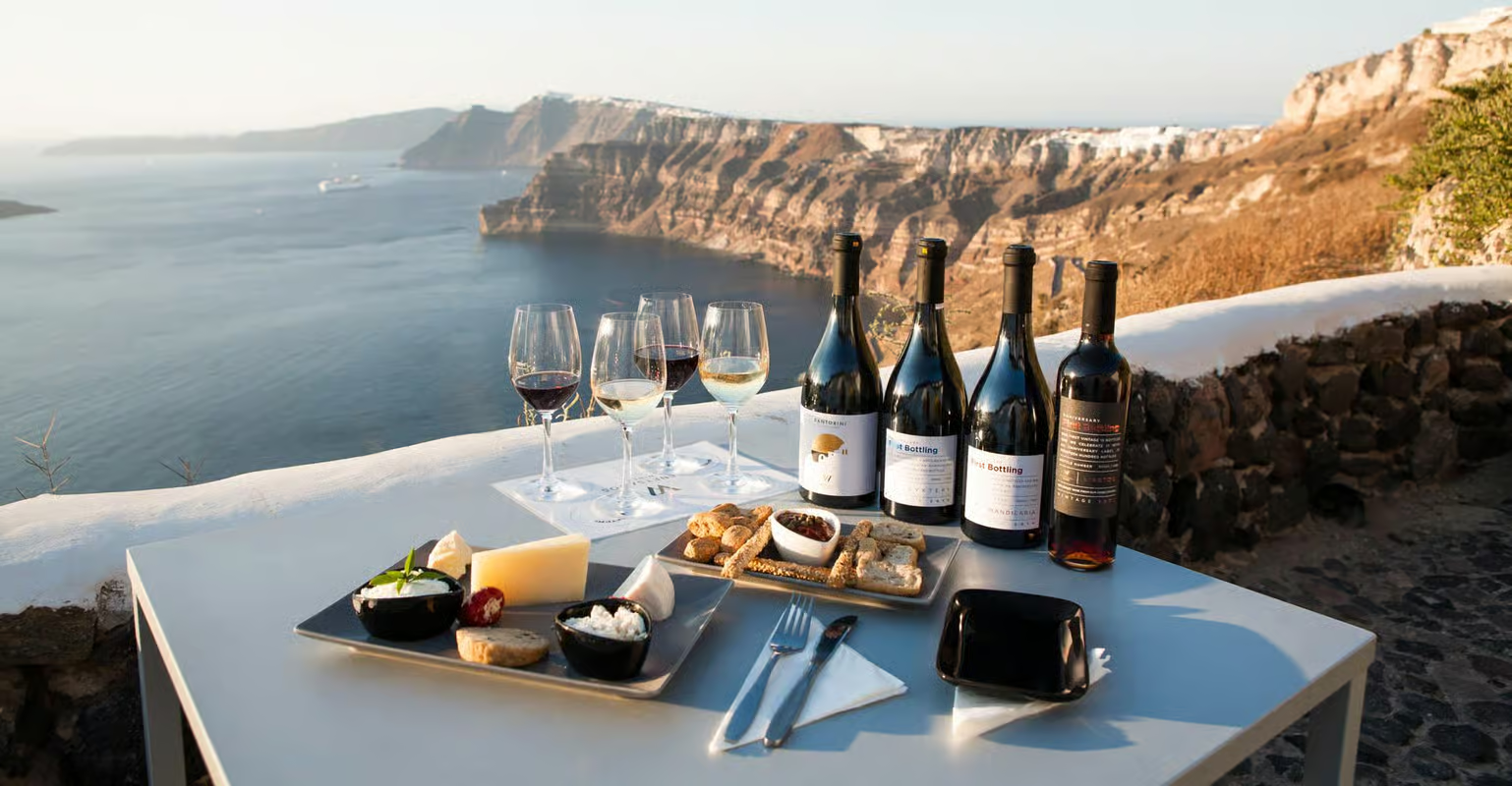
If there is one grape that symbolizes the “Greek Wine Renaissance,” it is Assyrtiko. While it is now planted across the globe, its spiritual and genetic home is the island of Santorini. It is a variety that doesn’t just grow; it survives. It is one of the few grapes in the world that can produce high alcohol (14%+) while maintaining a pH level similar to cool-climate Riesling.
-
The Personality & Morphology: Assyrtiko is fierce. It is bone-dry, mineral, and unapologetically powerful. The vine itself is incredibly hardy, with thick-skinned berries that resist sunburn and dehydration. In the glass, it doesn’t offer the simple “fruitiness” of a Pinot Grigio; it offers the power of the earth.
-
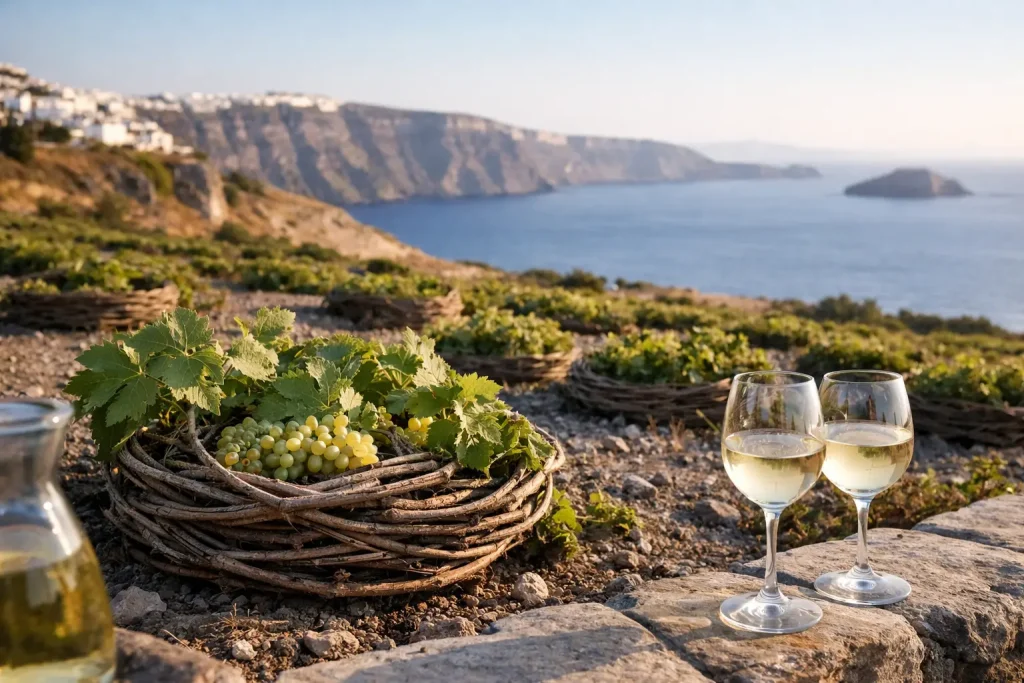
The Survival Tactic: To witness Assyrtiko in Santorini is to see a battle against nature. To protect the fruit from the Meltemi (brutal summer winds), growers weave the vines into ground-hugging “kouloura” or baskets. The grapes grow on the inside, shielded from the wind and the abrasive volcanic sand.
-
The Sensory Experience: The primary hallmark of Assyrtiko is “salinity.” Because of the sea spray that blankets the islands, the grape has a distinct salty finish. You’ll find notes of lemon pith, flint, and wet stones. It is a “structured” white that feels more like a red wine on the palate.
Table of Greek grapes
| A – C | D – K | L – M | P – S | T – Z |
|---|---|---|---|---|
| Abatis | Dafni | Ladikino | Pamidi | Tampaki |
| Adoli Volvi | Damaskino | Lagorthi | Papadiko | Thrapsa |
| Agianniotiko | Debina | Lakiotiko | Papatsouda | Thrapsathiri |
| Agiorgitiko | Dermatas | Lefko | Pariano | Triglyko |
| Agoumastos | Dichro | Liatiko | Pavlos | Tsaoussi |
| Aidani Aspro | Diproso | Limnio | Petrokoritho | Tsardana |
| Aidani Mavro | Doumpraina | Limniona | Petroulianos | Tsergi |
| Akaminato | Dratsoglo | Livalidi | Phidias | Tsigello |
| Amfioni | Eftakoilo | Malagouzia | Platani | Tsimpidi |
| Amorgiano | Epsimo | Maloukato | Plyto | Tsitsila |
| Anthosmias | Fidaki | Mandilaria | Potamisi | Tsolikaki |
| Araklino | Fileri | Marantia | Preknadi | Tsoumprena |
| Areti | Flaska | Mavro Spetson | Proustiko | Tzortzina |
| Arkadiko | Fokiano | Mavrotragano | Psarrosymako | Vaftra |
| Armeletousa | Gaidouria | Mavroudi | Pseftoatiko | Valaitis |
| Asprokoritho | Garidako | Mavrodaphne | Psilomavro | Valanidio |
| Asprouda | Giannoudi | Mavro-kalavrytino | Psoromati | Vardea |
| Assyrtiko | Gidoti | Mavrostyfo | Pyrovola | Vertzami |
| Athiri | Glykadi | Mavrothira | Raeti | Vidiano |
| Avgoustiatis | Glykerythra | Melissaki | Retino | Vilana |
| Avidiano | Gorgogianni | Merteli | Robola | Violento |
| Balahtari | Goustolidi | Mesonikola | Roditis | Vlachiko |
| Batiki | Kakotrygis | Monemvassia | Romeiko | Vlati |
| Bekiari | Kalavryta Black | Moschatella | Rozaki | Voidomatis |
| Belas | Kalliniatiko | Moschofilero | Santomeriana | Volitsa |
| Bogialamodes | Karampraimis | Moschomavro | Savatiano | Vossos |
| Chidiriotiko | Kartsiotis | Moschopoula | Sefka | Vradiano |
| Chlores | Katsakoulias | Mouchtaro | Serifiotiko | Voulgariko |
| Chondromavro | Katsano | Mouskoudi | Sideritis | Xeromahairos |
| Chortiati | Keratsouda | Muscat of Alexandria | Skiadopoulo | Xinomavro |
| Chryssolofos | Kidonitsa | Muscat of Spina | Sklava | Xynisteri |
| Cidonia | Koiniatiko | Muscat White | Skopelitiko | Zakynthino |
| Cyminos | Kontokladi | Mylona | Skylopnichtis | Zalovitiko |
| Cypro | Korfiatis | Mygdali | Stavroto | Zoumiatiko |
| Ambelon | Kotsifali | Negoska | Sykiotis | Zymatiko |
| Asprovaris | Krassato | Nykteri | Sklava | Zyriatiko |
| Augoustidi | Koumari | Malvasia | Petromatros | Tsoumprena |
| Baladi | Kountoura | Mavrodafni | Platana | Tzortzina |
| Chlori | Kritiko | Mavrofilero | Podaras | Voulgariko |
| Kalliniatiko | Kydonitsa | Mavropetra | Psarros | Xynogalo |
Moschofilero: The Aromatic Poet of the High Plateau
Contrasting the raw power of Assyrtiko is the delicate, ethereal nature of Moschofilero. This is a “gris” grape—its skins are a dusty purple-pink—and it finds its best expression on the high-altitude plateau of Mantinia in the Peloponnese. It is a variety that defines “elegance through aromatics.”
-
The Climate Connection: Mantinia is one of the coldest viticultural areas in Greece. Harvest often happens as late as October or November. This long, cool growing season is essential because it allows the grape to slowly develop its complex aromatic precursors without losing its signature “nerve.”
-
The Fragrant DNA: Moschofilero is an aromatic powerhouse. The moment you pour a glass, the room fills with the scent of rose petals, jasmine, and citrus blossom. It is exotic and feminine, but the palate is a surprise: it is bone-dry, light-bodied, and incredibly zesty.
-
Evolution of Style: While traditionally made into crisp whites, modern winemakers are using Moschofilero for sophisticated “gris” rosés and skin-contact “orange” wines that highlight its spicy, ginger-like undertones.
Malagousia: The Resurrection Success Story
The story of Malagousia is the ultimate Greek wine fairy tale. In the 1970s, it was virtually extinct, existing only in a handful of vines in a university vineyard. Today, it is planted nationwide and is considered one of the most commercially successful Greek whites because it strikes a perfect balance between fruit and structure.
-
The Bridge Variety: Malagousia is the “crowd-pleaser.” It sits perfectly between the high-acid tension of Assyrtiko and the floral intensity of Moschofilero. It offers a lush, silky mouthfeel that is often compared to a high-end Viognier but with much better acidity.
-
The Flavor Profile: It is packed with flavors of ripe peach, pear, and Mediterranean herbs like mint and basil. What makes it “authoritative” is its texture—it has a natural oiliness and a “peppery” finish that makes it a dream for food pairings.
The Red Royalty: Savory Complexity and Tannic Architecture
Greek red grapes are a revelation for those tired of “fruit-bomb” styles. They tend to be savory, earthy, and highly structured. They aren’t trying to mimic the sweetness of a California Cabernet; they are leaning into the “umami” side of the spectrum. These varieties are built for the cellar and the dining table.
Xinomavro: The "Acid Black" Enigma of the North
Xinomavro (pronounced Ksee-no-mav-ro) is the most complex red grape in the Mediterranean basin. It is the flagship grape of Northern Greece and is often compared to Piedmont’s Nebbiolo. It is a variety for the patient collector—one that demands respect and time.
-
The Structural Genius: The name literally translates to “Acid Black,” which tells you everything you need to know about its chemistry. It is naturally high in both tannins and acidity. It is a “translucent” red; in the glass, it looks pale and garnet-colored, but on the palate, it is a powerhouse of grip and longevity.
-
The Savory Spectrum: This is the only grape in the world that consistently smells like sun-dried tomatoes, black olives, and forest floor. As it ages, it develops tertiary notes of truffle, leather, and tobacco. It doesn’t rely on fruit for its charm; it relies on complexity.
-
Regional Differences: In Naoussa, it is powerful and “masculine.” In Amynteo, where the soil is sandy and the altitude higher, it becomes floral, elegant, and is even used to produce world-class sparkling rosés.
Agiorgitiko: The "Blood of Hercules"
Based in the historic, rolling hills of Nemea, Agiorgitiko (pronounced Ah-your-yee-tee-ko) is the most widely planted red variety in Greece. It is the “approachable” counterpart to the edgy Xinomavro, known for its velvety tannins and deep ruby color.
-
The Versatile Chameleon: Agiorgitiko is arguably the most adaptable grape in the Greek vineyard. Depending on the altitude and the winemaking style, it can produce everything from light, spicy rosés to massive, oak-aged “icon” wines that can age for 20 years.
-
The Palate: It is characterized by lush red fruit—think juicy cherries, plums, and raspberries—mixed with sweet spices like nutmeg and cinnamon. Its tannins are naturally “sweet” and soft, making it an immediate favorite for those new to Greek reds.
-
The “Nemea” Terroir: The best Agiorgitiko comes from mid-altitude vineyards where the grape can ripen fully while retaining enough acidity to stay balanced.
The Rising Stars: The New "Noble" Class
While the “Big Five” dominate the headlines, there is a second tier of grapes that are currently “exploding” on international wine lists. These varieties represent the “New Wave” of Greek winemaking—grapes that were once used for blending but are now being vinified as high-end, single-variety stars.
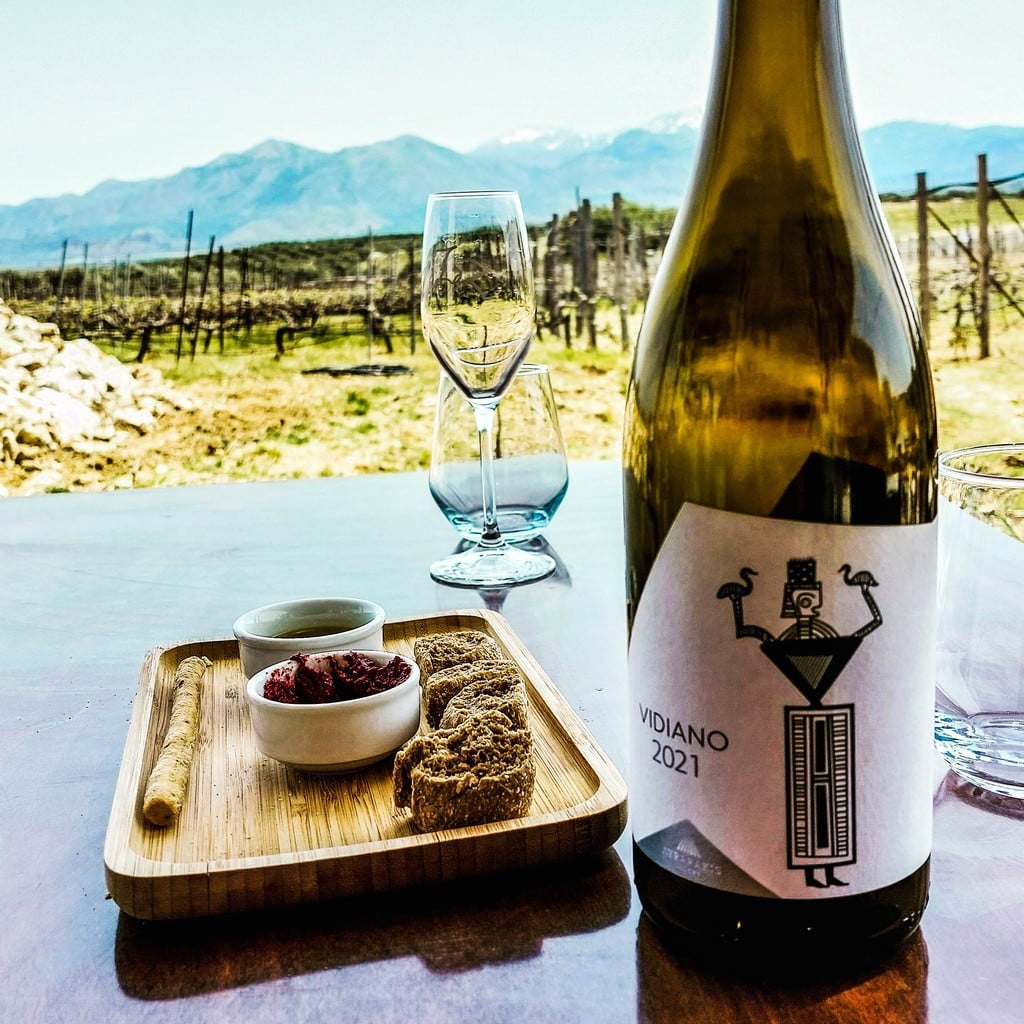
Cretan Vidiano from Lyrarakis Winery
Vidiano: The "Diva" of Crete
If there is one white variety poised to join the ranks of the “Nobles,” it is Vidiano. Once nearly lost to history, this Cretan variety has seen a meteoric rise in the last decade. Often referred to as the “Diva of Crete” because of its finicky nature in the vineyard, it rewards the patient grower with a white wine of unparalleled textural complexity.
-
Morphology and Terroir: Vidiano thrives at high altitudes (500m+) where the cooling mountain breezes of Crete preserve its delicate aromatics. The vine produces medium-sized clusters with thick-skinned berries that handle the Mediterranean sun with ease. It is a variety that requires poor, well-drained soils to curb its natural vigor and concentrate its flavors.
-
The “Chardonnay” of Greece: Vidiano is often compared to Chardonnay because of its incredible versatility. It can be vinified as a crisp, tank-fermented wine with high energy, or it can be fermented in oak, where it develops a creamy, buttery weight. Its primary flavor profile is dominated by apricot, yellow pear, and a distinct mineral “smoke.”
-
Chemical Character: What sets Vidiano apart is its high level of glycerol. This gives the wine a silky, almost oily mouthfeel that coats the palate, making it a “heavyweight” white that can stand up to rich dishes like roasted poultry or oily fish.
Limniona: The Elegant Newcomer
Not to be confused with the ancient grape Limnio, Limniona is arguably the most exciting red variety to emerge from Central Greece in the last twenty years. After being rescued from a handful of old vines in Tyrnavos, it has become the hallmark of “finesse” in Greek red winemaking.
-
The Finesse Profile: Limniona is frequently described as the “Pinot Noir of Greece.” In a country known for bold, tannic reds, Limniona offers a refreshing alternative. It possesses a deep, vibrant color but surprisingly soft, silky tannins. It is a wine of perfume and elegance rather than raw power.
-
Aromatic Spectrum: The aromatic complexity of Limniona is its greatest asset. Expect a bouquet of pomegranate, wild strawberries, and red cherries, layered with sophisticated notes of black pepper and dried herbs. It is a variety that speaks of the “Garrigue” (Mediterranean scrubland) without the heavy, jammy weight often found in southern reds.
-
Aging Potential: Despite its soft tannins, its high acidity and phenolic concentration allow it to age gracefully, evolving into a wine of great earthy complexity.
Mavrodaphne: The Dark Knight Resurrected
Historically, the name Mavrodaphne was synonymous with sweet, fortified dessert wines from Patras. However, a “dry revolution” is currently underway. A new generation of winemakers is proving that when Mavrodaphne is vinified as a dry red, it becomes one of the most powerful and distinctive wines in Europe.
-
The Botanical Identity: The name translates to “Black Laurel,” and for good reason. The skins are ink-black and thick, packed with anthocyanins. When fermented dry, the grape reveals a “wild” and moody personality that is unlike anything else in the vineyard.
-
The Savory Dark Side: Dry Mavrodaphne is not for the faint of heart. It is a bold, concentrated wine with notes of crushed blackberries, raw cocoa, and medicinal herbs like bay leaf and rosemary. It has a distinctive “balsamic” quality and a bitter-sweet chocolate finish that makes it an incredible pairing for game meats and dark, savory sauces.
-
The Modern Movement: Producers are now moving away from small barriques and toward clay amphorae and large oak foudres to allow the “herbal” soul of the grape to shine through without being masked by wood vanilla.
Robola: The "Wine of the Stones" from Cephalonia
From the Ionian island of Cephalonia comes Robola, a white grape that produces some of the most “steely” and mineral wines in the Mediterranean. The Venetians, who once ruled the island, called it Vino di Sasso (Wine of the Stone) because the vines literally grow out of pure limestone rock on the slopes of Mount Ainos.
-
The Terroir Connection: Robola is a lithophytic grape. It thrives in high-altitude, rocky environments where soil is scarce. This creates a chemical profile dominated by citrus-driven acidity and a distinct smoky, flinty minerality.
-
Style and Character: It is often compared to a high-end Chablis or a dry Austrian Riesling. It is lean, high-acid, and incredibly refreshing, showing flavors of green apple, lemon zest, and white flowers. It is the ultimate expression of “mountain-maritime” viticulture.
Liatiko: The Ancient Sun-Kissed Red of Crete
Liatiko is one of the oldest and most important red varieties on the island of Crete. Its name is derived from Ioulios (July), the month in which the grape typically begins to ripen. It is a grape of light color but immense aromatic depth.
-
The Pale Powerhouse: Do not let its light, garnet color fool you. Liatiko is a high-alcohol, structurally complex grape. It is often used to produce sun-dried sweet wines, but its dry versions are currently trending among sommeliers who love “pale reds” with high complexity.
-
Sensory Profile: It offers a heady mix of dried cherries, raisins, and sweet spices, but what makes it unique is its “savory-herbal” edge—think dried thyme, oregano, and earth. It is soft on the palate but lingering and warm.
Limnio: The Ancient Legend of Lemnos
Mentioned by Homer and Aristotle, Limnio is arguably the oldest recorded grape variety still in active production. Originally from the island of Lemnos, it has found a modern home in the mountainous vineyards of Halkidiki.
-
Historical Weight: Limnio bridges the gap between ancient Greek history and modern science. It is a sturdy, drought-resistant vine that produces medium-bodied reds with a very specific structural profile.
-
The “Forest Floor” Profile: Unlike many Mediterranean reds that are “fruit-forward,” Limnio is defined by its herbaceous and earthy notes. It tastes of fresh forest berries, bay leaf, and black pepper. It has silky tannins and a bright acidity that makes it incredibly food-friendly and “digestible.”
The "Insider" Catalog: Expanding the Rare & Unique
While the “Noble Six” and the “Rising Stars” dominate the modern headlines, the true soul of Greece’s viticultural heritage lies in its vast catalog of “insider” varieties. These are the grapes of the hidden valleys, the rugged islands, and the high-altitude mountain pockets where time seems to have stood still. Often referred to as “micro-varieties,” many of these cultivars are endemic to a single village or a handful of ancient terraces.
For the true connoisseur, this is where the journey gets interesting. These grapes represent the raw, unpolished edge of Greek winemaking—varieties that weren’t bred for commercial success, but rather selected by nature and local farmers over thousands of years for their specific local utility. Whether they were used to add deep pigment to a blend, survive a specific island wind, or provide a unique aromatic lift, these “Hidden Gems” are the final piece of the puzzle for anyone claiming authority on Mediterranean wine.
Kidonitsa: The Quince of Laconia
If you are looking for a grape with a literal identity, Kidonitsa is the answer. Found primarily in the Peloponnese, its name translates to “little quince,” and the aromatic resemblance is uncanny. It is a variety that bridges the gap between floral and fruity, offering a medium-bodied, elegant structure that is rapidly becoming a favorite for high-end Greek gastronomy. It feels like a secret discovered in an ancient orchard.
Mavrotragano: The Volcanic Soul of Santorini
Once a humble blending partner used to add depth to sweet Vinsanto, Mavrotragano was nearly lost when Santorini’s vineyards began to shrink. Rescued by a few visionary producers, it is now one of the most prestigious (and expensive) reds in the country. It is a “wild” grape—producing tiny berries that are dark, concentrated, and packed with volcanic energy. Expect a sensory profile of dark forest fruits, coffee beans, and the scent of cold fireplace ash.
Kotsifali: The Floral Heart of Crete
In the sun-drenched vineyards of Crete, Kotsifali is the variety that provides the charm. It is a high-alcohol, low-color grape that acts as the “spirit” of Cretan red blends. What it lacks in deep pigment, it more than makes up for in aromatics. It smells of carnations, sweet spices, and wild Mediterranean herbs. When you drink a wine dominated by Kotsifali, you are tasting the warmth and the floral diversity of the Cretan landscape.
Mandilaria: The Midnight "Dye" of the Aegean
Mandilaria is the “tough guy” of the islands. Its skin is so thick and its anthocyanin (color) count so high that it can stain a glass almost instantly. While it can be rugged and tannic on its own, it is a master blender, providing the “bones” and the deep, ink-like purple hue to lighter varieties. It is the grape of the Cyclades, ruggedly adapted to the salt and the wind.
Sideritis: The "Iron" Grape of Achaia
Named after the Greek word for iron (Sidero), Sideritis is as tough as its name suggests. This pink-skinned grape from the Northern Peloponnese produces white wines with a “stony” minerality and incredible structural longevity. It is a late-ripening variety that maintains its crispness well into the autumn, offering a lean, refreshing, and highly mineral profile that feels as if it were pressed from cold river stones.
Debina: The Sparkling Star of Epirus
High in the mountainous, misty region of Zitsa, Debina creates wines of ethereal lightness. It is a white grape that excels in the production of sparkling and semi-sparkling wines. It is characterized by its high acidity and its flavors of green apple, pear, and white blossoms. It is the “Cool Climate” face of Greek viticulture, proving that Greece can do elegance and “bubbles” just as well as it does sun-soaked reds.
Vertzami: The Dark Secret of Lefkada
Found almost exclusively on the island of Lefkada, Vertzami is a grape of intense, raw power. It is one of the most deeply colored grapes in the world, producing wines that are nearly opaque. It is known for its high tannins and its flavors of bitter chocolate, bay leaf, and blackberries. It is a rustic, powerful variety that is only now beginning to be refined by modern winemaking techniques.
Muscat of Spina: The Delicate Cretan Clone
While Muscat is grown all over the Mediterranean, the Spina clone from Crete is a different animal altogether. It is a small-berried variety that produces wines of incredible floral finesse without the heavy, cloying weight of traditional Muscats. It is bright, breezy, and smells like a fresh spring morning in a citrus grove.
Liatiko: The Sun-Dried Ancient
Liatiko is the historical red of Crete. Its name comes from Ioulios (July), the month it starts to ripen. It is a fascinating grape because it has very light color but high alcohol and intense sweetness. It is used for some of the world’s finest sun-dried dessert wines, but when made dry, it offers a savory, earthy profile of dried cherries and wild thyme that is unlike anything else in the glass.
From Knowledge to Experience
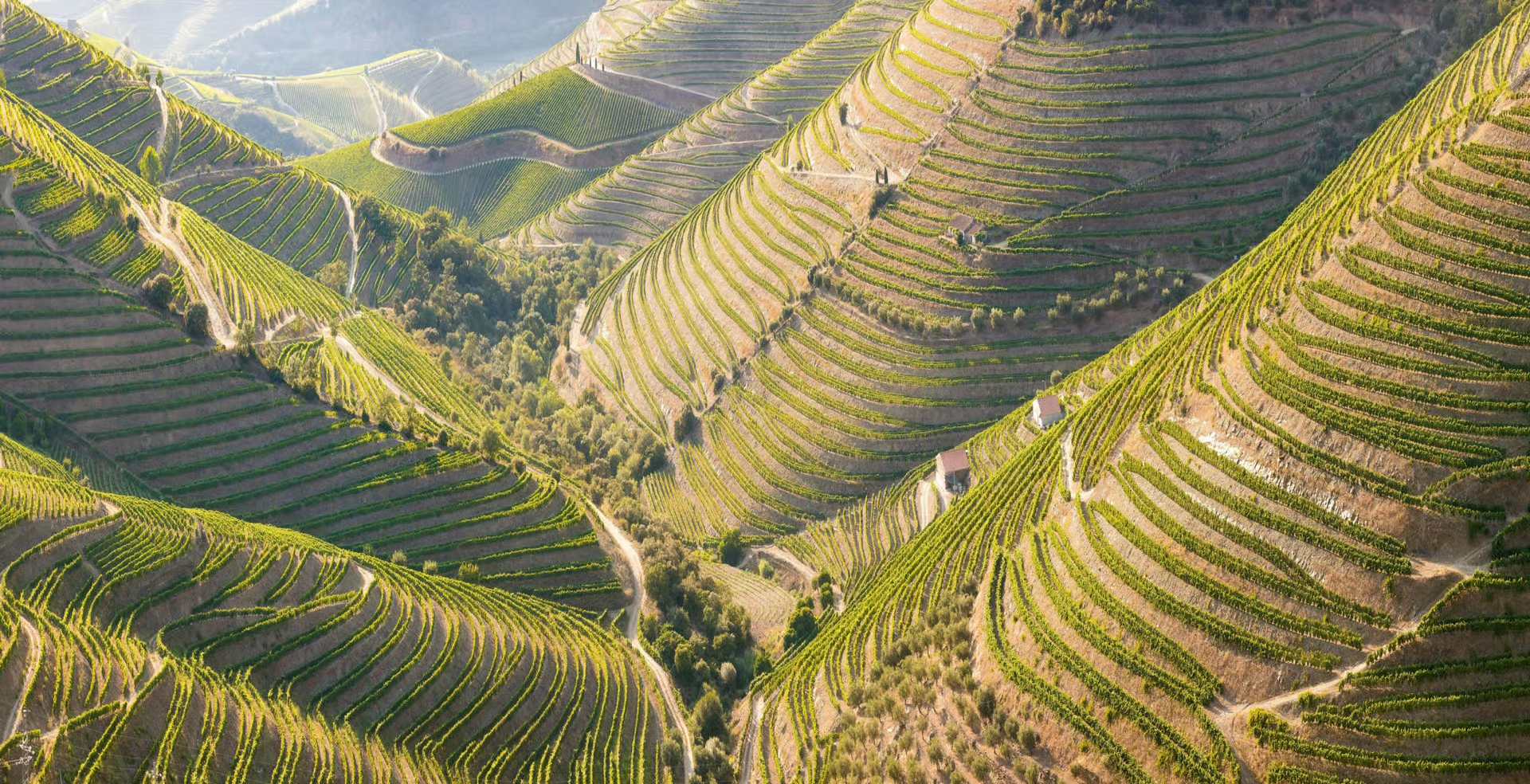
The science of geology and the precision of oenology provide the framework, but wine is a living liquid that can only be fully understood in situ. While the geology of Greece is written in stone, the experience of it is found in the glass, shared under the same sun that ripened the fruit.
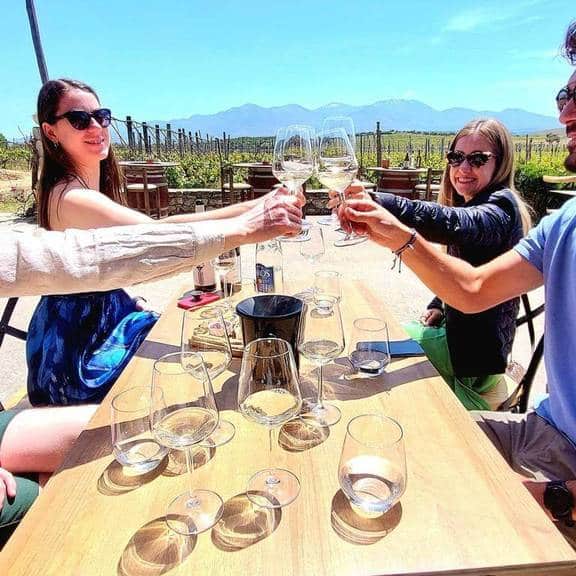
We invite you to move beyond the technical and into the experiential. Join our curated wine tours designed for the discerning palate, where you will walk the very soils—the ancient gravels of Nemea, the fractured limestones of Naoussa, and the white volcanic ashes of Santorini—that give these wines their life. This is a professional, high-end invitation to witness the mastery of Greek viticulture firsthand, guided by experts who will show you how the bedrock beneath your feet becomes the complexity in your glass. Experience the terroir of Greece where it was meant to be discovered: in the heart of the vineyard.