
Table of Contents
Chardonnay: The Versatile Global White of Power and Elegance The Cameleon
The adaptable, dry, medium- to full-bodied white known for its wide range of flavors, from lean citrus and mineral to rich tropical fruit and buttery texture.
Chardonnay is the world’s most popular white grape, lauded for its chameleon-like ability to reflect its terroir and the winemaker’s touch. It is the signature white grape of Burgundy, where it produces the profound, mineral-driven wines of the Côte de Beaune (like Meursault and Puligny-Montrachet), and is the core component of many of the finest sparkling wines, including Champagne. Revered globally for its versatility, Chardonnay can produce crisp, unoaked, steely wines (like Chablis) or rich, creamy, and heavily-oaked blockbusters (like many examples from California). Its neutral character allows it to transmit the precise nature of its site and winemaking choices with unparalleled clarity.
Origin: A Noble Lineage and a Burgundian Home French roots
Vigor and Ripeness Chardonnay is a vigorous, early-budding, and early-ripening variety. Its early budding makes it susceptible to spring frost, a constant concern for growers in cool climates like Chablis. Its ability to achieve high sugar levels while retaining good acidity in a variety of climates contributes to its global success.
Skin and Body The Chardonnay berry has a relatively thin skin, but the grape naturally produces wines with a moderate to high extract, giving them a medium to full body and a notably long finish. The texture of the wine, rather than its color, is often its most distinguishing feature.
Acidity and Soil Preference Chardonnay is flexible in its acid retention, which varies significantly by climate. It thrives particularly well on the limestone- and chalk-rich soils of Burgundy (especially the Kimmeridgian marl of Chablis). These poor, calcareous soils naturally moderate the vine’s vigor and encourage the development of minerality and high-toned acidity.
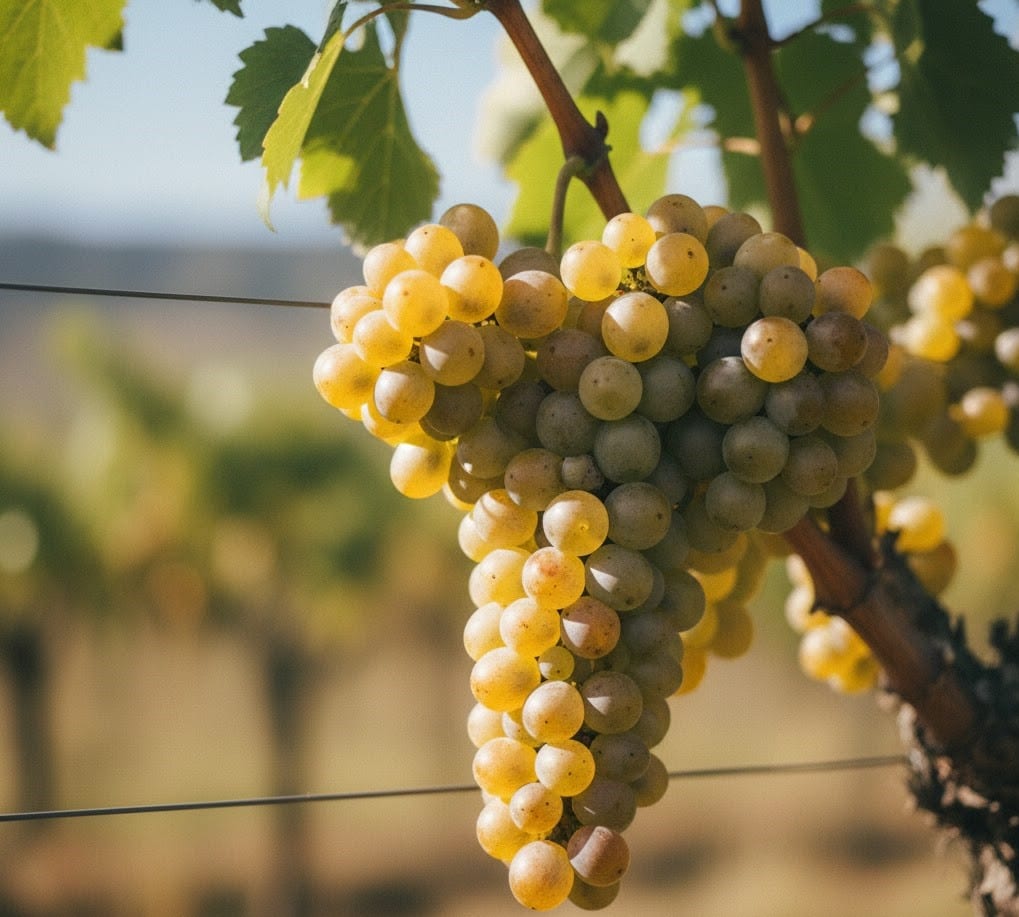
Characteristics of Chardnonay Early Budding, Medium Acidity, and High Vigor
Vigor and Ripeness
Chardonnay is a vigorous, early-budding, and early-ripening variety. Its early budding makes it susceptible to spring frost, a constant concern for growers in cool climates like Chablis. Its ability to achieve high sugar levels while retaining good acidity in a variety of climates contributes to its global success.
Skin and Body
The Chardonnay berry has a relatively thin skin, but the grape naturally produces wines with a moderate to high extract, giving them a medium to full body and a notably long finish. The texture of the wine, rather than its color, is often its most distinguishing feature.
Acidity and Soil Preference
Chardonnay is flexible in its acid retention, which varies significantly by climate. It thrives particularly well on the limestone- and chalk-rich soils of Burgundy (especially the Kimmeridgian marl of Chablis). These poor, calcareous soils naturally moderate the vine’s vigor and encourage the development of minerality and high-toned acidity.
Flavory profile Chardonnay A Spectrum of Flavors and Textures
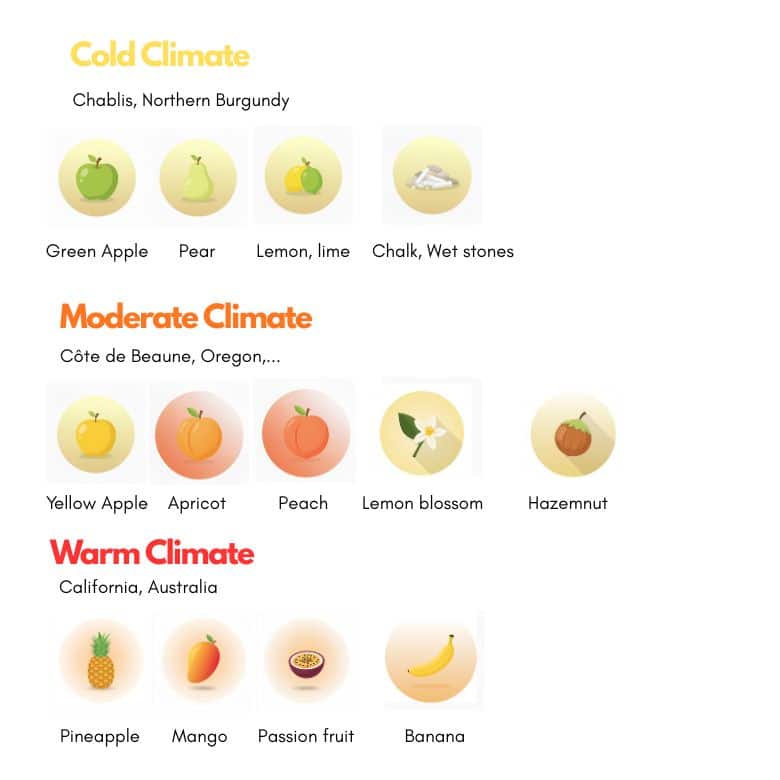
Chardonnay wines range dramatically in flavor based on their growing climate and winemaking.
Cool Climate Style (Chablis, Northern Burgundy):
Primary Flavors:
Green apple, pear, lemon, lime zest, and wet stones/chalk (minerality).
Structure:
High acidity, lean body, and a crisp finish.
Moderate Climate Style (Côte de Beaune, Oregon):
Primary Flavors:
Yellow apple, peach, apricot, light hazelnut, and citrus blossom.
Structure:
Medium-high acidity, medium body, and well-integrated oak/creaminess.
Warm Climate Style (California, Australia):
Primary Flavors:
Pineapple, mango, banana, and passionfruit (tropical).
Structure:
Medium to low acidity, full body, high ripeness, often with pronounced vanilla/butterscotch notes from heavy oak and malolactic fermentation.
Wine techniques Oak treatment and malolactic fermentation
Chardonnay’s wide range of styles is almost entirely dictated by two key winemaking decisions: the use of oak and the employment of Malolactic Fermentation.
1. Oak Treatment:
Unoaked (Stainless Steel):
This style emphasizes the grape’s natural fruit and mineral flavors. The resulting wines are lean, crisp, high-acid, and focused on citrus, green apple, and sometimes mineral notes (e.g., Chablis, many examples from Macon).
Oaked (New/Used Barrel):
This adds significant body, flavor, and texture. Oak imparts notes of vanilla, toast, clove, coconut, and smoke, while also allowing for a slow, controlled oxidation that adds nutty complexity.
2. Malolactic Fermentation (MLF):
Full MLF:
This is a secondary fermentation that converts sharp malic acid (found in apples) into softer lactic acid (found in milk). It is responsible for the signature creamy, buttery, and toasty flavors in Chardonnay.
Partial or No MLF:
The wine retains its bright, primary acidity, resulting in a fresher, more tart profile.
Regions for Chardonnay From Burgundy's Heights to Global Terroirs
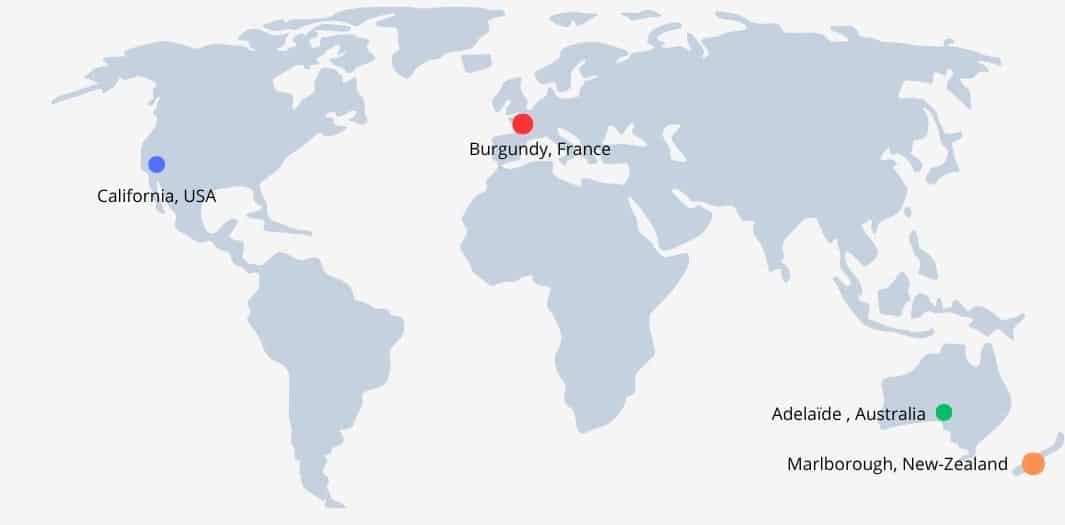
France (Burgundy): The Benchmark
Chablis:
Produces the quintessential unoaked, lean, high-acid, and mineral-driven style.
Côte de Beaune:
The pinnacle, producing complex, age-worthy, and often oaked wines (Meursault, Puligny-Montrachet).
Mâconnais:
Offers softer, fruitier, and typically more affordable, everyday styles (Pouilly-Fuissé).
USA (California – Napa/Sonoma): The Powerhouse
Known for the full-bodied, buttery, and rich style that has defined New World Chardonnay. Cooler pockets in Sonoma (Russian River Valley) balance richness with acidity.
Other Notable Regions:
Australia (Adelaide Hills, Margaret River):
Producers are focusing on more elegant, restrained styles that balance ripeness with high natural acidity.
New Zealand (Marlborough, Hawke’s Bay):
Excellent cool-climate examples that emphasize stone fruit and citrus clarity.
Champagne (France):
Essential component of the world’s most prestigious sparkling wine; bottled alone as ‘Blanc de Blancs,’ showcasing purity and elegance.
Food and wine pairing The Ultimate Accompaniment
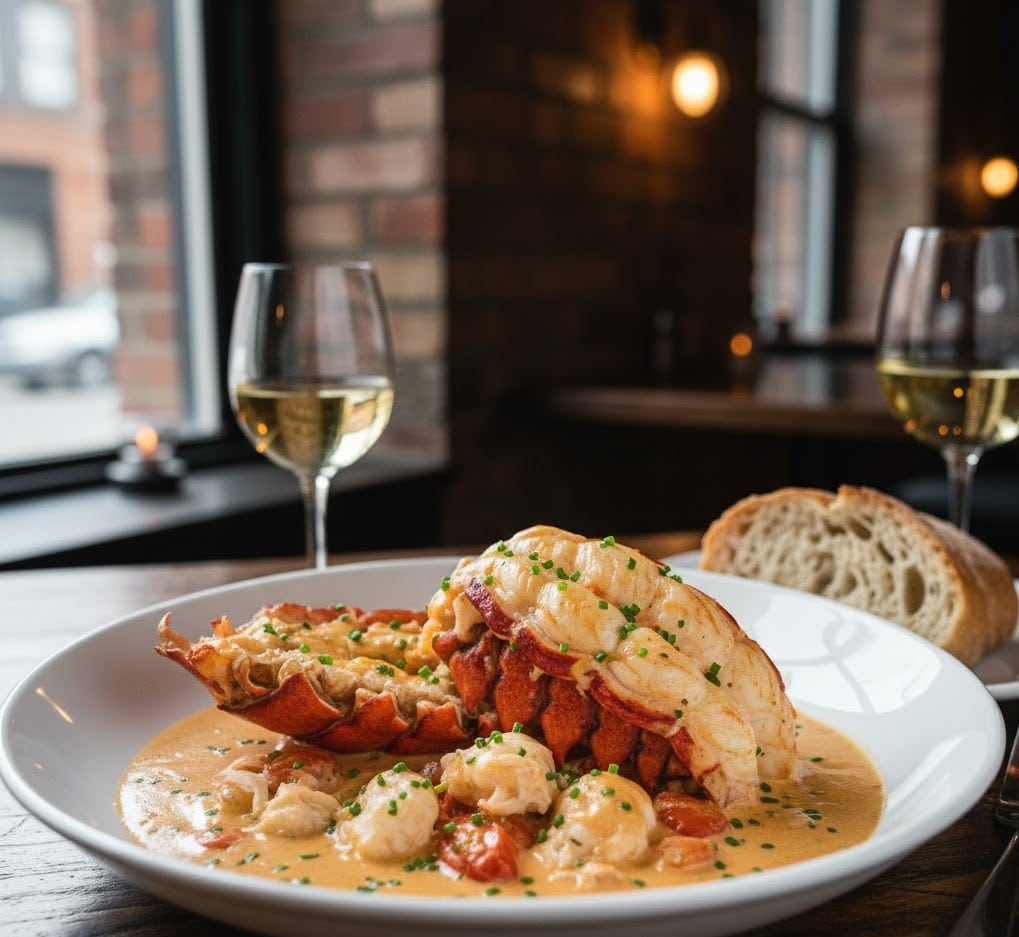
Rich Burgundy Chardonnay like from Côte de Beaune are natural partners with lobster in creamy or buttery sauce.
Chardonnay’s wide spectrum of styles, from lean and crisp to rich and creamy, makes its textural complexity and variable acidity the key to its exceptional versatility as a food wine. Understanding the style of the Chardonnay is critical for optimal pairing.
Cool-Climate / Unoaked Chardonnay Pairings
These wines are characterized by high acidity, a clean texture, and flavors leaning toward green apple, citrus, and wet stone. Think of wines from Chablis or unoaked American examples.
They are excellent with delicate seafood, such as raw or lightly cooked oysters, sushi and sashimi, or steamed white fish like snapper or cod. The wine’s high acidity and mineral notes complement the subtle flavors of the seafood without overpowering them, acting much like a squeeze of lemon.
For lighter meals, these Chardonnays pair beautifully with simple grilled or roasted chicken breast, light chicken salad, and fresh dishes featuring vegetables like asparagus or artichoke, which can sometimes clash with oak. Furthermore, the pronounced acidity cuts through the richness of fried foods like fried calamari, fish and chips, or tempura, acting as an effective palate cleanser.
Warm-Climate / Oaked Chardonnay Pairings
These wines are full-bodied and often display lower acidity, a creamy texture, and signature flavors of vanilla, butter, toast, and tropical fruit. Think of rich California, Côte de Beaune, or Australian examples.
The richness and creamy texture of these wines stand up beautifully to rich fish and shellfish. Specific examples include grilled salmon or tuna steak, lobster (especially served with butter or cream sauce), seared scallops with brown butter, and crab cakes. The wine itself contains the “butter” and “toast” notes that inherently echo how these savory dishes are often prepared.
For meats, the wine’s structure matches the density of roast chicken (especially with crispy skin and pan juices) and pork tenderloin served with a light mushroom or cream sauce.
The wine is a natural complement to creamy dishes and cheese, as its own velvety mouthfeel mirrors and enhances the food. This makes it ideal for rich dishes like Fettuccine Alfredo, carbonara, mushroom risotto, or mild hard cheeses such as Gruyère or Comté.
Pairings to Avoid
While versatile, Chardonnay, particularly the rich, heavily-oaked style, should be approached with caution regarding certain flavors.
Avoid highly acidic or vinegary foods. Highly tart dishes, like a heavy vinaigrette or gherkins, will make the already lower-acid, full-bodied wine taste flabby and sour. The oak and high alcohol tend to exaggerate this tartness. Similarly, the high alcohol content common in oaked Chardonnay tends to magnify the heat of spicy foods, creating an unpleasant burning sensation. Finally, raw or bitter vegetables, like raw broccoli or bell peppers, can lead to a harsh, metallic taste when paired with a highly oaked wine.
Challenges & Future Outlook
Chardonnay’s future is characterized by a “return to balance” after years of focus on the heavily oaked, highly alcoholic style.
The “ABC” Movement to “ABC Redux”: The “Anything But Chardonnay” movement was a direct reaction to the prevalence of overly-oaked, monolithic wines. Today, the trend has reversed, with winemakers globally embracing the cooler-climate, higher-acid styles that prioritize balance and freshness.
Focus on Terroir Expression: Producers are utilizing less new oak and practicing less aggressive MLF to allow the specific terroir of the vineyard to shine through, echoing the classic elegance of Burgundy.
Growing Demand for Chablis: The demand for the crisp, minerally, unoaked style of Chablis continues to grow worldwide, showcasing the public’s desire for the lean, food-friendly side of Chardonnay.
.
Ready to Dive into the World of Chardonnay? Discover Our Tours! Don't just read about Chardonny. Try the full spectrum!
You’ve learned about Chardonnay’s incredible adaptability, its spectrum of flavors from mineral to tropical, and its aristocratic origins. Now, it’s time to experience the world’s most versatile white wine!
We offer exclusive wine tours focused on the leading Chardonnay regions, where you can walk the chalky soils of Chablis and the sun-drenched slopes of Napa. Explore the complex decisions behind oak barrels and malolactic fermentation in the winery, and participate in comparative tastings that reveal how Chardonnay transitions from the laser-focused Blanc de Blancs to the luxurious, age-worthy wines of the Côte de Beaune.
Our Chardonnay-focused tours are designed for those who appreciate nuance, texture, and the endless possibilities of a single grape. Prepare to fall in love with the ultimate food-friendly, cellar-worthy white.