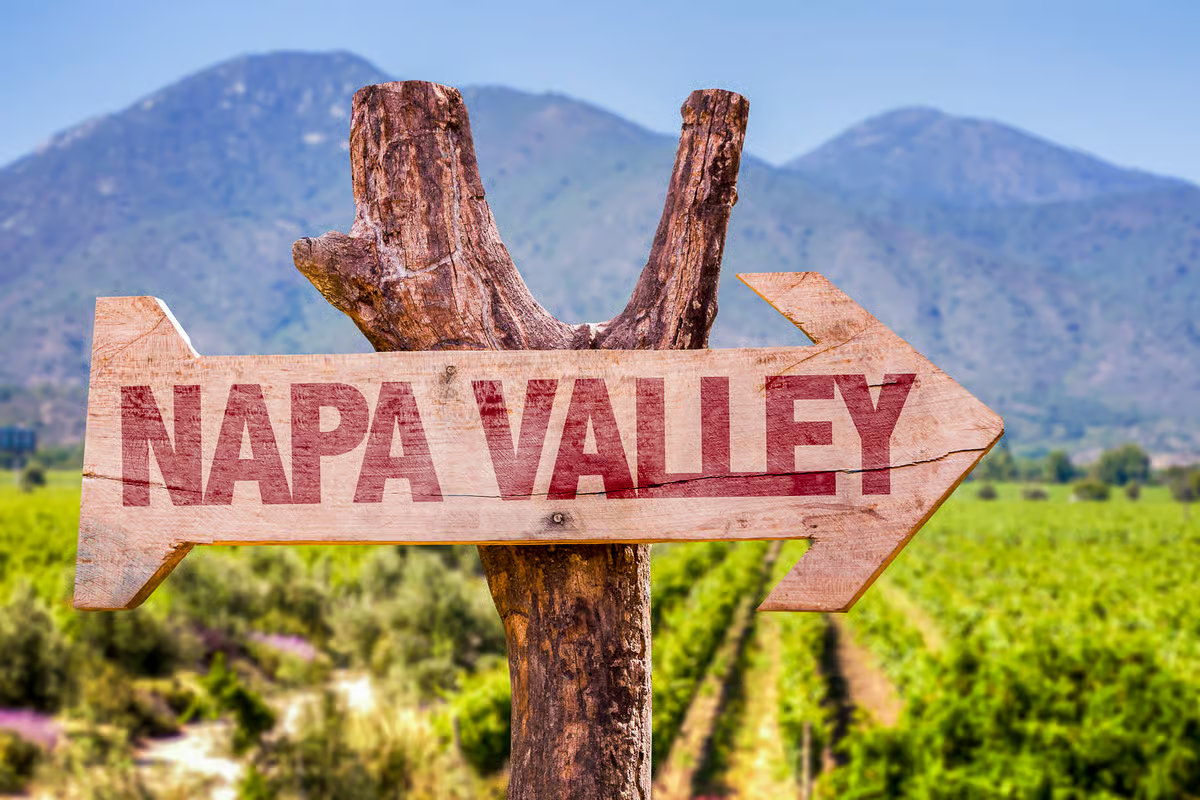
To enter Napa Valley is to step into the crowning jewel of California’s viticultural landscape, a living masterpiece of geology and ambition that anchors the Golden State’s global reputation. It is a 30-mile stretch where the morning fog clings to ancient volcanic slopes and the scent of ripening Cabernet Sauvignon hangs heavy in the golden afternoon air. This is not merely a wine region; it is the high temple of American viticulture, serving as the prestigious heart of California’s diverse wine country. From the gravelly “benchlands” of Rutherford to the windswept ridges of Howell Mountain, every mile offers a different story of the earth. Whether you are seeking the hallowed halls of historic estates or the hushed intimacy of a private mountain cave, Napa Valley invites you to slow down, breathe in the terroir, and taste the evolution of a California legend.
Don’t just uncork a bottle—embrace the volcanic pulse of the West. The journey to the world’s most legendary alluvial fans and sun-baked benchlands is waiting for you to discover the rich, opulent elegance of a true Napa Valley masterpiece. Step beyond the tasting room and into the soul of the Mayacamas Mountains; the legendary terroir of the New World’s most iconic valley is calling.
Napa Valley is a geological anomaly and a masterclass in environmental diversity. Despite representing only a fraction of California’s total wine production, it contains half of the world’s total soil orders. This complexity is born from millions of years of tectonic shifts, volcanic eruptions, and the retreating waters of the Pacific.
The defining characteristic of the region is the diurnal shift—the dramatic temperature swing between sun-drenched days and cool, fog-laden nights. This cycle is driven by the “Nature’s air conditioner”: the marine fog that rolls in from San Pablo Bay and the Petaluma Gap.
The Fog Influence: Southern areas like Los Carneros are blanketed in cool mist, making them perfect for delicate Pinot Noir. As you move north toward Calistoga, the valley narrows and heats up, creating the “convection oven” effect necessary for powerful reds.
Volcanic vs. Alluvial: The valley is a tale of two terrains. Mountain vineyards (like those on Atlas Peak or Howell Mountain) struggle in lean, well-draining volcanic basalt and ash. This stress produces small, thick-skinned berries with immense structural “grit.” Conversely, the valley floor thrives on deep, rich alluvial fans—deposits of silt and gravel washed down from the mountains—which yield the plush, “dusty,” and velvety textures for which Rutherford and Oakville are world-famous.
Napa’s history is a relentless pursuit of excellence. While indigenous peoples and early settlers like George Yount planted the first seeds, the region truly ignited in the late 19th century with pioneers like Charles Krug and Gustave Niebaum. However, the world remained skeptical until May 24, 1976.
In what is now known as the Judgment of Paris, a blind tasting pitted Napa Valley upstarts against the finest French Bordeaux and Burgundies. When Chateau Montelena’s Chardonnay and Stag’s Leap Wine Cellars’ Cabernet Sauvignon took top honors, the wine world was forever changed. Today, Napa honors this heritage by blending 150 years of tradition with a fierce commitment to sustainability, ensuring that the “Agricultural Preserve”—the first of its kind in the U.S.—remains a pristine viticultural sanctuary.
To truly understand Napa is to traverse its 16 nested American Viticultural Areas (AVAs), each a distinct “neighborhood” of flavor.
The Southern Gateway: Los Carneros (shared with Sonoma) and Coombsville are the cool-climate specialists, defined by marine breezes and volcanic ash, producing world-class Pinot Noir and Sparkling wine.
The Valley Floor Icons: Moving north, Yountville, Oakville, Rutherford, St. Helena, and Calistoga form the spine of the valley. Here, the soils transition from heavy clay to well-drained gravel, producing the most sought-after, opulent Cabernets on earth.
The Mountain Terraces: Flanking the valley are the rugged AVAs of Mount Veeder, Diamond Mountain, Spring Mountain, and Howell Mountain. These high-altitude vineyards sit above the fog line, basking in direct sun but remaining cool, resulting in wines with firm tannins and intense mineral depth.
The Eastern Benchlands: Stags Leap District, Atlas Peak, Chiles Valley, and Wild Horse Valley offer unique pockets of heat and ancient soils that produce legendary longevity and structure.
While over three dozen varieties flourish across the valley’s diverse microclimates, the region has built its reputation on a select few that reach their ultimate global expression here.
1. Cabernet Sauvignon (The King): Accounting for 40% of all production, Cabernet is the undisputed ruler of Napa. The valley’s unique combination of warm days and gravelly soils allows this grape to ripen slowly, developing deep layers of blackcurrant, cedar, and tobacco. Whether it is the “Rutherford Dust” style or the iron-rich intensity of Pritchard Hill, Napa Cabernet is prized for its balance of power and elegance, possessing an aging potential that rivals any Grand Cru.
2. Chardonnay (The Queen): Napa Chardonnay is a study in versatility. In the cooler, wind-swept southern reaches, it retains a crisp, Burgundian-style acidity with notes of green apple and flint. Further north, winemakers often employ malolactic fermentation and French oak aging to create the iconic, full-bodied California style—rich with aromas of toasted brioche, tropical fruit, and Madagascar vanilla.
3. The Supporting Cast: Beyond the headliners, Napa excels in “Bordeaux Blends.” Cabernet Franc is gaining solo stardom for its floral, peppery perfume, while Merlot provides the velvety “mid-palate” that rounds out the region’s top blends. For white wine enthusiasts, Sauvignon Blanc offers a vibrant, herbaceous alternative, often crafted in the “Fumé Blanc” style pioneered by Robert Mondavi. Finally, old-vine Zinfandel remains a cherished link to Napa’s 19th-century roots, offering jammy, spice-laden complexity.

In Napa, the “tasting” is only the beginning. Modern wine tourism here has evolved into a multisensory art form, designed to connect the visitor to the land through immersive storytelling.
The Luxury Estate Experience: Enter the private gates of a historic estate for a seated, multi-course wine and food pairing. Often held in a glass-walled pavilion or a library filled with rare “library vintages,” these sessions offer a deep narrative of the family’s history and winemaking philosophy. It is the ultimate expression of Napa’s “Gilded Age” hospitality.
The Terroir Hike & Vineyard Exploration: For those who want to see where the magic begins, several wineries offer guided treks through high-altitude vineyards. You’ll stand among the vines, touch the volcanic rock, and learn the science of canopy management before heading to a terrace for a tasting of the very blocks you just walked.
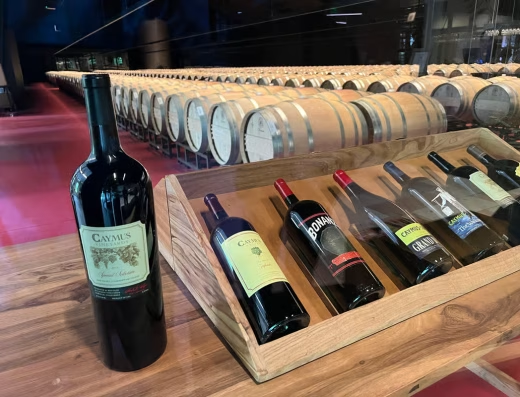
Cave Tastings & Subterranean Tours: Venture deep into the Mayacamas mountainside. These hand-carved labyrinths provide the perfect natural temperature for aging wine. A tasting in a candlelit stone chamber, surrounded by thousands of resting barrels, is a hallowed experience that resonates with the quiet power of the earth.
Culinary Gardens & Farm-to-Table Pairings: Some of the valley’s most innovative estates integrate working farms into the tasting. Guests can stroll through organic vegetable gardens before a tasting where every “small bite” features ingredients harvested mere feet away, perfectly calibrated to the acidity of the estate’s Sauvignon Blanc or Merlot.
The Art & Architecture Trail: For the aesthetically minded, several wineries double as world-class art galleries. From hilltop sculptures that frame the valley views to contemporary tasting rooms designed by Pritzker Prize-winning architects, these estates prove that wine is just one form of creative expression in Napa.
In Napa, the kitchen is as sacred as the vineyard. The region’s culinary heritage is a fusion of Mediterranean bounty and Michelin-starred precision. The “Napa Style” of cooking emphasizes “garden-to-glass” ethics, where the acidity of the wine dictates the brightness of the sauce.
Iconic destinations like The French Laundry have set a global standard, but the soul of Napa food lies in its local seasonal ingredients: the estate-pressed olive oils, the heirloom tomatoes of St. Helena, and the artisanal cheeses of the nearby coast. Signature pairings here go beyond the expected; think of a crisp Napa Sauvignon Blanc with local goat cheese and honey, or a powerful Mountain Cabernet served alongside wood-fired lamb encrusted in valley rosemary. This is a culinary ecosystem where the chef and the viticulturist speak the same language.
Planning a pilgrimage to Napa Valley requires more than just a map; it requires a strategy to navigate the most prestigious wine region in the Americas.
Getting Here: Most international travelers arrive via San Francisco (SFO) or Oakland (OAK), both roughly 60–90 minutes away. For a more seamless entry, the smaller Sonoma County Airport (STS) offers a stress-free alternative. While a rental car offers freedom, the most indulgent way to see the valley is by hiring a private chauffeur, allowing you to focus on the vistas rather than the GPS.
The Best Season to Visit: * Harvest (Aug–Oct): The “Super Bowl” of Napa. The energy is electric, the vines are heavy with fruit, but traffic and prices are at their peak.
Mustard Season (Feb–Mar): The valley floor is carpeted in vibrant yellow wildflowers. It’s quiet, crisp, and arguably the most beautiful time for photography.
Cabernet Season (Nov–Jan): The fireplaces are lit, the crowds have thinned, and winemakers have more time to chat.
Etiquette & Culture: Napa hospitality is elevated but welcoming. Reservations are mandatory—nearly every premium estate requires an appointment. Dress code is “Wine Country Casual”: think tailored linens, sundresses, and blazers. Avoid wearing heavy perfumes, as they interfere with the delicate aromatics of the wine. Finally, remember that tasting fees are standard, though often waived with a significant purchase or wine club sign-up.