

South Africa Wine: A Comprehensive Guide
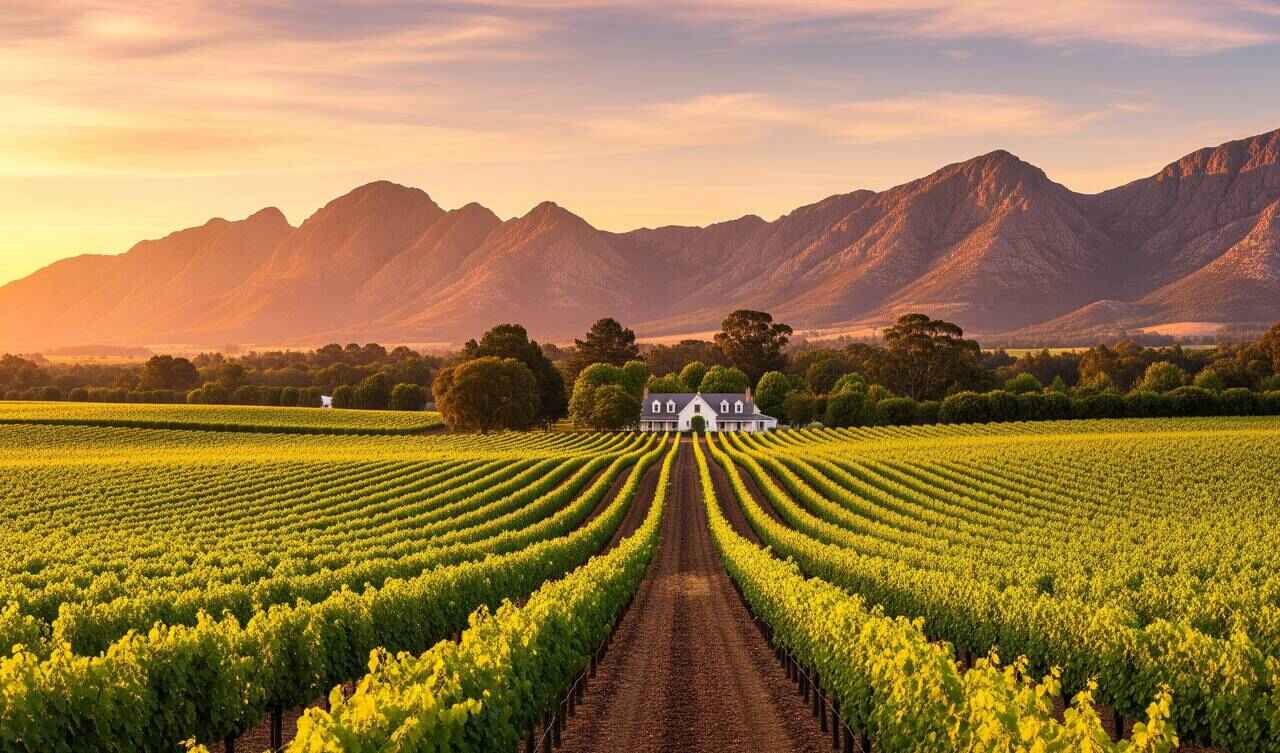
South Africa’s winemaking history is one of the oldest in Africa and the New World, twith vineyards set against the backdrop of dramatic mountains and influenced by two major oceans. The country’s unique geography and diverse climates allow for a wide range of wine styles, from elegant, cool-climate Sauvignon Blanc to powerful, full-bodied Cabernet Sauvignon and its signature red, Pinotage. South African wine is celebrated for its balance of Old World elegance and New World fruit expression, often offering exceptional value.
History and Identity of South African Wine
The story of South African wine is a blend of European tradition and local innovation, shaped by centuries of political and social change.
The Dutch East India Company and the Early Days (1652–1800s)
Winemaking in Italy has its origins with the Etruscans and the Greeks. The Etruscans, an advanced civilization in central Italy, were cultivating grapes and producing wine as early as the 8th century BCE. They developed sophisticated methods of trellising and fermentation, and their wines were a
The roots of winemaking in South Africa trace back to 1652, when the Dutch East India Company established a supply station at the Cape of Good Hope. The first vines were planted in 1655, and the first wine was produced in 1659 by Jan van Riebeeck. The industry was later bolstered by the arrival of French Huguenot refugees in the late 17th century, who brought with them valuable viticultural and winemaking knowledge. One of the most significant figures of this era was Governor Simon van der Stel, who founded the renowned Constantia estate in 1685. Constantia became famous worldwide for its sweet dessert wines, which were highly sought after by European royalty and aristocrats, including Napoleon Bonaparte.
A Difficult Century and the Rise of Co-operatives (1900s)
The 20th century proved to be a difficult period for the South African wine industry. The devastating phylloxera louse arrived in 1886, wiping out most of the country’s vineyards. Replanting on American rootstocks was a slow and arduous process. Overproduction and a subsequent collapse in prices led to the formation of the Koöperatiewe Wijnbouwers Vereniging van Zuid-Afrika Bpkt (KWV) in 1918. The KWV was a powerful cooperative that regulated the entire wine industry for decades, establishing prices and production quotas. While it brought stability, it also prioritized quantity over quality, hindering innovation and modern winemaking for much of the century.
The Modern Era and the Pinotage Revolution (1990s–Present)
The true renaissance of South African wine began in the early 1990s with the end of apartheid and the lifting of international trade sanctions. The country’s winemakers, eager to rejoin the global market, embraced modern technology and new winemaking philosophies. This era saw a renewed focus on quality and a greater diversity of grape varieties. The most significant development was the rise of Pinotage, a grape unique to South Africa. A crossing of Pinot Noir and Cinsault, Pinotage was first created in 1925 but was long underappreciated.
In the modern era, winemakers began to master its a-typical characteristics, producing a range of styles from light, fruity reds to bold, smoky expressions. Pinotage became a symbol of South African winemaking innovation and national identity. Today, South Africa is a global leader, celebrated for its high-quality, authentic wines that offer a clear sense of place and are increasingly recognized for their sustainable and ethical practices.
Terroir of South Africa: A Geographic Advantage
South Africa’s winemaking success is deeply tied to its unique geography. The country’s vineyards are concentrated in the Western Cape, a region defined by dramatic mountain ranges, cool ocean currents, and a diverse range of soil types.
Climate: The Influence of Two Oceans
The climate in the Western Cape is predominantly Mediterranean, with warm, dry summers and mild, wet winters. However, this is significantly moderated by the influence of the two oceans that meet at the tip of the country: the cold Benguela Current from the Atlantic Ocean on the west coast and the warm Agulhas Current from the Indian Ocean on the east coast.
The Benguela Current from the Atlantic is the dominant climatic influence. This cold ocean current cools the coastal regions, creating cool-climate microclimates in areas like Cape Town, Walker Bay, and Elim. The chilling effect is magnified by the strong winds, known as the “Cape Doctor,” which sweep through the vineyards, reducing humidity and the risk of fungal diseases. This allows for the slow ripening of grapes, which in turn helps to retain crucial acidity and develop complex, concentrated flavors. This is particularly beneficial for cool-climate grapes like Sauvignon Blanc and Pinot Noir.
Inland, the influence of the ocean is less direct. Here, the rugged mountain ranges, part of the Cape Fold Belt, create a complex mosaic of microclimates. The mountains act as a natural barrier, creating a rain shadow effect that ensures the inland valleys remain warm and dry. However, the mountains also provide a crucial moderating influence. Cold air from the mountains descends into the valleys at night, creating a significant diurnal temperature shift—the difference between hot daytime and cool nighttime temperatures. This dramatic swing is essential for a balanced wine. During the day, the intense sunlight allows grapes to develop sugar and ripe fruit flavors. At night, the cold temperatures slow down respiration, allowing the grapes to retain their crucial acidity, which is vital for freshness, balance, and a longer aging potential.
Soils: A Diverse Geological Legacy
South Africa’s vineyards have an incredibly diverse range of soils, which is a direct result of its ancient geological history. The soils are a mix of ancient granite, sandstone, and shale, formed by the erosion of the Cape Fold Mountains.
Granitic soils, a product of decomposing granite, are common in regions like Stellenbosch and Paarl. These soils are typically rich in clay, which gives them good water-holding capacity, and are valued for the structure and minerality they impart to the wines, particularly Cabernet Sauvignon and Chenin Blanc.
Sandstone-based soils, such as those found in Swartland, are generally nutrient-poor and well-drained. This forces the vines to struggle, resulting in low yields and highly concentrated grapes. These soils are particularly suited to old-vine Chenin Blanc and Cinsault, which produce wines with a distinct sense of place.
In the coastal regions, shale and clay soils are more common. These soils are good at retaining water and are highly valued for the elegance and complexity they impart to white wines like Sauvignon Blanc and Chardonnay.
The combination of these soil types and the country’s diverse climate creates a unique tapestry of terroirs. South African winemakers are increasingly focusing on these soil differences to create more terroir-expressive wines, pushing the boundaries of quality and complexity.
Understanding South Africa Wine Appellations
South Africa’s wine appellation system, known as the Wine of Origin (WO) scheme, was established in 1973 to ensure the integrity and quality of the country’s wines. Similar to European systems, it guarantees that a wine’s origin, vintage, and grape varietal are accurate as stated on the label. Unlike some European models, however, the WO scheme doesn’t regulate winemaking practices like permitted varieties or crop yields, focusing instead on geographical truth in labeling.
The WO system is organized in a hierarchical structure, from broad geographical units down to specific, small wards. This structure helps consumers understand the unique terroir and characteristics of a wine.
Key Appellation Tiers
Geographical Units: This is the broadest and most generic classification. The most important one is the Western Cape, where almost all of South Africa’s wine production is concentrated. Other units, like the Northern Cape and Eastern Cape, also exist.
Regions:
These are large, politically defined areas within a geographical unit. For example, the Western Cape includes regions such as the Coastal Region, Cape South Coast, and Breede River Valley.
Districts:
These are smaller, more specific areas within a region that share similar climatic and soil conditions. This is where you begin to see a more distinct identity.
Wards:
This is the most specific and smallest tier of the WO system, analogous to a European appellation. Wards are defined by unique soil types, climate, and topography, often within a single district. Wines from a ward are expected to have a very specific character.
This is the highest tier of Italian wine classification. DOCG wines must meet the most stringent quality controls, including a guarantee of origin, strict production rules (grape varieties, yields, aging requirements), and a final tasting by a government-approved committee. These wines are “guaranteed” for their typicality and quality within their designated area. Examples include Barolo, Barbaresco, Brunello di Montalcino, and Chianti Classico. There are currently around 76 DOCG wines.
The Heart of the Vine: ISouth Africa Most Important Grape Varieties
South Africa’s winemaking is a blend of international varieties and its own unique contributions, each with a distinct style shaped by the country’s terroir.
South Africa Most Important white Grape Varieties
Chenin Blanc
The most widely planted grape in South Africa and a true national treasure. South African Chenin Blanc is incredibly versatile, producing a wide range of styles, from dry and crisp to rich, oaked, and complex. The country is home to a vast number of old-vine Chenin Blanc vineyards, which produce low yields of highly concentrated grapes. The wines are known for their bright acidity and flavors of pear, apple, and honey, often with a distinct mineral backbone. The dry versions are a perfect pairing for seafood, while the richer, oaked versions can stand up to a wide range of dishes.
Sauvignon Blanc
South Africa has developed a reputation for producing high-quality Sauvignon Blanc, particularly from its cool, coastal regions. The wines are characterized by their crisp acidity and vibrant flavors of grapefruit, passionfruit, and grassy notes, often with a unique flinty or mineral character. The best examples come from the regions that benefit from the cool ocean breezes, such as Darling, Constantia, and Elim. The wines are a refreshing and lively expression of the country’s terroir, making them a popular choice for a variety of occasions.
Chardonnay
South African Chardonnay has become a world-class white wine, with producers creating a range of styles. The cool-climate regions, such as Walker Bay and Elgin, produce lean, mineral-driven Chardonnays with a focus on green apple and citrus flavors. The warmer inland regions, such as Robertson and Franschhoek, produce richer, more tropical fruit-forward wines that are ideal for oak aging. These wines are often full-bodied with notes of ripe pear and pineapple, and a creamy, buttery texture.
Colombard
A high-yielding white grape that is primarily used for bulk wine and brandy production. When yields are controlled, it can produce fresh, fruity wines that are often blended with Chenin Blanc. Colombard is a workhorse grape that is an important part of the country’s wine industry.
South Africa Most Important red Grape Varieties
Pinotage
South Africa’s signature grape, a crossing of Pinot Noir and Cinsault, and a symbol of the country’s innovative winemaking. It was first bred in 1925 by Professor Abraham Perold at Stellenbosch University. For decades, Pinotage was largely underappreciated due to its a-typical characteristics, but in the modern era, winemakers have begun to master its unique nature. It is now celebrated for its bold fruit character, often with notes of plum, black cherry, and raspberry, and a distinctive savory, smoky, or earthy undertone. Modern Pinotage can be made in a range of styles, from light, fruity reds that are easy to drink to powerful, concentrated reds with excellent aging potential. It is also an important component of many red blends.
Cabernet Sauvignon
A widely planted and highly successful grape, South African Cabernet Sauvignon is known for its pure, expressive fruit, which is a direct result of the country’s intense sunlight and well-drained soils. The wines typically feature classic notes of blackcurrant, blackberry, and plum, with a characteristic hint of mint or eucalyptus, particularly from the vineyards in the cooler mountain regions. It is typically full-bodied with firm, but well-integrated, tannins and a long finish, making it a powerful yet elegant wine. It is also a key component of many high-quality Bordeaux-style red blends.
Syrah (Shiraz):
Syrah is arguably the most exciting red grape in South Africa right now, with producers crafting a diverse range of styles. South African Syrah is known for its spicy, peppery character, with notes of dark fruit, olive, and savory meat. The wines from the warm, inland regions, like Swartland, are often bold and powerful with a rustic, earthy character. In contrast, the Syrah from cooler, coastal regions, like Elgin, is more elegant and refined, with a focus on red fruit and a delicate spice note. Syrah is a key component of many modern red blends, where it adds a layer of spice and complexity.
Merlot
A widely planted red grape that produces a range of styles, from light and fruity to rich and structured. South African Merlot is generally known for its soft, approachable style with flavors of plum and red berry. It is often used as a blending partner to soften the tannins of Cabernet Sauvignon, but it is also made as a single-varietal wine. The best examples come from the cooler regions, where the grapes can ripen slowly, resulting in wines with a good balance of fruit, acidity, and structure.
South Africa Wine Regions
South Africa’s winegrowing areas are officially divided into regions, which are then broken down into districts and wards. Here is a guide to the country’s key wine regions and their sub-regions.
The Coastal region
The Coastal Region is the heart of South Africa’s wine industry, home to most of the country’s most famous and historic winegrowing areas. This region is defined by its proximity to the Atlantic Ocean and the Cape Fold Mountains, which create a complex mosaic of microclimates and terroirs. The climate is predominantly Mediterranean, but it is moderated by the cool Benguela Current, which provides a cooling influence to the vineyards. The soils are a mix of ancient granite, sandstone, and shale.
Cape Town:
The wine district of Cape Town includes the historic Constantia Valley, the oldest wine region in the Southern Hemisphere. The vineyards are located on the eastern slopes of Table Mountain, where they benefit from the cool sea breezes from both the Atlantic and Indian Oceans. The climate is mild, with a long, cool ripening season. Constantia is famous for its elegant Sauvignon Blanc and its historic sweet dessert wines made from Muscat Blanc à Petits Grains. It is also a key area for high-quality Cabernet Sauvignon and Merlot, which show a distinct elegance and freshness.
Franschhoek:
The name Franschhoek means “French Corner,” a tribute to the French Huguenots who settled the valley in the 17th century. It is a stunningly beautiful valley surrounded by towering mountains that create a warmer climate than its coastal neighbors. The soils are predominantly alluvial and granite-based. The region is known for its elegant white wines, particularly Chardonnay and Sauvignon Blanc, which are often full-bodied and well-balanced. Franschhoek also produces high-quality Cabernet Sauvignon and Syrah and has a strong tradition of producing Méthode Cap Classique (MCC), South Africa’s version of sparkling wine.
Paarl:
Located inland from Cape Town, Paarl is a warmer region known for its bold, full-bodied red wines. The climate is hot and dry, but the Paarl Mountain provides some cooling influence. The soils are a mix of granite, shale, and sandstone. Paarl is a powerhouse for Cabernet Sauvignon, Shiraz, and Pinotage, which are typically rich and concentrated. It is also a key area for Chenin Blanc, with many old-vine vineyards producing complex, textured wines.
Stellenbosch:
Arguably South Africa’s most famous and prestigious wine region. Stellenbosch has a diverse range of terroirs due to its proximity to the ocean and its many different mountain ranges. The climate is Mediterranean, but with a wide range of microclimates. The soils are particularly diverse, with a mix of decomposed granite and sandstone. Stellenbosch is famous for its high-quality Cabernet Sauvignon, which is known for its classic structure, elegant fruit, and aging potential. It also produces excellent Syrah, Merlot, and the country’s best Chenin Blanc.
Swartland:
Historically a grain-producing region, Swartland has emerged as one of South Africa’s most exciting and innovative wine regions. It has a hot, dry climate, and the vineyards are often bush vines planted on poor, stony soils. This forces the vines to struggle, resulting in low yields and highly concentrated grapes. Swartland is famous for its old-vine Chenin Blanc, which produces intensely textured and complex wines. It has also become a mecca for high-quality Syrah, Grenache, and Pinotage, which are often praised for their rustic, savory, and elegant character.
Darling:
Located on the west coast, Darling is a cool, coastal region that benefits from the strong, cool Atlantic breezes. The climate is ideal for cool-climate varieties. Darling is particularly famous for its crisp and aromatic Sauvignon Blanc, which displays vibrant citrus and passionfruit flavors with a distinct mineral backbone. It is also gaining a reputation for its elegant Pinot Noir and Syrah.
The Cape South Coast
The Cape South Coast is a relatively new and exciting wine region, defined by its cool, maritime climate. It is home to some of South Africa’s most sought-after cool-climate wines, thanks to the strong cooling influence of the Atlantic and Indian Oceans. The soils are predominantly shale and sandstone.
Walker Bay:
A beautiful coastal region known for its elegant and refined wines. The climate is cool and maritime, with strong ocean winds that moderate temperatures and reduce disease pressure. The soils are primarily clay and shale. Walker Bay has become a world-class region for Pinot Noir and Chardonnay, which are known for their elegance, complexity, and delicate fruit. It also produces excellent Sauvignon Blanc.
Elgin:
An elevated, cool-climate region located inland from the coast. The high altitude and cool weather make it ideal for growing cool-climate varieties. The soils are a mix of sandstone and shale. Elgin is renowned for its high-quality Sauvignon Blanc and Chardonnay, which are characterized by their crisp acidity, delicate fruit, and subtle mineral notes. It also produces elegant Pinot Noir and Syrah.
Elim:
A small, windy, and cool region on the southernmost tip of Africa. The vineyards are planted in close proximity to the ocean, where they are subject to strong, cool winds. The soils are predominantly shale. Elim is gaining a reputation for producing intensely concentrated and aromatic Sauvignon Blanc, which is known for its distinct smoky and flinty character.
Breede River Valley
The Breede River Valley is an inland region that is hotter and drier than the Coastal Region. The valley is home to three distinct districts, each with its own character. The region is named after the Breede River, which provides a crucial water source for irrigation.
Robertson:
A hot, dry region located on the banks of the Breede River. The soils are a mix of alluvial and limestone. Robertson is famous for its high-quality Chardonnay, which often has a rich, buttery, and tropical fruit character. It is also an important region for producing full-bodied Shiraz, Cabernet Sauvignon, and the country’s best Pinotage.
Breedekloof:
An inland region that is known for its high-volume production of a wide range of grapes. The climate is warm, and the soils are a mix of alluvial and clay. Breedekloof is particularly famous for its well-made, value-driven Chenin Blanc and Sauvignon Blanc.
Worcester:
A hot, dry region at the eastern end of the Breede River Valley. The climate is the most extreme in the region. Worcester is primarily a source of high-volume bulk wine for the domestic market, particularly Chenin Blanc and Colombard.
Olifants River
ocated north of the Coastal Region, the Olifants River region has a hot, dry climate. The vineyards are primarily planted on the banks of the Olifants River, which provides a crucial water source for irrigation. The region is known for its high-volume production of a wide range of grapes, particularly Chenin Blanc and Colombard.
Klein Karoo
The Klein Karoo is a semi-arid, inland region that is very hot and dry. Viticulture is practiced in the valleys where water is available. The region is primarily known for its fortified wines, particularly those made from Muscat and Port-style wines. It also produces some interesting red wines from Cabernet Sauvignon and Shiraz.
Numbers that Tell a Story: South Africa Wine in Focus
South Africa is a significant player in the global wine industry, with a long history and a reputation for quality. Here are some key facts and statistics about the country’s wine production:
Production Volume: The annual wine production in South Africa varies due to climatic conditions, but generally hovers around 8-10 million hectoliters (or 800 million to 1 billion liters).
Vineyard Area: The total area under wine grape cultivation is approximately 86,544 hectares, concentrated almost entirely in the Western Cape province.
The industry’s total contribution to South Africa’s Gross Domestic Product (GDP) is about 0.9%, amounting to approximately R56.5 billion (as of 2022).
It is a major employer, supporting around 270,364 jobs across the value chain, which represents about 1.8% of the country’s national employment.
In 2024, the value of total wine exports was $562 million (USD), showing a 4.3% increase from the previous year. eager for the diverse range of Italian wines, from premium DOCG reds to popular Prosecco..
Global Ranking: South Africa is a major wine producer, consistently ranking among the top 10 wine-producing countries in the world. Recent data places it as the eighth largest producer by volume. authenticity.
The Art of Pairing: South Africa Wine and Gastronomy

Braai barbecue iand Pinotage red wine s quintessential south African pairing
South African cuisine is a vibrant and flavorful fusion of cultures, drawing on influences from Dutch, French, German, and British settlers, as well as the indigenous communities and a rich history of Malaysian and Indian spice routes. This diverse culinary heritage provides a wide range of pairing opportunities for the country’s equally diverse wines. The guiding principle for pairing is to match the bold flavors of the food with the expressive character of the wine, creating a harmonious and balanced experience.
Pairing with Red Wines: The Hearty and the Smoky
South African red wines, particularly the Cabernet Sauvignon and Pinotage from the warmer inland regions, are often full-bodied and fruit-forward, making them ideal partners for the country’s meat-centric cuisine.
Pinotage and Braai:
The quintessential South African pairing. Braai, or traditional South African barbecue, is a social institution centered around fire-grilled meats such as boerewors (a spiced sausage), lamb chops, and steaks. The bold, smoky, and fruity character of a classic Pinotage is a perfect match for the savory char and rich flavors of the grilled meats. The wine’s plum and cherry notes complement the savory fat, while its unique smoky undertone echoes the flavors of the wood fire. The robust nature of the wine stands up to the intense flavors of the meat without being overwhelmed.
Cabernet Sauvignon and Karoo Lamb:
South African Cabernet Sauvignon from a region like Stellenbosch, known for its structure and elegance, is a classic pairing for Karoo lamb. Karoo lamb, from sheep that graze on the wild herbs and fynbos of the Karoo desert, has a unique, delicate, and herbaceous flavor. The wine’s notes of blackcurrant, mint, and blackberry complement the subtle herbal character of the lamb, while its firm tannins and high acidity cut through the richness of the meat.
Syrah and Bobotie:
The spicy, savory, and peppery notes of a Syrah from a region like Swartland are an excellent partner for Bobotie, a traditional dish of spiced minced meat topped with an egg custard. The wine’s bold and concentrated character stands up to the rich flavors of the dish, while its spicy notes complement the curry powder and savory spices used in the Bobotie.
Cape Blends and Potjiekos:
The rich, full-bodied Cape Blends, which are typically a blend of Cabernet Sauvignon, Merlot, and Pinotage, are a perfect match for Potjiekos, a traditional slow-cooked stew made in a cast-iron pot over an open fire. The wine’s complex fruit and structure stand up to the rustic, savory, and hearty flavors of the stew.
Pairing with White Wines: The Bountiful and the Fresh
Given its long coastline and diverse agriculture, South Africa’s cuisine is full of fresh seafood and vibrant vegetables. The country’s crisp, cool-climate white wines are a natural match for these dishes.
Chenin Blanc and Traditional South African Dishes:
South African Chenin Blanc is a versatile wine that pairs well with a wide range of dishes. A dry, crisp, and unoaked style is a perfect match for Cape Malay curry, where the wine’s bright acidity and flavors of pear and apple complement the sweet and savory spices of the curry. A richer, oaked style is a great match for creamy chicken dishes or grilled fish with a rich sauce. The wine’s versatility makes it a go-to pairing for many of the country’s diverse dishes.
Sauvignon Blanc and Crayfish (Kreef):
The vibrant acidity and citrus notes of a cool-climate Sauvignon Blanc from a region like Darling or Elim are a natural partner for fresh seafood, particularly grilled crayfish (kreef). The wine’s zesty acidity and flavors of grapefruit and passionfruit complement the sweet, delicate flavor of the crayfish.
Chardonnay and Fresh Seafood:
South African Chardonnay, particularly a lean, mineral-driven style from a cool-climate region like Walker Bay, is an excellent partner for fresh seafood. The wine’s notes of green apple and citrus complement the subtle flavors of a simple grilled fish with a squeeze of lemon. A richer, oaked style is a wonderful pairing for grilled prawns or a creamy seafood pasta.
Sparkling Wines and Oysters:
The elegant, crisp, and refreshing Méthode Cap Classique (MCC), South Africa’s version of sparkling wine, is a perfect pairing for fresh oysters. The wine’s high acidity and delicate bubbles cut through the briny flavors of the oysters, cleansing the palate and preparing it for the next bite.