
Exploring African Wine: A Guide to Grapes, Regions & Food Pairings
A continent of unparalleled diversity, Africa’s wine culture is as vast and dynamic as its landscapes. While often overshadowed by the global giants of wine, Africa is a burgeoning force, home to ancient winemaking traditions and pioneering modern producers. This guide will take you through the continent’s major wine regions, from the historic vineyards of South Africa to the emerging scenes in North Africa and beyond. Africa’s wines are a reflection of its vibrant spirit—bold, resilient, and full of character.
History and Identity of African Wine
The story of winemaking in Africa is a tale of ancient traditions and new beginnings, a journey that spans millennia and links the continent to the very origins of wine.
The Mediterranean's Ancient Legacy
Winemaking in Africa has roots stretching back to antiquity, particularly in the northern regions. The ancient Egyptians were among the first to cultivate grapes and produce wine, a practice deeply integrated into their religious ceremonies and daily life. Hieroglyphs and tomb paintings from as early as 2600 BCE depict the process, from vineyard management to fermentation and storage. The Phoenicians and later the Romans further developed viticulture across North Africa, establishing vineyards in present-day Tunisia, Algeria, and Morocco. These areas became crucial suppliers of wine to the Roman Empire, showcasing the region’s early potential.
The fall of the Roman Empire and the subsequent arrival of Islamic rule in the 7th century led to a significant decline in winemaking in North Africa, as the consumption of alcohol was prohibited. Viticulture largely ceased to be a commercial enterprise, with some production continuing on a smaller scale for medicinal or religious purposes, and in isolated Christian communities. This marked a long period where the winemaking traditions of the north were either lost or dormant. It was not until the colonial era, particularly under French rule in the 19th century, that North Africa’s vineyards were revived and expanded on an industrial scale.
The European Influence and the Birth of Modern African Viticulture
The end of apartheid in 1994 marked a dramatic turning point. South African winemakers eagerly re-engaged with the global community, and a new generation of winemakers, both Black and White, embraced modern techniques and a renewed focus on quality. They began exploring the country’s diverse terroirs, replanting vineyards with noble grape varieties, and investing in new technology. This period saw a shift from bulk production to crafting premium wines that expressed the unique character of the land. The country’s new winemaking philosophy was accompanied by the introduction of the Wine of Origin (WO) system in 1973. This system, which has been refined over the years, is the foundation of South Africa’s modern classification, defining geographical units, regions, districts, and wards to guarantee the wine’s origin and raise global standards.
Across North Africa, countries like Morocco, Algeria, and Tunisia saw a renewed interest in their heritage. Producers began to rebuild and modernize their industries, focusing on quality and creating more nuanced wines that are gaining international recognition. Simultaneously, a new frontier of winemaking emerged in Sub-Saharan Africa. In countries like Ethiopia, Kenya, and Tanzania, a handful of pioneering producers established vineyards in high-altitude areas. These vineyards, often located near the equator, use the cooling effect of elevation and unique microclimates to grow grapes, challenging traditional winemaking norms. These emerging industries, though small, are a testament to the continent’s resilience and adaptability. Today, winemakers across Africa are increasingly committed to ethical labor practices and environmental sustainability, ensuring the future of their industry is as robust and vibrant as its past.
Rebirth and a Focus on Quality in the 20th and 21st Centuries
The end of apartheid in 1994 marked a dramatic turning point. South African winemakers eagerly re-engaged with the global community, and a new generation of winemakers, both Black and White, embraced modern techniques and a renewed focus on quality. They began exploring the country’s diverse terroirs, replanting vineyards with noble grape varieties, and investing in new technology. This period saw a shift from bulk production to crafting premium wines that expressed the unique character of the land. The country’s new winemaking philosophy was accompanied by the introduction of the Wine of Origin (WO) system in 1973. This system, which has been refined over the years, is the foundation of South Africa’s modern classification, defining geographical units, regions, districts, and wards to guarantee the wine’s origin and raise global standards.
Across North Africa, countries like Morocco, Algeria, and Tunisia saw a renewed interest in their heritage. Producers began to rebuild and modernize their industries, focusing on quality and creating more nuanced wines that are gaining international recognition. Simultaneously, a new frontier of winemaking emerged in Sub-Saharan Africa. In countries like Ethiopia, Kenya, and Tanzania, a handful of pioneering producers established vineyards in high-altitude areas. These vineyards, often located near the equator, use the cooling effect of elevation and unique microclimates to grow grapes, challenging traditional winemaking norms. These emerging industries, though small, are a testament to the continent’s resilience and adaptability. Today, winemakers across Africa are increasingly committed to ethical labor practices and environmental sustainability, ensuring the future of their industry is as robust and vibrant as its past.
A Guide to Africa's Terroir: climate and soil effects on wine explained
Terroir—the combination of climate, soil, and topography—is the soul of any wine. In Africa, this concept is expressed on a grand scale, with a diverse range of terroirs creating wines of unique and captivating character.
African Climate and Its Influence on Wine
Africa’s winemaking regions span a vast range of latitudes, resulting in an extraordinary diversity of climates. In South Africa, the dominant climate is Mediterranean, with warm, dry summers and cool, wet winters. This is particularly true in the Western Cape, home to most of the country’s vineyards. Here, the warm sun ensures grapes ripen fully, concentrating flavors and sugars. However, the influence of the cold Atlantic Ocean and Indian Ocean is crucial. The famous “Cape Doctor” wind, a strong southeasterly wind, blows through the vineyards, cooling the vines and preventing fungal diseases. This constant air circulation is vital for producing healthy grapes and maintaining acidity in the wines. Diurnal shifts, where warm days are followed by cool nights, also play a key role in preserving acidity and aromatic compounds, especially in regions like Elgin and Stellenbosch.
In North Africa, the climate is also Mediterranean, but often hotter and drier, leading to wines with higher alcohol content and richer, more robust flavors. The cooling influence of altitude or coastal breezes is essential. Moroccan winemaking regions, for example, benefit from the cooling Atlantic, which tempers the heat. In contrast, the vineyards of Algeria and Tunisia are more continental, with hotter days and cooler nights.
Soils and Topography: Terroir in Action in Africa
he geological diversity of Africa’s winemaking regions is immense, with a range of soils that lend distinct characteristics to the wines. In South Africa, the Western Cape has some of the oldest viticultural soils in the world. The decomposed granite of Stellenbosch is a prime example. This soil, rich in mica and clay, is well-draining, forcing the vines to dig deep for water and nutrients. This stress results in smaller berries with concentrated flavors, giving the wines—particularly Cabernet Sauvignon and Syrah—a firm structure and minerality. The vineyards on the slopes of the Helderberg and Simonsberg mountains, with their granite soils, are famous for producing world-class Bordeaux blends.
In contrast, the Table Mountain Sandstone soils found in regions like Constantia and Elgin are highly porous and acidic. They are well-suited for white varieties like Sauvignon Blanc and Chardonnay, producing wines with high acidity and a distinct, lean minerality. The topography of the Cape is equally influential. The jagged mountain ranges create a series of valleys and sheltered slopes, each with its own microclimate and unique terroir. This is where the interaction of slope, aspect, and soil is truly in action. In the Hemel-en-Aarde Valley, for instance, a narrow valley cooled by the sea, shale and clay soils are perfect for Pinot Noir and Chardonnay, yielding elegant and complex wines with a Burgundian-like profile.
In North Africa, the terroir is often a mix of limestone, clay, and sand. The limestone soils of Morocco’s Meknès region, for example, are ideal for retaining moisture in the dry climate, producing grapes with good acidity and firm structure. The volcanic soils of the Canary Islands off the African coast provide a unique terroir for indigenous varieties, creating wines with a smoky, mineral-driven character. In Egypt, while commercial winemaking is limited, the soils of the Nile Delta are rich in alluvial deposits, providing a fertile base for viticulture. The diverse soils and topography across the continent are the silent partners in creating the incredible variety of African wines.
The Pillars of Quality: Understanding Italian Wine Appellations
The systems for defining wine quality and origin in Africa are as varied as the continent itself, with each major producing country developing its own unique framework. While no single, continent-wide system exists, these classifications are crucial for guaranteeing a wine’s authenticity and communicating its quality.
The most established and comprehensive system on the continent is South Africa’s Wine of Origin (WO) system. Introduced in 1973, it’s a hierarchical classification that guarantees the wine is made from grapes grown in a specific geographical area, vintage, and variety. The system progresses from broad geographical units to more defined regions, districts, and finally, small, terroir-specific wards. A wine labeled with a specific WO ward assures the consumer that it expresses the unique characteristics of that location’s soil and climate.
In North Africa, the wine-producing countries of Morocco, Algeria, and Tunisia have adopted classification systems modeled after French appellation laws. These systems, like Morocco’s Appellation d’Origine Contrôlée (AOC), regulate grape varieties, yields, and winemaking methods within designated geographical areas. While these systems are still developing and don’t yet have the international recognition of their European counterparts, they are vital for ensuring quality standards and protecting the integrity of their wines.
For many of Africa’s emerging wine countries, such as Ethiopia and Tanzania, formal classification systems are still in their nascent stages. Producers in these regions often rely on brand reputation and consumer trust rather than official government regulations. As these industries mature, the development of robust appellation systems will be a key step in solidifying their place on the world wine stage.
Africa's Most Important Grape Varieties
Africa’s wine scene is a dynamic mix of international varieties and local specialties, each expressing the continent’s unique climate and soil.
Africa's Most Important white Grape Varieties
Chenin Blanc
A true powerhouse of African viticulture, Chenin Blanc is the most widely planted white grape in South Africa, where it’s known as “Steen.” Its incredible versatility allows it to produce a range of styles, from crisp, bone-dry wines with zesty notes of green apple and citrus, to rich, full-bodied versions with flavors of honey, baked pear, and nuts from barrel fermentation. Its high natural acidity and adaptability to various climates make it a star on the continent.
Sauvignon Blanc
hriving in the cooler, maritime-influenced regions of Africa, Sauvignon Blanc produces vibrant and aromatic wines. In South Africa’s coastal areas like Constantia and Elgin, it yields wines with classic gooseberry, passion fruit, and herbaceous notes. The cooling effects of elevation also allow this grape to thrive in the highlands of Kenya and Ethiopia, where it produces zesty, fresh expressions that are gaining a following.
Chardonnay
From the elegant, cool-climate vineyards of South Africa’s Hemel-en-Aarde Valley to the high-altitude plantings in Ethiopia, Chardonnay is celebrated for its ability to express terroir. Styles range from lean, mineral-driven wines with high acidity to richer, more complex versions with notes of citrus, hazelnut, and toasted brioche from oak aging.
Clairette blanche
white grape with a long history in France, has been cultivated in North Africa for centuries and is now experiencing a revival in South Africa. Its ability to withstand heat makes it ideal for blending, adding texture and freshness. Similarly,
Veredelho
Verdelho is a white grape variety primarily known for its role in the fortified wines of the Portuguese island of Madeira. However, it has found a surprising and successful second home in winemaking regions across the globe, like Africa. The grape’s key strength is its ability to retain high acidity and vibrant flavors even in hot, dry climates, making it a valuable asset for producers in warm regions.
n Africa, particularly in South Africa and Namibia, winemakers are exploring Verdelho’s potential as a climate-adaptive variety. Its resilience to heat and its ability to produce high-quality, distinctive wines make it a promising choice for the continent’s burgeoning wine industry.
Africa's Most Important red Grape Varieties
Syrah
This grape is a star performer across the African wine map. From the warm climates of South Africa’s Swartland, where it yields powerful, concentrated wines with dark fruit, black pepper, and savory notes, to the high-altitude vineyards of Morocco, where it produces elegant, spice-driven reds. Ethiopian winemakers are also having great success with Syrah, crafting high-alcohol, fruit-forward wines with a distinctly tropical character..
Pinotage
As Africa’s only true signature red grape, Pinotage is a source of national pride for South Africa. A unique crossing of Pinot Noir and Cinsault, it produces wines with a bold, smoky character, often with notes of plum, cherry, and spice. Styles range from light and fruity to rich, full-bodied wines with great aging potential.
Cabernet Sauvignon
A classic international variety that excels in both North and South Africa. In South Africa’s Stellenbosch region, it produces world-class, full-bodied wines with firm tannins and flavors of blackcurrant, cedar, and tobacco. In Morocco and Ethiopia, it is a key player, yielding fruit-forward, robust reds with a distinctly regional flair.
Cinsault
Historically a workhorse grape used for bulk production, Cinsault is now enjoying a renaissance across the continent. Old vine Cinsault in South Africa is being used to produce light-bodied, elegant reds with delicate red fruit aromas and a soft texture. In North Africa, it remains a critical blending component for the region’s famous rosé wines and structured reds.
Carignan and Grenache
hese two grapes are the workhorses of North African viticulture, particularly in Algeria and Tunisia. Originally from the Mediterranean, they have adapted exceptionally well to the region’s hot, dry climate. Carignan contributes structure, color, and firm tannins to blends, often showing notes of dark fruit and spice. Grenache, in contrast, adds juicy red fruit flavors, softness, and high alcohol. Together, they form the backbone of many regional red and rosé wines, creating a bold yet approachable style that is a signature of North African terroir.
Makutupora
A truly unique African variety, Makutupora is a local heat-resistant red grape cultivated exclusively in Tanzania’s Dodoma region. Adapted to the hot, arid climate, it thrives in conditions that would challenge most international varieties. The grape produces a dry red wine with rustic and earthy notes, a perfect example of a local variety that has adapted to a challenging climate and serves as a testament to the continent’s diverse winemaking potential.
African Wine countries: A Journey Through Africa's Terroir
To truly understand African wine, one must delve into its diverse countries, each offering a distinct expression of the land and a unique story.
South Africa
As the most established and dominant wine-producing country in Africa, South Africa has a rich history and a diverse range of terroirs. The Western Cape is the epicenter of the industry, where the cold Benguela Current from the Atlantic Ocean and the warmer Agulhas Current from the Indian Ocean create a unique, temperate climate. This allows for a wide array of grapes to flourish, from cool-climate Sauvignon Blanc to powerful Cabernet Sauvignon. South Africa is a leader in sustainable viticulture and is famous for its Pinotage, a unique grape variety. The country’s wine regions are divided into geographical units, regions, districts, and wards, with notable areas including Stellenbosch, Swartland, and Constantia.
Cape Town:
While a major metropolitan area, the city is also home to historic wine estates like those in Constantia. The cool, coastal climate and granite soils here are ideal for producing elegant, high-acid Sauvignon Blanc and sweet wines that were once favored by European royalty.
Breede River Valley:
An inland region known for its warm climate and fertile soils. It is a major producer of white wines, particularly Chenin Blanc and Colombard. The focus here is on volume and accessibility, providing the backbone for many of South Africa’s popular wine brands.
Stellenbosch:
Considered the capital of South African wine, this region is famous for its dramatic mountain ranges and diverse terroirs. It is home to some of the country’s most prestigious producers of Cabernet Sauvignon and Bordeaux-style blends.
Morocco
Morocco has a long history of viticulture dating back to the Phoenicians, though its modern industry was heavily influenced by French colonizers. The country’s vineyards are primarily in the cool-climate regions of the Atlas Mountains and along the Atlantic coast. The terroir is characterized by a mix of limestone, clay, and sand, and the vineyards benefit from high altitudes and cooling breezes that help maintain acidity and freshness. Morocco specializes in robust red wines, particularly from Syrah, Cabernet Sauvignon, and Grenache.
Meknès and Fez:
Located at the foothills of the Atlas Mountains, this is Morocco’s most important wine region. Its high altitude and limestone soils contribute to the production of high-quality red wines with good structure and aging potential.
Essaouira:
A coastal region with a strong maritime influence. The vineyards here benefit from the cool Atlantic breezes, which temper the hot Moroccan sun. The wines are often light and fresh, with a unique coastal character.Morocco’s diverse terroir is expressed through its key wine regions, which are recognized under the Appellation d’Origine Garantie (AOG) system, a French-influenced classification.
Rabat/Casablanca:
Situated along the Atlantic coast, this is home to one of Morocco’s oldest wineries, Domaine Ouled Thaleb. The region’s terroir is characterized by cooling maritime winds that create ideal conditions for both red and a popular style of rosé known as vin gris (grey wine).
Eastern Morocco:
This region, near the border with Algeria, includes the Berkane and Angad AOGs. The climate is hotter and more continental here, producing concentrated and full-bodied red wines.
Benslimane:
Located between Casablanca and Rabat, this region is known for its high-quality red and rosé wines that benefit from its location between the coast and the mountain range.
Algeria
Historically, a major wine producer under French rule, Algeria was once the world’s leading exporter of wine. The industry declined sharply after the country gained independence in 1962, but there has been a recent resurgence. Most of the vineyards are located in the north, where they benefit from a classic Mediterranean climate. The diverse terroir is a mix of coastal plains and inland mountains, and the wines are typically rich, full-bodied reds made from classic southern French grape varieties like Cinsault, Grenache, and Carignan.
Algeria’s primary wine regions are officially recognized under the Vin d’Appellation d’Origine Garantie (AOG) system, which ensures the quality and origin of the wines. These regions, mostly concentrated in the north, each offer a distinct expression of Algeria’s diverse terroir.
Aïn El Hadjel:
One of Algeria’s oldest and most respected wine regions, boasting a rich history that dates back to the French colonial era. Located in the high plains, its vineyards are planted at a significant altitude, where a combination of the warm Mediterranean sun and cooler continental nights produces bold, concentrated red wines. This unique terroir, with its mix of limestone and clay soils, helps retain moisture and lends the wines a distinct minerality. The region is particularly known for its powerful reds, which are full of character and complexity.
Coteaux de Mascara:
Situated on the slopes of the Bénichougrane mountains, this region is traditionally known for producing some of Algeria’s finest wines. Its high-altitude vineyards and alluvial soils contribute to powerful, rustic red wines.
Monts du Tessalah:
Located in the mountains near the city of Sidi Bel Abbès, this region is known for its continental climate and siliceous limestone soils. It primarily produces robust red and rosé wines.
Médéa:
A mountainous zone south of Algiers, Médéa is distinguished by its high-altitude vineyards, with some reaching over 1,000 meters. This elevation provides a unique terroir that allows winemakers to produce reds with notable finesse and whites with good acidity.
Egypt
Egypt holds the title for the oldest winemaking tradition on the continent, with evidence of viticulture dating back thousands of years. While modern production is limited due to the hot, arid climate and religious prohibitions, a small but growing industry exists. The vineyards are typically located along the Nile Delta, where they can take advantage of the fertile alluvial soils and access to water for irrigation. The wines produced are primarily table wines, with a focus on local consumption.
Egyptian Wine Regions
Though a small-scale industry, Egypt’s modern viticulture is concentrated in a few key areas that take advantage of specific microclimates and soil types.
Alexandria:
This coastal region, with its Mediterranean climate, is home to the most significant concentration of modern wineries. The cooling breezes from the sea and the presence of fertile soils make it the primary hub for wine production.
The Nile Delta:
Historically the center of ancient Egyptian winemaking, the Nile Delta remains a crucial area for viticulture. The fertile alluvial soils deposited by the Nile provide an ideal environment for grapes, and the proximity to the river ensures a steady water supply for irrigation in the arid climate.
Tunisia
Tunisia has a long-standing viticultural tradition that traces back to the Phoenicians and Romans. Its modern industry, like its North African neighbors, was revitalized by the French. The vineyards are concentrated in the north, where they benefit from a warm Mediterranean climate tempered by coastal breezes. The country’s wines are primarily rosés, which are a cultural staple, along with some lighter-bodied reds from varieties like Carignan, Cinsault, and Syrah.
Key Wine Regions of Tunisia
Tunisia’s wine production is organized into several key regions, all of which fall under the country’s Appellation d’Origine Contrôlée (AOC) system, which is a testament to its commitment to quality.
Cap Bon:
A peninsula with vineyards that benefit from the cooling influence of the sea. This region is a major producer of high-quality rosés, which are typically crisp, fruity, and refreshing. The area’s light, sandy soils are ideal for growing grapes that produce these elegant wines.
Tebourba:
Located in the Medjerda Valley, the country’s main agricultural region. Tebourba’s terroir is characterized by fertile clay and limestone soils. The area is known for producing full-bodied red wines, particularly from Syrah and Carignan, as well as some robust rosés.
Mornag:
Situated south of Tunis, Mornag is the largest and most well-known wine region in Tunisia. Its warm, dry climate and diverse soils yield a wide range of wines, from rich reds to popular rosés.
Sidi Thabet:
This region, located west of Tunis, benefits from a slightly cooler climate due to its proximity to the foothills. It is known for producing quality red wines, often from Syrah and Merlot.
Campania: Ancient Grapes and Volcanic Terroir
amibia’s wine industry is a small but intriguing part of the African wine story. Located on the southwest coast of Africa, the country’s climate is predominantly arid, with extremely hot, dry conditions. Viticulture is practiced in specific, high-altitude microclimates, where the desert’s harshness is tempered by cooler nights and mountain breezes. The vineyards are often found near rivers or in areas with access to boreholes for irrigation. Producers focus on heat-resistant grape varieties like Syrah and Tempranillo, yielding robust and concentrated red wines. The country also produces some surprising white wines from varieties like Colombard.
Key Wine Regions of Namibia
Due to its harsh desert climate, viticulture in Namibia is limited to a few specific areas with favorable microclimates. The industry is very small, with production primarily concentrated in two main regions.
Omaruru:
Located in the central-western part of the country, this region is home to some of Namibia’s pioneering wineries. Vineyards here benefit from the elevation and access to underground water. The climate, while still hot, is mitigated by the higher altitude, allowing for the cultivation of a variety of grapes, including Syrah and Colombard.
Ameib Farm:
Situated in the Erongo Mountains, this farm has one of the country’s most well-known vineyards. The altitude and unique mountain microclimate provide a surprising terroir for viticulture. The focus is on producing high-quality, small-batch wines that reflect the distinct character of the Namibian desert.
Zimbabwe
imbabwe’s wine industry is a small but historically significant part of the African wine story. It began in the 1960s with a focus on producing wine for local consumption. The industry has since faced significant challenges due to political instability and economic hardships. However, a small number of committed producers continue to operate, primarily in the areas around Harare and Mutare. The climate is subtropical, with a distinct rainy season and a long, dry winter. Winemakers have found success with both international and hybrid grape varieties. The wines are typically fruity and approachable, with a focus on easy-drinking styles.
Key Wine Regions of Zimbabwe
Viticulture in Zimbabwe is concentrated in a few specific areas that offer a more moderate climate than the rest of the country. These regions are all located at a high altitude, which helps to mitigate the tropical heat.
Marandellas (Marondera):
This region, located east of Harare, is home to some of the country’s most well-known wineries. The high elevation and cool temperatures make it ideal for growing grapes like Cabernet Sauvignon and Syrah.
Eastern Highlands:
Situated near the border with Mozambique, this mountainous region is Zimbabwe’s most important viticultural area. The cool, moist climate and fertile soils allow for the cultivation of a variety of grapes, including those used for both table wines and brandies.
Mutare:
The city of Mutare serves as a hub for the Eastern Highlands wine region. While the industry is small, the area’s climate is well-suited for viticulture.
Tanzania
Tanzania’s wine industry is a unique case, with production centered around the Dodoma region. Winemaking here was established by missionaries in the mid-20th century. The country’s unusual position just south of the equator allows for two grape harvests per year, a rarity in the wine world. The climate is hot and dry, but the high altitude helps to temper the heat. The primary grapes are Syrah, Cabernet Sauvignon, and the local Makutupora, a red variety adapted to the arid climate, which produces a dry red wine. Tanzania’s wines are mainly for domestic consumption but offer a glimpse into the potential of viticulture in tropical climates.
The Dodoma Wine Region
The Tanzanian wine industry is based entirely in the Dodoma Region, which is the second-largest wine-producing area in Sub-Saharan Africa after South Africa. The region’s unique terroir is characterized by dry, sandy soil and low humidity, which are ideal for producing dry red and white wines. The high altitude mitigates the tropical heat, and the country’s position allows for two harvests per year, in March and August/September. This unique growing cycle is a testament to the region’s adaptability.
Ethiopia
Ethiopia is one of the most unexpected new players in African wine. The modern industry began in the early 2000s with the establishment of large-scale commercial vineyards. The country’s unique tropical climate and high altitude provide a new frontier for viticulture. The vineyards, located primarily in the Rift Valley, benefit from consistent daylight and temperature year-round, allowing for multiple harvests. The primary focus is on international varieties like Syrah and Cabernet Sauvignon, which produce fruit-forward, high-alcohol wines. The wines often express a vibrant, tropical character and showcase the potential of this nascent wine region.
Key Wine Regions of Ethiopia
The Ethiopian wine industry is centered around two main regions in the country’s central highlands, within the fertile Rift Valley. The unique terroir here is defined by high altitude, which provides cooler temperatures and a longer growing season, despite the proximity to the equator.
Ziway:
Located in the Rift Valley, Ziway is home to the country’s most prominent winery, Castel, which was established by the French Castel Group. Vineyards here are planted at altitudes of over 1,600 meters (5,250 feet). The combination of elevation, volcanic soils, and consistent daylight allows for the production of high-quality international varieties such as Syrah, Merlot, Cabernet Sauvignon, and Chardonnay.
Awash:
Situated in the Upper Awash Valley, this area is home to the country’s longest-established winery, Awash Wine. The vineyards benefit from a tropical arid climate with a main rainy season. Awash produces a wide variety of wines, including reds from Petit Syrah and Grenache, and whites from Chenin Blanc and Muscat. The high altitude and unique soil, formed from fertile volcanic debris, contribute to wines with floral and fruity notes.
Madagascar
Winemaking in Madagascar is a small but historically significant part of its agricultural landscape, introduced by French colonialists. The island’s unique tropical climate and diverse soils present both challenges and opportunities. Most vineyards are located in the highlands, where cooler temperatures allow for viticulture. The wines are often made from hybrid grape varieties and are typically consumed locally. While the industry remains small, it is a testament to the diverse and resilient nature of African winemaking.
The Antsirabe and Ambalavao Wine Regions
Madagascar’s wine production is concentrated in the central highlands, which provide the necessary altitude and cooler temperatures for grape cultivation in a tropical environment.
Antsirabe:
Situated at an altitude of approximately 1,500 meters (4,900 feet), this region is known for its volcanic soil and temperate climate, which is favorable for grape growing. Antsirabe is home to some of the country’s main wineries, producing red and white wines, primarily from hybrid grapes that are well-suited to the local conditions.
Ambalavao:
Located further south in the highlands, Ambalavao is another key wine-producing area. The region’s vineyards benefit from a similar climate to Antsirabe, and the winemakers focus on producing red wines that are well-regarded for their distinctive local character.
Kenya
Kenya’s wine industry is in its nascent stages, with a few small-scale vineyards beginning to attract attention. Located in the highlands, particularly around the Rift Valley, vineyards benefit from cooler temperatures and volcanic soils. The high altitude and unique microclimates provide a surprising environment for viticulture. Producers are experimenting with a range of international grape varieties, including Cabernet Sauvignon and Sauvignon Blanc, but the industry is still primarily focused on fruit wines made from local produce like mango and passion fruit. While wine production is very small, Kenya represents a promising new frontier for African winemaking.
The Great Rift Valley Wine Region
Kenya’s viticulture is concentrated almost entirely in the Great Rift Valley, a region known for its high-altitude terrain and fertile volcanic soils. The elevation, often exceeding 1,600 meters (5,250 feet), is crucial as it mitigates the tropical heat, allowing grapes to ripen slowly and retain vital acidity and aromatic compounds.
Naivasha:
This area, situated near Lake Naivasha, is a key center for Kenyan viticulture. The region’s rich volcanic soils and a unique microclimate created by the lake’s proximity are ideal for growing a variety of grapes.
The Molo Highlands:
The Molo region, with its even higher altitudes, provides a cool climate that allows for the cultivation of grapes that would not survive in other parts of the country.
The Art of Pairing: African Wine and Gastronomy
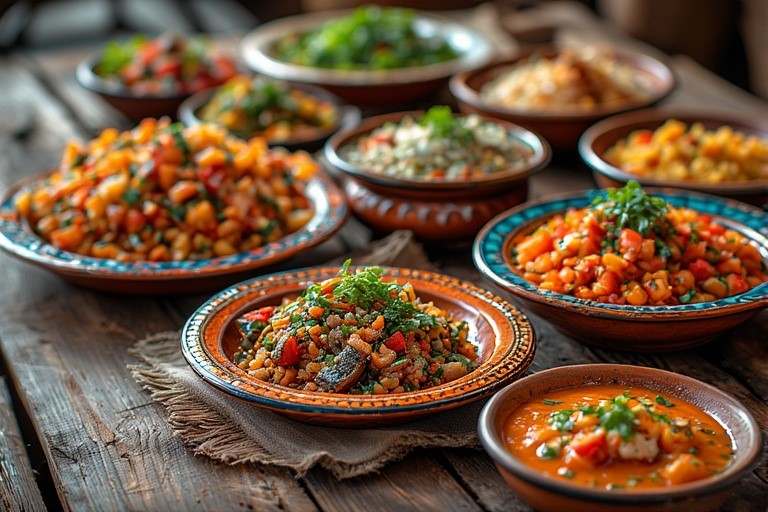
Moroccan tajines are a good pairing with Syrah
Food and Wine Pairing: A Taste of African Harmony
The rich and diverse cuisines of Africa offer a wealth of opportunities for harmonious food and wine pairings. The continent’s culinary landscape is a vibrant tapestry of bold spices, grilled meats, and aromatic stews, reflecting its history and geography. Pairing these dishes with African wines, particularly from the major producing countries, can create a truly unforgettable dining experience. The key is to balance the intensity of the food with the character of the wine, considering elements like spice, texture, and fat content.
The Bold and Flavorful Pairings of South Africa
South African cuisine is a blend of Dutch, Malay, Indian, and indigenous influences, resulting in dishes that are often rich, spicy, and savory. The wines, with their ripe fruit and structured tannins, are perfectly suited to these flavors.
Pinotage and Braai (South African BBQ): T
his is the quintessential South African pairing. The smoky, fruity, and savory notes of a classic Pinotage, with its soft tannins, are an ideal match for the charred, smoky flavors of grilled meats. Whether it’s a juicy lamb chop, a spicy boerewors sausage, or a thick steak, the wine’s bold character can stand up to the richness of the meat and the intensity of the fire.
Chenin Blanc and Cape Malay Curry:
The aromatic and slightly sweet profile of a barrel-fermented Chenin Blanc is an excellent counterpoint to the subtle heat and complex spices of a Cape Malay curry. The wine’s stone fruit flavors and creamy texture can cool the palate and complement the turmeric, coriander, and cumin in the dish without overpowering it.
Sauvignon Blanc and Seafood:
South Africa’s coastal regions are famous for their fresh seafood. A crisp, high-acid Sauvignon Blanc from the cool climate of Constantia or Elgin is the perfect partner for grilled kingklip, fresh oysters, or a light fish curry. The wine’s zesty, mineral-driven character and refreshing acidity cut through the richness of the seafood and cleanse the palate.
Shiraz and Potjiekos:
A powerful Shiraz from the Swartland, with its dark fruit and peppery notes, is a fantastic match for a hearty potjiekos (a traditional stew cooked in a three-legged iron pot). The wine’s robust tannins and savory notes complement the slow-cooked meat and vegetables, creating a rich and satisfying pairing.
The Aromatic and Spicy Pairings of North Africa
North African cuisine is defined by its use of spices like cumin, cinnamon, saffron, and paprika, along with sweet elements from dates and raisins. The wines, particularly from Morocco and Tunisia, are often aromatic and fruit-forward, providing a delightful balance.
Moroccan Syrah and Tagine:
The rich, full-bodied reds of Morocco, particularly Syrah, are a superb match for a slow-cooked chicken or lamb tagine. The wine’s ripe red fruit and subtle spice notes harmonize with the cinnamon, ginger, and turmeric in the dish. The tender meat of the tagine also softens the wine’s tannins, creating a smooth and balanced pairing.
Tunisian Rosé and Couscous:
The crisp, fruity rosés of Tunisia are a cultural staple and an ideal pairing for the national dish, couscous. A light, dry rosé with notes of red berries and citrus is a refreshing contrast to the hearty texture of couscous and the savory broth. It also stands up well to the addition of harissa, adding a zesty counterpoint to the spice.
The Unique Pairings of Sub-Saharan Africa
As winemaking expands into new territories, new pairings are emerging. The focus is often on bold, fruit-forward wines that can handle the unique and often spicy flavors of the local cuisine.
Ethiopian Cabernet Sauvignon and Doro Wat:
Ethiopia’s nascent winemaking industry is producing a limited number of wines that are ideal for pairing with its complex cuisine. A vibrant, fruit-forward Cabernet Sauvignon can be a surprising but effective match for doro wat, a traditional spicy chicken stew. The wine’s firm structure and dark fruit flavors can stand up to the fiery heat of the berbere spice blend, while its tannins are softened by the rich, egg- and chicken-based sauce.
Tanzanian Makutupora and Ugali:
The local Makutupora grape, a heat-resistant variety, produces a dry red wine with rustic and earthy notes. It is a natural pairing for ugali, a stiff maize porridge that serves as a staple in many East African meals. The wine’s character and acidity cut through the starchiness of the ugali and complement the savory meat or vegetable stews served alongside it.
Kenyan Cabernet Sauvignon and Nyama Choma:
The growing Kenyan wine industry is producing robust red wines that are well-suited to the country’s love of grilled meats. A fruit-forward Cabernet Sauvignon pairs wonderfully with nyama choma (roasted goat). The wine’s dark fruit notes and firm tannins stand up to the strong, savory flavors of the roasted meat and the often smoky character from the grill. It creates a rustic yet elegant pairing.
The diverse and exciting landscape of African food and wine offers endless possibilities for discovery. By matching the bold flavors of the continent’s cuisine with the character of its wines, you can create a truly authentic and unforgettable culinary journey.