Table of Contents
Few parts of the world have influenced global viticulture as profoundly as Western Europe. While countries such as Italy, Spain, Portugal and Greece preserve an extraordinary wealth of indigenous grape varieties, it is Western Europe that gave birth to many of the grapes that became the universal reference for modern winemaking. Cabernet Sauvignon, Chardonnay, Pinot Noir, Sauvignon Blanc, Merlot, Riesling and Chenin Blanc are no longer simply regional cultivars. They are now planted across every major wine-producing continent, shaping styles from California and Chile to South Africa, Australia and New Zealand.
This remarkable influence is not the result of chance, nor does it reflect a greater diversity of grape varieties than elsewhere in Europe. In fact, Western Europe possesses fewer indigenous cultivars than many Mediterranean countries. Its uniqueness lies elsewhere. Over centuries, a relatively small number of grape varieties proved capable of producing wines with exceptional balance, remarkable consistency and an extraordinary ability to express the places where they were grown. These qualities allowed them to travel far beyond their original vineyards while retaining the characteristics that first made them successful.
Unlike many grape varieties that remained closely tied to their native valleys or mountain ranges, Western Europe’s leading cultivars demonstrated an unusual capacity for adaptation. Chardonnay thrives in the cool limestone soils of Burgundy, yet also flourishes in the sunshine of California and the elevated vineyards of Tasmania. Cabernet Sauvignon, born in Bordeaux, produces equally compelling wines in the Andes, Napa Valley and South Africa’s coastal regions. Riesling, long associated with Germany’s river valleys, has established itself in climates as diverse as Australia’s Eden Valley and New York’s Finger Lakes. Few agricultural plants have shown such versatility while preserving a clear varietal identity.
This adaptability transformed Western European grapes into the foundation of international viticulture. Today, they dominate vineyard plantings, define countless appellations outside Europe and serve as benchmarks against which many other varieties are measured. Their names are recognised by consumers around the world, often more readily than the regions where they first emerged. In many respects, these grapes have become the common language of wine, understood across cultures, climates and winemaking traditions.
Yet reducing Western Europe’s grape heritage to a handful of famous names would overlook the complexity that lies beneath this global success. Behind every internationally celebrated variety stands a much broader viticultural landscape composed of ancient grape families, local cultivars and centuries of natural and human selection. The internationally recognised grapes represent only the visible part of a much deeper ampelographic heritage that continues to shape vineyards throughout France, Germany, Switzerland, Luxembourg, Belgium and neighbouring regions.
Understanding Western Europe’s wine grapes therefore requires looking beyond simple lists of famous varieties. It means recognising how a relatively small group of cultivars came to define global wine styles while remaining deeply rooted in the landscapes that first nurtured them. From the limestone slopes of Burgundy to the slate hills of the Mosel, from Bordeaux’s gravel terraces to the granite vineyards of the Loire, these grapes continue to demonstrate why Western Europe remains one of the world’s great centres of viticultural excellence.
More than producing some of history’s finest wines, Western Europe history established the grape varieties that transformed winemaking into a truly global language. Their influence extends far beyond the regions where they originated, yet their identity remains inseparable from the terroirs that first revealed their extraordinary potential. It is this unique combination of local origin and global significance that makes Western Europe’s grapes one of the most enduring legacies in the history of wine.
Why Western Europe Became the World's Reference for Wine Grapes
The Genetic Foundations of Western Europe's Wine Grapes
Western Europe occupies a unique position in the history of wine because it produced a relatively small group of grape varieties that went on to define modern viticulture across the globe. While other European regions preserved a far greater diversity of indigenous cultivars, Western Europe became the birthplace of grapes whose influence extended far beyond their native vineyards. Cabernet Sauvignon, Chardonnay, Pinot Noir, Riesling, Sauvignon Blanc and Merlot are no longer simply French or German grapes. They have become international benchmarks cultivated on every major wine-producing continent.
This global success cannot be explained by reputation alone. Countless grape varieties produce excellent wines within their regions of origin, yet very few adapt successfully to different climates, soils and winemaking traditions while maintaining their distinctive identity. Western Europe’s leading grapes proved exceptionally versatile. Whether planted in Bordeaux or Napa Valley, Burgundy or Tasmania, the Mosel or New York’s Finger Lakes, they continue to express recognisable varietal characteristics while reflecting the personality of each terroir.
One of the defining strengths of these grapes is their natural balance. Developed in temperate climates where ripening occurs gradually rather than rapidly, they typically combine acidity, sugar, tannins and aromatic compounds in proportions that favour elegance over excess. This equilibrium allows winemakers to produce wines that are equally enjoyable in their youth or capable of evolving over decades, depending on the variety and the style of vinification.
Equally important is their extraordinary ability to express terroir. Some grape varieties impose a dominant aromatic profile regardless of where they are cultivated. Many of Western Europe’s great grapes behave differently. Chardonnay reveals striking differences between chalk, limestone, granite or volcanic soils while remaining unmistakably Chardonnay. Pinot Noir changes dramatically with altitude, exposure and climate, making it one of the clearest interpreters of place in the wine world. Riesling reflects subtle variations in geology and river valleys with remarkable precision. This transparency has made these varieties the preferred choice for regions where terroir is considered the foundation of wine quality.
Their versatility extends beyond the vineyard. Several Western European grapes excel as single-varietal wines, while others have become indispensable components of the world’s greatest blends. Cabernet Sauvignon brings structure and longevity, Merlot contributes richness and texture, Cabernet Franc adds freshness and aromatic complexity, while Chardonnay demonstrates an extraordinary capacity to produce still wines, sparkling wines and long-lived barrel-aged expressions. Few grape varieties offer such a broad range of possibilities without losing their identity.
Another reason for their international success lies in their remarkable consistency. Over centuries of cultivation, these grapes repeatedly demonstrated their ability to deliver reliable quality across different vintages and wine regions. Growers recognised their viticultural strengths, winemakers appreciated their flexibility, and consumers learned to associate their names with distinctive styles of wine. As global viticulture expanded during the nineteenth and twentieth centuries, these qualities made Western European grapes the natural choice for emerging wine regions seeking varieties capable of producing world-class wines.
This dominance should not be interpreted as evidence that Western Europe possesses the richest grape diversity. On the contrary, countries such as Italy, Spain and Greece preserve a far larger reservoir of indigenous cultivars, many of which remain closely connected to their local landscapes. Western Europe’s uniqueness lies elsewhere. It is the region where a relatively limited number of grape varieties achieved an exceptional combination of adaptability, balance, longevity and terroir expression, allowing them to become the foundation of global winemaking.
Today, these grapes continue to shape vineyards far beyond Europe. They have crossed oceans, adapted to new climates and inspired countless wine styles, yet they remain inseparable from the regions where they first revealed their full potential. Their journey from local cultivars to international references explains why Western Europe continues to occupy such a central place in the world’s viticultural landscape.
Western Europe’s international reputation often overshadows another equally important reality: beneath its globally recognised grape varieties lies a remarkably rich ampelographic heritage. While Chardonnay, Cabernet Sauvignon or Riesling dominate vineyards across the world, they represent only a fraction of the genetic diversity that has shaped Western European viticulture over centuries. Behind every famous grape stands a broader family of cultivars, natural crossings and ancient lineages that continue to influence modern wine.
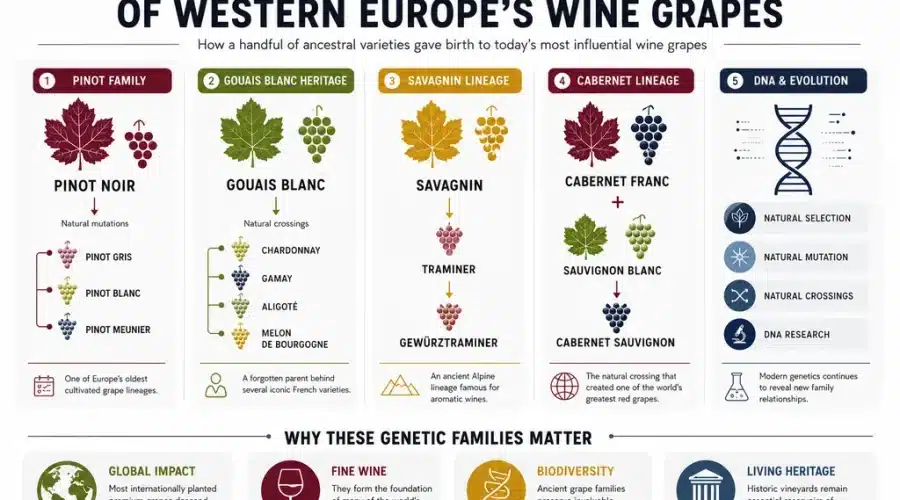
Unlike Southern Europe, where hundreds of indigenous varieties remained geographically isolated, Western Europe’s grape evolution followed a different path. Certain cultivars proved exceptionally successful, becoming the parents of new varieties through natural crossings that occurred over generations. Modern DNA analysis has revealed that many of today’s best-known grapes are closely related, forming interconnected families rather than isolated cultivars. Far from being independent varieties, they belong to an intricate genetic network that explains many of their shared characteristics.
One of the most influential lineages is the Pinot family, often regarded as one of Europe’s oldest cultivated grape groups. Over centuries of natural mutation, Pinot Noir gave rise to Pinot Gris, Pinot Blanc and several less common colour variations. Although genetically very close, these grapes produce remarkably different wines, illustrating how small genetic changes can profoundly influence aroma, colour, acidity and structure. Pinot Noir itself also occupies a central place in the genealogy of European vines, contributing genetic material to numerous later cultivars.
Another cornerstone of Western European viticulture is the Savagnin–Traminer family. Long cultivated in eastern France, Germany, Switzerland and neighbouring regions, this ancient lineage has produced a remarkable diversity of descendants. Savagnin remains one of Europe’s oldest documented grape varieties and has played a decisive role in the development of several important cultivars, while Traminer gave rise to highly aromatic mutations such as Gewürztraminer. These grapes demonstrate how centuries of natural evolution gradually created increasingly specialised wine styles without deliberate breeding programmes.
The Cabernet family illustrates a different aspect of Western Europe’s genetic history. Rather than originating in antiquity, Cabernet Sauvignon emerged relatively recently through a spontaneous crossing between Cabernet Franc and Sauvignon Blanc in southwestern France. Despite its comparatively modern origin, it rapidly became one of the world’s most influential grape varieties, combining the structure and longevity of Cabernet Franc with the freshness inherited from Sauvignon Blanc. Its success illustrates how natural hybridisation continued to enrich Western Europe’s grape heritage long after viticulture had become firmly established.
Modern genetic research has also transformed our understanding of Gouais Blanc, a grape that for centuries attracted little attention from growers. Once considered an ordinary peasant variety, DNA profiling revealed it to be one of the most important parents in European viticulture. Natural crossings between Gouais Blanc and noble cultivars such as Pinot produced an extraordinary number of descendants, including Chardonnay, Aligoté, Gamay and several other internationally recognised varieties. Few grapes have exerted such profound influence while remaining virtually absent from today’s vineyards.
These discoveries have fundamentally changed the way Western European grapes are understood. Rather than viewing famous varieties as isolated success stories, ampelographers now see them as branches of a vast genetic tree shaped by centuries of natural mutation, spontaneous crossings and careful human selection. This interconnected heritage explains why so many Western European grapes share complementary viticultural characteristics while displaying such remarkable diversity in the glass.
The global success of Western Europe’s vineyards therefore rests not only on a handful of iconic cultivars but also on the extraordinary genetic relationships that connect them. Every bottle of Chardonnay, Pinot Noir or Cabernet Sauvignon carries part of a much older family history, one rooted in centuries of evolution across the vineyards of France, Germany, Switzerland and neighbouring wine regions. Understanding these relationships reveals that the strength of Western European viticulture lies not simply in its famous grapes, but in the living genetic heritage from which they all emerged.
The Main White Grapes of Western Europe
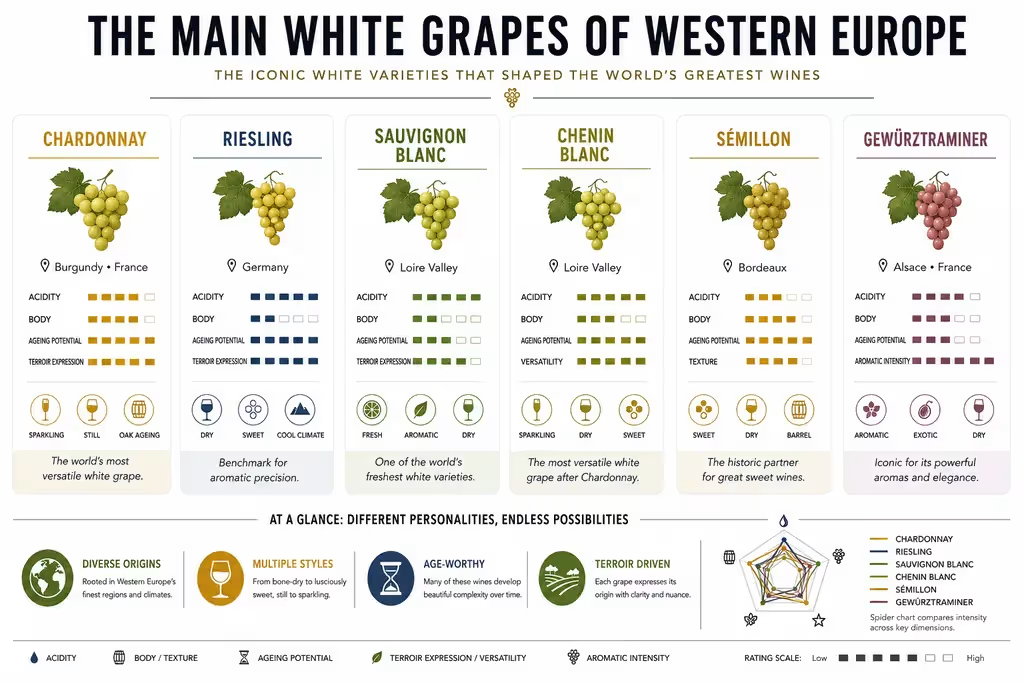
White grape varieties have played a decisive role in establishing Western Europe’s reputation as the world’s leading source of fine wines. Although the region cultivates dozens of indigenous white grapes, only a relatively small number have achieved international recognition. Their success reflects a combination of versatility, longevity and an exceptional ability to translate climate and geology into distinctive wines rather than imposing a single dominant flavour profile.
Among them, Chardonnay stands as the most influential white grape ever cultivated. Native to Burgundy, it has become one of the world’s most widely planted premium varieties, capable of producing styles that range from the mineral precision of Chablis to the rich, oak-aged wines of the Côte de Beaune, as well as some of the finest sparkling wines in Champagne. Few grapes demonstrate such adaptability while maintaining their unmistakable identity.
Sauvignon Blanc followed a different path. Originating in the Loire Valley and later becoming one of Bordeaux’s essential blending varieties, it established its reputation through freshness, vibrant acidity and remarkable aromatic purity. Its expressive profile allowed it to flourish well beyond France, becoming one of the defining white grapes of New Zealand, Chile, California and many other cool-climate wine regions.
In Germany, Riesling developed into one of the world’s greatest expressions of aromatic white wine. Unlike varieties valued primarily for fruit intensity, Riesling is celebrated for its ability to reveal subtle differences in vineyard location, geology and climate. Whether dry, off-dry or sweet, it consistently combines high natural acidity with extraordinary ageing potential, making it one of the most respected white grapes in international viticulture.
The Loire Valley contributed another cornerstone of Western European winemaking through Chenin Blanc. Often underestimated outside its homeland, Chenin is among the most versatile grape varieties ever cultivated. It produces sparkling wines, fresh dry wines, richly textured barrel-aged expressions and some of the world’s finest sweet wines, all while preserving remarkable acidity and longevity. Its success in South Africa further illustrates the international adaptability of Western European cultivars.
Several other white grapes have played a more regional yet equally significant role. Pinot Gris and Pinot Blanc, both natural mutations of Pinot Noir, became essential varieties across Alsace, Germany and neighbouring wine regions, producing wines that range from delicate and mineral to rich and structured. Gewürztraminer, descended from the ancient Traminer family, developed one of the most distinctive aromatic profiles in the wine world, recognised for its floral, spicy and exotic fruit characteristics.
Western Europe also preserved white grapes whose influence extends far beyond their vineyard surface. Sémillon remains fundamental to the great white blends of Bordeaux and the world’s finest botrytised wines. Aligoté, long associated with Burgundy, continues to produce vibrant, high-acidity wines increasingly appreciated by a new generation of growers. Melon de Bourgogne, now inseparable from Muscadet, demonstrates how a relatively discreet grape can become the defining identity of an entire wine region. Viognier, once close to extinction in the northern Rhône Valley, has experienced a remarkable revival thanks to its richly aromatic wines and growing international appeal.
Together, these varieties illustrate the extraordinary breadth of Western Europe’s white grape heritage. Some achieved worldwide dominance, others remained closely linked to their native terroirs, yet all contributed to shaping the modern language of white wine. Their diversity is measured not by the number of cultivars alone, but by the range of wine styles they continue to inspire across every major wine-producing region in the world.
The Main Red Grapes of Western Europe
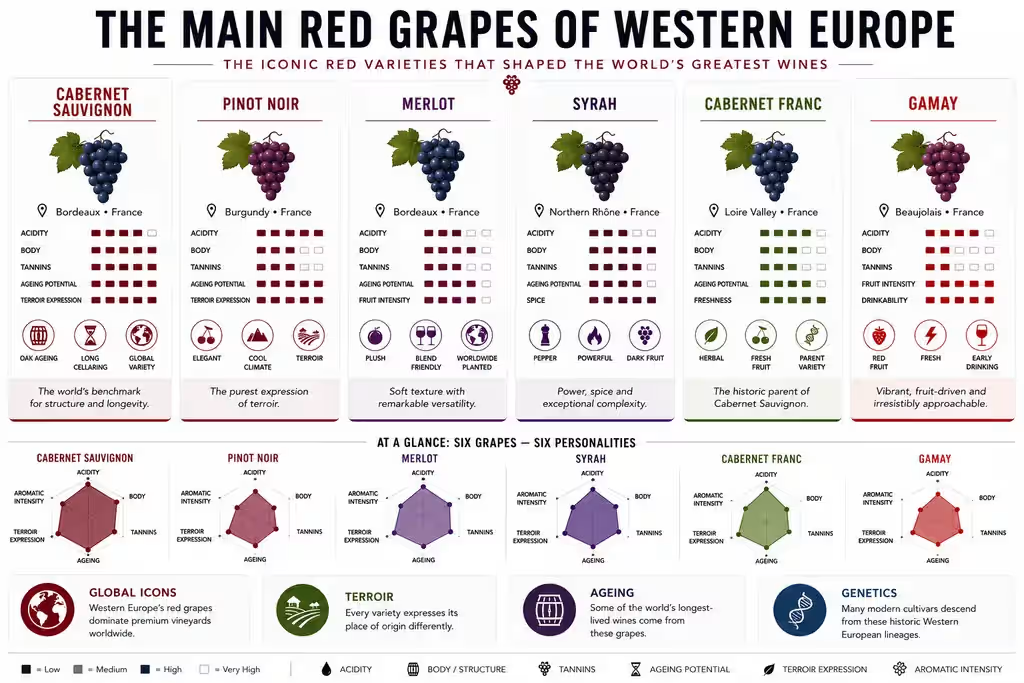
If Western Europe established the global benchmark for white wines, its influence on red wine has been even more profound. Nearly every major wine-producing country cultivates at least one red grape that originated in Western Europe, reflecting the extraordinary success of a relatively small group of varieties whose structure, balance and adaptability have made them the foundation of modern red winemaking.
No grape symbolises this influence better than Cabernet Sauvignon. Born in Bordeaux through the natural crossing of Cabernet Franc and Sauvignon Blanc, it has become the world’s most widely recognised premium red grape. Its firm tannic structure, concentrated black fruit, natural acidity and exceptional ageing potential have made it the reference for countless fine wines, whether produced in France, California, Chile, Australia or South Africa.
Alongside Cabernet Sauvignon, Merlot has become one of the most successful international varieties ever cultivated. Softer, earlier ripening and generally more approachable in its youth, it plays a fundamental role both as a blending grape and as a single-varietal wine. In Bordeaux, it contributes richness, texture and generous fruit, while in many New World regions it has developed into a flagship variety capable of producing elegant wines across a wide range of climates.
Often overshadowed by its famous offspring, Cabernet Franc occupies a central position in Western European viticulture. Native to southwestern France and the Loire Valley, it combines moderate tannins with vibrant acidity and distinctive floral and herbal aromatics. Beyond its importance as a parent of Cabernet Sauvignon and Merlot, Cabernet Franc remains one of the world’s finest expressions of elegance and freshness in red wine.
Among Burgundy’s greatest contributions to global wine stands Pinot Noir, a variety celebrated for its transparency rather than its power. Delicate in the vineyard yet capable of extraordinary complexity, Pinot Noir has become the benchmark for cool-climate red wines. Its ability to reveal subtle variations in soil, altitude and climate makes it one of the purest expressions of terroir, inspiring producers from Oregon and New Zealand to Germany and Tasmania.
Further south, the Rhône Valley gave the world Syrah, a grape whose personality differs markedly from the Bordeaux varieties. Combining deep colour, firm structure and characteristic notes of black fruit, pepper and spice, Syrah has established itself as one of the great international red grapes. While its most refined expressions remain rooted in northern Rhône appellations, it has adapted remarkably well to Mediterranean and warm-climate vineyards worldwide.
Western Europe also produced several varieties whose influence extends beyond vineyard surface alone. Gamay, forever associated with Beaujolais, demonstrates how a grape capable of producing vibrant, fruit-driven wines can define an entire wine culture. Malbec, although now closely identified with Argentina, originated in southwestern France, where it continues to contribute depth and structure to traditional blends. Petit Verdot, once regarded as a minor Bordeaux component, has found renewed importance in warmer climates where it reaches full ripeness more consistently than in its homeland.
Not every Western European red grape achieved worldwide dominance. Some remained closely tied to the regions where they first evolved, while others found greater success abroad than at home. Carmenère, once cultivated extensively in Bordeaux before largely disappearing after the phylloxera crisis, became one of Chile’s signature varieties. Its remarkable revival illustrates how the international journey of Western European grapes often continued long after their fortunes had changed within Europe itself.
Together, these varieties transformed the landscape of global red wine. Some became universal benchmarks, others retained a more regional identity, yet each contributed to the extraordinary reputation of Western Europe as the birthplace of the grape varieties that continue to define fine red wine across the world.
The Lesser-Known Grapes That Still Define Western Europe
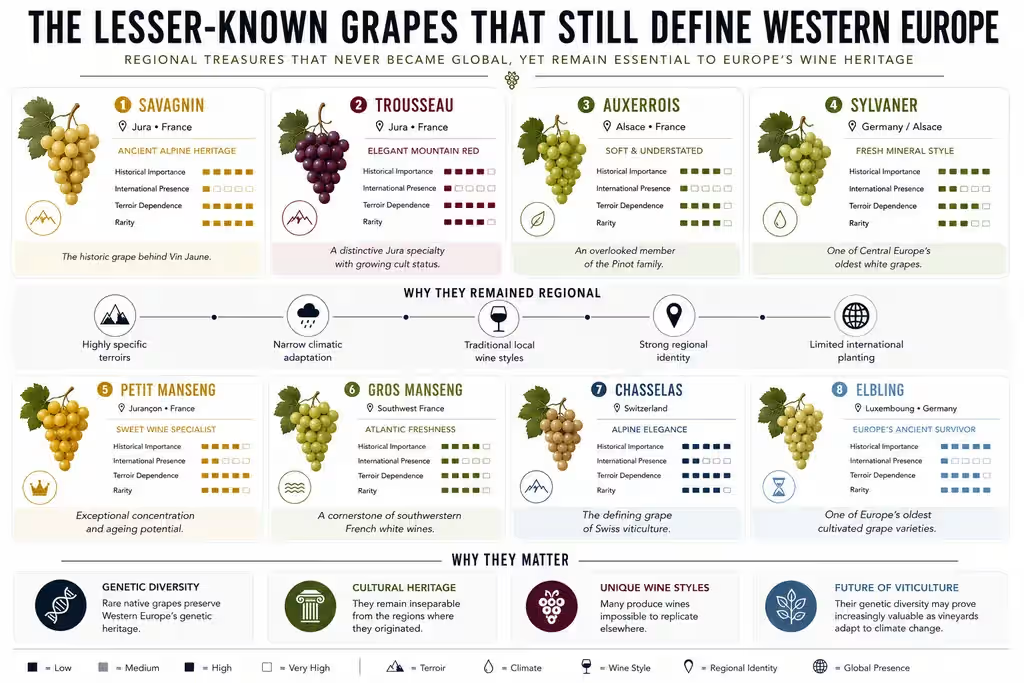
The international success of Cabernet Sauvignon, Chardonnay or Riesling can easily create the impression that Western Europe’s viticultural identity revolves around a handful of famous grape varieties. In reality, these globally recognised cultivars represent only the visible part of a much broader ampelographic heritage. Across France, Germany, Switzerland, Luxembourg and neighbouring wine regions, dozens of lesser-known grapes continue to define local wine cultures despite remaining largely unknown beyond their native landscapes.
Unlike the internationally planted varieties, these grapes rarely combined all the characteristics required for worldwide expansion. Some are closely adapted to highly specific climates, others perform best on particular soil types or require viticultural conditions that are difficult to reproduce elsewhere. Many also developed strong cultural ties with local wine traditions, where preserving regional identity mattered more than achieving international recognition.
The Jura offers one of the clearest examples through Savagnin and Trousseau. Both varieties have become inseparable from the region’s distinctive wine styles, yet neither has spread significantly beyond eastern France. Their greatest expressions depend as much on local climate and traditional winemaking as on the grapes themselves, making them difficult to reproduce elsewhere.
In the foothills of the Pyrenees, Petit Manseng and Gros Manseng illustrate another path. These grapes evolved to suit the humid Atlantic influence of southwestern France, where they produce wines renowned for freshness, concentration and remarkable ageing potential. Outside this environment, however, they have remained relatively uncommon despite their undeniable quality.
Further north and east, varieties such as Auxerrois, Sylvaner, Elbling and Chasselas continue to shape regional wine identities across Alsace, Germany, Luxembourg and Switzerland. Although overshadowed by internationally recognised cultivars, they remain fundamental to local viticulture, producing wines that reflect centuries of adaptation to their native terroirs rather than the demands of global markets.
Their limited international presence should never be mistaken for lesser importance. On the contrary, these regional varieties preserve much of Western Europe’s genetic diversity and cultural identity. They remind us that the region’s grape heritage extends far beyond the famous names that dominate international vineyards. While Cabernet Sauvignon and Chardonnay became global ambassadors, dozens of quieter varieties continue to tell the story of the landscapes where Western European viticulture first took shape.
Why Western European Grapes Conquered the World
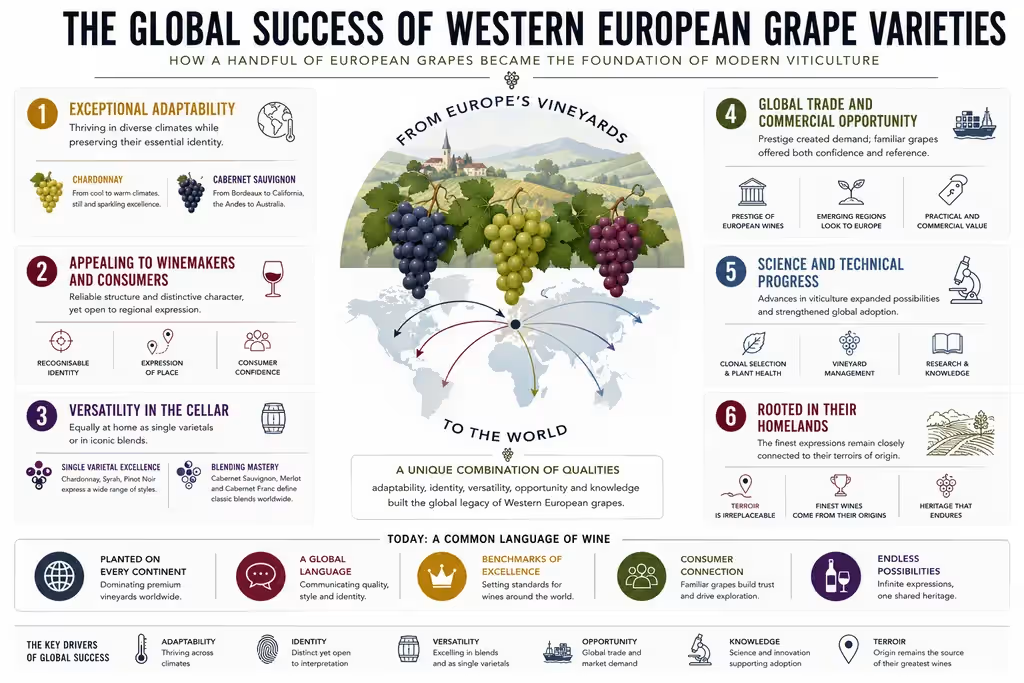
The worldwide success of Western European grape varieties was never inevitable. Europe has cultivated thousands of native grapes for centuries, yet only a handful spread far beyond their regions of origin to become the foundation of modern viticulture. Their international expansion was driven by a unique combination of viticultural qualities, commercial opportunity and global demand for wines capable of delivering both consistency and a strong sense of place.
Adaptability was perhaps their greatest advantage. Many Western European grapes demonstrated an exceptional ability to thrive under different climatic conditions without losing their essential identity. Chardonnay could produce elegant wines in cool northern vineyards, richer expressions in warmer regions and outstanding sparkling wines in suitable terroirs. Cabernet Sauvignon adapted equally well to Bordeaux’s maritime climate, California’s sunshine, the Andes’ high-altitude vineyards and Australia’s diverse wine regions. This flexibility gave growers confidence that these varieties could succeed well beyond their original homes.
Another decisive factor was their capacity to produce wines that appealed to both winemakers and consumers. Western European grapes offered reliable structure, balanced acidity and distinctive flavour profiles while leaving enough room for regional interpretation. A Chardonnay from Burgundy, Sonoma or Margaret River may express very different personalities, yet each remains unmistakably Chardonnay. This combination of recognisable identity and local expression became one of the defining strengths of these varieties in international markets.
Their versatility in the cellar also encouraged their global adoption. Some grapes excelled as single-varietal wines, allowing producers to highlight their unique characteristics, while others became indispensable components of classic blends. Cabernet Sauvignon, Merlot and Cabernet Franc established the model for countless Bordeaux-inspired wines around the world, while Syrah, Pinot Noir and Chardonnay proved equally capable of producing a broad spectrum of styles depending on climate, winemaking philosophy and ageing techniques.
The rise of Western European grapes also coincided with the expansion of international wine trade. As European wines gained prestige, growers in emerging wine regions naturally looked toward the varieties associated with the world’s most respected appellations. Planting the same grapes offered both practical and commercial advantages, allowing producers to work with cultivars whose behaviour was already well understood while giving consumers familiar points of reference.
Scientific progress further reinforced their dominance. During the twentieth century, advances in clonal selection, vineyard management and plant health made it easier to cultivate these varieties across increasingly diverse environments. At the same time, international research institutions devoted considerable attention to the world’s most widely planted grapes, improving viticultural knowledge and encouraging even broader adoption.
Yet the global expansion of Western European grapes never erased their connection to their places of origin. On the contrary, the finest examples of Cabernet Sauvignon, Chardonnay, Riesling or Pinot Noir continue to demonstrate that these varieties reach their most distinctive expressions when closely linked to the terroirs that shaped their identity. Their international success therefore reflects not only their adaptability, but also the enduring influence of the Western European vineyards where their story began.
Today, these grapes dominate premium vineyards on every continent, serving as the common language through which wine regions communicate quality, style and identity. Their journey from local cultivars to global benchmarks remains one of the most remarkable stories in the history of viticulture, illustrating how a relatively small group of grape varieties came to influence the way the entire world grows, produces and understands wine.
Western Europe's Grape Heritage in the Twenty-First Century
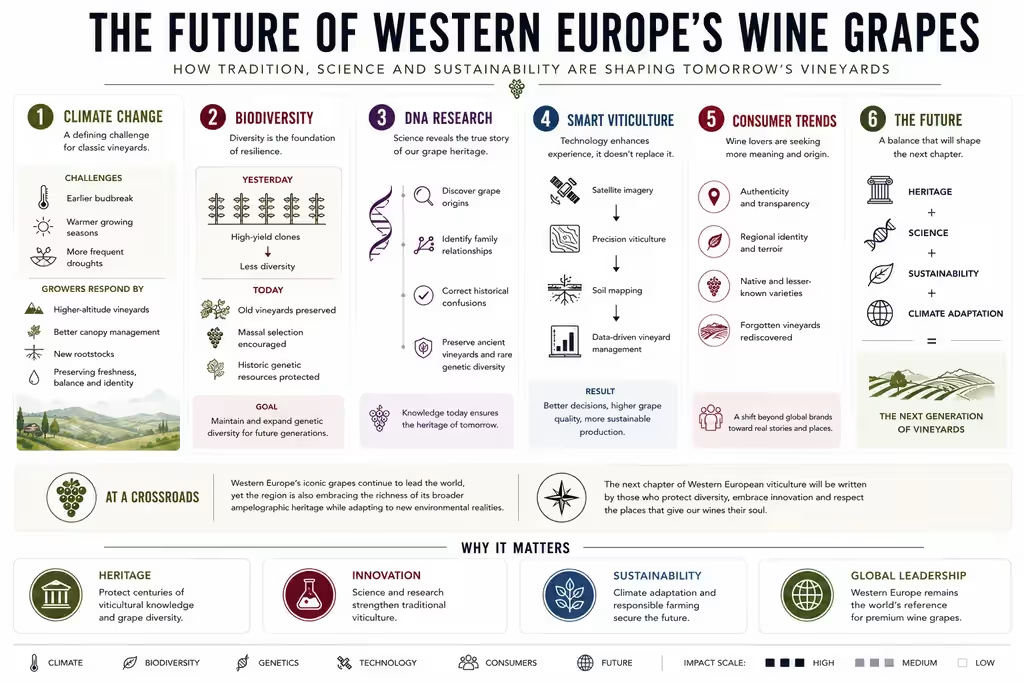
Western Europe’s grape heritage continues to evolve, balancing centuries of tradition with the demands of modern viticulture. While the region remains closely associated with its historic varieties, today’s vineyards are shaped by new environmental conditions, scientific advances and changing consumer expectations. Rather than replacing their iconic grapes, producers are refining the way they cultivate, preserve and understand them.
Climate change has become one of the defining challenges for many of Western Europe’s classic vineyards. Earlier budbreak, warmer growing seasons and more frequent periods of drought are gradually influencing ripening patterns and harvest dates. In response, growers are adapting vineyard management techniques, exploring higher-altitude sites, modifying canopy management and re-evaluating rootstocks to preserve freshness, balance and varietal identity.
At the same time, biodiversity has returned to the centre of viticultural discussions. For decades, modern vineyards often favoured a limited number of highly productive clones, creating greater uniformity across large planting areas. Today, many producers are reversing that trend by preserving old vineyards, encouraging massal selection and protecting historic genetic material. These efforts help maintain the diversity that has always been one of Western Europe’s greatest strengths while providing valuable resources for future generations.
Scientific research has also transformed the understanding of Western European grapes. Advances in DNA profiling have clarified the origins of many famous varieties, uncovered previously unknown family relationships and corrected centuries of confusion caused by regional synonyms. This growing body of knowledge has reinforced the importance of conserving ancient vineyards, which often preserve rare genetic diversity no longer found in modern commercial plantings.
Alongside preservation, innovation continues to shape the future of Western European viticulture. Precision viticulture, satellite imagery, soil mapping and data-driven vineyard management now allow growers to understand their vineyards with unprecedented accuracy. Rather than replacing traditional knowledge, these technologies complement generations of experience, helping producers protect grape quality while responding more effectively to increasingly variable climatic conditions.
Consumer preferences are evolving as well. While internationally recognised grapes such as Chardonnay, Cabernet Sauvignon and Pinot Noir remain the backbone of global fine wine, growing numbers of wine lovers are seeking greater authenticity and regional identity. This renewed curiosity has encouraged producers to rediscover lesser-known native varieties, revive forgotten vineyards and celebrate the diversity that exists beyond the world’s most famous grapes.
Western Europe therefore stands at an important crossroads. Its internationally celebrated varieties continue to dominate premium vineyards across the globe, yet the region is also rediscovering the richness of its broader ampelographic heritage. Protecting that diversity while adapting to new environmental realities will determine how the next chapter of Western European viticulture is written.
The story of Western Europe’s grapes is therefore far from complete. It is an evolving legacy in which ancient genetic heritage, scientific discovery and sustainable vineyard practices increasingly work together, ensuring that the varieties which shaped global winemaking remain just as relevant for the future as they have been for centuries.
Frequently Asqued Questions about Main Grapes of Western Europe
What are the main grapes of Western Europe?
The region’s best-known grape varieties include Cabernet Sauvignon, Merlot, Cabernet Franc, Pinot Noir, Syrah, Chardonnay, Sauvignon Blanc, Riesling, Chenin Blanc, Gewürztraminer, Sémillon and Gamay. Although these grapes dominate international vineyards, Western Europe is also home to dozens of lesser-known native varieties that continue to define local wine regions.
Why are Western European grapes so famous?
Which country has the most influential grape varieties?
France is the birthplace of many internationally recognised grapes, including Cabernet Sauvignon, Merlot, Chardonnay, Pinot Noir, Syrah and Sauvignon Blanc. Germany contributed iconic varieties such as Riesling, while Switzerland, Luxembourg and Belgium preserve valuable native grapes with strong regional identities.
What is the oldest grape family in Western Europe?
Are Western European grapes all native to France?
Why did Cabernet Sauvignon and Chardonnay become global grapes?
What is the difference between Western European and Southern European grapes?
Western Europe is characterised by a relatively small number of internationally successful grape varieties. Southern Europe, by contrast, preserves a much broader diversity of indigenous cultivars, many of which remain closely associated with individual regions rather than global wine production.
Are rare grape varieties still cultivated in Western Europe?
How has climate change affected Western European grapes?
Rising temperatures are advancing harvest dates and changing ripening patterns in many vineyards. Growers are adapting through revised vineyard management, different rootstocks, higher-altitude plantings and the preservation of old vines that show greater resilience to changing conditions.
Why does Western Europe remain so important for wine today?
Western Europe remains the historical home of many of the grape varieties that define fine wine worldwide. Its vineyards continue to serve as reference points for viticulture, winemaking and terroir, while preserving a genetic heritage that has shaped the development of modern wine across every major producing continent.