
Table of Contents
Merlot The Soothing Counterpoint and Global Star
Merlot is one of the world’s most widely planted and beloved red grapes. Originating in Bordeaux, it serves as the cornerstone of the great wines of the Right Bank (Pomerol and Saint-Émilion) and acts as a softening, balancing partner to the more tannic Cabernet Sauvignon globally. Merlot is celebrated for its lush, plush texture, its characteristic flavors of plums and dark cherries, and its ability to produce wines that are both immediately approachable and highly age-worthy.
Origin French Roots, Bordeaux Dominance, and Early Maturity
French Roots and Name Merlot is an indigenous French variety from the Bordeaux region. Its name is derived from the local word for the blackbird (merle), likely because the bird is particularly fond of the grape, or perhaps because the deep blue-black color of the berry resembles the bird’s plumage. It has been a prominent variety in Bordeaux since the 18th century.
The Parentage Like its cousin Cabernet Sauvignon, Merlot is an accidental natural cross. DNA analysis confirmed that it is the offspring of Cabernet Franc and an obscure variety called Magdeleine Noire des Charentes. This connection to Cabernet Franc explains Merlot’s successful co-planting and seamless blending with the Cabernet family.
Dominance in Bordeaux Merlot holds particular prestige in the Right Bank of Bordeaux (Pomerol and Saint-Émilion), where the clay-rich soils are cooler and wetter, encouraging the grape to ripen fully. This contrasts with the Left Bank, where the gravel soils favor the later-ripening Cabernet Sauvignon. Merlot’s dominance in these appellations results in plush, rounder, and often more expensive wines, such as the famous Château Pétrus.
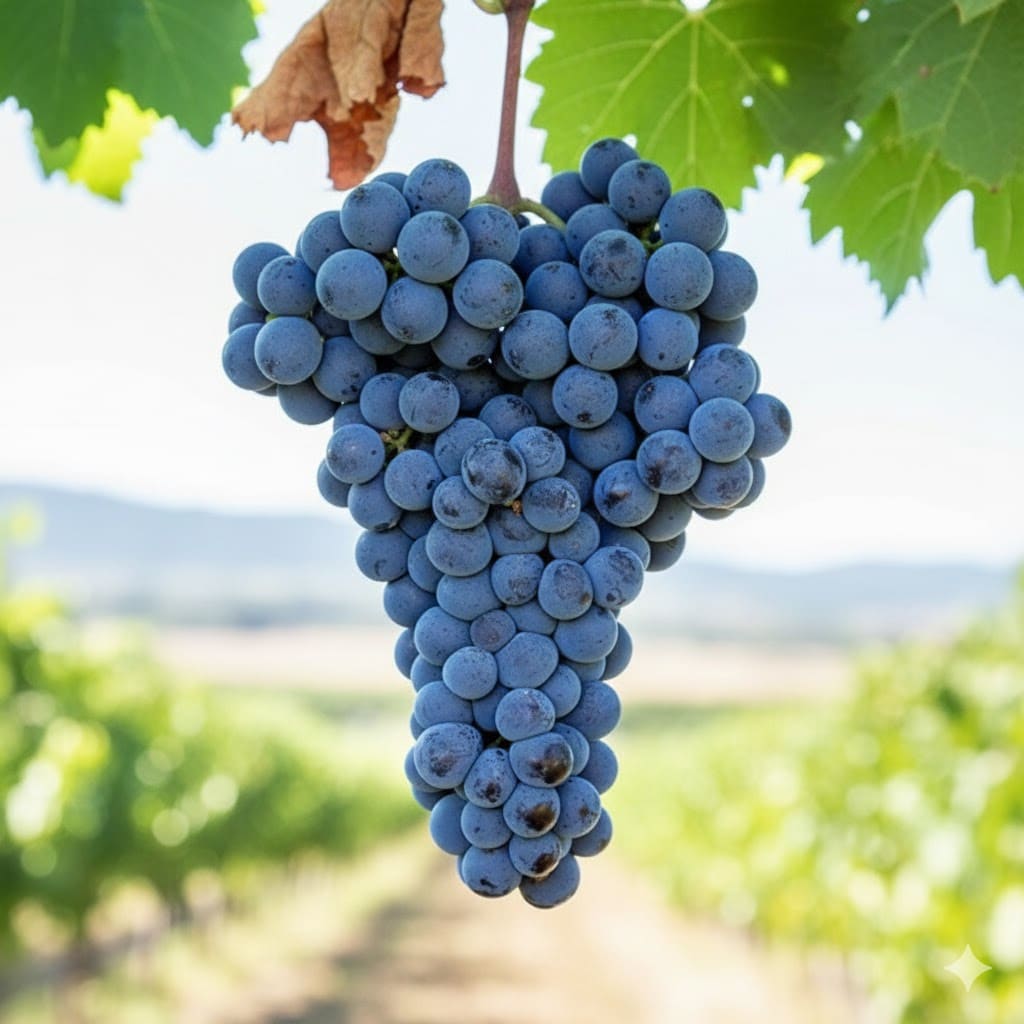
Characteristics of Merlot Early Ripening, Thin Skin, and Softness
Early Ripening and Frost Risk
Merlot is a relatively early-ripening grape, particularly when compared to Cabernet Sauvignon. This is its key advantage in cooler climates or clay soils, ensuring it achieves full phenolic ripeness before the onset of cold or wet weather. However, this early budding also makes it highly susceptible to spring frost damage.
Thin Skin and Low Acidity
The berries have thinner skins than Cabernet Sauvignon, contributing to several key traits:
Softer Tannins: Less skin means less tannin, giving Merlot its hallmark supple, velvety texture and earlier drinkability.
Lower Acidity:
Compared to Sangiovese or Nebbiolo, Merlot tends to have naturally lower acidity, adding to its round, fleshy mouthfeel.
Vulnerability:
The thinner skin also makes it highly susceptible to fungal diseases like rot, especially in humid conditions.
Soil Preference
Merlot thrives on cool, clay-based soils (especially the blue clay found in Pomerol), which retain moisture and moderate temperature, allowing for a long, steady ripening period that develops its plush fruit profile.
Aromatic profile of Merlot Plush, Dark-Fruited, and Mellow
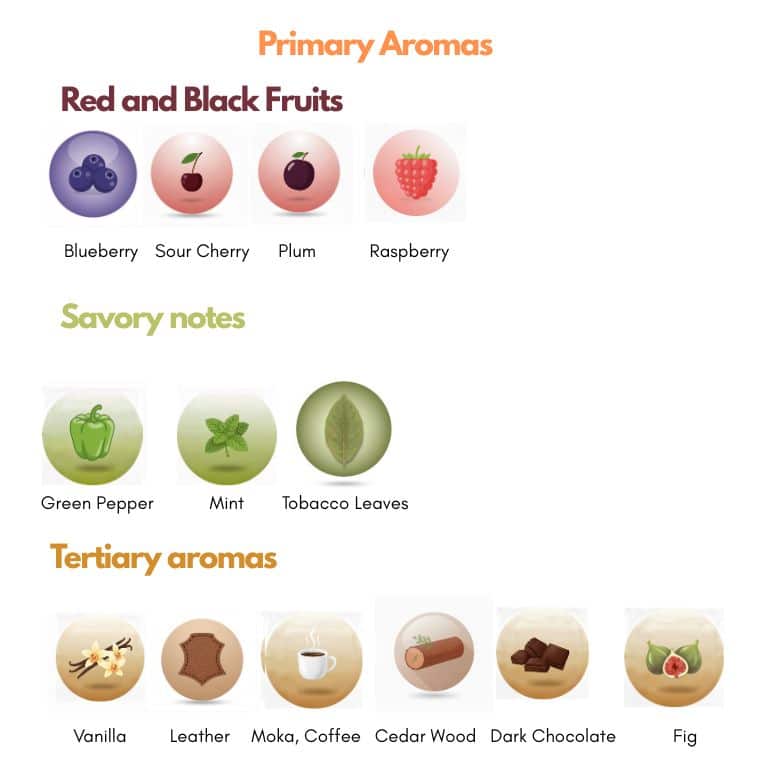
Merlot wines are known for their mid-palate density, soft tannins, and a rich, dark fruit profile.
Primary Flavors:
Red & Black Fruits:
Ripe red plum, black cherry, raspberry, and sometimes notes of blueberry. The flavor profile is often described as fleshy or plush.
Savory Notes (Cooler Styles):
Hints of leafy tobacco, fresh mint, and occasionally the herbaceous note of bell pepper (though less pronounced than in Cabernet Sauvignon).
Structure:
Body: Medium to Full-Bodied, defined by a smooth, round mouthfeel.
Acidity: Medium-Minus, contributing to the soft, gentle finish.
Tannins: Medium, noticeable but smooth and refined, integrating quickly upon release.
Tertiary Notes (Aged & Oaked):
When aged in new oak, Merlot develops rich notes of mocha, cocoa powder, cedar, vanilla, and dark chocolate. With extended bottle age, it can evolve into savory notes of leather, fig, and earthy truffle.
The Impact of Winemaking on Merlot Style The Art of Balance and Blending
Blending Partner
Merlot is the ultimate blending grape. It is often used to:
Soften Tannins:
When blended with Cabernet Sauvignon, Merlot adds flesh, fruit, and mid-palate richness, balancing Cabernet’s powerful tannic structure.
Add Drinkability:
Its relatively low tannins make the resulting blend approachable at a younger age.
The Use of Oak
Merlot benefits greatly from oak, which stabilizes its color and adds complexity.
French Oak:
Primarily used globally. For high-end Right Bank wines, a high percentage of new French oak is used, adding layers of cedar and baking spice without overpowering the fruit.
New World Styles:
Wines are generally fermented at higher temperatures and often see new oak to emphasize the richer, fruit-forward style.
Stylistic Spectrum
Merlot is produced in two main styles:
International/Ripe Style:
A focus on high ripeness, creating dark, concentrated, and alcoholic wines with notes of chocolate and mocha (common in California, Australia).
Traditional/Elegant Style:
A focus on balance and savory notes, with firm acidity and less alcohol (common in Bordeaux and parts of Italy).
Regions for Merlot Versatility Across Climates

France (Bordeaux – Right Bank): The Pinnacle
Pomerol & Saint-Émilion:
The classic home of Merlot, where it dominates blends and thrives on clay and limestone soils, producing wines of velvety texture and deep aromatic complexity (often 70% to 100% Merlot).
USA (California – Napa Valley): Power and Richness
Merlot here is often produced in the ripe, fruit-forward style, showcasing bold cherry, chocolate, and plush tannins. It is a critical blending component for many high-end Bordeaux blends.
Italy (Tuscany): Innovative Blends
A key component in many Super Tuscans, where it is blended with Sangiovese and/or Cabernet Sauvignon to add softness, weight, and international appeal.
Other Notable Regions:
Chile (Central Valley):
Produces accessible, reliable, and fruit-driven Merlot at high volumes.
Australia & New Zealand:
Grown successfully in cool-climate pockets, often focusing on elegance and red-fruit character.
Food pairing and service The Versatile Crowd-Pleaser
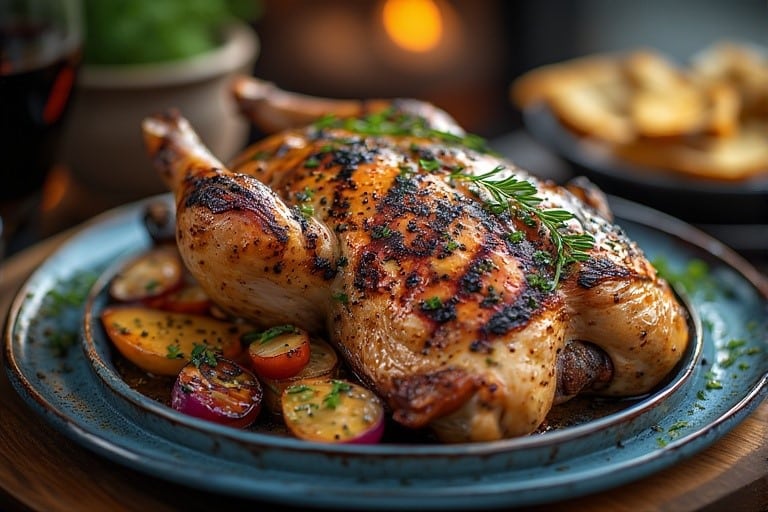
Merlot low tannins complement the tenderness of white meat, like roasted chicken
The key to pairing Merlot is to match its medium body, soft texture, and fruity profile with foods that are savory, rich, and moderately weighty, without being aggressively structured or acidic.
Ideal Food Pairings
Merlot excels with dishes that require a wine that is present but not overpowering.
Poultry and Pork:
Its softer tannins and fruit complement the tenderness of white meats.
Roasted Chicken or Turkey (especially with herb stuffing or gravy).
Pork Tenderloin or Pork Chops (grilled or pan-seared).
Duck (especially with fruity sauces like plum, cherry, or cranberry).
Medium-Weight Red Meats:
Unlike Cabernet, Merlot won’t clash with leaner or more delicate cuts of beef or game.
Meatloaf or Beef Wellington.
Veal (Osso Buco or veal chops).
Shepherd’s Pie or Hamburgers.
Earthy and Savory Dishes:
Merlot’s common notes of cocoa, tobacco, and herb (like bay leaf) make it a natural match for earthy ingredients.
Mushroom Risotto or any dish featuring prominent sautéed mushrooms.
Truffles (subtle use).
Lentils or hearty bean stews.
Cheese:
Look for semi-hard, less intensely aged cheeses that match the wine’s medium intensity.
Gouda (young or mild).
Jarlsberg or Emmentaler (Swiss cheeses).
Cheddar (mild or medium).
Complementary Flavor Components
Merlot is adaptable to slightly sweet or acidic additions in cooking, which is a key advantage.
Fruity/Sweet Accents:
Its black cherry and plum notes are enhanced by savory dishes that include a touch of sweetness. Think of balsamic glazes, berry sauces, or caramelized onions.
Herbs and Spices:
Rosemary, thyme, and sage complement the savory, herbaceous side of the wine. It can also handle moderate spice (like black pepper crusts or mild chili powder) better than most high-tannin reds.
Foods to Avoid
The goal is to avoid ingredients that overpower the wine’s medium structure or make its medium acidity taste flat.
Excessively Acidic Dishes:
Avoid foods dominated by vinegar, fresh tomatoes, or citrus, as these will make the Merlot taste dull and fruitless.
Excessively Spicy Dishes:
While it handles moderate spice, dishes with serious heat will emphasize the wine’s alcohol and create an unpleasant burn.
Delicate Fish:
Light, flaky fish like sole or snapper will be completely overwhelmed by the flavor and weight of Merlot.
High-Tannin Clash:
Avoid combining the Merlot with bitter vegetables (like artichokes or very bitter greens) or extremely high-tannin foods, as it can bring out a residual bitterness in the wine.
Service Temperature:
Serve slightly below room temperature, ideally between 16∘C and 18∘C (60∘F−64∘F).
Decanting:
Most young Merlot is approachable upon opening, but high-end Right Bank or high-tannin New World examples benefit from decanting for 30 minutes to 1 hour to open up tertiary flavors.
Challenges & Future Outlook
Despite its universal appeal, Merlot faces challenges in consistency and identity.
Consistency Risk (The “Sideways Effect”): Merlot’s reputation was unfairly damaged in the early 2000s, leading some growers to pull out vines. This caused a necessary flight to quality, forcing producers to focus on low yields and better sites to showcase its true potential.
The Problem of Identity: Because it is so flexible, many consumers fail to grasp Merlot’s unique potential outside of its role as a blending partner. Winemakers continue to refine techniques to highlight its singular power and elegance (especially in single-varietal bottlings).
Climate Change: As an early-ripening grape, warming trends can cause Merlot to become overripe quickly, leading to “jammy” flavors and a loss of desirable acidity. Producers must now carefully manage harvest timing to preserve freshness.
Ready to Dive into the World of Merlot? Discover Our Tours! Don't just read about Merlot—come and taste the velvet!
You’ve learned about Merlot’s soft texture, dark fruit profile, and its crucial role in the world’s most prestigious blends. Now, it’s time to experience the soothing counterpoint in the cellar and the vineyard!
We offer exclusive wine tours focused on the regions where Merlot truly shines. Journey to the historic Right Bank of Bordeaux (Saint-Émilion and Pomerol) to explore the clay soils that give Merlot its velvety texture. Alternatively, taste the powerful single-varietal expressions of Napa Valley, or the complex Italian blends of Tuscany.
You will participate in comparative tastings that reveal how Merlot changes based on soil—from the elegance of clay to the richness of volcanic rock—and discover why its best examples are among the most highly sought-after wines in the world.
Our Merlot-focused tours are designed for those who appreciate balance, richness, and immediate pleasure. Prepare to fall in love with the classic, comforting power of this global star.