Table of Contents
The Formation of Western European Wine Authority
Western Europe occupies a singular position in the global history of wine not as the origin of viticulture itself, but as the region in which wine progressively evolved into a structured cultural, economic, and institutional system defined by continuity, regulation, and geographic identity. Unlike earlier viticultural civilizations in the Eastern Mediterranean and Near East, where wine production remained largely embedded within localized agricultural or imperial frameworks, Western Europe developed a long-term institutional evolution that gradually transformed wine into a regulated and territorially defined product.
The historical development of wine in Western Europe must therefore be understood not as a single linear origin story, but as a cumulative process of institutional layering spanning more than two millennia. Following the collapse of Roman administrative structures in the 5th century CE, viticulture in Western Europe entered a phase of decentralization in which production was no longer governed by imperial coordination but by regional, ecclesiastical, and feudal systems. This fragmentation created the conditions for long-term regional differentiation, which later became a defining feature of European wine identity.
From the early medieval period onward, wine production in Western Europe became increasingly associated with stable institutions such as monastic orders and land-based aristocratic estates. These structures ensured continuity of production, particularly in regions such as what would later become France, Germany, and Switzerland. Monastic communities, in particular, played a central role in maintaining agricultural records, organizing vineyard land use, and ensuring consistent production for liturgical purposes. This continuity established one of the earliest foundations for systematic vineyard management in Europe.
Over subsequent centuries, Western Europe developed increasingly sophisticated systems of trade, land ownership, and regional specialization. By the early modern period (approximately 15th–17th centuries), wine production had begun to integrate into expanding commercial networks, particularly in Atlantic-facing regions such as Bordeaux, which benefited from maritime trade routes and early export-oriented economies. At the same time, inland regions such as the Rhine and Mosel valleys developed river-based distribution systems that connected production zones to broader European markets.
This gradual evolution culminated in the emergence of regionally differentiated wine identities, where specific geographic areas became consistently associated with particular styles, reputations, and levels of quality. These associations were not initially codified but developed through long-term commercial recognition and institutional practice.
By the modern era, Western Europe had become the primary region in which wine was not only produced but systematically classified, regulated, and institutionally defined. This long historical trajectory laid the foundation for the development of formal appellation systems, legal frameworks of geographic origin, and the global conceptual model through which wine is still evaluated today.
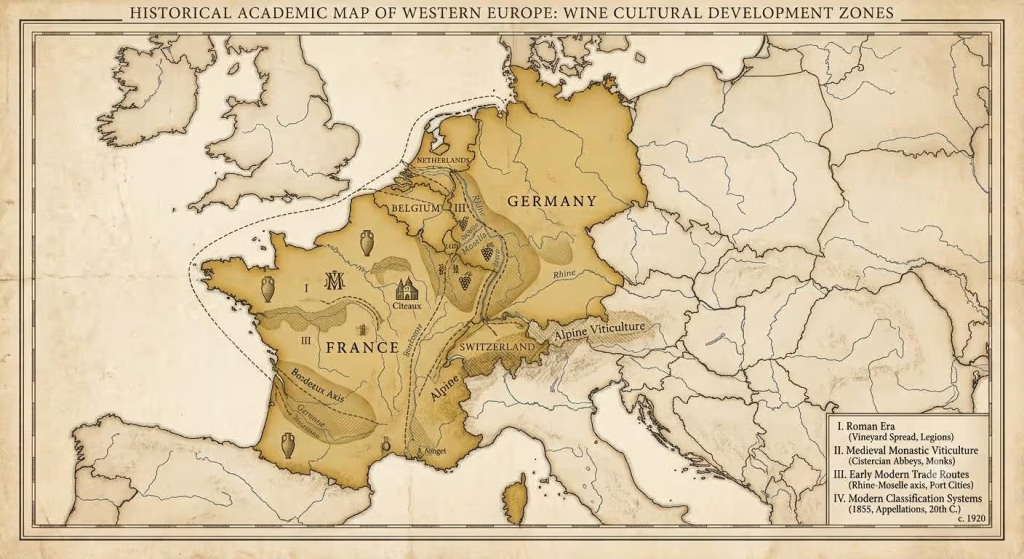
Historical European viticulture map showing ancient wine cultivation zones and trade routes
Post-Roman Transformation — Fragmentation and Survival of Viticulture
The collapse of the Western Roman Empire in the 5th century CE marked a fundamental restructuring of viticulture across Western Europe rather than its disappearance. Under Roman rule, wine production had been integrated into a highly organized imperial system characterized by standardized agricultural practices, military logistics, taxation frameworks, and extensive trade infrastructure. Vineyards were established across multiple provinces not only for local consumption but also as part of a coordinated imperial economy in which wine functioned as both a cultural commodity and a regulated economic good.
Following the disintegration of Roman administrative authority between the 4th and 6th centuries CE, this centralized system gradually dissolved. However, viticulture persisted in many regions of Western Europe, albeit under fundamentally different structural conditions. The absence of imperial coordination led to the emergence of decentralized production systems, in which vineyards were maintained at local or regional levels by rural communities, emerging feudal landholders, and increasingly by ecclesiastical institutions.
This transition period is critical in the long-term history of Western European wine because it introduced a structural shift from imperial standardization to regional differentiation. Without centralized governance, vineyard practices began to evolve independently across different territories. In regions such as Gaul (later France), Germania (later Germany), and the Alpine zones (including parts of modern Switzerland), viticulture survived through continuity of land use, adaptation to local environmental conditions, and gradual integration into emerging socio-political structures.
Among the most significant actors in this post-Roman landscape were early Christian institutions, which increasingly became custodians of agricultural production, including vineyards. Wine held essential importance within Christian liturgical practice, particularly for sacramental use, which ensured its continued cultivation even during periods of political fragmentation and economic instability. As a result, ecclesiastical structures became one of the primary mechanisms through which viticulture was preserved and transmitted across generations in Western Europe.
At the same time, the gradual formation of feudal systems during the early medieval period introduced new forms of land organization and agricultural control. Vineyard holdings became embedded within estates managed by local lords, monasteries, and emerging regional authorities. This dual system—ecclesiastical and feudal—ensured continuity of production while simultaneously introducing increasing territorial differentiation.
Over time, this decentralized structure contributed to the gradual emergence of regionally distinct viticultural identities. Although not yet formally classified or regulated, certain areas began to develop reputational associations based on continuity of production, local expertise, and stability of output. These early patterns of differentiation would later serve as the historical foundation for the development of European wine regions and, ultimately, formal appellation systems.
In this sense, the post-Roman period did not represent a decline in Western European viticulture but rather a structural transformation. The dissolution of imperial control created the conditions for long-term regional diversification, institutional survival through ecclesiastical systems, and the gradual emergence of localized wine identities that would define the future evolution of European wine culture.
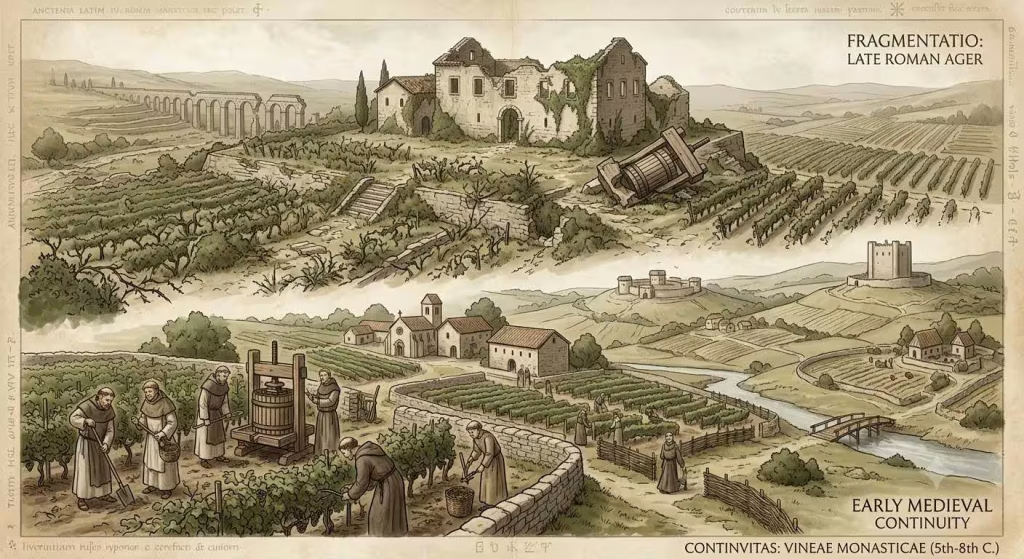
Medieval monastic vineyard in Western Europe showing early wine production and land management by religious orders
The Medieval Structuring of Wine Production — Monastic and Feudal Systems
By the early Middle Ages, particularly between the 9th and 14th centuries, viticulture in Western Europe entered a phase of institutional stabilization driven primarily by ecclesiastical structures and feudal land organization. This period represents one of the most important stages in the long-term development of European wine, as it established the first durable systems of vineyard management, documentation, and intergenerational continuity following the fragmentation of the post-Roman world.
Among the most influential actors in this process were monastic communities, which became central institutions for the preservation and expansion of viticulture across large parts of Western Europe. Monasteries operated not only as religious centers but also as highly organized agricultural and economic entities. They controlled extensive landholdings, including vineyards acquired through donations, endowments, or strategic consolidation of rural estates. Unlike secular landowners, monastic institutions managed vineyard production with a long-term perspective, often maintaining continuity across centuries.
Within this institutional framework, wine production acquired a level of administrative structure that was largely absent in earlier medieval rural systems. Monastic orders maintained detailed written records of land use, harvest yields, and vineyard performance. These records, while not constituting formal classification systems in the modern sense, represent some of the earliest documented attempts in Western Europe to differentiate vineyard plots based on observed agricultural outcomes over time. This practice contributed to the gradual emergence of site-specific understanding of vineyard performance, particularly in regions such as Burgundy, Champagne, and the Loire Valley.
Wine also held a central liturgical function within Christian religious practice, which ensured its consistent production regardless of broader political or economic instability. The sacramental role of wine in the Eucharist created a structural demand that stabilized viticulture even during periods of demographic decline, regional conflict, or weak centralized authority. This religious dimension was therefore not merely symbolic but functionally essential to the continuity of European wine production during the medieval period.
Parallel to monastic influence, feudal systems played a complementary role in shaping the structure of vineyard ownership and production. Land was organized into estates governed by local lords, who often integrated vineyards into broader systems of agricultural production and taxation. Wine became both an economic resource and a form of status representation within feudal hierarchies. In many regions, vineyard rights were closely linked to territorial control, reinforcing the connection between land tenure and wine production.
The coexistence of monastic and feudal systems created a dual institutional structure that defined medieval viticulture in Western Europe. Monasteries provided continuity, documentation, and agricultural refinement, while feudal estates ensured territorial expansion and integration into local economic systems. This duality produced a stable yet regionally diverse viticultural landscape in which production practices varied according to institutional context but remained broadly interconnected through trade, land use, and religious demand.
Over time, this system contributed to the gradual emergence of regionally differentiated wine identities. Although not yet formalized into legal or regulatory frameworks, certain areas began to develop consistent reputational associations based on sustained production practices and observable differences in wine character. These early forms of differentiation, particularly evident in regions such as Burgundy, can be understood as precursors to later European systems of geographic designation and appellation control.
In historical terms, the medieval period did not simply preserve viticulture in Western Europe; it fundamentally reorganized it through institutional frameworks that ensured continuity, documentation, and regional specialization. The combined influence of monastic and feudal systems established the structural foundations upon which later commercial, regulatory, and classification systems would be built in the early modern and modern periods.
The Emergence of Regional Wine Economies (15th–17th Century)
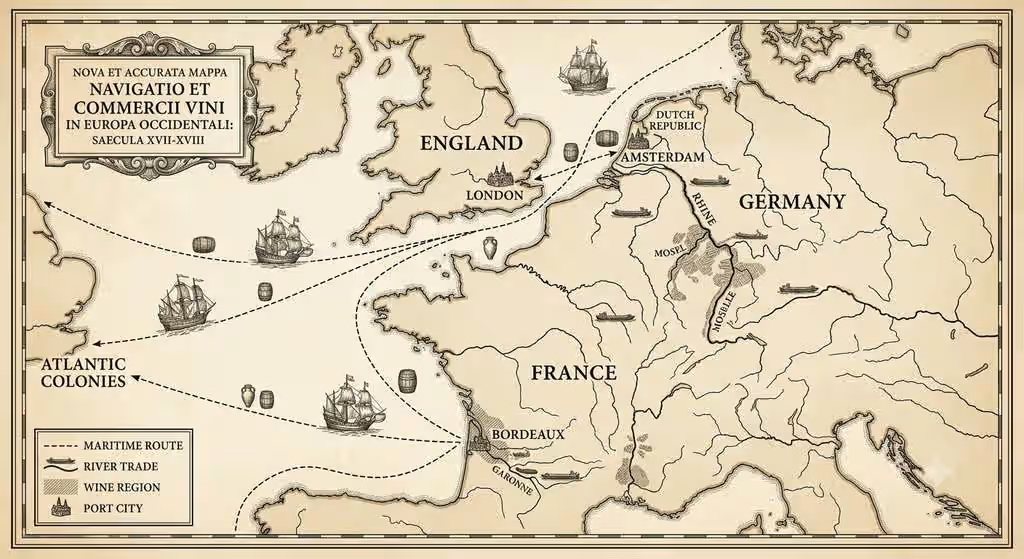
Atlantic trade routes linking Western European wine regions in the 17th–18th centuries.
The transition from medieval viticultural systems to early modern regional wine economies represents a fundamental restructuring of wine production in Western Europe. Between the 15th and 17th centuries, wine ceased to function primarily as a locally embedded agricultural output governed by ecclesiastical or feudal institutions and increasingly became integrated into structured commercial networks that linked production zones with expanding interregional and international markets.
This transformation was closely associated with the gradual consolidation of political authority in several Western European territories, as well as the expansion of maritime and river-based trade infrastructures. In this context, wine production began to acquire a more explicitly economic dimension, in which geographic origin, transport accessibility, and commercial reputation became increasingly important determinants of value and distribution.
One of the most significant developments during this period occurred in the regions of southwestern France, particularly Bordeaux. Due to its strategic position along the Garonne River and direct access to the Atlantic Ocean, Bordeaux became a central node in early modern wine trade networks. From the 15th century onward, and increasingly during the 16th and 17th centuries, Bordeaux wine was systematically integrated into long-distance export systems, particularly those connected to England and the Low Countries. This export orientation contributed to the consolidation of Bordeaux as a region defined not only by production but also by commercial identity within international markets.
The relationship between England and French wine regions during this period played a particularly influential role in shaping early modern wine economies. English demand for imported wines, combined with evolving merchant networks and maritime trade expansion, created sustained commercial channels through which wine was increasingly categorized according to origin, quality perception, and price differentiation. This contributed to the gradual emergence of geographically based wine identity as a commercial standard rather than a purely local designation.
In parallel, the Dutch Republic developed into a major intermediary hub within European wine distribution systems. Dutch merchants established highly efficient logistical and financial networks that facilitated the redistribution of wine from producing regions such as France, Germany, and the Iberian Peninsula to broader Northern European markets. The Dutch role in wine trade was primarily one of circulation and commercialization rather than production, yet their influence was crucial in shaping early forms of market standardization and price segmentation.
Inland regions of Central Europe, particularly those associated with the Rhine and Mosel river systems, developed distinct trade-oriented structures based on fluvial transport networks. These river corridors functioned as essential commercial arteries, linking production zones in German-speaking territories with major consumption centers across Northern and Western Europe. Wine produced in these regions was increasingly recognized for its distinct stylistic profile and became integrated into structured trade flows that reinforced regional identity through market repetition and distribution consistency.
During this same period, Switzerland maintained a more localized viticultural economy due to its mountainous geography and limited large-scale trade access. Wine production in Swiss territories remained primarily oriented toward regional consumption, reinforcing a model of small-scale continuity rather than export-driven expansion. Nevertheless, Swiss viticulture contributed to the broader diversity of Western European wine systems by maintaining production in geographically constrained and climatically distinct conditions.
By the end of the 17th century, Western Europe had developed a highly differentiated system of regional wine economies characterized by distinct production logics, trade orientations, and emerging reputational hierarchies. These systems were no longer isolated agricultural frameworks but interconnected components of a broader European commercial structure in which geography, transport infrastructure, and market recognition played increasingly decisive roles.
This period is therefore essential in understanding the long-term evolution of Western European wine, as it established the economic and geographic foundations upon which later systems of classification, branding, and regulatory control would be constructed in the 18th and 19th centuries. The emergence of regional wine economies represents the first stage in the transformation of wine from a locally embedded agricultural product into a structured commodity defined by origin, reputation, and integration into expanding trade networks.
The Expansion of Wine Trade Networks (17th–18th Century)
The 17th and 18th centuries mark a period of accelerated integration and expansion of wine trade networks across Western Europe, during which wine production became increasingly embedded in transnational commercial systems. This era represents a decisive step in the transformation of wine from a regionally distributed agricultural product into a structured commodity circulating through highly organized maritime and inland trade routes.
This expansion was driven by a combination of political stabilization within key Western European states, the consolidation of merchant economies, and the rapid growth of Atlantic maritime commerce. In this context, wine-producing regions such as Bordeaux acquired heightened strategic importance due to their direct access to oceanic trade routes via the Garonne River and the Port of Bordeaux. From the late 17th century onward, Bordeaux wine became systematically integrated into long-distance export networks that extended toward England, the Dutch Republic, and other Northern European markets, establishing one of the earliest sustained examples of structured international wine trade.
The role of England during this period was particularly influential in shaping the structure of Western European wine markets. English demand for imported wines created stable commercial channels that reinforced long-term trade relationships with French producers. These relationships were not limited to simple exchange but increasingly involved differentiation based on geographic origin, perceived quality, and pricing hierarchy. Over time, this contributed to the emergence of a proto-system of geographic branding, in which wines were consistently associated with their region of production rather than solely with individual merchants or estates.
In parallel, the Dutch Republic developed into a central logistical and commercial intermediary within European wine distribution networks. Dutch merchants established highly efficient systems of maritime transport, warehousing, and re-exportation that connected major wine-producing regions in France, Germany, and the Iberian Peninsula with consumer markets across Northern and Central Europe. The Dutch role was particularly significant in standardizing commercial practices, facilitating price formation, and expanding access to wine beyond elite consumption circles into broader urban markets.
River systems, particularly those associated with the Rhine and its tributaries, continued to play a critical role in the inland distribution of wine across Central Europe. These fluvial corridors functioned as essential economic arteries, linking production zones in German-speaking regions to major commercial centers along the North Sea and beyond. Wine transported through these systems became increasingly subject to regional differentiation based on origin and stylistic consistency, reinforcing the connection between geography and market identity.
During this period, Western European wine markets began to exhibit increasingly structured forms of segmentation. Wines were no longer treated as homogeneous commodities but were progressively differentiated according to origin, transport route, and perceived quality tiers. This process did not yet constitute formal classification in the modern regulatory sense, but it represents an important transitional phase in which market-driven recognition of geographic identity began to stabilize into consistent commercial patterns.
By the end of the 18th century, Western Europe had developed an interconnected and hierarchical system of wine trade in which production regions, commercial intermediaries, and consumption markets were closely linked through established trade routes. This system laid the essential groundwork for the later institutionalization of wine classification in the 19th century, as emerging regulatory frameworks sought to formalize distinctions that had already been established through long-term commercial practice.
The 19th Century Transformation — Classification and Systemization
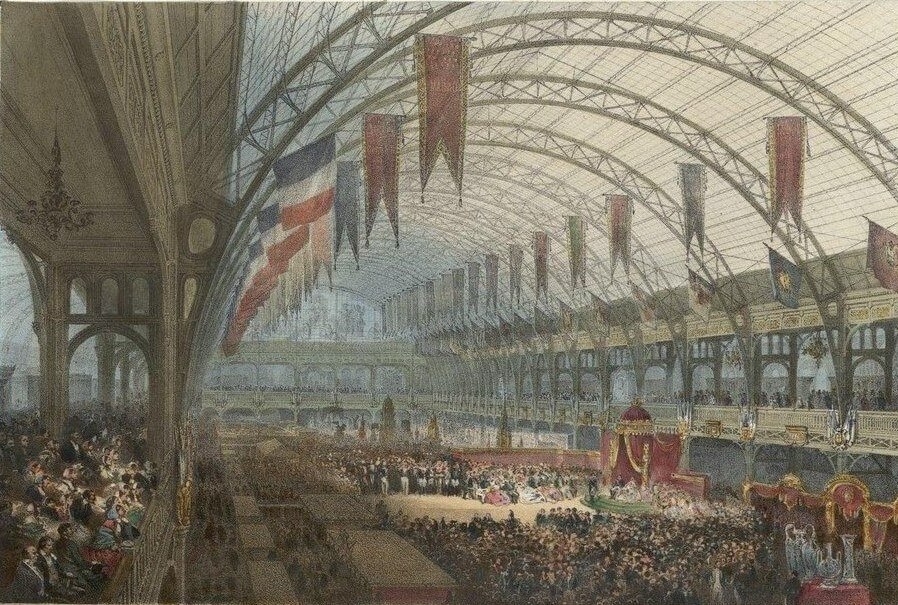
The 19th century represents a decisive structural turning point in the history of Western European wine, marking the transition from commercially driven reputation systems to formally recognized frameworks of classification, documentation, and institutional regulation. This transformation was closely linked to broader developments across Europe, including the rise of centralized nation-states, the expansion of statistical governance, and the increasing need to standardize agricultural production within emerging administrative economies.
In France, this process reached a defining moment with the Bordeaux Classification of 1855, established during the Exposition Universelle de Paris under the authority of Napoleon III. This classification system organized leading Bordeaux wine estates into a hierarchical structure of growths (Premiers, Deuxièmes, Troisièmes, Quatrièmes, and Cinquièmes Crus), primarily based on historical market prices and long-term commercial reputation, particularly within the London wine trade. Although originally conceived as a pragmatic commercial reference for international exhibition purposes, the 1855 classification rapidly acquired enduring institutional status, effectively formalizing a system of hierarchical quality recognition that remains influential in global wine evaluation today.
The significance of this development extends beyond Bordeaux itself. The 1855 classification represents one of the earliest formal attempts in Western Europe to codify wine quality through structured categories linked to geographic origin and historical performance. It marks a transition from informal market-based reputation systems toward more rigid institutional frameworks that would later influence national appellation systems.
During the same period, broader conceptual changes were taking place across Western European wine-producing regions. Increasing emphasis was placed on the relationship between geographic origin, production consistency, and perceived quality. This emerging logic gradually replaced earlier systems in which wine value was determined primarily by merchant reputation or local consumption patterns. Instead, wine began to be understood as a product whose characteristics could be systematically associated with specific locations and production conditions.
In Germany, a parallel but distinct development emerged in the second half of the 19th century, focused on the analytical classification of wine based on measurable agricultural criteria. German wine systems increasingly emphasized grape ripeness, must weight, and harvest timing as key determinants of quality differentiation. This approach reflected broader scientific and administrative tendencies within German-speaking regions, where agricultural products were increasingly categorized according to quantifiable parameters. Although structurally different from the French estate-based hierarchy, this system contributed equally to the broader European movement toward formalized wine classification.
Elsewhere in Western Europe, including Switzerland and Luxembourg, similar but less centralized developments began to take shape. While these regions did not establish large-scale classification systems during the 19th century, they increasingly adopted practices related to geographic labeling, vineyard documentation, and production traceability. These incremental changes contributed to a broader continental shift toward recognizing wine as a geographically defined and administratively classifiable product.
More broadly, the 19th century can be understood as the period in which Western European wine production became integrated into formal systems of institutional classification and regulatory logic. This transformation was closely aligned with the expansion of modern state structures and the increasing application of bureaucratic principles to agricultural production. Wine was no longer treated solely as a commercial good defined by trade reputation but increasingly as a regulated category governed by standardized frameworks of evaluation and control.
By the end of the century, the foundations of modern European wine regulation had been established. The principles introduced during this period — particularly the linkage of geographic origin, quality hierarchy, and institutional recognition — would directly influence the development of 20th-century appellation systems and legally protected designations of origin across Western Europe.
The Phylloxera Crisis — Collapse, Adaptation, and Reinvention
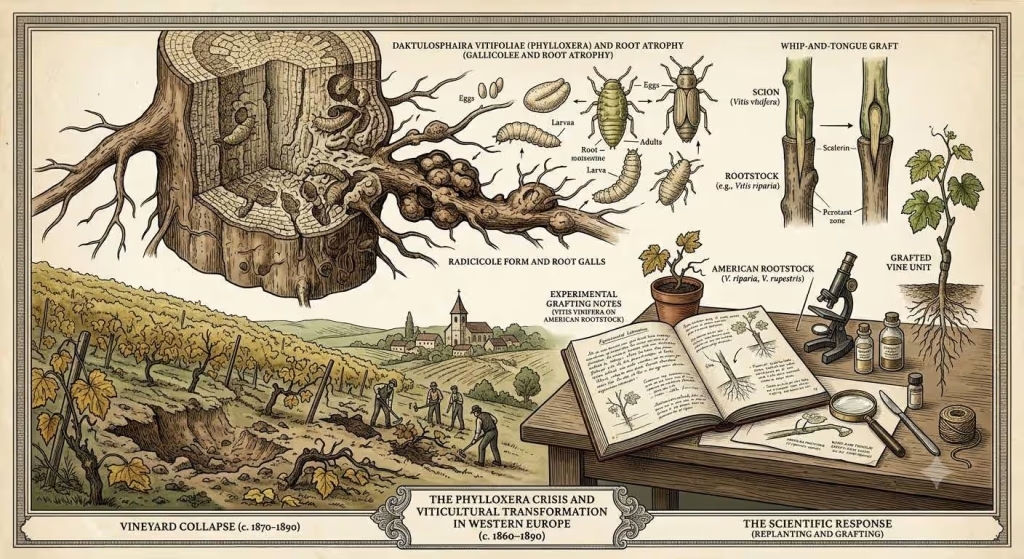
Phylloxera infestation destroying European vineyards root system 19th century agricultural crisis
The late 19th century introduced one of the most transformative biological crises in the history of Western European viticulture: the phylloxera epidemic. Caused by the spread of the insect Daktulosphaira vitifoliae, native to North America, this infestation rapidly destabilized vineyard ecosystems across France, Germany, Switzerland, and other major European wine-producing regions between approximately the 1860s and 1890s. Unlike localized agricultural diseases, phylloxera attacked the root systems of European Vitis vinifera vines, leading to widespread vineyard destruction and systemic agricultural collapse.
The scale of the crisis was unprecedented. Within a few decades, vast portions of Western European vineyards became unproductive, causing severe disruption to rural economies that were heavily dependent on viticulture. This collapse extended beyond agricultural production and affected land ownership structures, regional trade systems, and long-established wine markets that had developed over centuries of continuous cultivation.
Initial responses to the crisis were fragmented and largely ineffective. Various experimental solutions were attempted, including chemical treatments, flooding of vineyards, and grafting trials that lacked scientific consistency in their early stages. However, none of these approaches provided a sustainable solution until the introduction and systematic adoption of grafting European grape varieties onto resistant American rootstocks.
This technical innovation represented a fundamental turning point in the biological foundation of Western European viticulture. By the late 19th century, the practice of grafting had become the standard method for vineyard reconstruction across affected regions. This transition effectively redefined the biological structure of European vineyards, ensuring continuity of traditional grape varieties while fundamentally altering the root systems on which they depended.
Beyond its agricultural implications, the phylloxera crisis had profound institutional and economic consequences. The financial burden of vineyard replanting led to significant restructuring within the wine industry. Many smaller producers and fragmented vineyard owners were unable to recover, resulting in a gradual consolidation of vineyard ownership in several key regions. Larger estates and better-capitalized producers were therefore able to expand their influence during the post-crisis reconstruction period.
At the same time, the crisis accelerated the involvement of scientific institutions, agricultural authorities, and emerging governmental bodies in viticultural management. Research into vine biology, pest control, and agricultural resilience became increasingly formalized, marking a shift toward more systematic and science-based approaches to wine production. This period represents an early stage in the institutionalization of agricultural science within Western European wine systems.
The long-term outcome of the phylloxera crisis was not the disappearance of viticulture in Western Europe, but its complete structural reinvention. Vineyard systems were rebuilt on new biological foundations, ownership structures became more concentrated, and scientific oversight became an increasingly important component of viticultural practice. These changes fundamentally altered the trajectory of European wine production.
By the end of the 19th century, Western European viticulture had emerged from the phylloxera crisis as a more resilient, scientifically informed, and institutionally structured system. The crisis thus functioned as a decisive turning point between traditional vineyard economies and the modern, regulated wine systems that would define the 20th century.
The Rise of Modern Wine Regulation — The 20th Century
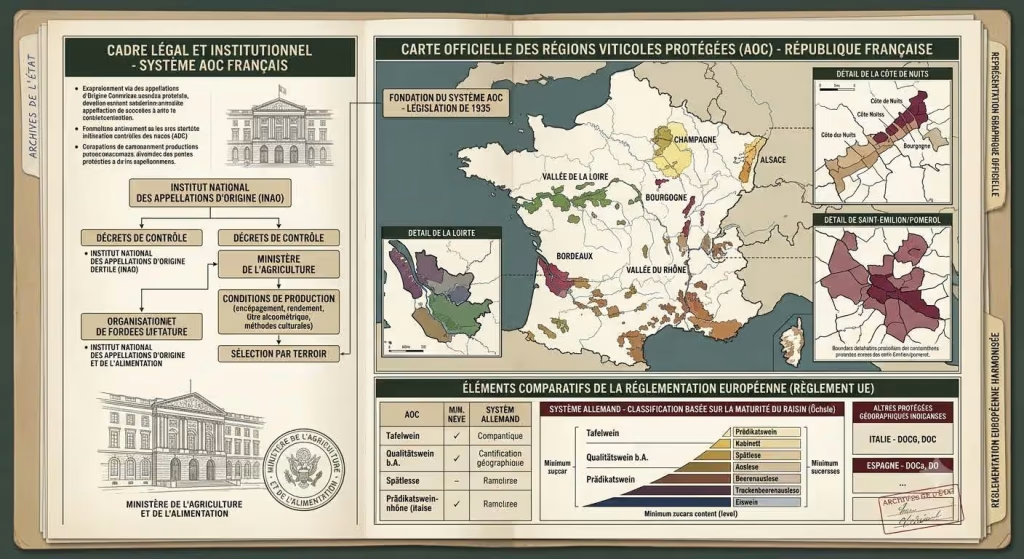
French AOC Appellation d’Origine Contrôlée system map showing regulated wine regions established 1935
The 20th century marks the full institutionalization of wine production in Western Europe, transforming it from a traditionally regulated agricultural activity into a legally defined system governed by national and regional regulatory frameworks. This period represents the culmination of several centuries of gradual codification, during which geographic origin, production methods, and quality standards became formally embedded within legal structures.
The most significant development in this transformation was the establishment of the Appellation d’Origine Contrôlée (AOC) system in France, officially introduced in 1935. This regulatory framework was created to address increasing concerns over fraud, mislabeling, and the growing need to protect the authenticity of regional wine identities. The AOC system introduced legally defined geographic boundaries for wine production, along with strict controls over permitted grape varieties, vineyard practices, yield limits, and production methods. In doing so, it established one of the most comprehensive regulatory models for agricultural products in Western Europe.
The introduction of the AOC system represented a decisive shift in the conceptualization of wine. Wine was no longer defined primarily through commercial reputation or historical prestige alone, but through legally enforceable criteria tied to geographic origin and production discipline. This legal framework reinforced the principle that quality could be systematically linked to territorial specificity, formalizing a concept that had developed gradually over previous centuries.
Beyond France, other Western European countries developed parallel regulatory systems that reflected similar underlying principles, even when structurally different in implementation. Germany, for example, refined its wine classification system through a framework based on grape ripeness levels and must weight measurements, creating a structured hierarchy of quality categories grounded in measurable agricultural criteria. This analytical approach reflected broader tendencies toward scientific classification within German administrative systems.
In Switzerland, Luxembourg, and other smaller Western European wine-producing regions, regulatory frameworks evolved more gradually but followed the same general direction. These systems increasingly incorporated geographic labeling, production traceability, and formal documentation requirements, contributing to a wider European convergence toward structured wine governance.
The broader significance of the 20th century lies in the emergence of wine as a fully regulated economic category within Western European legal systems. National governments, agricultural institutions, and regulatory authorities became directly involved in defining production standards, controlling geographic designations, and enforcing compliance with established rules. This institutional framework ensured both the protection of regional identities and the stabilization of quality expectations within domestic and international markets.
By the mid-20th century, Western Europe had established a coherent model of wine regulation that combined legal protection, geographic classification, and institutional oversight. This model would later become the global reference system for wine classification, influencing regulatory frameworks in both traditional and emerging wine-producing countries outside Europe.
The rise of modern wine regulation therefore represents not only the culmination of internal European developments, but also the creation of an institutional export model that continues to define global wine governance today.
The Modern Era — Western Europe as Global Wine Authority
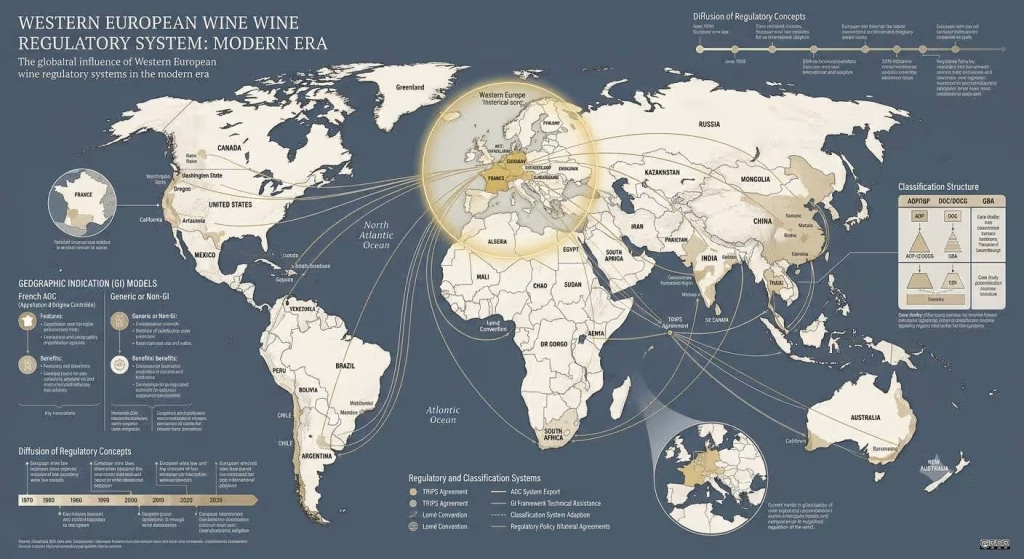
Global influence map of Western European wine classification systems and appellation models worldwide diffusion
In the contemporary era, Western Europe no longer functions as the dominant center of global wine production in quantitative terms. Since the late 20th century, significant wine production has expanded across the Americas, Oceania, and emerging regions in Asia and the Southern Hemisphere. However, despite this geographical diversification of production, Western Europe has retained a fundamentally different and structurally superior form of influence: it remains the primary institutional reference system for wine classification, regulation, and cultural definition.
This shift from production dominance to systemic authority represents one of the most important developments in modern wine history. Western Europe is no longer defined primarily by output volume, but by its enduring role in establishing the conceptual, legal, and cultural frameworks through which wine is globally understood. The classification systems, appellation models, and regulatory structures developed over centuries in countries such as France, Germany, and Switzerland continue to serve as foundational templates for wine governance worldwide.
France, in particular, maintains a central position within this global framework through the continued influence of the Appellation d’Origine Contrôlée (AOC) system and its subsequent evolution into broader protected designation systems. The principle that wine quality is intrinsically linked to geographic origin has become a global standard, adopted or adapted by numerous wine-producing countries outside Europe. This model has reshaped international wine regulation by establishing a structured relationship between territory, production rules, and quality classification.
Germany’s contribution remains highly influential through its precision-based classification logic, which emphasizes measurable agricultural parameters such as grape ripeness and harvest conditions. This analytical framework has contributed to a broader global understanding of wine quality as a function of both environmental conditions and quantifiable production variables.
Smaller Western European wine regions such as Switzerland, Luxembourg, Belgium, and the Netherlands continue to play a significant role in demonstrating the adaptability of European wine systems to diverse climatic and geographic conditions. While their production volumes are limited compared to major wine-producing countries, their regulatory alignment with broader European frameworks reinforces the coherence and stability of the Western European model as a whole.
Beyond individual countries, the defining characteristic of Western Europe in the modern era is the universality of its institutional influence. Wine regions across the world, regardless of their geographic location or production scale, continue to reference Western European classification systems when defining quality categories, establishing geographic indications, or structuring regulatory frameworks. This reflects the deep institutional legacy of centuries of European wine development.
This influence extends beyond regulation into cultural perception. Western Europe remains widely regarded as the historical and conceptual benchmark for fine wine, with its regions frequently serving as reference points for authenticity, prestige, and tradition. Even in markets where production is no longer centered in Europe, Western European models continue to define consumer expectations and critical evaluation standards.
In this sense, Western Europe functions not simply as a geographic wine region, but as a global institutional system that has shaped the very structure of modern wine culture. Its legacy is embedded in legal frameworks, trade classifications, educational systems, and cultural narratives that continue to define how wine is produced, regulated, and understood internationally.
Conclusion — The Institutional Legacy of Western European Wine
The historical evolution of wine in Western Europe represents a long-term process of institutional consolidation, beginning with post-Roman fragmentation, continuing through medieval monastic organization, expanding through early modern trade systems, and culminating in modern legal frameworks of classification and regulation. Across each historical phase, wine production gradually shifted from a locally embedded agricultural practice into a structured system defined by geographic identity, institutional governance, and regulatory codification.
What distinguishes Western Europe in global wine history is not only its continuity of production, but its ability to transform that continuity into enduring systems of classification and regulation that have become globally influential. From monastic vineyard management to the AOC system and modern protected designation frameworks, Western Europe has consistently developed models that define how wine is categorized, evaluated, and understood.
Today, the legacy of Western European wine is not confined to its vineyards, but is embedded in the global architecture of wine culture itself. Its institutional frameworks continue to shape international standards, ensuring that Western Europe remains the central reference point for the historical, cultural, and regulatory understanding of wine worldwide.