
Table of Contents
Gamay the underrated, light and fruity
Gamay grape, formally known as Gamay Noir à Jus Blanc (black Gamay with white juice), usually shortened to Gamay, is a distinctive red wine grape that is best known as the primary varietal of the Beaujolais region of France, just south of Burgundy.. It’s renowned for producing light-bodied, fruity, and approachable red wines.The light, juicy, light-to-medium-bodied red known for its vibrant red fruit, floral aromas, and low tannins. . Celebrated for its bright, exuberant fruit and high-toned floral notes, Gamay produces some of the world’s most immediately approachable red wines. It is the definitive chillable red, admired for its versatility with food and its ability to offer serious complexity at the Cru Beaujolais level, contrasting sharply with its simple, youthful Beaujolais Nouveau style.
Origin French roots
Gamay is native to the Burgundy region of France. DNA analysis has revealed it is a natural cross between Pinot Noir and the almost extinct white grape Gouais Blanc, making it a sibling to Chardonnay.
Banishment from Burgundy: In the late 14th century, Philippe the Bold, Duke of Burgundy, famously banned Gamay from the Côte d’Or, believing it to be “vile and disloyal” and that it produced inferior wines compared to Pinot Noir. This forced the banned grape southward, where it found a new home in the granite-rich soils of Beaujolais, thriving there ever since.
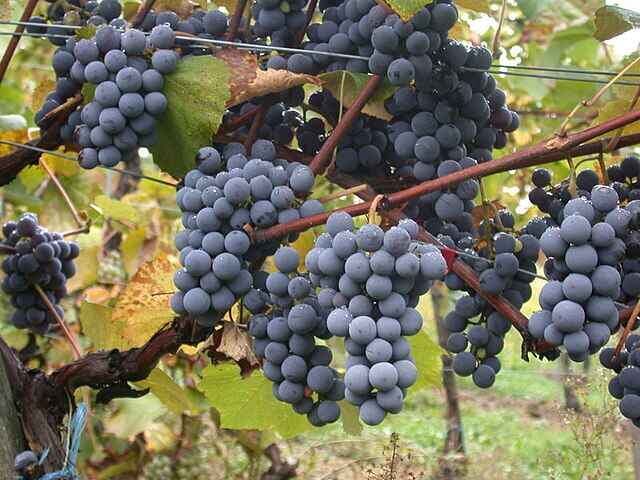
Characteristics of Gamay Light, fresh, early ripening
It is a vigorous, early budding and early ripening variety, which can make it susceptible to spring frosts. However, it can compensate by producing secondary buds.
Early-budding, and early-ripening grape,make it productive and reliable for growers. Its early ripening is a major advantage in cooler climates, ensuring full flavor development before autumn weather sets in.
High yields
It’s a vigorous vine that can produce high yields, which, if not managed properly, can lead to diluted wines. Careful vineyard management and sometimes “green harvesting”
(dropping some grape bunches) are necessary to concentrate flavors.
Thin skin
Gamay berries have relatively thin skins, contributing to the lighter color and lower tannin levels in the wines. The bunches are typically small and compact..This is the key structural feature that gives Gamay its smooth texture and makes it enjoyable when young, often with a slight chill.
Flavor profile of Gamay Floral, Fresh, Red fruity
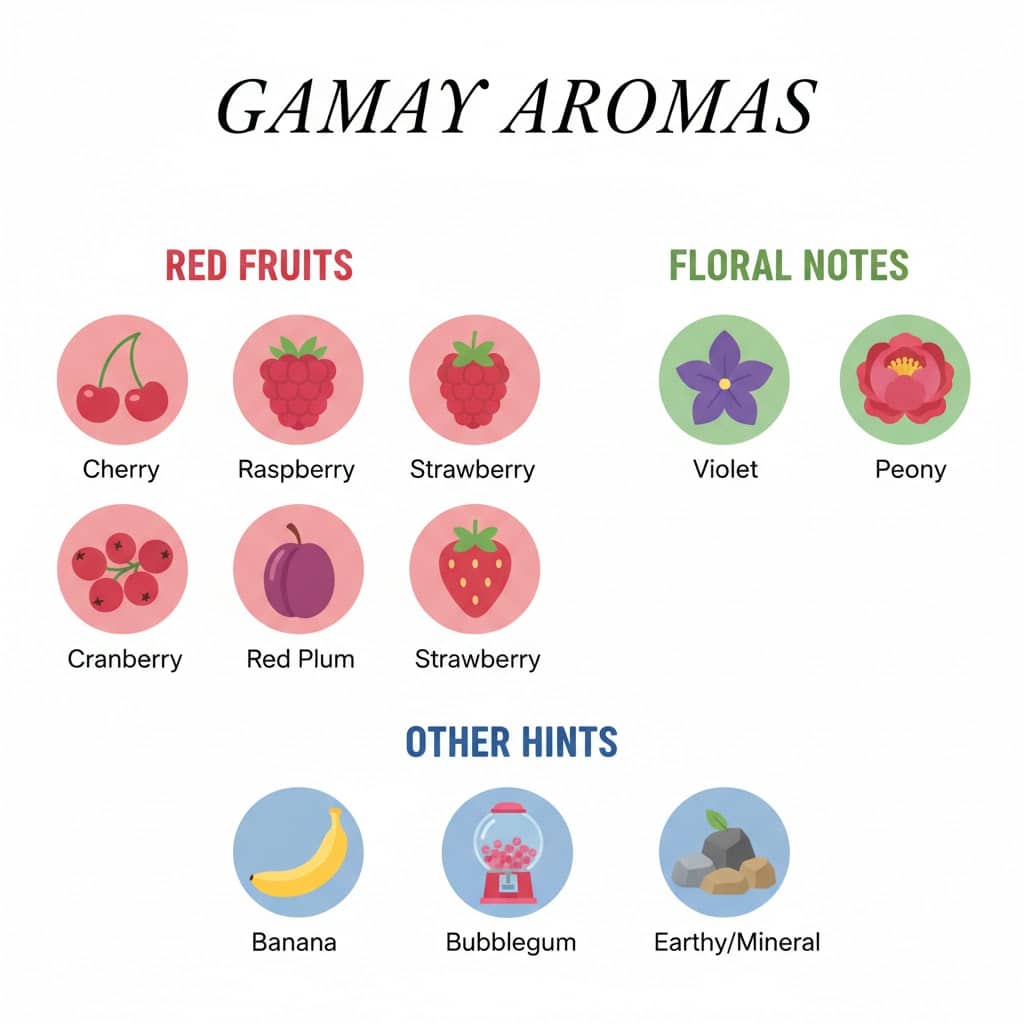
Gamay wines are prized for their freshness, delicate structure, and aromatic complexity, especially those derived from carbonic maceration.
Primary Flavors:
Red Fruits:
Exuberant notes of bright red cherry, raspberry, strawberry, and cranberry.
Floral/Aromatic:
Distinctive high-toned aromas of fresh-cut flowers, such as violets, iris, and peonies.
Savory Notes (Cru Styles):
Hints of black pepper, clove, potting soil, and dried herbs.
Structure:
Body:
Light to Medium-Bodied, characterized by its soft, easy-drinking mouthfeel.
Acidity:
High (Lively/Vibrant), providing freshness and lift.
Tannins:
Low, fine, and silky, contributing to the smooth finish.
Aging Potential:
Most Beaujolais and Beaujolais Nouveau are designed for immediate consumption. However, the top Cru Beaujolais (like Moulin-à-Vent, Morgon, and Fleurie) possess the structure and intensity to age gracefully for 5 to 10 years, developing complex tertiary notes of truffle, dried fruit, and earth.
Wine techniques Semi carbonic or carbonic maceration or traditional
Gamay is a winemaking chameleon, with its style heavily influenced by the technique used:
Carbonic Maceration: This is the signature winemaking technique for many Beaujolais wines, particularly Beaujolais Nouveau. Whole, uncrushed grape bunches are placed in a sealed vat filled with carbon dioxide. Fermentation begins inside the individual grapes, contributing to vibrant, fresh, and often “candied” fruit flavors (like banana and bubblegum) and very soft tannins.
Semi-Carbonic Maceration: A more common approach where a portion of the grapes are crushed, and whole clusters are added. This allows for a blend of traditional fermentation and carbonic maceration.
Traditional Fermentation: For more structured and age-worthy Cru Beaujolais wines, winemakers may employ more traditional fermentation methods, sometimes with partial or no carbonic maceration, and may use neutral oak barrels for aging to add complexity without overpowering the fruit.
Regions for Gamay around the world
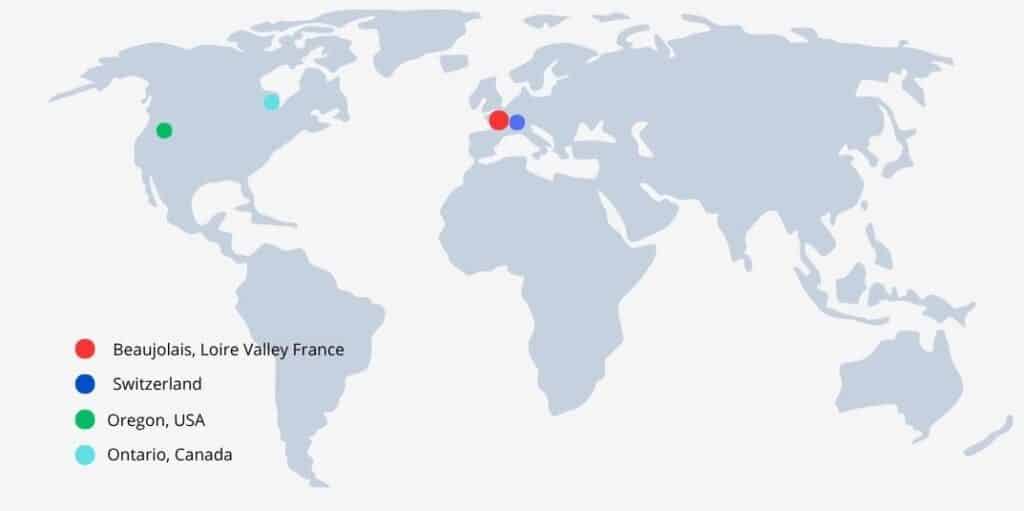
Beaujolais, France: By far the most important region for Gamay, producing roughly 75% of the world’s Gamay wines. This includes:
Beaujolais AOC: Light, fruity, and often released as Beaujolais Nouveau.
Beaujolais-Villages AOC: More concentrated and structured.
10 Beaujolais Crus: The most premium expressions, offering significant diversity in style and aging potential (Brouilly, Côte de Brouilly, Chénas, Chiroubles, Fleurie, Juliénas, Morgon, Moulin-à-Vent, Régnié, Saint-Amour).
Loire Valley, France: this grape is also grown in some parts of the Loire Valley (e.g., Touraine, Anjou), where it often produces wines with a bit more earthiness and acidity.
Other Regions: While less prominent, it is also grown in:
Switzerland: It’s the second most cultivated red grape variety and is often blended with Pinot Noir.
Oregon, USA: Particularly in the Willamette Valley, a small but growing number of producers are making high-quality Gamay wines.
Canada: Especially in Ontario and British Columbia.
Pairing and service for Gamay wines
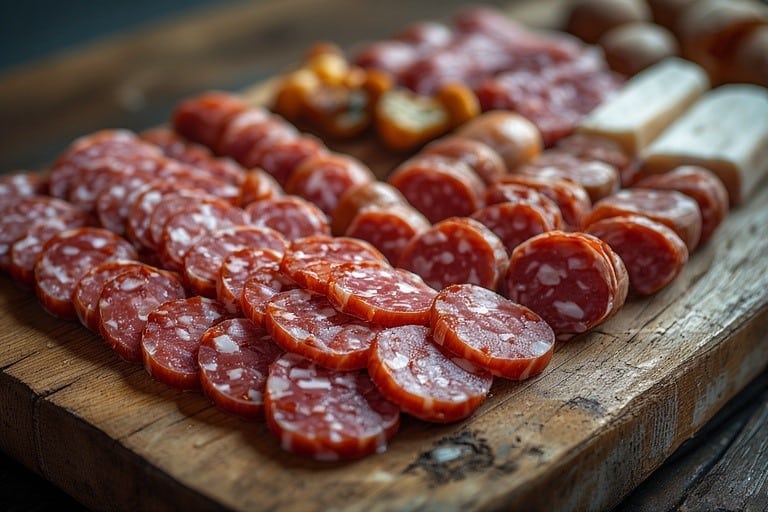
Cold cut, french “saucisson” and dry sausages are a natural food pairing with light Gamay
Gamay’s light body, low tannins, and high acidity make it an exceptionally food-friendly red wine, pairing well with dishes where heavier reds would clash.
Ideal Food Pairings:
Gamay is famous for pairing with the holiday table (like Thanksgiving turkey) and other challenging dishes. It excels with roasted poultry, cured meats (charcuterie), medium-weight red meats (veal, pork tenderloin), and even richly flavored fish (salmon or tuna). Its acidity cuts through the richness of cream sauces and complements the earthy notes of mushroom risotto.
Avoid:
Extremely heavy, high-fat red meat dishes that require significant tannin to break down, though the bolder Crus can handle slightly richer fare.
Service Temperature:
Gamay benefits significantly from a slight chill. Serve slightly below room temperature, ideally between 13°C and 16°C (55°F-60°F), to enhance its freshness and fruit.
Other Gamay in the family
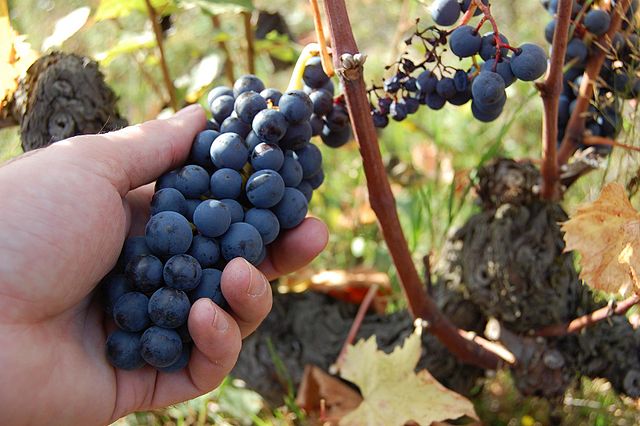
Gamay grape in Loire valley, that produce Gamay de Touraine
Teinturier Gamays (Red-Fleshed Gamays): This is the main category of “other Gamays.” “Teinturier” is a French term meaning “dyer,” referring to grape varieties whose flesh and juice are also red (or pink) in color, in addition to their dark skins. This is a rare genetic mutation.
The primary Teinturier Gamay varieties you might encounter, though still quite obscure, are Gamay de Bouze, Gamay de Chaudenay, Gamay Fréaux (also known as Teinturier Fréaux
Challenges & Future Outlook The Cru renaissance
he perception of Gamay has historically been tied to the simplistic, marketing-driven style of Beaujolais Nouveau, but its status is rapidly changing.
The Cru Renaissance: There is a strong and successful movement to elevate Gamay’s status by highlighting the exceptional quality and complexity of the ten Cru Beaujolais. These wines are being recognized globally for their ability to express granite terroir and age with grace.
Growing Global Interest: Cool-climate regions outside of France (Oregon, Canada) are increasing Gamay plantings, responding to consumer demand for lighter, lower-alcohol, and food-friendly red wines.
Focus on Terroir: Winemakers are utilizing less carbonic maceration and more traditional whole-cluster fermentation for higher-end bottlings, allowing the grape’s inherent elegance and the soil’s mineral character to shine through.
Ready to Dive into the World of Gamay? Discover Our Tours! Don't just read about Gamay. Try it!
You’ve explored the vibrant history of the Gamay grape variety, discovering its fruity aromas and unique versatility. Now, it’s time to move from theory to experience!
Gamay isn’t just a wine; it’s a celebration of the unique terroirs of Beaujolais, the Loire Valley, and the scenic valleys of Switzerland. We’ve designed immersive wine tours to let you experience the very best this widespread yet often misunderstood grape has to offer.
Let us guide you through the Crus of Beaujolais (Morgon, Fleurie, Moulin-à-Vent…) where Gamay reaches its full expression, revealing complexity and aging potential. Then, we’ll whisk you away to the vineyards of the Swiss Valais, renowned for their distinctive, elegant expressions of the grape. You’ll meet passionate winemakers, explore centuries-old cellars, and, most importantly, participate in exclusive tastings ranging from light, vibrant Beaujolais-Villages to structured Swiss Dôle blends.
Our Gamay-focused tours are designed for everyone: whether you’re a curious wine lover or a seasoned connoisseur. Get ready to sharpen your palate and create memorable souvenirs at the heart of these diverse wine regions.