Table of Contents
The Bordeaux wine region is governed by a rigorous system of over 60 individual Appellations d’Origine Contrôlée (AOC). This hierarchy moves from the general to the specific: as the geographical boundaries shrink, the production rules regarding yields, grape densities, and aging become stricter.
Step Out of the History Books and Into the Cellar
The Left Bank: The Médoc Peninsula
The Médoc is a viticultural strip stretching approximately 80 kilometers north from the city of Bordeaux. It is the global epicenter of Cabernet Sauvignon-dominant blends, shaped by a maritime climate and a history of Dutch engineering.
The Regional Médoc Appellations
Médoc AOC (The Northern Reach):
Covering the northernmost portion of the peninsula, the Médoc AOC encompasses roughly 5,600 hectares of vines. Historically known as the “Bas-Médoc,” this region produces approximately 28 to 30 million liters of wine annually. The legal yields are generally set around 55 hectoliters per hectare. Because the soil is more dominated by heavy clays than the southern communes, the AOC laws permit a significant proportion of Merlot (often 50% or more of the blend), resulting in a “sturdier” wine style. The climate here is more exposed to the Atlantic winds, providing a cooling effect that maintains high acidity in the grapes.
Strategic Benchmarks: Château Potensac (The benchmark for the region, owned by the Delon family of Léoville Las Cases) and Château Greysac. These estates represent the pinnacle of the “Cru Bourgeois” movement within this specific AOC.
Haut-Médoc AOC:
This prestigious regional appellation covers 4,600 hectares of vines south of the Médoc AOC. It serves as a superior “catch-all” for high-quality land that sits between the famous communal enclaves. The production is roughly 23 million liters per year. The AOC decree is stricter than the northern Médoc, typically requiring higher vine density (minimum 6,500 to 7,000 vines per hectare) to force competition and root depth. The terroir is a transition zone, featuring the first significant “croupes” (gravel mounds) that characterize the Left Bank. The proximity to the Gironde Estuary begins to provide a thermal buffer against spring frosts.
Strategic Benchmarks: Château La Lagune (3rd Growth) and Château Cantemerle (5th Growth). The appellation is also defined by “over-performers” like Château Sociando-Mallet and Château La Tour Carnet.
The Communal Powerhouses of the Médoc
Saint-Estèphe AOC:
The northernmost of the communal AOCs, covering 1,250 hectares. It produces roughly 7.5 million bottles annually. The terroir is marked by a higher clay content in the subsoil, which retains moisture—a critical advantage during drought years. The microclimate is slightly cooler than the southern communes, leading to a later harvest. The AOC laws here allow for a powerful, “rugged” wine style with high natural acidity and immense aging potential.
Leading Estates: Château Cos d’Estournel (2nd Growth) and Château Montrose (2nd Growth), alongside the high-performing Château Phélan Ségur.
Pauillac AOC:
The “Capital of Cabernet,” covering 1,200 hectares. This is arguably the most prestigious AOC in the world, containing three of the five First Growths. Annual production is roughly 7 million bottles. The laws demand a minimum density of 8,500 vines per hectare, though most top estates plant at 10,000. The terroir is defined by deep, quaternary gravel banks that provide exceptional drainage and heat radiation. The microclimate is heavily influenced by the estuary, which sits directly adjacent to the top vineyards, moderating extreme temperature shifts.
Leading Estates: Château Lafite Rothschild, Château Latour, and Château Mouton Rothschild.
Saint-Julien AOC:
The smallest of the “famous four,” covering only 910 hectares, yet 95% of its surface is owned by 1855 Classified Growths. It produces about 5 million bottles a year. The terroir is a homogenous mix of fine gravel, creating the most consistent AOC in Bordeaux. It is protected by a mild microclimate that avoids the extremes of the northern or southern reaches of the peninsula.
Leading Estates: Château Léoville Las Cases, Château Ducru-Beaucaillou, and Château Léoville Barton.
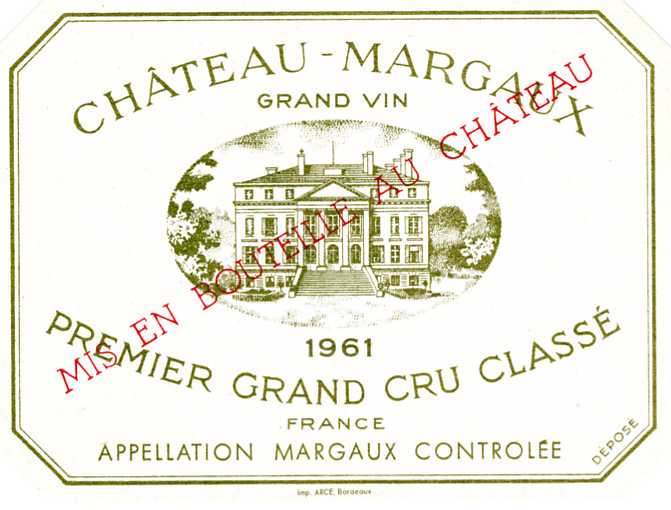
Margaux AOC:
The largest communal AOC at 1,500 hectares, encompassing five different villages. It produces roughly 9 million bottles per year. The AOC laws emphasize finesse; the soils are the thinnest and stoniest in the Médoc, leading to wines with ethereal floral aromatics (violets) and silken tannins. Being the southernmost commune, it is slightly warmer, leading to an earlier flowering and ripening period.
Leading Estates: Château Margaux (1st Growth), Château Palmer, and Château Rauzan-Ségla.
Graves and Pessac-Léognan
Located south of the city, the Graves is the historic birthplace of Bordeaux wine, where vines have been cultivated for 2,000 years.
Graves AOC (Regional Heritage):
Spanning a 50-kilometer strip along the Garonne river, this appellation covers approximately 3,500 hectares. Unlike the Médoc, the Graves AOC is dual-purpose, permitting the production of both red and dry white wines under the same name. The terroir is defined by deep layers of gravel mixed with sand and clay, deposited by the Garonne over millennia. The climate is slightly warmer and more sheltered than the Médoc due to the surrounding pine forests, which act as a windbreak. For red wines, the AOC mandates a minimum of 10.5% alcohol and yields of 50 hl/ha; for whites, it focuses on the classic Sémillon-Sauvignon Blanc blend.
Strategic Benchmarks: Château de Chantegrive and Château Villa Bel-Air.
Pessac-Léognan AOC:
Created as a breakaway from the Graves in 1987, this elite AOC covers 1,600 hectares. It is the only AOC in Bordeaux to hold an 1855 First Growth while also being the world benchmark for dry white wines. The terroir is defined by the “Graves de Bordeaux”—large river-washed pebbles. The microclimate is unique as it is “urbanized”; the heat-island effect from the city of Bordeaux provides a warmer ripening environment than the Médoc.
Leading Estates: Château Haut-Brion, Château La Mission Haut-Brion, and Château Smith Haut Lafitte.
Sauternes & Barsac AOC:
These “Liquoreux” (sweet wine) enclaves cover 2,200 hectares. The terroir consists of limestone and clay, but the climate is the true driver of the AOC. The confluence of the cold Ciron River and the warmer Garonne creates an autumn mist that triggers Botrytis cinerea (Noble Rot). The AOC laws require a minimum sugar level of 221 grams per liter in the must.
Leading Estates: Château d’Yquem, Château Rieussec, and Château Climens.
The Right Bank: Libournais & Satellites
The Right Bank is the spiritual home of Merlot and Cabernet Franc. Unlike the flat, gravelly plains of the Médoc, the Libournais is a landscape of rolling hills, limestone plateaus, and heavy clays, resulting in wines with more opulent textures and plum-centric flavor profiles.
Saint-Émilion & Saint-Émilion Grand Cru AOC:
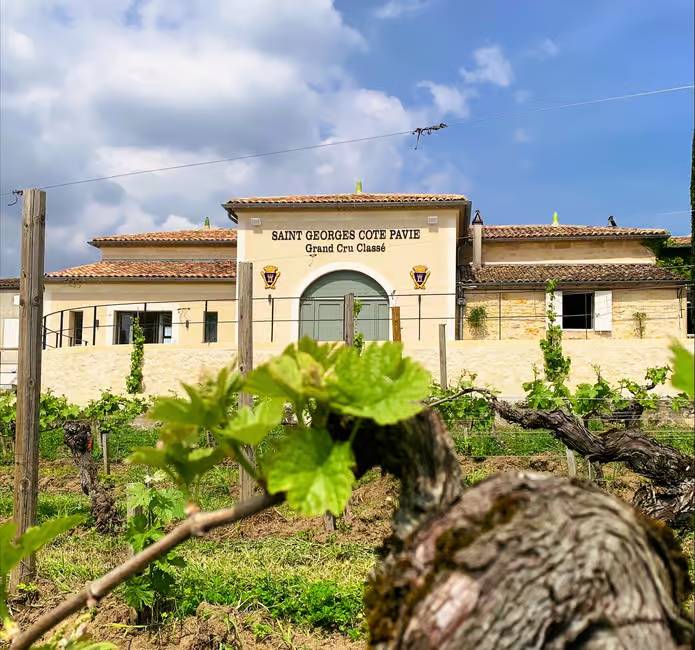
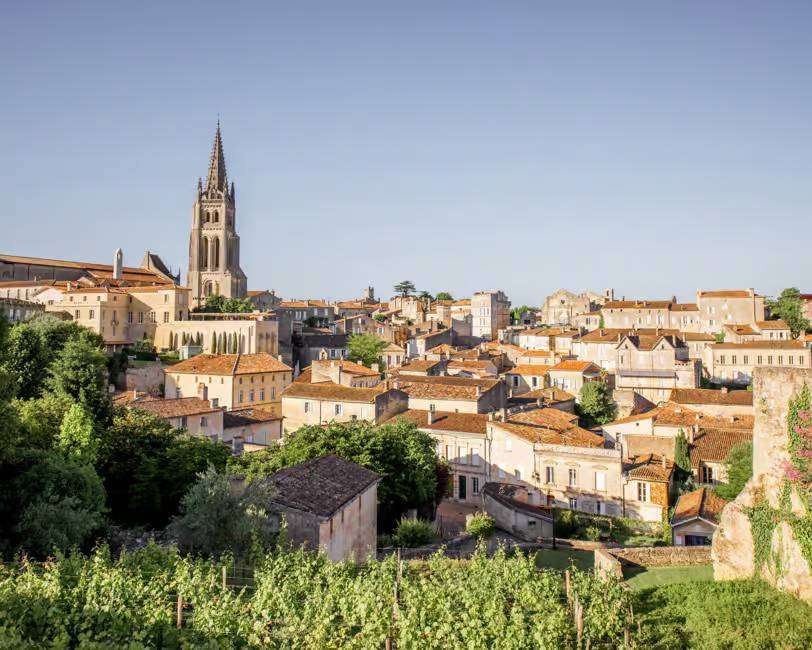
Covering roughly 5,400 hectares, this region is a geological mosaic. The “Grand Cru” designation is not a fixed geographic area but a stricter set of production rules (lower yields, longer aging). The terroir is divided into three zones: the Limestone Plateau (finesse and acidity), the Cotes (steep clay-limestone slopes), and the Gravelly Plain (bordering Pomerol). The climate is more continental than the Médoc, with higher risks of spring frost but warmer summer peaks.
Leading Estates: Château Ausone, Château Cheval Blanc, Château Figeac, and Château Pavie.
Pomerol AOC:
A tiny, world-class enclave of only 800 hectares. There is no official classification system here, yet it commands the highest average prices in Bordeaux. The terroir is famous for the “Crasse de Fer” (iron-rich subsoil) and a central “button” of heavy blue clay (Smectite) that allows Merlot to reach unparalleled levels of concentration and velvet-like tannin.
Leading Estates: Petrus, Château Le Pin, and Château Vieux Château Certan.
Lalande-de-Pomerol AOC:
Situated just north of Pomerol, separated by the Barbanne stream, this 1,100-hectare appellation mimics the style of its famous neighbor. The terroir is primarily sandy-gravelly with patches of clay. The AOC laws permit slightly higher yields (52-54 hl/ha), making it the “strategic alternative” for high-quality Merlot-based blends.
Strategic Benchmarks: Château La Fleur de Boüard and Château de Viaud.
The Saint-Émilion Satellites (Montagne, Lussac, Puisseguin, Saint-Georges):
These four distinct AOCs cover approximately 4,000 combined hectares. They sit on higher elevations than Saint-Émilion proper, leading to a slightly cooler microclimate and a later harvest window. The soils are dominated by heavy clay and limestone, producing robust wines with high aging potential.
Strategic Benchmarks: Château Roc de Calon (Montagne) and Château des Laurets (Puisseguin).
Fronsac & Canon-Fronsac AOC:
Known as the “Tuscany of Bordeaux” due to its dramatic hills, these AOCs (1,100 ha) sit on a foundation of “Molasse de Fronsadais” (a specific mix of sandstone and clay). These wines were historically more expensive than Saint-Émilion in the 18th century and are currently undergoing a modern renaissance for their “muscular” yet fresh character.
Leading Estates: Château Fontenil and Château Dalem.
The Frontiers: Blaye, Bourg, and Entre-Deux-Mers
The “Frontier” appellations represent the largest volume of production in Bordeaux. While historically viewed as “satellite” regions, they are defined by a distinct geological diversity—moving from the limestone cliffs of the estuary to the rolling silty-clay hills of the interior.
1. The Estuary Strongholds
Côtes de Bourg AOC:
Covering 3,900 hectares on the right bank of the Gironde, this is one of the oldest viticultural sites in France. The terroir is a dramatic, hilly landscape of clay-limestone soils over a subsoil of “silt-covered” limestone. Its microclimate is unique; sitting at the “maritime crossroads” where the Dordogne and Garonne meet, it receives about 10% more sunshine and 15% less rain than the city of Bordeaux. Structurally, it is the only region where Malbec maintains a significant foothold (often 10% of the vineyard area), providing a spicy, “inky” backbone to the Merlot blends.
Strategic Benchmarks: Château Roc de Cambes (owned by François Mitjavile of Tertre Roteboeuf) and Château Fougas.
Blaye Côtes de Bordeaux AOC:
This massive, sprawling AOC covers 6,500 hectares. The terroir is divided into three distinct zones: the “alluvial” flats near the river, the “limestone” cliffs, and the “sandy-clay” interior. In 2009, it joined the “Union des Côtes de Bordeaux” to consolidate its branding. The climate here is more extreme than the Médoc, as it lacks the same degree of forest protection, leading to wines with high natural fruit intensity and “crunchy” acidity.
Strategic Benchmarks: Château Roland la Garde and Château Bel-Air La Royère.
2. The Heartland: Entre-Deux-Mers
Entre-Deux-Mers AOC:
Literally “Between Two Seas” (the Garonne and Dordogne rivers), this is a vast triangle of 7,000 hectares. Crucially, the AOC title is strictly reserved for dry white wines. If a red wine is produced here, it must be labeled as Bordeaux or Bordeaux Supérieur.
Terroir & Climate: The landscape is pastoral and cool, defined by “Boulbènes”—a fine, silty-clay soil that is highly sensitive to compaction but excellent for the aromatic development of Sauvignon Blanc and Sémillon. The higher elevation and inland position lead to significant diurnal temperature swings, which preserve the delicate thiols (citrus and boxwood aromas) in the grapes.
Strategic Benchmarks: Château Bonnet (André Lurton) and Château Thieuley.
3. The Unified “Côtes”: Castillon and Francs
Castillon Côtes de Bordeaux AOC:
Located East of Saint-Émilion, this 3,000-hectare AOC is geologically an extension of the Saint-Émilion limestone plateau. The “Plateau” and “Cotes” sections of Castillon are currently the site of intense investment because the terroir—starving vines on hard limestone—is nearly identical to that of its $500-a-bottle neighbors, but at a fraction of the land cost.
Strategic Benchmarks: Domaine de l’A and Château d’Aiguilhe.
Francs Côtes de Bordeaux AOC:
The smallest of the “Côtes” at only 435 hectares. It is the most continental (easterly) point of Bordeaux, with the lowest rainfall and coldest winters. This unique microclimate allows for the rare production of high-quality “Moelleux” (semi-sweet) and “Liquoreux” wines alongside powerful, structured reds.
Strategic Benchmarks: Château de Francs and Château Puygueraud (the Thienpont family).
Bordeaux appelations in a nutshell
According to the INAO (Institut National de l’Origine et de la Qualité) regulations, here is the exhaustive breakdown of the Bordeaux appellations, categorized by their specific legal decrees.
I. The Regional “Foundation” Appellations (7)
These cover the entire Gironde department and are the high-volume pillars of the region.
Bordeaux (Red)
Bordeaux (Dry White)
Bordeaux (Rosé)
Bordeaux (Clairet) – A specific, deep-colored “dark” rosé unique to Bordeaux.
Bordeaux Supérieur (Red) – Stricter yield and aging laws.
Bordeaux Supérieur (White) – Usually semi-sweet or sweet.
Crémant de Bordeaux – Sparkling wine produced via méthode traditionnelle.
II. The Médoc: The Left Bank Red Strongholds (8)
The core of the 1855 Classification. 8. Médoc (Regional) 9. Haut-Médoc (Sub-regional) 10. Saint-Estèphe (Communal) 11. Pauillac (Communal) 12. Saint-Julien (Communal) 13. Listrac-Médoc (Communal) 14. Moulis-en-Médoc (Communal) 15. Margaux (Communal)
III. Graves & Pessac-Léognan (5)
The birthplace of the city’s wine heritage. 16. Graves (Red) 17. Graves (Dry White) 18. Graves Supérieures – Reserved for semi-sweet/sweet whites. 19. Pessac-Léognan (Red) 20. Pessac-Léognan (Dry White)
IV. The Right Bank: Libournais & Satellites (10)
Where Merlot finds its limestone and clay sanctuary. 21. Saint-Émilion 22. Saint-Émilion Grand Cru – A higher technical standard than the base AOC. 23. Pomerol 24. Lalande-de-Pomerol 25. Fronsac 26. Canon-Fronsac 27. Montagne-Saint-Émilion (Satellite) 28. Lussac-Saint-Émilion (Satellite) 29. Puisseguin-Saint-Émilion (Satellite) 30. Saint-Georges-Saint-Émilion (Satellite)
V. The Sweet Wine Enclaves (11)
Legally protected zones for botrytized or late-harvest wines. 31. Sauternes 32. Barsac 33. Cérons 34. Loupiac 35. Ste-Croix-du-Mont 36. Cadillac (Liquoreux) 37. Premières Côtes de Bordeaux (Sweet) 38. Côtes de Bordeaux Saint-Macaire (Sweet/Semi-sweet) 39. Sainte-Foy-Bordeaux (Sweet/Semi-sweet) 40. Bordeaux Moelleux – A style-based regional AOC for sweet white. 41. Bordeaux Haut-Benauge (Sweet)
VI. The “Côtes” & Estuary Appellations (13)
These hilly regions often carry the “Côtes de Bordeaux” banner but are distinct legal entities. 42. Blaye-Côtes de Bordeaux 43. Castillon-Côtes de Bordeaux 44. Francs-Côtes de Bordeaux (Red) 45. Francs-Côtes de Bordeaux (Dry White) 46. Francs-Côtes de Bordeaux (Sweet) 47. Cadillac-Côtes de Bordeaux (Note: distinct from the Cadillac sweet wine AOC) 48. Sainte-Foy-Côtes de Bordeaux 49. Côtes de Bourg 50. Blaye (Red) 51. Blaye (White) 52. Côtes de Blaye (Rare white-only AOC for specific varieties) 53. Côtes de Bordeaux (General group name used for certain blends) 54. Graves de Vayres (Red) 55. Graves de Vayres (White)
VII. Specific White & Rare Designations (10)
Filling the count involves the highly specific geographically protected white wine AOCs. 56. Entre-Deux-Mers (Dry White) 57. Entre-Deux-Mers Haut-Benauge (Dry White) 58. Premières Côtes de Blaye (Red) 59. Premières Côtes de Blaye (White) 60. Beaujolais de Bordeaux (Extremely rare historical designation) 61. Bordeaux Haut-Benauge (Dry White) 62. Sainte-Foy-Bordeaux (Red) 63. Sainte-Foy-Bordeaux (Dry White) 64. Rosé des Côtes de Bordeaux 65. Néac – (An enclave near Pomerol, though today most producers use Lalande-de-Pomerol, the AOC legally still exists).
Why the number fluctuates
The official list often consolidates color variations (e.g., Pessac-Léognan is one AOC producing two colors), but for a technical guide, counting them separately is more accurate because the cahier des charges (production rules) for red and white are fundamentally different.