Table of Contents
Bordeaux. The name alone conjures images of opulent châteaux, venerable cellars, and wines that define luxury and legacy. More than just a region, Bordeaux is a global benchmark for quality, a tapestry woven with centuries of viticultural innovation, political upheaval, and economic prowess. For an authority site dedicated to wine, understanding Bordeaux’s profound history isn’t just a matter of academic interest; it’s essential to grasping the very essence of fine wine.
This authoritative article will take you on an exhaustive journey through the annals of Bordeaux, charting its evolution from ancient Roman plantations to the sophisticated, meticulously classified vineyards of today. Each period reveals a crucial chapter, contributing to the region’s unparalleled reputation and the enduring magic of its wines.
Step Out of the History Books and Into the Cellar
Roman Roots – The Genesis of a Vine-Growing Region Planting the Seeds of an Empire: 1st - 4th Century AD
The story of Bordeaux wine begins not with grand châteaux, but with the pragmatic expansion of the Roman Empire. As their legions marched across Gaul, they brought with them not only conquest but also culture, including the vine. It was in the 1st century AD that Roman settlers likely first planted grapevines in the fertile soils around Burdigala, a strategic trading post on the Garonne River.
The Romans were keen agriculturalists and understood the potential of the region’s mild climate and well-drained gravelly soils. By the 4th century, the poet Ausonius—a prominent figure of Roman Gaul and namesake of the modern Château Ausone—famously described his vineyards, providing one of the earliest literary accounts of winemaking in the region. These early vineyards established the fundamental bedrock of trade and viticulture upon which all subsequent Bordeaux history is built.
The English Alliance – Claret's Golden Age A Royal Marriage That Quenched a Nation's Thirst: 12th - 15th Century
The 12th century marked a pivotal turning point for Bordeaux. This transformation was ignited by the marriage of Eleanor of Aquitaine to Henry Plantagenet in 1152. When Henry ascended to the English throne, Aquitaine became an English dominion, a union that lasted over 300 years and created a massive export market.
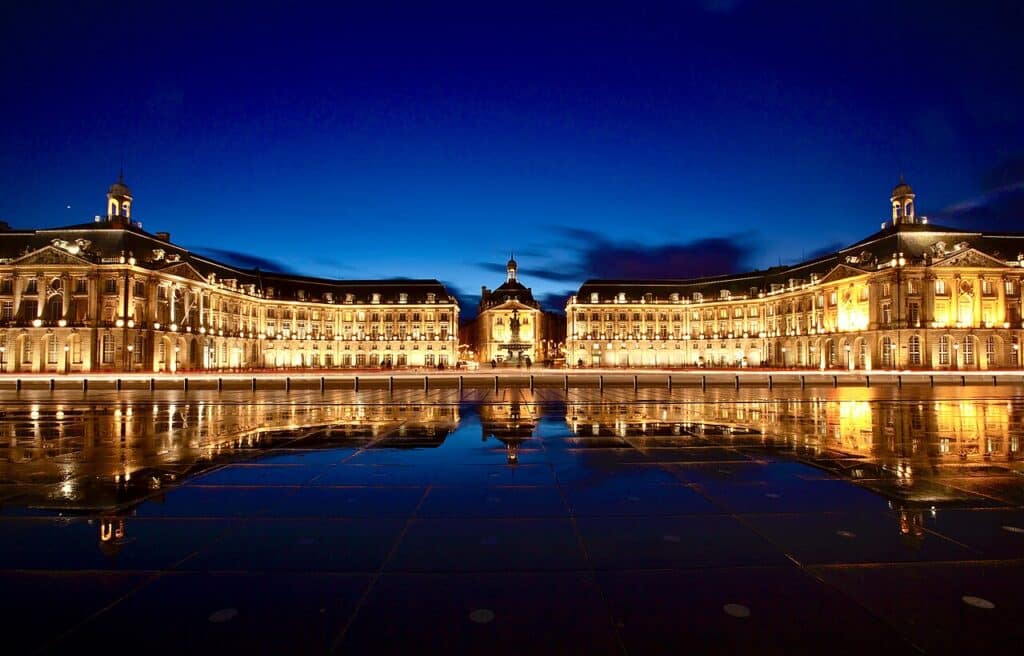
This “English Alliance” was a golden age for Bordeaux wine, particularly its pale red wine, known as “claret” (from the French clairet). English demand skyrocketed, and Bordeaux wines were granted preferential trade status. The port of Bordeaux flourished, its quays teeming with ships bound for London and Bristol. This era cemented Bordeaux’s status as an export-driven powerhouse, a characteristic that defines the region to this day.
Dutch Innovation & Drainage – The Birth of the Modern Médoc Engineering the Terroir: How the Netherlands Reshaped the Left Bank
While the Romans and English established the trade, it was the Dutch merchants of the 17th century who physically created the Bordeaux we recognize today. Prior to their arrival, the Médoc—now home to the world’s most expensive wine real estate—was a literal swamp. It was considered “Bas-Médoc” (low Médoc), largely unsuitable for premium viticulture due to its waterlogged soils.
The Dutch were masters of hydraulic engineering. Utilizing their experience with polders, they introduced a sophisticated system of drainage ditches and canals. This lowered the water table and revealed the deep, heat-retaining Garonne gravel underneath. This specific soil type is what allows Cabernet Sauvignon to ripen in a cool, maritime climate. Without Dutch intervention, the legendary estates of Margaux, Pauillac, and Saint-Julien would simply not exist.
Furthermore, the Dutch changed the “business” of wine. They moved away from the “claret” style (meant to be drunk young) and pushed for “Vin de Garde” (wine for aging). They introduced the use of sulfur matches to sterilize barrels, an innovation that allowed wine to be transported long distances and aged for years without spoiling. This shift transformed Bordeaux from a seasonal commodity into a luxury asset for collectors.
The 1855 Classification – A Monument to Merit Coding Excellence: The Ranking That Defined Wine Hierarchy Forever
In 1855, Emperor Napoleon III requested a system to identify Bordeaux’s best wines for the Exposition Universelle in Paris. The Bordeaux Chamber of Commerce entrusted the task to the Courtiers (wine brokers). Crucially, they did not taste the wines to rank them; instead, they ranked them based on 100 years of market prices. The logic was sound: the market had already decided which vineyards were superior through the prices buyers were willing to pay.
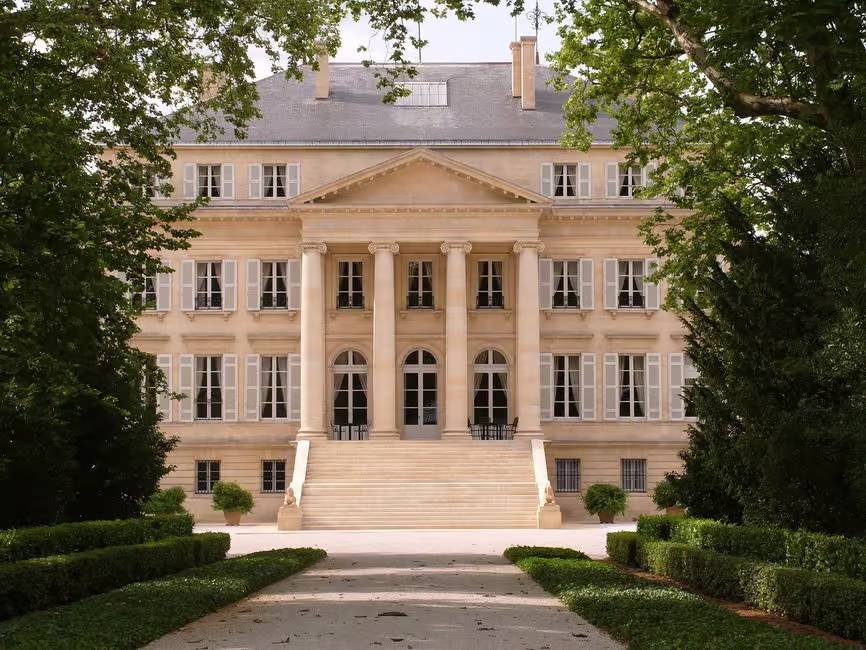
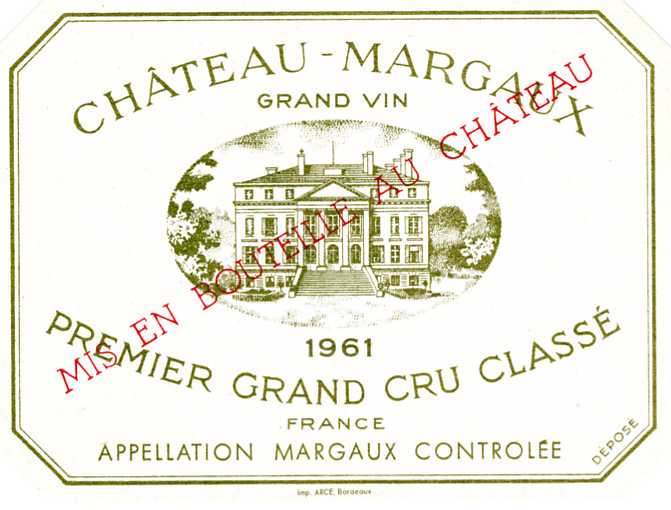
The result was the 1855 Classification of Médoc and Sauternes. It divided the top red wines into five “Growths” (Crus). At the apex were the four original First Growths: Château Lafite, Château Latour, Château Margaux, and Château Haut-Brion. (Mouton Rothschild famously joined this elite group in 1973 after decades of lobbying).
This document did more than rank wine; it created a permanent brand hierarchy. It institutionalized the concept of the “Château” as a symbol of status. To this day, the 1855 Classification remains the most powerful marketing tool in the history of alcohol, dictating the global secondary market and establishing Bordeaux as the ultimate benchmark for investment-grade wine.
Crisis and Resilience – Phylloxera and Global Conflict Survival of the Vine: Overcoming Biological and Political Upheaval
Bordeaux’s dominance was nearly erased in the late 19th century by a microscopic aphid: Phylloxera vastatrix. Arriving from North America in the 1860s, this pest decimated vineyards across the region. The solution—grafting European Vitis vinifera vines onto resistant American rootstocks—was a traumatic and expensive process that changed the landscape of Bordeaux forever. Old, ungrafted vines vanished, and vineyards were replanted in orderly rows to accommodate new mechanical treatments.
The early 20th century offered little relief. World War I stripped the vineyards of labor, while the Great Depression of 1929 saw the collapse of the American and British markets. During World War II, the region faced Nazi occupation, with many of the finest cellars looted.
However, these hardships birthed the Appellation d’Origine Contrôlée (AOC) system in 1936. Led by figures like Baron Philippe de Rothschild, the region realized that to survive, it must guarantee origin and quality through strict legal standards. This resilience proved that the “Bordeaux Brand” was stronger than any single crisis, setting the stage for the greatest economic boom in its history
Modern Renaissance – The Era of Technical Precision The New Frontier: Merging Traditional Craft with Scientific Precision
The modern era of Bordeaux began in the 1960s and 70s, catalyzed by the work of Émile Peynaud, the “father of modern oenology.” Peynaud revolutionized the region by teaching châteaux to harvest riper grapes, utilize temperature-controlled stainless steel vats, and implement stricter selection for their “Grand Vin.” This was the birth of the second label (like Le Petit Mouton or Pavillon Rouge), ensuring only the absolute best grapes made it into the top bottling.
The 1982 vintage marked a cultural explosion, largely due to the influence of American critic Robert Parker. His high scores for the 1982 vintage brought massive American investment to the region. This “Parkerization” era saw a move toward bolder, more concentrated wines with significant new oak influence.
Today, we are in the midst of a Green Revolution. The top châteaux (such as Pontet-Canet and Latour) have shifted toward biodynamic and organic farming, moving away from the heavy chemical use of the mid-20th century. Simultaneously, climate change is forcing the region to adapt, leading to the approval of new grape varieties like Touriga Nacional to maintain balance in a warming world. Bordeaux remains at the cutting edge of science and sustainability, proving that its 2,000-year history is merely a prologue to its future.
Conclusion: The Enduring Legacy and Uncertain Horizon of Bordeaux A Timeless Icon of Human Artistry and Natural Splendor
A Timeless Icon Facing the Challenges of a New Century
The history of Bordeaux wine is a masterclass in adaptation, a 2,000-year narrative defined by human ingenuity and the relentless pursuit of excellence. From Roman settlers and Dutch engineers to modern scientists, each generation has left an indelible mark on this sacred soil. However, as we look toward the future, the region stands at a critical crossroads where tradition must meet an increasingly volatile global landscape.
Expectations and Strategic Goals
For the next decade, the primary goal for Bordeaux is the harmonization of prestige and sustainability. The region’s elite châteaux are moving toward a 100% organic or biodynamic footprint, aiming to prove that luxury and environmental stewardship are not mutually exclusive.
Furthermore, there is a clear strategic expectation to diversify the consumer base. While the “Classified Growths” remain the ultimate status symbols, the region is working to revitalize the image of its “satellite” appellations—like Côtes de Bordeaux and Fronsac—to appeal to a younger, more experimental generation of wine drinkers. The goal is to move away from the perception of Bordeaux as a “dusty cellar” wine and reintroduce it as a versatile, terroir-driven choice for the modern table.
Critical Threats to the Future
Despite its historical resilience, Bordeaux faces three existential threats that will define its success in the coming years:
-
The Climate Crisis: Increasing temperatures and unpredictable weather patterns (such as devastating late-spring frosts and hailstorms) are shifting the ripening cycles of Merlot, the region’s most planted grape. The threat of losing the classic “Bordeaux balance”—that tension between acidity and alcohol—is real. The recent authorization of “heat-resistant” varieties is a defensive move, but the long-term viability of the current terroir is under constant scrutiny.
-
Changing Consumption Habits: Globally, wine consumption is declining in traditional markets. The “anti-alcohol” sentiment and the rise of “sober-curious” lifestyles present a direct threat to the high-volume production of the region. Bordeaux must innovate not just in how it grows wine, but in how it justifies its place in a wellness-focused culture.
-
Economic Volatility and Trade Barriers: As a luxury export, Bordeaux is highly sensitive to geopolitical tensions. Trade tariffs, fluctuating markets in Asia, and global inflation impact the Place de Bordeaux (the region’s unique distribution system). Maintaining the sky-high valuations of the First Growths while ensuring the survival of smaller family-owned estates is a delicate economic balancing act.
In summary, Bordeaux is not a static museum piece; it is a living, breathing industry. Its history has proven that it can survive plagues, wars, and economic collapses. By leaning into scientific innovation and environmental responsibility, Bordeaux aims to ensure that its legacy remains not just a memory of the past, but the gold standard for the future of fine wine.