Table of Contents
The Architecture of Bordeaux: How Geology and Climate Create the World's Most Iconic Wines
The viticultural supremacy of Bordeaux is a product of poly-geological complexity. It is a landscape where the remnants of the Tertiary era meet the hydraulic whims of the Atlantic. To analyze Bordeaux is to categorize a massive sedimentary basin, carved by two rivers—the Garonne and the Dordogne—and protected by a man-made forest. This interaction produces a “metronomic” ripening environment where the soil type dictates the varietal dominance and the resulting structural “spine” of the wine.
From Garonne Ancient Rivers to Your Glass

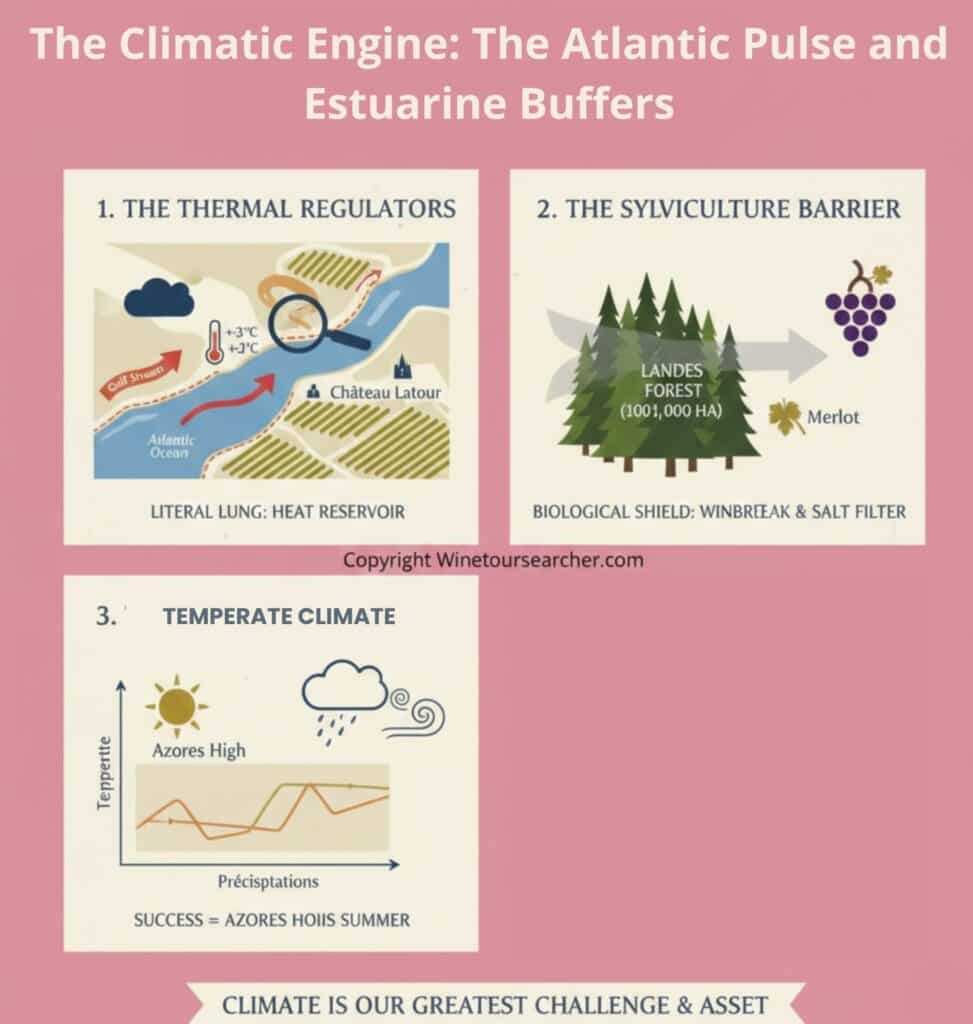
The Climatic Engine: The Atlantic Pulse and Estuarine Buffers
Bordeaux’s climate is officially classified as temperate maritime, yet this label belies a volatile reality. The region’s success relies on the Azores High, a high-pressure system that ideally settles over the Bay of Biscay during the summer.
1. The Thermal Regulators
The Gironde Estuary is the region’s literal lung. Acting as a massive heat reservoir, it mitigates the risk of spring frosts—a perennial threat in inland appellations. In the Médoc, the vineyards closest to the water (such as those of Château Latour) enjoy a “micro-climate” that can be 2°C to 3°C warmer than those just a few kilometers inland. This narrow thermal band is often the difference between a successful flowering and a lost crop.
Furthermore, the Gulf Stream serves as a vital conveyor belt of warmth, ensuring that the frost risks prevalent in continental regions like Chablis or Champagne are significantly mitigated. By reflecting light and radiating heat, the estuary creates a “micro-climate” fringe that is a critical margin during the late-autumn ripening of the late-blooming Cabernet Sauvignon.
2. The Sylviculture Barrier
To the west, the Landes Forest—an expansive 1,000,000-hectare maritime pine plantation—functions as a biological shield. It mitigates the kinetic energy of the Atlantic winds and acts as a filter for salt-heavy air. Without this barrier, the high humidity of the region would be exacerbated by physical wind damage, making the cultivation of thin-skinned varieties like Merlot nearly impossible near the coast
The Left Bank: Alluvial Architecture and the Gunzian Gravels a study in Quaternary geology.
The Left Bank (Médoc, Graves, Sauternes) is a study in Quaternary geology. The soil here is not indigenous but was transported by the Garonne river system during successive glacial melts. As the Pyrenees and Massif Central eroded, the Garonne transported massive volumes of Gunzian gravel, quartz, and flint, depositing them in a series of terraces.
1. The “Croupes” and the Logic of Drainage
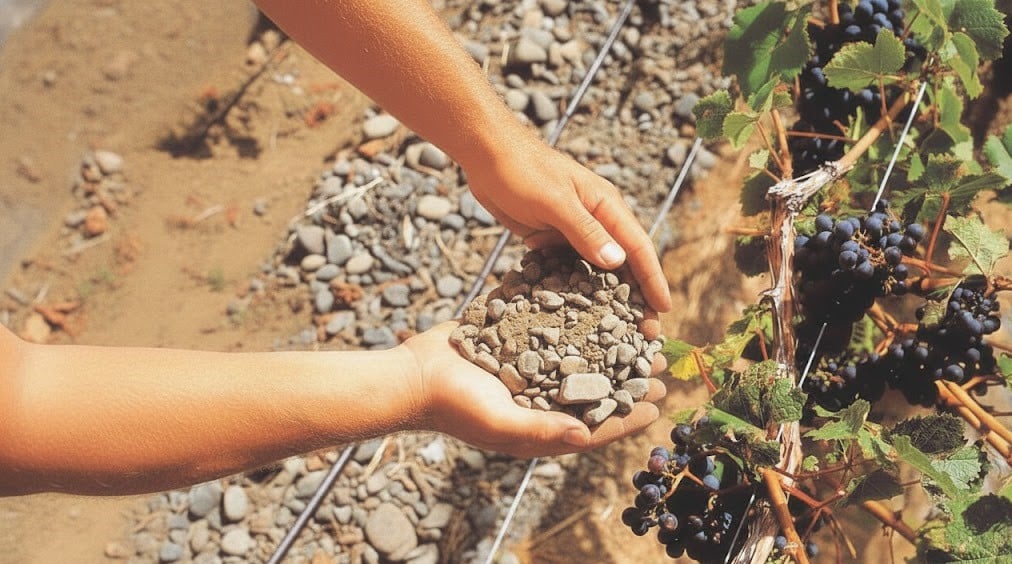
The defining feature of the Médoc is the croupe, or gravel mound. These mounds are composed of small, polished quartz, flint, and lydite pebbles. The value of these mounds lies in their structural porosity and the “Hydric Stress” they induce.
Hydraulic Stress: In a region with 800mm to 900mm of annual rainfall, drainage is the primary differentiator of quality. These gravel terraces allow water to percolate rapidly, forcing the vines to develop deep, vertical root systems (often exceeding 6 meters). This “forced struggle” limits vegetative growth and directs the plant’s energy toward tannin synthesis and anthocyanin (color) development.
The Albedo Effect: Light-colored quartz pebbles possess a high albedo, reflecting sunlight back into the canopy. Conversely, the density of the stones allows them to act as “thermal batteries,” storing heat to facilitate the slow, even ripening of Cabernet Sauvignon.
2. The Communal Nuances of the Médoc
Saint-Estèphe (The Northern Guard): The terroir here transitions from pure gravel to a heavier mix of clay-limestone (Calcaire de Saint-Estèphe). This higher clay content allows for better water retention during dry vintages. Consequently, Saint-Estèphe produces wines with a “sturdy,” almost rustic tannic structure. Estates like Château Cos d’Estournel utilize these cooler soils to maintain freshness even in heatwave years.
Pauillac (The Epicenter): This appellation boasts the deepest gravel layers (up to 10 meters thick). The proximity to the estuary and the sheer depth of the stones result in the “iron fist in a velvet glove” profile—immense power coupled with graphite and cedar aromatics.
Saint-Julien (The Middle Ground): Representing a homogenization of the Médoc’s best traits, Saint-Julien’s soil is a consistent, fine gravel. This leads to a remarkable regularity of style—elegant, balanced, and profoundly “claret-like.”
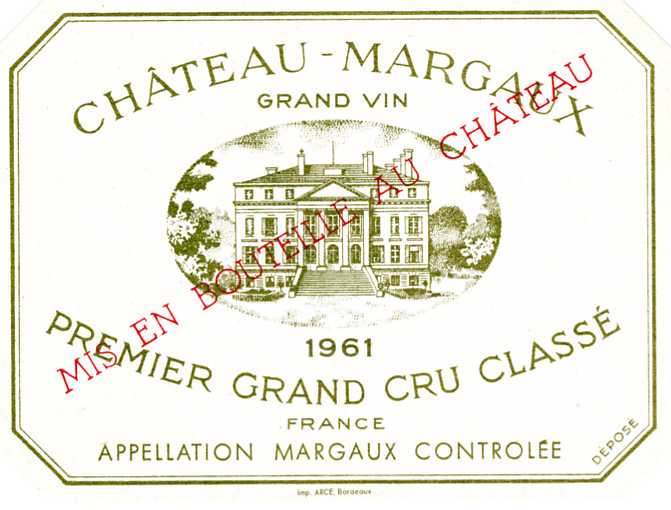
Margaux (The Lyrical South): Here, the gravel is at its thinnest, often sitting atop beds of white sand and “alios” (an iron-rich sandstone pan). This “lightness” of soil translates to the glass; Margaux wines are famed for floral aromatics (violets) and “silken” tannins rather than raw power.
3. The Graves and Pessac-Léognan
Further south, the soil becomes even stonier. In Pessac-Léognan, the presence of large flint (silex) pebbles imparts a “smoky” or “gunflint” note. This is the only region where the terroir is equally suited to world-class reds and whites. The white wines of Château Haut-Brion or Smith Haut Lafitte draw their mineral tension from these ancient riverbeds.
The Right Bank: The Sedimentary Dominion and the Clay Paradox The Kingdom of Merlot
Across the Gironde, the geology is older and more “sedimentary.” The Right Bank (Libournais) is defined by its limestone plateaus and heavy clays, making it the spiritual home of Merlot and Cabernet Franc.3
1. The Saint-Émilion Mosaic
Saint-Émilion is perhaps the most complex AOC in Bordeaux due to its three distinct geological zones:
The Plateau: Composed of Calcaire à Astéries (starfish limestone). This alkaline soil ($pH \approx 8.0$) preserves acidity in Merlot, preventing it from becoming overly “jammy.” Limestone acts as an internal reservoir, absorbing excess water and providing a metered supply via capillary action during parched summers.
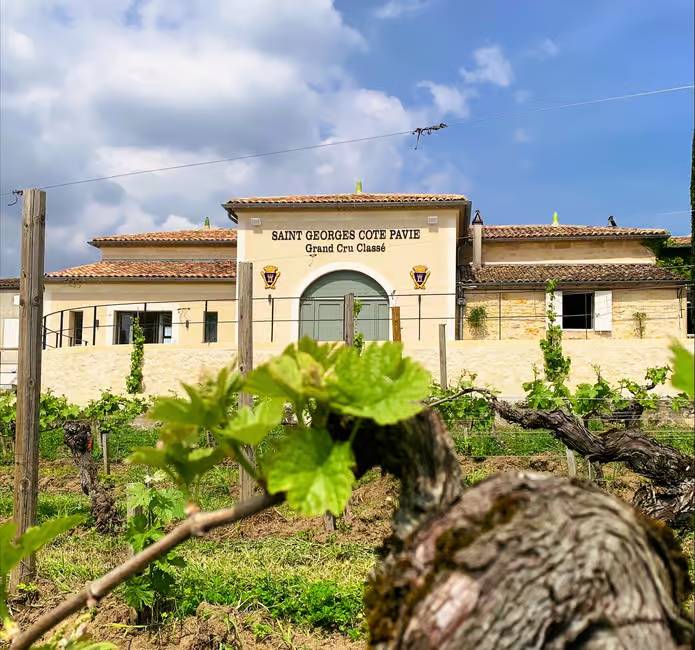
The Côtes (Slopes): Limestone mixed with clay. This provides the power and “grip” found in estates like Château Pavie.
The Graves (Sandy-Gravel): Located on the border of Pomerol, where estates like Château Figeac and Cheval Blanc sit on ancient gravel deposits, allowing them to plant higher proportions of Cabernet.
2. The Pomerol Paradox (La Boutonnière)
Pomerol lacks the limestone of Saint-Émilion.4 Instead, it sits on a “terrace” of sand, gravel, and its secret weapon: Crasse de Fer. This is an iron-rich subsoil that, when combined with the famous “Blue Clay” (smectite clay found at the peak of the Pomerol plateau near Petrus), creates a wine of unparalleled opulence. The clay’s ability to retain water while keeping the vine’s feet “cool” allows Merlot to achieve a velvety texture that is inimitable
The Satellites and the Entre-Deux-Mers a vast limestone plateau
Between the two great rivers lies the Entre-Deux-Mers, a vast limestone plateau covered in a “mantle” of sand and clay.
The Dry Whites: Preserving the “Zing”
While the Entre-Deux-Mers is a vast region, its best dry whites are defined by a specific geological tension between superficial sand and deep, cold clay.
The Role of “Cold” Soils
Sauvignon Blanc is a temperature-sensitive variety. If the roots get too warm, the grape loses its acidity and its delicate aromatic precursors.
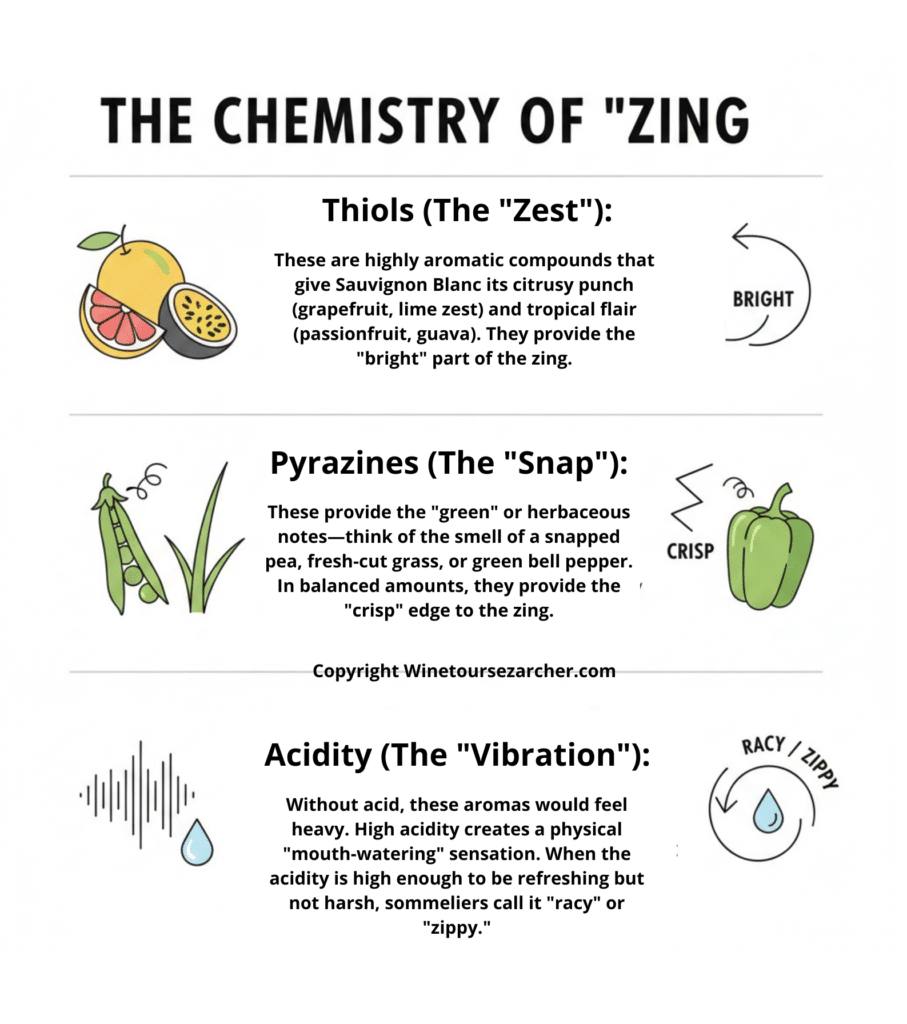
Clay as a Thermal Buffer: The “mantle” of clay acts like a natural air conditioner. It retains water from the spring rains, keeping the soil temperature low throughout the summer. This slow, cool ripening is what prevents the thiols (responsible for grapefruit and passionfruit notes) from burning off.
The Sémillon Balance: While Sauvignon Blanc provides the “zing,” Sémillon is often planted on the slightly warmer, gravelly patches or clay-limestone slopes. It adds a “waxy” texture and weight to the mid-palate, acting as the structural anchor to the high-toned Sauvignon.
Aromatic Preservation
The high magnesium and calcium content in the limestone-derived clays of the plateau helps synthesize pyrazines. In a dry wine context, this results in a sophisticated “greenness”—think boxwood, lime zest, and wet stones—rather than underripe fruit.
shorthand for high, vibrant acidity and pungent aromatics that make a wine feel “alive” or “electric” on the palate.
In the specific context of the Entre-Deux-Mers, “zing” is the result of a perfect chemical marriage between two groups of compounds:
The Satellites: “Heroic” Limestone & The Red Architecture
Moving toward the edges of the plateau (Fronsac and Castillon), the “mantle” thins out, exposing the Asteria Limestone (Calcaire à Astéries). This is where the dry reds shift from simple fruit-forward styles to “terroir-driven” powerhouses.
Fronsac & Canon-Fronsac: The “Fronsac Molasse“
These appellations are characterized by a rugged, “heroic” topography.
Geology: The soils here are a mix of limestone and Fronsac Molasse (a specific blend of clay and sandy subsoil).
The Resulting Profile: This combination gives Merlot a much more “savory” edge. Unlike the plush, soft Merlots of the lower plains, Fronsac reds have a vertical structure. The limestone provides a high pH environment that maintains a bright acid line, while the clay ensures deep color and intense spice (black pepper and licorice).
Castillon: The Limestone Ridge
Castillon is essentially the “budget” Saint-Émilion, but only because of its name. Geologically, it sits on the same limestone escarpment.
Purity & Tension: On the plateau of Castillon, the soil is often just a few centimeters deep before hitting solid rock. This forces the vines to struggle. In dry reds, this translates to minerality—a sensation of “tension” on the palate and a chalky tannin finish that makes the wine feel elegant and “lifted” rather than heavy.
The Extension of the Ridge: Because it is higher in elevation than much of the Entre-Deux-Mers, Castillon benefits from cooler nights, which preserves the fresh red fruit (raspberry, redcurrant) that distinguishes it from the darker, more “brooding” wines of the valley floor.
Liquid Gold: The Ciron and the Sauternais Botrytis: masterclass in micro-climatology
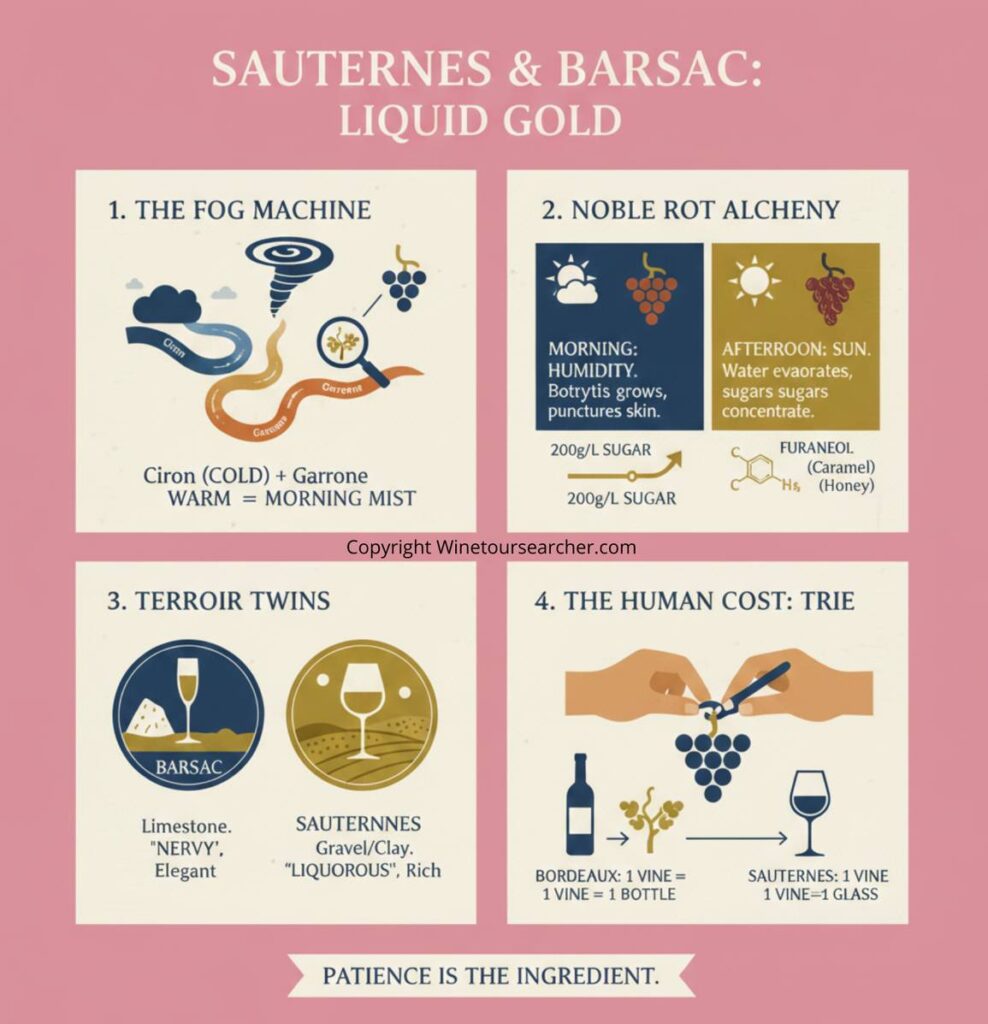
The production of botrytised wine in Sauternes and Barsac is a masterclass in micro-climatology. The confluence of the cold, spring-fed Ciron River and the warmer Garonne creates a localized “fog machine.”7
The Noble Rot Mechanism
In the autumn, morning mists promote the growth of Botrytis cinerea. This fungus pierces the skin of the Semillon grape, allowing water to evaporate while concentrating sugars, tartaric acid, and glycerol.8
The Fog Mechanism: By midday, the sun must dissipate this fog to prevent the rot from turning into “Grey Rot.” If the cycle is perfect, the fungus shrivels the grapes, concentrating sugars from $200\text{g/L}$ to over $400\text{g/L}$, while generating compounds like furaneol (caramel/strawberry).
Barsac vs. Sauternes: Barsac sits on a flat limestone plain with thin soil, producing “nervy,” elegant wines.9 Sauternes (home to Château d’Yquem) features rolling hills with more gravel and clay, resulting in a richer, more powerful, “liquorous” style.
The Hydrological Engine: Ciron vs. Garonne
The transformation begins where the Ciron River meets the Garonne.
The Temperature Differential: The Ciron flows under a thick canopy of trees, keeping its waters significantly colder than the wide, sun-exposed Garonne.
The Mist Generation: When these two thermal masses collide in autumn, the temperature drop triggers an immediate condensation. This creates a dense, localized fog that blankets the vineyards of the five communes (Sauternes, Barsac, Bommes, Fargues, and Preignac).
The Biological Alchemy: Botrytis Cinerea
While Botrytis is usually a pathogen (Grey Rot), the specific cycle of Sauternes transforms it into Noble Rot.
The Morning Humidity: The fog allows the fungal spores to germinate. The fungus produces enzymes (like laccase) that microscopicially puncture the grape skins.
The Afternoon Desiccation: Crucially, the afternoon sun must burn off the mist. This creates a “breathable” skin. The grape doesn’t rot; it shrivels.
Chemical Transformation: This is not just water loss. The fungus fundamentally alters the juice:
Metabolic Concentration: Sugars rise from roughly 200g/L to 400g/L+, but the fungus also consumes some acids, specifically malic acid, while concentrating tartaric acid.
Aromatic Evolution: The fungus synthesizes new compounds. Beyond your mention of furaneol, it introduces sotolon (responsible for notes of saffron, honey, and roasted nuts) and creates a significant boost in glycerol, providing that iconic “unctuous” mouthfeel.
The Geological Divide: Barsac vs. Sauternes
While both regions share the same climate, their terroir creates two distinct personalities of wine.
Barsac: The Limestone Precision
Barsac is a plateau characterized by Calcaire à Astéries (starfish limestone) covered by a thin layer of “Sables Rouges” (red sands).
The Result: Because the soil is thin and the limestone provides excellent drainage and acidity retention, Barsac wines are often described as nervy and ethereal. They have a “vertical” structure and a citrus-driven freshness that balances the sugar.
Sauternes: The Gravelly Power
Moving toward the village of Sauternes and the heights of Château d’Yquem, the topography changes to rolling hills.
The Soil: Here, you find deep Guntzian gravel over thick beds of clay.
The Result: The clay retains more moisture, and the gravel retains heat. This leads to a more “horizontal,” broad, and liquorous style. These wines are heavier, richer, and typically show more dried apricot and tropical fruit notes compared to Barsac.
The Human Cost: The “Trie”
To make this wine, growers cannot simply harvest a bunch of grapes. Because the rot spreads unevenly, pickers must pass through the vineyard multiple times—a process called Surerie or Tries Successives.
They only pick individual grapes or clusters that have reached the perfect state of “rôti” (roasted).
The Yield: In a great year, a vine in Sauternes might only produce one glass of wine, whereas a standard Bordeaux vine produces nearly an entire bottle.