Table of Contents
The Definitive Guide to Burgundy Terroir How Geology and Climate Create Burgundy Iconic Wines
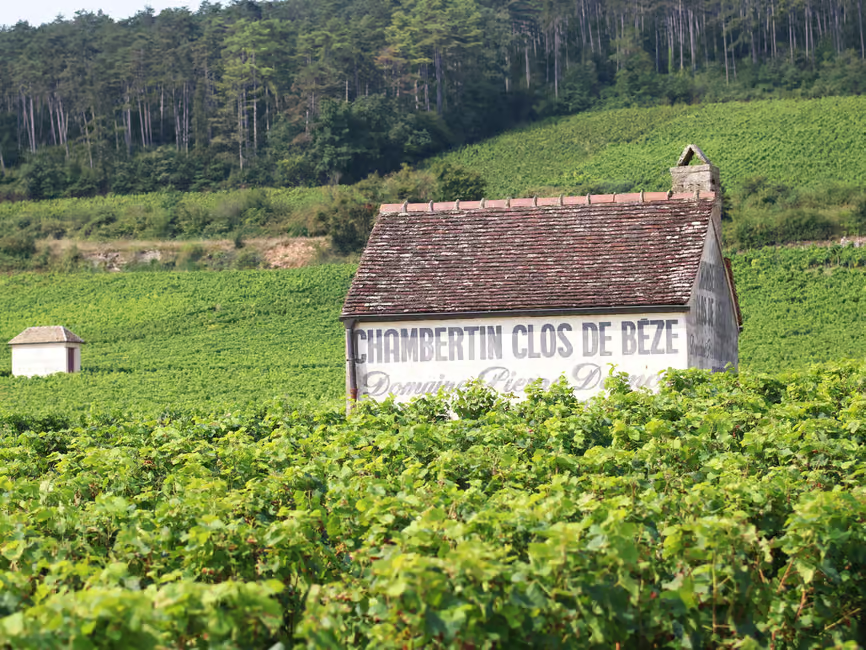
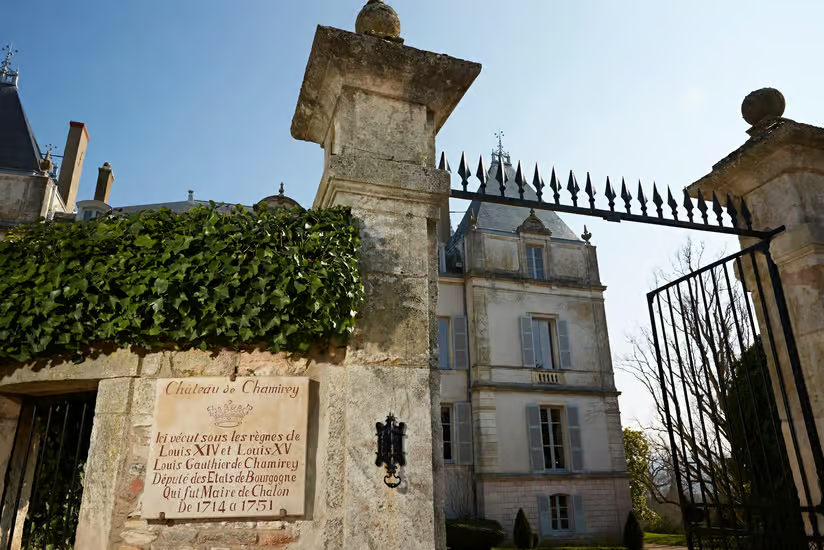
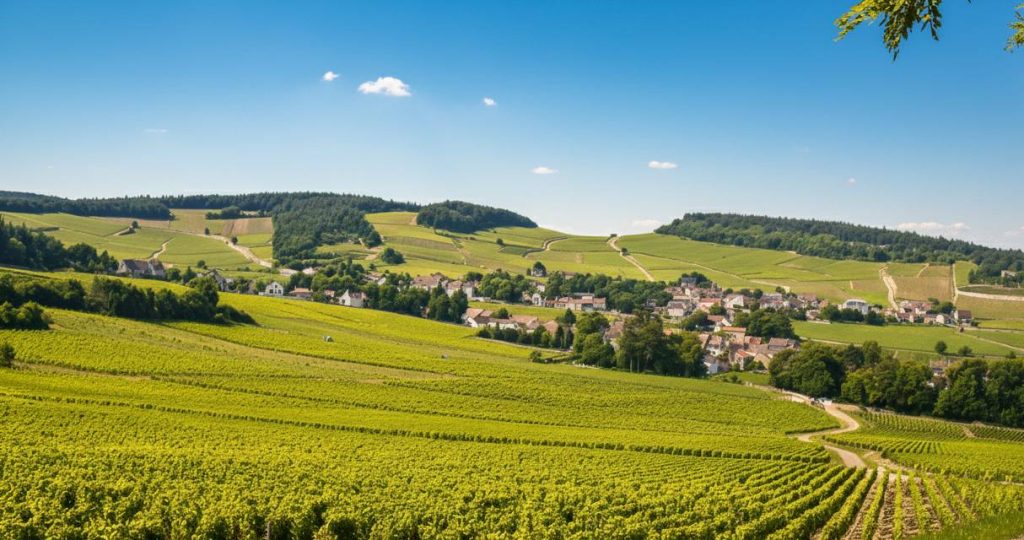
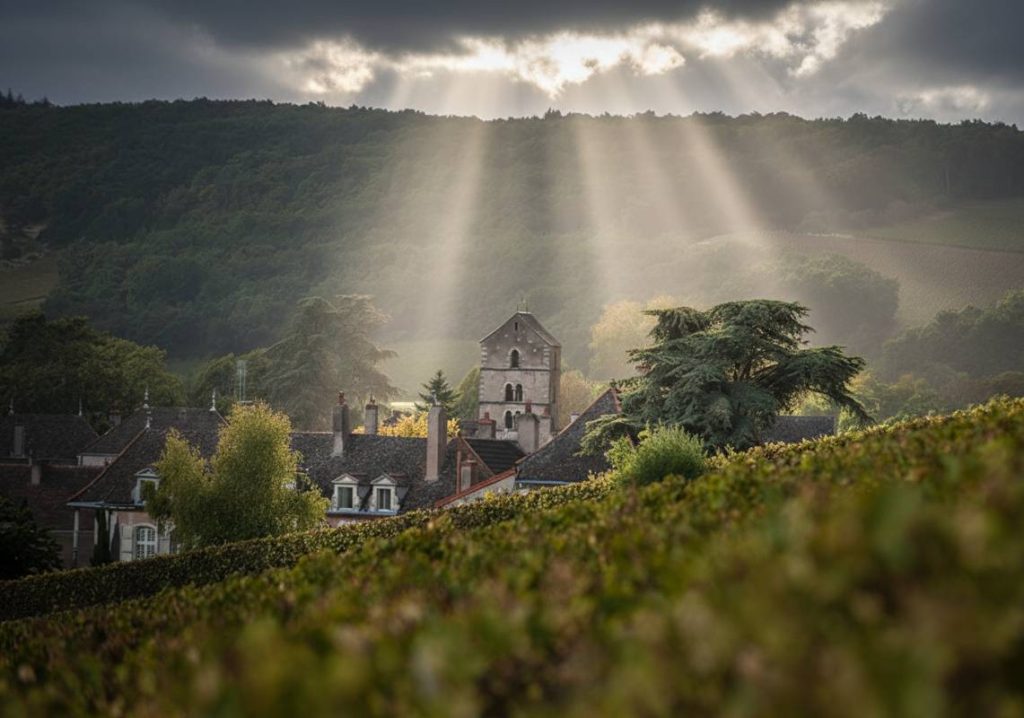
Burgundy represents the absolute pinnacle of viticultural precision, a narrow strip of land in eastern France where the concept of terroir has been elevated to a form of high art. For over two thousand years, this landscape has been meticulously mapped, first by the tireless labor of Cistercian and Benedictine monks and later by the Valois Dukes, who recognized that the “soul” of the wine was inextricably linked to the specific patch of earth from which it grew. This historical devotion birthed the system of Climats, a mosaic of thousands of precisely delimited vineyard plots that are now recognized as a UNESCO World Heritage site. To speak of Burgundy is to speak of a cultural heritage where geology, history, and human intuition converge to create wines of unmatched elegance. It is a global benchmark, not because of its scale—the region is remarkably small—but because of its depth. Each ridge and hollow in the landscape tells a story of Jurassic seas and tectonic shifts, captured in a bottle as a living testament to the prestige of the land
Journey to the Heart of Terroir
Macro-Climate and Viticultural Foundations
Wind, Water, and Altitude
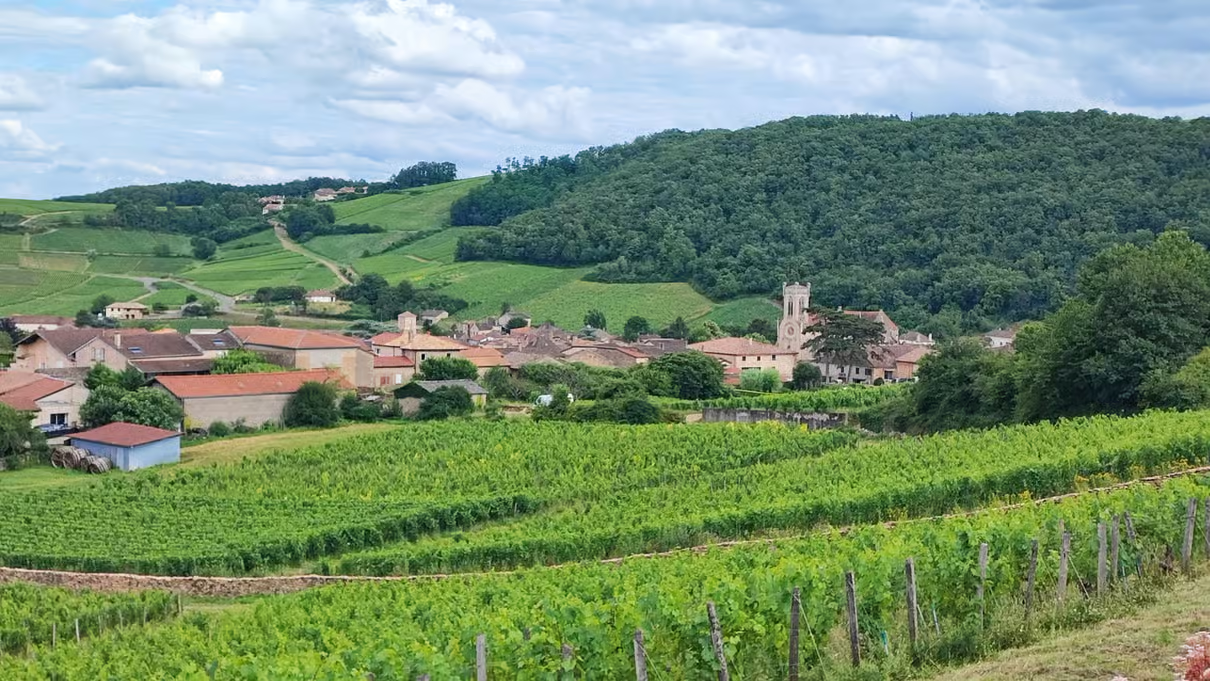
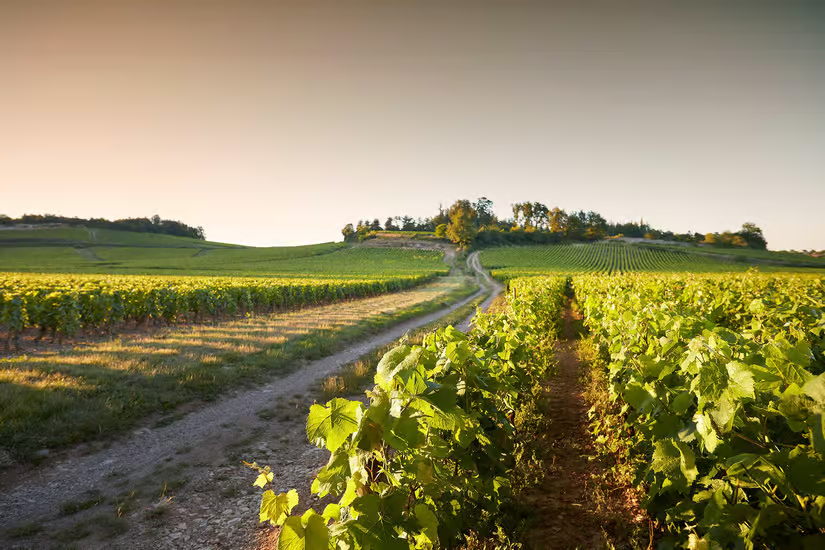
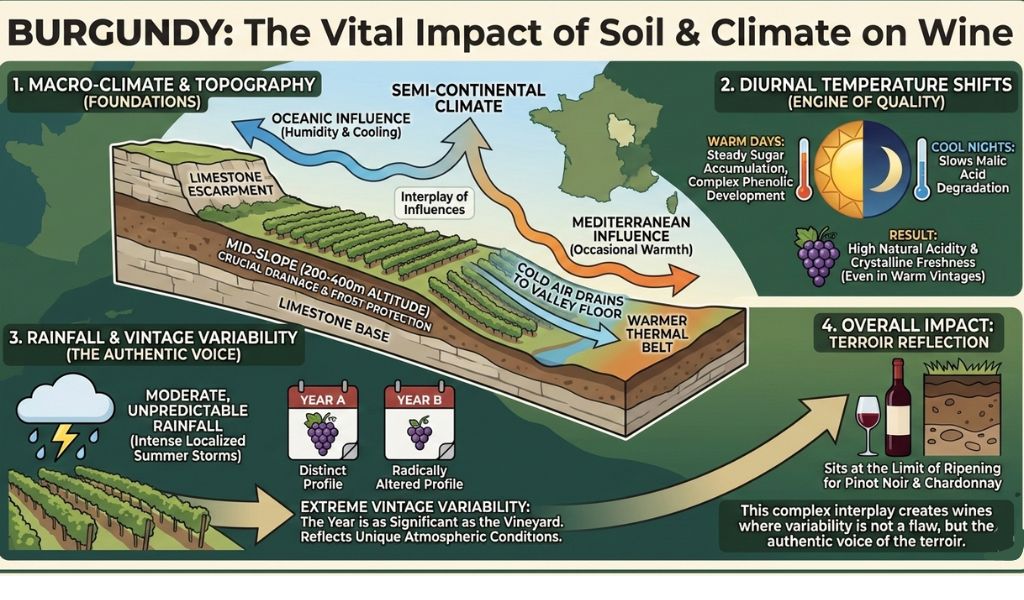
The overarching climate of the Burgundy region is classified as semi-continental, characterized by a complex interplay of influences. To the north, the oceanic influence brings humidity and cooling, while the Mediterranean influence occasionally pushes warmth from the south, particularly during the ripening season. The vineyards are primarily situated on the mid-slopes of a long limestone escarpment, typically at altitudes between 200 and 400 meters. This elevation is crucial for drainage and frost protection, as cold air naturally drains into the valley floors, leaving the prized hill-side vines in a warmer thermal belt.
Diurnal Temperature Shifts and Ripening
The region experiences significant diurnal temperature shifts—the difference between the heat of the day and the cool of the night. This phenomenon is the engine of Burgundy’s quality; the daytime warmth allows for the steady accumulation of sugars and the development of complex phenolic compounds in the grapes, while the rapid cooling at night slows the degradation of malic acid. This ensures that even in warm vintages, the wines maintain the high natural acidity and crystalline freshness that are the region’s hallmarks.
Rainfall Patterns and Vintage Variability
Rainfall in Burgundy is moderate but can be unpredictable, often occurring as intense localized storms during the summer. Because the region sits at the limit of where its primary grapes—Pinot Noir and Chardonnay—can reliably ripen, vintage variability is extreme. A difference of a few degrees in the seasonal average or the timing of a spring rain can radically alter the profile of the wine, making Burgundy a region where the year of production is as significant as the vineyard itself. This variability is not seen as a flaw but as the authentic voice of the terroir, reflecting the unique atmospheric conditions of each growing cycle
The Geological Profile: The Jurassic Layer Cake
The foundation of Burgundy was laid during the Jurassic Period, when the region was covered by a warm, shallow sea. This era left behind two primary materials: Limestone (from the skeletal remains of marine organisms) and Marl (a mixture of clay and limestone).
1. The Tectonic Tilt
The defining moment for Burgundy was the collapse of the Saône Rift. This event tilted the sedimentary layers upward, creating the Côte (slope). Because the land is tilted, a walk of just 100 meters can take you from a layer of 150-million-year-old rock to a layer that is 5 million years younger. This “staircase” effect is why two adjacent vineyards (Climats) can produce wines that taste completely different.
2. Limestone vs. Marl: The Great Balancing Act
The entire hierarchy of Burgundy (from Regional to Grand Cru) is dictated by the ratio of these two components:
Limestone (Hard & Stony): Found predominantly on the upper and middle slopes. It is poor in nutrients and provides excellent drainage.
Sensory Impact: It is the architect of mineral tension, acidity, and “verticality.” It is the preferred home for Chardonnay.
Marl (Clay-Rich): Found more frequently on the lower slopes and in specific mid-slope pockets. Clay is rich in nutrients and retains water.
Sensory Impact: It provides the “flesh,” power, and broad shoulders of the wine. It is essential for the depth and color of Pinot Noir.
Regional Soil Specificities: North to South
Chablis: The Prehistoric Seabed
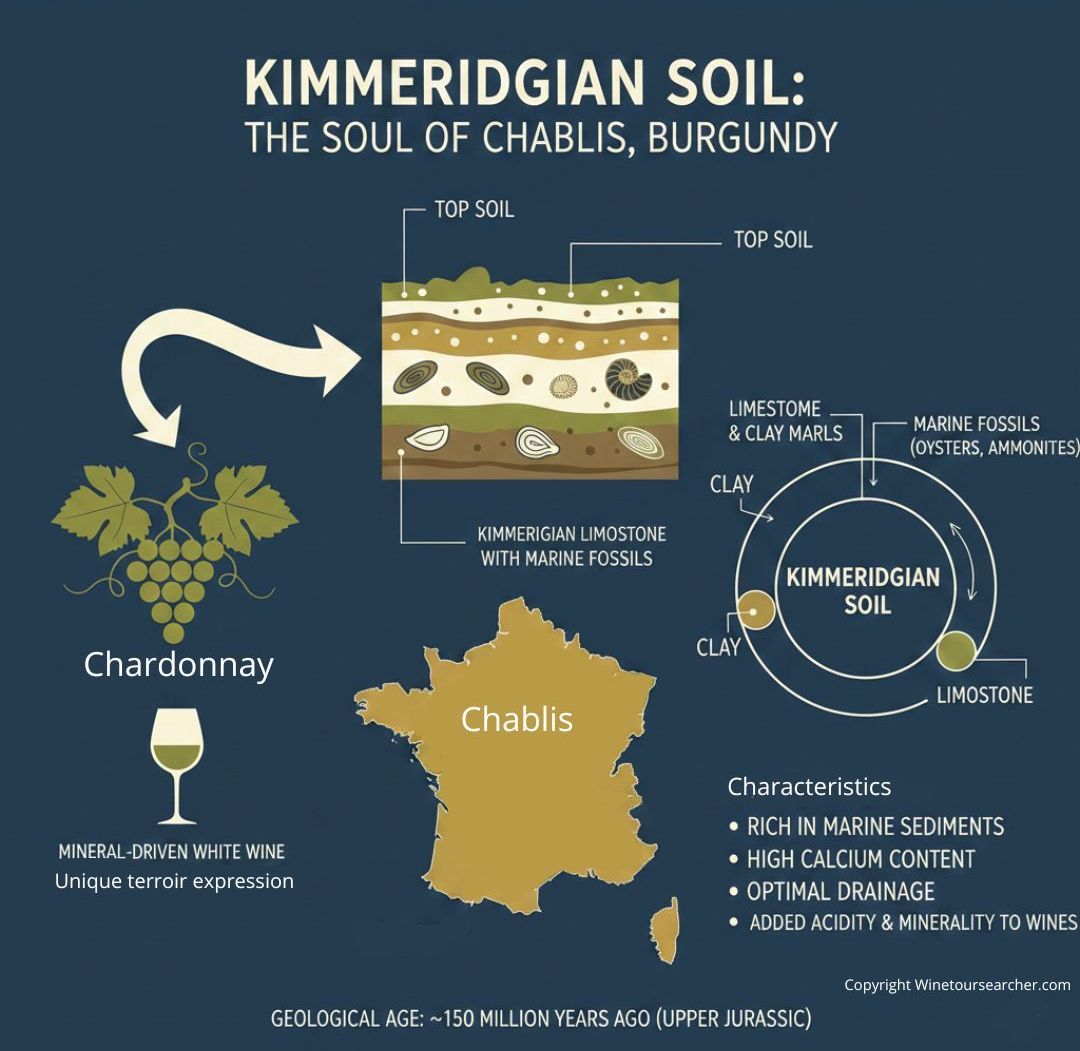
The outlier of Burgundy, Chablis is defined by the Kimmeridgian stage.
The Soil: A unique gray marl packed with billions of tiny fossilized oyster shells (Exogyra virgula).
The Specificity: This is a high-salinity environment. The roots interact with these ancient marine fossils to produce the world’s most famous “iodine” and “gun-flint” character.
Côte de Nuits: The Limestone Bastion
Moving south, the “Slope of Night” is where the limestone bedrock is at its most prominent and hard (notably Comblanchien limestone).
The Soil: The topsoil is often very thin, brown, and rocky.
The Specificity: This is the spiritual home of Pinot Noir. The hard rock forces the vine to struggle, resulting in the structured, long-lived, and aromatically complex reds of Gevrey-Chambertin and Vosne-Romanée.
Côte de Beaune: The Marly Transition
The “Slope of Beaune” is geologically “softer” and more varied than the Nuits.
The Soil: There is a significant increase in Oxfordian marls and light-colored clays.
The Specificity: This diversity allows for the coexistence of world-class whites and reds. The “white soils” (terres blanches) of Meursault and Puligny-Montrachet are rich in active lime, which creates the legendary combination of buttery texture and laser-like mineral focus.
The Topographic Hierarchy
Burgundy’s soil is also shaped by gravity through a process called Colluvium (the slow movement of soil down a slope).
Position | Soil Composition | Appellation | Wine Character |
Top of Slope
| Very thin, “bony” limestone, high wind exposure. | Hautes-Côtes / Petit Chablis | Lean, high acid, bright fruit, “airy.” |
Mid-Slope |
Perfect mix of limestone scree and marl; optimal drainage. |
Grand Cru / Premier Cru |
Maximum complexity, balance of power and elegance. |
Base of Slope |
Deep, heavy clay and alluvial wash (silt/sand). |
Regional (Bourgogne) |
Round, fruit-forward, soft tannins, lacks “stone” finish. |
The Regional Breakdown: Climate, Soil, and Geology by Sub-Region
Chablis
Chablis is the northern outpost of the region, isolated from the main escarpment and possessing a climate that is significantly cooler and more prone to devastating spring frosts.
Geology & Pedology
The defining characteristic of Chablis is its Kimmeridgian marl, a specialized soil dating back to the Upper Jurassic period. This soil is a dense mixture of limestone and clay packed with the fossilized remains of tiny oysters known as Exogyra virgula.
Hydrology & Sensory Link
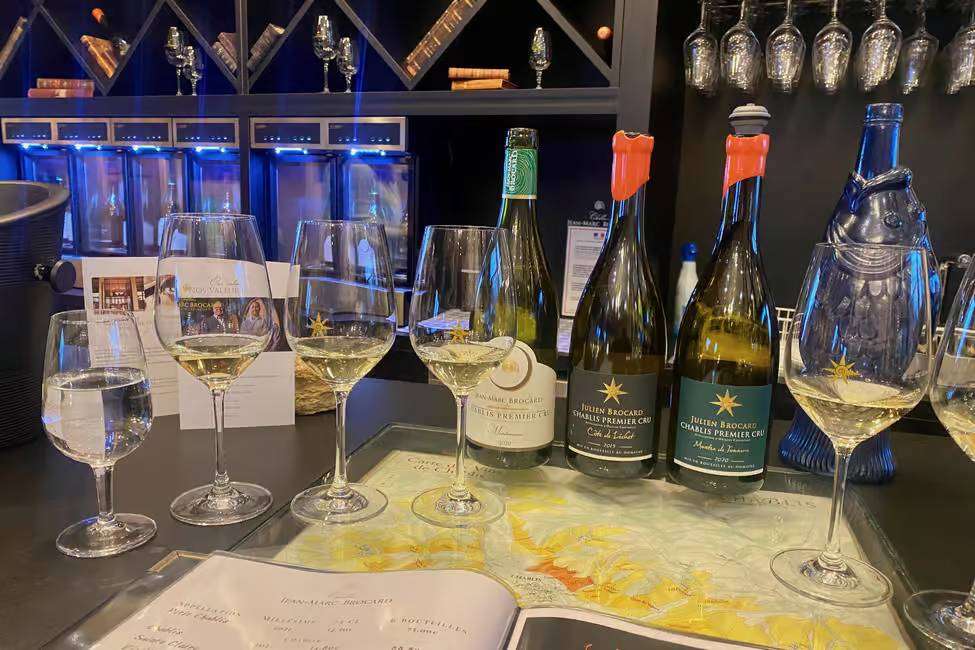
The high clay content in these soils retains moisture effectively during dry spells, while the limestone provides a mineral-rich medium for the roots. This unique geology is directly responsible for the “flinty” or “iodine” character of the wine, often described as pierre à fusil (gunflint). The struggle of the vine in this cold, fossil-rich soil creates a Chardonnay that is bone-dry, high in acid, and distinctively saline.
Côte de Nuits
The Côte de Nuits is the spiritual home of Pinot Noir, encompassing a narrow ribbon of east and southeast-facing slopes where the sun’s morning rays are captured with maximum efficiency.
Geology & Pedology
The geology here is dominated by hard Comblanchien limestone covered by a thin layer of scree and clay-limestone topsoil. In the upper slopes, the soil is thin and rocky, while the mid-slope—where the Grand Cru vineyards are located—features a perfect balance of drainage and depth.
Hydrology & Sensory Link
Excellent internal drainage forces the vines to drive their roots deep into the limestone bedrock to find water, leading to a high concentration of minerals. The result is red wines of immense power, structure, and longevity. The iron-rich clays often found in this region impart deep aromatic notes of black cherry, spice, and, with age, an earthy complexity of truffle and forest floor.
Côte de Beaune
Directly south of its northern counterpart, the Côte de Beaune is broader and more geologically diverse, making it the world’s premier location for dry white wines while also producing exceptional reds.
Geology & Pedology
The slopes here feature a higher proportion of Bathonian limestone and white marl. The soils are generally deeper and more varied than in the north, with significant alluvial deposits in the lower reaches.
Hydrology & Sensory Link
The presence of light, well-aerated marl facilitates the uptake of potassium and magnesium, which are essential for the aromatic complexity of Chardonnay. The wines of the Côte de Beaune are celebrated for their opulent texture and “buttery” mouthfeel, often showing aromas of white flowers, toasted hazelnuts, and a vibrant, citrus-driven acidity that provides a structural backbone.
Mâconnais
Moving further south, the Mâconnais experiences a shift toward a more Mediterranean influence, with noticeably warmer summers and less risk of frost.
Geology & Pedology
The landscape is characterized by a series of parallel limestone ridges separated by longitudinal valleys. The soils are predominantly alkaline limestone and calcareous clay, often with a reddish hue due to iron oxidation.
Hydrology & Sensory Link
The warmer climate and the moisture-retaining clay-limestone soils lead to a fuller, riper style of wine. The Chardonnay from the Mâconnais is often more approachable in its youth, displaying sunny fruit profiles of apricot and melon, backed by a soft, rounded mineral finish that reflects the alkaline nature of the soil.
Beaujolais
At the southernmost tip, Beaujolais presents a radical departure from the limestone-heavy soils of the rest of the region.
Geology & Pedology
The northern part of this region is defined by ancient igneous and metamorphic rocks, specifically pink granite, schist, and manganese-rich soils. The southern part, known as the Bas-Beaujolais, transitions into “Pierres Dorées” (golden stones) limestone.
Hydrology & Sensory Link
The acidic nature of the granite in the northern crus is perfectly suited to the Gamay grape. This soil prevents the grape from becoming overly vigorous, resulting in wines with vibrant acidity and explosive aromatics. The specific mineral makeup of the granite imparts a distinct floral note of violet and peony, along with a “crunchy” red fruit character that is unique to this geological setting.
Human Intervention and Viticultural Mastery
The vignerons of Burgundy have spent centuries adapting their techniques to the highly specific needs of their diverse soils. The primary challenge is managing the vigor of the vine to ensure that the energy is directed toward the fruit rather than the foliage. This is achieved through rigorous pruning systems, most notably the Guyot and Cordon de Royat methods, which limit the number of buds and control the yield. Row orientation is also vital; most vineyards are planted perpendicular to the slope to maximize sun exposure and minimize erosion.
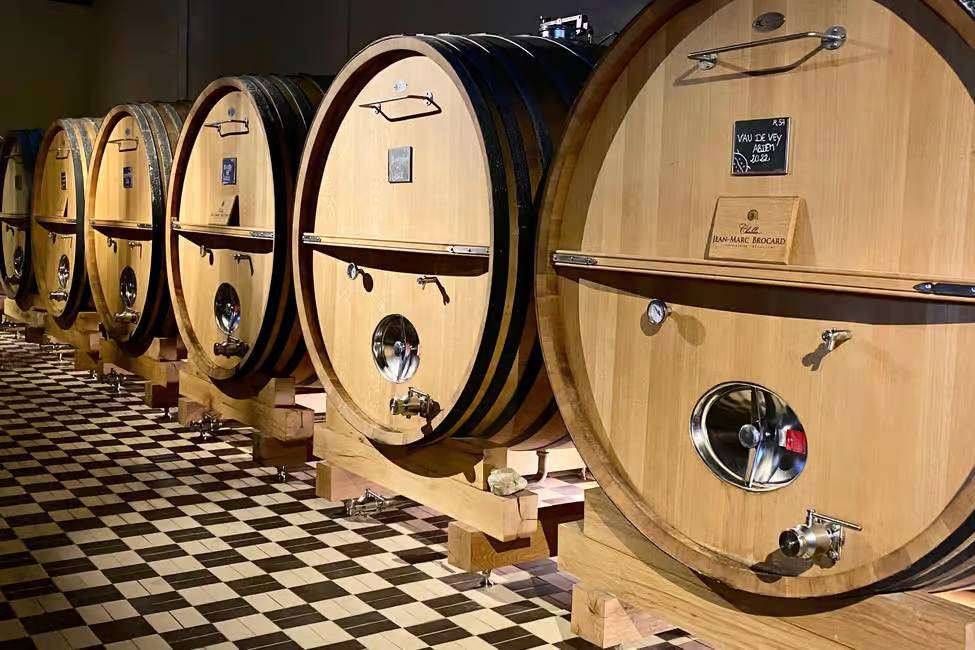
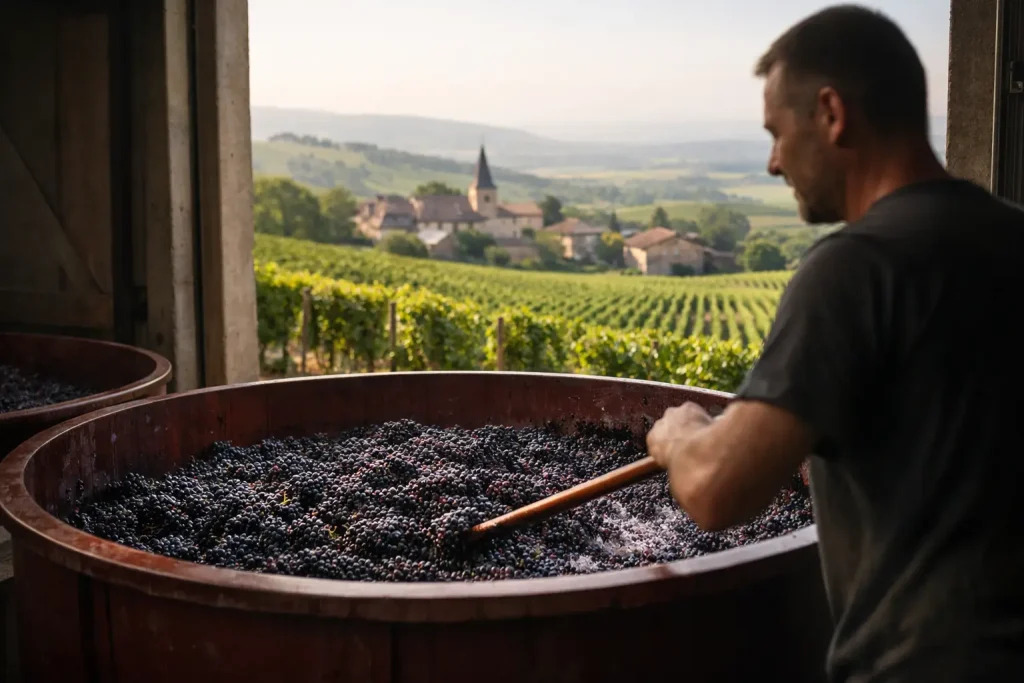
In the modern era, there is a strong movement toward “minimal intervention”. This philosophy posits that the winemaker’s role is not to “make” the wine, but to steward it through its natural transformation. In the cellar, this means using indigenous yeasts that are native to the vineyard and carefully managing the use of oak. New oak is used with extreme precision; too much wood would mask the delicate mineral nuances of the terroir, while too little might fail to provide the structural support the wine needs to age. The goal is technical precision used in service of transparency, ensuring that when the cork is pulled, the consumer tastes the limestone of the Côte d’Or rather than the hand of the oenologist
From Knowledge to Experience
While the science of geology can be mapped and the chemistry of the soil can be analyzed, Burgundy remains a region that defies purely academic understanding. The geology is written in the cold Kimmeridgian stones and the warm pink granites, but the wine itself is a living liquid, a temporal bridge between a specific season and a specific place. To truly grasp the profound relationship between the earth and the glass, one must experience the landscape in situ.
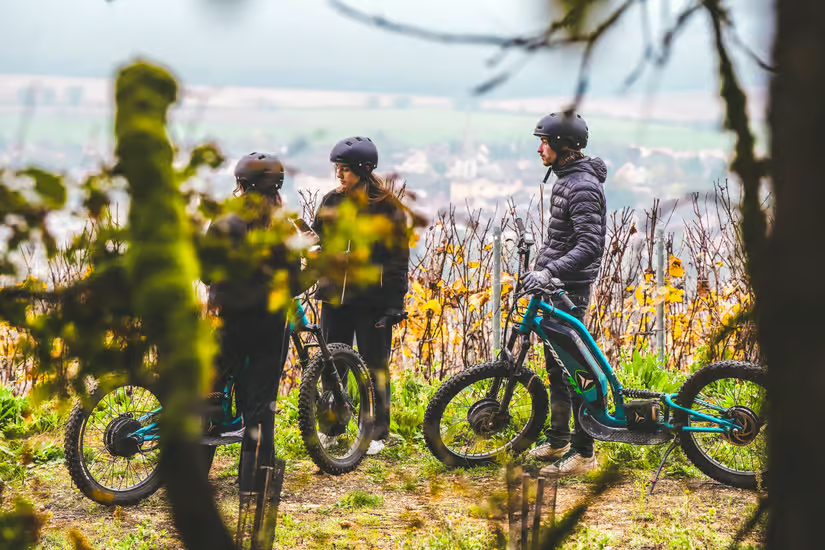
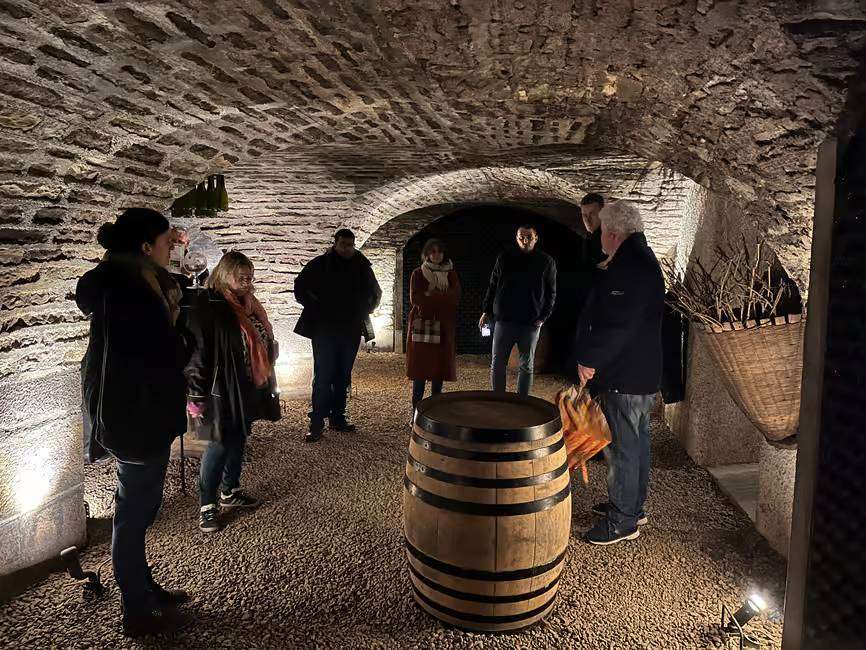
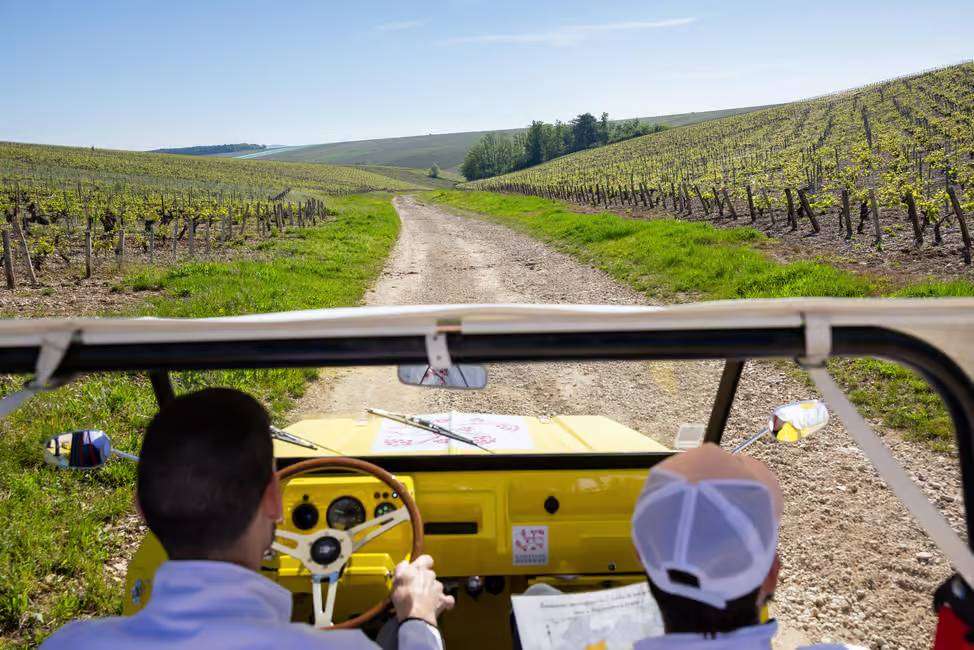
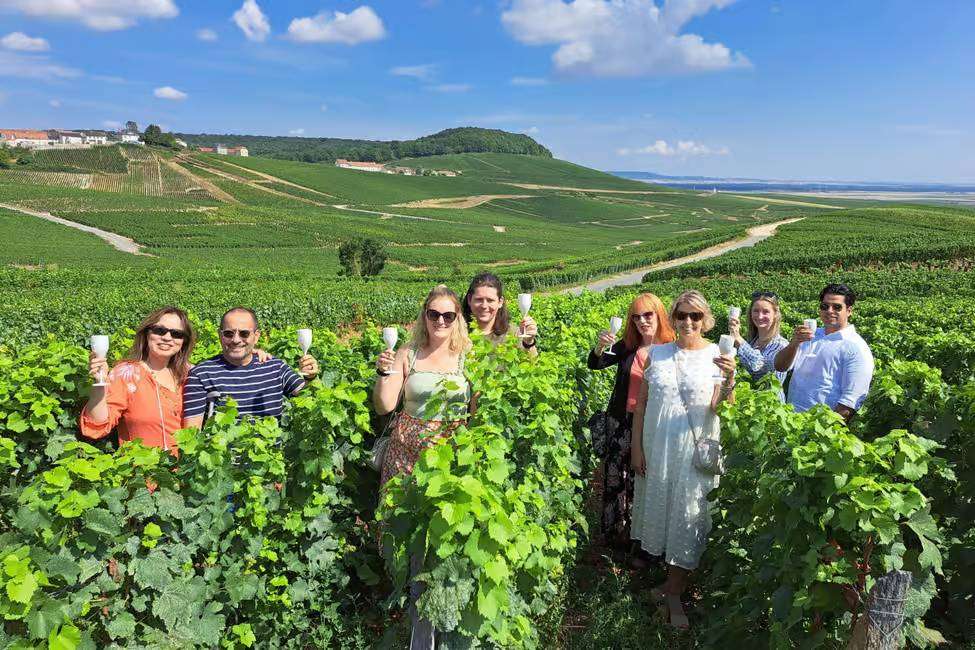
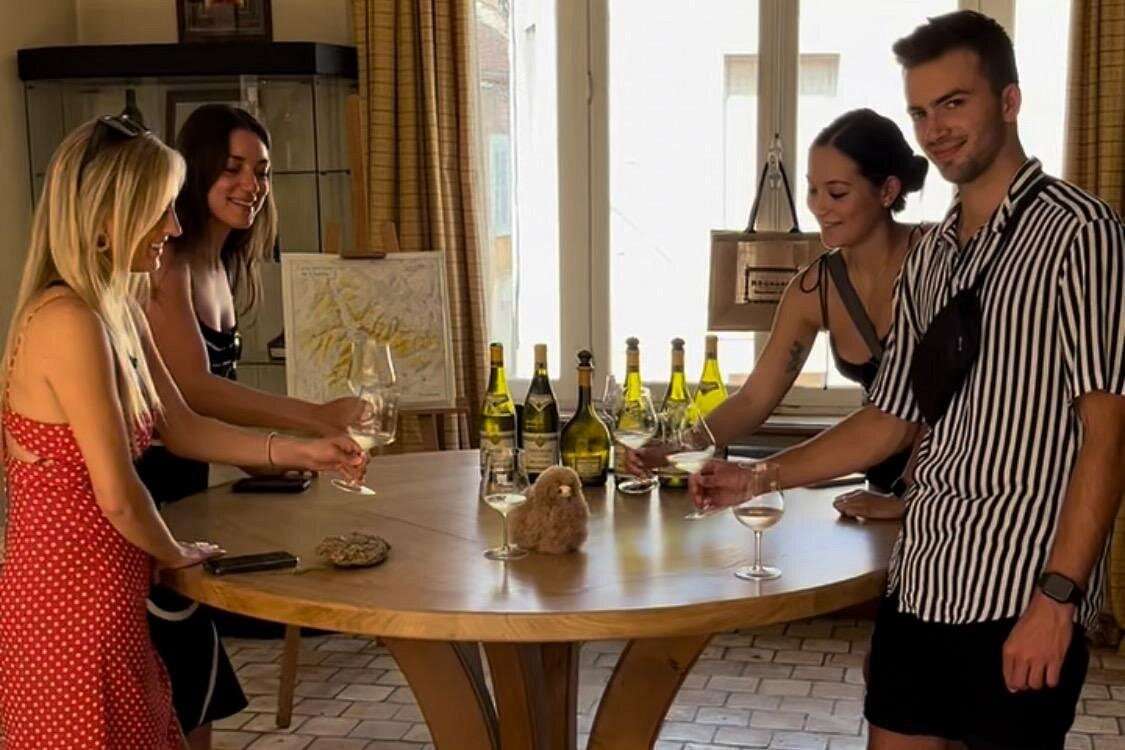
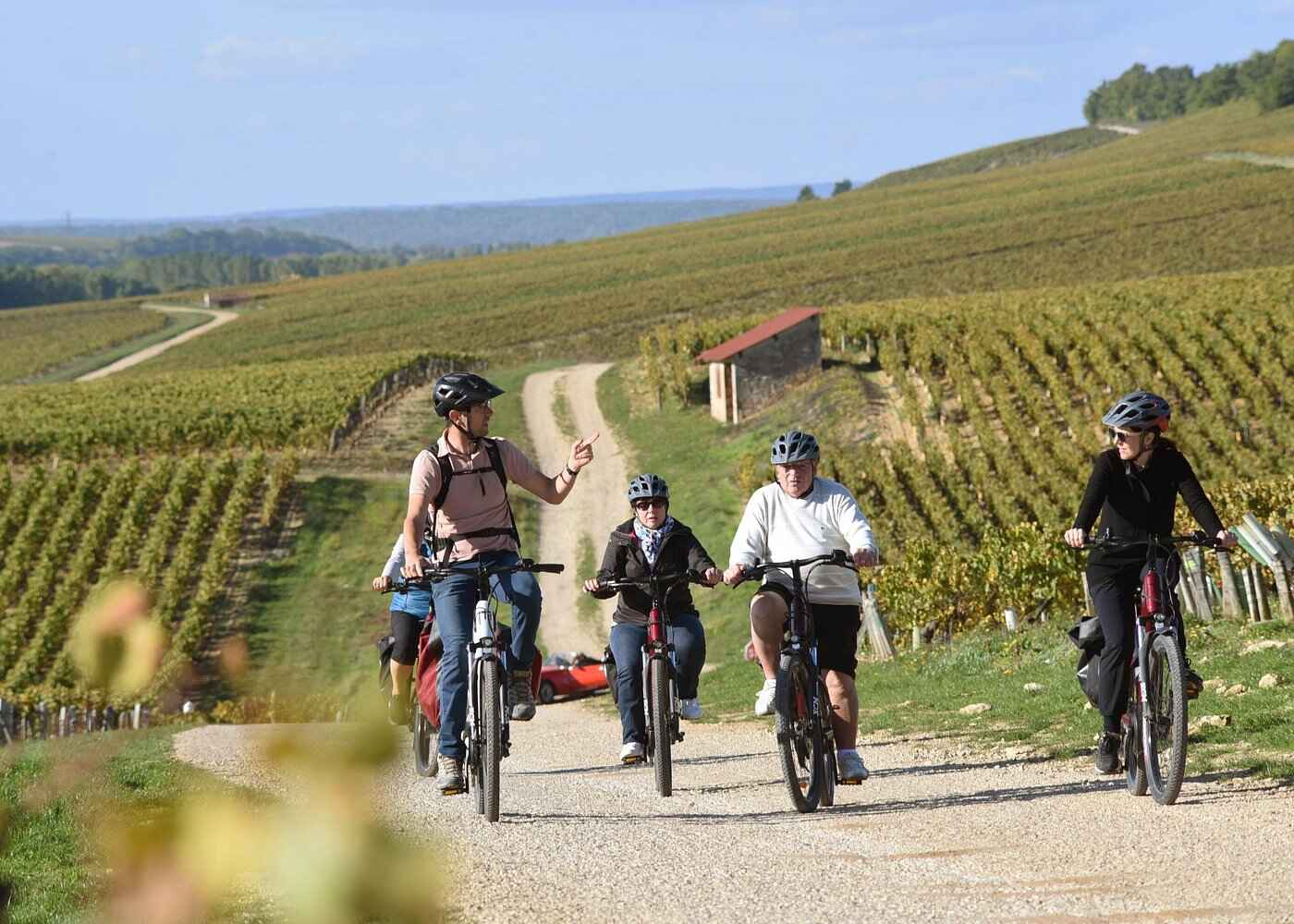
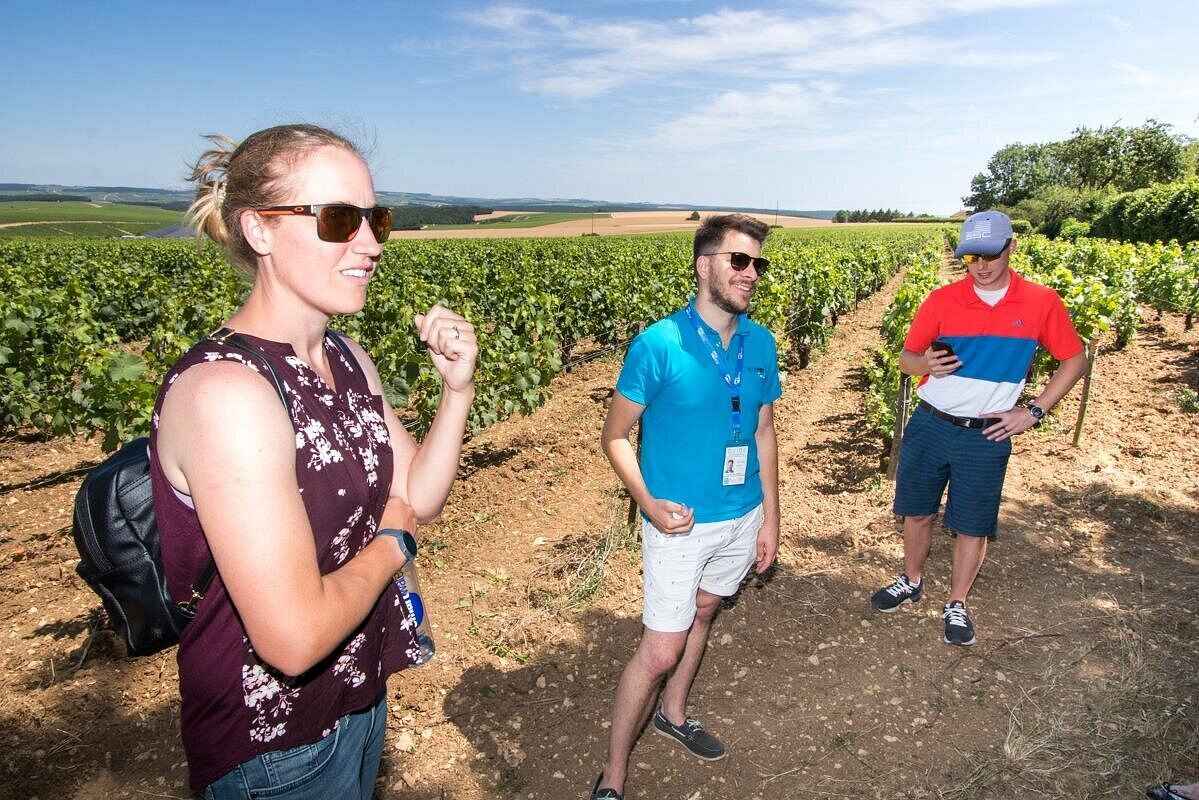
We invite you to step beyond the glass and into the heart of the vineyards. Our curated wine tours offer a rare opportunity to walk the very soils—the gravels, the limestones, and the clays—that have been described in these pages. Under the guidance of expert oenologists, you will visit the private cellars of legendary estates and stand in the middle of the world’s most famous Grand Cru plots. This is more than a journey; it is an immersion into a 2,000-year-old dialogue between man and nature. We welcome you to join us for an experience that is as sophisticated as the wines themselves, designed for those who seek to understand the very essence of terroir