Table of Contents
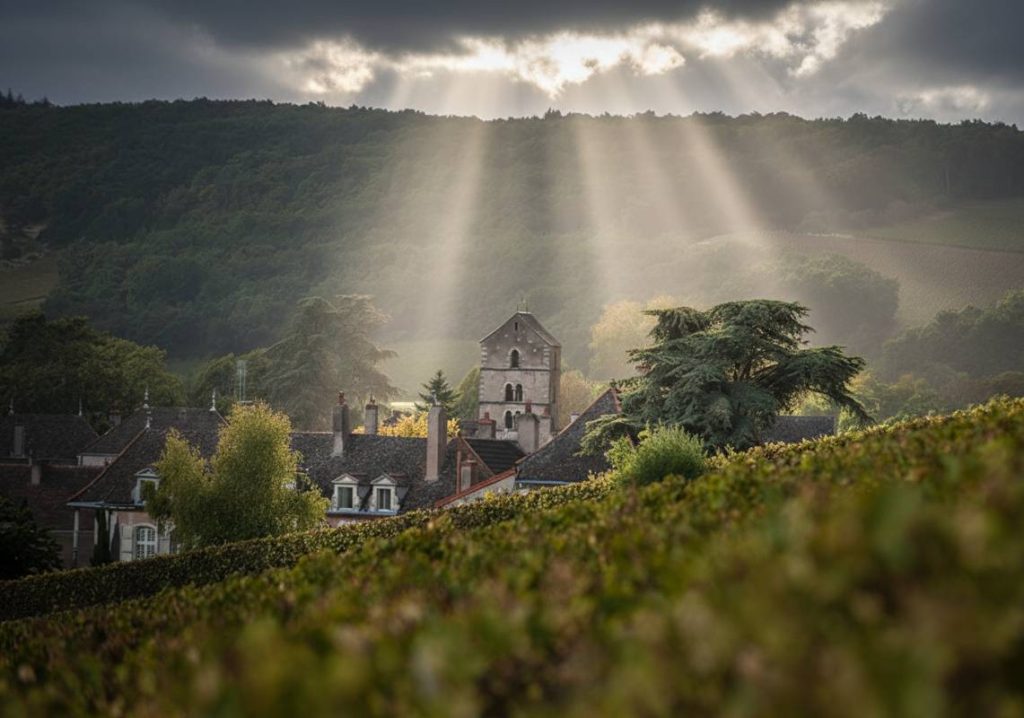
The Côte Chalonnaise represents a vital, pulsating artery of Burgundian viticulture, a landscape where the geological continuity of the Côte d’Or transitions into a more undulating, diverse topography. To understand this region is to understand the very soul of the “limestone ridge” that defines thesen prestigious Chardonnay and Pinot Noir. Nestled between the Côte de Beaune to the north and the Mâconnais to the south, the Côte Chalonnaise is not merely a geographic bridge; it is a storied mosaic of fractured Jurassic fault lines and ancient maritime deposits that have been cultivated for over a millennium.
This land as a cultural heritage written in stone. The historical significance of the region dates back to the monks of Cluny and Citeaux, who recognized that the subtle shifts in aspect and soil composition created wines of profound structural integrity and aromatic complexity. The “soul” of this landscape lies in its rusticity and its honesty; it lacks the monolithic grandeur of its northern neighbors but compensates with an intricate, intimate connection between the vine and the bedrock.
This region is a global benchmark because it offers a transparent look at how the Kimmeridgian and Oxfordian limestone cycles dictate the sensory profile of a wine. When you stand on the slopes of Mercurey or look across the amphitheater of Montagny, you are witnessing a geological dialogue that has lasted millions of years. The terroir here is a living document, a synthesis of climate, soil, and human perseverance that demands respect and deep intellectual engagement from any serious connoisseur.
The Côte Chalonnaise: Where the Earth Finds its Rhythm

Soils of Côte Chalonnaise The Complex Chemistry of Soil and Bedrock
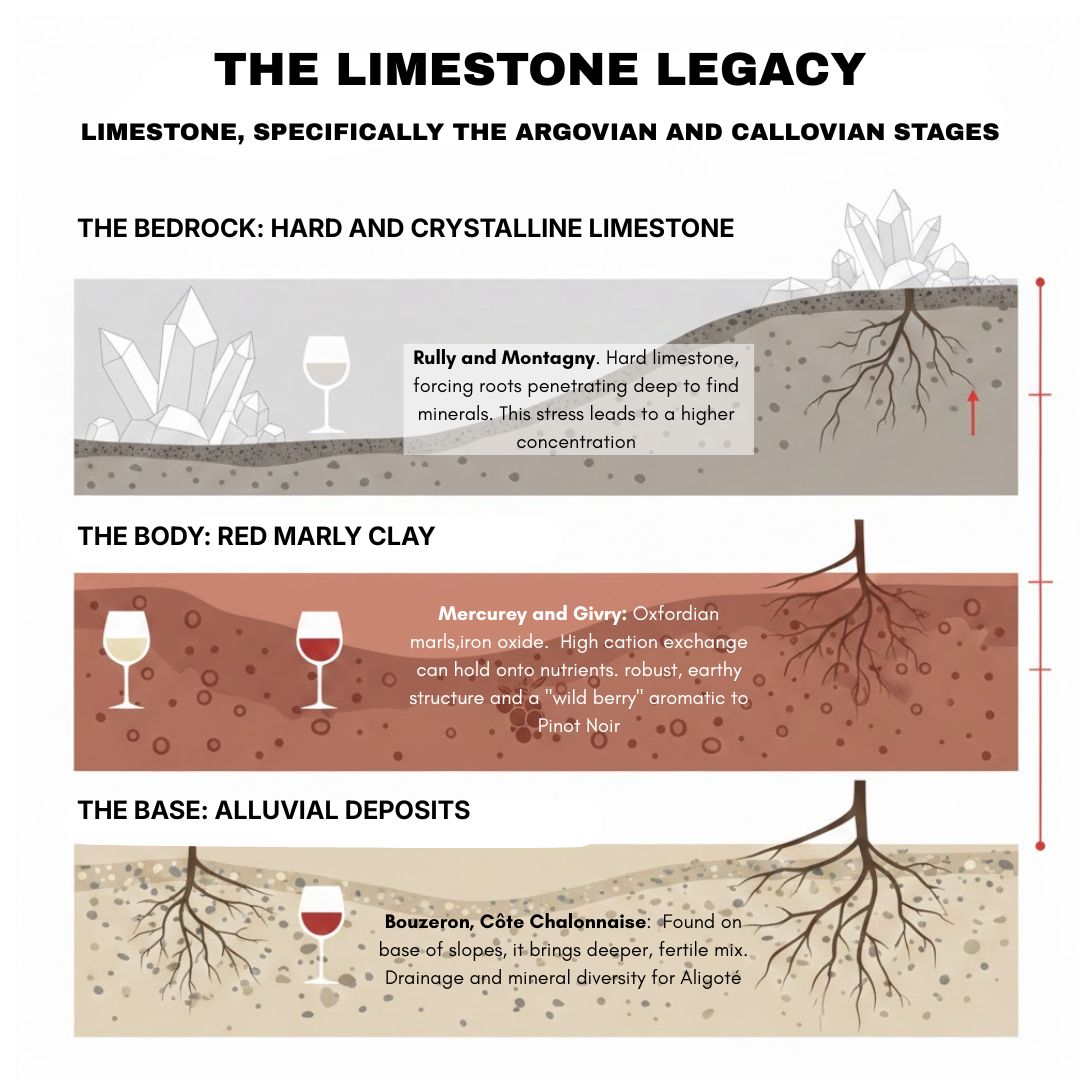
The pedology of the Côte Chalonnaise is a complex study of the Middle and Upper Jurassic periods. The fundamental building block of this region is limestone, specifically the Argovian and Callovian stages, but the expression of this stone varies wildly across the five main communal appellations.
The Role of Limestone and Calcium Carbonate
Limestone (calcium carbonate) is the protagonist of the Côte Chalonnaise story. In areas like Rully and Montagny, the limestone is often hard and crystalline, forcing the roots of the Chardonnay vines to penetrate deep into the fissures to find moisture and minerals. This stress leads to a higher concentration of trace elements such as magnesium and potassium in the grapes. Pedologically, these soils are often thin, known as “rendzinas,” where the bedrock is very close to the surface.
Marl and Clay Compositions
Marl, a mixture of clay and calcium carbonate, provides the necessary “flesh” to the wines. In Mercurey and Givry, the presence of Oxfordian marls—often tinged red by iron oxide—is more prevalent. Clay has a high cation exchange capacity, meaning it can hold onto nutrients and water more effectively than sand or pure limestone. The iron-rich clays of Mercurey are particularly noted for imparting a robust, earthy structure and a “wild berry” aromatic profile to the Pinot Noir.
Alluvial and Colluvial Deposits
At the base of the slopes, one finds alluvial and colluvial deposits. These are soils that have washed down from the heights over millennia, often containing a mix of gravel, silt, and clay. While these soils are deeper and more fertile—often reserved for the Bourgogne Côte Chalonnaise or Bouzeron regional classifications—they provide the essential drainage and mineral diversity for the Aligoté grape, which thrives in the flinty, marly soils of the northern sector.
Macro-Climate and Viticultural Foundations In Côte Chalonnaise
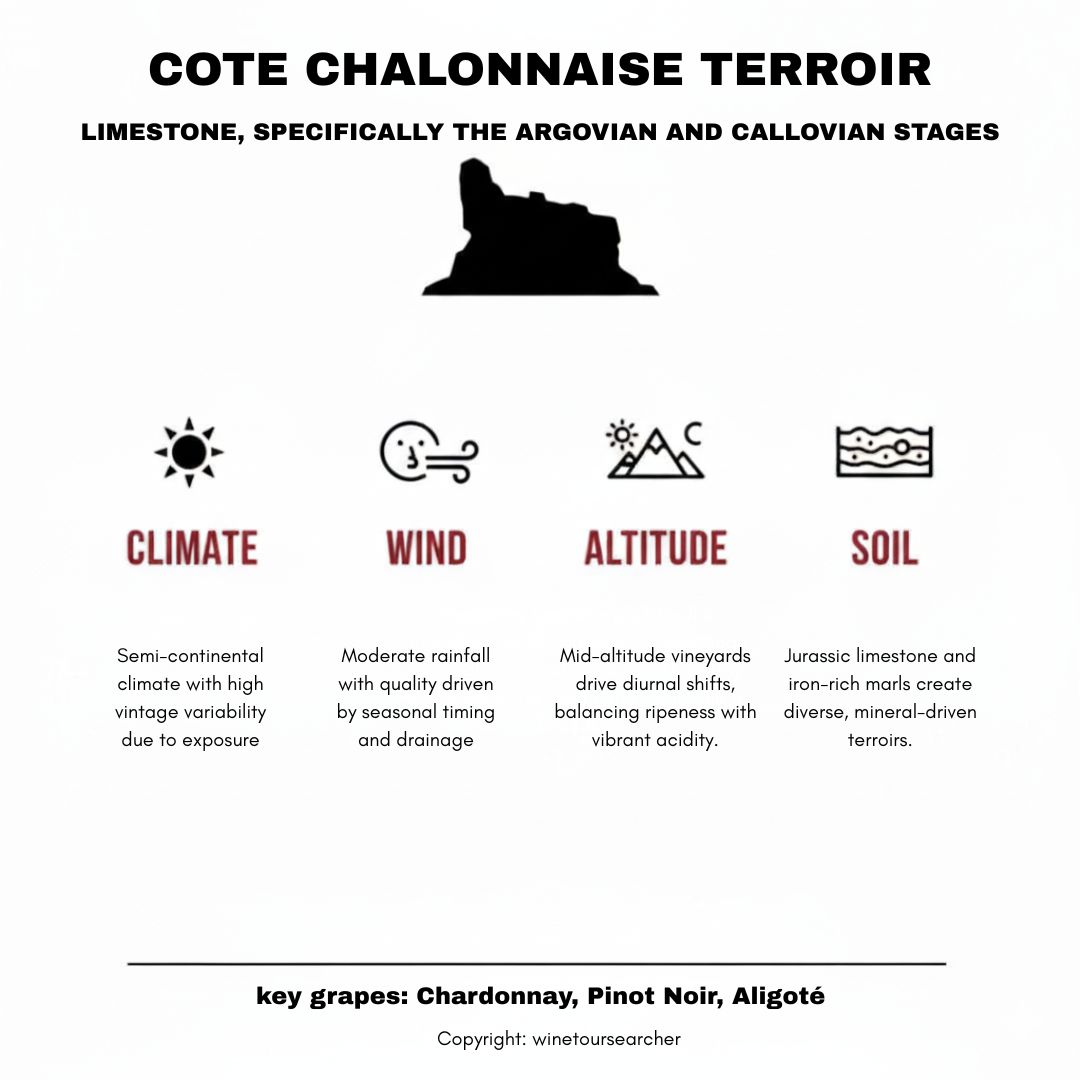
The climate of the Côte Chalonnaise is broadly categorized as semi-continental, yet it is defined by a series of micro-climatic nuances that differentiate it from the more sheltered Côte d’Or. The absence of a continuous, protective escarpment means the vineyards are more exposed to the elements, creating a dynamic environment where vintage variability is a hallmark of the region’s reputation.
Wind and Solar Influence
Wind plays a critical role in maintaining vine health across the region. The prevailing westerly winds circulate through the valleys (combes), providing essential ventilation that mitigates the risk of botrytis and other fungal pressures during humid periods.
Furthermore, the varied orientations of the hillsides—ranging from south to east and even southeast—ensure that different parcels receive varying levels of solar radiation. This diversity in exposure allows for a staggered ripening process, which is essential for preserving the delicate aromatic precursors in Pinot Noir and Chardonnay.
Water and Rainfall Patterns
Rainfall patterns in the Côte Chalonnaise are generally moderate, but the timing of precipitation is the primary driver of vintage quality. Spring rains are necessary for recharging the groundwater within the limestone cracks, while a dry late summer is sought to concentrate sugars and phenolic compounds.
The drainage capabilities of the soil, dictated by the ratio of internal stones to clay, determine how well the vines withstand “wet” years. In years of high rainfall, the well-drained slopes of the Premier Cru sites prove their worth by preventing waterlogging and maintaining the concentration of the must.
Altitude and Diurnal Temperature Shifts
The vineyards are situated at altitudes ranging from 250 to 370 meters. This elevation is significant as it facilitates pronounced diurnal temperature shifts—the difference between daytime warmth and nighttime coolness. These shifts are the engine of quality; the daytime heat drives sugar accumulation and physiological ripeness, while the cool nights arrest the degradation of malic acid.
The result is a wine that possesses both “generosity” (alcohol and body) and “tension” (vibrant acidity). This balance is the hallmark of the Côte Chalonnaise, where the wines often exhibit a brighter, more nervous energy than those from the warmer plains further south.
Côte Chalonnaise Climate, Soil, and Geology by Sub-Region
Mercurey
Bouzeron
The northernmost outpost of the region, Bouzeron is unique as the only communal appellation dedicated exclusively to the Aligoté grape.
The Aligoté Excellence
The geology here is dominated by white limestone and light-colored marls. The Aligoté Doré variant planted here finds its perfect home on the upper slopes where the soil is poorest. The high active lime content in the soil limits the vigor of the vine, resulting in smaller, more concentrated berries. The sensory link is clear: the white marls of Bouzeron produce a wine with a distinct saline finish and a bouquet of white flowers and flint.
Rully
Rully is a stronghold for both white and red wines, characterized by a jagged landscape of limestone cliffs.
The Limestone Slopes
The Premier Cru vineyards, such as Meix Cadot and Montpalais, are located on the best mid-slope positions where the Bajocian limestone is dominant. The topsoil is a mix of calcareous clay and “laves” (flat limestone slabs). This hydrology ensures rapid drainage, which translates into the crystalline purity and high-toned citrus notes found in Rully Chardonnay. The Pinot Noir from sites like Rully Chapitre benefits from the slightly deeper, iron-rich clays found in specific pockets, offering a more delicate, cherry-inflected profile.
Mercurey
Mercurey is the powerhouse of the region, producing a volume of wine that rivals entire northern sub-regions.
The Red Soils of the Chalonnaise
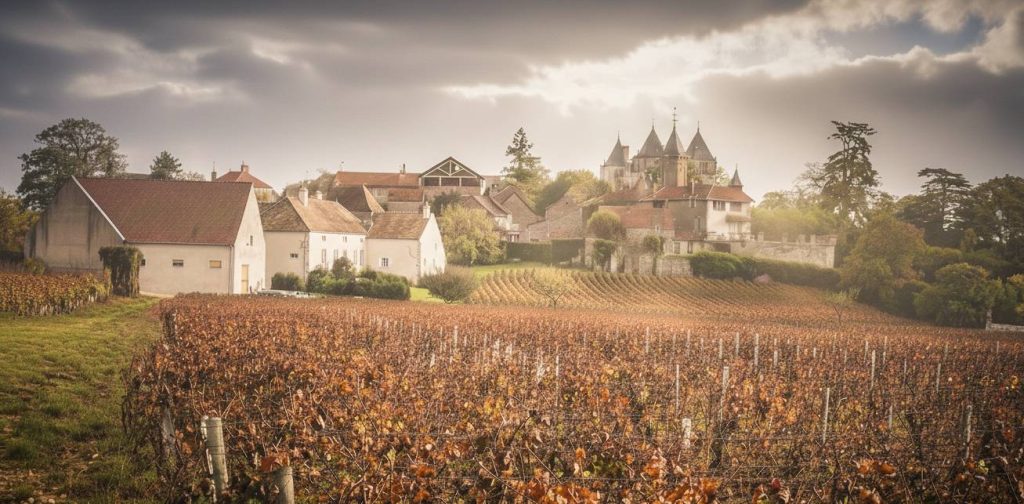
The geology of Mercurey is a complex array of Oxfordian marl and calcitic limestone. The “red” soils, colored by iron oxide, are famous for producing the most structured and age-worthy Pinot Noirs in the region. Premier Cru vineyards such as Clos des Myglands and Les Puillets sit on various exposures within a “basin” that traps heat, leading to exceptional phenolic ripeness. The high clay content in the Mercurey soil yields a wine with firm tannins and a savory, truffle-like depth as it matures.
Givry
Givry was famously the favorite wine of King Henri IV, and its terroir remains as prestigious today as it was in the 16th century.
The Jurassic Amphitheater
The vineyards of Givry are largely protected from the wind by the surrounding hills, creating a warmer micro-climate. The soils are primarily derived from Middle Jurassic limestone. In Premier Cru plots like Clos Salomon or Servoisine, the soil is a brown limestone-rich clay that is remarkably stony. This combination of warmth and drainage produces Pinot Noirs that are noted for their silkiness and “feminine” elegance, often showing aromas of violet and crushed raspberry.
Montagny
At the southern end of the ridge lies Montagny, an appellation dedicated solely to Chardonnay.
The Sea of Limestone
The terroir here is a dramatic landscape of steep slopes and diverse geological faults. The bedrock is almost exclusively limestone, often with a high proportion of fossils from the ancient Bathonian sea. Because of the varied aspects, the Montagny Premier Cru designation is broad, covering many plots that exhibit different levels of power. The wines are characterized by a profound minerality—often described as “gunflint”—and a sharp, green-apple acidity that is the direct result of the high calcium content in the soil.
The Human Touch: The Art of Viticultural Mastery
The oenologist’s role in the Côte Chalonnaise is one of translation; we must ensure that the geological truth of the soil is not lost in the cellar. Because the soils here vary so significantly in their water-holding capacity, man must adapt his viticultural techniques with surgical precision.
In the vineyard, pruning is a primary tool for balance. The Guyot system is widely used to control the vigor of Chardonnay, while Cordon de Royat is often preferred for Pinot Noir in more fertile marly plots to limit yields and concentrate the aromatics. Canopy management is equally vital; in the cooler, windier sites of Rully, we may choose to leaf-pluck more aggressively on the sunrise side to ensure the clusters reach full maturity.
The modern philosophy in the region has shifted toward “minimal intervention”. This means utilizing indigenous yeasts that are native to the specific vineyard plots, ensuring that the fermentation process is a reflection of the local micro-flora. In the cellar, the use of new oak is increasingly judicious. We prefer larger foudres or older barrels for the Premier Cru wines of Montagny and Bouzeron to prevent the wood from masking the delicate saline and mineral nuances provided by the limestone. The goal is technical precision—using temperature control and gravity-led movements—to preserve the “nerve” of the terroir
Côte Chalonnaise terroir: From Knowledge to Experience
While we can map the Oxfordian marls and measure the diurnal shifts, the Côte Chalonnaise is ultimately a living liquid that defies pure clinical analysis. The science of pedology provides the framework, but the true understanding of these wines comes only when the cork is pulled in the very cellar where the wine was raised.
The geology of these hills is written in stone, permanent and unyielding, yet the wine is its ephemeral voice. To truly grasp the difference between the iron-rich power of Mercurey and the lace-like elegance of Givry, one must walk the rows and feel the crumble of the limestone beneath their boots.
Step beyond the glass and join us for a curated, high-end exploration of these legendary lands. Join our exclusive wine tours, where you will gain access to the private domains and Premier Cru cellars that are the heartbeat of the region. Come and walk the gravels, the limestones, and the clays with us; experience the viticultural mastery of the Côte Chalonnaise in situ, where every sip is a lesson in history and every bottle is a piece of the earth itself