Table of Contents
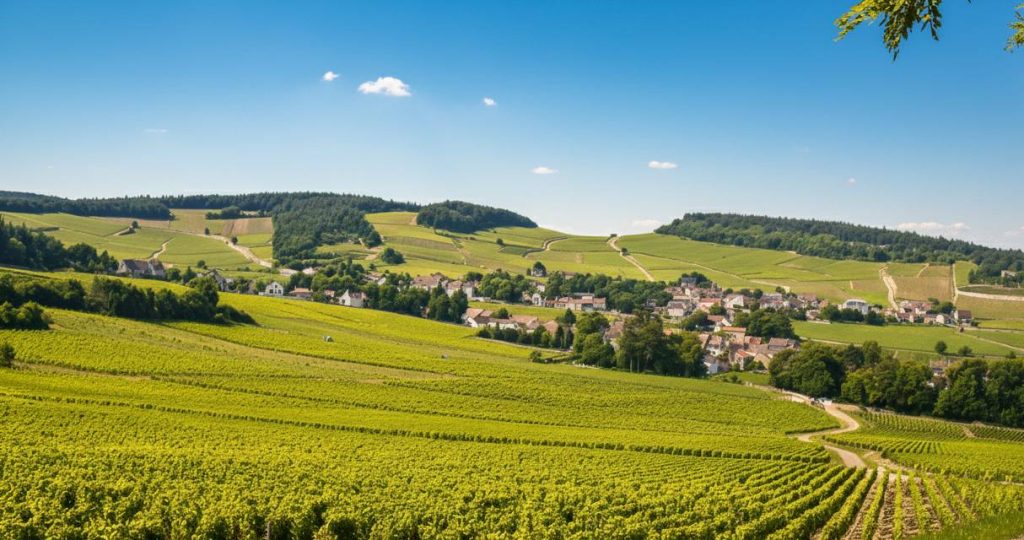
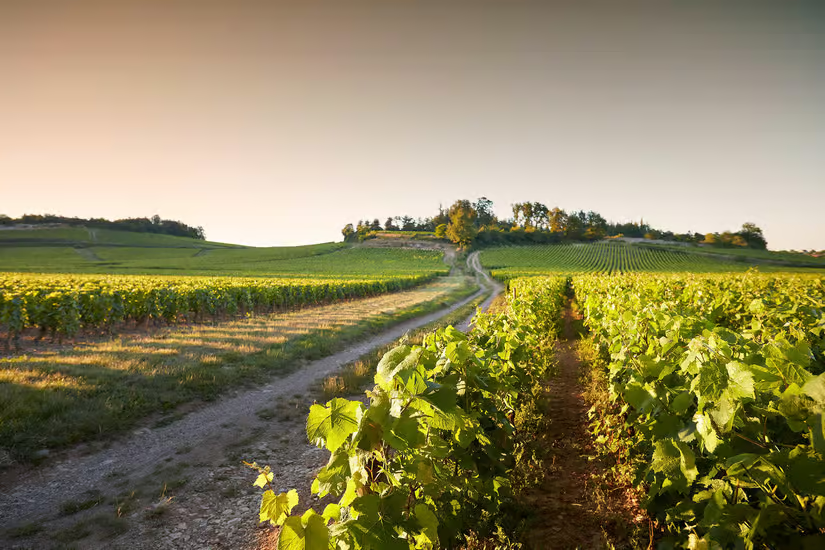
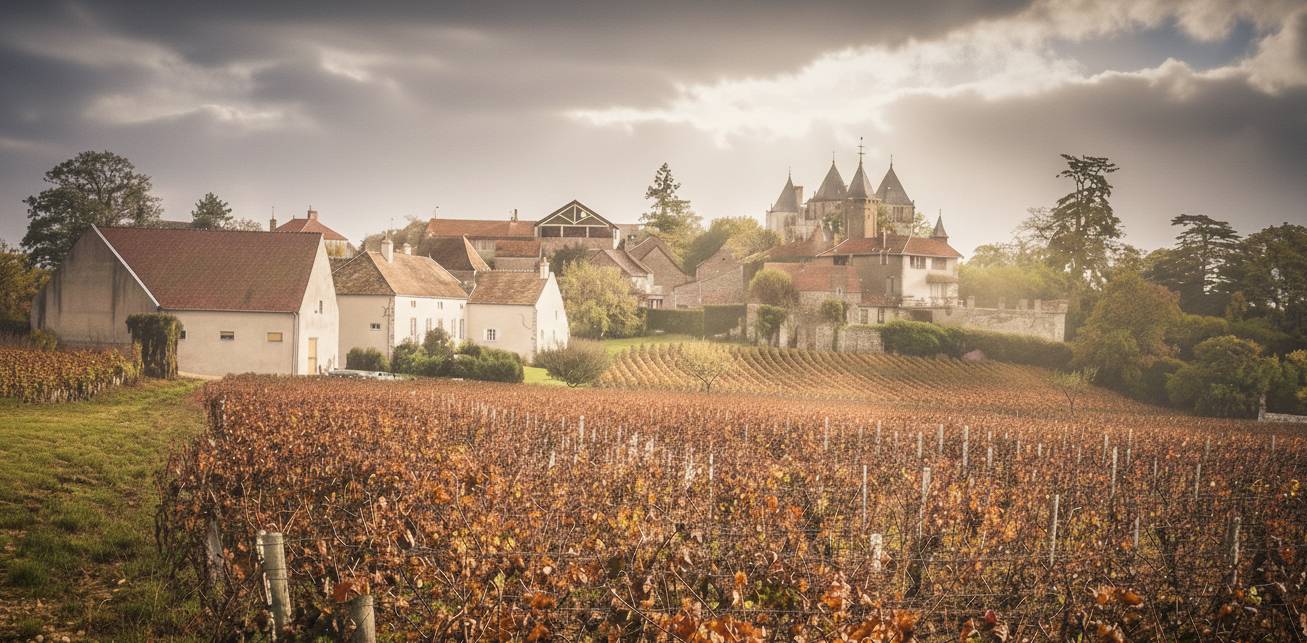
The Côte Chalonnaise is a land of rolling hills and hidden valleys, where the air carries the scent of wild strawberries and the sharp, clean aroma of damp limestone. Stretching south of the famous Côte d’Or, this region represents the resilient heart of Burgundy, offering a rich tapestry of history that spans over two millennia.ndy, where the climate begins to soften, the landscape opens into rolling meadows, and the Chardonnay grape achieves a weight and golden opulence that is uniquely its own. To understand the Mâconnais is to walk through 2,000 years of history, etched into the monumental cliffs of Solutré and Vergisson
The Côte Chalonnaise: Where the Earth Finds its Rhythm

Ancient Foundations: Roman Roots and the Birth of the Vineyards (50 BC – 500 AD)
The viticultural story of the Côte Chalonnaise begins with the Roman conquest of Gaul and the subsequent expansion of the empire’s agricultural frontier. Recognizing the strategic value of the Saône river valley as a logistical artery, Roman settlers identified the rolling slopes of modern-day Givry and Mercurey as ideal for large-scale vine cultivation. The geological makeup of the region—a complex mosaic of limestone and marly clay—closely mirrored the prime environments of their Mediterranean homelands, allowing the Romans to transplant their sophisticated viticultural knowledge to northern soil.
During this era, the region functioned as a critical logistical hub for the empire, far surpassing mere local consumption. The city of Chalon-sur-Saône became a premier port for the wine trade, facilitating the movement of goods from the southern Mediterranean up toward the Germanic frontiers. Archaeological evidence, including the discovery of thousands of ancient wine jars (amphorae) and specialized pruning knives, confirms that the Côte Chalonnaise was a central pillar of European wine commerce long before the modern concept of Burgundy existed. These early Roman vintners established the first formal vineyard boundaries, many of which still dictate the outlines of the prestigious plots worked by modern growers today.
The Roman influence also extended to the technical management of the vine. They introduced the use of wooden barrels for transport—a local Gallic innovation they quickly standardized—and implemented early forms of soil enrichment and terracing. This period was not merely the “start” of wine in the region; it was a high-water mark of ancient industrial production that turned the Chalon valley into one of the most productive and economically vital vineyard stretches in the Western Roman Empire.
Spiritual Stewardship: Monastic Influence and the Rise of the Vineyard Plot (1100 – 1400)
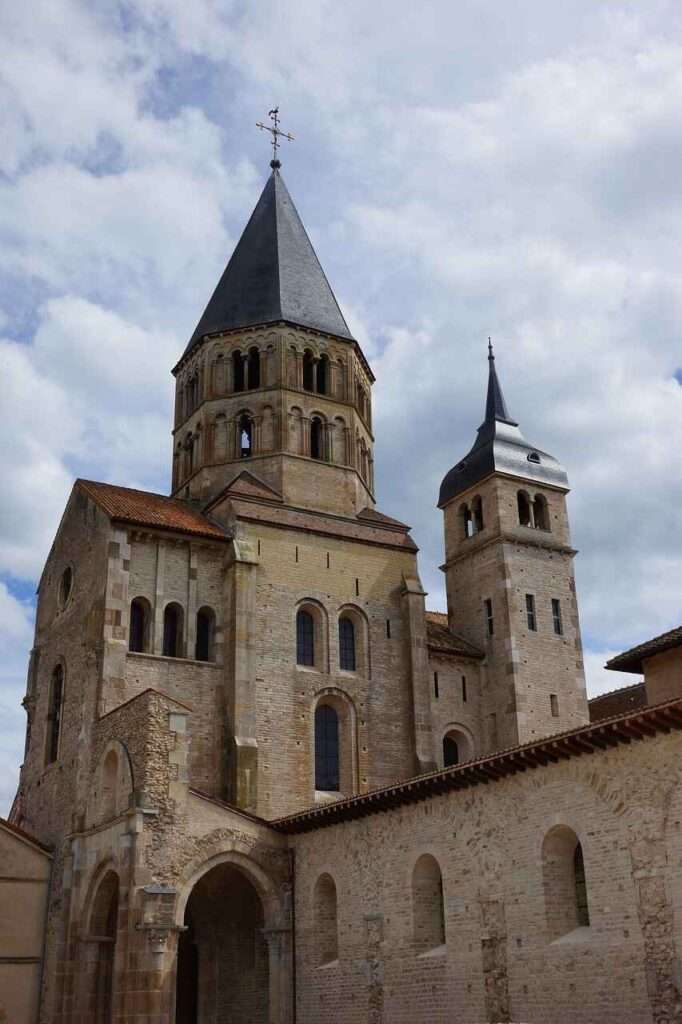
Cluny Abbey
The Middle Ages brought a shift from Roman commercial expansion to a era of spiritual and technical refinement led by the Catholic Church. The Benedictine monks of the Abbey of Cluny and the Cistercians of La Ferté—the first “daughter” house of the legendary Cîteaux—took command of the landscape with a religious devotion to agriculture. These monks were the original “scientists of the soil,” meticulously documenting which specific plots of land produced the most expressive and stable fruit over decades and centuries of harvest.
In the villages of Rully and Montagny, the monks discovered that higher elevations and eastern exposures produced white wines of startling purity and acidity. They pioneered the concept of the specific vineyard plot—the predecessor to the modern climat—by observing how the morning sun hit certain limestone outcroppings differently than the clay-heavy valley floors. Their work was not just about making wine for the mass; it was about uncovering the divine order within the earth itself. Every hill was cataloged, every drainage pattern analyzed, and every vintage recorded, creating the world’s first truly technical database of wine production.
By the 14th century, the reputation of the region had reached the highest levels of French society. The wines of Givry were reportedly the personal favorite of King Charles VI, a royal endorsement that provided the region with immense political protection and economic leverage. This monastic era transformed the Côte Chalonnaise from a Roman commodity center into a artisanal sanctuary where the quality of the individual plot became the primary measure of value. This transition ensured that even through the darker years of the Middle Ages, the technical secrets of the soil were preserved behind abbey walls.
Noble Commerce: The Golden Age of Trade and the Merchant (1400 – 1789) T
As the Dukes of Burgundy ascended to power, the Côte Chalonnaise became a vital geopolitical asset in their quest for European dominance. While the neighboring regions to the north focused on providing prestige wines for the ducal court in Dijon, the Chalonnaise developed a sophisticated and highly efficient merchant class. The Merchant-Bottler became the dominant economic force of this era, acting as the bridge between the small monastic and peasant growers and the burgeoning markets of Northern Europe. These merchants were masters of logistics, navigating the complex political turmoil of marriages, wars, and treaties that frequently altered trade routes and market access.
This period was defined by a focus on technical infrastructure and the formalization of trade standards. The construction of the Canal du Centre, which opened in the late 18th century, was a monumental technical evolution for the region. It bypassed the slow and expensive overland routes, allowing the wines of Mercurey and its neighbors to be transported directly to the heart of Paris and beyond. This era of “Noble Commerce” saw the rise of the great merchant houses, many of which established deep cellars that still exist today.
However, the success of the merchant system also brought challenges. The high demand for “Burgundy” wine across Europe often tempted producers to prioritize quantity over the quality that the monks had so carefully established. This tension between the merchant’s need for volume and the grower’s pursuit of terroir-driven excellence created a competitive environment that forced the region to innovate. Improvements in bottle glass quality and the gradual introduction of cork stoppers during this time allowed for longer aging, changing the very style of Chalonnaise wine from a young, fresh product to one capable of developing complexity over time in a collector’s cellar.
Survival and Law: The Great Blight and Legal Milestones (1860 – 1945)
The late 19th century brought an existential threat in the form of Phylloxera, a devastating aphid blight that decimated vineyards across the globe. The Côte Chalonnaise was severely impacted, with thousands of hectares of ancient vines withering and dying in less than a generation. Many historic vineyard sites were nearly lost to time as families moved away to the cities, unable to survive the total collapse of the wine economy. Recovery required a massive technical evolution, involving the complex and controversial process of grafting local vines onto American resistant rootstocks—a move that saved the region but forever changed the biology of the vineyards.
In the wake of this crisis, the survivors realized that the only way to prevent future collapse and combat the rising tide of fraudulent wines was through rigorous legal protection. The 1930s marked a turning point with the establishment of the Protected Designation of Origin (AOC) system. Mercurey, Givry, Rully, and Montagny were among the first to have their historical boundaries, specific soil compositions, and traditional production methods codified into national law. These legal milestones were hard-won, requiring years of geological surveys and historical research to prove the uniqueness of the Chalon hills.
This era also saw a revolution in the cellar. The introduction of steam-powered equipment and early refrigeration allowed for more consistent fermentations, while the newly formed legal unions (Syndicats) provided a platform for growers to share technical knowledge. These regulations did more than just protect the name; they forced a return to the quality-focused principles of the monastic era, ensuring that the names of these villages would forever be synonymous with authentic, site-specific wine rather than mass-produced blends.
The Modern Renaissance: Sustainability and the Future of the Soil (1980 – Present)
Today, the Côte Chalonnaise is experiencing its most significant transformation in centuries. A new generation of growers, often educated in global viticulture but deeply rooted in their family estates, is moving away from the industrial, chemical-heavy methods of the mid-20th century. There is a powerful movement toward Sustainability, Organic farming, and Biodynamics, with a renewed, fanatical focus on the health of the calcareous soil and the microbial life within the vineyard.
As climate change shifts traditional ripening windows, the slightly cooler average temperatures of the Chalonnaise compared to the Côte d’Or have become a significant strategic asset. The region is now consistently producing wines with the ripeness that was once rare, while maintaining the essential acidity that defines great Burgundy. Modern cellar innovations—such as gravity-flow wineries, precise temperature-controlled stainless steel, and the more judicious use of French oak—are allowing the true, unadorned character of the terroir to shine through with more clarity than ever before.
The future of the region is one of prospective growth and technical refinement. We are seeing a “re-mapping” of the vineyards, with growers experimenting with different clones of Pinot Noir and Chardonnay that are better suited to warmer growing seasons. The region is no longer seen merely as an affordable alternative to its famous northern neighbors but as a world-class destination in its own right—one that honors its 2,000-year history by ensuring the land remains vibrant and productive for the next two millennia.
Côte Chalonnaise Wine History: A Legacy Carved in Limestone
The history of the Côte Chalonnaise is far more than a timeline of agricultural production; it is a narrative of persistence and adaptation. From the Roman engineers who first recognized the potential of its slopes to the modern growers defending their soil against climate change, the region has consistently punched above its weight. It has survived empires, plagues, and economic shifts by leaning into its unique identity. As we look forward, the Chalon stands as a testament to the idea that true quality is timeless. Whether you are sipping a crisp white from Montagny or a structured red from Mercurey, you are tasting two thousand years of human dedication to a very specific, very special piece of earth.