Table of Contents
The Architecture of Tuscany How Geology and Climate Create Italian Iconic Wines
Tuscany stands as the undisputed heart of Italian viticulture, a landscape where the intersection of geological history, Mediterranean climate, and human ingenuity has created a global benchmark for fine wine. To understand the soul of this region is to understand the dialogue between the rugged Apennine Mountains and the cooling influence of the Tyrrhenian Sea. This is not merely a collection of vineyards; it is a cultural heritage site where the vine has been cultivated for over two millennia, dating back to the Etruscan civilization.
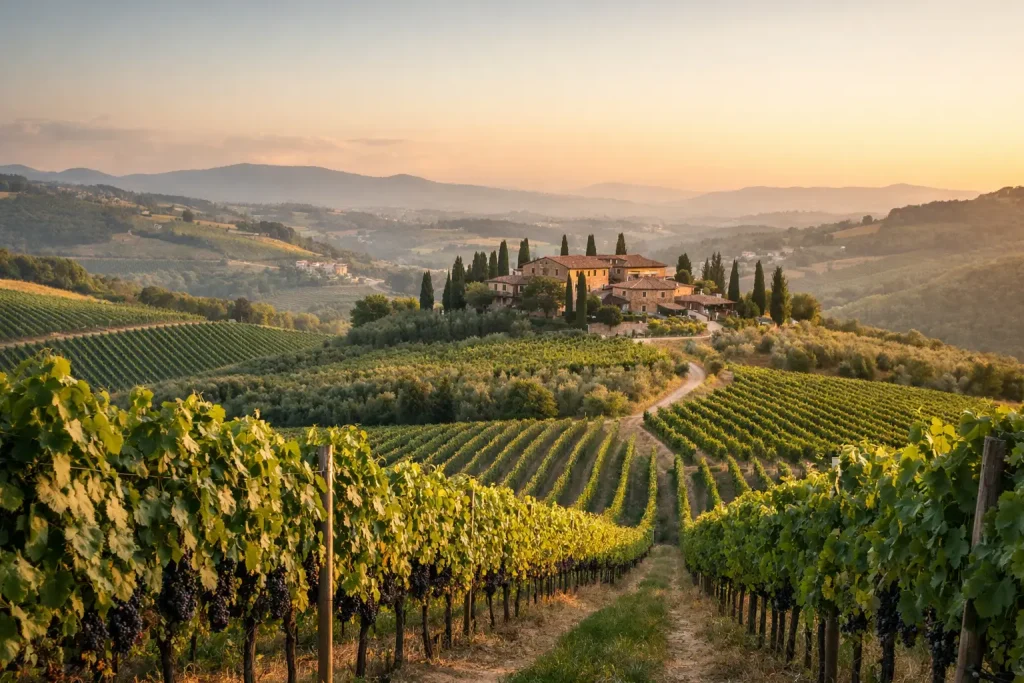
The prestige of this land is rooted in its diversity, a mosaic of micro-climates and soil compositions that transform the Sangiovese grape into a myriad of expressions, from the ethereal and floral to the robust and structural. As a destination, it offers a sensory immersion that transcends the glass. The rolling hills, adorned with cypress trees and ancient stone hamlets, serve as the backdrop for some of the most sophisticated winemaking operations in the world.
The concept of terroir here is elevated to a spiritual level; it is the belief that a specific plot of land, or a single vineyard, possesses an inimitable identity that can be tasted. This guide explores the technical foundations of this excellence, dissecting the layers of galestro and alberese that define the great estates. We will journey through the prestigious valleys and coastal plains, from the historic strongholds of the central hills to the innovative frontiers of the coast.
This is an invitation to master the complexity of a region where tradition and modern precision coexist, creating wines that are not only a product of their environment but a testament to the enduring pursuit of liquid perfection.
From Tuscan Hills to Your Glass
Macro-Climate and Viticultural Foundations
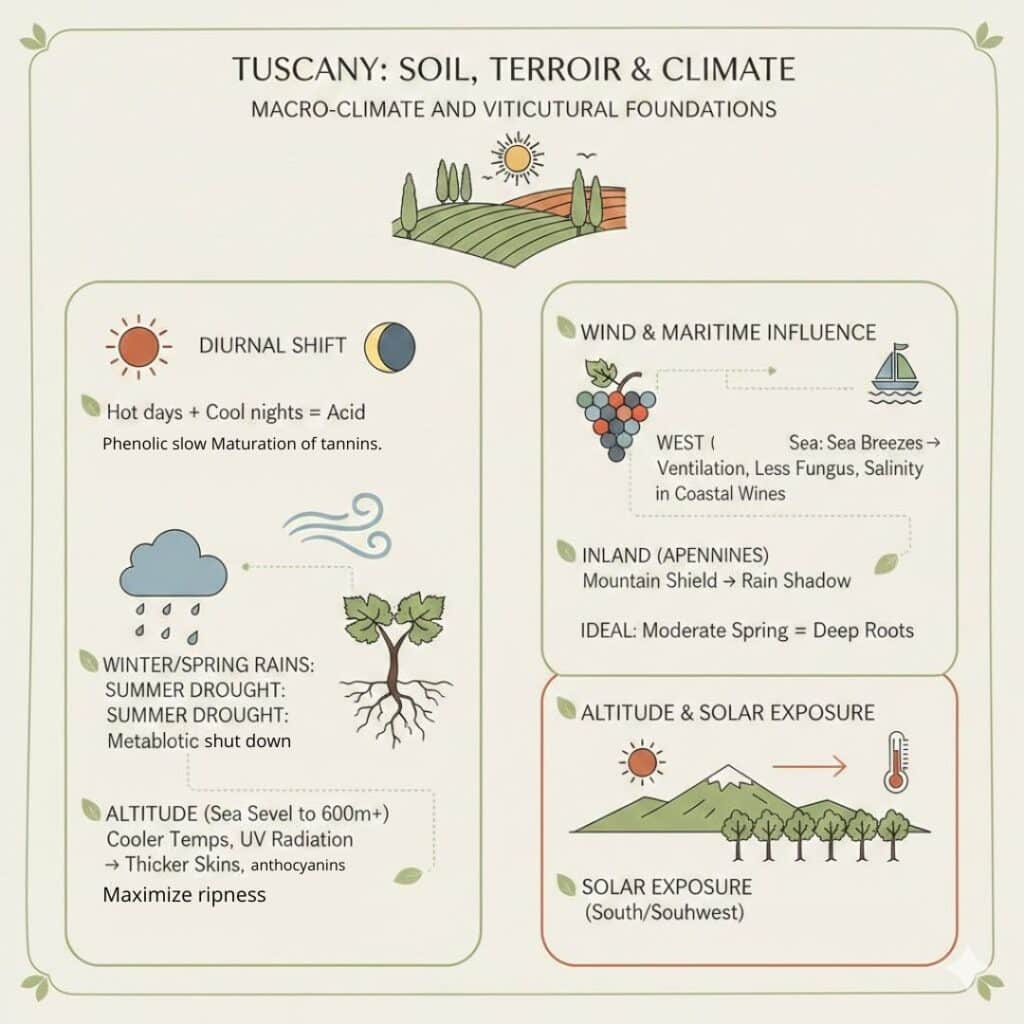
The viticultural success of the region is dictated by a complex macro-climate characterized by its transitional nature between Mediterranean and continental influences. The primary engine of quality is the diurnal temperature shift, particularly during the crucial ripening months of August and September. These significant fluctuations between hot, sun-drenched days and cool, crisp nights are essential for preserving the organic acids within the grape berries while simultaneously allowing for the slow, phenolic maturation of tannins. Without this nocturnal cooling, the high sugar accumulation driven by the intense Italian sun would result in wines lacking balance and structural longevity.
Wind and Maritime Influence
The western portion of the region is profoundly shaped by the Tyrrhenian Sea. Constant sea breezes act as a natural ventilator, mitigating heat during peak summer months and reducing the risk of fungal diseases like powdery mildew by keeping the canopy dry. These winds also carry trace amounts of salinity, which many oenologists believe contribute to the distinct sapidity found in coastal wines. Conversely, the inland areas are protected from harsh northern winds by the Apennine range, creating a rain shadow effect that varies in intensity across the different provinces.
Water and Rainfall Patterns
Rainfall is predominantly concentrated in the winter and spring months, providing the necessary water table reserves to sustain the vines during the arid summer. Vintage variability is largely defined by the timing and volume of these precipitation events. A wet spring can lead to issues with flowering and fruit set, whereas a drought-stressed summer may cause the vines to shut down metabolically, resulting in green, astringent tannins. The best vintages are those where moderate spring rains are followed by a dry, luminous summer, allowing for deep root penetration into the moisture-retaining clay subsoils.
Altitude and Solar Exposure
The topography is defined by its hilly nature, with vineyards situated at altitudes ranging from near sea level to over six hundred meters. Altitude is a critical factor in managing the warming climate; higher elevation sites benefit from cooler average temperatures and increased ultraviolet radiation, which thickens the grape skins and enhances the concentration of anthocyanins and polyphenols. The orientation of the vine rows, typically south or southwest to maximize solar intercept, ensures that the grapes reach full physiological ripeness even in cooler years.
The Regional Breakdown: Climate, Soil, and Geology by Sub-Region
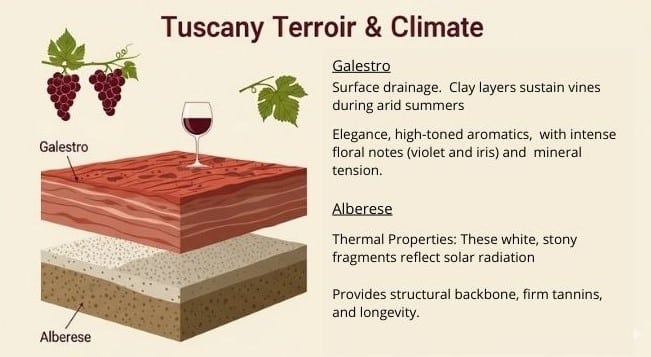
The geological complexity of the region is a result of millions of years of tectonic activity and marine sedimentation. The primary soil types include galestro, a metamorphic schistous clay that flakes easily, and alberese, a hard, weathered limestone. These soils dictate the drainage and mineral uptake of the vines, directly influencing the final wine profile.
Chianti Classico
This historic core represents the most intricate mosaic of the region. Recently, the appellation was codified into eleven Unità Geografiche Aggiuntive (UGA), each representing a unique geological and climatic fingerprint.
San Casciano
Located at the northwestern gateway, the San Casciano UGA is an expansive alluvial plateau. Unlike the rocky central core, the soil here is dominated by ancient Pliocene marine deposits, fluvial pebbles, and sandy-clay silt. The geological formation is largely the result of the ancient Pesa and Greve river systems. This lighter, more friable soil structure facilitates superior drainage and higher soil temperatures.
As a result, the Sangiovese here ripens earlier and more evenly, yielding a wine with a distinctively “Burgundian” elegance—marked by soft, silkier tannins and high-toned red fruit such as wild strawberry and redcurrant. Notable vineyards such as those within the Villa Le Corti estate or the Cigliano sub-zone benefit from this gentler, less aggressive soil profile. The “Sillano” soils (a mix of clay and silt) in the lower valleys of San Casciano provide a specific mineral sapidity that distinguishes these wines from the more vertical, acidic profiles of the high-altitude stony regions.
Montalcino
The solitary hill of Montalcino is a geological island that rises from the Orcia Valley. It is divided into four distinct quadrants, each dictated by soil age and altitude. To the north, the geology is dominated by the Galestro formations and higher altitudes, where the climate is cooler and the ripening process is slower. This results in the most elegant and aromatic expressions of Brunello di Montalcino, with high acidity and scents of dried flowers and medicinal herbs. The northeast sector, home to the Montosoli cru, features a specific mix of lime-rich marly clay and schist, creating wines of immense verticality and precision. As one moves toward the center, near the fortress, the soils transition to Alberese, providing a firm tannic backbone and mineral longevity.
The southern half of the hill presents a radical shift in terroir. Here, the landscape opens to the influences of the Maremma and the Monte Amiata, which protects the area from extreme weather. The climate is significantly warmer, with average temperatures two to three degrees higher than the northern slopes.
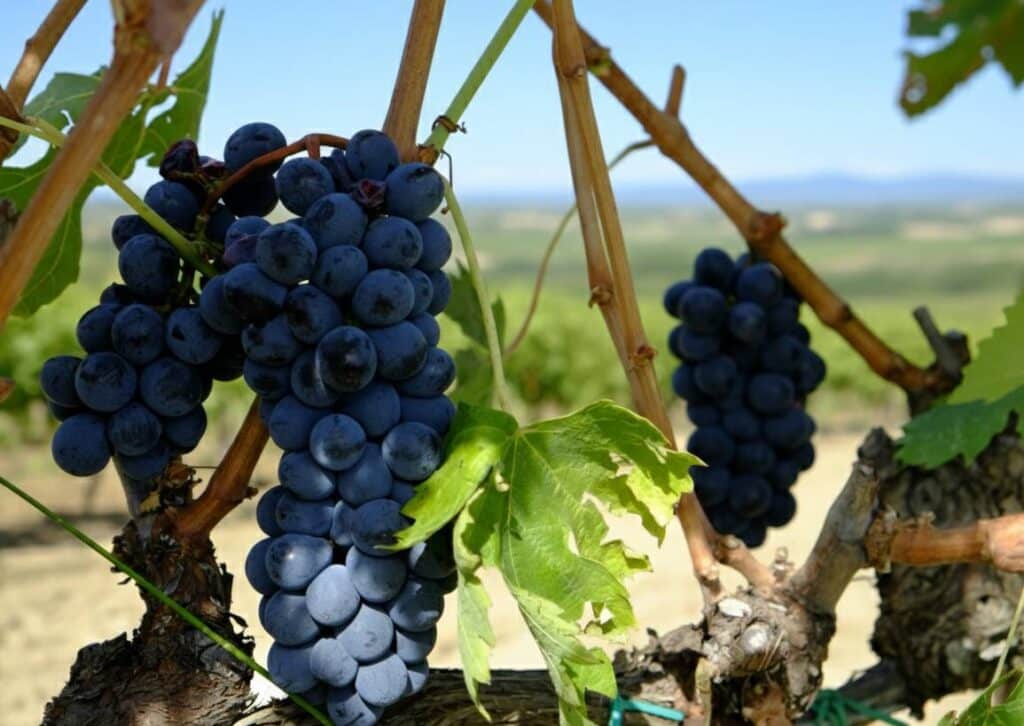
The soil here is significantly older, composed of marine clays and alluvial sediments from the Pliocene and Pleistocene eras. In the sub-zones of Tavernelle, Camigliano, and Sant Angelo in Colle, the higher clay content retains vital water reserves during the arid summer months, allowing the Sangiovese Grosso to achieve massive phenolic concentration. The resulting wines are powerful, dark-fruited, and opulent, often showing notes of wild balsamic herbs, tobacco, and dark plum.
The Poggio di Sotto estate and the Soldera Case Basse vineyards represent the pinnacle of this southern complexity, where the heat is tempered by altitude to maintain a legendary balance. Further south in the Castelnuovo dell Abate sector, the presence of volcanic debris from the ancient Amiata volcano adds a unique iron-rich minerality and a smoky undertone to the wines. This district is a masterclass in how a single grape variety can be refracted through a diverse geological prism, moving from the ethereal schists of the north to the muscular, sun-drenched clays of the south.
Bolgheri and the Maremma
The coastal strip of the Maremma, and specifically the Bolgheri amphitheater, is the spiritual home of the Super Tuscan movement. The climate here is purely Mediterranean, characterized by intense luminosity and the constant, cooling influence of the Tyrrhenian sea breezes. The geology is a complex tapestry formed by the retreat of the sea and the erosion of the Metalliferous Hills.
Bolgheri Sassicaia
The Bolgheri Sassicaia sub-appellation is unique in Italy as a “monopole” for the Tenuta San Guido. The name itself—Sassicaia—means “place of many stones,” a direct reference to its extraordinary geology. While most of the surrounding area is clay-dominant, the specific parcels of the Sassicaia vineyard, particularly the San Martino and Castiglioncello plots, are situated on a raised limestone terrace covered in ancient river gravel and stony debris.
This mimics the “Graves” of Bordeaux, providing exceptional drainage and a low-nutrient environment that forces the Cabernet Sauvignon vines to root deeply. The thermal inertia of these stones regulates the temperature of the clusters, ensuring a slow, aristocratic ripening. The resulting wine is defined by its vertical structure, graphite minerality, and a distinctive cedar and blackcurrant profile that is more reminiscent of a First Growth Pauillac than a typical Mediterranean wine.
Bolgheri Superiore
The broader Bolgheri Superiore category covers the prestigious foothills where estates like Ornellaia, Guado al Tasso, and Ca Marcanda are located. The soil here transitions from alluvial pebbles to a rare vein of Pliocene blue clay. This clay is the defining characteristic of the Masseto hill, a small, seven-hectare vineyard that produces one of the world’s most coveted Merlots.
This blue clay acts as a sponge, providing cool moisture to the roots even in the hottest vintages, which prevents the Merlot from becoming overripe or jammy. Instead, it yields a wine of monumental density and silky, velvet-grained tannins. In the surrounding Bolgheri Superiore vineyards, the mix of iron-rich red sands and marine fossils contributes to the complexity of blends featuring Cabernet Franc and Petit Verdot.
Further south in the Maremma, regions like Suvereto and Val di Cornia feature even higher concentrations of metallic minerals. In the Suvereto district, the iron-rich clays of the Tua Rita estate, particularly the Redigaffi vineyard, produce wines with a profound “bloody” or mineral depth and dark chocolate notes. The maritime influence across the entire coast ensures that despite the high alcohol levels achievable in this sun-drenched region, the wines maintain a necessary saline freshness and structural integrity.
Montepulciano
The hill of Montepulciano represents a transition toward the interior of the region, where the geology is defined by the Pliocene era when the Chiana Valley was a vast sea bay. The terroir here is centered on the Prugnolo Gentile, a specific clone of Sangiovese that has adapted over centuries to the “Tufaceous” sands and silty clays of this district. Unlike the rocky schists of the north, the Vino Nobile di Montepulciano region is characterized by deep, well-drained soils composed of yellow sands and “tuff” (volcanic-origin limestone).
The sub-zones of Cervognano, Gracciano, and Argiano are considered the premier sites for viticulture. In Cervognano, the soil features a high percentage of sand, which facilitates an elegant, high-toned aromatic profile marked by scents of violet, plum, and spice. The drainage is so efficient that the vines often experience moderate water stress, which is essential for concentrating the sugars and polyphenols in the Prugnolo Gentile.
As one moves toward the Valiano sector, the soils become heavier with more clay content, leading to a broader, more muscular tannin structure. The climate is continental with Mediterranean influences, featuring hot summers and cold winters, which results in a long growing season. This allows for the development of the characteristic “noble” tannins—firm yet integrated—that give the wine its name.
The interaction between the sandy topsoil and the clay-rich subsoil provides a unique hydrological balance; the sand allows for immediate drainage during heavy rains, while the clay beneath acts as a reservoir during dry spells. This geological stability is what permits Vino Nobile di Montepulciano to maintain a consistent quality across varying vintages, producing wines that bridge the gap between the floral elegance of the central hills and the robust power of the southern territories.
San Gimignano
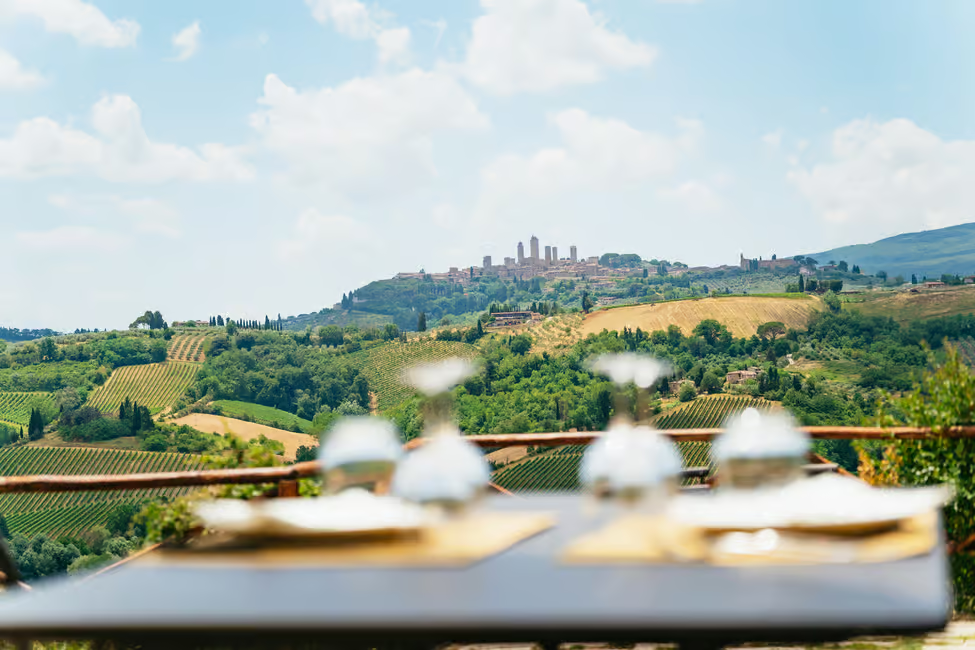
Rising above the Val d’Elsa, the town of San Gimignano is a geological anomaly focused on white wine production. The terroir here is defined by the ancient Pliocene sea that once covered these hills, leaving behind a legacy of yellow sands and grey marine clays extraordinarily rich in seashells and marine fossils. This is the home of the Vernaccia di San Gimignano, the first Italian wine to receive DOC status in 1966.
The soil composition is the primary driver of the wine’s identity. The high calcium content from the fossils and the sandy texture of the soil impart a distinct saline minerality and a crisp, vertical acidity. In the prestigious sub-zones like Montenidoli, the vineyards are situated on the oldest geological formations, featuring triassic limestones that provide an even greater mineral tension.
The climate is characterized by significant ventilation, which is crucial for the Vernaccia grape, a variety with thin skins that is susceptible to humidity. These constant breezes, combined with the reflective properties of the sandy soils, ensure a healthy, balanced ripening.
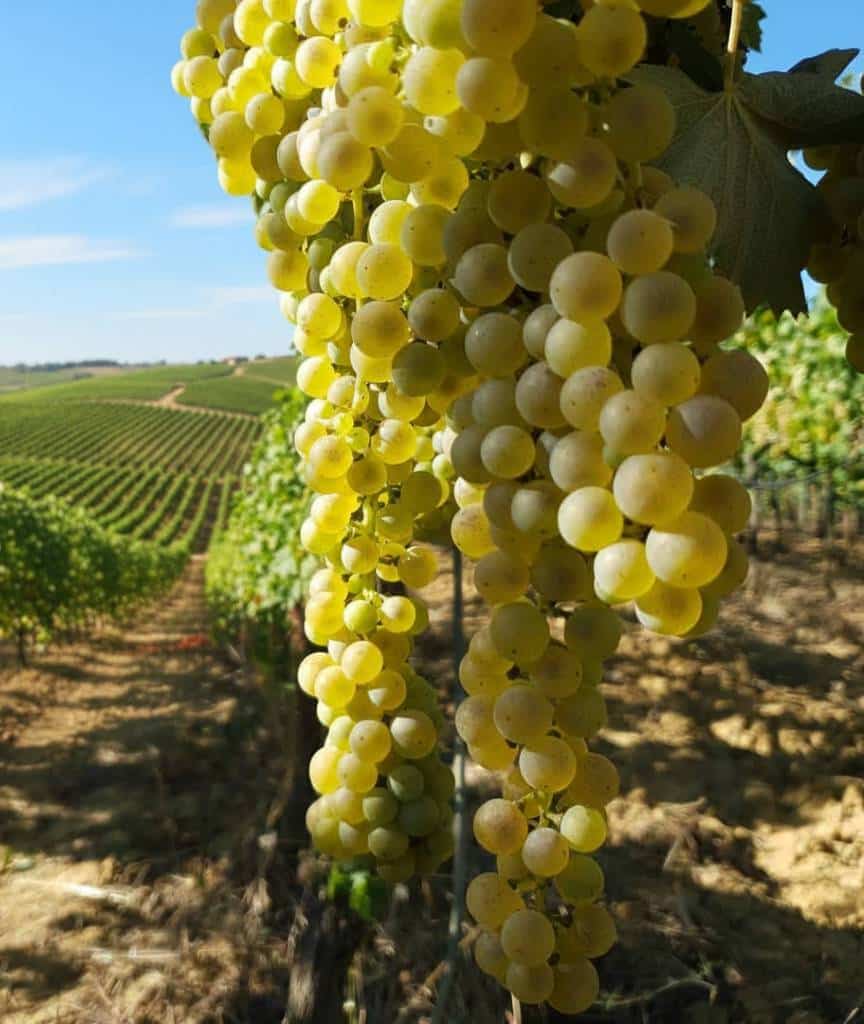
The resulting wines are unique in the Italian white wine landscape; they possess a structural weight and a “phenolic” grip that often mimics red wines. The hallmark sensory profile includes notes of green apple, citrus, and a distinctive bitter almond finish that is a direct expression of the sandy-clay terroir. When aged in the Riserva category, often with skin contact or oak integration, the wines develop complex secondary notes of flint, honey, and saffron.
The San Gimignano terroir proves that the region’s geological diversity is not limited to red wine, but can produce world-class whites that are a literal reflection of an ancient seabed, offering a taste of history and salt in every glass.
Human Intervention and Viticultural Mastery
The translation of terroir into the bottle requires meticulous human intervention. In the vineyard, the primary goal is the management of the vine’s vigor to ensure that energy is directed toward fruit maturation rather than vegetative growth. Pruning systems such as the Single Guyot and the Spurred Cordon are selected based on the specific vigor of the clone and the fertility of the soil. In the high-density plantings of the coastal estates, canopy management is an art form; leaves are selectively removed to allow airflow and sunlight to reach the clusters, preventing rot and ensuring even ripening.
Row orientation is another critical tool. By aligning rows to capture the morning sun while shading the fruit from the intense afternoon heat, viticulturists can fine-tune the sugar-to-acid ratio. The modern philosophy in the region has shifted toward a “minimal intervention” approach, but one supported by high-level technology. This includes the use of satellite mapping to monitor vine stress and the implementation of organic and biodynamic practices to enhance the microbial life of the soil.
In the cellar, the use of oak is carefully calibrated. While the traditional large Slavonian oak casks, known as botti, remain the standard for preserving the purity of Sangiovese in Chianti Classico and Brunello di Montalcino, many coastal producers utilize French barriques to add layers of spice and promote tannin polymerization in Bordeaux blends. The objective is always the same: to act as a transparent medium for the geological and climatic data collected in the vineyard. Precision in fermentation temperature and maceration length allows the oenologist to extract the specific character of a site, whether it be the iron-rich grip of a clay-heavy plot or the floral levity of a high-altitude limestone slope.
From Knowledge to Experience
While technical data provides a framework, the true essence of the landscape is a living experience found in the specific dialogue between root and rock. The chemical compounds that create the scent of violet, tobacco, and sun-warmed earth are the result of a specific vine’s journey through meters of prehistoric substrate. To truly appreciate the prestige of these wines, one must engage with the most storied crus of the region, where the geology is literally written into the flavor profile.
The Briccolone Vineyard
In the heart of the Montepulciano district, the Briccolone vineyard stands as a technical benchmark for the Prugnolo Gentile. Situated on a ridge with a dominant southern exposure, this plot is characterized by its high altitude and a specific geological intersection of Pliocene yellow sands and “tuff.” The soil here is exceptionally poor in organic matter but rich in mineral salts.
Walking the rows of Briccolone, one notices the extreme drainage; even after heavy rains, the surface remains dry, forcing the roots of the Vino Nobile di Montepulciano vines to penetrate deep into the moisture-retaining clay layers below. This deep rooting is what provides the wine with its characteristic verticality and “savory” mineral core. The intense solar radiation on this ridge, combined with the cooling breezes of the Val di Chiana, results in a ripening curve that maximizes polyphenols without sacrificing the delicate floral aromatics. A visit to Briccolone allows the collector to see firsthand how the friable, sandy soil dictates the silkiness of the tannins that define this historic appellation.
The Solaia Vineyard
Perhaps no single plot of land better represents the intersection of tradition and innovation than the Solaia vineyard. Located within the Tignanello estate in the Mercatale Val di Pesa sub-zone of Chianti Classico, this twenty-hectare southwest-facing hillside is a geological masterpiece. The soil is a classic Alberese and Galestro mix, but with a specific high-calcium concentration that is unique to this slope.
The name Solaia—the “sunny one”—refers to the exceptional luminosity of the site. Standing amidst the stones of this vineyard, one can feel the radiant heat reflected by the white Alberese rocks, which is fundamental for ripening Cabernet Sauvignon and Cabernet Franc in a region traditionally dominated by Sangiovese. The high limestone content regulates the pH of the soil, which in turn preserves the vibrant acidity and freshness that keeps Solaia balanced despite its immense power and concentration. This is a terroir where the ruggedness of the central hills meets a specific micro-climate to produce a wine of international acclaim, yet one that remains inextricably linked to its rocky, Tuscan foundation.
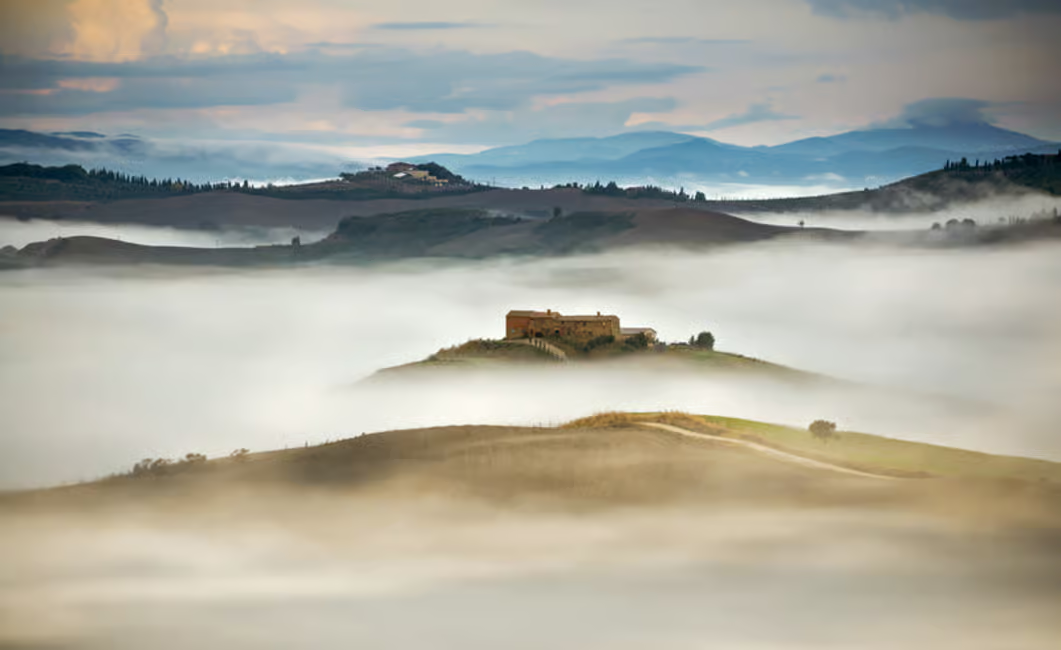
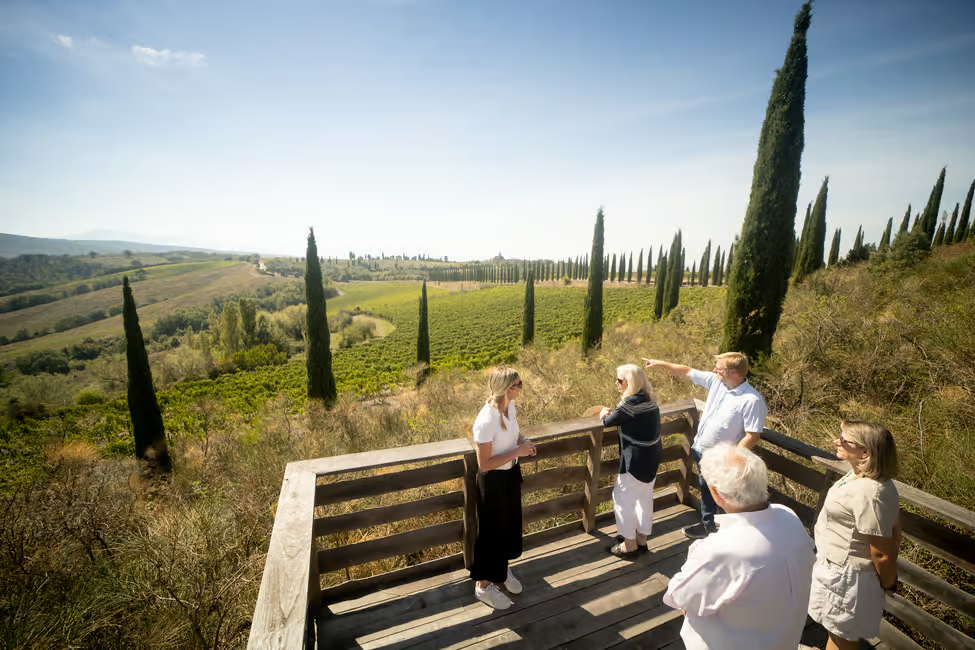
The complexity of the landscape is best understood in situ, where the transition from the maritime mists of the coast to the rugged, sun-baked hills of the interior can be felt on the skin and tasted in the glass. We invite the discerning traveler and serious collector to engage with this land through curated, high-end tours that offer exclusive access to the most storied estates and private crus described above. This is an opportunity to move beyond the label and engage with the oenologists and agronomists who guard these traditions. By standing on the Galestro of the central hills or the clays of the coast, the technical becomes personal, and the knowledge becomes a memory.