Table of Contents
The Grand Architecture of Tuscan Viticulture: An Authoritative Guide
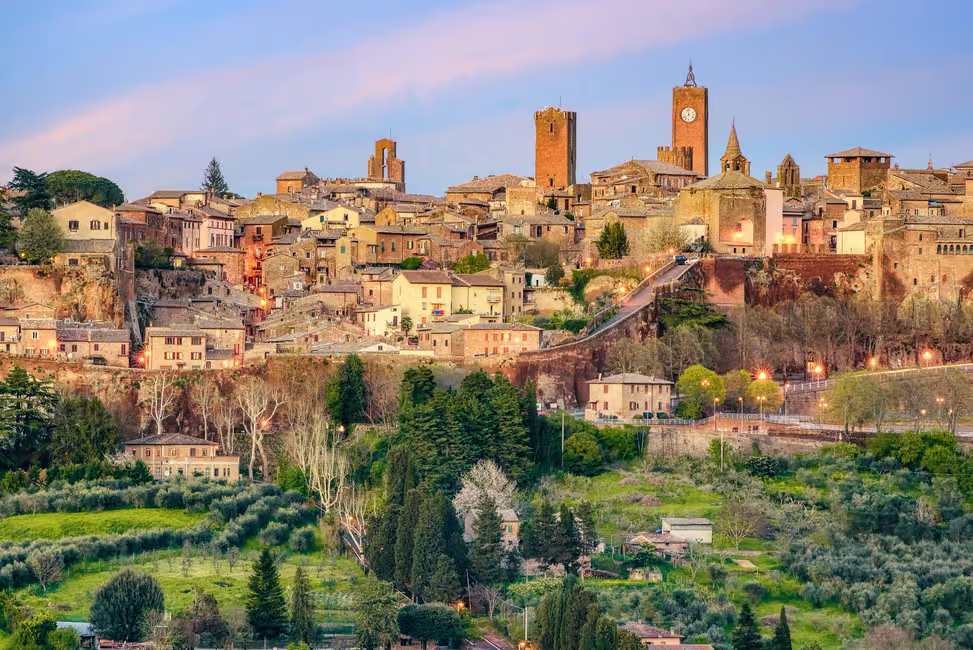
Tuscany stands as the noble heart of Italian viticulture, a region where history, topography, and the relentless pursuit of quality converge to create some of the world’s most iconic wines. Stretching from the rugged Apennine foothills to the sun-drenched Tyrrhenian coast, the Tuscan landscape is defined by its diversity. For centuries, this land has been the primary stage for the Sangiovese grape, yet it has also proven to be a fertile ground for international innovation, most notably through the “Super Tuscan” revolution
The regulatory framework of Tuscany is a complex pyramid of 11 DOCGs, 41 DOCs, and 6 IGTs. These classifications are not merely legal labels; they are a protection of terroir—the unique combination of soil, climate, and human tradition. From the historic 1716 decree by Grand Duke Cosimo III de’ Medici, which first delimited the boundaries of Chianti, to the modern implementation of “Additional Geographical Units” (UGA), the region continues to lead the world in administrative precision. This guide serves as the definitive reference for the official appellations of Tuscany, structured to reflect the geographic and stylistic pillars of this legendary wine region
Step Out of the History Books and Into the Cellar
The Central Heartlands: Chianti and the Sangiovese Strongholds
The central spine of Tuscany represents the historic engine of Italian viticulture. Here, the Sangiovese grape finds its most diverse expressions, shaped by the high altitudes of the Apennine foothills and the varied stony soils of the interior. This region is the primary custodian of the Tuscan identity, balancing massive production scales with elite, world-class vineyard sites. It is within these heartlands that the balance between tradition and legal regulation is most strictly observed, forming the core of the Italian quality pyramid.
The Chianti DOCG Family
Chianti DOCG:
The Chianti DOCG is the largest and most prolific red wine appellation in Tuscany, encompassing a vast territory across the provinces of Florence, Siena, Arezzo, Pistoia, Prato, and Pisa. Since its establishment, it has served as the fundamental pillar of the region’s wine economy. The production regulations allow for a minimum of 70% Sangiovese, often blended with local varieties like Canaiolo or international grapes like Cabernet Sauvignon and Merlot. Due to its scale, the style of Chianti DOCG varies significantly, ranging from light, high-acid “table wines” to more structured Riserva expressions. It is characterized by its bright ruby color, notes of tart red cherry, and a rustic tannic structure that makes it a quintessential companion to Tuscan cuisine. The administrative reach of this DOCG ensures that even the most accessible wines maintain a certified standard of origin and quality, acting as a baseline for the region’s global reputation.
Chianti Classico DOCG:
The Chianti Classico DOCG is the most historic and prestigious portion of the Chianti zone, officially delimited in 1716. It is managed by a distinct Consortium and identified by the iconic Gallo Nero (Black Rooster) seal. The territory is strictly limited to the hills between Florence and Siena. The regulations are significantly more stringent than the broader DOCG: a minimum of 80% Sangiovese is required, and the use of white grapes is strictly prohibited. The terroir, defined by Galestro (flaky schist) and Alberese (hard limestone) soils, produces wines of profound elegance and longevity. In recent years, the region has introduced the Gran Selezione tier and UGA (Additional Geographical Units) to highlight specific village-level nuances, cementing its status as a world-class fine wine region that operates independently from its larger neighbor.
The Chianti Sub-Zones: Within the broader Chianti DOCG, seven specific sub-zones are recognized, each with its own microclimate and distinct personality. These sub-zones represent geographical designations that can be added to the Chianti label to indicate a more specific origin. Chianti Rùfina, the smallest and most famous, is located in the cool, high-altitude foothills of the Apennines northeast of Florence, producing wines of remarkable acidity and elegance. Chianti Colli Senesi, surrounding Siena, often produces fuller-bodied wines that rival its neighbors in Montalcino. Chianti Colli Fiorentini yields approachable, floral wines from the hills immediately south of Florence. The other sub-zones—Colline Pisane, Colli Aretini, Montalbano, and Montespertoli—provide unique regional variations that reflect the transition from maritime breezes in the west to the continental influences of the eastern provinces, offering a detailed map of the Tuscan interior’s diversity and soil complexity.
The Southern Powerhouses
Brunello di Montalcino DOCG:
Brunello di Montalcino stands as the pinnacle of Sangiovese-based winemaking. Located in the dry, sun-drenched hills surrounding the medieval town of Montalcino, this appellation is unique in that it requires 100% Sangiovese (specifically the Brunello or Sangiovese Grosso clone). The wines are celebrated for their immense power, complexity, and extraordinary aging potential. The production rules are among the strictest in Italy, requiring a minimum of five years of aging (six for Riserva) before the wine can be released to the market, with at least two of those years spent in oak barrels. The resulting wine is deep, structured, and evocative, featuring a bouquet of dark forest berries, leather, tobacco, and balsamic notes that evolve beautifully over decades. It is widely considered the most muscular and long-lived expression of the Sangiovese grape in existence, representing the absolute peak of southern Tuscan viticulture.
Rosso di Montalcino DOC:
Often described as the “second wine” of Montalcino’s great estates, the Rosso di Montalcino DOC offers a more accessible and youthful expression of the region’s 100% Sangiovese tradition. Unlike its older sibling, Brunello, the Rosso can be released after only one year of aging, with no mandatory time in wood. This allows the producer to showcase the primary fruit characteristics of the Sangiovese grape—vibrant cherry, strawberry, and floral aromas—without the heavy influence of long-term oak maturation. It serves as a vital economic tool for the region, providing a high-quality wine that can be enjoyed while the Brunellos continue to mature in the cellar, yet it maintains a high standard of prestige due to its shared terroir with its more famous counterpart, ensuring that the reputation of the Montalcino hill is upheld even in its more “approachable” offerings.
Vino Nobile di Montepulciano DOCG:
Hailing from the historic hilltop town of Montepulciano, Vino Nobile was one of the first Italian wines to receive DOCG status. It is crafted primarily from the Prugnolo Gentile clone of Sangiovese (minimum 70%). The region’s sandy and clay-rich soils produce a wine that effectively bridges the gap between the finesse of Chianti Classico and the brawn of Brunello. Vino Nobile is known for its “noble” character—a refined balance of polished tannins, plum-like fruit, and a distinct earthy, tea-leaf finish. The appellation has recently introduced the “Pieve” sub-categorization to focus on specific vineyard sites, mirroring the movement toward site-specific viticulture seen in the northern parts of the region and emphasizing the historical importance of the individual church parishes in the land’s administration.
Rosso di Montepulciano DOC & Morellino di Scansano DOCG:
The Rosso di Montepulciano DOC provides a fresher, fruit-forward alternative to the Vino Nobile, allowing for earlier consumption while retaining the aromatic profile of the Montepulciano hills. Moving further south into the coastal Maremma region, we find the Morellino di Scansano DOCG. Here, Sangiovese is known as Morellino. The Mediterranean influence and warmer climate result in a wine that is rounder, softer, and more immediate than its inland counterparts. It often displays ripe cherry fruit and savory Mediterranean scrub (macchia) aromas, representing the more hedonistic and approachable side of Tuscan Sangiovese, influenced heavily by the proximity to the Tyrrhenian Sea and the lower altitudes of the coastal hills.
The Coastal Frontier: Bolgheri and the Maremma
The Tuscan coast represents the “New World” of Italy, a region that transformed from marshland into a premier destination for Bordeaux-style blends and innovative viticulture. This area is characterized by a departure from the strict Sangiovese-only traditions, embracing international varietals and modern techniques that have redefined the global standing of Italian wine.
The "Super Tuscan" Strongholds
Bolgheri DOC:
Bolgheri is the spiritual home of the “Super Tuscan” movement. Unlike the interior, where Sangiovese reigns supreme, Bolgheri’s terroir—composed of alluvial soils and maritime sand—is perfectly suited to French varieties. The Bolgheri DOC allows for blends (and monovarietal wines) based on Cabernet Sauvignon, Merlot, and Cabernet Franc. The proximity to the Tyrrhenian Sea provides a cooling maritime breeze that moderates the intense summer heat, allowing the grapes to reach perfect phenolic ripeness while maintaining essential acidity. The wines are characterized by their lush, dark fruit, velvety tannins, and a distinctive “salty” mineral finish. This appellation has redefined the international perception of Italian wine, proving that Tuscany can compete at the highest level with international varieties on the global stage.
Bolgheri Sassicaia DOC:
This is perhaps the most exclusive appellation in all of Italy. In 1994, and further refined in 2013, the Italian government granted Bolgheri Sassicaia its own independent DOC status, making it the only “monopole” appellation in the country. It applies strictly to the vineyards of the Tenuta San Guido estate. As the wine that originally launched the Super Tuscan phenomenon in the late 1960s, Sassicaia remains a benchmark for elegance and longevity. Famously composed of Cabernet Sauvignon with a small amount of Cabernet Franc, it is revered for its aristocratic structure, finesse, and complex notes of cedar and blackcurrant, standing as a testament to the vision of Mario Incisa della Rocchetta and the ability of a single estate to change the legal landscape of an entire country.
Maremma Toscana DOC & Val di Cornia Rosso / Suvereto DOCG:
The Maremma Toscana DOC is a sprawling and dynamic appellation that has become a laboratory for high-quality viticulture, producing everything from crisp Vermentino to powerful Syrah and Petit Verdot. It offers producers the freedom to innovate while maintaining a certified link to the land. Further south, the Val di Cornia Rosso DOCG and Suvereto DOCG represent the technical peak of the Maremma’s red wine production. Suvereto, in particular, is noted for its intense, concentrated reds grown on iron-rich, metalliferous soils. These regions represent the rugged, untamed frontier of Tuscany, where the wines reflect the intensity of the sun and the mineral wealth of the soil, providing a wilder contrast to the manicured hills of the Chianti Classico zone.
Coastal White and Specialist Regions
While red wine dominates the Tuscan narrative, the coast produces unique treasures.
The Ansonica Costa dell’Argentario DOC
utilizes the ancient Ansonica (Inzolia) grape to produce textured, savory whites that perfectly complement the local seafood.
Elba Aleatico Passito DOCG
The Island of Elba,produces a rare, sweet, and intensely aromatic red wine from sun-dried Aleatico grapes. This historical favorite of the exiled Napoleon Bonaparte is one of the rarest DOCGs in Italy, offering a profile of dried roses and red fruit jam that is entirely unique to the Tuscan archipelago, illustrating that even in a red-dominated region, the islands maintain their own distinct viticultural heritage.
Northern and Traditional Enclaves
Beyond the famous rolling hills of the center and the prestige of the coast, Northern Tuscany and its eastern borders host several enclaves that preserve ancient styles or adapt to high-altitude climates. These regions often focus on white wines or blends that incorporate varieties not commonly seen in the southern parts of the province. This territory is defined by the shadows of the Apennine Mountains, where the diurnal temperature shifts are more dramatic and the soils transition from the heavy clays of the south to more porous sandstones and marls. Viticulture here is often a matter of “heroic” farming, with steep terraces and a focus on aromatic preservation that sets these wines apart from the muscular reds of the Tuscan heartland.
Vernaccia di San Gimignano DOCG:
This is Tuscany’s premier historic white wine and was the first wine in Italy to be granted DOC status in 1966. Grown in the specialized yellow sandstone and Pliocene clay soils around the medieval “City of Beautiful Towers,” Vernaccia is a dry, crisp white with high acidity and a characteristic bitter almond finish. It is a wine of great historic weight, mentioned by Dante in the Divine Comedy and favored by Renaissance popes. The production regulations allow for the addition of small percentages of other non-aromatic white grapes, but the finest expressions are 100% Vernaccia. When produced as a Riserva, the wine undergoes extended aging (often in wood or on the lees), showing a surprising ability to evolve, developing complex flinty, mineral, and honeyed notes over time. It remains the only white wine in Tuscany to hold the prestigious DOCG status, serving as a vital counterpoint to the region’s red-dominated identity.
Carmignano DOCG:
Carmignano holds a unique place in viticultural history; it is one of the world’s oldest officially recognized wine regions, protected by the Medici decree of 1716. Long before the modern “Super Tuscan” era, the producers here were mandated to include Cabernet Sauvignon in their blends alongside Sangiovese. This historic precedent allows Carmignano to stand as a bridge between ancient tradition and early international influence. The wines are known for their refined elegance, possessing a slightly more “European” structure with polished tannins and a distinct dried-floral aromatic profile. The DOCG status requires a minimum of 50% Sangiovese and 10–20% Cabernet Sauvignon or Cabernet Franc, resulting in a wine that is both deeply rooted in its Prato terroir and historically global in its outlook.
Pomino DOC:
Located in the rugged mountains east of Florence, Pomino is a cool-climate enclave that has defied Tuscan norms since the mid-19th century. At altitudes reaching up to 700 meters, this region is famous for its high-altitude elegance and the successful cultivation of French varieties like Pinot Noir, Merlot, Chardonnay, and Pinot Bianco. Managed largely by the Frescobaldi family at Castello di Pomino, the appellation produces wines characterized by exceptional freshness, vibrant acidity, and aromatic clarity. The Pomino Bianco is a sophisticated blend that rivals the great whites of Northern Italy, while the Pinot Nero expressions are among the most delicate and “Burgundian” in Tuscany, benefiting from the intense sunlight and cool mountain nights that characterize this unique microclimate.
Lesser-Known DOCs of the North & East
The diversity of Northern and Eastern Tuscany extends to its peripheral territories, where localized traditions have survived the homogenization of the global market. Appellations such as Cortona DOC have gained international fame for Syrah, which thrives in the heavy clay soils near the Umbrian border, producing wines of intense spice and dark fruit. To the north, the Colline Lucchesi DOC and Montecarlo DOC near the city of Lucca offer a fascinating historical cocktail; these regions have used French varieties (like Syrah, Petit Verdot, and Roussanne) since the Napoleonic era, blending them with local Sangiovese and Trebbiano. These “international” influences are not modern trends here, but century-old traditions. Additionally, regions like Casentino and Valdichiana Toscana DOC continue to produce approachable, fresh wines that reflect a more pastoral, traditional side of Tuscan life, proving that the region’s viticultural landscape is a collection of distinct cultural enclaves that have each found their own unique voice through the centuries.
Tuscany wine appelations in a nutshell
According to the Ministero dell’Agricoltura (MASAF) and regional Consorzi, here is the exhaustive technical breakdown of Tuscan wine designations.
I. The Central Heartlands: The Sangiovese Strongholds (11)
The historical engine of Tuscany, where the hierarchy is built around the “blood of Jupiter” (Sangiovese).
1.1 Chianti DOCG (Regional) — The broad administrative umbrella.
1.2 Chianti Classico DOCG — The independent historic heartland (Gallo Nero).
1.3 The Chianti Sub-Zones — Specific provincial geographical units:
1.3.1 Chianti Colli Aretini —————————-> (Arezzo)
1.3.2 Chianti Colli Fiorentini ————————–> (Florence)
1.3.3 Chianti Colline Pisane —————————> (Pisa)
1.3.4 Chianti Colli Senesi —————————–> (Siena)
1.3.5 Chianti Montalbano —————————–> (Pistoia/Prato)
1.3.6 Chianti Montespertoli —————————> (Florence)
1.3.7 Chianti Rùfina ———————————–> (Florence/Apennines)
1.4 Central Sweet Designations
1.4.1 Vin Santo del Chianti DOC ———————> (Sweet Passito)
1.4.2 Vin Santo del Chianti Classico DOC ————> (Elite Sweet Passito)
II. The Southern Powerhouses: Montalcino & Montepulciano (7)
The high-altitude and clay-rich soils of the south, producing the region’s most muscular reds.
2.1 The Montalcino Cluster
2.1.1 Brunello di Montalcino DOCG ——————-> (100% Sangiovese)
2.1.2 Rosso di Montalcino DOC ———————–> (Youthful Expression)
2.1.3 Moscadello di Montalcino DOC ——————> (Rare Sweet White)
2.1.4 Sant’Antimo DOC ——————————> (International Varieties)
2.2 The Montepulciano Cluster
2.2.1 Vino Nobile di Montepulciano DOCG ————> (Prugnolo Gentile)
2.2.2 Rosso di Montepulciano DOC ——————–> (Second Wine)
2.2.3 Vin Santo di Montepulciano DOC —————> (Liquoreux)
III. The Coastal Frontier: Bolgheri & The Maremma (10)
Tuscany’s “Left Bank” where maritime climate meets Bordeaux varieties.
3.1 The Bolgheri Strongholds
3.1.1 Bolgheri DOC (Red) —————————-> (Bordeaux Blends)
3.1.2 Bolgheri DOC (White/Rosé) ———————> (Vermentino-based)
3.1.3 Bolgheri Sassicaia DOC ————————> (Monopole Estate)
3.2 The Maremma & South Coast
3.2.1 Maremma Toscana DOC (Red/White) ————-> (Regional Coastal)
3.2.2 Morellino di Scansano DOCG ——————-> (Coastal Sangiovese)
3.2.3 Suvereto DOCG ———————————> (Bordeaux/Sangiovese)
3.2.4 Val di Cornia Rosso DOCG ———————-> (Communal Red)
3.2.5 Montecucco Sangiovese DOCG ——————> (Inland Maremma)
3.2.6 Terratico di Bibbona DOC ———————–> (Bolgheri Satellite)
3.2.7 Monteregio di Massa Marittima DOC ————> (Colline Metallifere)
IV. Northern & Traditional Enclaves (9)
High-altitude elegance and historic blends that pre-date the Super Tuscan era.
4.1 Historic White & Red Peaks
4.1.1 Vernaccia di San Gimignano DOCG ————–> (Tuscany’s White)
4.1.2 Carmignano DOCG ——————————> (Original Sangiovese/CS)
4.1.3 Barco Reale di Carmignano DOC —————-> (Second Wine)
4.1.4 Vin Santo di Carmignano DOC ——————> (Historic Sweet)
4.2 Northern Frontiers
4.2.1 Pomino DOC (White/Red) ———————–> (Cool-Climate/Pinot)
4.2.2 Cortona DOC ————————————> (Syrah Specialty)
4.2.3 Colline Lucchesi DOC —————————> (Lucca Heritage)
4.2.4 Montecarlo DOC ——————————–> (Historic White Blend)
4.2.5 Candia dei Colli Apuani DOC ——————–> (Heroic Viticulture)
V. Islands & Regional Specialists (5)
Geographically isolated or highly specific technical designations.
5.1 Elba Aleatico Passito DOCG —————————> (Island Sweet Red)
5.2 Elba DOC ——————————————–> (Island Red/White)
5.3 Ansonica Costa dell’Argentario DOC ——————> (Savory Coastal White)
5.4 Valdarno Superiore DOC ——————————> (1716 Historic Zone)
5.5 Orcia DOC ——————————————-> (Between Montalcino/Nobile)
VI. The Innovation Tier: IGT (6)
Flexible laws allowing for experimental and world-class “Super Tuscan” blends.
6.1 Toscana IGT ——————————————> (All Regional)
6.2 Costa Toscana IGT ————————————> (Coastal Provinces)
6.3 Colli della Toscana Centrale IGT ———————-> (Inland Innovation)
6.4 Alta Valle della Greve IGT —————————-> (Communal IGT)
6.5 Montecastelli IGT ————————————-> (Pisa/Siena area)
6.6 Val di Magra IGT ————————————–> (Far North)