Italy’s Veneto region is a land where the golden light reflects off the steep, UNESCO-listed Prosecco hills and the scent of drying Corvina grapes fills centuries-old Valpolicella lofts. Veneto is not just a wine region; it is a sensory masterpiece where the elegance of the Venetian Republic meets the rugged, volcanic foothills of the Alps. From the effervescent joy of a Prosecco Superiore to the meditative, dark-fruit depth of an Amarone, this territory offers a journey through liquid history. Whether you are navigating the mist-covered vineyards of Soave or the emerald shores of Lake Garda, Veneto invites you to slow down and savor the artistry of the Italian pour.
The story of Veneto’s viticulture is a 2,000-year epic. Long before the Romans, the indigenous Arusnates people cultivated vines near Lake Garda, establishing a winemaking tradition that predates the modern era. By the 6th century, the Lombard King Rotari was so protective of these vineyards that he signed edicts punishing those who damaged the vines.
The true “Golden Age” arrived with the Republic of Venice. As a global trading powerhouse, Venice introduced exotic cuttings from across the Mediterranean and made Veneto the wine cellar of Europe. However, the 19th century brought the dual heartbreak of the Phylloxera plague and the political fall of the Republic. It wasn’t until the late 20th-century “Quality Revolution”—led by visionary families like the Allegrini and Pieropan—that the region reclaimed its status, moving from bulk production to artisanal excellence. Today, it stands as Italy’s most productive region, balancing massive global demand with pockets of extreme, handcrafted luxury.
Terroir & Climate: From Alpine Peaks to Volcanic Depths
Veneto’s diversity is its greatest strength, shaped by a dramatic landscape that stretches from the mountains to the sea. To the north, the Dolomites act as a protective shield, creating a rain shadow that ensures sunny, ventilated growing seasons perfect for ripening. To the west, Lake Garda creates a Mediterranean microclimate, softening the alpine chill and allowing for the production of delicate, aromatic whites.
The geology is a complex mosaic:
Volcanic Basalt: Found in Soave and the Euganean Hills, this ancient soil imparts a distinct, flinty minerality and incredible longevity to the wines.
Morainic Gravel: Near Lake Garda, these glacial deposits provide the exceptional drainage needed for vibrant, high-toned aromatic profiles.
Calcareous Limestone: Predominant in Valpolicella, this soil is responsible for the formidable structure, high acidity, and elegance of the region’s great reds.
Signature Grapes: The Identity of the Land
The soul of Veneto is expressed through a specific palette of indigenous grapes that have adapted to its hills and lakeside breezes over centuries. These varieties are the true architects of the region’s most prestigious bottles.
Corvina: The undisputed backbone of Valpolicella; its thick skins are perfect for drying, delivering deep notes of black cherry, velvet tannins, and an elegant herbal finish.
Glera: The high-toned spirit of Prosecco; a semi-aromatic grape that provides the crystalline acidity and delicate aromas of white peach and acacia blossom.
Garganega: The mineral-driven queen of Soave; it thrives on volcanic soil to produce whites with a hallmark almond finish and surprising longevity.
Turbiana: A local lakeside treasure; this resilient variety creates the structured, salty, and age-worthy whites of Lugana that taste of sun and citrus.
The viticultural map of Veneto is one of the most prestigious in the world, characterized by an incredibly high density of DOC and DOCG zones that safeguard centuries of tradition. To navigate these appellations is to travel through a landscape where the legal boundaries are dictated by the soil itself—shifting from the ancient volcanic ridges of the east to the glacial moraines of the west. Each sub-region is a protected micro-cosmos where strict production laws ensure that the “Veneto” name remains synonymous with quality. This hierarchy of excellence reaches its peak in the “Classico” zones—the historical hearts of the appellations where the terroir is most expressive.
Amarone della Valpolicella DOCG: A powerhouse red born from the appassimento technique. These wines are opulent and meditative, offering deep layers of bitter chocolate, tobacco, and dried plum.
Prosecco Superiore DOCG (Conegliano Valdobbiadene): Rising above the standard plains, these “heroic” hillside vineyards produce the most refined bubbles in Italy, known for their crystalline purity and elegance.
Soave Classico DOC: The benchmark for Italian white wine. Grown on prehistoric volcanic basalt, it offers a sophisticated profile of white flowers, flint, and a signature toasted almond finish.
Bardolino & Lugana: The lakeside specialists. Bardolino provides light, ruby-red wines full of summer berry spice, while Lugana offers structured, floral whites with a distinct saline minerality.
Wine & Food: A Culinary Symphony of Land and Sea
In the Veneto, the relationship between the glass and the plate is not merely a tradition—it is a sacred dialogue that has evolved alongside the shifting borders of empires. This is a region where the ruggedness of the Alpine mountains, the fertile alluvial plains of the Po Valley, and the salty bounty of the Adriatic Sea converge. The Venetian culinary heritage is one of contrast and luxury; it reflects the historic “Spice Route” influence of Venice, where exotic flavors like cinnamon and cloves met local staples like corn, rice, and stockfish. Here, dining is a slow, rhythmic celebration of seasonality, where a wine is chosen not just to accompany a meal, but to complete its soul.
The Coastal Marriage: The mineral-drenched Soave Classico finds its soulmate in Baccalà alla Vicentina. The wine’s volcanic acidity effortlessly cuts through the rich, milky texture of the slow-simmered salt cod, creating a balanced harmony of salt and stone.
The Noble Rice: No dish captures the region’s essence like Risotto all’Amarone. Using the local Vialone Nano rice, the grain is toasted and then bathed in the very wine it will be served with. The result is a deep, royal-purple dish with the savory intensity of dried cherries and autumnal spices.
Lakeside Elegance: The crisp, saline-heavy Lugana whites are the natural partner for Coregone (freshwater whitefish) from Lake Garda, grilled simply with local olive oil and lemon to let the mineral tension of the wine shine.
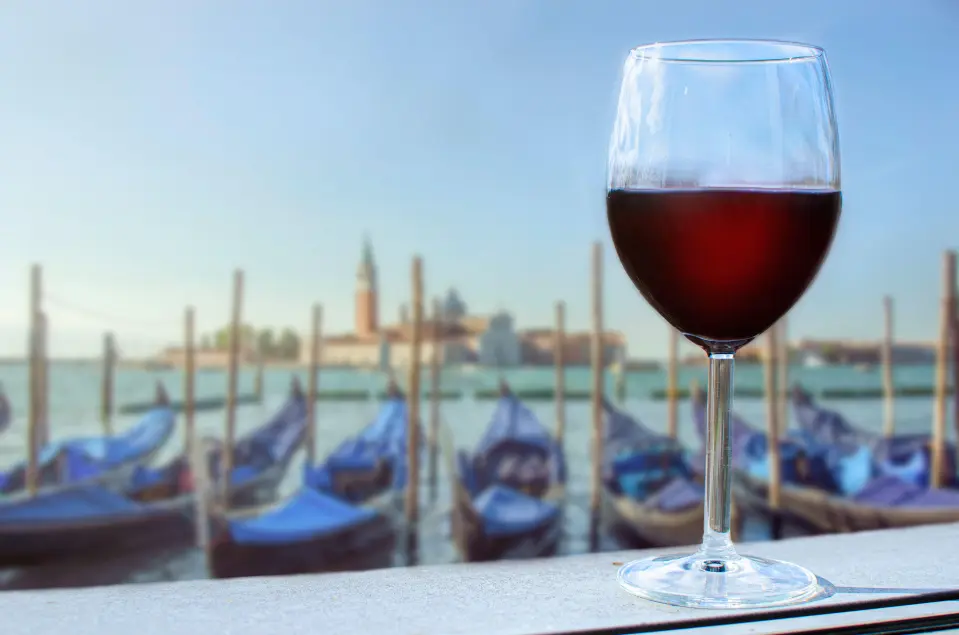
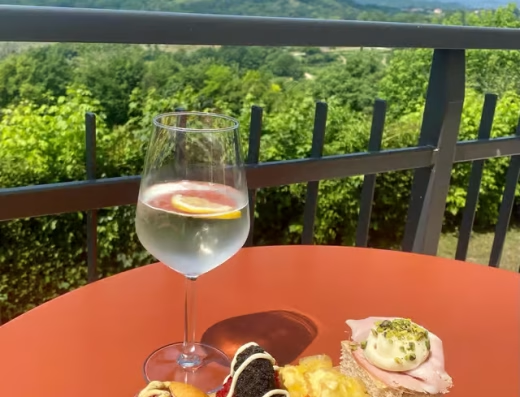
The Ritual of the Cicchetti: In the hidden bacari (wine bars) of Venice, the “aperitivo” is an art form. Small plates of Sarde in Saor (sweet and sour sardines) or creamy Polenta squares are chased with an “ombra”—a small, cold glass of local white wine that serves as the ultimate social lubricant.
To truly understand Veneto is to step off the beaten path and into the private estates where wine is woven into the architecture of daily life. In this region, a wine “tasting” is rarely just a flight of glasses; it is a multi-sensory immersion into the heritage of the Venetian nobility. From the neoclassical palladian villas that dot the landscape to the vertigo-inducing terraces of the Prosecco hills, these experiences are designed to connect you to the rhythm of the land and the soul of the artisan.
The Luxury Estate Experience: Spend a timeless afternoon at an 18th-century villa, such as Villa Serego Alighieri—the estate of the descendants of the poet Dante Alighieri. Here, you can wander through historic drying lofts and sip Amarone surrounded by original frescoes and manicured Italian gardens.
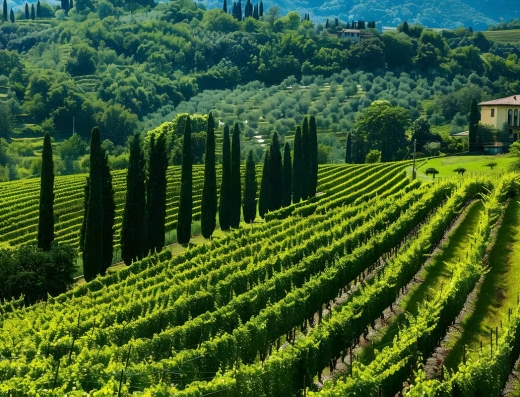
The Terroir Hike: Navigate the UNESCO-listed Prosecco hills of Cartizze. This “heroic” hike takes you through the most expensive vineyard land in Italy, where the slopes are so steep they can only be tended by hand, offering panoramic views that stretch toward the Adriatic.
The Volcanic Deep Dive: Journey to the heart of Soave Classico for a private masterclass in the shadow of the Scaliger Castle. Walk the dark, basalt-rich vineyards to taste the electric minerality of Garganega born from prehistoric fire.
Lakeside Vineyard Sailing: Experience the Lugana and Bardolino appellations from a different perspective. Charter a private boat on Lake Garda, stopping at prestigious lakeside estates for tastings where the microclimate ensures the wines are as fresh as the mountain breeze.
The Amarone Vertical Archive: Enter the private libraries of iconic producers like Bertani or Quintarelli. These exclusive sessions allow you to taste back through decades of history, witnessing how the power of Amarone transforms into ethereal elegance over 20, 30, or 40 years.
Our Guide’s Secret Tip:
Skip the tourist menus in Venice. Take the train 30 minutes inland to Treviso. It’s the true home of Tiramisu and the heart of Prosecco culture. Head to ‘Hostaria Dai Naneti’—a legendary hidden deli—order a mortadella sandwich and a glass of local Prosecco Tranquillo. It’s how the locals have toasted for centuries.”
Frequently Asked Questions about Veneto
What is the best time to visit the Veneto wine region?
The shoulder seasons—mid-April to June and September to October—offer perfect weather.
What is the difference between Prosecco DOC and DOCG?
DOCG represents premium, hillside production with stricter quality controls.
Is Amarone a sweet or dry wine?
Despite the dried grapes, Amarone is dry. For sweet, look for Recioto.
Can I visit wineries without a car?
Yes, many top Prosecco and Soave estates are accessible via train from Venice or Verona.
What is the 'Appassimento' method?
It is the traditional technique of drying grapes on bamboo racks to concentrate sugars and flavors.