Table of Contents
The viticultural landscape of Greece represents a profound dialogue between ancient geological upheaval and millennia of human stewardship. To understand the “soul” of these lands is to recognize that Greece is not merely a wine-producing nation but a complex mosaic of micro-terroirs that have served as a global benchmark for viticulture since antiquity. The historical significance of this region is unparalleled, as it preserved the genetic heritage of the vine through centuries of shifting empires. Today, the prestige of Greek wine lies in its refusal to conform to international standardization, offering instead a sensory journey through diverse landscapes—from the sun-drenched, windswept volcanic cliffs of the Cyclades to the snow-capped peaks of the Pindus range.
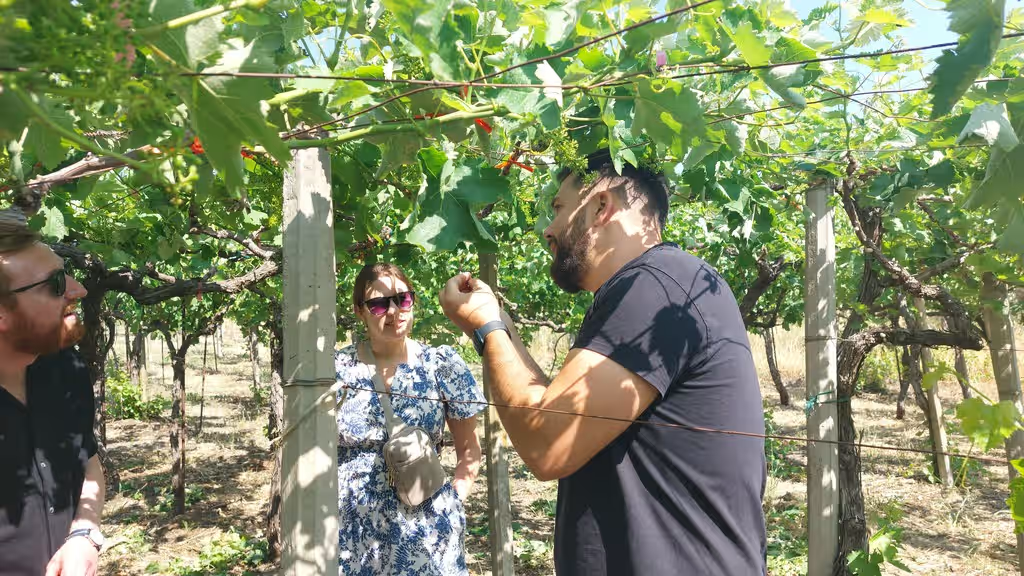
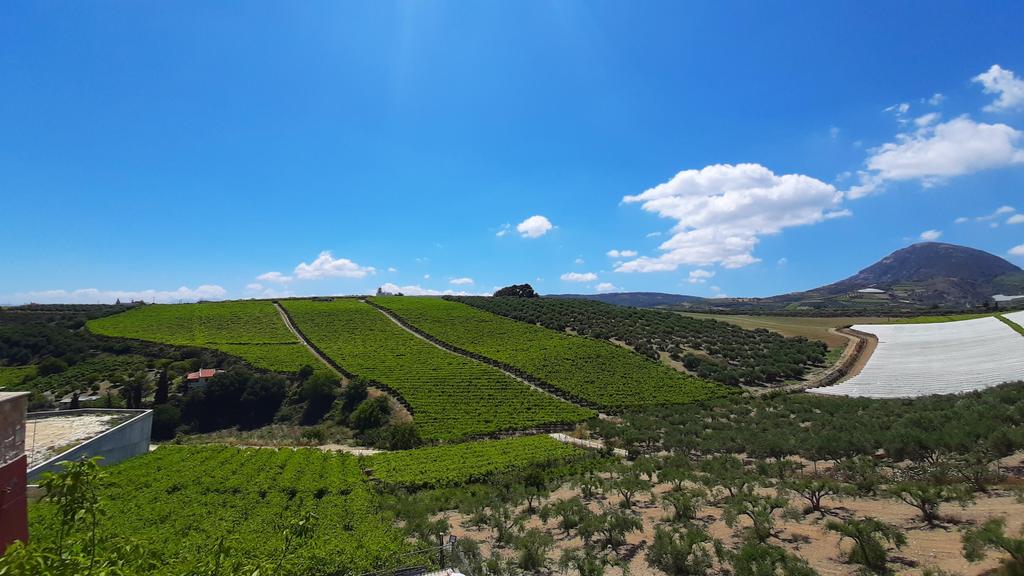
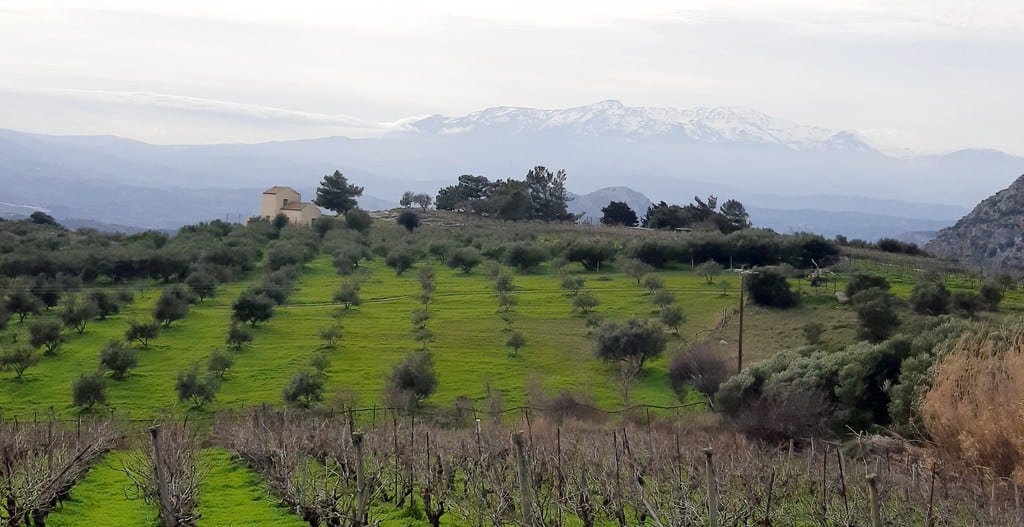
Terroir here is a cultural heritage, a living museum of indigenous varieties that have adapted to specific pedological niches over thousands of years. The landscape is defined by its ruggedness; it is a country of mountains and sea, where the interaction between saline breezes and fractured bedrock creates wines of startling tension and longevity. For the luxury traveler and the serious oenophile, the vineyards of Greece offer a visceral connection to the earth. Walking through a high-altitude vineyard or standing amidst ancient, basket-pruned vines is an evocative experience that transcends simple tasting. It is an invitation to witness how the “soul” of the land—its heat, its stone, and its history—is distilled into a liquid that remains one of the most sophisticated expressions of place in the modern world.


Macro-Climate and Viticultural Foundations
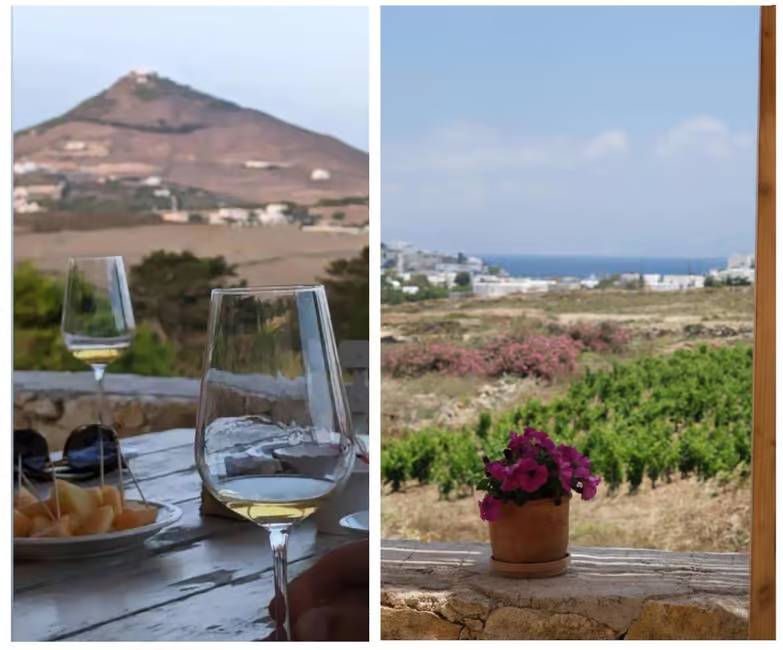
The macro-climate of Greece is predominantly Mediterranean, yet it is characterized by extreme diversity dictated by its complex topography and the cooling influences of the surrounding seas. Across the entire region, the heating influence of the intense Aegean sun is moderated by several critical factors that preserve the structural integrity of the grapes.
The Influence of the Etesian Winds (The Meltemi)
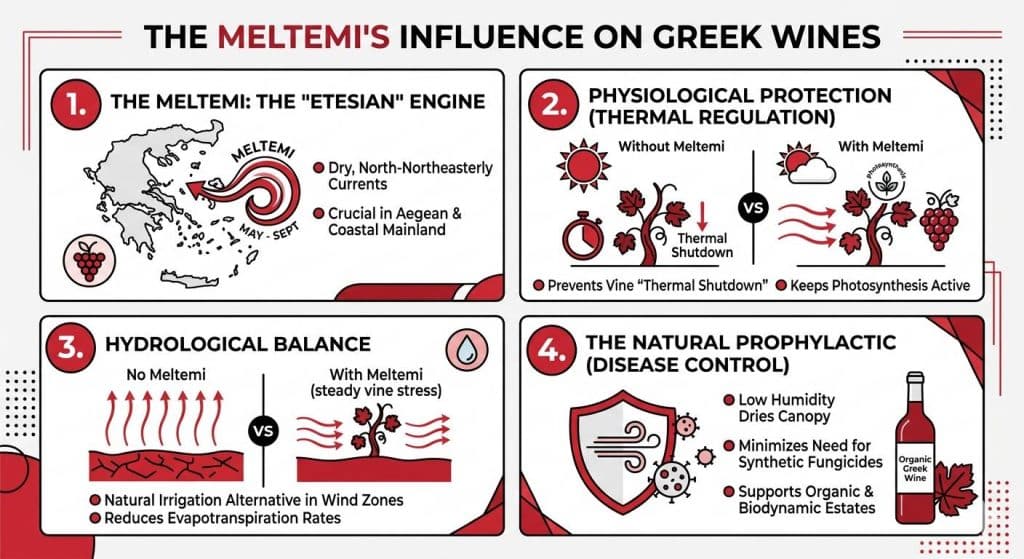
The most critical climatic regulator in the Aegean and coastal mainland is the Meltemi. These Etesian winds are dry, north-northeasterly currents that prevail from May to September. From a viticultural standpoint, the Meltemi serves as a high-velocity cooling system. By lowering the ambient temperature of the clusters during the peak afternoon heat, it prevents the vine from entering “thermal shutdown,” a state where photosynthesis stops to preserve water. In appellations like Santorini and Paros, the wind is so persistent that it effectively replaces the need for traditional irrigation by reducing evapotranspiration rates and maintaining a steady, manageable vine stress. Furthermore, its low humidity acts as a natural prophylactic, rendering the use of synthetic fungicides almost unnecessary in many organic and biodynamic estates.
Water and Maritime Proximity
The vast coastline ensures that no vineyard is far from the sea’s stabilizing influence. The diurnal temperature shifts are remarkably consistent in maritime zones, where the water absorbs heat during the day and releases it slowly at night, preventing frost and extreme heat spikes. This stability allows for a slow, even ripening process, which is fundamental to the balance of acidity and sugar in the berries. In coastal appellations, the saline humidity often contributes a distinctive “sea spray” character to the wines, a hallmark of the regional identity that links the liquid directly to the hydrology of the Mediterranean.
Altitude and Continental Influences
Inland, particularly in Northern Greece and the central Peloponnese, altitude becomes the primary cooling factor. Vineyards planted at elevations exceeding 600 meters experience significant diurnal shifts, sometimes varying by more than 15°C between day and night. This thermal range is vital for the development of aromatic precursors and the retention of crisp tartaric acid. Rainfall patterns vary significantly from the humid west to the arid east. While the west receives ample precipitation from storms, the eastern regions and islands rely on winter rainfall stored in the soil, making vintage variability a key factor in the region’s reputation for complexity and structural depth.
Atmospheric Hydrometry and the "Ambatos" Sea Mists
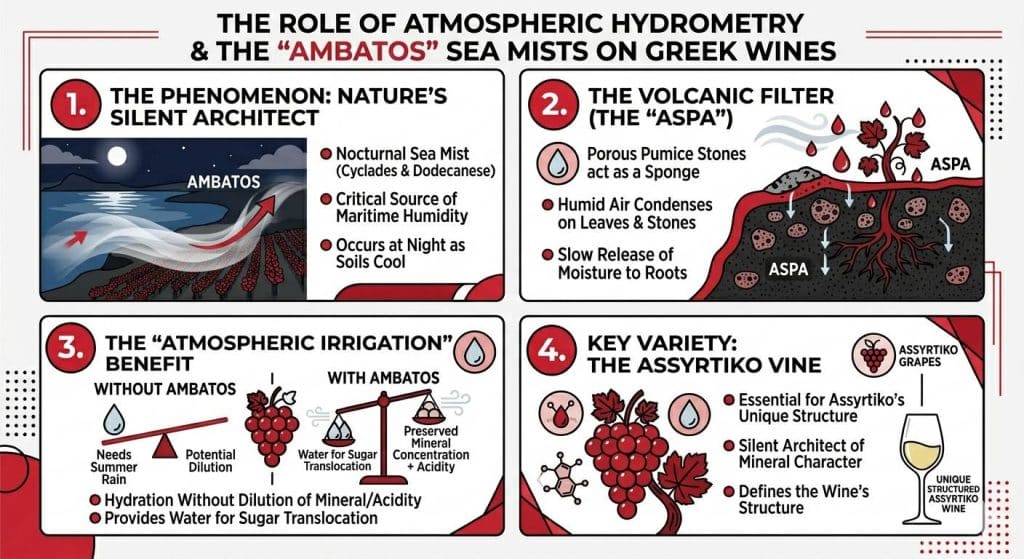
In the absence of significant summer rainfall, particularly in the Cyclades and the Dodecanese, the role of maritime humidity is paramount. In Santorini, the phenomenon known as Ambatos—a nocturnal sea mist—provides the only source of hydration for the vines during the ripening period. As the volcanic soils cool rapidly at night, the humid air from the caldera condenses on the leaves and the porous pumice stones (the Aspa), which then slowly release moisture to the root systems. This atmospheric “irrigation” is the silent architect of the Assyrtiko grape’s unique structure, providing the water necessary for sugar translocation without diluting the mineral concentration or the searing acidity of the must.
Hyetal Patterns and the Rain Shadow Effect
Greece exhibits a sharp hydro-geological divide between the humid west and the semi-arid east. The Pindus mountain range acts as a colossal spine, creating a “Rain Shadow Effect” that dictates the styles of the various regions.
-
The Humid West: In Cephalonia and Zante, rainfall can exceed 1,000mm annually. Here, the challenge is managing vigor and preventing botrytis. The vines in the Slopes of Ainos must be planted on steep, well-drained limestone to mitigate this abundance.
-
The Arid East: In contrast, regions like Attica or the Eastern Peloponnese may receive less than 400mm. The viticultural foundation here is built on drought resistance. The ancient, deep-rooted vines of Mesogaia have adapted to extract moisture from deep sub-soil clay layers, resulting in the concentrated, honeyed texture of world-class Savatiano.
-
Vintage Variability: While the Mediterranean climate is generally stable, the timing of the spring rains is the primary driver of vintage quality. A lack of winter “recharge” in the aquifers can lead to early water stress, whereas late spring rains during flowering can significantly reduce yields in sensitive varieties like Mavrotragano.
Verticality and the Altitudinal Gradient
In the Greek mainland, altitude is the most effective tool for counteracting latitude. For every 100 meters of elevation, the temperature drops by approximately 0.6°C. This gradient is the lifeblood of regions like Mantinia and the High Peaks of Aigialeia. At elevations of 650 to 900 meters, the vines experience a “delayed” spring, pushing the harvest well into October. This altitudinal shift ensures a massive diurnal temperature range—often exceeding 20°C. Cold nights at high altitudes lock in the delicate terpenes and esters in aromatic varieties like Moschofilero, while the warm days ensure the skins reach full phenolic maturity. In Amyndeon, the combination of altitude and the proximity of the four lakes creates a unique “continental-maritime” hybrid climate, producing Xinomavro of unparalleled finesse and transparency.
Solar Radiation and Photoperiodism
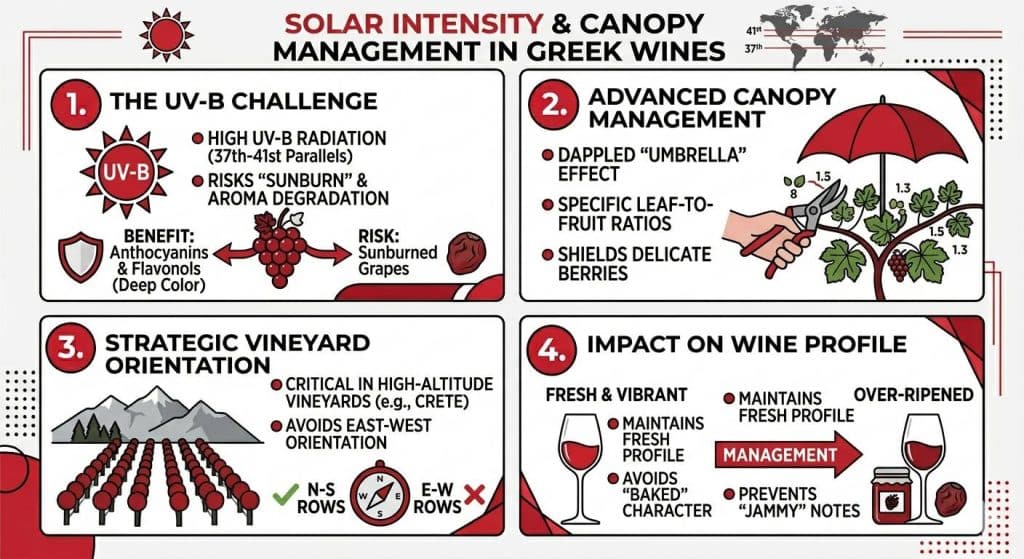
The intensity of the sun in the 37th to 41st parallels presents a unique challenge for skin chemistry. Greek vineyards receive some of the highest levels of UV-B radiation in Europe. While this promotes the synthesis of protective anthocyanins and flavonols—giving Greek reds their deep color and high antioxidant properties—it also risks “sunburn” of the berries and the degradation of delicate aromas. Advanced canopy management is the masterstroke of Greek viticulture in this regard. Growers utilize specific leaf-to-fruit ratios to provide a dappled “umbrella” effect. In the high-altitude vineyards of Crete, such as Peza and Archanes, the solar intensity is so great that east-west row orientation is often avoided to prevent the south-facing side of the vine from over-ripening, ensuring the wine maintains a fresh, vibrant profile rather than a “baked” or “jammy” character.
Pedological Depth: The Complex Chemistry of Soil and Bedrock in Greece
The geological foundation of Greece is an intricate tapestry of tectonic activity, volcanic eruptions, and ancient sedimentary deposits. The diversity of soil types across the various appellations necessitates a deep technical understanding of how bedrock chemistry influences vine physiology.
Limestone and Calcareous Clay
A significant portion of the Greek mainland is characterized by limestone bedrock and calcareous clay. Limestone is prized for its excellent drainage and its ability to retain moisture deep within its cracks during the arid summer months. The high calcium content in these soils is known to influence the thickness of grape skins and the polymerization of tannins, leading to wines with structured, elegant profiles. In Cephalonia, the vines struggle in pure limestone scree, resulting in a mineral-driven, high-acid white wine that reflects the starkness of the landscape.
Volcanic Ash and Tephra
The most iconic soil of Greece is the volcanic terroir of Santorini. Formed by massive eruptions, the soil consists of Aspa—a unique mixture of volcanic ash, pumice, and small pieces of solidified lava and sand. This soil is entirely devoid of organic matter and is naturally immune to Phylloxera. The lack of clay in the volcanic tephra means the vines must penetrate deep into the basalt bedrock to find nutrients, a process that imparts a profound “salty” minerality to the wine.
Schist, Slate, and Granite
In regions like Rapsani, on the slopes of Mount Olympus, the soil is composed of fractured schist and slate. These metamorphic rocks are excellent at absorbing heat during the day and radiating it back to the vines at night, aiding in the ripening of late-maturing varieties. Granite outcrops, though less common, are found in Tinos, where they produce wines of immense verticality and tension.
Alluvial Gravel and Sand
Coastal plains and river valleys feature alluvial deposits. These well-drained, gravelly soils are often used for varieties that require a warmer root zone to achieve phenolic ripeness. The interaction between these sandy topsoils and the underlying clay ensures that water stress is managed naturally, maintaining the aromatic intensity of the fruit.
The Regional Breakdown: Climate, Soil, and Geology by Sub-Region
To truly comprehend the viticultural map of Greece is to analyze it through the lens of geological fragmentation. The country’s diverse appellations are not mere administrative boundaries but are defined by stark transitions in bedrock, hydrology, and thermal accumulation. From the alpine-influenced valleys of the north to the sun-scorched volcanic outcroppings of the Aegean, each sub-region represents a specific evolutionary response of the vine to its environment. This section provides a technical audit of the primary viticultural zones, examining how the intersection of pedology and micro-climate dictates the chemical composition and sensory identity of the final wine.
Macedonia: The Kingdom of Xinomavro
Naoussa
The Naoussa appellation sits on the eastern slopes of Mount Vermio. The geology is a complex mix of limestone, clay, and sandstone. The topsoil is primarily calcareous clay, which provides the necessary water retention for the Xinomavro vine during the dry summer. The high mineral uptake from the fractured limestone yields wines with high acidity and firm tannins. The sensory link here is unmistakable: the clay-heavy plots of the Paliokalias sub-region yield a distinctive sundried tomato and olive tapenade note, while higher altitude plots on schist show more floral, strawberry characteristics.
Amyndeon
Located on a high plateau, Amyndeon features sandy, poor soils that are well-drained. The hydrology is influenced by the presence of nearby lakes, which mitigate the continental cold. The light, sandy topsoil allows for the production of some of the most elegant and ethereal expressions of Xinomavro, often characterized by a distinct rose-petal aroma and a crystalline acidity that reflects the region’s high-altitude purity.
Goumenissa
To the northeast of Naoussa, Goumenissa offers a different perspective on the Xinomavro grape, usually blended with Negoska. The soils here are a mix of light clay and limestone gravels found on rolling hills. The drainage is superior, leading to a softer tannin structure than its neighbors. The lower altitude compared to Naoussa allows for a slightly warmer micro-climate, resulting in a more approachable, fruit-forward aromatic profile with less aggressive acidity.
Peloponnese: The Diverse Heart of the South
Nemea
The Nemea appellation is divided into three distinct altitudinal zones. The lower elevations feature heavy, alluvial clay, while the premium middle zone of Koutsi is characterized by limestone-rich, gravelly soils. These well-drained slopes force the Agiorgitiko vines to dig deep, resulting in concentrated fruit with velvety tannins. The high calcium content in the Koutsi plots yields a distinctive spice and red-fruit profile that is the benchmark for the region.
Mantinia
Situated on a high-altitude plateau, Mantinia is defined by its cold, damp climate and its poor, well-drained soils of sandy-clay over limestone. This terroir is the home of Moschofilero, where the slow ripening process at 650 meters altitude preserves the grape’s exotic floral and citrus aromas. The “grey” skins of the variety develop intense aromatics due to the high diurnal shift found on this plateau.
Patras and Aigialeia
The slopes of Aigialeia represent some of the most dramatic viticulture in the Peloponnese. These north-facing vineyards sit on terraces of limestone and ancient marine deposits. The cooling breezes from the Gulf of Corinth create a unique micro-climate that favors the Roditis grape. The high mineral uptake from the calcareous soils gives these wines a flinty, citrus-driven profile that is rarely matched in warmer coastal areas.
The Aegean Islands: The Volcanic Frontier
Santorini
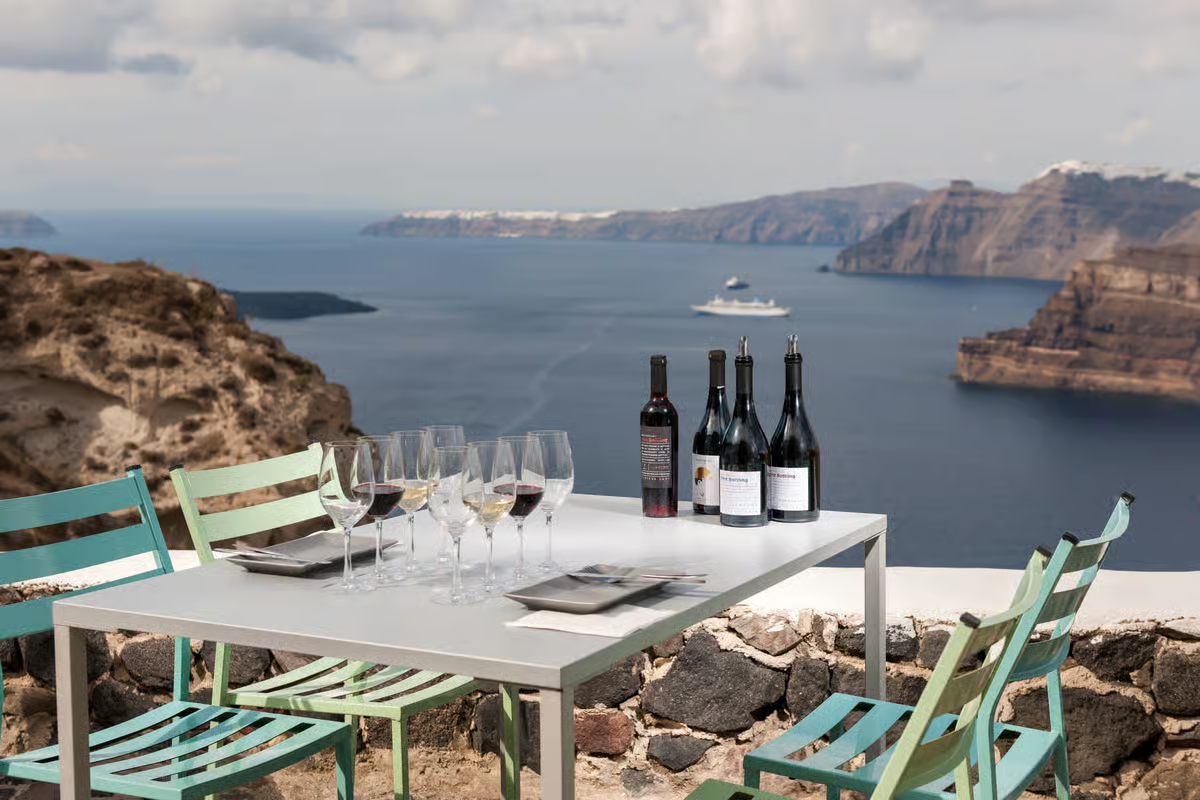
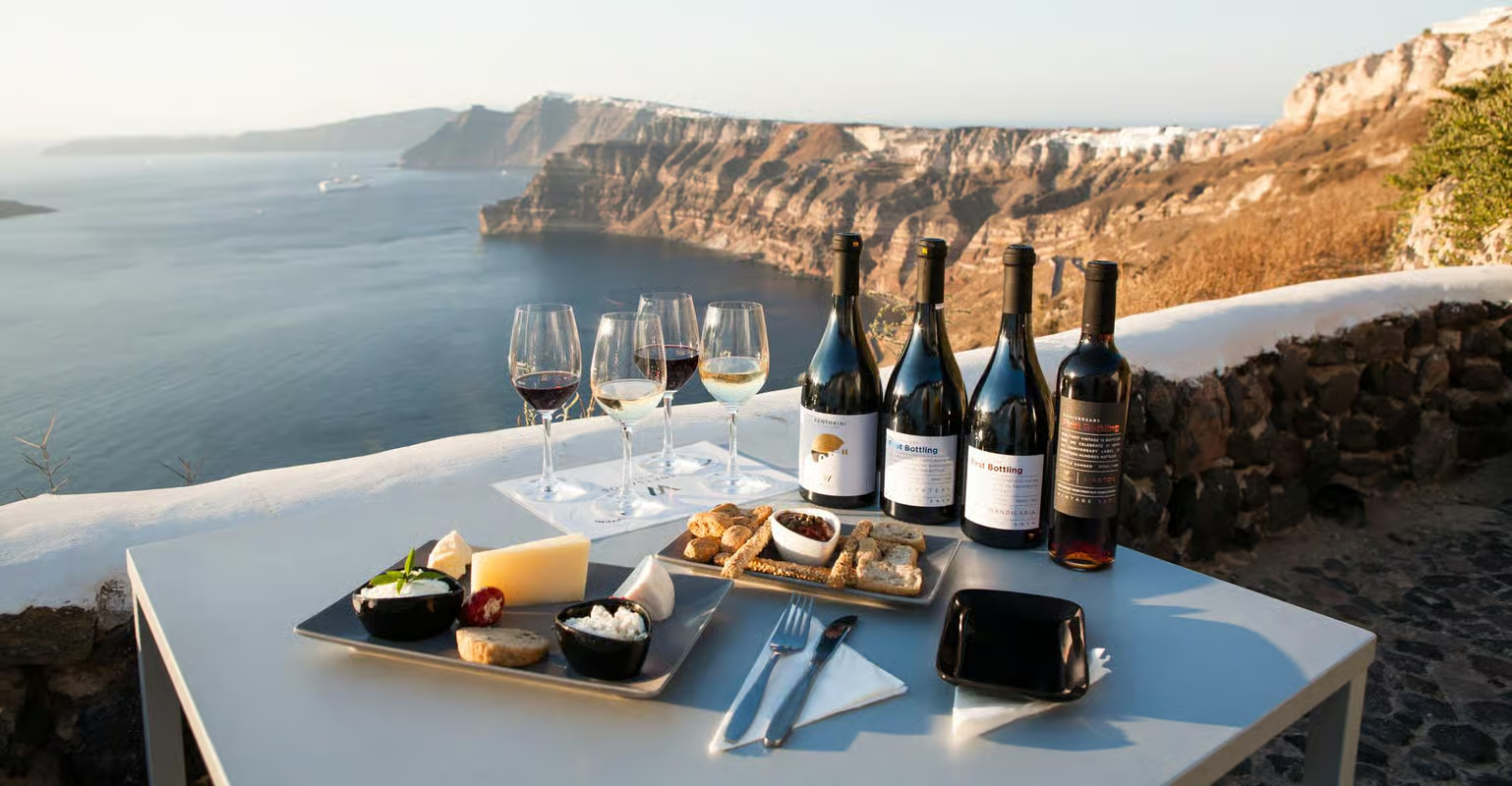
The terroir of Santorini is globally unique, defined by its Aspa volcanic soil. The bedrock is a mix of basalt and limestone, covered by layers of pumice and ash. The drainage is instantaneous, and the vines rely on the evening sea mist (the ambatos) for hydration. The extreme lack of potassium in the soil leads to incredibly high natural acidity. The sensory link is a piercing, flinty minerality and a saline finish that tastes of the Aegean Sea itself.
Tinos
In Tinos, the vineyards are planted in the Volax region, characterized by massive granite boulders. The sandy-granitic soil produces Assyrtiko and Mavrotragano with immense structural power and a smoky, earthy aromatic profile. The exposure to constant winds requires meticulous canopy management to prevent the “burn” of the salty air.
Crete: The Island of Giants
As the largest island, Crete hosts several vital appellations like Peza, Archanes, and Dafnes. The geology here is dominated by limestone and marl. In Dafnes, the red soils (Terra Rossa) over limestone bedrock provide the perfect environment for the Liatiko grape. The iron-rich clay contributes a savory, sun-baked earth note to the wine, while the altitude of the Cretan mountains ensures the necessary acidity is maintained even in the southern heat.
Human Intervention and Viticultural Mastery
In the face of these challenging terroirs, Greek viticulturists have developed highly specialized techniques to ensure the survival and quality of the vine. Man adapts to the diverse soils through centuries-old wisdom combined with modern technical precision.
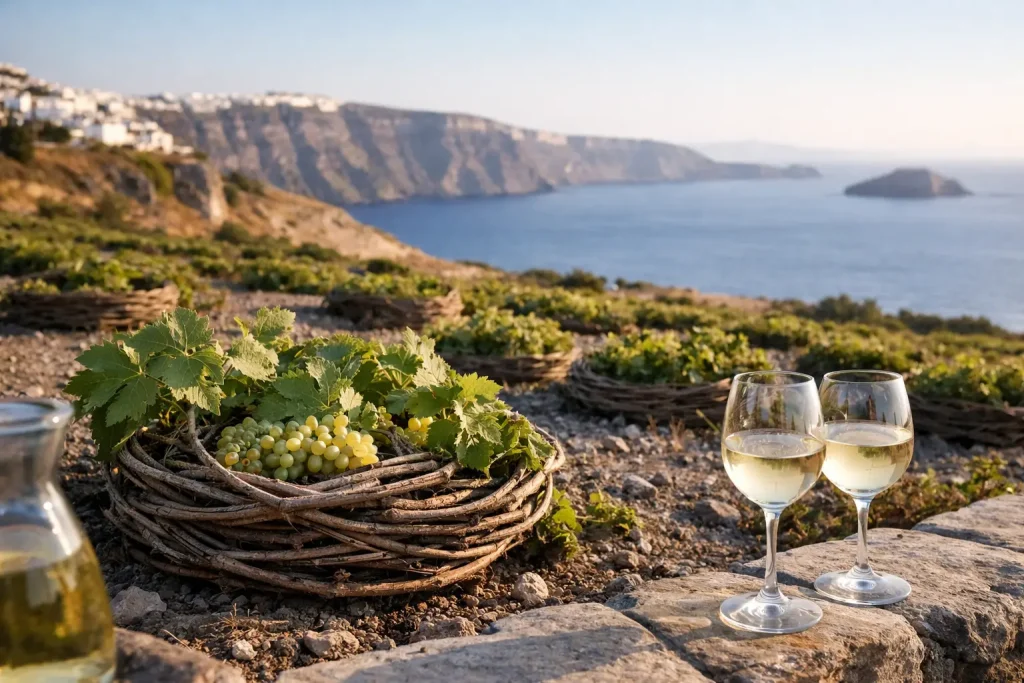
In the windswept islands, the Koulara (basket) pruning system is a masterpiece of adaptation. The vines are woven into a low-lying basket shape, protecting the grapes inside from the abrasive sands and the dehydration of the Meltemi. On the mainland, the Guyot and Cordon systems are more common, with canopy management carefully calibrated to provide enough shade to prevent sunburn while allowing enough airflow to ward off disease. Row orientation is often decided based on the prevailing winds and the angle of the sun on steep slopes to maximize photosynthesis without excessive sugar accumulation.
The philosophy in the cellar is increasingly one of “minimal intervention”. Lead oenologists aim to preserve the terroir’s expression by using wild ferments and neutral aging vessels, such as large old oak or clay amphorae, which allow the chemical signatures of the limestone, schist, and volcanic ash to remain at the forefront of the tasting experience.
From Knowledge to Experience
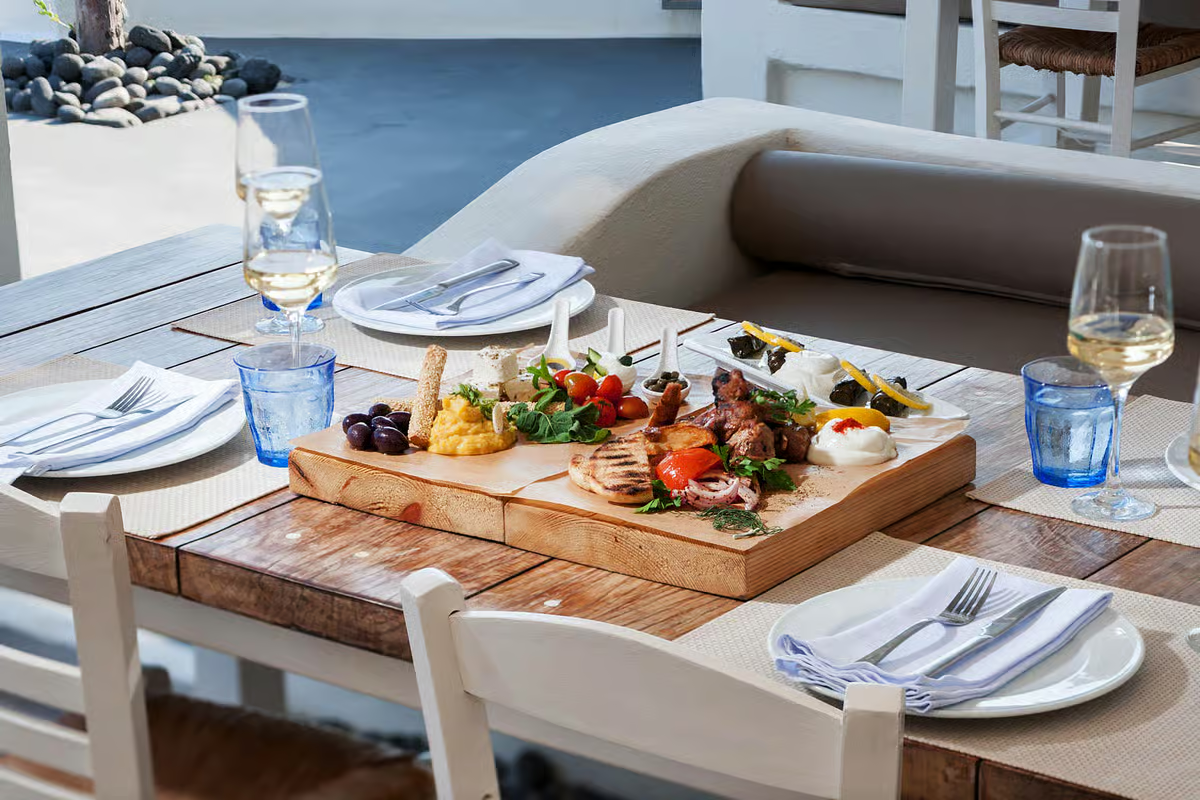
The science of geology and the precision of oenology provide the framework, but wine is a living liquid that can only be fully understood in situ. While the geology of Greece is written in stone, the experience of it is found in the glass, shared under the same sun that ripened the fruit.
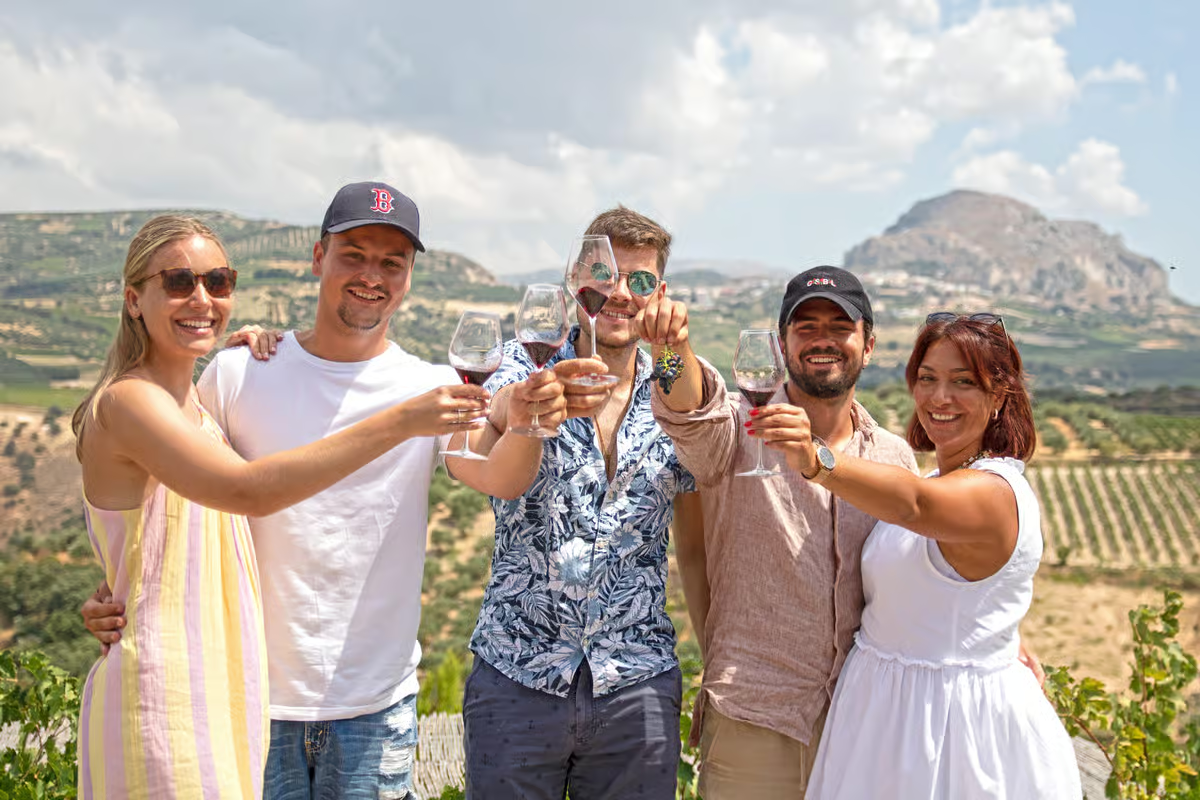
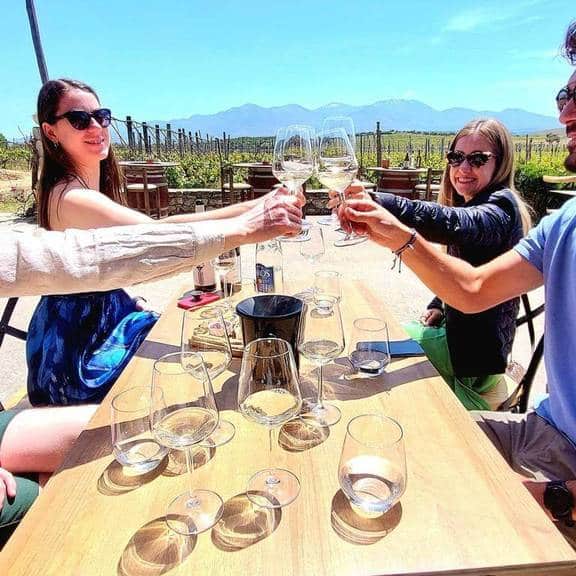
We invite you to move beyond the technical and into the experiential. Join our curated wine tours designed for the discerning palate, where you will walk the very soils—the ancient gravels of Nemea, the fractured limestones of Naoussa, and the white volcanic ashes of Santorini—that give these wines their life. This is a professional, high-end invitation to witness the mastery of Greek viticulture firsthand, guided by experts who will show you how the bedrock beneath your feet becomes the complexity in your glass. Experience the terroir of Greece where it was meant to be discovered: in the heart of the vineyard.