Table of Contents
The wine regions of Crete represent one of the most storied and dynamic viticultural landscapes in the world. As the cradle of European winemaking, Crete boasts a continuous tradition that dates back to the Minoan civilization, where the world’s oldest known wine press was discovered in Vathypetro. Today, the island is undergoing a profound viticultural renaissance. This transformation is driven by a new generation of winemakers who are harmonizing ancient heritage with cutting-edge enology, focusing on the island’s unique “wine ark” of indigenous grape varieties.
From the sun-drenched coastal plains to the dramatic, wind-swept high-altitude plateaus, the diverse terroirs of Crete offer an unparalleled range of styles. Whether it is the mineral-driven whites of the north or the complex, sun-dried reds of the south, Cretan wine is defined by its resilience, authenticity, and profound connection to the land. This guide provides an authoritative deep-dive into the district-by-district breakdown of the island’s PDO and PGI zones, offering essential insights for enthusiasts and professionals alike.


Heraklion District: The Central Heartland
Heraklion is the undisputed powerhouse of the Cretan wine industry, accounting for nearly 70% of the island’s total production. This central district is a topographical marvel, defined by a series of north-to-south valleys sheltered by the massive Psiloritis and Dikti mountain ranges. The terroir is dominated by calcareous clay and limestone soils, which provide the ideal mineral foundation for both indigenous and international varieties. The climate is Mediterranean, but the district’s complex relief creates a multitude of microclimates; the northern-facing slopes are cooled by Aegean breezes, while the central plateaus experience significant diurnal temperature shifts.
Heraklion is home to the highest concentration of Protected Designation of Origin (PDO) zones on the island, reflecting its historical and qualitative importance. It is here that the modern “Cretan Wine Miracle” was born, as traditional family wineries evolved into world-class estates, focusing on the potential of grapes like Kotsifali, Mandilaria, and Vidiano. The district serves as the primary gateway for wine tourism, offering a dense network of “Wine Roads” that connect archaeological sites with state-of-the-art tasting rooms.
-
Wine Style: Diverse, ranging from fresh, zesty whites to robust, age-worthy reds and historical sweet wines.
-
Aging Potential: Exceptional for the red blends and sweet Malvasia styles, which can evolve for decades.
.
PDO Archanes (ΠΟΠ Αρχάνες)
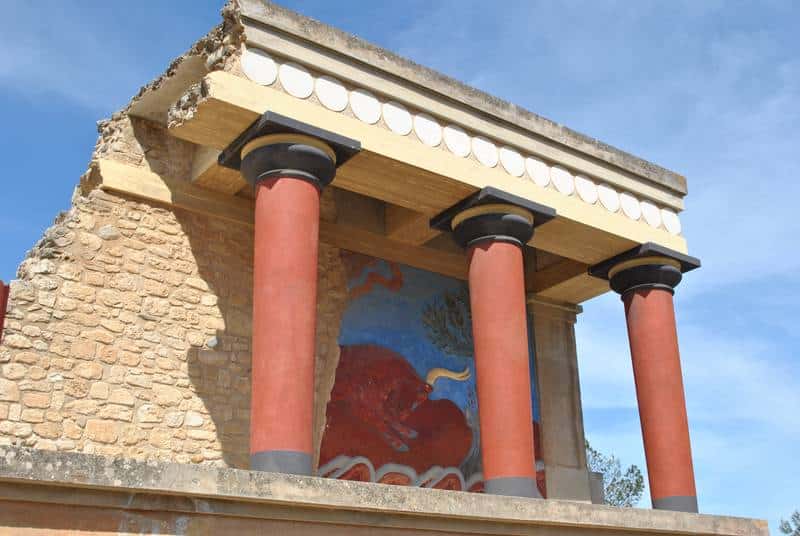
Situated just south of the Knossos archaeological site, PDO Archanes is a historic red-only appellation that yields wines of immense character and warmth. The blend is strictly defined by the synergy of Kotsifali and Mandilaria. In the limestone-rich soils of Archanes, Kotsifali provides high alcohol, a plush mouthfeel, and a bouquet of red fruits and sweet spices like cinnamon and clove.
Mandilaria, often referred to as the “dye” of the Aegean, adds deep color, firm tannins, and a rustic structural backbone. The resulting wines are a liquid representation of the Cretan interior—hearty, aromatic, and deeply food-friendly. The proximity to the coast ensures a maritime influence that keeps the tannins from becoming overly aggressive. Modern producers in Archanes are increasingly experimenting with longer oak aging to polish the wines, creating a style that is both traditional and sophisticated.
-
Wine Style: Medium to full-bodied red with aromas of plum, leather, and dried herbs. The palate is velvety with a lingering spicy finish.
-
Aging Potential: These wines enter their prime window at 4–6 years but top-tier examples can comfortably cellar for 10–12 years as the tannins integrate.
PDO Peza (ΠΟΠ Πεζά)
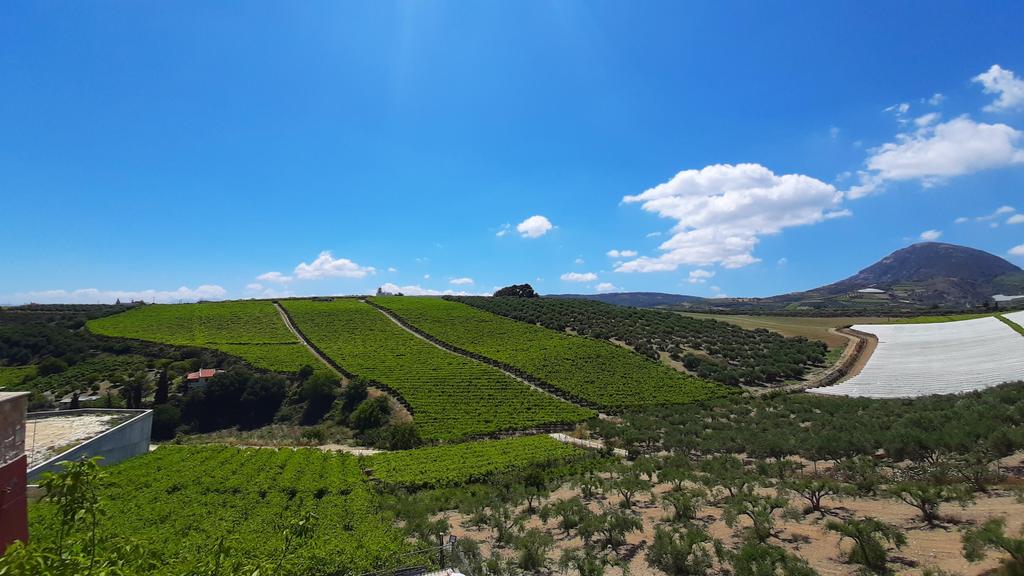
PDO Peza is the most prolific appellation in Heraklion, producing both white wines from the Vilana grape and reds from the Kotsifali-Mandilaria blend. The Peza landscape is a picturesque patchwork of vineyards and olive groves, where the soil is remarkably rich in calcium carbonate. This soil profile is the secret behind the freshness of Peza’s white wines; Vilana here achieves a crisp, citrus-driven profile with a characteristic stony finish. The reds of Peza tend to be slightly more rustic and herbal than those of Archanes, often showing a “wild” side that pairs perfectly with the local mountain cuisine. As the largest PDO on the island, Peza is the heartbeat of Cretan viticulture, where large cooperatives and boutique estates work side-by-side to maintain the island’s reputation for quality and consistency.
-
Wine Style: Whites are light, zesty, and floral (lemon blossom, green apple). Reds are robust and savory, often featuring notes of sun-dried tomato and wild oregano.
-
Aging Potential: Whites are best enjoyed within 2 years. Reds have a peak window of 5–8 years, where they develop complex tertiary notes of earth and tobacco.
PDO Dafnes (ΠΟΠ Δαφνές)
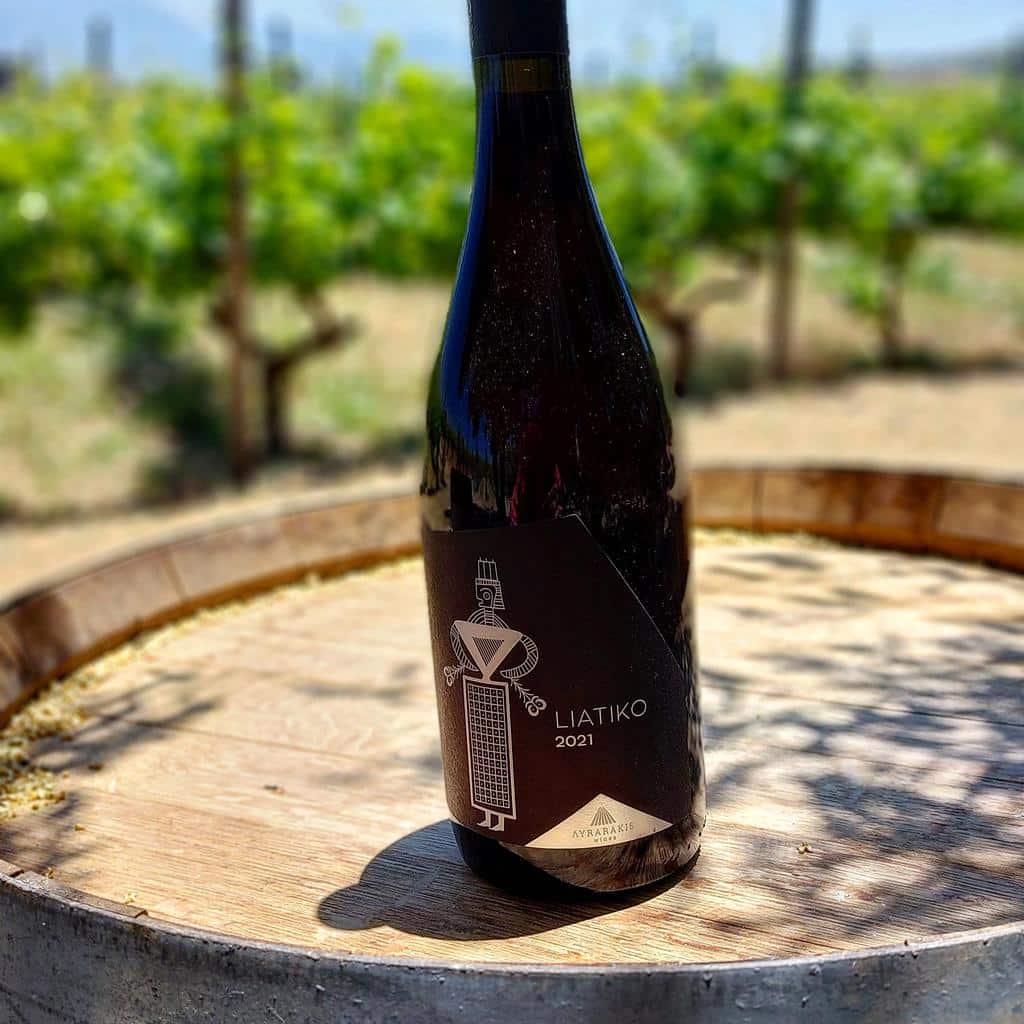
PDO Dafnes is a unique and prestigious appellation dedicated exclusively to the Liatiko grape. Located on the foothills of Mount Psiloritis, the region is famous for producing both dry and naturally sweet (sun-dried) reds. Liatiko is a variety that thrives in the heat of Dafnes, producing wines with a deceptively light garnet color but a massive aromatic footprint. The dry wines are known for their high alcohol and “ethereal” complexity, reminiscent of premium aged Grenache or even Nebbiolo.
The sweet “liastos” wines of Dafnes are legendary, made from grapes dried in the sun to concentrate their sugars and acids. These wines are a true artisanal treasure, reflecting a winemaking tradition that has remained largely unchanged for centuries. The heavy soils of the region allow the Liatiko to maintain its sugars without losing the wild, floral aromas that define the variety.
-
Wine Style: Dry Liatiko is aromatic and warm (cherry, orange peel, rose). Sweet versions are luscious and deep (raisin, coffee, carob).
-
Aging Potential: Dry versions can age for 7–10 years, gaining savory complexity. Sweet versions are functionally immortal, aging beautifully for 20–40 years.
The Candia Region (Historical Handakas)
The Candia region, named after the Venetian era “Kingdom of Candia,” encompasses the coastal and inland hills surrounding Heraklion city. This area was once the primary source of “Malmsey” wine, the most sought-after export in the medieval world. Today, the region has been revitalized through the establishment of two modern PDOs that honor this legacy while embracing modern quality standards. The geography is characterized by gentle slopes that receive a strong maritime influence from the Aegean Sea, which helps moderate the summer heat. The soils are varied, featuring alluvial deposits and limestone, allowing for a wide range of styles. This region is the commercial and historical heart of Cretan wine, bridging the gap between the island’s ancient history and its future as a global wine destination.
PDO Handakas-Candia (ΠΟΠ Χάνδακας-Candia)
This PDO allows for both white and red dry wines, designed to represent a more “metropolitan” and polished style of Cretan wine. The whites are typically Vilana-based blends that incorporate other high-quality indigenous grapes like Vidiano or Assyrtiko to add weight and complexity. The reds are the classic Kotsifali-Mandilaria blend but often treated with more modern techniques, including cold soaking and temperature-controlled fermentation. The goal of this PDO is to produce wines that are technically flawless and highly expressive of the central Cretan terroir, with a focus on fruit purity and elegant structure. It is a region where the island’s largest and most technologically advanced wineries are located, driving the international perception of Cretan wine.
-
Wine Style: Whites are medium-bodied with stone fruit and floral notes. Reds are deep-colored and polished with blackberry and spicy oak characteristics.
-
Aging Potential: Whites are excellent for 3 years; reds have the tannin structure to age gracefully for 5–10 years.
PDO Malvasia Handakas-Candia (ΠΟΠ Malvasia Χάνδακας-Candia)
This PDO is a historical resurrection of the legendary Malvasia wine that dominated European trade for centuries. It is exclusively for sweet wines, produced from sun-dried white grapes such as Vilana, Vidiano, Assyrtiko, and Athiri. The process of sun-drying (liastos) creates a wine of immense concentration, where the sugars are balanced by the naturally high acidity of the grapes. The result is a nectar-like wine that captures the essence of the Cretan sun. This appellation is a point of immense pride for local winemakers, as it reclaims a brand that was once synonymous with the island’s excellence. These wines are not just desserts; they are historical documents in a glass, offering a complexity that rivals the finest sweet wines of the world.
-
Wine Style: Intense gold or amber with aromas of honeyed apricot, dried figs, roasted nuts, and beeswax.
-
Aging Potential: Extremely high. These wines can easily age for 15–30 years, becoming richer and more savory with each passing decade.
Regional Designations In Heraklio
While the PDOs represent the traditional pillars of the region, the Regional Designations (PGI) provide the necessary space for innovation. PGI Heraklion is the most flexible category, allowing winemakers to use international varieties or experiment with non-traditional blends of indigenous grapes. This flexibility has been the engine of the “Cretan Renaissance,” allowing for the emergence of “Super-Cretan” blends and the rediscovery of rare, nearly extinct varieties. The PGI wines often represent the most creative side of the district, where winemakers are free to express their individual vision of the terroir without the constraints of PDO regulations.
PGI Heraklion (ΠΓΕ Ηράκλειο)
PGI Heraklion covers the entire district and is the playground of the island’s modern enologists. It is here that you will find the most successful experiments with Syrah, Cabernet Sauvignon, and Chardonnay, often blended with local grapes to create a unique Cretan-International fusion. It is also the primary designation for varietal Vidiano or Thrapsathiri that may fall outside the PDO zones. Because of its broad geographic scope, the PGI Heraklion encompasses a vast range of styles, from high-altitude mineral whites to dense, powerful reds from the southern plains. It is a vital category for the commercial success of the region, providing a platform for high-quality, innovative wines that appeal to a wide range of global palates.
-
Wine Style: Extremely diverse, but generally characterized by clean fruit, modern winemaking, and excellent price-to-quality ratios.
-
Aging Potential: Varies widely; high-end red blends and barrel-aged whites can easily age for 5–10 years.
Lasithi District: The Eastern Bastion
Lasithi, occupying the easternmost part of Crete, is a land of rugged beauty and extreme environmental conditions. It is the most arid and wind-swept district on the island, receiving very little rainfall compared to the west. The viticulture here is defined by the struggle against the “Meltemi” winds and the intense solar radiation. The landscape is a mix of high plateaus, like the Ziros and Lassithi plateaus, and dramatic coastal hills. The soils are predominantly rocky, limestone-based, and poor in organic matter, which naturally restricts yields and forces the vines to produce grapes of incredible concentration. Lasithi is the “Eastern Bastion” of Cretan wine, home to ancient bush vines and a winemaking tradition that emphasizes raw power and deep minerality. The wines here often possess a “wild” edge, reflecting the untamed nature of the eastern landscape.
The vineyards of Lasithi are divided between high-altitude plateaus and coastal slopes. The plateaus, situated at 500–600 meters, provide a unique cool-climate microclimate in an otherwise hot region, allowing for the production of whites with high acidity and reds with elegant tannins. The coastal vineyards, on the other hand, deal with the direct influence of the sea, where the salt spray and maritime breezes impart a distinct salinity to the wines. The vines in Lasithi are often grown as low bush vines (gobelets) to stay protected from the fierce winds. This is a region of “slow-ripening” despite the heat, as the winds and altitude work together to moderate the temperature, resulting in wines with a profound structural depth
PDO Sitia (ΠΟΠ Σητεία)
PDO Sitia is one of the oldest and most respected appellations in Greece. It produces white wines from a blend of Vilana and Thrapsathiri, and reds from 100% Liatiko. The Sitia terroir is incredibly arid, and the wines reflect this through their deep concentration and mineral complexity. The white wines of Sitia are known for their waxy texture and herbal aromas, while the Liatiko reds are famous for their savory, earthy profile. Sitia is a region of small-scale, artisanal production where the emphasis is on reflecting the “salt and stone” of the eastern coast. These wines are often described as having a “tectonic” structure—firm, deep, and deeply connected to the rocky soils of the region.
-
Wine Style: Whites are medium to full-bodied with notes of yellow fruit and Mediterranean herbs. Reds are complex and savory (dried cherry, earth, salt).
-
Aging Potential: Exceptional for reds, which can age for 10–15 years. Whites have a solid 3–5 year window.
PDO Malvasia Sitia (ΠΟΠ Malvasia Σητεία)
This sweet wine PDO is the eastern counterpart to the Malvasia Handakas-Candia. It focuses on the same traditional sun-drying methods but produces wines that are often noted for their even higher concentration and intense salinity. The grapes are grown on the wind-swept plateaus of the east, where the drying process is aided by the constant air movement. The result is a sweet wine that is incredibly vibrant and alive, where the sugar is perfectly balanced by a sharp, mineral-driven acidity. These are among the most prestigious sweet wines in Greece, produced in tiny quantities and sought after by collectors for their incredible depth and historical resonance.
-
Wine Style: Amber nectar with aromas of orange blossom, thyme honey, and sea spray. The palate is thick but electrified by acidity.
-
Aging Potential: Effectively limitless; these wines will continue to evolve and gain complexity for 30+ years.
Regional Designations In Sitia
The regional designations in Lasithi allow for the expression of the district’s unique terroir through non-traditional varieties. The PGI Lasithi status is often used by boutique wineries to showcase single-vineyard Assyrtiko or experimental blends that capture the extreme conditions of the east.
PGI Lasithi (ΠΓΕ Λασίθι)
PGI Lasithi is the home of some of Crete’s most daring and “natural” winemaking. The extreme conditions of the east favor a hands-off approach in the vineyard, and the PGI status allows winemakers to experiment with these “wild” results. Here you will find intense, bone-dry Assyrtikos and robust Liatiko-based reds that offer a different perspective than the PDO Sitia. It is a designation that represents the frontier of Cretan wine, where the focus is on the purity of the fruit and the uncompromising nature of the eastern landscape.
-
Wine Style: Powerful and mineral-driven. Whites are zesty and saline; reds are concentrated with firm tannins.
-
Aging Potential: 5–7 years for premium whites; 8–12 years for structural reds.
Rethymno District: The Foothills of Excellence
Rethymno is a small but strategically vital wine district located between Heraklion and Chania. Its identity is forged in verticality; most of its vineyards are situated at high altitudes in the foothills of Mount Psiloritis. This elevation is the key to Rethymno’s status as the spiritual home of the Vidiano grape. The cooler mountain air allows for the production of wines with a level of freshness and finesse that is rare in the southern Aegean. The soils are a mix of limestone and schist, which imparts a distinct mineral “tension” and “flinty” character to the wines. Rethymno’s winemakers are predominantly small-scale, focusing on the preservation of indigenous varieties and the expression of high-altitude terroir.
PGI Rethymno (ΠΓΕ Ρέθυμνο)
The PGI Rethymno designation is currently the epicenter of the “Cretan Wine Renaissance,” a region that has moved from obscurity to global acclaim in less than two decades. Geographically, it is a small but strategically vital district located between the powerhouse of Heraklion and the maritime frontier of Chania. The viticultural identity of Rethymno is defined almost entirely by its verticality; the vineyards are predominantly nestled in the high-altitude foothills of Mount Psiloritis and the White Mountains, often exceeding elevations of 600 meters.
This altitude acts as a natural air conditioner, shielding the vines from the intense Mediterranean sun and ensuring a significantly cooler growing season compared to the coastal plains. The soil profile is a complex and prestigious mix of limestone, schist, and phyllite, which imparts a distinct mineral “tension” and flinty character to the wines. This district is most famous as the spiritual home of the Vidiano grape, a variety that was nearly extinct until local winemakers recognized its potential in these high-altitude sites. Today, Rethymno is synonymous with premium, artisanal white wine production that emphasizes elegance over power.
Wine Style and Characteristics: The hallmark of PGI Rethymno is the exceptional quality of its white wines, particularly varietal Vidiano. These wines are celebrated for their creamy, oily texture—often compared to high-end Viognier or Chardonnay—balanced by a vibrant, crystalline acidity that comes from the mountain elevation. The aromatic profile is sophisticated, featuring layers of ripe apricot, yellow peach, white flowers, and a lingering stony or “wet pebble” minerality. The red wines produced under this PGI, often utilizing Liatiko or Kotsifali, are notably more fresh and “Pinot-esque” than those found in central Crete, offering bright red fruit, floral notes, and fine-grained, elegant tannins. There is a growing trend toward minimalist, low-intervention winemaking here, allowing the purity of the high-altitude fruit to remain the focal point.
Aging Potential: While many white wines are consumed for their primary floral charm, Vidiano from Rethymno has proven to be one of the most age-worthy white grapes in the Mediterranean. High-quality examples, especially those with some barrel maturation or lees contact, can evolve beautifully over 5 to 8 years, developing complex secondary notes of honey, toasted nuts, and beeswax while maintaining their structural acidity. The red wines are generally built for a medium-term cellar life, peaking between 4 and 7 years, during which the herbal and mineral components harmonize with the delicate red fruit. Traditional oxidative styles, though rarer under the modern PGI, can last significantly longer.
Chania District: The Maritime Frontier
The district of Chania, occupying the westernmost portion of Crete, represents a distinct viticultural paradigm characterized by its lush, verdant landscapes and significantly higher rainfall compared to the arid east. This “Maritime Frontier” is defined by the dramatic presence of the White Mountains (Lefka Ori), which act as a massive thermal regulator, funneling cool air and alpine water down to the coastal vineyards. The climate here is more temperate and humid, creating an environment where grapes can achieve full phenolic ripeness while maintaining high levels of natural acidity—a combination that is highly prized for premium winemaking.
Chania’s viticultural history is a unique blend of ancient tradition, specifically centered around the enigmatic Romeiko grape, and a sophisticated openness to international influence. Due to its historical port and maritime trade links, Chania was an early adopter of French varieties, which have found a second home in the region’s alluvial and clay-limestone soils. Today, the district is celebrated for its balanced, zesty whites and some of the most polished, structural reds in the Mediterranean.
PGI Chania (ΠΓΕ Χανιά)
The PGI Chania (Protected Geographical Indication) is a broad and highly successful designation that showcases the immense versatility of the western Cretan landscape. Spanning the entire district, this indication allows winemakers the freedom to blend the traditional with the contemporary, creating wines that appeal to a sophisticated global palate. PGI Chania has become particularly famous for its mastery of international varieties, most notably Syrah, Grenache, and Cabernet Sauvignon. These grapes thrive in the cooler maritime climate, producing wines that offer a refined Mediterranean character without the “jammy” over-extraction often found in warmer regions.
However, the heart of the PGI remains the indigenous varieties; Vilana and Vidiano reach high levels of aromatic intensity here, while the local Romeiko is increasingly used for modern, high-acid rosés and elegant Blanc de Noirs. The winemaking style under this PGI is typically polished and “clean,” emphasizing fruit purity and the zesty acidity that is the hallmark of the western frontier.
Wine Style and Characteristics: Wines produced under the PGI Chania label are characterized by their balance and poise. The white wines are typically light to medium-bodied, featuring a zesty, citrus-driven core (lemon, lime) with delicate floral undertones and a refreshing crispness. The reds are noted for their polished tannins and deep fruit profiles; Syrah-based blends often exhibit dark berry flavors, black pepper, and a subtle herbal complexity. The modern rosés of Chania are particularly noteworthy, often crafted from Romeiko or international blends, offering a pale color, high acidity, and vibrant notes of pomegranate and wild strawberry.
Aging Potential: The white wines and rosés of PGI Chania are generally intended for consumption within 2 to 4 years to enjoy their primary fruit and zesty freshness. However, the premium red blends, particularly those with a high percentage of Syrah or Cabernet Sauvignon matured in French oak, possess a significant structural backbone. These top-tier reds can cellar beautifully for 8 to 12 years, during which the tannins soften and the fruit evolves into complex layers of cedar, tobacco, and dried spices. Even the high-acid Romeiko-based whites have shown a surprising ability to hold their freshness for up to 5 years.
The Duriense IGP is widely used in the Superior for large-scale, innovative brands. Because the region contains many newer plantings, the IGP status allows producers to market wines that focus on varietal expression (like 100% Touriga Nacional) or explore new techniques like “unfined/unfiltered” natural styles. It is the classification of choice for the frontier-style winemaking that defines this eastern edge of the valley, offering a high-quality alternative to the traditional DOC structure.
PGI Kissamos (ΠΓΕ Κίσσαμος)
Located in the far northwestern corner, Kissamos is a unique enclave dedicated to the Romeiko grape. It is famous for “Marouvas,” a traditional oxidative wine similar to Sherry. However, modern winemakers are now utilizing the grape to produce vibrant, high-acid rosés and sparkling wines.
-
Wine Style: Oxidative and nutty for traditional Marouvas; light and fresh for modern Romeiko.
-
Aging Potential: Decades for Marouvas; 1–2 years for modern styles.
The Unified Regional Indication PGI Crete (ΠΓΕ Κρήτη)
PGI Crete is the umbrella designation for the entire island, allowing winemakers to blend fruit from all four districts. It is the most common label on the export market, representing the “Island Style”—approachable, fruit-forward, and balanced. It serves as the perfect introduction to Cretan wine, showcasing the harmony of the Mediterranean climate across different terrains.
-
Wine Style: Accessible and fruit-centric; juicy reds and aromatic whites.
-
Aging Potential: 1–5 years.
The Evolution of Quality: A History of Cretan Appellations
To understand the wine regions of Crete, one must look at the legal framework that protects its 4,000-year-old heritage. The formalization of Cretan wine quality began in the early 1970s, specifically in 1971, with the establishment of the first three Protected Designations of Origin (PDO): Archanes, Peza, and Sitia. These were created to safeguard the unique indigenous blends and traditional methods found in these historical hubs. Later, in 1982, the PDO Dafnes was introduced to protect the singular character of the Liatiko grape in the southern Heraklion foothills.
The more flexible Protected Geographical Indication (PGI) system, formerly known as “Regional Wines,” evolved significantly in the late 1980s and 1990s. This system was designed to allow winemakers to innovate by using international varieties (like Syrah and Cabernet) or experimenting with nearly extinct indigenous grapes (like Vidiano) that didn’t fit into the strict PDO laws. The unified PGI Crete was officially ratified to provide an island-wide quality umbrella, followed by district-specific PGIs like PGI Heraklion, Rethymno, Chania, and Lasithi. Today, these designations ensure that every bottle reflects a specific terroir, whether it follows ancient blending rules or modern artisanal innovation.
Crete wine appellations in a nutshell
1 Heraklion District: The Central Heartland
-
-
1.1 PDO Archanes (ΠΟΠ Αρχάνες) – The historic bastion of Kotsifali and Mandilaria.
-
1.2 PDO Peza (ΠΟΠ Πεζά) – The island’s largest production zone for Vilana and red blends.
-
1.3 PDO Dafnes (ΠΟΠ Δαφνές) – The specialized terroir for the Liatiko grape.
-
1.4 PDO Handakas-Candia (ΠΟΠ Χάνδακας-Candia) – Modern dry whites and reds from the historical capital.
-
1.5 PDO Malvasia Handakas-Candia (ΠΟΠ Malvasia Χάνδακας-Candia) – The legendary sweet wines of the Venetian era.
-
1.6 PGI Heraklion (ΠΓΕ Ηράκλειο) – The regional designation for innovation and international varieties.
-
2 Rethymno District: The Foothills of Excellence
-
-
2.1 PGI Rethymno (ΠΓΕ Ρέθυμνο) – The high-altitude home of the Vidiano grape and artisanal mountain wines.
-
3 Lasithi District: The Eastern Bastion
-
-
3.1 PDO Sitia (ΠΟΠ Σητεία) – Arid, mineral-driven wines from the far east.
-
3.2 PDO Malvasia Sitia (ΠΟΠ Malvasia Σητεία) – Rare, saline dessert wines from wind-swept plateaus.
-
3.3 PGI Lasithi (ΠΓΕ Λασίθι) – Boutique expressions from the rugged eastern frontier.
-
4 Chania District: The Maritime Frontier
-
-
4.1 PGI Chania (ΠΓΕ Χανιά) – Elegant, maritime-influenced wines and premium international blends.
-
4.2 PGI Kissamos (ΠΓΕ Κίσσαμος) – The traditional heartland of Romeiko and Marouvas wines.
-
5 Island-Wide Classification
-
-
5.1 PGI Crete (ΠΓΕ Κρήτη) – The unified regional indication covering the entire island.
-