Table of Contents
The Essence of Elegance: An Introduction to Côte de Beaune Wine Appellations
The Côte de Nuits represents the unparalleled pinnacle of Burgundy’s viticultural identity, serving as a narrow, sacred ribbon of limestone-rich slopes that stretches approximately 20 kilometers from the southern outskirts of Dijon to the northern boundary of Nuits-Saint-Georges. This region is essentially the world’s most significant natural laboratory for the Pinot Noir grape, where infinitesimal changes in soil composition, slope gradient, and solar exposure—often referred to as “micro-terroirs”—result in radically different wine profiles within just a few meters of separation.
The concept of the climat (a specific vineyard site) is taken to its logical extreme here, with 24 out of Burgundy’s 33 Grand Cru vineyards packed into this tiny escarpment. The geological foundation, primarily composed of Middle Jurassic limestone and marl, provides the structural “iron” and “velvet” that define these wines. This is the definitive “Champs-Élysées” of the wine world, a place where every plot of land tells a century-old story of Cistercian monks who first mapped these slopes, noble families who preserved them, and a modern, relentless pursuit of aromatic purity. For the wine authority, understanding the Côte de Nuits is not merely about tasting; it is about deciphering a complex hierarchy that dictates style, longevity, and prestige across a landscape where the soil itself is considered more important than the brand.
Dive into the Heart of Burgundy
The 10 Village Appellations (AOC Communales)
Marsannay AOC
Known as the “Golden Gate” to the Côte de Nuits, Marsannay is unique for being the only village-level AOC permitted to produce red, white, and rosé wines. The terroir consists of diverse limestone strata that yield reds with a firm, honest character and distinct notes of Morello cherry and strawberry.
The Marsannay Rosé is world-famous, offering a tender, deeply fruity profile with a persistent hint of spice. The whites are citrusy and often show a lovely mineral tension derived from the cooling Combe de Lavaux winds. The reds typically peak between 5 and 12 years, while the rosés and whites are best enjoyed within 3 to 5 years to preserve their vibrant fruit profile.
As the northernmost outpost, the wines often possess a slightly more rustic edge than their southern neighbors, but recent years have seen a surge in refinement as producers focus on single-plot bottlings that highlight the specific nuances of the local Bajocian limestone.
Fixin AOC
Fixin produces wines that are frequently described as “masculine,” sturdy, and intensely structured. The high limestone and marl content in the soil gives the Pinot Noir a powerful tannic core and a deep, concentrated color. Aromas often lean toward violet, black pepper, and musk.
These wines are famous for their “animal” notes as they mature, evolving into complex secondary scents of leather, fur, and roasted meat. Fixin requires patience; while some village wines are drinkable after 5 years, the top Premier Crus truly shine after 10 to 15 years of cellaring when the tannins finally resolve.
The wines are noted for their high acidity and solid backbone, making them some of the best-kept secrets for collectors looking for long-lived Burgundy at a reasonable price. Their development in the bottle is slow, often revealing a surprisingly silken texture after a decade of rest.
Gevrey-Chambertin AOC
Gevrey-Chambertin is the largest and most iconic village of the Côte de Nuits, representing the pinnacle of power for Pinot Noir. The sub-region is defined by its perfect east-facing slopes and a complex mix of Bajocian limestone and marl. The resulting wines are deep, intense, and structured, often referred to as the “King of Burgundy.“
In their youth, they display aromas of blackcurrant, licorice, and rose petal. As they age, they develop unparalleled complexity, including notes of truffle and game. A standard village wine can easily age for 10 to 20 years, while the top vineyards yield wines that can last for decades. The village sits on a massive alluvial fan known as the “Grands Rappes,” which contributes to the incredible diversity of styles found within the communal boundaries, from the more elegant wines of the southern border to the brawnier examples found in the northern reaches toward Brochon.
Morey-Saint-Denis AOC
The village wines of Morey-Saint-Denis typically offer a perfect stylistic bridge: the structure of Gevrey combined with the floral aromatics of Chambolle. Expect notes of strawberry, violet, and a distinctive “humus” or forest floor character. These wines are remarkably consistent across producers and peak between 7 and 15 years. It is a terroir of transition, where the wines possess a sturdy backbone but never lose the grace required for fine Burgundy.
The village is often overlooked because it is sandwiched between two giants, but the quality of its communal-level vineyards is exceptionally high. Many of the village plots sit just below the Grand Crus, benefiting from the same limestone debris and excellent drainage, resulting in wines that offer significant depth, dark berry fruit, and a reliable aging curve that favors mid-term cellaring.
Chambolle-Musigny AOC
The home of pure elegance. High active lime content in the soil produces “lacy,” delicate, and intensely aromatic wines. The village wines are famous for scents of violets and raspberries and age beautifully for 10 to 18 years. While they may appear lighter in color, their intensity and persistence on the palate are exceptional. These are often described as the most “feminine” wines of the Côte de Nuits, a term used to highlight their silken tannins and floral perfume.
The terroir here is notably different from Gevrey, with thinner topsoil and a higher proportion of fine limestone scree. This leads to a wine that is defined by its verticality and precision rather than sheer weight. In excellent vintages, even the communal village wines can develop a secondary bouquet of dried flowers and exotic spices that rivals Premier Crus from other villages.
Vougeot AOC
Underrated gems that share the structural DNA of the legendary Grand Cru but on a smaller scale. Both reds and whites (which are excellent and rare here) have an aging potential of 7 to 12 years. These wines are often characterized by a “square” structure and dark fruit notes. Because the Grand Cru of Clos de Vougeot takes up the vast majority of the village’s acreage, the village-level wines come from a tiny handful of plots, making them relatively scarce on the international market.
The style is usually more rustic and earthy than Chambolle, with a focus on redcurrant and earthy minerals. The white wines of Vougeot, often made from Chardonnay but sometimes with a touch of Pinot Blanc, are known for their richness, weight, and ability to age for nearly a decade, showing notes of honey and roasted nuts as they mature.
Vosne-Romanée AOC
Defined by incredible aromatic intensity—often described as “oriental spice”—and a perfect balance between power and silk. This is often called the “Golden Square” of Burgundy. Village-level wines age effortlessly for 10 to 20 years, offering a velvety texture and an explosion of spice on the finish. The soils here are a complex mix of clay and limestone that seems to provide the perfect nutrient balance for Pinot Noir.
The wines are noted for their deep ruby color and a perfume that includes notes of black cherry, nutmeg, and violets. The tannins in a Vosne wine are uniquely “melting,” providing structure without any bitterness. It is widely considered the most prestigious village for communal-level wines, and prices often reflect the high demand for even the most basic entry-level offerings from the commune.
Nuits-Saint-Georges AOC
Produces wines of “iron and velvet” with power, dark fruit, and earthy tannic grip. Lacking Grand Crus, its Premier Crus are legendary for their ability to age for 20+ years. The style is robust and requires time to reveal its complexity of forest floor and leather. The village is divided into two distinct sectors: the northern part near Vosne-Romanée produces more elegant, spicy wines, while the southern part produces brawnier, more rustic wines with significant aging potential.
These southern wines are often called “vins de garde,” intended for those with the patience to wait 15 years for the fruit to fully emerge from the tannic structure. Nuits-Saint-Georges is also the commercial hub of the region, housing many of the great négociant houses, yet its own terroir remains fiercely traditional and focused on structure.
Côte de Nuits-Villages AOC
A collective appellation encompassing five distinct communes: Fixin and Brochon in the north, and Premeaux-Prissey, Comblanchien, and Corgoloin in the south. These wines represent the classic “village” weight and character at an accessible level. The red wines are typically robust and deeply colored, offering a concentrated profile of black fruit aromas like blackcurrant and redcurrant.
They possess a solid tannic backbone and a denser mid-palate that requires several years of cellaring to fully soften. The typical aging potential ranges from 5 to 10 years, though exceptional vintages from the southern communes can last longer. Though rare, the white wines are remarkably full-bodied, showing great precision and a waxy texture that pairs well with gastronomy. This AOC is a fantastic source for value, providing a genuine taste of the region’s character without the price tag of more famous neighbors.
Bourgogne Hautes-Côtes de Nuits AOC
The high-altitude plateau overlooking the primary slope, reaching elevations between 300 and 400 meters. This terroir is defined by a noticeably cooler climate and diverse limestone-clay soils that yield wines with a distinct, refreshing vivacity. Red wines produced from Pinot Noir are celebrated for their bright ruby hues and exuberant aromas of fresh raspberry and wild cherry.
On the palate, they maintain a firm but elegant structure with a crisp acidity that makes them highly approachable in their youth. The white wines, crafted from Chardonnay, are high-toned and floral, often displaying nuances of white flowers and citrus zest. While delightful upon release, the finest examples possess an aging potential of 3 to 8 years, gradually developing complex earthy and sous-bois (forest floor) undertones that add significant character
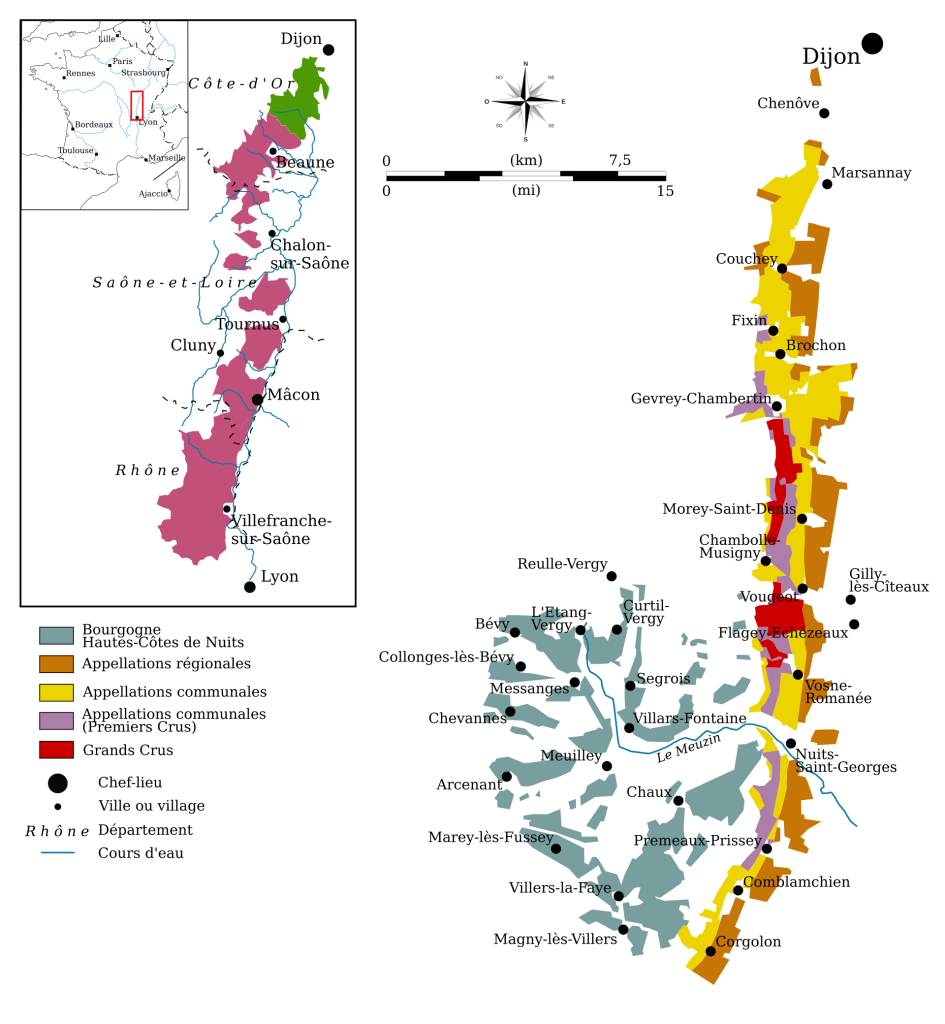
Complete Map of Côte de Nuits Wine Appellations, including the 24 Grands Crus.
Source Wikipedia DalGobboM
The 24 Grand Cru Appellations Pinnacle of Pinot Noir
The Grand Cru appellations of the Côte de Nuits represent the ultimate qualitative pinnacle of the Burgundian hierarchy. Comprising 24 of the region’s 33 Grand Crus, these elite climats are situated exclusively on the mid-slope, where the combination of drainage,
The Sovereigns of Gevrey: Titans of Power
Chambertin AOC
Chambertin is the ultimate expression of the Gevrey slope and was famously the favorite wine of Napoleon. This 12.9-hectare vineyard produces wines of immense concentration and monumental structure. It is never a wine of immediate pleasure; it is brooding and dark, with a velvet-like texture that hides a massive, uncompromising tannic core. The soil is a mix of white marl and limestone debris that creates a wine of deep, masculine power. It typically requires a minimum of 10 to 15 years to even begin opening up, with a legendary aging potential that can easily exceed 30 to 50 years in great vintages. It is often described as the “King” of all vineyards, possessing a depth and resonance that few other wines on the planet can match.
Chambertin-Clos de Bèze AOC
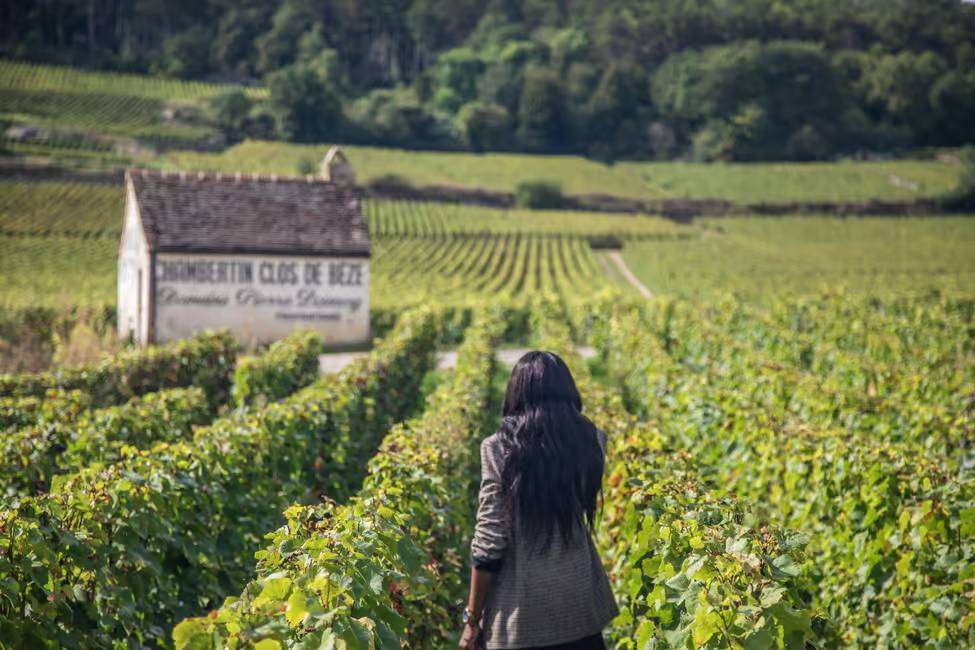
Compared to its neighbor Chambertin, Clos de Bèze is frequently cited as more aromatic and “feminine,” though still incredibly powerful. The history of this vineyard dates back to the 7th century, making it one of the oldest delimited plots in Burgundy. The wine is celebrated for its complex bouquet of spice, sandalwood, and floral notes.
It possesses a slightly more refined and silken tannin structure than Chambertin, often making it more approachable slightly earlier in its life. However, its longevity is unquestionable, with an aging potential of 20 to 40 years. It represents the height of aromatic complexity, offering a persistent finish that lingers with notes of incense and red berries.
Charmes-Chambertin AOC
Located on the lower part of the slope with deeper soils and more clay, Charmes-Chambertin produces a softer, more supple style of Grand Cru. It is known for its “charming” fruit-forward profile and silky tannins that make it one of the most accessible Grand Crus in its youth. While it lacks the sheer brawn of the upper-slope Crus, it offers incredible elegance and an opulent mouthfeel.
Aromas often focus on sweet cherry and strawberry, evolving into notes of rose and spice. It is usually at its peak drinking window between 12 and 25 years of age, providing a sensuous experience that highlights the more delicate side of Gevrey’s powerful terroir.
Mazoyères-Chambertin AOC
Technically its own AOC, Mazoyères is often sold under the “Charmes-Chambertin” label, though its terroir is quite distinct. The soil here has more stones and clay, leading to a slightly more rustic, earthy, and wild profile compared to pure Charmes.
It retains the signature Gevrey power but with a firmer, more grounded finish that requires a few more years of cellaring to resolve. Expect notes of dark berries, damp earth, and occasional hints of forest floor. Its aging potential is generally 15 to 30 years. Collectors often seek out bottles specifically labeled as Mazoyères for their more structured and “serious” personality compared to the more flamboyant Charmes.
Chapelle-Chambertin AOC
Named after a chapel that once stood on the site, this vineyard yields wines of great finesse and high-toned aromatics. It is generally lighter in body than the “Big Two” (Chambertin and Bèze) but offers a crystalline purity of fruit and a long, mineral-driven finish.
The soil is thinner here, which translates to a wine that is more about precision and vertical structure than broad-shouldered power. It often displays a bouquet of redcurrant and blue flowers. It is best enjoyed between 10 and 25 years, during which time it develops a beautiful complexity while maintaining its core of bright, refreshing acidity.
Griotte-Chambertin AOC
The smallest Grand Cru in Gevrey, Griotte is named after the wild cherries (griottes) that its aroma often mimics. It is a wine of exquisite delicacy and “lacy” texture, sitting in a slight depression in the slope that traps heat and leads to very ripe fruit.
Despite its relative lightness and silkiness, its perfect balance and acidity allow it to age gracefully for 15 to 25 years. It is one of the most sought-after Gevrey Grand Crus due to its tiny production and its unique, cherry-driven flavor profile that stands out as distinctly more floral and lifted than its neighbors.
Latricières-Chambertin AOC
Located at the southern end of the Gevrey Grand Crus, Latricières is influenced by the cooling winds of the Combe de Grisard. This results in a wine that is lean, precise, and highly mineral. It often shows a “cool” fruit character and intense savory, almost saline notes that set it apart from the more opulent Chambertins.
It is a wine of great persistence and detail, often requiring at least a decade to lose its youthful austerity. Its aging potential is 15 to 30 years, over which time it develops a complex secondary profile of truffle and flinty minerals.
Mazis-Chambertin AOC
Mazis-Chambertin produces a wild, untamed style of Gevrey, often showing notes of smoked meat, leather, and dark berries. It is split into “Mazis-Haut” and “Mazis-Bas.” It is a powerful, “broad-shouldered” wine that requires significant bottle age—usually 15 to 35 years—to reach its peak complexity.
The tannins are often firm and rustic in youth, but they provide the foundation for an incredibly long life. For those who enjoy the more primal, earthy side of Pinot Noir, Mazis is often the favorite of the Gevrey Grand Crus, offering a savage intensity that matures into a regal, complex bouquet.
Ruchottes-Chambertin AOC
Perched on the upper slope on thin, rocky soils, Ruchottes is the most “aerial” and vertical of the Gevrey Grand Crus. It is prized for its intense minerality and crystalline structure, as the roots must dig deep into the limestone bedrock.
It is a connoisseur’s wine, valued for its precision and tension rather than its weight. The production is very limited, and the wines are noted for their high-toned aromatics and incredible purity. Aging potential is 15 to 30 years, during which the wine’s mineral core remains the star of the show.
The Morey Monoliths: Bastions of Earth and Spice
Clos de Tart AOC (Monopole)
A rare monopole owned by a single estate for centuries, Clos de Tart is known for its immense power, density, and longevity. It is unique among its neighbors for planting its vines north-to-south to prevent erosion and maximize sun exposure. The wine offers a deep, velvety texture and aromas of black cherry, licorice, and violet.
It is a massive wine that needs 15 to 30 years to fully integrate its oak and tannins. The terroir is a complex mix of limestone and marl, producing a wine that is often cited as the most “complete” in Morey-Saint-Denis, combining the power of Gevrey with the aromatic depth of Vosne-Romanée.
Clos des Lambrays AOC
Celebrated for its complexity and “wild” character, Clos des Lambrays shows notes of bramble, spice, and undergrowth alongside bright red fruit. It is generally more approachable and fruit-driven in its youth than Clos de Tart, but it possesses a similar 20+ year aging potential.
The vineyard is an amphitheater with various exposures, contributing to a wine that is noted for its vibrancy and lifted floral notes. As it ages, it develops a beautiful “forest floor” character and a spicy finish that makes it one of the most distinctive Grand Crus in the central Côte.
Clos de la Roche AOC
Named after the “rock” (roche) it sits upon, this is the most powerful and structured wine of Morey-Saint-Denis. It is often compared to a Gevrey Grand Cru for its intensity, dark fruit profile, and firm tannic grip.
The limestone here is hard and close to the surface, resulting in a wine of great mineral depth and “mass.” It is a wine built for long-term cellaring, often peaking between 20 and 40 years. It represents the “iron” of Morey, offering a brooding, dark, and intense experience that rewards the patient collector.
Clos Saint-Denis AOC
Often referred to as the “Mozart of Morey,” this vineyard produces the most elegant and refined wines of the village. It is known for its silky texture and high-toned floral aromatics, standing in contrast to the more brawny Clos de la Roche.
The soil is lighter and more limestone-heavy, translating to a wine that is about grace and persistence. Expect notes of strawberry and rose petals. It typically reaches its peak drinking window between 12 and 25 years, providing an experience defined by finesse rather than power.
Bonnes-Mares AOC (Shared)
While primarily associated with Chambolle-Musigny, a significant portion of Bonnes-Mares sits in Morey-Saint-Denis. It is a robust, earthy, and powerful wine that shows notes of blueberry, peony, and violets.
The “Morey side” tends to be slightly more structural and firm, requiring at least 15 years to soften. It is a Grand Cru that combines the floral elegance of its location with a surprising amount of tannic weight and earthy depth. Aging potential is 15 to 30+ years.
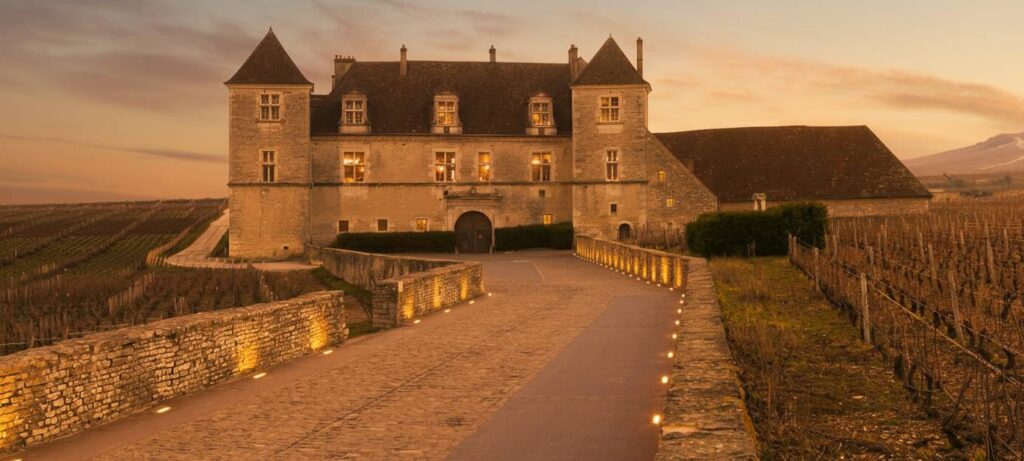
Clos de Vougeot
The Aristocrats of Finesse: Chambolle and Vougeot
Musigny AOC
Musigny is widely considered one of the three greatest vineyards in the world. It is the only Grand Cru in the Côte de Nuits permitted to produce white wine (though only a tiny amount is made by Domaine de la Romanée-Conti and Comte de Vogüé). The red is the definition of “finesse,” with a silken texture that defies its incredible underlying power.
It is a wine of legend, offering an explosion of red fruit, spice, and floral notes. It is capable of aging for 30 to 50 years, during which time it develops a complexity that is often described as metaphysical. It is the ultimate expression of the Chambolle limestone.
Clos de Vougeot AOC
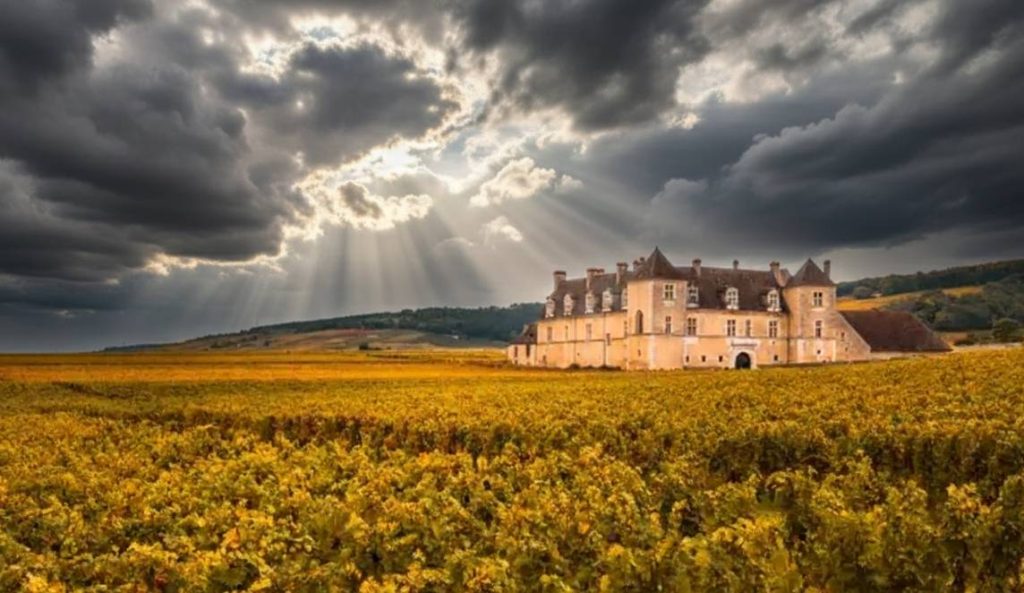
As the largest Grand Cru in the region, style varies significantly between its 80+ producers, but the classic “Clos” wine is full-bodied, dense, and “square” in structure. The vineyard was historically enclosed by Cistercian monks and is divided into various soil zones, with the upper part near the château producing the most refined wines. It often shows notes of dark chocolate, forest floor, and black fruit. It requires careful producer selection, but the best examples can age beautifully for 25 to 40 years, becoming incredibly savory and complex with time.
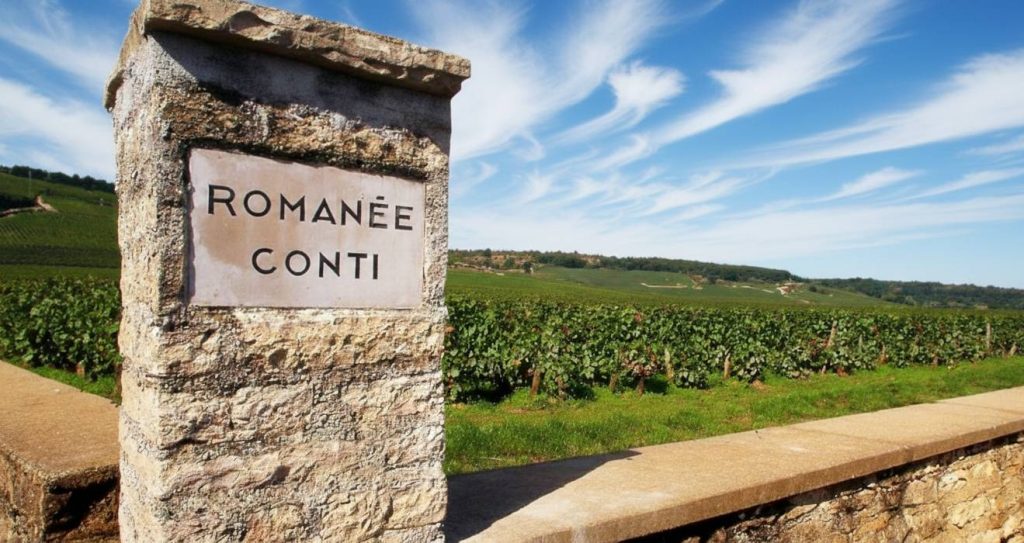
The Iconic Domaine Romanée Conti
The Divine Vosne & Échezeaux Flagey: The Aromatic Pantheon
Échezeaux AOC
Échezeaux is a large and diverse Grand Cru located in the village of Flagey-Échezeaux. At its best, it is a wine of immense complexity, spice, and silkiness. It is often “generous” and opulent in its fruit, making it one of the more seductive Grand Crus in its youth (after 10 years). However, because it is large, the terroir varies from the rocky upper slopes to the heavier clay below. Aging potential is 15 to 30 years, over which it develops an incredible bouquet of dried cherries and exotic spices.
Grands Échezeaux AOC
Despite the name, this vineyard is smaller than Échezeaux but consistently produces more “grand” wine. It is located closer to Clos de Vougeot and produces a wine of superior structure, depth, and consistency. It possesses a noble weight and verticality that places it among the absolute elite. Aging potential is 20 to 40 years. It is often cited as a more “serious” and less flamboyant brother to Échezeaux, focusing on power and long-term development.
Romanée-Conti AOC (Monopole)
The most famous and expensive wine in the world. Owned exclusively by the Domaine de la Romanée-Conti, it is a wine of “completeness” and metaphysical complexity. It is impossible to describe in simple fruit terms, offering a multidimensional experience that includes notes of rose, spice, and iron. It is a wine of incredible longevity, capable of aging for 50+ years. It represents the absolute pinnacle of what the Pinot Noir grape can achieve on this planet.
La Tâche AOC (Monopole)
Often the “rival” to Romanée-Conti, La Tâche is more flamboyant, powerful, and structural. It is a wine of incredible vigor and dark spice, showing notes of smoke and black fruit. It is an “extroverted” Grand Cru that commands attention. Its aging potential is 30 to 50 years. The vineyard spans the entire slope, giving the wine a unique balance of the finesse from the top and the power from the bottom.
Richebourg AOC
Richebourg is the most “muscular” and opulent of the Vosne Grand Crus. It is rich (as the name suggests) and broad-shouldered, with an explosion of fruit, spice, and velvet-like tannins. It is a wine that demands respect and time, often peaking between 20 and 40 years. It is known for its intensity and its ability to maintain its fruit even as it develops complex secondary notes of leather and tobacco.
Romanée-Saint-Vivant AOC
This is the most “intellectual” and refined Grand Cru in Vosne-Romanée. It is known for its lacy, delicate texture and incredible length on the palate. The soil here has more clay than the vineyards above it, which seems to translate into a wine of supreme elegance rather than brawn. It offers a bouquet of flowers and red berries. Aging potential is 20 to 35 years, during which time it becomes one of the most perfumed wines in existence.
La Romanée AOC (Monopole)
The smallest AOC in France (0.84 hectares). Located just above Romanée-Conti, it produces a wine of incredible mineral tension and precision. Because of its altitude and rocky soil, it is often more “vertical” and high-toned than its neighbor below. It is a wine of extreme rarity and class. Aging potential is 25 to 45 years. It represents the height of mineral expression in the village of Vosne-Romanée.
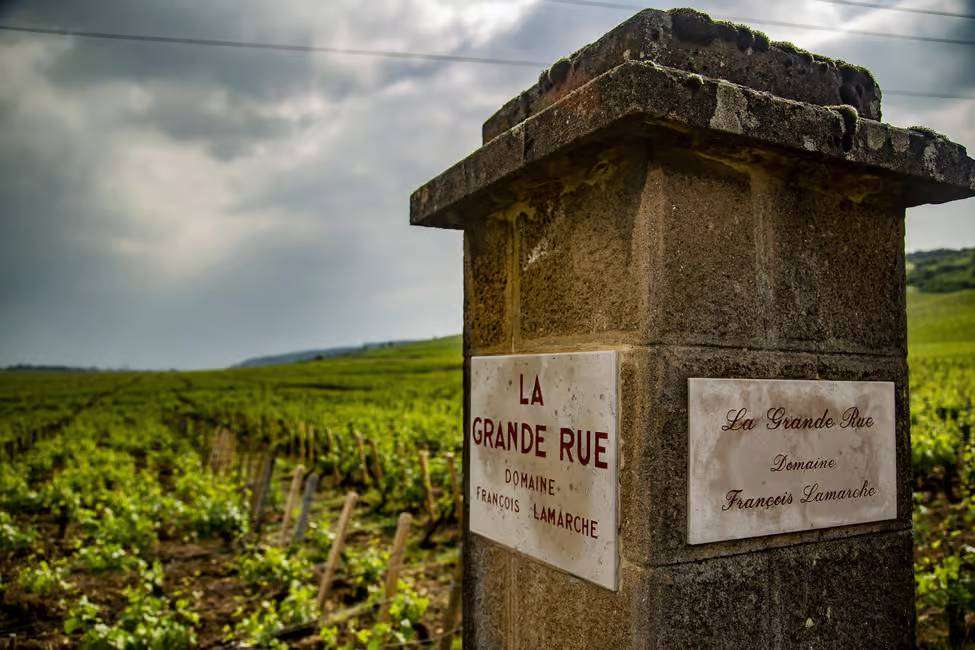
La Grande Rue AOC (Monopole)
Promoted to Grand Cru status in 1992, this vineyard sits between La Tâche and Romanée-Conti. It offers a style that is floral, elegant, and classically refined. While it may have slightly less weight than its famous neighbors, its complexity and silken texture are world-class. It is a wine for those who appreciate the more understated side of Grand Cru Burgundy. Aging potential is 15 to 30 years.
Côte de Nuits wine appelations in a nutshell
The 10 Village AOCs
These are the foundational appellations. Remember, Premier Cru vineyards are tucked inside these village boundaries.
Marsannay (The only village to produce Red, White, and Rosé)
Fixin (Known for sturdy, “masculine” reds)
Gevrey-Chambertin (The “King” of Burgundy; largest village)
Morey-Saint-Denis (The bridge between Gevrey and Chambolle styles)
Chambolle-Musigny (Famous for elegance, perfume, and silkiness)
Vougeot (Dominated by its massive Grand Cru wall)
Vosne-Romanée (The “pearl” of the Côte; produces the world’s most expensive wines)
Nuits-Saint-Georges (The commercial hub; has no Grand Crus, but many elite 1er Crus)
Côte de Nuits-Villages (Covers Fixin/Brochon in the North and Comblanchien/Corgoloin in the South)
Bourgogne Hautes-Côtes de Nuits (Higher altitude vineyards on the plateau above the main slope)
The 24 Grand Cru AOCs
These are the elite single vineyards, listed by the village they are located within.
In Gevrey-Chambertin (9):
Chambertin
Chambertin-Clos de Bèze
Mazis-Chambertin
Chapelle-Chambertin
Charmes-Chambertin
Griotte-Chambertin
Latricières-Chambertin
Mazoyères-Chambertin
Ruchottes-Chambertin
In Morey-Saint-Denis (5):
Clos de la Roche
Clos Saint-Denis
Clos des Lambrays
Clos de Tart
Bonnes-Mares (Mostly in Chambolle, but partially here)
In Chambolle-Musigny (2):
Musigny
Bonnes-Mares (The larger portion)
In Vougeot (1):
Clos de Vougeot
In Flagey-Echézeaux (2):
Échézeaux
Grands Échézeaux
In Vosne-Romanée (6):
Romanée-Conti
La Tâche
Richebourg
Romanée-Saint-Vivant
La Romanée
La Grande Rue