Table of Contents
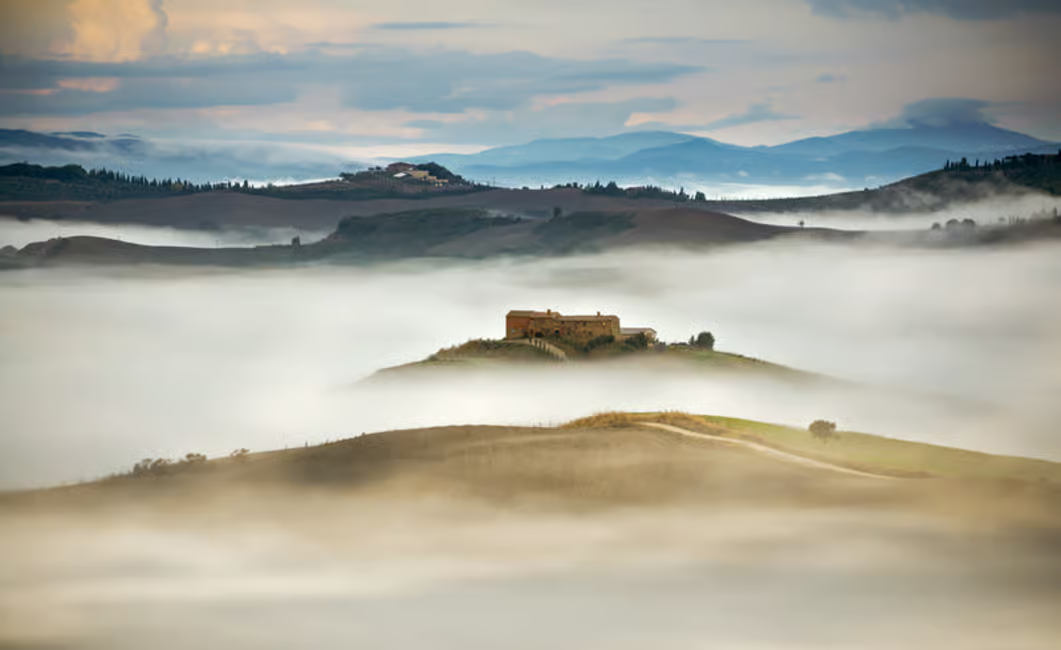
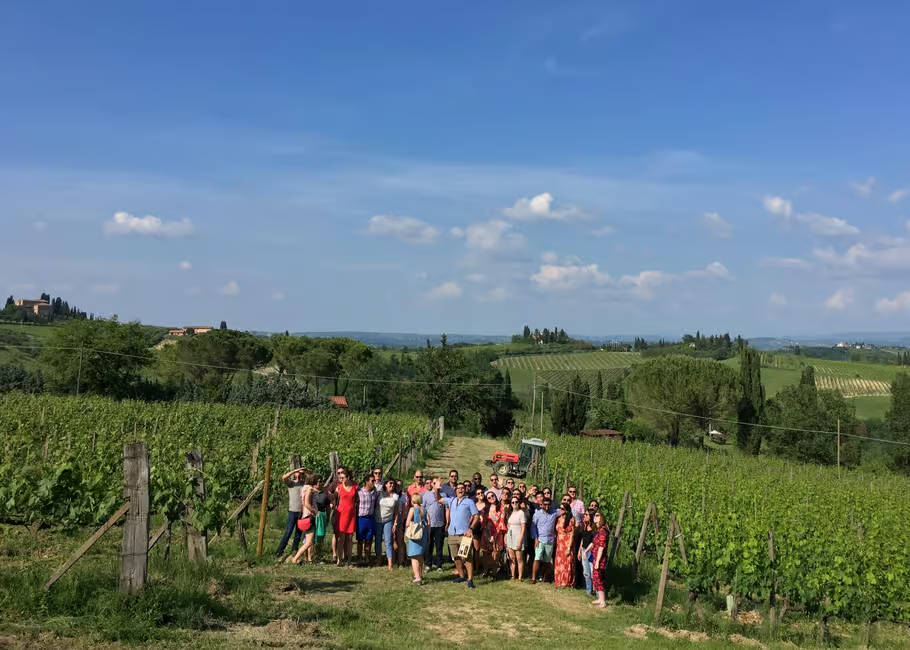
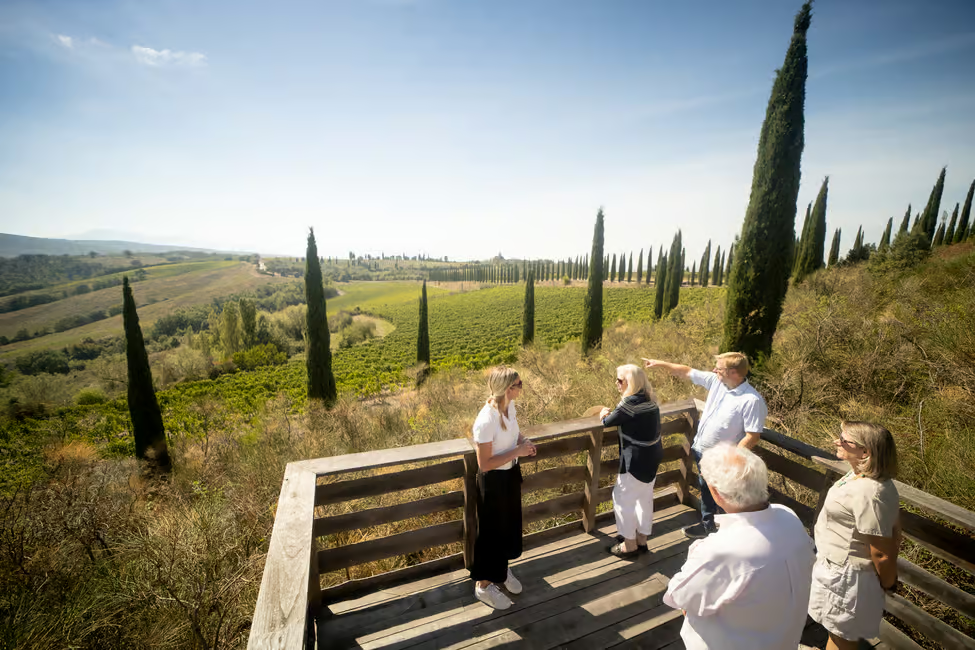
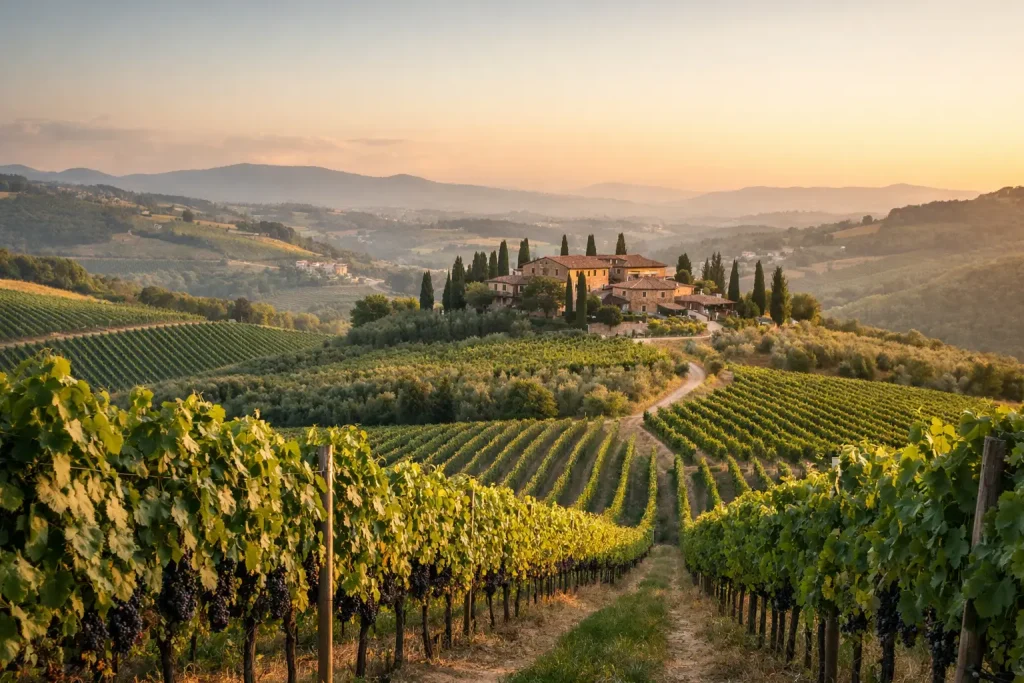
Tuscany. The name alone evokes a sun-drenched landscape of rolling hills, cypress-lined avenues, and the rhythmic geometry of vineyards. To understand Toscana, one must grasp that it is not merely a region, but a liquid tapestry where history and soil—the terroir—are inextricably linked. It is a global benchmark of elegance, where the Sangiovese grape achieves its most venerable expressions. As an authority site dedicated to wine, we invite you to step into a “masterclass” in a glass, charting a journey from the Iron Age to the modern cellar.
Step Out of the History Books and Into the Cellar
The Etruscan Dawn – The Birth of Viticulture (8th – 3rd Century BC)
Long before the Roman Eagle cast its shadow over the peninsula, the Etruscans (the Rasenna) were the first true viticoltori of the Italian landscape. Unlike the Greeks, who trained vines low to the ground, the Etruscans pioneered vite maritata—the “married vine”—training grapevines to climb living trees like elms or poplars. This was not merely aesthetic; it kept the fruit away from ground-level moisture and predators, a sophisticated early understanding of canopy management.
In the coastal marshes of the Maremma and the clay-rich hills of Siena, archaeologists have unearthed vast quantities of anfore (amphorae). These vessels prove that Tuscan wine was a major export, reaching the ports of southern France and the internal markets of the Rhine. For the Etruscans, wine was a divine medium. Their banquets were legendary for their opulence, where wine was mixed with honey and herbs. Remarkably, historical records and tomb paintings show that women participated in these symposia as equals to men—a social progressiveness that mirrored the burgeoning complexity of their viticulture.
By the time the Romans annexed the region (renaming it Etruria), the foundation of the Tuscan vineyard was already decimated and rebuilt several times, yet the indigenous DNA of the vines remained. The Romans merely scaled what the Etruscans had perfected, turning the region into a massive “vineyard-garden” to feed the thirst of the growing Empire.
Monastic Silence – The Guardians of the Vineyard (5th – 14th Century)
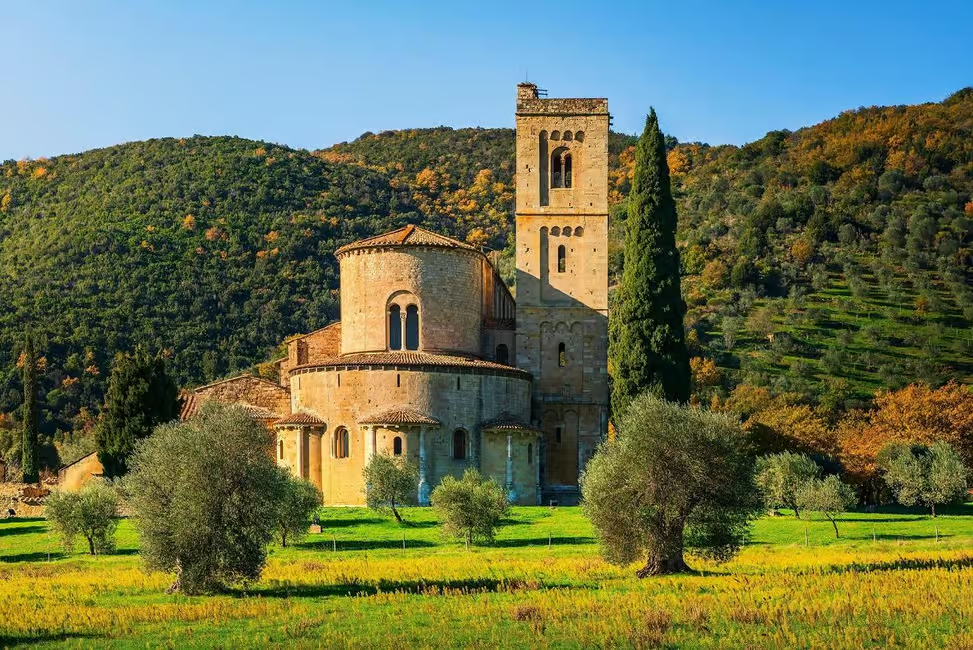
Following the collapse of Roman infrastructure, viticulture entered a period of holy preservation. As nomadic tribes swept across the land, the art of the vine retreated behind the thick stone walls of Benedictine and Cistercian monasteries. Monks were the world’s first true soil scientists; they possessed the literacy to document which slopes frosted first and which soils produced the most age-worthy wines.
In the Abbey of Passignano, located in the heart of the central hills, monks meticulously refined the cultivation of the local red grapes. During the Middle Ages, wine was a necessity—it was safer to drink than water and provided essential calories for the peasantry. However, the rise of the city-states brought a commercial edge to the craft. In 1282, the Wine Guild of Florence was established. This powerful organization implemented strict moral and quality codes: wine could not be sold near churches, and its price was regulated to prevent civil unrest. It was during this era that the first mentions of white wines from the “city of towers” appeared—a wine so esteemed it was celebrated by the greatest poets of the age.
The Medici Edict – The Birth of Protected Regions (15th – 18th Century)
The House of Medici transformed Tuscan wine from a local commodity into a tool of high-stakes diplomacy. Under the patronage of figures like Lorenzo the Magnificent, viticulture became a symbol of Renaissance refinement. The Medici family owned vast estates, and they used their bottles to court the favor of popes and kings across Europe.
The most pivotal moment in global wine law occurred on September 24, 1716. Grand Duke Cosimo III de’ Medici, concerned about the rampant fraud and dilution of local wines with inferior grapes from the south, issued a formal decree. This edict strictly defined the boundaries of four superior production zones. This was the world’s first true official wine region designation, predating the famous French systems by over two centuries. In the northern hills, the Medici influence went even further; historical records suggest they introduced French vine cuttings to their native soil centuries ago, planting what locals called “French grapes”—the ancestor of today’s Cabernet Sauvignon in the region.
The Ricasoli Formula – The Iron Baron and the Modern Blueprint. (19th Century)
As the movement for national unification swept the country, viticulture faced a dual crisis: the arrival of devastating vine pests and a lack of stylistic consistency. Enter Baron Bettino Ricasoli, twice Prime Minister and a tireless agricultural researcher. From his ancestral home at Brolio Castle, Ricasoli spent thirty years conducting chemical analyses on different grape varieties.
In 1872, he published his “Iron Baron” formula, which would dictate the identity of the region’s red wine for the next hundred years. He concluded that the primary local red grape should provide the aroma and vigor, while other indigenous varieties would soften the tannins and provide fruit. He also allowed for a small percentage of white grapes to brighten wines intended for early consumption. This formula allowed the region to export wine on a massive scale. The iconic round-bottomed bottle encased in a straw basket became a global symbol, providing a consistent, marketable identity that could compete with the great estates of France.
The Super Tuscan Revolution Defiance and Innovation (1970s – 1990s)
By the 1960s, the official formulas had become a cage. Government regulations mandated the inclusion of white grapes in top reds, often resulting in thin, acidic wines. A burgeoning movement of rebel winemakers decided to break the law in pursuit of excellence. The revolution began in the coastal scrubland of the west. A local aristocrat had been growing Cabernet Sauvignon for private use since the 1940s, believing the stony soil resembled the gravels of Bordeaux.
In 1968, he released a wine called Sassicaia to the public. Soon after, another prominent family released Tignanello, a wine that removed white grapes and utilized small French oak barrels for aging—both illegal acts under the laws of the time. These outlaw wines were labeled as mere “Table Wine,” yet they outscored the finest global estates in international tastings. This era saw the rise of the Super Tuscan phenomenon. The international demand for these opulent, structured wines eventually forced the government to overhaul its entire legal framework, creating new categories to allow for innovation alongside tradition.
The Sustainable Horizon The Modern Renaissance (21st Century – Present)
Today, the pendulum has swung back toward the vineyard. The modern renaissance is characterized by a move away from heavy oak and toward organic and biodynamic farming. There is a renewed obsession with “Single Vineyard” expressions, representing a move toward the model of specific site identification found in regions like Burgundy.
As climate change shifts ripening windows, the future involves producers moving to higher elevations in the mountains and rediscovering ancient, drought-resistant clones of the primary red grape. The focus is no longer on making the biggest wine, but the most transparent one. Modern Tuscany is a region that has mastered its past and is now using that wisdom to navigate an ecologically sensitive future.
Conclusion: The Enduring Legacy of Tuscan wines
From the ancient clay jars of the early settlers to the high-tech cellars of the coast, the history of this land is a story of constant reinvention. It is a region that survived the fall of empires, the scourge of pests, and the rigidity of its own laws to remain the heartbeat of global wine culture. As you uncork a bottle today, you are not just tasting wine; you are tasting 3,000 years of political upheaval, innovation, and an unwavering devotion to the land.