Table of Contents
The Origins of French Wine: From Ancient Gaul to the First Vineyards
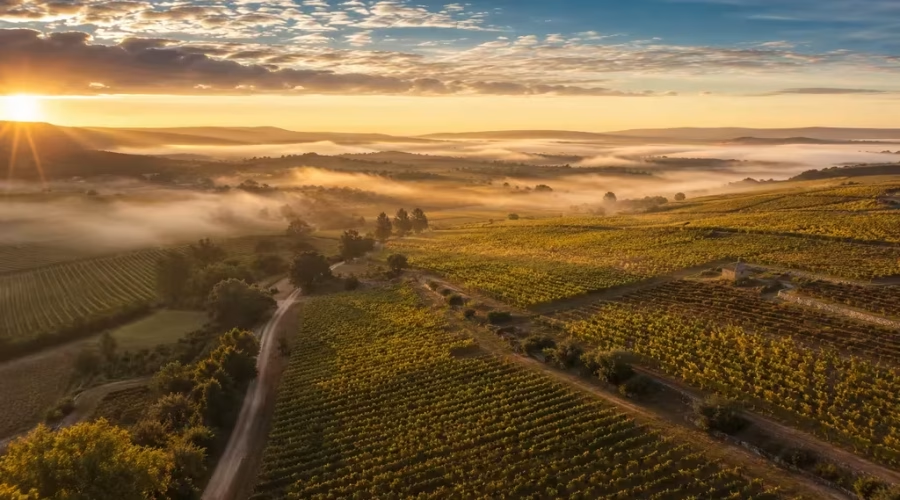
Few countries have shaped the history of wine as profoundly as France. While grapevines have been cultivated across Europe for thousands of years, it was in France that viticulture evolved into an art, a science, and ultimately a cultural identity recognized around the world. Today, French wines are synonymous with quality, tradition, and terroir, influencing how wine is produced, classified, and appreciated on every continent.
The story of French wine stretches back more than two millennia. From the first vineyards planted near the Mediterranean coast by Greek settlers to the vast expansion of viticulture under the Roman Empire, France gradually became one of the most important wine-producing regions in Europe. During the Middle Ages, Benedictine and Cistercian monks refined vineyard practices, carefully observing how soils, slopes, and microclimates affected the character of wine. Their work laid the foundations of the modern concept of terroir, a principle that remains central to French winemaking today.
Over the centuries, French wine continued to evolve through periods of prosperity, crisis, and innovation. Royal patronage elevated the reputation of regions such as Bordeaux and Burgundy, while merchants expanded international trade across Europe and beyond. The devastating phylloxera epidemic of the nineteenth century nearly destroyed the country’s vineyards, yet it also triggered one of the greatest reconstruction efforts in agricultural history. In the twentieth century, France introduced the Appellation d’Origine Contrôlée (AOC) system, establishing strict rules that would become a model for protected wine regions around the world.
Unlike a general history of European wine, the history of French wine is not simply a chronological account of vineyards and vintages. It is the story of how geography, politics, religion, commerce, science, and culture combined to create one of humanity’s most enduring agricultural traditions. Every major French wine region—from Bordeaux and Burgundy to Champagne, the Loire Valley, the Rhône Valley, Alsace, Provence, and beyond—contributed unique innovations that helped define modern viticulture.
Today, France remains one of the world’s leading wine-producing nations, not only because of its prestigious appellations and legendary estates, but also because of its enduring influence on winemaking practices, wine education, and global wine tourism. Concepts such as terroir, appellation, cru, château, and domaine have become part of the international language of wine, reflecting France’s lasting impact on the industry.
This guide explores the complete history of French wine, tracing its evolution from the vineyards of ancient Gaul to the internationally renowned wine culture of today. Along the way, we will discover the historical events, influential figures, technological innovations, and regional traditions that transformed France into the world’s most influential wine nation.
Long before France became the world’s most celebrated wine-producing nation, the land known as Gaul was home to Celtic tribes whose culture revolved around agriculture, trade, and craftsmanship. While alcoholic beverages such as beer and mead were commonly consumed, wine was initially a rare and prestigious product imported from the Mediterranean. Its arrival marked the beginning of a transformation that would eventually shape French history, economy, and identity.
Greek Traders Bring Wine to Gaul
The first significant introduction of wine to what is now France came during the 6th century BC, when Greek sailors from the city of Phocaea founded the colony of Massalia, modern-day Marseille, on the Mediterranean coast. This thriving port quickly became one of the most important commercial centers in the western Mediterranean.
Greek merchants transported amphorae filled with wine alongside olive oil, ceramics, and luxury goods. For the Celtic elites living inland, wine was an exotic and highly valuable commodity, often reserved for feasts, diplomatic exchanges, and displays of wealth. Archaeological excavations across southern France have uncovered thousands of Greek amphorae, confirming the importance of these early trade networks.
Although imported wine dominated at first, the Greeks also introduced knowledge of vine cultivation. Small vineyards were established around Massalia, benefiting from the warm Mediterranean climate and laying the foundations for France’s earliest viticultural landscapes.
Wine as a Symbol of Prestige
In Iron Age Gaul, wine was much more than a beverage. It became a symbol of power and social status.
Local chieftains used imported wine during ceremonial banquets to reinforce alliances and demonstrate their influence. Greek and later Etruscan merchants exchanged wine for valuable commodities such as metals, salt, hides, and agricultural products, integrating Gaul into an expanding Mediterranean economy.
Archaeological discoveries, including richly decorated drinking vessels and imported amphorae found in elite Celtic tombs, illustrate the prestige associated with wine long before vineyards covered the French countryside.
Early Viticulture Along the Mediterranean Coast
As Greek settlements expanded, vine cultivation gradually spread beyond the immediate surroundings of Massalia. The Mediterranean coastline offered ideal conditions for grape growing, with abundant sunshine, dry summers, limestone soils, and gentle sea breezes.
These first vineyards remained relatively modest in scale, but they demonstrated that grapevines could thrive in southern Gaul. The knowledge of pruning, harvesting, and winemaking techniques introduced by Greek settlers would later be adopted and expanded by the Romans.
Although most of northern Gaul still relied on imported wine, the Mediterranean region had already begun developing its own local production centuries before Roman conquest.
The Roman Conquest Changes Everything
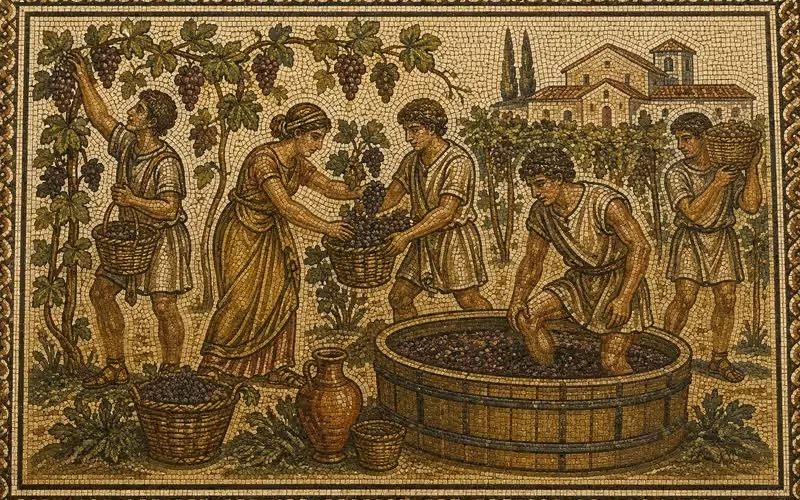
A decisive turning point came in the 1st century BC with Julius Caesar’s conquest of Gaul.
Rather than treating wine as a luxury import, the Romans viewed viticulture as an essential part of everyday life, agriculture, and commerce. They dramatically expanded vineyard planting across southern Gaul before gradually extending cultivation into river valleys and more northerly regions.
Roman engineers built roads that connected vineyards with growing cities and trading ports, making wine production increasingly profitable. At the same time, advances in vineyard management, barrel-making, and storage techniques improved both the quality and distribution of wine.
This period marked the true beginning of French viticulture on a large scale.
The Birth of a Wine Culture
By the end of the Roman era, wine had become deeply rooted in the social and economic life of Gaul. Vineyards were no longer confined to the Mediterranean coast but had spread along major river corridors that would later become some of France’s most famous wine regions.
The foundations had been laid for centuries of continuous development. What began as a luxury imported by Greek traders had evolved into a thriving agricultural tradition—one that would continue to expand under Roman rule and eventually give rise to the renowned vineyards of Bordeaux, Burgundy, the Rhône Valley, the Loire Valley, and beyond.
The history of French wine had truly begun, but its greatest period of expansion was still to come
Roman Gaul: How the Romans Built the Foundations of French Wine
If the Greeks introduced wine to southern Gaul, it was the Romans who transformed viticulture into a thriving agricultural industry. Following Julius Caesar’s conquest of Gaul between 58 and 50 BC, Roman influence reshaped the landscape, economy, and culture of the region. Roads, cities, and trade routes flourished, and vineyards expanded far beyond the Mediterranean coast.
During the following centuries, wine became an essential part of daily life throughout Roman Gaul. More importantly, the Romans established many of the vineyard areas that continue to define French wine today.
The Expansion of Vineyards Across Gaul
The Romans recognized that Gaul offered exceptional conditions for growing grapevines. Fertile valleys, diverse soils, and navigable rivers created ideal environments for viticulture.
Rather than concentrating production around the Mediterranean, Roman settlers gradually planted vineyards along the country’s major waterways, which served as natural transportation corridors for wine.
Several future wine regions began their development during this period:
The Rhône Valley, already influenced by Greek settlers, became one of the empire’s principal wine-producing areas.
Bordeaux emerged as an important commercial center connected to Atlantic trade.
Burgundy developed vineyards on limestone hills that would later become some of the world’s most prestigious terroirs.
The Loire Valley expanded its vineyards around Roman settlements along the Loire River.
Vineyards also appeared in parts of Champagne, Alsace, and southwestern Gaul where local conditions proved favorable.
Although these regions looked very different from today’s landscapes, many of their vineyard locations have remained continuously cultivated for nearly two thousand years.
Roman Engineering Revolutionized Winemaking
Roman success did not depend solely on planting vines. They introduced sophisticated agricultural techniques that greatly improved vineyard productivity and wine quality.
Among their contributions were:
systematic vineyard layout
improved pruning methods
better vine training systems
drainage and irrigation techniques
stone wine presses
fermentation rooms built specifically for winemaking
large storage facilities for amphorae and barrels
The Romans also encouraged careful vineyard management, recognizing that climate, soil, and exposure influenced grape quality. While they did not use the modern term terroir, they clearly understood that different locations produced different wines.
Rivers Became France's First Wine Highways
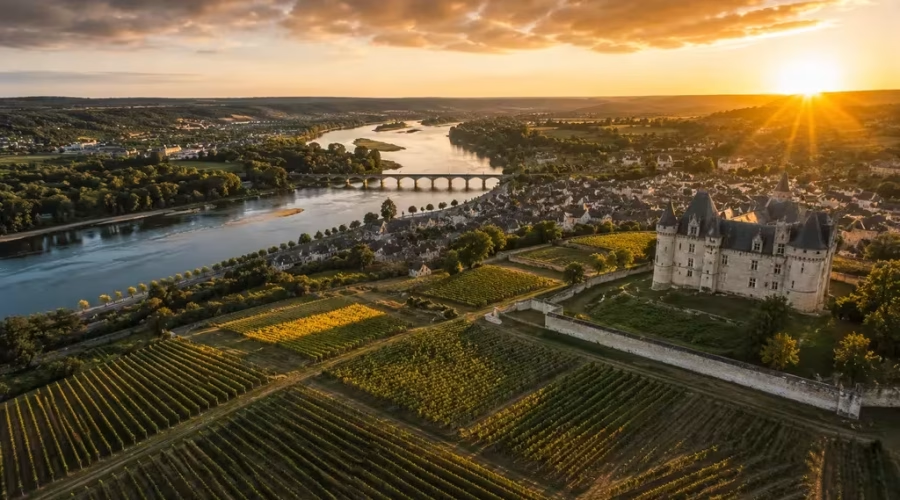
One of Rome’s greatest achievements was the creation of an efficient transportation network.Wine was heavy and difficult to move over land, making rivers the most economical trade routes. The Rhône, Garonne, Loire, Seine, and Saône became vital commercial arteries connecting vineyards with Roman towns and distant markets.
New roads linked vineyards to ports, while merchant ships carried wine throughout the Roman Empire.These trade networks stimulated further vineyard expansion, turning wine into one of Gaul’s most valuable agricultural products.
Many of today’s famous French wine regions still rely on the same river systems that first supported Roman commerce.
The Rise of Wooden Barrels
Although amphorae remained common throughout the Roman Empire, Gaul introduced an innovation that would profoundly influence wine transportation: the wooden barrel.
The Celts had long mastered cooperage, producing durable oak barrels for storing and transporting goods. The Romans quickly adopted this technology because barrels were:
easier to transport
less fragile than clay amphorae
reusable
better suited for long-distance trade
This innovation strengthened Gaul’s commercial importance and eventually became standard throughout much of Europe.
Centuries later, French oak barrels would become one of the defining tools of premium winemaking around the world.
Wine Becomes Part of Everyday Life
As vineyards expanded, wine gradually ceased to be an exclusive luxury reserved for elites. Roman soldiers received wine as part of their rations. Urban populations consumed it daily, while rural estates often produced their own wine for local use. Taverns, markets, and religious ceremonies all incorporated wine into everyday life.
Viticulture also became an important source of employment, supporting farmers, coopers, merchants, laborers, and shipbuilders. By the third century AD, wine production had become deeply integrated into the economy of Roman Gaul.
The Legacy of Roman Viticulture
When the Western Roman Empire began to decline during the fifth century, political authority weakened, but vineyards did not disappear. Many survived because local communities continued cultivating vines, while Christian churches adopted wine for religious ceremonies. Monasteries would later inherit much of this viticultural knowledge, preserving and improving it throughout the Middle Ages.
The Romans left behind far more than vineyards. They established transportation networks, agricultural techniques, commercial systems, and wine-growing regions that became the foundation of French viticulture.
Without Roman Gaul, there would have been no Bordeaux as a trading center, no Burgundy as a vineyard landscape, no Rhône Valley as a historic wine corridor, and no continuous tradition upon which medieval France could build. Their influence remains visible in the geography of French wine more than two thousand years later.
Medieval France: How Monks Created the Foundations of Modern French Wine
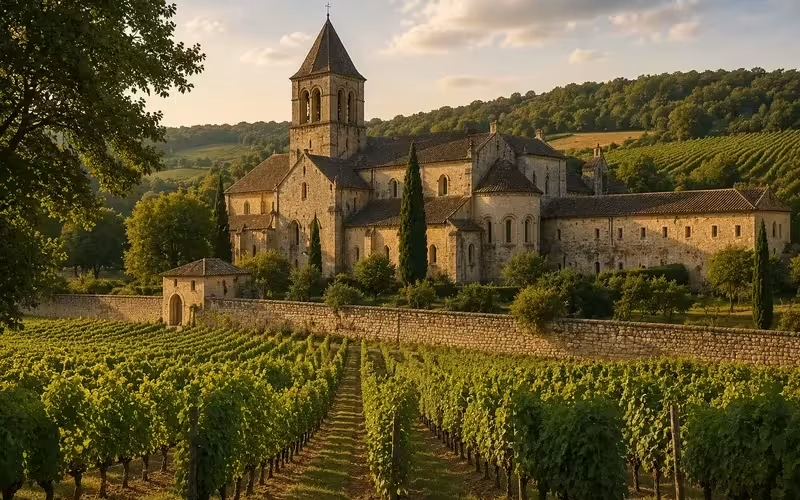
The collapse of the Western Roman Empire in the 5th century brought political instability to Gaul, but it did not mark the end of French viticulture. While many Roman institutions disappeared, vineyards survived thanks to one powerful and enduring force: the Christian Church.
During the Middle Ages, monasteries became the guardians of viticultural knowledge. Benedictine and Cistercian monks not only preserved Roman winemaking techniques but also transformed French viticulture through centuries of careful observation, experimentation, and meticulous record-keeping. Their work shaped many of France’s greatest vineyards and gave birth to one of the defining concepts of modern wine: terroir.
Unlike the Roman period, which focused on expanding vineyards across Gaul, the medieval era emphasized improving quality. This shift would permanently change the history of French wine.
Wine at the Heart of Medieval Christianity
Wine played an essential role in Christian worship, symbolizing the blood of Christ during the Eucharist. Every monastery required a reliable supply of wine, making vineyard ownership a practical necessity rather than a commercial ambition.
As Christianity spread throughout France, monasteries established vineyards wherever climatic conditions allowed. Over time, these vineyards became some of the country’s most productive and carefully managed estates.
Unlike feudal lords, whose priorities often changed with politics and war, monastic communities could devote generations to improving the same parcels of land. Their long-term perspective proved invaluable for understanding how vineyards evolved over time.
The Benedictines and the Expansion of Vineyard Culture
Founded in the 6th century, the Benedictine Order became one of Europe’s most influential religious communities.
The monks followed the principle of Ora et Labora (“Pray and Work”), combining spiritual life with agriculture, education, and scientific observation. Viticulture became one of their most important activities.
Benedictine monasteries expanded vineyards throughout regions including:
Burgundy
Champagne
Loire Valley
Alsace
Rhône Valley
Southwest France
Their estates often became local centers of innovation, where monks refined pruning methods, improved harvesting practices, and developed more consistent winemaking techniques.
Cluny: A Medieval Wine Empire
Founded in 910, the Abbey of Cluny grew into one of the most powerful religious institutions in medieval Europe. Its influence extended far beyond Burgundy through a vast network of dependent monasteries. As the order expanded, so did its vineyards.
Cluny encouraged careful vineyard management and helped spread viticultural expertise across France. Wine produced by Cluniac monasteries gained a reputation for quality, contributing to the growing prestige of French wines throughout medieval Europe.
The abbey also played an important role in preserving written knowledge about vineyard management, ensuring that successful techniques could be passed from one generation to the next.
The Cistercians and the Birth of Terroir
If the Benedictines preserved and expanded viticulture, the Cistercian Order revolutionized it.
Established in 1098 at Cîteaux, near Dijon, the Cistercians adopted a remarkably systematic approach to vineyard cultivation.
Rather than treating vineyards as uniform fields, they carefully observed differences between neighboring plots. Over decades—and often centuries—they recorded how variations in:
soil composition
slope
altitude
drainage
sun exposure
local climate
affected the character of the wines produced.
This empirical approach led them to identify exceptional vineyard sites capable of producing wines with distinctive personalities year after year.
Although they never used the modern word terroir, the principle was already firmly established.
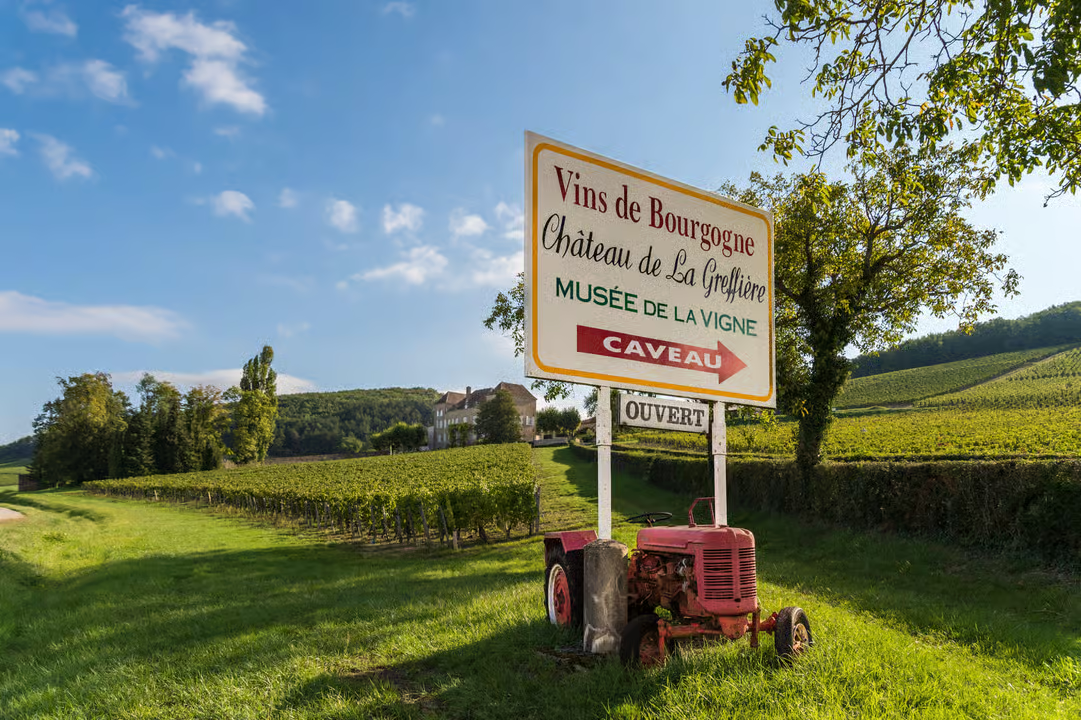
Today, many of Burgundy’s famous Grand Cru vineyards correspond closely to parcels first recognized and cultivated by Cistercian monks nearly a thousand years ago.
The Creation of the Clos
One of the monks’ most enduring contributions was the development of the clos.
A clos is a vineyard enclosed by stone walls, originally built to:
protect vines from animals
define ownership
reduce theft
create favorable growing conditions
Some of these enclosed vineyards became legendary.
The most famous example is Clos de Vougeot, created by Cistercian monks during the 12th century. Although ownership has changed many times since then, its stone walls still stand as a symbol of medieval French viticulture.
The concept of the clos reflects the monks’ extraordinary attention to detail and their belief that individual vineyard sites deserved careful protection and management.
Medieval Trade Expands the Reputation of French Wine
As political stability gradually returned, commerce flourished across medieval France. River systems such as the Rhône, Loire, Seine, and Garonne enabled wines to reach growing towns and international markets.
At the same time, important pilgrimage routes—including the route to Santiago de Compostela—helped spread the reputation of French wines across Europe.
Monasteries frequently welcomed pilgrims, nobles, scholars, and merchants, exposing visitors to wines produced in different regions. Wine became not only an agricultural product but also a symbol of hospitality, prestige, and regional identity. By the late Middle Ages, French wines were already attracting buyers far beyond the country’s borders.
Medieval Foundations That Still Shape French Wine
Perhaps the greatest achievement of medieval France was not the volume of wine produced but the philosophy developed around vineyard quality.
The monks demonstrated that:
some vineyard sites consistently produced superior wines;
careful observation over many years improved viticulture;
vineyard boundaries mattered;
quality depended on place as much as on technique.
These ideas remain fundamental to French wine today.
Modern appellations, Grand Crus, Premier Crus, and protected vineyard classifications all owe a considerable debt to the work begun by medieval monastic communities.
When people speak of France as the birthplace of terroir, they are referring to a concept patiently developed over centuries by generations of monks who transformed vineyards into living laboratories. Their legacy remains visible in nearly every prestigious wine region in France, making the Middle Ages one of the most influential chapters in the history of French wine.
The Rise of French Wine Prestige: Kings, Trade and the Great Wine Regions
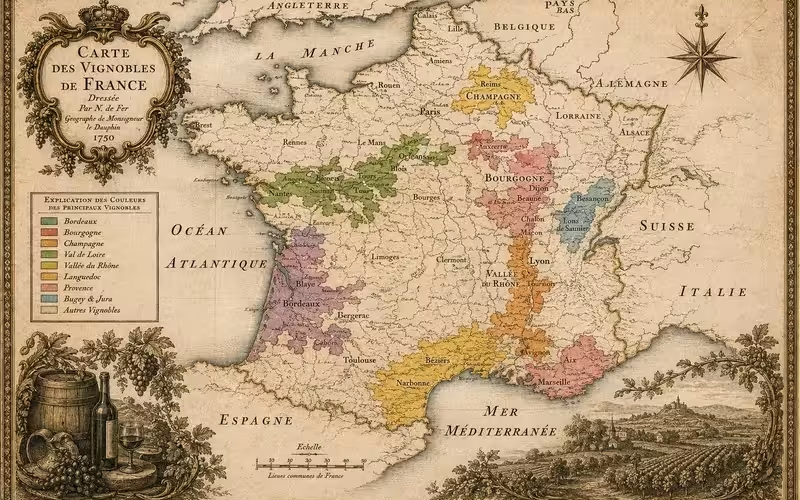
By the end of the Middle Ages, France was no longer simply a country that produced wine—it had become a nation whose wines were sought after across Europe. While monasteries had perfected vineyard cultivation, the next chapter in French wine history was driven by royal courts, powerful merchants, and expanding international trade.
Between the 12th and 17th centuries, French wine evolved from a regional agricultural product into one of Europe’s most valuable exports. Political alliances, maritime commerce, and growing urban markets elevated the reputation of regions such as Bordeaux, Burgundy, Champagne, and the Loire Valley, laying the foundations for their global prestige.
Bordeaux Becomes Europe's Great Wine Port
No region benefited more from medieval politics than Bordeaux.
In 1152, the marriage of Eleanor of Aquitaine to Henry Plantagenet, the future King Henry II of England, placed Aquitaine under English rule for nearly three centuries.
This political union transformed Bordeaux into England’s primary source of wine.
Thousands of barrels—known as tuns—were shipped every year from the Port of Bordeaux to London, Bristol, and other English ports. The wines, known collectively as claret, became enormously popular among the English nobility and wealthy merchants.
The economic impact was profound:
vineyards expanded rapidly throughout the Bordeaux region;
merchants invested in wine production and storage;
ports and river transport developed;
wine became one of the region’s principal sources of wealth.
Even after the end of English rule, Bordeaux remained one of Europe’s most important wine-exporting regions, a position it continues to hold today.
Burgundy Earns a Reputation for Excellence
While Bordeaux dominated international trade, Burgundy built its reputation on quality.
The powerful Dukes of Burgundy recognized that exceptional wines enhanced both political influence and economic prosperity. They actively promoted Burgundian wines throughout their territories and royal courts.
One of the most influential figures was Philip the Bold, Duke of Burgundy.
In 1395, he issued a famous decree banning the cultivation of Gamay in the Côte d’Or, describing it as an inferior grape variety. Instead, he encouraged the planting of Pinot Noir, believing it produced wines of far greater elegance and longevity.
Although modern historians debate some of his motivations, the decree had lasting consequences. It reinforced Burgundy’s commitment to producing high-quality wines from carefully selected grape varieties—a philosophy that still defines the region today..
The Loire Valley Supplies the Royal Court
As French kings increasingly established their residences along the Loire River during the Renaissance, the Loire Valley became closely associated with royal life.
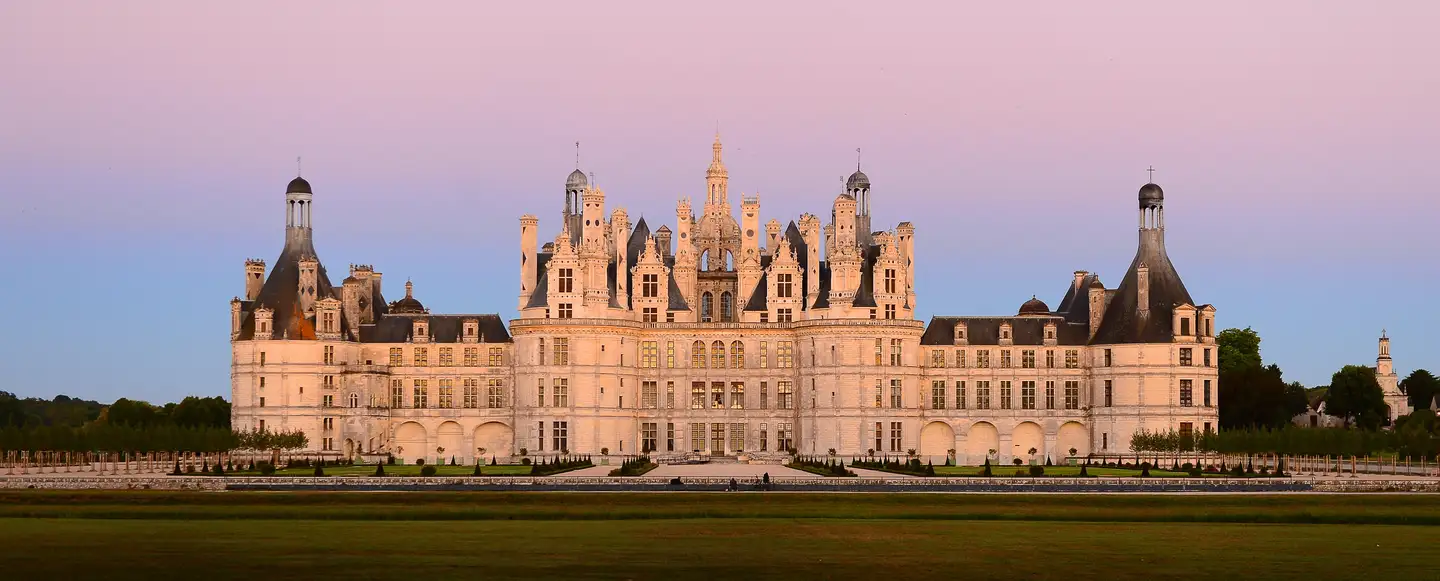
Magnificent châteaux were built throughout the region, attracting nobles, diplomats, artists, and merchants from across Europe.
Local wines gained prestige as they appeared on the tables of kings and aristocrats. Demand encouraged the expansion of vineyards around cities such as Tours, Saumur, and Angers, while the Loire River provided an efficient route for transporting wine to Paris and western France.
The Loire gradually became known for its remarkable diversity, producing both white and red wines that reflected the varied landscapes of the valley.
Champagne Begins Its Transformation
During the late Middle Ages and Renaissance, Champagne was already an important wine-producing region, although it looked very different from the sparkling wine capital we know today.
The wines were primarily still wines, often competing with those of neighboring Burgundy.
Its proximity to Paris gave the region a commercial advantage, while regular trade fairs in the city of Troyes attracted merchants from across Europe. These commercial connections increased the visibility of Champagne wines long before sparkling wine became their defining identity.
The revolutionary development of sparkling Champagne would come later, during the 17th and 18th centuries.
Wine Becomes an International Commodity
By the 16th century, French wine was traded throughout much of Europe.
Major export destinations included:
England
Flanders
The Dutch Republic
German states
Scandinavia
Northern Italy
Dutch merchants became particularly influential, investing heavily in Bordeaux and southwestern France. They financed drainage projects in the Médoc, improved shipping logistics, and encouraged wine production tailored to export markets.
At the same time, inland trade expanded through France’s growing network of rivers and roads, supplying rapidly growing cities with wine from different regions.
Wine had become one of France’s most valuable commercial products.
The Emergence of Regional Identities
As trade expanded, buyers became increasingly interested in the origin of wines rather than simply purchasing generic products.
Merchants and consumers began associating particular qualities with specific regions:
Bordeaux for elegant, age-worthy red wines.
Burgundy for refined Pinot Noir and Chardonnay.
Loire for fresh and diverse styles.
Rhône for powerful southern wines.
Champagne for wines produced in the cool northeastern vineyards.
Although formal appellation laws would not appear for several centuries, the idea that geography determined quality was becoming firmly established.
This growing recognition of regional identity represented another important step toward the modern French wine system.
France Becomes Europe's Wine Reference
By the beginning of the 17th century, France had achieved something unprecedented. Its wines were no longer valued solely because they were widely available or commercially successful. They were admired for their quality, diversity, and consistency.
Royal patronage, influential merchants, international trade, and centuries of vineyard refinement had transformed France into Europe’s leading wine nation.
The country’s most famous wine regions had begun building reputations that would endure for centuries, while the concepts of regional identity and vineyard excellence paved the way for the classification systems and appellations that would later define French wine.
The Golden Age of French Wine: Innovation, Classification and Global Influence
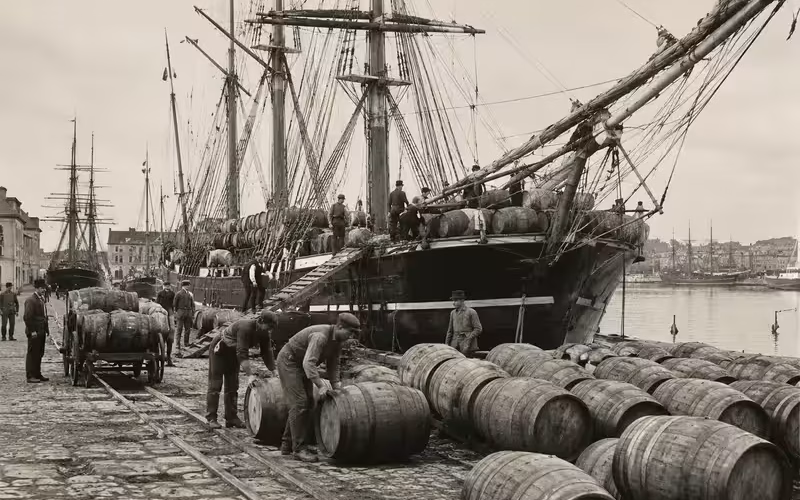
From the 17th to the 19th century, French wine entered a period of extraordinary growth. Improvements in viticulture, advances in winemaking, expanding international trade, and the rise of influential wine merchants transformed France into the undisputed leader of the global wine industry.
This era saw the birth of many traditions that continue to define French wine today. Famous châteaux emerged in Bordeaux, Burgundy refined its vineyard hierarchy, Champagne became the world’s first great sparkling wine, and French producers developed a reputation for excellence that spread far beyond Europe.
By the eve of the Industrial Revolution, France was no longer simply Europe’s largest producer of fine wine—it had become the international benchmark against which all other wine-producing countries were judged.
The Rise of the Great Wine Estates
As wealth increased during the 17th and 18th centuries, vineyard ownership became increasingly concentrated among noble families, religious institutions, and prosperous merchants.
Many estates invested heavily in improving vineyard management, cellar construction, and wine storage.
This period saw the emergence of numerous wine estates whose names remain famous today, particularly in:
Bordeaux
Burgundy
Champagne
Loire Valley
Rhône Valley
Large estates gradually developed distinctive identities based on the quality of their vineyards rather than simply the quantity of wine produced.
The concept of a prestigious wine estate—or château in Bordeaux and domaine in Burgundy—became an essential feature of French viticulture.
Bordeaux Dominates International Trade
By the 18th century, Bordeaux had become one of the busiest wine ports in the world.
The city’s merchants exported enormous quantities of wine to:
England
The Netherlands
Russia
Colonial America
A sophisticated commercial system developed around the famous Place de Bordeaux, where wine merchants (négociants) purchased wines from producers before distributing them across international markets.
This merchant network helped establish Bordeaux as a truly global wine brand centuries before modern marketing existed.
The region also began producing wines intended for long-term aging, thanks to improvements in vineyard management and cellar practices.
Champagne Reinvents Wine
One of the most remarkable innovations in wine history occurred during this period.
Although sparkling wines had appeared accidentally before, producers in Champagne gradually learned how to control secondary fermentation inside the bottle.
Advances in:
stronger glass bottles,
improved cork closures,
precise blending,
and better cellar management,
allowed Champagne producers to consistently create sparkling wines of exceptional quality.
By the 18th century, Champagne had become the preferred wine for royal courts and European aristocracy.
Its association with celebration, luxury, and prestige continues to define the region today.
Burgundy Perfects Vineyard Classification
While Bordeaux focused on commerce, Burgundy continued refining its understanding of vineyard quality.
Centuries of observation enabled growers to distinguish exceptional vineyard parcels from surrounding land.
Individual vineyards developed reputations based on their unique geological characteristics and their ability to produce consistently outstanding wines.
This gradual recognition of vineyard hierarchy ultimately gave rise to Burgundy’s famous system of:
Grand Cru
Premier Cru
Village Appellations
Although these official classifications would only be formalized much later, their origins lie in the careful observations accumulated over centuries.
Scientific Progress Improves Winemaking
The Enlightenment encouraged scientific thinking throughout agriculture, including viticulture.
French growers adopted new approaches to:
vineyard pruning,
disease prevention,
soil management,
fermentation,
cellar hygiene,
wine storage.
During the 19th century, the work of Louis Pasteur revolutionized the understanding of fermentation.
His research demonstrated that fermentation was caused by living microorganisms rather than spontaneous chemical reactions.
Pasteur’s discoveries transformed modern oenology, helping winemakers produce cleaner, more stable wines while reducing spoilage.
His influence extended far beyond France and remains fundamental to winemaking worldwide.
French Wine Becomes a Symbol of Prestige
Throughout Europe, serving French wine became a sign of refinement.
Royal courts, wealthy merchants, diplomats, and aristocrats increasingly preferred wines from:
Bordeaux,
Burgundy,
Champagne,
the Loire Valley,
and the Rhône Valley.
French terminology entered the vocabulary of wine merchants across the continent.
Words such as château, terroir, cru, millésime, and cuvée gradually became part of the international language of wine.
France was no longer exporting only bottles—it was exporting an entire wine culture.
A Prosperous Industry Faces New Challenges
Despite this remarkable success, the prosperity of French viticulture would soon face its greatest threat.
In the second half of the 19th century, a tiny insect accidentally introduced from North America would devastate vineyards across the country.
Within a few decades, millions of vines would die, entire wine regions would collapse economically, and the future of French wine itself would be placed in jeopardy.
The phylloxera crisis would become the greatest catastrophe in the history of French viticulture—and one of the most transformative events the industry had ever experienced.
The Phylloxera Crisis: The Greatest Disaster in French Wine History
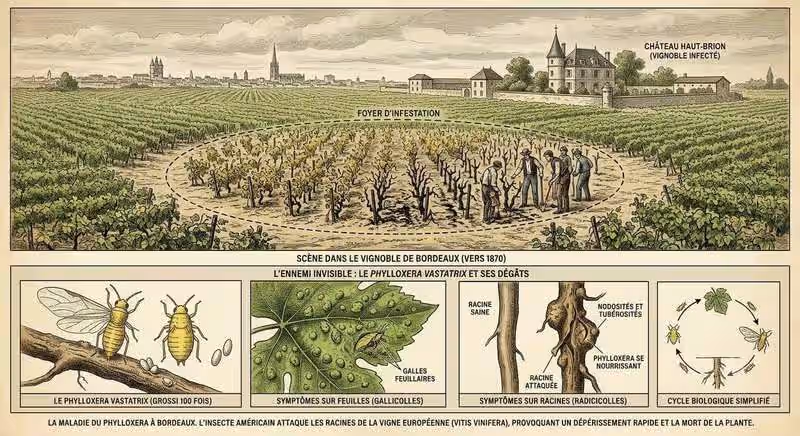
No event has had a more profound impact on French viticulture than the phylloxera epidemic of the late nineteenth century. In just a few decades, a microscopic insect destroyed millions of vineyards, devastated rural economies, and threatened the very survival of French wine.
The crisis forced growers to rethink every aspect of viticulture. Although the epidemic caused immense hardship, it ultimately reshaped the French wine industry, leading to scientific innovation, large-scale vineyard reconstruction, and stricter quality standards that continue to influence winemaking today.
A Tiny Insect with Devastating Consequences
Phylloxera (Daktulosphaira vitifoliae) is a tiny aphid-like insect native to North America.
Unlike European grapevines (Vitis vinifera), American vine species had evolved alongside the insect and developed natural resistance. European vines, however, had no such protection.
The problem began during the mid-19th century, when American vines were imported into Europe for botanical collections and experimental vineyards. Hidden in their roots was phylloxera.
The insect fed on vine roots, creating wounds that allowed fungal infections to develop. Gradually, the vines weakened, stopped producing healthy fruit, and eventually died.
At first, growers could not understand why apparently healthy vineyards were suddenly collapsing.
The Epidemic Spreads Across France
The first confirmed outbreak occurred in 1863 near the village of Pujaut in the southern Rhône Valley.
From there, phylloxera spread with alarming speed.
Within a few decades, nearly every major wine region in France had been affected, including:
Bordeaux
Burgundy
Champagne
Loire Valley
Rhône Valley
Provence
Languedoc
Alsace
Southwest France
By the end of the nineteenth century, approximately 40% of France’s vineyards had been destroyed, while millions of additional vines required replacement.
Entire villages that depended on wine production faced economic collapse.
Thousands of winegrowers abandoned their land or emigrated in search of work.
A Nation Searches for Answers
The cause of the epidemic remained a mystery for several years. Many theories circulated. Some blamed climate change. Others suspected soil exhaustion, disease, fungi, or even divine punishment.
French scientists eventually identified the tiny insect living on infected roots, but finding a solution proved far more difficult. Growers experimented with almost everything imaginable:
flooding vineyards,
injecting toxic chemicals into the soil,
burying live toads beneath vines,
applying carbon disulfide,
covering roots with sand.
Most methods were expensive, impractical, or simply ineffective.The future of French wine appeared uncertain.
The American Rootstock Solution
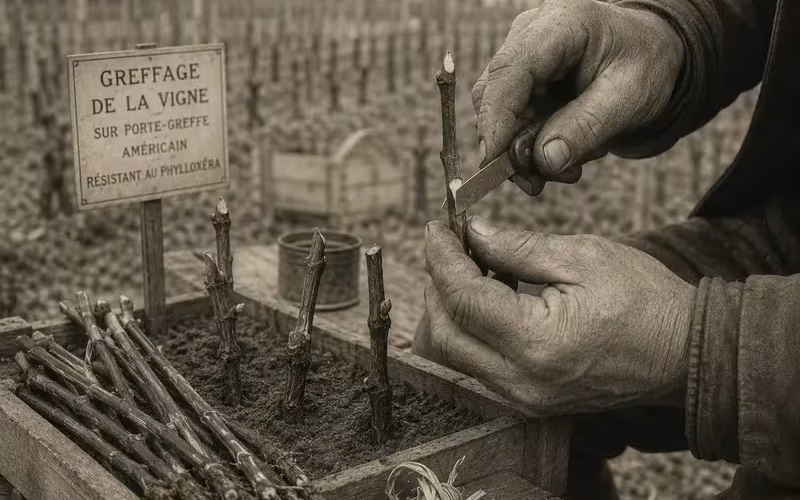
The breakthrough came from an unexpected source. Researchers discovered that while European grape varieties were highly susceptible to phylloxera, American vine species possessed natural resistance.
Instead of replacing famous French grape varieties such as Cabernet Sauvignon, Pinot Noir, Chardonnay, Syrah, or Merlot, scientists developed a different solution: grafting European vines onto American rootstocks.
The roots resisted phylloxera, while the upper part of the vine continued producing the traditional French grape varieties.
Although many growers initially resisted the idea—believing it would alter wine quality—it soon became clear that grafting offered the only practical way to save French vineyards.
Today, almost every commercial vineyard in France, and indeed throughout much of the world, continues to rely on this technique.
Rebuilding the French Vineyard
Reconstruction was an enormous undertaking. Millions of vines had to be uprooted and replanted. Winegrowers used this opportunity to modernize many vineyards by:
selecting healthier planting material,
improving vineyard layouts,
introducing better drainage,
adapting grape varieties to local conditions,
replacing poorly suited vineyards.
Some wine regions changed dramatically during this rebuilding process. In certain areas, less productive vineyards disappeared altogether, while others expanded with renewed focus on quality.
The French vineyard that emerged after phylloxera was not identical to the one that had existed before the epidemic—it was stronger, more organized, and increasingly guided by scientific knowledge.
Fraud and the Need for Regulation
The collapse in wine production created another serious problem. With genuine wine becoming scarce, fraudulent products flooded the market.
Some merchants diluted wines with water, added sugar, artificial coloring, or imported wines of uncertain origin. Others falsely claimed that ordinary wines came from prestigious regions such as Bordeaux or Burgundy.
Consumer confidence declined. Honest producers demanded greater protection for both wine quality and geographic origin.
This growing demand for regulation would eventually lead to one of the most significant developments in French wine history: the creation of a legally protected appellation system.
A Crisis That Changed the World
Although phylloxera was a catastrophe, it ultimately transformed French viticulture for the better.
The epidemic encouraged collaboration between scientists, growers, and government authorities. It accelerated research in plant biology, vineyard management, and disease prevention, while demonstrating the importance of protecting the identity and authenticity of wine-growing regions.
Most importantly, it prepared the way for the establishment of strict production rules that would preserve France’s greatest vineyards for future generations.
The Birth of French Appellations: Preserving a National Wine Heritage
By the beginning of the twentieth century, French wine had overcome the devastation of phylloxera, but another challenge threatened its future. The rapid reconstruction of vineyards, combined with growing international demand, had created widespread confusion about the authenticity of French wines. Famous regional names were increasingly misused, fraudulent products appeared on the market, and consumers struggled to distinguish genuine wines from imitations.
For a country whose reputation had been built over centuries, protecting the identity of its vineyards became a national priority. The solution would fundamentally change not only French wine, but the way wine origins are protected throughout the world.
A Growing Demand for Authenticity
The decades following the phylloxera crisis were marked by uncertainty.
As vineyards were replanted and production gradually recovered, dishonest merchants took advantage of the situation by selling ordinary wines under the names of prestigious regions. Wines produced far from Bordeaux, Burgundy, or Champagne were sometimes marketed as if they came from these famous vineyards, while imported wines were occasionally blended and sold as French.
These practices damaged consumer confidence and threatened the reputation of producers who had spent generations building the prestige of their vineyards.
Across France, winegrowers began calling for stronger legal protection to preserve the identity of their regions and defend the value of authentic wines.
From Regional Reputation to Legal Protection
For centuries, the reputation of French wines had depended largely on tradition. Buyers trusted certain regions because experience had shown that they consistently produced exceptional wines.
During the early twentieth century, however, tradition alone was no longer enough.
French lawmakers gradually introduced legislation designed to protect the geographical identity of wine-producing regions and combat fraud. These early laws marked an important shift: the origin of a wine was no longer viewed simply as a commercial description but as something worthy of legal protection.
The movement gained momentum throughout the 1920s and early 1930s as producers, politicians, and agricultural experts worked together to establish a more comprehensive system.
The Creation of the AOC System
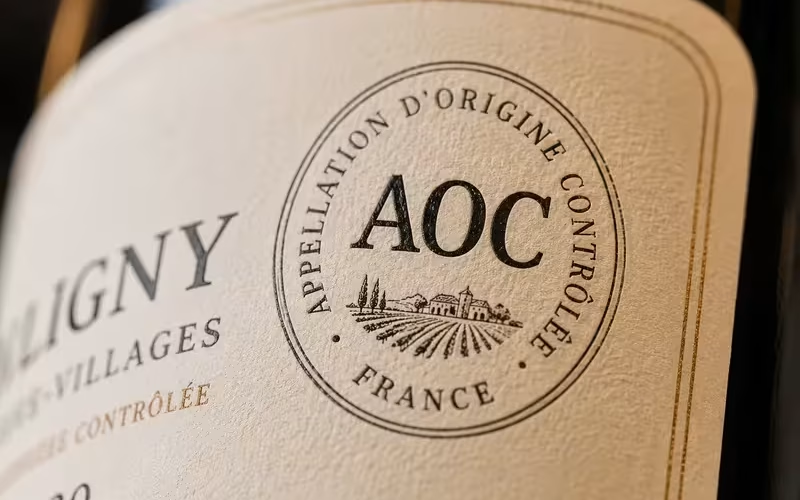
A defining moment came in 1935 with the creation of the Appellation d’Origine Contrôlée (AOC) system and the establishment of the Institut National des Appellations d’Origine (INAO).
Rather than protecting individual wineries, the new system recognized the historical identity of entire wine-growing regions. It acknowledged that the reputation of places such as Bordeaux, Burgundy, Champagne, the Loire Valley, and the Rhône Valley had been built over centuries through the combined influence of geography, climate, local traditions, and the experience of generations of winegrowers.
This represented a completely new way of thinking about wine.
Instead of viewing wine as a product that could be reproduced anywhere, France formally recognized that certain wines could only exist because they were produced in a specific place.
A Turning Point in French Wine History
The introduction of appellations marked far more than a legal reform.
It confirmed a philosophy that had gradually emerged since the Middle Ages: great wines are inseparable from their place of origin.
The new framework encouraged producers to preserve regional traditions rather than imitate successful wines from elsewhere. It also reinforced the international reputation of French wine by giving consumers greater confidence in the authenticity of what they were buying.
Over time, appellations became one of the defining features of French viticulture and one of the country’s most valuable cultural assets.
A Legacy That Reached Beyond France
The French appellation system quickly became an international reference.
As other wine-producing countries sought to protect their own historic vineyards, many adopted similar approaches based on geographical origin and regional identity. Today, systems across Europe—and many beyond—share principles that were first formalized in France during the twentieth century.
Nearly a century after its creation, the French appellation system continues to safeguard hundreds of historic wine regions while preserving the diversity that makes French wine unique.
Although the rules governing French appellations have evolved over time, their original purpose remains unchanged: to protect the heritage, authenticity, and identity of France’s vineyards for future generation
French Wine After World War II: Modernization and a New Era of Excellence
The Second World War left France with a damaged economy, disrupted trade networks, and an agricultural sector in need of renewal. Many vineyards had suffered from neglect, labor shortages, and declining investment during the war years. Although the country’s great wine regions survived, the French wine industry faced the challenge of rebuilding while adapting to a rapidly changing world.
The decades that followed marked one of the most significant periods of transformation in the history of French wine. Traditional knowledge remained at the heart of viticulture, but it was increasingly supported by scientific research, technological innovation, and improved vineyard management. This balance between heritage and modernization would allow France to strengthen its position as the world’s leading wine-producing nation.
Rebuilding the Vineyards
During the late 1940s and 1950s, winegrowers focused on restoring vineyards and improving productivity.
Many estates replanted damaged parcels, replaced aging vines, and invested in better equipment. Mechanization gradually reduced the amount of manual labor required for tasks such as soil cultivation and vineyard maintenance, allowing growers to manage larger areas more efficiently.
At the same time, improvements in transportation made it easier to move wine across France and export it to international markets.
The post-war reconstruction laid the foundations for a more resilient and competitive wine industry.
Science Transforms French Winemaking
One of the defining features of the post-war period was the growing role of scientific research.
Universities, agricultural institutes, and research centers worked closely with winegrowers to better understand vine physiology, grape diseases, fermentation, and cellar practices.
Advances in oenology helped producers improve consistency while preserving the distinctive character of each wine region.
Temperature-controlled fermentation, improved hygiene, and more precise vineyard management allowed winemakers to produce cleaner, more stable wines without abandoning traditional methods.
Rather than replacing centuries of experience, science became a tool for protecting and enhancing the quality of French wine.
The Rise of Cooperatives
Not every French winegrower owned a large estate.
Across many regions, particularly in southern France, small family vineyards joined together to create wine cooperatives.
These organizations allowed growers to share equipment, wineries, storage facilities, and technical expertise while reducing production costs.
Cooperatives played an important role in supporting rural communities and helping thousands of small producers remain economically viable.
Today, they continue to represent an important part of the French wine industry, especially in regions with many independent growers.
Quality Becomes the Priority
During the second half of the twentieth century, France gradually shifted its focus from producing large volumes of wine to producing better wine. Consumers increasingly sought authenticity, regional identity, and higher-quality bottles rather than inexpensive table wines.
Many vineyards reduced yields, invested in better vineyard management, and concentrated on expressing the unique character of their terroirs. The appellation system also encouraged producers to maintain high standards, reinforcing France’s international reputation for quality and craftsmanship.
This transition helped establish many French wines among the world’s most prestigious and collectible.
French Wine Expands Across the Globe
As international trade recovered after the war, exports became increasingly important. French wines reached growing markets in:
North America
Northern Europe
Japan
Australia
and later emerging markets across Asia.
Restaurants, wine merchants, and collectors around the world looked to France as the benchmark for fine wine. Names such as Bordeaux, Burgundy, Champagne, Chablis, Sancerre, and Châteauneuf-du-Pape became internationally recognized symbols of excellence.
At the same time, French wine schools and research institutions helped train generations of winemakers from every continent, further extending France’s influence on global viticulture.
A Bridge Between Tradition and Innovation
By the end of the twentieth century, French wine had entered a new chapter.
Centuries-old vineyards continued to produce wines according to regional traditions, while modern technology improved precision, sustainability, and consistency.
This ability to embrace innovation without abandoning heritage became one of the defining strengths of French viticulture.
The foundations laid by Roman settlers, medieval monks, merchants, and lawmakers were now supported by scientific expertise and an increasingly global outlook.
France had successfully adapted to the modern world while preserving the history that made its wines unique. The next challenge would come not from rebuilding vineyards, but from responding to globalization, changing consumer preferences, and a rapidly evolving climate.
French Wine Today: Preserving a Historic Legacy While Embracing the Future
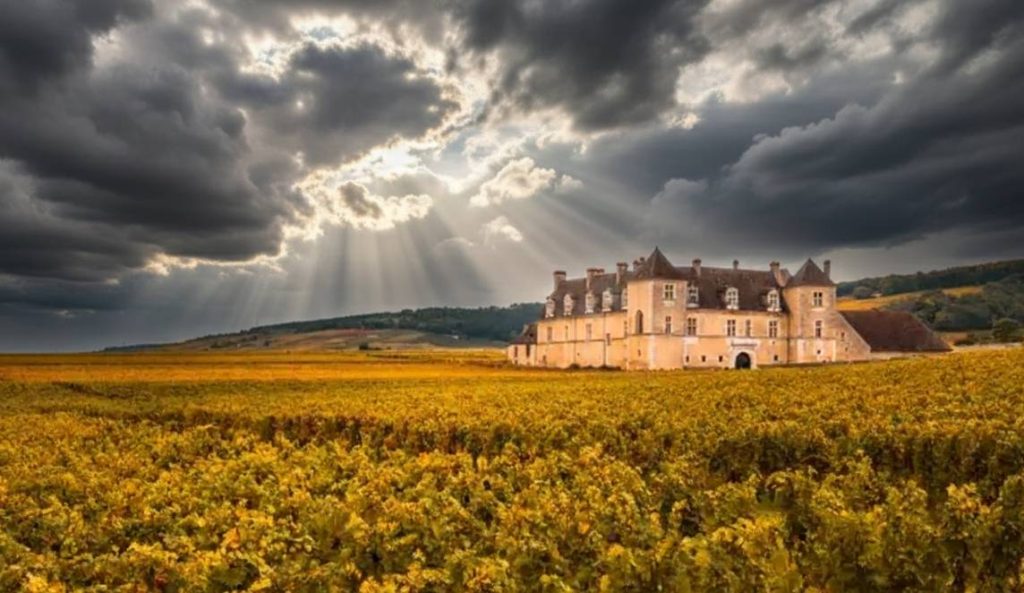
More than two thousand years after the first vines were planted along the Mediterranean coast, France remains one of the world’s most influential wine-producing nations. Its vineyards are not simply agricultural landscapes—they are living archives where history, culture, and craftsmanship continue to shape every harvest.
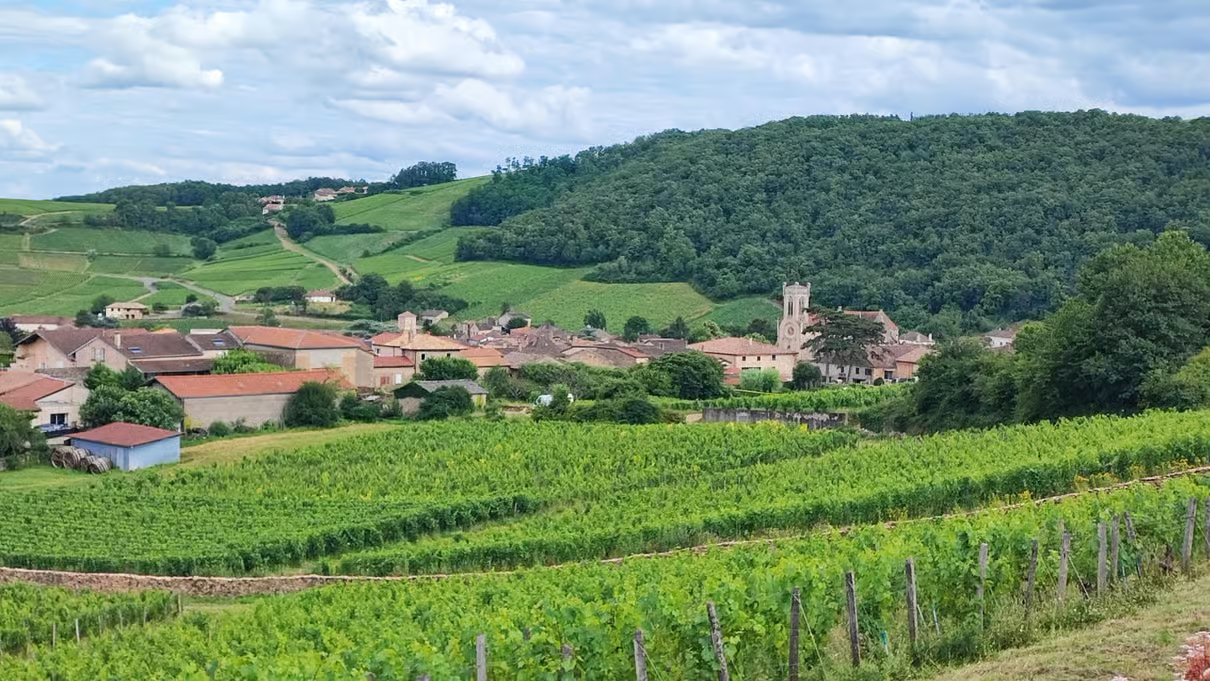
Today, France is home to hundreds of protected appellations and some of the world’s most celebrated wine regions. From the limestone slopes of Burgundy and the gravel vineyards of Bordeaux to the chalk hills of Champagne and the sun-drenched terraces of the Rhône Valley and Provence, each region reflects centuries of accumulated knowledge and local tradition.
At the same time, French wine continues to evolve.
Winegrowers are adapting to new environmental challenges, including rising temperatures, changing rainfall patterns, and increasingly unpredictable growing seasons. Many producers are embracing sustainable vineyard practices, reducing chemical inputs, and investing in organic and biodynamic farming. Others are experimenting with new techniques while remaining faithful to the traditions that have defined their regions for generations.
Global competition has also transformed the industry. Excellent wines are now produced on every continent, encouraging French producers to innovate while preserving the qualities that have made their wines internationally respected for centuries. Rather than relying solely on reputation, many estates now combine traditional expertise with cutting-edge research, precision viticulture, and a renewed focus on environmental stewardship.
Despite these changes, the fundamental principles of French wine remain remarkably consistent. Respect for place, attention to detail, and the belief that every vineyard possesses a unique identity continue to guide winemakers across the country.
The history of French wine is therefore not confined to museums or ancient manuscripts. It is written every year in vineyards that have been cultivated for centuries, in family estates passed from one generation to the next, and in bottles that continue to express the character of their origin.
France’s influence extends far beyond its own borders. Its concepts of terroir, appellations, vineyard classification, and regional identity have shaped modern viticulture across the globe. While the world of wine continues to change, France remains one of its principal references—not because it refuses to evolve, but because it has consistently balanced innovation with respect for its remarkable heritage.
For travelers, exploring France’s wine regions is far more than a tasting experience. It is an opportunity to journey through more than two millennia of history, discovering Roman vineyards, medieval monasteries, Renaissance châteaux, historic wine villages, and landscapes that continue to produce some of the world’s finest wines.
The story of French wine is still being written, vintage after vintage, making France not only one of the oldest wine-producing countries in the world, but also one of its most dynamic.