Table of Contents
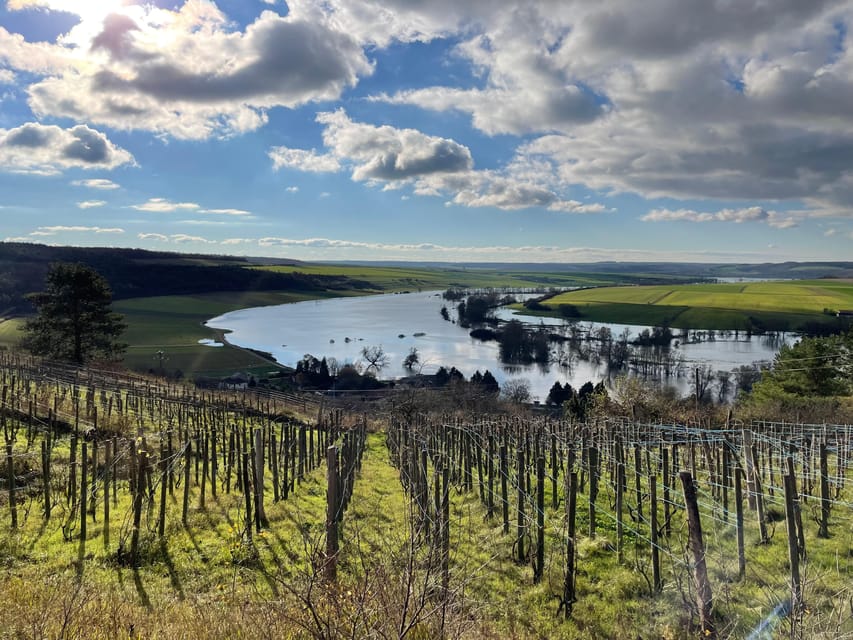
To understand the soul of the French viticultural landscape, one must look beyond the simplified narratives of easy-drinking fruit and venture into the fractured granite heart of the southern Massif Central. Beaujolais is not merely a region; it is a geological battlefield where ancient volcanic activity, tectonic shifts, and millennia of erosion have conspired to create a mosaic of terroirs unparalleled in their specificity. As a Lead Oenologist, I view this region as a global benchmark for the Gamay Noir à Jus Blanc grape, a variety that acts as a transparent medium for the mineral complexity of the earth.
The historical significance of this land stretches back to Roman times, but its true prestige lies in the medieval stewardship that recognized the distinct personality of individual hillsides. There is a profound cultural heritage etched into the rolling hills, where the transition from the sedimentary plains of the Saône River to the rugged heights of the Haut-Beaujolais signals a change in viticultural destiny. The “soul” of the landscape is found in the contrast between the luminous, sun-drenched slopes of the south and the dark, brooding manganese-rich soils of the north.
For the luxury traveler and the serious collector alike, Beaujolais offers a narrative of resilience and precision. It is a region that has moved past the ephemeral trends of the late 20th century to reclaim its status as a producer of profound, age-worthy wines. To walk through a vineyard in Moulin-à-Vent or Morgon is to tread upon history that is 300 million years in the making. This is where the concept of terroir transcends mere dirt and becomes an experiential journey of taste, place, and time.
Journey to the Heart of Beaujolais
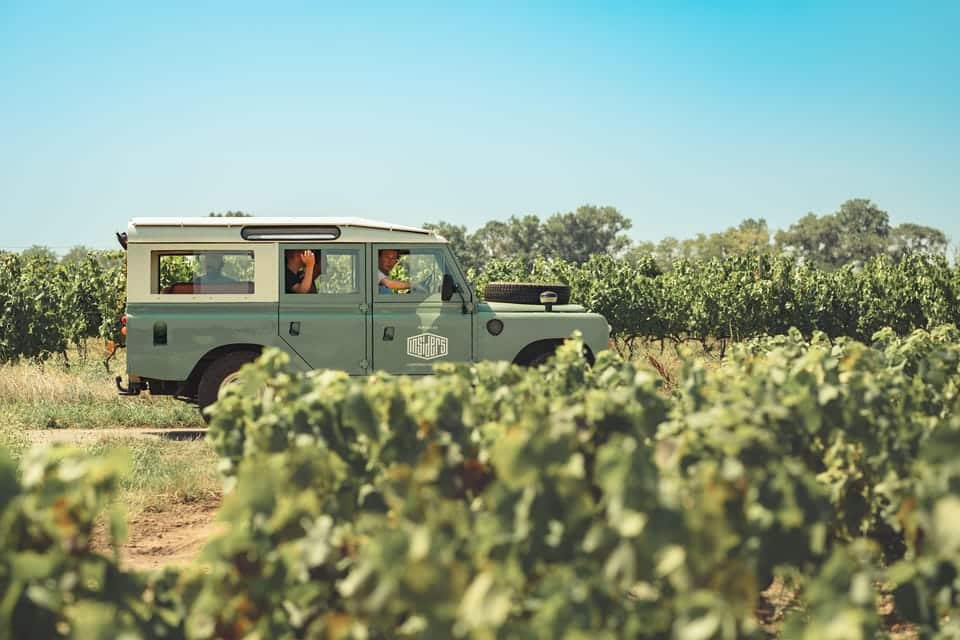

Soils of Beaujolais The Complex Chemistry of Soil and Bedrock
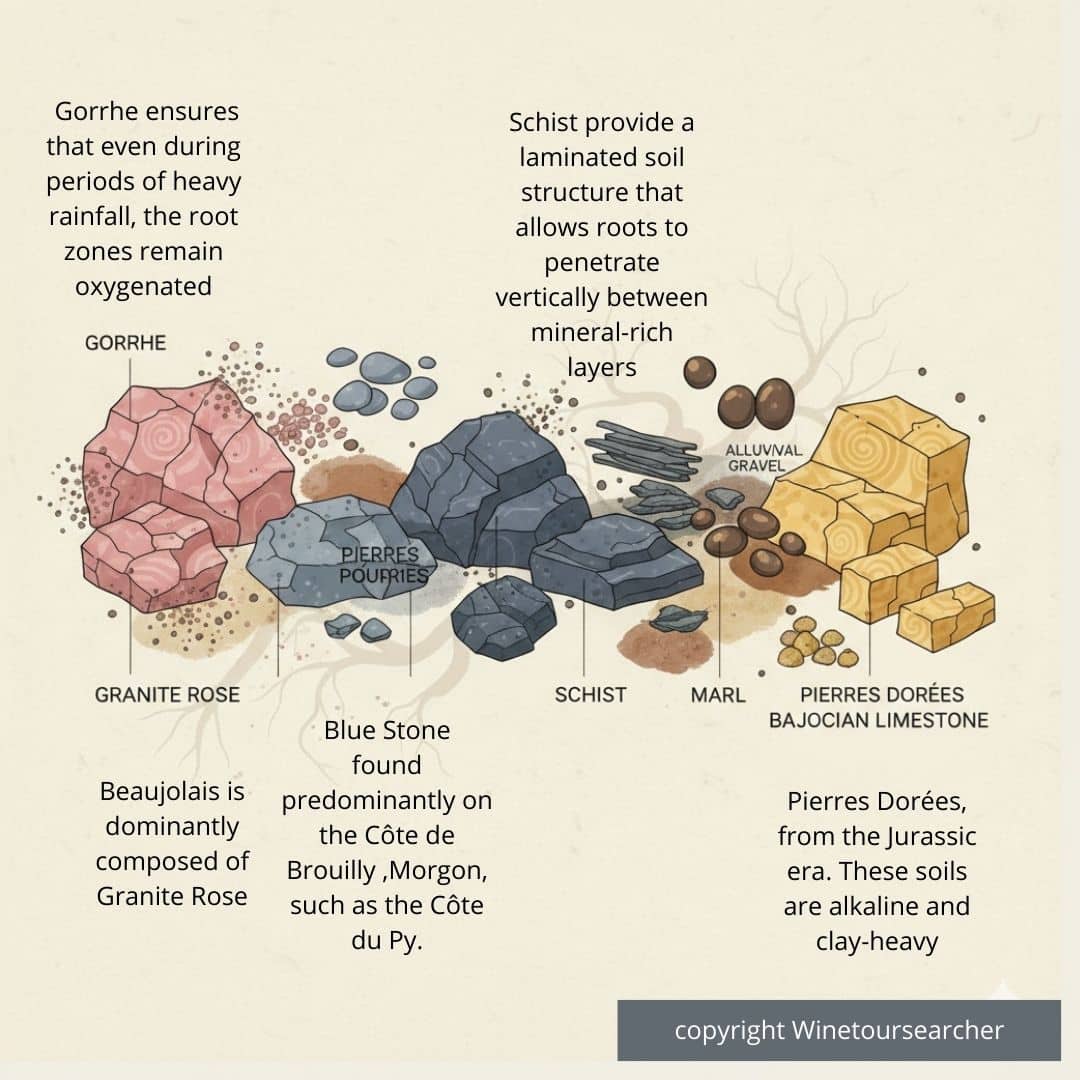
The pedology of this region is a study in structural diversity and geochemical precision. To analyze the substrate of the northern sector is to study the crystalline basement of the Massif Central, a Hercynian formation dominated by Granite, specifically the famous Granite Rose. This igneous rock, formed from cooling magma deep within the earth’s crust, is rich in potassium and feldspar but inherently poor in nitrogen. This nutrient deficiency is a viticultural advantage; it naturally limits the vegetative vigor of the Gamay vine, forcing the plant to focus its energy on fruit maturation rather than leaf production.
As the primary granite bedrock undergoes physical and chemical weathering, it decomposes into a specialized topsoil known locally as Gorrhe. This is a sandy, acidic substrate characterized by a low pH, which influences the ionization of minerals and their availability to the vine. The exceptionally well-draining nature of Gorrhe ensures that even during periods of heavy rainfall, the root zones remain oxygenated. However, this porosity also means the vine must search deep for water, often penetrating the micro-fractures in the granite bedrock, a process that many oenologists believe imparts a crystalline purity to the wines.
Further complexity is introduced by the presence of Blue Stone, or roche bleue. This is a technical marvel of geology, consisting of altered diorite or gabbro of volcanic origin dating back to the Devonian period. This stone is found predominantly on the Côte de Brouilly and in specific sectors of Morgon, such as the Côte du Py. Unlike the friable granite, Blue Stone is harder, denser, and richer in magnesium and iron. The degradation of this rock into “pierres pourries” (rotten rocks) creates a clay-silica matrix that retains more heat and provides a different mineral uptake. This results in wines with greater structural density, darker fruit profiles, and a characteristic iron-like or metallic edge that distinguishes it from the floral lift of granitic sites.
In the southern reaches, the geology shifts dramatically as we cross the Nizerand River. Here, the crystalline rocks give way to the Pierres Dorées, which are sedimentary Bajocian Limestone formations from the Jurassic era. These soils are alkaline and clay-heavy, creating a completely different chemical environment for the vine. The Calcareous Clay found here is more retentive of both water and nutrients, which suits a broader, more approachable style of wine. The alkaline pH of these soils typically results in wines with softer acidity and more immediate fruitiness.
Interspersed throughout the region are areas of Schist, Marl, and Alluvial Gravel. The Schist formations, notably in Lantignié, provide a laminated soil structure that allows roots to penetrate vertically between mineral-rich layers. Perhaps the most famous chemical anomaly is the Manganese deposits found in the subsoils of Moulin-à-Vent. While manganese can be toxic to vines in high concentrations, the specific levels found here act as a growth regulator, subtly stressing the vine. This chemical interaction is credited with the “Pinot-noir-like” longevity and the significant structural backbone of the wines from this appellation. From the acidic sands of the north to the golden limestones of the south, the pedological depth of the region is the true architect of its viticultural diversity.
The Breath of the Earth: Climate Dynamics and Topography In Beaujolais
The climatic identity of this region is defined by its position at a triple geographical crossroads where continental, maritime, and Mediterranean influences converge. This tension creates a dynamic environment that dictates the physiological development of the vine. The overall climate is broadly temperate, but it is the specific nuances of the local topography that allow for the successful ripening of Gamay.
Wind: The Atmospheric Purifier
The influence of wind is a critical factor in maintaining vine health and concentrating flavors. The northerly winds act as a natural desiccant, reducing the risk of fungal diseases such as botrytis and oidium in a region that can experience significant humidity. Furthermore, the drying effect of these winds during the ripening period can lead to a slight desiccation of the berries. This process effectively concentrates the sugars and phenolic compounds, which is essential for the structure and longevity of the Cru Beaujolais. In wind-exposed sites, the constant airflow strengthens the grape skins, leading to a higher concentration of tannins and anthocyanins.
Water: Precipitation and Hydrological Stress
Rainfall patterns in the region typically average between 700mm and 800mm annually, yet the distribution is highly variable. The proximity to the mountains creates a rain-shadow effect for certain eastern-facing slopes, shielding them from excessive Atlantic moisture. Vintage variability is largely driven by these precipitation patterns; a wet spring can hinder flowering, while a dry, warm autumn is the hallmark of the region’s greatest years. The drainage capacity of the soil becomes the deciding factor in quality, with the superior sites sitting on porous substrates that prevent “wet feet” and force the root systems to dive deep into the bedrock for mineral uptake.
Altitude and the Diurnal Temperature Gradient
The vineyards are situated at varying elevations that are paramount for the preservation of acidity within the grapes. Diurnal temperature shifts—the difference between daytime highs and nighttime lows—are pronounced, particularly on the higher slopes of Chiroubles and Beaujolais-Villages. Cool nights slow down the metabolism of the vine, allowing for a gradual accumulation of anthocyanins and the preservation of delicate floral aromatics. Simultaneously, the intense daytime sun ensures the degradation of green, methoxypyrazine notes, leading to a sophisticated flavor profile defined by ripe fruit. This thermal balance is what grants the region its reputation for wines that possess both power and extraordinary freshness.
Climate, Soil, and Geology by Sub-Region in Beaujolais
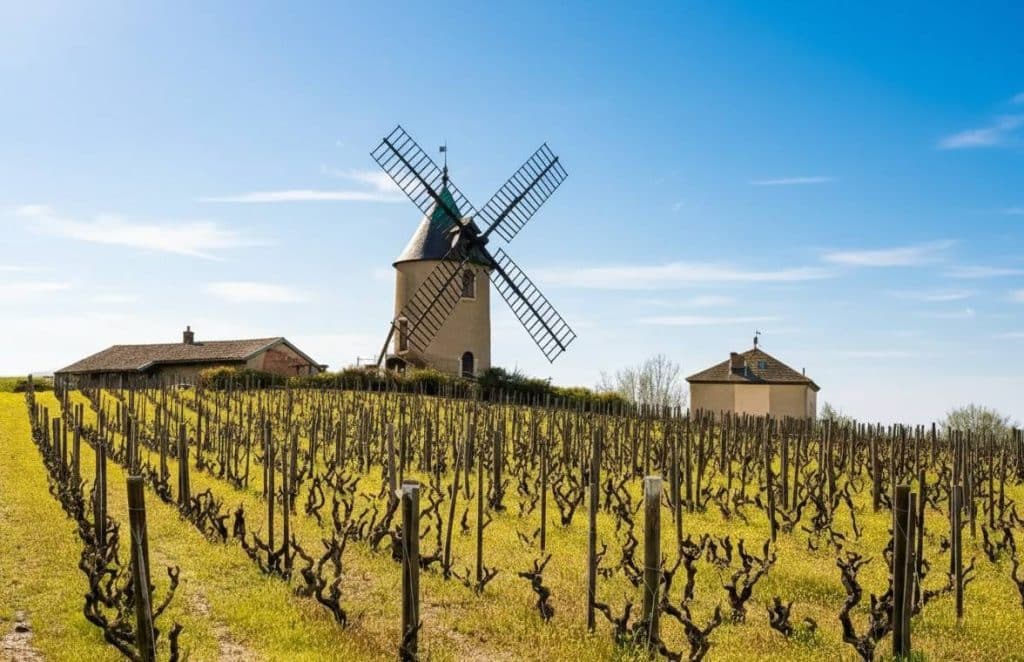
In Moulin-à-Vent, terroir is rich in manganese
The diversity of this region is best understood through the lens of its micro-climates, where subtle shifts in aspect, protection, and elevation create distinct viticultural sub-zones.
The Northern Crus: The Granitic Heartland
The northern sector is characterized by the most rugged terrain and a climate that is noticeably cooler and more continental than the south.
Moulin-à-Vent
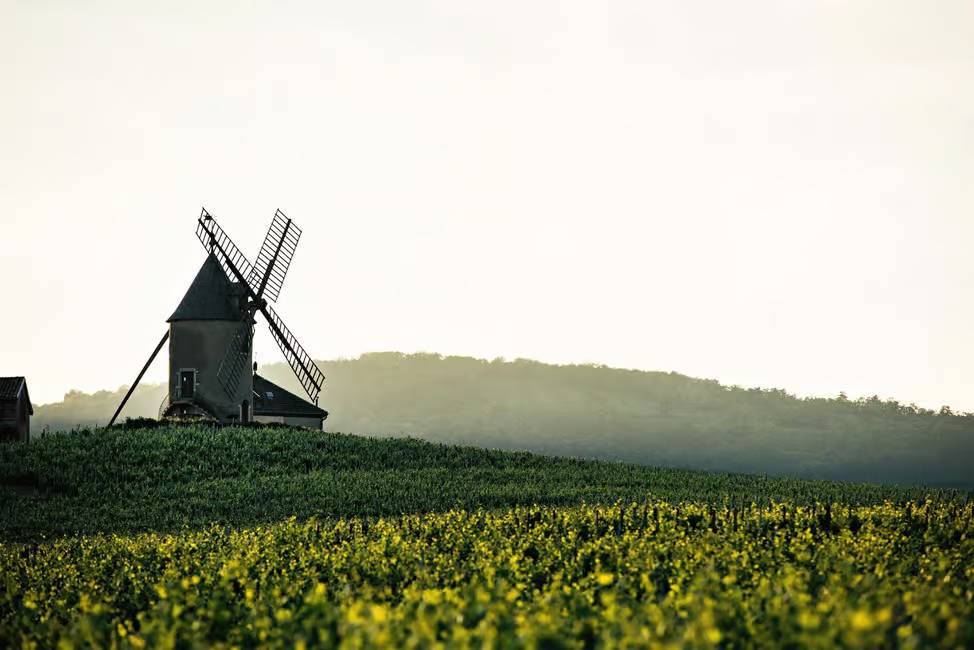
Often called the King of Beaujolais, the terroir here is defined by a bedrock of pink granite rich in Manganese. The climate is dominated by the constant force of the wind, which whips through the vineyards around the historic windmill. This persistent airflow prevents moisture buildup but also forces the vine to thicken the grape skins as a protective measure.
The combination of wind-induced concentration and manganese-rich Gorrhe results in the most tannic and long-lived wines. The sensory link is unmistakable: a deep note of withered rose and spice that evolves into truffle and musk with age. Notable sites include Le Carquelin and Les Thorins.
Morgon
This is a massive and diverse appellation. The climate varies significantly between the lower slopes and the high-altitude Côte du Py. On the Côte du Py, the vines enjoy a perfect south-to-southeast exposure, maximizing solar radiation. The soil is composed of Blue Stone and Schist, specifically roches pourries rich in iron oxide.
This heat-retentive soil, combined with the protected aspect, allows for a longer hang-time and deeper phenolic ripeness. This produces a wine with a distinct meaty or savory profile. Other critical vineyards include Les Charmes and Corcelette.
Fleurie
Known for elegance, the climate here is slightly softer, shielded from the harshest winds by the surrounding hills. The terroir is almost entirely Granite Rose. In the higher altitude sites like La Madone, the soil is pure decomposed granite sand. This lack of clay ensures low water retention and high aromatic lift. Within this appellation, the Poncié and Les Garants crus demonstrate how subtle shifts in slope and aspect can alter the ripeness of the fruit, yielding scents of violet and iris.
Juliénas
Located on the northern edge, the climate is slightly warmer due to its sheltered position. The geology is a complex mix of Blue Stone, Schist, and Alluvial Clay. The heavier soils provide a sturdy, spicy profile. The drainage is moderated by the clay content, which acts as a reservoir during dry spells, giving the wines a broader shoulder than those of Fleurie. Notable plots include Les Capitans.
Chénas
The smallest Cru, sitting on a mix of Granite and Silica. The name refers to the ancient oak forests, indicating a slightly higher humidity in the micro-climate. The soil is exceptionally stony, leading to wines that bridge the gap between floral notes and firm structure.
Chiroubles
This is the highest and coolest of the Crus. The micro-climate is truly montane, with harvest dates often occurring a full week later than the rest of the region. The soil is homogeneous Granite sand. Because of the altitude and the cool nighttime temperatures, the ripening process is elongated, preserving high levels of acidity and delicate red fruit notes.
Saint-Amour
Situated at the transition zone, the climate is influenced by its northern proximity to the Mâconnais. The soil here involves Granite, Clay, and even Siliceous Pebbles. This diversity allows for two styles: a lighter version from the stony soils and a more muscular version from the clay-heavy plots like Les Champs Grillés and Le Clos des Guillots.
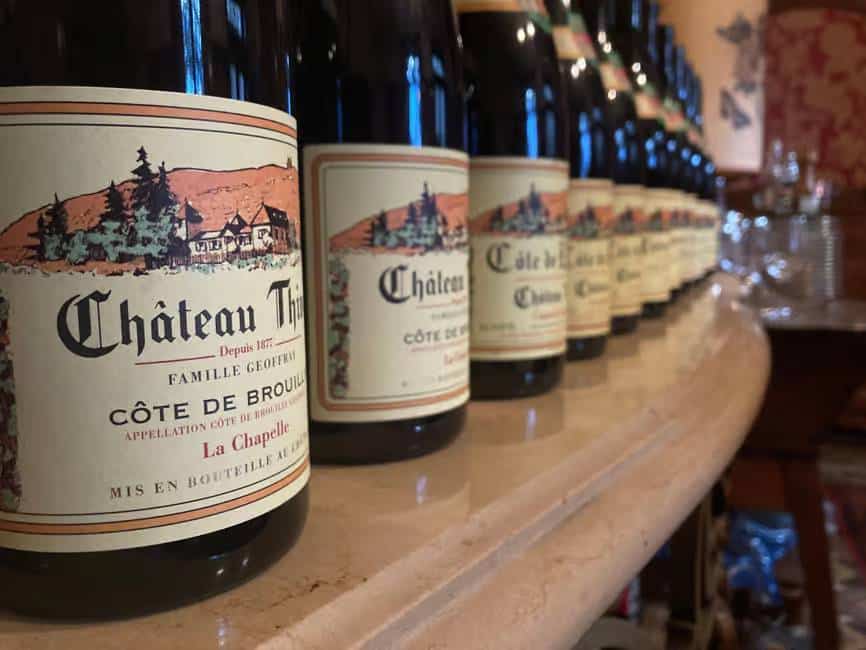
Brouilly and Côte de Brouilly
Brouilly is the largest Cru, sitting on a mix of volcanic rocks and Alluvial Fan deposits. Its climate is generally warmer, producing fruit-forward and supple wines. In contrast, Côte de Brouilly is an island of Blue Stone on the slopes of Mount Brouilly. The steep incline and perfect exposure to the sun, combined with the volcanic diorite, give these wines a distinctive flinty, smoky character.
Régnié
The newest Cru, predominantly Granite. The climate is balanced and temperate. It is known for producing highly aromatic wines where the sandy nature of the soil ensures soft tannins and immediate accessibility.
The Southern Beaujolais and Beaujolais-Villages
Beaujolais-Villages
The best sites are located in the north on Granitic slopes. The micro-climate here is a bridge between the intense focus of the Crus and the broader regional profile. The soil is more varied, with more Marl and Clay, resulting in wines with a balance of fruit and structure.
The Pierres Dorées
Located in the far south, this area is geologically and climatically distinct. The Bajocian Limestone and Calcareous Clay are situated in a warmer, more Mediterranean-influenced pocket of the region. This is better suited for the production of Beaujolais Blanc and a rounder style of red wine that emphasizes opulent fruit over mineral tension.
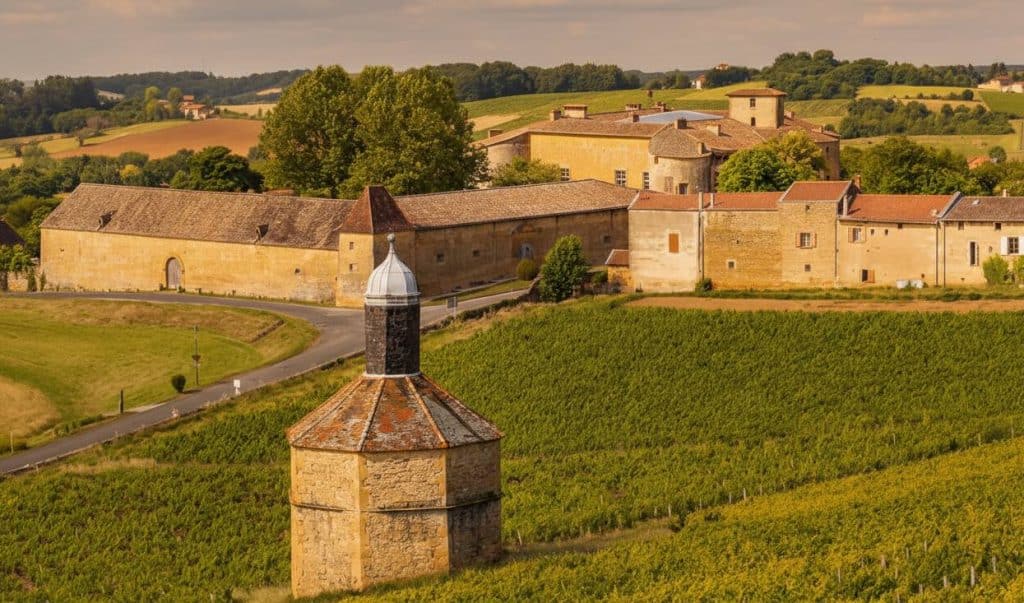
Les Pierres Dorées terroir is more suitable for white wines
The Human Touch: The Art of Viticultural Mastery
The mastery of Beaujolais viticulture is defined by the technical adaptation of man to an unforgiving, high-altitude landscape. The lead oenologist must act as a translator, ensuring that the specific geochemical signatures of the Granite Rose or the volcanic Blue Stone are not obscured by heavy-handed management. This mastery begins with the physical architecture of the vine.
In the northern Crus, such as Moulin-à-Vent and Morgon, the historical standard is Gobelet training. This traditional, head-trained, spur-pruned system is a deliberate response to the regional winds and the thermal properties of the soil. By keeping the canopy low and the fruit close to the reflective granitic stones, vignerons utilize radiated heat to achieve phenolic maturity in a continental climate. However, as viticulture evolves, many prestigious estates in Beaujolais-Villages and even the Crus are transitioning to Cordon or Guyot training. These systems allow for higher wire trellising, which improves canopy management, enhances airflow to combat the humidity of the Saône valley, and permits the precise leaf-plucking required to expose the clusters to the autumn sun.
The management of row orientation is equally analytical. On the steep, 45-degree inclines of Chiroubles or the Côte de Brouilly, rows are often planted vertically rather than terraced. While this increases the risk of erosion, it maximizes the solar interception of the eastern and southeastern exposures, which is critical for the late-ripening Gamay. To mitigate topsoil loss, the most advanced producers utilize permanent cover cropping between rows, which competes with the vine for water—a controlled stress that further concentrates the juice.
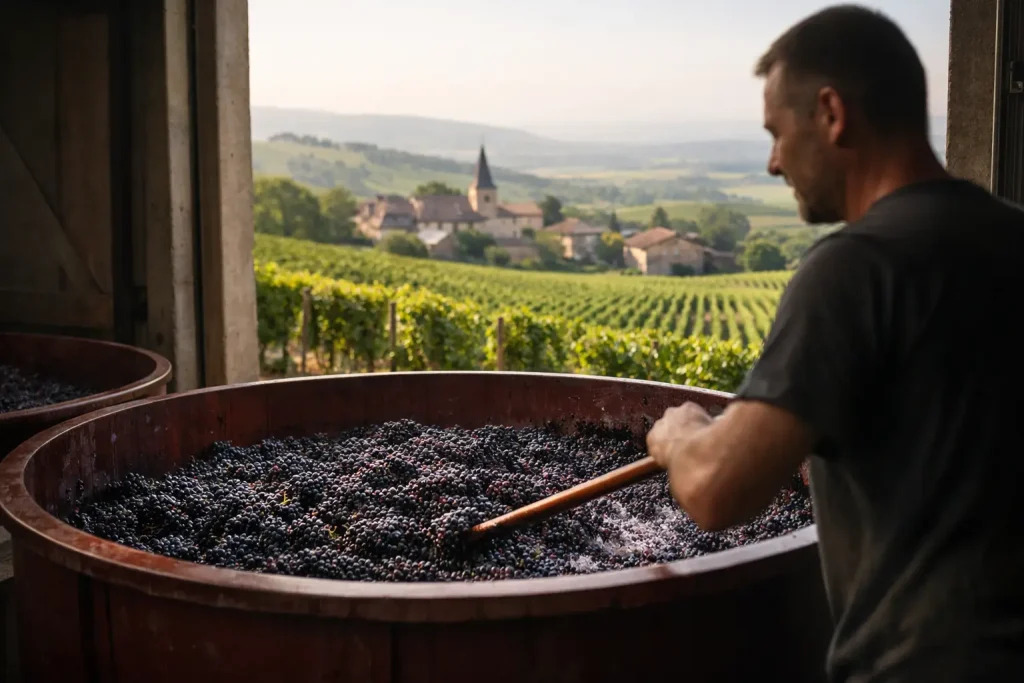
In the cellar, the technical precision continues. While the region is famous for Semi-Carbonic Maceration, the elite producers of Chénas and Juliénas have refined this into a tool for terroir expression. By controlling the percentage of whole-cluster inclusion and managing the temperature of the initial intracellular fermentation, they can preserve the primary floral aromatics—violet, iris, and peony—while using subsequent traditional macerations to extract the structural tannins necessary for aging.
For the most prestigious crus, such as the Côte du Py or La Madone, the use of old oak Foudres replaces small barriques. This choice is vital: the larger volume and neutral wood allow for a slow, micro-oxygenation that softens the verticality of the tannins without imparting exogenous vanillin or wood spice. This ensures that when the wine is eventually poured, it is a pure, unadulterated reflection of the mineral chemistry and human labor that defined its birth. This philosophy of “minimal intervention” is, in reality, a high-stakes exercise in technical precision, where the winemaker’s greatest skill is knowing exactly when to stay their hand.
Beaujolais terroir: From Knowledge to Experience
The technical data provided—the chemical compositions of the Schist, the pH of the Granite, and the drainage of the Alluvial Gravel—is the framework of the region. To truly understand Beaujolais, one must witness the way the light hits the Pierres Dorées and taste a Morgon from the Côte du Py while standing on the very volcanic rocks that gave it life.
Wine is a living liquid, a temporal bridge between the geological past and the sensory present. The complexity of a Moulin-à-Vent or the lift of a Chiroubles requires the physical context of the vineyard.
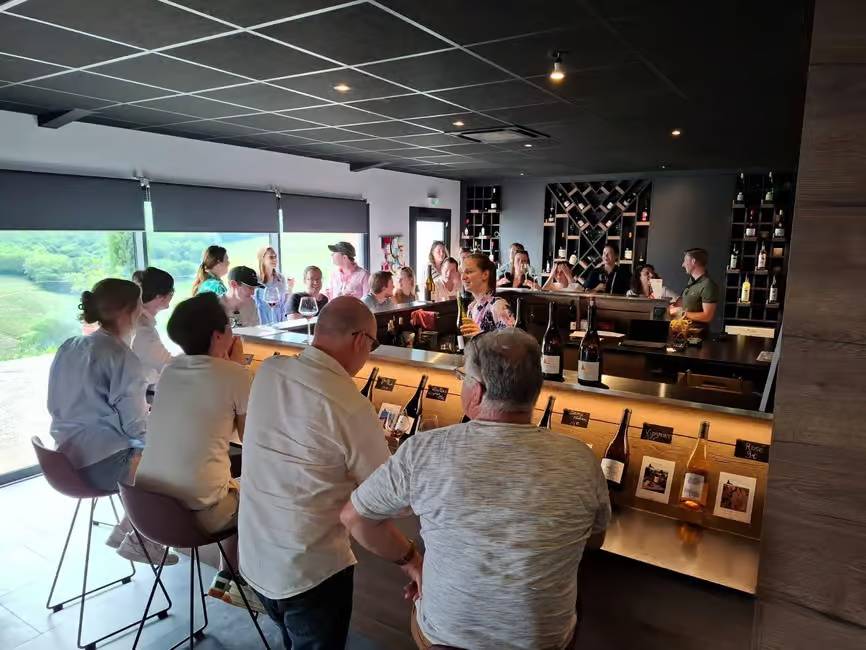
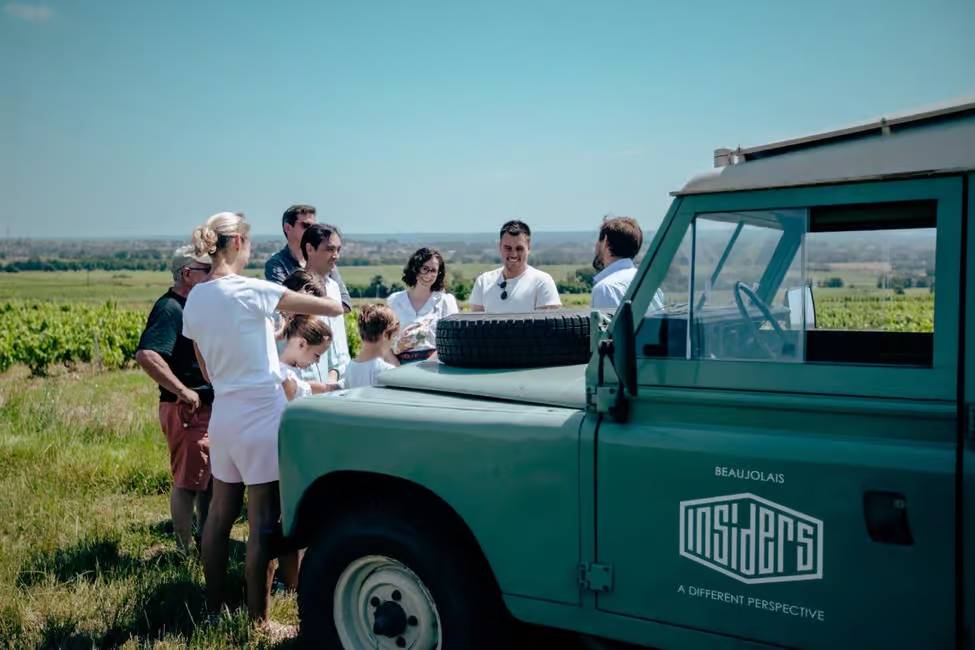
We invite you to join our curated wine tours to walk the historic plots and engage with the oenologists who shape these liquids. Walk the very soils—the gravels, the limestones, the clays—described above to experience the visceral connection between the earth and the glass.
Would you like me to create a detailed technical itinerary for a three-day exploration of the Northern Crus?