Table of Contents
Discover the 10 Must-Drive Wine Routes in Western Europe
Western Europe is home to some of the world’s most legendary wine roads, where spectacular landscapes, historic vineyards, picturesque villages, and renowned wineries come together to create unforgettable journeys. Whether winding through Burgundy’s prestigious Grand Cru vineyards, following the steep terraces of the Mosel, or exploring the colorful villages of Alsace, each route offers a unique perspective on the region’s extraordinary wine heritage.
This guide features 10 must-drive wine routes in Western Europe, carefully selected for their outstanding scenery, world-class wineries, cultural significance, and unforgettable travel experiences. Some are internationally famous, while others remain hidden gems waiting to be discovered, but all showcase the remarkable diversity of Western Europe’s wine regions.
From scenic river valleys and medieval villages to UNESCO-listed vineyard landscapes and iconic wine estates, these routes invite travelers to experience far more than exceptional wines. They offer an immersive journey through centuries of history, regional gastronomy, and some of Europe’s most beautiful vineyard landscapes.
Whether you’re planning a dedicated wine road trip or looking to include a few unforgettable vineyard destinations in your next vacation, these are the wine routes that belong on every wine lover’s travel bucket list.
Route des Grands Crus (Burgundy, France)
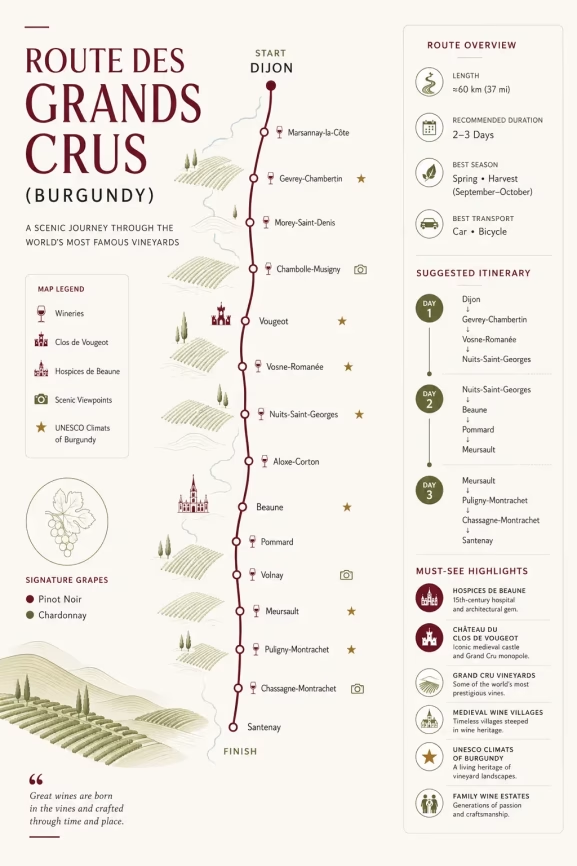
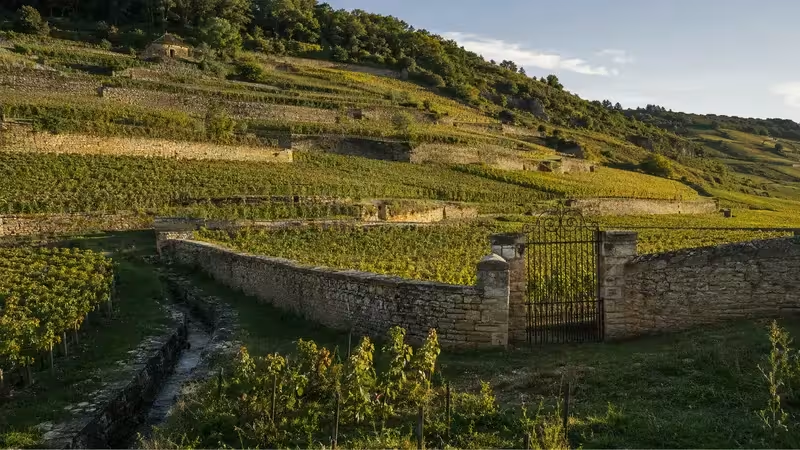
In the heart of Burgundy, the Route des Grands Crus is often regarded as one of the world’s greatest wine journeys. Nicknamed the “Champs-Élysées of Burgundy,” this legendary route passes through some of the most prestigious vineyards ever cultivated, linking historic villages whose names have become synonymous with exceptional Pinot Noir and Chardonnay. More than a scenic drive, it is an immersion into the birthplace of terroir-driven winemaking and one of the finest introductions to French wine culture.
| Feature | Details |
|---|---|
| Country | France |
| Region | Burgundy (Côte de Nuits & Côte de Beaune) |
| Length | Approximately 60 km (37 miles) |
| Starting Point | Dijon |
| Ending Point | Santenay |
| Recommended Duration | 2–3 days |
| Best Time to Visit | April–June and September–October |
| Main Grape Varieties | Pinot Noir, Chardonnay |
| UNESCO Status | Part of the UNESCO-listed Climats of Burgundy |
| Best Way to Explore | By car or bicycle, with overnight stops in Beaune or Nuits-Saint-Georges |
Route Overview
The Route des Grands Crus follows the famous limestone escarpment that has produced some of the world’s most celebrated wines for nearly a thousand years. Although the distance is relatively short, the concentration of legendary vineyards is unmatched anywhere in the world. Nearly every village along the route has contributed to Burgundy’s international reputation, while centuries-old stone wineries, vineyard walls, and historic estates create an atmosphere unlike any other wine destination.
The road is easy to drive and well signposted, but it rewards slow travel. Visitors who stop frequently to explore wineries, historic villages, vineyard trails, and local restaurants will gain a far richer appreciation of Burgundy’s unique culture than those simply passing through.
Suggested Itinerary
Day 1: Dijon to Nuits-Saint-Georges
Begin in Dijon, the historic capital of Burgundy, before heading south through the renowned villages of Marsannay-la-Côte, Gevrey-Chambertin, Morey-Saint-Denis, Chambolle-Musigny, Vougeot, Vosne-Romanée, and Nuits-Saint-Georges. Spend time visiting local domaines, walking among the vineyards, and exploring the region’s medieval wine heritage.
Day 2: Nuits-Saint-Georges to Beaune
Continue into the Côte de Beaune, stopping in Aloxe-Corton, Pernand-Vergelesses, Beaune, Pommard, Volnay, Meursault, Puligny-Montrachet, Chassagne-Montrachet, and finally Santenay. This section showcases Burgundy’s legendary white wine villages alongside picturesque vineyard landscapes and historic wine estates.
Travelers with additional time can easily extend their stay by exploring nearby villages, cycling through the vineyards, or visiting lesser-known appellations surrounding the main route.
Must-Visit Wine Villages
Gevrey-Chambertin
One of Burgundy’s most prestigious red wine villages, Gevrey-Chambertin is home to numerous Grand Cru vineyards and traditional family-owned domaines. The village offers beautiful vineyard walks and excellent tasting opportunities.
Vosne-Romanée
A pilgrimage site for wine enthusiasts, Vosne-Romanée is internationally renowned for producing some of the world’s finest Pinot Noir wines. Its peaceful streets conceal vineyards whose names are legendary among collectors.
Nuits-Saint-Georges
Located at the center of the Côte de Nuits, this lively wine town combines excellent wineries, historic buildings, and a welcoming atmosphere, making it one of the route’s most popular overnight stops.
Beaune
The historic wine capital of Burgundy, Beaune is famous for its medieval center, underground wine cellars, vibrant restaurants, and centuries-old wine trading houses. It serves as the cultural heart of the Route des Grands Crus.
Meursault
Surrounded by celebrated Chardonnay vineyards, Meursault offers elegant stone architecture, quiet vineyard lanes, and numerous opportunities to sample some of Burgundy’s finest white wines.
Puligny-Montrachet
Despite its modest size, Puligny-Montrachet is one of the world’s most prestigious white wine villages. Walking through its vineyards provides a remarkable insight into Burgundy’s concept of terroir.
Signature Wines
The Route des Grands Crus is internationally celebrated for producing some of the finest expressions of Pinot Noir and Chardonnay. Along the route, visitors encounter numerous Premier Cru and Grand Cru vineyards, each demonstrating how subtle differences in geology, slope, and exposure create distinct wine styles despite their close proximity.
Highlights Along the Route
- Walk through UNESCO-listed vineyard climats.
- Visit centuries-old family domaines and historic wine cellars.
- Explore the famous Hospices de Beaune.
- Discover the historic Château du Clos de Vougeot, one of Burgundy’s most iconic wine landmarks.
- Enjoy panoramic vineyard walks connecting neighboring villages.
- Experience traditional Burgundian cuisine in local wine villages.
Best Viewpoints
Several vineyard roads above the Côte de Nuits and Côte de Beaune offer spectacular panoramic views across the patchwork of vineyard parcels that define Burgundy’s landscape. The elevated viewpoints near Corton Hill, Meursault, and Santenay are particularly rewarding during autumn, when the vineyards turn brilliant shades of gold and red.
Practical Travel Tips
- Allow at least two full days, although three days provide a much more relaxed experience.
- Reserve winery visits well in advance, particularly at prestigious domaines where appointments are often essential.
- Cycling is an excellent alternative to driving thanks to quiet vineyard roads and relatively short distances between villages.
- Spring and autumn offer the most pleasant weather and the most beautiful vineyard scenery.
- Spend at least one night in Beaune or Nuits-Saint-Georges to fully experience Burgundy’s renowned gastronomy and wine culture after the day’s tastings.
Alsace Wine Route (Route des Vins d'Alsace)
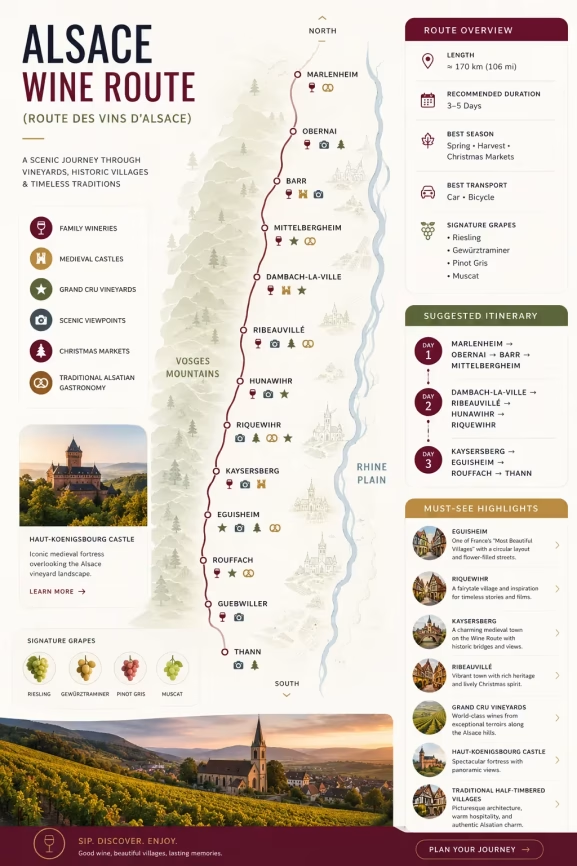
Stretching for approximately 170 kilometers along the foothills of the Vosges Mountains, the Alsace Wine Route is one of France’s oldest and most celebrated wine trails. Officially established in 1953, it links dozens of picturesque wine villages, medieval castles, vineyard-covered hillsides, and family-owned wineries producing some of Europe’s finest aromatic white wines. Combining spectacular scenery with a rich blend of French and German heritage, it offers one of the most charming wine journeys in Western Europe.
| Feature | Details |
|---|---|
| Country | France |
| Region | Alsace |
| Length | Approximately 170 km (106 miles) |
| Starting Point | Marlenheim |
| Ending Point | Thann |
| Recommended Duration | 3–5 days |
| Best Time to Visit | May–June and September–October |
| Main Grape Varieties | Riesling, Gewürztraminer, Pinot Gris, Muscat, Pinot Blanc, Sylvaner |
| UNESCO Status | Several sections pass through the UNESCO-listed Northern Vosges Biosphere Reserve (Lavaux not applicable); numerous historic villages are protected heritage sites. |
| Best Way to Explore | By car, bicycle, or combining short scenic walks between villages. |
Route Overview
The Alsace Wine Route follows a narrow strip of vineyards protected by the Vosges Mountains, whose rain shadow creates one of France’s driest and sunniest wine-growing climates. The route winds through rolling vineyards, flower-filled villages, fortified towns, and centuries-old wineries, offering visitors an extraordinary combination of wine, history, gastronomy, and architecture.
Unlike many wine regions, Alsace’s villages are located very close to one another, making it easy to explore several in a single day. Half-timbered houses, colorful façades, cobbled streets, and welcoming wine cellars create an atmosphere that has made the route one of Europe’s most popular wine tourism destinations.
Suggested Itinerary
Day 1: Marlenheim to Obernai
Begin in Marlenheim before exploring Obernai, Rosheim, and nearby vineyards. Discover historic town centers, local wineries, and traditional Alsatian cuisine.
Day 2: Mittelbergheim to Ribeauvillé
Continue through Mittelbergheim, Andlau, Barr, Dambach-la-Ville, Ribeauvillé, and surrounding Grand Cru vineyards. Spend time visiting family-owned wineries and enjoying panoramic vineyard walks.
Day 3: Riquewihr to Kaysersberg
Explore two of Alsace’s most famous wine villages, together with Hunawihr and Kientzheim. This section contains some of the region’s finest vineyard landscapes.
Optional Days 4–5
Continue south toward Eguisheim, Gueberschwihr, Rouffach, Guebwiller, and Thann, allowing extra time for winery visits, cycling, and exploring the southern Alsace vineyards.
Must-Visit Wine Villages
Eguisheim
Frequently ranked among France’s most beautiful villages, Eguisheim enchants visitors with circular medieval streets, colorful half-timbered houses, and surrounding Grand Cru vineyards.
Riquewihr
Perfectly preserved Renaissance architecture, defensive walls, and renowned wineries make Riquewihr one of the route’s undisputed highlights.
Ribeauvillé
Surrounded by vineyards and overlooked by medieval castle ruins, Ribeauvillé combines exceptional wine heritage with a lively village atmosphere.
Kaysersberg
Known for its fortified bridge, cobbled streets, and nearby Grand Cru vineyards, Kaysersberg offers one of the most photogenic settings along the route.
Hunawihr
A peaceful wine village surrounded by vineyards, famous for its fortified church and welcoming family-owned wineries.
Mittelbergheim
One of Alsace’s most authentic wine villages, renowned for its golden sandstone architecture and the nearby Zotzenberg Grand Cru vineyard.
Signature Wines
The Alsace Wine Route is internationally renowned for its expressive white wines. Riesling, Gewürztraminer, Pinot Gris, Muscat, Pinot Blanc, and Sylvaner dominate the vineyards, while Crémant d’Alsace has also become one of France’s leading sparkling wines. Numerous Grand Cru vineyards showcase the remarkable diversity of Alsace’s terroirs.
Highlights Along the Route
- Visit beautifully preserved medieval wine villages.
- Discover dozens of family-owned wineries offering tastings.
- Explore impressive hilltop castles overlooking the vineyards.
- Walk through renowned Grand Cru vineyard sites.
- Enjoy traditional Alsatian cuisine in historic village restaurants.
- Experience seasonal wine festivals and Christmas markets.
Best Viewpoints
Some of the finest panoramas can be found above Riquewihr, Kaysersberg, Eguisheim, and the vineyards surrounding Ribeauvillé. Elevated vineyard trails provide spectacular views across the Rhine Plain toward Germany and the distant Black Forest.
Practical Travel Tips
- Plan at least three days, although five days allows a much more relaxed exploration.
- Reserve winery visits during harvest season and major festivals.
- Cycling is particularly enjoyable thanks to quiet vineyard roads connecting many villages.
- Spring offers flowering vineyards, while autumn provides magnificent vineyard colors and harvest activities.
- If visiting in December, combine the wine route with Alsace’s world-famous Christmas markets for a unique seasonal experience.
Champagne Tourist Route (Route Touristique du Champagne)
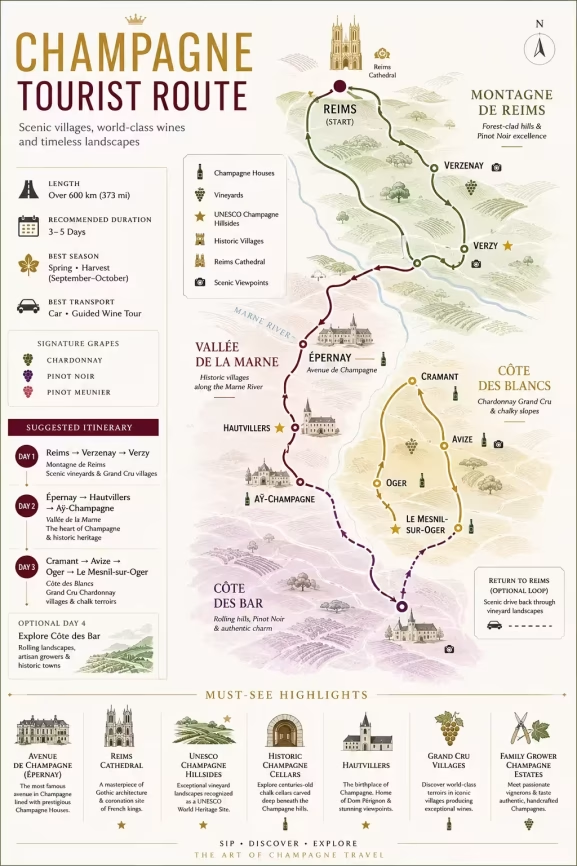
The Champagne Tourist Route is one of the world’s most prestigious wine journeys, guiding visitors through the birthplace of Champagne. Spanning more than 600 kilometers across several interconnected routes, it links the celebrated vineyards surrounding Reims, Épernay, the Montagne de Reims, the Vallée de la Marne, the Côte des Blancs, and the Côte des Bar. Along the way, travelers discover renowned Champagne houses, charming wine villages, UNESCO-listed vineyard landscapes, and centuries of sparkling wine history.
| Feature | Details |
|---|---|
| Country | France |
| Region | Champagne |
| Length | Over 600 km (373 miles) across several signposted routes |
| Starting Point | Reims or Épernay |
| Ending Point | Flexible loop through the Champagne region |
| Recommended Duration | 3–5 days |
| Best Time to Visit | May–June and September–October |
| Main Grape Varieties | Chardonnay, Pinot Noir, Pinot Meunier |
| UNESCO Status | Champagne Hillsides, Houses and Cellars are a UNESCO World Heritage Site |
| Best Way to Explore | By car, guided tour, or combining train travel with local transportation |
Route Overview
Unlike linear wine routes such as Burgundy or Alsace, the Champagne Tourist Route consists of several interconnected circuits that explore the region’s major vineyard areas. Visitors travel through rolling hills covered with vineyards, historic villages, prestigious Champagne houses, and peaceful country roads where countless independent growers continue centuries-old traditions.
The route combines world-famous producers with smaller family-owned estates, offering visitors a complete picture of Champagne’s extraordinary diversity. Beyond cellar visits and tastings, travelers can explore Gothic cathedrals, UNESCO-listed chalk cellars, scenic vineyard viewpoints, and picturesque villages that have built their identity around sparkling wine.
Suggested Itinerary
Day 1: Reims and the Montagne de Reims
Begin in Reims, visiting its magnificent cathedral before touring several renowned Champagne houses. Continue through Verzenay, Verzy, and surrounding vineyard villages within the Montagne de Reims.
Day 2: Épernay and the Vallée de la Marne
Travel south to Épernay and stroll along the famous Avenue de Champagne before exploring nearby villages such as Aÿ-Champagne, Hautvillers, and Mareuil-sur-Aÿ.
Day 3: Côte des Blancs
Discover the prestigious Chardonnay villages of Oger, Avize, Le Mesnil-sur-Oger, and Cramant, where many of Champagne’s finest Blanc de Blancs originate.
Optional Days 4–5: Côte des Bar
Continue south into the Côte des Bar to experience a quieter side of Champagne, characterized by rolling hills, independent winegrowers, and picturesque villages.
Must-Visit Wine Villages
Aÿ-Champagne
For centuries, Aÿ has been one of Champagne’s most prestigious wine villages, producing exceptional Pinot Noir and hosting numerous historic Champagne houses.
Hautvillers
Often associated with the early history of Champagne, Hautvillers overlooks the Marne Valley and offers beautiful vineyard scenery, charming streets, and historic wine heritage.
Verzenay
Surrounded by Grand Cru Pinot Noir vineyards, Verzenay is famous for its distinctive lighthouse overlooking the vineyards and its excellent visitor center.
Oger
Located in the heart of the Côte des Blancs, Oger is internationally recognized for producing outstanding Chardonnay and elegant Blanc de Blancs Champagnes.
Avize
Another celebrated Grand Cru village, Avize combines prestigious vineyards with numerous grower-producers specializing in exceptional Chardonnay-based Champagnes.
Signature Wines
The Champagne Tourist Route introduces visitors to every major style of Champagne, from elegant Blanc de Blancs and powerful Blanc de Noirs to classic non-vintage blends, vintage cuvées, and prestigious prestige cuvées. Chardonnay, Pinot Noir, and Pinot Meunier each play a vital role in shaping the region’s globally celebrated sparkling wines.
Highlights Along the Route
- Explore UNESCO-listed Champagne houses and historic chalk cellars.
- Visit the famous Avenue de Champagne in Épernay.
- Tour both internationally renowned Champagne houses and independent grower estates.
- Discover panoramic vineyard viewpoints throughout the Montagne de Reims and Côte des Blancs.
- Experience the rich history of sparkling wine production in its birthplace.
- Enjoy Michelin-starred restaurants and traditional Champagne cuisine.
Best Viewpoints
Practical Travel Tips
- Plan at least three full days to experience the region without rushing.
- Book Champagne house tours several weeks in advance, especially at the most famous producers.
- Balance visits between prestigious houses and smaller independent growers for a more complete understanding of Champagne.
- Travel during spring or harvest season for ideal weather and vineyard scenery.
- Stay overnight in Reims or Épernay, both of which offer excellent accommodations, restaurants, and easy access to the surrounding vineyard districts.
Rhône Valley Wine Route
Stretching alongside the Rhône River from the steep granite slopes of northern France to the sun-drenched vineyards of Provence, the Rhône Valley Wine Route is one of Western Europe’s most diverse wine journeys. Covering more than 250 kilometers, it links world-famous appellations, Roman heritage, medieval villages, and spectacular vineyard landscapes. From elegant Syrah wines in the north to the renowned blends of Châteauneuf-du-Pape in the south, the route offers an exceptional introduction to one of France’s oldest wine regions.
| Feature | Details |
|---|---|
| Country | France |
| Region | Rhône Valley |
| Length | Approximately 250 km (155 miles) |
| Starting Point | Vienne |
| Ending Point | Avignon |
| Recommended Duration | 4–6 days |
| Best Time to Visit | May–June and September–October |
| Main Grape Varieties | Syrah, Grenache, Mourvèdre, Viognier, Marsanne, Roussanne |
| UNESCO Status | Several nearby historic sites are UNESCO-listed, including the Historic Centre of Avignon |
| Best Way to Explore | By car, with optional cycling and vineyard walks in selected areas |
Route Overview
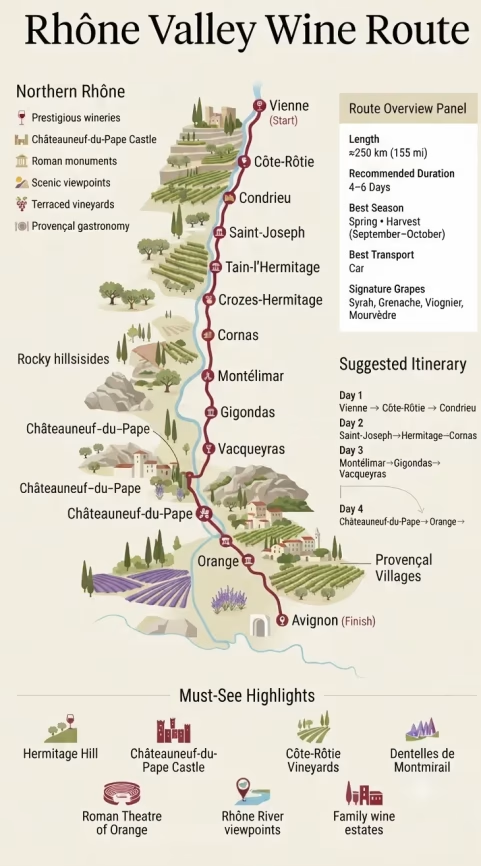
The Rhône Valley Wine Route follows the course of the Rhône River through two remarkably different wine regions. In the Northern Rhône, steep terraced vineyards cling to granite hillsides, producing elegant Syrah and Viognier wines in prestigious appellations such as Côte-Rôtie, Condrieu, Hermitage, and Cornas. Further south, the landscape opens into rolling plains and Mediterranean scenery dominated by Grenache-based blends from famous villages including Gigondas, Vacqueyras, and Châteauneuf-du-Pape.
The contrast between these two regions makes the Rhône one of France’s most fascinating wine destinations. Visitors experience dramatic changes in scenery, climate, grape varieties, architecture, and cuisine while following a single river that has shaped viticulture for more than two thousand years.
Suggested Itinerary
Day 1: Vienne to Condrieu
Begin in the historic Roman city of Vienne before exploring the vineyards of Côte-Rôtie and Condrieu. Visit wineries producing world-renowned Syrah and Viognier while enjoying spectacular hillside viewpoints overlooking the Rhône.
Day 2: Tain-l’Hermitage and Tournon-sur-Rhône
Continue south to the famous Hermitage Hill, exploring both sides of the river and visiting renowned wineries in Hermitage, Crozes-Hermitage, and Saint-Joseph.
Day 3: Montélimar to Orange
Travel through the central Rhône Valley, discovering historic towns, Provençal markets, and increasingly Mediterranean landscapes.
Day 4: Châteauneuf-du-Pape and Avignon
Finish your journey by exploring Châteauneuf-du-Pape, Gigondas, and nearby appellations before ending in the historic city of Avignon.
Travelers with additional time can easily extend the itinerary by visiting the Dentelles de Montmirail or exploring neighboring wine villages in the Southern Rhône.
Must-Visit Wine Villages
Condrieu
Famous for its exceptional Viognier wines, Condrieu overlooks the Rhône River from steep terraced vineyards that produce some of the world’s finest aromatic white wines.
Tain-l’Hermitage
Located beneath the iconic Hermitage Hill, Tain-l’Hermitage offers breathtaking vineyard scenery, prestigious wineries, and one of France’s most celebrated Syrah appellations.
Châteauneuf-du-Pape
The undisputed jewel of the Southern Rhône, this historic village combines renowned wineries, medieval streets, and the ruins of the former papal castle overlooking extensive vineyards.
Gigondas
Nestled beneath the dramatic Dentelles de Montmirail, Gigondas is one of the Rhône’s most picturesque wine villages, celebrated for its powerful red wines and stunning mountain backdrop.
Vacqueyras
A charming Provençal village surrounded by vineyards and olive groves, Vacqueyras offers authentic wine tourism away from the larger crowds.
Signature Wines
Highlights Along the Route
- Explore the spectacular terraced vineyards of the Northern Rhône.
- Visit the legendary Hermitage Hill overlooking the Rhône River.
- Discover the medieval village of Châteauneuf-du-Pape.
- Enjoy Provençal markets, Roman monuments, and historic villages.
- Experience the remarkable transition from continental to Mediterranean wine landscapes.
- Combine exceptional wine tasting with outstanding regional cuisine.
Best Viewpoints
Practical Travel Tips
- Allow at least four days to fully appreciate both the Northern and Southern Rhône.
- A rental car is essential, as many vineyards are located outside major towns.
- Reserve visits at leading wineries well in advance, particularly in Hermitage and Châteauneuf-du-Pape.
- Spring and autumn offer the best weather for vineyard walks and wine tasting.
- Combine winery visits with stops at Roman heritage sites, Provençal markets, and local restaurants to experience the Rhône Valley beyond its wines.
Loire Valley Wine Route
| Feature | Details |
|---|---|
| Country | France |
| Region | Loire Valley |
| Length | Approximately 800 km (500 miles) |
| Starting Point | Nantes |
| Ending Point | Sancerre |
| Recommended Duration | 5–7 days |
| Best Time to Visit | May–June and September–October |
| Main Grape Varieties | Sauvignon Blanc, Chenin Blanc, Cabernet Franc, Melon de Bourgogne |
| UNESCO Status | The Loire Valley between Sully-sur-Loire and Chalonnes is a UNESCO World Heritage Site |
| Best Way to Explore | By car, bicycle, or combining rail travel with local wine excursions |
Route Overview
Suggested Itinerary
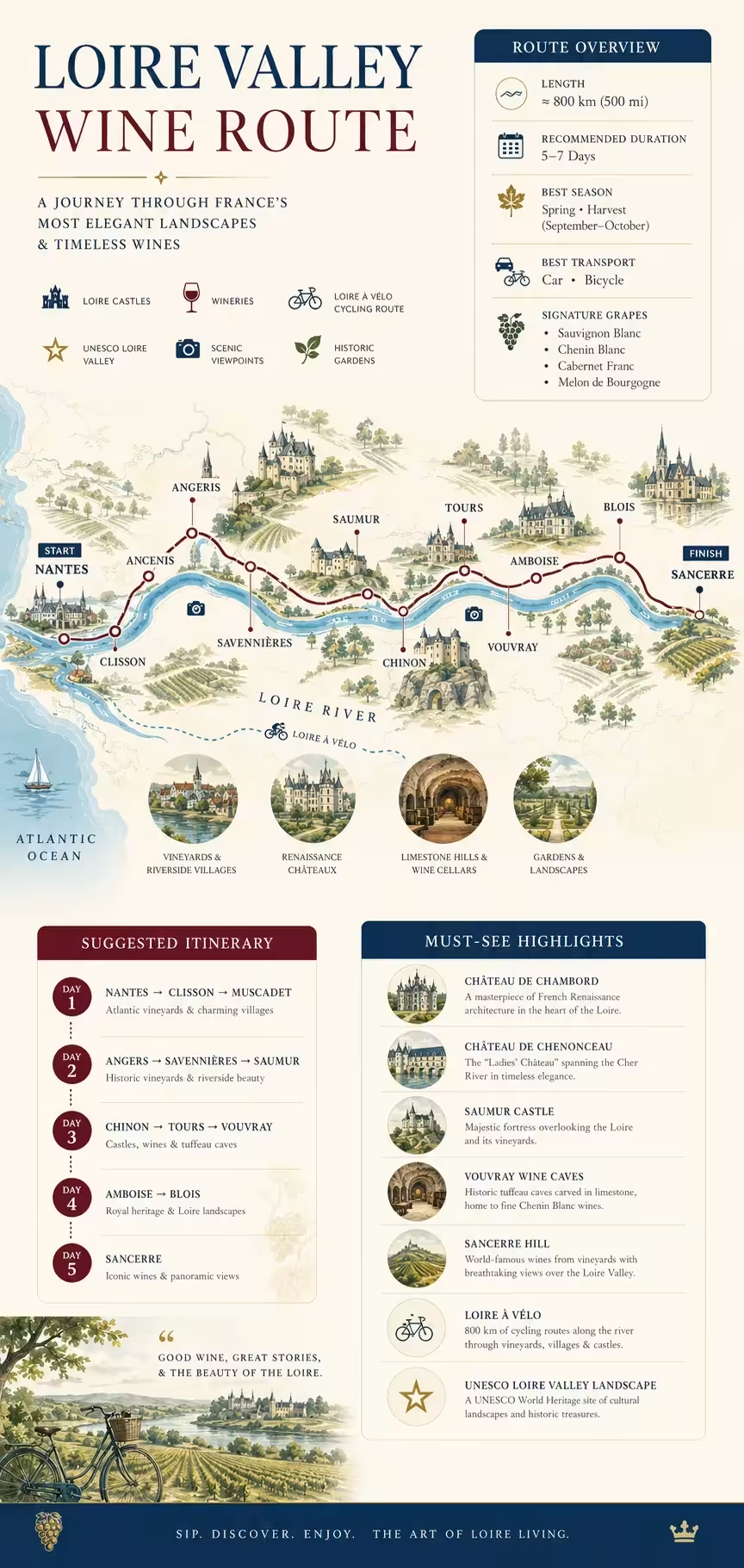
Day 1: Nantes and Muscadet
Start in Nantes before exploring the vineyards surrounding the city, where fresh Muscadet wines have long been associated with Atlantic seafood.
Day 2: Angers and Anjou
Continue east through Anjou, visiting wineries specializing in Chenin Blanc, Cabernet Franc, and sparkling Crémant de Loire.
Day 3: Saumur
Discover the historic town of Saumur, its famous château, underground tuffeau cellars, and renowned sparkling wines.
Day 4: Touraine and Vouvray
Explore the vineyards around Tours, Vouvray, Montlouis-sur-Loire, and Chinon while enjoying some of the Loire’s finest white and red wines.
Day 5: Sancerre
Finish in the hilltop village of Sancerre, celebrated worldwide for its elegant Sauvignon Blanc and spectacular views across the Loire Valley.
Travelers with additional time can extend their journey by visiting additional châteaux, cycling sections of the Loire à Vélo route, or exploring lesser-known appellations.
Must-Visit Wine Villages
Sancerre
Perched above the Loire Valley, Sancerre combines panoramic views, medieval streets, and internationally acclaimed Sauvignon Blanc wines, making it one of the route’s highlights.
Vouvray
Renowned for its versatile Chenin Blanc wines, Vouvray features extensive underground wine cellars carved into the region’s limestone cliffs.
Chinon
This historic riverside town combines a magnificent medieval fortress with excellent Cabernet Franc wines and a vibrant old town.
Saumur
Famous for its château overlooking the Loire, Saumur is also one of France’s leading producers of sparkling wines and home to extensive underground wine caves.
Clisson
Located near the Muscadet vineyards, Clisson charms visitors with its Italian-inspired architecture, riverside setting, and proximity to one of France’s most important white wine regions.
Signature Wines
Highlights Along the Route
- Visit magnificent Renaissance châteaux and historic gardens.
- Explore UNESCO-listed cultural landscapes along the Loire River.
- Discover underground limestone wine cellars.
- Cycle portions of the famous Loire à Vélo route.
- Enjoy fresh regional cuisine paired with local wines.
- Experience one of Europe’s most diverse wine regions within a single journey.
Best Viewpoints
Outstanding panoramas can be enjoyed from the hilltop village of Sancerre, the château at Saumur, vineyard slopes overlooking Vouvray, and numerous riverside cycling paths that follow the Loire through its UNESCO-listed landscapes.
Practical Travel Tips
- Plan at least five days, with a full week allowing a much more leisurely experience.
- Combine wine tasting with château visits to fully appreciate the region’s cultural heritage.
- Cycling is an excellent option thanks to the extensive Loire à Vélo network.
- Spring and autumn offer ideal temperatures and beautiful vineyard scenery.
- Reserve accommodation well in advance during summer holidays and harvest season, particularly near the most famous châteaux and wine villages.
Bordeaux Wine Routes
The Bordeaux Wine Routes offer one of the world’s most iconic wine travel experiences, guiding visitors through legendary vineyards, grand château estates, medieval villages, and picturesque river landscapes shaped by the Garonne, Dordogne, and Gironde Estuary. Rather than following a single road, Bordeaux is explored through several interconnected routes that lead into prestigious appellations such as Médoc, Saint-Émilion, Graves, Sauternes, Pomerol, and Entre-Deux-Mers. Together, they reveal the extraordinary diversity that has made Bordeaux the global benchmark for fine wine.
| Feature | Details |
|---|---|
| Country | France |
| Region | Bordeaux |
| Length | Several interconnected wine routes covering more than 500 km (310 miles) |
| Starting Point | Bordeaux |
| Ending Point | Flexible circular itineraries returning to Bordeaux |
| Recommended Duration | 4–6 days |
| Best Time to Visit | May–June and September–October |
| Main Grape Varieties | Cabernet Sauvignon, Merlot, Cabernet Franc, Sauvignon Blanc, Sémillon, Muscadelle |
| UNESCO Status | The Historic Centre of Bordeaux and Saint-Émilion are UNESCO World Heritage Sites |
| Best Way to Explore | By car or guided wine tour |
Route Overview
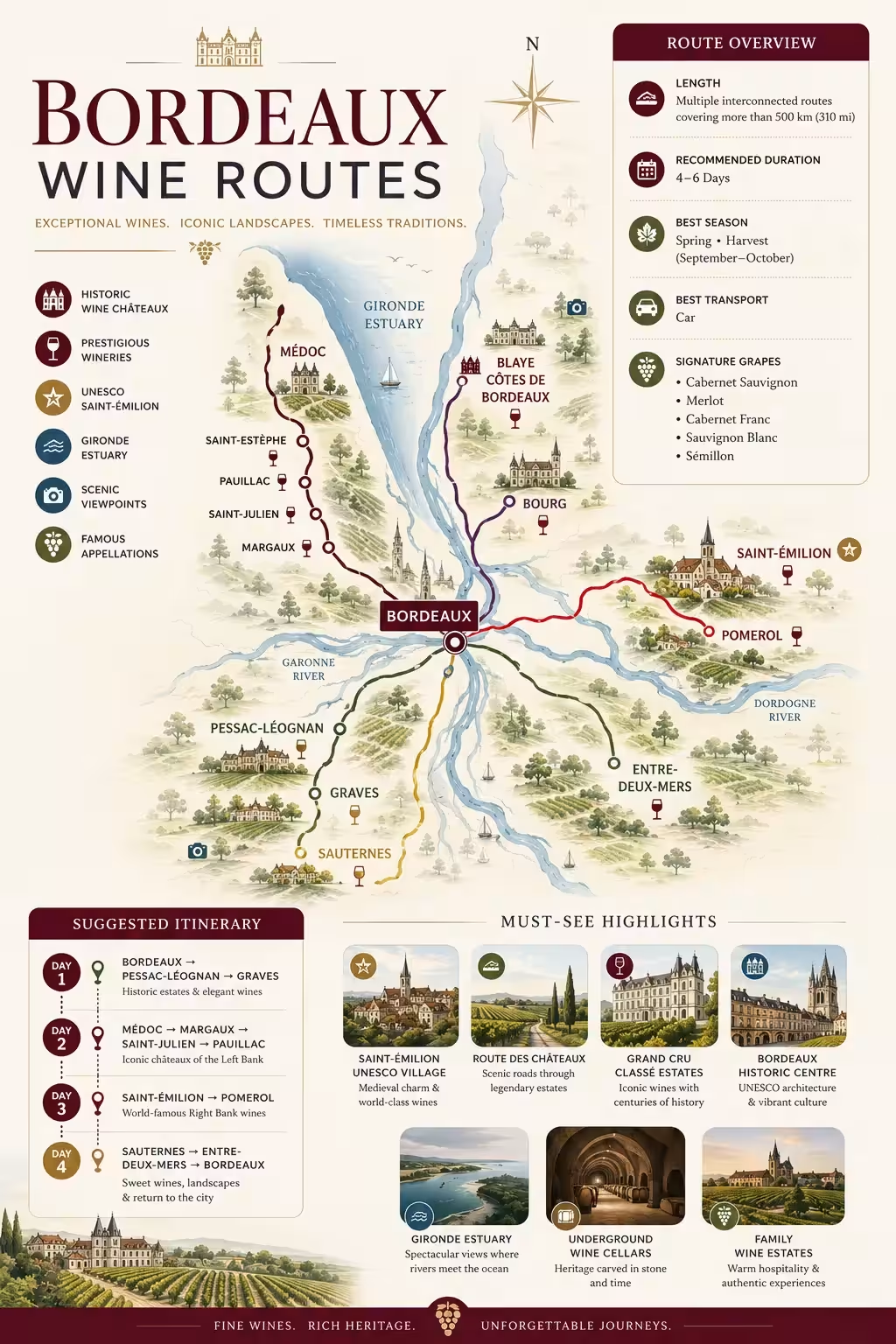
Unlike Burgundy or Alsace, Bordeaux is best explored through several regional circuits radiating from the city of Bordeaux. Each route reveals a distinct wine landscape, from the grand château-lined roads of the Médoc to the medieval vineyards of Saint-Émilion and the gravel terraces of Graves. Visitors experience not only world-famous wineries but also historic villages, riverside scenery, elegant architecture, and one of France’s richest gastronomic traditions.
The diversity of Bordeaux is one of its greatest strengths. Traveling between appellations reveals how soils, rivers, and grape varieties combine to produce remarkably different wine styles within a relatively compact region.
Suggested Itinerary
Day 1: Bordeaux City
Begin by exploring Bordeaux’s historic center, wine museums, and riverside quays before visiting nearby wineries in Pessac-Léognan.
Day 2: Médoc
Drive north along the famous Route des Châteaux, visiting legendary estates surrounded by some of the world’s most prestigious Cabernet Sauvignon vineyards.
Day 3: Saint-Émilion and Pomerol
Cross to the Right Bank to discover medieval Saint-Émilion, neighboring Pomerol, and numerous family-owned wineries.
Day 4: Graves and Sauternes
Head south to explore Graves before continuing into Sauternes, where noble rot creates some of the world’s greatest sweet wines.
Optional Days 5–6
Visit Entre-Deux-Mers, Blaye, Bourg, or return to favorite wineries for extended tastings and château visits.
Must-Visit Wine Villages
Saint-Émilion
One of France’s most beautiful wine villages, Saint-Émilion combines UNESCO-listed medieval architecture with prestigious vineyards and exceptional wineries.
Pauillac
Located in the heart of the Médoc, Pauillac is surrounded by some of Bordeaux’s most famous classified growth estates and represents the pinnacle of Cabernet Sauvignon.
Margaux
Elegant château architecture, beautifully maintained vineyards, and refined wines have made Margaux one of Bordeaux’s most celebrated appellations.
Sauternes
The village at the center of the famous sweet wine appellation offers visitors a chance to discover the unique conditions that produce world-renowned botrytized wines.
Saint-Julien-Beychevelle
Home to numerous prestigious classified growths, Saint-Julien offers one of the Médoc’s finest concentrations of historic wine estates.
Signature Wines
Highlights Along the Route
- Drive the famous Route des Châteaux through the Médoc.
- Visit prestigious classified growth estates.
- Explore the UNESCO-listed village of Saint-Émilion.
- Discover underground limestone wine cellars.
- Enjoy exceptional gastronomy paired with world-famous Bordeaux wines.
- Experience the striking contrast between Left Bank and Right Bank vineyards.
Best Viewpoints
Practical Travel Tips
- Allow at least four days to explore Bordeaux’s main appellations comfortably.
- Reserve château visits well in advance, particularly at prestigious classified estates.
- Renting a car provides the greatest flexibility, as many wineries are located in rural areas.
- Spring and autumn offer ideal weather and beautiful vineyard scenery.
- Stay at least one night in Bordeaux and another in Saint-Émilion to fully experience the region’s outstanding food, wine, and cultural heritage.
Mosel Wine Road (Moselweinstraße)
Following the winding course of the Moselle River through western Germany, the Mosel Wine Road is one of Europe’s most spectacular wine routes. Stretching from the historic Roman city of Trier to Koblenz, where the Moselle meets the Rhine, the route passes dramatic slate-covered vineyards, medieval villages, fairy-tale castles, and centuries-old wineries. Home to some of the world’s finest Rieslings, the Mosel offers an unforgettable combination of breathtaking scenery, exceptional wines, and rich cultural heritage.
| Feature | Details |
|---|---|
| Country | Germany |
| Region | Mosel |
| Length | Approximately 240 km (150 miles) |
| Starting Point | Trier |
| Ending Point | Koblenz |
| Recommended Duration | 3–5 days |
| Best Time to Visit | May–June and September–October |
| Main Grape Varieties | Riesling, Elbling, Pinot Blanc, Pinot Noir |
| UNESCO Status | Several sections pass through the Upper Middle Rhine Valley UNESCO World Heritage Site near Koblenz |
| Best Way to Explore | By car, bicycle, river cruise, or a combination of all three |
Route Overview
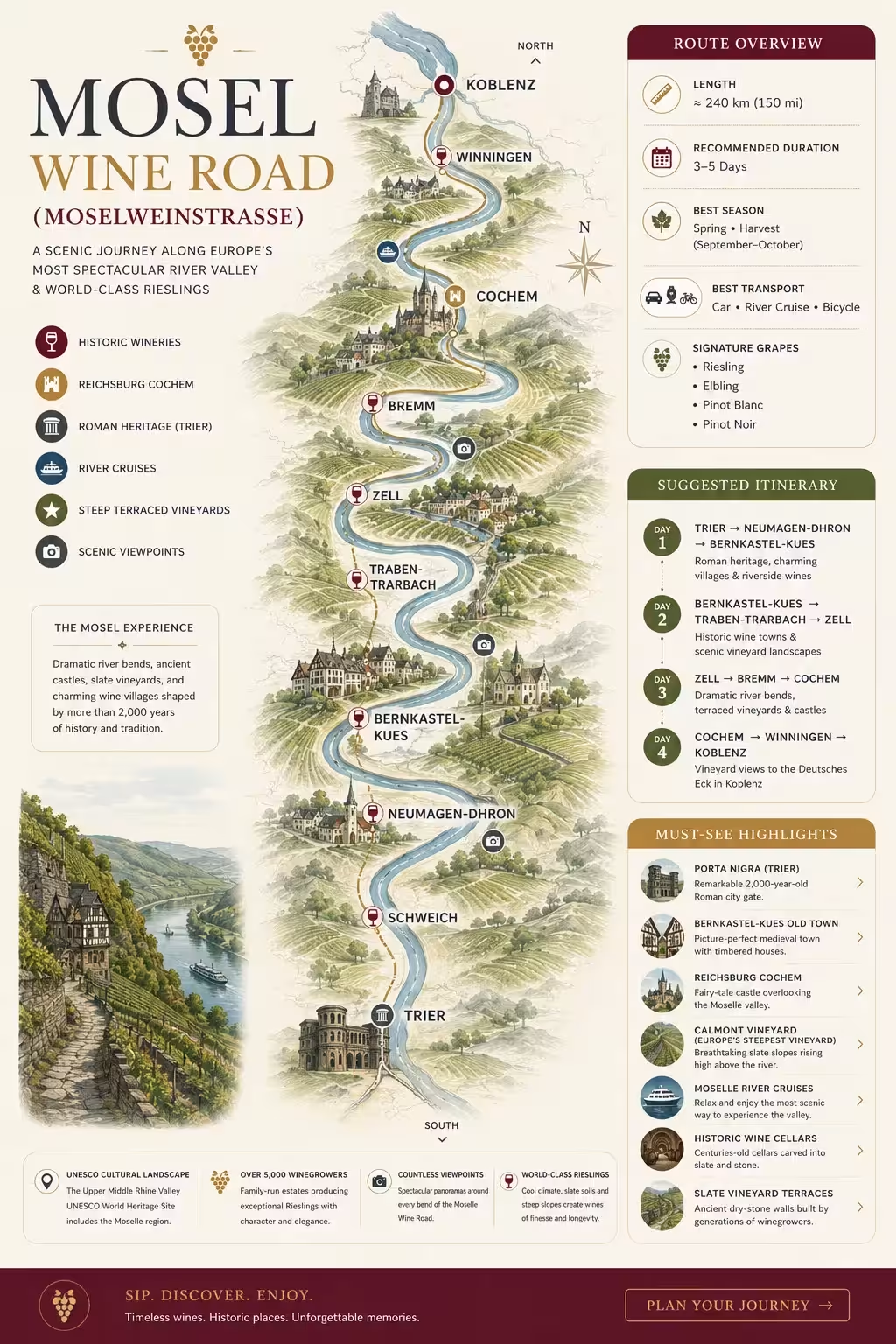
The Mosel Wine Road follows one of Europe’s most sinuous rivers, weaving through a landscape of steep vineyard terraces that rank among the most dramatic wine-growing sites in the world. Many vineyards exceed gradients of 60%, forcing winegrowers to cultivate the vines almost entirely by hand. The combination of slate soils, south-facing slopes, and the river’s moderating influence has made the Mosel synonymous with elegant, mineral-driven Riesling.
Beyond its vineyards, the route is equally celebrated for its medieval architecture, Roman heritage, and magnificent castles. Picturesque villages line the riverbanks, while vineyards climb impossibly steep hillsides that change color with the seasons, making every stage of the journey visually spectacular.
Suggested Itinerary
Day 1: Trier to Bernkastel-Kues
Begin in Trier, Germany’s oldest city, before following the river north through charming wine villages toward Bernkastel-Kues.
Day 2: Bernkastel-Kues to Traben-Trarbach
Explore some of the Mosel’s most prestigious vineyards while visiting historic wineries, panoramic viewpoints, and elegant Art Nouveau architecture.
Day 3: Traben-Trarbach to Cochem
Continue through the heart of the Middle Mosel, discovering castle ruins, scenic river bends, and family-owned wineries.
Day 4: Cochem to Koblenz
Finish your journey beneath the spectacular Reichsburg Castle before following the Moselle to its confluence with the Rhine at Koblenz.
Visitors with additional time can combine the route with a Rhine Valley itinerary or explore nearby vineyard hiking trails.
Must-Visit Wine Villages
Bernkastel-Kues
The undisputed jewel of the Mosel, Bernkastel-Kues enchants visitors with its medieval marketplace, beautifully preserved half-timbered houses, and surrounding slate vineyards producing exceptional Riesling.
Traben-Trarbach
Famous for its Art Nouveau architecture and historic underground wine cellars, Traben-Trarbach was once one of Europe’s most important wine trading centers.
Cochem
Dominated by the impressive Reichsburg Castle, Cochem combines dramatic scenery, charming streets, and excellent wineries overlooking the Moselle.
Beilstein
Often called the “Sleeping Beauty of the Mosel,” Beilstein offers peaceful streets, historic buildings, and one of the river’s most photogenic settings.
Trier
Germany’s oldest city provides the perfect gateway to the Mosel, combining remarkable Roman monuments with centuries of wine history.
Signature Wines
Highlights Along the Route
- Explore Germany’s steepest vineyard landscapes.
- Visit historic family-owned Riesling estates.
- Discover medieval towns and Roman monuments.
- Tour spectacular castles overlooking the Moselle River.
- Enjoy panoramic river cruises through the vineyard valleys.
- Experience traditional German wine taverns and regional cuisine.
Best Viewpoints
Some of the Mosel’s finest panoramas include the Calmont Klettersteig overlooking Europe’s steepest vineyards, the viewpoints above Bernkastel-Kues, Reichsburg Castle in Cochem, and numerous scenic overlooks along the river’s dramatic bends. Autumn offers particularly spectacular colors throughout the valley.
Practical Travel Tips
- Plan three to five days for a relaxed journey through the Mosel Valley.
- River cruises provide a unique perspective of the steep vineyard terraces and picturesque villages.
- Cycling the Mosel is particularly popular thanks to dedicated riverside cycle paths.
- Book winery appointments during harvest season, as many estates become extremely busy.
- Combine your visit with local specialties such as river fish, smoked ham, and regional cheeses, all of which pair beautifully with Mosel Riesling.
Deutsche Weinstraße (German Wine Route)
| Feature | Details |
|---|---|
| Country | Germany |
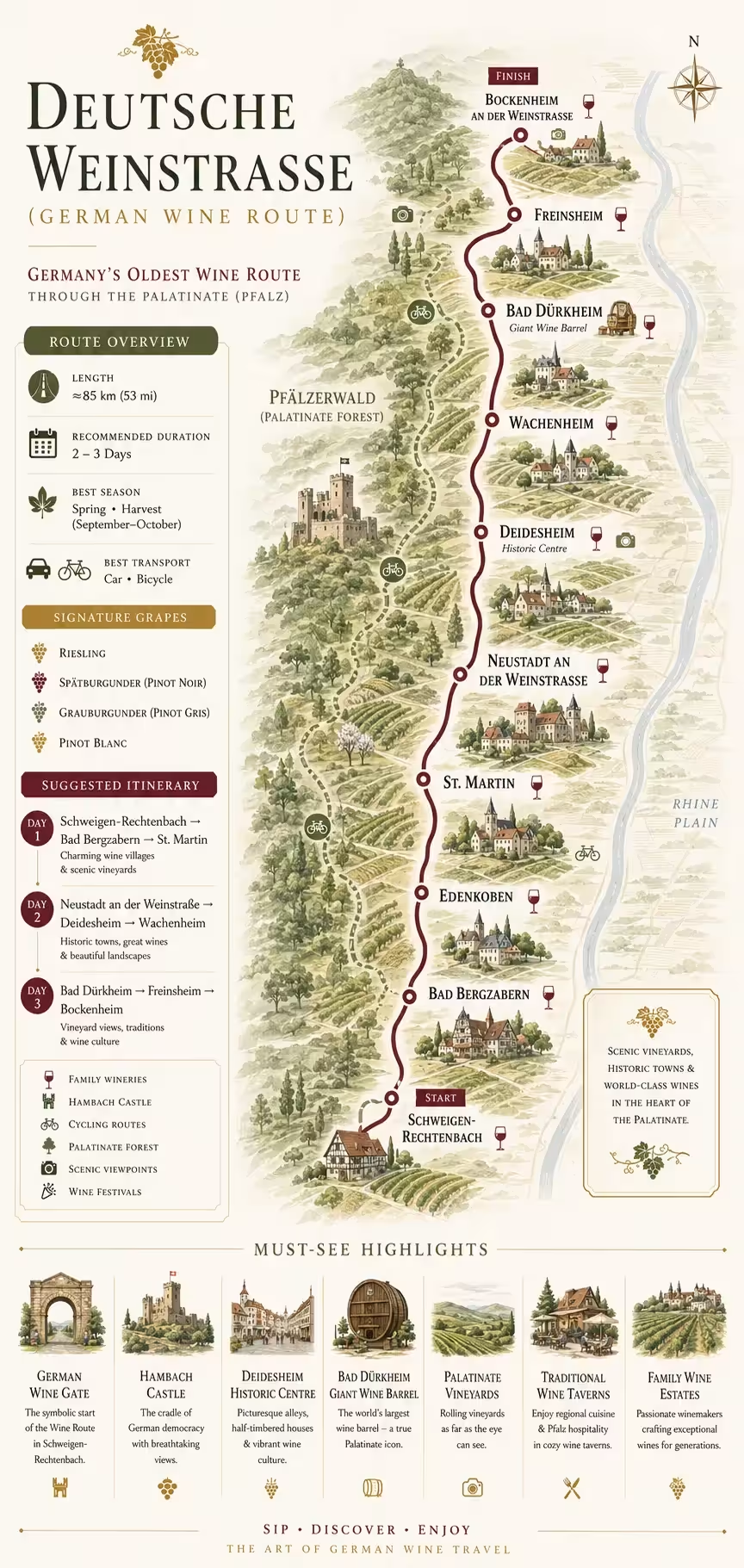
| Region | Palatinate (Pfalz) |
| Length | Approximately 85 km (53 miles) |
| Starting Point | Schweigen-Rechtenbach |
| Ending Point | Bockenheim an der Weinstraße |
| Recommended Duration | 2–3 days |
| Best Time to Visit | April–June and September–October |
| Main Grape Varieties | Riesling, Pinot Blanc, Grauburgunder (Pinot Gris), Spätburgunder (Pinot Noir), Dornfelder |
| UNESCO Status | Adjacent to the Palatinate Forest UNESCO Biosphere Reserve |
| Best Way to Explore | By car or bicycle |
Route Overview
Running north from the French border through the heart of the Palatinate wine region, the Deutsche Weinstraße passes vineyards that benefit from one of Germany’s warmest and sunniest climates. Protected by the Palatinate Forest to the west, the region enjoys conditions that allow not only classic Riesling but also numerous international grape varieties to flourish.
The route is famous for its relaxed atmosphere. Traditional wine taverns, seasonal festivals, family-run wineries, and flower-filled villages create a welcoming environment where wine remains an integral part of everyday life. Compared with the dramatic landscapes of the Mosel, the Palatinate offers gentler rolling vineyards and an easier pace of exploration.
Suggested Itinerary
Day 1: Schweigen-Rechtenbach to Bad Bergzabern
Begin at the German Wine Gate in Schweigen-Rechtenbach before exploring nearby vineyards, wineries, and the historic spa town of Bad Bergzabern.
Day 2: Deidesheim and Neustadt an der Weinstraße
Travel north through some of the Palatinate’s most prestigious vineyards, stopping in St. Martin, Neustadt an der Weinstraße, and Deidesheim for winery visits and traditional wine taverns.
Day 3: Freinsheim to Bockenheim
Finish the route by exploring Freinsheim’s medieval walls, surrounding vineyards, and the northern gateway of the Deutsche Weinstraße at Bockenheim.
Must-Visit Wine Villages
Deidesheim
One of Germany’s finest wine villages, Deidesheim is renowned for its elegant wine estates, beautifully preserved historic center, and exceptional Riesling producers.
St. Martin
Surrounded by vineyards and colorful flower-filled streets, St. Martin perfectly captures the relaxed charm of the Palatinate wine region.
Neustadt an der Weinstraße
Often considered the capital of the German Wine Route, Neustadt hosts numerous festivals, wine events, and serves as an ideal base for exploring the surrounding vineyards.
Freinsheim
Encircled by medieval walls, Freinsheim combines quiet streets, historic architecture, and welcoming wineries within one of the Palatinate’s most picturesque settings.
Schweigen-Rechtenbach
Home to the impressive German Wine Gate, this southern village marks the symbolic beginning of one of Europe’s oldest wine routes.
Signature Wines
Although Riesling remains the region’s flagship grape, the Palatinate also excels with Pinot Blanc, Grauburgunder (Pinot Gris), Spätburgunder (Pinot Noir), Chardonnay, and a growing range of innovative wines. Its warmer climate produces wines with generous fruit while retaining excellent freshness.
Highlights Along the Route
- Pass beneath the famous German Wine Gate.
- Visit centuries-old family-owned wineries.
- Explore charming medieval wine villages.
- Enjoy panoramic cycling routes through rolling vineyards.
- Experience traditional German wine festivals and seasonal celebrations.
- Discover excellent regional cuisine served in historic wine taverns.
Best Viewpoints
Excellent panoramic views can be found from the vineyard hills above Deidesheim, the slopes surrounding St. Martin, and the nearby Palatinate Forest. Several vineyard trails provide sweeping views across the Rhine Plain toward the Black Forest on clear days.
Practical Travel Tips
- Allow two to three days for a comfortable exploration of the route.
- Spring and autumn provide the best combination of weather and vineyard scenery.
- The Deutsche Weinstraße is particularly well suited to cycling thanks to gentle terrain and excellent infrastructure.
- Visit during one of the region’s many wine festivals to experience local traditions at their liveliest.
- Reserve accommodations early during harvest season, when the Palatinate attracts large numbers of domestic and international visitors.
Rhine Wine Route (Rheingau & Middle Rhine)
The Rhine Wine Route follows one of Europe’s most historic rivers, connecting vineyard-covered hillsides, medieval castles, picturesque wine towns, and centuries of winemaking tradition. Extending from the Rheingau west of Frankfurt through the UNESCO-listed Upper Middle Rhine Valley to Koblenz, this journey combines exceptional Riesling vineyards with one of Germany’s most spectacular cultural landscapes. Few wine routes blend history, scenery, and viticulture as seamlessly as the Rhine.
| Feature | Details |
|---|---|
| Country | Germany |
| Region | Rheingau & Upper Middle Rhine Valley |
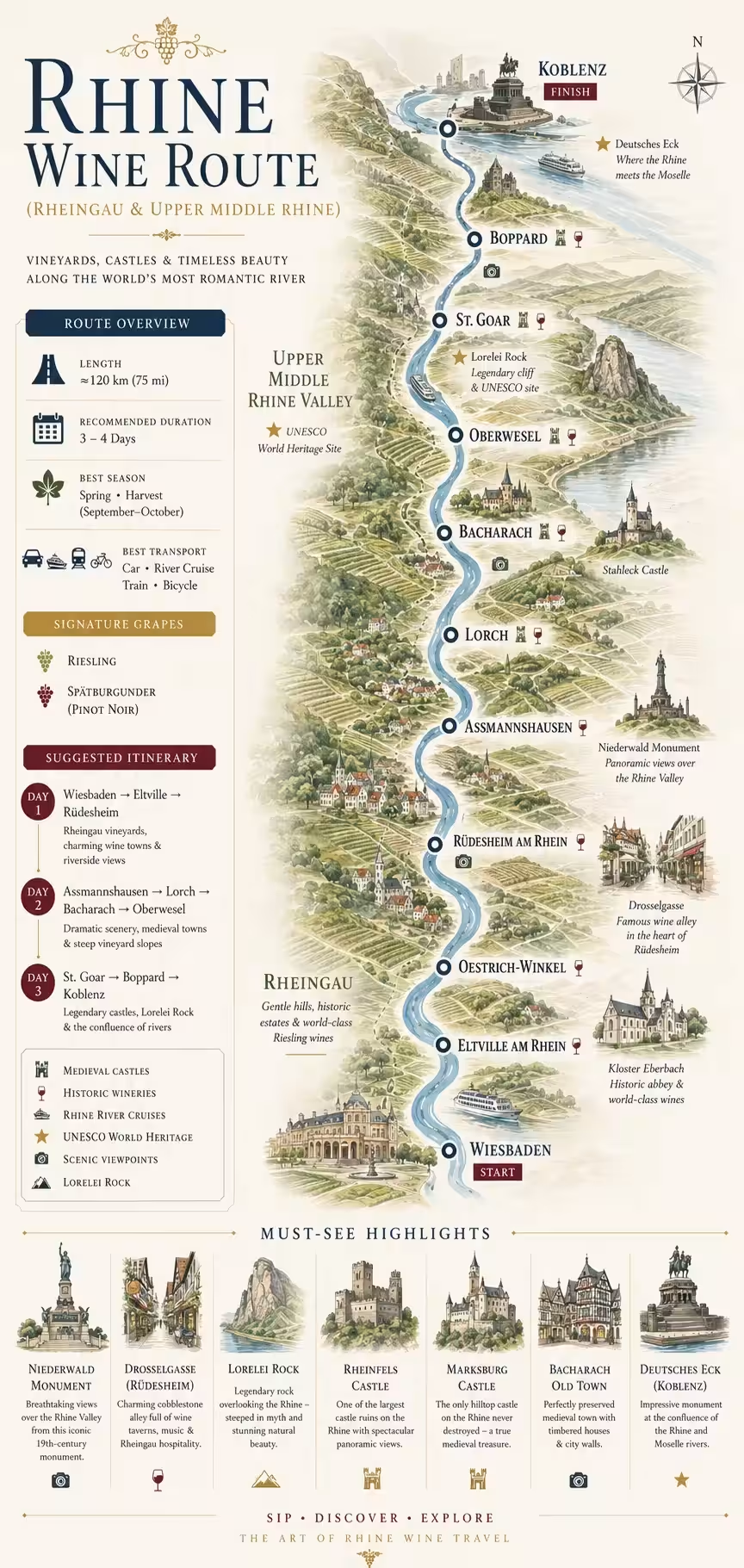
| Length | Approximately 120 km (75 miles) |
| Starting Point | Wiesbaden |
| Ending Point | Koblenz |
| Recommended Duration | 3–4 days |
| Best Time to Visit | May–June and September–October |
| Main Grape Varieties | Riesling, Spätburgunder (Pinot Noir) |
| UNESCO Status | The Upper Middle Rhine Valley is a UNESCO World Heritage Site |
| Best Way to Explore | By car, river cruise, train, or bicycle |
Route Overview
The Rhine has been one of Europe’s great commercial waterways for nearly two thousand years, and its vineyards have flourished along its steep riverbanks since Roman times. The route begins in the prestigious Rheingau wine region, famous for elegant Riesling, before continuing north through the dramatic Upper Middle Rhine Valley, where castles crown nearly every hilltop and vineyards cling to narrow terraces above the river.
This remarkable landscape inspired generations of artists, writers, and composers during the Romantic period and remains one of Germany’s most visited destinations. Every bend in the river reveals another castle, vineyard, or historic wine town, making the Rhine Wine Route one of the continent’s most scenic wine journeys.
Suggested Itinerary
Day 1: Wiesbaden to Rüdesheim am Rhein
Begin in Wiesbaden before following the Rhine into the Rheingau. Visit renowned wineries around Eltville and Rüdesheim while enjoying panoramic vineyard views and traditional wine taverns.
Day 2: Rüdesheim to Bacharach
Cross into the Upper Middle Rhine Valley, stopping at scenic viewpoints, medieval castles, and charming riverside towns including Assmannshausen, Lorch, and Bacharach.
Day 3: Bacharach to Koblenz
Continue through Oberwesel, St. Goar, and Boppard before reaching Koblenz, where the Moselle joins the Rhine at the famous Deutsches Eck.
Travelers with extra time can extend the journey south into Rheinhessen or continue north by following the Mosel Wine Road.
Must-Visit Wine Towns
Rüdesheim am Rhein
The best-known wine destination on the Rhine, Rüdesheim combines historic wine taverns, picturesque streets, scenic cable cars, and outstanding Riesling producers.
Eltville am Rhein
Often called the “City of Wine and Roses,” Eltville offers elegant riverside promenades, a historic castle, and easy access to prestigious Rheingau vineyards.
Bacharach
One of Germany’s finest medieval wine towns, Bacharach captivates visitors with timber-framed houses, ancient walls, and surrounding terraced vineyards.
St. Goar
Located beneath the imposing Rheinfels Castle, St. Goar provides spectacular views of the Rhine Gorge and the legendary Lorelei Rock.
Boppard
Famous for the dramatic Boppard Hamm vineyard, this historic riverside town combines Roman heritage, excellent Riesling, and beautiful river scenery.
Signature Wines
The Rhine Wine Route is synonymous with Riesling, producing wines celebrated for their purity, minerality, and remarkable ageing potential. Sheltered slopes in Assmannshausen also produce some of Germany’s finest Spätburgunder (Pinot Noir).
Highlights Along the Route
- Explore the UNESCO-listed Upper Middle Rhine Valley.
- Visit medieval castles overlooking the river.
- Cruise through one of Europe’s most beautiful river landscapes.
- Taste elegant Rieslings in historic wine estates.
- Discover the legendary Lorelei Rock.
- Experience traditional German wine taverns and seasonal festivals.
Best Viewpoints
Outstanding panoramas can be enjoyed from the Niederwald Monument above Rüdesheim, the viewpoints overlooking the Lorelei Rock, Rheinfels Castle, and the sweeping bend of the Rhine above Boppard. River cruises also provide unforgettable perspectives of the vineyards and castles.
Practical Travel Tips
- Allow three to four days to fully appreciate both the Rheingau and the Upper Middle Rhine Valley.
- Combine driving with a Rhine river cruise for the best overall experience.
- The railway follows both banks of the river, making car-free exploration easy.
- Visit during autumn to enjoy harvest celebrations and colorful vineyard landscapes.
- Spend overnight stays in Rüdesheim, Bacharach, or Koblenz to experience the region after the daytime crowds have departed.
Lavaux Vineyard Route
| Feature | Details |
|---|---|
| Country | Switzerland |
| Region | Lavaux (Canton of Vaud) |
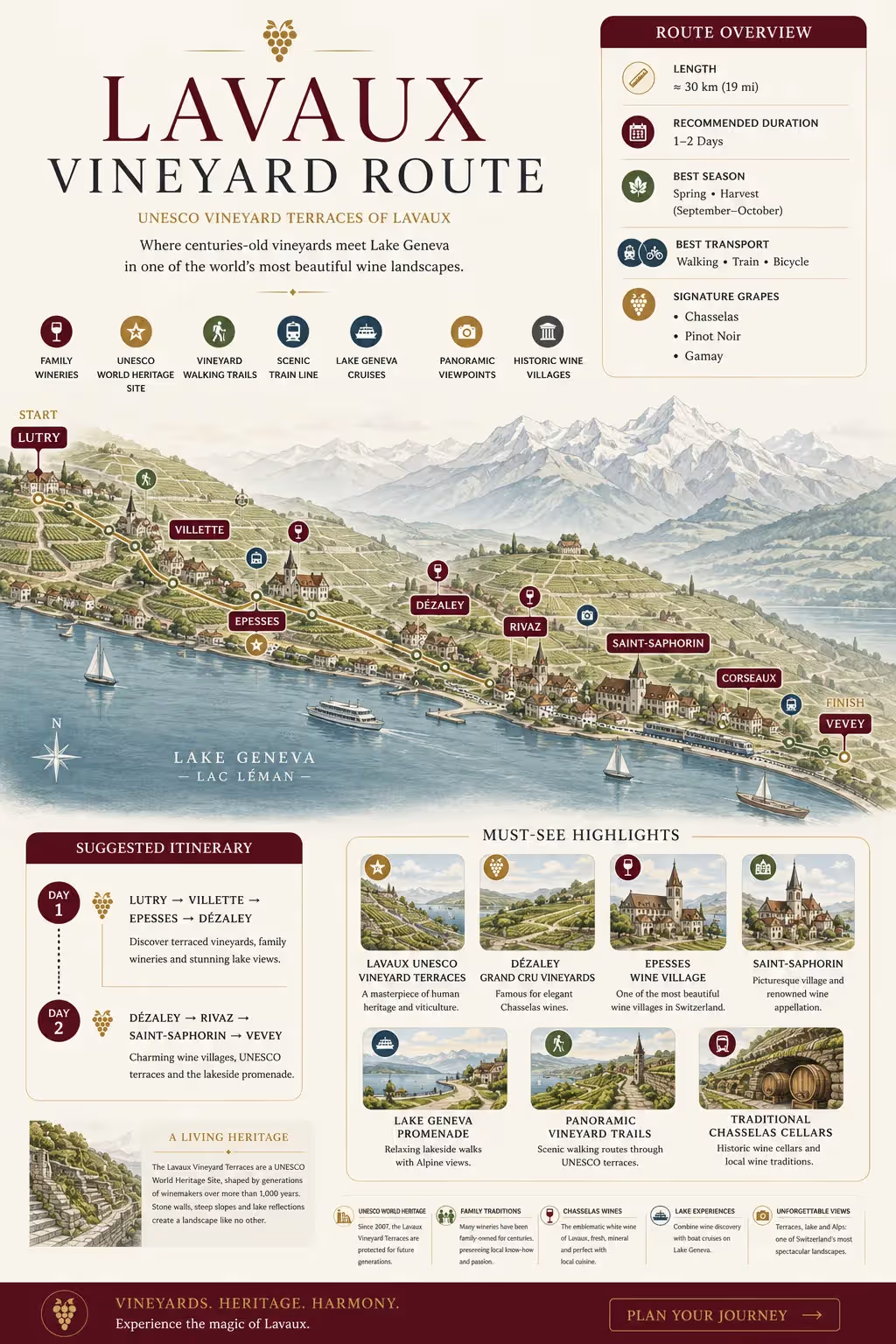
| Length | Approximately 30 km (19 miles) |
| Starting Point | Lutry |
| Ending Point | Vevey |
| Recommended Duration | 1–2 days |
| Best Time to Visit | May–June and September–October |
| Main Grape Varieties | Chasselas, Pinot Noir, Gamay |
| UNESCO Status | Lavaux Vineyard Terraces UNESCO World Heritage Site |
| Best Way to Explore | On foot, by bicycle, or by train with short walks between villages |
Route Overview
The Lavaux Vineyard Route follows spectacular terraced vineyards first developed by medieval monks nearly a thousand years ago. Stone walls support thousands of narrow vineyard terraces that descend toward Lake Geneva, creating one of the world’s most distinctive wine landscapes. Throughout the journey, visitors enjoy panoramic views of the lake, the French Alps, and charming wine villages that have preserved their traditional character for centuries.
Unlike longer wine routes, Lavaux is best explored slowly. Walking between villages allows travelers to fully appreciate the intricate network of vineyard paths, stone staircases, and panoramic viewpoints that make the region so unique. Efficient trains and boats also provide excellent alternatives for moving between destinations.
Suggested Itinerary
Day 1: Lutry to Saint-Saphorin
Begin in Lutry before following vineyard trails through Villette, Epesses, and Rivaz, finishing in the picturesque village of Saint-Saphorin. Along the way, stop at family-owned wineries to sample local Chasselas while enjoying breathtaking views over Lake Geneva.
Day 2: Saint-Saphorin to Vevey
Spend the morning exploring additional vineyard paths before continuing to Vevey. Visit lakeside promenades, wine shops, and cultural attractions while enjoying one final perspective of the UNESCO-listed vineyard terraces.
Travelers with extra time can continue to nearby Montreux or combine Lavaux with excursions into the Valais wine region.
Must-Visit Wine Villages
Lutry
The western gateway to Lavaux, Lutry combines a charming medieval center, lakeside promenade, and hillside vineyards that immediately introduce visitors to the region’s unique landscape.
Epesses
Often considered the heart of Lavaux, Epesses offers narrow streets, historic winegrowers’ houses, and spectacular viewpoints overlooking Lake Geneva.
Rivaz
This small wine village is surrounded by vineyard terraces and provides one of the most peaceful settings for tasting local Chasselas while enjoying panoramic lake views.
Saint-Saphorin
Among Switzerland’s most beautiful wine villages, Saint-Saphorin enchants visitors with stone houses, flower-filled lanes, welcoming wineries, and magnificent alpine scenery.
Vevey
Although larger than the surrounding villages, Vevey serves as the eastern gateway to Lavaux and offers an elegant lakeside atmosphere, excellent restaurants, and convenient transport connections.
Signature Wines
Lavaux is synonymous with Chasselas, a grape variety that perfectly expresses the mineral-rich soils and sunny terraces overlooking Lake Geneva. Visitors will also discover elegant Pinot Noir, Gamay, and a selection of specialty wines produced by independent family wineries.
Highlights Along the Route
- Walk through the UNESCO-listed Lavaux Vineyard Terraces.
- Enjoy breathtaking views of Lake Geneva and the Alps.
- Visit traditional family-owned wineries.
- Discover picturesque wine villages connected by vineyard trails.
- Combine wine tasting with boat cruises on Lake Geneva.
- Experience one of Europe’s most spectacular cultural landscapes.
Best Viewpoints
Practical Travel Tips
- Allow one to two days to fully appreciate the Lavaux vineyards without rushing.
- Walking is the most rewarding way to experience the terraces, although trains stop conveniently in several villages.
- Wear comfortable footwear, as many vineyard paths include stone steps and moderate climbs.
- Spring and autumn provide ideal temperatures, while harvest season offers a lively atmosphere throughout the vineyards.
- Finish your visit with a lakeside dinner in Vevey or Lutry, pairing local cuisine with a glass of Chasselas while overlooking one of Europe’s most beautiful vineyard landscapes.