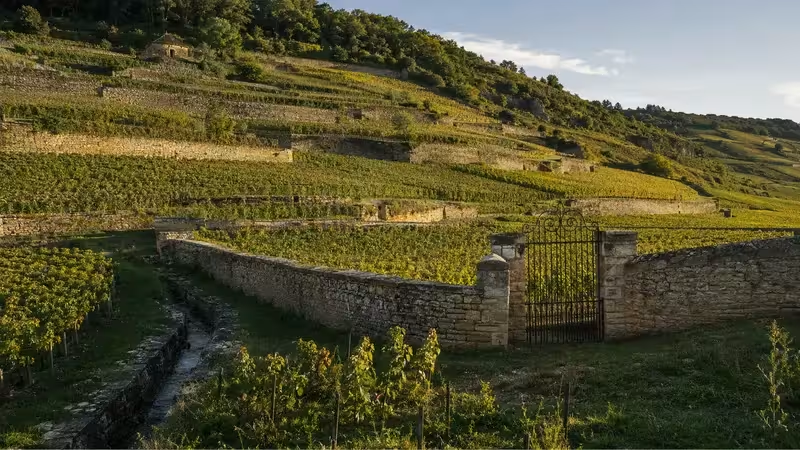
Table of Contents
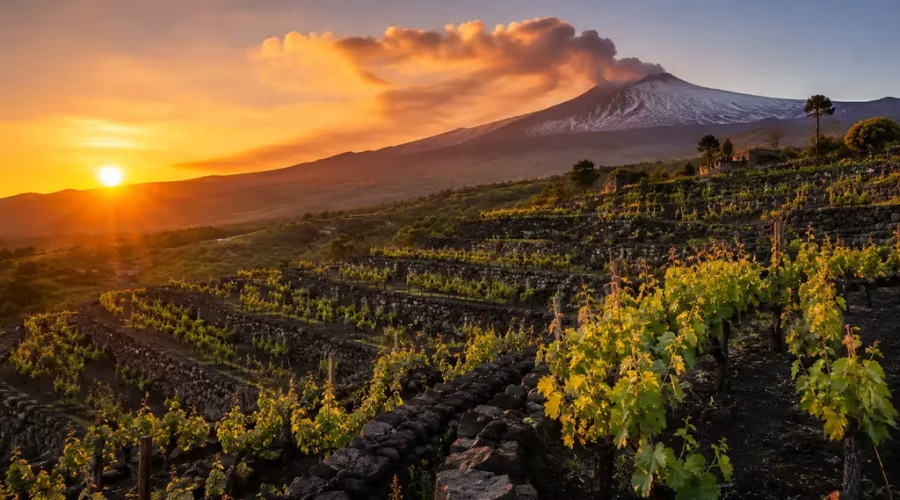
Volcanic vineyards rank among the world’s most extraordinary wine landscapes. From the black lava terraces of Mount Etna to the windswept stone walls of Pico Island and the dramatic caldera of Santorini, Southern Europe is home to some of the oldest and most distinctive volcanic wine regions on Earth. These vineyards have developed in environments shaped by eruptions, lava flows and volcanic ash over thousands of years, creating landscapes where geology and viticulture are inseparable. Today, they produce wines celebrated not only for their unique character but also for their remarkable resilience and strong sense of place.
Unlike many traditional wine regions founded on limestone, granite or schist, volcanic vineyards owe their existence to the Earth’s internal forces. Layers of basalt, pumice, tuff and weathered lava have gradually broken down into complex soils that challenge the vine while providing excellent drainage and encouraging deep root systems. Far from being fertile, these soils are often poor in organic matter, forcing vines to struggle for water and nutrients. This natural limitation reduces yields and frequently results in grapes of exceptional concentration, freshness and balance.
Southern Europe possesses an exceptional concentration of active, dormant and extinct volcanic landscapes. Italy alone contains hundreds of volcanic formations, including Mount Etna in Sicily, Mount Vulture in Basilicata and the volcanic hills surrounding Naples. Greece’s Aegean islands, particularly Santorini, preserve one of the Mediterranean’s most spectacular volcanic ecosystems, while Spain’s Canary Islands cultivate vines directly on volcanic ash deposited by relatively recent eruptions. Portugal contributes another remarkable chapter through the Azores and Madeira, where Atlantic volcanoes have shaped vineyards exposed to ocean winds for centuries.
These regions also preserve an extraordinary cultural heritage. Many volcanic vineyards continue to rely on ancient training systems, traditional dry-stone terraces and indigenous grape varieties perfectly adapted to harsh growing conditions. Some vines have survived for well over a century, while others escaped the devastation of phylloxera thanks to their volcanic or sandy soils. In several regions, UNESCO has recognised these landscapes as cultural treasures, acknowledging the unique relationship between geology, agriculture and human ingenuity.
Volcanic wines have become increasingly sought after by sommeliers, collectors and wine enthusiasts around the world. They are frequently associated with freshness, precision, vibrant acidity and what many describe as a distinctive mineral character, although the precise influence of volcanic soils on wine flavour remains one of the most fascinating subjects in modern viticulture. Scientific research continues to explore how geology, climate, vine physiology and human practices combine to shape these distinctive wines, making volcanic vineyards one of the most studied and debated topics in contemporary wine science.
This guide explores the remarkable volcanic vineyards of Southern Europe, examining how ancient eruptions continue to influence modern viticulture. From the formation of volcanic soils to the indigenous grape varieties that thrive upon them, and from Sicily’s towering volcanoes to the Atlantic islands of Portugal, these landscapes demonstrate that some of Europe’s most remarkable wines are born from the enduring legacy of fire.
What Makes a Vineyard Volcanic?
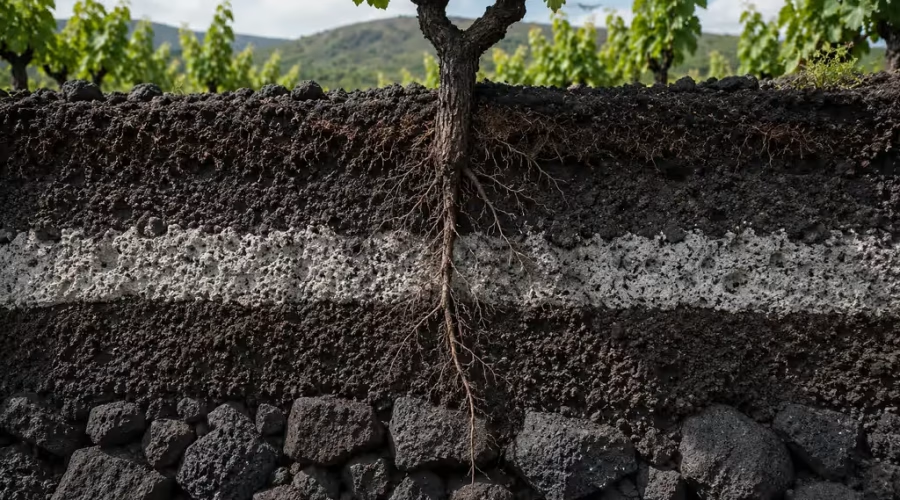
Natural cross-section of a volcanic vineyard soil with grapevine roots extending through layers of basalt, volcanic ash and pumice beneath an established vineyard.
Not every vineyard located near a volcano can be considered a true volcanic vineyard. The defining characteristic lies beneath the surface: the soil itself must originate largely from volcanic activity. Over thousands—or sometimes millions—of years, eruptions deposit layers of lava, volcanic ash, pumice, basalt and other igneous materials that gradually weather into highly distinctive soils. These geological formations create environments unlike those found in vineyards established on limestone, granite, schist or clay, giving rise to some of the world’s most remarkable wine landscapes.
Volcanic soils are extraordinarily diverse because no two volcanoes behave in exactly the same way. Some produce vast lava flows that cool into dense basaltic rock, while others eject enormous quantities of ash, pumice and fragmented volcanic debris. As these materials break down under the influence of rain, wind and biological activity, they form soils that vary greatly in texture, mineral composition and water retention. This diversity explains why the black basaltic vineyards of Mount Etna differ considerably from the porous pumice soils of Santorini or the ash-covered vineyards of Lanzarote, despite all being classified as volcanic.
One of the most important characteristics of volcanic soils is their excellent natural drainage. Water moves rapidly through the porous layers of lava fragments, pumice and volcanic gravel, preventing excessive moisture around the roots. This forces vines to develop extensive root systems capable of reaching deeper water reserves, often several metres below the surface. Deep rooting not only improves drought resistance but also enables vines to maintain more consistent growth during increasingly warm Mediterranean summers.
Volcanic soils are also generally low in organic matter and naturally poor in available nutrients. While this might appear disadvantageous, moderate nutrient limitation is highly beneficial for quality viticulture. Instead of producing vigorous vegetation and large yields, vines concentrate their energy on ripening a smaller crop of grapes with greater flavour intensity, balanced acidity and higher phenolic concentration. Controlled vine stress has long been recognised as one of the key factors associated with the production of premium wines, and volcanic landscapes naturally provide these conditions without excessive intervention.
Another defining feature is the remarkable thermal behaviour of volcanic rocks. Dark basalt and lava stones absorb significant amounts of solar heat during the day before gradually releasing it throughout the night. This natural heat regulation can moderate temperature fluctuations, particularly at higher elevations where nights become considerably cooler. On Mount Etna, for example, vineyards often experience warm days followed by refreshing mountain nights, a combination that allows grapes to ripen slowly while preserving acidity and aromatic complexity.
Volcanic landscapes frequently present additional challenges that have shaped local viticulture for centuries. Steep slopes, rugged lava terraces, high altitudes, strong maritime winds and limited mechanisation require growers to rely heavily on manual labour. Stone terraces built from lava rock stabilise hillsides, while traditional vine training systems protect vines from wind and intense sunlight. These adaptations are not simply agricultural techniques; they represent centuries of accumulated knowledge passed down through generations of winegrowers living in some of Europe’s most demanding vineyard environments.
Although volcanic soils are often associated with the idea of “minerality” in wine, the relationship between geology and flavour is more complex than popular belief sometimes suggests. Minerals present in volcanic rocks do not pass directly into the grapes as recognisable flavours. Instead, volcanic soils influence water availability, root development, vine physiology and ripening conditions, which together contribute to the freshness, precision and structural balance frequently observed in wines from these regions. This distinction is essential for understanding why volcanic vineyards are so highly regarded by both scientists and wine professionals.
Ultimately, a volcanic vineyard is defined not by dramatic scenery alone but by the lasting influence of ancient eruptions on the soil, the vine and the wines they produce. These landscapes demonstrate how geological events that occurred thousands of years ago continue to shape modern viticulture, creating some of the most distinctive and celebrated wine regions in Southern Europe.
How Volcanic Soils Influence the Vine
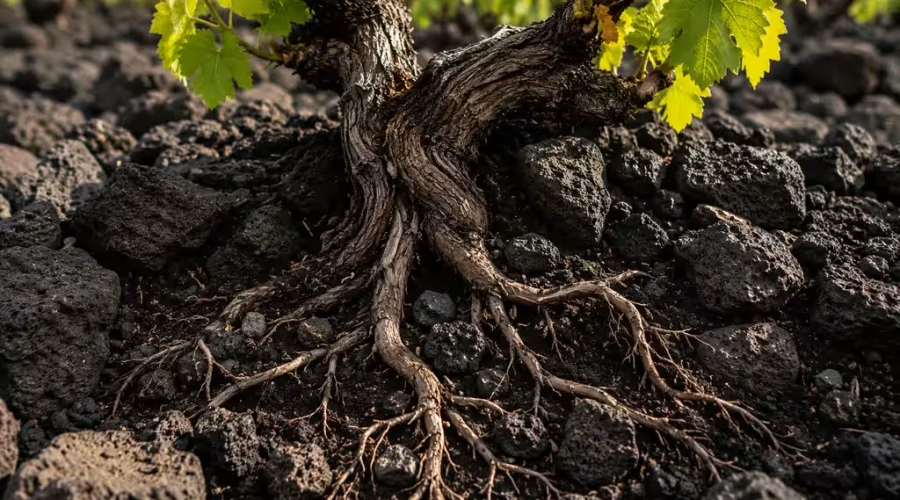
Volcanic soils do not simply provide a dramatic setting for vineyards—they actively shape the way vines grow, adapt and produce fruit. Unlike fertile agricultural soils designed to maximise crop yields, volcanic terrains create challenging conditions that naturally limit vine vigour while encouraging deeper root development and slower, more balanced ripening. These characteristics have made volcanic regions some of the most respected sources of high-quality wines in Southern Europe.
Perhaps the most important influence of volcanic soils is their ability to regulate water. Their porous structure allows rainfall to drain quickly through layers of lava fragments, pumice and volcanic gravel, preventing waterlogging around the roots. At the same time, weathered volcanic materials often retain enough moisture deep below the surface to sustain vines during prolonged summer droughts. This balance between rapid drainage and gradual water availability forces vines to develop extensive root systems capable of exploring several metres beneath the surface, making them remarkably resilient in Mediterranean climates.
Low natural fertility represents another defining characteristic of volcanic vineyards. These soils generally contain limited organic matter and relatively low concentrations of readily available nutrients. As a result, vines grow less vigorously, producing fewer leaves and smaller grape clusters than they would in richer agricultural soils. For winegrowers, this natural restriction is often an advantage rather than a limitation. Reduced yields allow the vine to concentrate its resources on fewer grapes, increasing flavour intensity, phenolic richness and overall fruit quality without excessive intervention.
Volcanic landscapes also contribute to slower and more even grape ripening. Many of Southern Europe’s volcanic vineyards are located at relatively high elevations or close to the sea, where large differences between daytime and nighttime temperatures help preserve acidity while allowing grapes to reach full phenolic maturity. On Mount Etna, vineyards climb to more than 1,000 metres above sea level, while Santorini benefits from constant Aegean breezes that moderate summer heat. These conditions extend the growing season, allowing grapes to develop greater aromatic complexity while maintaining freshness—one of the defining characteristics of many volcanic wines.
The physical structure of volcanic terrain frequently requires vines to adapt in remarkable ways. Rocky soils offer little space for shallow roots, encouraging plants to penetrate deep fractures in ancient lava flows in search of water and nutrients. In some regions, centuries-old vines have developed root systems extending several metres below the surface, enabling them to survive prolonged droughts and continue producing grapes despite increasingly challenging climatic conditions. This deep rooting not only improves resilience but also contributes to the longevity for which many volcanic vineyards are renowned.
Volcanic rocks themselves also influence the vineyard microclimate. Dark basalt and lava stones absorb significant amounts of solar energy during the day before slowly releasing stored heat throughout the night. This natural thermal regulation reduces sudden temperature fluctuations and promotes steady grape maturation, particularly during the final weeks before harvest. In cooler mountain vineyards, the additional warmth can help ensure complete ripening, while in coastal regions it contributes to greater consistency from one vintage to another.
The demanding conditions of volcanic viticulture have also shaped centuries of human adaptation. Steep lava terraces, dry-stone walls and traditional vine training systems are not merely picturesque features but practical solutions developed to cope with unstable slopes, strong winds and limited soil depth. Santorini’s famous kouloura basket-trained vines protect grapes from powerful Aegean winds, while the terraced vineyards of Etna and Pico prevent erosion and maximise the use of difficult terrain. These techniques illustrate how growers have learned to work with volcanic landscapes rather than attempt to transform them.
Modern viticultural research increasingly recognises that the quality associated with volcanic wines results from the interaction of many factors rather than geology alone. Climate, altitude, exposure, vine age, local grape varieties and human expertise all contribute alongside the volcanic substrate. Rather than acting as a single determining factor, volcanic soils create a unique environment that influences vine physiology throughout the growing season, encouraging balanced growth, natural resilience and the production of wines noted for their freshness, precision and remarkable sense of place.
For this reason, volcanic vineyards are often regarded as some of the most expressive examples of terroir in the wine world. They demonstrate how ancient geological events continue to influence every stage of vine development—from root growth and water management to grape ripening and ultimately the character of the finished wine.
Do Volcanic Soils Really Change Wine Flavour?
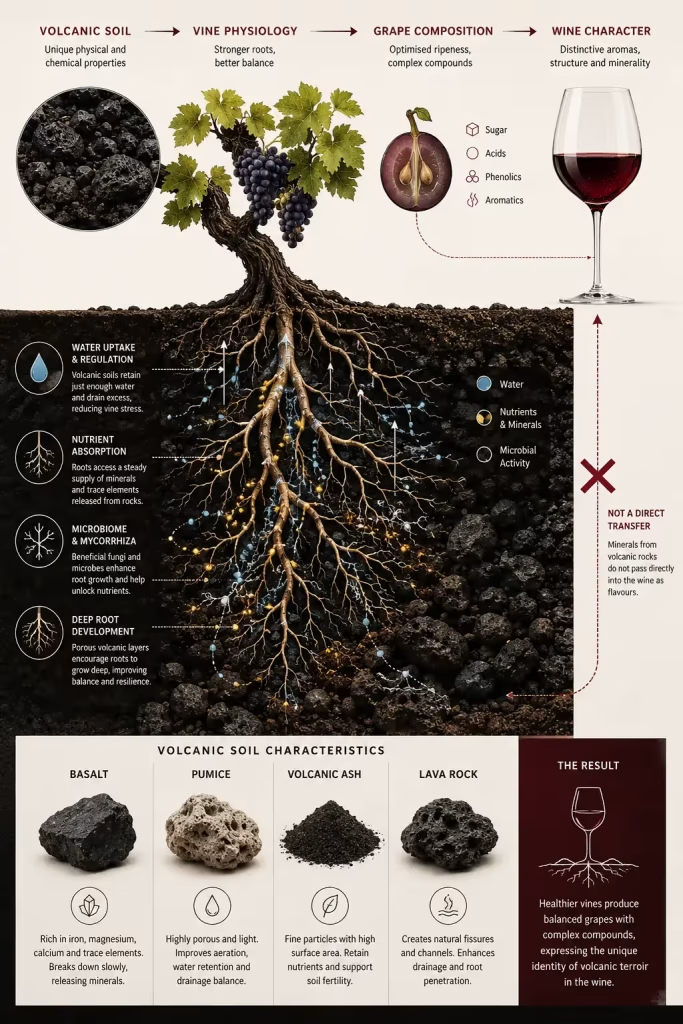
Few topics in the wine world generate as much discussion as the relationship between volcanic soils and wine flavour. Wine professionals frequently describe volcanic wines as mineral, saline, smoky or even flinty, while producers often attribute these characteristics directly to the volcanic origin of their vineyards. Yet modern scientific research paints a more nuanced picture. Although volcanic terroirs undoubtedly influence the style and quality of wine, the mechanisms behind these distinctive sensory perceptions are far more complex than the simple transfer of minerals from soil to grape.
One of the most common misconceptions is that vines absorb minerals from volcanic rocks which then become directly detectable in the finished wine. In reality, this does not occur. Grapevines absorb mineral nutrients such as potassium, calcium, magnesium and phosphorus in dissolved ionic form—elements that are present in virtually all agricultural soils, whether volcanic, limestone or granite. These nutrients are essential for vine growth but do not produce recognisable flavours such as “basalt,” “lava” or “smoke” in the wine itself.
The concept of minerality has therefore become one of the most debated descriptors in modern wine tasting. Unlike acidity, tannins or sweetness, minerality has no universally accepted scientific definition. Instead, it serves as a sensory term used to describe a combination of characteristics that may include freshness, salinity, stony impressions, chalky textures or subtle smoky nuances. Many wines grown on volcanic soils display these qualities, but they result from a complex interaction of vineyard conditions rather than from minerals being tasted directly.
Volcanic environments influence wine primarily through their effect on vine physiology and grape development. Excellent drainage limits excessive vine vigour, while poor fertility naturally reduces yields. Deep-rooted vines access stable water reserves during dry summers, allowing gradual and balanced ripening. High elevations and strong maritime influences preserve acidity, while dark volcanic rocks regulate daily temperature fluctuations by storing and slowly releasing heat. Together, these factors encourage the production of grapes with concentrated flavours, vibrant acidity and remarkable aromatic precision.
Climate often plays an equally important role. Mount Etna combines volcanic soils with elevations exceeding 1,000 metres, producing cool nights that preserve freshness despite Sicily’s southern latitude. Santorini’s vines grow under constant Aegean winds and intense sunlight, conditions that favour exceptional acidity and remarkable longevity. In the Canary Islands, volcanic ash combines with Atlantic breezes to create wines of striking purity and tension. Although these regions all share volcanic origins, their wines differ considerably because climate, altitude and local grape varieties interact with geology in unique ways.
Indigenous grape varieties further reinforce this diversity. Assyrtiko on Santorini, Carricante and Nerello Mascalese on Mount Etna, Malvasía Volcánica in Lanzarote and Arinto dos Açores on Pico each respond differently to volcanic environments. Their genetic characteristics influence acidity, aromatic expression, tannin structure and ageing potential, demonstrating that grape variety is just as important as soil in determining wine style. A volcanic terroir provides the stage, but the grape ultimately performs the leading role.
Despite these scientific nuances, experienced tasters often identify recurring stylistic traits among volcanic wines. White wines frequently display exceptional freshness, linear acidity, citrus purity and subtle saline notes, while volcanic reds tend to favour elegance over power, combining fine tannins with bright fruit and distinctive savoury complexity. Rather than exhibiting overt fruit richness, many volcanic wines are admired for their precision, balance and transparent expression of place.
This distinctive style explains why volcanic wines have gained such a strong following among sommeliers and collectors. Their ability to combine concentration with freshness makes them particularly versatile at the table, pairing naturally with seafood, Mediterranean cuisine and dishes that emphasise purity of flavour. In recent decades, increasing interest in terroir-driven wines has further elevated the reputation of volcanic regions, positioning them among the most sought-after vineyard landscapes in the world.
Ultimately, the influence of volcanic soils cannot be reduced to a single flavour descriptor. Instead, volcanic terroirs create a unique combination of geological, climatic and biological conditions that shape the vine throughout its life. The resulting wines are not defined by tasting lava or ash, but by the remarkable balance, energy and sense of place that emerge when ancient volcanic landscapes, indigenous grape varieties and centuries of viticultural knowledge come together in the glass.
Italy: Europe's Greatest Volcanic Vineyards
Italy possesses the greatest concentration of volcanic vineyards in Europe and is widely regarded as the continent’s leading reference for volcanic viticulture. Stretching from the Alpine foothills of Veneto to the islands of Sicily, the country hosts an extraordinary diversity of active, dormant and extinct volcanic landscapes where vines have adapted to challenging geological conditions for centuries. These vineyards are not united by a single style of wine but by a common relationship with volcanic soils that has shaped local grape varieties, traditional viticulture and some of Italy’s most distinctive wine regions.
Mount Etna: Europe's Iconic Volcanic Wine Region
No volcanic vineyard is more emblematic than Mount Etna in eastern Sicily. Rising to more than 3,300 metres, Etna is Europe’s highest active volcano and one of the most dynamic wine landscapes in the world. Although eruptions continue to reshape parts of the mountain, many vineyards have remained under cultivation for centuries, protected by ancient lava flows that have gradually weathered into highly complex soils.
Viticulture on Etna is remarkable for its elevation. Vineyards climb from approximately 400 metres to over 1,000 metres above sea level, creating dramatic variations in temperature, exposure and ripening conditions. Warm Mediterranean sunshine combines with cool mountain nights, allowing grapes to mature slowly while preserving exceptional acidity and aromatic precision.
The region’s flagship red variety, Nerello Mascalese, produces elegant wines with bright acidity, refined tannins and remarkable ageing potential. Often compared stylistically to Pinot Noir or Nebbiolo, it reflects Etna’s volcanic environment through purity, freshness and complex savoury aromas rather than sheer power. White wines are dominated by Carricante, whose citrus character, saline freshness and longevity have established it among Italy’s finest indigenous white varieties.
Many Etna vineyards also contain pre-phylloxera or centenarian vines, some exceeding one hundred years of age. Their deep root systems and naturally low yields contribute to wines that express exceptional concentration and a profound sense of place.
Soave: Volcanic Hills of Veneto
Although frequently associated with its historic white wines rather than volcanic geology, Soave represents one of northern Italy’s most significant volcanic wine regions. Much of the appellation lies on ancient basaltic hills formed by submarine volcanic activity millions of years ago.
The region’s principal grape, Garganega, responds particularly well to these well-drained volcanic soils. The resulting wines combine citrus fruit, white flowers, almond notes and lively acidity with a subtle mineral character that has become a hallmark of the finest Soave Classico wines.
The contrast between volcanic basalt and neighbouring limestone vineyards has long fascinated producers and researchers, illustrating how geological diversity can influence wine style even within a relatively compact region.
Mount Vulture: The Kingdom of Aglianico
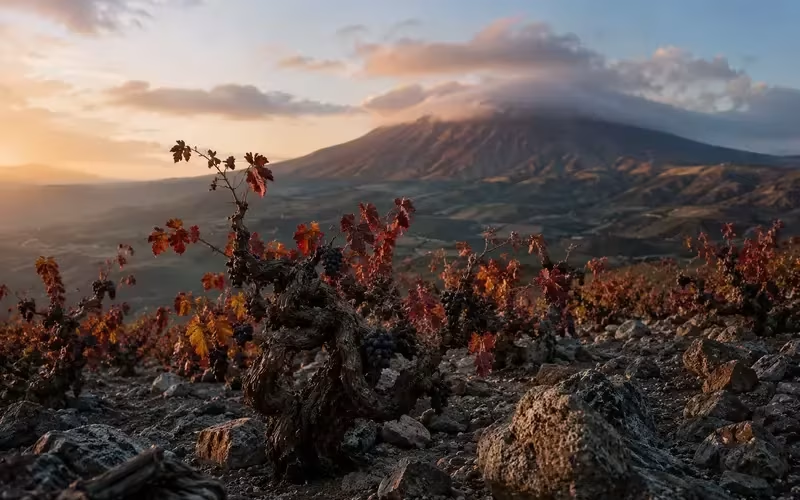
In the southern region of Basilicata, the extinct volcano Monte Vulture provides another outstanding example of volcanic terroir. Formed hundreds of thousands of years ago, its weathered lava flows and volcanic ash have created deep, mineral-rich soils that support one of Italy’s most celebrated red grape varieties: Aglianico.
Often described as the “Barolo of the South,” Aglianico del Vulture combines powerful tannins, vibrant acidity and extraordinary ageing potential. The volcanic environment contributes to slow grape maturation, allowing the wines to develop remarkable complexity while maintaining freshness despite the warm southern climate.
Campi Flegrei: Viticulture Beside Active Volcanoes
West of Naples lies one of Europe’s most extraordinary wine landscapes: Campi Flegrei, or the Phlegraean Fields. Rather than a single volcano, this vast caldera consists of numerous volcanic craters, fumaroles and geothermal activity that continue to shape the landscape today.
The region’s sandy volcanic soils have provided a unique advantage throughout history by protecting many vineyards from phylloxera. As a result, some vines continue to grow on their original rootstocks, preserving genetic material that has disappeared elsewhere in Europe.
Indigenous varieties such as Falanghina and Piedirosso produce wines noted for their freshness, salinity and remarkable drinkability, reflecting both volcanic soils and the strong maritime influence of the nearby Tyrrhenian Sea.
Lazio: Ancient Volcanoes Around Rome
The hills surrounding Rome are also deeply volcanic in origin. Ancient volcanic complexes, including the Alban Hills, have left extensive deposits of basalt, volcanic tuff and ash that continue to support viticulture today.
Appellations such as Frascati have cultivated vines on these volcanic slopes since Roman times. Local white varieties, including Malvasia Puntinata and Trebbiano, produce wines characterised by freshness, floral aromas and balanced acidity, demonstrating once again how volcanic landscapes have shaped Italian wine culture over many centuries.
A Living Laboratory of Volcanic Terroir
Italy’s volcanic vineyards illustrate the extraordinary diversity that can exist within a single geological category. From the high-altitude lava terraces of Etna to the basaltic hills of Soave, the extinct volcanoes of Basilicata and the geothermal landscapes surrounding Naples, each region combines volcanic soils with unique climates, elevations and indigenous grape varieties.
Rather than producing a single “volcanic wine style,” these landscapes demonstrate how geology interacts with climate, biodiversity and centuries of human expertise to create highly distinctive expressions of terroir. Together, they establish Italy not only as Southern Europe’s leading volcanic wine country but also as one of the world’s most remarkable living laboratories for volcanic viticulture.
Greece: Islands Born from Fire
Few countries illustrate the relationship between volcanism and viticulture more dramatically than Greece. Situated along the highly active Hellenic Volcanic Arc, the country has experienced repeated eruptions over hundreds of thousands of years, creating landscapes where vineyards cling to volcanic islands rising from the Aegean Sea. Although Greece possesses fewer volcanic wine regions than Italy, its vineyards are among the world’s most distinctive, combining ancient geological history, indigenous grape varieties and uninterrupted winemaking traditions dating back more than three millennia.
Santorini: The World's Most Famous Volcanic Vineyard
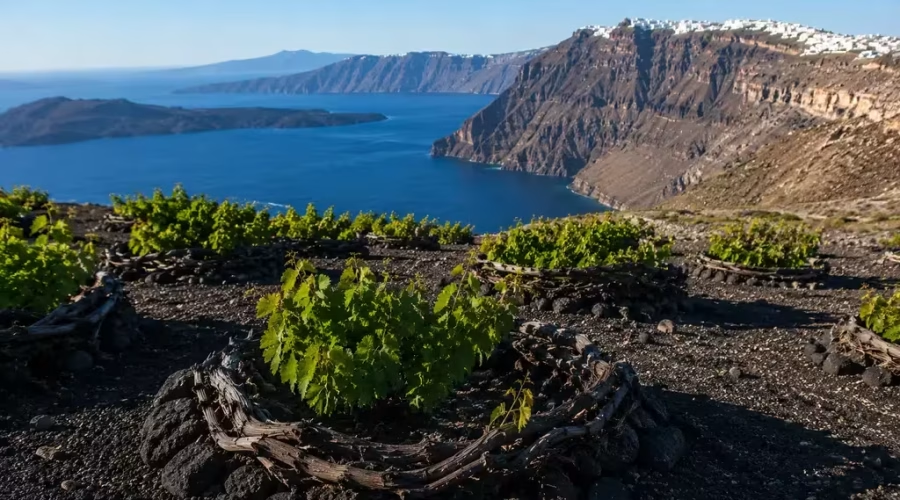
No volcanic wine region is more closely associated with Greece than Santorini. Formed by one of the largest volcanic eruptions in recorded geological history approximately 3,600 years ago, the island’s spectacular caldera was created when the ancient volcano collapsed following a catastrophic eruption that reshaped the entire Aegean. Today, layers of volcanic ash, pumice, basalt and lava dominate the landscape, creating one of the planet’s most unusual vineyard ecosystems.
Santorini’s soils contain almost no clay and very little organic matter. Their highly porous structure allows scarce winter rainfall to penetrate deeply while preventing excessive water loss during the island’s long, dry summers. Combined with constant Aegean winds and intense Mediterranean sunshine, these conditions force vines to develop exceptional resilience while naturally limiting yields.
The island’s flagship variety, Assyrtiko, has become one of the world’s most celebrated volcanic grapes. Renowned for its striking acidity, citrus purity, saline character and remarkable ageing potential, Assyrtiko demonstrates how a warm Mediterranean climate can still produce wines of extraordinary freshness. The variety has become an international benchmark for volcanic white wines, prized by sommeliers for both its precision and versatility at the table.
Santorini is equally famous for its traditional kouloura vine training system. Instead of growing vertically, vines are woven into low basket-shaped rings that protect grapes from powerful winds, blowing volcanic dust and intense sunlight. This centuries-old technique remains one of the most distinctive examples of traditional viticulture anywhere in the world and has become a defining symbol of the island’s wine culture.
Nisyros: Viticulture on an Active Volcano
Further south in the Dodecanese archipelago lies Nisyros, one of Greece’s youngest and still active volcanic islands. Dominated by a large caldera with active fumaroles and geothermal activity, the island presents an extreme volcanic environment where vineyards coexist with a living geological system.
Although production remains limited, local vineyards benefit from porous volcanic soils, maritime influences and indigenous grape varieties adapted to harsh conditions. Nisyros illustrates how volcanic viticulture continues to evolve in landscapes where geological activity has not yet ceased.
Lemnos: Ancient Volcanic Heritage in the Northern Aegean
The island of Lemnos possesses a volcanic history dating back millions of years. While less visually dramatic than Santorini, its volcanic formations have contributed to well-drained soils that support vineyards producing wines from native varieties such as Muscat of Alexandria and Limnio, one of the oldest documented grape varieties in the world.
Strong northern winds and moderate summer temperatures help preserve freshness, while the island’s volcanic origins continue to influence vineyard structure and water availability.
Milos: A Landscape Shaped by Fire
Known internationally for its spectacular coastal scenery and unusual rock formations, Milos is another product of intense volcanic activity within the Hellenic Arc. Layers of volcanic ash, pumice and mineral-rich deposits dominate much of the island’s geology, creating conditions favourable for small-scale viticulture.
Although wine production remains relatively modest, renewed interest in indigenous grape varieties has encouraged the revival of vineyards capable of expressing the island’s distinctive volcanic identity.
Samos: Volcanic Mountains Above the Aegean
Located close to the Turkish coast, Samos combines steep mountainous terrain with volcanic geological formations that have supported viticulture since antiquity. Terraced vineyards climb the island’s slopes, where volcanic-derived soils, Mediterranean sunshine and cooling sea breezes create ideal conditions for grape cultivation.
Samos is internationally renowned for its Muscat Blanc à Petits Grains, used to produce both dry and naturally sweet wines celebrated for their aromatic intensity, vibrant acidity and remarkable longevity. Although climate plays a significant role, the island’s volcanic foundation contributes to the balance and freshness that distinguish these wines.
Volcanic Islands Preserving Ancient Traditions
Greece’s volcanic vineyards are remarkable not only for their geology but also for the continuity of their viticultural heritage. Many islands continue to cultivate indigenous grape varieties that have adapted to volcanic soils over countless generations, while traditional vineyard practices remain largely unchanged despite modern technological advances.
The combination of volcanic geology, maritime climate and ancient grape varieties produces wines unlike those found anywhere else in Europe. Rather than emphasising power or extraction, Greek volcanic wines are celebrated for their purity, precision and exceptional freshness—qualities that have made regions such as Santorini international references for volcanic viticulture. Together, these islands demonstrate how fire, sea and human ingenuity have shaped one of Southern Europe’s most distinctive wine landscapes.
Spain: The Canary Islands and Atlantic Volcanoes
Spain’s volcanic vineyards are found almost exclusively in one extraordinary region: the Canary Islands. Located off the northwest coast of Africa, this Atlantic archipelago was formed entirely through volcanic activity over millions of years and remains one of Europe’s most geologically active landscapes. Successive eruptions have created dramatic mountains, lava fields and extensive deposits of volcanic ash that today support one of the world’s most distinctive wine-growing environments. Although geographically distant from mainland Spain, the Canary Islands form an integral part of the country’s wine heritage and represent one of Southern Europe’s most remarkable examples of volcanic viticulture.
Unlike many continental volcanic vineyards, the Canary Islands combine volcanic geology with a subtropical Atlantic climate. Ocean breezes moderate temperatures throughout the year, while the islands’ mountainous terrain creates an extraordinary diversity of microclimates. Vineyards can be found from near sea level to elevations exceeding 1,600 metres, making altitude another defining feature of the region’s viticulture. This combination of volcanic soils, maritime influence and elevation allows growers to cultivate a wide range of indigenous grape varieties rarely found elsewhere in the world.
Lanzarote: Vineyards on Volcanic Ash
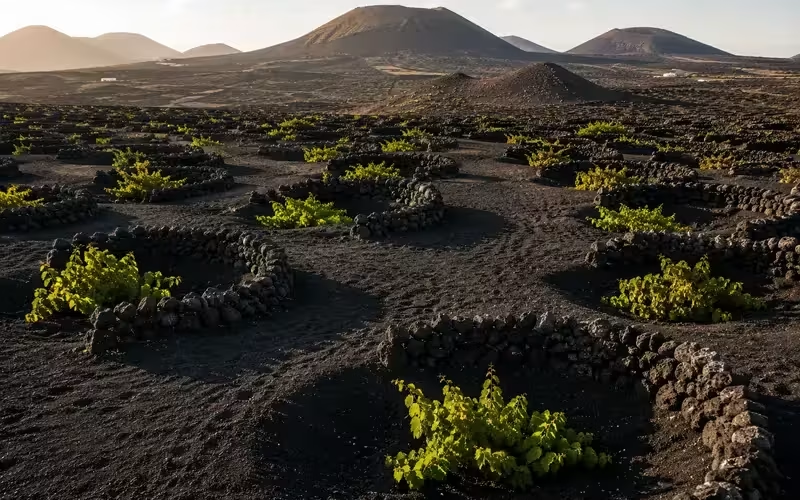
Among Europe’s most spectacular wine landscapes, Lanzarote offers a striking example of human adaptation to volcanic conditions. The island was transformed by massive eruptions between 1730 and 1736, when lava flows and thick layers of black volcanic ash buried much of the existing agricultural land. Rather than abandoning viticulture, local growers developed an ingenious system that remains unique today.
Each vine is planted individually in a deep conical hollow excavated through the volcanic ash until the underlying soil is reached. Semi-circular dry-stone walls built from lava rock protect the vines from the island’s powerful Atlantic winds while allowing scarce moisture to condense within the porous volcanic material. This remarkable cultivation method enables vines to survive in one of Europe’s driest wine-growing regions and has become one of the world’s most recognisable vineyard landscapes.
Lanzarote is particularly associated with Malvasía Volcánica, an indigenous variety producing aromatic white wines that combine floral notes, citrus freshness and a distinctive saline character. Red varieties such as Listán Negro and Listán Prieto also thrive under these demanding conditions, producing elegant wines with moderate alcohol and lively acidity.
Tenerife: Volcanic Diversity at High Altitude
As the largest island of the archipelago, Tenerife presents an extraordinary diversity of volcanic terroirs. Dominated by Mount Teide, Spain’s highest peak, the island contains vineyards stretching from coastal lava fields to mountain slopes approaching 1,500 metres above sea level.
The diversity of altitude, exposure and volcanic substrates creates numerous appellations, each expressing different climatic influences despite sharing a common geological origin. Indigenous varieties including Listán Blanco, Listán Negro, Baboso Negro, Marmajuelo and Vijariego have adapted to these environments over centuries, producing wines celebrated for their freshness, aromatic complexity and strong sense of place.
La Palma: Viticulture Reborn After Eruptions
La Palma provides one of the most compelling examples of the resilience of volcanic viticulture. The island has experienced several historical eruptions, most recently in 2021, when lava flows dramatically altered parts of the landscape and affected numerous vineyards.
Despite these challenges, viticulture remains central to the island’s identity. Growers continue to cultivate indigenous varieties on volcanic slopes overlooking the Atlantic, demonstrating the remarkable capacity of winegrowing communities to adapt to geological change. La Palma illustrates that volcanic vineyards are not simply historical landscapes but living agricultural systems capable of recovering and evolving even after modern eruptions.
El Hierro and La Gomera: Small Islands, Distinctive Wines
The smaller islands of El Hierro and La Gomera preserve equally important examples of volcanic viticulture. Although production volumes remain limited, these islands maintain ancient vineyards planted with native grape varieties that have survived centuries of isolation.
Strong Atlantic winds, steep volcanic slopes and diverse elevations contribute to wines characterised by freshness, moderate alcohol and pronounced aromatic expression. Their relative isolation has also helped preserve considerable genetic diversity among indigenous grape varieties, making the Canary Islands one of Europe’s richest reservoirs of traditional viticultural heritage.
Pre-Phylloxera Vines and Exceptional Biodiversity
One of the Canary Islands’ greatest treasures lies beneath the surface. Thanks to their geographical isolation and volcanic soils, phylloxera—the insect that devastated European vineyards during the nineteenth century—never became established across much of the archipelago. As a result, many vines continue to grow on their original, ungrafted rootstocks, preserving an extraordinary collection of ancient grape varieties and genetic material that has disappeared from most of continental Europe.
Today, more than eighty recognised grape varieties are cultivated throughout the islands, many of them found nowhere else in the world. This remarkable biodiversity, combined with volcanic geology and traditional viticulture, makes the Canary Islands one of the most significant centres of indigenous grape conservation in global wine production.
A Volcanic Landscape Unlike Any Other
Spain’s volcanic vineyards demonstrate that volcanic terroir extends far beyond dramatic scenery. In the Canary Islands, centuries of adaptation have transformed hostile lava fields and ash-covered landscapes into thriving vineyards capable of producing wines of remarkable freshness, elegance and individuality. From the iconic vine pits of Lanzarote to the high-altitude slopes of Tenerife and the resilient vineyards of La Palma, these Atlantic islands represent one of the world’s most extraordinary examples of how volcanic landscapes continue to shape both viticulture and wine.
Portugal: Atlantic Volcanoes and Island Viticulture
Although Portugal is best known internationally for the Douro Valley and the rolling vineyards of the Alentejo, some of its most remarkable wine landscapes lie far out in the Atlantic Ocean. The Portuguese archipelagos of the Azores and Madeira were born entirely through volcanic activity and preserve centuries-old vineyards cultivated on lava fields overlooking the sea. These islands demonstrate how volcanic geology, maritime climates and human ingenuity have combined to create wine regions unlike any found on mainland Europe.
Unlike the large volcanic systems of Italy or the dramatic caldera of Santorini, Portugal’s volcanic vineyards are defined by their close relationship with the Atlantic Ocean. Constant maritime winds, high humidity, moderate temperatures and basaltic lava formations create unique growing conditions where volcanic soils interact with oceanic influences to shape both vine growth and wine style. The resulting wines are often celebrated for their freshness, vibrant acidity and remarkable ageing potential.
Pico Island: UNESCO's Volcanic Vineyard Landscape
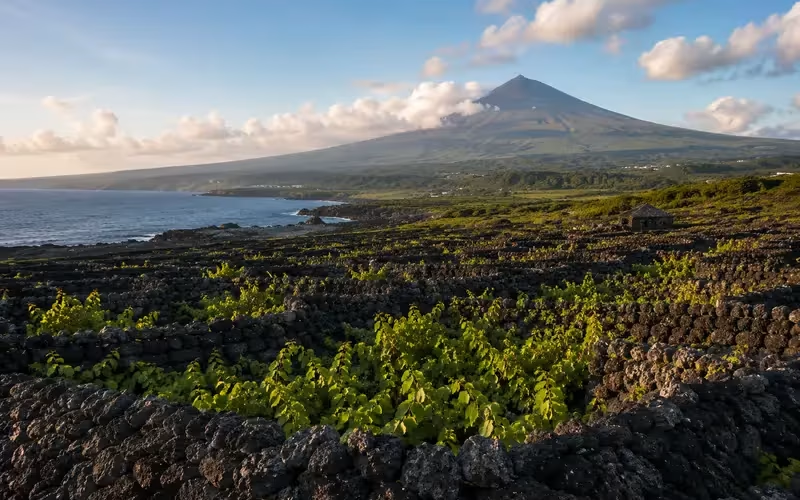
The island of Pico, in the central Azores, represents Portugal’s most iconic volcanic wine region and one of the world’s most extraordinary vineyard landscapes. Dominated by Mount Pico, Portugal’s highest mountain and an active stratovolcano, the island consists almost entirely of basaltic lava flows created by successive eruptions over thousands of years.
Viticulture developed under exceptionally difficult conditions. Early settlers transformed barren lava fields into productive vineyards by constructing thousands of kilometres of dry-stone walls, locally known as currais. These small rectangular enclosures protect individual vines from strong Atlantic winds while absorbing and gradually releasing solar heat. The walls also create sheltered microclimates that allow grapes to ripen despite the challenging maritime environment.
The cultural importance of this unique landscape led UNESCO to designate the Landscape of the Pico Island Vineyard Culture as a World Heritage Site in 2004. More than simply recognising beautiful scenery, the designation honours centuries of human adaptation to one of Europe’s most demanding volcanic environments.
The island’s indigenous varieties, particularly Arinto dos Açores, Verdelho and Terrantez do Pico, produce wines characterised by high acidity, saline minerality and exceptional precision. These varieties have adapted over centuries to basaltic soils, strong ocean winds and frequent Atlantic humidity, resulting in wines that express both volcanic and maritime influences with remarkable clarity.
Terceira: A Volcanic Mosaic
The neighbouring island of Terceira also possesses an important volcanic wine tradition. Its landscape is shaped by numerous extinct volcanic cones, lava fields and fertile basaltic soils that support vineyards spread across coastal areas protected from Atlantic winds.
Although smaller than Pico in terms of international recognition, Terceira contributes significantly to the preservation of indigenous Azorean grape varieties and traditional cultivation methods. Volcanic soils combined with mild oceanic conditions produce fresh, aromatic wines whose lively acidity reflects the island’s maritime identity.
Faial: Viticulture in the Shadow of Volcanoes
Located close to Pico, Faial shares a similar volcanic origin and has experienced several historical eruptions, including the dramatic Capelinhos eruption of 1957–1958, which transformed part of the island’s western coastline.
Despite these geological events, vineyards continue to thrive on volcanic terrain, illustrating the resilience of local winegrowers and the adaptability of vines to constantly evolving landscapes. The interaction between newly formed volcanic soils and centuries-old viticultural traditions makes Faial an important component of the Azorean wine heritage.
Madeira: A Volcanic Island of Legendary Wines
Further south in the Atlantic lies Madeira, another Portuguese island created entirely through volcanic activity. Although globally famous for its fortified wines rather than its geology, Madeira’s steep volcanic slopes have supported viticulture since the fifteenth century.
The island’s rugged topography forces vineyards onto narrow terraces carved into volcanic hillsides, where basalt-derived soils, abundant rainfall and subtropical conditions create a unique growing environment. Traditional irrigation channels known as levadas distribute water across the island, allowing vines to flourish despite the steep terrain.
Madeira’s historic grape varieties—including Sercial, Verdelho, Boal and Malvasia—produce fortified wines renowned for their extraordinary longevity. While their distinctive style results largely from the island’s unique ageing process, the freshness and natural acidity of the grapes owe much to Madeira’s volcanic landscapes and Atlantic climate.
Volcanic Islands Between Ocean and Fire
Portugal’s volcanic vineyards illustrate a distinctive expression of volcanic viticulture where geology is inseparable from the surrounding ocean. Rather than producing powerful continental wines, the Azores and Madeira consistently deliver wines defined by freshness, saline precision and remarkable balance. Their volcanic soils, indigenous grape varieties and centuries of adaptation to Atlantic conditions have created landscapes that remain among Europe’s most original wine regions.
Together, Pico, Terceira, Faial and Madeira demonstrate that volcanic terroir is not confined to active volcanoes or dramatic lava fields. It also encompasses centuries of human resilience, traditional dry-stone viticulture and a profound understanding of how vines can flourish where fire once shaped the land and the Atlantic continues to influence every vintage.
Ancient Vines on Volcanic Soils
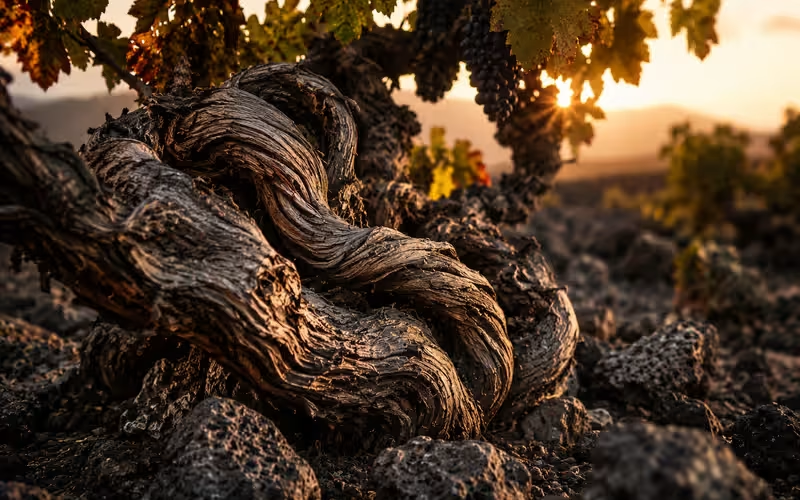
Some of Southern Europe’s oldest and most remarkable vineyards owe their survival to volcanic landscapes. Long before modern viticulture embraced the concept of old vines, generations of growers cultivated vineyards on lava flows, basaltic slopes and volcanic ash, often in conditions considered too difficult for conventional agriculture. Today, these ancient vineyards represent not only an exceptional agricultural heritage but also some of the finest examples of living terroir, where centuries-old vines continue to produce wines of extraordinary complexity and identity.
One of the reasons volcanic vineyards have preserved so many old vines lies beneath the surface. Many volcanic soils are exceptionally sandy, porous or composed largely of fragmented lava and ash. These conditions have, in certain regions, limited the spread of phylloxera, the tiny root-feeding insect that devastated European vineyards during the nineteenth century. While volcanic soils are not universally immune to phylloxera, several volcanic islands and lava-based vineyards escaped the epidemic or were only minimally affected, allowing numerous vines to remain on their original rootstocks.
Santorini: Centuries of Living Heritage
Perhaps no vineyard illustrates this better than Santorini. The island’s porous volcanic soils prevented phylloxera from establishing permanent populations, allowing many vineyards to remain ungrafted to this day. Some vines are believed to be well over a century old, while the underground root systems may have survived for several centuries through continuous regeneration.
Unlike most vineyards around the world, where vines are periodically replanted, Santorini growers often renew only the upper part of the plant while preserving the original root system. Combined with the island’s famous kouloura basket training, this practice has created one of the oldest continuously cultivated vineyard ecosystems on Earth.
Mount Etna: Centenarian Vines on Lava Flows
The volcanic slopes of Mount Etna also preserve an extraordinary collection of ancient vineyards. Many parcels contain vines between one and two centuries old, planted on successive lava flows that have gradually weathered into fertile yet challenging soils.
Some of these vineyards survived phylloxera because of their isolation, volcanic substrate or traditional cultivation practices. Their naturally low yields and extensive root systems contribute to wines renowned for their concentration, elegance and remarkable expression of place.
Today, centenarian vineyards have become one of Etna’s defining features, attracting both researchers and wine enthusiasts interested in preserving Italy’s unique viticultural heritage.
Pico: Stone Walls Protecting Ancient Vineyards
On Portugal’s Pico Island, generations of growers transformed black lava fields into vineyards protected by thousands of kilometres of dry-stone walls known as currais. These carefully constructed enclosures shield vines from Atlantic winds while creating sheltered microclimates that have allowed vineyards to survive for centuries.
The UNESCO-listed vineyard landscape preserves not only a unique agricultural system but also numerous old vines growing on their original volcanic terrain. Their continued cultivation represents an exceptional example of sustainable viticulture based on traditional knowledge rather than intensive modern intervention.
The Canary Islands: A Refuge for Ungrafted Vines
Spain’s Canary Islands possess one of the world’s largest collections of ungrafted grapevines. Their geographical isolation, combined with volcanic soils, prevented phylloxera from becoming established across much of the archipelago.
As a result, many vineyards continue to grow on their original European rootstocks, preserving ancient grape varieties and genetic diversity that disappeared from most continental vineyards after the nineteenth century. This living genetic heritage has become invaluable for viticultural research and the conservation of indigenous grape varieties.
Why Old Vines Matter
Old vines are often associated with greater complexity, although their value extends far beyond wine quality alone. Over decades, extensive root systems penetrate deep into fractured volcanic rock, accessing stable reserves of water and nutrients that younger vines cannot reach. This resilience allows mature vineyards to better withstand drought, climatic variability and seasonal stress.
Older vines also tend to produce naturally lower yields, concentrating sugars, acids, phenolic compounds and aromatic precursors into fewer grape clusters. While scientific research continues to investigate the precise relationship between vine age and wine quality, many producers believe that mature vineyards consistently produce wines with greater balance, complexity and longevity.
Equally important is their cultural significance. Ancient vineyards preserve historic grape varieties, traditional training methods and centuries of accumulated viticultural knowledge that might otherwise disappear. They are living archives of regional identity, connecting modern wine production with generations of growers who adapted their practices to some of Europe’s most demanding volcanic landscapes.
A Heritage Worth Preserving
Southern Europe’s volcanic vineyards demonstrate that old vines are far more than agricultural curiosities. They embody the resilience of both the vine and the communities that have cultivated it through centuries of eruptions, climatic challenges and changing agricultural practices. Whether woven into baskets on Santorini, rooted in Etna’s lava terraces, sheltered behind Pico’s basalt walls or growing ungrafted in the Canary Islands, these ancient vineyards continue to produce wines that reflect an extraordinary continuity between geology, history and human craftsmanship.
Their preservation is not only essential for maintaining biodiversity and genetic heritage but also for safeguarding some of the world’s most distinctive expressions of volcanic terroir for future generations.
Native Grapes That Thrive on Volcanic Soils
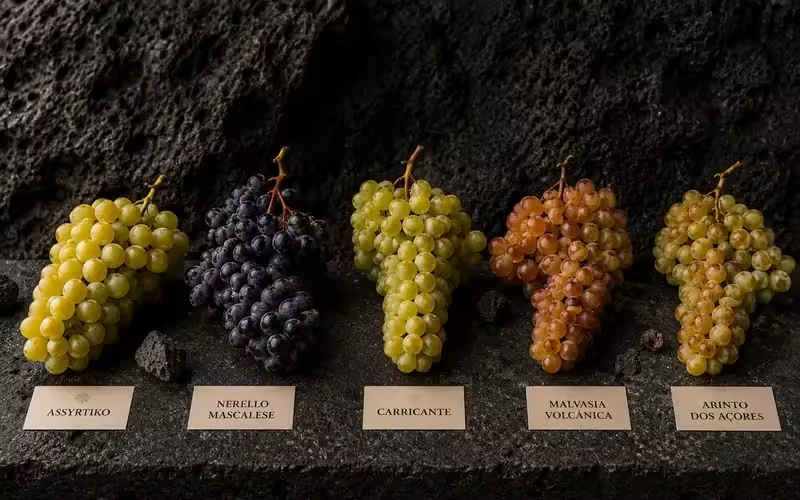
Volcanic vineyards are defined not only by their geology but also by the remarkable grape varieties that have adapted to these challenging environments over centuries. While volcanic soils influence water availability, vine growth and ripening conditions, it is ultimately the grape variety that transforms these environmental conditions into distinctive wines. Southern Europe’s volcanic regions preserve an exceptional collection of indigenous cultivars that have evolved alongside active volcanoes, lava fields and basaltic landscapes, producing wines that express both regional identity and remarkable resilience.
Unlike internationally planted varieties, many native grapes have developed a close relationship with the local environment over hundreds or even thousands of years. Their natural tolerance to drought, wind, poor soils and large temperature variations makes them particularly well suited to volcanic landscapes. As climate change places increasing pressure on vineyards across the Mediterranean, these traditional varieties are attracting renewed scientific and commercial interest for their ability to maintain freshness and balance under demanding conditions.
Assyrtiko: Greece's Volcanic Icon
No grape is more closely associated with volcanic viticulture than Assyrtiko. Indigenous to Santorini, it has become an international symbol of volcanic white wine.
Despite growing in one of Europe’s warmest and driest climates, Assyrtiko consistently produces wines with striking acidity, citrus precision and exceptional ageing potential. This unusual combination results from the interaction between the variety’s natural physiology, Santorini’s volcanic soils and the island’s maritime climate. The grape has demonstrated remarkable adaptability beyond Santorini, but many wine professionals still regard the island’s volcanic vineyards as its finest expression.
Nerello Mascalese: The Voice of Mount Etna
On the volcanic slopes of Mount Etna, Nerello Mascalese has become Sicily’s flagship red variety. Cultivated at elevations reaching more than 1,000 metres, it produces wines celebrated for their elegance, bright acidity and refined tannin structure.
Rather than relying on concentration or extraction, Nerello Mascalese reflects the cooler mountain climate and volcanic environment through aromatic complexity, floral notes and remarkable transparency. Its ability to express subtle differences between lava flows has made it one of Italy’s most admired terroir-driven grape varieties.
Carricante: Sicily's Great Volcanic White
Also native to Mount Etna, Carricante thrives on the volcano’s high-altitude eastern slopes, where cooler temperatures favour slow ripening.
The wines are renowned for their citrus aromas, mineral freshness and impressive longevity. Their vibrant acidity allows many examples to evolve gracefully for decades, demonstrating that volcanic white wines can combine freshness with exceptional ageing capacity.
Malvasía Volcánica: Lanzarote's Signature Variety
Developed through centuries of adaptation to Lanzarote’s volcanic environment, Malvasía Volcánica represents one of the Canary Islands’ most distinctive indigenous grapes.
Cultivated in the island’s famous volcanic ash pits, it produces aromatic wines characterised by floral notes, tropical fruit, lively acidity and subtle saline nuances. Its resilience under extremely dry conditions illustrates the remarkable capacity of native grape varieties to adapt to challenging volcanic landscapes.
Arinto dos Açores: Atlantic Freshness
Exclusive to the Azores, Arinto dos Açores has become one of Portugal’s most celebrated island grape varieties.
Growing among basaltic lava fields exposed to strong Atlantic winds, it produces wines combining high natural acidity, citrus purity and pronounced saline character. These qualities have made Arinto dos Açores one of the defining expressions of Atlantic volcanic viticulture.
Verdelho and Terrantez do Pico
The volcanic vineyards of Pico also preserve traditional varieties such as Verdelho and Terrantez do Pico, both deeply connected to the island’s UNESCO-listed vineyard landscape.
These grapes produce elegant wines with remarkable freshness and complexity while demonstrating exceptional adaptation to basaltic soils, oceanic humidity and strong maritime winds.
Indigenous Diversity as a Volcanic Heritage
One of the most remarkable characteristics of Southern Europe’s volcanic vineyards is the preservation of indigenous grape diversity. Unlike many regions dominated by international varieties, volcanic wine landscapes continue to rely largely on local cultivars that have evolved alongside their environments over centuries.
This genetic diversity contributes not only to the individuality of volcanic wines but also to the long-term resilience of Mediterranean viticulture. Many native varieties display excellent tolerance to drought, poor soils and climatic variability, qualities that are becoming increasingly valuable as global temperatures continue to rise.
Grapes Shaped by Fire and Time
The relationship between volcanic soils and native grape varieties illustrates one of the fundamental principles of terroir: exceptional wines emerge not from geology alone but from the long interaction between landscape, climate and plant adaptation. Assyrtiko, Nerello Mascalese, Carricante, Malvasía Volcánica and Arinto dos Açores each tell a different story, yet all demonstrate how centuries of natural selection and human cultivation have produced grape varieties uniquely suited to some of Europe’s most dramatic vineyard landscapes.
Together, these indigenous grapes form the living heritage of Southern Europe’s volcanic wine regions, ensuring that the legacy of ancient eruptions continues to be expressed in every harvest and every bottle.
Volcanic Wine Styles of Southern Europe
Although volcanic vineyards span thousands of kilometres across Southern Europe, they do not produce a single, uniform style of wine. A bottle from Mount Etna bears little resemblance to one from Santorini or the Azores, despite their shared volcanic origins. Climate, altitude, grape variety, proximity to the sea and local winemaking traditions all contribute to the final character of the wine. Nevertheless, many volcanic wines display recurring traits that have earned them a distinctive reputation among sommeliers and collectors worldwide.
Rather than being defined by powerful fruit or heavy oak influence, volcanic wines are often admired for their balance, freshness and precision. They tend to emphasise structure over richness, elegance over concentration and purity over opulence. While these characteristics cannot be attributed to volcanic soils alone, they frequently appear across many of Southern Europe’s most celebrated volcanic regions.
Volcanic White Wines
White wines account for many of Southern Europe’s most internationally recognised volcanic wines. Whether produced from Assyrtiko in Santorini, Carricante on Mount Etna, Arinto dos Açores on Pico or Malvasía Volcánica in Lanzarote, they often share several defining characteristics.
A vibrant natural acidity is perhaps their most consistent feature. Even in warm Mediterranean climates, volcanic white wines frequently retain remarkable freshness, allowing them to remain balanced and age gracefully for many years. Citrus fruit, green apple, white peach and floral aromas commonly dominate the aromatic profile, while many wines also display subtle saline or stony impressions that contribute to their sense of precision.
Texture also plays an important role. Rather than being broad or heavy, volcanic whites often combine tension with remarkable energy, producing wines that appear linear, focused and exceptionally food-friendly.
Volcanic Red Wines
Red wines from volcanic vineyards generally follow a different philosophy from many warm-climate Mediterranean reds. Instead of emphasising high alcohol, dense extraction and powerful tannins, they frequently express elegance, freshness and aromatic complexity.
The volcanic slopes of Mount Etna illustrate this style perfectly. Nerello Mascalese produces wines with bright acidity, refined tannins and delicate aromas of red berries, rose petals, herbs and spices. Similarly, volcanic reds from the Canary Islands often favour moderate alcohol levels and vibrant fruit over sheer concentration.
Many volcanic reds also possess an earthy or savoury dimension that complements their fresh fruit character, making them particularly versatile at the dining table.
Sweet and Fortified Volcanic Wines
Volcanic regions also produce some of Southern Europe’s finest sweet wines.
Santorini’s celebrated Vinsanto combines naturally dried grapes with remarkable acidity, creating wines capable of ageing for decades while maintaining exceptional freshness.
On the volcanic island of Madeira, one of the world’s most famous fortified wines develops extraordinary complexity through its unique ageing process. Although the wine’s character is shaped primarily by fortification and controlled oxidation, the naturally high acidity of grapes grown on volcanic soils provides the structure necessary for exceptional longevity.
These wines demonstrate that volcanic terroir can support a wide range of wine styles beyond the crisp whites and elegant reds for which volcanic regions are often best known.
A Remarkable Capacity for Ageing
One characteristic frequently associated with many volcanic wines is their impressive ageing potential.
High natural acidity, balanced alcohol levels and concentrated fruit provide an excellent foundation for long-term bottle development. White wines from Santorini and Etna regularly evolve for ten to twenty years or more, while the finest examples of Nerello Mascalese and Aglianico continue to develop complexity over several decades.
This longevity reflects the overall balance achieved during grape ripening rather than volcanic geology alone. Nevertheless, the growing conditions found in many volcanic vineyards consistently favour wines capable of graceful evolution.
Precision Rather Than Power
Perhaps the most striking feature shared by Southern Europe’s volcanic wines is their pursuit of precision. Whether produced in Sicily, Greece, the Canary Islands or the Azores, these wines rarely seek to impress through sheer richness or concentration. Instead, they are celebrated for their clarity of expression, vibrant acidity and transparent connection to their place of origin.
For this reason, volcanic wines have become favourites among sommeliers and wine enthusiasts who value elegance, authenticity and terroir-driven winemaking. Their distinctive styles demonstrate that volcanic viticulture is not defined by a single flavour profile but by the remarkable diversity that emerges when ancient geological landscapes, indigenous grape varieties and centuries of human expertise converge in the vineyard.
Together, the volcanic wines of Southern Europe reveal the extraordinary diversity that can arise from a shared geological heritage. From razor-sharp island whites to elegant mountain reds and legendary fortified wines, they illustrate that volcanic terroir is not a recipe for uniformity but a foundation upon which each region has developed its own unique identity, shaped by nature, history and tradition.
Conclusion: Where Geology Meets Great Winemaking
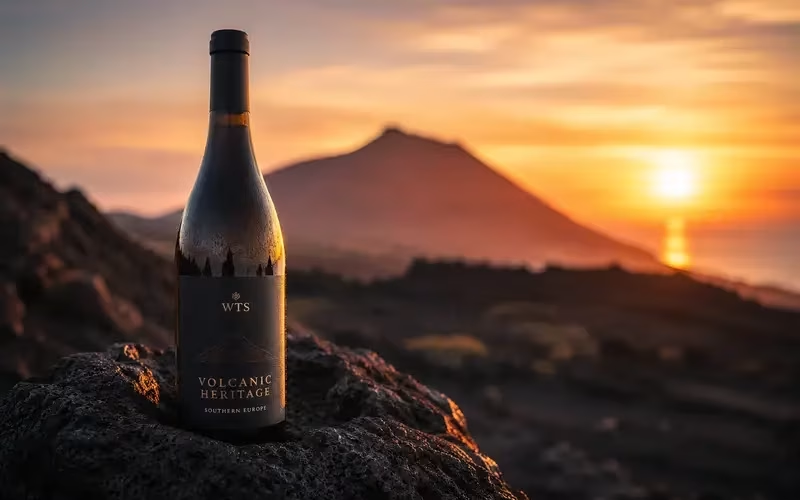
Volcanic vineyards represent some of the most extraordinary expressions of terroir found anywhere in the world. Across Southern Europe, ancient eruptions have created landscapes where vines grow on lava flows, volcanic ash, basalt and pumice, transforming environments once shaped by fire into thriving wine regions of international importance. From the towering slopes of Mount Etna to the dramatic caldera of Santorini, the lava fields of the Canary Islands and the Atlantic vineyards of Pico, these landscapes demonstrate how geology continues to influence viticulture thousands of years after volcanic activity first transformed the land.
Yet the identity of volcanic wines cannot be explained by geology alone. Their distinctive character results from the interaction of many factors: well-drained soils, deep-rooted vines, Mediterranean and Atlantic climates, indigenous grape varieties, traditional vineyard practices and centuries of accumulated human knowledge. Together, these elements create wines celebrated for their freshness, balance, precision and remarkable ability to express a strong sense of place.
Volcanic vineyards also preserve an exceptional cultural and biological heritage. Many regions continue to cultivate ancient grape varieties found nowhere else in the world, while centuries-old vines, traditional training systems and dry-stone terraces remain integral parts of the landscape. In several cases, these unique environments have earned international recognition through UNESCO World Heritage status, reflecting not only their geological significance but also the enduring relationship between nature and human ingenuity.
As climate change reshapes viticulture across the Mediterranean, volcanic vineyards are attracting increasing attention from researchers, producers and wine lovers alike. Their naturally resilient vines, deep-rooted ecosystems and remarkable biodiversity offer valuable insights into the future of sustainable winegrowing. At the same time, ongoing scientific research continues to reveal the complex interactions between volcanic soils, the vineyard microbiome, vine physiology and grape composition, expanding our understanding of how terroir truly shapes wine.
Ultimately, the volcanic vineyards of Southern Europe remind us that great wines are born from far more than fertile soils or favourable climates. They are the product of landscapes forged by immense geological forces, refined through centuries of human adaptation and expressed through native grape varieties that have learned to thrive where few other crops could survive. In every bottle, they preserve the living legacy of Europe’s volcanic past, offering wine lovers an authentic connection between fire, earth, vine and time.