Table of Contents
Why People Continue to Farm Active and Ancient Volcanoes
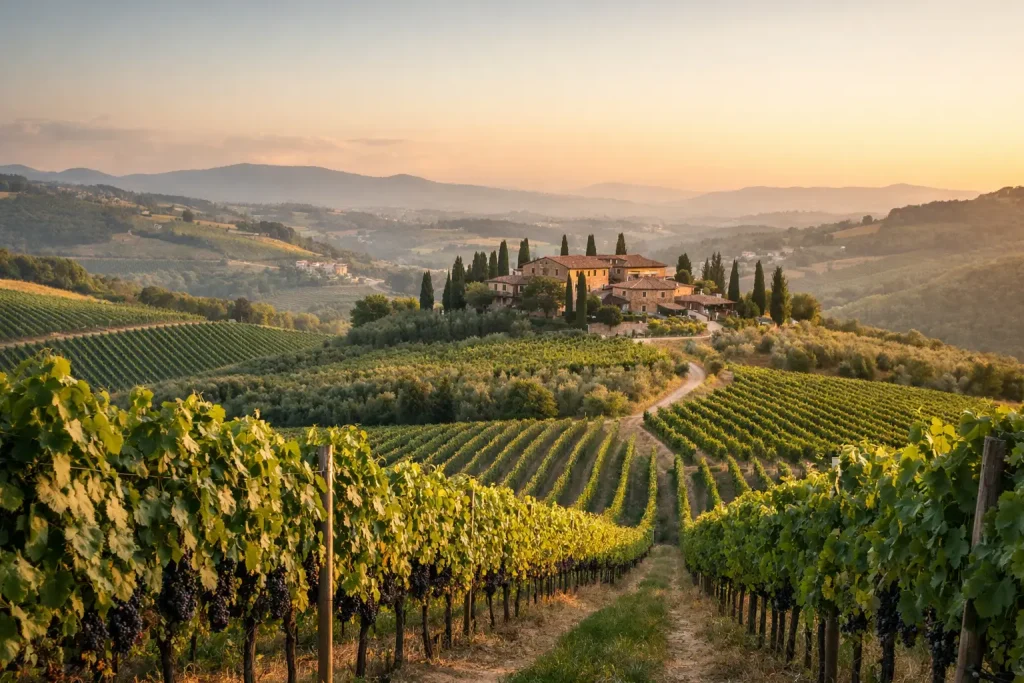
Across Southern Europe, some of the continent’s most remarkable vineyards share an unlikely origin: they were established on landscapes shaped by fire. From the black lava fields of Sicily to the wind-swept calderas of the Aegean and the volcanic slopes of the Canary Islands, generations of winegrowers have chosen to cultivate vines in places where farming is anything but easy.
At first glance, the decision seems paradoxical. Volcanic regions often present steep slopes, rugged terrain, scarce arable land, and, in some cases, the ongoing presence of active volcanic activity. Yet these landscapes have remained continuously cultivated for centuries—sometimes even millennia. Their survival reflects more than agricultural practicality; it speaks to the resilience of local communities, the cultural importance of wine, and an exceptional capacity to adapt to demanding environments.
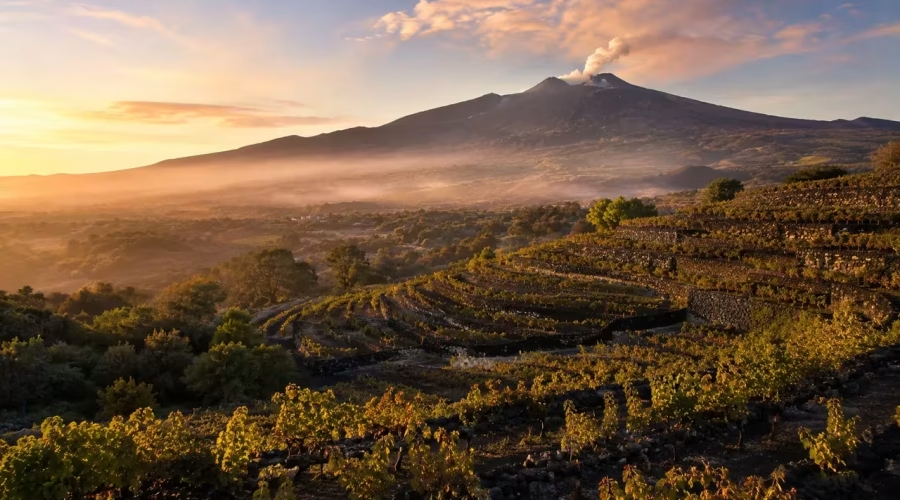
Volcanic vineyards on the slopes of Mount Etna create one of Southern Europe’s most distinctive wine landscapes at sunrise.
A Landscape Defined by Fire and Time
Southern Europe’s volcanic vineyards are remarkably diverse because they have formed through very different geological histories. Some continue to evolve today, while others are the legacy of eruptions that occurred thousands or even millions of years ago.
The vineyards surrounding Mount Etna occupy the slopes of Europe’s largest and most active volcano. Frequent eruptions periodically reshape the mountain, depositing new lava flows and volcanic ash while constantly altering the surrounding landscape. Despite this dynamic environment, viticulture has flourished on Etna for centuries, making it one of the world’s most iconic examples of farming alongside an active volcano.
Farther east, the dramatic cliffs of the Santorini Caldera bear witness to one of the most powerful volcanic eruptions in recorded history. The island’s modern vineyards developed after this catastrophic event transformed the original island into its present crescent-shaped form. Rather than abandoning the devastated landscape, successive generations rebuilt an agricultural tradition that remains central to the island’s identity.
In contrast, volcanic regions such as Monte Vulture or the ancient volcanic hills of parts of southern Italy are no longer volcanically active. Their landscapes have been gradually shaped by erosion, vegetation, and centuries of human cultivation. Today, these extinct volcanoes support vineyards that coexist peacefully with forests, olive groves, and rural villages, illustrating how volcanic environments continue to influence agriculture long after eruptions have ceased.
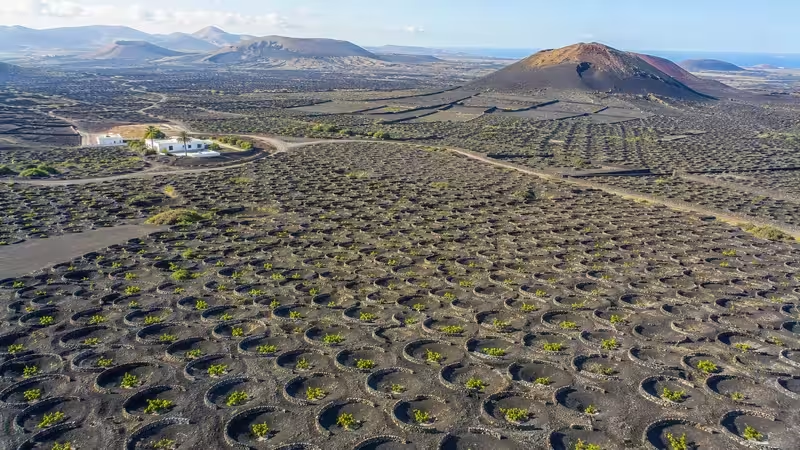
The volcanic vineyards of La Geria present yet another scenario. Here, massive eighteenth-century eruptions buried much of the island beneath thick layers of volcanic material, forcing local farmers to reinvent viticulture almost from scratch. Instead of abandoning the land, they developed one of the most distinctive vineyard landscapes in the world, where every vine reflects centuries of adaptation to an extreme environment.
Why Communities Never Left
The persistence of viticulture in volcanic regions cannot be explained by geology alone. Throughout Southern Europe, vineyards became deeply embedded in local economies, religious traditions, and family heritage long before modern transportation connected these isolated regions to international markets.
For many communities, vineyards represented one of the few reliable agricultural activities capable of sustaining rural populations in mountainous terrain. Many of these historic vineyards also preserved indigenous grape varieties that continue to define the identity of Southern Europe’s volcanic wine regions today. While cereals or intensive livestock farming were often limited by steep slopes and fragmented landholdings, vines proved remarkably well suited to these challenging landscapes when cultivated with patience and experience.
Over generations, wine production became inseparable from local identity. Vineyard ownership frequently passed from parents to children, creating family estates that have survived for centuries. Ancient stone walls, narrow terraces, mule paths, and traditional cellars still visible today are not simply agricultural infrastructure—they are tangible evidence of continuous human occupation and adaptation.
This cultural continuity explains why volcanic vineyards have endured despite wars, epidemics, economic crises, and repeated volcanic eruptions. In many regions, rebuilding vineyards after natural disasters became an accepted part of rural life rather than an exceptional event.
Living with Risk
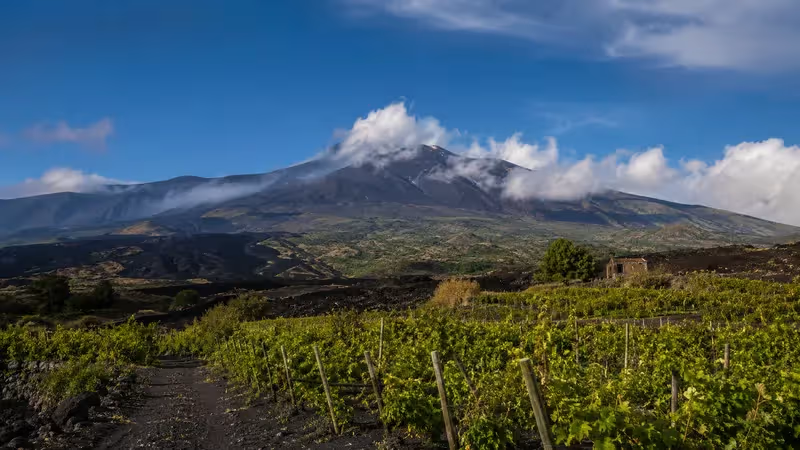
Unlike many agricultural landscapes, active volcanic regions remind growers that nature remains unpredictable. Eruptions, earthquakes, ash fall, and lava flows have periodically threatened vineyards throughout history, sometimes destroying entire villages alongside agricultural land.
Yet the relationship between local communities and volcanoes has rarely been defined solely by fear. Instead, volcanic activity has often been viewed as a recurring force that demands respect, preparation, and resilience. Historical records from Etna, for example, document numerous occasions when vineyards were lost to advancing lava flows, only to be replanted years or decades later once conditions allowed.
This willingness to rebuild reflects a long-term perspective that extends beyond individual harvests. Many volcanic wine regions measure success not by annual yields alone but by the continuity of family vineyards across generations. The vineyard becomes an inheritance to preserve rather than simply a commercial asset.
Isolation Fostered Distinct Wine Cultures
Many of Southern Europe’s volcanic vineyards developed in relative isolation. Mountain slopes, island geography, and difficult transportation routes limited outside influences for centuries. As a result, each volcanic region gradually developed its own agricultural practices, vineyard layouts, pruning systems, and local traditions.
These adaptations were not imposed by scientific research but refined through observation and experience. Every generation inherited practical knowledge about working with steep terrain, protecting vines from harsh winds, managing limited water resources, and maintaining vineyards where machinery often remained impractical long after it transformed agriculture elsewhere.
This relative isolation also helped preserve distinctive viticultural traditions that continue to define volcanic wine regions today. Many practices found on Etna, Santorini, or Lanzarote are not simply techniques—they are living cultural heritage, shaped by centuries of continuous adaptation to landscapes unlike any other in Europe.
More Than Extraordinary Scenery
Today, volcanic vineyards attract visitors from around the world, drawn by spectacular scenery and internationally acclaimed wines. Yet reducing these regions to dramatic landscapes overlooks the centuries of human effort that made viticulture possible in such demanding environments.
Every terrace built by hand, every dry-stone wall maintained across generations, and every vineyard replanted after natural disasters reflects a remarkable commitment to preserving both agricultural knowledge and cultural identity. Southern Europe’s volcanic vineyards are therefore not only geological landmarks but also enduring examples of how communities have transformed some of the continent’s most challenging landscapes intnzxto living winegrowing traditions.
Understanding this human dimension is essential before exploring the unique vineyard practices and farming techniques that continue to define volcanic viticulture across Southern Europe.
Building Vineyards on Lava: Engineering Agriculture in Volcanic Landscapes
Establishing a vineyard on volcanic terrain has never been as simple as planting vines. Long before the first harvest, generations of winegrowers had to transform rugged landscapes into cultivable land through patience, ingenuity, and an extraordinary investment of manual labour. Across Southern Europe, volcanic vineyards are not simply natural landscapes—they are human-made environments, carefully engineered over centuries to make viticulture possible where agriculture might otherwise have failed.
Unlike broad agricultural plains, volcanic regions are often characterized by steep gradients, fractured rock, irregular lava flows, and limited areas of naturally level ground. Every vineyard reflects countless decisions about where vines could survive, how erosion could be controlled, and how access could be maintained throughout the growing season.
From Lava Fields to Productive Vineyards
Fresh lava flows create landscapes that appear almost impossible to cultivate. Jagged basalt formations, hardened volcanic rock, and uneven surfaces offer little resemblance to conventional farmland. Yet throughout Southern Europe, local communities gradually learned how to reclaim these environments, often beginning with the painstaking removal or repositioning of volcanic stones.
Rather than attempting to completely reshape the landscape, winegrowers adapted to it. Small pockets of cultivable ground were identified between lava outcrops, while fractured rock was incorporated into vineyard layouts instead of being entirely removed. Over generations, these fragmented plots expanded into the vineyard mosaics that characterize many volcanic wine regions today.
This gradual process required remarkable perseverance. Creating a single vineyard could take years, with each generation adding improvements that would benefit those who followed. In many regions, today’s vineyard boundaries still reflect decisions made centuries ago.
The Art of Terracing
One of the defining features of Southern Europe’s volcanic vineyards is the extensive use of terraces. On mountains where natural slopes make conventional farming impossible, terraces create narrow, stable platforms capable of supporting vines while reducing the constant threat of soil erosion.
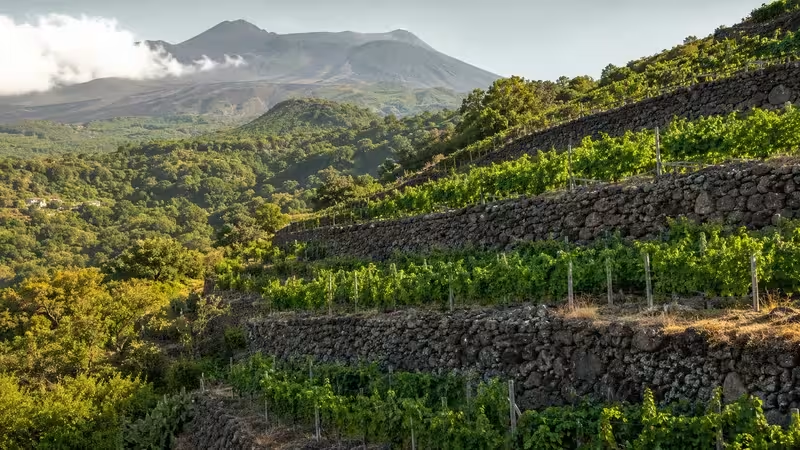
Dry-stone terraces represent one of the oldest forms of agricultural engineering in the Mediterranean. Built without mortar, they rely entirely on the careful placement of volcanic stones, allowing water to pass naturally through the structure while maintaining stability for decades—or even centuries—with proper maintenance.
On the slopes of Mount Etna, thousands of kilometres of dry-stone walls divide vineyards into small parcels that follow the contours of the mountain. Beyond marking property boundaries, these walls stabilize slopes, create accessible working areas, and help preserve agricultural land that would otherwise be vulnerable to erosion.
Similar terrace systems can be found throughout Southern Europe’s volcanic regions, although each reflects local materials, topography, and historical building techniques. Collectively, they demonstrate how traditional craftsmanship became an essential component of successful viticulture.
.
Dry-Stone Walls: More Than Simple Boundaries
To an observer, volcanic stone walls may appear to serve only as fences separating neighbouring vineyards. In reality, they perform multiple functions that remain indispensable today.
First, they stabilize fragile slopes by reducing the movement of loose material during heavy rainfall. Without these structures, centuries of cultivated land could gradually be lost through erosion.
Second, the walls create clearly defined vineyard parcels, simplifying ownership and allowing families to cultivate relatively small plots independently. This pattern of fragmented holdings remains common across many historic volcanic wine regions.
Finally, dry-stone walls have become an integral part of the cultural landscape itself. Their construction techniques have been transmitted through generations of local craftsmen, preserving knowledge that extends far beyond viticulture. Maintaining these walls remains an ongoing responsibility, requiring regular repairs after storms, earthquakes, or simple natural deterioration.
Farming Without Large Machinery
The physical characteristics of volcanic landscapes continue to shape vineyard management today. In many areas, steep slopes, narrow terraces, and irregular parcels prevent the widespread use of heavy agricultural machinery.
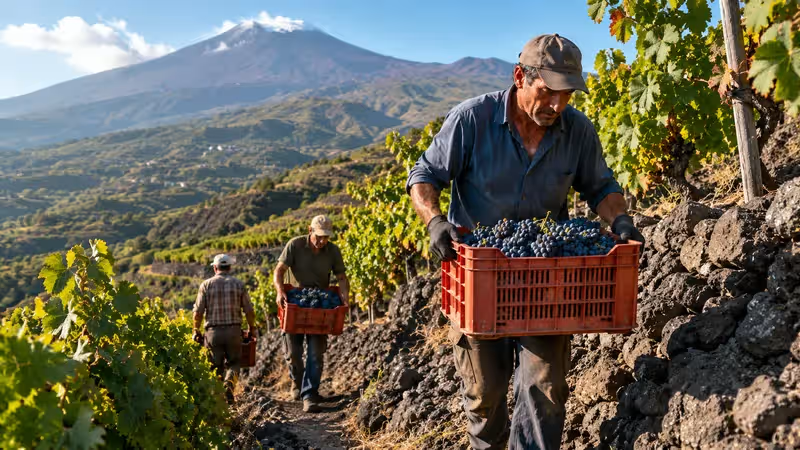
As a result, much of the work performed in volcanic vineyards remains highly manual. Vineyard workers frequently transport tools by hand, harvest grapes into small containers, and move equipment along narrow footpaths originally designed for people or pack animals rather than tractors.
While modern technology has introduced lightweight mechanical equipment capable of operating on some slopes, complete mechanization remains unrealistic in many historic vineyard sites. This significantly increases labour requirements compared with vineyards located on flatter terrain, contributing to the higher production costs often associated with wines from volcanic regions.
Rather than viewing this limitation solely as a disadvantage, many producers consider manual cultivation an essential part of preserving vineyard quality and protecting landscapes that cannot be replicated elsewhere.
Every Parcel Tells a Different Story
Volcanic landscapes rarely produce uniform vineyards. Ancient lava flows, abandoned craters, rocky ridges, and natural depressions create an intricate patchwork of individual plots, each presenting unique cultivation challenges.
Even neighbouring vineyards may differ dramatically in shape, accessibility, altitude, or exposure. Some parcels occupy narrow terraces only a few metres wide, while others follow ancient lava ridges that twist across the mountainside. In island environments, vineyard boundaries often reflect centuries of adaptation to wind exposure, available space, and historic property divisions.
This extraordinary diversity has encouraged highly localized farming knowledge. Winegrowers often describe individual parcels by name, recognizing that each requires slightly different management despite lying within the same estate.
Landscapes Built Across Generations
Perhaps the most remarkable aspect of Southern Europe’s volcanic vineyards is that they were not created through a single period of development. Instead, they represent continuous collective work spanning centuries.
Every terrace expanded by a family, every stone cleared from a field, every retaining wall rebuilt after winter storms contributes to a landscape that is constantly maintained rather than completed. Vineyard construction is therefore better understood as an ongoing dialogue between people and nature than as a finished engineering project.
This cumulative effort explains why volcanic vineyards possess such exceptional cultural value today. They are not simply places where grapes are grown, but living agricultural landscapes shaped by generations of knowledge, cooperation, and resilience. Understanding how these vineyards were physically created provides essential context for appreciating the equally distinctive viticultural practices that evolved within them.
Heroic Viticulture on Volcanic Slopes
Viticulture is often described as a balance between nature and human expertise. In volcanic regions, however, that balance demands an exceptional level of physical effort. Across Southern Europe, many volcanic vineyards fall within the category of heroic viticulture—a term used to describe vineyards cultivated under particularly challenging conditions, including steep slopes, extreme altitudes, fragmented plots, and the impossibility of full mechanization.
These vineyards represent some of Europe’s most labour-intensive agricultural landscapes. Every stage of the growing season, from winter pruning to harvest, requires significantly more time and manual work than in conventional vineyards. Despite advances in agricultural technology, many volcanic wine regions continue to rely on methods that have changed remarkably little over centuries.
What Defines Heroic Viticulture?
The concept of heroic viticulture extends beyond dramatic scenery. Internationally, the term generally refers to vineyards where natural conditions make cultivation exceptionally demanding. Steep gradients, small terraces, limited accessibility, and fragmented ownership all increase the complexity of vineyard management.
Many volcanic vineyards meet several of these criteria simultaneously. On mountain slopes, tractors cannot safely operate across narrow terraces. In island vineyards, irregular lava formations prevent large-scale machinery from entering the parcels. Some vineyards can only be reached on foot, requiring workers to transport tools, pruning equipment, and harvested grapes by hand.
These physical limitations explain why volcanic viticulture remains one of the most labour-intensive forms of winegrowing in Europe.
Every Vineyard Task Requires More Effort
Unlike vineyards established on broad plains, volcanic vineyards rarely benefit from standardized working conditions. Every parcel presents its own challenges, and routine operations often become physically demanding.
Winter pruning must frequently be carried out while navigating steep terraces or uneven volcanic rock. Spring vineyard maintenance requires workers to move repeatedly between small plots separated by stone walls, narrow stairways, or rugged footpaths. During summer, canopy management, shoot positioning, and disease monitoring involve countless hours of manual observation because mechanical alternatives are often impractical.
Harvest represents the most demanding period of the year. Grapes are commonly picked by hand and placed into relatively small crates to reduce weight on steep slopes. Instead of mechanical harvesters transporting fruit directly to collection points, workers often carry grapes over considerable distances before they reach vehicles or small transport systems.
The cumulative effect is substantial. Tasks that may require a few hours in mechanized vineyards can occupy entire days in volcanic regions, contributing significantly to production costs.
Small Parcels, Big Responsibilities
Fragmentation is another defining characteristic of volcanic wine landscapes. Rather than managing vast, uninterrupted vineyards, many growers cultivate numerous small plots scattered across different elevations and slopes.
This pattern developed over centuries through inheritance, historical land divisions, and the constraints imposed by volcanic topography. As vineyards passed from one generation to the next, estates often became divided into smaller family-owned parcels instead of large consolidated properties.
Managing multiple vineyard sites requires careful organization throughout the growing season. Pruning schedules, pest monitoring, canopy management, and harvest dates may vary from one parcel to another, even within the same estate. Winegrowers must constantly adapt their work according to each site’s accessibility, exposure, and stage of vine development.
While fragmented vineyards increase complexity, they also strengthen the intimate relationship between growers and their land. Individual parcels are often known by traditional names and managed according to practices refined over generations.
Working with the Mountain, Not Against It
ne of the defining characteristics of volcanic viticulture is the willingness to adapt farming practices to the landscape instead of attempting to transform it completely.
Rather than flattening hillsides or removing natural obstacles, generations of winegrowers learned to work with existing contours. Vineyard rows frequently follow the natural shape of lava flows or mountain ridges, while terraces mirror the topography rather than imposing geometric patterns upon it.
This approach reflects centuries of practical experience. Respecting the natural landscape reduces unnecessary earthworks, preserves traditional vineyard layouts, and allows historic agricultural infrastructure to remain functional.
It also creates vineyard landscapes that appear strikingly different from the highly mechanized vineyards found in many other wine regions, where long, perfectly aligned rows dominate the scenery.
Knowledge Passed from Hand to Hand
Heroic viticulture depends as much on experience as on physical endurance. In volcanic wine regions, practical knowledge has traditionally been transmitted through observation, apprenticeship, and family life rather than formal education.
Young winegrowers learn how to navigate steep terraces safely, recognize the particular needs of individual vineyard parcels, and organize seasonal work according to local conditions. These skills cannot always be documented in manuals because they reflect generations of adaptation to specific landscapes.
Many traditional vineyard practices remain remarkably consistent across decades. Although modern equipment has improved efficiency in some areas, local expertise continues to guide decisions about pruning, vineyard maintenance, harvest timing, and landscape conservation.
This continuity explains why volcanic viticulture is increasingly recognized not only as an agricultural activity but also as an important form of intangible cultural heritage.
The Economic Reality of Volcanic Winegrowing
Producing wine in volcanic regions inevitably involves higher costs than farming more accessible vineyards. Manual labour, ongoing terrace maintenance, fragmented holdings, and limited mechanization all increase the resources required to cultivate each hectare.
For small family estates, maintaining historic vineyards can be financially challenging, particularly as rural populations decline and younger generations pursue careers outside agriculture. Finding skilled seasonal workers has also become increasingly difficult in many volcanic wine regions.
At the same time, growing international appreciation for wines from volcanic landscapes has helped improve the economic outlook for many producers. Consumers increasingly recognize that the value of these wines reflects not only their origin but also the extraordinary effort required to produce them.
Every bottle represents hundreds of hours of manual work carried out in conditions that remain among the most demanding in European viticulture.
Preserving Living Agricultural Heritage
Heroic viticulture is not simply about overcoming difficult terrain. It is about preserving agricultural systems that have shaped volcanic landscapes for centuries.
Without continuous cultivation, terraces gradually deteriorate, dry-stone walls collapse, and traditional vineyard knowledge risks disappearing alongside the communities that developed it. Maintaining these vineyards therefore contributes to far more than wine production—it protects cultural landscapes, rural livelihoods, and centuries of accumulated expertise.
Today, many of Southern Europe’s volcanic vineyards stand as living examples of sustainable adaptation, demonstrating how determination, craftsmanship, and local knowledge can transform some of Europe’s most challenging environments into enduring centres of winegrowing excellence.
Ancient Training Systems Found Only in Volcanic Vineyards
One of the most remarkable features of Southern Europe’s volcanic vineyards is not found beneath the vines, but above them. Over centuries, winegrowers developed highly specialized vine training systems that responded directly to the physical realities of volcanic landscapes. Strong winds, intense sunlight, limited water availability, steep terrain, and fragmented vineyard parcels all required practical solutions that differed from those used in more conventional wine regions.
Many of these methods remain in use today. While modern viticulture has embraced standardized trellising systems across much of the world, volcanic vineyards continue to preserve techniques that reflect centuries of local experience. These traditional training systems are more than agricultural practices—they are part of the cultural identity of the regions where they evolved.
The Alberello: A Symbol of Mediterranean Viticulture
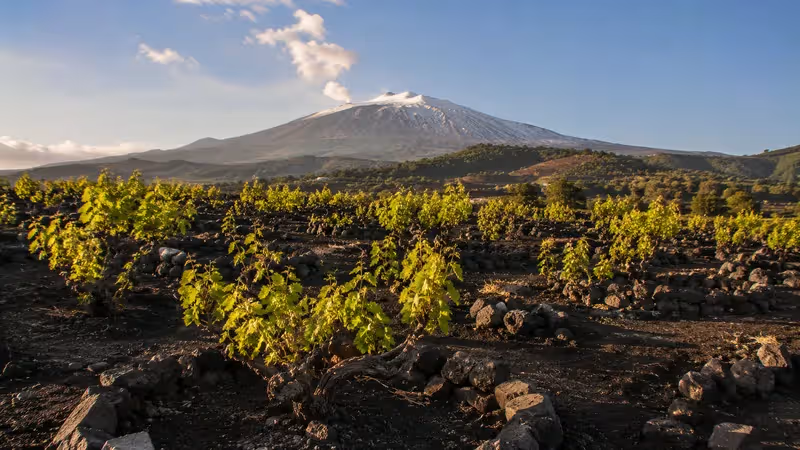
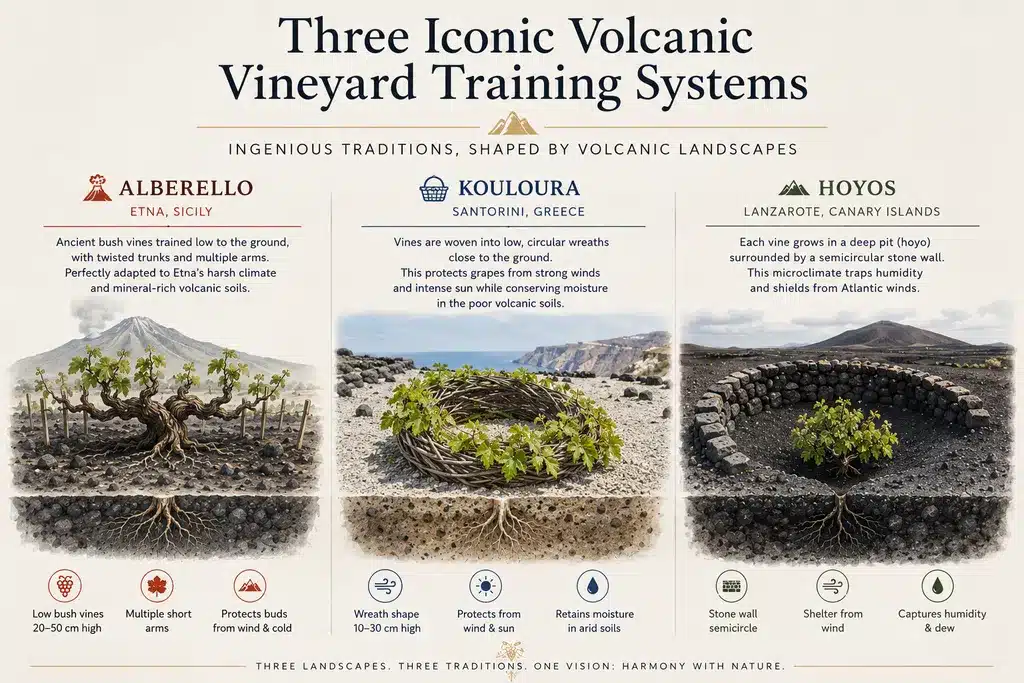
Among the oldest vine training methods still practiced in Europe is the Alberello, or bush vine system. Although found throughout parts of the Mediterranean, it has become particularly associated with the volcanic vineyards of Mount Etna and several other Southern European regions.
Rather than growing along wires or elaborate trellises, each vine develops as an independent, low-growing plant supported by a short trunk. The shoots radiate outward, forming a compact structure that remains close to the ground.
This simple appearance reflects centuries of refinement. Keeping the vine low reduces its exposure to strong mountain winds while allowing growers to manage each plant individually. On steep volcanic terraces where mechanization is limited, the Alberello system also allows vines to be planted according to the natural contours of the land instead of following rigid, machine-oriented layouts.
Because every vine is pruned separately, the system demands exceptional skill and considerable manual labour. Experienced growers often describe pruning as one of the most important annual decisions, influencing both the vine’s long-term health and its ability to produce balanced crops year after year.
Today, the Alberello has become one of the defining visual characteristics of Etna’s historic vineyards, where many old vines continue to be cultivated using methods passed down through multiple generations.
Kouloura: The Basket Vines of Santorini
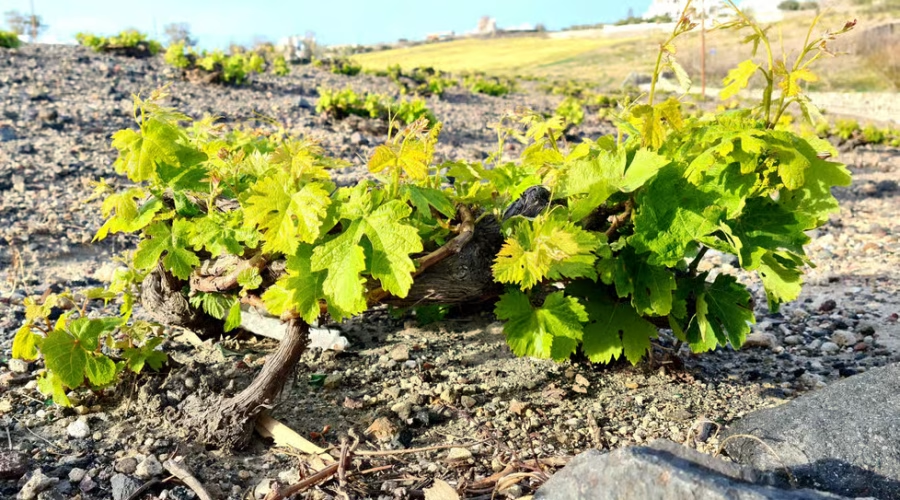
Few vineyard landscapes are as distinctive as those found on Santorini. Here, local winegrowers developed an ingenious training system known as Kouloura, in which the vine is gradually woven into a circular basket that rests close to the ground.
Unlike conventional vineyard rows supported by posts and wires, each basket-shaped vine grows as an individual structure. Every year, new shoots are carefully braided around the existing framework, gradually enlarging the basket while maintaining its characteristic spiral form.
This unique technique evolved in response to the island’s challenging environment. Strong Aegean winds can reach considerable force during the growing season, while intense summer sunlight exposes grape clusters to significant heat. The basket naturally shelters the fruit within its centre, helping to reduce physical damage while allowing the vine to continue growing under demanding conditions.
Creating and maintaining a Kouloura requires years of experience. The training process begins when the vine is young and continues throughout its productive life, with annual pruning carefully integrated into the existing structure. The result is one of the world’s most recognizable examples of traditional vine architecture.
The Hoyos of Lanzarote
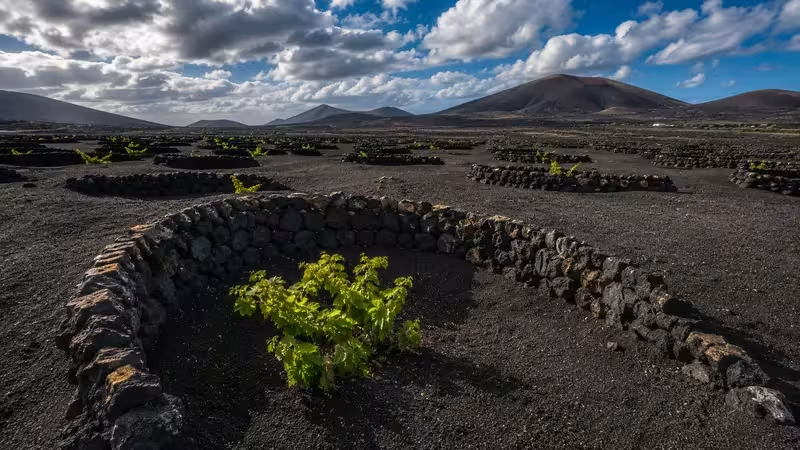
Perhaps no volcanic vineyard demonstrates human ingenuity more dramatically than those of La Geria on the island of Lanzarote.
Following the devastating eighteenth-century volcanic eruptions that transformed much of the island, farmers faced an entirely new agricultural landscape covered by thick volcanic deposits. Rather than abandoning viticulture, they devised an innovative cultivation system based on individual planting pits known locally as Hoyos.
Each vine is planted inside a hand-dug depression excavated through the volcanic material until cultivable ground is reached below. The excavated stone is then arranged into a semicircular wall surrounding the pit.
Viewed from above, the landscape resembles thousands of individual craters scattered across the volcanic plain. Every depression represents hours of manual work, while every protective wall reflects centuries of accumulated local knowledge.
Unlike vineyard systems based on continuous rows, each vine functions almost as an independent cultivation unit, requiring individual attention throughout the growing season.
Adapting Tradition Rather Than Replacing It
Despite remarkable advances in vineyard technology over the past century, many volcanic winegrowers have chosen to preserve their traditional training systems rather than replace them with standardized modern alternatives.
This decision is not simply motivated by respect for history. In many volcanic landscapes, traditional methods continue to offer practical advantages because they evolved specifically for local conditions.
Steep terraces often leave insufficient space for modern mechanized equipment. Historic vineyard layouts may prevent the installation of conventional trellising systems without extensive reconstruction. In many cases, replacing ancient planting patterns would fundamentally alter landscapes that have remained largely unchanged for centuries.
As a result, innovation in volcanic vineyards often focuses on improving vineyard management while preserving the essential structure of traditional cultivation systems.
Preserving Viticultural Heritage
Today, these ancient training systems are increasingly recognized as valuable elements of Europe’s agricultural heritage. They illustrate how local communities solved complex farming challenges long before modern engineering or mechanization became available.
The knowledge required to maintain these systems remains highly specialized. Proper pruning, vine renewal, and structural maintenance are learned gradually through years of observation and practice, often within families that have cultivated the same vineyards for generations.
Preserving these techniques is therefore about more than protecting historic vineyards. It ensures the survival of practical expertise that links today’s winegrowers with centuries of continuous agricultural tradition.
For visitors, these unusual vineyard forms create some of the most memorable wine landscapes in Southern Europe. For winegrowers, however, they remain living tools—refined over generations and still perfectly adapted to the extraordinary environments in which they continue to thrive.
Old Vines and Pre-Phylloxera Vineyards: Living Witnesses of Europe's Wine Heritage
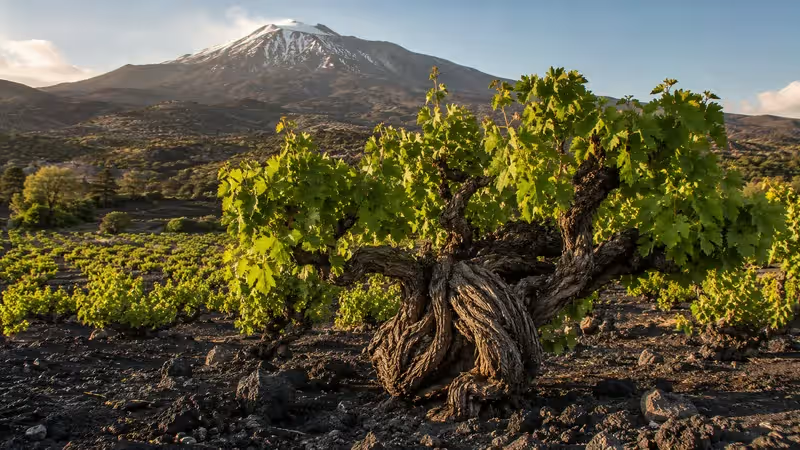
Among the many reasons volcanic vineyards attract the attention of wine professionals, few are as compelling as the remarkable concentration of old vines and, in some regions, pre-phylloxera vineyards. These ancient vines are more than agricultural curiosities—they are living archives that preserve centuries of viticultural history and offer a direct connection to Europe’s winemaking past.
While old vineyards can be found throughout Southern Europe, volcanic regions have played a particularly important role in their preservation. Their isolated locations, difficult terrain, and long-established farming traditions have allowed many vineyards to survive where others were replanted or modernized.
What Is an Old Vine?
Unlike terms protected by law, the expression old vine has no universally accepted definition. Depending on the region and the producer, vines may be considered old after 35, 50, 70, or even 100 years of age.
What matters most is not a specific number but the continuity of the vineyard. Old vines represent decades of adaptation to the same location, with each growing season contributing to the gradual development of deep root systems and mature vine architecture.
Many volcanic vineyards include parcels planted by previous generations that continue to produce grapes long after reaching ages uncommon in modern commercial viticulture. Some estates proudly cultivate vines that are more than a century old, carefully preserving them through traditional pruning and meticulous manual care.
Understanding Pre-Phylloxera Vineyards
Even rarer than old vines are pre-phylloxera vineyards—vineyards that survived the devastating phylloxera epidemic that transformed European viticulture during the late nineteenth century.
Phylloxera, a microscopic aphid native to North America, attacked the roots of European grapevines, destroying millions of hectares of vineyards across the continent. The crisis permanently changed winegrowing, leading to the widespread adoption of grafting European grape varieties onto resistant American rootstocks.
Most vineyards planted today are therefore grafted vines.
However, a small number of European vineyards escaped the epidemic altogether. Some of the best-known examples are found in volcanic regions, where local environmental conditions helped preserve ungrafted vines that continue to grow on their original root systems.
These vineyards offer a rare opportunity to observe vine populations that have remained genetically and historically continuous since before one of the greatest agricultural disasters in European history.
Why Volcanic Regions Preserved Ancient Vines
The survival of exceptionally old vineyards cannot be attributed to a single factor. Instead, it reflects a combination of geography, historical circumstances, and long-term human stewardship.
Many volcanic vineyards occupy steep mountain slopes, isolated islands, or fragmented landscapes that experienced relatively limited agricultural intensification during the twentieth century. Because large-scale replanting was often impractical or economically unnecessary, numerous historic vineyards remained in continuous production.
Traditional family ownership also played an important role. Instead of replacing mature vineyards with modern high-density plantings, many growers chose to preserve vines inherited from previous generations, maintaining established vineyard layouts that had proven successful over decades.
This gradual continuity has allowed volcanic wine regions to retain some of Europe’s oldest productive vineyards.
Famous Regions with Ancient Vineyards
Several volcanic wine regions have earned international recognition for their historic vineyards.
The slopes of Mount Etna are home to numerous century-old vineyards, many cultivated using the traditional Alberello training system. Some individual vines are believed to have survived for well over one hundred years, reflecting generations of careful maintenance rather than periodic replanting.
Santorini is equally renowned for its exceptionally old vineyards. Thanks to the island’s long viticultural history and the preservation of traditional cultivation methods, many vineyards consist of vines that have been maintained through continuous renewal over extended periods rather than complete replacement.
The volcanic landscapes of the Canary Islands also preserve remarkable examples of old vineyards. Following the eighteenth-century eruptions on Lanzarote, growers established vineyard systems that continue to define the island’s distinctive agricultural landscape today. Similar historic vineyards can also be found on islands such as Tenerife and La Palma, where centuries-old vines remain an integral part of local wine production.
Together, these regions demonstrate that volcanic vineyards have become important refuges for Europe’s living viticultural heritage.
Caring for Ancient Vines
Maintaining very old vineyards requires patience, experience, and careful observation.
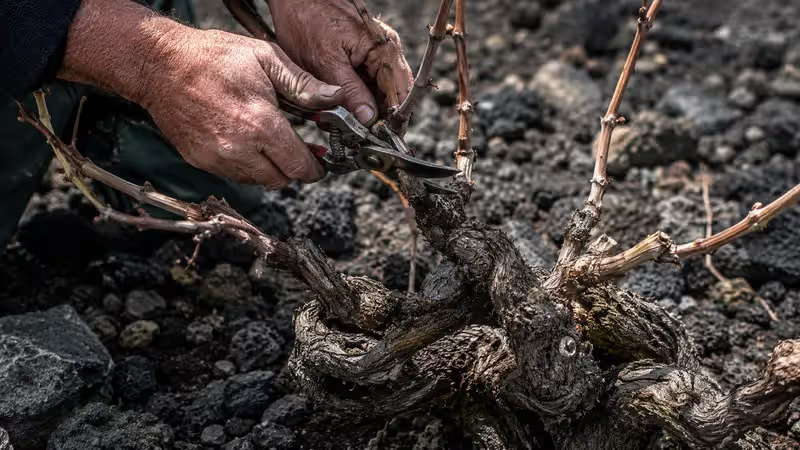
Unlike newly planted vineyards designed for mechanized management, ancient vines often display irregular growth patterns that demand individual attention. Pruning decisions must respect the structure developed over decades, while replacement of missing plants must be carried out without disrupting the character of the historic parcel.
Many producers consider themselves custodians rather than owners of these vineyards. Their objective is not simply to maximize annual production but to ensure that the vines remain healthy enough to be passed to future generations.
This long-term perspective influences every aspect of vineyard management, from pruning techniques to terrace maintenance and soil conservation.
A Heritage Worth Protecting
Old vines and pre-phylloxera vineyards represent one of the greatest cultural assets of Southern Europe’s volcanic wine regions.
They embody centuries of agricultural continuity, preserve rare genetic resources, and provide tangible links to historical winegrowing practices that have disappeared elsewhere. Their survival is the result of countless individual decisions made by winegrowers who chose preservation over replacement and stewardship over short-term efficiency.
Today, these ancient vineyards are increasingly recognized as an irreplaceable part of Europe’s wine heritage. Protecting them requires ongoing investment, specialized knowledge, and a new generation of growers willing to continue the work begun centuries ago.
In volcanic landscapes shaped by both natural forces and human perseverance, every old vine stands as a living reminder that great vineyards are measured not only by the wines they produce, but also by the history they continue to carry forward.
The Future of Volcanic Viticulture: Preserving an Exceptional Wine Heritage
Southern Europe’s volcanic vineyards have survived earthquakes, eruptions, changing empires, agricultural crises, and centuries of social transformation. Their continued existence demonstrates an extraordinary capacity for adaptation. Yet the challenges facing these landscapes today are unlike those encountered by previous generations.
Climate change, demographic shifts, economic pressures, and the growing demand for sustainable agriculture are reshaping the future of volcanic viticulture. Preserving these remarkable vineyards now depends not only on the resilience of winegrowers but also on coordinated efforts involving local communities, researchers, public institutions, and wine consumers.
Climate Change and Water Scarcity
Like wine regions across the Mediterranean, volcanic vineyards are increasingly affected by rising temperatures and changing rainfall patterns.
Longer periods of drought, more frequent heatwaves, and greater climatic variability require growers to adapt vineyard management while preserving traditional landscapes. Earlier harvest dates, revised pruning strategies, and improved water management have become part of everyday decision-making in many volcanic regions.
For vineyards located on islands or steep mountainsides, adapting to these changes presents additional challenges. Limited water resources, difficult access, and protected historic landscapes often restrict the range of interventions available to producers.
Rather than replacing traditional practices entirely, many growers are seeking ways to combine centuries-old knowledge with modern scientific understanding.
Protecting Historic Landscapes
The distinctive appearance of volcanic vineyards depends upon continuous maintenance.
Terraces require regular repairs. Dry-stone walls must be rebuilt after storms or natural deterioration. Historic access paths need constant attention to remain usable. Without active cultivation, vegetation quickly reclaims abandoned parcels, gradually obscuring landscapes that took centuries to create.
Maintaining this infrastructure represents a significant financial commitment, particularly for small family estates.
Across Southern Europe, regional authorities, heritage organizations, and winegrowers increasingly recognize that protecting volcanic vineyards means preserving entire cultural landscapes rather than individual vineyards alone.
These landscapes are valuable not only for wine production but also for their historical, architectural, environmental, and cultural significance.
The Challenge of Generational Renewal
Many volcanic wine regions face the same demographic pressures affecting rural Europe as a whole.
Younger generations often pursue education and employment opportunities outside traditional agricultural communities, reducing the number of people available to continue family vineyards. At the same time, vineyard work remains physically demanding, highly specialized, and increasingly expensive.
Encouraging new generations of winegrowers has therefore become one of the most important priorities for many volcanic regions.
Fortunately, interest in artisanal wine production, sustainable farming, and high-quality regional wines has inspired a growing number of young producers to return to family estates or establish new projects within historic wine regions.
Their challenge is to respect inherited traditions while adapting vineyards to the realities of twenty-first century viticulture.
Sustainability Beyond Environmental Practices
Sustainability in volcanic vineyards extends beyond reducing chemical inputs or improving biodiversity.
Economic sustainability is equally important. Historic vineyards can only survive if wine production remains financially viable for the families who cultivate them. Fair pricing, consumer recognition, and responsible wine tourism all contribute to ensuring that manual viticulture remains economically sustainable.
Cultural sustainability is another essential consideration. Preserving traditional pruning methods, dry-stone construction techniques, and historic vineyard layouts requires ongoing education and practical training. Without people capable of maintaining these skills, the landscapes themselves become increasingly difficult to conserve.
In this sense, sustainability encompasses environmental stewardship, economic resilience, and the transmission of practical knowledge.
Wine Tourism as a Tool for Preservation
Wine tourism has become an increasingly important source of income for many volcanic wine regions.
Visitors are drawn not only by the wines themselves but also by spectacular landscapes, historic villages, vineyard walks, traditional wineries, and opportunities to experience living wine culture firsthand.
When carefully managed, wine tourism provides additional financial resources that help producers maintain historic vineyards while supporting local restaurants, accommodation providers, guides, and rural businesses.
Equally important, it encourages greater public appreciation of the extraordinary effort required to cultivate vines in volcanic environments.
Understanding the landscape often deepens appreciation for the wines it produces, creating stronger connections between consumers and the people who preserve these unique regions.
Looking Ahead
The future of Southern Europe’s volcanic vineyards will depend on their ability to evolve without losing the qualities that make them exceptional.
Innovation will undoubtedly continue, introducing new technologies, improved vineyard management, and more precise scientific knowledge. Yet the greatest strength of these landscapes has always been their capacity to adapt while respecting centuries of accumulated experience.
This balance between tradition and innovation has allowed volcanic vineyards to survive for generations despite natural disasters, economic uncertainty, and changing agricultural practices.
As global interest in authentic wine regions continues to grow, Southern Europe’s volcanic vineyards are increasingly recognized not only as places that produce distinctive wines but also as remarkable examples of cultural resilience, environmental adaptation, and living agricultural heritage.
Their future will ultimately be shaped by the same principles that ensured their survival in the past: patience, craftsmanship, respect for the landscape, and an enduring commitment to preserving one of Europe’s most extraordinary winegrowing traditions.
10 Frequently Asked Questions about Volcanic Vineyards of Southern Europe
What is a volcanic vineyard?
A volcanic vineyard is a vineyard established on land shaped by past or present volcanic activity. These landscapes may include active volcanoes, extinct volcanoes, lava fields, volcanic islands, or ancient calderas. In Southern Europe, volcanic vineyards are found in regions such as Mount Etna, Santorini, Monte Vulture, and the Canary Islands.
Which countries in Southern Europe have volcanic vineyards?
Several Southern European countries are home to important volcanic wine regions. Italy has Mount Etna, Monte Vulture, and the volcanic hills of Campania. Greece is renowned for the vineyards of Santorini, while Spain’s Canary Islands feature some of the world’s most distinctive volcanic landscapes, including Lanzarote, Tenerife, and La Palma.
Why are volcanic vineyards often located on steep slopes?
Many volcanoes naturally form mountainous terrain, making flat agricultural land scarce. Over centuries, winegrowers adapted by building terraces and cultivating vines on hillsides, creating vineyard landscapes that follow the natural contours of the volcano rather than reshaping them.
What is heroic viticulture?
Heroic viticulture refers to vineyard cultivation under exceptionally difficult conditions, such as steep slopes, high altitudes, narrow terraces, or sites where mechanization is limited or impossible. Many volcanic vineyards in Southern Europe are considered examples of heroic viticulture because they require extensive manual work throughout the growing season.
Why are so many volcanic vineyards harvested by hand?
Steep terrain, fragmented vineyard parcels, and traditional terrace systems often prevent the use of mechanical harvesters. As a result, grapes are usually picked manually, allowing growers to navigate difficult landscapes while preserving historic vineyard structures.
What are the most famous traditional vine training systems used in volcanic vineyards?
Southern Europe’s volcanic vineyards preserve several unique training systems. The Alberello bush vine is widely associated with Mount Etna, the basket-shaped Kouloura system is unique to Santorini, and the Hoyos planting method defines the vineyards of Lanzarote. These techniques were developed over centuries to suit local environmental conditions.
Why do volcanic regions preserve so many old vines?
Many volcanic vineyards have remained in continuous cultivation for generations. Their remote locations, traditional family ownership, and limited mechanization have helped preserve historic vineyards that might otherwise have been replaced by modern plantings.
Are pre-phylloxera vineyards still found in Southern Europe?
Yes. Some volcanic wine regions still contain pre-phylloxera vineyards where vines grow on their original roots rather than being grafted onto American rootstocks. These vineyards are considered exceptionally rare and represent an important part of Europe’s viticultural heritage.
Can visitors explore volcanic vineyards?
Absolutely. Many volcanic wine regions offer winery tours, vineyard walks, guided tastings, and scenic wine routes. Destinations such as Mount Etna, Santorini, and Lanzarote have become popular wine tourism destinations, allowing visitors to discover both the landscapes and the traditions of volcanic viticulture.
What challenges do volcanic vineyards face today?
Modern volcanic vineyards face several challenges, including climate change, water scarcity, rising labour costs, rural depopulation, and the ongoing maintenance of historic terraces and dry-stone walls. Protecting these landscapes requires balancing innovation with the preservation of centuries-old viticultural traditions.