Table of Contents
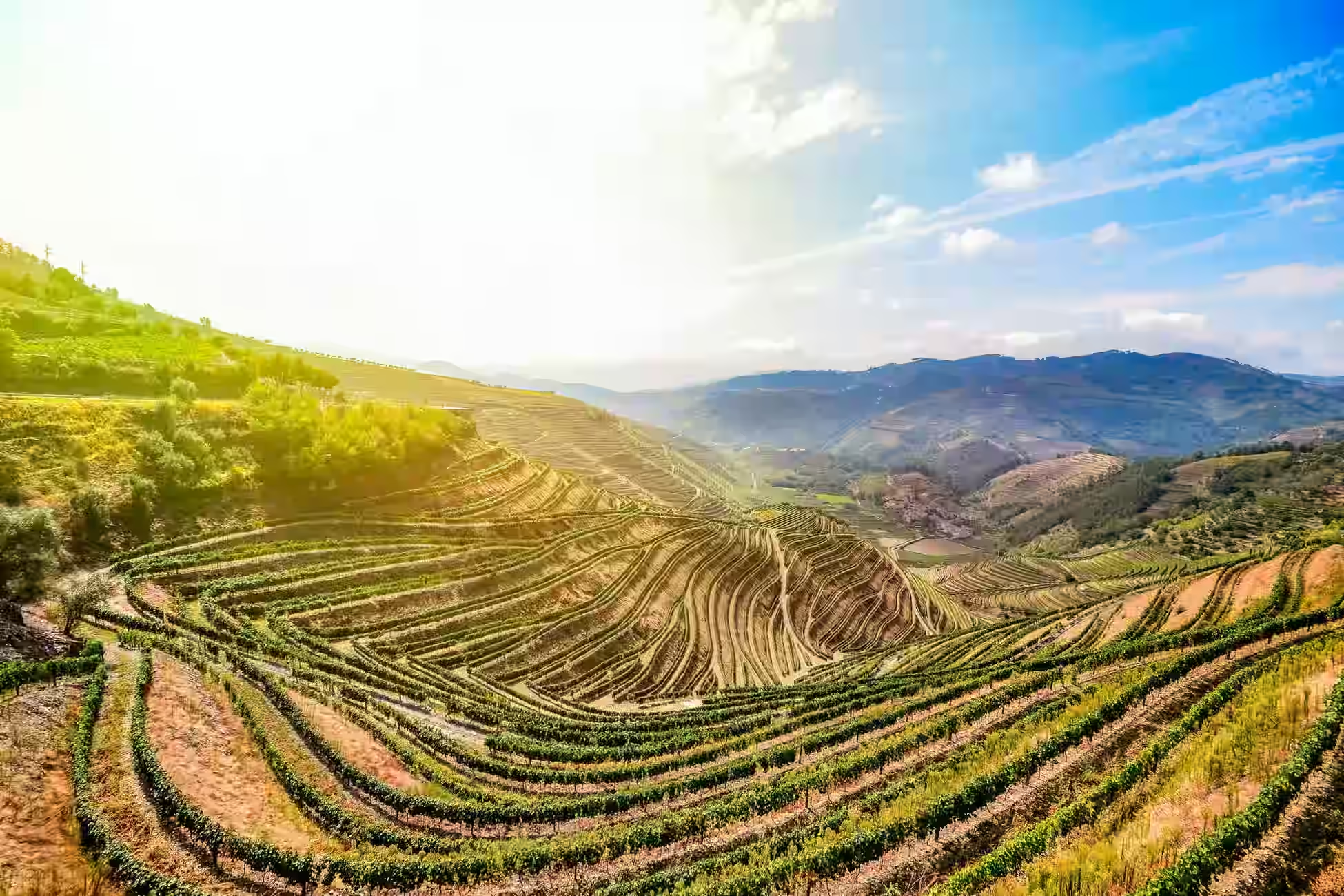
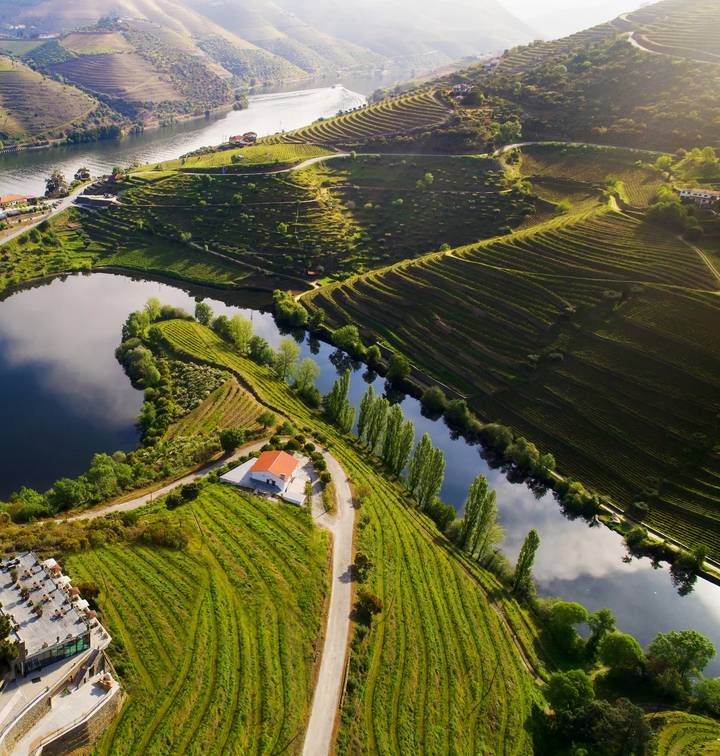
The Douro Valley stands as a monumental achievement in the history of global viticulture, representing the world’s first demarcated and regulated wine region, established by the Marquis of Pombal in 1756. It is not merely a geographical location but a profound cultural heritage where the “soul” of the land is inextricably linked to centuries of human labor. This UNESCO World Heritage site is defined by its dramatic, hand-carved stone terraces that defy the laws of gravity, creating a landscape that is as visually arresting as it is viticulturally challenging.
The prestige of the region is built upon its ability to produce long-lived, complex fortified wines—the legendary Port—alongside increasingly sophisticated dry still wines that capture the raw energy of the Iberian Peninsula. To understand the Douro is to recognize a global benchmark for resilience; it is a region where the vine must struggle against scorching heat and impenetrable rock to produce fruit of incomparable concentration.
This narrative of struggle and survival is what imbues every bottle with an evocative sense of place, making it a destination of pilgrimage for the most discerning oenophiles and travelers seeking the ultimate expression of authenticity in wine.
Macro-Climate and Viticultural Foundations
The climate of the Douro Valley is a study in extremes, dictated largely by its unique inland position and the formidable barrier of the Marão and Montemuro mountains. These peaks serve as a vital climatic shield, protecting the valley from the cold, humid Atlantic winds that characterize the coastal regions of Portugal. This rain shadow effect creates a Mediterranean-type microclimate that is significantly hotter and drier than the surrounding areas, a fundamental factor in the ripening process of indigenous varieties.
The Influence of Water and Rainfall Gradients
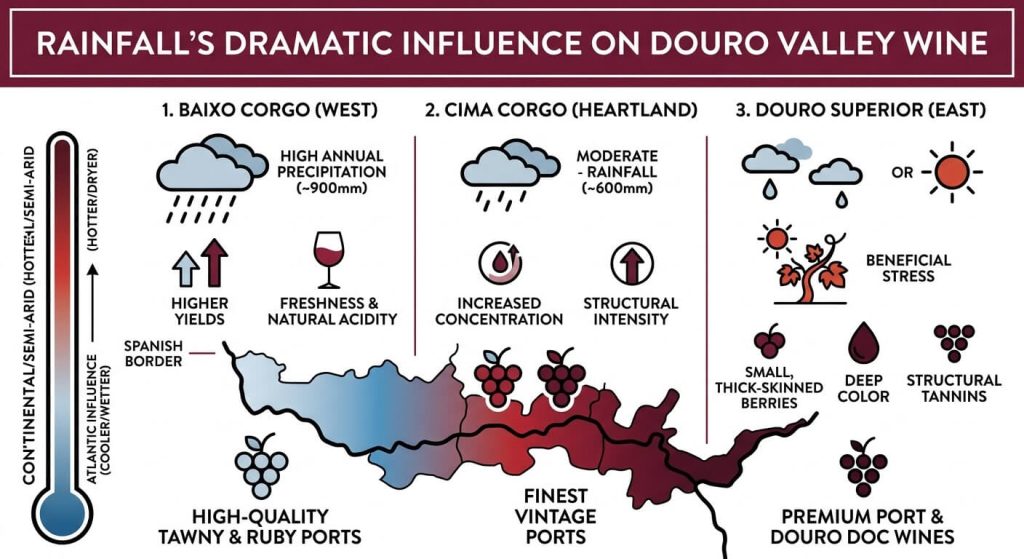
Rainfall within the region follows a dramatic longitudinal gradient that dictates the style and potential of the wine. In the westernmost sub-region, the Baixo Corgo, annual precipitation can reach 900 millimeters, fostering higher yields and wines with greater natural acidity and freshness. This area is often associated with the production of high-quality Tawny and Ruby Ports. As one moves eastward into the Cima Corgo, the rainfall drops to approximately 600 millimeters, increasing the concentration and structural intensity of the grapes. This is the heartland of the finest Vintage Ports. By the time one reaches the Douro Superior near the Spanish border, the climate becomes semi-arid, with rainfall often dipping below 400 millimeters. This scarcity of water forces the vines into a state of beneficial stress, leading to small, thick-skinned berries that provide the deep color and structural tannins essential for high-quality Port and Douro DOC wines.
Altitude and Diurnal Temperature Shifts
The verticality of the Douro provides a secondary layer of climatic control. Vineyards are planted from the river’s edge at nearly sea level up to altitudes exceeding 700 meters. This variation in elevation allows for significant diurnal temperature shifts—the difference between the heat of the day and the cool of the night. At higher altitudes, such as those found in the Planalto de Alijó or the heights of Sabrosa, the cooler nights preserve the malic acid in the grapes, ensuring that even in the hottest vintages, the wines maintain a structural vibrancy and aromatic lift. These higher elevations are increasingly sought after for the production of elegant white wines and fresh, fruit-forward reds.
Vintage Variability and Atmospheric Pressure
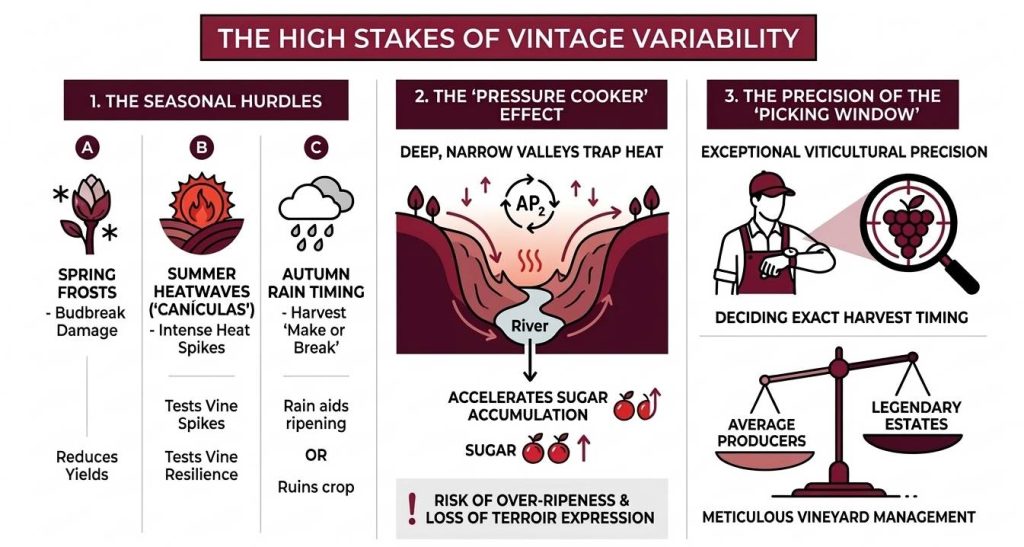
Vintage variability is a hallmark of the region’s reputation. The interplay between spring frosts, summer heatwaves known as canículas, and the timing of autumn rains determines whether a year will be declared as a Vintage Port year. The atmospheric pressure within the deep, narrow valleys can trap heat, creating a pressure cooker effect that accelerates sugar accumulation, requiring viticulturists to be exceptionally precise in their picking windows to avoid over-ripeness and loss of terroir expression. The ability to manage these climatic swings through meticulous vineyard management is what separates the legendary estates from the average producers.
Geological Complexity: The Schistous Heart In Douro Valley
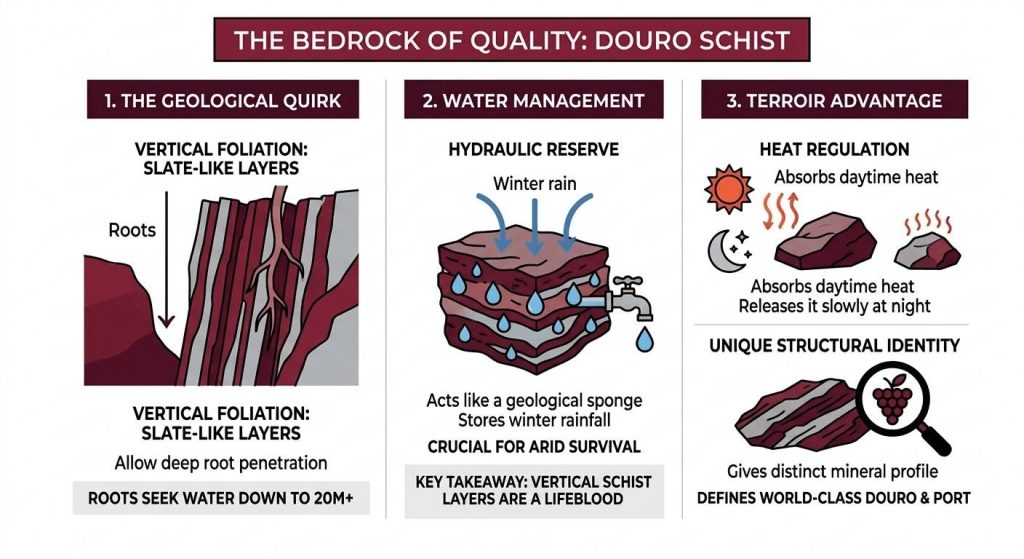
The pedological identity of the Douro Valley is synonymous with schist, a Pre-Cambrian metamorphic rock that defines the region’s ability to produce world-class wine in a desert-like environment. This slate-like rock is characterized by its vertical foliation, a geological quirk that is the lifeblood of the vine in this arid terrain
Vertical Drainage and Mineral Uptake
Unlike the horizontal layers of limestone or clay found in other famous regions, the schist of the Douro stands almost vertically. This allows the roots of the vines to penetrate through narrow fissures, sometimes reaching depths of over 20 meters to access deep-seated water reserves held within the rock. This deep rooting system also facilitates a unique mineral uptake; as the roots mine the schist, they absorb trace elements that contribute to the distinct wet stone and graphite minerality found in the wines of Pinhão and the Vale de Mendiz. The lack of organic matter in these soils naturally limits vine vigor, ensuring that the plant’s energy is focused entirely on fruit maturation rather than canopy growth, resulting in exceptional phenolic ripeness.
The Sensory Link and Thermal Regulation
The schist acts as a thermal battery. During the day, the dark stones absorb the intense solar radiation, and at night, they slowly release this heat back to the vine. This regulation ensures a steady ripening process, even after the sun has set behind the steep ridges. In sub-regions like the Rio Torto valley, the specific composition of the schist—often mixed with fragments of quartz—yields wines with an extraordinary floral perfume, specifically rockrose and violet. Conversely, in the more rugged terrain of the Douro Superior, the presence of outcroppings of granite near the schist borders can introduce a firmer, more skeletal structure to the wines, which is highly prized in modern still winemaking.
The Regional Breakdown: Climate, Soil, and Geology by Sub-Region
TThe Douro Valley is segmented into three distinct sub-regions, each possessing a unique geological and climatic signature that dictates the character of the fruit. This division is not merely administrative; it reflects a profound shift in the pedological environment as one moves from the Atlantic-influenced west to the arid continental east.
Baixo Corgo: The Fertile Gateway
As the westernmost sub-region, the Baixo Corgo serves as the transition zone between the humid coast and the rugged interior. Geologically, while schist remains the dominant bedrock, the soil depth here is significantly greater than in the eastern zones. There is a higher percentage of organic matter and weathered rock, which, combined with the 900mm of annual rainfall, results in higher vine vigor.
The wines from the Baixo Corgo are celebrated for their accessibility and “forward” fruit profiles. The higher humidity levels require vigilant viticulture to manage the risk of botrytis, but the reward is a style of wine with remarkable freshness and lower alcohol potential, making it the primary source for the world’s most popular Ruby and Tawny styles.
Cima Corgo: The Prestigious Heart
ICentering around the town of Pinhão, the Cima Corgo is the spiritual and qualitative center of the region. This is where the schistous heart of the Douro is most exposed. The climate is markedly drier and hotter than the Baixo Corgo, with rainfall dropping to a critical 600mm. The geology here is defined by “Pre-Cambrian” and “Archaean” schist, which is exceptionally poor in nutrients, forcing the vines to delve deep into the vertical fractures of the rock. This sub-region is home to the most iconic quintas, including Quinta do Noval, Quinta do Crasto, Quinta do Bomfim, and Quinta de la Rosa. The interaction between the river’s thermal mass and the steep, rocky slopes produces grapes with a perfect balance of phenolic ripeness and structural acidity. The aromatic profile here is often characterized by wild rockrose (esteva), dark chocolate, and intense violet notes, providing the backbone for almost all premium Vintage Port blends.
Douro Superior: The Arid Frontier
Extending to the Spanish border, the Douro Superior is the largest and most rugged of the sub-regions. It is characterized by extreme continental conditions: scorching summers and freezing winters. Geologically, the schist transitions into more varied formations, occasionally intermingled with granite outcroppings. The lack of water (often less than 400mm) means that traditional irrigation is often a necessity for young vines to survive. This sub-region remained relatively underdeveloped until the late 20th century due to its isolation, but it is now the frontier for premium Douro DOC still wines. Vineyards like Quinta do Vale Meão and Quinta do Vesúvio produce wines of immense power, characterized by ripe black fruit, high tannins, and a distinct mineral “grip.” The high altitude sites within the Douro Superior are also proving to be the premier location for white varieties like Viosinho and Rabigato, which maintain piercing acidity despite the surrounding heat.
Human Intervention and Viticultural Mastery
In the Douro, viticulture is not merely farming; it is a monumental feat of civil engineering. The region’s primary challenge—extreme verticality—has forced humans to re-engineer the mountainsides over centuries. This intervention is the physical manifestation of terroir, where the hand of man determines the vine’s relationship with the sun and the stone.
The Architecture of the Slopes: Socalcos, Patamares, and Vinha ao Alto
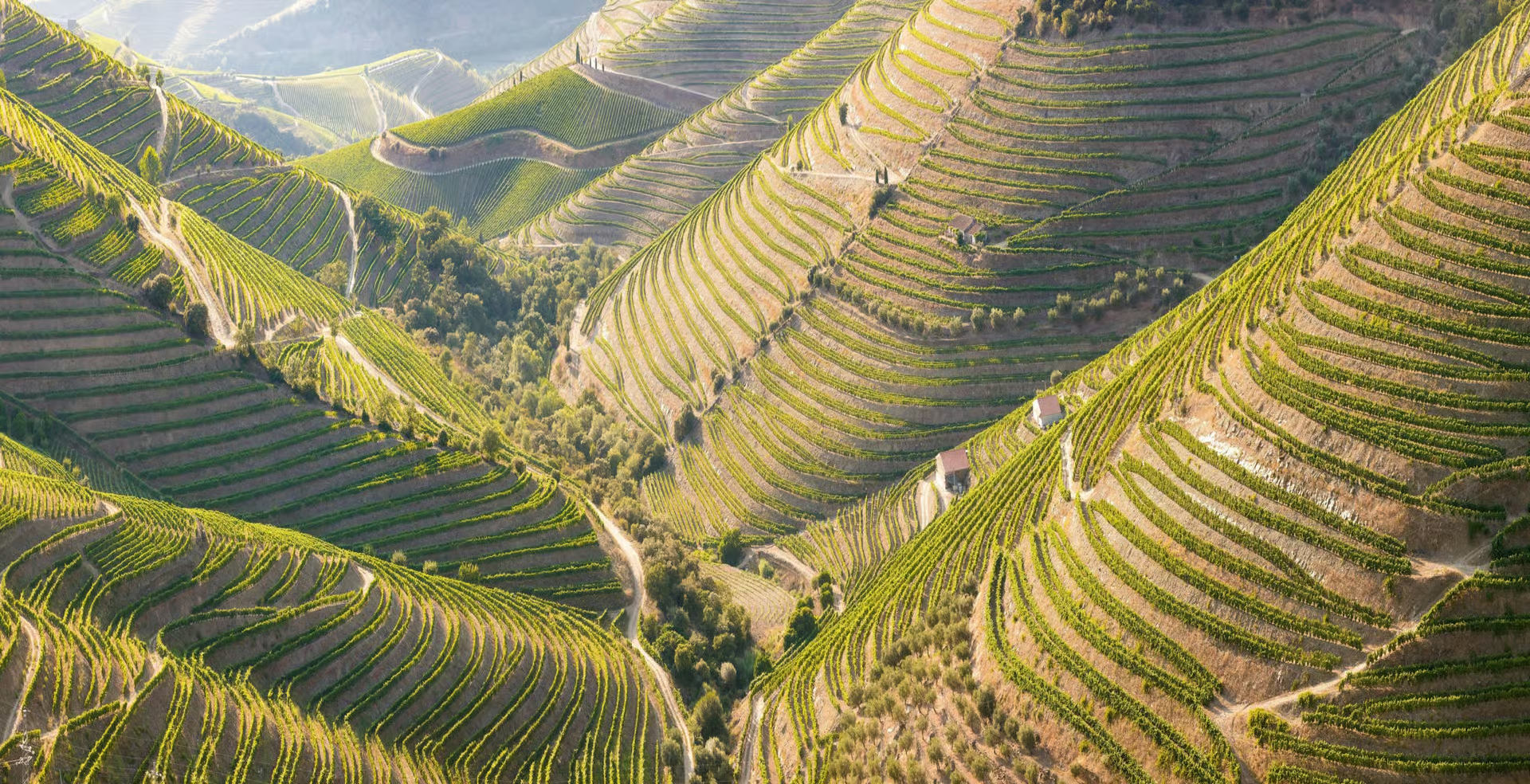
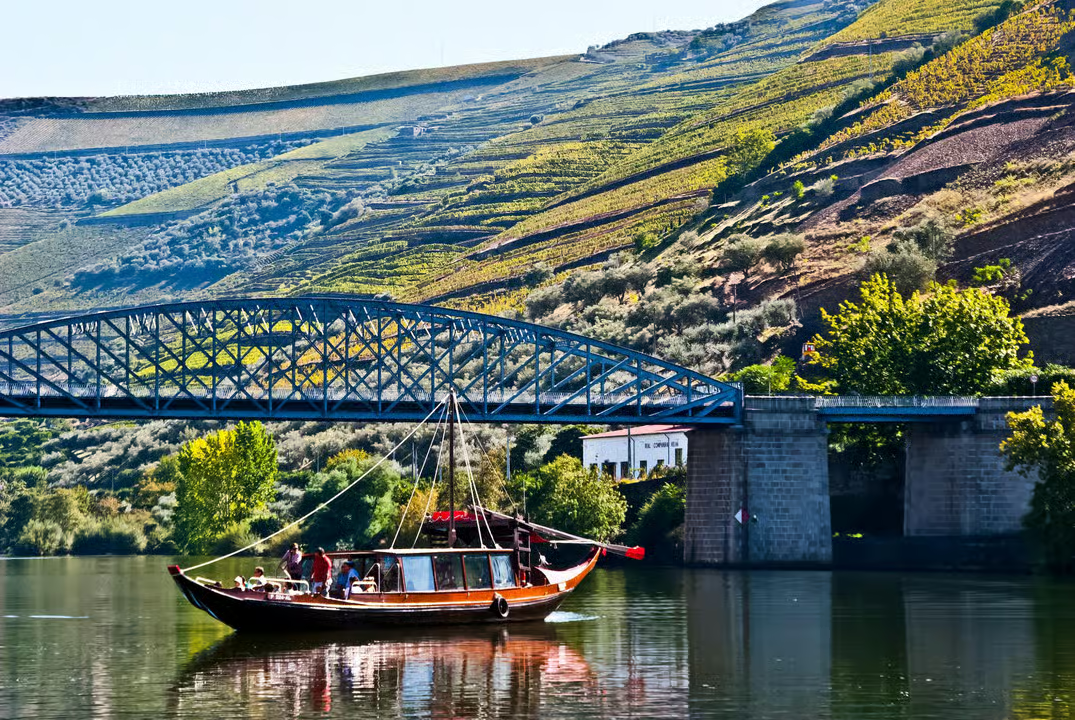
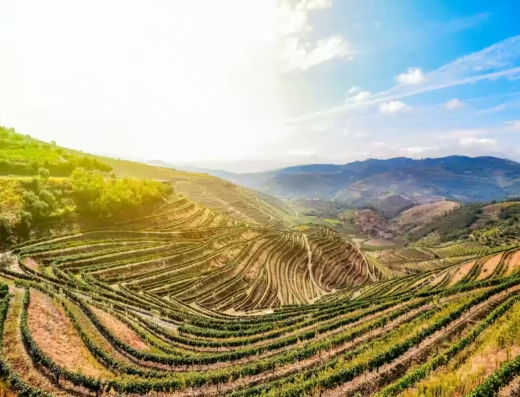
The most iconic feature of the Douro is its terracing, which has evolved through three distinct technological eras. The ancient Socalcos are the soul of the region; these are narrow, irregular terraces supported by hand-built dry stone walls. They were designed for high-density planting and require exclusively manual labor, as no machinery can traverse their delicate structures. These walls serve a dual purpose: they prevent the catastrophic erosion of the schistous soils during winter rains and act as thermal regulators, radiating heat back to the vines at night.
In the 1970s and 80s, the Patamares were introduced. These are wider, earth-banked terraces without stone walls, designed to allow for mechanization via small tractors. While they increased efficiency, they reduced planting density. The most modern evolution is the Vinha ao Alto, or vertical planting, where rows run directly up the slope. This system is only possible on gradients up to 40 percent and is favored for its superior drainage and uniform sun exposure, though it demands sophisticated erosion control techniques. The choice between these systems at estates like Quinta do Quinta do Vallado or Quinta das Carvalhas is a strategic decision that balances tradition with modern precision.
Technical Precision in the Vineyard
The management of the vine is tailored to the specific demands of the heat and the rock. Pruning techniques such as the Guyot or the Cordon are selected based on the vigor of the specific variety—be it the structural Touriga Nacional, the floral Touriga Franca, or the hardy Tinta Roriz. Row orientation is a critical decision; north-facing slopes are often preferred for still wines to preserve acidity, while south-facing slopes provide the sun-drenched concentration required for Port. Canopy management is equally vital; oenologists employ strategic leaf plucking to protect the grape clusters from direct sunburn while ensuring enough airflow to prevent powdery mildew.
The Philosophy of the Cellar
he Douro operates on a philosophy that balances technical precision with a deep respect for tradition. While modern stainless-steel fermenters with robotic plunging are common, the pinnacle of winemaking still involves the lagar—large, shallow granite troughs. The process of foot-treading in these lagares remains the most effective method for achieving the gentle yet thorough extraction of color and tannin without crushing the seeds. This minimal intervention approach aims to ensure that the hard-won character of the schist is preserved in the final liquid, allowing the terroir to speak clearly through the wine.
From Knowledge to Experience
While the science of geology and the technicalities of viticulture provide a framework for understanding the Douro, they are merely the prologue to the experience itself. The Douro is a living liquid; its story is not fully told until it is tasted in the very air that ripened the grapes. The transition from knowledge to experience occurs when one stands atop the ridges of Quinta do Seixo or walks the historic terraces of Quinta da Pacheca, feeling the heat radiating from the schist and smelling the wild herbs that grow between the vines.
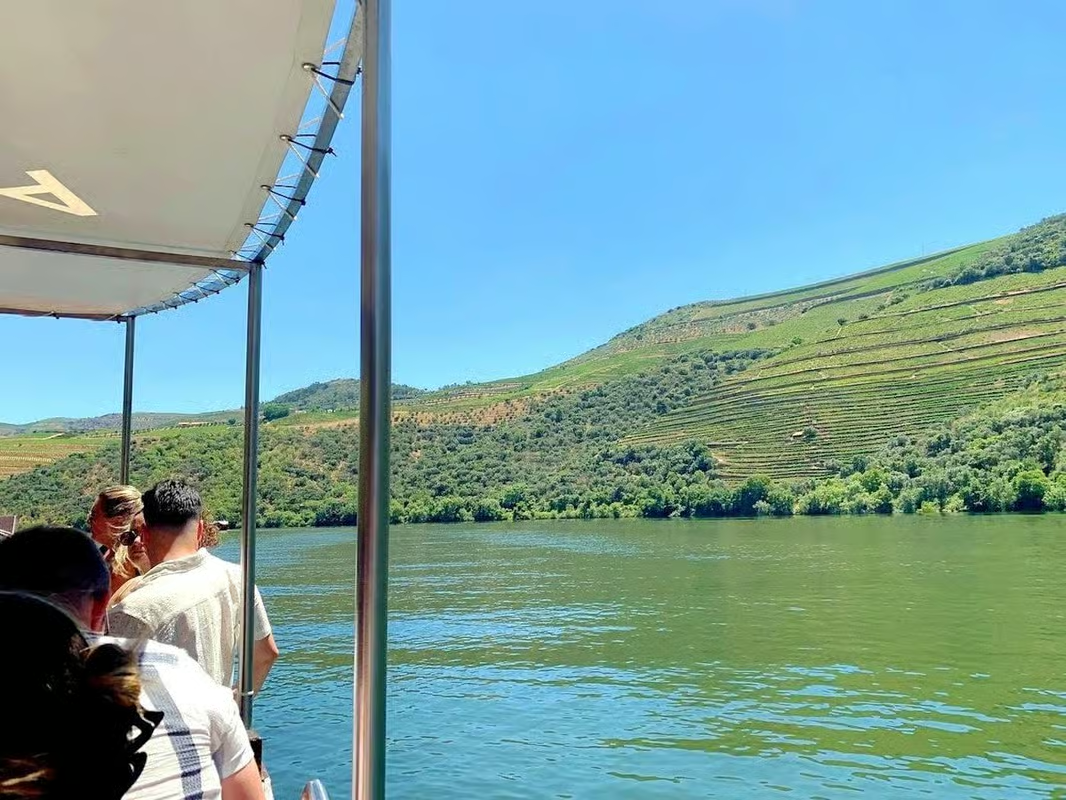
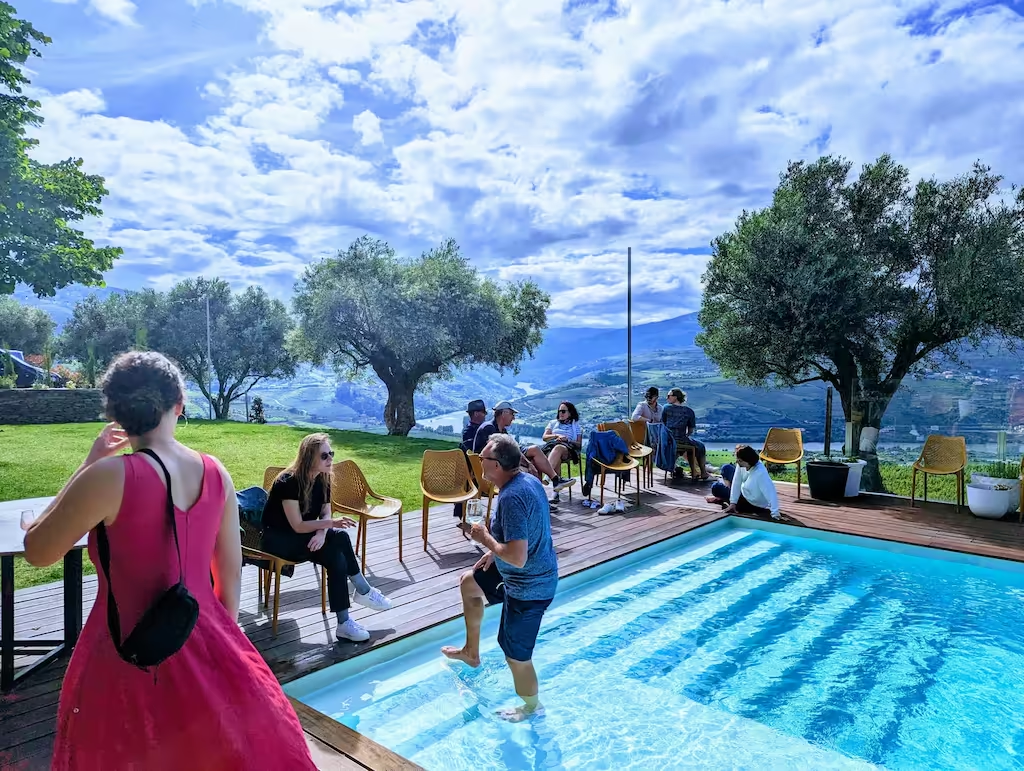
We invite you to transcend the theoretical and join us for a curated, high-end exploration of this legendary valley. Our tours are designed for those who seek to walk the very soils—the fractured schist, the rare clays, and the weathered stones—described in this guide. Experience private vertical tastings of aged Tawny Ports in the cool shadows of the cellars at Vila Nova de Gaia, and take a private river cruise through the heart of the Cima Corgo, where the scale of human achievement becomes truly apparent. Stay at world-class estates like Six Senses Douro Valley, where luxury meets the ruggedness of the land. This is an invitation to witness the harmony of man and nature in a setting of unparalleled luxury and historical depth. Discover why the Douro is not just a place where wine is made, but a place where the earth itself is transformed into art.