Table of Contents
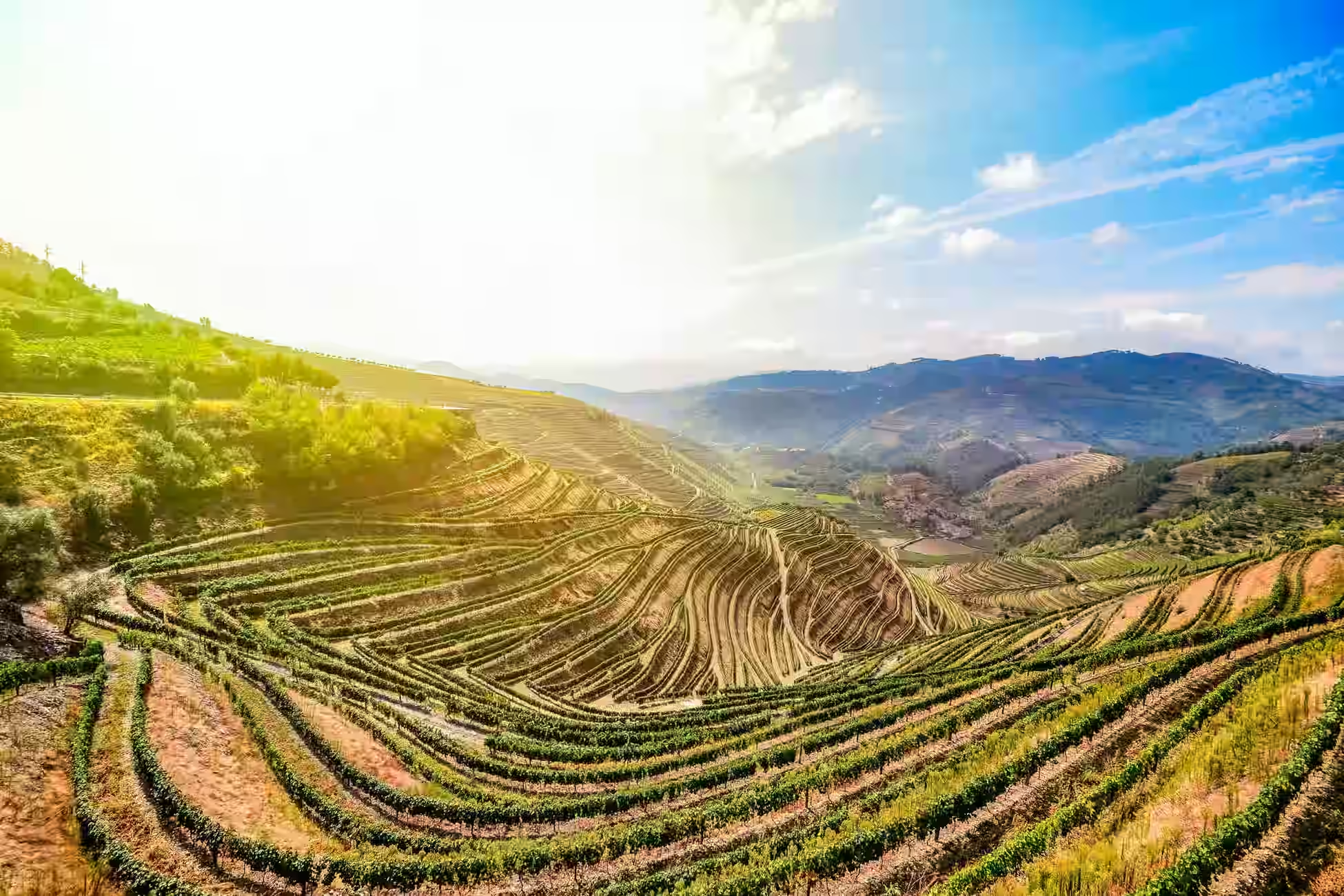
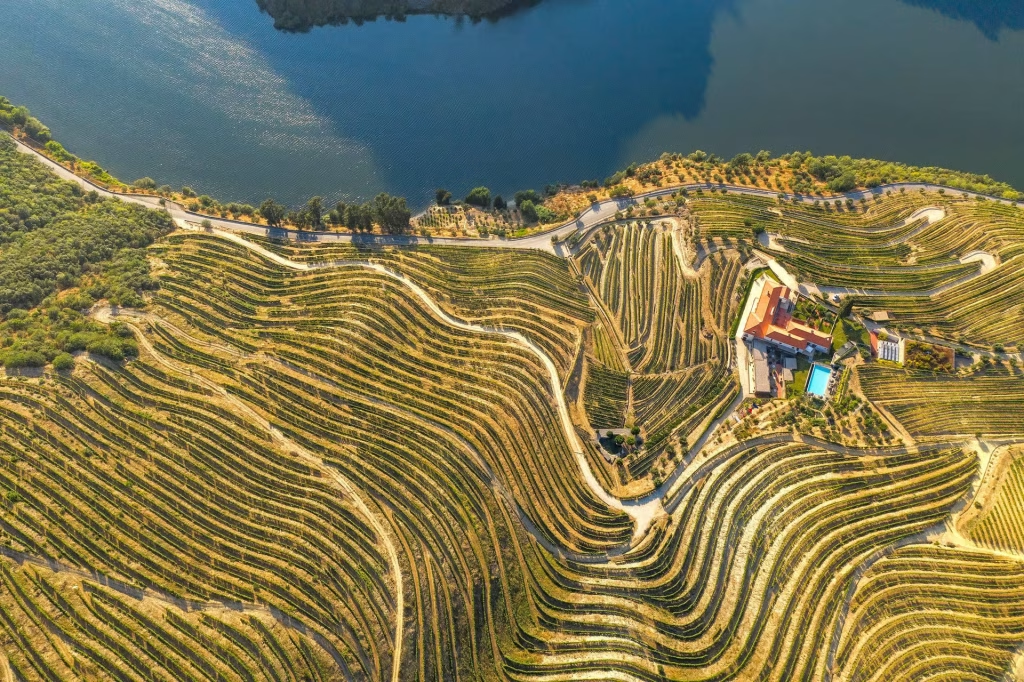
The Douro Valley is not merely a geographic location; it is a complex viticultural architecture governed by a sophisticated regulatory framework that ranks among the oldest in the world. To truly understand the Douro Valley Wine Regions, one must look beyond the physical beauty of the terraced slopes to the specific legal designations—the appellations—that define the liquid identity of this land.
As the first regulated wine region in the world (established in 1756), the Douro is organized into a hierarchical structure of three distinct sub-zones: the Atlantic-influenced Baixo Corgo, the prestigious Cima Corgo, and the rugged Douro Superior. Within these boundaries, three primary appellations coexist: Porto AOC, Douro AOC, and Duriense IGP. Each sub-region applies these protected designations differently, reflecting a unique dialogue between climate, tradition, and law. This guide provides a deep-dive analysis into these classifications, detailing how each sub-zone utilizes the appellations to create wines of immense character and legendary aging potential.

Baixo Corgo
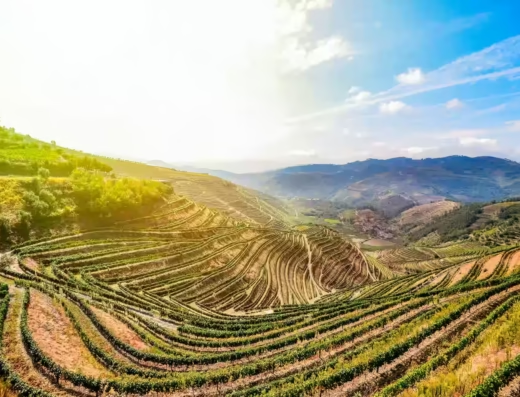
The Baixo Corgo serves as the “Western Gateway” to the valley, sitting closest to the Marão mountain range which shields the interior from the harshest Atlantic weather. Despite this protection, it remains the coolest and wettest of the three sub-regions, receiving nearly 900mm of annual rainfall. This climatic profile dictates a very specific viticultural output: higher yields, lower sugar concentration, and vibrant natural acidity.
Historically, this was the first area to be planted extensively, and today it remains a powerhouse for “fresh” wine styles. The soils are predominantly schist, but the higher moisture levels allow for a more vigorous canopy. This results in wines that are often described as more feminine or elegant compared to the “monsters” found further upriver. For the modern consumer, the Baixo Corgo is the source of Douro wines that prioritize drinkability and bright fruit over raw power and high alcohol.
Style and Aging Potential:
Wines from the Baixo Corgo are celebrated for their “Atlantic” freshness. The reds typically exhibit crunchy red fruit notes like raspberry and red cherry, supported by a fine-grained tannic structure. While they lack the massive longevity of the Cima Corgo, high-quality Douro DOC reds from this zone can age gracefully for 5–10 years, evolving into silky, floral expressions. The white wines are particularly notable for their longevity, often maintaining their zest and mineral core for 3–7 years.
.
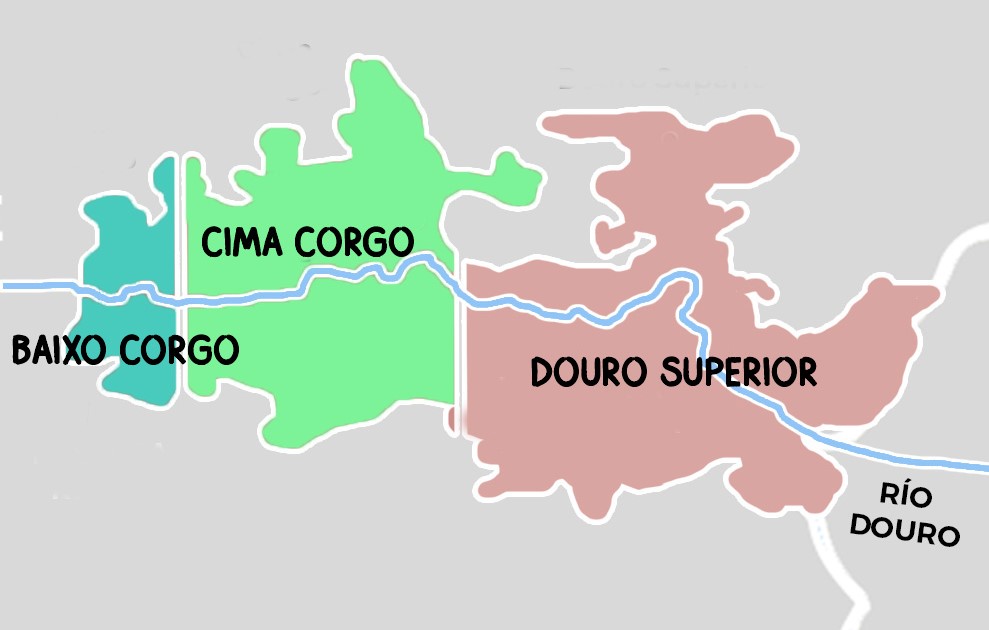
The Western Gateway Appellations:
Porto DOC:
Within the Baixo Corgo, the Porto DOC designation is primarily utilized for styles that emphasize fruit purity and immediate appeal. This is the heartland for Ruby and Tawny Port production intended for relatively young consumption. Because the grapes here have higher water content and slightly lower sugar than those in the east, the resulting fortified wines are less “jammy” and more “vibrant”.
These wines are perfect for entry-level Port categories that require a balance of sweetness and refreshing acidity. While they may not have the 50-year ceiling of a Cima Corgo Vintage Port, a well-made Late Bottled Vintage (LBV) or a Reserve Ruby from this region provides exceptional value and character.
Douro DOC
The Douro DOC in this western zone is increasingly synonymous with modern, elegant table wines. Producers here leverage the cooler temperatures to harvest grapes with lower potential alcohol, creating balanced wines that fit the contemporary palate. These still wines are often field blends of traditional varieties like Tinta Roriz and Touriga Franca, showcasing a “mountain-fresh” profile.
The focus is on preserving primary fruit aromas and avoiding over-extraction or heavy oak influence. These wines are designed to be the versatile workhorses of a cellar, providing sophisticated drinking experiences without the need for decades of cellaring.
Duriense IGP:
The Duriense IGP provides a vital “safety valve” for innovation in the Baixo Corgo. This classification allows winemakers to step outside the strict varietal and stylistic constraints of the DOC system. In this cooler zone, it is often used for experimental whites or rosé wines that might include non-traditional grapes or unconventional blending ratios. It represents the “modernist” face of the region, where the Atlantic influence is used to create crisp, high-acid wines that challenge the traditional perception of the Douro as a producer of only heavy, sun-drenched wines. It is an essential tool for young winemakers looking to redefine what Douro Valley wine regions can offer.
Cima Corgo
The Cima Corgo is the undisputed “Central Core” and the spiritual home of the valley’s most prestigious estates, or Quintas. Centered around the iconic town of Pinhão, this sub-region represents the golden mean of the Douro: it is hotter and drier than the Baixo Corgo, yet more tempered than the scorching Douro Superior.
The landscape here is characterized by precipitous slopes and narrow valleys where the schist bedrock is so dense it must be fractured to allow vine roots to penetrate. This struggle produces incredibly low yields of small, thick-skinned berries with an extraordinary concentration of phenolics, sugars, and tannins.
This is the region that built the global reputation of Port, and it continues to produce the lion’s share of the valley’s “icon” wines. The balance of ripening here is near-perfect, allowing for the development of complex aromatic precursors that result in wines of profound depth, structural density, and mineral intensity.
Style and Aging Potential:
The Cima Corgo produces the most age-worthy wines in Portugal. Vintage Ports from this zone are legendary, often requiring 20 years just to enter their prime and capable of evolving for 50–100 years in a cool cellar. They develop tertiary layers of dark chocolate, cigar box, and dried plum. The Douro DOC still wines are equally formidable; these are “monumental” reds with massive structure and “iron-fist-in-velvet-glove” tannins. A top-tier red from Cima Corgo will generally require a minimum of 5 years of bottle age to soften and will continue to improve for 20 years or more.
The Central Core Appellations:
Porto DOC (The Pinnacle of Fortification):
The Cima Corgo is the heart and soul of the Porto DOC, specifically for the “Special Categories” that define the region’s global prestige. This sub-region provides the raw material for nearly all the world’s greatest Vintage Ports, Single Quinta Vintages, and Aged Tawnies (10, 20, 30, and 40+ years).
The reason for this dominance lies in the unique mesoclimate around Pinhão and the Tua River; here, the summer heat is intense enough to drive potential alcohol levels to the 14-16% range required for perfect fortification, while the dramatic diurnal temperature shifts preserve a backbone of acidity that prevents the wines from becoming flabby.
Viticulturally, the Porto DOC in Cima Corgo relies on the “Top Five” noble grapes—Touriga Nacional, Touriga Franca, Tinta Roriz, Tinta Barroca, and Tinto Cão. Because the yields are naturally restricted by the vertical schist formations, the juice is incredibly dense with anthocyanins and tannins. This concentration is essential for the long-term oxidative and reductive aging processes. In the case of Vintage Port, the Cima Corgo fruit provides the “grip” and the intense floral-spicy aromatics (rockrose and violet) that allow the wine to survive in a bottle for half a century or more.
For Aged Tawnies, the fruit from this region maintains its structural integrity even after decades in seasoned oak pipes, evolving from primary berry flavors into a complex tapestry of butterscotch, roasted nuts, dried figs, and exotic spices. The aging potential here is effectively unparalleled in the wine world; a top-tier Porto DOC from the Cima Corgo is a multi-generational asset, often reaching its sensory peak between 20 and 50 years after the harvest, though the greatest examples can easily celebrate a centennial.
Douro DOC:
till wines under the Douro DOC from this region are the “Grand Cru” equivalents of the valley. Utilizing the best parcels of Touriga Nacional and Touriga Franca, these wines are deeply colored and aromatically complex. They are often fermented in traditional stone lagares to maximize skin contact before seeing significant time in French oak to polish their powerful tannins. These are serious, contemplative wines meant for fine dining and long-term cellaring, representing the pinnacle of Portuguese dry red wine. Their aging potential is vast, often peaking at 15–20 years.
Moscatel do Douro DOC:
Primarily concentrated in the high-altitude plateaus around Alijó and Favaios within the Cima Corgo, this DOC is a hidden gem. The altitude (up to 600m) allows the Moscatel Galego Branco grape to retain its intoxicating floral perfume and high natural acidity despite the inland heat. These fortified aromatics offer a contrasting style to red Port, featuring notes of orange blossom, honey, and apricot. While delicious young, the “Reserva” versions can age for decades, turning a deep amber color and gaining complex nutty, balsamic, and spicy dimensions.
Duriense IGP
Even in this prestigious core, the Duriense IGP plays an important role for “rebel” wines. It is frequently used for high-end “Super-Douro” blends that might include a small percentage of international varieties (like Syrah or Cabernet Sauvignon) to complement the native grapes. These wines maintain the power and schist-driven minerality of the Cima Corgo but offer a different stylistic profile that appeals to international collectors looking for something unique outside the strict DOC regulations.
Douro Superior
The Douro Superior is the “Eastern Frontier,” a vast and wild expanse that stretches from the Cima Corgo to the Spanish border. It is the largest of the sub-regions but the least densely planted, characterized by a semi-arid climate with blistering summer temperatures and freezing winters. Rainfall here can drop below 400mm, making viticulture a challenge that requires careful water management.
Historically, this region was under-utilized due to its isolation, but today it is the site of the Douro’s most modern and ambitious projects. The fruit here is incredibly ripe, resulting in wines with high alcohol, velvety tannins, and intense fruit concentration. The sheer scale of the landscape allows for larger, more mechanized vineyards, making this the frontier of both quality and innovation.
Style and Aging Potential: Wines from the Douro Superior are defined by their opulence. The reds are “sun-drenched,” featuring flavors of baked black fruits, licorice, and spice. Because the tannins are often riper and softer than those in the Cima Corgo, these wines are frequently more approachable in their youth. However, their high concentration and phenolic maturity give them a solid aging window of 10–15 years for premium still wines. The white wines, often grown at high altitudes to preserve acidity, offer a rich, waxy texture after 3–5 years in bottle.
The Eastern Frontier Appellations:
Porto DOC
In the Douro Superior, the Porto DOC produces fortified wines of immense darkness and sweetness. The heat results in very high sugar levels in the grapes, leading to Ports that are rich, “meaty,” and incredibly viscous. While they may lack the floral delicacy of the Cima Corgo, they provide a powerful, fruit-driven backbone often used to add “flesh” and color to major shipping house blends. In exceptional years, single-estates in the Superior produce Vintage Ports that are remarkably modern, hedonistic, and approachable early in their lives.
Douro DOC
This sub-region has become the primary laboratory for the evolution of Douro DOC still wines. The consistent ripening allows for the production of full-bodied, reliable reds that have found great success in international markets. It is also a critical area for “New Wave” Douro whites; by planting on high-altitude north-facing slopes (up to 700m), winemakers are producing surprisingly fresh and mineral white wines that provide a startling contrast to the heat of the valley floor, showing notes of citrus and wet stone.
Duriense IGP
The Duriense IGP is widely used in the Superior for large-scale, innovative brands. Because the region contains many newer plantings, the IGP status allows producers to market wines that focus on varietal expression (like 100% Touriga Nacional) or explore new techniques like “unfined/unfiltered” natural styles. It is the classification of choice for the frontier-style winemaking that defines this eastern edge of the valley, offering a high-quality alternative to the traditional DOC structure.
Douro wine appellations in a nutshell
Established as a demarcated region in 1756, the Douro is organized into a rigid hierarchical structure consisting of three distinct sub-zones: the Atlantic-influenced Baixo Corgo, the prestigious Cima Corgo,
1 Baixo Corgo
1.1 The Western Gateway Appellations
1.1.1 Porto AOC
1.1.2 Douro AOC
1.1.3 Duriense IGP
2 Cima Corgo
2.1 The Central Core Appellations
2.1.1 Porto AOC
2.1.2 Douro AOC
2.1.3 Moscatel do Douro AOC
2.1.4 Duriense IGP
3 Douro Superior
3.1 The Eastern Frontier Appellations
3.1.1 Porto AOC
3.1.2 Douro AOC
3.1.3 Duriense IGP