Table of Contents
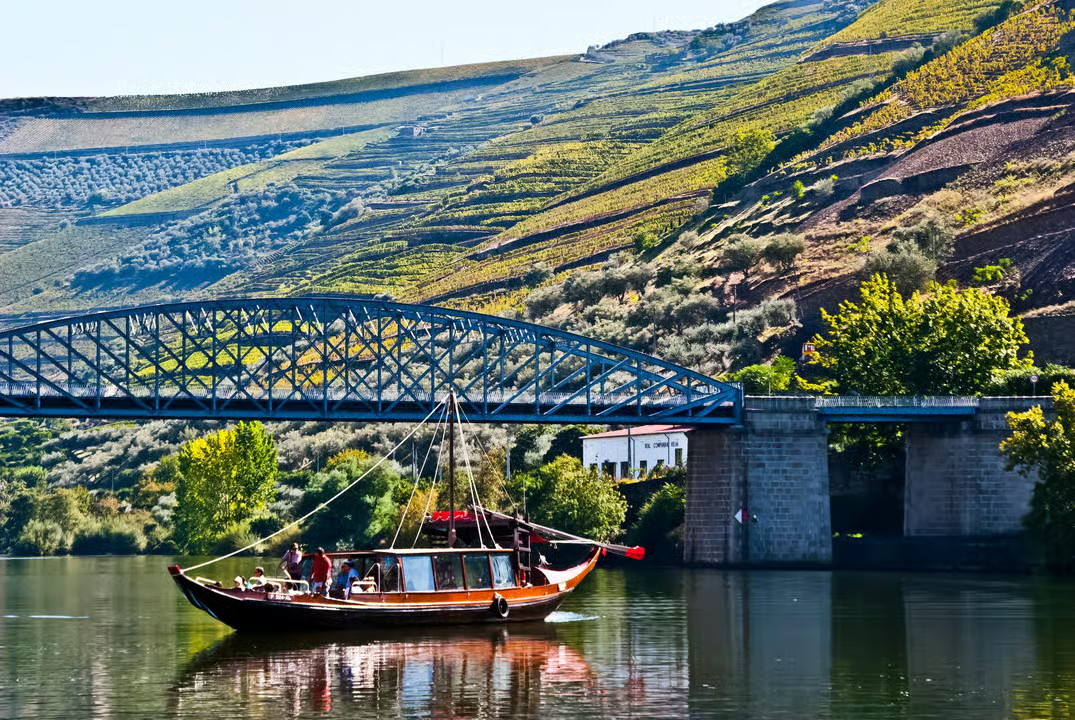
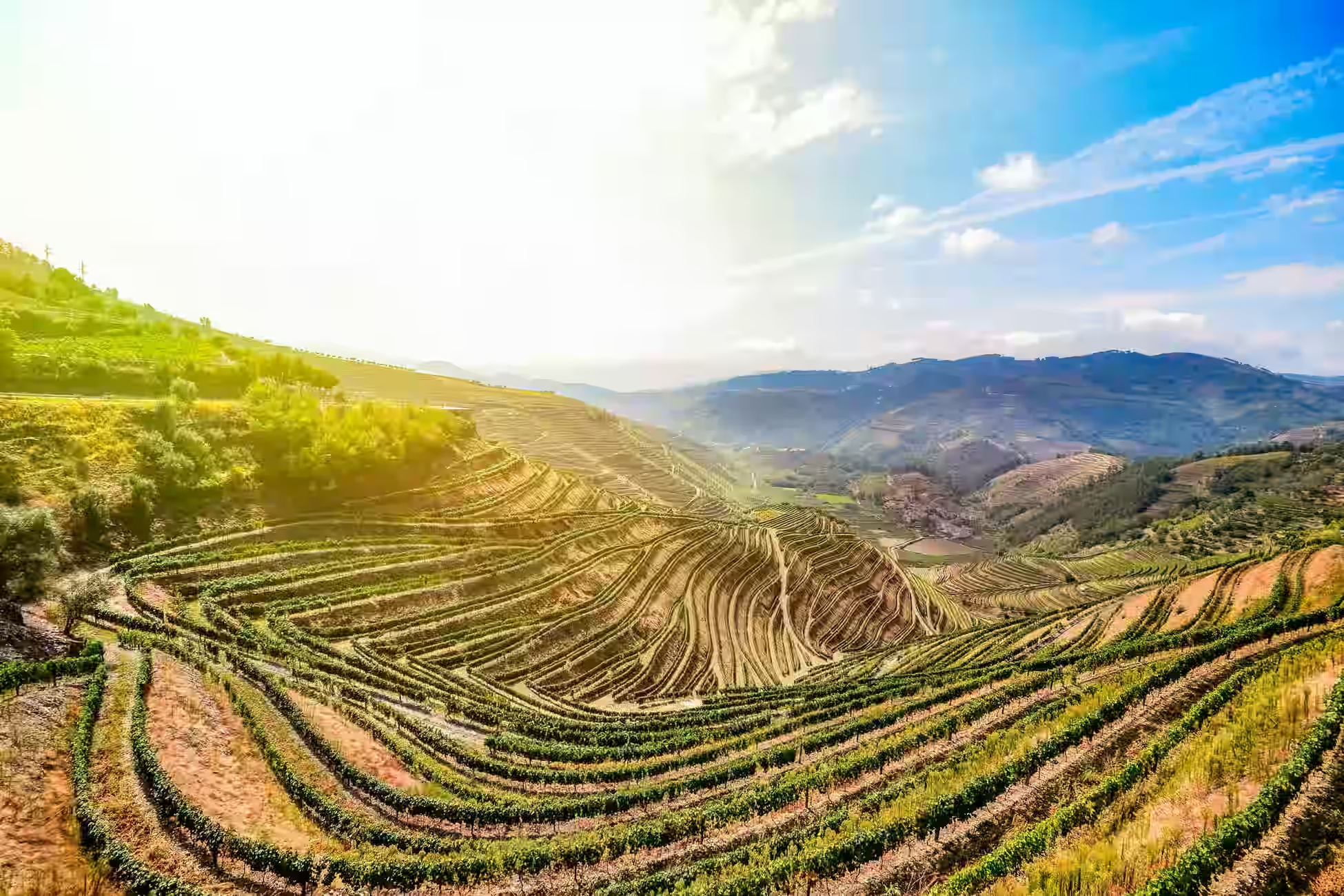
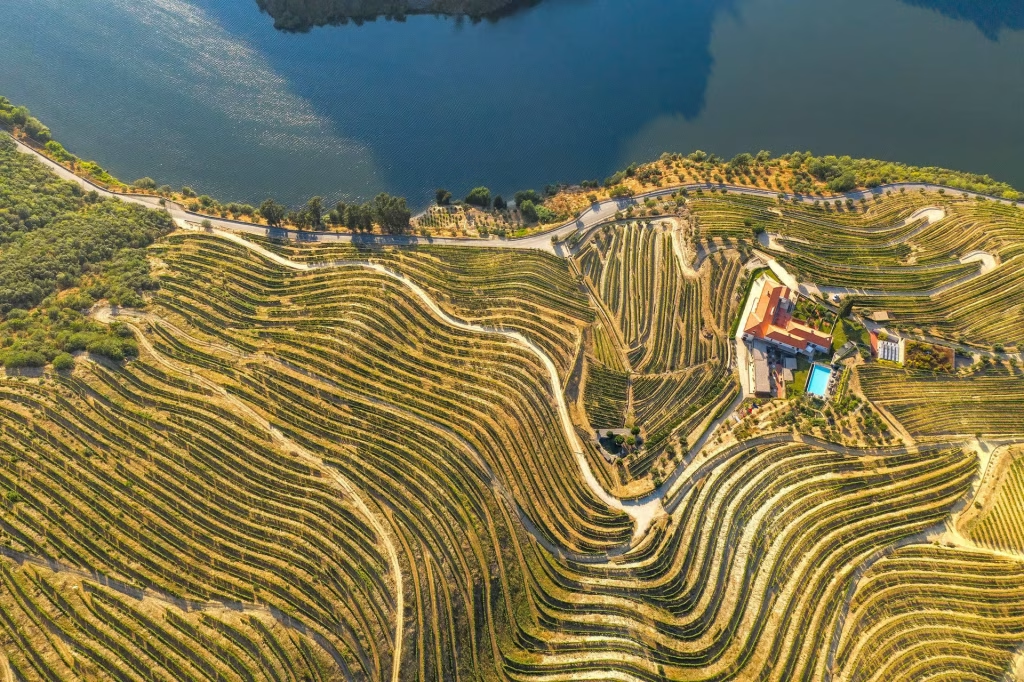
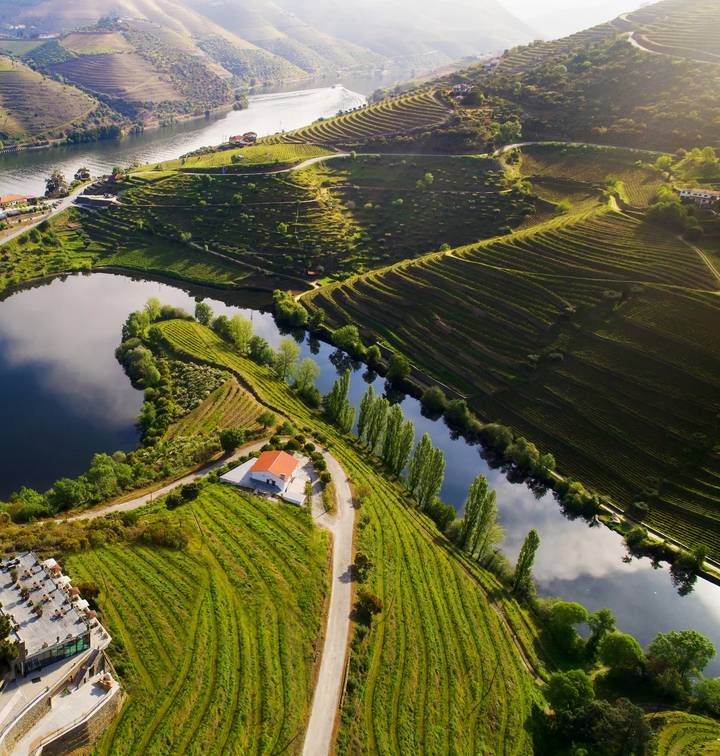
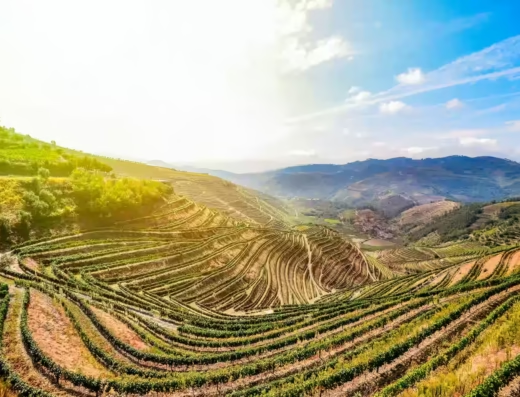
The Douro Valley: where the air carries the scent of sun-baked schist and the heady, raisin-sweet promise of maturing Vinho do Porto. This is a landscape carved by hand over millennia, a vertical wilderness transformed into a geometric masterpiece of viticulture. To walk these steep slopes is to navigate a labyrinth of human endurance, where the golden reflection of the river meets the silver-grey of the ancient stones. Here, the heat of the Iberian sun is captured by the xisto, radiating back into the vines long after dusk, creating a thermal pulse that has dictated the rhythm of life for twenty centuries. This is not merely a place where wine is made; it is a monument to the defiance of nature, a region where the soil is so poor that the vine must scream to survive, producing a liquid nectar that has captivated kings, explorers, and connoisseurs for generations.
Ancient Foundations: The Roman Legacy in Chalk (50 BC – 496 AD)
The definitive history of Douro Valley begins with a geological miracle. During the Cretaceous period, a receding sea left behind massive deposits of sub-surface chalk, a porous limestone that defines the local Terroir. When the Roman Empire expanded into northern Gaul, they recognized the immense viticultural potential of the steep, sun-drenched slopes of the region. However, their most enduring contribution was not above ground, but subterranean. To build the grand city of Durocortorum (modern-day Reims), Roman engineers excavated massive, bell-shaped pits into the white earth.
These excavations, known as Crayères, inadvertently created the world’s most sophisticated natural wine cellars. Extending nearly 100 feet underground, they maintain a constant, year-round temperature of 10°C to 12°C with perfect humidity—ideal conditions for the slow maturation of wine. During this era, the wines were not sparkling; they were pale, high-acid, still reds often compared to the lighter styles of Burgundy. The Romans established the first formal vineyard boundaries, utilizing the steep, south-facing slopes to capture the fleeting northern sun, laying the technical foundation for a viticultural industry that would survive the fall of the Empire and the subsequent centuries of tribal migration.
The Roman Legacy: Scrapers of the Xisto (3rd Century BC – 5th Century AD)
Long before the world knew the name “Port,” the Romans recognized the potential of the Duris River. They were the first to tackle the region’s unforgiving topography, using iron and sweat to carve the initial terraces into the brittle schist (xisto) rock. Archaeological remains of lagares (stone treading tanks) found throughout the Cima Corgo suggest that even in antiquity, the Douro was a hub of industrial-scale fermentation. These early settlers understood that the river served as a vital artery for transport, allowing them to move their harvest from the rugged interior to the coastal outposts of the empire.
The Roman influence established the foundational “Lore” of the region: that great wine is born from struggle. Their presence ensured that viticulture became the primary economic engine of the valley, a tradition that survived the subsequent Visigothic and Moorish periods through small-scale preservation within rural communities. They introduced the concept of organized vine rows and basic pruning, techniques that, while primitive by today’s standards, laid the groundwork for the sophisticated viticulture that defines the Douro today.
The legacy of this era remains visible in the very soil. The Romans understood that the fractured schist allowed vine roots to plummet dozens of meters in search of water—a geological necessity in the scorching Iberian summers. This ancient mastery of the terrain set the stage for the Douro to become the world’s most dramatic and resilient vineyard landscape. Even today, modern viticulturists look to these ancient sites as proof of the land’s eternal suitability for high-quality grape production.
Cistercian Monks and the Rise of the Granjas (12th – 15th Century)
In the Douro, we don’t just farm land; we carve history into schist. Two thousand years of grit and gravity distilled into a single glass. It’s not just wine—it’s the liquid soul of the canyon.
With the foundation of the Portuguese Kingdom came the spiritual and technical guidance of the Cistercian monks. Based in powerful monasteries like Salzedas and São João de Tarouca, these “white monks” were the region’s first true enologists. They meticulously mapped the microclimates of the valley, selecting the best indigenous varieties that would eventually become the ancestors of today’s Touriga Nacional and Tinta Roriz. Their approach was one of quiet observation and holy dedication, believing that the labor of the vineyard was a form of prayer.
During this era, the wine was primarily consumo—rough, dry reds meant for local sustenance and monastic rituals. However, the maritime expansion of the 15th century began to open doors. As Portuguese explorers charted the globe, the sturdy wines of the Douro began their first tentative journeys down the river to the bustling port of Porto, awaiting a global stage. The monks recognized that the altitude and orientation of the slopes played a crucial role in the ripeness of the fruit, leading to the first primitive attempts at vineyard classification.
The monks didn’t just plant vines; they engineered the social and economic fabric of the valley. By establishing granjas (monastic farms), they created a structured system of land management that allowed the region to thrive despite political shifts. Their records provided the first “data” on which slopes produced the most resilient must, a precursor to modern site selection. This monastic influence ensured that wine production remained a disciplined craft, passed down through generations of laborers who worked under the shadow of the abbey walls.
The Methuen Treaty and the British Feitoria (1703 – 1755)
The destiny of the Douro changed forever with the signing of the Methuen Treaty in 1703. This political alliance between Portugal and England granted preferential tariffs to Portuguese wines in exchange for English textiles. Suddenly, the British demand for “Black Ram”—the deep, dark reds of the Douro—skyrocketed as conflict with France cut off traditional Bordeaux supplies. The merchants in the city of Oporto became the gatekeepers of a booming trade, funneling the valley’s output to the thirsty docks of London and Bristol.
To survive the long, turbulent sea voyage to London, shippers began “fortifying” the wine with a splash of grape spirit (aguardente). This technical evolution transformed the wine from a volatile dry red into the stable, sweet, and potent Port wine we recognize today. This era saw the rise of the great British Feitoria (Factory) in Porto, cementing the Anglo-Portuguese wine trade as a cornerstone of European commerce. This hybridization of culture—Portuguese grapes met with British merchant spirit—created a unique economic ecosystem that defined the region for centuries.
The British influence also introduced a new class of professional trade culture to the Douro. Families whose names still grace bottles today established their quintas, blending British mercantile capital with Portuguese viticultural grit to create a global brand. They brought with them modern bookkeeping, international marketing savvy, and a relentless drive for consistency. This period saw the Douro transition from a regional secret to a global commodity, with the “English houses” becoming synonymous with the prestige of Port wine
Pombal’s Revolution: The First Demarcação (1756 – 1850)
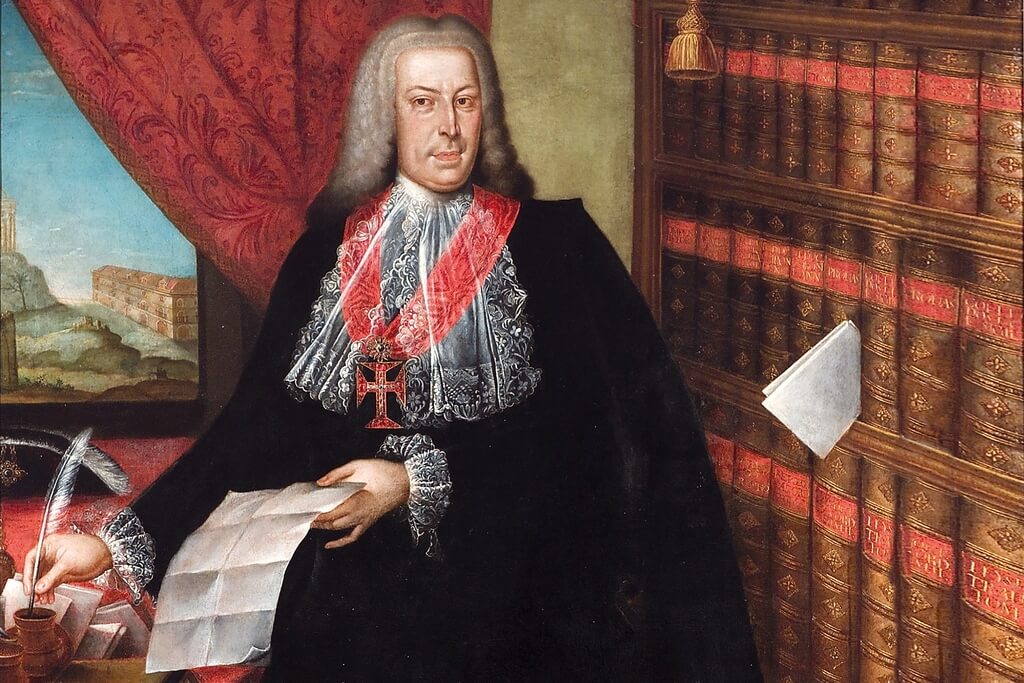
Marques de Pombal
By the mid-18th century, success had bred corruption; many shippers were “stretching” Douro wine with elderberry juice and cheap grapes from other regions. In 1756, the Marquês de Pombal stepped in with ruthless efficiency, creating the Companhia Geral das Vinhas do Alto Douro. His goal was to protect the integrity of the product and the economic interests of the crown. He famously declared that only wines from a specific, surveyed area could be sold as “Port,” effectively ending the era of rampant fraud.
Pombal‘s intervention was not merely legal; it was physical. He oversaw the installation of 335 granite stones to mark the boundaries of the zone. This era of regulation ensured that the unique terroir of the Douro would be protected from fraud, preserving its reputation as a source of “luxury” wine for the European elite for centuries to come. The Companhia also regulated prices and quality, creating a stable—if sometimes restrictive—environment that allowed the region’s top producers to focus on excellence rather than mere survival.
The Great Reconstruction: Filoxera and the Modern Terrace (1860 – 1970)
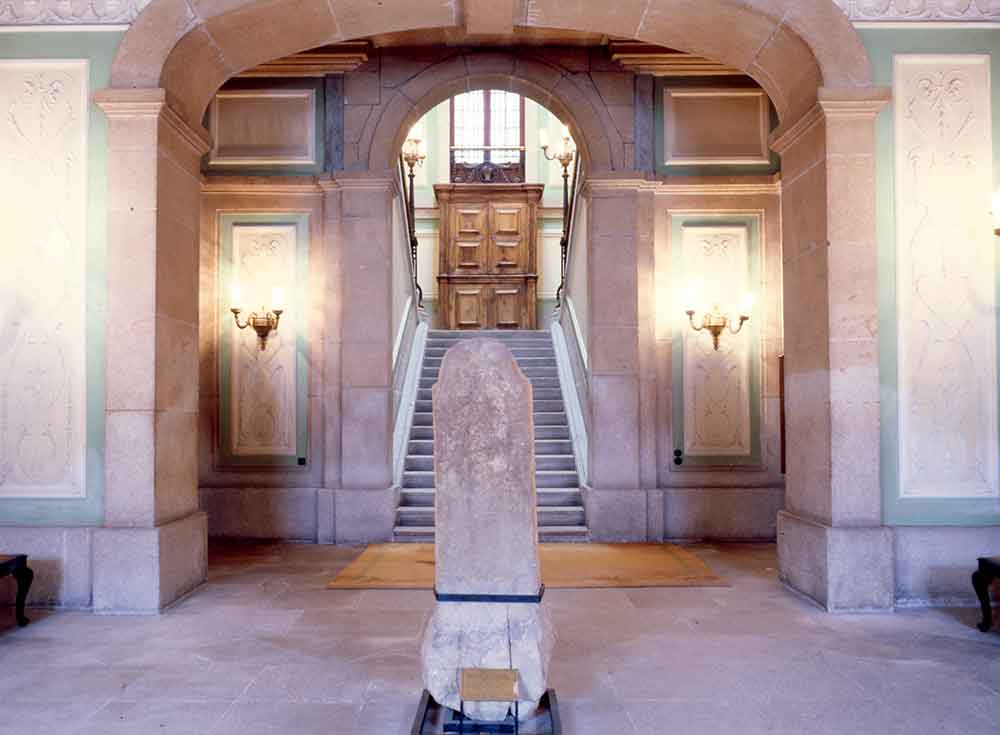
Instituto dos Vinhos do Douro e do Porto (IVDP)
In the late 19th century, the “Great Blight” of Phylloxera (Filoxera) devastated the valley, nearly wiping out the ancient vines. The recovery required a total rethinking of the landscape. Vineyards were replanted on American rootstocks, and the traditional, narrow socalcos (walled terraces) began to give way to patamares—wider, modern terraces that allowed for mechanical access. This was a period of immense physical change, as the very face of the mountains was reshaped to accommodate the new reality of industrial viticulture.
This period of “Technical Evolution” saw the introduction of electricity and improved river transport, making it easier to move the pipas (barrels) from the remote quintas to the lodges in Vila Nova de Gaia. However, the human cost remained high, as generations of families continued to harvest by hand on slopes too steep for any machine. The introduction of the vinha ao alto (vertical planting) in some areas further modernized the landscape, though the traditional terraces remained the iconic image of the valley.
The Modern Renaissance: Vinho do Douro and Sustainability (1979 – Present)
The most recent era of the Douro is defined by the rediscovery of dry table wines (Vinho do Douro). Since the 1979/1982 regulations officially recognized Douro DOC for non-fortified wines, the region has proven it can produce world-class still reds and whites that rival the finest in Europe. This “Second Revolution” was led by a group of young, visionary winemakers who realized that the same grapes used for Port could make profound, age-worthy table wines.
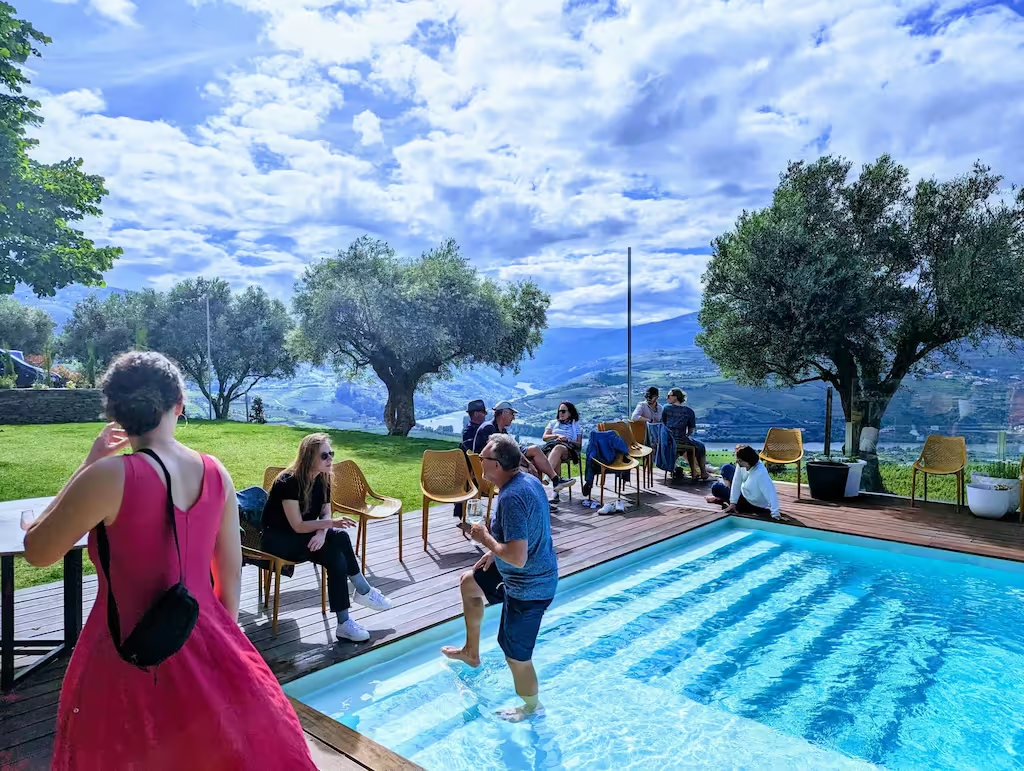
Today, the focus has shifted toward Sustainability and Biodynamics to combat the rising temperatures of the valley. Producers are pioneering heat-resistant viticulture, utilizing ancient varieties that were almost lost to time, and building solar-powered cellars. In 2001, the Alto Douro Wine Region was declared a UNESCO World Heritage site, recognizing that this landscape is a living monument to human endurance. This designation has brought a new wave of high-end wine tourism, with historical quintas being transformed into luxury retreats
Future Challenges and Prospective
As we look toward the mid-21st century, the Douro faces the dual challenge of climate change and labor shortages. The extreme heat of the Douro Superior is forcing producers to explore higher altitudes and forgotten indigenous varieties that thrive in drought. However, with its unmatched heritage and legal protection, the region’s future remains as resilient as the vines rooted in its ancient schist. The next chapter of Douro history will likely be written by those who can balance the weight of this massive tradition with the technological agility required for a warming world