Table of Contents
California is a global titan of viticulture, defined by a dramatic geological history and a climatic diversity that rivals the most storied regions of Europe. This vast landscape is a complex mosaic of ancient seabeds, volcanic ridges, and alluvial fans, all shaped over millions of years by the relentless movement of tectonic plates. To explore California is to witness the “soul” of a territory where the concept of terroir is a living cultural heritage.
From the fog-shrouded valleys of the north to the sun-drenched coastal hills of the south, the region stands as a premier benchmark for quality and innovation. Here, the land does not just grow grapes; it dictates the character, structure, and prestige of some of the world’s most sought-after wines. Understanding California requires looking beneath the surface to the diverse soils and microclimates that make this region a unique and evocative destination for any enthusiast of the vine.
Uncork the Magic of California

Soils of California The Complex Chemistry of Soil and Bedrock
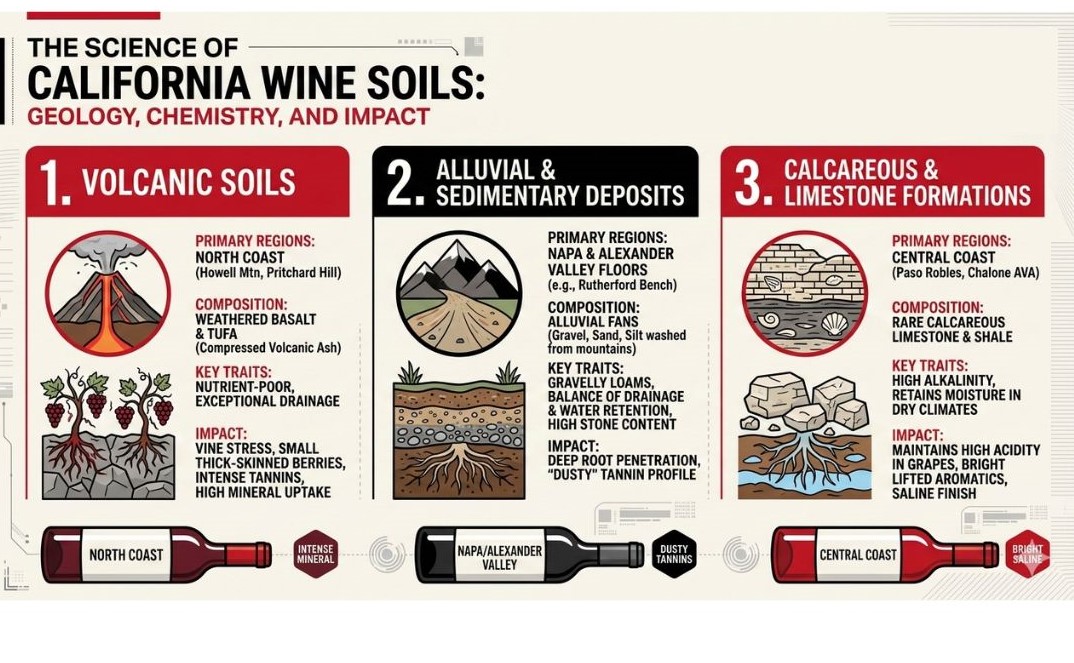
California’s soil diversity is a direct result of its position on the Ring of Fire and the historic movement of the Pacific and North American plates. The bedrock across the state is a mixture of volcanic, metamorphic, and sedimentary rock.
Volcanic Origins
In the North Coast, particularly in the Howell Mountain and Pritchard Hill areas, volcanic soils dominate. These consist of weathered basalt and “tufa”—a compressed volcanic ash. These soils are typically nutrient-poor and offer exceptional drainage. This stresses the vines, forcing them to produce smaller, thicker-skinned berries with intense tannin structures and high mineral uptake.
Alluvial and Sedimentary Deposits
The valley floors of the Napa Valley and Alexander Valley are defined by alluvial fans—deposits of gravel, sand, and silt washed down from the mountains. These gravelly loams, such as the famous Rutherford Bench, provide the perfect balance of drainage and water retention. The high stone content allows for deep root penetration, which is frequently linked to the “dusty” tannin profile celebrated in Rutherford.
Calcareous and Limestone Formations
Unique to certain pockets of the Central Coast, such as Paso Robles and the Chalone AVA, are rare outcroppings of calcareous limestone and shale. These alkaline soils are prized for their ability to retain moisture in dry climates while maintaining high acidity in the grapes. The chemistry of these soils is often credited with providing the bright, lifted aromatics and saline finish found in the region’s blends.
Macro-Climate and Viticultural Foundations In California
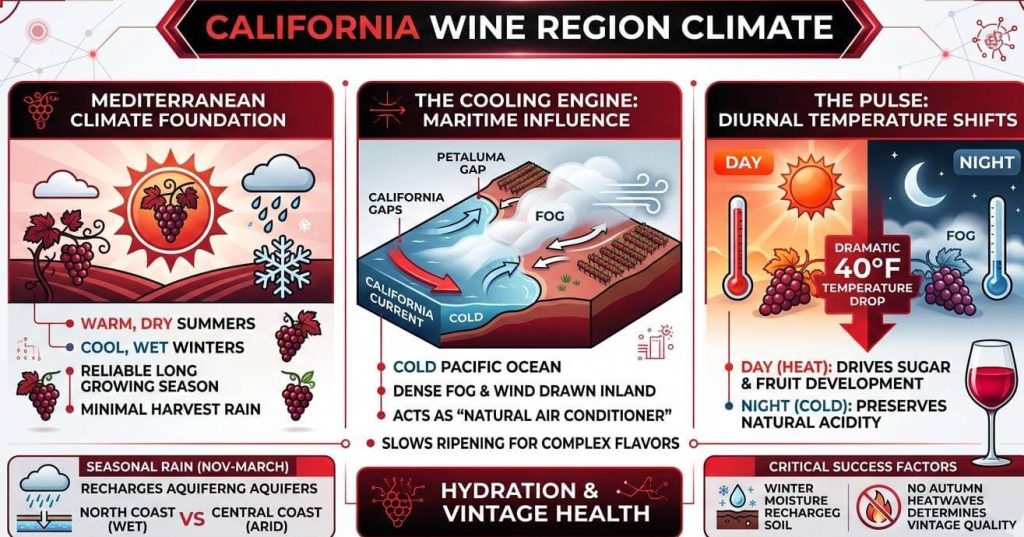
The overarching climate of California is predominantly Mediterranean, characterized by warm, dry summers and cool, wet winters, yet this generalization belies a staggering complexity driven by maritime and topographical influences.
Maritime Influence and Wind
The Pacific Ocean is the primary cooling engine for the entire region. The California Current brings frigid Arctic waters south along the coast, creating a massive temperature gradient between the cold ocean and the heated inland valleys. This pressure differential draws marine air and dense fog inland through gaps in the coastal ranges—most notably the Petaluma Gap, the Templeton Gap, and the Santa Maria Valley. These winds act as a natural air conditioner, extending the growing season and allowing for the slow, steady development of phenolic ripeness.
Diurnal Temperature Shifts
One of the most critical factors in California viticulture is the dramatic diurnal temperature shift. In regions like the Stags Leap District or the high-altitude vineyards of the Santa Cruz Mountains, daytime temperatures can soar, driving sugar accumulation and fruit development. However, as the sun sets, the influx of marine air causes temperatures to plummet, sometimes by as much as 40 degrees Fahrenheit. This nocturnal cooling is essential for preserving the grape’s natural acidity, ensuring that the final wine maintains a structural elegance and vibrancy.
Water and Rainfall Patterns
Rainfall in California is highly seasonal and exhibits significant vintage variability. The majority of precipitation occurs between November and March, with the North Coast receiving significantly more rainfall compared to the more arid Central Coast. This winter moisture recharges the aquifers and deep soil profiles. However, the late-season drought stress common in many vintages requires meticulous vineyard management to ensure the vines do not shut down. Vintage reputation is often defined by the timing of spring rains and the absence of autumn heatwaves.
California Climate, Soil, and Geology by Sub-Region
The North Coast
The North Coast serves as the prestigious epicenter of California viticulture, encompassing a series of coastal counties where the proximity to the Pacific Ocean creates a temperate haven for high-quality grape growing. This region is geographically defined by its rugged coastal ranges and interior valleys that act as conduits for cooling marine air, allowing for a diverse range of varieties to reach optimal phenolic maturity. It is here that the intersection of tectonic activity and ancient volcanic legacy has produced some of the most complex soil profiles on the planet.
Napa Valley
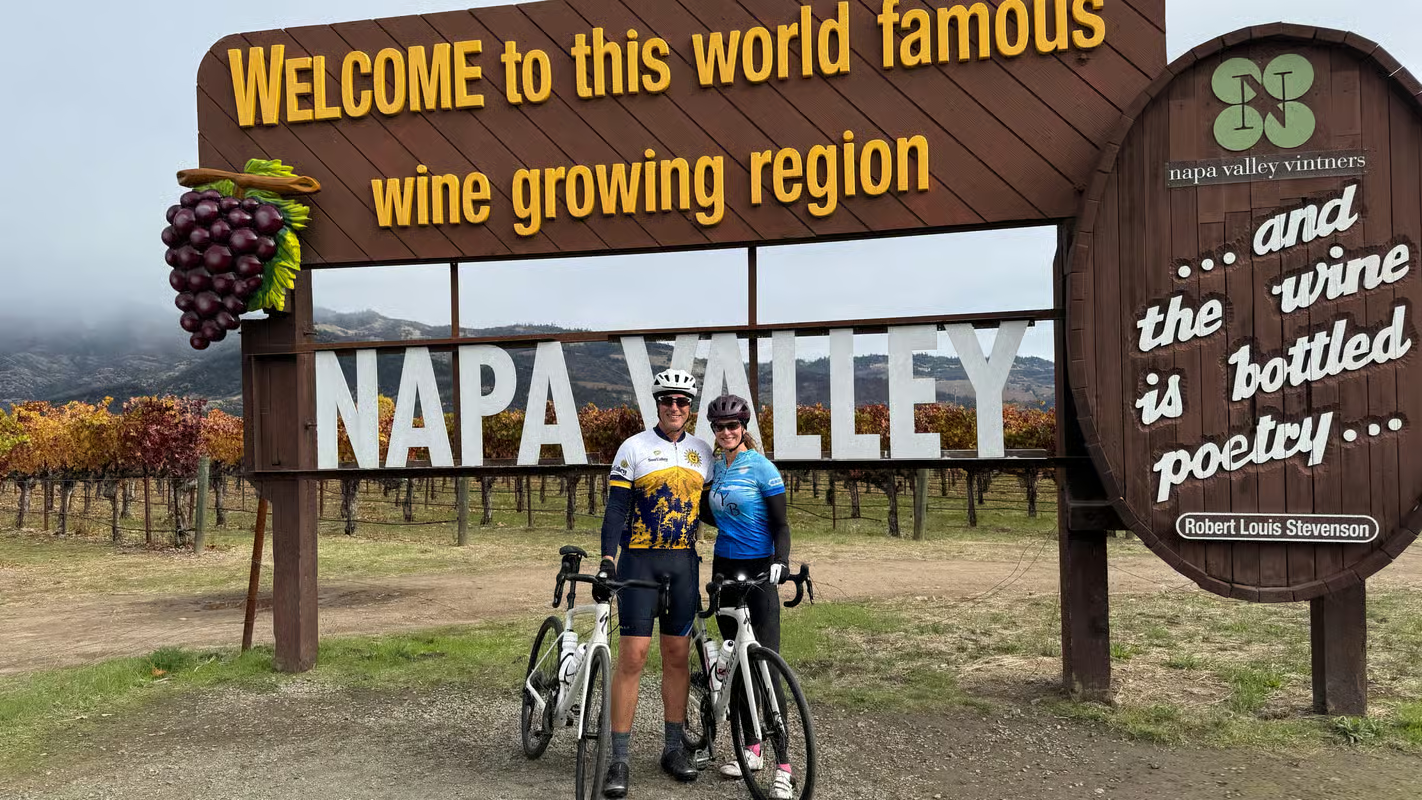
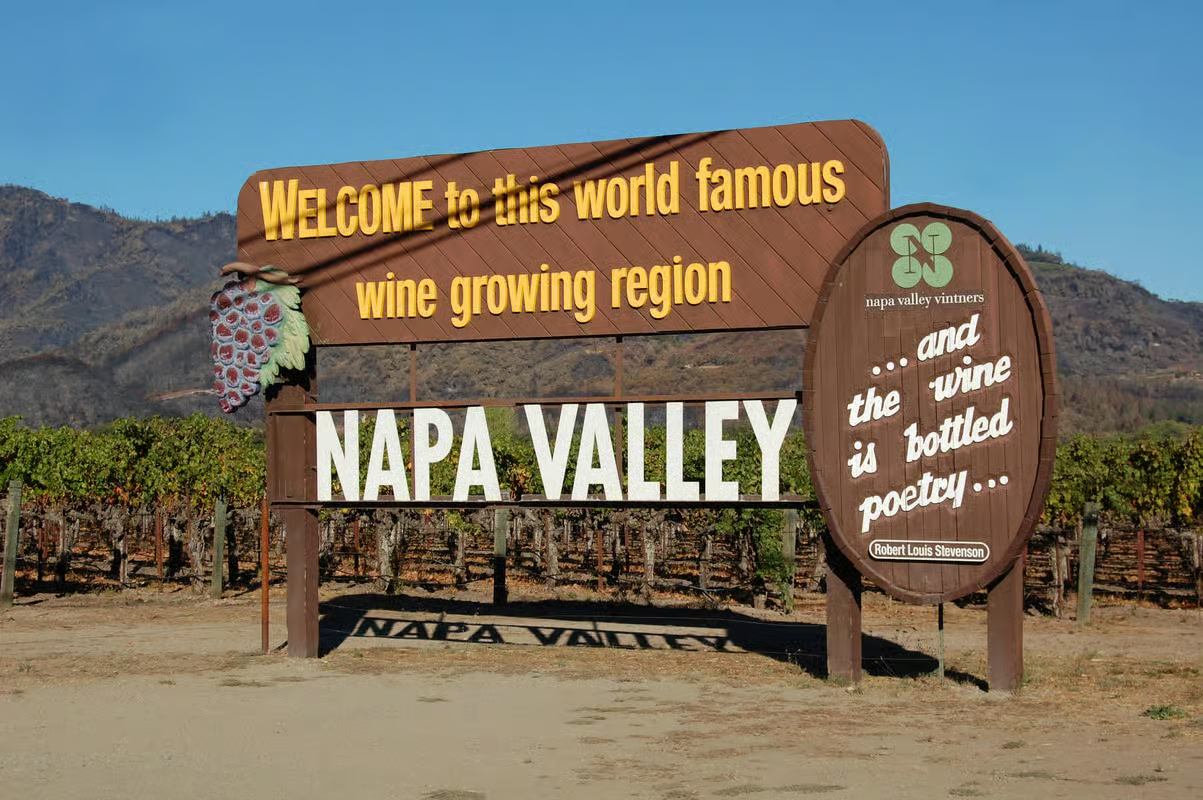
The Napa Valley is a geological masterpiece, a narrow corridor squeezed between the Mayacamas Mountains and the Vaca Range, offering a condensed encyclopedia of over 100 distinct soil variations. From its gravelly southern reaches near the bay to the rugged volcanic peaks of the north, the valley provides a unique climatic gradient where heat and cooling influences are expertly balanced.
-
Oakville: Occupying the heart of the valley floor, Oakville is defined by its well-drained alluvial fans and the iconic To Kalon Vineyard, where deep, gravelly soils facilitate the production of opulent Cabernet Sauvignon.
-
Mount Veeder: Situated on the steep slopes of the Mayacamas, Mount Veeder features ancient seabed sediments and uplifted sandstone, producing low yields of intensely concentrated fruit.
-
Coombsville: This cool-climate pocket in the southeast corner of the valley is characterized by its volcanic ash and cobbly loams, yielding wines with vibrant acidity and refined tannins.
-
Stags Leap District: Famous for its dramatic rock “palisades,” this sub-region features a mixture of coarse volcanic wash and clay loams that impart a distinctive “velvety” texture to its wines.
Sonoma County
Sonoma County represents the wilder, more maritime-influenced sibling to Napa, offering an expansive range of microclimates that stretch from the chilly, wind-swept coast to protected, warm inland valleys. Its geology is equally diverse, shaped by the San Andreas Fault and the Russian River, resulting in a patchwork of Goldridge loams, volcanic ash, and rocky hillside outcrops.
-
Russian River Valley: This cool, fog-laden AVA is the spiritual home of “Goldridge” soil—a fine, sandy loam that provides the perfect drainage for elegant, silky Pinot Noir.
-
Knights Valley: Nestled at the foot of Mount St. Helena, this protected valley features rocky volcanic soils that retain heat, ideal for producing powerful and mineral-driven Cabernet Sauvignon.
-
Chalk Hill: Named for its white volcanic ash (tufa) that mimics the appearance of chalk, this sub-region offers excellent drainage for structured Chardonnay and Sauvignon Blanc.
-
Sonoma Mountain: High above the valley floor, this AVA is characterized by thin, rocky soils and intense sun exposure, producing high-tannin wines of great intensity.
The Central Coast
The Central Coast is a vast frontier of viticultural innovation, stretching over 250 miles and defined by its unique transverse mountain ranges that run east-to-west rather than north-to-south. This orientation creates a direct pathway for the Pacific’s “refrigeration effect,” pulling cold air deep into the interior and creating one of the longest growing seasons in the world. Geologically, it is a region of ancient uplift, where calcareous limestone and marine sediments provide a rare alkaline foundation that preserves acidity.
Santa Cruz Mountains
The Santa Cruz Mountains is a high-altitude, rugged appellation where vineyards are carved into steep, forested ridges, creating a truly alpine expression of coastal viticulture. The region’s unique position between the ocean and the bay results in a high-tension environment where climate and geology demand extreme vine resilience.
-
Monte Bello: This legendary sub-region sits on a rare outcropping of decomposing limestone and greenstone, home to the iconic Ridge Vineyards and wines of immense structural longevity.
Paso Robles
Paso Robles is a land of extremes, boasting some of the highest diurnal temperature shifts in California and a topographic diversity that ranges from rolling oak-covered hills to dramatic limestone peaks. The region is split by the Templeton Gap, which funnels cooling ocean air through the mountains, tempering the intense daytime heat.
-
Willow Creek District: Famous for its high-elevation calcareous slopes, this sub-appellation is a beacon for Rhône-style blends that exhibit a signature “crushed stone” minerality.
-
Adelaida District: Characterized by massive limestone deposits and high elevations, this sub-region produces some of the most structured and aromatic Cabernet Sauvignon in the state.
Santa Barbara County
The Sierra Foothills is a region of rugged beauty and historic heritage, where vineyards are perched on the western slopes of the Sierra Nevada Mountains at elevations that often exceed 2,000 feet. This is the ancestral home of California’s “Gold Rush” vines, where ancient granitic soils and volcanic debris provide a harsh, nutrient-poor environment that naturally limits vine vigor.
-
Amador County: Dominated by decomposed granite, this sub-region is home to some of the oldest Zinfandel plantings in the world, thriving in well-drained soils that yield spicy, robust wines.
The Human Touch: The Art of Viticultural Mastery
In the high-stakes world of California viticulture, the oenologist and vineyard manager must act as master translators of the landscape. Human intervention here is not about overriding nature, but about applying a sophisticated technical framework to amplify the geological and climatic signatures of the earth. The dialogue between man and soil is constant, requiring analytical precision to ensure that the vine’s struggle in rocky terrain or its vigor in alluvial loams is balanced to perfection.
Architecture of the Vineyard: Pruning and Canopy Management
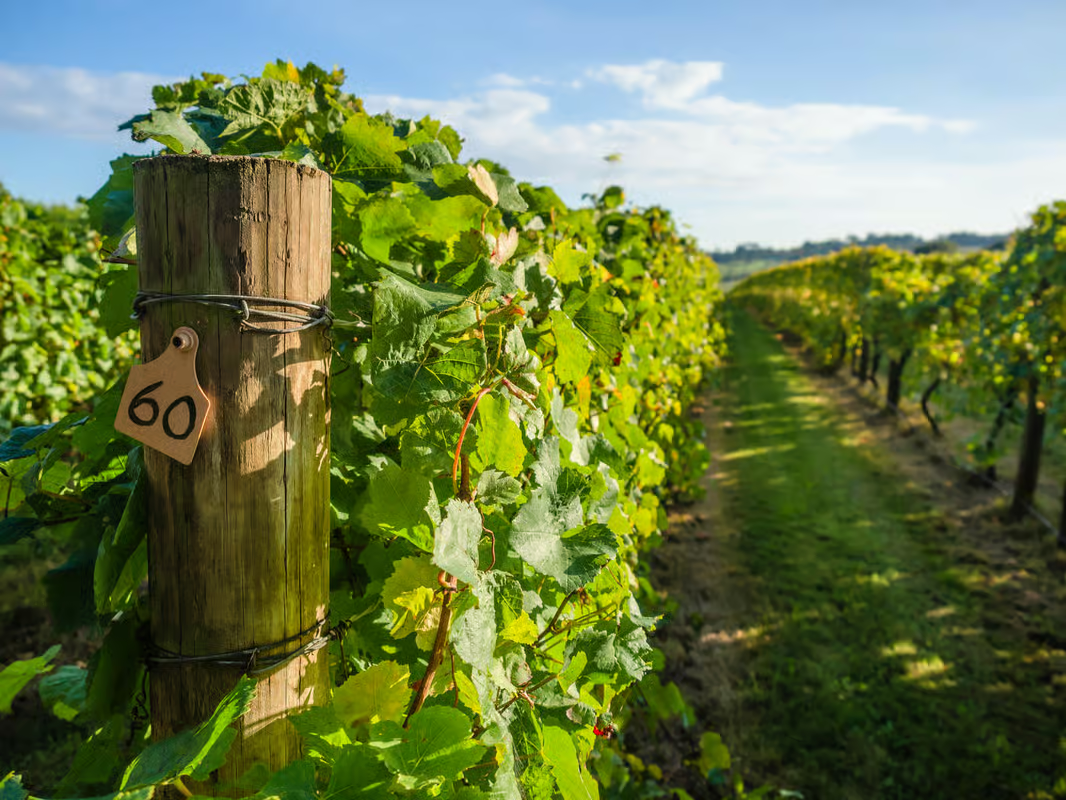
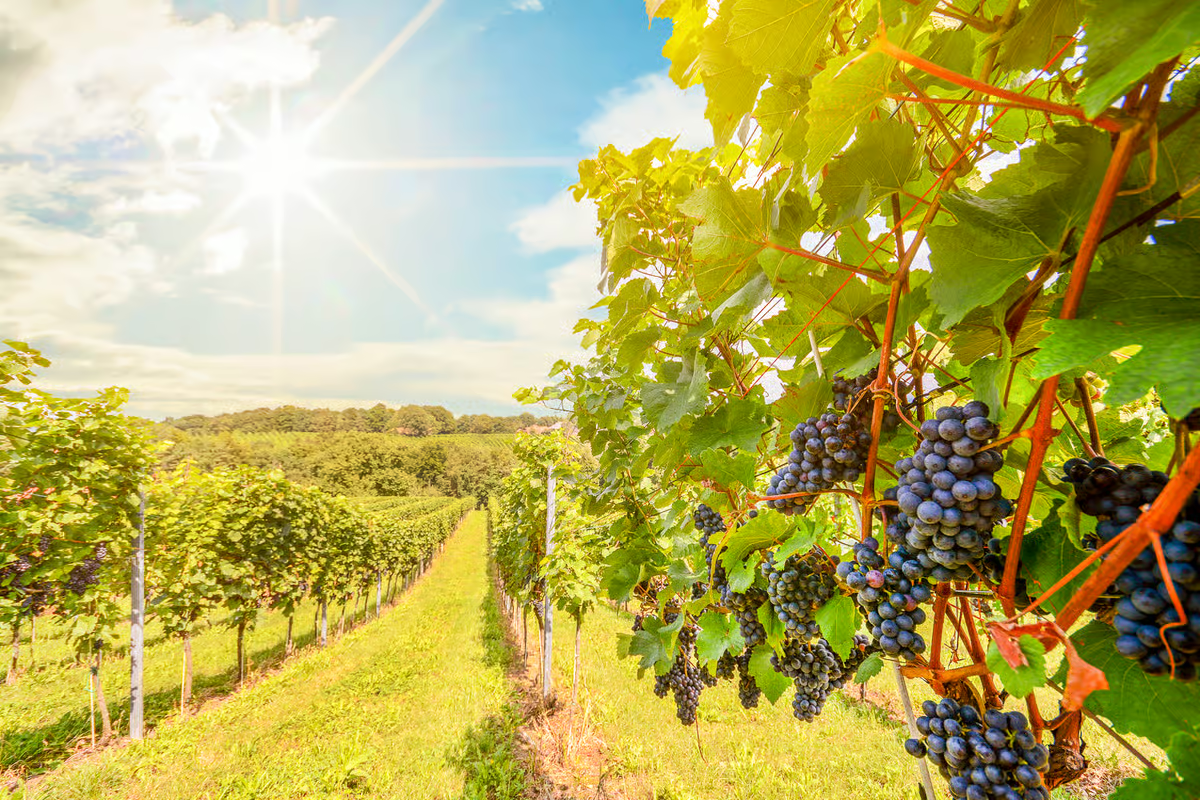
The primary tool for managing California’s generous sunlight and diverse soil types is the architecture of the vine itself. In the vast majority of premium AVAs, such as Oakville or the Russian River Valley, the Vertical Shoot Positioning (VSP) system is the gold standard. This allows managers to manipulate the light microclimate around each cluster with surgical accuracy. In cooler, high-moisture sub-regions like Carneros, intensive leaf pulling on the morning-sun side of the vine is essential to prevent mildew and ensure the development of complex phenolics. Conversely, in the heat of Calistoga, a fuller canopy is maintained to shade the fruit from sun-scald.
In heritage regions like Amador County or the Rockpile AVA, viticultural mastery often takes the form of preservation. Here, head-trained, “goblet” style vines—many over a century old—are managed without wires or trellising. This ancient method allows for better airflow and helps the vine survive in the nutrient-poor, rocky granitic soils. For younger high-density plantings in the Sta. Rita Hills, the Double Guyot or Cordon systems are meticulously pruned to control yield, ensuring that the saline minerality of the soil is not diluted by excessive fruit production.
Technical Precision in Row Orientation and Hydrology
The mastery of California terroir also extends to the very layout of the land. Modern vineyard design utilizes GPS mapping and soil pits to determine row orientation. While a north-south orientation is traditional to ensure even ripening, many growers in the Paso Robles Geneseo District or the Fair Play AVA may orient rows to capture the cooling breezes of the Templeton Gap or to mitigate the impact of late-afternoon solar radiation.
Hydrology represents another layer of technical mastery. Given California’s seasonal drought, the use of precision drip irrigation guided by sap-flow sensors and “ET” (evapotranspiration) data is critical. The goal is “Regulated Deficit Irrigation” (RDI), where water is withheld at specific phenological stages to stress the vine, forcing it to focus its energy on the fruit rather than leaf growth. This technique is what allows the “dusty” tannins of the Rutherford Bench or the concentrated dark fruit of Howell Mountain to reach their full potential.
The Philosophy of the Cellar: Preserving the Geological Signature
In the cellar, the definition of mastery has shifted toward a “minimal intervention” philosophy rooted in maximum technical knowledge. To preserve the terroir’s expression, oenologists in top estates—from Stony Hill Vineyard to Heitz Cellar—employ a precise analytical approach. This includes the use of native yeast fermentations to honor the microbiology of the specific vineyard site and a careful calibration of oak aging. The trend in premium California winemaking is a move away from the high-toast new French oak of the 1990s toward larger neutral vessels or concrete “eggs,” especially for Chardonnay from the Santa Maria Valley or Rhône blends from Ballard Canyon. By reducing the “noise” of the winemaking process, the clarity of the soil—the volcanic ash, the ancient limestone, the Goldridge loam—becomes the dominant voice in the glass.
California terroir: From Knowledge to Experience
While the science of geology is written in the ancient stones of the vineyards, the wine itself remains a living liquid—an ephemeral expression of a single moment in time. To truly understand the power of California’s terroir, one must move beyond the technical data and experience the land in person.
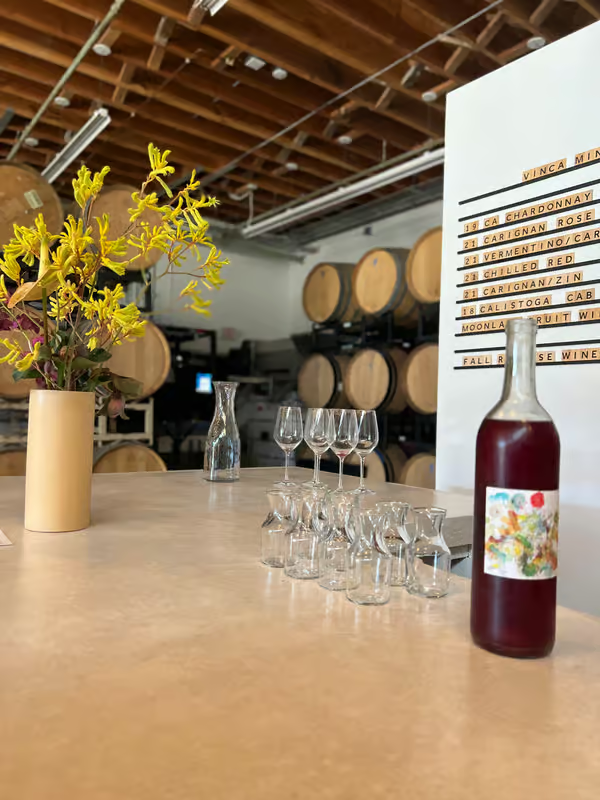
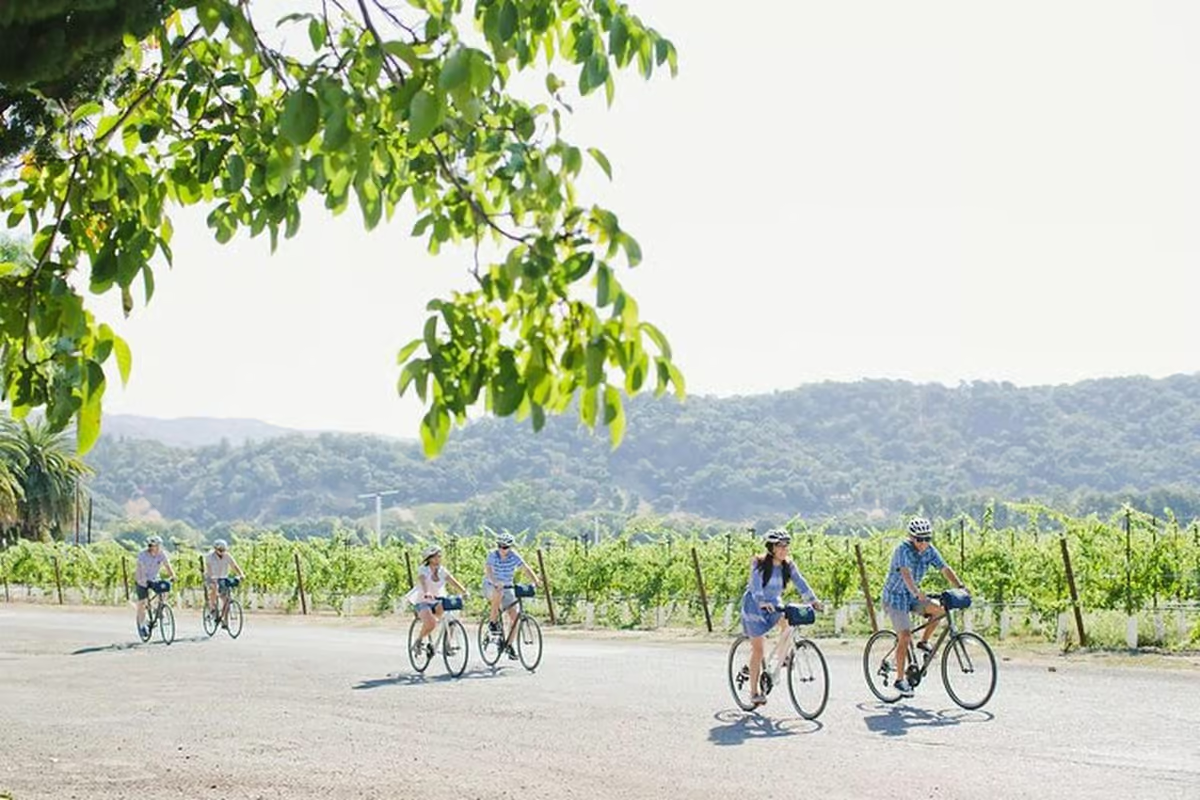
We invite you to step into the heart of the landscape on curated, high-end wine tours. Walk the iron-rich volcanic reds of Howell Mountain, feel the cool maritime breeze of the Petaluma Gap, and touch the ancient limestone of the Central Coast. These journeys offer exclusive access to the most prestigious estates, such as Beringer or Stony Hill Vineyard, providing a sophisticated bridge between scientific knowledge and sensory delight. Join us to witness how the science of the earth is transformed into the art of the bottle.