Table of Contents
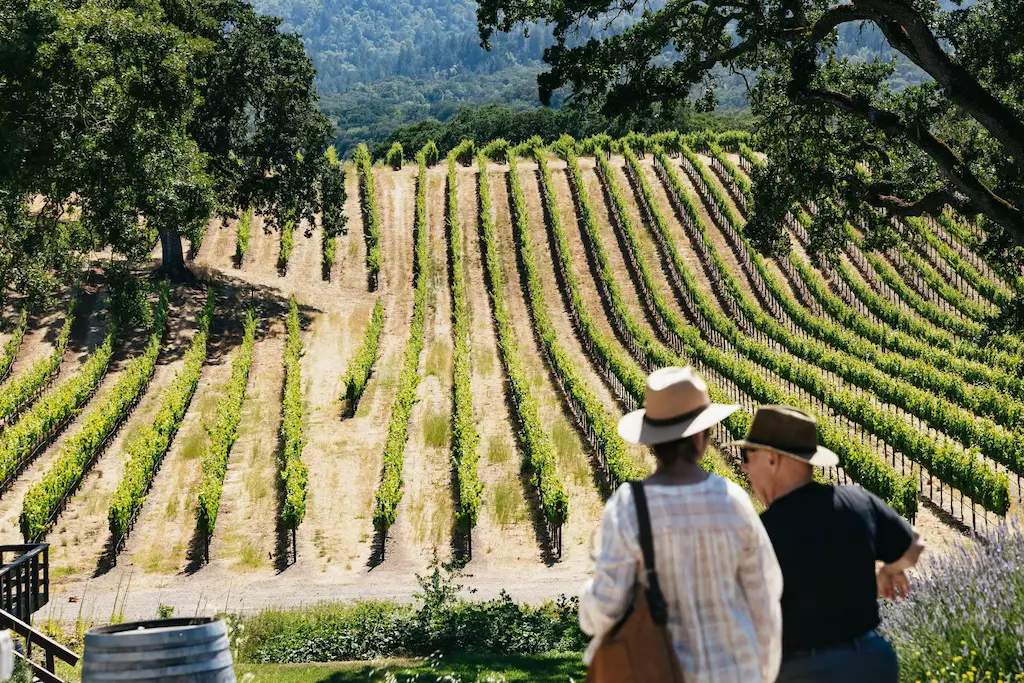
The mere mention of California wine evokes powerful sensory hooks. It conjures the image of sun-drenched vignobles (cite: 109), the deep, complex aroma of ripe Cabernet Sauvignon, and the bold, spicy structure of ancient Zinfandel vines. Yet, this global reputation is not an overnight success; it is the result of a complex, often turbulent historical journey that spans over two and a half centuries.
From the first humble plantings of Vitis vinifera by Spanish missionaries to its contemporary status as an epicenter of sustainable innovation, the history of California wine is a masterclass in adaptation, resilience, and an unwavering pursuit of quality. This definitive guide will chart that remarkable evolution, exploring the personalities, the terroirs, and the pivotal moments that have shaped the Golden State into one of the world’s premier wine regions.
STEP OUT OF THE HISTORY BOOKS
The Monastic Footprint and the Unsung Foundation. The Misiones, the Mission Grape, and Early Labor (1769-1830s)
The very first chapter in the history of California wine was written not by commercial négociants, but by Franciscan friars. Led by Father Junípero Serra, a chain of 21 missions was established along the coast, each requiring wine for the Holy Sacrament—a non-negotiable spiritual necessity. These early religious settlers brought with them the ancient traditions of European viticulture, marking the true ancient foundations of the region. They planted a specific Vitis vinifera variety that became known simply as the Mission grape, a resilient but ultimately unrefined grape that thrived in the arid, sun-baked climate. While the resulting wine was rudimentary, often described as sweet and oxidative, this period established the fundamental concept of terroir in California.
Crucially, this early history of California wine was built upon an unsung foundation of labor. The very first vignobles were planted, tended, and harvested by Indigenous peoples under the mission system. This vital link to the land is a core component of the region’s true ancient foundations. Acknowledging these diverse perspectives and the essential contributions of early labor forces is a necessary legal and moral milestone for fully understanding the region’s maturation. The Mission San Diego de Alcalá (1769) is recognized as the cradle of California viticulture, and this profound monastic influence, supported by the labor of Indigenous communities, created a cultural and agricultural legacy that persisted for decades, making it an essential and irreplaceable cornerstone in the entire history of California wine.
European Ambition and the Zinfandel Arrival. Secularization and the Birth of "Wine Country" (1830s-1880)
Following Mexico’s independence from Spain, a major turning point occurred: the secularization of the missions in the 1830s. This act effectively stripped the church of its vast landholdings, which were then granted to private individuals as ranchos. This secular shift created the first true commercial vignobles (cite: 109) and marked the birth of a nascent industry. It was a period of profound technical evolution, fueled by the influx of ambitious European immigrants who recognized the state’s potential. Figures like Jean-Louis Vignes, a négociant from Bordeaux, arrived with a sophisticated understanding of quality viticulture, challenging the dominance of the Mission grape.
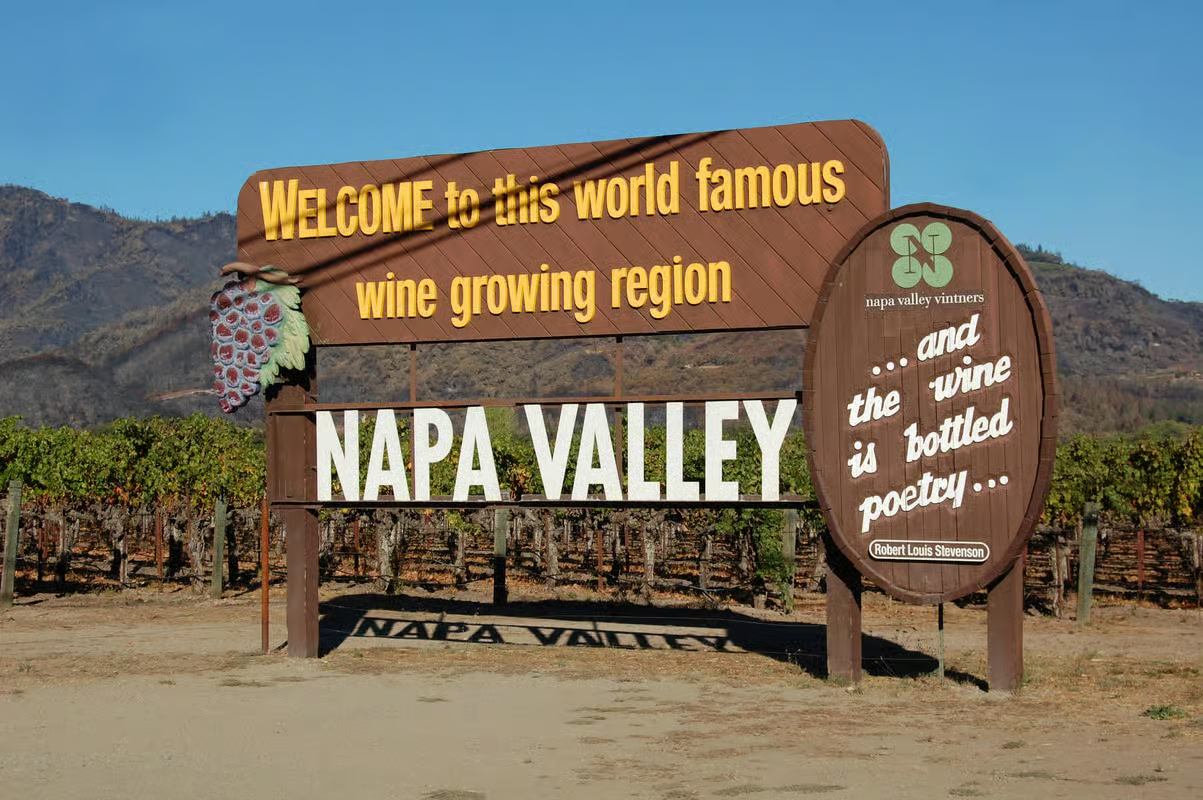
This era in the history of California wine also saw the fascinating introduction of Zinfandel. First appearing in the state during the early 1830s, its exact origins were long shrouded in mystery. It quickly became the “national grape” of the region, thriving in the emerging terroirs (cite: 110) of Sonoma and Napa and proving more versatile than the early Vitis vinifera varieties. Most notably, Sonoma Valley emerged as a premier center, solidified by the founding of the Buena Vista Winery in 1857 by Agoston Haraszthy. This crucial technical evolution was propelled by Haraszthy’s tireless promotion and his introduction of hundreds of premium European varietals, effectively diversifying and elevating the entire industry. This set the stage for a dramatic explosion of plantings, with Napa Valley quickly following suit, where Charles Krug founded his eponymous winery in 1861, beginning a legacy that would help define the region for over a century and forever alter the history of California wine.
Expansion, Academic Roots, and Immigrant Contributions. Gold, Railroads, and the "Gilded Age" (1880-1920)
The late 19th century was a true Gilded Age for the history of California wine. The discovery of gold had created a wealthy population with a taste for fine wine, and the completion of the transcontinental railroad opened up vast new markets, fueling an unprecedented period of expansion. This era saw the rise of iconic estates like Inglenook, founded by Gustave Niebaum, which became a beacon of quality and European-style winemaking, proving that California could produce wines of international stature. However, this expansion was accompanied by significant political turmoil and economic volatility.
This period of growth was deeply supported by another academic imperative that became essential to the modern history of California wine. The establishment of UC Davis’s Department of Viticulture and Enology, with roots tracing back to original funding in 1880, is a non-negotiable topic for understanding the region with authority. UC Davis quickly became the research engine for the entire state, laying foundational knowledge for future technical breakthroughs.
Furthermore, the history of California wine would not have been the same without successive waves of immigrant labor during this era. Following the secularization, the gold rush and railroad expansion brought diverse communities, including Chinese labor, which was essential for the arduous task of hand-carving the vignobles (cite: 109) and cellars (cite: 109, 116). This immigrant force was a pivotal component in the development of regions like Napa Valley.
The industry during this Gilded Age was brutally interrupted by two great disruptions. The first was the devastating root louse, Phylloxera, which decimated vineyards and forced a costly, decadelong process of replanting onto resistant rootstocks—a major technical evolution for the region. This technical challenge, however, was minor compared to the political turmoil that followed: the onset of Prohibition in 1920, which plunged the entire history of California wine into a dark age.
Survival, Academic Recovery, and Regulatory Cage. Prohibition, Repeal, and Industrialization (1920-1960)
The “Noble Experiment” of Prohibition (1920-1933) was a nearly fatal blow, creating immense political turmoil and economic collapse for the industry. Many legendary vignobles (cite: 109) were abandoned, and countless family-owned wineries were forced to close their doors forever. A few, like Georges de Latour’s Beaulieu Vineyard, managed to survive by producing sacramental wine under special government permits, preserving a vital link to the past.
After Repeal, the history of California wine entered a long, difficult period of recovery. To cover this post-Prohibition era with authority, one must analyze the lasting political turmoil and economic volatility created by complex regulatory structures. This period was characterized not just by the noble experiment of repeal, but by the establishment of Tied-House Laws designed to prevent the monopolistic control of retailers by large producers.
This legal framework fractured the direct relationship between winery and retailer and created a long history of complex legal milestones involving the Three-Tier System of distribution. A sophisticated analysis requires tracing the continuing and evolving regulatory landscape of interstate shipping regulations, which directly affected trade and distribution and represent a unique political and legal challenge that is a mandatory thematic pillar for an expert-led guide on the history of California wine.
The post-Prohibition era was also characterized by the industrialization of wine production and the rise of cheap, fortified “jug wines”. The narrative of quality was lost. However, the seeds of a modern renaissance were being sown, supported significantly by the academic imperative of UC Davis, which focused on technical evolution and precision, fundamental to the successful recovery after Prohibition. A small but dedicated group of visionaries, including André Tchelistcheff at Beaulieu, brought a new level of technical sophistication to the cellar, focusing on cold fermentation, cleanliness, and the careful selection of superior clonal material.
This technical evolution was quiet but essential, laying the groundwork for the great quality revolution that would define the mid-century and forever alter the history of California wine.
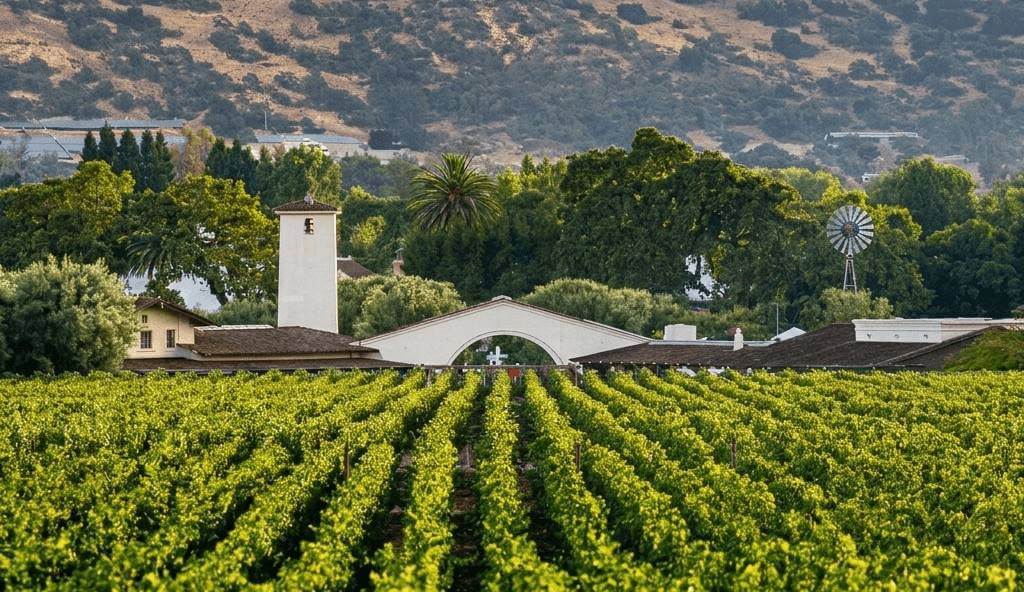
Robert Mondavi Winery
The Modern Renaissance and Global Ascent. Robert Mondavi, Innovation, and Zinfandel's Path (1960-Today)
The 1960s marked the most significant turning point in the entire history of California wine. This was the era of legal milestones and technical leaps that truly put California on the global map. The focus on technical evolution and precision championed by academic research was fundamental to this global ascent.
Robert Mondavi established his winery in 1966 with the singular mission of producing wines that could compete with the world’s finest, standardizing modern techniques like small French oak barrel aging. Amidst this focus on premium varietals, Zinfandel faced an unusual historical turn in the 1970s and 1980s with the unexpected, massive surge of “White Zinfandel“—a off-dry, pink wine that dominated the American market. While commercially explosive, this trend risked defining the grape’s legacy as simplistic.
The contemporary history of California wine has thankfully witnessed a dynamic renaissance, with Zinfandel being reclaim as a premium red wine. It is now championed by organizations like Zinfandel Advocates and Producers, focusing on the preservation of invaluable old-vine vignobles (cite: 109) and the complex technical evolution of producing balanced, terroir-driven (cite: 110) wines that are a fundamental part of the state’s vinous soul. The subsequent decades saw the formal codification of Appellations (American Viticultural Areas or AVAs), legal milestones that officially recognized and protected the unique terroir (cite: 110) of specific regions like the Stag’s Leap District and Rutherford.
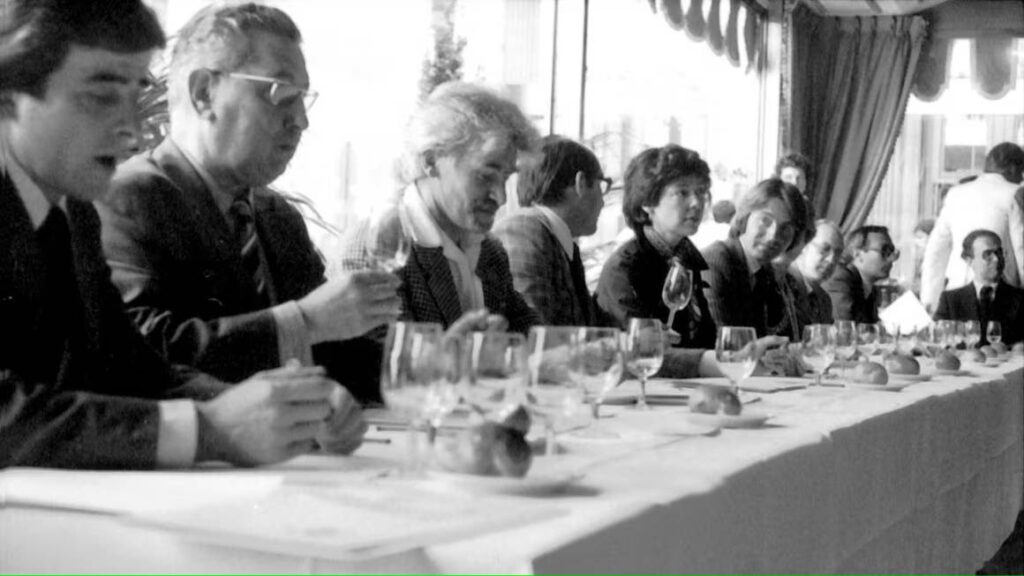
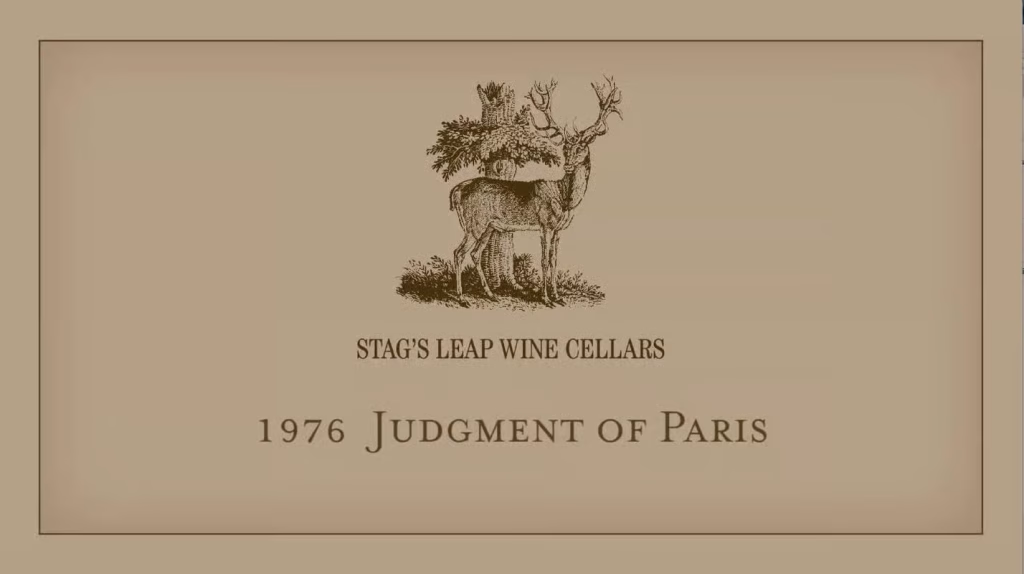
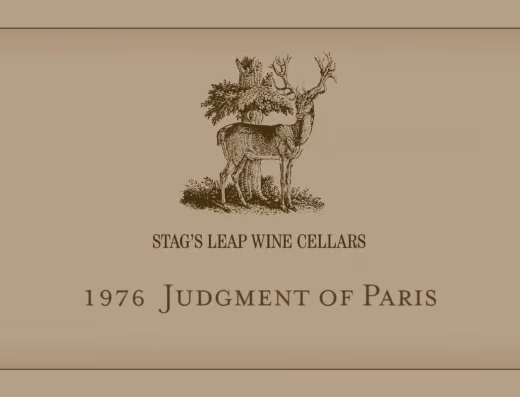
Jury of Paris judgmentk, on 24th May 1976
The Shock Heard Round the World. The Judgment of Paris and the End of French Hegemony (1976)
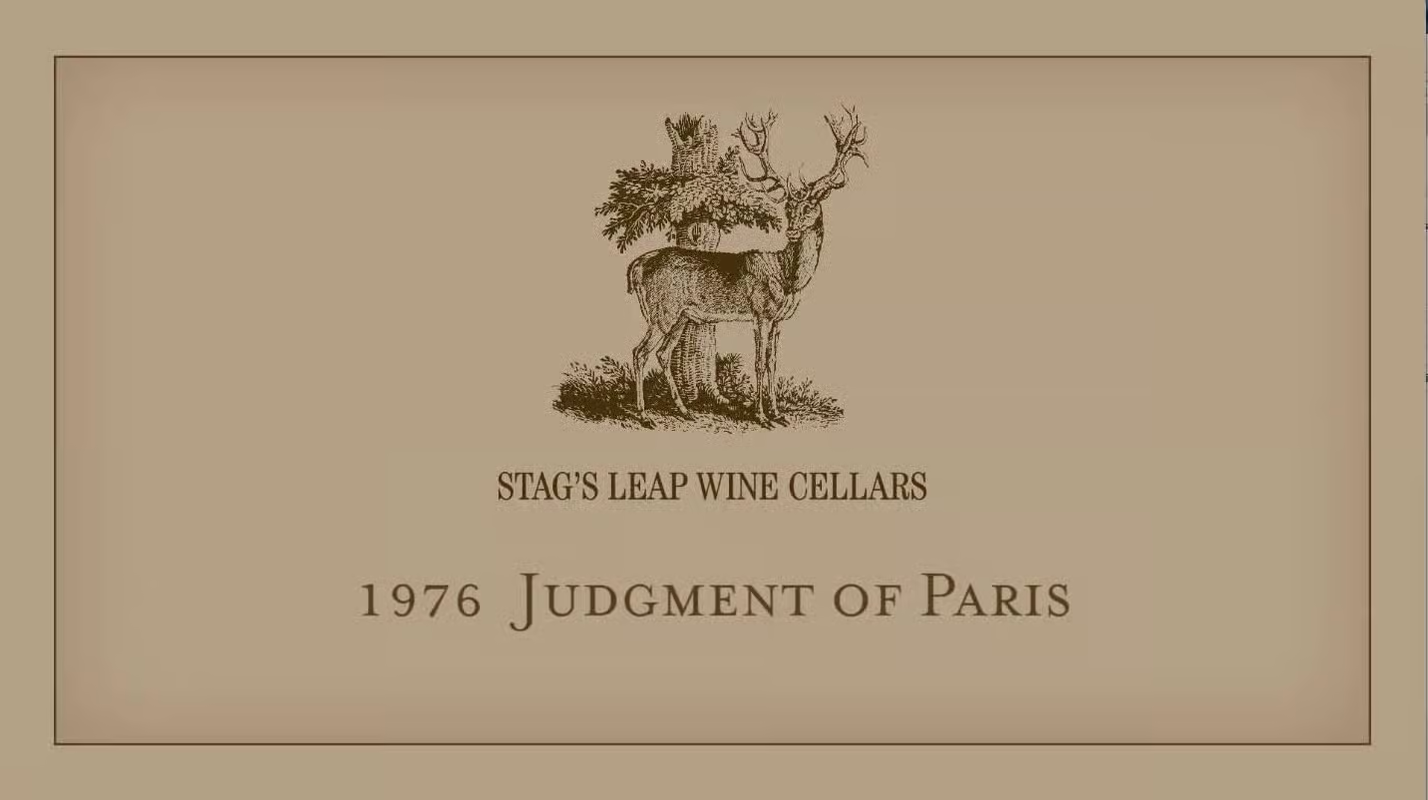
While the modern renaissance was already underway, one singular legal milestone in the history of California wine shattered centuries of perceived French superiority and fundamentally reconfigured the global wine landscape. On May 24, 1976, a blind tasting was organized in Paris by Steven Spurrier, a British négociant, to commemorate the American Bicentennial. The event, which became known as The Judgment of Paris, pitted top-tier California Cabernet Sauvignon and Chardonnay against some of the most prestigious Bordeaux Crus and Burgundy Grand Crus, with a panel of nine venerated French judges.
To cover this pivotal moment with authority, a sophisticated analysis must dissect how the results provided an unshakeable benchmark of credibility. The French judges, scoring purely on sensory hooks without knowledge of the origins, awarded top honors in both categories to California. In the white wine category, a 1973 Chateau Montelena Chardonnay, crafted by Mike Grgich using standardized modern techniques, took first place. Even more shocking was the red wine category, where a 1973 Stag’s Leap Wine Cellars Cabernet Sauvignon, made by Warren Winiarski using the precise technical evolution championed by Tchelistcheff, defeated legends like Château Mouton-Rothschild and Château Haut-Brion.
The immediate fallout was immense political turmoil within the French wine establishment, but for the history of California wine, it was a moment of supreme validation. It proved that California terroir (cite: 110), when matched with technical sophistication, could produce wines of world-class elite status. The Judgment of Paris effectively ended the era of monolithic French authority, inspiring winemakers across California and around the world to pursue quality with a standardized, confident vision, forever cementing 1976 as the most influential year in the entire history of California wine.
Future Challenges and Prospective. Sustainability, Academic Leadership, and Continued Labor (2000-Today)
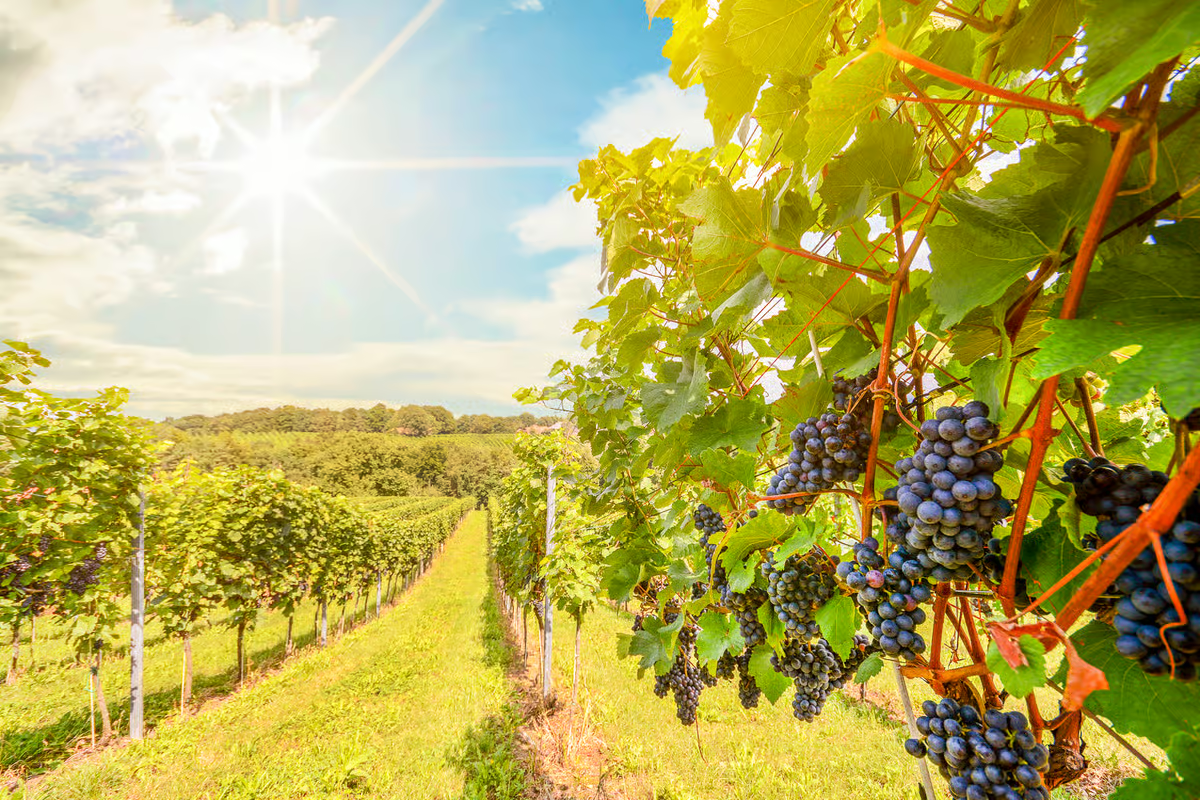
oday, the history of California wine is a dynamic narrative of leadership, foresight, and adaptation. Facing the unprecedented future challenges of climate adaptation, the region has become a undisputed world leader in sustainable viticulture. Modern legal milestones are increasingly focused on environmental protection, water resource management, and social responsibility. Innovations in the vignoble (cite: 109)—from advanced canopy management and precision irrigation to the widespread adoption of biodynamics and the search for drought-tolerant rootstocks—are the new technical evolution, all aimed at preserving the unique terroir (cite: 110) for future generations.
This sustainable vision is inextricable linked to the continued influence of UC Davis, which remains a world leader in addressing current and future challenges such as climate adaptation and sustainable vignoble (cite: 109) management. Furthermore, in the modern era, the industry is profoundly shaped by the contributions of Latino and Hispanic communities, who today comprise the vast majority of skilled vineyard and cellar personnel. This enduring and vital link to the land is a core component of the true ancient foundations of the history of California wine, and acknowledging these diverse perspectives is essential for the region’s maturation. The contemporary era in the history of California wine is defined not just by its global prestige, but by its proactive commitment to climate adaptation and social responsibility, ensuring that Vitis vinifera continues to thrive in its golden state home for another two and a half centuries and beyond.
Conclusion
The history of California wine is a 250-year-old masterclass in human ingenuity, resilience, and geographic fortune. Its profound journey, from a rudimentary Mission grape to the global standard-bearer of quality and innovation, is a definitive narrative of adaptation and evolution. Each era, from the deep monastic footprint to the modern sustainable renaissance, has contributed to the unshakeable foundation of authority and prestige that the region holds today. For the true “Wine Wanderer,” understanding this profound history of California wine is not merely an academic exercise; it is the essential key that unlocks the deepest and most rewarding appreciation for every single glass.