Table of Contents
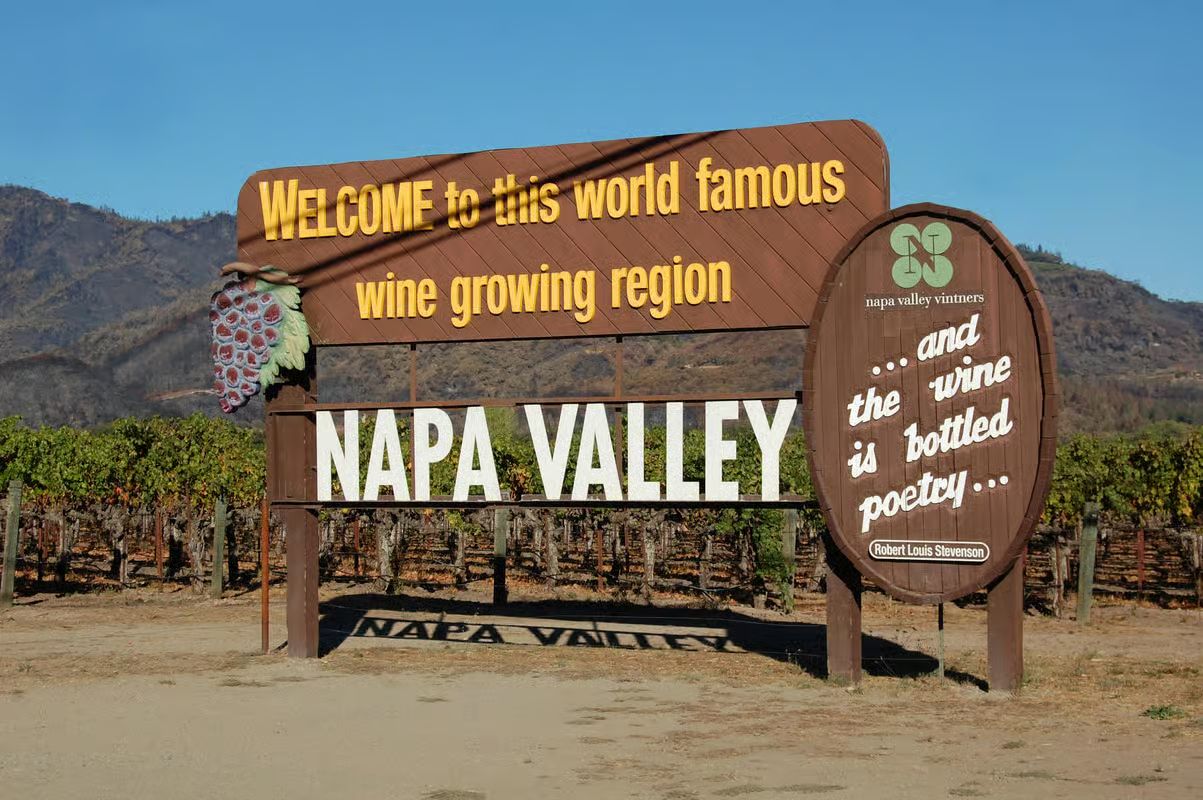
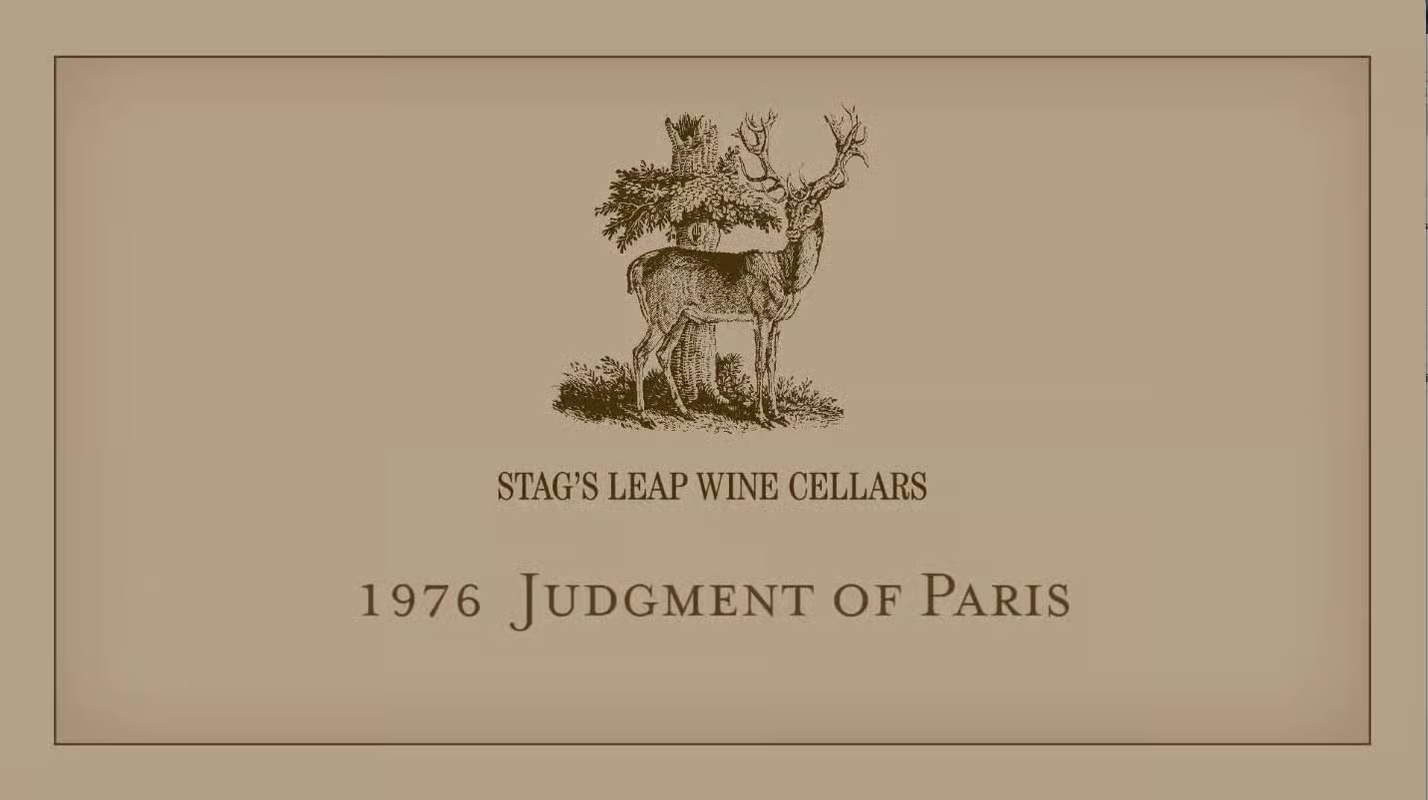
The Napa Valley AVA (American Viticultural Area) is not merely a geographic designation; it is the cornerstone of American wine identity. Established on February 27, 1981, it was the first AVA designated in California and the second in the United States, following Augusta, Missouri. This official recognition was the culmination of a journey that began in the 1830s when George Yount first planted vines in the valley. However, the region’s true ascent to global authority occurred following the 1976 “Judgment of Paris,” where Napa Valley wines famously bested the top French growths in a blind tasting. This historical pivot transformed a sleepy agricultural community into a world-class viticultural powerhouse.
Geologically, the valley is a marvel. Formed by tectonic plate movements and volcanic activity over 150 million years ago, the region contains 33 different soil series and half of the world’s recognized soil orders. From the gravelly alluvial fans of the valley floor to the fractured volcanic rock of the mountain ridges, the terroir is incredibly diverse. This guide explores the 18 distinct sub-appellations—often called “nested AVAs”—that define the modern Napa landscape. Each sub-region offers a unique expression of the “Champion Keyword” style: power balanced by elegance, and an aging potential that rewards the patient collector.
Uncork the Coast
Napa Valley AVA (Parent Appellation)
As the overarching parent appellation, the Napa Valley AVA dictates the standard for New World wine excellence. The region is defined by a Mediterranean climate, characterized by warm, dry summers and cool, wet winters. This stability allows for consistent ripening, which is the primary driver behind the region’s authoritative wine style: opulent, fruit-forward, and structurally dense. While Cabernet Sauvignon is the undisputed monarch, accounting for the vast majority of prestige production, the AVA also excels in Merlot, Sauvignon Blanc, and increasingly, Cabernet Franc.
The aging potential of the parent AVA is a benchmark for global collectors. High-quality Napa Cabernet is designed for a minimum of 10 to 15 years of cellaring to allow the primary “bombastic” fruit to integrate with the tannin structure. In superior vintages, these wines can easily evolve over 25 to 40 years, developing secondary notes of cedar, leather, and dried currants. The authority of the Napa name on a label provides a guarantee of both quality and longevity, making it a staple for long-term investment-grade cellars.
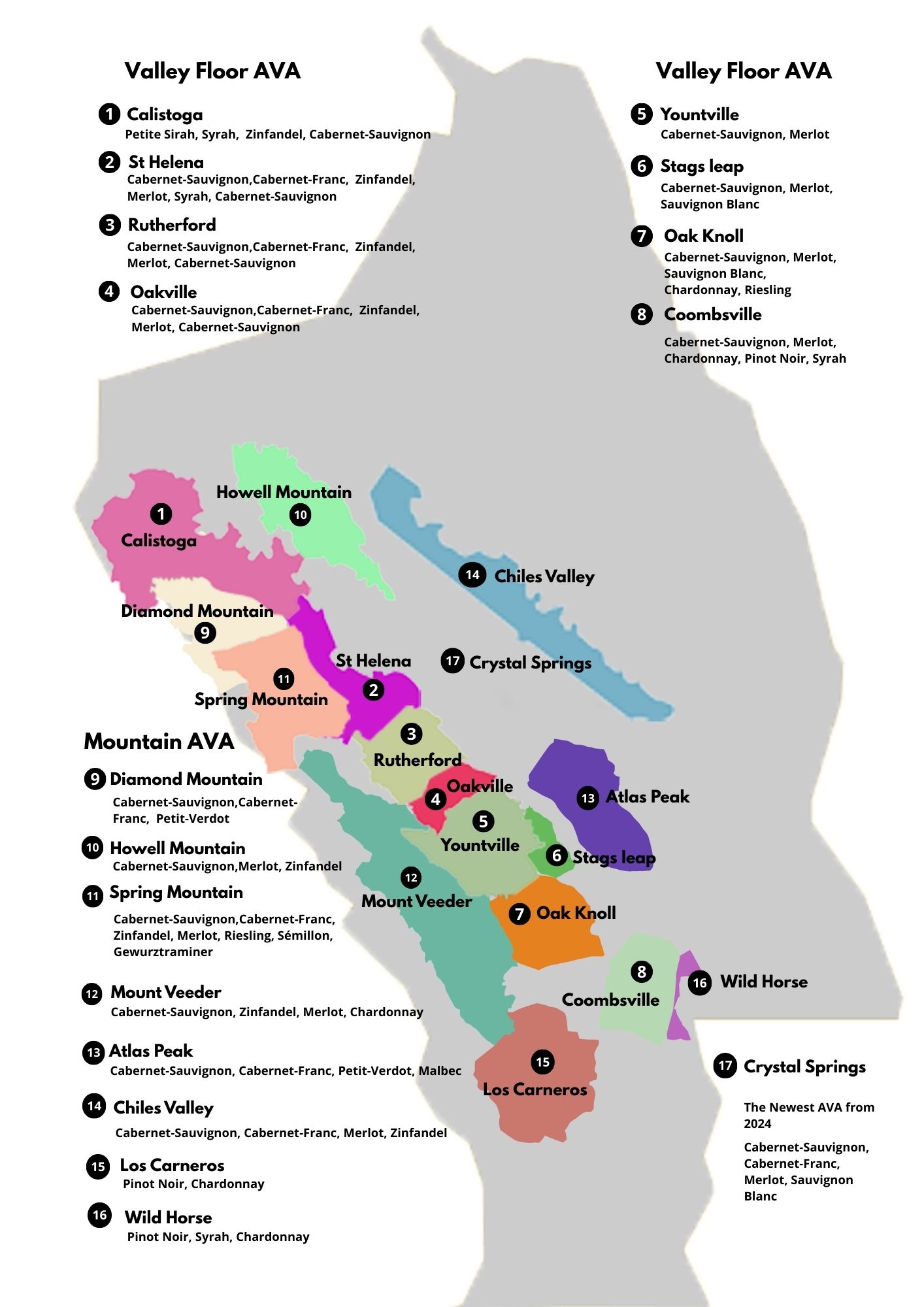
The Valley Floor Appellations
Calistoga AVA
Calistoga sits at the northernmost apex of the valley, defined by the most extreme heat and dramatic diurnal temperature shifts. The wine style here is one of rugged intensity; the volcanic soils produce wines with deep color, high concentration, and a distinct mineral “earthiness”. You will find bold flavors of blackberry jam, dark chocolate, and roasted espresso. Because of the intense heat, the grapes develop thick skins, leading to a substantial tannic backbone.
Consequently, the aging potential is vast. Calistoga wines are often tightly wound in their youth and benefit from at least 8 to 12 years of cellar time. At the 20-year mark, the grit of the tannins softens into a rich, velvety mouthfeel, cementing its status as a powerhouse sub-region.
St. Helena AVA
The St. Helena AVA represents the “waist” of the valley floor, where the narrowest point acts as a heat reservoir. This results in a style that is often described as hedonistic and plush. The wines are characterized by sweet, ripe tannins and explosive aromatics of cassis and black cherry. The well-drained gravelly soils ensure that even in the heat, the wines maintain a sense of balance.
The aging potential for St. Helena is impressive, typically peaking between 15 and 22 years. While these wines are more approachable in their youth than those from Calistoga, their high fruit density and alcohol act as natural preservatives, allowing them to evolve into savory masterpieces with notes of dried plum and spice
Rutherford AVA
Rutherford is world-renowned for its “Rutherford Dust,” a sensory descriptor for the unique, mineral-like tannins found in its alluvial fan soils. The wine style is a masterclass in balance—less about raw power and more about structural elegance. Expect a profile of black currant, sage, and rosemary, underpinned by that signature dusty texture.
The aging potential here is legendary; Rutherford Cabernets are frequently found in the cellars of serious collectors because they remain vibrant for 25 to 30 years. As they age, the fruit moves toward a refined dried-fruit profile while the “dusty” tannins become even more tactile and sophisticated, providing a unique sensory experience
Oakville AVA
Oakville is the geographic and spiritual heart of Napa wine authority, home to the most iconic vineyards in America. The style is the “Golden Mean,” perfectly balancing the heat of the north with the cooling breezes of the south. Oakville wines exhibit deep complexity, with notes of mint, dark chocolate, and blue fruit. The tannins are firm but incredibly polished.
The aging potential is arguably the highest in the valley; Oakville produce are the “blue chips” of wine investment, often aging gracefully for 30 to 50 years. Over decades, these wines develop a haunting complexity of truffle and tobacco, maintaining a core of fruit that refuses to fade, representing the pinnacle of the Napa Valley AVA’s Guide
Yountville AVA
Moving south, Yountville begins to feel the significant cooling influence of the San Pablo Bay. The style shifts toward red fruit characteristics and lifted floral aromatics, such as violets and dried rose petals. There is a noticeable brightness and acidity here that makes the wines exceptionally food-friendly.
The aging potential is generally 15 to 20 years. Because of the cooler marine influence, the wines maintain their structural acidity longer than their northern neighbors, ensuring they stay fresh and vibrant even as they develop secondary characteristics of potpourri and white pepper after a decade in the bottle.
Stags Leap District AVA
Famed for producing “an iron fist in a velvet glove,” Stags Leap is celebrated for its extraordinary texture. The wine style is defined by perfume-like aromatics and some of the most supple tannins in the world. Expect notes of black cherry, chocolate, and a hint of flinty minerality from the nearby palisades.
Despite their early approachability and soft mouthfeel, the aging potential is remarkable. These wines do not rely on aggressive tannins for longevity, but rather on impeccable balance. They often reach their peak at 15 to 25 years, during which the floral notes evolve into a complex savory bouquet while the texture remains silken
Oak Knoll District of Napa Valley AVA
One of the cooler spots on the valley floor, Oak Knoll is a diverse AVA where the style emphasizes elegance and restraint. It is a premier site for Merlot and Chardonnay as well as Cabernet. The red wines show bright red fruit, high acidity, and lower alcohol compared to the north.
The aging potential is typically 12 to 18 years. Because these wines are not “over-extracted,” they age with a grace reminiscent of classic European styles. After a decade, the vibrant acidity ensures the wine remains lively, while the tannins soften into a light, spicy framework that supports notes of dried cranberry and earth.
Coombsville AVA
As a recently recognized sub-AVA, Coombsville is the “cool-climate rising star” of the valley floor. The style is defined by “blue fruit” profiles (blueberry, plum) and a stony, mineral intensity derived from volcanic ash soils. Because the grapes ripen slowly, the tannins are sophisticated and fine-grained.
The aging potential is vast, often exceeding 20 years. The naturally high acidity of Coombsville fruit acts as a preservative, allowing the wine to evolve slowly and steadily. After 15 years, these wines often reveal a sophisticated complexity of white pepper, crushed rock, and dried herbs that is highly sought after by connoisseurs.
The Mountain Appellations
Diamond Mountain District AVA
Located in the Mayacamas Range, Diamond Mountain’s style is defined by porous, volcanic soils that produce small, concentrated berries. The wines are monumental—high in tannin, high in acidity, and deeply colored. You will find flavors of bittersweet chocolate, lead pencil, and dark berry. This is a “connoisseur’s AVA,” where the wines are unapologetically bold.
The aging potential is among the longest in Napa, often 30+ years. These are “patience wines” that are often too aggressive to drink before year 10. By year 25, the tannins finally “melt,” revealing a majestic core of fruit and mineral power that defines mountain authority.
Howell Mountain AVA
Rising above the fog line, Howell Mountain receives intense sunlight, creating a style of massive intensity and “wild” mountain character. The wines are famous for their notes of wild sage, pine, and intense black fruit. The tannins are granite-like and substantial.
The aging potential is legendary, often reaching 35 to 40 years in great vintages. These are the ultimate “cellar sleepers.” As they age, the wild, savory mountain notes become more integrated, and the fruit stays remarkably fresh due to the high elevation and steady UV exposure, making it a critical component of any authoritative Napa guide.
Spring Mountain District AVA
Spring Mountain wines offer a style that is more “forest-like” and aromatic than its mountain neighbors. Because of the steep, forested terrain, the wines often have a cooler, shaded profile with notes of black currant, cedar, and dried herbs. They are elegant mountain wines that prioritize finesse over raw power.
The aging potential is typically 20 to 30 years. In the cellar, the “forest floor” characteristics become more pronounced, creating a complex, savory profile that rewards those who wait at least 15 years before pulling the cork to reveal the wine’s full depth.
Mount Veeder AVA
Mount Veeder has the longest growing season in Napa, resulting in a style of extreme depth and “briary” fruit. The wines are highly structured with a distinct “mountain spice” and firm acidity. Due to the extreme mountain conditions, the tannins are prominent and grippy.
The aging potential is massive, generally 25 to 35 years. Because of the low yields on these steep slopes, the wines are incredibly dense. They require substantial time to soften, but once they do, they offer a level of complexity and structural integrity that few other regions in the world can match.
Atlas Peak AVA
At a high elevation on the Vaca Range, Atlas Peak wines are defined by a style that is lean, mineral, and incredibly focused. The high elevation and volcanic rock result in wines with bright red fruit and a distinct “crushed stone” finish. The tannins are firm but linear.
The aging potential is 15 to 25 years. These wines age with a linear precision; they don’t get “fat” with age but rather become more transparent and detailed, showing their high-altitude volcanic origins with increasing clarity over two decades.
Chiles Valley District AVA
A “hidden” valley within the mountains, Chiles Valley has a more continental climate. The wine style is distinctive for its bright fruit and lush textures, often showing a bit more suppleness than other mountain AVAs due to the valley floor setting within the mountain range.
The aging potential is 12 to 20 years. They offer a unique bridge between the plushness of the main valley floor and the structural grip of the mountains, making them approachable earlier than Howell Mountain but still capable of significant long-term development.
Crystal Springs of Napa Valley AVA
The newest addition to the sub-AVAs (approved in 2024), Crystal Springs bridges the gap between the valley floor and the mountains. The style shows a blend of ripeness and structural intensity, often featuring dark fruit and floral notes. As a newly recognized area, its style is emerging as one of balance and early complexity.
The aging potential is expected to be 15 to 22 years. This region represents the future of Napa’s geological study, offering a “fresh” perspective on how elevation and soil diversity influence the longevity of Cabernet
The Tributary and Cross-County Appellations
Los Carneros AVA
Shared with Sonoma, this is the cool-climate heart of Napa. It is the premier spot for a style dominated by high-acid Chardonnay and Pinot Noir. The Pinot Noirs are earthy and spicy, while the Chardonnays are crisp and mineral-driven. While white wines age 5 to 10 years, the reds can go 10 to 15 years.
The aging potential here is defined by the preservation of acidity, which allows the wines to develop notes of toasted brioche and honey over time without losing their structural core.
Wild Horse Valley AVA
Shared with Solano County, this isolated, high-altitude region primarily produces an elegant style of Pinot Noir and Chardonnay with high mineral tension. The wines are characterized by a “crystalline” purity of fruit.
The aging potential is moderate, typically 7 to 12 years. These are delicate wines that favor finesse over power, evolving into complex notes of dried leaves and spice relatively early in their life cycle compared to the heavy reds of the north.
Napa Valley AVA wine appelations in a nutshell
Established on February 27, 1981, it was the first AVA designated in California
1 Napa Valley AVA (Parent Appellation)
1.1 The Valley Floor Appellations
1.1.1 Calistoga AVA
1.1.2 St. Helena AVA
1.1.3 Rutherford AVA
1.1.4 Oakville AVA
1.1.5 Yountville AVA
1.1.6 Stags Leap District AVA
1.1.7 Oak Knoll District of Napa Valley AVA
1.1.8 Coombsville AVA
1.2 The Mountain Appellations
1.2.1 Diamond Mountain District AVA
1.2.2 Howell Mountain AVA
1.2.3 Spring Mountain District AVA
1.2.4 Mount Veeder AVA
1.2.5 Atlas Peak AVA
1.2.6 Chiles Valley District AVA
1.2.7 Crystal Springs of Napa Valley AVA
1.3 The Tributary and Cross-County Appellations
1.3.1 Los Carneros AVA (Shared with Sonoma County)
1.3.2 Wild Horse Valley AVA (Shared with Solano County)