Table of Contents
Chablis represents the ultimate expression of Chardonnay, a region where the intersection of ancient geology and a marginal climate creates a wine of singular purity and structural tension. Situated in the Yonne department, it is the northernmost outpost of Burgundy, yet it remains distinct, a viticultural island surrounded by the rolling hills of the Serein Valley.
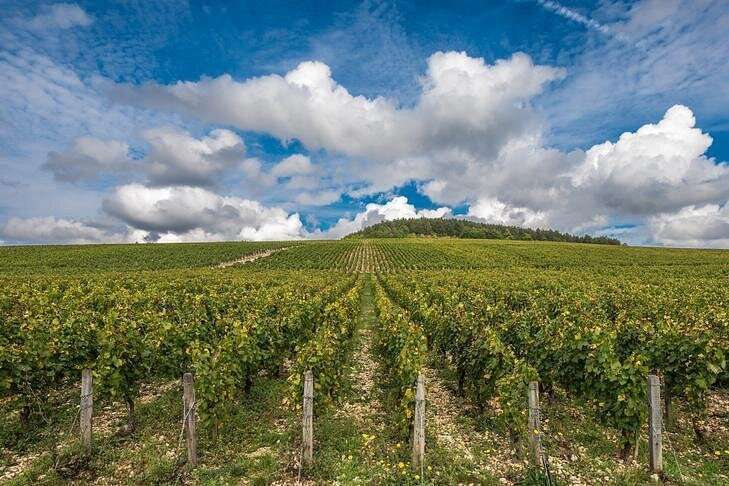
To understand Chablis is to understand the language of stone. Here, the “soul” of the landscape is defined by the prehistoric Kimmeridgian seabed, a legacy of the Jurassic period that imbues the wine with its hallmark flinty, saline character. This terroir is not merely a physical location; it is a cultural heritage preserved over centuries. The landscape itself is evocative, characterized by steep, sun-drenched hillsides that contrast sharply with the cool, misty valleys.
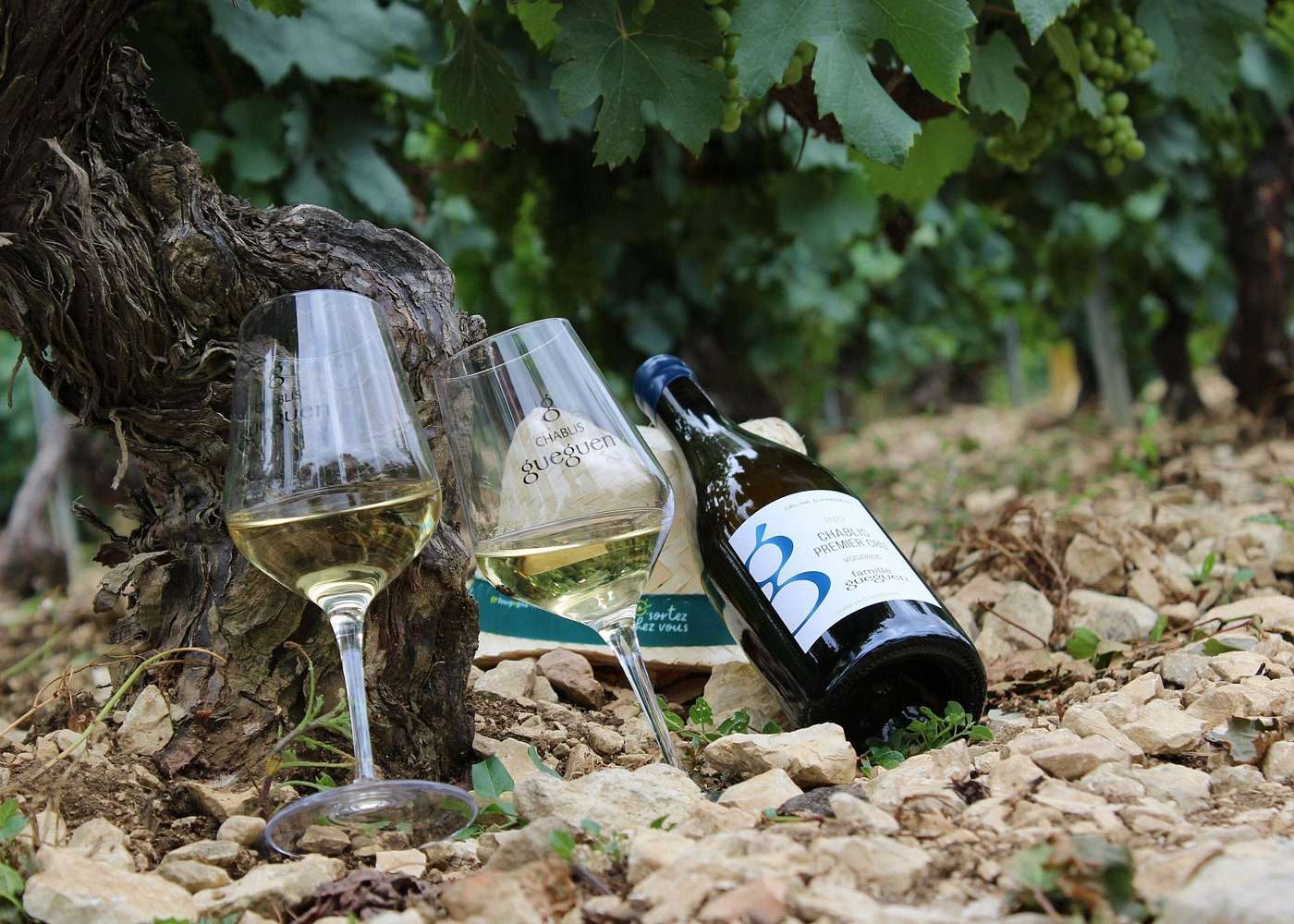
It is this tension between the severity of the environment and the elegance of the wine that establishes Chablis as a global benchmark. For the connoisseur, Chablis offers a sensory journey through time, where every sip reflects the mineral-rich soils of a vanished sea. The prestige of the region lies in its refusal to mimic the opulence of southern neighbors, instead prioritizing a lean, laser-focused acidity that is unmatched in the world of fine wine. To walk the vineyards of Les Clos or Vaudésir is to stand upon a geological monument, a place where man and nature have collaborated to produce a liquid that is as crystalline and enduring as the rock from which it springs.
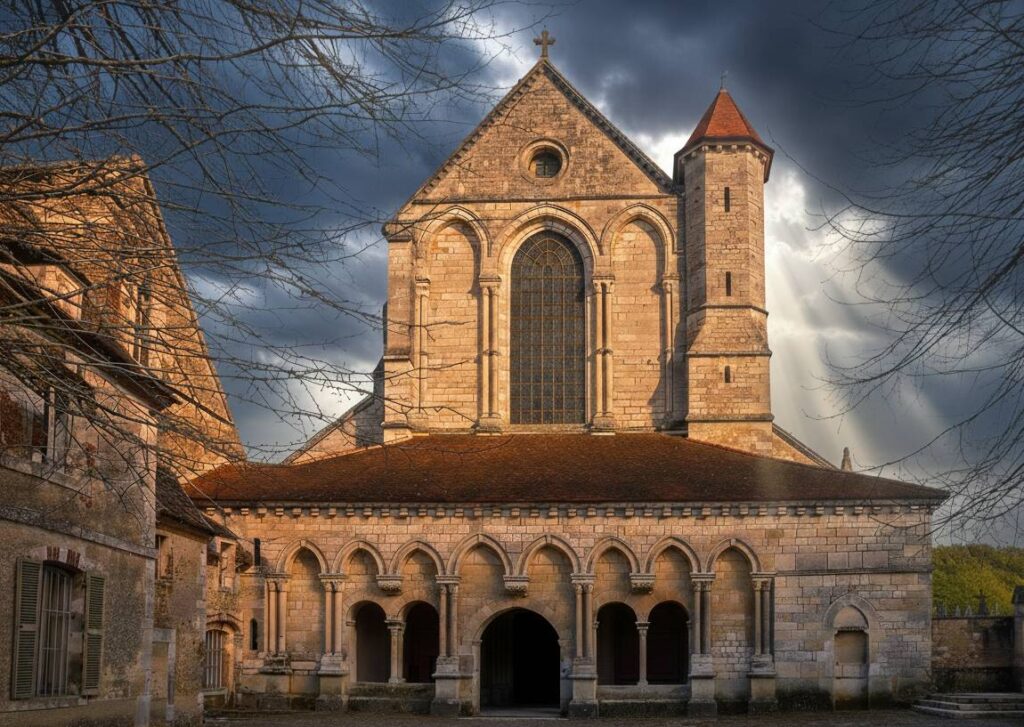
This is the quintessence of cool-climate viticulture, a testament to the mastery of terroir over two thousand years, this landscape has been meticulously mapped, first by the tireless labor of Cistercian and Benedictine monks and later by the Valois Dukes, who recognized that the “soul” of the wine was inextricably linked to the specific patch of earth from which it grew. This historical devotion birthed the system of Climats, a mosaic of thousands of precisely delimited vineyard plots that are now recognized as a UNESCO World Heritage site.
To speak of Burgundy is to speak of a cultural heritage where geology, history, and human intuition converge to create wines of unmatched elegance. It is a global benchmark, not because of its scale—the region is remarkably small—but because of its depth. Each ridge and hollow in the landscape tells a story of Jurassic seas and tectonic shifts, captured in a bottle as a living testament to the prestige of the land
Journey to the Heart of Chablis

Macro-Climate and Viticultural Foundations
The climate of Chablis is strictly semi-continental, characterized by long, harsh winters and warm, often volatile summers. Being the northernmost viticultural zone of Burgundy, the region operates on the edge of viability, where the threat of spring frosts is a constant and defining feature of every vintage. These climatic constraints are fundamental to the regional identity, dictating a growing season that prioritizes the retention of high natural acidity
The Influence of Temperature and Light
Diurnal temperature shifts play a critical role in the development of the grape’s chemical precursors. During the ripening period, the cool nights arrest the degradation of malic acid, while the daytime warmth facilitates the gradual accumulation of sugars and complex phenolics. This thermal amplitude ensures that the wines maintain a vibrant, nervy structural core. The heating influences are primarily derived from solar radiation, particularly on the south and southwest-facing slopes that form the heart of the Chablis Grand Cru and Chablis Premier Cru designations. These aspects maximize sunlight interception, ensuring phenolic maturity in a region where heat summation can be marginal.
Hydrology and Rainfall Patterns
Rainfall in Chablis is moderate but its timing is crucial. The region’s reputation is often forged in the face of vintage variability, where late-season rains can threaten the harvest or dilute the concentrated mineral extract. Conversely, the well-distributed precipitation throughout the spring and early summer supports the vine’s metabolic functions without causing excessive vigor. The Serein River acts as a vital thermal regulator and hydrological artery, cutting through the landscape to expose the various geological strata. The river’s presence helps mitigate the most extreme temperature fluctuations and provides the necessary drainage gradients that prevent waterlogging in the clay-heavy soils.
The Menace of Frost
The viticultural foundations of Chablis are inextricably linked to frost management. The use of technical interventions during the precarious nights of April and May is a necessity. This battle against the elements defines the vintage character; a year marked by frost often yields wines of intense concentration due to reduced yields, whereas a more temperate spring allows for a more expansive, generous expression of the Chardonnay fruit
The Geological Profile of Chablis: The Jurassic Seabed
The Chablis landscape was forged approximately 150 to 160 million years ago during the Upper Jurassic. At this time, the region was a warm, shallow tropical sea. The sedimentation that occurred during this period created two distinct layers—the Kimmeridgian and the Portlandian—which today dictate the hierarchy of every bottle of Chablis.
1. The Kimmeridgian Foundation: The “Oyster” Bedrock
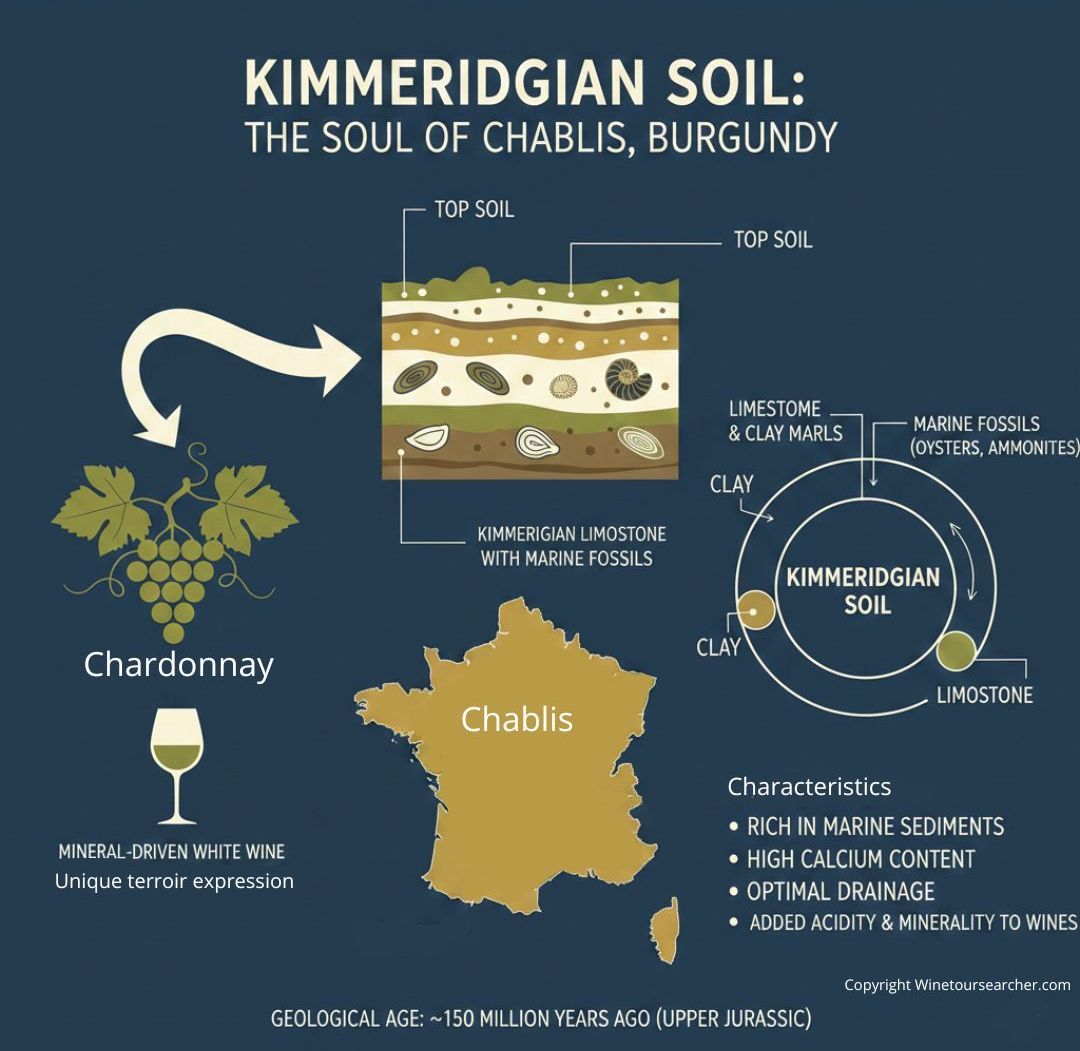
The Kimmeridgian stage is the undisputed heart of the region’s prestige. It is not a simple limestone; it is a fossiliferous marl, a complex geological marriage of limestone and clay.
The Exogyra Virgula: The defining feature of this soil is the presence of billions of tiny, comma-shaped fossilized oyster shells (Exogyra virgula). These are not merely decorative; they are chemically integrated into the earth.
The Clay-Lime Balance: Kimmeridgian marl is relatively soft and porous. The clay provides the “body” and water retention necessary for the vine’s survival, while the high calcium carbonate (lime) content acts as a structural regulator.
Sensory Impact: This is the source of the famous “iodine” or “saline” finish. The chemical exchange between the roots and the fossil-rich marl produces the gun-flint (pierre à fusil) aroma that defines Grand Cru and Premier Cru Chablis. It is a terroir that values “tension” over “fruit.”
2. The Portlandian Plateau: The Younger Cap
Lying directly on top of the Kimmeridgian layer is the Portlandian stage (also known as the Tithonian). This is the “younger” rock that forms the high, flat plateaus surrounding the Serein valley.
Composition: This is a much harder, more brittle, and compact limestone. Unlike the marls below, Portlandian soil is poor in clay and significantly lacks the marine fossils that characterize the lower slopes.
The “Bony” Terroir: Because this soil is less porous, it does not retain water well. The vines sit on a “bony” surface where the roots cannot penetrate as deeply into the fossilized history of the earth.
Sensory Impact: This is the home of Petit Chablis. The absence of clay and fossils leads to a wine that is crystalline and “electric.” It emphasizes high-toned citrus (lemon zest) and green apple rather than the deep, smoky mineral extract of the Kimmeridgian.
3. The Serein River: The Architect of Terroir
The Serein River is the reason we can taste these ancient layers. Over millennia, the river carved a deep valley through the Portlandian plateau, “uncovering” the Kimmeridgian layers on the hillsides.
The Right Bank (The Grand Cru Wall): Here, the river exposed a massive, southwest-facing amphitheater of pure Kimmeridgian marl. This exposure, combined with the density of the fossils, creates the most powerful, “weighty” expressions of Chablis (Les Clos, Vaudésir).
The Left Bank (The Valley Mosaic): The left bank is more influenced by Combes (side valleys) that have deposited limestone scree (colluvium) over the marl. This additional drainage and different orientation result in more floral, “airy” Premier Crus like Vaillons or Beauroy.
The Influence of Temperature and Light
Diurnal temperature shifts play a critical role in the development of the grape’s chemical precursors. During the ripening period, the cool nights arrest the degradation of malic acid, while the daytime warmth facilitates the gradual accumulation of sugars and complex phenolics. This thermal amplitude ensures that the wines maintain a vibrant, nervy structural core. The heating influences are primarily derived from solar radiation, particularly on the south and southwest-facing slopes that form the heart of the Chablis Grand Cru and Chablis Premier Cru designations. These aspects maximize sunlight interception, ensuring phenolic maturity in a region where heat summation can be marginal.
Hydrology and Rainfall Patterns
Rainfall in Chablis is moderate but its timing is crucial. The region’s reputation is often forged in the face of vintage variability, where late-season rains can threaten the harvest or dilute the concentrated mineral extract. Conversely, the well-distributed precipitation throughout the spring and early summer supports the vine’s metabolic functions without causing excessive vigor. The Serein River acts as a vital thermal regulator and hydrological artery, cutting through the landscape to expose the various geological strata. The river’s presence helps mitigate the most extreme temperature fluctuations and provides the necessary drainage gradients that prevent waterlogging in the clay-heavy soils.
The Menace of Frost
The viticultural foundations of Chablis are inextricably linked to frost management. The use of technical interventions during the precarious nights of April and May is a necessity. This battle against the elements defines the vintage character; a year marked by frost often yields wines of intense concentration due to reduced yields, whereas a more temperate spring allows for a more expansive, generous expression of the Chardonnay fruit
Climate, Soil, and Geology by Sub-Region in Chablis The Regional Breakdown:
The Seven Grand Crus: The Zenith of Kimmeridgian Marl
The hierarchy of this landscape is fundamentally a geological one, dictated by the precise location of specific plots and their underlying bedrock. The distinction between the elite crus and everyday wines rests upon two primary soil types: Kimmeridgian and Portlandian. The Kimmeridgian marl, rich in Exogyra virgula fossils, is the engine of the region’s complexity, providing a unique hydrological profile that allows for steady mineral uptake.
The Chablis Grand Cru appellation consists of a single, majestic hillside facing South/South-West, divided into seven distinct climats. The geology here is characterized by the purest expression of Kimmeridgian limestone and marl.
Les Clos
Widely regarded as the spiritual home of the region, Les Clos is the largest of the seven. Its steep, uniform slope and extremely stony soil provide perfect drainage. The resulting wine is the most powerful and masculine, possessing a profound “gunflint” reduction and a structural density that allows it to age for decades.
Vaudésir
Located in a steep valley that forms a natural amphitheater, Vaudésir captures intense solar heat. The soil here contains a higher percentage of clay, which lends the wine a softer, more “feminine” character. It is celebrated for its floral aromatics and a silky, approachable texture that sets it apart from its more austere neighbors.
Valmur
Split into two distinct parts by a path, Valmur experiences a unique micro-climate with both cold and warm influences. The marl bedrock is particularly compact here, leading to a restricted mineral uptake that produces a wine of intense “steely” verticality and high salinity, often requiring significant time to open.
Blanchot
Positioned on the far eastern edge of the slope, Blanchot is the only grand cru to face southeast. This orientation protects the vines from the hot afternoon sun, resulting in a cooler micro-climate. The wines are the most delicate and ethereal of the seven, noted for their white flower notes and precise, crystalline acidity.
Les Preuses
Situated on the crest of the hill overlooking Bougros and Vaudésir, Les Preuses benefits from long exposure to the setting sun. The topsoil is slightly deeper over the limestone, which provides a unique combination of opulent fruit richness and a very long, saline, mineral finish.
Grenouilles
The smallest of the grand crus, Grenouilles sits at the bottom of the slope near the Serein River. Its proximity to the water and the alluvial influence in the soil creates a wine that is rounder and more fruit-forward, often described as the most “Burgundian” and elegant in its youth.
Bougros
Located at the westernmost tip of the Grand Cru hill, Bougros features a more varied terrain with some areas of thicker clay and alluvial gravel. This results in excellent drainage and a wine that is characteristically round, earth-driven, and slightly more robust than the more vertical expressions of the central slope.
The Premier Crus: A Tapestry of Kimmeridgian Diversity
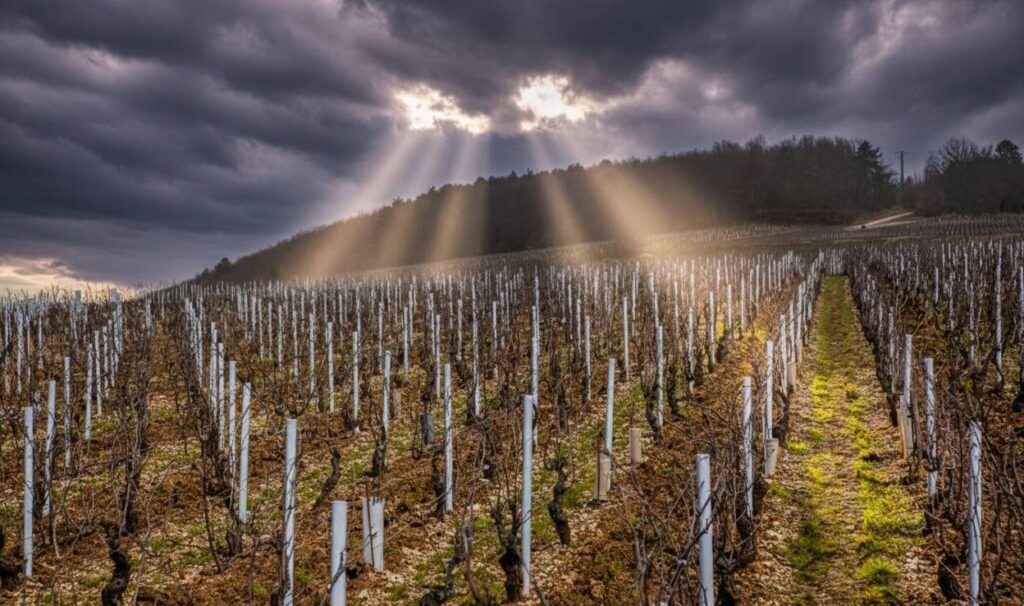
Slope of Montée du Tonnerre , Chablis 1er cru
The Chablis Premier Cru designation encompasses forty different climats, though many are grouped under major names. These sites are almost exclusively located on Kimmeridgian soils, yet their varying altitudes and aspects create a complex spectrum of styles.
The Right Bank: Intensity and Structure
Adjacent to the Grand Cru slope, the Right Bank is characterized by superior sun exposure and hard limestone outcrops.
Montée de Tonnerre: Often cited as the finest premier cru, including the sub-climats of Chapelot, Pied d’Aloup, and Côte de Brétille. Its proximity to Les Clos gives it a similar mineral grip and legendary aging potential.
Fourchaume: A high-profile cru extending north, encompassing Vaulorent, L’Homme Mort, Vaupulent, and Côte de Fontenay. These wines are typically more generous and succulent due to slightly richer clay content.
Mont de Milieu: Situated on a high-exposure slope, it produces wines of remarkable concentration and solar ripeness, balanced by a sharp, flinty finish.
Vaucoupin: A steep, secluded valley site where the wines exhibit a highly precise, almost clinical minerality and intense citrus focus.
The Left Bank: Freshness and Finesse
The Left Bank of the Serein River generally faces East or North-East, leading to cooler ripening conditions and wines of high tension.
Vaillons: A massive vineyard made up of several climats including Les Lys, Sécher, Beugnons, and Chatains. It is known for its floral lift and a distinctive “iodine” salinity.
Montmains: Comprised of Montmains, Forêts, and Butteaux. These are some of the most “stony” wines of the Left Bank, showing exceptional tension and a crushed-seashell character.
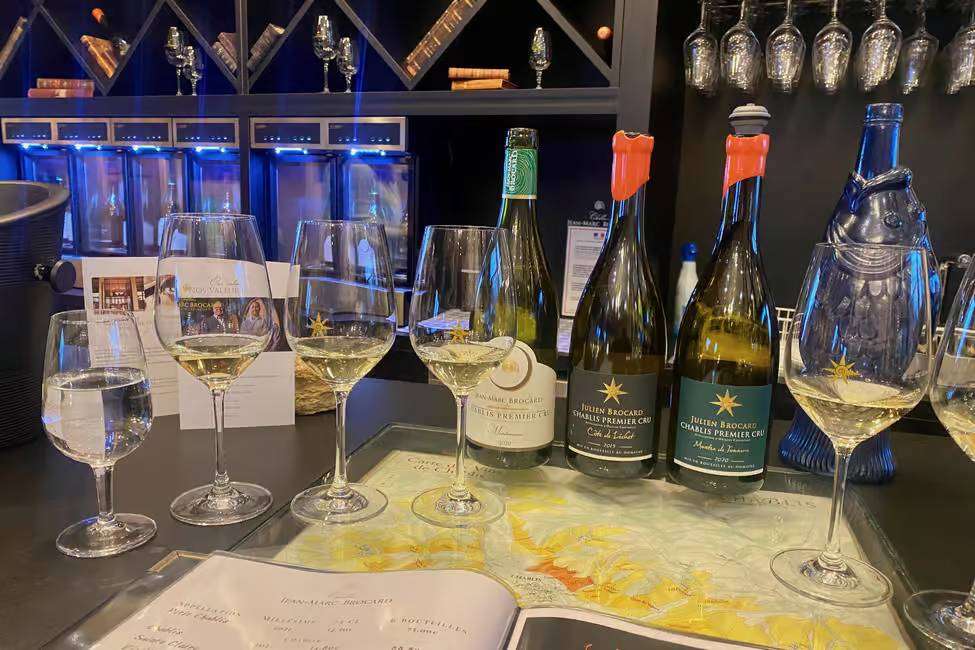
Côte de Léchet: One of the steepest premier crus in the region. The high proportion of white limestone rubble in the soil yields wines of high acidity and incredible longevity.
Beauroy: Including Troesmes and Côte de Savant, this area produces wines with a more rounded, approachable fruit profile while retaining the classic Kimmeridgian snap.
Vosgros: A smaller, tucked-away valley that offers a more rustic, earth-driven expression with a powerful backbone of acidity.
Les Fourneaux: Located further south, this site captures significant afternoon sun, resulting in a riper, more tropical fruit profile than its northern counterparts.
Chablis: The Heart of the Appellation
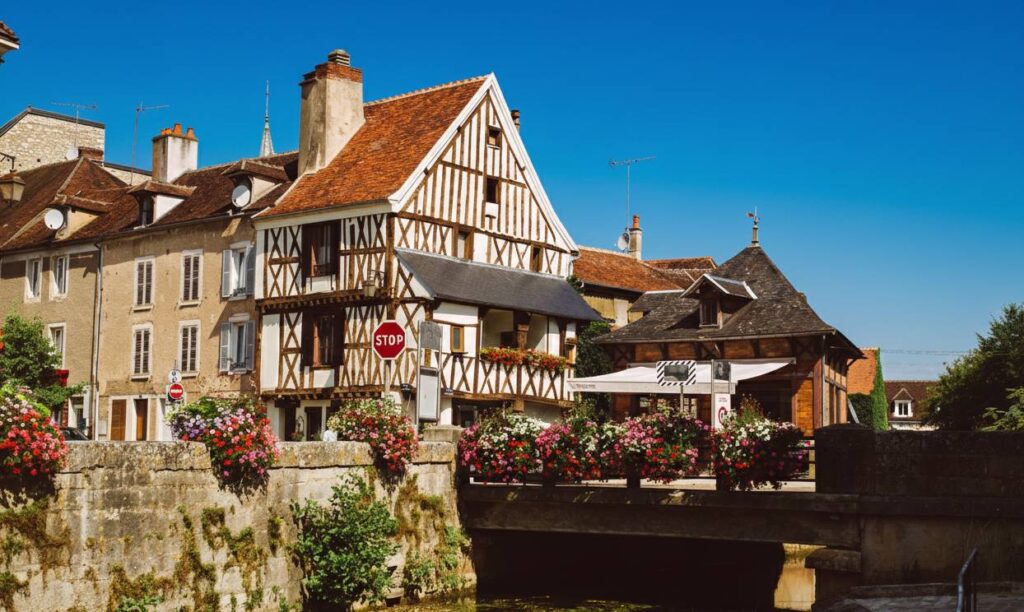
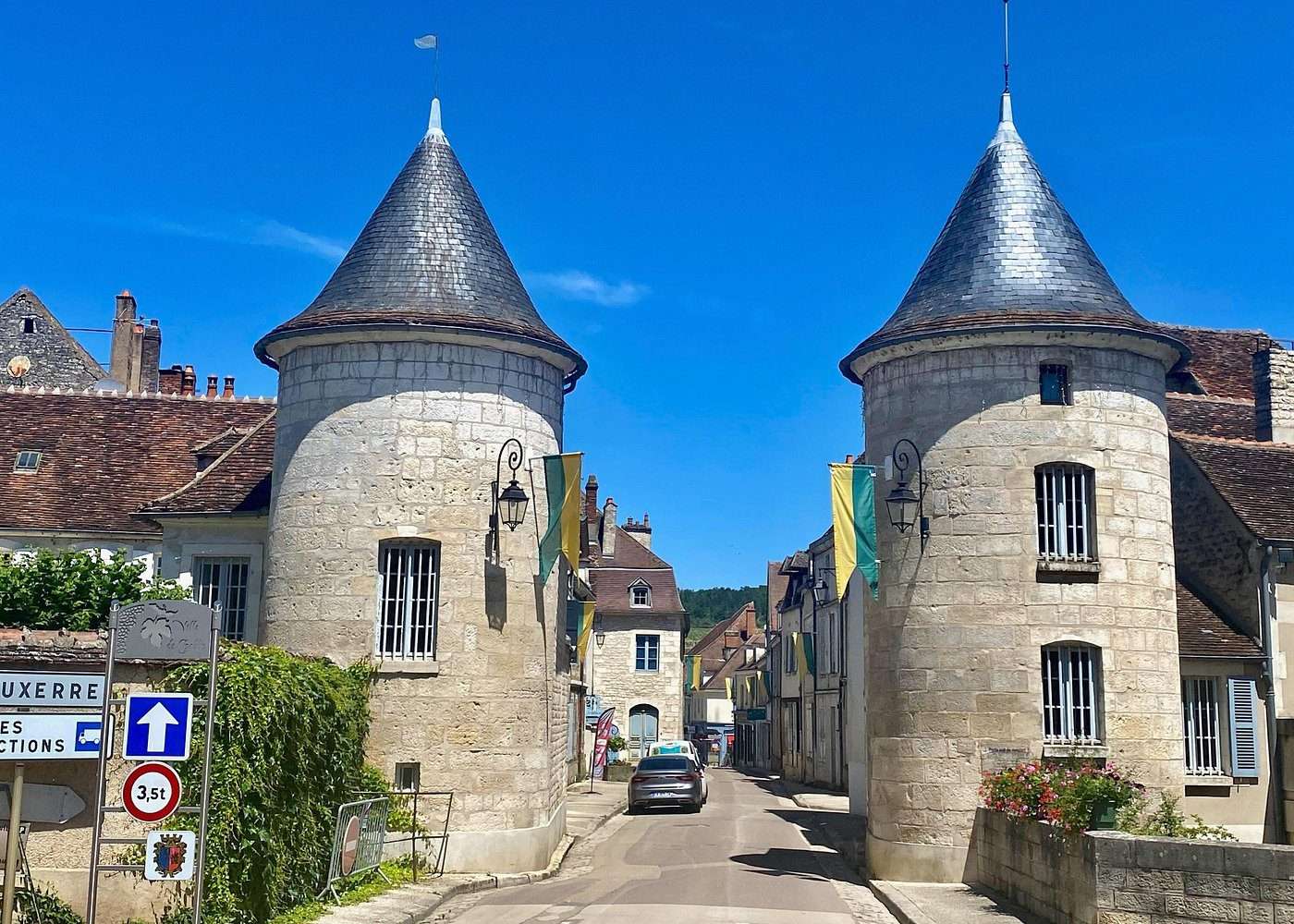
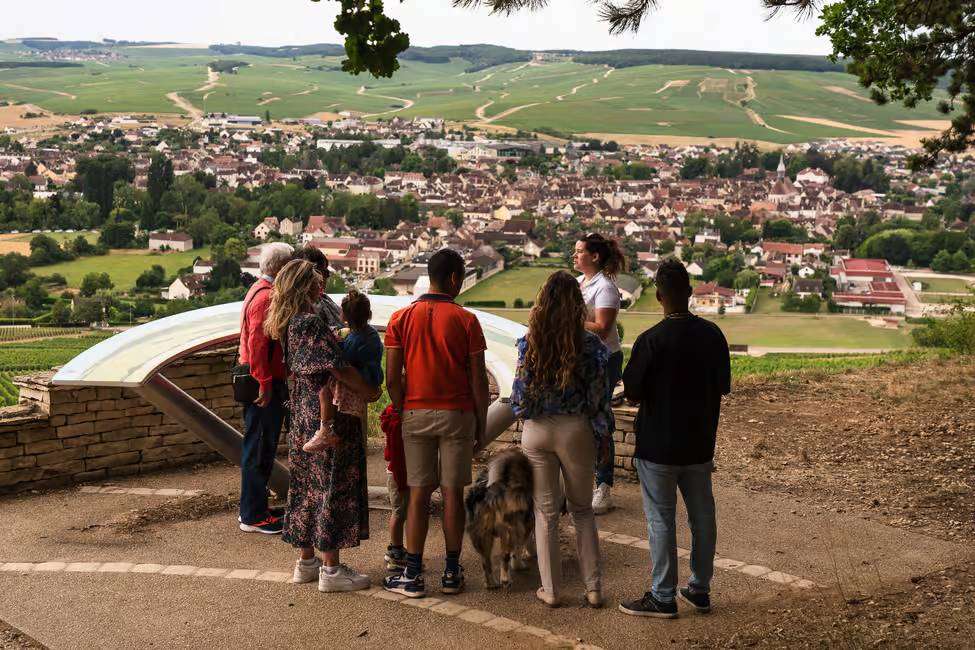
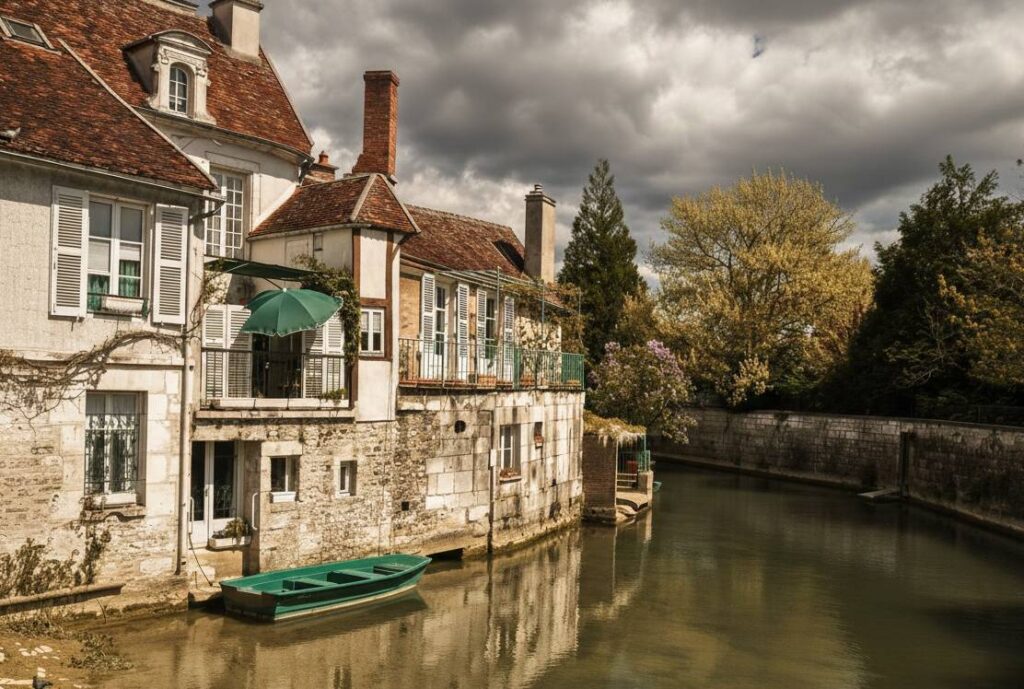
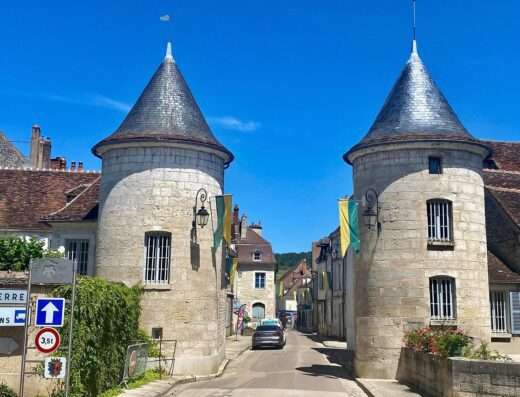
The pretty village of Chablis, the heart beat of the Chablis wine region
The village-level Chablis appellation is the most expansive and forms the backbone of the region’s production. Geologically, these vineyards are planted on the same Kimmeridgian marl that defines the Premier and Grand Crus, but they occupy a wider variety of aspects and slope gradients.
The soil in these parcels is a complex mix of limestone and calcareous clay, often featuring a significant amount of surface stones that aid in heat retention. Because the yields are naturally higher than the elite crus, the wines offer a classic, quintessential profile: a balance of citrus fruit, fresh hay, and a distinct mineral “snap.” The hydrology of these sites varies, but the presence of marine fossils remains a constant, ensuring the wine retains its saline DNA. Notable areas within the village level produce wines that often punch above their weight, especially those located on the fringes of Vaillons or Montmains, where the drainage and mineral uptake mimic the intensity of the premier crus. This level of the hierarchy provides the most transparent look at the regional character—crisp, dry, and unfailingly refreshing.
Petit Chablis: The Portlandian High Plateau
Contrary to its name, Petit Chablis is far from small in character. This appellation occupies the highest ground in the region, situated on the plateaus above the Premier and Grand Cru slopes.
The defining geological feature here is the Portlandian limestone. Unlike the fossil-rich Kimmeridgian marl, Portlandian soil is younger, harder, and significantly more compact. It contains much less clay and fewer marine fossils, which fundamentally alters the vine’s metabolism. Because the soil is less porous, the roots do not penetrate as deeply as they do on the lower slopes, resulting in a wine that prioritizes vibrant, primary fruit over heavy mineral extract. The micro-climate on these high plateaus is also cooler and more exposed to the wind, which preserves a very high level of natural acidity.
Sensory links for Petit Chablis are dominated by green apple, tart lemon zest, and a light, flinty finish. These wines are the ultimate aperitifs, designed for early consumption while their “electric” energy is at its peak. Far from being a lesser terroir, the Portlandian plateau offers a unique, high-altitude expression of Chardonnay that is vital to the diversity of the region.
The Grand Auxerrois: The Historic Satellite Terroirs
Beyond the core valley of the Serein lies the Auxerrois (often referred to as the Grand Auxerrois), a collection of ancient viticultural clusters that surround the city of Auxerre. While these terroirs share the same northern latitude as the main region, they offer a diverse geological narrative that complements the Kimmeridgian focus of the central valley.
The geology of the Auxerrois is a complex mosaic of Jurassic limestones. In the Saint-Bris appellation, the soil is predominantly Portlandian and Kimmeridgian, but the unique micro-climate allows for the cultivation of Sauvignon Blanc and Sauvignon Gris, producing wines with a singular aromatic profile of citrus and flint that differs sharply from Chardonnay.
In the valley of the Yonne, the Irancy appellation sits in a natural bowl of Kimmeridgian marl, specialized in Pinot Noir. Here, the “soul” of the terroir is found in the addition of the César grape, a Roman-era variety that adds tannin and deep color to the wines. The sub-regions of Chitry, Coulanges-la-Vineuse, and Epineuil further diversify the landscape, with soils ranging from calcareous clays to alluvial deposits. These sites produce wines of remarkable freshness, often showing more fruit-forward characteristics and a softer mineral edge than the wines of the Serein Valley. The Auxerrois represents the historical diversity of the Yonne department, acting as a vital link between the chalky intensity of the north and the broader limestone traditions of greater Burgundy.
Human Intervention and Viticultural Mastery
The oenological philosophy is one of profound respect for the geological blueprint. Man’s role is not to overshadow the land, but to act as a conduit for its expression. This begins in the vineyard, where growers adapt their techniques to the specificities of the Kimmeridgian slopes. Pruning is predominantly executed via the Double Guyot or Taille Chablis method, designed to keep the fruiting wood close to the ground to benefit from radiant soil heat during the cool nights.
Canopy Management and Soil Health
Row orientation is meticulously planned to maximize sunlight while protecting the fruit from excessive sunburn. In the most prestigious crus, high-density planting forces inter-vine competition, which encourages deep root penetration into the limestone strata. Modern viticulture focuses on soil health to maintain porosity and encourage microbial life, which is essential for the mineral uptake described in the geology of the Chablis Premier Cru and Chablis Grand Cru sites.
Technical Precision in the Cellar
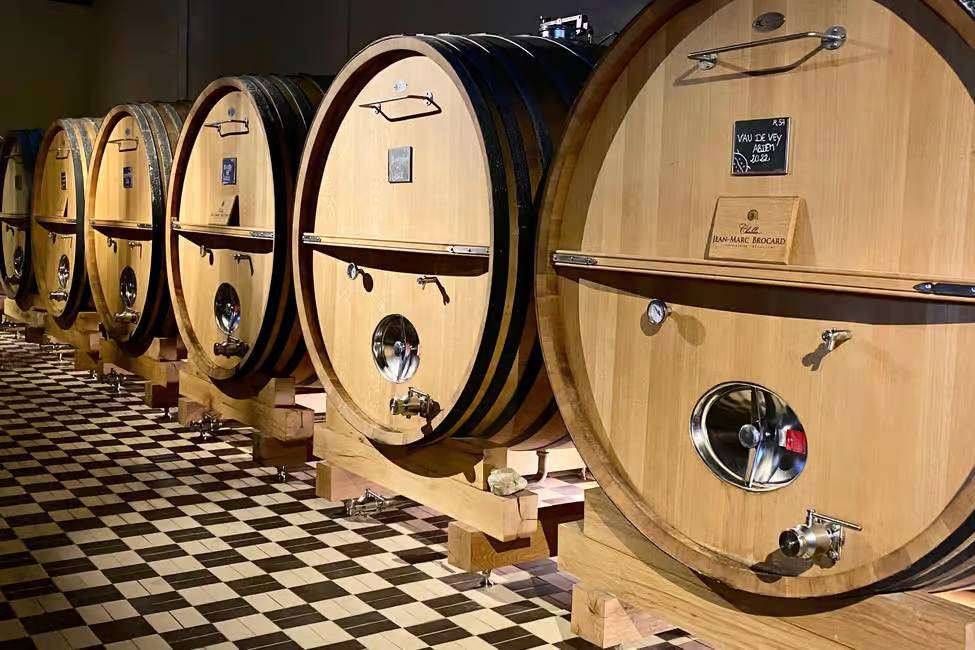
The debate between stainless steel and oak is central to the regional identity. While many producers utilize temperature-controlled stainless steel tanks to preserve the primary fruit and “piercing” acidity, higher-tier wines often see some wood. However, the use of new oak is strictly limited. Most oenologists prefer neutral oak foudres or older barrels to allow for a gentle micro-oxygenation that softens the fierce acidity without masking the terroir. This minimal intervention approach in the cellar ensures that the final liquid remains a transparent window into the soil.
Chablis terroir: From Knowledge to Experience
The technical data of this Chablis Terroir Guide—the fossilized marls, the diurnal shifts, and the Kimmeridgian bedrock—provides the framework for understanding, but the wine itself is a living entity that transcends the page. The science of pedology tells us why a wine from Montée de Tonnerre differs from one grown in Vaillons or the red slopes of Irancy, but only the physical experience of tasting these liquids in situ can reveal their true majesty.
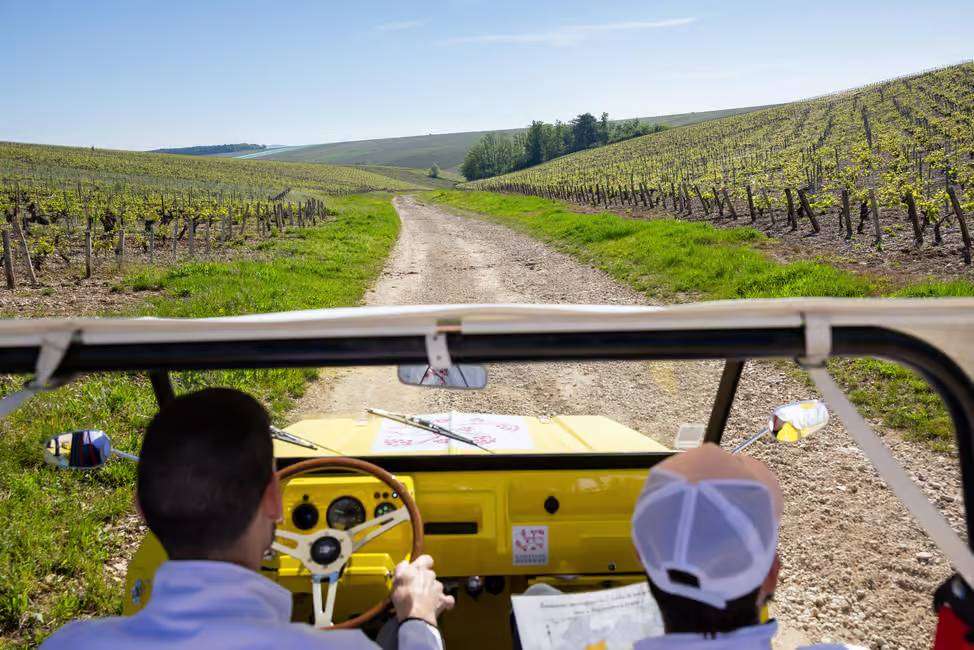
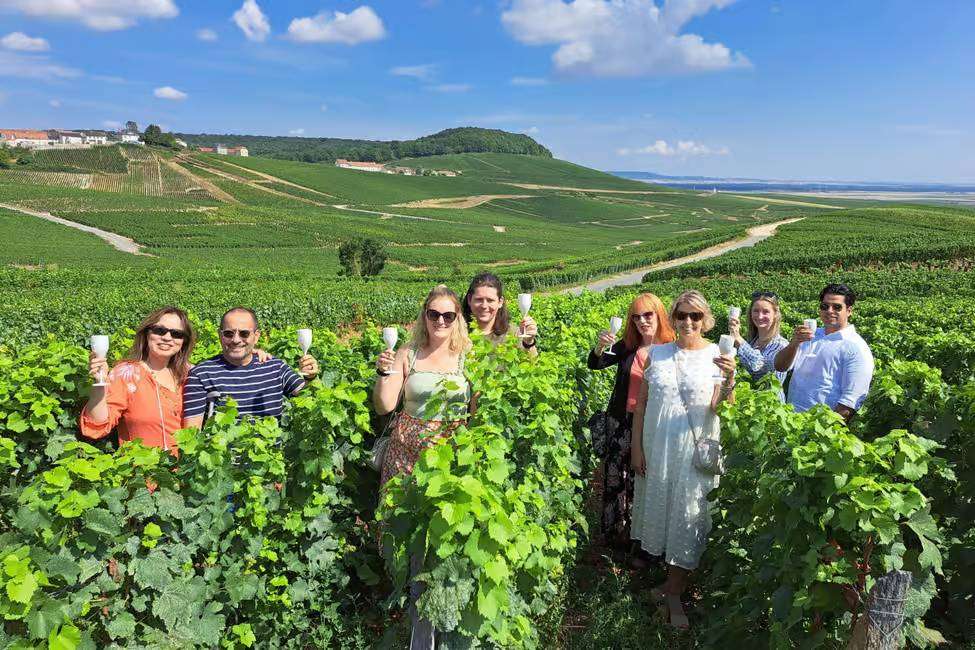
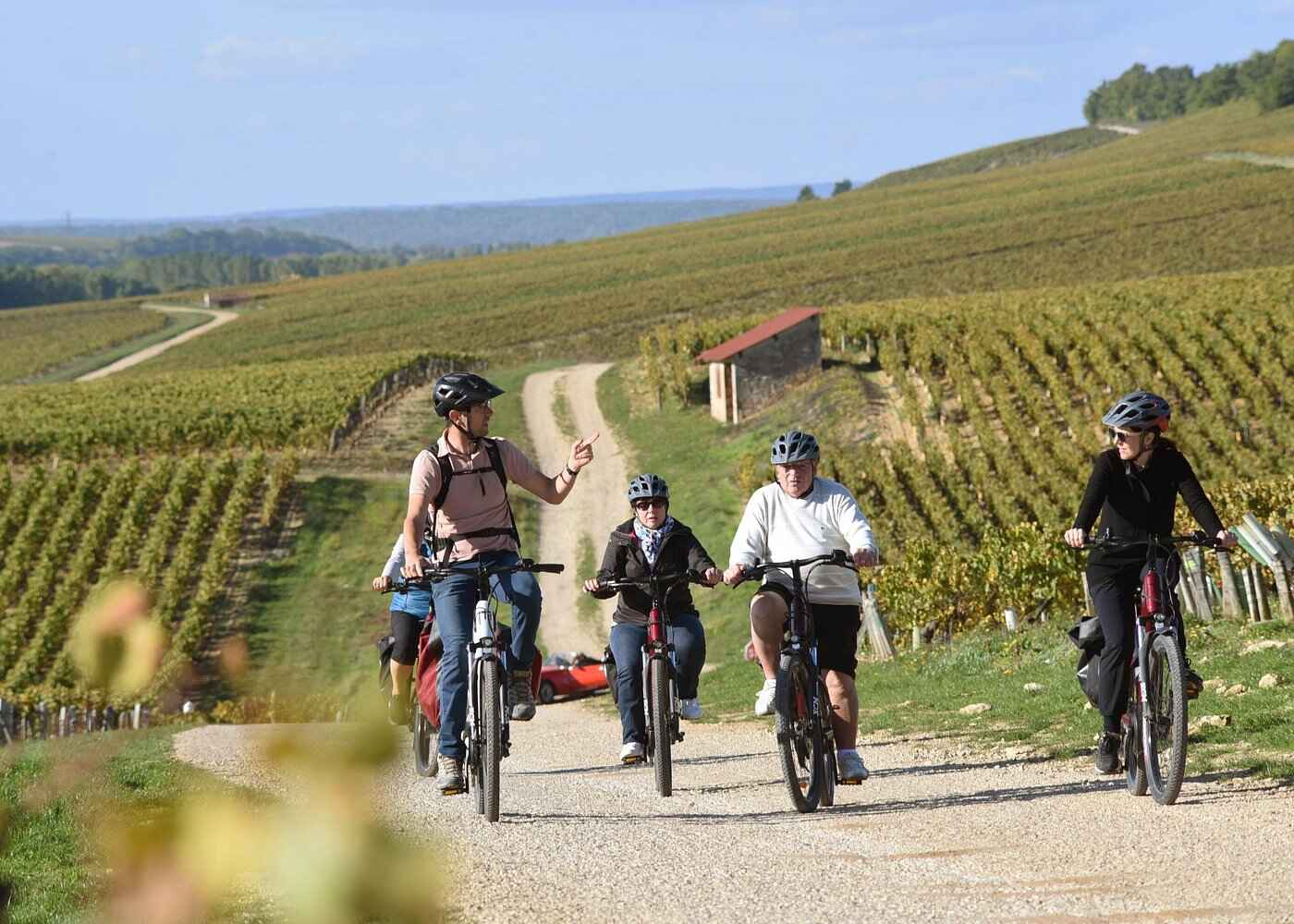
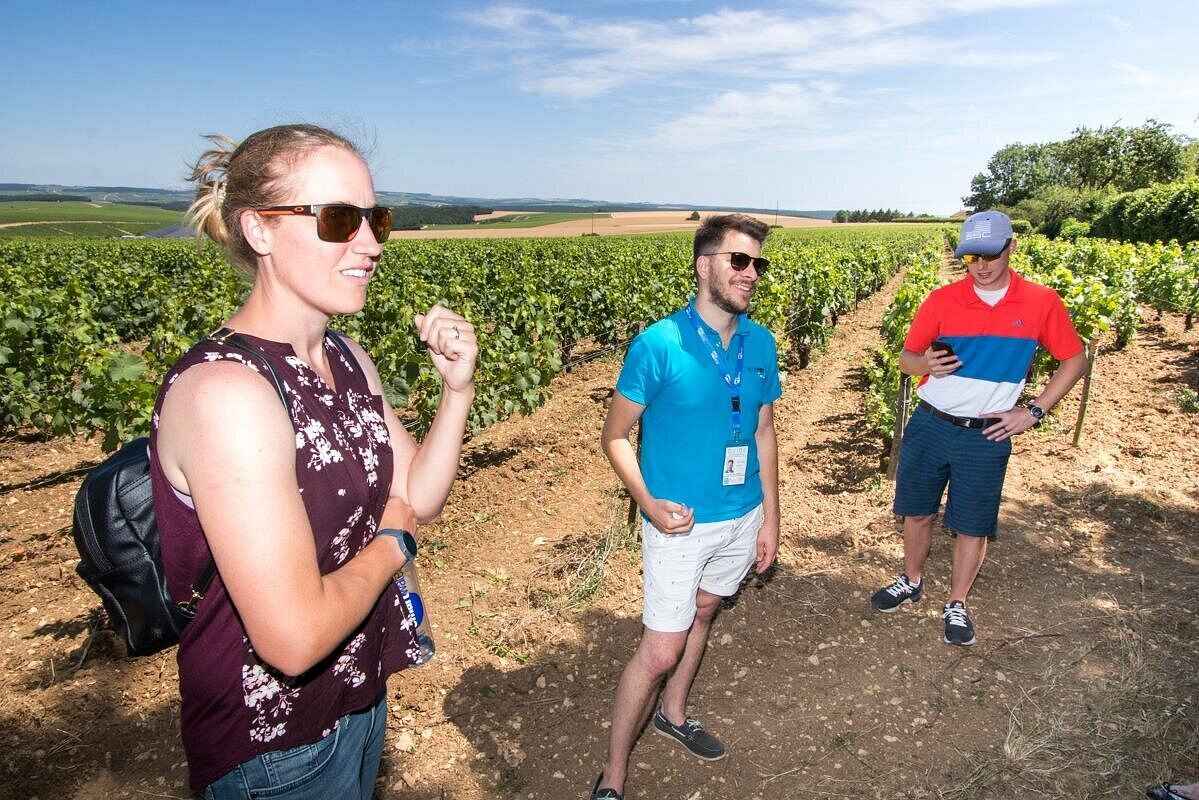
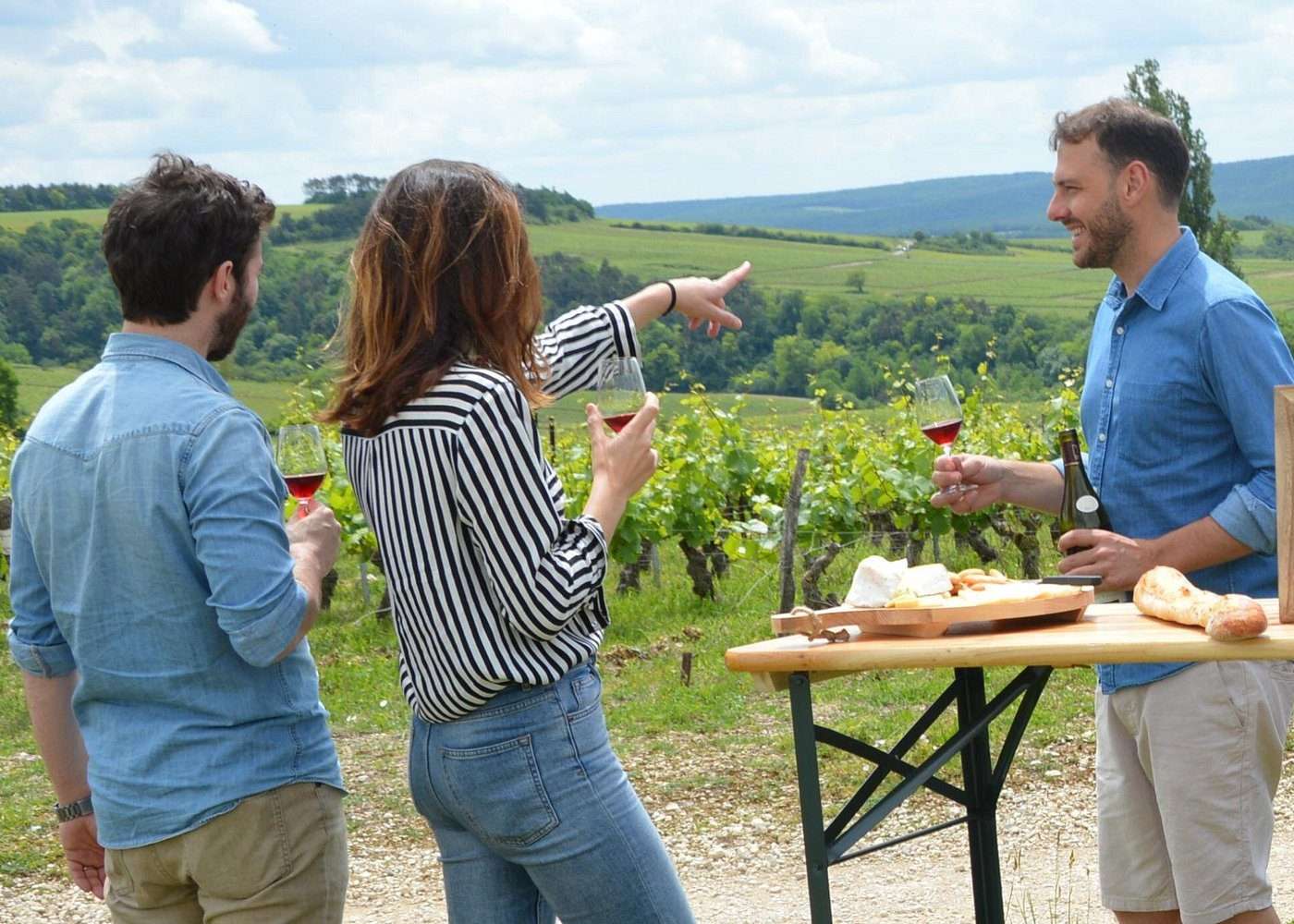
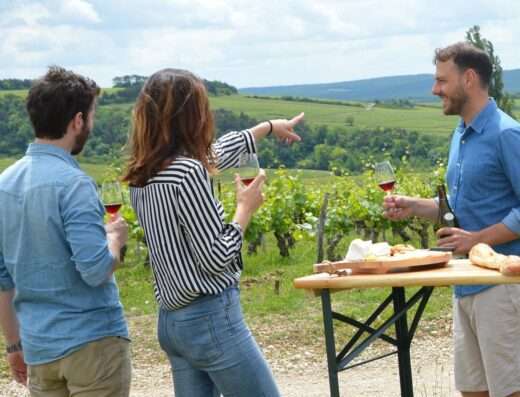
While the geology of these hillsides is written in stone, the wine is a vibrant, evolving liquid that captures the heartbeat of a specific season. To truly grasp the “kimmeridgian effect,” one must stand amidst the vines, feeling the crunch of ancient oyster shells beneath their feet and the cool breeze of the Serein Valley on their face. We invite you to join our curated, high-end wine tours, designed for the discerning enthusiast who seeks to go beyond the label. Walk the historic gravels of Les Clos, explore the limestone cellars of the Auxerrois, and engage with the master oenologists who dedicate their lives to this hallowed ground. This is more than a tasting; it is a pilgrimage to the source of the world’s most intellectual white wine