
Beaujolais, the underrated wine region
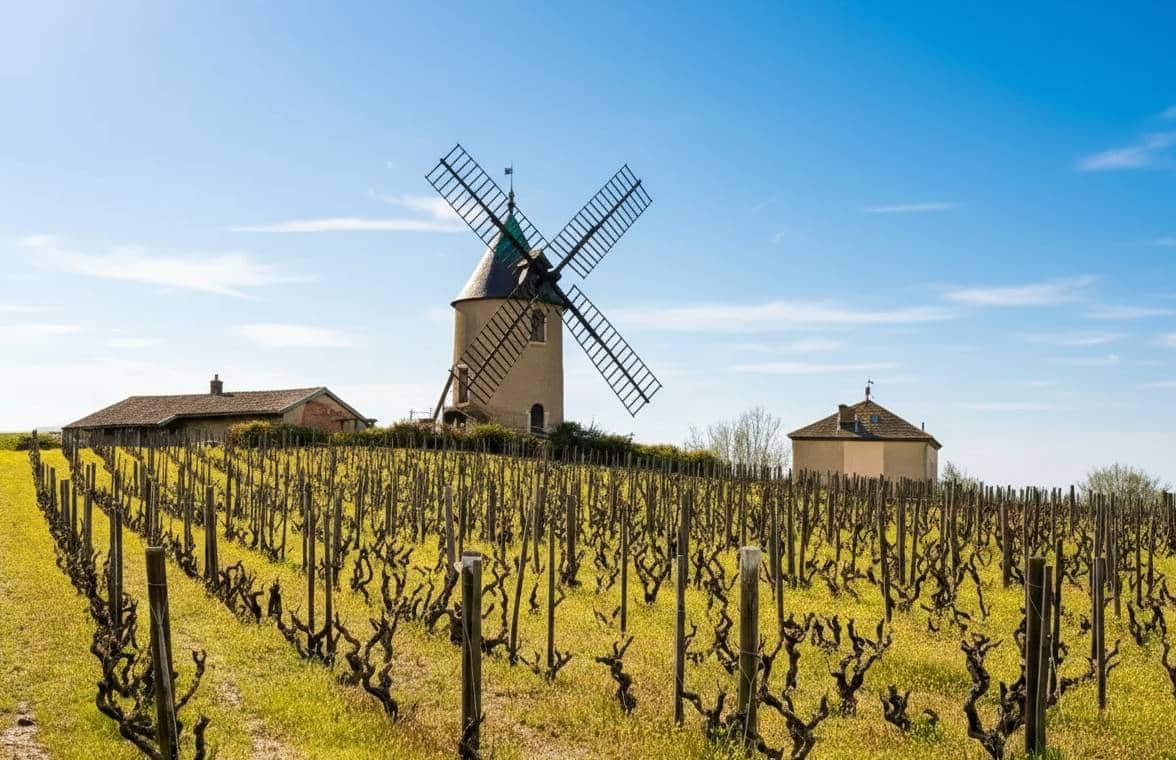
The Beaujolais wine region is a land of geological complexity and viticultural rebirth. Situated in eastern France, immediately south of Burgundy and north of the gastronomic capital of Lyon, this narrow corridor of vines stretches approximately fifty-five kilometers in length. Historically overshadowed by its northern neighbor or reduced to the seasonal frenzy of Beaujolais Nouveau, the region is currently undergoing a profound qualitative revolution. This transformation is driven by a deep understanding of its diverse soils—most notably the pink granite of the north and the golden limestone of the south—which allow the Gamay Noir à Jus Blanc grape to express a spectrum of profiles ranging from ethereal and floral to structured and age-worthy.
The Heritage and Evolution of Beaujolais Viticulture
The viticultural history of the Beaujolais wine region originated during the Roman conquest of Gaul. Traces of vineyards dating back to 59 Before Common Era suggest that the Romans recognized the potential of these sun-drenched slopes early on. Following the fall of the Roman Empire, the Benedictine monks played a pivotal role in preserving and expanding vine culture throughout the Middle Ages.
The nineteenth century marked a significant turning point with the arrival of the railroad, which connected the Beaujolais wine region to the thirsty markets of Paris. During this era, Victor Vermorel, a visionary local engineer, revolutionized the industry through his research in ampelography and the invention of specialized viticultural machinery. In the twentieth century, Georges Duboeuf, often hailed as the King of Beaujolais, propelled the region onto the global stage through the promotion of Beaujolais Nouveau. While this brought commercial success, the contemporary era is defined by a return to “terroir-focused” winemaking, emphasizing the ten prestigious Crus and sustainable practices such as those certified by Terra Vitis.
The 10 crus of Beaujolais
1 Julienas
Produces wines with red fruit and spicy notes, capable of aging.
2 Saint-Amour
Delicate, and elegant wines with red fruit and peony notes, often enjoyed young.
3 Chenas
A smaller Cru producing aromatic wines with floral and spicy notes
4 Moulin à Vent
Burgundian in style, producing powerful wines with truffle and spice notes
5 Fleurie
the most “feminine” of the Crus, known for elegant, floral, and aromatic wines
6 Chiroubles
Situated at the highest altitude, yielding delicate, silky wines with floral notes.
7 Morgon
Structured and age-worthy, offering deep fruit, earthy notes, and robust character.
8 Regnié
The newest Cru, known for expressive, fruity wines.
9 Côte de Brouilly
Wines from the steeper slopes of Mont Brouilly, more elegant and concentrated.
Brouilly
The largest Cru, known for lighter, perfumed wines, though some can age.
Map of 10 crus AOC wines of Beaujolais
The Beaujolais wine region is organized into a strict three-tier hierarchy of Appellations d’Origine Contrôlée:
Beaujolais AOC: The broadest classification, covering the southern sector. These wines are designed for immediate consumption and are known for their accessibility.
Beaujolais-Villages AOC: Sourced from thirty-eight specific villages in the hilly transition zone. These wines offer greater concentration and a more pronounced mineral character.
The Ten Crus: The pinnacle of the Beaujolais wine region, located exclusively in the north
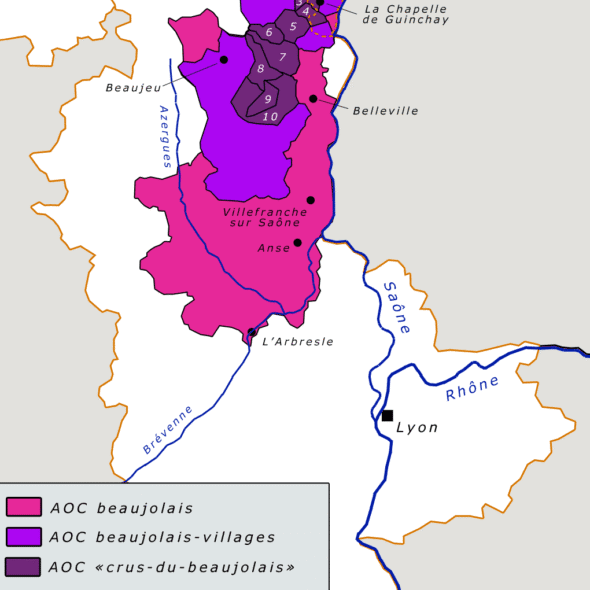
Beaujolais Wine Map with 10 Crus of beaujolais
Style and techniques of wines from Beaujolais
A hallmark of this Burgundy part wine region winemaking, especially for the lighter styles like Beaujolais Nouveau, is carbonic maceration (or semi-carbonic maceration). In this process, whole, uncrushed grape bunches are placed in sealed tanks. The grapes at the bottom are crushed by gravity, releasing juice that ferments normally. However, the intact grapes above undergo an intracellular fermentation within their skins due to the carbon dioxide environment. This technique extracts vibrant fruit flavors (often described as notes of banana, bubblegum, kirsch, raspberry, and cherry) and soft tannins, resulting in the characteristic fresh and approachable style , mostly Beaujolais nouveau wines
Terroir and climate
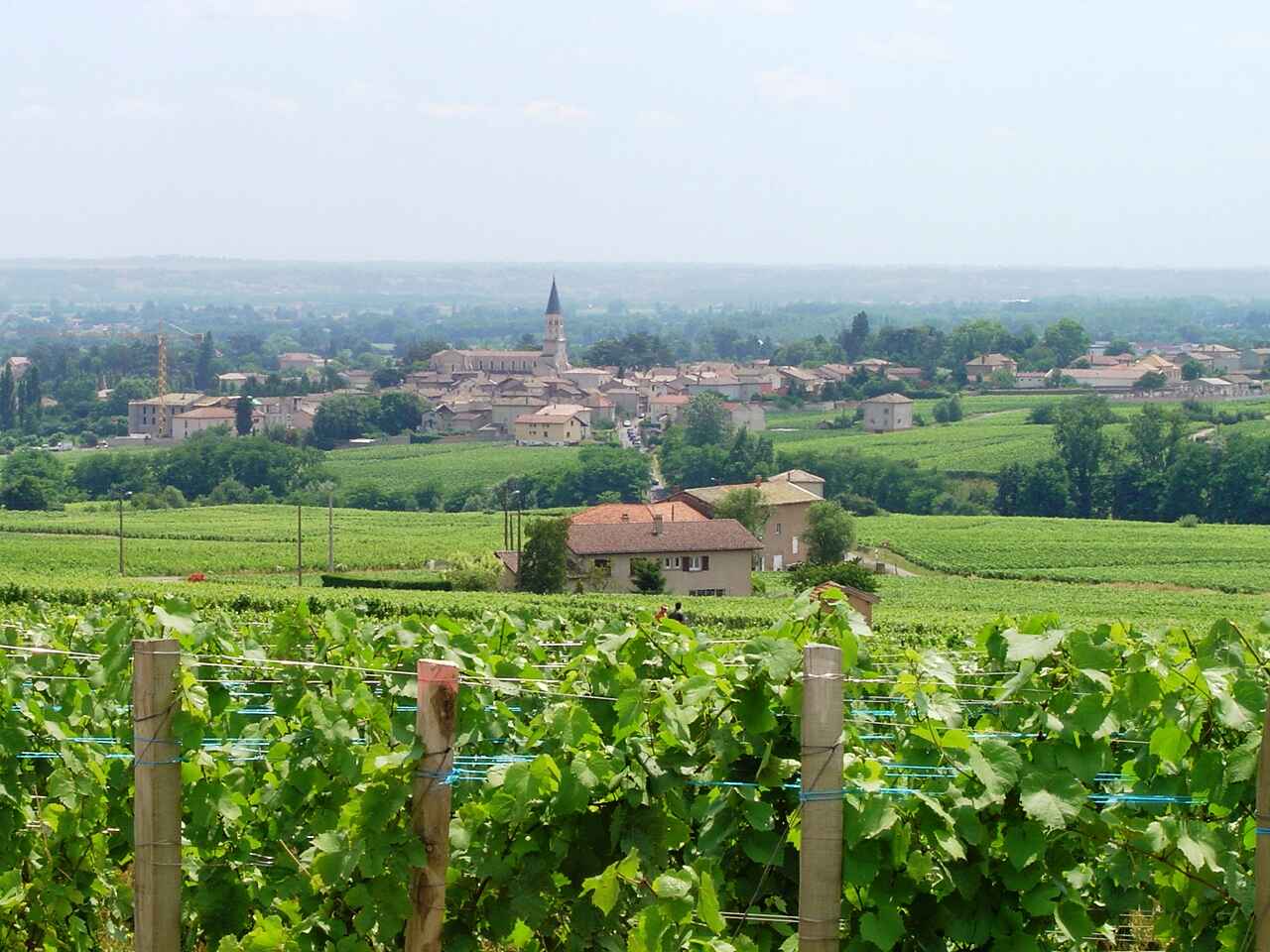
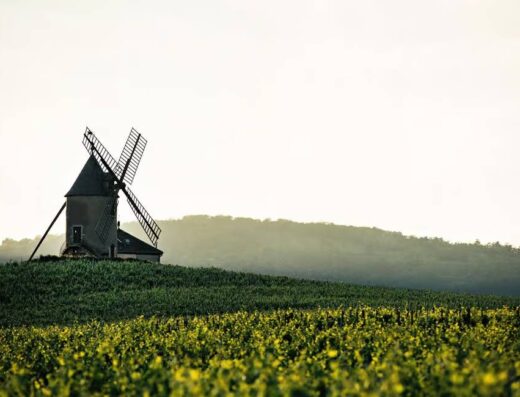
Vineyards view while traveling and discovering the region on a wine tour with wine tasting and bistronomic restaurant
Climate
The region benefits from a semi-continental climate with some oceanic influence. The region is divided by the Nizerand River. To the north, the soils are predominantly granite and schist, leading to the more structured and complex wines of the Crus. To the south, the soils are more clay-limestone, which suits the production of lighter, fruitier wines and Beaujolais Villages wines. It has successfully marketed its accessible and joyful wines, making it a popular choice for everyday enjoyment, but its top Crus offer a surprising depth and complexity that can rival some more famous Burgundies.
Soil
The terroir here, particularly its soil composition, is a key factor in the distinct styles of wine produced across the region. While the Gamay grape is dominant throughout, the varied soils allow it to express itself in a multitude of ways, from light and fruity to structured and age-worthy. It has a complex geological history, with over 300 distinct soil types identified, but they can be broadly categorized based on the region’s north-south divide
1. Northern part: Granitic and Schist Soils (Home of cru Beaujolais)
The northern part of the wine region, where the 10 Beaujolais Crus are located, is characterized by its ancient, weathered granitic and schist (decomposed rock) soils. These soils are
Poor in nutrients: This forces the Gamay vines to dig deep, developing extensive root systems to find water and minerals. This “struggle” leads to more concentrated grapes.
Excellent drainage: Granite and schist are well-draining, which is crucial for vine health as Gamay doesn’t like “wet feet.”
Heat retention: These dark, rocky soils absorb and retain heat, releasing it slowly to the vines, which helps ripen the grapes.
Mineral-rich: The decomposition of these rocks imparts distinct minerality to the wines. Certain Crus, like Moulin-à-Vent, are known for high manganese content in their granite, contributing to more tannic and age-worthy wines
Wines from these northern granitic and schist soils are more structured and full-bodied (especially the Crus like Morgon and Moulin-à-Vent) , higher in minerality: Often described as “stony” or “flinty.”. They are also capable of aging and they develop more complex flavors (earthy, spicy, sometimes even resembling Pinot Noir) over time.
2. Southern part: Clay, Limestone, and Sandstone Soils (Classic and village appelations)
where the broader AOC and Villages AOC are found. The most known and exported is maybe Louis Jadot Beaujolais villages but thay are many other good beaujolais wines at affordable price in this region. South South has a different geological composition dominated by:
Clay and limestone: These soils are more common on the rounded hills and in the valleys. The typical colored limestone of that region is one of the reason why part of the region is nicknamed golden stones (or Pierres dorées in French.This area is known for its distinctive golden-colored limestone, which is used to construct the villages and buildings, giving the region a unique and warm aesthetic. Some notable villages in the Golden Stone region include Oingt (classified as one of France’s “Most Beautiful Villages”), Theizé, Charnay, Ternand, and Bagnols.
Sedimentary soils and sandstone: Also present in varying degrees.
More fertile: Compared to the granitic soils of the north, these soils are generally more fertile.
Better moisture retention: Clay and limestone soils retain water more effectively, which can lead to higher yields.
Wines from these southern soils are Lighter-bodied and fruitier, characterized by vibrant red fruit flavors (cherry, raspberry) and a more easy-drinking style. They are Less structuredand designed for immediate enjoyment.This is the area where the famous Beaujolais Nouveau primarily originate
Gamay grape
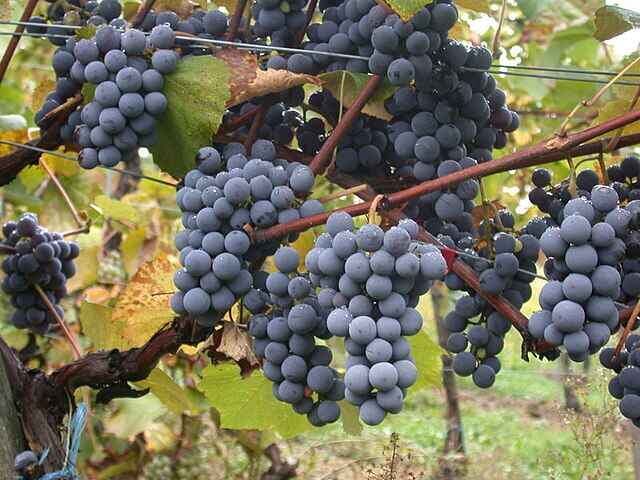
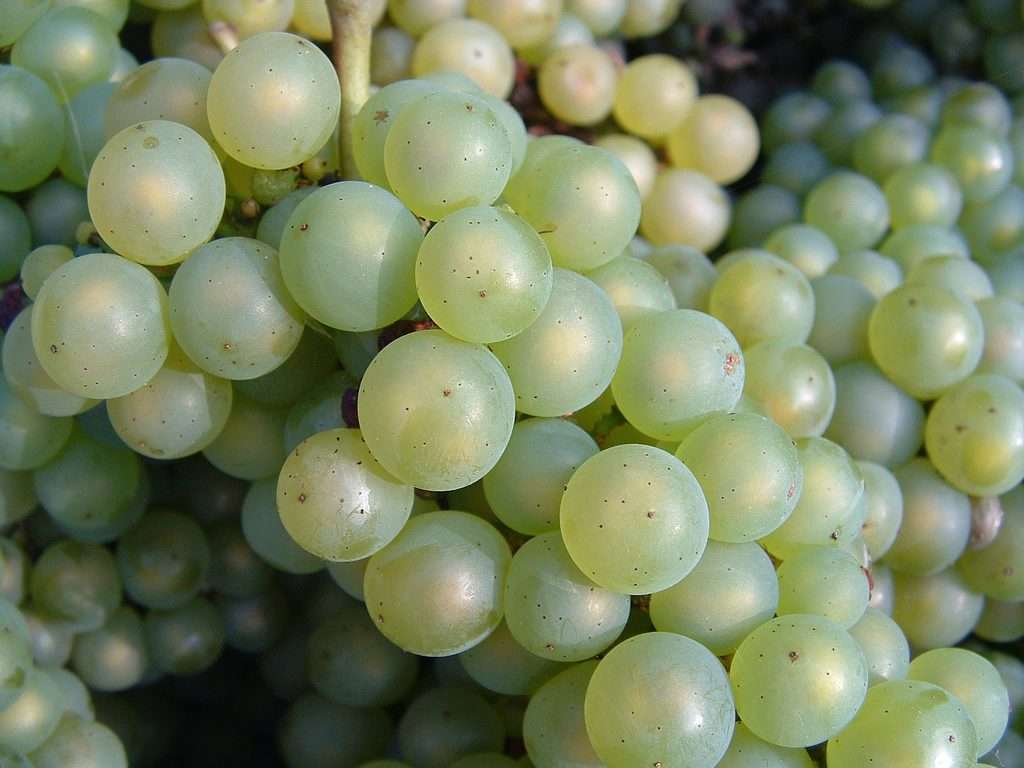
The region is almost entirely dedicated to one red grape variety: Gamay Noir à Jus Blanc (Gamay with white juice). This sets it apart from Burgundy proper, which is dominated by Pinot Noir and Chardonnay.
Gamay thrives in Beaujolais’ granite, schist, and some clay-limestone soils, particularly in the northern areas. Gamay wines are typically known for being fruit-forward, light-bodied, and highly aromatic, with low tannins and refreshing acidity.
Chardonnay
While 95% of the region production is red Gamay, a small amount of white wine is made from Chardonnay, primarily under Beaujolais-Villages wine appellations. These wines are typically fresh, crisp, and fruit-driven, similar in style to basic Mâconnais Chardonnay. Chardonnay here tends to flourish on limestone and clay-limestone soils, which are more prevalent in the southern parts of the region (known as “Pierres Dorées” or Golden Stones area) and some areas in the far north bordering the Mâconnais.
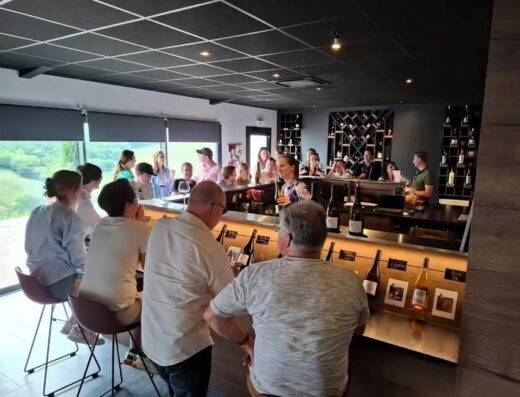
Some of the wine tours in the region
click on button to go to full list on map
Gastronomy and Lifestyle: The Beaujolais Table
The Beaujolais wine region is the historic supplier to the “Bouchons” of Lyon. Its wines are famed for their extreme food versatility. The high acidity and low tannins of Gamay make it an exceptional partner for the region’s rich charcuterie, such as Saucisson de Lyon or Pâté en Croûte. For more structured Crus like Moulin-à-Vent or Morgon, local favorites include Coq au Vin (traditionally made with Beaujolais wine) and slow-roasted pork. Beyond meat, the freshness of a Beaujolais-Villages complements soft cheeses like Brie and Camembert, or even grilled salmon, proving that the Beaujolais wine region offers a bottle for every course of a sophisticated meal.
Your Journey Through the Beaujolais Wine Region Planning Your Trip
Reaching the Beaujolais wine region is seamless via the city of Lyon. Travelers can arrive at Lyon-Saint-Exupéry Airport or take the Train à Grande Vitesse to Lyon Part-Dieu or Mâcon-Loché stations. From Lyon, the southern part of the region is a mere thirty-minute drive. For a professional experience, private tours with expert guides provide access to family-run estates and exclusive cellar tastings that are often unavailable to the general public. Whether walking the “sensory wine trail” at Château de Pizay or exploring the historic capital of Beaujeu, visitors will find a region that is as welcoming as it is intellectually stimulating.