Table of Contents
Mediterranean Wine Culture: Traditions, Landscapes and the Art of Living with Wine
For thousands of years, wine has been far more than an agricultural product in Southern Europe. It has shaped landscapes, influenced architecture, inspired festivals, strengthened family traditions and accompanied everyday meals across Portugal, Spain, Italy and Greece. Unlike many wine-producing regions where wine is primarily associated with luxury, collecting or formal tasting, Mediterranean societies have long regarded wine as an integral part of daily life—a cultural expression rooted in community, hospitality and a profound connection to the land.
The origins of this culture stretch back over three millennia, when Phoenician, Greek and later Roman civilizations established vineyards throughout the Mediterranean basin. As viticulture spread across the Iberian Peninsula, the Italian peninsula and the Greek world, wine gradually became intertwined with local economies, religious ceremonies and social customs. Over centuries, each region developed its own traditions, yet they all shared a common philosophy: wine was created to accompany life rather than to stand apart from it.
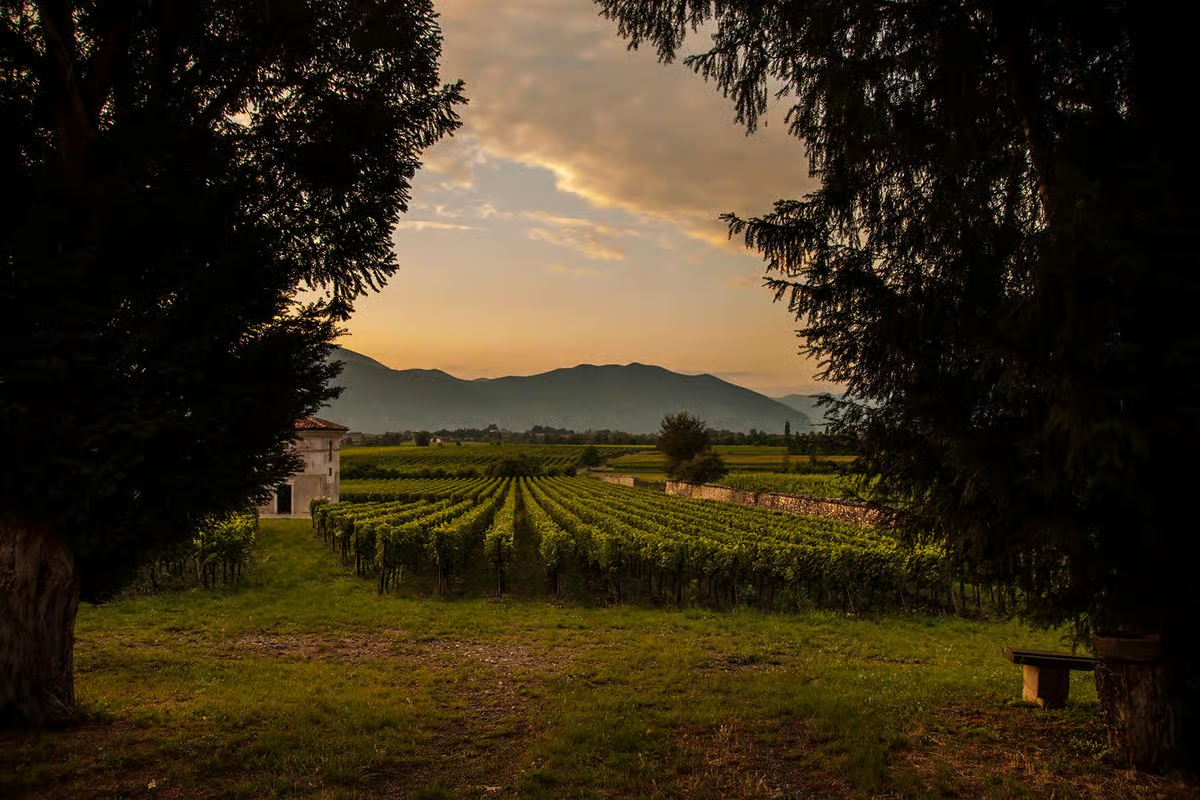
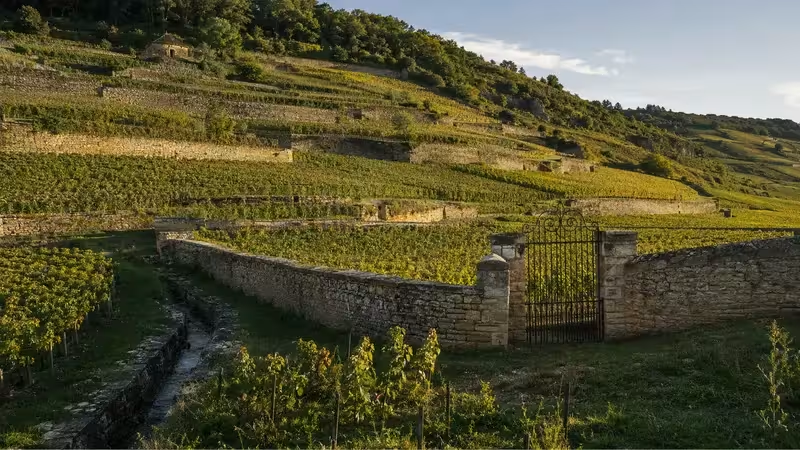
This enduring relationship between people and vineyards has shaped some of Europe’s most recognisable cultural landscapes. Ancient terraces carved into steep hillsides, dry-stone walls built generation after generation, family-owned vineyards passed down through centuries and villages organised around wine production all testify to the central role of viticulture in Mediterranean society. In many regions, vineyards are not isolated agricultural plots but part of living environments where farming, architecture, gastronomy and local identity have evolved together over hundreds of years.
One of the defining characteristics of Mediterranean wine culture is its remarkable continuity. While modern winemaking has embraced new technologies and international markets, countless traditions remain deeply rooted in everyday life. Seasonal harvest celebrations, village wine festivals, family meals centred around local wines and the preservation of indigenous grape varieties continue to reinforce cultural identities that have survived political change, economic transformation and shifting consumer preferences.
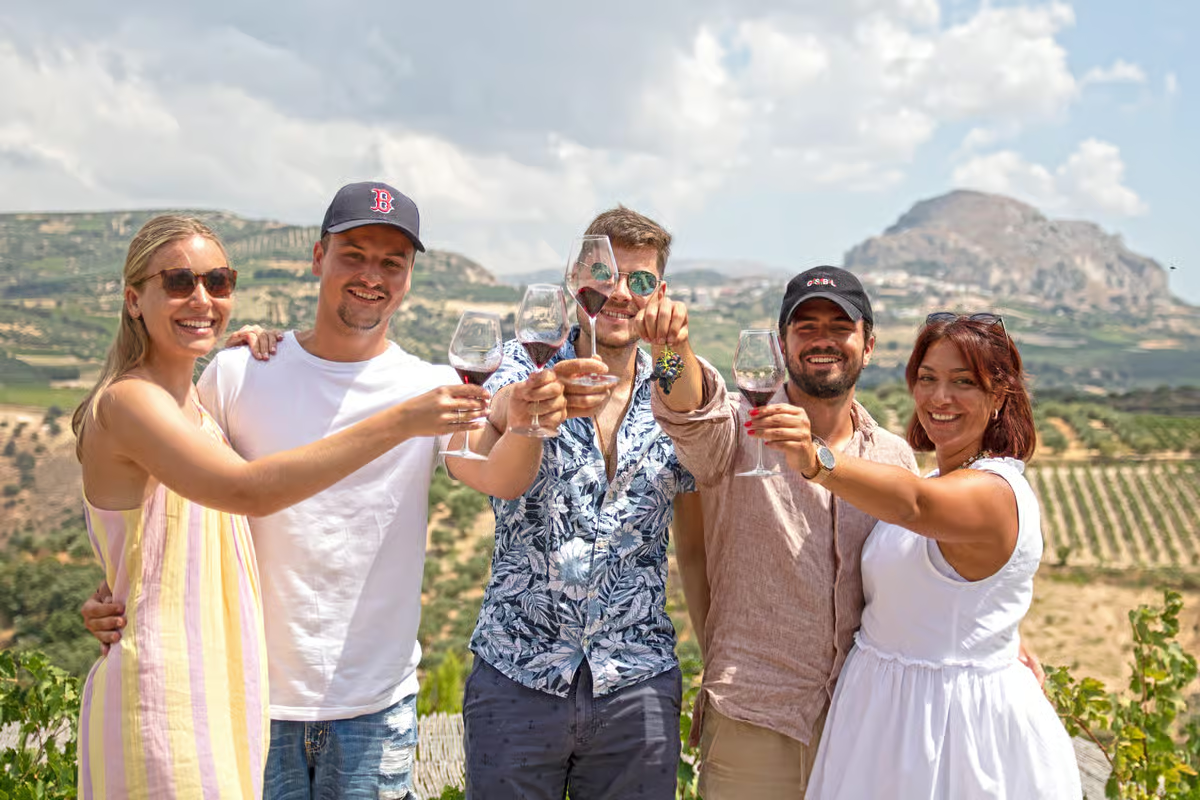
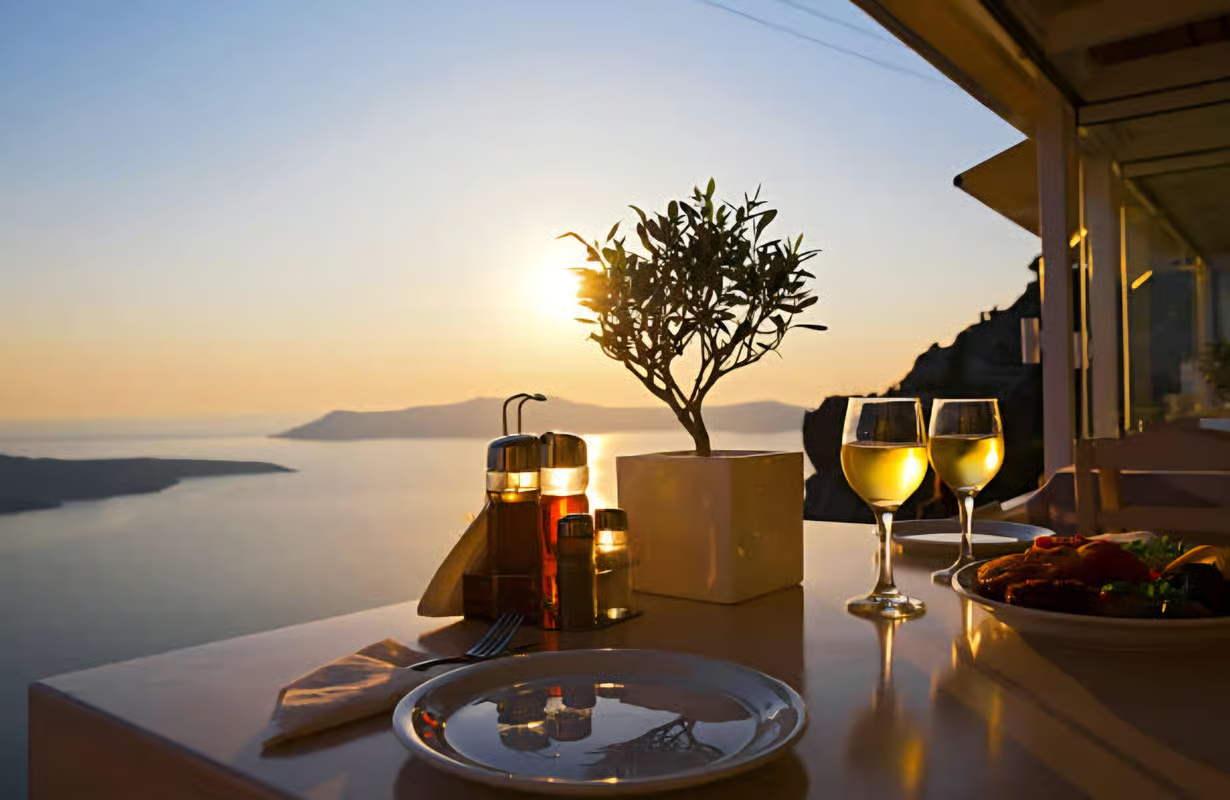
The Mediterranean approach to wine also differs fundamentally from more commercial or prestige-driven wine cultures. Across Southern Europe, wine has historically been viewed less as a symbol of status than as a natural companion to food, conversation and shared experiences. Whether served in a family kitchen in rural Portugal, a village square in Spain, a Tuscan farmhouse or a seaside taverna in Greece, wine often represents generosity, hospitality and the simple pleasure of gathering around a table rather than the pursuit of exclusivity.
Today, Mediterranean wine culture continues to evolve while remaining firmly anchored in its traditions. A new generation of winemakers is restoring historic vineyards, reviving forgotten native grape varieties and embracing sustainable viticulture, all while preserving customs that have defined Southern European wine for centuries. This balance between heritage and innovation has transformed the region into one of the world’s most fascinating wine destinations, where every bottle reflects not only a place, but also a way of life shaped by history, landscape and community.
This article explores the enduring traditions that continue to define Mediterranean wine culture, from family vineyards and historic wine villages to harvest celebrations, cultural landscapes and the timeless philosophy that has made wine an essential part of everyday life across Southern Europe.
Wine as a Way of Life
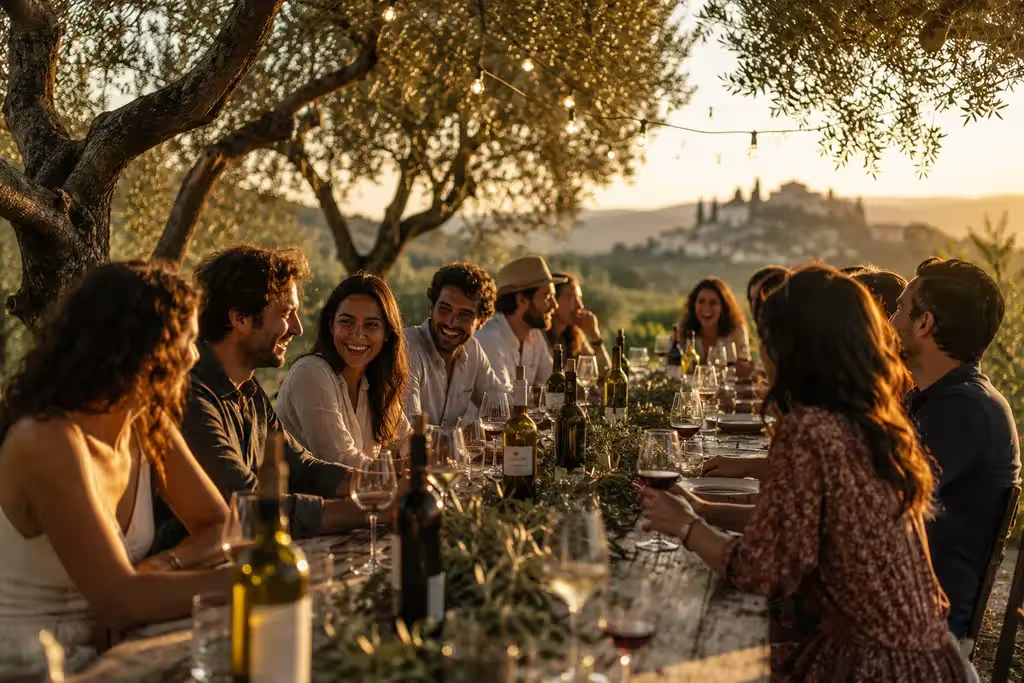
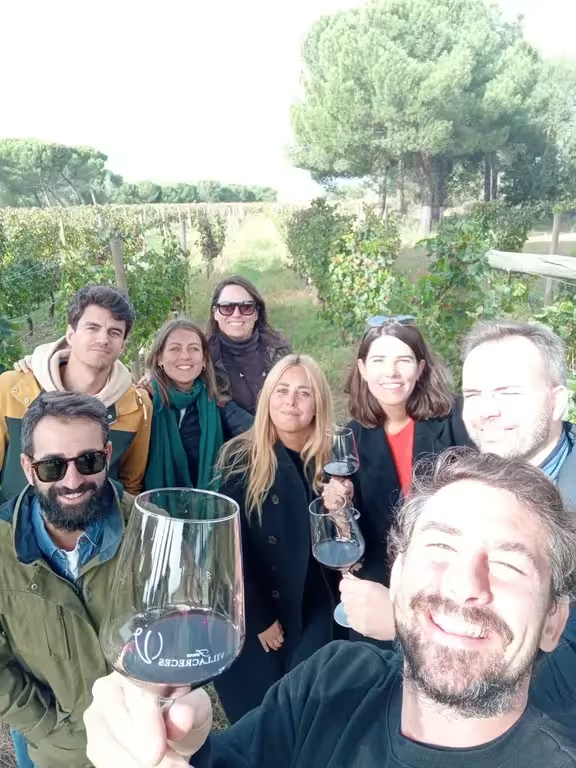
In Southern Europe, wine has traditionally been understood not as an occasional indulgence but as a natural part of everyday life. Across Portugal, Spain, Italy and Greece, generations have grown up with vineyards woven into the fabric of their communities, where wine accompanies family meals, seasonal celebrations and social gatherings rather than existing solely as a luxury product. This deeply rooted relationship has shaped a distinctive Mediterranean wine culture that places equal importance on moderation, hospitality, local identity and the simple pleasure of sharing a bottle around the table.
Unlike many modern wine markets, where purchasing decisions often revolve around scores, prestige labels or investment potential, Mediterranean wine culture has historically been driven by proximity and familiarity. Families have long purchased wine directly from neighbouring producers, local cooperatives or their own vineyards, creating a direct connection between consumers and the landscapes that produce their wines. Even today, countless villages maintain traditions of buying wine from local wineries, filling reusable containers or enjoying house wines produced only a few kilometres away.
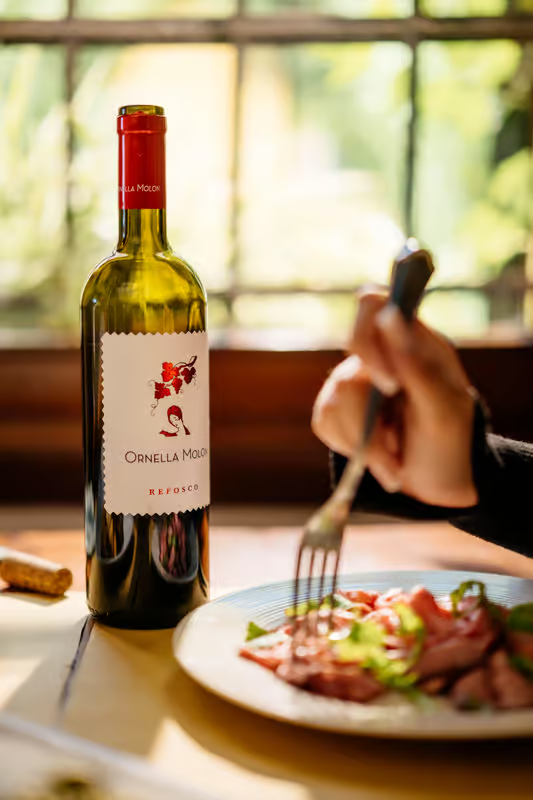
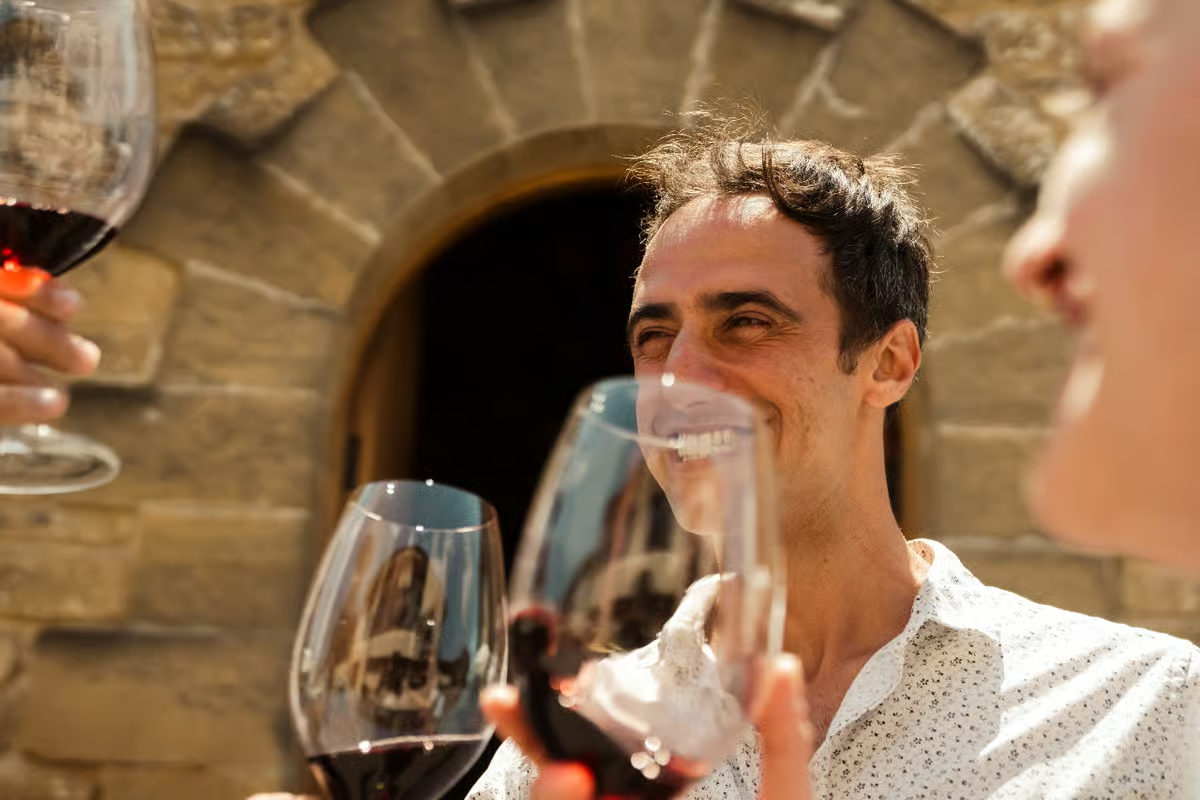
Meals remain the heart of this relationship. Throughout Southern Europe, wine has traditionally been regarded as a companion to food rather than the centrepiece of the dining experience. Lunches and dinners are designed to unfold slowly, encouraging conversation, family interaction and shared moments rather than hurried consumption. The bottle placed in the middle of the table belongs to everyone, reinforcing a collective approach that contrasts with more individualised drinking habits found elsewhere. In this context, wine serves not only to complement the meal but also to strengthen social bonds and express hospitality.
This philosophy has also influenced how wine is perceived across generations. In many Mediterranean families, knowledge about vineyards, local grape varieties and traditional winemaking is passed down naturally through observation and participation rather than formal education. Children often grow up surrounded by vineyards, accompany relatives during harvests and gradually become familiar with the rhythms of the wine year long before they develop an interest in wine itself. As a result, wine becomes associated with family heritage, agricultural cycles and cultural identity rather than simply with consumption.
Regional diversity further enriches this everyday culture. In Portugal, small village adegas and family-owned estates continue to anchor local communities. Across Spain, neighbourhood bars and village taverns remain important places where regional wines accompany daily life and conversation. In Italy, wine has long occupied a central place at the family table, reflecting the country’s extraordinary diversity of regional traditions and local cuisines. In Greece, wine continues to accompany communal meals in tavernas, island villages and mountain communities, where hospitality remains inseparable from offering guests a glass of local wine. Although customs differ from one country to another, they all express the same Mediterranean belief that wine is fundamentally a social and cultural experience.
Modern lifestyles have inevitably transformed some of these traditions. Urbanisation, changing dietary habits and evolving patterns of alcohol consumption have altered the role of wine in everyday life, particularly among younger generations. Yet many of the defining values of Mediterranean wine culture remain remarkably resilient. Family meals, local festivals, village wineries and seasonal celebrations continue to reinforce a model in which wine is appreciated not for excess or prestige, but for its ability to bring people together and preserve a tangible connection with place, history and community.
Ultimately, this philosophy distinguishes Mediterranean wine culture from many other wine-producing regions around the world. Here, wine is rarely separated from the landscapes, families and traditions that give it meaning. It is consumed with food, shared among friends, celebrated during festivals and passed from one generation to the next as part of a living cultural heritage. More than a beverage, wine remains one of the enduring symbols of everyday Mediterranean life—a tradition shaped by time, rooted in local communities and sustained by a profound respect for both nature and human connection.
Family Vineyards and Generational Knowledge
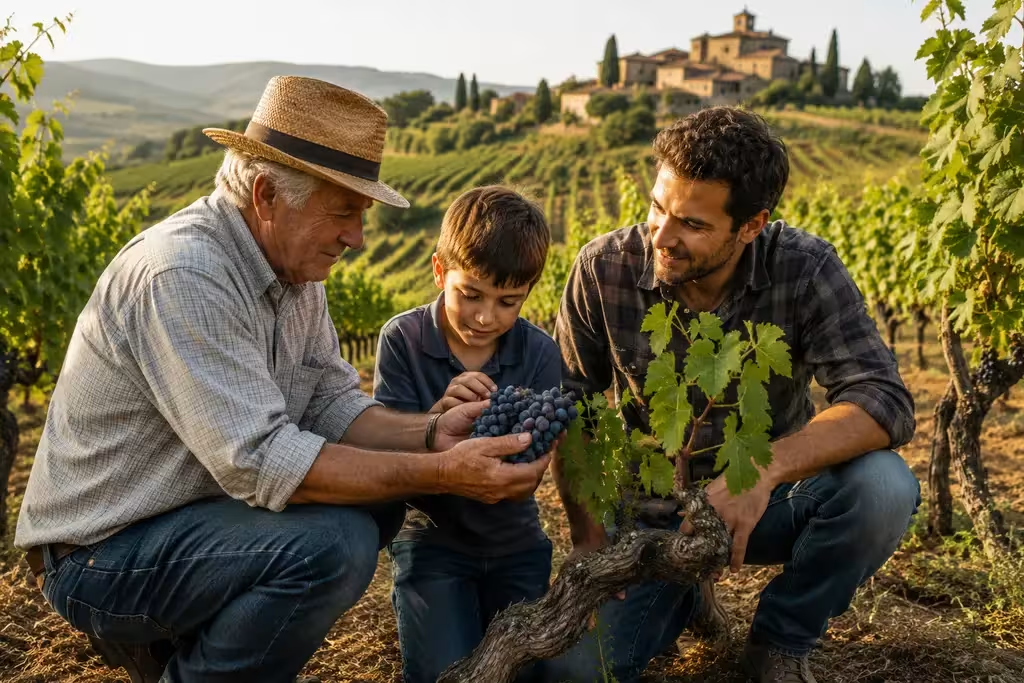
One of the defining characteristics of Mediterranean wine culture is the enduring importance of family-owned vineyards. Across Portugal, Spain, Italy and Greece, countless wineries remain family businesses where viticultural knowledge has been transmitted from one generation to the next for decades—and often for centuries. While modern wineries increasingly adopt advanced technology and international marketing strategies, the foundations of Mediterranean winemaking continue to rest upon traditions preserved within families, where experience is passed on through observation, practice and daily life rather than formal instruction alone.
In many rural communities, vineyards are far more than agricultural assets. They represent family history, local identity and a tangible connection to ancestors who cultivated the same parcels of land long before modern appellation systems or international wine markets existed. Individual vineyard plots frequently remain within the same family for generations, with parents, grandparents and children working together throughout the annual cycle of pruning, canopy management, harvest and winemaking. These shared responsibilities help preserve not only technical expertise but also a profound emotional attachment to the landscape itself.
This intergenerational continuity has played a crucial role in safeguarding Southern Europe’s extraordinary wine heritage. Before scientific research, DNA analysis or modern ampelography became available, local growers selected vines according to observation, adapting cultivation practices to changing weather conditions, soils and vineyard exposures over many generations. Their accumulated knowledge contributed directly to the preservation of hundreds of indigenous grape varieties that might otherwise have disappeared during periods of agricultural modernisation. In many regions, today’s revival of native grapes owes as much to family memory as it does to academic research.
Traditional knowledge extends well beyond vineyard management. Families often maintain distinctive pruning methods, harvest timing, fermentation practices and ageing techniques that reflect centuries of local adaptation. While many wineries now combine these customs with contemporary oenology, ancestral practices continue to influence the character of Mediterranean wines. Decisions about when to harvest, how to manage old vines or which parcels deserve separate vinification are frequently guided by experience accumulated over generations rather than by technology alone.
Across Southern Europe, the structure of the wine industry also reflects this family-centred model. Portugal is home to numerous small estates where vineyards have remained within the same families for centuries. Spain combines internationally renowned producers with thousands of independent growers whose vineyards have been inherited across multiple generations. Italy’s fragmented vineyard ownership has encouraged the survival of countless family wineries, each preserving regional traditions and local grape varieties. In Greece, where vineyard holdings are often modest in size, family estates continue to play an essential role in protecting indigenous cultivars and maintaining long-established regional identities. Although ownership structures vary from country to country, family stewardship remains one of the defining features of Mediterranean viticulture.
Harvest season perhaps illustrates this cultural continuity most vividly. Across many wine regions, the vintage remains a collective event involving relatives, neighbours and friends working side by side in the vineyard. While mechanical harvesting has become more common in certain areas, hand harvesting continues to dominate in steep terraces, historic vineyards and premium estates throughout Southern Europe. Beyond its practical importance, the harvest often reinforces social bonds, bringing together multiple generations who share meals, stories and traditions while gathering the year’s fruit. For many families, these moments represent an annual ritual that connects present-day winemaking with centuries of agricultural heritage.
Today, Mediterranean family wineries face new challenges, including global competition, climate change and rural depopulation. At the same time, a younger generation of growers is returning to family estates with renewed interest in sustainability, biodiversity and the revival of historic vineyards. By combining inherited knowledge with modern scientific understanding, they are ensuring that Mediterranean wine culture continues to evolve without losing the traditions that have defined it for generations. This remarkable continuity between past and present remains one of the greatest strengths of Southern Europe’s wine identity, demonstrating that the true heritage of Mediterranean viticulture lies not only in its vineyards, but also in the families who have cared for them through the centuries.
Wine Villages: Communities Built Around the Vine
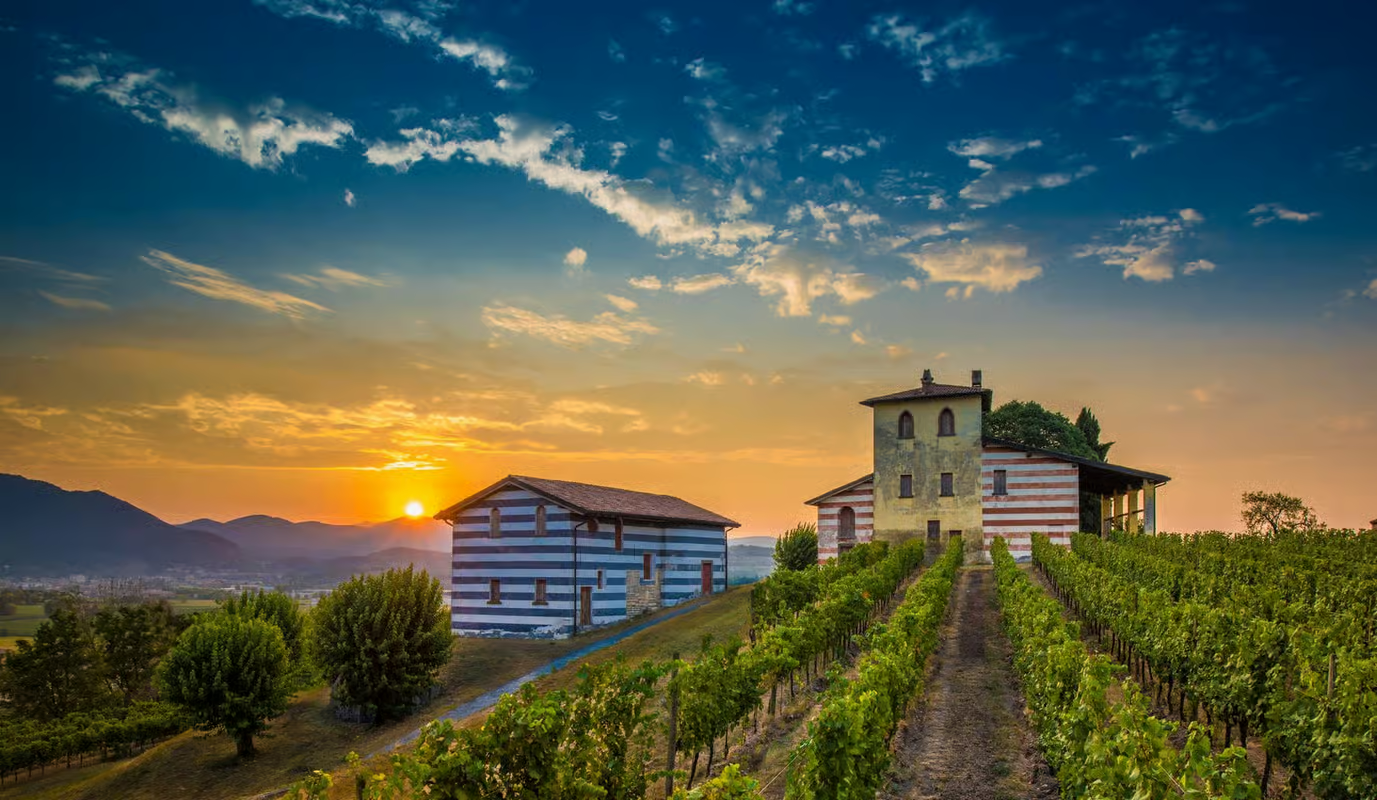
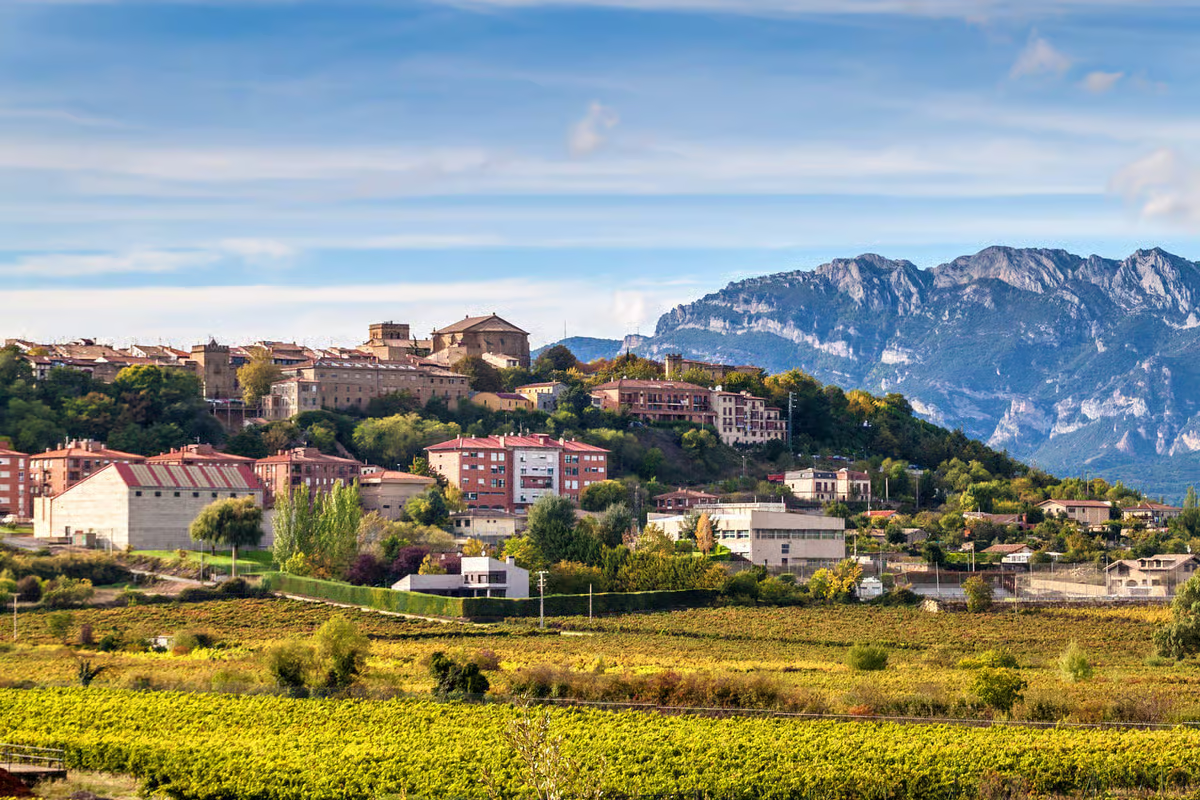
Across Southern Europe, wine has shaped far more than vineyards. It has influenced the very structure of towns and villages, creating communities whose identity, economy and architecture have been intimately connected to viticulture for centuries. From the granite villages of northern Portugal to the medieval hill towns of Tuscany, the whitewashed settlements of Andalusia and the island communities of Greece, countless Mediterranean villages developed around the annual rhythm of the vineyard. In many of these places, wine is not simply produced nearby—it remains part of the community’s collective identity.
Unlike modern wine estates that often function as independent businesses, traditional Mediterranean wine villages evolved as integrated agricultural communities. Vineyards surrounded the settlement, while wineries, family cellars, cooperatives, warehouses and local markets occupied its centre. Homes frequently included underground cellars or storage spaces for wine, reflecting a time when producing wine for household consumption was an ordinary part of rural life. Every aspect of village organisation, from seasonal labour to local commerce, was closely linked to the vineyard calendar.
Architecture also reflects this long relationship between wine and community. Narrow stone streets provided shade during the hot Mediterranean summers, while thick masonry walls helped maintain stable temperatures inside homes and wine cellars. Historic presses, communal fountains, stone stairways and village squares became gathering places during harvest season, when families, growers and neighbours celebrated the completion of the vintage. In many wine villages, the built environment continues to tell the story of centuries of viticulture, even where winemaking techniques have evolved dramatically.
Each Mediterranean country offers its own expression of this village culture. Portugal’s historic wine villages of the Douro Valley and Dão preserve centuries-old estates surrounded by terraced vineyards. Spain’s medieval wine towns, from Rioja to Priorat, combine ancient streets with family bodegas that remain central to local life. Italy’s hilltop villages, particularly in Tuscany, Piedmont and Umbria, are inseparable from the vineyards that define their landscapes and economies. In Greece, mountain villages and island settlements continue to revolve around small family wineries, village presses and local tavernas where regional wines accompany daily life. Although architectural styles vary considerably, these communities share the same enduring relationship between people, place and wine.
Cooperatives have also played an essential role in sustaining many Mediterranean wine villages. During the twentieth century, particularly in Spain, Portugal and parts of Italy and Greece, local cooperatives enabled small growers to pool resources, process grapes collectively and maintain viable rural economies. Beyond their economic importance, these institutions strengthened social cohesion by allowing families with only a few hectares of vines to remain active participants in regional wine production. In many villages, cooperative wineries continue to serve as both economic centres and symbols of community identity.
Today, Mediterranean wine villages face new opportunities and challenges. Tourism has brought renewed prosperity to many historic settlements, while the growing international appreciation of local wines has encouraged investment in vineyard restoration and cultural preservation. At the same time, rural depopulation and changing agricultural practices threaten the continuity of traditional village life in some regions. Despite these pressures, many communities have successfully balanced heritage with innovation, preserving their historic character while welcoming visitors from around the world.
Perhaps more than anywhere else, Mediterranean wine villages demonstrate that wine culture extends far beyond the vineyard itself. Their streets, houses, cellars, churches and public squares reveal how deeply viticulture has influenced everyday life across Southern Europe. They are living cultural landscapes where architecture, agriculture, family traditions and local identity remain inseparable, offering visitors not only exceptional wines but also an authentic glimpse into one of Europe’s oldest and most enduring rural civilizations.
Harvest Traditions and Seasonal Celebrations
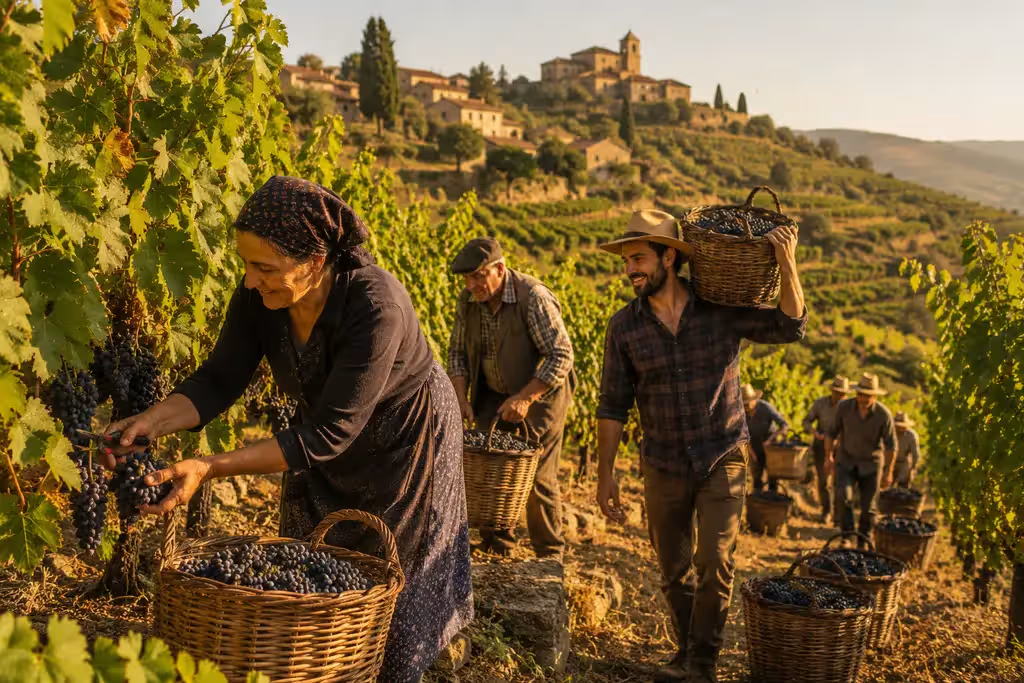
Few moments capture the spirit of Mediterranean wine culture more vividly than the annual grape harvest. Across Portugal, Spain, Italy and Greece, the vendemmia, vendimia, vindima or trigos—depending on the country and local dialect—is far more than an agricultural operation. It represents the culmination of an entire year of work in the vineyard, bringing together families, neighbours and communities in a tradition that has remained remarkably resilient despite the modernization of the wine industry. For centuries, harvest season has marked not only the beginning of a new vintage but also one of the most important social and cultural events of the rural calendar.
Timing has always been at the heart of Mediterranean harvest traditions. Unlike cereal crops harvested on fixed dates, grapes must be picked at precisely the right moment, balancing sugar levels, acidity, phenolic maturity and weather conditions. Historically, this decision relied almost entirely on the experience of growers who observed vine growth, tasted berries and interpreted seasonal conditions passed down through generations. Although today’s wineries increasingly rely on laboratory analyses and weather forecasting, many producers continue to combine modern science with traditional knowledge when deciding the perfect harvest date.
Until well into the twentieth century, harvesting grapes was almost entirely a manual activity. Entire families, joined by neighbours and seasonal workers, gathered in the vineyards from sunrise to sunset, carefully selecting bunches by hand before transporting them to nearby wineries. Even today, hand harvesting remains essential throughout many of Southern Europe’s finest wine regions, particularly on the steep terraces of the Douro Valley, the volcanic slopes of Mount Etna, the rugged vineyards of Santorini, the hills of Priorat and the mountain vineyards found across northern Italy and Greece. Beyond improving grape selection, manual harvesting preserves a sense of continuity with centuries-old viticultural traditions.
The harvest has always been accompanied by rituals that extend well beyond the vineyard itself. Shared meals prepared for vineyard workers, communal dinners after long days of picking, local music, traditional songs and informal celebrations continue to characterise harvest season in many Mediterranean communities. These gatherings reinforce the collective nature of wine production, transforming what could simply be agricultural labour into a cultural event that strengthens family ties and community identity. In many villages, the harvest remains one of the few occasions each year when several generations work side by side toward a common goal.
Across Southern Europe, harvest traditions also reflect remarkable regional diversity. Portugal’s Douro Valley still preserves historic harvest customs linked to Port wine production, while family estates throughout the Dão and Alentejo celebrate the completion of the vintage with communal meals and local festivities. Spain’s wine regions organise colourful vendimia festivals that combine grape harvesting with parades, music and cultural events, particularly in Rioja, Jerez and many historic wine towns. Italy’s vendemmia remains one of the country’s most celebrated agricultural traditions, inspiring festivals, local markets and village celebrations from Piedmont to Sicily. In Greece, harvest season often brings together families across vineyards, island communities and mountain villages, where local wines continue to accompany traditional celebrations rooted in centuries of rural life.
Several Mediterranean wine regions have transformed these harvest traditions into internationally recognised cultural events. Annual wine festivals attract thousands of visitors eager to experience vineyard life, participate in grape picking, visit historic wineries and discover regional customs. While tourism has inevitably changed the scale of some celebrations, many festivals remain authentic expressions of local identity rather than purely commercial attractions. They offer visitors an opportunity to witness living traditions that continue to connect contemporary wine production with its agricultural origins.
The rhythm of harvest season has also adapted to changing environmental conditions. Climate change has gradually shifted harvest dates earlier across much of Southern Europe, with many regions now beginning grape picking several weeks sooner than they did only a few decades ago. Despite these changes, the symbolic importance of the harvest remains unchanged. It continues to represent the annual meeting point between nature, human labour and community, reminding growers that every vintage is unique and every harvest marks the beginning of a new chapter in the life of the vineyard.
Today, harvest traditions remain among the most powerful expressions of Mediterranean wine culture. They celebrate not only the production of wine but also the enduring values of cooperation, patience and respect for seasonal rhythms that have shaped rural life for generations. Whether experienced in a family vineyard, a historic wine village or a renowned wine region welcoming visitors from around the world, the grape harvest continues to embody the living heritage that defines Southern Europe’s unique relationship with wine.
Wine, Religion and Mediterranean Identity
Throughout the Mediterranean, wine has long occupied a place that extends beyond agriculture and commerce. For thousands of years, it has carried profound symbolic, spiritual and cultural meanings, becoming deeply embedded in religious traditions, seasonal rituals and collective identity. Long before the emergence of modern wine regions, vineyards were already intertwined with temples, monasteries, sacred ceremonies and communal celebrations, establishing a relationship between wine and Mediterranean civilization that continues to shape cultural life today.
Ancient Mediterranean societies regarded wine as one of the defining products of civilization itself. In classical Greece, wine played a central role in social gatherings, philosophical discussions and religious festivals dedicated to Dionysus, the god of wine and fertility. The Romans later integrated viticulture throughout their expanding empire, transforming vineyards into an essential element of rural life while associating wine with hospitality, prosperity and civic culture. These early civilizations established traditions that would continue to influence Southern Europe for centuries, making wine a powerful symbol of both everyday life and cultural continuity.
The spread of Christianity further reinforced the importance of wine across the Mediterranean. As one of the central elements of the Eucharist, wine acquired a profound spiritual significance that encouraged the preservation of vineyards even during periods of political instability and economic decline. Throughout the Middle Ages, monasteries became custodians of viticultural knowledge, carefully cultivating vineyards, refining winemaking techniques and documenting agricultural practices that would later influence many of Europe’s great wine regions. In Portugal, Spain, Italy and Greece, monastic communities played a decisive role in maintaining vineyard landscapes that still exist today.
Religious calendars also became closely linked to the rhythm of the vineyard. Throughout Southern Europe, numerous local festivals coincide with key moments of the agricultural year, particularly the grape harvest and the blessing of the new wine. Patron saints associated with winegrowers continue to be honoured in many villages, where processions, communal meals and local celebrations express both religious devotion and gratitude for the annual harvest. While the specific customs vary from region to region, they all reflect the enduring connection between viticulture, seasonal cycles and community life.
Wine also serves as a powerful expression of hospitality across Mediterranean societies. Offering a glass of local wine to guests has traditionally represented far more than simple refreshment; it is a gesture of welcome, generosity and respect. Whether in a Portuguese quinta, a Spanish bodega, an Italian agriturismo or a Greek village taverna, sharing wine often symbolises the willingness to open one’s home and community to others. This cultural practice has remained remarkably consistent despite changing lifestyles, reinforcing the idea that wine is fundamentally a social experience rooted in human relationships.
Regional identity is equally inseparable from local wines. Across Southern Europe, many communities define themselves through the vineyards that surround them, the grape varieties they cultivate and the wines they produce. Local festivals, village emblems, traditional songs and even regional dialects frequently reference vineyards or harvest traditions, illustrating how deeply wine has become integrated into cultural identity. In many areas, the name of a wine is not simply associated with a product but with an entire landscape, community and way of life that has developed over generations.
Today, Mediterranean wine culture continues to balance ancient traditions with an increasingly global outlook. Religious observances may no longer play the central role they once did in everyday life, yet many of the values they helped reinforce—respect for the land, gratitude for the harvest, hospitality and community—remain visible throughout Southern Europe’s wine regions. Modern festivals, wine pilgrimages, historic monasteries and cultural landscapes continue to attract visitors from around the world, demonstrating that the significance of wine extends well beyond the bottle itself.
Ultimately, wine remains one of the Mediterranean’s most enduring cultural symbols because it connects multiple dimensions of human experience. It links agriculture with spirituality, family traditions with community celebrations, local landscapes with regional identity and ancient customs with contemporary life. In Southern Europe, the story of wine is therefore not only the story of vineyards and winemaking, but also the story of a civilization that has long regarded the vine as a living expression of its history, beliefs and cultural heritage.
.
Landscapes Shaped by Centuries of Winegrowing
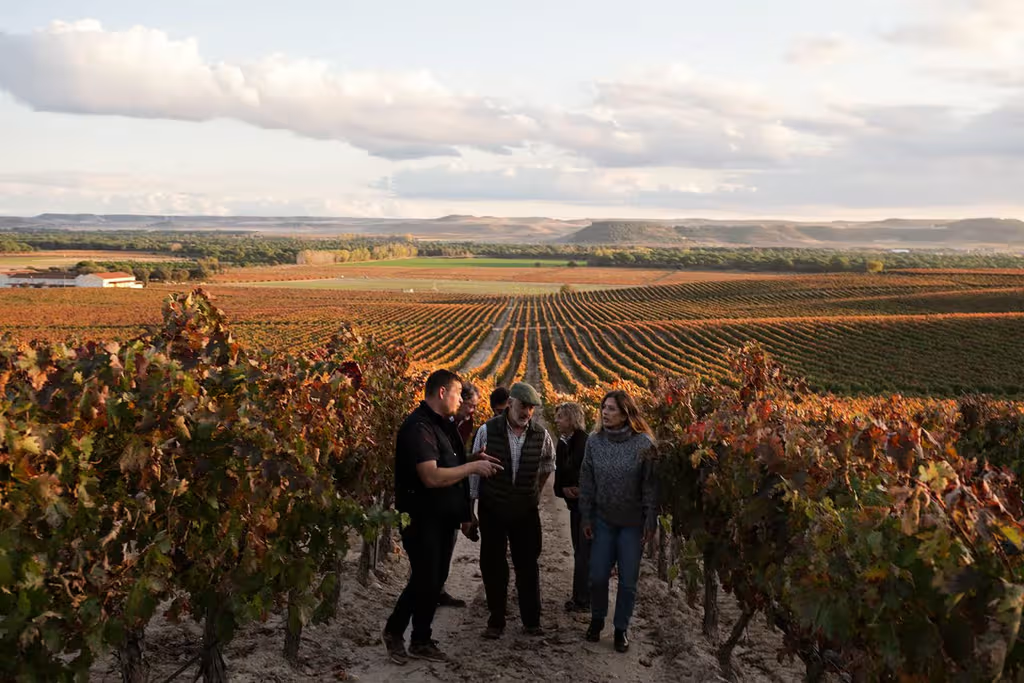
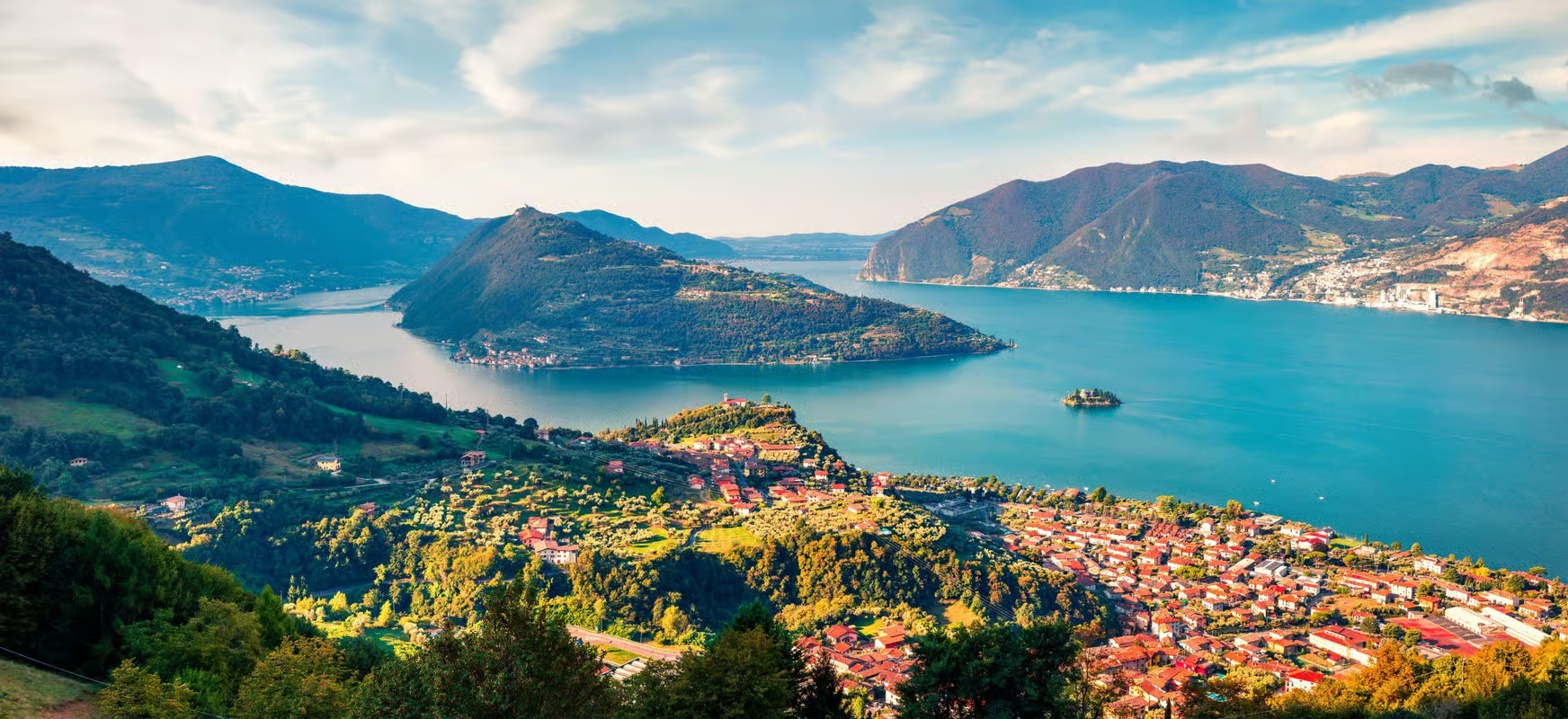
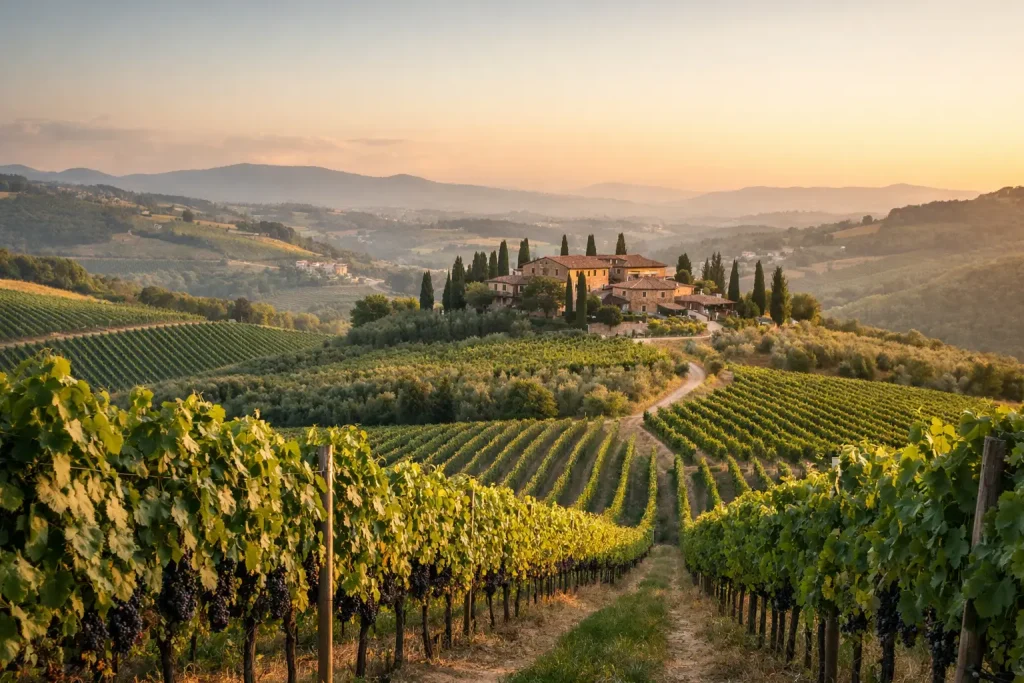
Few agricultural activities have transformed the Mediterranean landscape as profoundly as viticulture. Across Southern Europe, vineyards are far more than cultivated fields; they form cultural landscapes where nature and human ingenuity have evolved together over centuries. Hillsides sculpted into terraces, ancient dry-stone walls, olive groves, cypress-lined roads, hilltop villages and centuries-old vines combine to create some of Europe’s most recognisable rural environments. These landscapes are not accidental. They are the result of generations of growers adapting their vineyards to mountains, valleys, islands and coastal slopes while preserving a remarkable harmony between agriculture and the natural environment.
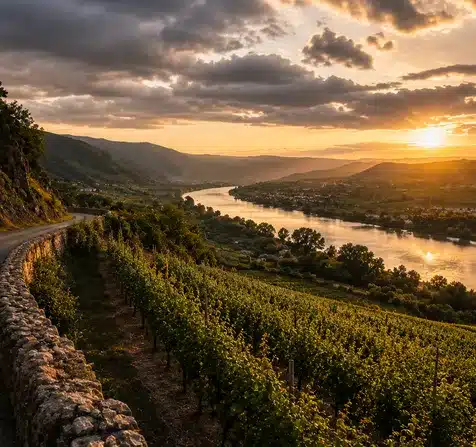
Unlike many modern agricultural regions characterised by large-scale mechanised farming, Mediterranean vineyards often reflect the constraints of their geography. Steep slopes, rocky soils and fragmented land ownership required growers to develop highly specialised cultivation techniques. Terraces supported by dry-stone walls became essential on mountain hillsides, preventing soil erosion while creating narrow vineyard plots capable of producing exceptional grapes. These engineering achievements, built entirely by hand over generations, remain among the most iconic features of Southern Europe’s wine regions.
The surrounding landscape also contributes to this distinctive identity. Vineyards rarely exist in isolation. They are typically interwoven with olive orchards, almond trees, cypress avenues, forests, grazing land and traditional villages, creating diverse agricultural mosaics that support biodiversity while preserving the visual character of the Mediterranean countryside. This coexistence of multiple land uses has allowed many wine regions to maintain ecological balance for centuries, long before concepts such as sustainable agriculture or regenerative viticulture became part of modern environmental policy.
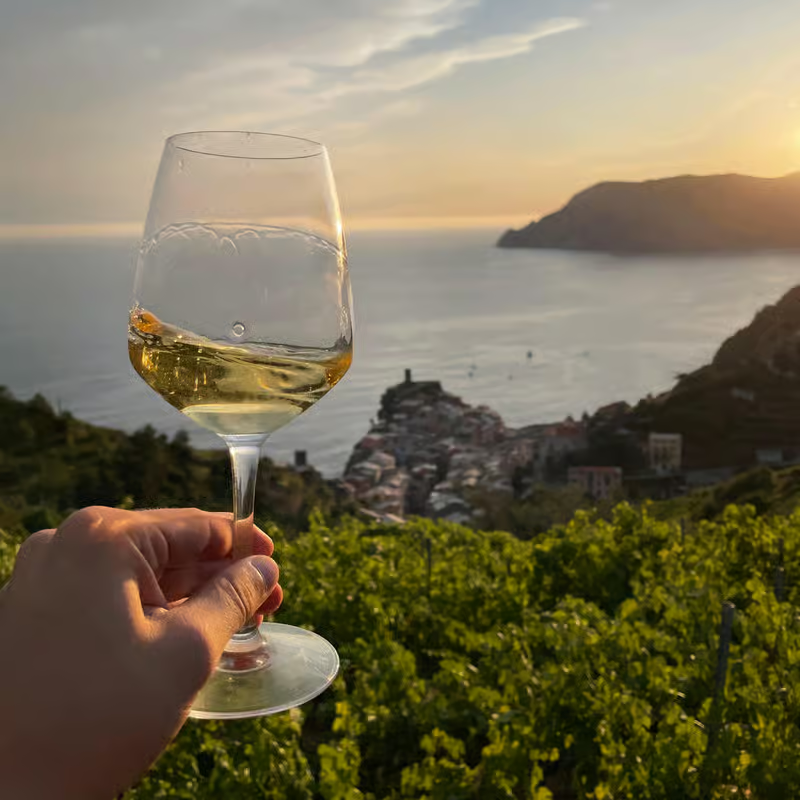
Across Portugal, Spain, Italy and Greece, each country has developed its own interpretation of these cultural landscapes. The spectacular terraced vineyards of Portugal’s Douro Valley descend dramatically toward the Douro River, illustrating centuries of adaptation to steep mountain terrain. Spain’s vineyard landscapes range from the high plateaus of Castilla-La Mancha to the rugged slate hillsides of Priorat and the volcanic vineyards of the Canary Islands. Italy offers extraordinary diversity, from the rolling hills of Tuscany and the UNESCO-listed vineyard landscapes of Piedmont to the volcanic slopes of Mount Etna and the coastal vineyards of Liguria. In Greece, vineyards cling to mountain terraces, island cliffs and volcanic soils, where vines have adapted to some of the Mediterranean’s most challenging environments.
These landscapes represent far more than aesthetic beauty. They embody centuries of accumulated agricultural knowledge, reflecting countless decisions about where to plant vines, how to manage scarce water resources and how to cultivate vineyards under often demanding climatic conditions. Every terrace, stone wall and ancient vineyard tells the story of communities that transformed difficult terrain into productive agricultural land while preserving local traditions and regional identities. In many areas, the landscape itself has become an archive of Mediterranean civilization, recording generations of human interaction with nature.
International recognition has further highlighted the cultural significance of these vineyard landscapes. Several of Southern Europe’s wine regions have been inscribed on the UNESCO World Heritage List, acknowledging their exceptional combination of natural beauty, historical continuity and traditional land management. These protected landscapes demonstrate that vineyards can represent cultural heritage every bit as valuable as historic monuments or archaeological sites, preserving not only remarkable scenery but also centuries of agricultural practices that continue to shape local communities.
Today, these landscapes face new challenges. Climate change, rural depopulation and urban expansion increasingly threaten traditional vineyard environments throughout the Mediterranean. At the same time, renewed interest in sustainable farming, biodiversity conservation and cultural tourism has encouraged many growers to restore historic terraces, preserve old vineyards and maintain traditional agricultural features that might otherwise disappear. This renewed commitment reflects a growing recognition that Mediterranean vineyard landscapes are living ecosystems whose value extends far beyond wine production alone.
Ultimately, the vineyard landscapes of Southern Europe illustrate one of the defining achievements of Mediterranean civilization: the ability to shape nature without entirely dominating it. Over centuries, growers learned to work with mountains, rivers, islands and coastal hills rather than against them, creating agricultural environments that remain productive, biodiverse and visually extraordinary. Today, these landscapes continue to express the deep relationship between people, place and wine, reminding visitors that Mediterranean wine culture is written not only in bottles and cellars, but also across the hillsides, villages and terraces that have defined the region for generations.
The Mediterranean Philosophy of Wine
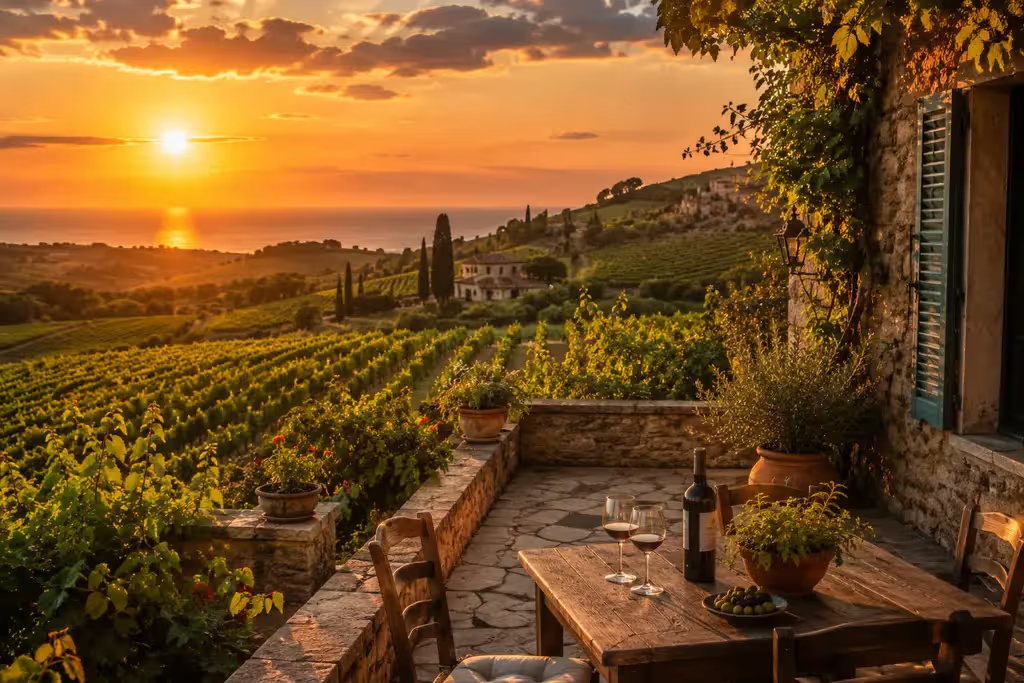
Beyond vineyards, grape varieties and winemaking techniques, Mediterranean wine culture is defined by a distinctive philosophy that has shaped everyday life for centuries. Throughout Southern Europe, wine has traditionally been understood not as an object of prestige or a symbol of luxury, but as a natural expression of place, time and human relationships. It is appreciated less for its market value than for its ability to accompany conversation, strengthen family ties and celebrate the simple pleasures of sharing a meal. This perspective continues to distinguish Mediterranean wine culture from many contemporary wine traditions centred on ratings, rarity or investment.
One of the most characteristic aspects of this philosophy is the close relationship between wine and time. Mediterranean meals are rarely hurried. Whether enjoyed in a Portuguese quinta, a Spanish village square, an Italian farmhouse or a Greek seaside taverna, eating often becomes an extended social experience where conversation is valued as much as the food itself. Wine naturally accompanies this slower rhythm, poured throughout the meal rather than consumed quickly or treated as a separate tasting exercise. The bottle placed at the centre of the table belongs to everyone, encouraging generosity, dialogue and shared enjoyment rather than individual consumption.
Moderation has historically formed another important element of Mediterranean wine culture. Although wine is deeply embedded in everyday life, it has traditionally been consumed as part of balanced meals and social occasions rather than in isolation. This cultural approach has long emphasised quality over quantity, recognising wine as an agricultural product closely connected to food, seasonal rhythms and local traditions. While contemporary lifestyles continue to evolve, this philosophy of mindful consumption remains one of the defining characteristics of Southern Europe’s relationship with wine.
Authenticity also lies at the heart of the Mediterranean approach. Across Portugal, Spain, Italy and Greece, many consumers continue to value wines that express their local landscapes, indigenous grape varieties and family traditions. Rather than seeking uniform styles designed to satisfy global markets, Mediterranean wine culture has increasingly embraced diversity, celebrating regional identities and the distinctive character of individual vineyards. The revival of native grape varieties, historic vineyard sites and traditional winemaking methods reflects a broader appreciation for authenticity as an essential part of cultural heritage.
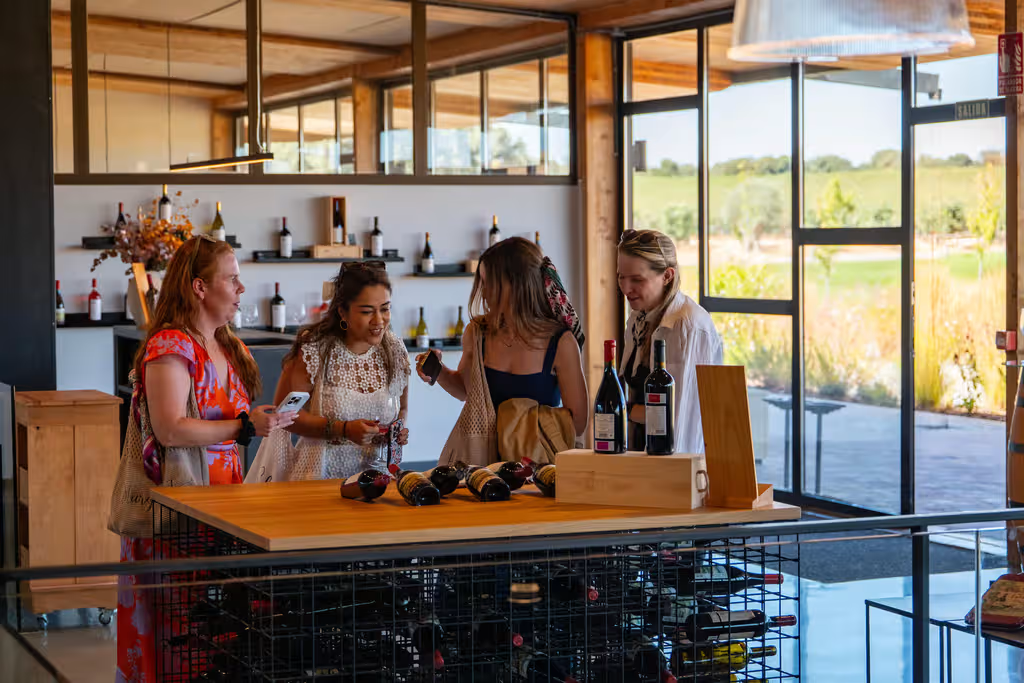
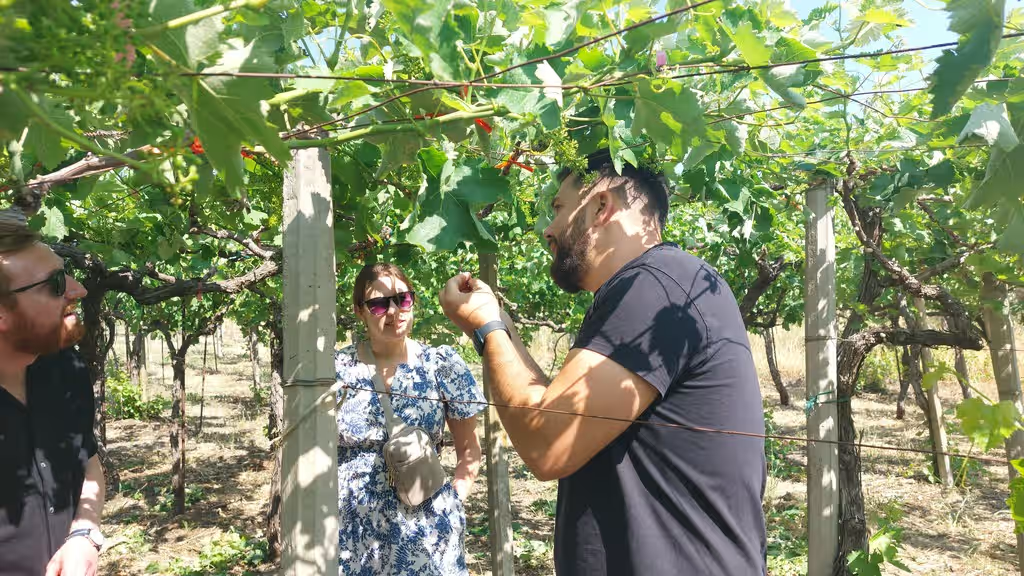
Equally important is the idea that wine is fundamentally a product of community. Throughout the Mediterranean, vineyards rarely exist in isolation from the people who cultivate them. Growers, families, neighbours, restaurateurs and local artisans all contribute to a cultural ecosystem where wine supports rural economies while reinforcing social connections. Visiting a winery often means meeting the people behind the bottle, hearing family stories and discovering landscapes that have been shaped by generations of work. This direct relationship between producers and visitors has become one of the defining attractions of Mediterranean wine tourism.
In recent decades, this philosophy has gained renewed international relevance. As travellers increasingly seek authentic experiences rather than mass tourism, Southern Europe’s wine regions offer opportunities to discover living traditions that remain deeply connected to local communities. Wine routes, vineyard walks, family-owned wineries and village festivals allow visitors to experience wine not simply as a beverage but as an integral part of Mediterranean culture. The emphasis shifts from consumption to understanding, encouraging travellers to explore the people, landscapes and traditions that give each wine its identity.
This cultural perspective has also influenced the growing movement toward sustainability. Many Mediterranean producers now view environmental stewardship as a continuation of values that have always defined rural life: respect for the land, preservation of biodiversity and responsibility toward future generations. Organic farming, regenerative viticulture, the restoration of ancient terraces and the protection of old vines are increasingly seen not only as environmental choices but also as ways of safeguarding cultural heritage. In this sense, sustainability represents a natural extension of the Mediterranean philosophy rather than a recent trend.
Ultimately, the Mediterranean philosophy of wine reminds us that the true value of wine cannot be measured solely by its rarity, price or critical acclaim. Its greatest significance lies in its ability to connect people with landscapes, traditions and one another. Across Southern Europe, every shared bottle reflects centuries of accumulated knowledge, local identity and respect for the rhythms of nature. It is this enduring relationship between wine and everyday life that continues to define Mediterranean wine culture and explains why it remains one of the world’s most influential and admired wine traditions.
Mediterranean Wine Culture in the 21st Century
Mediterranean wine culture has never been static. While its foundations were established over thousands of years, it continues to evolve in response to changing consumer expectations, scientific advances, environmental challenges and global markets. Across Portugal, Spain, Italy and Greece, a new generation of winegrowers is redefining what it means to produce and enjoy Mediterranean wine, combining respect for centuries-old traditions with an increasingly innovative and sustainable vision for the future. Rather than abandoning their heritage, many producers are demonstrating that cultural continuity and modernity can coexist remarkably well.
One of the most significant developments has been the renewed appreciation of indigenous grape varieties. For much of the twentieth century, international cultivars such as Cabernet Sauvignon, Merlot and Chardonnay expanded across many Mediterranean vineyards, often at the expense of local grapes. Over the past two decades, however, producers have increasingly returned to native varieties that express stronger regional identities and greater adaptation to Mediterranean climates. This revival has not only enriched wine diversity but has also strengthened the cultural connection between local communities, historic vineyards and their agricultural heritage.
Family-owned wineries continue to play a central role in this transformation. Younger generations are returning to estates founded by their parents or grandparents, bringing expertise in viticulture, oenology, environmental science and international marketing while preserving the traditions that define their family identities. Many combine modern cellar technology with historic vineyards, producing wines that meet contemporary quality standards without sacrificing authenticity or regional character. This intergenerational renewal has become one of the defining strengths of Mediterranean wine culture.
Sustainability has also become a central pillar of the region’s future. Organic farming, regenerative viticulture, biodiversity conservation and water management are increasingly shaping vineyard practices throughout Southern Europe. Ancient agricultural techniques such as dry-stone terraces, cover crops, mixed farming and the preservation of old vines are being rediscovered as valuable tools for improving resilience under changing climatic conditions. In many respects, practices that were once considered traditional are now recognised as models for environmentally responsible viticulture.
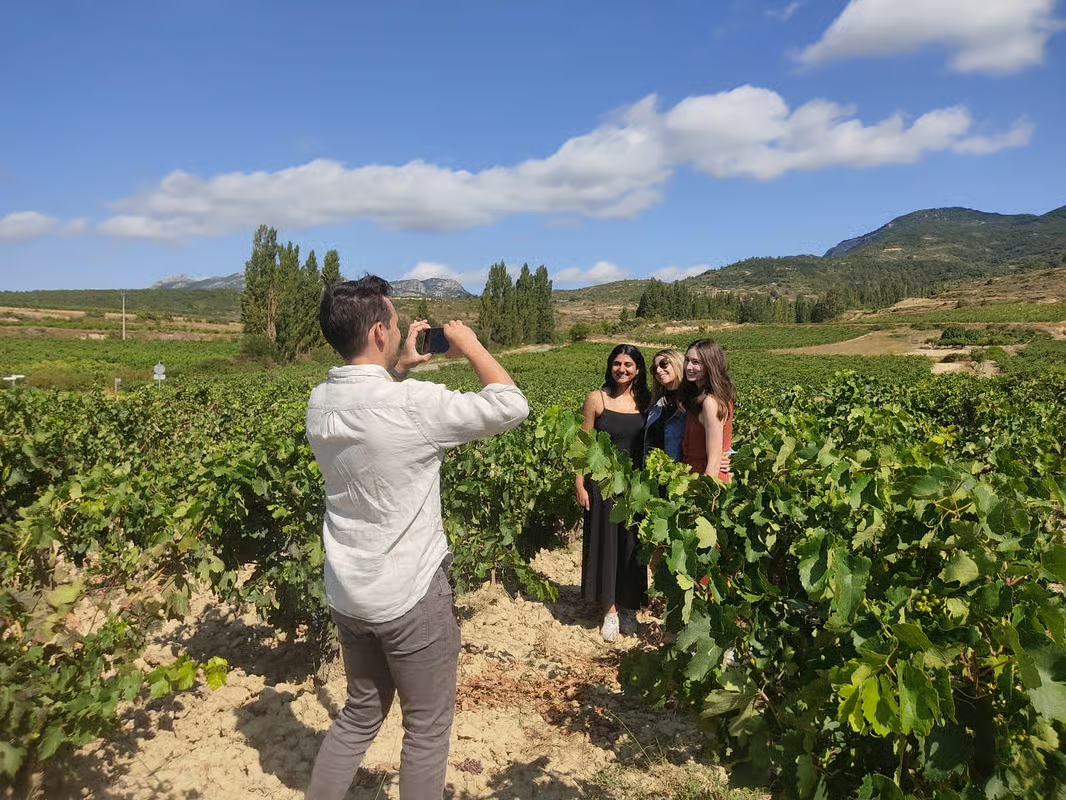
Wine tourism has further strengthened the cultural importance of Mediterranean wine regions. Visitors increasingly seek immersive experiences that extend beyond wine tasting to include vineyard walks, harvest participation, local gastronomy, historic villages and direct encounters with winemakers. This growing interest has encouraged many rural communities to preserve historic wineries, restore traditional architecture and promote cultural festivals that celebrate local identity. Wine has become a gateway to discovering the broader heritage of Southern Europe, linking landscapes, history, craftsmanship and hospitality within a single travel experience.
At the same time, Mediterranean wines have gained unprecedented international recognition. Native grape varieties once known only within their regions are now appearing on restaurant wine lists around the world, while historic appellations continue to attract growing attention from collectors, sommeliers and wine enthusiasts. Despite this global success, many producers remain committed to maintaining relatively small-scale production and preserving the authenticity that distinguishes Mediterranean wines from more industrialised styles. Their objective is increasingly to express a sense of place rather than to conform to global market trends.
Digital communication has also transformed the way Mediterranean wine culture is shared. Wineries now connect directly with consumers through virtual tastings, educational content and social media, making regional traditions accessible to audiences far beyond Southern Europe. This increased visibility has introduced millions of people to native grape varieties, family wineries and lesser-known wine regions while encouraging greater appreciation for the cultural richness that lies behind every bottle.
Looking ahead, the future of Mediterranean wine culture will depend on its ability to balance preservation with innovation. Climate change, demographic shifts and evolving consumer habits will undoubtedly reshape viticulture in the coming decades. Yet the enduring values that have always defined the Mediterranean—respect for the land, strong family traditions, local identity, hospitality and the belief that wine is meant to be shared—remain as relevant today as they were centuries ago. These principles continue to guide a new generation of producers, ensuring that Mediterranean wine culture remains not a relic of the past, but a living tradition capable of inspiring the future of wine across the world.
Conclusion: A Living Heritage Beyond the Vineyard
Mediterranean wine culture cannot be understood simply by studying grape varieties, vineyard landscapes or winemaking techniques. Its true richness lies in the enduring relationship between people, place and tradition that has evolved over more than three thousand years. Across Portugal, Spain, Italy and Greece, wine has shaped villages, family life, seasonal celebrations, local economies and cultural identities, becoming an essential thread woven into the fabric of everyday Mediterranean society.
What distinguishes Southern Europe is not only the age of its vineyards but also the remarkable continuity of its traditions. Ancient terraces still support vines planted on steep mountainsides, family estates continue to pass from one generation to the next, harvest festivals still unite local communities, and wines remain closely connected to the landscapes that gave them life. While the Mediterranean has embraced innovation, scientific research and international recognition, its wine culture has never lost sight of the values that have sustained it for centuries: respect for nature, hospitality, patience and the importance of sharing wine around a common table.
This cultural heritage also explains why Mediterranean wines possess such a strong sense of identity. Behind every bottle lies far more than a combination of climate, soil and grape variety. Each wine reflects generations of accumulated knowledge, local customs, regional traditions and a profound attachment to the land. Whether produced on the volcanic slopes of Sicily, the granite hills of northern Portugal, the limestone vineyards of Spain or the island terraces of Greece, Mediterranean wines continue to express the cultural landscapes and communities from which they originate.
Today, this heritage faces significant challenges. Climate change, rural depopulation, changing consumer habits and global competition are reshaping viticulture throughout Southern Europe. Yet these same challenges have encouraged a renewed appreciation for indigenous grape varieties, sustainable farming practices, historic vineyards and traditional knowledge. Rather than disappearing, Mediterranean wine culture is adapting while remaining deeply rooted in its past, demonstrating a remarkable capacity for resilience and renewal.
For travellers, wine lovers and cultural enthusiasts alike, exploring Mediterranean wine regions offers far more than an opportunity to taste exceptional wines. It provides a journey into living landscapes where history, architecture, agriculture and community continue to coexist in remarkable harmony. Visiting a vineyard often means discovering a family story, a centuries-old village, a local festival or a culinary tradition that reveals another dimension of the Mediterranean way of life.
Ultimately, Mediterranean wine culture is one of Europe’s greatest living cultural heritages. It reminds us that wine is not merely a product of the vineyard but a reflection of human civilisation itself—shaped by landscapes, preserved by families and enriched by generations of shared experiences. As Southern Europe continues to evolve, this enduring relationship between people, vineyards and place remains one of the defining characteristics of the Mediterranean world, ensuring that its wine culture will continue to inspire future generations just as it has for millennia.