Table of Contents
Why Southern Europe Is the Birthplace of Indigenous Wine Grapes
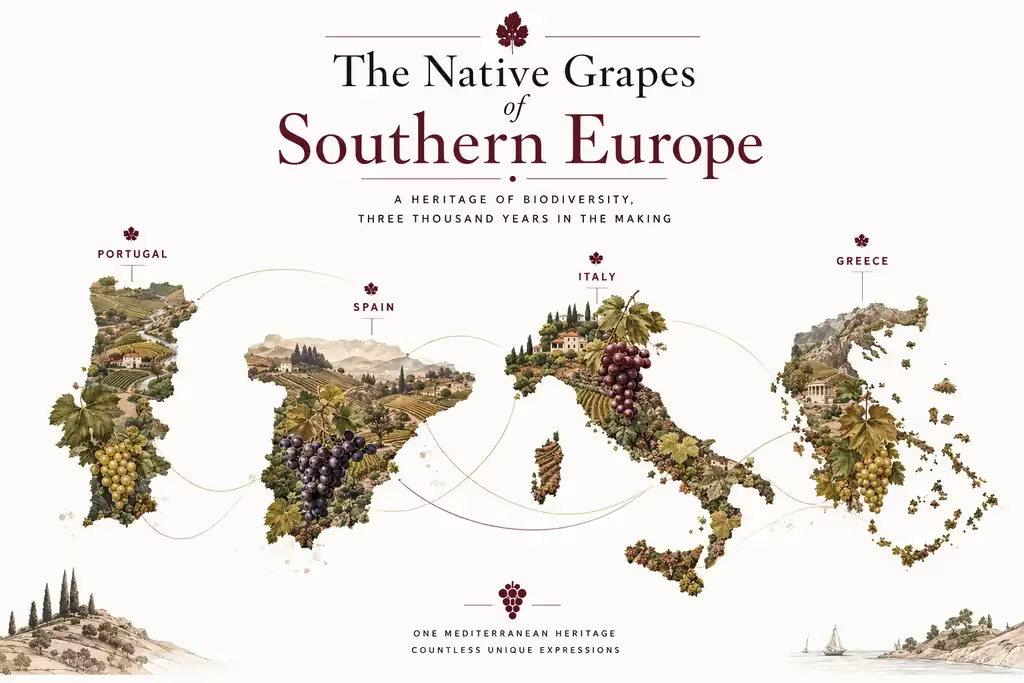
Southern Europe is widely regarded as one of the world’s great centres of viticulture, but its greatest treasure is not a famous appellation or a celebrated wine region. It is the extraordinary diversity of indigenous grape varieties that have evolved across the Mediterranean over thousands of years. Portugal, Spain, Italy, and Greece together preserve an unparalleled genetic heritage, with thousands of native grapes that continue to define the identity of Southern European wines. While many international wine regions rely on a relatively small number of globally cultivated varieties, Southern Europe remains a living repository of ancient vines whose origins often predate modern nations themselves.
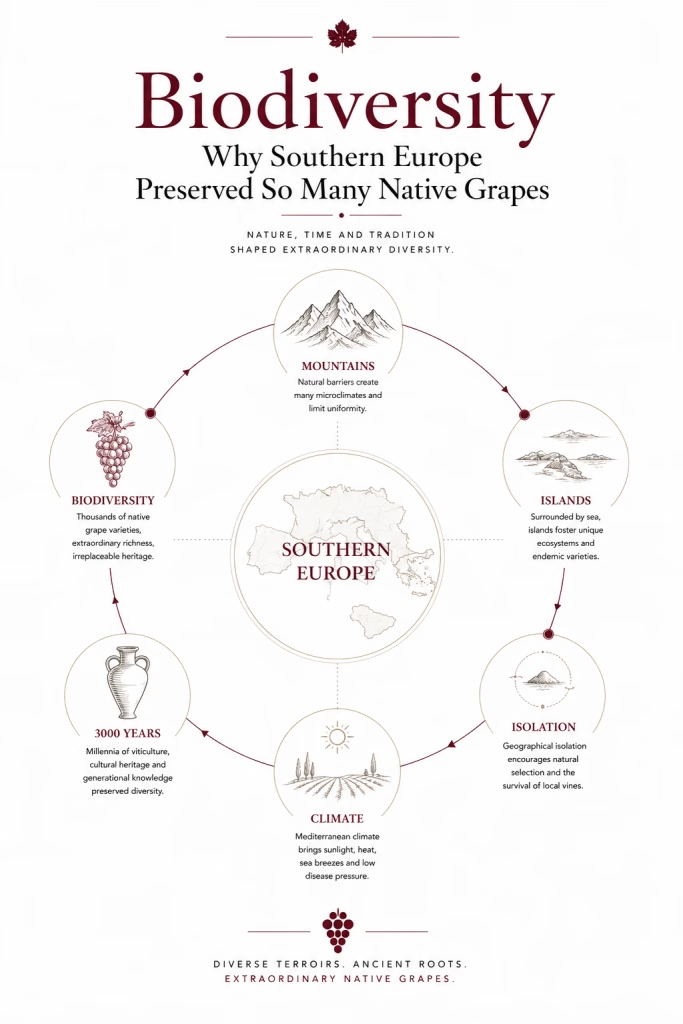
The richness of this biodiversity is no coincidence. It is the result of geography, history, climate, and centuries of careful human selection. Few places in the world combine such a varied landscape with such a long and uninterrupted tradition of vine cultivation. Mountains, islands, isolated valleys, and rugged coastlines created natural barriers that allowed grape varieties to evolve independently over centuries. Rather than replacing local vines with uniform cultivars, generations of winegrowers preserved those best adapted to their own landscapes, creating an exceptional mosaic of native grapes that reflects the diversity of Southern Europe’s terroirs.
The story begins more than three thousand years ago, when the first organised wine cultures emerged around the Mediterranean. Ancient civilizations understood that vines growing in different locations produced wines with distinct characteristics. Rather than seeking uniformity, they selected vines that thrived under local conditions. As vineyards spread from the eastern Mediterranean through Greece, southern Italy, the Iberian Peninsula, and beyond, countless local selections gradually developed into unique grape varieties adapted to specific climates, soils, and elevations.
Unlike modern grape breeding programmes, this evolution occurred slowly through natural selection and traditional propagation. Winegrowers observed which vines survived drought, resisted disease, tolerated poor soils, or consistently produced high-quality fruit. Cuttings from these successful vines were replanted generation after generation, gradually strengthening characteristics suited to each region. Over centuries, this process produced an astonishing diversity of indigenous varieties, many of which remain closely associated with a single valley, island, or wine region.
Geography played a decisive role in preserving this diversity. Southern Europe is one of the continent’s most fragmented landscapes. The Pyrenees separate the Iberian Peninsula from the rest of Europe, while Portugal developed its own viticultural identity behind mountain ranges and Atlantic influences. Italy’s long peninsula is divided by the Apennines, creating numerous isolated growing areas where local grape varieties evolved independently. Greece, with its mountainous mainland and hundreds of islands scattered across the Aegean and Ionian Seas, represents one of the most geographically diverse wine-producing countries in the world. This natural isolation limited the widespread replacement of local vines, allowing remarkable genetic diversity to survive where many other European regions gradually adopted fewer dominant varieties.
Climate also contributed to this evolution. Although Southern Europe is broadly characterised by a Mediterranean climate, local conditions vary enormously. Atlantic breezes cool vineyards in northern Portugal and northwestern Spain, while inland plateaus experience continental temperature extremes. Volcanic islands, limestone hills, mountain valleys, coastal plains, and high-altitude vineyards all present different environmental challenges. Indigenous grape varieties gradually adapted to these conditions, developing characteristics that allowed them to flourish where other vines struggled. Some became exceptionally drought resistant, others preserved acidity under intense sunshine, while many adapted to specific soil types or local wind patterns that continue to shape Mediterranean viticulture today.
The survival of these native grapes also reflects the region’s cultural history. Unlike many agricultural crops that were periodically replaced by more productive varieties, grapevines often remained deeply connected to local traditions and regional identity. Families cultivated the same vineyards for generations, preserving varieties that had become essential to local wines, cuisine, and economic life. Even when international grapes gained popularity during the twentieth century, many Southern European wine regions continued protecting their indigenous heritage, recognising that these local varieties offered flavours and identities impossible to reproduce elsewhere.
Today, Southern Europe possesses one of the richest collections of native grape varieties on Earth. Portugal alone cultivates more than 250 indigenous grapes. Spain is home to hundreds of traditional varieties spread across its diverse wine regions. Italy is widely recognised as the country with the greatest number of native grape varieties in the world, with well over 500 officially identified indigenous cultivars. Greece, despite its relatively small size, preserves dozens of ancient varieties whose origins stretch back to classical antiquity. Together, these four countries represent an extraordinary reservoir of viticultural biodiversity unmatched by any other region.
This remarkable diversity is becoming increasingly valuable in the modern wine industry. Consumers are showing growing interest in authentic regional wines that express a genuine sense of place rather than international styles found across multiple continents. Indigenous grapes offer exactly that. They produce wines with distinctive aromas, textures, and flavour profiles that cannot easily be replicated elsewhere because they are intrinsically linked to the climates, soils, and traditions of their native regions.
Native grape varieties also play an important role in the future of Mediterranean viticulture. Many evolved under conditions of limited rainfall, intense sunshine, poor soils, and strong seasonal winds, making them naturally well adapted to the environmental challenges now associated with climate change. Their resilience is encouraging researchers and winegrowers to rediscover forgotten varieties capable of maintaining quality while requiring fewer resources. As sustainability becomes increasingly important, Southern Europe’s indigenous grapes are proving to be not only a cultural treasure but also a practical asset for the future of winemaking.
This guide explores 100 of the most important native grape varieties cultivated across Portugal, Spain, Italy, and Greece. While these represent only a fraction of Southern Europe’s extraordinary viticultural heritage, they illustrate the richness, diversity, and enduring legacy of one of the world’s oldest wine civilizations. Understanding these grapes is essential to understanding Southern Europe itself, for every indigenous variety tells the story of a landscape, a climate, and generations of winegrowers who shaped its identity over centuries.
Portugal: A Treasure of Native Grape Varieties
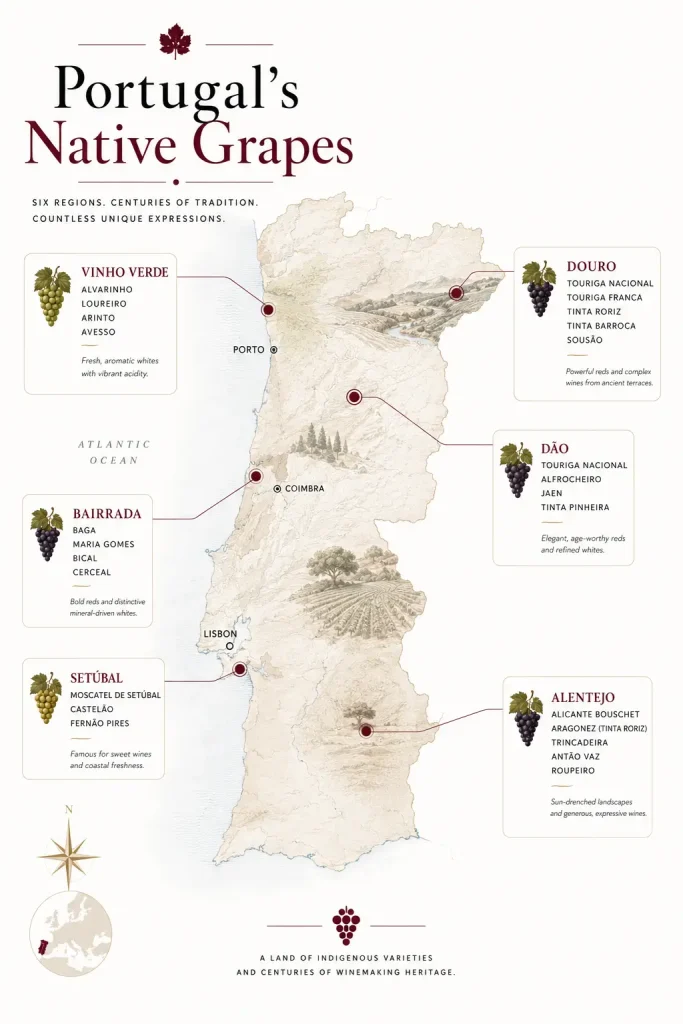
Portugal occupies a unique position in the world of wine. Despite covering a relatively small area on the western edge of Europe, it possesses one of the richest collections of indigenous grape varieties anywhere on the planet. More than 250 officially recognised native grapes are cultivated throughout the country, many of which exist nowhere else. This extraordinary biodiversity is not the result of chance but the product of geography, climate, history, and centuries of uninterrupted viticultural tradition. For wine lovers seeking authentic regional character, Portugal offers one of the world’s greatest living collections of indigenous vines.
Unlike many European wine-producing nations that gradually embraced international grape varieties during the twentieth century, Portugal largely preserved its native viticultural heritage. While Cabernet Sauvignon, Chardonnay, Merlot, and Sauvignon Blanc became increasingly common elsewhere, Portuguese winegrowers continued to cultivate local varieties whose identities had been shaped by generations of adaptation to specific landscapes. This commitment to indigenous grapes has become one of Portugal’s defining strengths, allowing the country to produce wines with distinctive personalities that cannot easily be replicated elsewhere.
Geography has played a decisive role in preserving this diversity. Portugal stretches from the cool, Atlantic-influenced vineyards of Minho in the north to the sun-drenched plains of Alentejo in the south, encompassing mountains, river valleys, rolling hills, coastal regions, and granite plateaus. Each landscape creates unique growing conditions that have favoured the development of different grape varieties over centuries. The rugged interior mountain ranges isolated wine-growing communities from one another, allowing local cultivars to evolve independently while maintaining remarkable genetic diversity.
The Atlantic Ocean has also profoundly influenced Portuguese viticulture. Cool maritime winds moderate temperatures across much of the country, creating growing conditions that differ significantly from the hotter Mediterranean climates found further east. Northern Portugal, particularly the Vinho Verde region, benefits from abundant rainfall, cooler summers, and high humidity, favouring white grape varieties capable of producing vibrant, aromatic wines with naturally high acidity. By contrast, the Douro Valley and Alentejo experience hotter, drier conditions where robust red varieties have evolved to withstand prolonged summer heat and limited rainfall.
The Douro Valley illustrates this diversity particularly well. One of the world’s oldest officially demarcated wine regions, its steep schist terraces support dozens of indigenous grape varieties that are frequently blended together within the same vineyard. Rather than relying on a single dominant grape, traditional Douro viticulture has long embraced field blends in which multiple varieties coexist, each contributing structure, aromatics, colour, acidity, or ageing potential. This philosophy reflects centuries of practical knowledge, recognising that biodiversity often produces greater balance than uniformity.
Further south, the rolling hills of Dão have developed their own distinctive collection of native grapes. Surrounded by mountain ranges that create a cooler inland climate, the region has become particularly associated with elegant red wines and refined white varieties capable of expressing freshness alongside complexity. Granite soils, significant diurnal temperature variation, and moderate rainfall provide growing conditions very different from those found in Portugal’s warmer southern regions, demonstrating how closely indigenous grapes have adapted to local terroirs.
The country’s white grape varieties deserve equal recognition. While Portuguese reds have attracted considerable international attention, native white grapes contribute some of Southern Europe’s most exciting wines. Many combine vibrant acidity with remarkable texture and ageing potential, characteristics that have become increasingly valuable as global temperatures rise. Varieties capable of retaining freshness despite abundant sunshine are now attracting renewed interest among producers seeking wines that combine richness with balance.
Portugal’s indigenous grapes also represent an invaluable genetic resource for the future of viticulture. Many have evolved under conditions of drought, poor soils, and significant climatic variation, making them naturally resilient in challenging environments. Deep-rooted vines adapted to schist slopes, heat-tolerant cultivars from Alentejo, and Atlantic-influenced varieties capable of maintaining acidity all provide valuable examples of long-term adaptation to local climates. As sustainability becomes an increasingly important priority, these traditional varieties are gaining recognition not only for their cultural significance but also for their practical advantages in a changing climate.
One of the most remarkable aspects of Portuguese viticulture is the continued importance of regional identity. Many indigenous grapes remain closely associated with specific wine regions where they have been cultivated for centuries. Rather than producing wines that aim for international uniformity, Portuguese producers increasingly celebrate these local identities, recognising that authenticity has become one of their greatest competitive strengths. Consumers seeking unique wine experiences are discovering varieties that express Portugal’s landscapes with exceptional clarity, reinforcing the country’s reputation as one of Europe’s most distinctive wine destinations.
Modern research continues to reveal the extraordinary complexity of Portugal’s grape heritage. DNA analysis has clarified historical relationships between many native varieties while helping preserve endangered cultivars that might otherwise disappear. At the same time, younger generations of winemakers are rediscovering forgotten grapes once considered commercially insignificant, producing innovative wines that combine ancient genetic heritage with contemporary winemaking techniques. This revival demonstrates that Portugal’s indigenous varieties are not simply relics of the past but dynamic contributors to the future of Mediterranean wine.
Although no single grape defines Portuguese wine, several varieties have become international ambassadors for the country’s viticultural excellence. Powerful reds, elegant whites, aromatic mountain wines, and structured Atlantic blends all emerge from a remarkably diverse collection of native vines that continue to evolve alongside Portugal’s varied terroirs. Together, they illustrate why Portugal is considered one of the world’s great centres of indigenous grape diversity and why its vineyards remain an essential destination for anyone wishing to understand the richness of Southern European wine.
| Grape Variety | Colour | Main Wine Regions | Typical Wine Style |
|---|---|---|---|
| Touriga Nacional | Red | Douro, Dão | Powerful, floral, structured |
| Touriga Franca | Red | Douro | Elegant, perfumed, balanced |
| Tinta Roriz (Aragonez) | Red | Douro, Dão, Alentejo | Structured, spicy, ripe fruit |
| Tinta Barroca | Red | Douro | Rich, smooth, generous |
| Tinto Cão | Red | Douro | Fresh, concentrated, age-worthy |
| Baga | Red | Bairrada | High acidity, firm tannins, excellent ageing |
| Castelão | Red | Setúbal, Lisboa, Alentejo | Fruity, approachable, Mediterranean |
| Trincadeira | Red | Alentejo | Spicy, herbal, aromatic |
| Jaen | Red | Dão | Elegant, fresh, silky |
| Alfrocheiro | Red | Dão | Floral, balanced, refined |
| Ramisco | Red | Colares | Highly acidic, long-lived |
| Sousão | Red | Douro, Minho | Deep colour, vibrant acidity |
| Alvarinho | White | Vinho Verde | Citrus, mineral, aromatic |
| Arinto | White | Bucelas, Lisboa | Crisp, fresh, age-worthy |
| Encruzado | White | Dão | Complex, textured, elegant |
| Loureiro | White | Vinho Verde | Floral, lively, citrus |
| Fernão Pires | White | Tejo, Lisboa, Bairrada | Highly aromatic, fruity |
| Antão Vaz | White | Alentejo | Rich, tropical, full-bodied |
| Rabigato | White | Douro | Fresh, mineral, vibrant |
| Viosinho | White | Douro | Elegant, concentrated, structured |
Spain: Ancient Grapes Across Diverse Landscapes
Spain is one of the world’s oldest wine-producing countries and one of its richest reservoirs of indigenous grape varieties. With more than 400 officially recognised native grapes cultivated across an extraordinary range of climates and landscapes, Spain offers one of the most diverse expressions of Mediterranean viticulture. From the cool Atlantic coast of Galicia to the volcanic vineyards of the Canary Islands, from the high plateaus of Castilla y León to the sun-drenched Mediterranean coast, every region has preserved grape varieties uniquely adapted to its local environment.
The remarkable diversity of Spanish grapes is inseparable from the country’s geography. Spain is the second most mountainous nation in Europe, with vast plateaus, isolated valleys, rugged coastal ranges and volcanic islands creating countless natural barriers throughout history. These landscapes allowed grape varieties to evolve independently over centuries, often remaining confined to individual regions where they gradually adapted to local climates, soils and elevations. As a result, Spain possesses an exceptional collection of indigenous grapes that express highly distinctive regional identities.
The Iberian Peninsula’s varied climate has been equally influential. Atlantic winds bring cool temperatures and abundant rainfall to the northwest, while central Spain experiences a continental climate with hot summers, cold winters and significant diurnal temperature variation. Along the Mediterranean coast, long sunny growing seasons and dry summers favour varieties capable of thriving under intense heat, while mountain vineyards preserve freshness through altitude rather than latitude. Few wine-producing countries combine such climatic diversity within a single national territory.
Unlike many wine regions that increasingly relied on international grape varieties during the twentieth century, Spain retained a strong commitment to its native cultivars. Although Cabernet Sauvignon, Merlot and Chardonnay are now cultivated in some regions, the country’s most respected wines continue to be built around indigenous grapes that have defined Spanish viticulture for centuries. This dedication has preserved a remarkable genetic heritage while giving Spanish wines an authenticity that remains one of their greatest strengths in today’s global wine market.
Perhaps no grape illustrates this better than Tempranillo, Spain’s flagship red variety and one of the country’s most internationally recognised native grapes. Adapted to a wide range of climates and elevations, Tempranillo produces wines that vary dramatically depending on their region of origin, expressing elegance in Rioja, structure in Ribera del Duero and freshness in cooler mountain vineyards. Its versatility demonstrates how a single indigenous variety can reveal the subtle influence of different terroirs across Spain.
Yet Spain’s viticultural identity extends far beyond its most famous grape. Ancient varieties such as Garnacha, Monastrell, Mencía, Bobal and Cariñena have developed distinctive characteristics through centuries of adaptation to Mediterranean climates. Some flourish in dry, rocky hillsides where deep root systems enable them to withstand prolonged drought, while others perform best in cooler Atlantic landscapes or high-altitude vineyards where acidity and aromatic complexity are naturally preserved. Each variety reflects the environmental conditions that shaped its evolution.
Spain’s native white grapes are equally diverse and increasingly appreciated by wine lovers around the world. The Atlantic vineyards of Galicia produce vibrant varieties celebrated for their freshness and minerality, while central and Mediterranean regions cultivate grapes capable of maintaining acidity despite intense sunshine. These indigenous whites demonstrate that Spain is not only a producer of exceptional red wines but also one of Europe’s most exciting sources of distinctive white grape varieties.
One of Spain’s greatest strengths lies in the close relationship between indigenous grapes and regional identity. Many varieties remain strongly associated with specific wine regions, where they have become part of local history, cuisine and culture. Rather than seeking uniformity, Spanish producers increasingly emphasise these regional differences, recognising that authenticity and a sense of place are among the country’s greatest competitive advantages. Consumers are increasingly drawn to wines that express local heritage rather than internationally standardised styles, placing Spain’s native grapes at the centre of a new appreciation for regional diversity.
Scientific research has also transformed our understanding of Spain’s grape heritage. DNA analysis has clarified the origins of many traditional varieties while identifying previously overlooked relationships between cultivars cultivated in different regions. At the same time, conservation programmes are helping preserve rare indigenous grapes that might otherwise disappear, ensuring that Spain’s extraordinary genetic diversity remains available for future generations of winegrowers.
Climate change has further increased the importance of Spain’s native grape varieties. Many evolved under conditions of intense summer heat, limited rainfall and poor soils, making them naturally resilient to environmental stress. Deep-rooted vines capable of surviving prolonged drought and maintaining quality under challenging conditions are attracting renewed attention from producers seeking sustainable solutions for the future. In many cases, forgotten local varieties are proving better adapted to modern climatic conditions than internationally planted cultivars.
Today, Spain’s indigenous grapes represent far more than a historical legacy. They are living expressions of the country’s landscapes, climates and cultural traditions, continuing to shape some of Europe’s most distinctive wines. Together, they illustrate why Spain remains one of the world’s great centres of viticultural diversity and why its native grape varieties are increasingly recognised as one of the Mediterranean’s greatest wine treasures.
| Grape Variety | Colour | Main Wine Regions | Typical Wine Style |
|---|---|---|---|
| Tempranillo | Red | Rioja, Ribera del Duero, Toro, La Mancha | Structured, elegant, age-worthy |
| Garnacha | Red | Aragón, Priorat, Navarra, Campo de Borja | Rich, ripe, spicy |
| Monastrell | Red | Jumilla, Yecla, Alicante | Powerful, dark fruit, Mediterranean |
| Mencía | Red | Bierzo, Ribeira Sacra | Fresh, floral, mineral |
| Cariñena (Carignan) | Red | Priorat, Cariñena, Catalonia | Structured, spicy, concentrated |
| Bobal | Red | Utiel-Requena, Manchuela | Fresh, fruity, deeply coloured |
| Graciano | Red | Rioja, Navarra | Aromatic, lively, age-worthy |
| Mazuelo | Red | Rioja, Catalonia | Firm tannins, vibrant acidity |
| Juan García | Red | Arribes | Elegant, herbal, refined |
| Prieto Picudo | Red | León | Fresh, floral, vibrant |
| Listán Negro | Red | Canary Islands | Volcanic, peppery, mineral |
| Callet | Red | Mallorca | Light-bodied, aromatic |
| Albariño | White | Rías Baixas | Crisp, citrus, saline |
| Godello | White | Valdeorras, Bierzo, Ribeira Sacra | Mineral, textured, elegant |
| Verdejo | White | Rueda | Fresh, herbal, citrus |
| Airén | White | La Mancha | Light, delicate, versatile |
| Macabeo (Viura) | White | Rioja, Catalonia, Cava | Fresh, floral, balanced |
| Xarel·lo | White | Penedès | Structured, mineral, complex |
| Parellada | White | Penedès, Catalonia | Elegant, delicate, floral |
| Treixadura | White | Ribeiro, Rías Baixas | Aromatic, rounded, fresh |
| Palomino Fino | White | Jerez | Neutral, saline, ideal for Sherry |
| Malvasía Volcánica | White | Lanzarote (Canary Islands) | Volcanic, aromatic, mineral |
| Listán Blanco (Palomino Canario) | White | Canary Islands | Fresh, saline, volcanic |
| Hondarrabi Zuri | White | Basque Country | Light, citrus, vibrant acidity |
| Pedro Ximénez | White | Montilla-Moriles, Jerez | Rich, sweet, dried fruit |
Italy: The World's Greatest Diversity of Native Grape Varieties
No country in the world possesses a richer heritage of indigenous wine grapes than Italy. While more than 500 native grape varieties are officially recognised for commercial wine production, ampelographic research has identified nearly 1,000 indigenous cultivars preserved throughout the country, making Italy the world’s greatest reservoir of grapevine biodiversity. From the snow-covered Alps to the volcanic slopes of Sicily, every Italian region has developed its own collection of native grapes, creating an unparalleled mosaic of varieties that reflects thousands of years of viticultural history and regional identity.
Italy’s extraordinary diversity is the result of a unique combination of geography, history and culture. For more than three millennia, vines have been cultivated across the peninsula, first by the Etruscans, then by Greek settlers in Magna Graecia, and later by the Romans, who expanded viticulture throughout the Mediterranean. Unlike many modern wine-producing countries, Italy never replaced its local grape varieties with a small number of dominant cultivars. Instead, each region continued selecting and propagating the vines best suited to its own landscapes, preserving an astonishing wealth of indigenous varieties that still define Italian wine today.
Geography has been one of the principal drivers of this diversity. Stretching over 1,200 kilometres from north to south, Italy encompasses an extraordinary range of climates and landscapes. Alpine valleys, glacial lakes, rolling limestone hills, volcanic mountains, fertile plains, coastal vineyards and Mediterranean islands all create distinct environments where grape varieties have evolved independently over centuries. The Apennine Mountains, running almost the entire length of the peninsula, historically separated wine-growing communities, allowing local cultivars to develop unique characteristics without significant outside influence.
Political history reinforced this natural isolation. Until national unification in the nineteenth century, Italy consisted of numerous independent kingdoms, duchies, republics and city-states, each maintaining its own agricultural traditions and local vineyards. Rather than creating a national wine culture based on a few widely planted grapes, these regions developed highly localised viticultural identities. As a result, many indigenous grape varieties remain closely associated with specific provinces, valleys or even individual villages, making Italy one of the few countries where wine is still deeply connected to local geography.
Northern Italy illustrates this remarkable diversity particularly well. The Alpine foothills and cool mountain valleys produce native varieties perfectly adapted to shorter growing seasons, cooler temperatures and significant diurnal variation. Indigenous grapes from Piedmont, Veneto, Trentino-Alto Adige and Friuli-Venezia Giulia express elegance, freshness and aromatic complexity, while thriving in landscapes shaped by limestone, volcanic soils, glacial deposits and ancient marine sediments. Many of Italy’s most refined red and white wines originate from these northern regions, where altitude and geology combine to create exceptionally distinctive terroirs.
Central Italy presents an entirely different expression of native viticulture. The rolling hills of Tuscany, Umbria and Marche have become synonymous with grape varieties that have evolved alongside limestone ridges, clay soils and Mediterranean woodlands. Here, centuries of careful selection produced vines capable of balancing ripeness with acidity while expressing the subtle differences between hillside exposures, elevations and local soils. Many of the country’s most iconic wines owe their identity not only to famous appellations but also to indigenous grapes that cannot truly be separated from the landscapes where they originated.
Southern Italy and the islands of Sicily and Sardinia reveal another face of Italian biodiversity. Under intense Mediterranean sunshine, volcanic soils, limestone plateaus and coastal influences, native grape varieties have adapted to warm temperatures, prolonged drought and limited rainfall. Thick grape skins, deep root systems and exceptional tolerance to water stress are common characteristics among many southern cultivars, making them increasingly valuable as climate change reshapes modern viticulture. Several of these varieties trace their origins to the earliest Greek colonies established along Italy’s southern coasts more than 2,500 years ago, illustrating the remarkable continuity of Mediterranean wine culture.
Italy’s native white grape varieties deserve equal recognition. While international markets often associate Italian wine with celebrated red grapes, the country also possesses one of the world’s richest collections of indigenous white cultivars. Mineral-driven mountain wines, elegant hillside expressions, structured Mediterranean whites and volcanic island wines all reflect the extraordinary adaptability of these grapes to diverse terroirs. Many combine vibrant acidity with remarkable texture and longevity, demonstrating that Italian white wines are every bit as diverse and distinctive as their red counterparts.
One of the defining characteristics of Italian viticulture is the intimate relationship between grape variety and regional identity. Unlike international cultivars planted across multiple continents, many Italian native grapes remain inseparable from the places where they have evolved. A single variety often reaches its highest expression within a relatively small geographical area, shaped by local geology, climate and centuries of agricultural knowledge. This strong connection between vine and place has become one of the foundations of Italy’s global reputation for authentic, terroir-driven wines.
Modern scientific research continues to expand our understanding of this remarkable heritage. DNA analysis and ampelographic studies have identified historical relationships between grape varieties, clarified centuries of confusion caused by local synonyms, and rediscovered numerous cultivars once believed to have disappeared. Conservation programmes throughout the country actively preserve endangered indigenous grapes while encouraging producers to revive forgotten varieties that offer both historical significance and valuable genetic diversity. As research progresses, the number of documented Italian native cultivars continues to grow, further reinforcing Italy’s position as the world’s leading centre of grape biodiversity.
Climate change has also increased the importance of Italy’s indigenous grape heritage. Many native varieties evolved under demanding Mediterranean conditions characterised by drought, intense sunshine and poor soils. Their natural adaptation to these environments makes them increasingly valuable for sustainable viticulture, encouraging producers to rely on cultivars that require fewer external interventions while maintaining their distinctive regional identity. Across the country, growers are rediscovering forgotten native grapes not only as part of their cultural heritage but also as practical solutions for the future of wine production.
Today, Italy stands as the undisputed world leader in indigenous grape diversity. With more than 500 officially recognised native grape varieties and nearly 1,000 indigenous cultivars identified by researchers, no other country preserves such an extraordinary concentration of viticultural biodiversity. This immense genetic heritage continues to shape every aspect of Italian wine, from internationally renowned appellations to tiny family vineyards cultivating grapes found nowhere else on Earth. It is this remarkable diversity, built over thousands of years of history, geography and human expertise, that makes Italy one of the most fascinating wine countries in the world.
| Grape Variety | Colour | Main Wine Regions | Typical Wine Style |
|---|---|---|---|
| Nebbiolo | Red | Piedmont (Barolo, Barbaresco) | Powerful, complex, exceptional ageing |
| Barbera | Red | Piedmont | Fresh acidity, juicy red fruit |
| Dolcetto | Red | Piedmont | Soft, fruity, approachable |
| Freisa | Red | Piedmont | Floral, peppery, vibrant |
| Sangiovese | Red | Tuscany, Emilia-Romagna, Umbria | Elegant, savoury, age-worthy |
| Canaiolo | Red | Tuscany | Soft, fruity, blending grape |
| Colorino | Red | Tuscany | Deep colour, structured |
| Corvina | Red | Veneto (Valpolicella) | Cherry fruit, elegant, fresh |
| Rondinella | Red | Veneto | Light, aromatic, blending grape |
| Molinara | Red | Veneto | Fresh acidity, delicate |
| Aglianico | Red | Campania, Basilicata | Powerful, tannic, long-lived |
| Nero d'Avola | Red | Sicily | Rich, ripe black fruit |
| Nerello Mascalese | Red | Mount Etna (Sicily) | Mineral, elegant, volcanic |
| Nerello Cappuccio | Red | Mount Etna (Sicily) | Soft, floral, blending grape |
| Frappato | Red | Vittoria (Sicily) | Light, floral, fresh |
| Cannonau | Red | Sardinia | Rich, spicy, Mediterranean |
| Carignano | Red | Sardinia | Structured, dark fruit |
| Montepulciano | Red | Abruzzo, Marche | Full-bodied, dark fruit |
| Sagrantino | Red | Umbria | Massive tannins, age-worthy |
| Lagrein | Red | Alto Adige | Dark fruit, velvety texture |
| Teroldego | Red | Trentino | Fresh, concentrated, spicy |
| Primitivo | Red | Puglia | Rich, ripe, generous |
| Negroamaro | Red | Puglia | Dark fruit, herbal, robust |
| Susumaniello | Red | Puglia | Fresh, fruity, modern style |
| Vermentino | White | Sardinia, Liguria, Tuscany | Fresh, citrus, mineral |
| Arneis | White | Piedmont | Floral, pear, elegant |
| Garganega | White | Soave (Veneto) | Mineral, almond, refined |
| Glera | White | Veneto, Friuli | Fresh, floral, sparkling |
| Verdicchio | White | Marche | Mineral, citrus, long-lived |
| Trebbiano Toscano | White | Tuscany | Fresh, versatile, crisp |
| Fiano | White | Campania | Rich, nutty, complex |
| Greco | White | Campania | Mineral, vibrant acidity |
| Falanghina | White | Campania | Floral, citrus, elegant |
| Carricante | White | Mount Etna (Sicily) | Volcanic, saline, age-worthy |
| Catarratto | White | Sicily | Fresh, Mediterranean, citrus |
Greece: Ancient Native Grapes at the Origins of European Wine
Few countries can claim a viticultural history as ancient as Greece. Long before wine became an essential part of Roman culture or spread throughout Western Europe, Greek civilizations were already cultivating vineyards, selecting grape varieties and exporting wine across the Mediterranean. Today, this extraordinary heritage survives through more than 300 documented indigenous grape cultivars, including around 90 officially recognised native wine grape varieties, making Greece one of Europe’s oldest and most distinctive centres of grapevine biodiversity. Although Greece produces far less wine than Italy, Spain or Portugal, it preserves an exceptional collection of native cultivars whose origins often stretch back more than three thousand years.
Greece’s remarkable grape diversity is inseparable from its geography. The country is among the most mountainous in Europe, while more than 6,000 islands and islets are scattered across the Aegean and Ionian Seas. These dramatic landscapes naturally isolated wine-growing communities for centuries, allowing grape varieties to evolve independently under highly specific environmental conditions. Mountain valleys, volcanic islands, coastal plains and elevated plateaus created countless microclimates where indigenous vines gradually adapted to local soils, rainfall patterns, temperatures and maritime influences. This geographical fragmentation explains why so many unique cultivars have survived until the present day.
Unlike several European wine-producing countries that experienced widespread replanting with international grape varieties during the twentieth century, Greece maintained a strong connection to its native vines. Although varieties such as Cabernet Sauvignon, Merlot and Chardonnay are now cultivated in some vineyards, the country’s modern wine renaissance has largely been built upon the rediscovery of indigenous grapes capable of expressing Greece’s unique terroirs far more authentically than imported cultivars. Today, many of Greece’s highest-rated wines proudly feature native varieties that remained almost unknown outside the country only a few decades ago.
The diversity of Greek terroirs has played a decisive role in shaping these grapes. Volcanic islands such as Santorini have selected varieties capable of thriving in extremely dry soils exposed to constant sea winds and intense Mediterranean sunshine. Mountain vineyards in northern Greece experience cooler growing seasons and significant diurnal temperature variation, producing grapes that combine freshness with structure and ageing potential. Meanwhile, the warm limestone landscapes of the Peloponnese and Crete have favoured cultivars naturally adapted to prolonged drought, high temperatures and limited water availability. This extraordinary range of environments has allowed Greek viticulture to preserve one of the Mediterranean’s richest collections of highly specialised native grape varieties.
Among Greece’s indigenous cultivars, Assyrtiko has become the country’s most internationally recognised ambassador. Native to the volcanic island of Santorini, it possesses an extraordinary ability to retain vibrant acidity despite extreme sunshine, volcanic soils and minimal rainfall. Its mineral character, saline freshness and remarkable ageing potential have made it one of the world’s most admired white grape varieties, while demonstrating the exceptional adaptability of Greece’s indigenous vines under challenging Mediterranean conditions.
Red grape varieties have played an equally important role in Greece’s wine renaissance. Xinomavro, cultivated primarily in the vineyards of northern Macedonia, is celebrated for its complexity, firm tannic structure and exceptional ageing potential. Agiorgitiko, the flagship grape of Nemea in the Peloponnese, produces generous yet elegant wines that beautifully express southern Greece’s warmer climate. Alongside these internationally recognised names, dozens of regional cultivars such as Limnio, Mavrotragano, Kotsifali, Liatiko and Mandilaria continue to preserve the extraordinary diversity that has always characterised Greek viticulture.
The country’s white grape heritage is equally remarkable. Indigenous cultivars produce wines ranging from crisp, mineral-driven volcanic expressions to aromatic mountain wines and richer Mediterranean styles. Varieties such as Malagousia, Moschofilero, Vidiano, Robola and Savatiano have attracted increasing international attention for their ability to combine freshness, aromatic complexity and strong regional identity. Many retain naturally high acidity despite warm growing conditions, making them particularly valuable as Mediterranean climates continue to evolve.
Centuries of uninterrupted viticultural tradition have also contributed to the preservation of Greece’s native grape diversity. Family-owned vineyards, isolated island communities and remote mountain villages transmitted local cultivars from one generation to the next with relatively little outside influence. Unlike regions where industrial viticulture encouraged widespread replacement of traditional vines, many Greek growers continued cultivating indigenous varieties that had become deeply integrated into local culture, cuisine and agricultural traditions. Today, these surviving cultivars provide an invaluable genetic link to some of Europe’s earliest wine civilizations.
Modern scientific research continues to reveal the richness of Greece’s ampelographic heritage. More than 300 indigenous cultivars have now been documented, many surviving only in isolated islands, historic vineyards or remote mountain communities. Around 90 native grape varieties are officially recognised for commercial wine production, while numerous additional cultivars remain under conservation or experimental cultivation. DNA profiling and ampelographic studies are helping researchers clarify historical relationships between ancient varieties while supporting conservation programmes designed to protect Greece’s remarkable genetic diversity for future generations.
Climate change has further highlighted the importance of Greece’s indigenous grapes. Having evolved under Mediterranean conditions characterised by intense sunshine, drought, poor soils and strong seasonal winds, many native varieties display exceptional resilience to environmental stress. Their ability to preserve acidity, tolerate water scarcity and produce balanced wines under increasingly warm conditions makes them valuable not only for Greece but also for the future of Mediterranean viticulture as a whole.
Today, Greece’s indigenous grape varieties stand among the country’s greatest wine treasures. With more than 300 documented native cultivars and around 90 officially recognised indigenous wine grape varieties, Greece preserves one of Europe’s oldest and most authentic viticultural heritages. Although its grape diversity is smaller than that of Italy or Spain, the country remains one of the Mediterranean’s most important reservoirs of native vine genetics. These ancient cultivars continue to embody more than three thousand years of uninterrupted winemaking history while producing wines whose identities remain inseparable from the mountains, islands and volcanic landscapes that gave them life.
| Grape Variety | Colour | Main Wine Regions | Typical Wine Style |
|---|---|---|---|
| Xinomavro | Red | Naoussa, Amyndeon, Goumenissa | Structured, complex, age-worthy |
| Agiorgitiko | Red | Nemea (Peloponnese) | Rich, fruity, elegant |
| Limnio | Red | Lemnos, Northern Greece | Spicy, herbal, medium-bodied |
| Mavrotragano | Red | Santorini | Powerful, mineral, concentrated |
| Mandilaria | Red | Rhodes, Cyclades, Crete | Firm tannins, ideal for blending |
| Kotsifali | Red | Crete | Soft, fruity, Mediterranean |
| Liatiko | Red | Crete | Elegant, aromatic, silky |
| Mavrodaphne | Red | Patras, Cephalonia | Sweet, fortified, dried fruit |
| Vertzami | Red | Lefkada, Ionian Islands | Deep colour, structured |
| Avgoustiatis | Red | Zakynthos, Ionian Islands | Floral, fresh, elegant |
| Assyrtiko | White | Santorini, Macedonia | Mineral, saline, exceptional acidity |
| Malagousia | White | Macedonia, Central Greece | Highly aromatic, floral |
| Moschofilero | White | Mantinia (Peloponnese) | Floral, citrus, fresh |
| Savatiano | White | Attica, Central Greece | Fresh, herbal, Mediterranean |
| Vidiano | White | Crete | Rich, stone fruit, elegant |
| Vilana | White | Crete | Citrus, balanced, fresh |
| Robola | White | Cephalonia | Mineral, citrus, refined |
| Athiri | White | Rhodes, Dodecanese | Fresh, delicate, floral |
| Debina | White | Epirus (Zitsa) | Crisp, vibrant, sparkling potential |
| Roditis | White | Peloponnese, Central Greece | Fresh, versatile, light-bodied |
Why Indigenous Grapes Matter More Than Ever
For much of the twentieth century, the global wine industry moved towards standardisation. International grape varieties such as Cabernet Sauvignon, Merlot, Chardonnay, Sauvignon Blanc and Syrah spread across every major wine-producing continent, often replacing local cultivars that had defined regional wine identities for centuries. These internationally recognised grapes offered commercial advantages, easier marketing and predictable wine styles that appealed to a growing global market. As a result, countless indigenous varieties were abandoned, and some disappeared entirely from commercial viticulture.
Southern Europe followed this trend to a lesser extent than many other wine-producing regions. Although international grapes were introduced into Portugal, Spain, Italy and Greece, local winegrowers continued to preserve much of their native viticultural heritage. Today, this decision is proving remarkably forward-thinking. Indigenous grape varieties are no longer viewed simply as historical curiosities but as essential resources for the future of wine, offering solutions to many of the environmental, cultural and economic challenges facing modern viticulture.
One of the greatest strengths of native grape varieties is their intimate relationship with place. Unlike internationally planted cultivars that are expected to perform consistently across different continents, indigenous grapes evolved within specific landscapes over hundreds or even thousands of years. They adapted naturally to local climates, seasonal rainfall, soil types, elevations and weather patterns, gradually developing characteristics that allowed them to flourish under conditions unique to their native regions. This long process of adaptation has created varieties that express their terroirs with exceptional precision while often requiring fewer interventions than imported grapes.
Climate change has dramatically increased the importance of these natural adaptations. Southern Europe is experiencing rising temperatures, more frequent droughts and greater climatic variability, placing new pressures on vineyards across the Mediterranean. Many indigenous grape varieties have already evolved under precisely these demanding conditions. Deep root systems, efficient water use, naturally thick grape skins, delayed ripening cycles and the ability to preserve acidity during hot summers are characteristics shared by numerous Mediterranean cultivars. These inherited traits are becoming increasingly valuable as producers search for sustainable ways to maintain wine quality while reducing irrigation and other external inputs.
Native grapes also play a crucial role in preserving biodiversity. Agriculture has become increasingly dependent on a relatively small number of plant varieties, making many crops more vulnerable to disease, pests and changing environmental conditions. Viticulture is no exception. Maintaining hundreds of indigenous grape varieties provides an invaluable genetic reservoir that may help address future challenges through natural adaptation rather than genetic uniformity. Every traditional variety preserved today represents a unique combination of characteristics that could prove essential for future generations of winegrowers.
Beyond their agricultural value, indigenous grapes protect cultural heritage. Every native variety reflects centuries of local knowledge, farming traditions and regional identity. Many have become inseparable from the landscapes where they originated, forming an essential part of local cuisine, festivals and winemaking customs. Preserving these grapes therefore means preserving far more than agricultural diversity; it safeguards the cultural memory of entire wine regions whose identities have been shaped by generations of growers working closely with their environment.
Consumers are increasingly recognising this authenticity. Modern wine enthusiasts are showing growing interest in discovering wines that express genuine regional character rather than internationally familiar styles. Indigenous grape varieties offer experiences that cannot easily be replicated elsewhere, providing aromas, flavours and textures unique to their places of origin. Whether tasting a volcanic Assyrtiko from Santorini, an elegant Touriga Nacional from the Douro Valley, a structured Nebbiolo from Piedmont or a vibrant Mencía from Bierzo, wine lovers are discovering stories rooted in geography, history and tradition rather than global standardisation.
This renewed appreciation has transformed the priorities of many producers. Across Southern Europe, wineries are investing in research programmes, vineyard conservation and the replanting of forgotten native varieties. Grapes once considered commercially obsolete are returning to vineyards as winemakers recognise their potential to produce distinctive, terroir-driven wines while strengthening regional identity. Universities, research institutes and national vine collections are working alongside producers to catalogue, preserve and better understand these invaluable genetic resources.
The economic significance of indigenous grapes is also growing. In an increasingly competitive global wine market, authenticity has become one of the strongest competitive advantages available to Southern European producers. International grape varieties can be cultivated almost anywhere in the world, but native cultivars remain inseparable from the regions where they originated. This exclusivity creates a powerful sense of place that attracts wine tourists, collectors and consumers seeking genuine regional experiences rather than globally familiar labels.
Indigenous grapes also encourage greater diversity within the wine industry itself. Rather than concentrating production around a handful of internationally recognised cultivars, they promote a richer and more resilient wine culture in which countless regional identities continue to coexist. This diversity benefits producers by creating distinctive market positions while offering consumers an almost limitless variety of wine styles to explore. It also reduces the risks associated with agricultural uniformity by maintaining a broad genetic foundation for future adaptation.
Southern Europe stands at the centre of this global movement. With its unparalleled collection of indigenous grape varieties, centuries of uninterrupted viticultural history and extraordinary diversity of terroirs, the region demonstrates that preserving native cultivars is not simply about protecting the past. It is about building the future of wine on a foundation of biodiversity, sustainability and authenticity. As winegrowers continue to adapt to environmental change and evolving consumer expectations, Southern Europe’s native grapes are proving to be among the region’s greatest strengths—living expressions of landscapes that have shaped wine for more than three thousand years and will continue to shape it for generations to come.
The Future of Southern Europe's Indigenous Grapes
Southern Europe’s indigenous grape varieties have survived for thousands of years, adapting to changing climates, shifting civilizations, evolving winemaking techniques and countless social transformations. Yet their future has never depended solely on tradition. Today, these ancient cultivars are entering a new era, where scientific research, environmental sustainability and changing consumer preferences are giving them renewed importance. Far from representing a nostalgic link to the past, native grapes are increasingly recognised as one of the Mediterranean’s greatest assets for the future of viticulture.
Over the last few decades, the global wine industry has undergone a profound transformation. Consumers are no longer seeking only internationally recognised grape varieties; they are increasingly looking for authenticity, originality and wines that reflect a genuine sense of place. This shift has encouraged producers throughout Portugal, Spain, Italy and Greece to rediscover indigenous grapes that had often been overlooked during the twentieth century. Varieties once confined to small family vineyards are now appearing in premium wines, international competitions and wine lists around the world, demonstrating that local identity has become one of the strongest values in contemporary wine.
Scientific research has played a major role in this revival. Advances in DNA profiling and modern ampelography have allowed researchers to identify forgotten cultivars, clarify centuries of confusion created by local synonyms and better understand the genetic relationships between Europe’s oldest grape varieties. National vine collections, universities and research institutes are cataloguing and preserving indigenous grapes that might otherwise disappear. This work not only protects an invaluable agricultural heritage but also provides winegrowers with a wider range of genetic resources capable of responding to future environmental challenges.
Climate change has further accelerated this renewed interest. Rising temperatures, prolonged droughts and increasingly unpredictable weather patterns are encouraging producers to reconsider the suitability of traditional international varieties in certain Mediterranean regions. Many indigenous grapes, however, evolved under precisely these demanding conditions. Their natural tolerance to heat, water scarcity and poor soils offers practical advantages that are becoming increasingly important as growers seek resilient vineyard systems capable of producing balanced wines under changing climatic conditions.
The concept of sustainability is also reshaping vineyard management across Southern Europe. Producers are increasingly favouring grape varieties naturally adapted to local environments because they often require fewer external inputs. Indigenous cultivars frequently demonstrate better resistance to drought, lower irrigation requirements and a closer harmony with regional ecosystems. Combined with regenerative agriculture, biodiversity conservation and improved soil management, native grapes are becoming central to long-term strategies aimed at protecting Mediterranean vineyards while reducing environmental impact.
Another significant development is the growing interest in forgotten and nearly extinct varieties. Throughout Southern Europe, numerous grapes survived only in isolated vineyards maintained by a handful of families. Today, many of these cultivars are being reintroduced through conservation projects, experimental vineyards and collaborations between growers and research institutions. Although some will remain niche varieties, others may eventually become important components of future wine production, enriching the diversity that has always characterised Mediterranean viticulture.
Technology is also helping preserve this heritage without diminishing its authenticity. Precision viticulture, satellite monitoring, drone imagery and advanced soil analysis allow producers to better understand how indigenous grape varieties respond to different terroirs and climatic conditions. Rather than replacing traditional knowledge, these technologies complement centuries of experience, enabling winegrowers to make more informed decisions while maintaining the unique identities of their vineyards.
Wine tourism is contributing to this renaissance as well. Increasingly, travellers seek experiences that cannot be found elsewhere, and native grape varieties have become powerful ambassadors for regional identity. Visiting vineyards that cultivate grapes unique to a particular valley, island or mountain landscape allows visitors to discover wines deeply connected to local history and culture. This growing demand encourages producers to preserve indigenous cultivars not only for their agricultural value but also as an essential part of Southern Europe’s cultural heritage and tourism economy.
International recognition has also expanded dramatically. Wines produced from Assyrtiko, Touriga Nacional, Xinomavro, Nebbiolo, Mencía, Verdicchio, Alvarinho and dozens of other indigenous grapes are now regularly featured in prestigious wine publications, competitions and restaurant wine lists. Their success demonstrates that authenticity and regional identity are increasingly valued alongside traditional measures of quality. Rather than competing by imitating international styles, Southern Europe’s producers are succeeding by embracing the uniqueness of their own native varieties.
Despite this encouraging momentum, preserving indigenous grapes remains an ongoing responsibility. Urban development, changing agricultural economics and the pressure to simplify vineyard management continue to threaten many lesser-known cultivars. Conservation therefore requires continued collaboration between growers, researchers, governments and consumers. Supporting wines made from native grapes not only preserves biodiversity but also helps sustain centuries of cultural knowledge that might otherwise disappear.
The future of Southern Europe’s wine industry will almost certainly remain deeply connected to its indigenous grape heritage. As environmental conditions evolve and consumers continue seeking authentic wine experiences, the extraordinary diversity preserved across Portugal, Spain, Italy and Greece offers a remarkable source of resilience and innovation. These grapes are more than agricultural resources; they are living witnesses to the history of Mediterranean civilisation and essential partners in shaping the next chapter of European viticulture.
By protecting and celebrating its native grape varieties, Southern Europe is preserving far more than its past. It is investing in a future where biodiversity, sustainability, scientific knowledge and regional identity work together to create wines that remain unmistakably linked to the landscapes from which they originate. In a world where uniformity often dominates, the continued survival of these indigenous grapes ensures that the Mediterranean will remain one of the most diverse, authentic and inspiring wine regions on Earth.
Southern Europe: Preserving One of the World's Greatest Vine Heritages
Few regions in the world can rival Southern Europe for the richness and diversity of its indigenous grape varieties. Across Portugal, Spain, Italy and Greece, thousands of years of uninterrupted viticulture have created a living heritage unlike any other, where native grapes continue to express the landscapes, climates and cultures that shaped them. While many wine-producing countries built their modern reputation around a relatively small number of internationally recognised varieties, Southern Europe followed a different path, preserving an extraordinary collection of local cultivars that remain deeply connected to their places of origin.
This remarkable diversity is the result of a unique convergence of natural and human history. Mountain ranges isolated valleys for centuries, islands developed their own viticultural traditions, and countless generations of growers carefully selected vines best adapted to their local environments. Over time, these natural and cultural processes produced one of the world’s richest collections of indigenous grape varieties, many of which exist nowhere else on Earth. Every native grape tells a story of adaptation, resilience and regional identity, reflecting the landscapes where it has evolved over hundreds or even thousands of years.
Today, these grapes have become far more than historical curiosities. They represent one of the greatest strengths of Mediterranean viticulture. As climate change reshapes wine production across the globe, indigenous varieties demonstrate the value of long-term adaptation to local conditions. Many have evolved under hot, dry climates, poor soils and limited water availability, characteristics that are increasingly important for sustainable viticulture. Their natural resilience offers valuable opportunities for producers seeking to maintain quality while preserving biodiversity and reducing environmental impact.
Southern Europe’s native grapes also remind us that wine is fundamentally a product of place. Although international varieties have helped shape the modern wine industry, indigenous cultivars continue to offer experiences that cannot be replicated elsewhere. Their aromas, textures and personalities are inseparable from the regions where they originated, creating wines that reflect not only a grape variety but also centuries of local knowledge, geology, climate and tradition. This intimate connection between vine and landscape remains one of the defining characteristics of Mediterranean wine culture.
For wine travellers, exploring Southern Europe’s indigenous grapes provides one of the most rewarding ways to discover the region. Behind every vineyard lies a story that extends far beyond the bottle itself. A glass of Assyrtiko reveals the volcanic landscapes of Santorini, Touriga Nacional reflects the steep schist terraces of the Douro Valley, Nebbiolo embodies the mist-covered hills of Piedmont, while Xinomavro captures the mountainous vineyards of northern Greece. These wines become gateways to understanding the places where they were born, transforming wine tourism into an exploration of history, geography and culture.
The growing international appreciation for native grape varieties demonstrates that authenticity has become one of the wine world’s most valued qualities. Consumers increasingly seek wines with genuine regional identity rather than standardised international styles, encouraging producers to protect and promote the cultivars that distinguish their regions. This renewed interest supports local economies, strengthens wine tourism and helps preserve agricultural traditions that have shaped Mediterranean landscapes for generations.
Looking ahead, Southern Europe’s indigenous grapes will continue to play a central role in the future of wine. Scientific research, conservation programmes and a new generation of winemakers are ensuring that ancient varieties remain relevant in a rapidly changing world. Rather than replacing tradition with innovation, today’s producers are combining both, using modern knowledge to better understand and preserve one of humanity’s greatest agricultural legacies.
This guide has introduced 100 of Southern Europe’s most important native grape varieties, but they represent only a small part of a much larger story. Across Portugal, Spain, Italy and Greece, hundreds of additional indigenous cultivars continue to thrive in mountain vineyards, coastal landscapes, volcanic islands and remote valleys, each contributing to the extraordinary richness of Mediterranean wine.
Whether you are a wine enthusiast, a traveller planning your next vineyard adventure or simply curious about the origins of Europe’s greatest wines, Southern Europe’s native grape varieties offer an endless journey of discovery. They are living expressions of the Mediterranean’s landscapes and cultures, preserving more than three thousand years of winemaking history while continuing to shape the future of one of the world’s most remarkable wine regions.