Table of Contents
Why Southern Europe Has Europe's Most Diverse Wine Terroirs
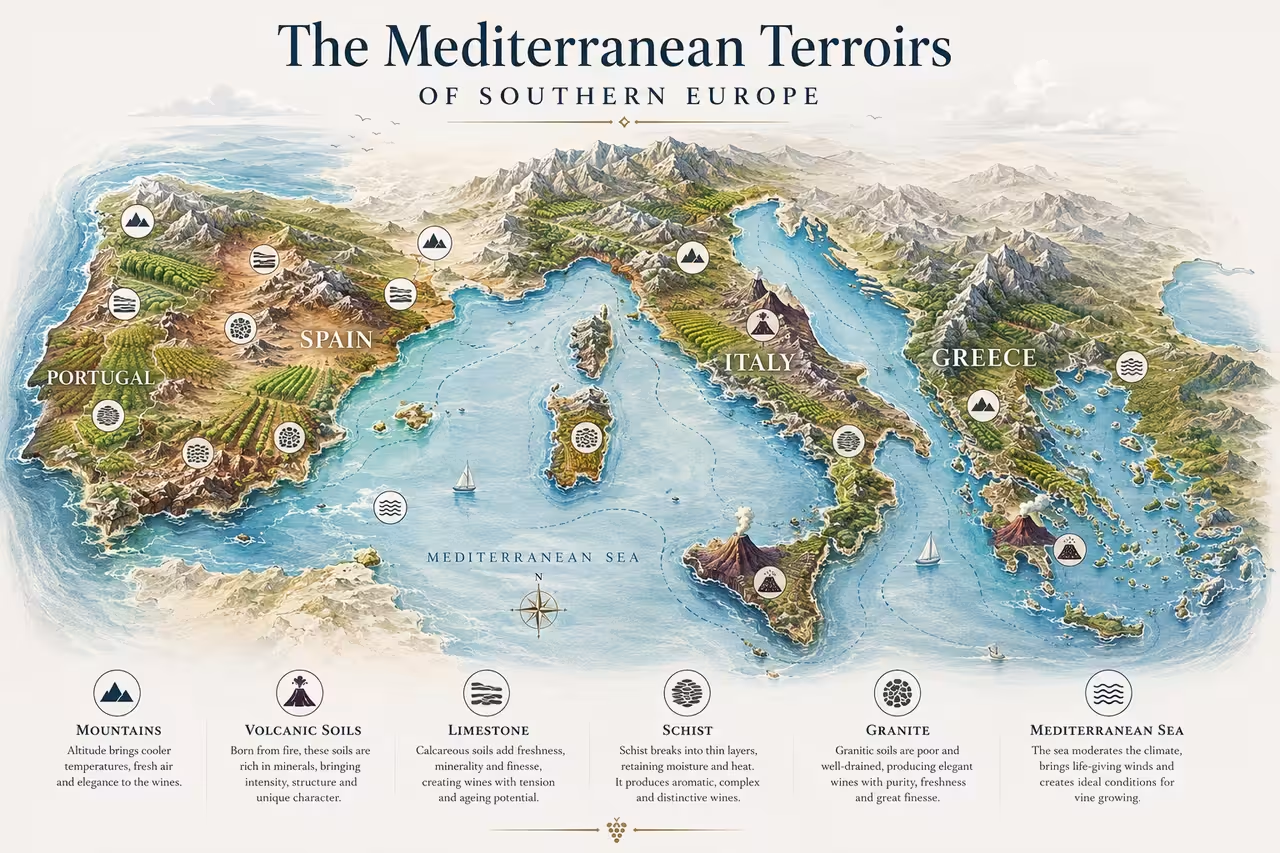
Southern Europe is home to some of the world’s most celebrated wine regions, yet what truly distinguishes this part of Europe is not a single climate, landscape, or grape variety. Its greatest strength lies in the extraordinary diversity of its terroirs. From the volcanic slopes of Mount Etna and Santorini to the schist terraces of Portugal’s Douro Valley, the limestone hills of Tuscany, the slate soils of Priorat, and the granite landscapes of northern Portugal and northwestern Spain, Southern Europe offers an exceptional concentration of geological, climatic, and cultural environments that have shaped viticulture for thousands of years.
Unlike many wine-producing areas defined by relatively uniform climatic conditions, Southern Europe is characterized by constant contrasts. Warm Mediterranean coastlines give way to rugged mountain ranges within only a few kilometers. Sea breezes moderate vineyards overlooking the Atlantic Ocean, the Mediterranean Sea, and the Aegean Sea, while elevated plateaus and inland valleys experience cooler nights that preserve acidity and aromatic complexity in the grapes. These natural contrasts create thousands of individual microclimates, allowing an extraordinary diversity of grape varieties and wine styles to flourish across relatively short distances.
The geological history of Southern Europe further contributes to this remarkable mosaic of terroirs. Over millions of years, tectonic activity, volcanic eruptions, marine sedimentation, and mountain formation created an intricate patchwork of soils unlike anywhere else on the continent. Limestone, volcanic basalt, schist, granite, clay, sandstone, and alluvial deposits often coexist within the same wine region, giving growers an exceptional range of growing conditions. These soils influence water retention, root development, mineral availability, and vine vigor, ultimately shaping the structure, freshness, texture, and ageing potential of the wines produced from them.
Climate is equally fundamental. The Mediterranean climate, with its long, sunny growing seasons, mild winters, and generally dry summers, provides ideal conditions for healthy grape ripening. Yet Southern Europe should never be viewed as climatically uniform. Atlantic influences cool the vineyards of northwestern Portugal and Galicia, mountain ranges generate significant temperature variations throughout Spain, Italy, and Greece, while maritime winds continuously moderate coastal vineyards and island landscapes. This combination of sunshine, elevation, sea influence, and local wind systems produces an extraordinary range of terroirs capable of supporting both powerful full-bodied wines and remarkably fresh, elegant styles.
Another defining characteristic of Southern European terroirs is the continuous interaction between nature and human adaptation. Viticulture has been practiced here for more than three millennia, allowing generations of growers to gradually match indigenous grape varieties with the environments where they perform best. Rather than imposing uniform agricultural methods, winegrowers learned to work with the natural conditions of each landscape. Terraced vineyards transformed steep hillsides into productive agricultural land, dry-farming techniques enabled vines to thrive under limited rainfall, and careful site selection maximized sunlight, drainage, and protection from prevailing winds. These centuries of observation and adaptation have become an integral part of the region’s terroir, demonstrating that terroir is not defined solely by geology or climate but also by the enduring relationship between people and the land.
This diversity explains why Southern Europe cannot be represented by a single wine style. Rich volcanic reds from Sicily, mineral-driven whites from Santorini, elegant Sangiovese from Tuscany, powerful Garnacha from Spain, structured Touriga Nacional from Portugal, and countless other expressions all emerge from fundamentally different environments despite sharing a broadly Mediterranean setting. Each landscape tells a distinct geological and climatic story, reflected in the wines it produces.
Today, Southern Europe’s terroirs continue to evolve. Rising temperatures encourage growers to plant vineyards at higher elevations, revive forgotten indigenous grape varieties, and adopt more sustainable vineyard practices to preserve soil health and water resources. While climate change presents significant challenges, the exceptional diversity of Southern Europe’s landscapes also provides remarkable resilience, allowing producers to adapt while maintaining the unique identity that has defined the region’s wines for centuries.
Understanding the terroirs of Southern Europe therefore means understanding far more than soil composition or climate statistics. It means recognizing a living landscape where geology, geography, weather, biodiversity, and thousands of years of human knowledge combine to create one of the richest and most diverse viticultural environments on Earth. This exceptional complexity forms the foundation upon which every great wine region of Portugal, Spain, Italy, and Greece has been built, making Southern Europe one of the most fascinating terroir landscapes in the global wine world.
The Mediterranean Climate: The Defining Force Behind Southern Europe's Wine Terroirs
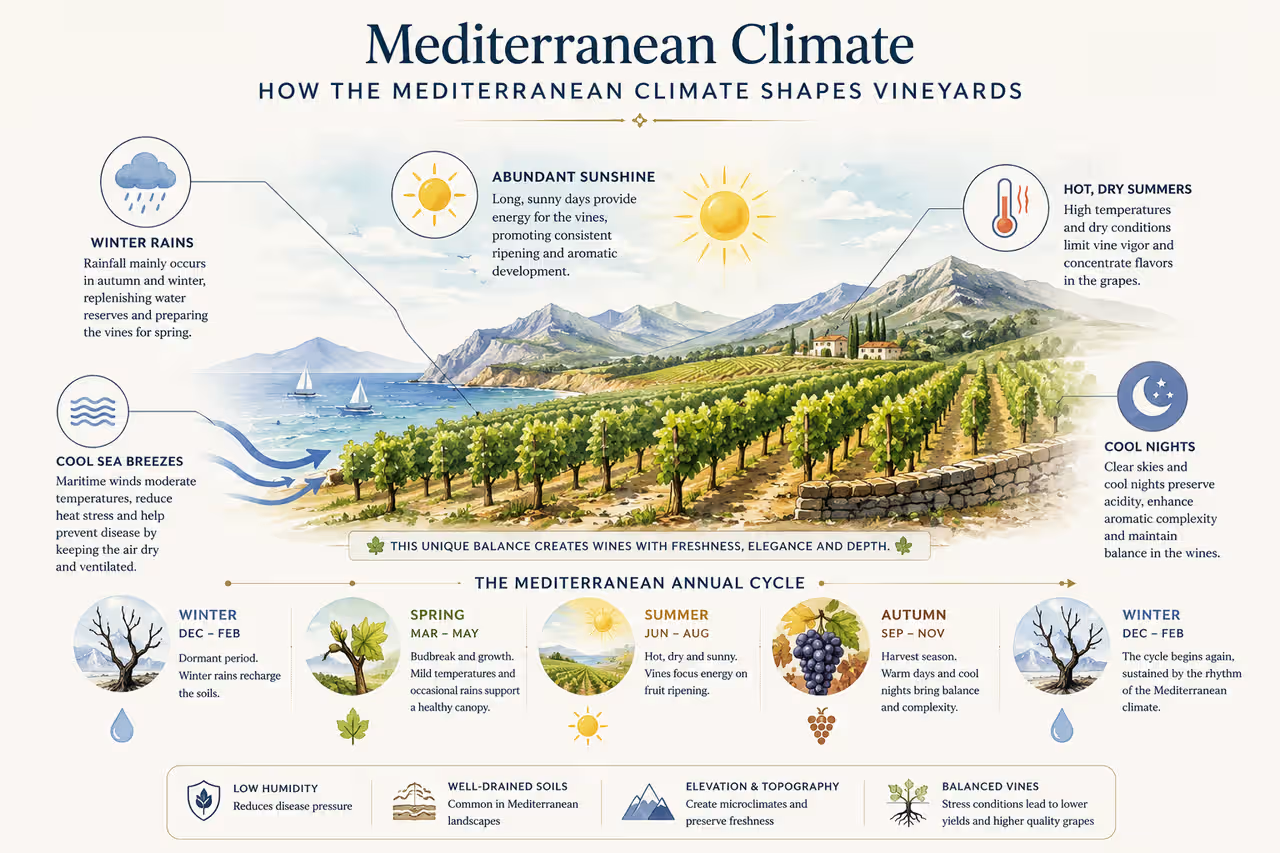
No single natural element has influenced the vineyards of Southern Europe more profoundly than the Mediterranean climate. While soils, altitude, geology, and grape varieties all contribute to the identity of a wine, it is the region’s distinctive climate that provides the foundation upon which its exceptional terroirs have developed. Stretching across Portugal, Spain, Italy, and Greece, Southern Europe shares a broad climatic pattern defined by warm, dry summers, mild winters, abundant sunshine, and the constant influence of nearby seas. Yet beneath this apparent uniformity lies an extraordinary diversity of local conditions that have produced some of the world’s most distinctive wine landscapes.
The Mediterranean climate is remarkably well suited to viticulture because it naturally aligns with the biological cycle of the vine. Rainfall is concentrated during autumn and winter, allowing soils to replenish their water reserves while vines remain dormant. As spring arrives, moderate temperatures encourage healthy budbreak and flowering. Summer then brings long periods of sunshine, low humidity, and limited rainfall, creating ideal conditions for slow, consistent grape ripening while significantly reducing the risk of fungal diseases. This predictable seasonal rhythm has supported successful viticulture across Southern Europe for thousands of years and explains why many of Europe’s oldest vineyards are found within the Mediterranean basin.
Sunlight is one of the defining characteristics of Mediterranean terroirs. Southern Europe enjoys some of the highest annual sunshine totals in Europe, with many wine regions receiving between 2,500 and 3,500 hours of sunlight each year. This abundance of solar energy allows grapes to reach full phenolic maturity, developing concentrated flavours, ripe tannins, and rich colour while maintaining the aromatic complexity that defines many Mediterranean wines. Unlike cooler northern regions, where achieving complete ripeness can be challenging in some vintages, Southern Europe’s vineyards generally benefit from reliable growing conditions that provide consistency from year to year.
Heat alone, however, does not explain the quality of Mediterranean wines. Equally important is the moderating influence of the sea. The Atlantic Ocean shapes western Portugal and parts of northwestern Spain, while the Mediterranean Sea influences eastern Spain, southern France, Italy, Sicily, Sardinia, and much of Greece. The Aegean, Ionian, and Tyrrhenian Seas each create their own local climatic patterns, producing cooling breezes that lower daytime temperatures, improve air circulation, and reduce excessive heat stress during the growing season. These maritime influences often create significant temperature differences between vineyards located only a few kilometres inland and those situated along the coast, contributing to the remarkable diversity of wine styles found throughout Southern Europe.
Daily temperature variation also plays a crucial role in defining Mediterranean terroirs. Many vineyards experience warm, sunny days followed by significantly cooler nights, particularly in elevated inland regions. These diurnal temperature shifts allow grapes to accumulate sugars during daylight hours while preserving natural acidity and aromatic freshness overnight. The result is a balance between ripeness and elegance that characterises many of Southern Europe’s finest wines. This natural equilibrium is especially important in a warming climate, making higher-altitude Mediterranean vineyards increasingly valuable for maintaining freshness and structure.
Although Southern Europe is often associated with hot weather, its climate is far from homogeneous. Portugal illustrates this diversity particularly well, with Atlantic influences producing cool, humid conditions in the northwest while the Douro Valley and Alentejo experience far hotter and drier summers. Spain ranges from the oceanic climate of Galicia to the continental conditions of the central plateau and the intensely Mediterranean landscapes of Catalonia and Andalusia. Italy presents an equally complex picture, where Alpine foothills, central hills, coastal plains, volcanic islands, and southern peninsulas all create highly distinctive climatic environments. Greece combines mountainous terrain with extensive coastlines and islands, where altitude and maritime winds moderate temperatures despite abundant sunshine.
One of the defining features of Mediterranean viticulture is the relative scarcity of summer rainfall. Water availability becomes one of the principal factors controlling vine growth and grape development. Moderate water stress encourages vines to produce smaller berries with thicker skins, concentrating flavours, tannins, pigments, and aromatic compounds. Many of Southern Europe’s oldest vineyards have adapted naturally to these conditions, developing deep root systems capable of accessing underground moisture during prolonged dry periods. These adaptations have contributed to the production of wines renowned for their concentration, complexity, and ageing potential.
The Mediterranean climate has also shaped vineyard architecture over centuries. Growers have traditionally adapted planting density, canopy management, row orientation, and training systems to optimise sunlight exposure while protecting grapes from excessive heat. In many regions, bush-trained vines remain common because they naturally shade grape clusters and reduce evaporation. Elsewhere, terraces built into steep hillsides maximise exposure to sunlight while improving drainage and limiting soil erosion. These agricultural practices demonstrate how climate and human knowledge have evolved together, becoming inseparable components of Southern Europe’s terroirs.
Today, climate change represents both a challenge and an opportunity for Mediterranean viticulture. Higher average temperatures, more frequent droughts, and increasingly unpredictable weather patterns are encouraging growers to reconsider vineyard management, explore higher elevations, revive drought-resistant indigenous grape varieties, and adopt more sustainable farming practices. At the same time, the remarkable geographical diversity of Southern Europe provides an exceptional capacity for adaptation. Coastal influences, mountainous terrain, and countless microclimates continue to offer winegrowers opportunities to preserve quality while responding to changing environmental conditions.
Far from being a simple backdrop, the Mediterranean climate is the defining force that unites the vineyards of Portugal, Spain, Italy, and Greece while simultaneously allowing each region to develop its own unique identity. It is this delicate balance between sunshine, sea, mountains, and seasonal rhythms that has made Southern Europe one of the world’s greatest viticultural landscapes and continues to shape the character of its wines today.
Ancient Geological Forces That Shaped Southern Europe's Wine Landscapes
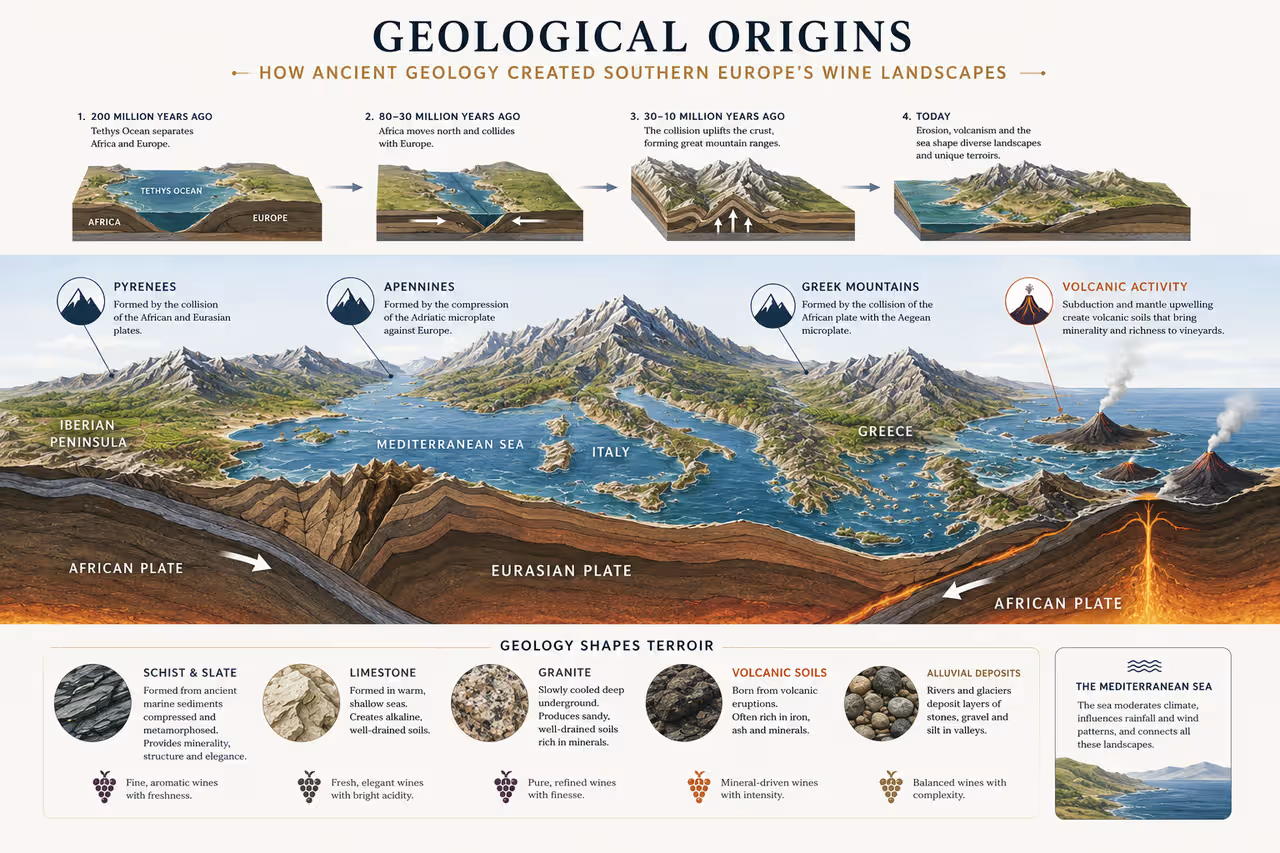
The extraordinary diversity of Southern Europe’s wine terroirs begins long before the first vineyards were planted. Millions of years before humans cultivated vines, immense geological forces were already shaping the landscapes that would eventually become some of the world’s greatest wine regions. Mountain-building, volcanic eruptions, shifting seas, erosion, and tectonic activity created an exceptional mosaic of soils and landforms that today define the vineyards of Portugal, Spain, Italy, and Greece.
Unlike many wine-producing regions where geology is relatively uniform across large areas, Southern Europe is remarkably complex. The collision between the African and Eurasian tectonic plates transformed the Mediterranean Basin over tens of millions of years, lifting mountain ranges, creating volcanic islands, forming deep valleys, and exposing ancient rocks that now serve as the foundation for countless vineyards. This geological history explains why vineyards separated by only a few kilometres may produce dramatically different wines despite sharing the same climate.
Mountain formation played one of the most significant roles in creating Southern Europe’s viticultural landscapes. The rise of the Pyrenees between Spain and France, the Apennines running through the Italian Peninsula, and the mountain systems of mainland Greece fragmented the landscape into thousands of valleys, hillsides, and elevated plateaus. These natural barriers influence rainfall, wind circulation, temperature, and sunlight exposure while creating an extraordinary variety of slopes and elevations suitable for viticulture. Each mountain range generates its own collection of microclimates, allowing grape varieties to thrive under highly specific local conditions.
At the same time, the Mediterranean Sea itself has undergone dramatic transformations throughout geological history. Ancient marine basins repeatedly advanced and retreated, depositing vast layers of limestone, marl, sandstone, and marine sediments that today form the bedrock of many prestigious vineyards. Fossilised seashells found in vineyards hundreds of metres above modern sea level provide striking evidence of these ancient oceans. These marine-derived soils often offer excellent drainage while supplying vines with balanced growing conditions that favour slow, even ripening.
Volcanic activity has added another layer of geological diversity unique to Southern Europe. Italy and Greece, located along active tectonic zones, possess some of Europe’s youngest and most dynamic volcanic landscapes. Repeated eruptions deposited basalt, lava flows, volcanic ash, pumice, and mineral-rich tuff across extensive areas, creating soils that differ fundamentally from sedimentary or metamorphic terrains. Although volcanic soils vary considerably depending on their origin and age, they are generally well drained, rich in mineral compounds, and capable of supporting vines that naturally regulate their vigour under demanding growing conditions.
Erosion has been equally important in sculpting the modern vineyard landscape. Over millions of years, rivers carved valleys through ancient mountains, exposing layers of schist, granite, limestone, and slate while transporting sediments into fertile plains and river terraces. These processes produced the dramatic slopes of Portugal’s Douro Valley, the rugged hills of Spain’s Priorat, Tuscany’s rolling landscapes, and countless hillside vineyards throughout Italy and Greece. In many cases, the steep terrain has required generations of growers to construct terraces, transforming seemingly inaccessible mountainsides into productive vineyards while preserving fragile soils from erosion.
This immense geological diversity explains why Southern Europe cannot be described by a single type of wine soil. Granite dominates parts of northern Portugal and northwestern Spain, contributing to fresh, aromatic wines with vibrant acidity. Schist forms the backbone of the Douro Valley and Priorat, where fractured rock encourages deep root penetration and naturally limits vine vigour. Limestone appears extensively across Spain, central Italy, southern Italy, and Greece, often producing wines noted for their elegance, structure, and freshness. Volcanic soils shape some of Italy’s and Greece’s most distinctive wines, while clay, sandstone, gravel, and alluvial deposits further increase the complexity of Mediterranean terroirs.
Geology also influences the availability of water, one of the most critical factors in Mediterranean viticulture. Well-drained rocky soils force vines to develop extensive root systems capable of reaching moisture reserves deep underground during the dry summer months. This natural adaptation limits excessive vegetative growth, concentrates fruit quality, and allows vines to survive prolonged periods of drought that would challenge many other agricultural crops. In Southern Europe, the relationship between geology and water availability is often as important as the chemical composition of the soil itself.
Modern scientific research continues to reveal how geological diversity contributes to the complexity of Mediterranean wines. While the direct influence of soil minerals on wine flavour remains the subject of ongoing study, there is broad agreement that geology profoundly affects vine behaviour by regulating drainage, temperature, root development, nutrient availability, and microbial activity within the soil. These interactions ultimately shape grape composition and influence the balance, concentration, texture, and ageing potential of the finished wine.
The geological story of Southern Europe is therefore much more than an account of ancient mountains and volcanoes. It is the foundation upon which every vineyard has been established and every regional wine identity has evolved. From the granite hills of Portugal to the volcanic slopes of Sicily and Santorini, from Spain’s fractured slate landscapes to Italy’s limestone ridges, the continent’s southern vineyards remain living expressions of geological processes that began millions of years before the first vine was ever planted.
Volcanic Landscapes: Vineyards Born from Fire
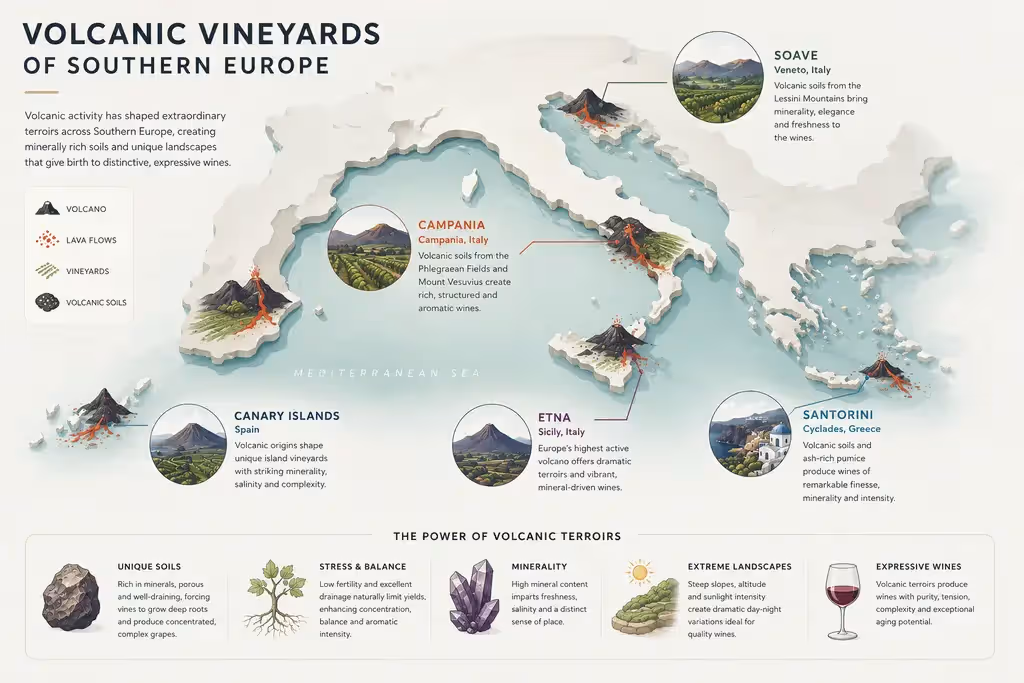
Few terroirs capture the imagination quite like volcanic vineyards. Across Southern Europe, ancient eruptions have created some of the continent’s most distinctive wine landscapes, where vines grow on black lava flows, volcanic ash, pumice, basalt, and mineral-rich soils formed by centuries of geological activity. These dramatic environments are not only visually spectacular but also among the oldest continuously cultivated vineyards in the world, demonstrating the remarkable ability of grapevines to thrive in seemingly inhospitable conditions.
Volcanic terroirs are one of Southern Europe’s defining characteristics. While volcanic vineyards exist in a handful of wine regions around the globe, nowhere in Europe are they as diverse or historically significant as in Italy and Greece. Active and dormant volcanoes have shaped entire wine regions, influencing soil composition, topography, drainage, and microclimates that produce wines with unmistakable personality.
Italy possesses the greatest concentration of volcanic vineyards in Europe. From the towering slopes of Mount Etna in Sicily to the volcanic hills surrounding Naples and the ancient lava landscapes of Campania, vines have adapted to soils created by repeated eruptions over thousands of years. Even regions such as Soave, in northeastern Italy, owe much of their identity to ancient volcanic activity that left behind basalt-rich hillsides capable of producing highly distinctive white wines. Each volcanic area possesses its own geological history, resulting in soils that differ significantly in age, mineral composition, and physical structure.
Greece offers an equally fascinating volcanic heritage. The island of Santorini is perhaps the most famous example, where vineyards grow on deep layers of volcanic ash deposited by one of history’s largest eruptions. With almost no organic matter, minimal rainfall, and constant exposure to strong Aegean winds, the island presents one of the world’s most extreme viticultural environments. Yet vines have survived here for centuries, producing wines celebrated for their remarkable freshness, concentration, and longevity. Other Greek islands also reveal traces of volcanic origins, contributing further diversity to the country’s rich mosaic of terroirs.
One of the defining characteristics of volcanic soils is their exceptional drainage. Layers of lava fragments, pumice, ash, and fractured basalt allow rainwater to infiltrate rapidly while reducing the risk of waterlogging around vine roots. During the dry Mediterranean summer, deep-rooted vines are forced to search for moisture within cracks in the volcanic rock, naturally regulating vine vigour and encouraging the production of small, concentrated berries. This balance between water availability and moderate stress is considered one of the key factors contributing to the intensity and complexity often associated with wines from volcanic regions.
Volcanic soils also possess excellent thermal properties. Dark rocks absorb heat during the day and gradually release it after sunset, moderating temperature fluctuations around the vines. This stored warmth can extend the ripening period, particularly in elevated vineyards, allowing grapes to achieve full physiological maturity while preserving freshness and acidity. The result is a growing environment where power and elegance often coexist, producing wines of remarkable balance despite the intense Mediterranean sunshine.
Although volcanic wines are frequently described as “mineral,” it is important to understand that the relationship between soil and flavour is more complex than a simple transfer of minerals from rock to grape. Modern viticultural research suggests that volcanic soils influence wine primarily through their physical characteristics, including drainage, heat retention, root penetration, and nutrient availability. These factors shape vine growth, berry development, and grape composition, ultimately contributing to wines that are often recognised for their precision, freshness, structure, and distinctive aromatic profiles.
The biodiversity of volcanic landscapes further enhances their uniqueness. Rugged slopes, steep terraces, and isolated mountain environments create countless microclimates where altitude, exposure, wind patterns, and sunlight vary dramatically over short distances. Vineyards planted only a few hundred metres apart may experience different growing conditions, allowing producers to craft wines that express subtle differences within the same volcanic region. This intricate combination of geology and microclimate contributes significantly to the remarkable complexity found in Southern Europe’s volcanic wines.
Many volcanic vineyards also preserve exceptionally old vines. The combination of isolated locations, challenging terrain, and, in some areas, protection from historical vine diseases has allowed ancient vineyards to survive for generations. These mature vines naturally produce lower yields while developing deep root systems capable of accessing water and nutrients far below the surface. Their resilience reflects centuries of adaptation to demanding environments and continues to shape some of Southern Europe’s most distinctive wines.
Beyond their geological significance, volcanic vineyards represent an extraordinary meeting point between natural forces and human ingenuity. Generations of growers have learned to cultivate vines on steep lava terraces, dry volcanic slopes, and windswept islands where agriculture would appear almost impossible. Stone walls, hand-built terraces, traditional vine training systems, and meticulous vineyard management demonstrate how communities have adapted to these remarkable landscapes while preserving a viticultural heritage that stretches back thousands of years.
Today, volcanic terroirs remain among Southern Europe’s most iconic wine destinations. They combine dramatic scenery, ancient geological history, and centuries of winemaking tradition to produce wines unlike any others in the Mediterranean. Whether on the fertile lava slopes of Sicily or the ash-covered vineyards of Santorini, these landscapes continue to illustrate how fire, rock, climate, and human perseverance have combined to create some of the most extraordinary terroirs in the world.
Schist, Limestone and Granite: The Signature Soils of Southern Europe
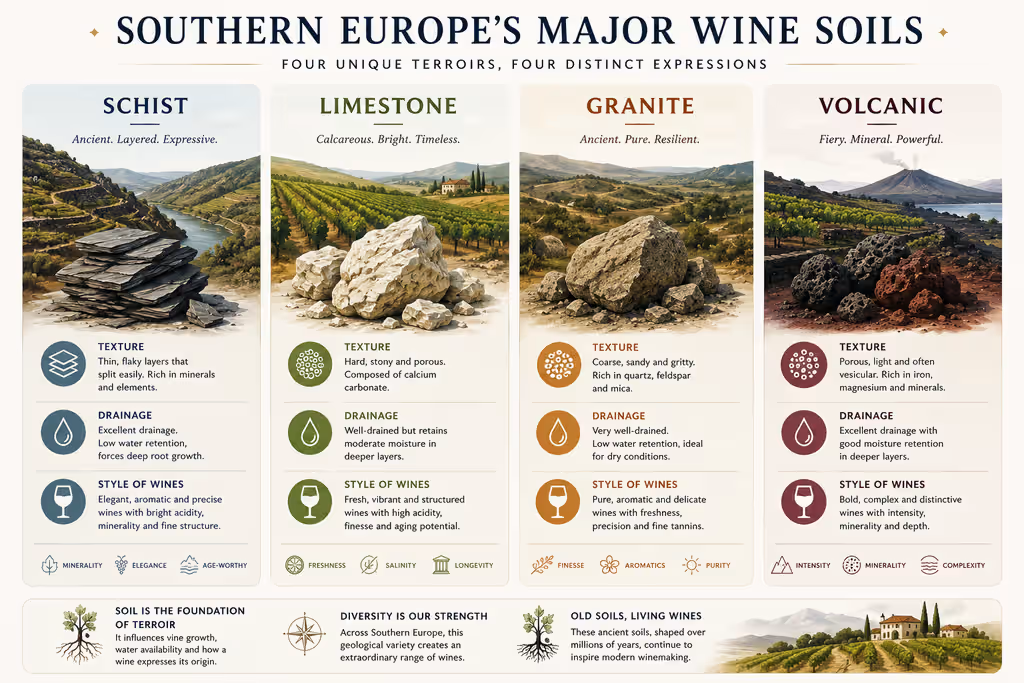
While volcanic landscapes capture much of the attention, the identity of Southern Europe’s vineyards is equally shaped by three geological foundations that appear repeatedly across Portugal, Spain, Italy, and Greece: schist, limestone, and granite. These ancient rocks have supported vineyards for centuries, influencing how vines grow, how water is stored in the soil, and ultimately how wines express their sense of place. Together, they form the backbone of many of the Mediterranean’s most celebrated wine regions.
Unlike climate, which can vary from one vintage to another, geological formations remain remarkably stable over thousands or even millions of years. Their physical structure determines how roots develop, how easily water drains through the soil, how much heat is retained during the day, and how nutrients become available to the vine. Although no single soil guarantees great wine, the interaction between these geological foundations and Mediterranean growing conditions has created some of Southern Europe’s most distinctive terroirs.
Schist: The Foundation of Powerful Mediterranean Wines
Schist is one of the defining rocks of Southern European viticulture. Formed under intense heat and pressure, this layered metamorphic rock fractures naturally into thin sheets, allowing vine roots to penetrate deep into the subsoil in search of moisture. This characteristic makes schist particularly valuable in Mediterranean climates, where rainfall becomes scarce during the summer months.
Portugal’s Douro Valley is perhaps the world’s most famous schist landscape. Here, steep terraces carved into fractured hillsides allow vines to survive extreme summer heat while producing grapes of remarkable concentration. Across the border in northeastern Spain, the famous llicorella soils of Priorat combine slate and schist to create similarly demanding growing conditions, producing wines known for their structure, depth, and ageing potential.
Schist generally offers excellent drainage while encouraging deep rooting systems. Rather than promoting vigorous vegetative growth, these soils naturally limit vine productivity, allowing grapes to develop concentrated flavours and balanced tannin structure. This relationship between rock, water availability, and vine stress has become one of the defining characteristics of several of Southern Europe’s most prestigious red wine regions.
Limestone: The Mediterranean's Most Widespread Vineyard Soil
If schist defines some of Southern Europe’s most dramatic landscapes, limestone is undoubtedly its most widespread geological foundation. Created from ancient marine sediments deposited millions of years ago, limestone appears extensively throughout Spain, Italy, Greece, and parts of Portugal, often forming rolling hills and gently sloping vineyard landscapes that have been cultivated since antiquity.
One of limestone’s greatest advantages is its ability to regulate water. While providing excellent drainage, it also acts as a natural reservoir, gradually releasing moisture to vines during dry Mediterranean summers. This balance allows vines to avoid both excessive water stress and overly vigorous growth, encouraging slow and even grape ripening throughout the growing season.
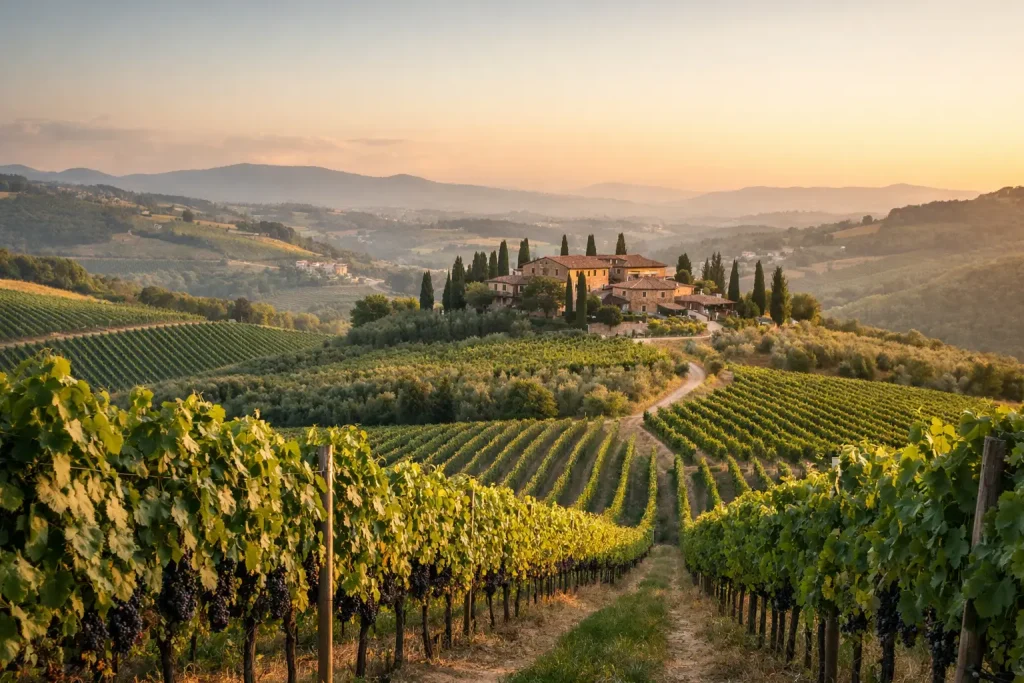
Limestone soils are frequently associated with wines that display freshness, elegance, precision, and remarkable ageing potential. Although these sensory characteristics result from a combination of climate, vineyard management, and grape variety rather than soil alone, the physical properties of limestone consistently create conditions favourable to balanced vine development. Across Tuscany’s hills, central Spain’s elevated vineyards, southern Italy’s limestone plateaus, and numerous Greek wine regions, limestone continues to provide one of the Mediterranean’s most reliable foundations for quality viticulture.
Granite: Freshness in Warm Climates
Granite offers yet another expression of Southern Europe’s geological diversity. This coarse-grained igneous rock formed deep beneath the Earth’s surface before being exposed through millions of years of erosion. As granite slowly weathers, it produces sandy, well-drained soils that are generally poor in nutrients but highly favourable for controlled vine growth.
Granitic terroirs are especially important in northern Portugal and parts of northwestern Spain, where Atlantic influences combine with Mediterranean conditions to create particularly fresh and aromatic wines. The naturally low fertility of granite encourages vines to develop extensive root systems while limiting excessive yields. Combined with cooler nights and abundant sunlight, these landscapes often produce wines with vibrant acidity, refined aromatics, and exceptional elegance.
Unlike heavier clay soils, granite warms relatively quickly during spring while allowing excellent air circulation around vine roots. Its loose structure also facilitates deep root penetration, helping vines access underground water reserves during periods of summer drought. These characteristics make granite particularly valuable in regions where balancing ripeness with freshness is essential.
A Mosaic Rather Than a Single Terroir
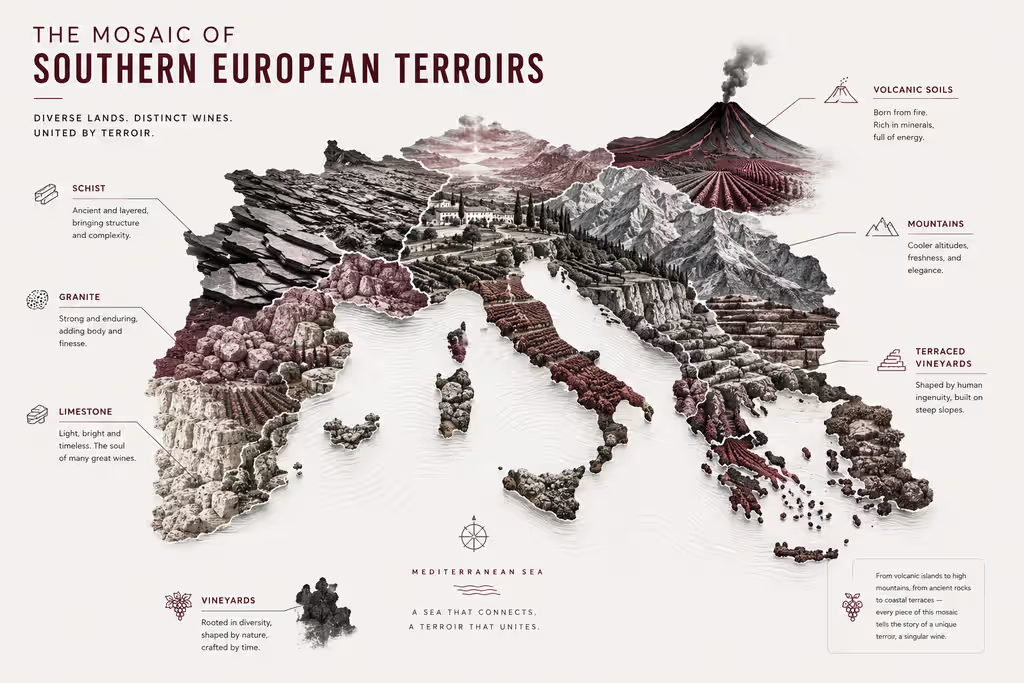
One of Southern Europe’s greatest strengths is that these geological formations rarely exist in isolation. Within a single wine region, vineyards may transition from limestone to clay, from schist to granite, or from volcanic ash to marine sediments over remarkably short distances. These subtle geological variations create countless micro-terroirs, each influencing vine behaviour in different ways.
This complexity explains why neighbouring vineyards planted with the same grape variety can produce wines of noticeably different style and character. Slight changes in soil depth, rock composition, drainage, slope orientation, or elevation often have a greater influence than geographical distance alone. For winegrowers, understanding these subtle differences is essential when selecting grape varieties, rootstocks, vineyard management techniques, and harvest timing.
Rather than seeking a universally “best” soil, Southern European viticulture demonstrates that exceptional wines emerge when each vineyard is matched to the environment in which it performs best. Schist provides resilience under extreme heat, limestone offers balance and consistency, while granite contributes freshness and aromatic precision. Together, these ancient geological foundations illustrate why Southern Europe remains one of the most diverse and fascinating terroir landscapes in the world, where every vineyard reflects a unique combination of rock, climate, topography, and centuries of human experience.
Mediterranean Winds: The Invisible Architects of Southern European Terroirs
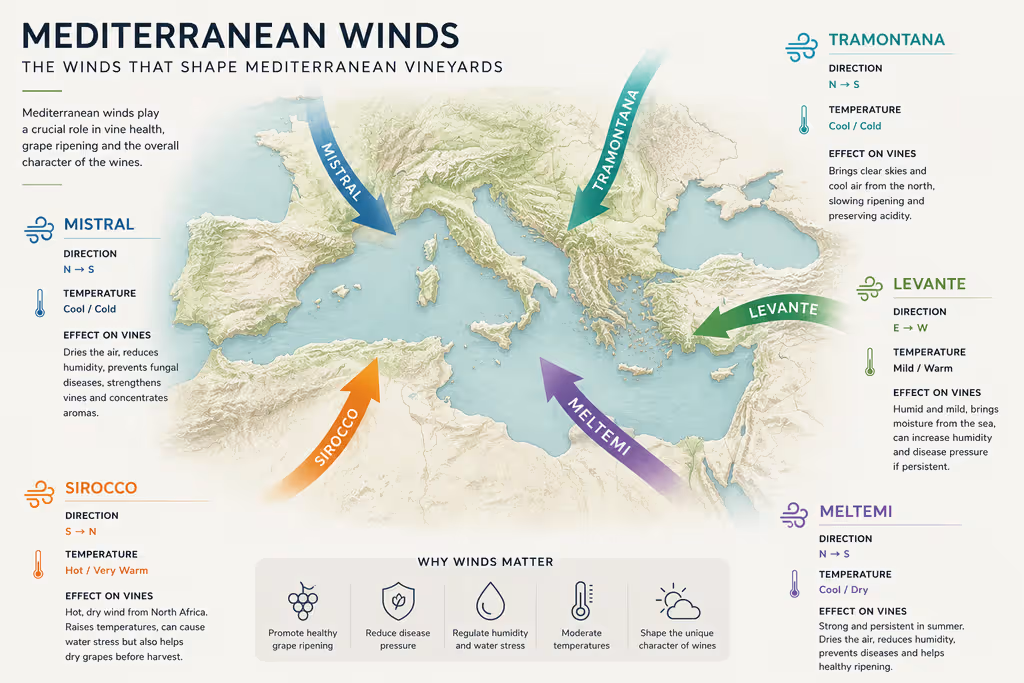
When discussing wine terroir, attention is often focused on climate, geology, and soils. Yet one of the most influential elements shaping Southern Europe’s vineyards cannot be seen at all. Throughout the Mediterranean Basin, powerful regional winds have influenced viticulture for thousands of years, regulating temperatures, reducing humidity, protecting vines from disease, and creating the distinctive microclimates that define many of the region’s finest wines. These winds are not occasional weather events but permanent features of the Mediterranean environment, becoming an essential component of Southern Europe’s unique terroirs.
Unlike continental wine regions where weather patterns may be relatively stable throughout the growing season, Southern Europe’s vineyards are constantly influenced by moving air masses generated by the interaction between mountains, coastlines, islands, and surrounding seas. The complex geography of Portugal, Spain, Italy, and Greece creates an extraordinary network of local wind systems, each with its own seasonal rhythm and climatic effects. Together, they moderate the intense Mediterranean heat while allowing vineyards to thrive under conditions that would otherwise be far more challenging.
One of the most important contributions of Mediterranean winds is temperature regulation. During the long, sunny summers that characterize Southern Europe, afternoon temperatures can rise significantly, placing considerable stress on grapevines. Coastal breezes help dissipate accumulated heat, lowering vineyard temperatures during the warmest hours of the day and reducing the risk of sunburn or excessive dehydration. This natural cooling effect allows grapes to ripen gradually rather than rapidly, preserving aromatic complexity and maintaining the balance between sugar accumulation and natural acidity that is essential for producing high-quality wines.
Air circulation also plays a vital role in vineyard health. Constant movement of dry air around grape clusters limits the development of fungal diseases such as mildew and botrytis, reducing the need for chemical interventions and allowing growers to adopt more sustainable vineyard practices. This natural protection has historically been one of the Mediterranean climate’s greatest advantages, enabling generations of winegrowers to cultivate healthy vineyards despite warm growing conditions.
Several iconic regional winds have become inseparable from Southern Europe’s wine identity.
The Mistral, one of Europe’s most famous winds, descends from northern France before sweeping through the Rhône Valley toward the Mediterranean. Although strongest in southern France, its influence extends into parts of northwestern Italy, bringing cool, dry air that clears humidity after rainfall and improves vineyard sanitation. The Mistral is renowned for its ability to reduce disease pressure while preserving freshness in grapes exposed to intense summer sunshine.
Across northeastern Spain, the Tramontana blows from the Pyrenees toward the Mediterranean coast. This powerful northern wind cools vineyards in Catalonia, particularly those located near the Costa Brava, helping moderate summer temperatures and reducing excess moisture within the canopy. By maintaining healthy fruit during the ripening season, the Tramontana contributes to the production of balanced wines with vibrant acidity despite the region’s abundant sunshine.
Further south, the Levante shapes many of Spain’s southeastern vineyards. Originating over the Mediterranean Sea, it carries humid maritime air inland, moderating temperatures while creating distinctive local weather patterns that vary according to topography and elevation. In some regions, the Levante provides valuable cooling during periods of extreme heat, while in others it contributes additional humidity that requires careful vineyard management.
In Greece, the Meltemi is perhaps the country’s most iconic viticultural wind. Blowing across the Aegean Sea during the summer months, it provides constant cooling for vineyards located on islands and coastal hillsides. The Meltemi is particularly important in regions such as Santorini, where intense sunlight, minimal rainfall, and volcanic soils would otherwise create extremely harsh growing conditions. By lowering daytime temperatures and improving air circulation, the wind allows grapes to mature slowly while preserving remarkable freshness and aromatic precision.
Another important Mediterranean wind is the Sirocco, a warm airflow originating in the Sahara Desert before crossing the Mediterranean Sea. Depending on its path, the Sirocco may arrive as a dry, dusty wind or acquire moisture while travelling over the sea. Although periods of Sirocco can temporarily raise temperatures across southern Italy and parts of Greece, experienced winegrowers have adapted their vineyard practices to mitigate its effects through canopy management, careful irrigation where permitted, and the selection of drought-resistant indigenous grape varieties.
These regional winds illustrate one of the defining characteristics of Southern Europe’s terroirs: the constant interaction between sea, mountains, and atmosphere. Vineyards situated only a few kilometres apart may experience dramatically different wind exposure depending on their orientation, elevation, and surrounding topography. South-facing slopes protected by hills often ripen earlier than exposed ridges constantly cooled by maritime breezes, creating remarkable variation even within the same appellation.
Over centuries, winegrowers have learned to integrate these wind patterns into every aspect of vineyard management. Row orientation, vine training systems, planting density, and canopy architecture are frequently adapted to maximise beneficial airflow while protecting vines from excessive exposure. In particularly windy regions, traditional low-growing bush vines remain common because they reduce the risk of wind damage while naturally shielding grape clusters from intense sunlight.
As climate change brings increasingly frequent heatwaves across Southern Europe, the role of Mediterranean winds is becoming even more significant. Natural ventilation now represents one of the region’s greatest assets, helping vineyards maintain freshness despite rising temperatures. Combined with higher elevations and maritime influences, these ancient wind systems continue to provide a level of climatic resilience that reinforces Southern Europe’s position as one of the world’s most dynamic and adaptable wine landscapes.
Far from being a secondary climatic factor, Mediterranean winds are among the invisible architects of Southern Europe’s terroirs. Together with geology, soils, altitude, and centuries of human experience, they shape the conditions under which vines grow and wines develop their distinctive identity. Understanding these winds is therefore essential to understanding why the vineyards of Portugal, Spain, Italy, and Greece produce such an extraordinary diversity of wines despite sharing the same Mediterranean horizon.
Mountain and High-Altitude Vineyards: Where Elevation Creates Elegance
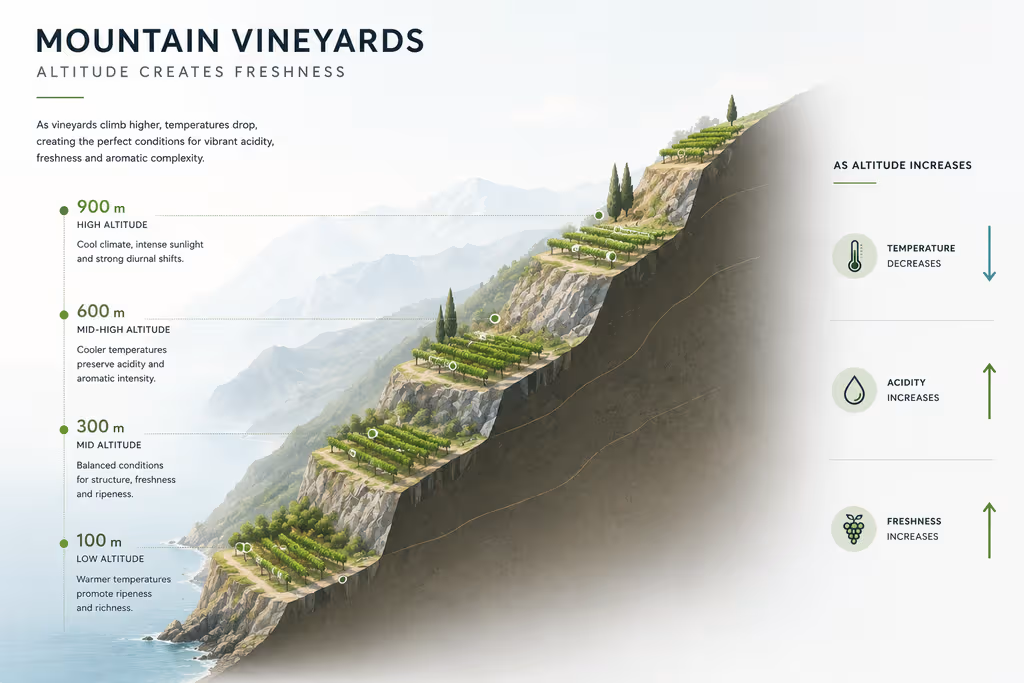
While Southern Europe is often associated with sun-drenched coastal vineyards and warm Mediterranean landscapes, some of its most remarkable wines are produced far above sea level. Across Portugal, Spain, Italy, and Greece, mountain ranges and elevated plateaus create an entirely different expression of Mediterranean terroir. Here, altitude moderates the effects of intense sunshine, extending the growing season and allowing grapes to ripen more slowly while preserving freshness, acidity, and aromatic complexity.
The importance of elevation has become increasingly evident over the past decades. As temperatures have gradually risen throughout Southern Europe, many growers have rediscovered the advantages of higher vineyards that were once considered too cool for reliable grape ripening. Today, altitude is no longer viewed as a limitation but as one of the region’s greatest natural assets, offering resilience against climate change while producing wines of remarkable balance and elegance.
Altitude influences vineyards in multiple ways. For every 100 metres of elevation gained, average temperatures generally decrease by approximately 0.6°C. Although this difference may appear modest, it has a profound impact over the course of an entire growing season. Cooler daytime temperatures slow sugar accumulation, while significantly colder nights preserve acidity and encourage the gradual development of aromas and phenolic compounds. This extended ripening period often results in wines that combine full flavour maturity with exceptional freshness.
One of the most important consequences of altitude is the increase in diurnal temperature variation—the difference between daytime and nighttime temperatures. In many Mediterranean mountain vineyards, warm sunny days are followed by cool evenings, allowing vines to recover from daytime heat stress. This daily rhythm supports balanced grape development, maintaining natural acidity while encouraging the formation of complex aromatic compounds that contribute to elegance and longevity in the finished wine.
Spain offers some of Southern Europe’s finest examples of high-altitude viticulture. Vast elevated plateaus dominate the country’s interior, while mountain vineyards in regions such as Ribera del Duero, Sierra de Gredos, and parts of Rioja demonstrate how elevation can compensate for hot summer conditions. Grapes grown at higher altitudes often produce wines with deeper colour, fresher acidity, and more refined tannins than those cultivated on lower, warmer sites, despite receiving abundant Mediterranean sunshine throughout the growing season.
Italy’s geography creates equally diverse mountain terroirs. The Apennine Mountains extend along the length of the peninsula, generating countless hillside vineyards where elevation, slope orientation, and local air circulation combine to produce highly distinctive microclimates. In Sicily, vineyards on the upper slopes of Mount Etna reach some of the highest elevations in Southern Europe, where volcanic soils and cool mountain temperatures create an extraordinary balance between concentration and freshness. Similar conditions are found throughout central and southern Italy, where hillside vineyards have long been preferred over fertile valley floors.
Portugal’s mountainous interior also illustrates the importance of elevation. In the Douro Valley, vineyard altitude often determines harvest dates, grape composition, and wine style. Lower terraces experience intense summer heat that encourages rich, concentrated fruit, while higher vineyards benefit from cooler temperatures that preserve acidity and aromatic freshness. This vertical diversity allows producers to blend grapes from different elevations, creating wines with remarkable complexity and structural balance.
Greece presents perhaps the most striking contrast between Mediterranean warmth and mountain freshness. Although surrounded by sunlit seas, much of the country is dominated by rugged mountain ranges and elevated plateaus. Vineyards planted hundreds of metres above sea level benefit from cool nighttime temperatures, strong air circulation, and significant seasonal temperature differences that favour slow, even ripening. In many regions, altitude has become an essential tool for preserving freshness in indigenous grape varieties naturally adapted to Mediterranean conditions.
Mountain landscapes also introduce enormous variation in vineyard exposure. South-facing slopes typically receive maximum sunlight and warmth, while north-facing vineyards remain cooler and ripen more gradually. Eastern exposures benefit from gentle morning sunlight, whereas western slopes experience the hottest afternoon conditions. Combined with differences in altitude, these variations create a remarkable diversity of microclimates within relatively small geographical areas, allowing growers to carefully match grape varieties to their ideal environment.
The physical characteristics of mountain vineyards present significant challenges. Steep slopes often require manual labour, making mechanisation difficult or impossible. Terraces must be constructed and maintained to prevent soil erosion, while harvesting frequently takes place entirely by hand. Yet these demanding conditions also contribute to quality. Well-drained hillside soils naturally limit vine vigour, while improved air circulation reduces disease pressure and encourages healthier fruit throughout the growing season.
High-altitude vineyards are increasingly recognised as one of Southern Europe’s greatest responses to a changing climate. As lower-elevation regions experience warmer growing seasons and more frequent heatwaves, mountain vineyards offer naturally cooler environments capable of maintaining balance without sacrificing ripeness. Many producers are expanding into higher elevations, reviving abandoned mountain vineyards or planting new sites that may become increasingly important in the decades ahead.
Far from being isolated exceptions, mountain and high-altitude vineyards are fundamental to understanding Southern Europe’s extraordinary terroir diversity. They demonstrate that Mediterranean viticulture is not defined solely by heat and sunshine but by the constant interaction between elevation, climate, geology, and human adaptation. From the granite mountains of Portugal to Spain’s elevated plateaus, Italy’s volcanic slopes, and Greece’s rugged highlands, these vineyards reveal how altitude transforms Mediterranean landscapes into some of the world’s most elegant and distinctive wine terroirs.
Terraced Vineyards: Farming the Mediterranean's Impossible Slopes
Some of Southern Europe’s most iconic wine landscapes were not created solely by nature but by centuries of human determination. Across Portugal, Spain, Italy, and Greece, generations of winegrowers transformed steep mountainsides into productive vineyards by building terraces stone by stone. These spectacular landscapes are among the clearest examples of how terroir is shaped not only by geology and climate but also by the enduring relationship between people and the land.
Terraced viticulture developed out of necessity. Much of Southern Europe is dominated by rugged hills, narrow valleys, volcanic slopes, and mountainous terrain where conventional agriculture was impossible. Rather than abandoning these landscapes, local communities gradually carved thousands of kilometres of terraces into the hillsides, creating narrow platforms capable of supporting vines while preventing soil erosion and capturing valuable rainfall. Many of these engineering achievements date back hundreds or even thousands of years and remain in use today.
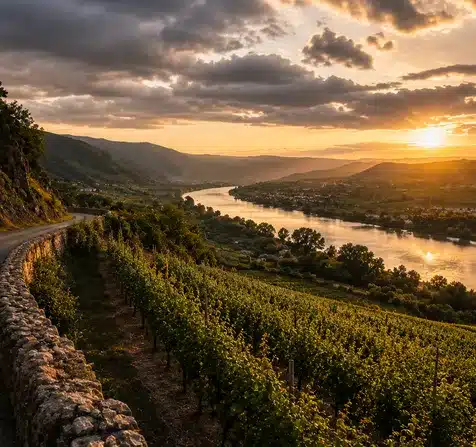
The terraces of the Douro Valley in Portugal are among the world’s most famous examples of this agricultural heritage. Built along extremely steep schist slopes overlooking the Douro River, these vineyards demonstrate how human ingenuity can overcome some of the most challenging conditions in viticulture. The narrow terraces not only provide stable planting surfaces but also maximise sunlight exposure while allowing vines to access the fractured bedrock beneath. This combination of geology, elevation, and traditional engineering has helped establish the Douro as one of the world’s great wine landscapes.
Spain offers another remarkable example in Priorat, where vineyards cling to steep hillsides covered with fractured slate and schist soils known locally as llicorella. Here, terraces reduce erosion while allowing growers to cultivate slopes that would otherwise remain inaccessible. The combination of poor soils, intense sunshine, and dramatic elevation changes produces naturally low-yielding vines capable of producing wines renowned for their concentration and complexity.
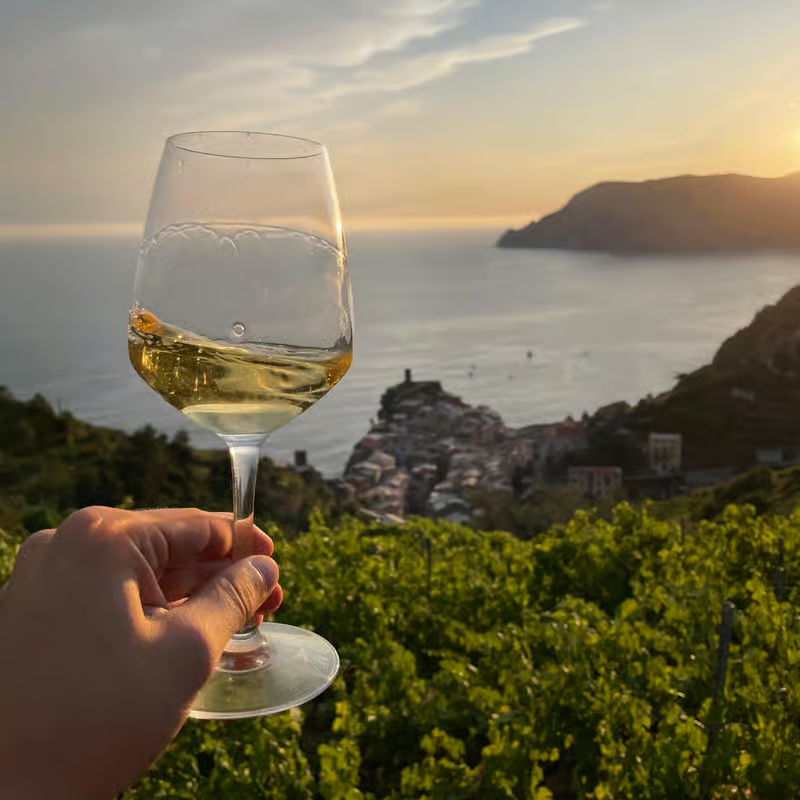
Italy’s dramatic topography has given rise to countless terraced vineyards stretching from coastal cliffs to volcanic mountains. Along the rugged Amalfi Coast and the cliffs of Cinque Terre, narrow stone terraces overlook the Mediterranean Sea, creating some of Europe’s most breathtaking vineyard landscapes. On the volcanic slopes of Mount Etna, generations of growers constructed lava-stone walls that continue to support vineyards planted at elevations where mechanised farming remains virtually impossible. These terraces have become part of the cultural identity of the regions themselves, preserving both agricultural traditions and spectacular scenery.
Greece also possesses an ancient tradition of terraced viticulture. On islands where steep volcanic terrain meets strong maritime winds, terraces provide essential protection against erosion while creating stable environments for vine cultivation. Combined with traditional low-growing training systems, these terraces allow vineyards to thrive under some of the Mediterranean’s most demanding environmental conditions. They illustrate how local communities have continuously adapted their farming techniques to landscapes that offer little margin for error.
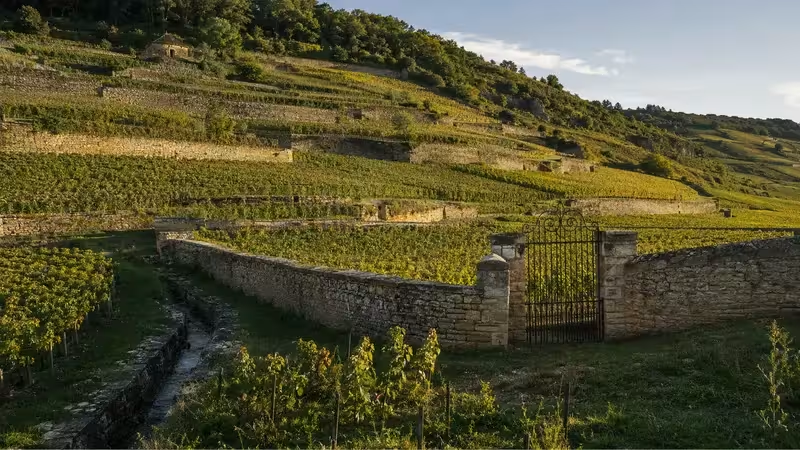
Terraces influence far more than accessibility. By modifying the natural slope, they regulate water movement across the vineyard, reducing runoff during winter rains while helping retain moisture within the soil during the dry Mediterranean summer. Stone retaining walls absorb solar heat throughout the day and slowly release it overnight, creating small but significant temperature variations around the vines. These subtle climatic effects contribute to the development of distinctive microclimates within individual vineyards, adding another layer of complexity to Southern Europe’s terroirs.
The construction and maintenance of terraced vineyards require enormous human effort. Unlike vineyards planted on flat terrain, many terraced landscapes cannot be mechanised. Pruning, canopy management, harvesting, and wall maintenance are frequently performed entirely by hand. Every vine represents hours of manual labour, and every harvest reflects generations of accumulated knowledge passed from one family to the next. This labour-intensive approach explains why many of Southern Europe’s terraced vineyards continue to produce relatively small quantities of wine while maintaining exceptionally high quality.
Terraced landscapes also contribute significantly to biodiversity. The stone walls provide habitats for insects, reptiles, birds, and native vegetation, while the varied elevations and exposures create multiple ecological niches within relatively small areas. Increasingly, these traditional agricultural systems are recognised not only for their cultural value but also for their environmental importance, supporting sustainable viticulture while preserving fragile mountain ecosystems.
Today, many of Southern Europe’s terraced vineyards face new challenges. Rural depopulation, rising labour costs, and climate change place increasing pressure on producers responsible for maintaining these historic landscapes. Yet at the same time, there is growing recognition that terraced vineyards represent an irreplaceable part of Europe’s cultural and agricultural heritage. Numerous restoration projects now seek to preserve abandoned terraces, recognising their importance for erosion control, biodiversity, landscape conservation, and sustainable wine production.
More than simple agricultural structures, terraced vineyards are living monuments to Mediterranean viticulture. They embody the resilience, creativity, and perseverance of generations of winegrowers who refused to let geography limit their ambitions. By transforming cliffs, volcanic slopes, and rugged mountains into productive vineyards, they created some of the world’s most extraordinary wine landscapes—places where human craftsmanship has become an inseparable part of Southern Europe’s unique terroirs.
Climate Change and the Future of Mediterranean Terroirs
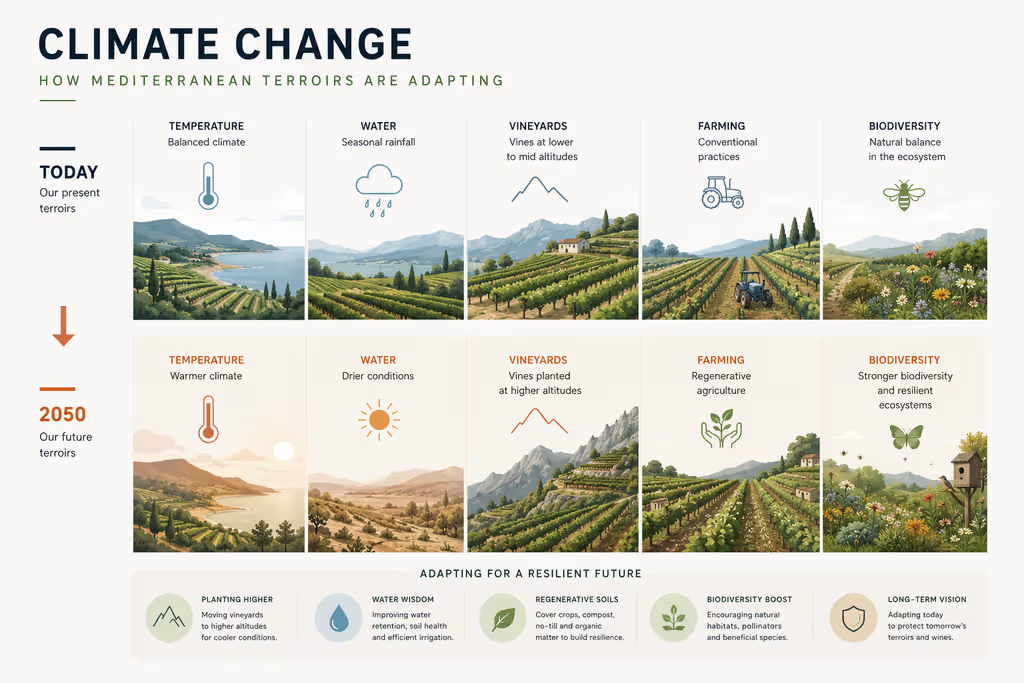
Southern Europe’s wine landscapes have demonstrated remarkable resilience for more than three thousand years. They have endured changing civilizations, volcanic eruptions, economic crises, shifting trade routes, and even the devastation caused by phylloxera during the nineteenth century. Yet today, Mediterranean vineyards face one of the most profound challenges in their history: a rapidly changing climate. Rising temperatures, prolonged droughts, irregular rainfall, and more frequent extreme weather events are transforming the conditions under which vines have traditionally flourished. For a region whose identity has always been closely linked to climate, adapting to these changes has become one of the defining issues of modern Mediterranean viticulture.
Climate change is not affecting every vineyard in the same way. Southern Europe has always been characterised by remarkable geographical diversity, and this diversity now provides both challenges and opportunities. Coastal vineyards experience different pressures from inland plateaus, while mountain vineyards respond differently from low-altitude valleys. Regions that once struggled to achieve full ripeness may now benefit from warmer growing seasons, whereas areas already accustomed to intense summer heat are increasingly forced to confront water scarcity and heat stress. The future of Mediterranean terroirs will therefore depend on local adaptation rather than universal solutions.
One of the most visible changes is the gradual increase in average temperatures during the growing season. Warmer springs often lead to earlier budbreak and flowering, extending the period during which vines remain vulnerable to unexpected weather events. Harvest dates have also advanced in many regions, with grapes reaching technological maturity earlier than they did only a few decades ago. While early ripening may appear advantageous, excessively rapid maturation can reduce the balance between sugar accumulation, acidity, tannin development, and aromatic complexity that defines high-quality wines.
Water availability has become an equally critical concern. The Mediterranean climate has always been characterised by dry summers, but prolonged droughts are becoming increasingly frequent and severe. Lower winter rainfall reduces groundwater reserves, while higher summer temperatures accelerate evaporation from both soils and vines. In shallow or rocky vineyards, prolonged water deficits can place significant stress on vines, affecting berry size, yield, and overall vine health. Water management is therefore becoming one of the central components of modern Mediterranean viticulture.
Rather than relying solely on irrigation, many producers are returning to traditional practices that have long defined Southern European winegrowing. Dry farming, which encourages vines to develop deep root systems capable of accessing underground moisture, is receiving renewed attention as a sustainable response to increasing drought. Cover crops are used to improve soil structure, increase organic matter, and enhance water retention, while reduced tillage helps preserve soil biodiversity and minimise evaporation. These practices demonstrate that some of the most effective responses to climate change are rooted in centuries of accumulated agricultural knowledge.
Altitude is also emerging as one of the region’s greatest natural advantages. Throughout Portugal, Spain, Italy, and Greece, producers are increasingly exploring higher-elevation vineyard sites where cooler temperatures help preserve freshness and extend the growing season. Mountain vineyards that were once considered marginal for viticulture are becoming increasingly attractive as rising temperatures reshape the suitability of traditional vineyard locations. This gradual shift illustrates how Southern Europe’s complex topography provides a degree of climatic flexibility unavailable in many flatter wine-producing regions.
Vineyard management itself is evolving in response to warmer conditions. Growers are adapting pruning techniques, canopy architecture, row orientation, and harvest timing to better protect grapes from excessive sunlight and heat. Greater leaf cover can naturally shade grape clusters during the hottest weeks of summer, reducing the risk of sunburn while maintaining more balanced ripening. Precision viticulture, supported by weather monitoring, satellite imagery, and soil analysis, allows producers to make increasingly informed decisions throughout the growing season without compromising the character of their terroirs.
Sustainability has become inseparable from the future of Mediterranean terroirs. Many producers are embracing regenerative viticulture, biodiversity conservation, and environmentally responsible farming methods designed to improve long-term vineyard resilience. Stone terraces are being restored to reduce erosion and improve water retention, native vegetation is encouraged between vineyard rows to support beneficial insects and soil health, and organic or low-intervention farming practices are becoming increasingly widespread. These approaches recognise that protecting terroir requires preserving not only the vineyard itself but also the wider ecosystem in which it exists.
Climate change is also encouraging a renewed appreciation of Southern Europe’s extraordinary diversity. Rather than seeking uniform solutions, winegrowers are increasingly recognising that each terroir possesses unique strengths. Coastal vineyards benefit from maritime cooling, volcanic soils often retain moisture differently from limestone landscapes, and mountainous regions naturally moderate rising temperatures through elevation. This diversity provides resilience, allowing producers to adapt locally while preserving the distinctive identities that make Mediterranean wines unique.
The future of Southern Europe’s wine terroirs will not be defined solely by changing temperatures or rainfall patterns. It will be shaped by the ability of winegrowers to combine scientific knowledge with centuries of practical experience, respecting the landscapes that have sustained viticulture since antiquity while embracing new approaches to environmental stewardship. The Mediterranean has always been a region of adaptation, where vines learned to thrive under demanding conditions and generations of growers continuously refined their understanding of the land.
Today, that tradition of adaptation continues. Far from diminishing the importance of terroir, climate change is reinforcing its value. It highlights the importance of local geology, altitude, exposure, biodiversity, and sustainable vineyard management in maintaining the balance between nature and human intervention. As Southern Europe enters a new chapter in its viticultural history, its greatest strength remains the same as it has always been: an extraordinary diversity of landscapes capable of evolving while preserving the authenticity, identity, and sense of place that have made Mediterranean wines admired throughout the world for millennia.
Southern Europe: A Living Mosaic of Wine Terroirs
Southern Europe’s wine terroirs cannot be defined by a single landscape, climate, or geological formation. Their true identity lies in diversity. Across Portugal, Spain, Italy, and Greece, vineyards occupy an extraordinary range of environments shaped by millions of years of geological evolution and thousands of years of human cultivation. From Atlantic-influenced hills and sunlit Mediterranean coastlines to volcanic islands, mountain valleys, limestone plateaus, and steep terraced slopes, every vineyard reflects a unique combination of natural forces that continues to influence the wines produced today.
Unlike many of the world’s wine regions, where relatively uniform climates dominate large areas, Southern Europe is a constantly changing mosaic of microclimates. Mountains interrupt prevailing weather systems, seas moderate temperatures, ancient rivers carve valleys through rugged landscapes, and countless differences in altitude, slope orientation, and soil composition create distinctive growing environments within remarkably short distances. Two vineyards separated by only a few kilometres may experience different temperatures, rainfall patterns, wind exposure, and soil conditions, producing wines with their own unmistakable personalities despite sharing the same regional identity.
This diversity explains why Southern Europe has remained one of the world’s most influential wine-producing regions for more than three thousand years. Rather than attempting to standardise viticulture, successive generations of growers learned to understand the strengths of each landscape. Vineyards were planted where local conditions offered the greatest potential, terraces were built on impossible slopes, stone walls protected fragile soils, and farming practices gradually evolved in harmony with the natural environment. The result is a remarkable collection of wine regions whose identities remain deeply rooted in their terroirs.
Terroir in Southern Europe is therefore much more than the composition of the soil beneath the vines. It is the interaction between geology, climate, topography, biodiversity, and centuries of accumulated knowledge. Ancient limestone seas, volcanic eruptions, mountain formation, Mediterranean winds, and seasonal weather patterns all contribute to the conditions that shape vine growth. Equally important are the decisions made by generations of winegrowers who learned to adapt their vineyards to these landscapes rather than forcing the landscapes to adapt to them. This continuous dialogue between nature and human experience remains one of the defining characteristics of Mediterranean viticulture.
Today, these terroirs continue to evolve. Climate change is encouraging growers to rethink vineyard management, restore traditional farming practices, improve biodiversity, and explore new elevations while protecting the landscapes that have sustained viticulture for centuries. Far from diminishing the importance of terroir, these challenges reinforce its value, highlighting the resilience that comes from geological diversity, varied topography, and a long history of adaptation. The future of Southern European wine will depend not on abandoning tradition but on building upon the profound understanding of place that has always distinguished the region.
For wine lovers, discovering Southern Europe’s terroirs is far more than learning about soils or climates. It is an opportunity to understand why every wine tells a different story. The volcanic vineyards of Sicily, the schist terraces of Portugal, the limestone hills of Tuscany, the slate landscapes of Priorat, the mountain vineyards of mainland Greece, and the countless coastal valleys scattered throughout the Mediterranean all express landscapes that cannot be replicated elsewhere. Each bottle becomes a reflection of its environment, carrying with it the history, geology, climate, and cultural heritage of the place where it was born.
Exploring these terroirs also provides the perfect gateway to understanding Southern Europe’s wider wine culture. Every vineyard is connected to historic wine regions, indigenous grape varieties, traditional wineries, and authentic wine experiences that together form one of the richest viticultural landscapes on Earth. Whether travelling through Portugal’s river valleys, Spain’s mountain vineyards, Italy’s volcanic hillsides, or Greece’s sunlit islands, visitors quickly discover that terroir is not an abstract concept but a living reality visible in every landscape and reflected in every glass.
Southern Europe’s greatest wines are therefore not the product of a single climate, a particular soil, or one famous region. They are the expression of an extraordinary mosaic of landscapes where nature and humanity have worked together for millennia. It is this remarkable diversity—rather than any single defining characteristic—that has established Southern Europe as one of the world’s most fascinating wine destinations and one of the enduring homes of great viticulture.