Table of Contents
Southern Europe: The Cradle of European Wine
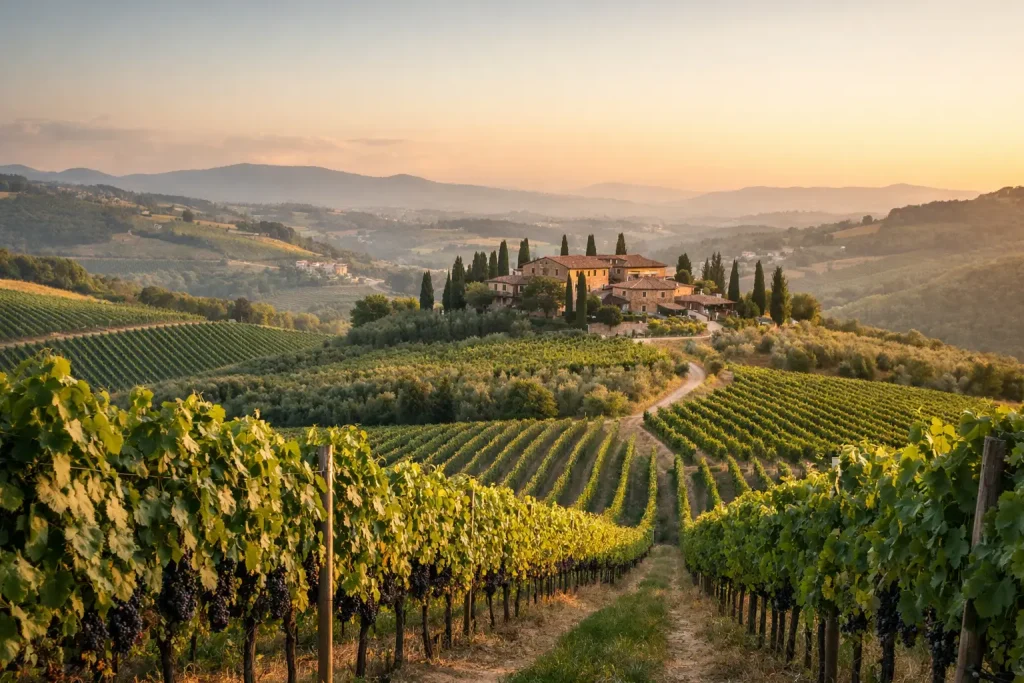
When people think of the world’s great wine destinations, they often picture the rolling hills of Tuscany, the terraced vineyards of the Douro Valley, the sun-drenched landscapes of Andalusia or the whitewashed villages overlooking the vineyards of Santorini. Yet these iconic places represent far more than renowned wine regions. Together, they form the historical heart of European wine, a landscape where viticulture evolved over thousands of years and where wine became inseparable from culture, commerce and everyday life.
Southern Europe occupies a unique place in the history of wine. Long before vineyards spread across the rest of the continent, the Mediterranean basin had already become a crossroads of civilizations, maritime trade and agricultural innovation. The region’s mild climate, fertile valleys and extensive coastline created ideal conditions for cultivating vines, while its strategic position connected peoples, ideas and goods from the Near East to the western edges of Europe. Wine travelled alongside merchants, explorers and settlers, transforming from a simple agricultural product into one of the defining elements of Mediterranean civilization.
Unlike many other European regions where viticulture developed later, Southern Europe’s wine heritage was shaped by successive civilizations that built upon one another rather than replacing what came before. Phoenician traders established early commercial networks across the Mediterranean, introducing vines and winemaking knowledge to coastal settlements. Greek colonists elevated wine into an essential part of social, religious and philosophical life, while the Roman Empire expanded vineyards on an unprecedented scale, creating trade routes and production systems that would influence European viticulture for centuries. Medieval monasteries later preserved this knowledge through periods of political change, before maritime kingdoms such as Portugal and Spain carried Southern Europe’s wine traditions far beyond the continent during the Age of Exploration.
This long and continuous evolution explains why Southern Europe is not simply home to some of the world’s oldest vineyards, but also to an extraordinary diversity of wine landscapes and traditions. Volcanic islands, limestone hills, fertile plains, rugged mountain terraces and coastal vineyards each tell a different chapter of the same story. Indigenous grape varieties that have survived for centuries continue to thrive alongside vineyards whose origins can often be traced back to antiquity. In many villages, harvest festivals, local cuisine and community life still revolve around customs established generations ago, making wine not merely an agricultural product but a living cultural heritage.
Today, Southern Europe remains one of the most influential wine regions in the world. Countries such as Italy, Spain, Portugal, Greece, Cyprus and Malta attract millions of wine travellers each year, drawn not only by the quality of their wines but also by the opportunity to experience landscapes, traditions and hospitality shaped by thousands of years of history. Understanding this shared heritage offers far more than a historical perspective—it provides the key to appreciating why wine continues to occupy such a central place in the identity of Southern Europe and why its influence can still be felt in vineyards across the globe.
From the Caucasus to the Mediterranean: Wine Reaches Southern Europe
The story of wine did not begin in Southern Europe. Archaeological discoveries place the earliest evidence of grape domestication and winemaking several thousand years earlier in the South Caucasus, particularly in the regions that today correspond to modern-day Georgia, Armenia and parts of eastern Türkiye. It was there, between fertile valleys and mountain foothills, that wild grapevines were gradually transformed into cultivated vines, giving birth to one of humanity’s oldest agricultural traditions.
Over the centuries, this knowledge travelled westward through migration, commerce and cultural exchange. Rather than spreading in a single movement, viticulture followed the great trade routes of the ancient world, carried by merchants, sailors and settlers who recognised both the practical and symbolic value of wine. The Mediterranean Sea soon became the natural highway through which vines, cultivation techniques and winemaking traditions reached new shores.
Southern Europe offered conditions unlike almost anywhere else in the ancient world. Its long, sunlit growing seasons, mild winters and remarkable diversity of landscapes created an environment where cultivated vines could flourish. Coastal plains, fertile river valleys, volcanic islands and limestone hills all provided ideal terroirs for viticulture, allowing vineyards to expand rapidly as new settlements emerged around the Mediterranean basin.
Yet the true transformation of Southern Europe was not simply agricultural. Wine evolved from a cultivated crop into a cornerstone of society. As vineyards spread across the Mediterranean coastline, wine became intertwined with trade, religion, politics and daily life. Amphorae filled with wine crossed the sea alongside olive oil, ceramics and precious goods, while ports became centres where ideas, agricultural knowledge and cultural traditions were exchanged between distant civilizations.
Unlike northern Europe, where viticulture would remain limited for many centuries because of cooler climates, Southern Europe possessed both the environmental conditions and the maritime connections necessary for wine to develop on an unprecedented scale. The Mediterranean did not merely receive wine from the East; it transformed it into an essential element of its own identity. It was here that viticulture moved beyond its origins to become a defining feature of entire civilizations.
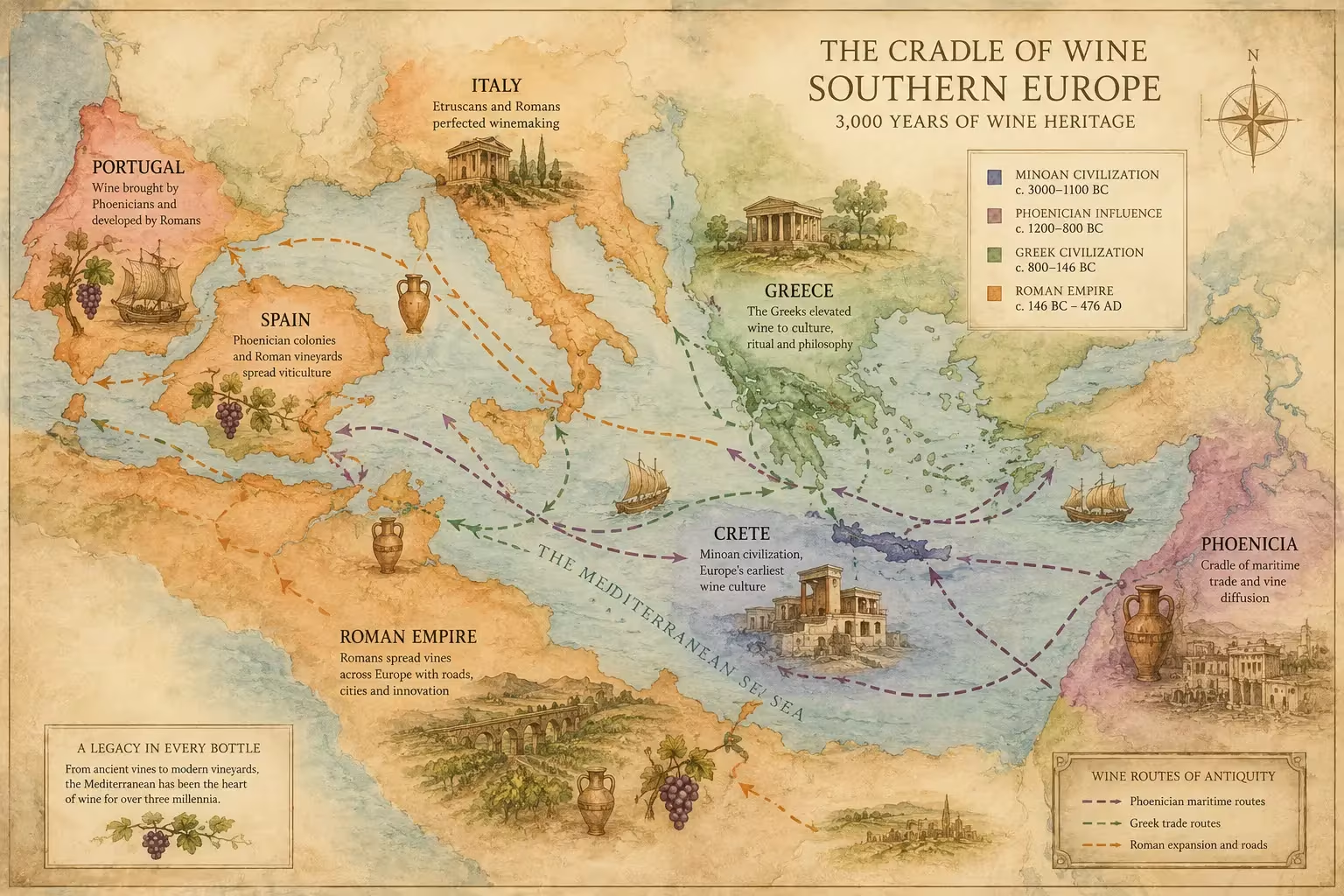
This transformation would accelerate with the arrival of one of the ancient world’s greatest seafaring peoples. Long before the rise of Greece or Rome, the Phoenicians established trading networks that connected the eastern Mediterranean with the Iberian Peninsula, Sicily and many of the islands that would later become some of Europe’s most celebrated wine regions. Through their voyages, they laid the foundations for the extraordinary wine culture that would shape Southern Europe for the next three millennia.
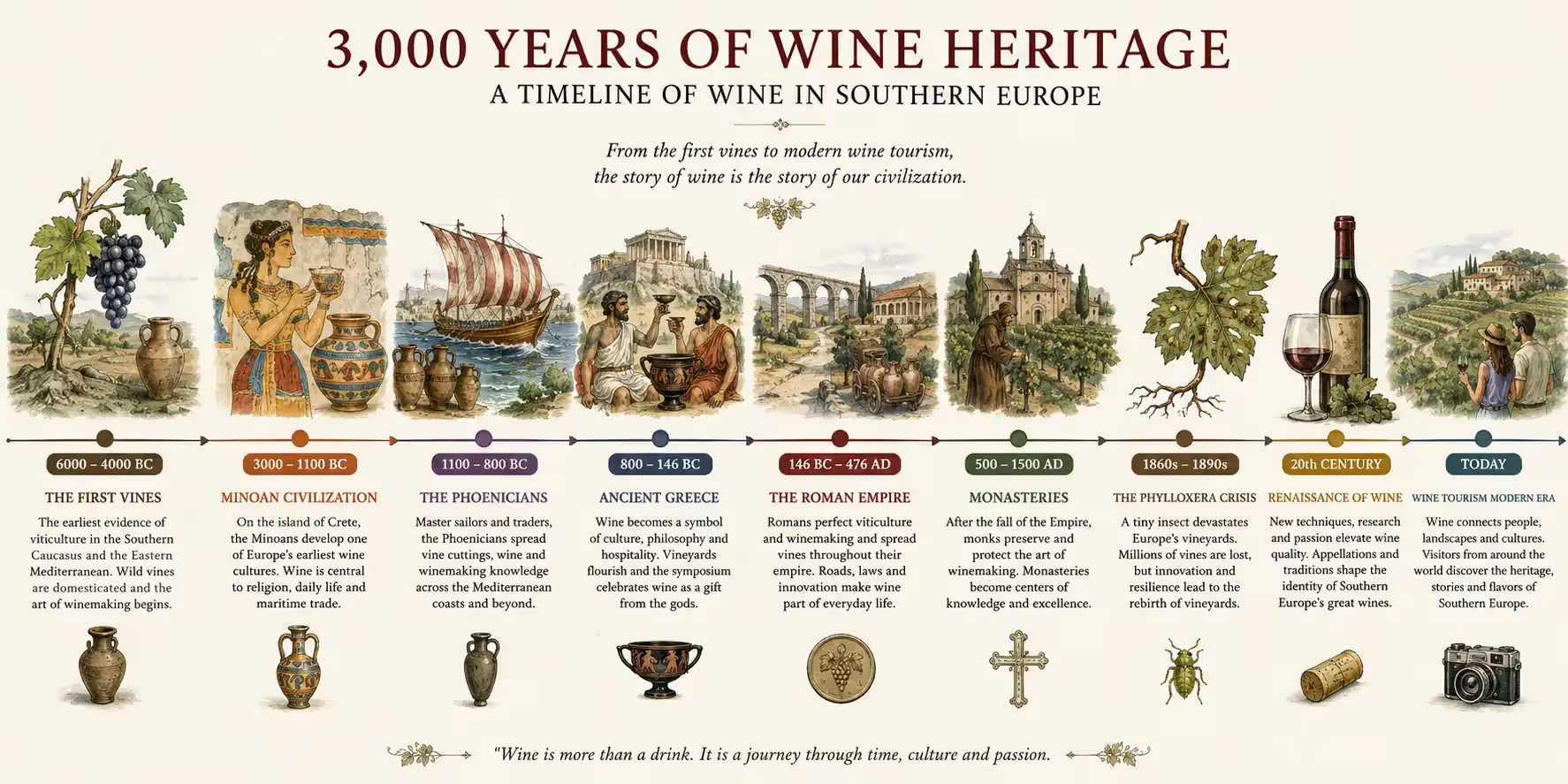
The Minoans: Europe's First Great Wine Civilization
Long before Ancient Greece emerged as a dominant cultural force in the Mediterranean, the island of Crete was already home to one of Europe’s most advanced civilizations. Between approximately 3000 and 1450 BCE, the Minoans developed a prosperous maritime society whose influence extended across the eastern Mediterranean. Among their many achievements, viticulture occupied a central place, making Crete one of the earliest centres of organised wine production in Europe.
Archaeological discoveries from the great Minoan palaces of Knossos, Phaistos, Malia and Zakros reveal that wine was already deeply integrated into both the economy and daily life. Vast ceramic storage vessels known as pithoi have been unearthed in palace complexes, demonstrating the large-scale storage of agricultural products, including wine. Pressing installations, grape seeds and residue analyses found in ancient containers provide compelling evidence that vineyards were cultivated systematically and that wine production had already reached a remarkable level of sophistication more than three thousand years ago.
The success of Minoan viticulture was closely linked to Crete’s exceptional geography. Blessed with a warm Mediterranean climate, abundant sunshine and varied mountainous landscapes, the island offered ideal conditions for cultivating grapevines. Vineyards flourished on hillsides overlooking the sea, benefiting from cooling coastal breezes and diverse soils that continue to support wine production today. Many of the landscapes that modern visitors associate with Cretan vineyards have been shaped by thousands of years of continuous cultivation, making Crete one of Europe’s oldest living wine regions.
Wine was far more than an agricultural commodity within Minoan society. It formed part of religious ceremonies, communal celebrations and palace administration, reflecting its importance in both spiritual and political life. The ability to produce, store and distribute significant quantities of wine also demonstrates a highly organised economy capable of managing agricultural surpluses and long-distance trade. Unlike small-scale subsistence farming, Minoan viticulture already displayed many characteristics associated with an advanced wine-producing civilization.
Perhaps the most remarkable aspect of Minoan wine culture was its maritime reach. Thanks to their exceptional seafaring skills, the Minoans established extensive trading connections throughout the eastern Mediterranean, exchanging goods with Egypt, the Levant, Cyprus and the Aegean islands. Wine almost certainly travelled alongside olive oil, ceramics and luxury products, contributing to the diffusion of viticultural knowledge across neighbouring regions. These commercial networks transformed Crete into one of the Mediterranean’s earliest centres for the exchange of agricultural expertise, laying foundations that later civilizations would continue to build upon.
Although the decline of the Minoan civilization eventually brought an end to its political dominance, its contribution to European wine history endured. The vineyards established on Crete continued to be cultivated by the Mycenaeans and, later, by the Greeks, ensuring an extraordinary continuity of viticulture that survives to this day. Rather than representing a forgotten chapter of history, Minoan Crete stands as the first great expression of a Mediterranean wine culture that would later flourish under Phoenician traders, Greek colonists and the Roman Empire.
Understanding the achievements of the Minoans changes the way we view the history of wine in Southern Europe. The region’s wine heritage did not begin with Classical Greece or Imperial Rome, but centuries earlier on an island where organised viticulture, maritime commerce and sophisticated agricultural management had already combined to create one of Europe’s first great wine civilizations. Crete was not simply one of the earliest places to grow vines—it was one of the foundations upon which Southern Europe’s enduring wine identity was built.
The Phoenicians: Bringing Wine Across the Mediterranean
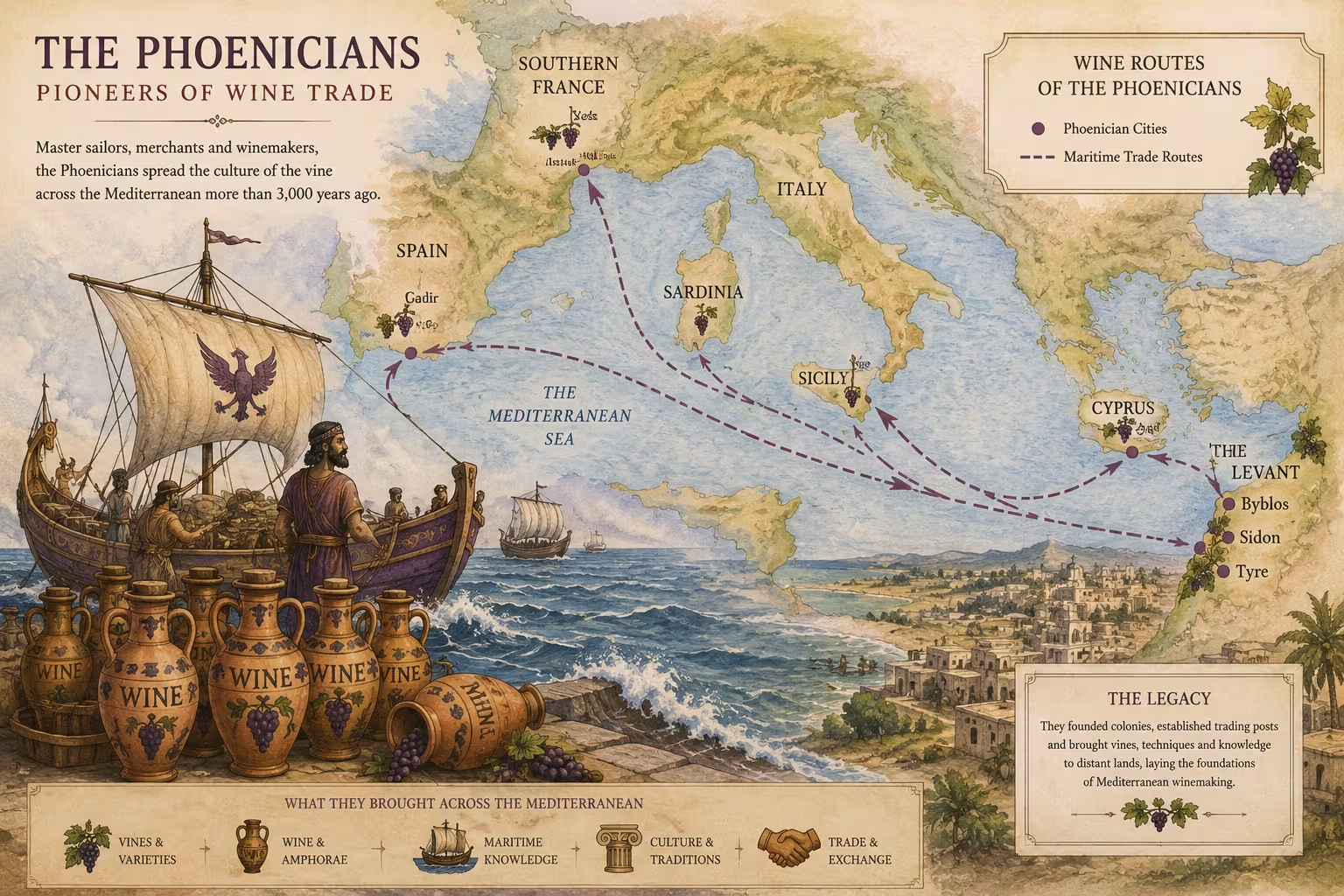
The rise of Southern Europe as one of the world’s great wine regions began long before the Greek city-states or the Roman Empire dominated the Mediterranean. Between the 12th and 8th centuries BCE, the Phoenicians, renowned sailors and merchants from the eastern Mediterranean, established one of history’s most influential maritime trading networks. Their ships connected the Levant with Cyprus, Sicily, Sardinia, North Africa and the Iberian Peninsula, creating commercial routes that would forever transform the history of wine in Southern Europe.
Although vines had already reached parts of the Mediterranean through earlier exchanges, the Phoenicians played a decisive role in spreading viticulture across new coastal settlements. Wherever they founded trading posts or ports, they introduced agricultural knowledge, including vine cultivation, winemaking techniques and the use of wine as a valuable commercial commodity. Their settlements gradually became gateways through which viticulture expanded westward, laying the foundations for many of Southern Europe’s future wine regions.
The Mediterranean Sea was the driving force behind this expansion. Rather than acting as a barrier between civilizations, it functioned as an immense maritime highway that allowed ideas, technologies and agricultural products to circulate with remarkable efficiency. Wine travelled alongside olive oil, ceramics, metals and textiles, becoming one of the defining products exchanged between the eastern and western Mediterranean. Amphorae filled with wine reached distant ports, while local communities adopted and adapted viticultural practices to suit their own landscapes and climates.
The influence of the Phoenicians was particularly significant along the Iberian Peninsula, where they established settlements such as Gadir, present-day Cádiz, one of the oldest continuously inhabited cities in Western Europe. These early colonies became centres of trade and agricultural innovation, introducing vine cultivation to regions that would eventually produce some of Spain’s most celebrated wines. Similar developments occurred on Mediterranean islands, including Sicily and Sardinia, where viticulture became deeply rooted in local economies and cultures.
Yet the Phoenicians contributed far more than vines alone. They helped establish the concept of wine as a product of exchange, prestige and long-distance commerce. Their sophisticated maritime routes demonstrated that wine could be transported across great distances without losing its economic value, encouraging producers to cultivate vineyards not only for local consumption but also for regional trade. This commercial perspective would profoundly influence later civilizations, particularly the Greeks and Romans, who expanded these networks into increasingly complex systems of production and distribution.
Many of the vineyards that define Southern Europe today stand remarkably close to these ancient maritime routes. While countless generations of growers have transformed landscapes and introduced new grape varieties over the centuries, the geographical logic established by Phoenician traders remains strikingly familiar. Coastal regions with easy access to ports became centres of viticulture, while islands evolved into strategic crossroads where cultures, techniques and wines continually intersected.
The Phoenicians may not have created Southern Europe’s wine culture on their own, but they provided the essential framework upon which later civilizations would build. By connecting distant shores through trade, encouraging the spread of vineyards and establishing wine as a valuable economic and cultural resource, they laid the first foundations of the Mediterranean wine world. Their legacy would soon be amplified by another civilization whose influence on wine would prove even more enduring: Ancient Greece.
Ancient Greece: Wine as a Way of Life
If the Phoenicians laid the commercial foundations of Mediterranean viticulture, Ancient Greece gave wine its cultural identity. Between the eighth and fourth centuries BCE, the Greek world transformed wine from a valuable agricultural commodity into a defining element of daily life, philosophy, religion and social interaction. Throughout Southern Europe, Greek influence shaped not only the cultivation of vineyards but also the way wine was understood, appreciated and celebrated, creating traditions that continue to resonate across the Mediterranean today.
Building upon the earlier achievements of the Minoan civilisation on Crete, Greek city-states expanded across the Mediterranean through successive waves of colonisation. As new settlements were established along the coasts of southern Italy, Sicily, the Adriatic and parts of the western Mediterranean, vineyards accompanied the settlers. These colonies were far more than military or commercial outposts; they became centres where agriculture, craftsmanship and local traditions merged with Greek knowledge, creating some of Southern Europe’s earliest organised wine landscapes.
Nowhere was this influence more visible than in Magna Graecia, the region encompassing much of southern Italy and Sicily. Here, fertile volcanic soils, rolling hills and favourable Mediterranean climates allowed vineyards to flourish on an unprecedented scale. Greek settlers introduced improved cultivation techniques, selected vineyard sites with great care and encouraged the production of wines adapted to local conditions. Many of these landscapes remain important wine-producing regions today, illustrating the extraordinary continuity between the ancient Mediterranean world and modern Southern European viticulture.
Unlike earlier civilizations, however, the Greeks viewed wine as something far greater than a source of nourishment or trade. Wine occupied a central place in intellectual and social life through the institution of the symposium, one of the defining customs of Classical Greece. During these gatherings, participants shared diluted wine while discussing philosophy, politics, poetry and science, reinforcing the idea that wine encouraged conversation, reflection and the exchange of ideas. Moderation, balance and hospitality became essential virtues associated with wine consumption, principles that would later influence Roman society and, ultimately, much of European wine culture.
Religion also played a fundamental role in shaping the Greek relationship with wine. The worship of Dionysus, the god of wine, fertility and celebration, elevated viticulture beyond agriculture into the spiritual realm. Festivals dedicated to Dionysus celebrated both the grape harvest and the creative forces of nature, linking wine with theatre, music, ritual and communal identity. Through these traditions, wine became inseparable from the rhythms of Mediterranean life, symbolising joy, abundance and the close relationship between humanity and the natural world.
The Greeks also demonstrated a remarkable understanding of the relationship between landscape and wine quality. While the modern concept of terroir would emerge much later, Greek growers already recognised that different soils, elevations and coastal environments produced wines with distinct characteristics. Rather than treating vineyards as uniform agricultural land, they adapted grape cultivation to local conditions and appreciated the diversity of wines produced across different regions. This early awareness of place remains one of the defining characteristics of Southern European winemaking today.
Equally important was the role of maritime trade. Greek merchant ships transported wine throughout the Mediterranean in carefully crafted amphorae, connecting producers with distant markets and encouraging the exchange of both wines and viticultural knowledge. As colonies prospered, these commercial routes linked Greece with southern Italy, Sicily, the islands of the Aegean and the western Mediterranean, creating an increasingly interconnected wine culture that transcended political borders. Southern Europe was gradually evolving into a shared viticultural world, united by common traditions while preserving remarkable regional diversity.
Although the political influence of the Greek city-states eventually declined, their vision of wine endured. They established many of the cultural values that still define Mediterranean wine today: the importance of hospitality, the close connection between wine and food, respect for the vineyard, and the belief that great wines reflect the character of the land from which they come. These ideas survived successive centuries and were readily adopted by the civilisation that would soon dominate the Mediterranean.
When Rome rose to power, it inherited far more than vineyards. It inherited an entire philosophy of wine—one that it would expand into the largest and most sophisticated wine network the ancient world had ever known.
Rome: Building Southern Europe's First Wine Empire
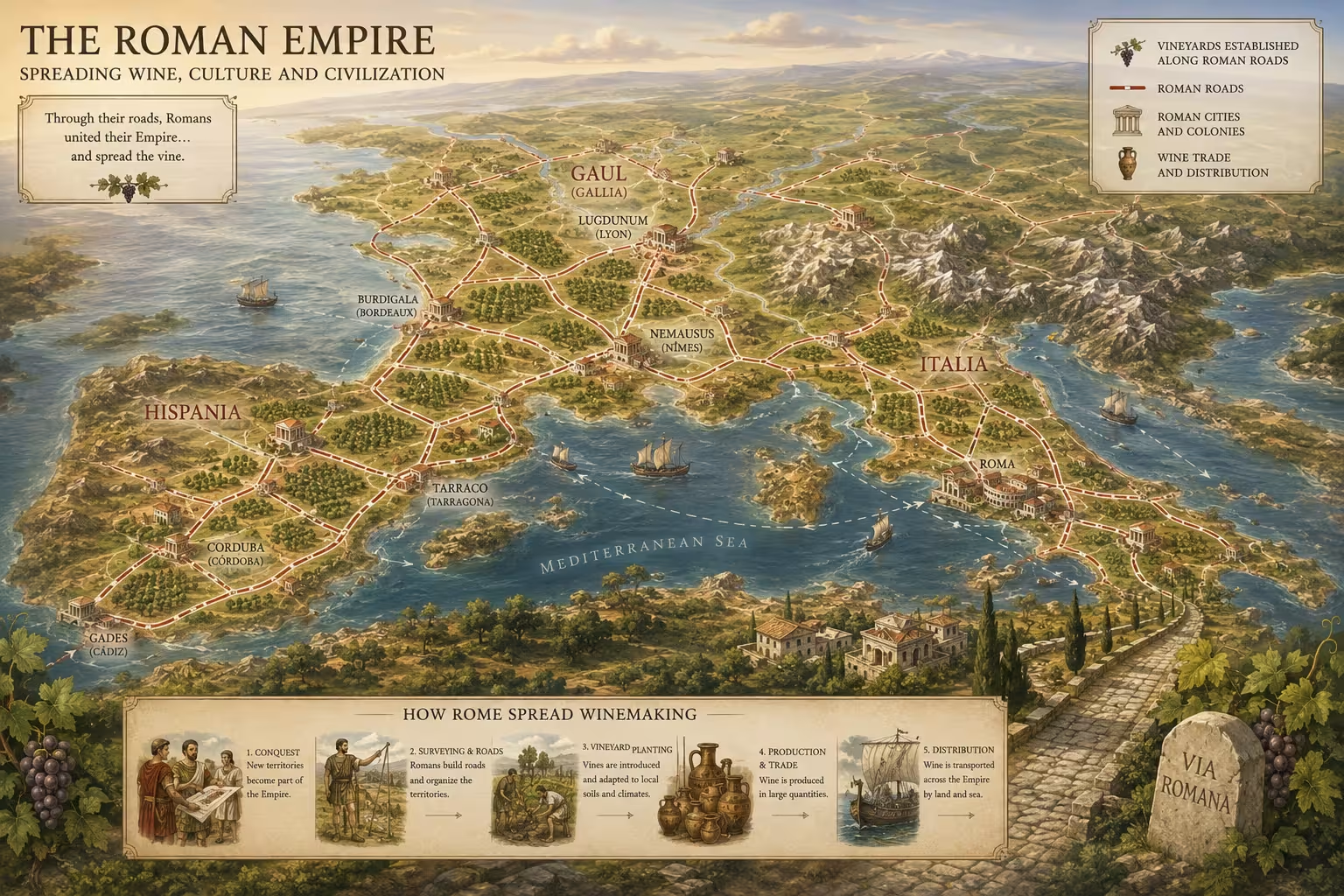
When Rome emerged as the dominant power of the Mediterranean, it inherited a rich and diverse wine culture shaped by centuries of Minoan innovation, Phoenician trade and Greek tradition. Rather than replacing these earlier civilizations, the Romans absorbed their knowledge, refined their techniques and expanded viticulture on a scale never before seen. Under Roman rule, wine became one of the defining agricultural, economic and cultural pillars of Southern Europe, laying the foundations for many of the wine regions that continue to flourish today.
The expansion of the Roman Republic and later the Roman Empire created unprecedented political stability across much of Southern Europe. For the first time, the Italian Peninsula, Hispania, southern Gaul, the Adriatic coast, Greece and many Mediterranean islands formed part of a single political and economic system. This unity transformed wine production. Vineyards were no longer isolated regional enterprises but components of an interconnected network supported by roads, ports and commercial routes that allowed wines to circulate efficiently throughout the empire.
Roman engineers and landowners also revolutionised vineyard management. Building upon Greek viticultural knowledge, they introduced more systematic planting methods, improved pruning techniques and developed sophisticated approaches to vineyard organisation. Agricultural writers such as Cato the Elder, Varro, Columella and Pliny the Elder documented cultivation practices, soil management and winemaking methods in remarkable detail. Their writings remain some of the most valuable historical sources for understanding ancient viticulture and demonstrate the scientific attention the Romans devoted to wine production.
Large agricultural estates, known as villae rusticae, became the backbone of Roman viticulture. These estates combined vineyards, olive groves, storage facilities and production areas into highly organised agricultural centres capable of producing significant quantities of wine for both local consumption and export. Many were strategically located near rivers, roads or coastal ports, allowing Roman wines to reach markets across the Mediterranean with remarkable efficiency.
The transportation of wine became an industry in its own right. Millions of amphorae carried wine from the vineyards of Italy, Hispania and Greece to every corner of the empire. Archaeological discoveries, including the famous Monte Testaccio in Rome—a massive artificial hill composed almost entirely of broken amphorae—illustrate the extraordinary scale of this trade. Wine had become an everyday commodity consumed by soldiers, merchants, craftsmen and wealthy elites alike, making it one of the most widely distributed agricultural products of the ancient world.
Roman expansion also encouraged the development of new vineyards throughout Southern Europe. Existing wine regions grew in size, while previously uncultivated areas were gradually planted with vines as Roman settlers recognised favourable climates and fertile soils. Across the Iberian Peninsula, southern Italy and the islands of the Mediterranean, viticulture became deeply embedded in local economies. Although grape varieties have evolved considerably over the centuries, many of today’s celebrated wine regions still occupy landscapes first organised under Roman administration.
Perhaps Rome’s greatest contribution was its ability to standardise and disseminate knowledge. Viticulture was no longer simply a local tradition passed from one generation to the next; it became a discipline supported by written manuals, technical expertise and administrative organisation. Roman law regulated trade, infrastructure facilitated transport and commercial demand encouraged continuous improvements in quality and productivity. This combination of political stability, agricultural innovation and economic integration created one of history’s first truly international wine industries.
Wine also occupied a central place in Roman society. It accompanied religious ceremonies, family celebrations, public festivals and daily meals, reinforcing social bonds across every level of society. Although consumption habits differed between wealthy landowners and ordinary citizens, wine remained a universal element of Roman life, symbolising both prosperity and civilisation. Through Roman influence, the Mediterranean identity of wine became firmly established across Southern Europe, extending far beyond its original centres of production.
When the Western Roman Empire eventually declined during the fifth century CE, the political structures that had supported this vast wine network began to fragment. Yet the vineyards themselves endured. Roman roads continued to connect wine regions, agricultural knowledge survived in manuscripts and local communities preserved cultivation practices that had developed over centuries. While empires fell, the foundations of Southern Europe’s wine culture remained remarkably resilient, ready to be protected and reshaped during the medieval period.
The Middle Ages: Preserving Southern Europe's Wine Heritage
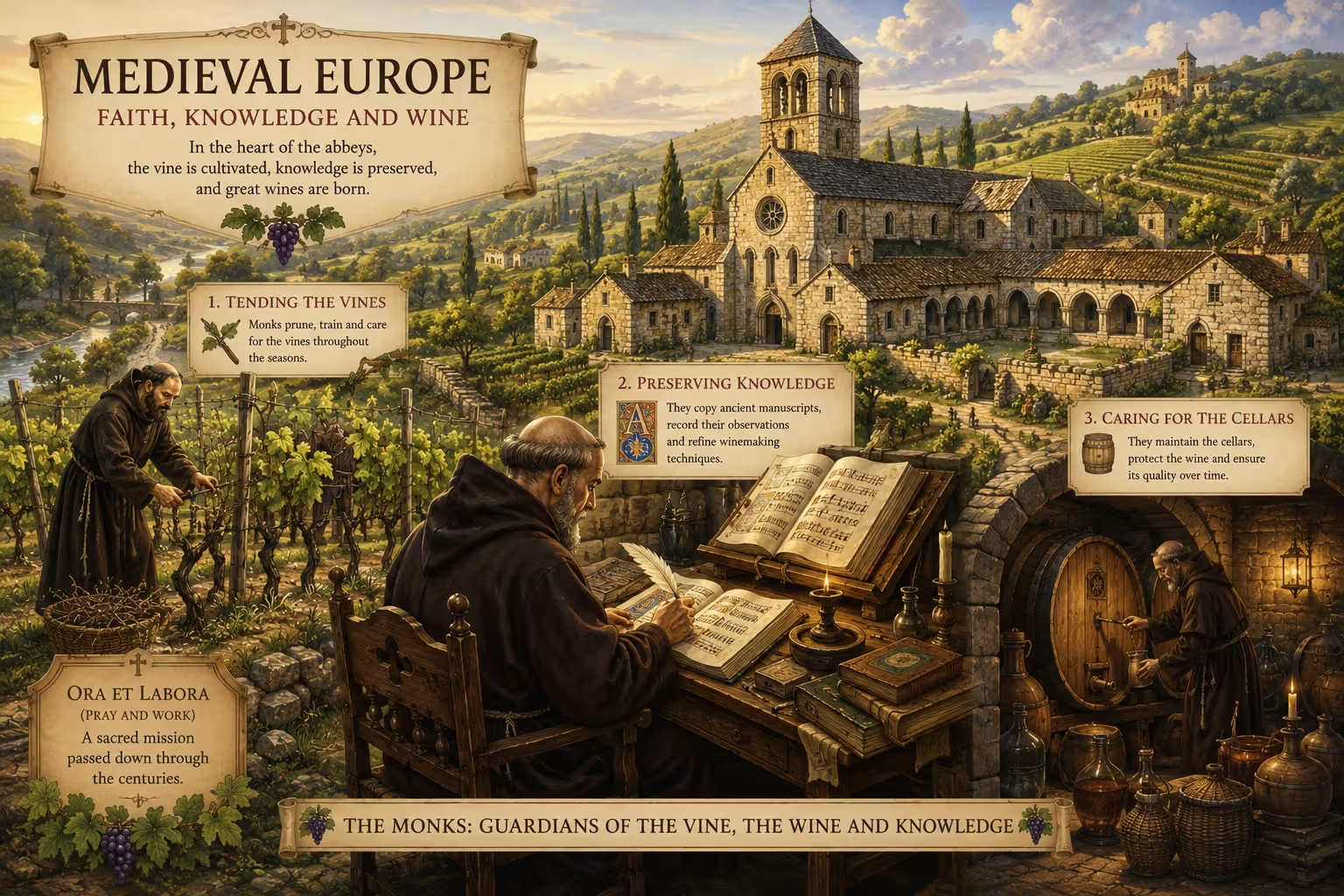
When the Western Roman Empire collapsed during the fifth century CE, the political unity that had connected Southern Europe’s vineyards gradually disappeared. Trade routes became less secure, cities declined and many large agricultural estates were abandoned or fragmented. For wine producers, this marked the beginning of a period of profound transformation rather than sudden decline. Although commercial networks weakened, viticulture remained deeply rooted in the landscapes and communities of Southern Europe, ensuring that centuries of accumulated knowledge would not be lost.
One of the principal reasons for this continuity was the enduring importance of wine in everyday life. Across Italy, the Iberian Peninsula, Greece and the Mediterranean islands, vineyards continued to provide not only an essential source of income but also a staple of local diets and religious practice. Unlike many agricultural products that changed according to political circumstances, wine remained indispensable to Christian liturgy, ensuring that vineyards retained both economic and spiritual significance throughout the medieval period.
Monasteries became particularly important centres for preserving viticultural knowledge. Benedictine, Cistercian and other religious communities cultivated vineyards to supply wine for religious ceremonies while carefully maintaining agricultural techniques inherited from the Roman world. Monastic estates often became centres of experimentation, improving pruning methods, vineyard management and cellar practices. More importantly, they safeguarded written agricultural knowledge that might otherwise have disappeared during centuries of political instability.
Across Southern Europe, however, medieval viticulture evolved differently from one region to another. In the Italian peninsula, numerous city-states and religious institutions maintained extensive vineyard holdings, while local rulers increasingly recognised the economic value of wine production. On the Iberian Peninsula, the coexistence of Christian and Muslim kingdoms created a far more complex landscape. Although Islamic law generally discouraged the consumption of wine, vine cultivation did not disappear. Grapes continued to be grown for multiple purposes, and in many Christian territories viticulture remained an important agricultural activity throughout the Reconquista. As political boundaries shifted over the centuries, vineyards expanded once again into regions that would later become some of Spain’s and Portugal’s most celebrated wine-producing areas.
Meanwhile, in the eastern Mediterranean, the Byzantine Empire preserved many aspects of Greco-Roman agricultural tradition. Vineyards continued to flourish across Greece and several Aegean islands, where wine remained closely linked to Orthodox Christian traditions and regional commerce. Islands such as Crete, Rhodes and Cyprus maintained active wine production despite changing political powers, benefiting from their strategic position along Mediterranean trade routes. These islands would continue to supply wines to merchants travelling between Europe, the Near East and North Africa, reinforcing the Mediterranean’s role as a shared wine-producing world.
The medieval period also witnessed the gradual emergence of regional wine identities. As long-distance trade became more limited than under Roman rule, local communities increasingly adapted vineyards to their own environmental conditions, selecting grape varieties best suited to their climates and soils. Distinctive styles of wine began to develop across different regions, laying the foundations for many of the identities that still characterise Southern European wine today. Although formal appellation systems would not appear until many centuries later, the relationship between place, tradition and wine became increasingly pronounced during the Middle Ages.
By the late medieval period, political stability slowly returned to much of Southern Europe. Growing populations, expanding cities and renewed maritime commerce created fresh opportunities for wine producers. Ports once again became centres of international trade, connecting Mediterranean vineyards with markets across Europe. This revival marked the beginning of a new chapter in Southern Europe’s wine history, one in which maritime kingdoms would carry centuries of Mediterranean viticultural knowledge far beyond the continent itself during the Age of Exploration.
The Age of Exploration: Southern Europe's Wines Conquer the World
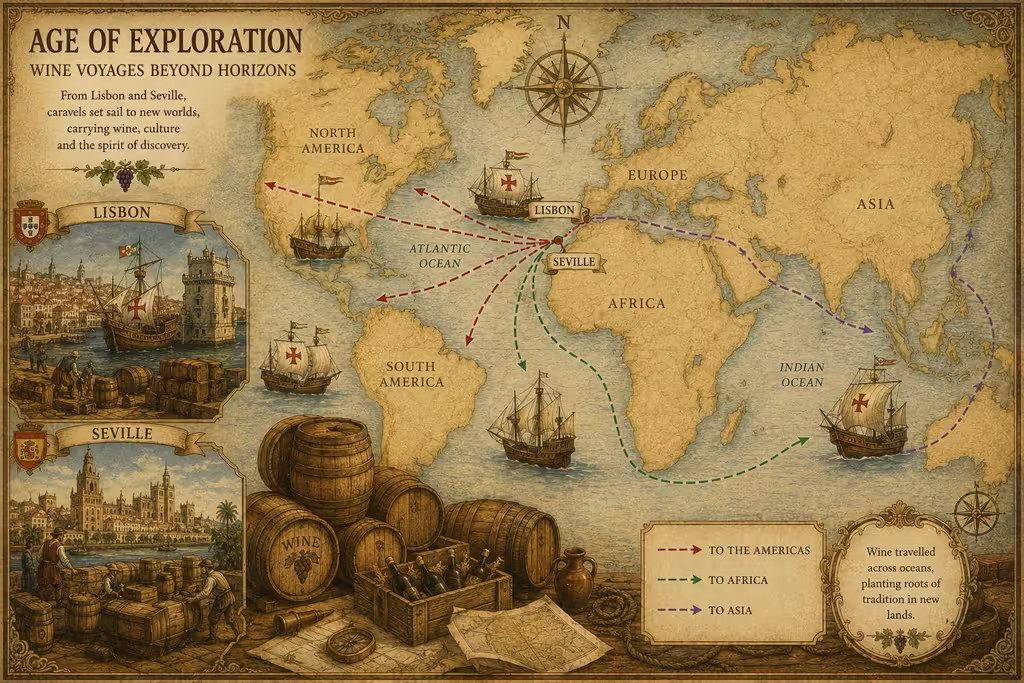
By the fifteenth century, Southern Europe was entering a new era of prosperity and exploration. Maritime kingdoms, particularly Portugal and Spain, stood at the forefront of global navigation, opening new sea routes that connected Europe with Africa, Asia and the Americas. While these voyages transformed world history, they also profoundly reshaped the future of wine. For the first time, wines produced in Southern Europe began reaching distant markets far beyond the Mediterranean, establishing an international reputation that continues to define many of the region’s most celebrated wine-producing countries today.
The Portuguese were among the first to expand Europe’s maritime horizons. Their expeditions along the African coast and later across the Atlantic created new commercial opportunities that extended well beyond spices and precious goods. Wine quickly became an essential product aboard long-distance voyages, valued not only as a beverage but also as a safer alternative to water during extended sea journeys. As Portuguese merchants established trading posts across several continents, wines from the Iberian Peninsula gained access to markets that had previously been unimaginable.
Spain followed a similar path after the unification of the Crown of Castile and the Crown of Aragon and the voyages of Christopher Columbus. The discovery of the Americas opened entirely new trading networks linking Andalusia and other Spanish ports with colonies across the Atlantic. Wine became one of the many products transported aboard the fleets that regularly crossed the ocean, accompanying settlers, missionaries and merchants as Spanish influence expanded throughout the New World. Viticultural knowledge travelled alongside these shipments, contributing to the establishment of vineyards in regions that would eventually become important wine-producing countries in their own right.
This period also encouraged significant innovation within Southern Europe’s own vineyards. The demands of long-distance maritime trade required wines capable of surviving extended sea voyages without spoiling. Producers gradually refined production methods, storage techniques and transportation practices to improve stability and consistency. These commercial challenges stimulated improvements that would later influence the development of several iconic wine styles.
Among the greatest beneficiaries of this global expansion were the wine regions of Portugal. The Douro Valley, whose steep terraced vineyards had supplied local markets for centuries, gained increasing international recognition as overseas demand grew. In the centuries that followed, commercial relationships with northern Europe, particularly England, would contribute to the emergence of Port wine as one of the world’s most famous fortified wines. Similar developments occurred in other regions of Southern Europe, where international trade encouraged producers to focus on quality, consistency and wines capable of appealing to increasingly sophisticated foreign markets.
The Mediterranean itself remained central to this transformation. Although Atlantic trade routes became increasingly important, traditional ports such as Lisbon, Seville, Barcelona, Naples and Venice continued to connect Southern Europe with markets throughout the Mediterranean basin. Wine merchants benefited from centuries of accumulated maritime experience, combining ancient commercial networks inherited from Phoenician, Greek and Roman civilizations with the opportunities created by global exploration. Rather than replacing the Mediterranean wine world, the Atlantic Age expanded it onto a global stage.
The growing importance of international commerce also strengthened the reputation of individual wine-producing regions. Consumers increasingly associated particular wines with specific places of origin, laying the foundations for the geographical identities that would later evolve into modern appellation systems. While formal legal protections remained centuries away, the relationship between place, reputation and quality became increasingly important in wine commerce, encouraging producers to preserve the distinctive characteristics of their vineyards.
By the end of the Age of Exploration, Southern Europe had firmly established itself as one of the world’s great wine-producing regions. Its wines were no longer appreciated solely within the Mediterranean but were recognised across Europe and beyond. Yet this remarkable success would soon face one of the greatest challenges in the history of viticulture. During the nineteenth century, an invisible pest arriving from North America would devastate vineyards throughout Southern Europe, forcing winegrowers to rebuild centuries of tradition almost from scratch.
Phylloxera: The Crisis That Changed Southern European Wine Forever
By the middle of the nineteenth century, Southern Europe possessed one of the world’s richest and most diverse vineyard landscapes. For centuries, generations of winegrowers had cultivated native grape varieties uniquely adapted to local climates, soils and traditions. From the terraced valleys of Portugal and the volcanic slopes of southern Italy to the rolling vineyards of Spain and the ancient wine islands of Greece, viticulture had become deeply woven into the cultural and economic fabric of the region. Few could have imagined that this centuries-old heritage was about to face its greatest threat.
The crisis arrived in the form of an insect barely visible to the naked eye. Phylloxera vastatrix, a tiny aphid accidentally introduced from North America during the nineteenth century, attacked the roots of European grapevines (Vitis vinifera), causing them to weaken and eventually die. Unlike American vine species, which had evolved natural resistance, European vines possessed no defence against the pest. Once established in a vineyard, phylloxera spread relentlessly through the soil, destroying entire plantations within a matter of years.
The impact on Southern Europe was devastating. France was among the first countries to suffer widespread destruction, but the epidemic quickly crossed borders, reaching Spain, Portugal, Italy and eventually many Mediterranean islands. Vast vineyard landscapes that had survived wars, political upheavals and centuries of changing empires were suddenly wiped out by an invisible enemy. Entire rural communities lost their primary source of income, wine production collapsed in many regions and countless families abandoned vineyards that had been cultivated for generations.
Beyond the immediate economic consequences, phylloxera threatened an irreplaceable cultural heritage. Many ancient vineyards disappeared forever, taking with them local selections of grape varieties that had evolved over centuries. Traditional cultivation methods were interrupted, and numerous historic wine regions faced an uncertain future. For a time, it seemed possible that Southern Europe might lose much of the viticultural identity that had defined the region since antiquity.
Yet the response to the crisis demonstrated the remarkable resilience of Southern European winegrowers. After years of experimentation and scientific research, viticulturists discovered that European grape varieties could survive if they were grafted onto resistant American rootstocks. This solution did not alter the character of traditional grapes such as Tempranillo, Sangiovese, Touriga Nacional or Assyrtiko, but it provided the protection needed against phylloxera while preserving the qualities that made these varieties unique.
The reconstruction of Southern Europe’s vineyards became one of the largest agricultural projects in modern history. Millions of vines were replanted, vineyards were reorganised and growers increasingly adopted improved cultivation techniques based on both traditional knowledge and scientific research. Although the recovery required decades of effort, it also marked the beginning of a new era in viticulture, one characterised by greater attention to vineyard management, plant health and wine quality.
Ironically, the catastrophe also encouraged wine regions to redefine their identities. As vineyards were replanted, many producers chose to preserve their most valuable native grape varieties while abandoning less suitable plantings. This period contributed to the stronger regional identities that characterise Southern European wine today, reinforcing the close relationship between specific grape varieties, local terroirs and individual wine regions. The foundations of many modern appellation systems can be traced to this period of reconstruction, when protecting origin and authenticity became increasingly important.
By the early twentieth century, Southern Europe’s vineyards had largely recovered. Although the landscape had changed forever, the region emerged stronger, more resilient and better prepared to face future challenges. The crisis of phylloxera became a turning point rather than an ending, proving that a wine culture shaped over thousands of years could adapt without losing its identity. The same vineyards that once survived the fall of empires had now overcome one of the greatest biological threats in agricultural history, paving the way for the remarkable renaissance of Southern European wine that would define the modern era.
Southern Europe Today: Where Ancient Traditions Meet Modern Winemaking
Few wine-producing regions in the world can trace their viticultural heritage as continuously as Southern Europe. From the vineyards first cultivated by the Minoans on Crete to the commercial networks of the Phoenicians, the cultural legacy of Ancient Greece, the agricultural innovations of Rome and the resilience shown after the phylloxera crisis, every chapter of history has left a visible mark on the landscapes and wines enjoyed today. Unlike many agricultural traditions that have disappeared or been transformed beyond recognition, wine remains an integral part of everyday life throughout Southern Europe, linking the past with the present in a remarkably tangible way.
Today, Southern Europe continues to produce many of the world’s most celebrated wines while preserving an extraordinary diversity of indigenous grape varieties, historic vineyards and traditional winemaking practices. Italy, Spain, Portugal and Greece rank among the largest and most influential wine-producing countries on the planet, while Cyprus and Malta maintain centuries-old viticultural traditions that continue to enrich the region’s remarkable diversity. Together, these countries cultivate thousands of years of shared history while constantly embracing innovation, sustainability and new approaches to quality winemaking.
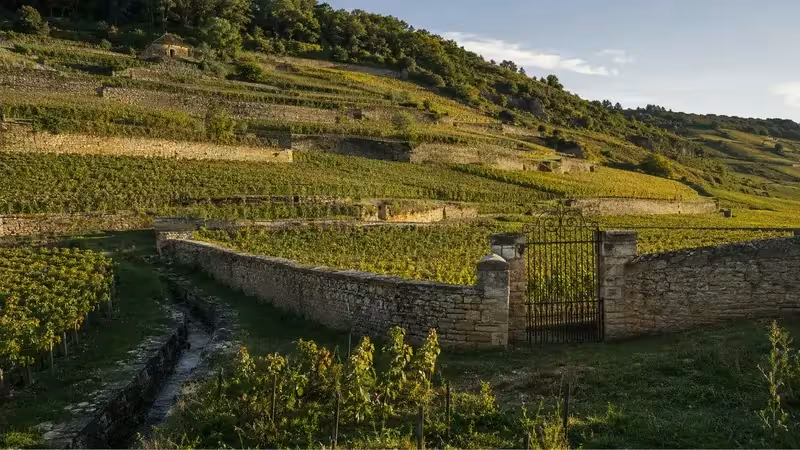
One of Southern Europe’s greatest strengths lies in its extraordinary variety of wine landscapes. From the volcanic vineyards of Mount Etna and Santorini to the terraced slopes of the Douro Valley, the rolling hills of Tuscany, the limestone plateaus of Rioja and the mountain vineyards of mainland Greece, every region reflects a unique combination of climate, geology and human experience. These landscapes are not simply places where grapes are grown; they are living cultural environments shaped by generations of winegrowers who adapted their vineyards to local conditions while preserving traditions passed down over centuries.
The preservation of indigenous grape varieties has become another defining characteristic of modern Southern European wine. While international varieties are cultivated across the region, many producers have renewed their commitment to native grapes whose origins often stretch back hundreds or even thousands of years. Varieties such as Sangiovese, Tempranillo, Touriga Nacional, Assyrtiko, Nero d’Avola, Aglianico and countless others continue to express the unique identity of their respective regions, reinforcing the close relationship between wine, place and cultural heritage that has characterised Southern Europe since antiquity.
Modern winemaking has also evolved significantly over recent decades. Scientific research, sustainable vineyard management and improved cellar techniques have enabled producers to raise quality while respecting centuries of tradition. Organic farming, biodynamic viticulture and environmentally responsible practices are becoming increasingly common across Southern Europe, reflecting a growing awareness that protecting vineyards also means protecting landscapes, biodiversity and the cultural heritage that surrounds them. Innovation is no longer viewed as a replacement for tradition but as a means of ensuring its survival for future generations.
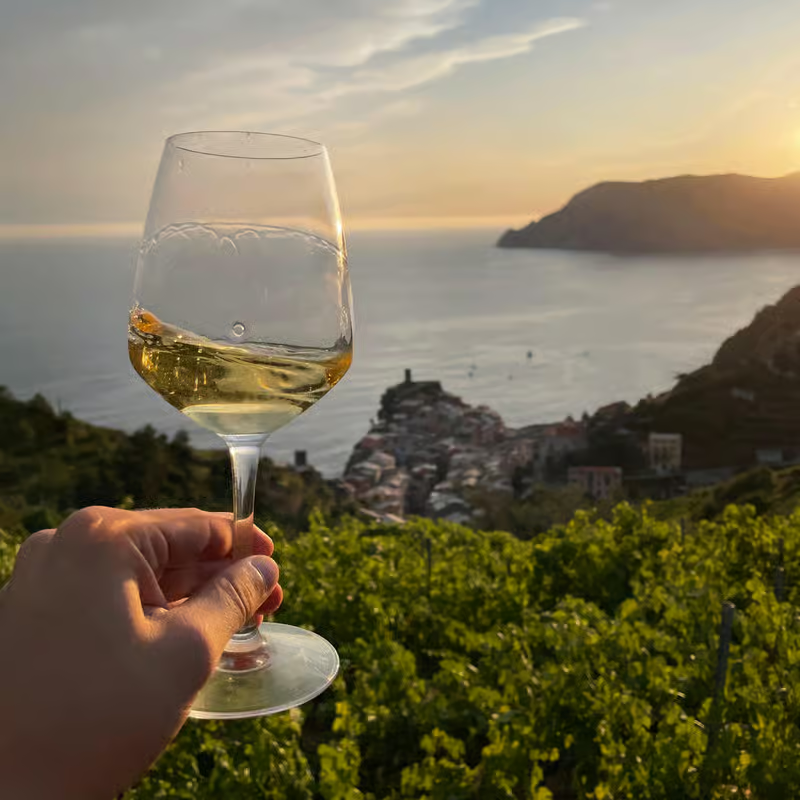
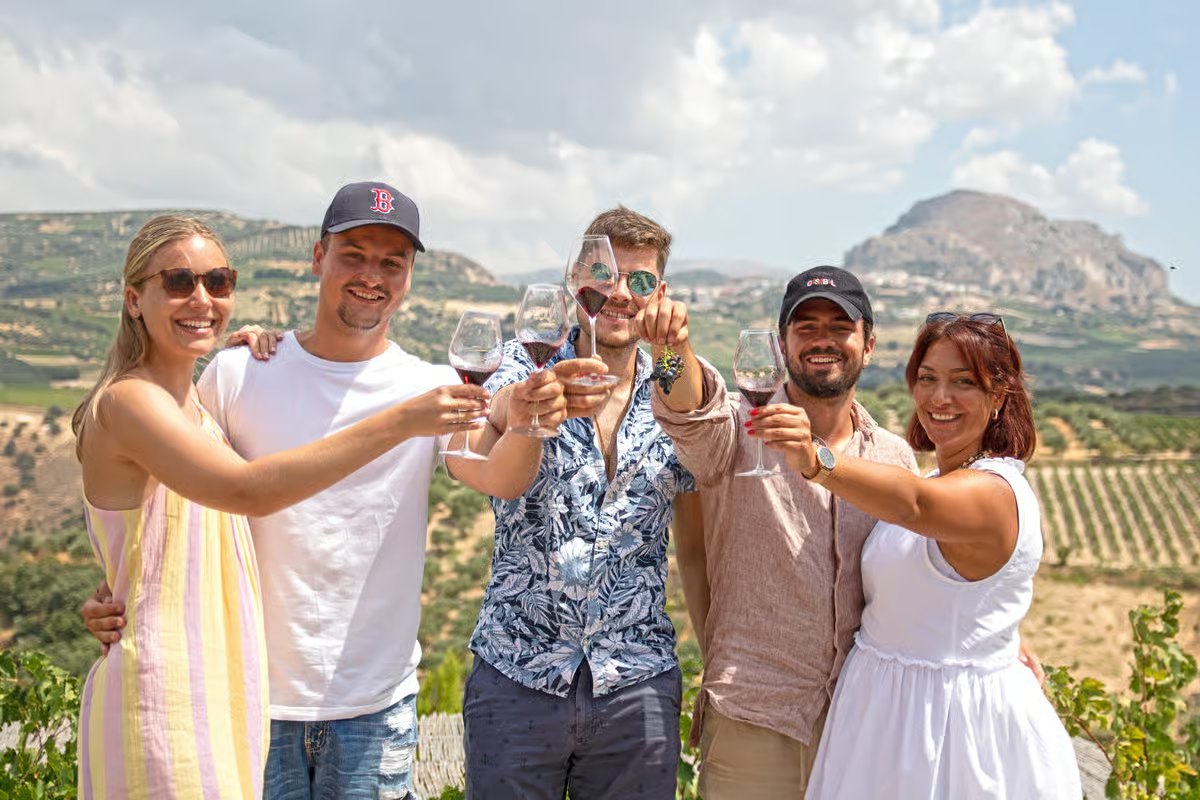
At the same time, wine tourism has become one of the most dynamic expressions of Southern Europe’s living wine culture. Millions of visitors travel each year to discover historic wineries, family-owned estates, spectacular vineyard landscapes and authentic food and wine experiences. Whether exploring ancient cellars in Tuscany, cycling through the vineyards of the Douro Valley, tasting Assyrtiko overlooking the caldera of Santorini or visiting traditional wineries in Andalusia, travellers encounter far more than exceptional wines. They experience the continuation of a cultural tradition that has remained deeply rooted in Southern European society for millennia.
This remarkable continuity explains why Southern Europe continues to occupy such an influential place in the global wine world. Its vineyards are not simply agricultural landscapes, but living testimonies to thousands of years of human ingenuity, trade, cultural exchange and adaptation. Every bottle tells a story shaped by successive civilizations, while every vineyard reflects the enduring relationship between people, nature and place that has defined Mediterranean winemaking since the earliest days of organised viticulture.
Understanding the history of wine in Southern Europe ultimately means understanding the history of the Mediterranean itself. It is a story of exploration and exchange, resilience and innovation, local traditions and global influence. From the palace vineyards of ancient Crete to today’s world-renowned wine destinations, Southern Europe has continually reinvented itself while preserving the cultural foundations that made it one of the greatest wine-producing regions in history. That enduring balance between heritage and innovation remains the defining characteristic of Southern European wine—and one of the reasons it continues to inspire wine lovers from around the world.
Conclusion: A Legacy Still Growing
Few regions in the world can claim a wine heritage as rich and continuous as Southern Europe. Over thousands of years, successive civilizations transformed the Mediterranean from one of the earliest centres of vine cultivation into the birthplace of many of today’s most celebrated wine traditions. From the pioneering vineyards of Minoan Crete and the maritime trade of the Phoenicians to the cultural influence of Ancient Greece, the organisation of the Roman Empire and the remarkable resilience shown after the phylloxera crisis, every generation has contributed to shaping the extraordinary wine landscapes we know today.
Yet the history of Southern European wine is far from complete. Every harvest, every vintage and every new generation of winemakers continues to add another chapter to a story that has been unfolding for more than five millennia. Across Italy, Spain, Portugal, Greece, Cyprus and Malta, historic vineyards remain places where ancient traditions coexist with modern innovation, creating wines that continue to inspire enthusiasts and travellers from around the world.
Exploring Southern Europe’s wine heritage is therefore much more than discovering great wines. It is an opportunity to understand the civilizations that shaped the Mediterranean, the landscapes that influenced generations of growers and the cultural traditions that continue to define everyday life across the region. Every vineyard, winery and bottle carries traces of this remarkable past, offering visitors a unique connection between history, place and people.
Whether you are planning a wine journey through Tuscany, discovering the volcanic vineyards of Santorini, exploring the terraces of the Douro Valley or visiting family wineries in Andalusia, each destination represents another chapter in one of the world’s oldest and most fascinating wine stories. Southern Europe’s wine heritage is not preserved behind museum walls—it remains alive in its vineyards, its communities and the unforgettable experiences that continue to welcome wine lovers from every corner of the world.