Table of Contents
Wine in Europe is not just agriculture. It is a civilizational system shaped over thousands of years by religion, trade, climate, politics, and technology.
From prehistoric grape domestication to modern appellation systems like AOC and DOC, Europe became the world’s most structured and historically layered wine region.
This page provides a complete historical and analytical overview of how wine shaped Europe—and how Europe shaped wine.
Origins of Wine in Europe (Prehistory & Early Domestication)
The origins of wine in Europe are part of a much broader prehistoric process in which early human societies transitioned from foraging to structured agriculture. While the earliest evidence of deliberate winemaking is generally associated with regions of the South Caucasus, the European continent very quickly became one of the primary zones where grapevine domestication expanded, adapted, and diversified into regional cultivation systems.
Wild grapevines (Vitis vinifera sylvestris) were widely distributed across southern Europe during the early Holocene period. They thrived particularly in ecotones—zones between forests and open landscapes—where seasonal flooding, river valleys, and Mediterranean climates created ideal conditions for natural fermentation processes. Early human populations likely encountered fermented grapes unintentionally, through storage in containers made of clay, animal skins, or carved wood. Over time, these accidental fermentations were not only repeated but deliberately controlled.
The transition from accidental fermentation to intentional winemaking represents a significant technological and cognitive shift. It implies an understanding of preservation, transformation of natural sugars, and seasonal planning. By the Neolithic period, communities across the Balkans, the Aegean basin, and parts of the Italian peninsula had begun selecting grape varieties based on yield, taste, and fermentability. This selection process marked the beginning of proto-viticulture in Europe.
Unlike cereals or olives, grapes presented a unique advantage: they could be transformed into a stable, transportable liquid with altered chemical properties that improved preservation and social utility. Wine therefore quickly moved beyond nutrition and entered ritual, medicinal, and social domains. In early European societies, fermented grape products were used in ceremonies connected to fertility cycles, seasonal transitions, and ancestor worship, indicating that wine already held symbolic significance long before written history.
Geographically, early viticulture in Europe was not uniform. It concentrated in regions where climate and soil conditions allowed stable grape cultivation. River valleys such as those of the Danube, Rhône, Ebro, and Po acted as natural corridors for the diffusion of vine cultivation techniques. These environments provided both fertile alluvial soils and moderated climates, essential for consistent grape maturation.
By the end of the Bronze Age, viticulture in Europe had already developed into a semi-structured agricultural system. While production remained local and decentralized, the foundations of what would later become regional wine identities were already in place. These early developments established Europe as a secondary but rapidly growing center of viticultural innovation alongside the Near East.
Ancient Greece – Wine, Philosophy, and Civilization
In Ancient Greece, wine transcended its agricultural origins and became a central element of cultural identity, religious practice, and intellectual life. Unlike earlier societies where wine was primarily functional or ritualistic, Greek civilization integrated wine into a complex system of symbolic, philosophical, and social meanings.
At the religious level, wine was closely associated with Dionysus, a deity embodying not only intoxication but also transformation, dissolution of boundaries, and creative chaos. Dionysian cult practices did not treat wine as a simple beverage but as a medium through which ordinary human consciousness could temporarily shift into altered states. This duality—between order and dissolution—became a defining feature of Greek attitudes toward wine.
In parallel, Greek society developed one of the most sophisticated drinking institutions in the ancient world: the symposium. The symposium was not an informal gathering but a highly structured event governed by strict social and behavioral rules. Participants reclined in designated arrangements according to status, and the consumption of wine followed carefully controlled dilution ratios. Pure, undiluted wine was considered uncivilized and associated with barbarian cultures, while mixing wine with water symbolized rational control over nature and the self.
Within the symposium, wine functioned as an intellectual catalyst. It facilitated philosophical discussion, poetic composition, political debate, and musical performance. In this context, intoxication was not an escape from reason but a controlled environment for exploring its boundaries. This reflects a uniquely Greek philosophical tension between rationality (logos) and emotional release (pathos), with wine acting as a mediator between the two.
The expansion of Greek colonies across the Mediterranean between the 8th and 5th centuries BCE played a crucial role in disseminating viticulture techniques throughout Southern Europe. Greek settlers established permanent agricultural systems in regions that would later become key wine-producing areas. In southern Italy and Sicily, for example, Greek influence introduced structured vine cultivation, pruning practices, and early classification of grape types. Similarly, coastal settlements in southern Gaul (modern southern France) became early nodes of viticultural diffusion.
What distinguishes Greek influence from earlier wine cultures is not only technological diffusion but conceptual transformation. The Greeks were among the first to systematically theorize wine as part of human civilization itself—linking it to ethics, politics, and aesthetics. Wine was therefore not merely consumed; it was interpreted, debated, and embedded into the intellectual architecture of society.
The Roman Empire – Expanding Wine Across Europe
The Roman Empire represents a fundamental turning point in the history of wine in Europe, as it transformed viticulture from a collection of regional traditions into an integrated imperial system. Under Roman rule, wine became one of the most widely produced, distributed, and regulated agricultural commodities across the continent.
Unlike Greek expansion, which spread cultural practices, Roman expansion introduced systemic organization. Viticulture was deliberately established in newly conquered territories as part of broader economic and military infrastructure. Vineyards were planted not only for local consumption but also to supply urban centers, military garrisons, and administrative hubs across the empire.
Roman authors such as Pliny the Elder and Columella documented viticultural practices in remarkable detail, describing soil types, pruning methods, fermentation techniques, and regional variations in quality. These writings reflect an early form of agricultural science, where empirical observation was used to optimize production outcomes. The Romans understood that environmental conditions directly influenced wine quality, even if they lacked modern scientific terminology.
One of the most significant Roman contributions was the development of large-scale distribution systems. The empire’s road network, combined with maritime trade routes across the Mediterranean and river systems such as the Rhine and Danube, allowed wine to circulate efficiently across vast distances. This infrastructure enabled regional specialization: certain provinces became known for bulk production, while others focused on high-quality or prestige wines.
Technological innovation also played a key role. The adoption of wooden barrels, likely influenced by Celtic cultures, revolutionized storage and transport. Barrels were more durable than ceramic amphorae and allowed wine to undergo gradual chemical transformation during transit. This innovation significantly expanded the economic viability of long-distance wine trade.
Roman expansion also led to the first proto-geographical classifications of wine. Certain regions, particularly in Italy and later in Gaul, acquired reputations for specific wine characteristics. While not formal appellations in the modern sense, these distinctions represent the earliest known attempts to link wine quality with geographic origin.
By the late imperial period, wine had become deeply embedded in Roman social life, economic structures, and cultural identity. Its production and distribution were no longer peripheral agricultural activities but central components of imperial organization. When the Western Roman Empire collapsed, this system did not disappear entirely—it fragmented, evolved, and eventually re-emerged in new institutional forms during the medieval period.
The Middle Ages – Monasteries and Preservation of Wine Knowledge
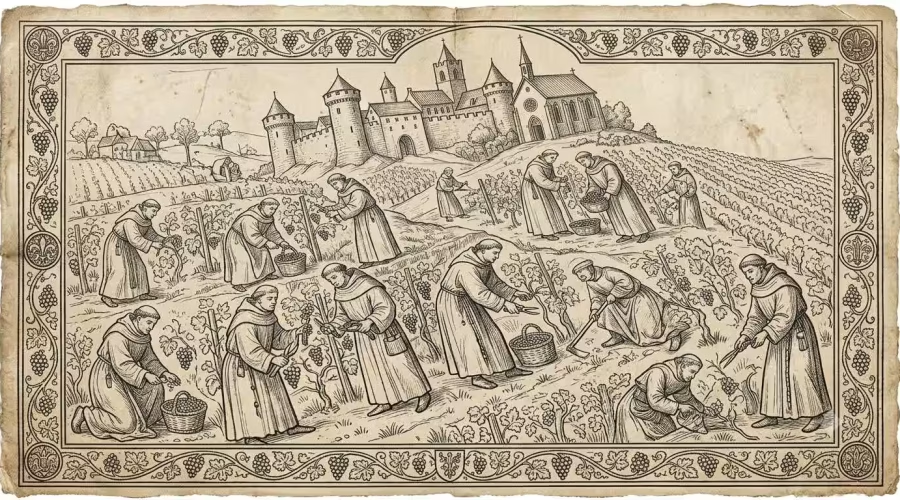
The collapse of the Western Roman Empire in the 5th century CE did not interrupt wine production in Europe, but it fundamentally transformed its structure, geography, and institutional control. What had once been a vast, imperial production system fragmented into localized economies, many of which were unstable due to political fragmentation, population decline, and reduced long-distance trade. In this context, monastic institutions emerged as the principal guardians of viticultural knowledge.
Monasteries, particularly those associated with the Benedictine and later Cistercian orders, played a decisive role in maintaining and refining wine production techniques. Unlike secular feudal estates, monastic communities operated under relatively stable organizational rules, allowing them to accumulate agricultural knowledge over long time horizons. Wine was not merely an economic product for these institutions; it was a liturgical necessity. The Christian Eucharist required wine for ritual use, ensuring that viticulture retained a sacred and institutional function even in periods of political instability.
This religious requirement had profound economic consequences. Vineyards were cultivated not only for local consumption but also to guarantee continuous supply for ecclesiastical rituals. As a result, monastic estates became centers of agricultural innovation and experimentation. Monks carefully observed vine behavior across seasons, recording variations in yield, ripening cycles, disease resistance, and soil performance. Over time, this generated one of the earliest systematic agricultural knowledge bases in Europe.
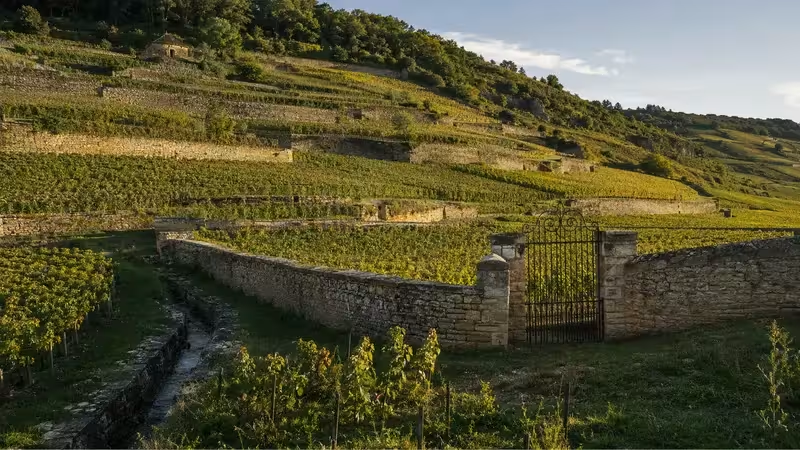
A particularly important development during this period was the emergence of proto-terroir thinking. In regions such as Burgundy, monastic communities began to recognize that vineyards located only short distances apart could produce wines with markedly different characteristics. These differences were attributed to variations in soil composition, slope orientation, drainage, and microclimate exposure. Although not yet conceptualized as “terroir” in the modern sense, this empirical observation laid the intellectual foundation for the later European appellation systems.
Monastic influence was not limited to production techniques. Monasteries also played a central role in land organization and mapping. Vineyard parcels were carefully demarcated, often documented in written records that survived for centuries. This contributed to the stabilization of vineyard geography in regions such as Burgundy, the Rhine Valley, and parts of Champagne. Some of these vineyard boundaries remain recognizable in modern wine classifications, demonstrating extraordinary continuity between medieval and contemporary viticulture.
Economically, monasteries became integrated into broader trade networks. Wine was transported along river systems such as the Rhine, Rhône, Loire, and Danube, linking rural production centers to emerging urban markets. This trade was essential not only for monastic self-sufficiency but also for regional economic integration during the medieval period.
By the late Middle Ages, wine production had re-established itself as one of the most important agricultural sectors in Europe. However, unlike the Roman period, it was now deeply decentralized, regionally differentiated, and institutionally tied to religious structures. This fragmentation, paradoxically, allowed for the emergence of highly specialized regional wine identities that would later define European viticulture.
Renaissance & Early Modern Europe Formation of Regional Wine Identity Systems
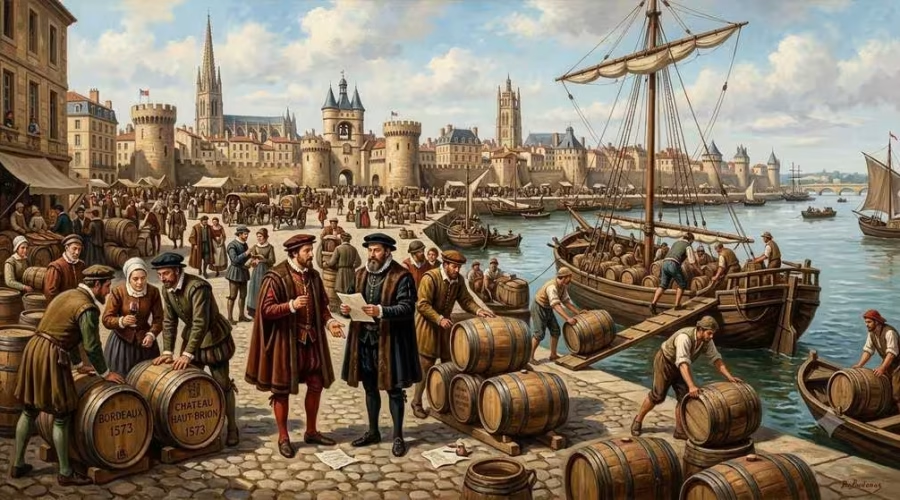
The Renaissance marked a profound transformation in European wine culture, not through technological rupture alone, but through the gradual consolidation of territorial identity, commercial expansion, and intellectual reorganization of agricultural production. As Europe transitioned from feudal fragmentation toward centralized nation-states and expanding maritime empires, wine became increasingly embedded in systems of economic specialization and cultural representation.
During this period, wine production ceased to be primarily monastic and became progressively secularized. Noble estates, merchant families, and emerging urban bourgeoisie began to dominate vineyard ownership and wine trade. This shift was particularly pronounced in regions such as Bordeaux and Burgundy, where wine production became tightly integrated into long-distance commerce, especially with England, the Low Countries, and later Northern Europe’s expanding port economies.
In France, wine regions began to develop distinct economic and stylistic identities. Bordeaux emerged as a commercial wine hub, oriented toward export markets and large-scale distribution systems. Its position near the Atlantic coast enabled efficient maritime trade, which shaped its production style toward wines capable of aging and surviving long transport routes. Burgundy, by contrast, remained more fragmented and land-focused, with a stronger emphasis on vineyard-specific identity, a legacy inherited from monastic parcelization.
In the Italian peninsula, wine culture reflected political fragmentation but extraordinary cultural diversity. Independent city-states such as Florence, Venice, and Siena fostered highly localized wine traditions tied to both rural production and urban consumption patterns. Wine here was deeply integrated into artistic, architectural, and intellectual life, reflecting the broader cultural dynamism of the Italian Renaissance.
In the Iberian Peninsula, wine production became increasingly linked to global maritime expansion. Spain developed extensive colonial trade networks that facilitated the export of wine to the Americas and other territories under Spanish influence. Meanwhile, Portugal established a particularly important specialization in fortified wines, notably Port, which emerged as a response to long-distance trade requirements and preservation challenges during Atlantic shipping.
The Early Modern period also saw increasing codification of wine quality and origin, although still in informal forms. Wine merchants, aristocratic patrons, and urban elites began to associate specific regions with expected quality profiles. These emerging reputational systems would later evolve into formal appellation structures in the 19th and 20th centuries.
Intellectually, wine also gained prominence in scientific and philosophical discourse. Early modern natural philosophers began studying fermentation, soil composition, and agricultural cycles with increasing rigor. While pre-modern in methodology, these inquiries laid important groundwork for modern enology and agricultural science.
By the end of the Renaissance period, European wine culture had become simultaneously more global and more regionally differentiated. This tension between expansion and localization would define the next major phase of its development.
Age of Exploration – Global Diffusion and Reinforcement of European Wine Authority
The Age of Exploration fundamentally altered the global geography of viticulture. European powers introduced grape cultivation to newly colonized territories in the Americas, South Africa, and later Australia and parts of Asia. This expansion was driven by both practical and cultural motivations: wine was necessary for European settlers, military personnel, and ecclesiastical missions, but it also functioned as a symbolic extension of European agricultural identity.
However, this global diffusion did not diminish Europe’s central role in wine production. On the contrary, it reinforced Europe’s position as the epistemic and qualitative center of viticulture. While vines were successfully cultivated abroad, the conceptual frameworks used to classify wine quality—such as regional origin, soil conditions, and production methods—remained rooted in European traditions.
During this period, European wine also became increasingly embedded in global trade hierarchies. Wines from France, Spain, and Portugal were exported alongside colonial goods such as sugar, tobacco, and spices. Consumption patterns in Europe itself also shifted, as wine became more stratified by social class. High-quality wines became markers of aristocratic identity, while lower-quality bulk wines remained part of everyday consumption among lower social strata.
This period therefore represents both geographical expansion and internal differentiation, setting the stage for modern systems of classification and regulation.
Phylloxera Crisis Ecological Collapse and Scientific Transformation of European Viticulture
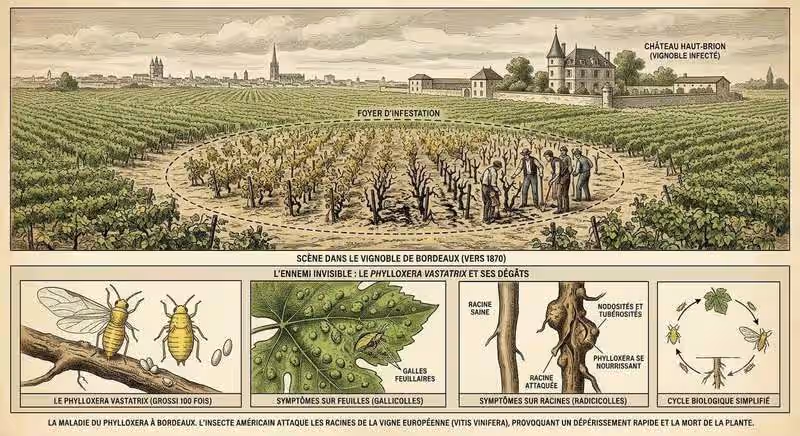
The phylloxera crisis of the 19th century represents one of the most catastrophic ecological events in European agricultural history. The introduction of the North American insect Daktulosphaira vitifoliae, commonly known as phylloxera, led to the rapid destruction of vast areas of European vineyards, particularly in France but also across Italy, Spain, and other wine-producing regions.
The biological mechanism of the crisis was particularly destructive because phylloxera attacks the roots of Vitis vinifera, causing systemic collapse of the vine. European grape varieties had no natural resistance to this pest, resulting in widespread vineyard mortality and severe economic disruption. Entire rural economies collapsed, and in some regions, wine production ceased entirely for extended periods.
The crisis triggered an unprecedented scientific response. Viticulturists and botanists across Europe engaged in intensive experimentation to identify solutions. The breakthrough came with the realization that American grape species had developed natural resistance to phylloxera. The solution involved grafting European grape varieties onto American rootstocks, combining resistance with desired wine characteristics.
This innovation fundamentally transformed global viticulture. It introduced a permanent biological hybridization into European wine production and established modern practices of vineyard replanting, rootstock selection, and agricultural biosecurity. It also marked the emergence of viticulture as a fully scientific discipline grounded in biology, chemistry, and soil science.
Although devastating, the phylloxera crisis ultimately led to the modernization of European wine production systems and laid the foundation for contemporary vineyard management practices.
Modern Europe – Appellation Systems, Legal Control & Codification of Terroir
The transition from pre-industrial to modern European wine production is defined not by a single technological breakthrough, but by the systematic institutionalization of wine origin, quality, and production rules. This process, which accelerated between the late 19th and mid-20th centuries, fundamentally restructured how wine was understood, regulated, and consumed across Europe.
Following the devastation of the phylloxera crisis, European governments and producers faced not only the challenge of replanting vineyards but also the broader issue of restoring trust in wine authenticity. In many regions, the crisis had led to widespread fraud, blending, and mislabeling, as producers attempted to compensate for lost production. This environment created the conditions for legal intervention in wine classification.
France was the first country to systematically formalize wine origin through the establishment of the Appellation d’Origine Contrôlée (AOC) system in the early 20th century. This system represented a radical shift in agricultural regulation: it defined wine not only by its composition but by its geographical origin, production methods, and cultural tradition. The AOC system established legally protected boundaries for wine production areas and imposed strict rules regarding permitted grape varieties, yield limits, vineyard practices, and winemaking techniques.
The significance of this development cannot be overstated. For the first time in European history, wine identity was legally codified as a function of geography and tradition rather than merely market reputation or producer status. This institutional framework later influenced similar systems across Europe, including Italy’s Denominazione di Origine Controllata (DOC/DOCG), Spain’s Denominación de Origen (DO), and Portugal’s Denominação de Origem Controlada (DOC).
These systems collectively transformed European wine into a geographically regulated cultural product. They reinforced the concept that wine is not interchangeable but fundamentally tied to place. This legal-geographical relationship became the modern expression of an older, historically evolving idea: that land itself shapes wine identity.
The Codification of Terroir as a Scientific-Cultural Concept
Parallel to legal regulation, the concept of terroir emerged as the central intellectual framework for understanding European wine. Although its origins can be traced back to medieval monastic observations, terroir was only fully articulated in the modern period as both a scientific and cultural concept.
Terroir refers to the complex interaction between environmental and human factors that influence the characteristics of wine. These include soil composition, geological structure, climate patterns, altitude, slope orientation, hydrology, and long-term agricultural practices. Unlike purely industrial agricultural systems, European viticulture emphasizes the irreducibility of place-specific conditions.
What distinguishes terroir from simple geography is its integration of human tradition. Vineyard management techniques, pruning styles, harvest timing, and fermentation practices are considered integral components of terroir. This creates a hybrid system in which nature and culture are inseparably linked.
The codification of terroir in the 20th century also coincided with the rise of scientific viticulture. Advances in soil chemistry, microbiology, and plant physiology allowed for more precise understanding of how environmental factors influence grape composition. However, rather than replacing traditional knowledge, scientific research often reinforced long-standing regional observations, creating a unique synthesis of empirical tradition and modern science.
Terroir thus became both a cultural ideology and a scientific framework, central to the identity of Old World wine regions.
European Wine Regions as Living Historical Systems
Contemporary European wine regions are best understood not as static agricultural zones but as continuously evolving historical systems. Each major wine region represents a layered accumulation of geological formation, historical settlement, agricultural adaptation, and economic specialization.
In France, regions such as Bordeaux and Burgundy illustrate two distinct historical models. Bordeaux developed as a trade-oriented system, heavily influenced by Atlantic commerce and export markets. Its vineyard structure reflects large-scale production logic, designed for consistency, aging potential, and international distribution. Burgundy, by contrast, represents a highly fragmented terroir-based system, where vineyard parcels are historically minuscule and differentiated by subtle variations in soil and microclimate. This duality reflects broader historical tensions between commerce and terroir specificity in European wine culture.
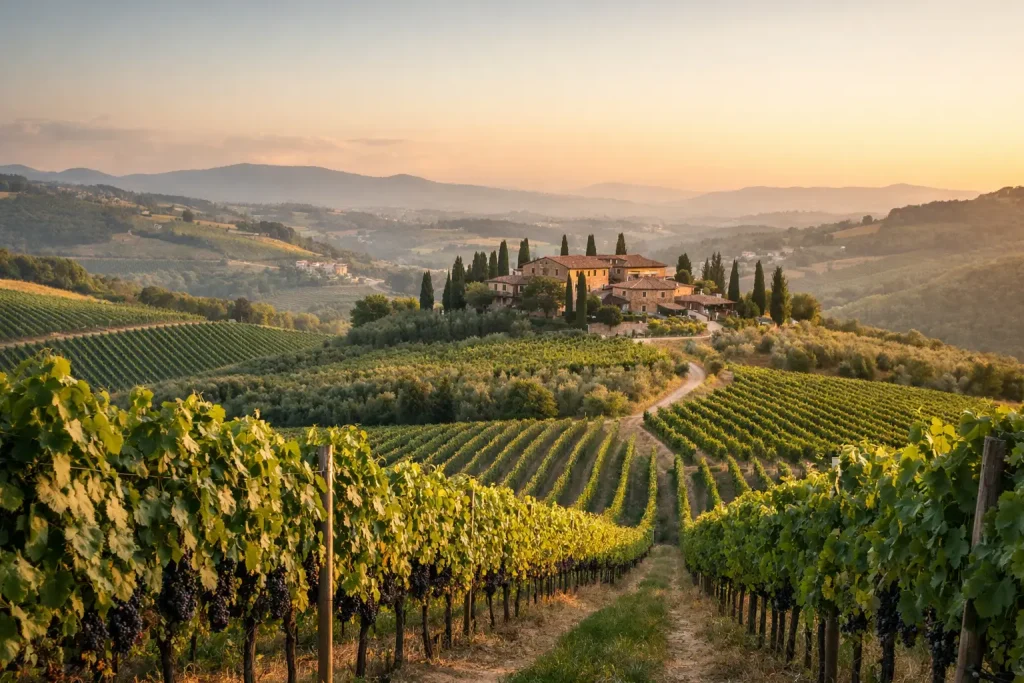
In Italy, wine regions such as Tuscany and Piedmont reflect the long continuity of regional agricultural identity within a politically fragmented historical landscape. Italian viticulture is characterized by extreme diversity, where local grape varieties, micro-regional traditions, and cultural practices coexist within relatively small geographic areas. This diversity is not accidental but the result of centuries of decentralized political organization and strong local identity structures.
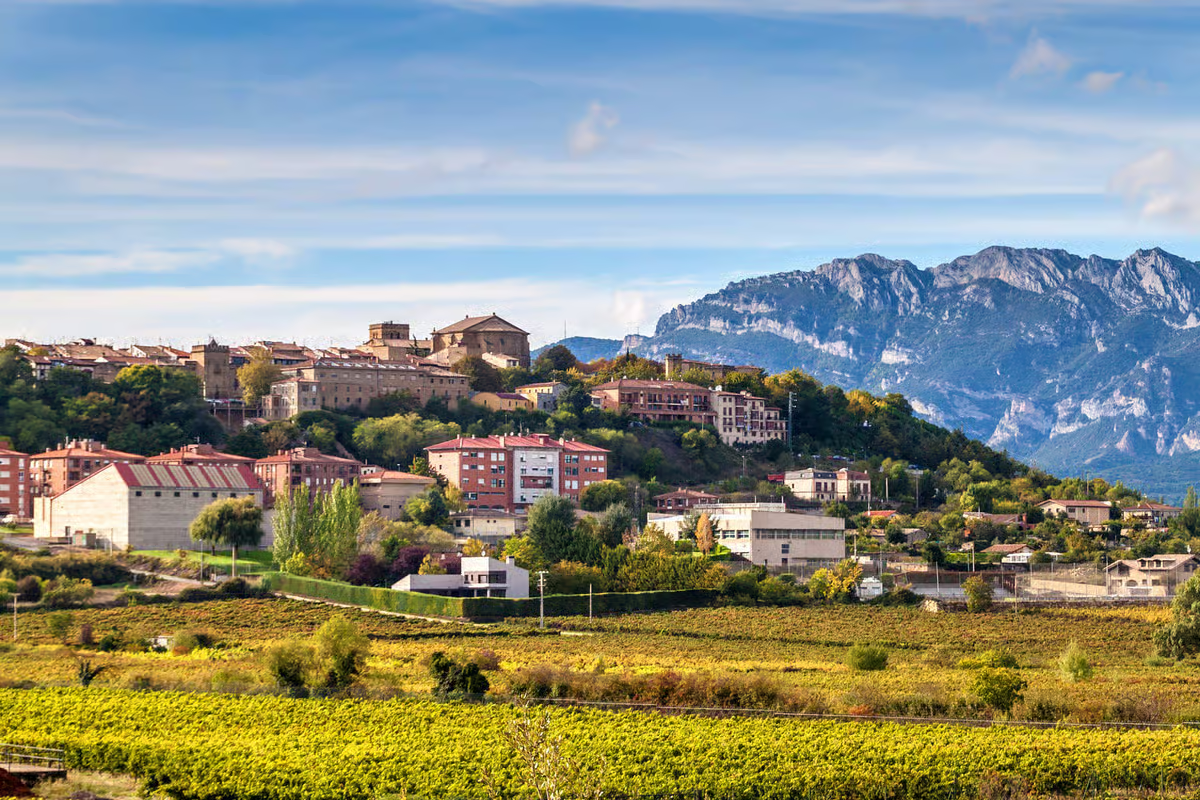
Spain’s Rioja region demonstrates a different model, shaped by both internal tradition and external influence. Its emphasis on aging, blending, and structured classification reflects historical interactions with international trade networks, particularly British wine markets. Similarly, Portugal’s Douro Valley represents one of the oldest formally demarcated wine regions in the world, developed primarily around the production of fortified wine for export, especially to Northern Europe.
Germany’s wine regions, particularly along the Mosel and Rhine rivers, illustrate the adaptation of viticulture to extreme climatic and geographical constraints. Steep slopes, slate soils, and northern latitude conditions have produced highly specialized white wine traditions, particularly centered on Riesling.
Taken together, these regions form a continental system in which geography, history, and cultural identity are inseparable. Each region functions as both an agricultural production site and a historical archive, preserving centuries of accumulated knowledge and adaptation.
Modern Wine Tourism – Heritage Economy and Experiential Consumption
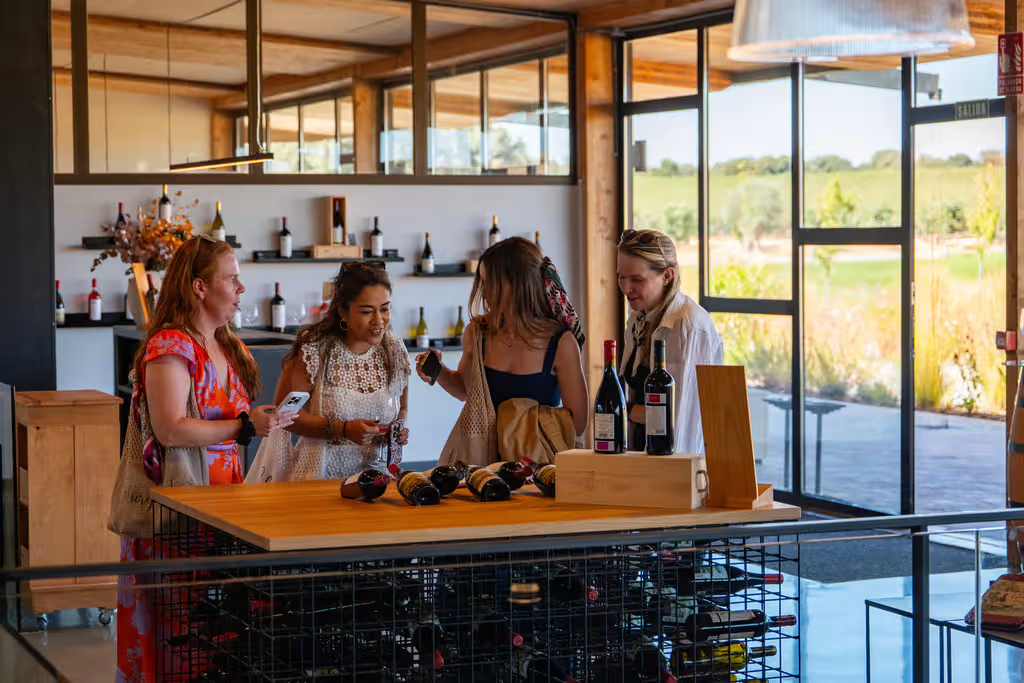
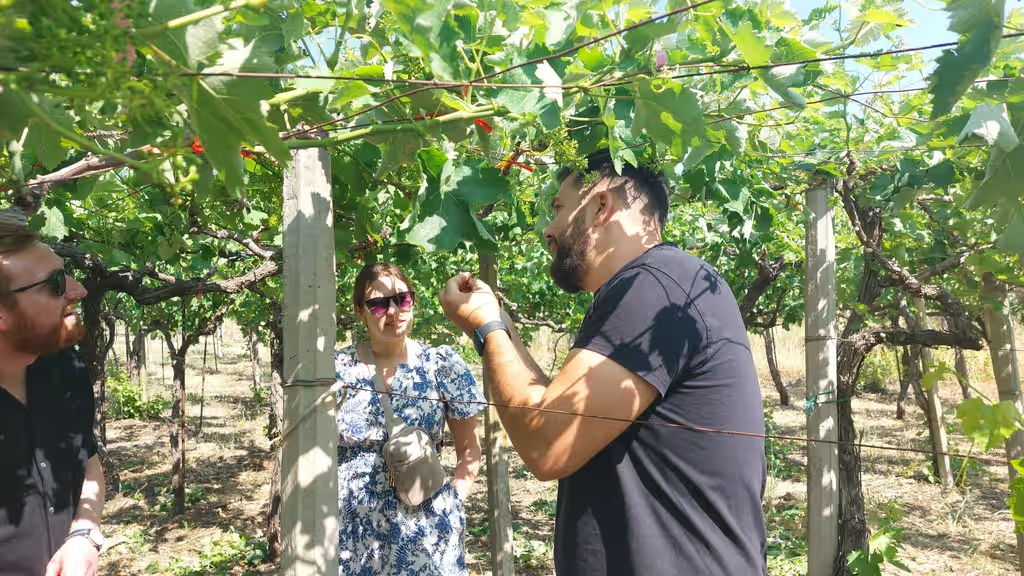
In the contemporary period, European wine regions have undergone a significant transformation from purely agricultural production zones into integrated cultural and experiential economies. Wine tourism represents the convergence of historical heritage, gastronomy, rural development, and global mobility.
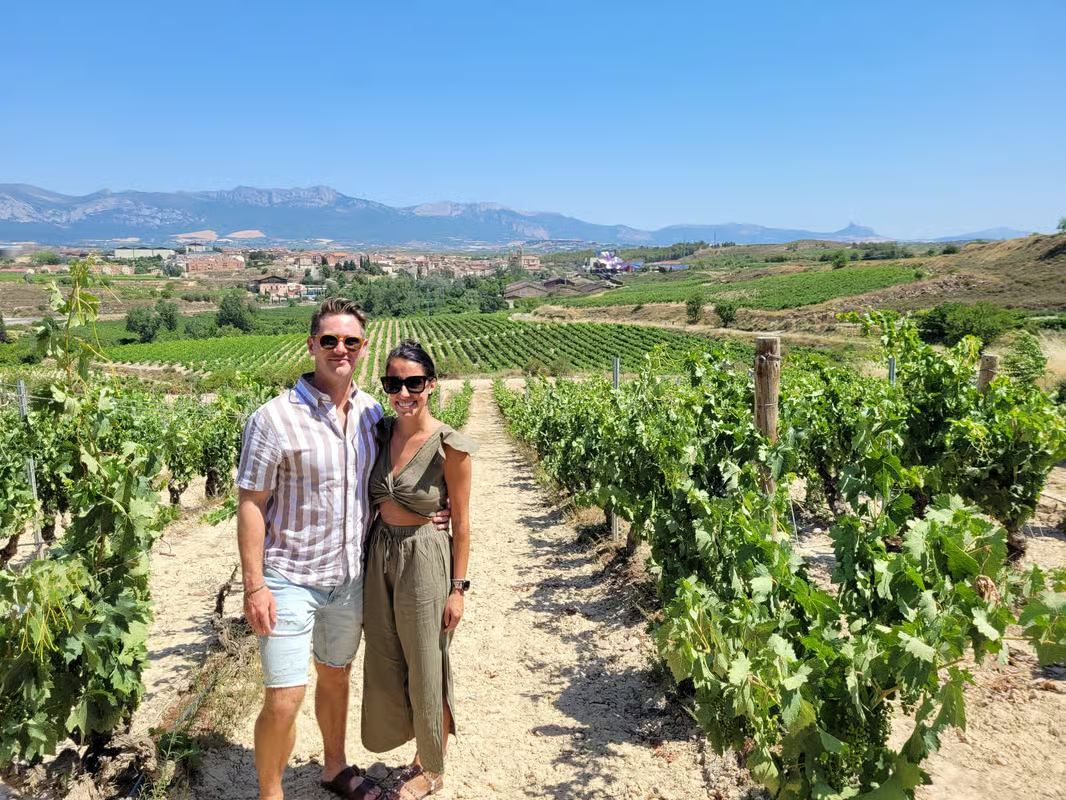
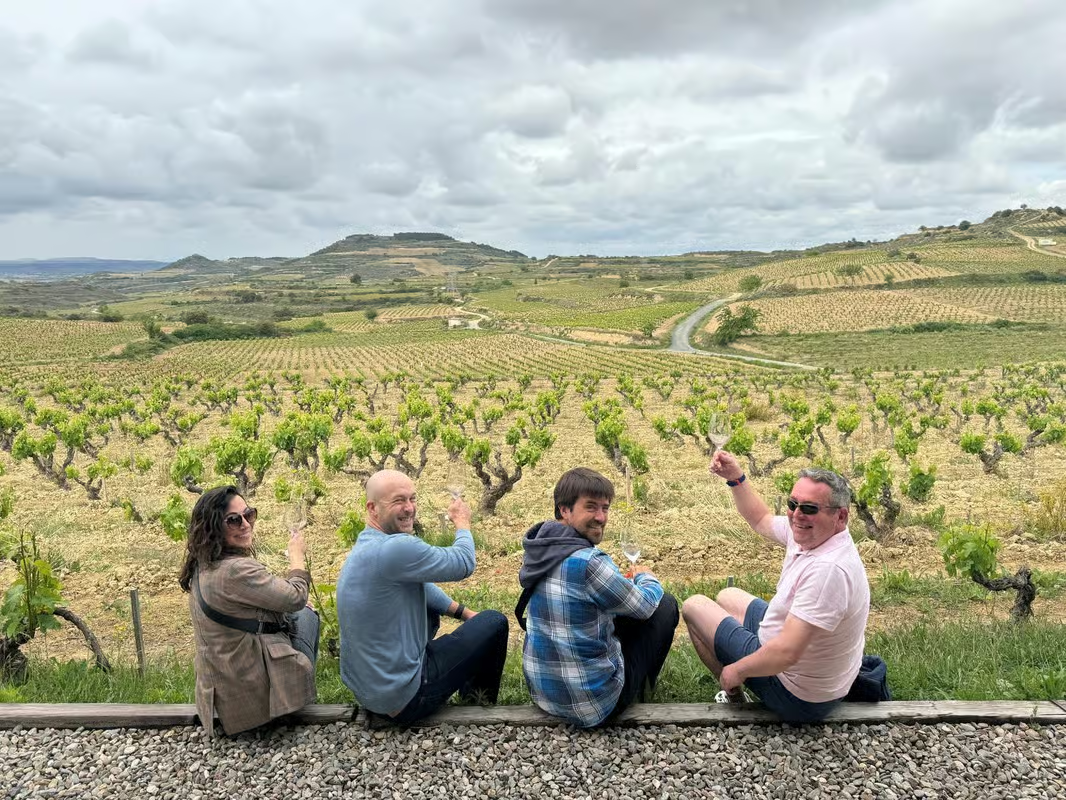
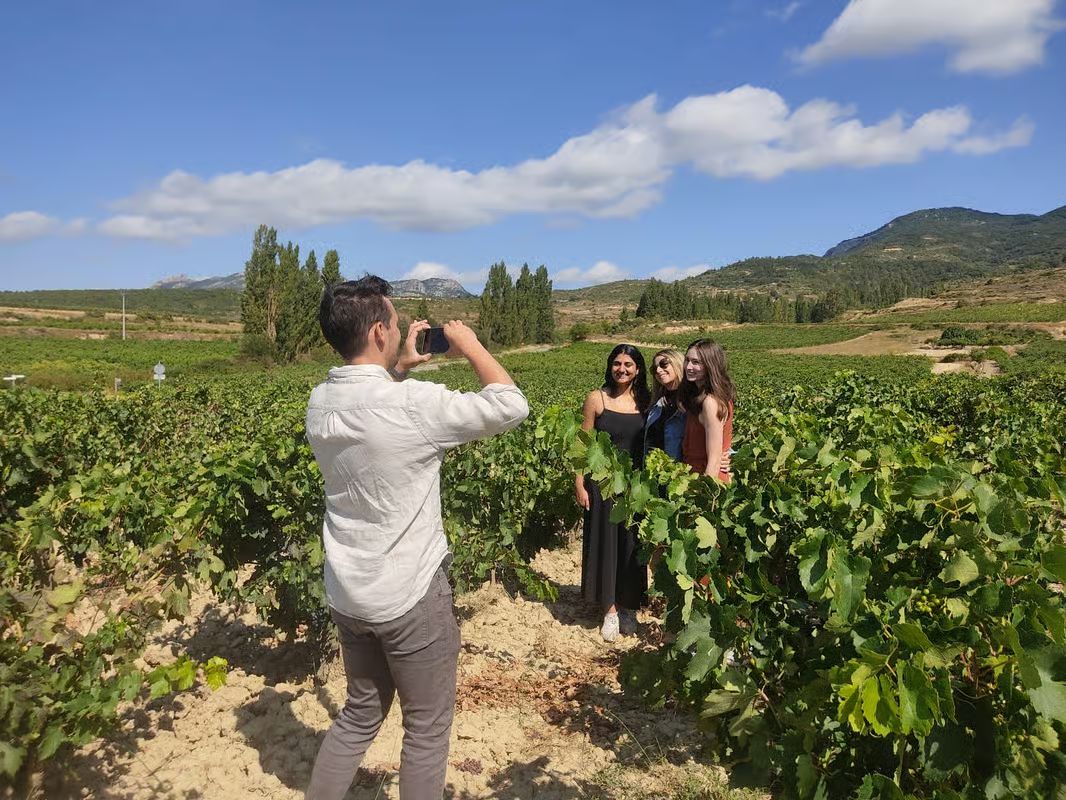
Unlike traditional wine consumption, which was primarily local or export-oriented, modern wine tourism is based on direct experiential engagement with production landscapes. Visitors travel to wine regions not only to taste wine but to understand its historical, cultural, and geographical context. This shift has redefined the economic role of vineyards, turning them into multifunctional spaces that combine production, education, hospitality, and cultural preservation.
Wine tourism also plays a critical role in maintaining rural economies. In many European regions, particularly those with limited industrial development, wine tourism provides essential economic diversification. It supports local employment, infrastructure development, and cultural preservation initiatives.
At the same time, wine tourism reinforces historical continuity. Many wine estates operate within buildings, cellars, and vineyard structures that date back centuries, creating a direct physical connection between contemporary visitors and historical production systems. This continuity enhances the perception of authenticity, which is central to both cultural value and economic competitiveness in the global wine market.
Conclusion – Wine as a Continuous European Civilizational System
The history of wine in Europe cannot be understood as a linear progression of agricultural techniques. It is more accurately described as a continuous civilizational system in which environmental conditions, human institutions, economic structures, and cultural meanings have interacted over millennia.
From prehistoric domestication to Greek philosophical integration, from Roman industrial expansion to medieval monastic preservation, from Renaissance commercialization to modern legal codification, wine has remained a persistent medium through which European societies have expressed identity, organized land, and structured economic exchange.
The defining characteristic of European wine history is continuity through transformation. Each historical period did not replace the previous one entirely but layered new systems upon existing structures. This cumulative process explains why modern European wine regions are simultaneously agricultural, historical, cultural, and legal entities.
In this sense, wine in Europe is not merely a product of history—it is one of the mechanisms through which European history itself has been produced, recorded, and preserved.