Table of Contents
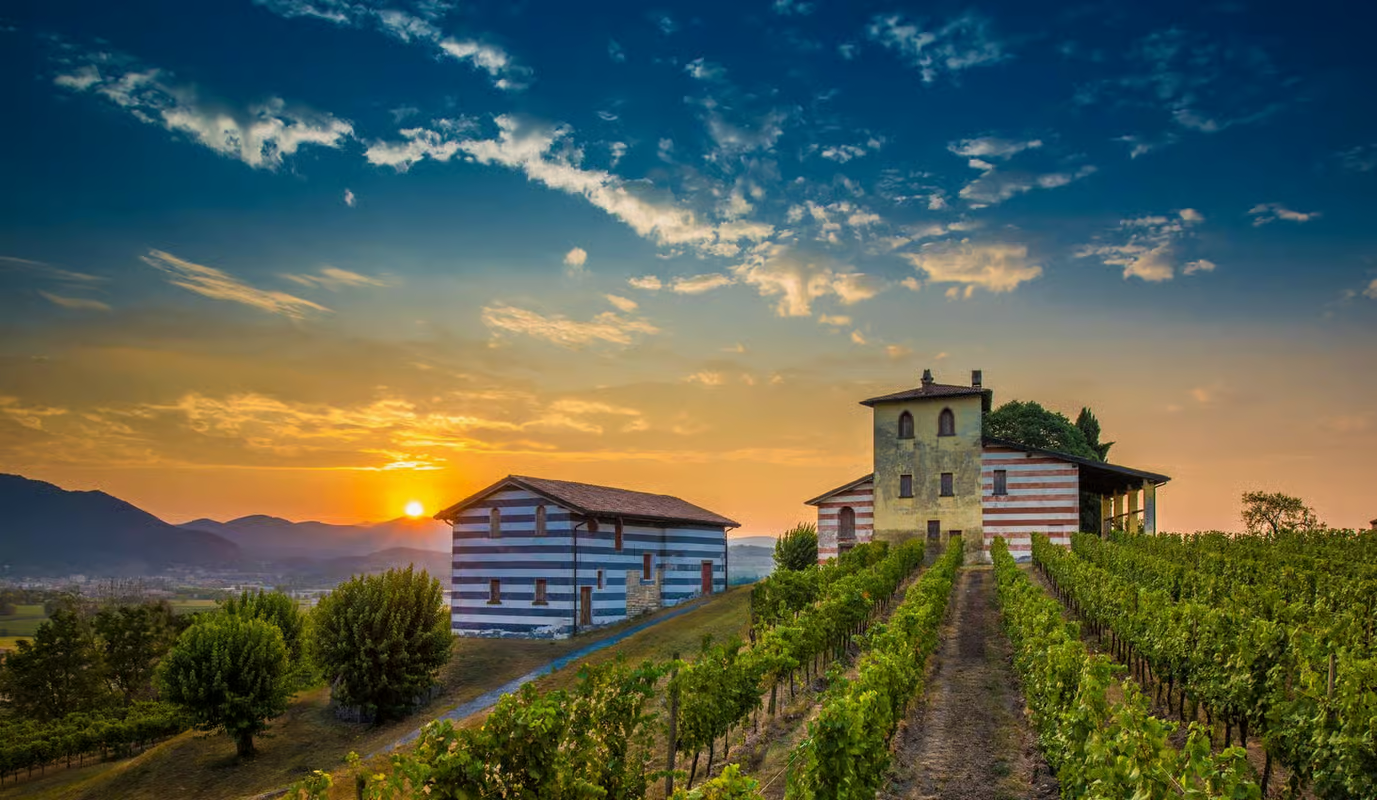
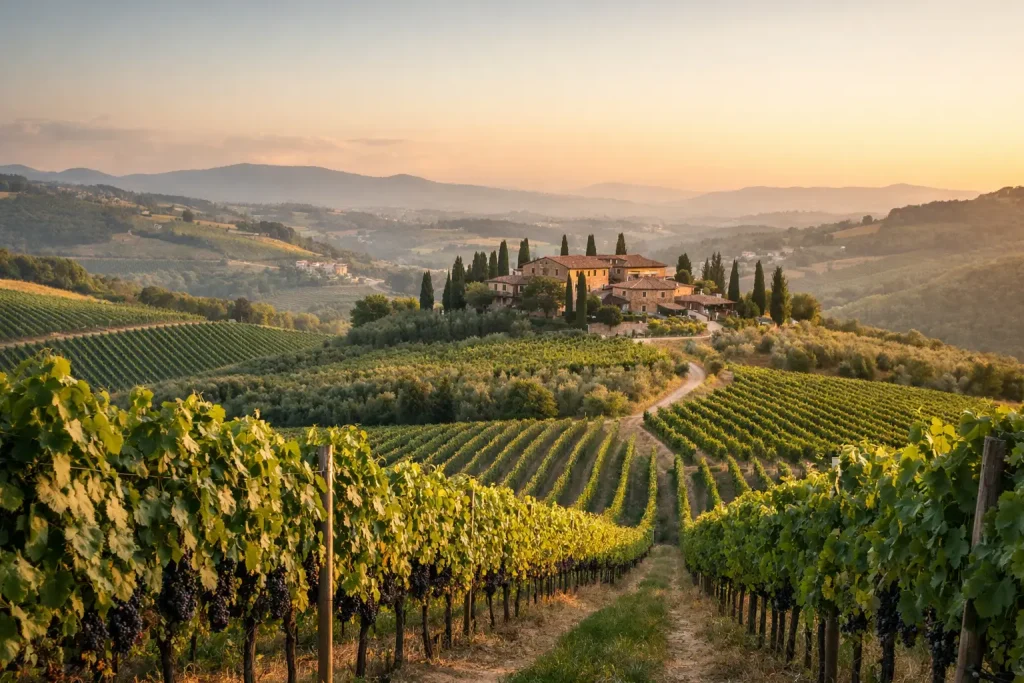
Italy represents one of the most complex and emotionally charged viticultural landscapes on Earth, where wine is not an agricultural product but a geological translation of time, pressure, and cultural memory. The peninsula functions as a fragmented archive of marine sedimentation, alpine uplift, and volcanic construction, all compressed into a narrow geographic space that produces an extraordinary diversity of terroir identities.
Nowhere is this more evident than in Piedmont, where Barolo and Barbaresco form a structured amphitheater of vineyards rooted in ancient seabeds. Sites such as Cannubi, Brunate, Rocche di Castiglione, Vigna Rionda, Monprivato, Asili, and Rabajà express different permutations of limestone marl, sandstone, and clay deposited during the Miocene epoch. These are not stylistic variations but geological signatures expressed through Nebbiolo.
Tuscany forms a second axis of identity, where Brunello di Montalcino, Chianti Classico, and Bolgheri represent three distinct geological systems within a single region. The fractured galestro hills of Montalcino, the sandstone ridges of Chianti, and the marine gravel terraces of Bolgheri demonstrate how radically soil can redefine a single grape variety.
Veneto’s Amarone della Valpolicella introduces a climatic paradox where limestone hills and ventilated valleys enable grape desiccation while preserving acidity. Sicily’s Etna, meanwhile, stands as a volcanic system in constant geological renewal, where basalt, ash, and pumice continuously reshape vineyard identity.
Italy is therefore not a unified terroir but a constellation of micro-geologies, each expressing itself through wine as a distinct dialect of stone.
Macro-Climate & Viticultural Foundations of Italy
Italy’s macro-climate is defined by the collision of Alpine continental systems, Mediterranean maritime influence, and Saharan atmospheric incursions. This creates a vertically and horizontally fragmented climatic structure in which temperature, wind, rainfall, and solar exposure shift dramatically over short distances.
In northern Italy, the Alps act as a climatic barrier, shielding regions such as Piedmont from Arctic air masses while generating localized föhn effects. In Barolo and Barbaresco, these warm descending winds accelerate post-rain drying and stabilize late-ripening cycles of Nebbiolo, allowing extended hang time without excessive disease pressure. Ligurian maritime influence tempers extremes, creating a balanced but highly variable continental-marine hybrid climate.
Central Italy operates under a Mediterranean regime moderated by altitude and Apennine topography. Tuscany, in particular, functions as a climatic amphitheater open to Tyrrhenian airflows. In Brunello di Montalcino, Chianti Classico, and Bolgheri, constant marine ventilation reduces humidity stress and preserves acidity even in warm vintages, while rain-shadow effects generated by the Apennines create significant intra-regional variability.
Southern Italy and Sicily are dominated by solar intensity and African air masses, yet altitude disrupts this pattern. On Etna, vineyards between 600 and 1100 meters experience one of the most extreme diurnal ranges in Europe, producing high-acid, mineral-driven wines despite southern latitude.
Wind systems are fundamental to this architecture. Alpine katabatic winds regulate Piedmont’s ripening cycles, Tyrrhenian sea breezes define Tuscany’s balance between ripeness and freshness, and Saharan sirocco events intermittently reshape Sicilian phenology. On Etna, mountain winds restore nocturnal cooling, preserving acidity despite extreme daytime heat.
Hydrologically, Italy is defined by irregular rainfall distribution and geological water mediation. In Barolo and Barbaresco, vines rely entirely on deep rooting into marl and sandstone. In Brunello di Montalcino, summer drought stress concentrates phenolics and reduces yields naturally. In Etna, volcanic ash and pumice act as hydrological buffers, storing winter rainfall and releasing it gradually through summer.
Altitude operates as a parallel climate system. In Alto Piemonte and Barolo, elevation differences between communes such as La Morra and Serralunga d’Alba significantly alter ripening curves and tannin structures. In Chianti Classico, higher zones like Radda preserve acidity and aromatic precision. On Etna, altitude defines stylistic identity more than latitude itself, with high vineyards producing tense, saline, vertical wines.
Solar exposure further refines this system. South-facing slopes accelerate ripening in Barolo, while north-facing exposures preserve aromatic finesse. In coastal Bolgheri, reflected maritime light enhances photosynthesis, contributing to the ripe yet structured character of wines such as Sassicaia Tenuta San Guido and Ornellaia.
Italy’s defining climatic trait is variability. Vintage conditions shift dramatically year to year, making each harvest a distinct interpretation of terroir rather than a fixed expression.
Curated Wine Tours to Understand Italian Terroir


Pedological Depth: The Complex Chemistry of Soil and Bedrock in Italy
Italy’s soils are a geological palimpsest formed by marine sedimentation, tectonic uplift, and volcanic activity. The result is one of the most structurally diverse terroir systems in global viticulture.
Piedmont: Marine Origins and Fossilized Structure
The Langhe hills are fundamentally ancient seabeds composed of limestone marl, sandstone, and clay. In Cannubi, calcareous marl produces aromatic lift and early accessibility. In Brunate, clay-limestone increases structure and aging potential. Serralunga d’Alba expresses compact sandstone and dense clay, producing austere, vertical Nebbiolo. Monforte d’Alba intensifies darker fruit profiles due to deeper clay layers, while Asili and Rabajà provide sandier soils that enhance floral precision and silk-like tannins.
Marine fossils embedded in these soils contribute directly to the saline-mineral perception in aged Barolo and Barbaresco wines.
Tuscany: Fragmented Continental Geology
Tuscany is divided into three dominant geological systems: galestro schist, alberese limestone, and macigno sandstone.
In Brunello di Montalcino, galestro dominates, breaking into thin plates that force deep root penetration and naturally low yields. Limestone-rich zones such as Poggio di Sotto enhance finesse and salinity, while clay-influenced areas like Castelgiocondo produce deeper, more structured wines. Historic sites such as Biondi Santi Il Greppo reflect austere, age-worthy galestro expression.
In Chianti Classico, sandstone dominates in Radda, producing linear, high-acid wines. Gaiole introduces more clay and limestone, increasing spice and mid-palate density. Castellina acts as a transitional zone of geological balance.
In Bolgheri, marine gravel, sand, and alluvial deposits dominate. Sassicaia Tenuta San Guido expresses gravel-driven linearity, while Ornellaia reflects deeper alluvial complexity. Guado al Tasso shows warmer, denser expressions due to increased clay influence.
Veneto: Limestone Systems and Appassimento Geography
he Valpolicella Classico zone is defined by limestone ridges, clay pockets, and volcanic inclusions. In Fumane, limestone dominates and produces aromatic precision. In Marano, clay increases concentration and glycerol richness. In Negrar, mixed soils create structural balance essential for Amarone della Valpolicella production.
These soils interact with valley ventilation systems that enable controlled grape drying, reinforcing concentration while maintaining freshness.
Sicily: Volcanic Stratification of Etna
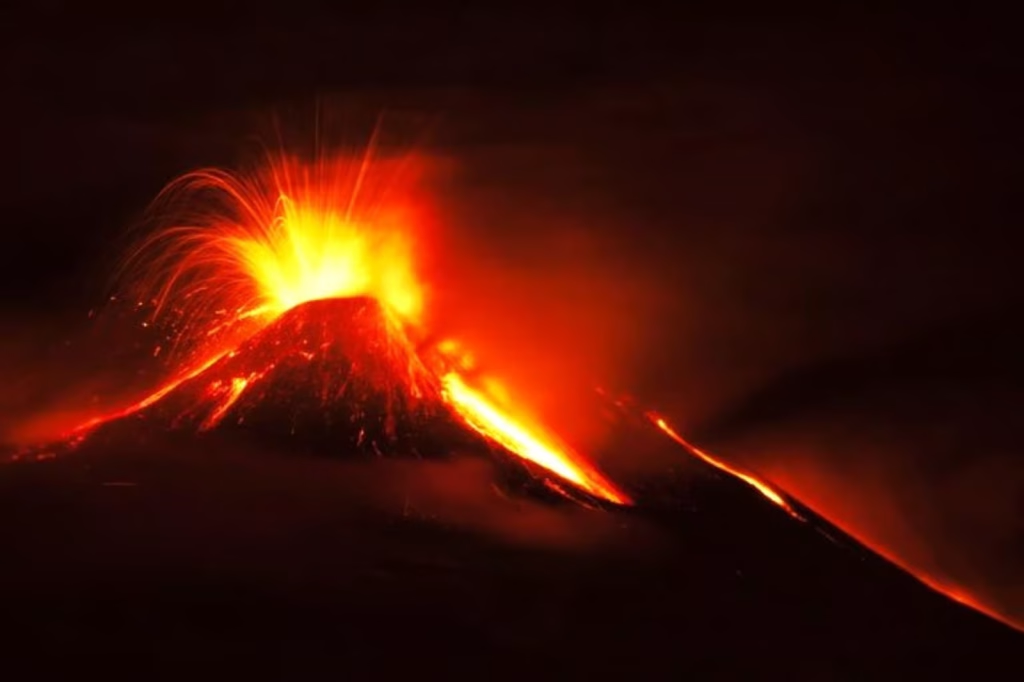
The Etna system is entirely volcanic, composed of basalt flows, ash layers, and pumice deposits. Basalt provides structural backbone and iron-rich minerality. Ash improves water retention and aromatic lift. Pumice enhances drainage and root oxygenation.
Northern slopes such as Randazzo produce structured wines with strong mineral tension. Castiglione di Sicilia emphasizes finesse and acidity. Piedimonte Etneo expresses aromatic lift and precision. Contrade such as Feudo di Mezzo, Santo Spirito, and Pietramarina refine these expressions further at micro-vineyard level.
The Regional Breakdown: Climate, Soil, and Sub-Regional Identity of Italy
Italy’s viticultural identity is best understood not as a hierarchy of famous appellations but as a continuous geological chain stretching from the Alpine arc to the Mediterranean islands. Each of the twenty administrative regions expresses a distinct intersection of climate, soil formation, altitude structure, and historical grape selection. Together they form a unified yet fragmented viticultural system in which no region is redundant and no terroir is repeated.
Piedmont
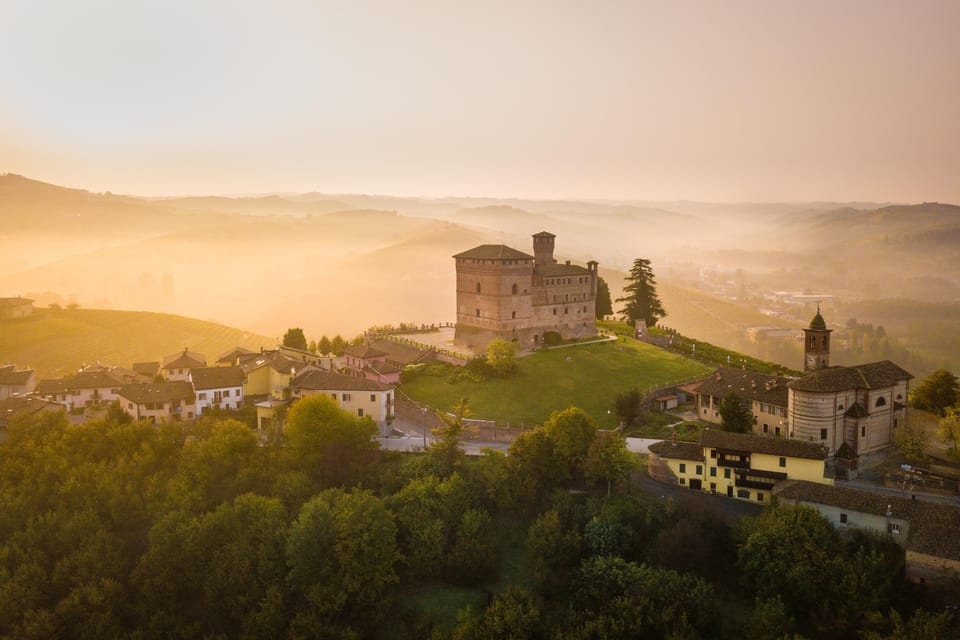
Piedmont is defined by a closed amphitheater of hills formed from ancient marine sedimentation. The Langhe and Monferrato zones contain alternating layers of limestone marl, clay, and sandstone that govern the structure of Barolo and Barbaresco. Communes such as La Morra express softer Tortonian marl producing aromatic Nebbiolo, while Serralunga d’Alba’s compact Helvetian sandstone creates austere, long-lived wines. Vineyard sites such as Cannubi, Brunate, Vigna Rionda, and Asili demonstrate how micro-geology overrides regional uniformity, producing wines of extreme site specificity.
Aosta Valley
The Aosta Valley represents one of Europe’s most extreme alpine viticultural environments. Vineyards are located on steep terraced slopes above the Dora Baltea river, where glacial soils composed of moraines, schist, and rocky debris dominate. The climate is sharply continental with strong diurnal variation. Indigenous varieties such as Petit Rouge and Prié Blanc thrive in conditions defined more by altitude and sunlight exposure than by soil depth. Wines here are linear, high in acidity, and deeply influenced by alpine thermal inversion patterns.
Lombardy
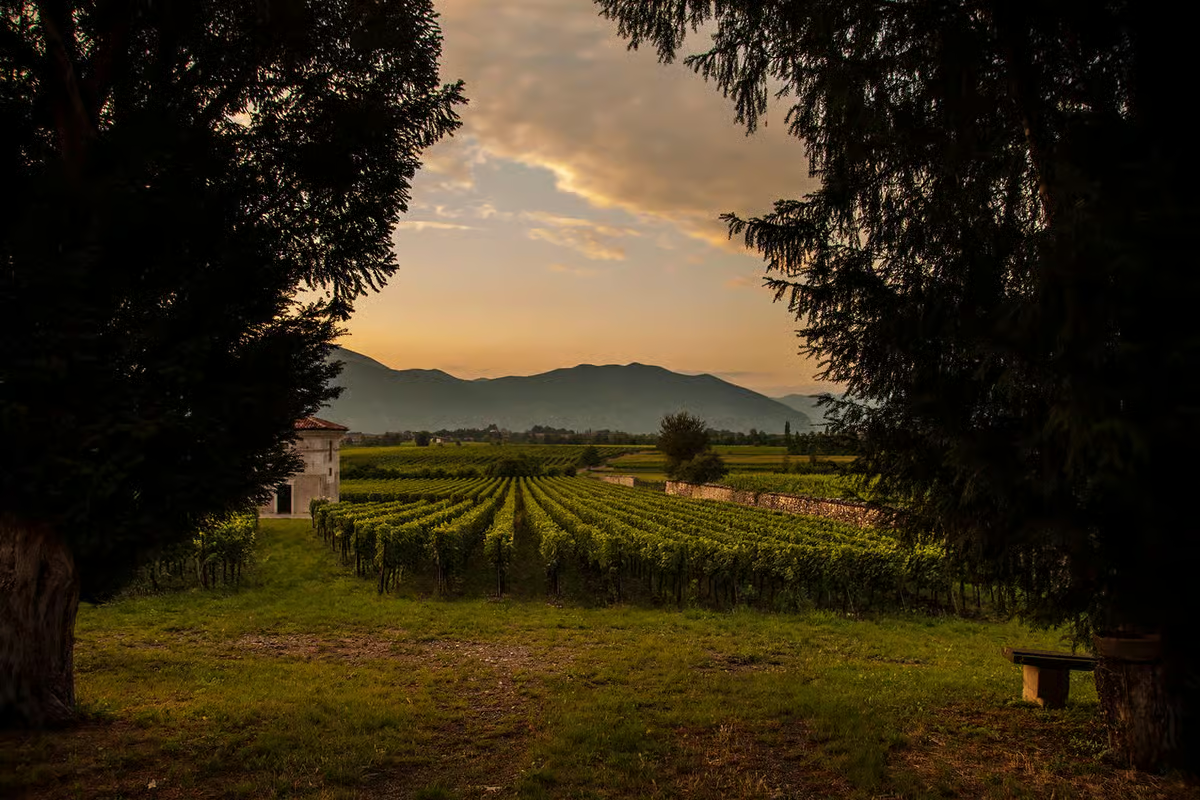
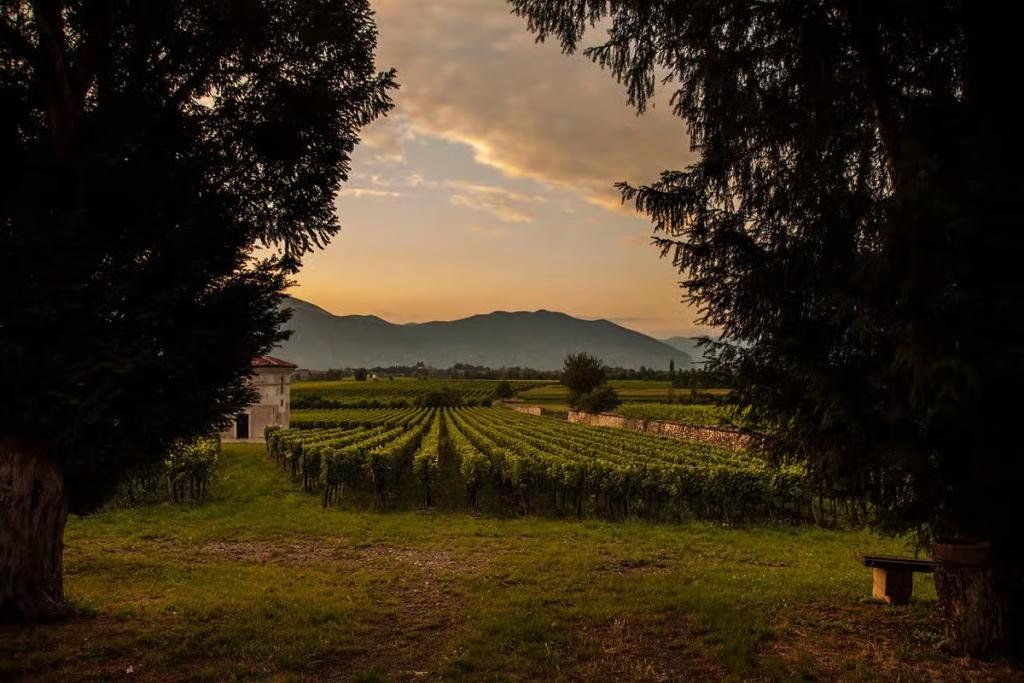
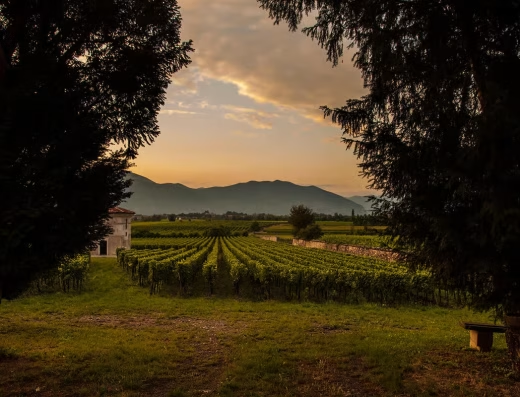
Lombardy is a dual system divided between alpine foothills and glacial plains. In Valtellina, vineyards are carved into steep Rhaetian slopes composed of granite and schist, producing highly vertical expressions of Nebbiolo known locally as Chiavennasca. In contrast, the Franciacorta zone is defined by morainic deposits, limestone, and glacial sands that create ideal drainage conditions for traditional method sparkling wines. The coexistence of alpine austerity and glacial softness defines the region’s dual identity.
Trentino-Alto Adige
This is Italy’s most structurally alpine wine region, where vineyards follow steep valley systems shaped by Dolomitic and porphyric geology. South Tyrol is dominated by porphyry, quartz, and dolomite limestone, creating wines of extreme aromatic precision and high acidity. Valleys such as Adige and Isarco benefit from intense diurnal shifts and cold-air drainage. Pinot Bianco, Gewürztraminer, and Lagrein reflect these conditions with clarity, tension, and mineral definition.
Veneto
Veneto combines Alpine influence with Adriatic maritime climate. The Valpolicella system rests on limestone hills mixed with clay and volcanic deposits, creating diverse expressions of Corvina-based wines. The Appassimento process used in Amarone amplifies this geological base, concentrating fruit derived from vineyards in Fumane, Marano, and Negrar. The eastern plains produce Prosecco from glacial moraines and sandstone hills, particularly in Conegliano-Valdobbiadene, where elevation and erosion define acidity-driven sparkling wines.
Friuli Venezia Giulia
Friuli is defined by a collision of Alpine cold air and Adriatic humidity. The region’s most important soils are flysch, ponca, and marlstone, particularly in Collio and Colli Orientali. These soils provide excellent drainage while retaining mineral complexity. White varieties dominate, producing wines of high aromatic definition and textural precision. The interaction between cool nights and warm days ensures slow ripening and pronounced acidity retention.
Liguria
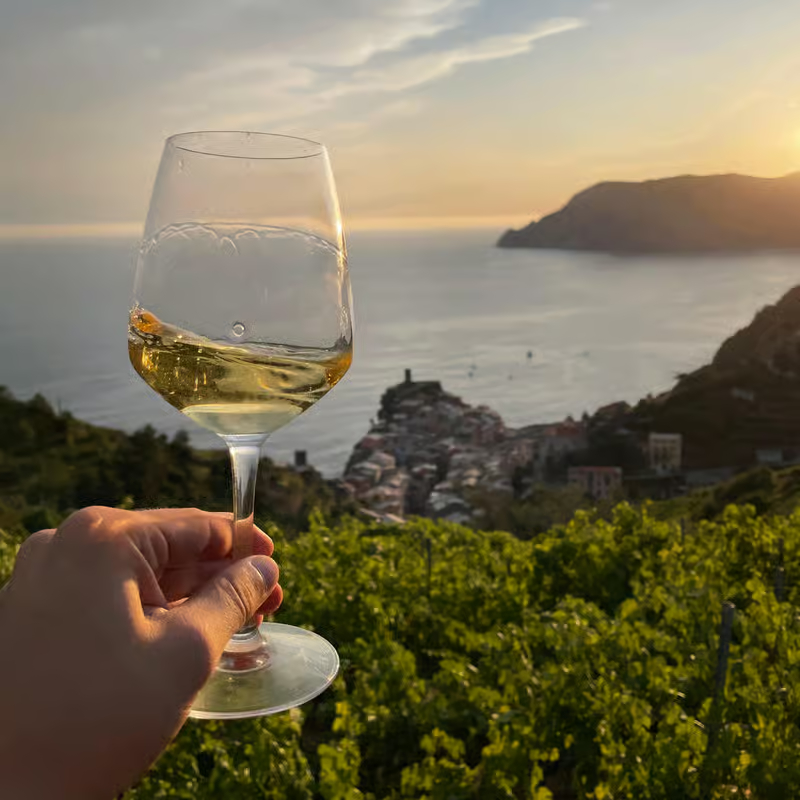
Liguria is a narrow coastal strip dominated by steep terraced vineyards cut into limestone and sandstone cliffs. Soils are shallow, rocky, and highly eroded, forcing vines to struggle in low fertility conditions. The maritime climate is dominant, with constant sea breezes moderating temperature extremes. Wines such as Vermentino and Pigato reflect saline minerality, citrus tension, and extreme site specificity driven more by slope and exposure than by soil depth.
Emilia-Romagna
This region is defined by the Po Valley alluvial system in the north and the Apennine foothills in the south. The soils are predominantly clay, silt, and marine sediments, creating fertile but structurally diverse conditions. In the hills of Piacenza and Parma, more calcareous formations support structured red wines such as Barbera and Bonarda. The region is also home to Lambrusco, where alluvial plains and clay soils produce high-yield, effervescent wines shaped by continental humidity and summer heat.
Tuscany
Tuscany is a tri-geological system composed of galestro schist, alberese limestone, and sandstone. In Montalcino, galestro produces austere and age-worthy expressions of Sangiovese in Brunello di Montalcino. Chianti Classico is structured by alternating sandstone ridges and limestone basins, producing tension-driven wines in Radda and more balanced profiles in Gaiole and Castellina. Along the coast, Bolgheri’s marine gravel and alluvial soils support international varieties such as Cabernet Sauvignon, producing structured wines like Sassicaia and Ornellaia.
Umbria
Umbria is a landlocked region defined by clay-limestone hills and river valley alluvium. The soils around Montefalco and Torgiano are rich in marine sediment and clay, producing structured expressions of Sagrantino and Sangiovese. The continental climate, with hot summers and cold winters, creates strong diurnal shifts that preserve acidity while promoting phenolic ripeness.
Marche
The Marche region sits between the Apennines and the Adriatic Sea, creating a complex interplay of calcareous clay, sandstone, and marine marl. Verdicchio thrives in the hills of Castelli di Jesi and Matelica, where elevation and cooling breezes preserve acidity. Red varieties such as Montepulciano and Sangiovese benefit from warm maritime influence balanced by hillside ventilation.
Lazio
Lazio is defined by volcanic soils derived from ancient volcanic complexes such as the Alban Hills. These soils are rich in potassium, iron, and volcanic ash, creating fertile yet mineral-driven conditions. Frascati and other Roman hills wines express soft texture, floral aromatics, and volcanic minerality. The proximity to the Tyrrhenian Sea adds humidity regulation and maritime freshness.
Abruzzo
Abruzzo is dominated by Apennine mountains descending toward the Adriatic Sea. The soils are largely calcareous clay and limestone, with significant altitude variation. Montepulciano d’Abruzzo thrives in this environment, producing structured wines with dark fruit and firm tannins. High-altitude vineyards benefit from strong diurnal shifts that preserve acidity and aromatic intensity.
Molise
Molise is one of Italy’s smallest wine regions, defined by clay-limestone hills and inland continental climate. The soils are similar to Abruzzo but less fragmented, producing rustic and structured expressions of Montepulciano and Trebbiano. Altitude and isolation preserve traditional viticultural practices.
Campania
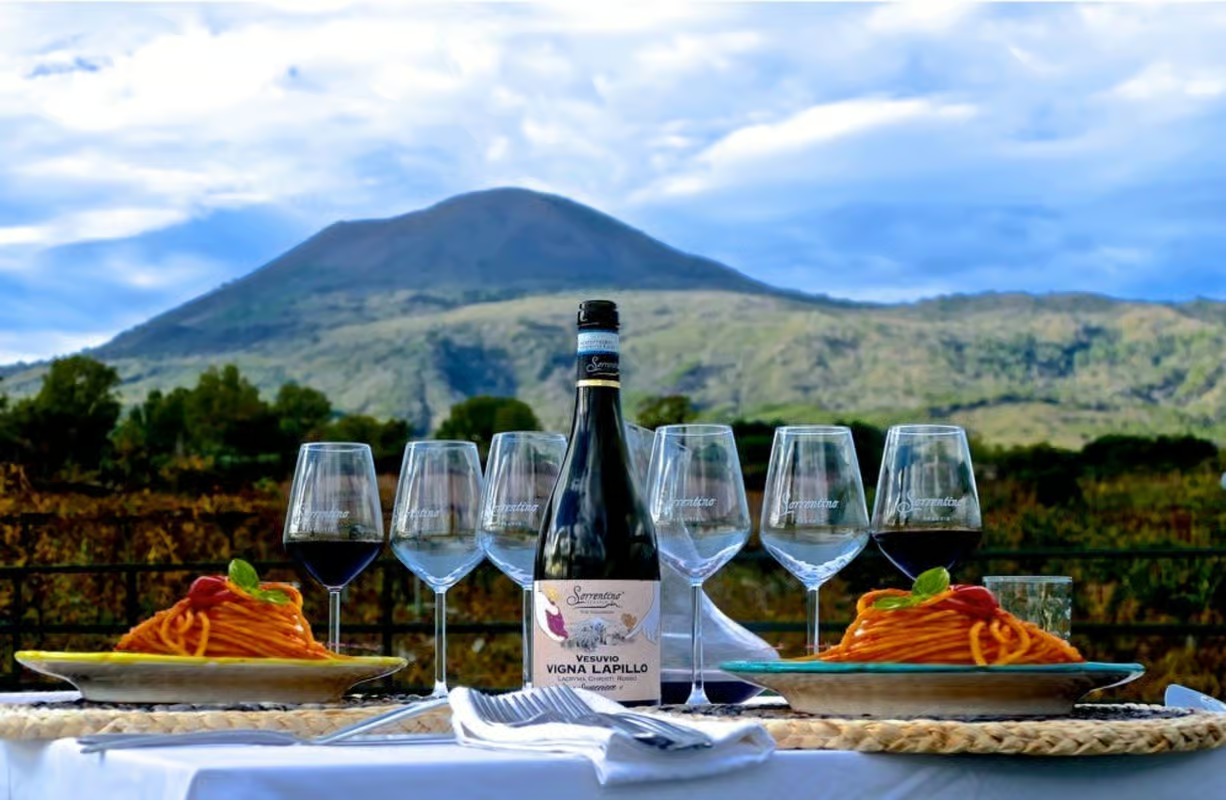
Campania is one of Italy’s most geologically diverse regions, shaped by volcanic activity from Vesuvius, Campi Flegrei, and inland Apennine formations. Soils vary from volcanic ash and pumice to limestone and clay. Taurasi in Irpinia expresses Aglianico with volcanic structure and smoky complexity, while coastal zones produce aromatic whites like Fiano di Avellino and Greco di Tufo with strong mineral tension.
Puglia (Apulia)
Puglia is defined by limestone plateaus and iron-rich red soils known as terra rossa. The region is flat to gently undulating, with strong Mediterranean heat and limited altitude variation. Primitivo and Negroamaro thrive under these conditions, producing dense, sun-driven wines with ripe fruit and soft tannic structure. Coastal winds help moderate heat accumulation.
Basilicata
Basilicata is dominated by volcanic soils from Mount Vulture, an extinct volcano. These basaltic and ash-rich soils provide excellent drainage and mineral complexity. Aglianico del Vulture produces structured, age-worthy wines with smoky, earthy, and volcanic characteristics, shaped by altitude and continental climate.
Calabria
Calabria combines coastal Mediterranean influence with mountainous inland terrain. Soils vary from granite and schist in the highlands to clay and sand near the coast. Gaglioppo dominates production, producing wines with rustic tannins, herbal notes, and strong sun-driven fruit expression. The region is heavily influenced by heat and low rainfall.
Sicily
Sicily is a multi-terroir island defined by volcanic, limestone, and marine soils. Etna represents the volcanic apex, with basalt, ash, and pumice creating high-acid, mineral-driven wines. Inland areas such as Noto and Vittoria feature limestone and clay soils that produce structured Nero d’Avola and Frappato blends. Climate ranges from extreme heat in lowlands to alpine-like conditions on Etna’s upper slopes.
Sardinia
Sardinia is defined by granite, schist, and sandy coastal soils shaped by strong maritime winds. The island’s isolation preserves indigenous varieties such as Cannonau, Vermentino, and Carignano. The climate is dry, windy, and highly solar, producing wines with saline minerality, herbal complexity, and moderate struct
Human Intervention & Viticultural Mastery in Italy
Italian viticulture is defined by a constant negotiation between geological constraint and human interpretation. Unlike more homogenized wine-producing countries, Italy does not impose a single viticultural model; instead, it operates as a constellation of inherited farming systems, each adapted to extreme variability in soil structure, altitude, hydrology, and climate stress. Human intervention in Italy is therefore not an act of domination over nature but a continuous calibration of survival, balance, and expression of site.
Across the peninsula, the central philosophical tension lies between tradition and precision. Traditional systems preserve historical continuity and genetic diversity of vineyards, while modern viticulture introduces analytical control over yield, canopy structure, and phenolic development. The most successful Italian estates do not choose between these approaches; they integrate both in a site-specific manner.
Vineyard Architecture: Training Systems and Structural Adaptation
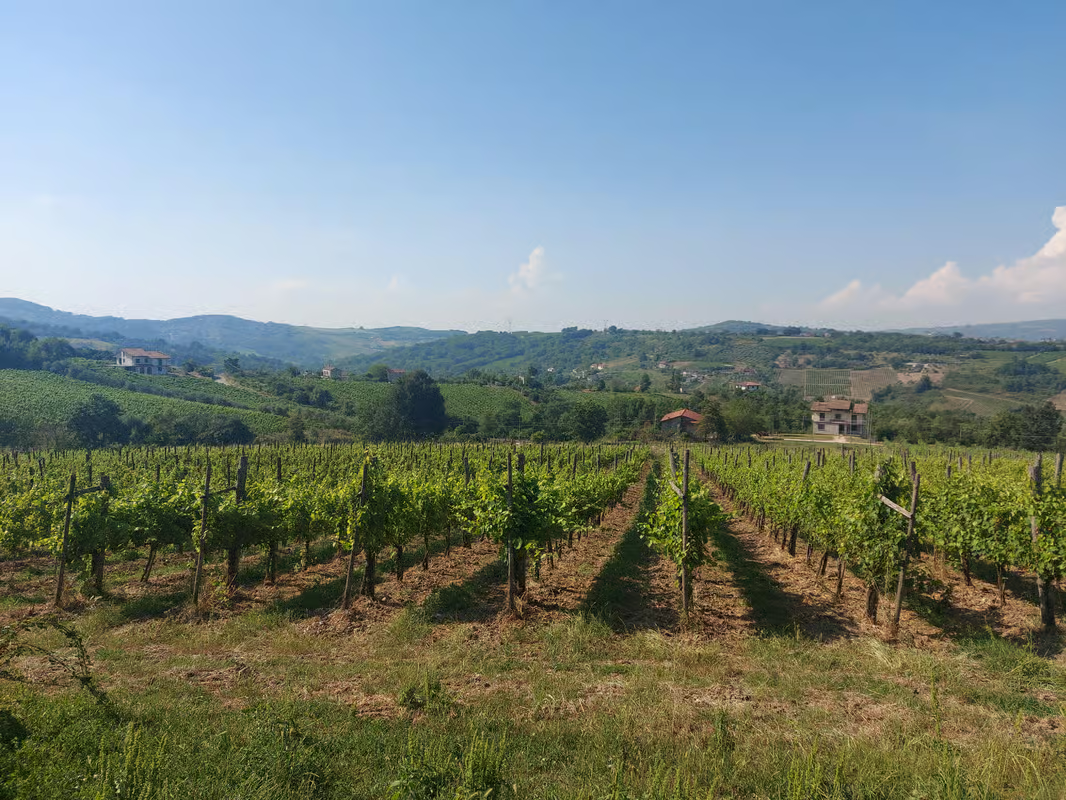
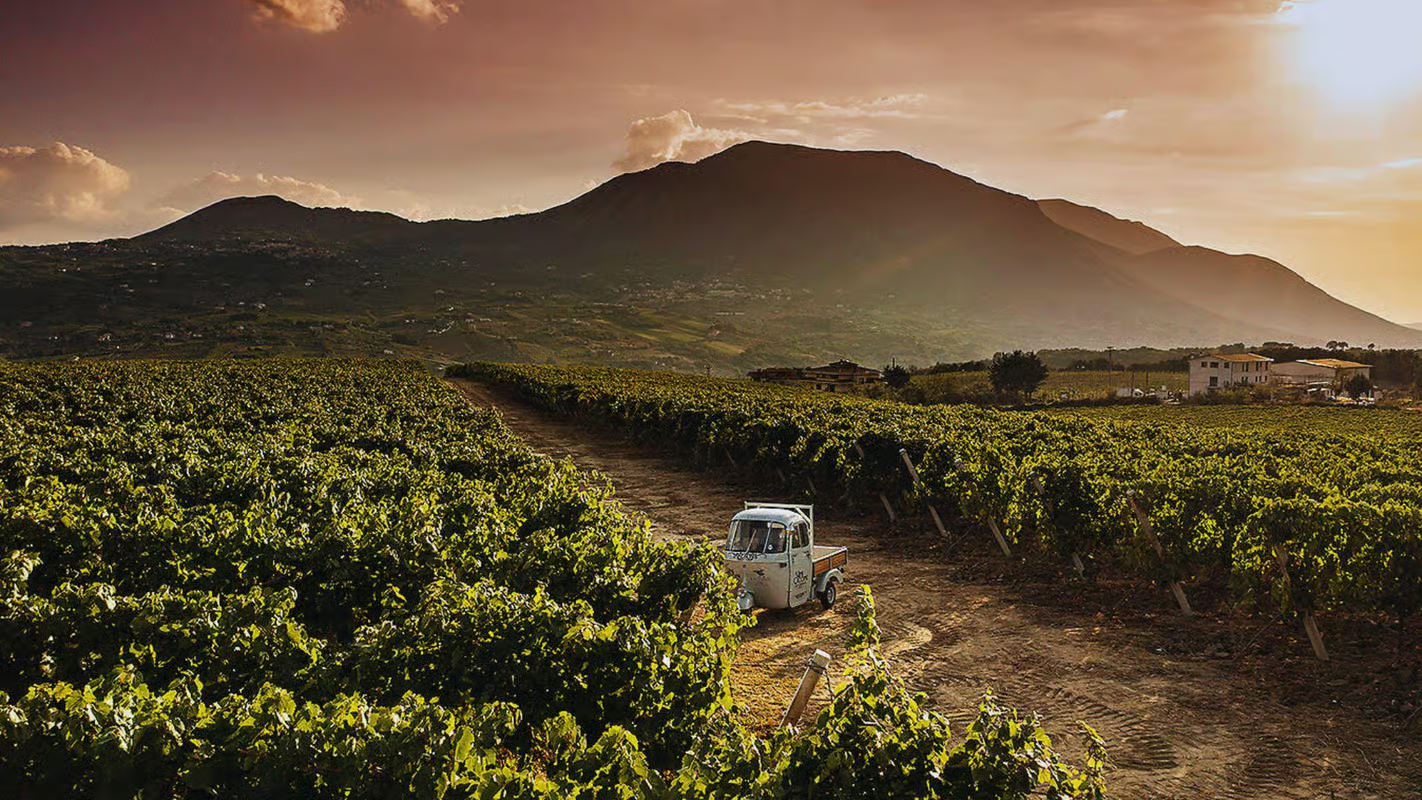
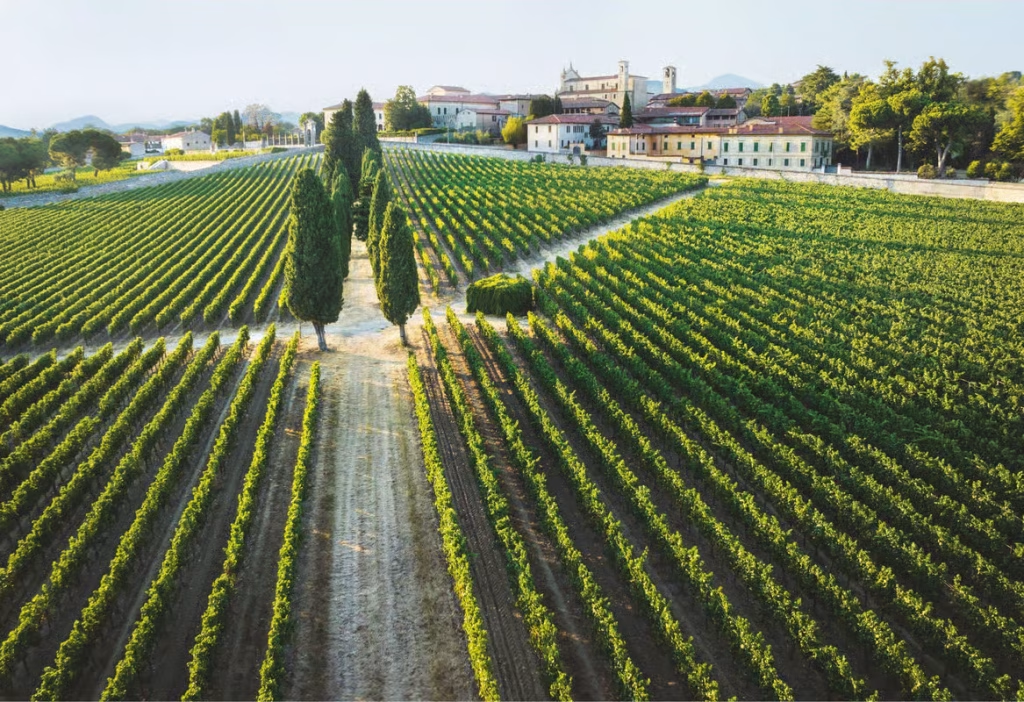
The physical training of vines in Italy is directly determined by topography and climate pressure. In steep hillside zones such as Barolo and Barbaresco, Guyot training is dominant because it allows strict control of vegetative growth in low-fertility soils composed of marl, sandstone, and clay. The weak fertility of Nebbiolo requires careful shoot limitation to prevent excessive vigor, ensuring that phenolic ripening remains aligned with sugar accumulation.
In more structured and historically managed regions such as Valpolicella, traditional pergola systems persist alongside modern vertical shoot positioning. Pergola training was originally developed as a climatic adaptation to protect grapes from excessive sun exposure and improve air circulation in humid valley environments. This is particularly relevant for the production of grapes destined for Amarone della Valpolicella, where late-harvest fruit must remain physiologically stable before undergoing the appassimento drying process.
In Tuscany, viticultural architecture becomes more stratified. In Brunello di Montalcino, Guyot systems dominate, but vine spacing and row orientation are critically adjusted to respond to galestro-driven water stress. In warmer coastal zones such as Bolgheri, higher-density planting is often used to force root competition in gravel and alluvial soils, intensifying concentration in varieties such as Cabernet Sauvignon and Merlot.
In volcanic zones such as Etna, traditional bush vine systems coexist with modern training structures. The irregular lava terraces and fragmented soil layers often prevent mechanization, preserving ancient planting methods that prioritize resilience over efficiency.
Canopy Management: Light, Airflow, and Phenolic Control
Canopy management in Italy is fundamentally driven by disease pressure, solar intensity, and the need to regulate phenolic ripening in highly variable climates. In humid northern zones such as Friuli Venezia Giulia, canopy openness is essential to prevent fungal pressure, particularly in soils rich in flysch and marl where moisture retention is naturally higher.
In Piedmont, canopy management is more focused on balancing sun exposure with acid preservation. Excessive leaf removal in Nebbiolo can lead to overexposure of clusters, accelerating phenolic ripeness and disrupting the delicate aromatic structure that defines sites such as Cannubi and Brunate. As a result, leaf thinning is often performed selectively on the eastern side of the canopy to ensure morning sun exposure while protecting fruit from peak afternoon heat.
In central Italy, particularly Chianti Classico and Brunello di Montalcino, canopy management becomes a tool of drought mitigation. Leaf retention is strategically maintained to reduce evapotranspiration during peak summer heat, especially in sandstone and galestro soils where water availability is naturally limited. This preserves acid balance in Sangiovese, which is highly sensitive to hydric stress during veraison.
In southern Italy and Sicily, canopy architecture is increasingly used to manage solar intensity. On Etna, vine training is often designed to protect clusters from excessive radiation while still allowing airflow through volcanic ash soils that retain significant heat during the day but cool rapidly at night.
Soil Stewardship: Working with Fragmented Geology
Italian viticultural mastery is inseparable from soil management, not in the sense of alteration but in the sense of adaptation to extreme pedological diversity. In regions such as Barolo, where soils range from compact Helvetian sandstone to soft Tortonian marl, vineyard management strategies differ dramatically even within adjacent parcels. Organic matter management, cover cropping, and erosion control are essential to maintaining soil structure on steep slopes.
In Tuscany, soil management is deeply tied to erosion control in galestro-dominated landscapes. The brittle nature of galestro means that rainfall can rapidly degrade vineyard terraces if not stabilized. As a result, many estates maintain permanent grass cover between rows to reduce runoff and preserve soil integrity, particularly in Brunello di Montalcino vineyards such as Poggio di Sotto and Castelgiocondo.
In coastal Bolgheri, soil management focuses on preserving drainage efficiency in gravel and sand-based systems. Excessive organic buildup is avoided to prevent water retention in soils that are naturally designed for rapid percolation, ensuring consistent vine stress and concentration.
On Etna, soil management is fundamentally about working with continuous geological renewal. Each eruption can deposit new layers of ash and lava fragments, requiring constant recalibration of vineyard mapping and root-zone adaptation. Rather than resisting this volatility, growers integrate it into a dynamic understanding of vineyard evolution.
Harvest Strategy: Timing, Phenolic Maturity, and Climatic Risk
Harvest timing in Italy is one of the most critical expressions of human intervention, as climatic variability demands precise adaptation each year. In Barolo and Barbaresco, harvest decisions for Nebbiolo are particularly complex due to the grape’s long phenolic cycle. Growers must balance sugar ripeness with tannin polymerization, often waiting for extended hang time into late October, risking autumn rainfall in exchange for full aromatic development.
In Brunello di Montalcino, harvest timing is influenced by altitude and exposure. Higher sites may require significantly later picking to achieve phenolic maturity, while lower clay-rich zones ripen earlier but risk losing acidity if harvested too late. This creates a fragmented harvest calendar even within a single estate.
In Valpolicella, harvest strategy becomes dual-layered due to the appassimento system. Grapes destined for Amarone della Valpolicella are harvested earlier than those for standard Valpolicella wines to ensure sufficient acidity for the drying process. These grapes are then placed in fruttaio drying rooms where humidity and airflow are carefully controlled for months.
In southern Italy and Sicily, harvest timing is often compressed due to rapid sugar accumulation under high solar radiation. On Etna, however, altitude delays ripening significantly, allowing for one of the longest harvest windows in Europe depending on elevation and exposure.
Fermentation Philosophy: Between Tradition and Technical Precision
Italian winemaking philosophy exists on a spectrum between ancestral minimalism and modern analytical precision. In traditional zones such as Barolo, fermentation often relies on long maceration periods in large neutral vessels, emphasizing slow extraction of tannins and preservation of site expression. This approach prioritizes transparency of terroir over immediate fruit expression.
In Bolgheri, winemaking tends to be more technically controlled, with temperature-regulated fermentation, selected yeast use, and careful extraction management, particularly for international varieties such as Cabernet Sauvignon and Merlot. Oak usage is more pronounced, often integrating French barrique to structure tannins and add aromatic complexity.
In Etna, a strong minimal-intervention philosophy dominates. Indigenous yeasts, neutral vessels, and restrained extraction are commonly used to preserve volcanic tension and acidity. The goal is to transmit the instability and energy of basaltic soils directly into the wine.
In Brunello di Montalcino, winemaking approaches vary widely, from traditional long aging in large Slavonian oak botti to more modern hybrid systems that incorporate partial barrique aging. Regardless of method, the objective remains consistent: to preserve the structural integrity of Sangiovese while expressing the geological austerity of galestro and limestone soils.
Philosophical Axis: Minimal Intervention vs Controlled Expression
The defining philosophical duality in Italian viticulture is not tradition versus modernity, but rather minimal intervention versus controlled precision. In regions such as Barolo, Barbaresco, and Etna, minimal intervention is used to maximize transparency of terroir, allowing soil and climate to dominate sensory expression. In contrast, regions such as Bolgheri employ a more controlled approach, where human intervention is used to stabilize international grape varieties in climatically challenging environments.
Neither approach is superior; both are responses to geological and climatic reality. The mastery lies in recognizing where intervention enhances expression and where it obscures it.
Conclusion: Viticulture as Geological Translation
Human intervention in Italy is ultimately a form of translation between stone and wine. Every decision—pruning, canopy shaping, harvest timing, fermentation vessel choice—is a response to geological pressure expressed through climate and soil. The mastery of Italian viticulture lies not in controlling nature, but in interpreting it with sufficient precision to allow terroir to speak without distortion.
Italy therefore remains one of the few wine countries where human craftsmanship does not replace geography but amplifies it, transforming fragmented landscapes into one of the most complex sensory maps in global wine culture.