
Experience the Soul of the Mâconnais
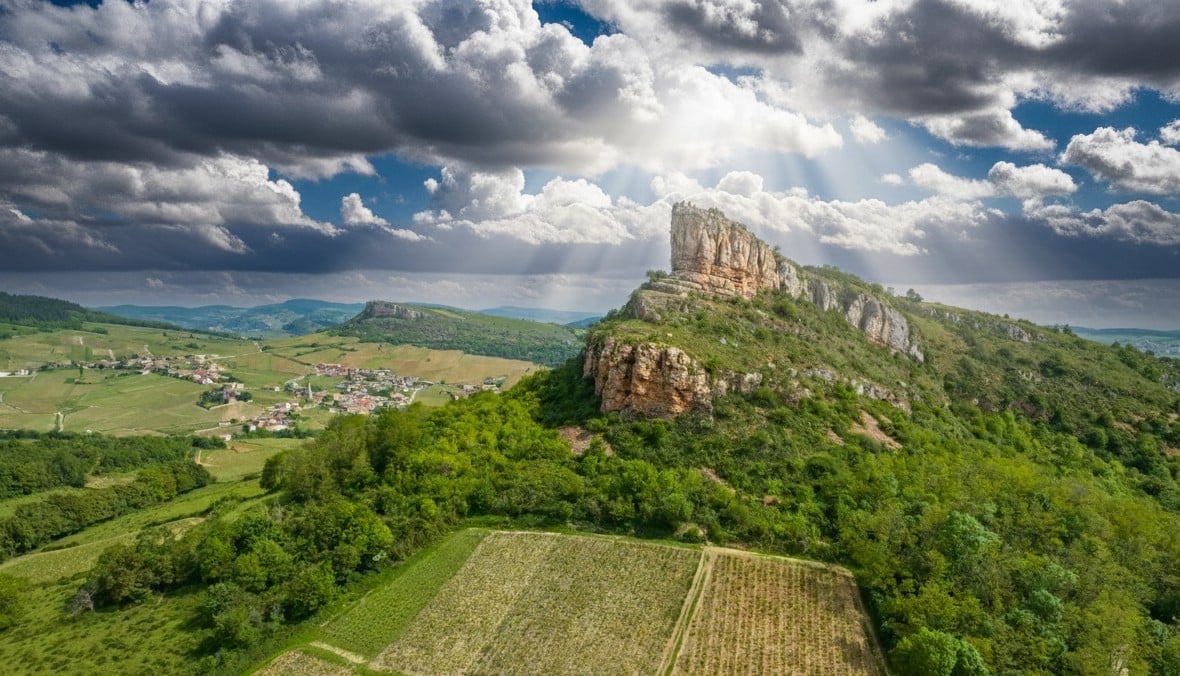
The Mâconnais Wine Region represents the vibrant, southern frontier of Burgundy, where the rolling limestone hills meet the warm breath of the Mediterranean influence. Spanning approximately thirty-five Kilometers from the town of Sennecey-le-Grand in the north to Saint-Vérand in the south, this landscape is defined by its dramatic geological outcrops, most notably the monumental Rock of Solutré. This region is the ancestral home of Chardonnay, which accounts for over eighty percent of its total plantings, producing wines that range from the crisp, mineral-driven profiles of Mâcon-Villages to the opulent, globally renowned masterpieces of Pouilly-Fuissé.
For the discerning traveller, the Mâconnais offers an authentic encounter with the Burgundy soul, blending sophisticated viticulture with a rustic, pastoral charm that remains less crowded than the northern Côte d’Or. A visit here is not merely a tasting but a deep immersion into a terroir where white oolitic limestone and unique micro-climates create some of the most versatile and celebrated white wines in the world.
Trade the shadows for a world of shimmering gold, where the Chardonnay grape sheds its reserve to reveal a soul of ripe orchard fruit, crushed flint, and wild acacia. It is a land of vertical majesty and liquid sunshine—a invitation to taste Burgundy at its most radiant and unmasked.
Some of our Popular Tours in Mâconnais Explore our handpicked selection of Mâconnais’s most sought-after wine experiences.
The Monastic Foundations and Viticultural Legacy of the Mâconnais Wine Region
The history of the Mâconnais is inextricably linked to the spiritual and agricultural power of the Cluny Abbey, founded in nine hundred and ten. At its height, Cluny was the centre of the Western world, and its Benedictine monks were meticulous architects of the vineyard, identifying the superior “climats” or specific plots that still define the hierarchy of the region today. This monastic influence ensured that viticulture survived and flourished through the Middle Ages, establishing a tradition of excellence and precise land management that predates many of the world’s most famous wine districts.
The region has also been a crossroads of trade and culture, influenced by its proximity to the Saône river, which served as a vital artery for transporting wines to northern European markets. While the French Revolution eventually saw the redistribution of these church-owned lands to local families, the deep-seated respect for the individual character of the soil remained. In the modern era, the Mâconnais has transitioned from a source of high-volume regional wine to a destination for elite, estate-bottled Chardonnay. The mid-twentieth century saw the formal recognition of its most prestigious Appellations d’Origine Contrôlée, such as Pouilly-Fuissé in nineteen hundred and thirty-six, solidifying its status on the global stage. Today, figures such as the winegrowers of the Rock of Solutré continue to push for higher classifications, including the recent establishment of Premier Cru status within key appellations, signalling a new golden age for this historic region.
The Geological Complexity and Climatic Nuances of the Mâconnais Wine Region
The terroir of the Mâconnais is a complex mosaic of reliefs created by parallel faults, separating the Bressan plain from the central massifs. The region’s defining geological feature is its limestone, particularly the crinoidal limestone of the Rock of Solutré—a former coral massif formed one hundred and ninety-five million years ago in a warm, prehistoric sea. This hard rock provides the mineral backbone and structural acidity characteristic of the region’s finest white wines.
The soil composition varies significantly across the district. On the upper slopes, one finds predominantly white oolitic limestone, ideal for focused and energetic Chardonnay. The mid-slopes feature richer combinations of marl, clay, and stony scree that contribute to the roundness and opulence of the wine. In the southern lowlands, occasional silty or sandy pockets produce lighter, more approachable styles. Climatically, the Mâconnais benefits from an oceanic climate with a distinct southern tendency, enjoying more sunshine and less rainfall than the more northern reaches of Burgundy. This extra warmth ensures consistent ripening, allowing the grapes to develop rich aromatic profiles of white flowers, citrus, and exotic fruits like mango and pineapple, while the northern winds help maintain the essential freshness required for high-quality viticulture.
Appellations of the Mâconnais Wine Region Regional Districts and Appellations
The appellation system of the Mâconnais is a sophisticated ladder of quality, designed to reflect the increasing specificity of the terroir. Understanding this structure is paramount for any collector or professional seeking to navigate the region’s vast output.
The Foundation: Mâcon and Mâcon-Villages
The regional journey begins with the Mâcon Appellation d’Origine Contrôlée. These wines can be produced throughout the district, offering a transparent and accessible introduction to the region’s style—typically fresh, floral, and bright. Moving up, Mâcon-Villages represents a significant elevation in quality, sourced from specific communes chosen for their superior limestone content. For even greater precision, twenty-seven villages are permitted to append their name to the label (e.g., Mâcon-Lugny or Mâcon-Uchizy). These “geographic denominations” serve as a bridge between regional value and communal prestige, often delivering remarkable complexity for their price point.
Pouilly-Fuissé: The Prestige Epicentre
Pouilly-Fuissé is the undisputed titan of the Mâconnais, covering the four communes of Fuissé, Solutré-Pouilly, Vergisson, and Chaintré. The vineyards here are nestled in a spectacular natural amphitheatre formed by the Rocks of Solutré and Vergisson. In twenty-twenty, the Institut National de l’Origine et de la Qualité officially recognized twenty-two climats as Premier Cru, a monumental shift that placed these vineyards on equal footing with the elite estates of the Côte d’Or. Names such as “Les Vignes Blanches” and “En Servy” now represent the pinnacle of Chardonnay expression in the south, known for their remarkable density, toasted brioche notes, and profound aging potential.
Saint-Véran: The Elegant Borderland
Surrounding the Pouilly-Fuissé enclave is Saint-Véran, an appellation split into two distinct geographical blocks. This AOC is exclusively dedicated to white wines and is renowned for its crystalline purity and vibrant acidity. The northern sector, near Davayé, tends to produce wines with a more muscular, stony character, while the southern sector, near the border of the Beaujolais, often yields rounder, more fruit-forward profiles. Saint-Véran is widely considered the “insider’s choice” for those seeking the mineral intensity of high-end Burgundy without the premium price of its more famous neighbour.
Viré-Clessé: The Northern Star
Located further north, Viré-Clessé was established in nineteen hundred and ninety-nine to unify two villages of historical excellence. This appellation is unique because it sits on a distinctive limestone ridge that provides exceptional drainage. The wines are often broader and more aromatic than those of the south, frequently displaying notes of honeysuckle, quince, and occasionally a hint of “levrouté”—a traditional style made from slightly overripe grapes that gives the wine a rich, velvety texture while remaining technically dry.
Pouilly-Vinzelles and Pouilly-Loché
Often overshadowed by their larger neighbour, these two small but mighty appellations sit on the east-facing slopes of the same limestone plateau as Pouilly-Fuissé. Pouilly-Vinzelles is famed for its vertical, saline structure and intense floral aromatics, while Pouilly-Loché tends toward a more supple, silken texture. These smaller domains are frequently the source of the region’s most exciting “boutique” discoveries for the modern connoisseur.
Flagship Varieties of the Mâconnais Wine Region
Chardonnay
Chardonnay is the undisputed sovereign of the region, occupying approximately eighty percent of the vineyards. In the Mâconnais, it expresses a unique duality: a lively mineral attack balanced by a generous, often tropical fruit core. Depending on the specific site, these wines can display notes of fresh almond, verbena, and citrus when young, evolving into complex layers of honey and dried fruits with age. The versatility of the grape here allows for various winemaking styles, from stainless steel fermentation that preserves “tension” to the traditional use of oak barrels that adds weight and spice.
Gamay
While Burgundy is often synonymous with Pinot Noir, the Mâconnais is a traditional stronghold of Gamay with white juice. Growing on the more siliceous and granitic soils toward the south, Gamay here produces fleshy, purple-hued red wines with vibrant aromas of small red fruits, peony, and violet. As these wines age, they often take on savoury notes of prune and leather, offering a robust profile that differs significantly from its expression in neighboring Beaujolais
Pinot Noir
Used less frequently than Gamay, Pinot Noir in the Mâconnais offers a delicate and elegant ruby-coloured wine with markers of red berries and white pepper. It provides a sophisticated alternative for red wine enthusiasts, often grown on specific clay-limestone plots that favour its subtle aromatic development.
A Culinary Symphony: Gastronomic Traditions of the Mâconnais Wine Region Food and Mâconnais Wine pairing
The culinary landscape of the Mâconnais is a rich tapestry woven from the bounty of the Saône river, the surrounding lush pastures, and the nearby Charolais plains. For the visitor, the gastronomy is not merely an accompaniment to the wine; it is a fundamental expression of the same limestone-rich terroir that defines the vineyards.
The Artisan Cheese Heritage
Perhaps no pairing is as iconic to the region as its goat cheeses. The Appellation d’Origine Contrôlée Mâconnais (le fromage de chèvre) is a small, firm cheese that reflects the local scrubland. When young, its creamy texture and mild tang are the perfect match for a high-acid, citrus-forward Mâcon-Villages. As the cheese matures and develops a more assertive, nutty profile, it requires the structural weight and mineral depth of an aged Saint-Véran. Similarly, the Charolais cheese, a larger goat’s milk cylinder, provides a buttery density that beautifully complements the oak-influenced richness of a Pouilly-Fuissé Premier Cru.
Poultry and Meats: The Charolais Influence
Bordering the Charolais region to the west, the Mâconnais benefits from world-class beef and poultry. The Poulet de Bresse, the only chicken in the world with an Appellation d’Origine Contrôlée, is traditionally prepared “à la crème” with morels or button mushrooms. The natural fat and silkiness of the cream sauce demand a white wine with both substantial body and refreshing acidity—qualities found in abundance in the wines of Viré-Clessé. For red wine enthusiasts, the fleshy Gamay of the Mâconnais is the traditional partner for Boeuf Bourguignon or grilled Charolais steaks, where the wine’s vibrant fruit and soft tannins cut through the richness of the meat without overwhelming its delicate flavour.
Freshwater Delicacies and Riverine Traditions
The proximity of the Saône river introduces a variety of freshwater fish to the local menu. Pikeperch (Sandre) and Perch are staples, often served with a delicate white butter sauce (Beurre Blanc) or simply pan-seared with herbs. These dishes find their ideal counterpart in the saline, focused profiles of Pouilly-Loché or Pouilly-Vinzelles, where the wine’s mineral “tension” enhances the sweetness of the fish.
Sweets and Confectionery
To conclude a regional feast, one might encounter the Gaufrette Mâconnaise, a light, rolled wafer with a hint of lemon or vanilla, or local tarts featuring the stone fruits that grow alongside the vines. These lighter desserts are sublime when paired with the rare, late-harvest “levrouté” wines of the region, which provide a honeyed finish to an authentic Burgundian experience.
What to Know before visiting Mâconnais wine region Plan Your Wine Tour to the Mâconnay
Access and International Arrival
The Mâconnais is exceptionally well-connected to major European hubs. Travellers arriving internationally should target Paris Charles de Gaulle Airport or Lyon Saint-Exupéry Airport. From Paris, the Train à Grande Vitesse offers a direct and efficient connection to the Mâcon-Loché station in approximately one hour and forty minutes. For those travelling from the south, the city of Lyon is only forty-five minutes away by rail or car, making the Mâconnais an ideal starting point for a broader Burgundy tour.
Local Navigation and Transport
While the region is compact, navigating its rural domains requires careful planning. Car rentals are available at railway stations and offer flexibility for exploring the hilltop villages. However, for a day of tastings, the benefits of a professional private driver cannot be overstated. Private transport allows guests to focus entirely on the oenological experience without the risks of navigating unfamiliar, narrow roads. Furthermore, local drivers possess the regional knowledge to find discreet estates that are not marked on standard navigation systems.
Optimal Timing
The most pleasant weather for a visit occurs between May and mid-July, when the vineyards are in bloom, and from September to mid-October during the harvest season. The harvest is a period of intense activity and excitement, though travellers should note that winemakers have limited availability for long conversations during this time. Conversely, visiting in the winter months of November through March offers a quiet, intimate experience, often allowing for more in-depth discussions with estate owners as the vines rest and the work moves into the cellar.
Tasting Etiquette and Visitor Tips
Professional standards are expected in the cellars of the Mâconnais. For Premier Crus and prestigious domains, booking lead times of at least several weeks are crucial, as many estates operate by appointment only. Visitors should arrive punctually, avoid wearing heavy perfumes that interfere with the wine’s bouquet, and understand that while tasting is educational, the purchase of a few bottles is a standard gesture of appreciation for the winemaker’s time.