Table of Contents
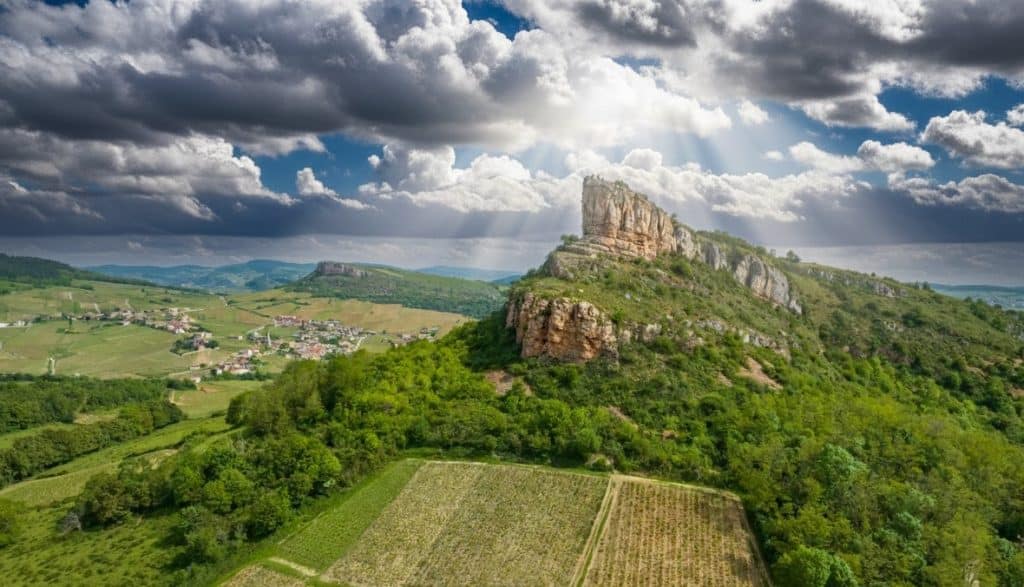
The name Mâconnais immediately conjures the scent of sun-drenched white blossoms, the zest of Meyer lemon, and the distinct, flinty minerality of a limestone ridge. It is the “Southern Gateway” to Burgundy, where the climate begins to soften, the landscape opens into rolling meadows, and the Chardonnay grape achieves a weight and golden opulence that is uniquely its own. To understand the Mâconnais is to walk through 2,000 years of history, etched into the monumental cliffs of Solutré and Vergisson
Step of the History Book
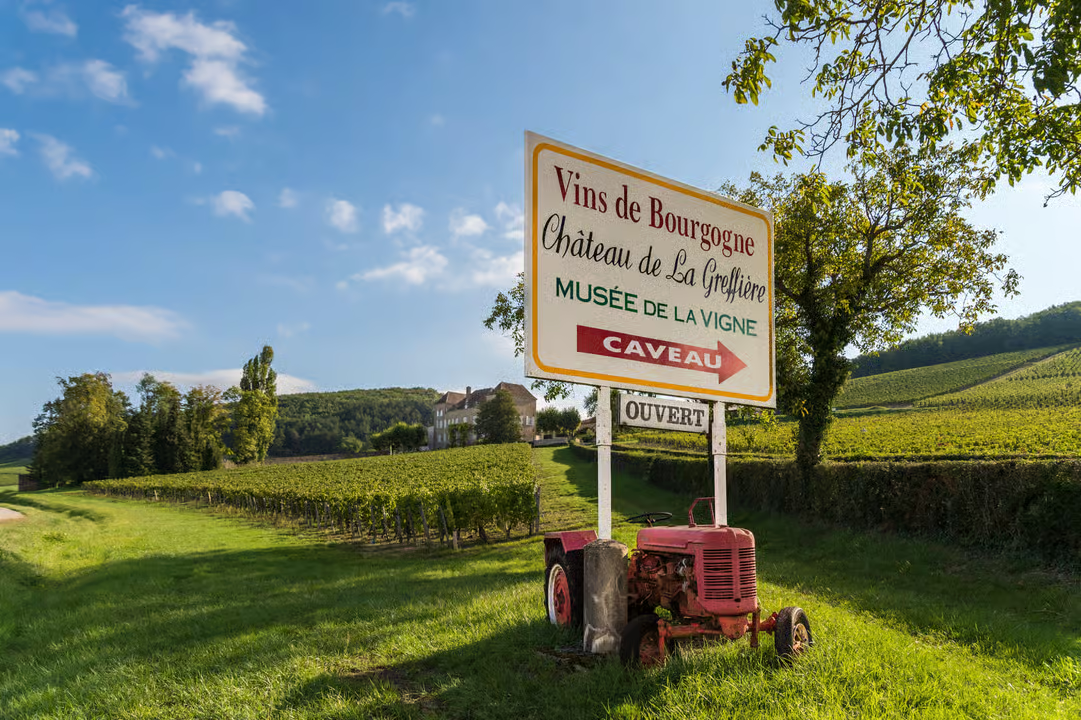
The Roman Threshold: Viticultural Foundations (50 BC – 476 AD) A Frontier of Gaul: Planting the First Grafts in the Matisco Region
Long before the French border existed, the Mâconnais served as a strategic military and commercial corridor for the Roman Empire. Following Julius Caesar’s conquest of Gaul, Roman forces recognized the region’s potential, particularly along the fertile banks of the River Saône. They established the city of Matisco (modern-day Mâcon) as a vital hub between the Alps and the heart of Burgundy.
Archaeological evidence suggests that the Romans were the first to systematically plant vines on these slopes. They utilized the Saône as a liquid highway to transport wine to the thriving commercial center of Lugdunum (Lyon). During this era, viticulture was a tool of Romanization; the Vignoble was not just an agricultural endeavor but a symbol of Mediterranean civilization taking root in northern soil.
The Romans introduced pruning techniques and the concept of a Cella Vinaria (storage facility), laying the literal and technical groundwork for the centuries of winemaking to follow. They favored the well-drained limestone and clay soils that define the terroir of the region today. This Roman foundation ensured that even after the fall of the Empire, the culture of the vine remained deeply embedded in the Mâconnais landscape.
The Monastic Masterpiece: The Cluny Legacy (909 – 1300) Ora et Labora: The Monks Who Mapped the Terroir of the Southern Vignoble
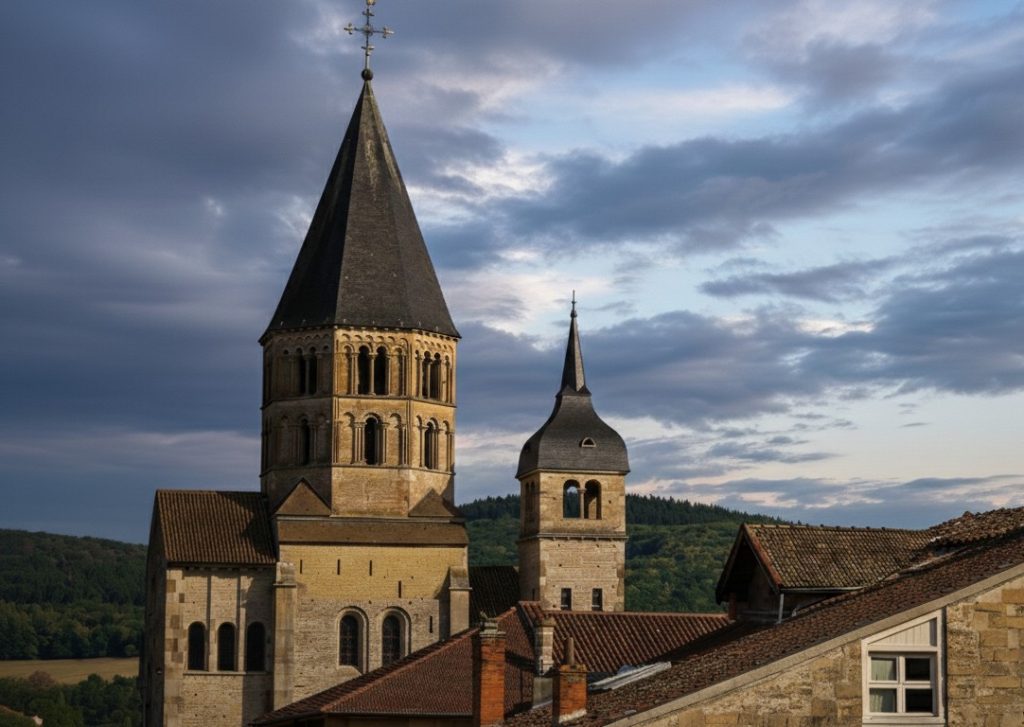
Cluny village
The true identity of the Mâconnais was forged in 909 AD with the founding of the Abbey of Cluny. Established by William I, Count of Mâcon, Cluny became the most powerful monastic order in Europe, and its influence on wine history is foundational. Under the Benedictine rule of Ora et Labora (pray and work), the monks became the region’s first true Vignerons.
The monks of Cluny were obsessive observers of the land. They were among the first to identify the nuances of Terroir—noting how different plots produced different qualities of wine. They categorized these into Cuvées de Moines (wines for the monks from lower slopes) and the more prestigious Cuvées des Cardinaux. They established vast estates, including the celebrated Pouilly-Fuissé area, and even owned prestigious vineyards further north in the Côte d’Or.
Their meticulous record-keeping and systematic approach to vine management transformed viticulture from a survivalist practice into a refined art form. They perfected the use of the Pressoir (wine press) and improved fermentation methods in cold stone cellars. This monastic era defined the boundaries of the Mâconnais Appellations centuries before legal frameworks existed.
The Royal Endorsement: Claude Brosse and the Sun King (1660 – 1789) The Legendary Journey: How a Giant Vigneron Conquered the Court of Versailles
While the monks established the technical quality of the Vignoble, it was a humble and physically imposing Vigneron named Claude Brosse who brought the Mâconnais to the height of global fashion. In 1660, frustrated by the regional isolation and the monopolistic grip of the northern Négociants on the Parisian market, Brosse undertook an audacious feat of marketing that has since become a cornerstone of local lore.
He loaded two massive casks of his finest white wine onto a heavy ox-drawn cart and began a grueling, thirty-day journey over 250 miles of rough roads to reach the Court of Versailles. Standing over six feet tall—a giant by 17th-century standards—Brosse made his presence known at the royal chapel during a Sunday Mass attended by Louis XIV. His stature caught the “Sun King’s” eye, and the farmer was granted a rare audience with the monarch.
Upon tasting the wine, Louis XIV was struck by its vibrant acidity and golden clarity, which stood in stark contrast to the heavier, oxygenated wines typically served at court. The King’s public approval acted as an immediate catalyst for the region’s economy. This royal endorsement led to the rise of the Mâcon name in the salons of Paris, encouraging the development of large Maisons and merchant houses that specialized in transporting these “Royal Whites” across Europe.
The success of Claude Brosse effectively broke the northern monopoly and established the Mâconnais as a prestigious source of Chardonnay. This commercial boom during the Ancien Régime allowed local families to invest in better equipment and more extensive cellars, solidifying the economic importance of villages like Pouilly, Fuissé, and Vinzelles. To this day, Claude Brosse is celebrated as the patron saint of Mâconnais marketing—the man who proved that the quality of the soil could speak directly to the King.
Revolution and Ruin: From Napoleon to Phylloxera (1789 – 1900) The Great Fragmentation: Land Redistribution and the Battle Against the Great Blight
The French Revolution of 1789 brought a seismic shift to the Vignoble. The vast monastic estates of Cluny were confiscated and auctioned off to local farmers. This transition was finalized by the Napoleonic Code of 1804, which mandated that land be divided equally among heirs. This led to the extreme fragmentation of the vineyards, a “jigsaw puzzle” of ownership that defines the region today.
However, the late 19th century brought a near-catastrophe: Phylloxera. This microscopic aphid destroyed nearly 40% of French vineyards, leading to a massive economic shock. The Mâconnais was forced to reinvent itself. Vignerons eventually saved the region by grafting traditional French vines onto phylloxera-resistant American rootstocks.
This era also saw the rise of the Cave Coopérative (cooperative cellars), where small growers pooled their resources to survive. These cooperatives became the backbone of the Mâconnais wine industry, ensuring that small-scale family farming remained viable despite the technical challenges of the era. It was a period of resilience that paved the way for modern quality standards.
The Modern Renaissance: AOCs and Premier Crus (1937 – Present) The Golden Age: Achieving Legal Distinction and the Rise of Organic Viticulture
The 20th century was defined by the quest for formal recognition. The AOC Mâcon was established in 1937, followed by specific village Appellations like Saint-Véran and Viré-Clessé. The region moved away from being a source of bulk “bistro wine” to a producer of world-class, terroir-driven Chardonnay.
A historic milestone was reached in September 2020, when 22 Climats within the Pouilly-Fuissé appellation were officially granted Premier Cru status. This was the first time the Mâconnais received such a high-level classification, finally placing it on equal footing with the prestigious slopes of the Côte de Beaune.
Today, the focus has shifted toward Sustainability and Biodynamics. As climate change alters ripening patterns, a new generation of vignerons is exploring ways to preserve the freshness and acidity that characterize Mâconnais wine. Future challenges include managing water stress and maintaining the region’s signature flinty character amidst warming temperatures.
The Horizon: Future Challenges and Prospective (2026 – Beyond) The New Frontier: Climate Adaptation and the Evolution of the Southern Vignoble
As we look toward the future, the Mâconnais faces a dual challenge: maintaining its historical identity while adapting to a rapidly changing environment. Climate change is the most pressing “Frontier” for the modern Vigneron. Rising average temperatures are pushing harvest dates earlier and challenging the iconic freshness of the region’s Chardonnay.
Producers are now investing heavily in Technical Evolution, such as canopy management and the exploration of cooler north-facing slopes. The prospective future of the Mâconnais lies in its commitment to Biodynamics and Organic Viticulture, aiming to strengthen the resilience of the vines and the health of the limestone soils.
Furthermore, the “Premier Cru Effect” is expected to ripple across neighboring villages like Saint-Véran, encouraging a deeper dive into Climat-based winemaking. The next era of Mâconnais history will likely be defined by a movement toward even greater precision—where technology and tradition meet to safeguard the “Golden Gateway” for generations to come
Mâconnais Wine History: The Enduring Spirit of the Mâconnais
The history of the Mâconnais is more than a timeline of dates; it is a narrative of human persistence and geological fortune. From the Roman soldiers who first recognized the potential of these slopes to the Cluniac monks who meticulously mapped the terroir, the region has always been a place of discovery