Table of Contents
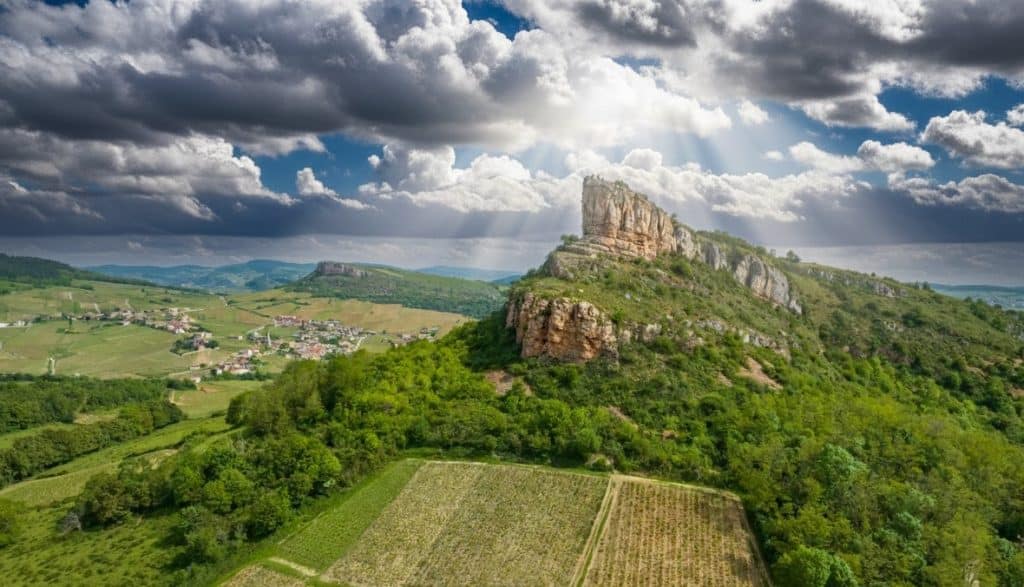
Nestled between the Côte Chalonnaise to the north and the rolling hills of Beaujolais to the south, the Mâconnais is the most sun-drenched and exuberant sector of Burgundy. This is a land where the rigid limestone escarpments of the north soften into a Mediterranean-influenced landscape, marked by the iconic “Roche de Solutré.” For the wine enthusiast, the Mâconnais offers the most diverse expression of Chardonnay in the world—ranging from the crisp, floral energy of northern villages like Mancey to the opulent, chiseled power of the southern crus. Historically seen as a source of high-quality “everyday” Burgundy, the region has undergone a dramatic prestige revolution, culminating in the official recognition of its first Premier Crus in 2020. Whether you are seeking the saline minerality of a mountain-grown white or the joyful, berry-laden fruit of a Gamay-based Mâcon rouge, the appellations of the Mâconnais represent the perfect intersection of Burgundian tradition and solar generosity.
Dive into the Heart of Mâconnais
The Regional The Regional Mâconnais Appellations
Mâcon AOC (White, Red, Rosé)
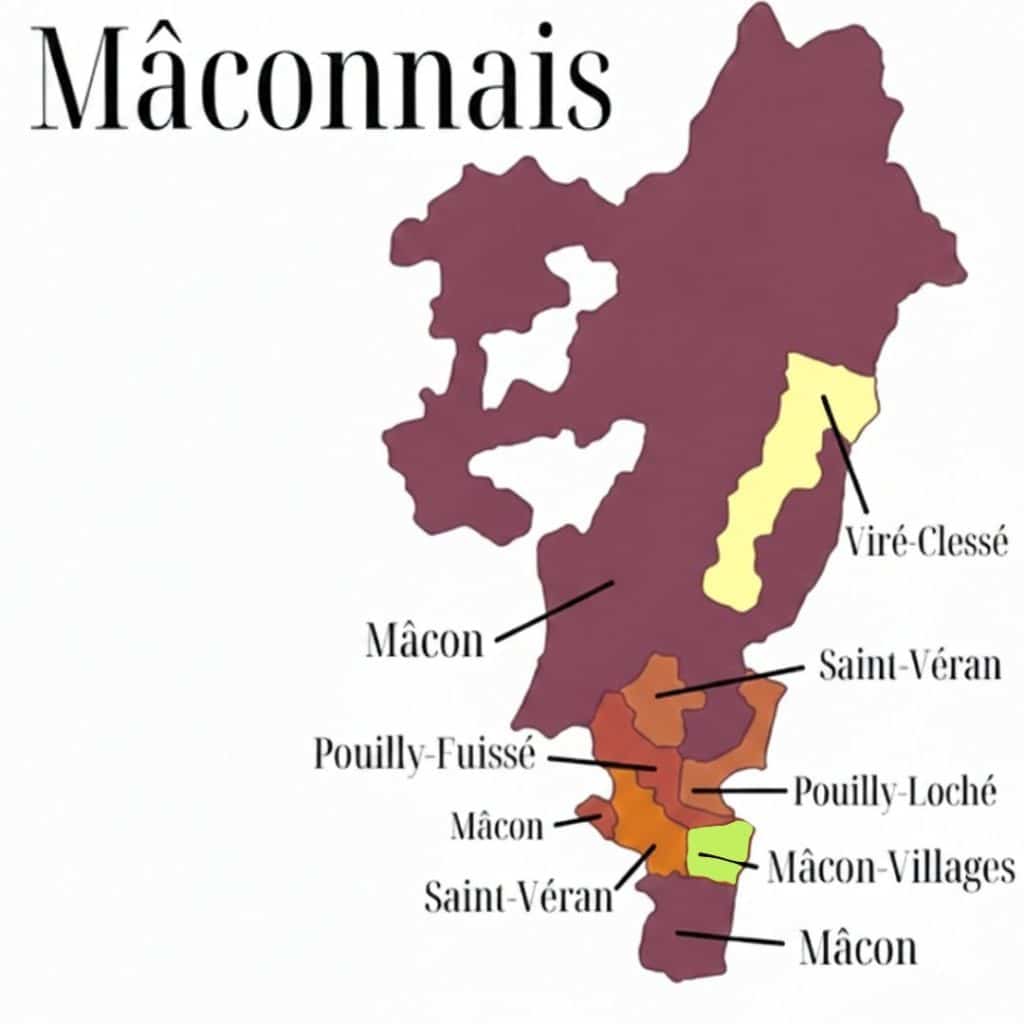
The Mâcon AOC serves as the foundational pillar of the region’s identity, representing a vast and diverse landscape that stretches from the north near Tournus to the southern border with Beaujolais. Covering nearly 4,000 hectares, this regional appellation is unique in Burgundy for its significant production of all three colors.
The white wines, crafted exclusively from Chardonnay, are celebrated for their approachable charm, often showing brilliant pale gold hues with silver highlights. On the nose, they offer a bouquet of white flowers, lemongrass, and acacia, while the palate is typically fresh, supple, and well-balanced. The reds and rosés, predominantly made from Gamay (though Pinot Noir is permitted), reflect the region’s southern influence.
Mâcon Rouge is known for its “joyful” aromas of red fruits like currants and raspberries, often possessing a fleshy texture and a purple-shimmering robe. Unlike many other parts of Burgundy, the Mâconnais has historically embraced Gamay, resulting in wines that offer a bridge between the structure of Burgundy and the fruit-forward nature of Beaujolais.
Style and Aging Potential: The whites are generally dry, light, and intended for early enjoyment, typically reaching their peak within 2 to 3 years. The reds are fruity and spontaneous, benefiting from a short cellar life of 1 to 3 years. Top producers can produce Mâcon AOC wines with a structure that holds up well for up to 5 years.
Mâcon-Villages AOC (White only)
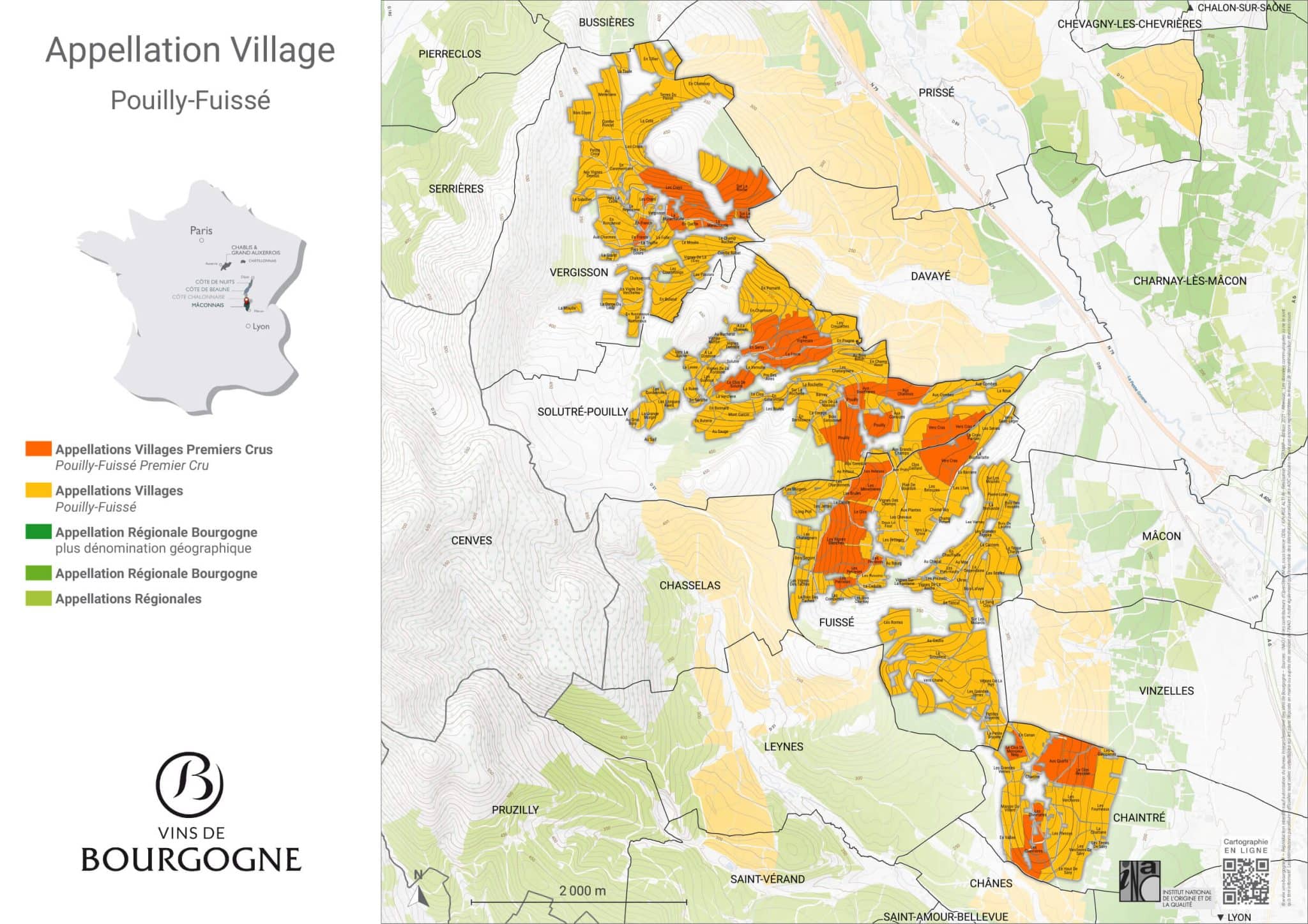
Maconnais wine region map. Full map can be found at Vins de Bourgogne
The Mâcon-Villages AOC represents a significant step up in the hierarchy of quality, reserved exclusively for white wines made from Chardonnay. This appellation covers specific communes identified for their superior potential to express the region’s limestone-rich terroir. Spanning approximately 1,800 hectares, Mâcon-Villages wines are characterized by a greater complexity and a more pronounced mineral backbone compared to the generic Mâcon AOC.
The soils here are predominantly brown limestone or silty-clay, which lend the wines a characteristic “nervosity” and floral elegance. In the glass, these wines often display a deeper straw-yellow color with greenish reflections. The aromatic profile is sophisticated, featuring notes of honeysuckle, broom, and citrus fruits like grapefruit or mandarin.
On the palate, the wines strike a masterful balance between roundness and acidity, often finishing with nuances of pine, quince, or even a salty, anise-inflected mineral note. This is the “workhorse” of quality white Burgundy, offering exceptional value and a true sense of place.
Style and Aging Potential: The style is typically fresh, floral, and “indulgent” yet forthright. While they can be enjoyed immediately, they truly blossom after 2 to 4 years of bottle age. Exceptional cuvées aged on fine lees can age gracefully for 5 to 7 years.
Mâcon + Geographical Denominations (DGC)
Mâcon-Azé
Situated in a valley that opens towards the Saône, Azé benefits from a unique microclimate that preserves freshness even in warm vintages. The terroir consists of prehistoric limestone and clay. The white wines are characterized by an intense aromatic profile of white flowers, peach, and pear, often with a subtle hint of grapefruit. On the palate, they show a lively attack followed by a rounded, fleshy texture.
The reds, made from Gamay, are particularly fruit-forward with soft tannins. Style & Aging: Balanced and aromatic. The whites are best enjoyed within 3–5 years, while the reds are delightful in their youth (2–4 years).
Mâcon-Bray
The vineyards of Bray are perched on hillsides overlooking the Grosne valley. The soil is predominantly limestone with flint (silex) in certain areas, which imparts a distinct mineral “nervosity” to the wines. Mâcon-Bray whites are typically high-toned with citrus and flinty notes, while the reds show a rustic elegance with aromas of wild berries and forest floor. It is one of the smaller, more intimate denominations of the northern Mâconnais.
Style & Aging: Mineral and precise. Peak enjoyment for both colors is usually between 2 and 5 years.
Mâcon-Burgy
Burgy is located on a steep, south-facing limestone ridge. This exposure ensures maximum ripeness, producing white wines that are exceptionally sunny and golden. The nose often reveals notes of acacia honey, ripe yellow plum, and sometimes a tropical touch of pineapple. The palate is concentrated and rich but supported by a firm chalky backbone. Despite its small size, Burgy produces wines with significant personality and weight.
Style & Aging: Opulent and structured. These wines age gracefully, reaching their peak at 4–6 years.
Mâcon-Bussières
Bussières lies at the foot of the iconic Rocks of Solutré and Vergisson. The terroir is a complex mix of clay and limestone, producing white wines with a remarkable “fatness” and aromatic complexity. Expect scents of toasted almond, honeysuckle, and ripe lemon. The reds from Bussières are often deeply colored, offering notes of black cherry and spice, reflecting the high-quality Gamay clones planted on these slopes.
Style & Aging: Rich and persistent. The whites can evolve beautifully over 5 years; the reds benefit from 3–5 years of cellar time.
Mâcon-Chaintré
Occupying the transition zone between the Mâconnais and the Beaujolais, Chaintré shares much of its terroir with the prestigious Pouilly-Fuissé. The wines are powerful and generous, often showing a “buttery” character even without heavy oak. White flowers and stone fruits dominate the bouquet. The reds are supple and silky, often considered some of the most “feminine” and approachable reds in the region.
Style & Aging: Generous and round. Excellent early appeal but can age for 4–7 years in good vintages.
Mâcon-Chardonnay
The village that shares its name with the world’s most famous white grape produces wines that are a masterclass in varietal purity. The soils are very stony limestone, which creates a wine of high aromatic intensity—notes of white orchard fruits and a distinct saline finish are common. There is a sense of “prestige” here, and the wines often have a sophisticated, silky texture that feels more elevated than a standard regional Mâcon.
Style & Aging: Pure and elegant. Best enjoyed between 3 and 6 years.
Mâcon-Charnay-lès-Mâcon
Located on the doorstep of the city of Mâcon, this denomination benefits from gentle slopes and a warm climate. The white wines are famously “friendly,” showing high-pitched notes of citrus and white blossom with a light, dancing acidity. The reds are notable for their vibrancy and bright red-currant fruit. It is a denomination that prioritizes freshness and immediate pleasure over heavy structure.
Style & Aging: Fresh and floral. Intended for enjoyment within 2–4 years to capture the primary fruit.
Mâcon-Cruzille
One of the most northerly DGCs, Cruzille is known for its austere, high-altitude limestone plateaus. The wines are famously “vertical”—lean, high in acidity, and deeply mineral. The whites often smell of wet stones and green apples, while the reds (some of which are among the most sought-after in the region) are spicy, herbal, and deeply concentrated. Cruzille is often the choice for those seeking the “cool-climate” side of the Mâconnais.
Style & Aging: Tense and mineral. These wines require time; peak is often at 5–8 years.
Mâcon-Davayé
Davayé sits in the shadow of the Rock of Vergisson, sharing the same clay-limestone soils as the great crus. The whites are remarkably concentrated, often showing a “savory” side with notes of fennel and anise alongside ripe peach. They possess a broad, mouth-filling texture. Davayé is widely recognized for offering Pouilly-Fuissé quality at a more accessible price point.
Style & Aging: Broad and savory. Very consistent; peaks at 3–6 years.
Mâcon-Fuissé
This DGC represents the plots within the village of Fuissé that do not meet the Pouilly-Fuissé AOC criteria. However, the quality remains exceptional. The wines are distinguished by their power and aromatic depth, often displaying notes of brioche, hazelnut, and ripe citrus. They are less mineral than Vergisson but more opulent and structured than many northern Mâconnais villages. Style & Aging: Powerful and complex. Can comfortably age for 5–7 years.
Mâcon-Igé
Igé is famous for its two distinct valleys, which create diverse microclimates. The wines are typically very fruity and supple. The whites are known for their aromas of lily of the valley and pear, while the reds are exceptionally smooth with very little tannin, focusing instead on juicy raspberry and strawberry flavors. It is a denomination that yields very harmonious, easy-drinking wines.
Style & Aging: Harmonious and fruity. Peak at 2–4 years.
Mâcon-La Roche-Vineuse
The “Vineous Rock” is aptly named, producing some of the most aromatically “loud” wines in the region. The limestone cliffs above the village reflect heat onto the vines, resulting in very ripe fruit. The whites are exotic, often showing notes of mango or apricot, while the reds are robust and structured. It is a village that consistently delivers high intensity and a long, warming finish.
Style & Aging: Intense and exotic. The whites age well over 4–6 years.
Mâcon-Loché
Loché is a small enclave that produces wines of great tension. The soil is a mix of ancient alluvium and limestone. The whites are precise, often with a “stony” character and notes of lemon zest and white tea. They lack the opulence of Fuissé but gain in terms of refreshment and linear structure. It is a favorite among connoisseurs of “clean” Chardonnay.
Style & Aging: Linear and refreshing. Best at 3–5 years.
Mâcon-Lugny
Lugny is arguably the most commercially famous Mâcon denomination. Its vast limestone plateaus produce wines that are the epitome of “Classic Mâcon.” The whites are round, floral, and incredibly consistent, often featuring a hint of honeyed sweetness on the finish. Lugny is the benchmark for the region’s ability to produce high-quality, reliable white Burgundy on a larger scale.
Style & Aging: Round and reliable. Best enjoyed young, between 2 and 4 years.
Mâcon-Mancey
The northernmost outpost, Mancey sits on the edge of the Côte Chalonnaise. The climate is cooler here, leading to wines with higher acidity and bright, crunchy fruit profiles. The whites are zesty and floral, while the reds are light-bodied and refreshing, often reminiscent of a young Pinot Noir even when made from Gamay.
Style & Aging: Zesty and bright. Peak at 2–4 years.
Mâcon-Milly-Lamartine
Named after the famous poet Alphonse de Lamartine, this village produces wines of poetic elegance. Perched at a higher altitude, the vines yield wines with a distinct “airy” quality. The whites are delicate, with scents of jasmine and fresh herbs. The palate is light but incredibly persistent, defined by a fine-grained acidity that keeps the wine vibrant.
Style & Aging: Delicate and elegant. Ages beautifully over 3–6 years.
Mâcon-Montbellet
Montbellet is located near the Saône, where the soils are lighter and more sandy. This results in wines that are remarkably aromatic and “open” from a young age. The whites feature white-fleshed fruit and a soft, rounded finish. It is a denomination that values charm and immediate accessibility over power or long-term cellaring.
Style & Aging: Charming and accessible. Best within the first 3 years.
Mâcon-Péronne
Péronne is situated on a limestone plateau that produces very “upright” wines. There is a characteristic minerality here that manifests as a flinty or smoky note. The fruit profile is usually green apple and citrus. These wines are excellent food companions due to their dry, clean finish and structural integrity.
Style & Aging: Structural and clean. Peaks at 3–5 years.
Mâcon-Pierreclos
Pierreclos is famous for its steep slopes and diverse geology, including some granitic soils. This diversity allows for whites with great aromatic range (from floral to mineral) and reds that are remarkably deep and spicy. The Mâcon-Pierreclos reds are often cited as some of the most serious and complex Gamays in the entire Mâconnais.
Style & Aging: Serious and complex. The reds, in particular, can age for 5–8 years.
Mâcon-Prissé
Prissé shares the landscape of the southern crus. Its wines are notable for their balance—combining the richness of the south with a consistent acidity. The whites are often characterized by notes of acacia and ripe pear, with a smooth, well-integrated palate. It is a highly reliable denomination for high-quality, “everyday” luxury Burgundy.
Style & Aging: Balanced and consistent. Peak enjoyment at 3–5 years.
Mâcon-Saint-Gengoux-le-National
This medieval village produces wines that reflect its historic importance. The terroir is classic limestone, yielding wines with a firm structure and good aromatic definition. The whites are typically floral with a touch of mint, while the reds are fruity and straightforward. It is a northern denomination that prides itself on traditional, honest expressions of Chardonnay and Gamay.
Style & Aging: Traditional and firm. Best at 2–5 years.
Mâcon-Serrières (Red/Rosé only)
The only DGC reserved exclusively for red and rosé wines. The sandy, granitic soils here are perfect for the Gamay grape. The wines are incredibly aromatic, bursting with notes of peony, raspberry, and black pepper. Unlike the limestone-influenced reds of the north, Serrières is more “Cru Beaujolais” in style—vibrant, silky, and immensely fragrant.
Style & Aging: Fragrant and silky. Best enjoyed fresh (1–3 years) to preserve the floral notes.
Mâcon-Solutré-Pouilly
Produced from the younger vines or specific plots not included in the Pouilly-Fuissé AOC within this famous village. These wines benefit from the world-class limestone soils of the “Rock.” They are dense, mineral, and highly sophisticated, often showing a “salty” finish that is a hallmark of this prestigious terroir.
Style & Aging: Sophisticated and mineral. High aging potential for a Mâcon DGC (5–8 years).
Mâcon-Uchizy
Uchizy is renowned for its sun-drenched east-facing slopes. This exposure leads to very early ripening and wines with a distinct “exotic” character. Notes of honeysuckle, lemon curd, and white peach are common. Despite the ripeness, the wines maintain a lovely freshness, making them some of the most popular and “delicious” whites in the region.
Style & Aging: Sunny and exotic. Very expressive in youth (2–5 years).
Mâcon-Vergisson
Vergisson is the highest and coolest of the southern villages. The wines are the “athletes” of the Mâconnais—lean, muscular, and incredibly mineral. The palate is often a explosion of citrus and crushed stone. For lovers of high-acid, terroir-driven Chardonnay, Mâcon-Vergisson is often the gold standard.
Style & Aging: Muscular and mineral. Excellent aging potential (5–10 years).
Mâcon-Verzé
Verzé is a valley known for its limestone-clay soils that produce very “pure” expressions of Chardonnay. The wines are often made with minimal intervention to preserve their crystalline fruit and delicate floral aromas. There is a famous “energy” to Verzé wines—they feel alive and vibrant on the tongue.
Style & Aging: Crystalline and energetic. Peak at 3–6 years.
Mâcon-Vinzelles
Sharing the same hillside as the Pouilly-Vinzelles AOC, this DGC offers a similar profile of elegance and power. The wines are noted for their aromatic finesse—white flowers and citrus—and a palate that is both rich and precisely detailed. It is a sophisticated end to the Mâconnais DGC list, representing the height of southern quality.
Style & Aging: Elegant and detailed. Can evolve gracefully over 5–7 years.
The Communal Appellations (Villages) Pouilly, Saint-Véran, Viré-Clessé
Pouilly-Fuissé AOC
Pouilly-Fuissé is the undisputed crown jewel of the Mâconnais, an appellation that produces some of the most prestigious white wines in all of Burgundy. Situated at the southern tip of the region, the vineyard is dramatically cradled at the foot of the monumental limestone cliffs of the Rocks of Solutré and Vergisson.
This AOC covers roughly 760 hectares across four distinct communes: Fuissé, Solutré-Pouilly, Vergisson, and Chaintré. The terroir is a complex geological mosaic of Jurassic limestone and clay, with specific parcels featuring schist and volcanic elements. This diversity creates a wine of immense power, structural integrity, and aromatic depth.
Pouilly-Fuissé is distinguished by its opulent texture and mineral tension. The wines are typically rich, displaying a complex bouquet of toasted brioche, hazelnuts, and ripe citrus, often complemented by a subtle, well-integrated oak influence. In 2020, the appellation achieved a historic milestone with the official recognition of 22 “Premier Cru” climates—the first such distinction in the Mâconnais.
Style and Aging Potential: The style is a masterclass in balance—delicate yet powerful. These wines are built for longevity. While approachable around 3 years, the best examples reach their zenith between 5 and 12 years.
Pouilly-Fuissé Premier Cru
The elevation of 22 “climats” to Premier Cru status in September 2020 marked a revolutionary moment for the Mâconnais, ending a decade-long quest by the Union des Producteurs de Pouilly-Fuissé to prove that these specific parcels possess a world-class terroir equivalent to the Côte d’Or.
These 22 climats, representing roughly 24% of the total AOC surface area, were selected based on precise criteria: historical reputation, detailed soil analysis (primarily Bajocian and Bathonian limestone), and the consistent market value of the wines produced. These vineyards are the elite engine of the region, where the Chardonnay grape achieves a level of crystalline density and “saline” length that is unmatched in Southern Burgundy.
The 22 recognized climats are distributed across the four communes, each offering a unique geological signature. In Chaintré, the climats like Le Clos de Monsieur Noly and Les Quarts are known for their southern exposure and generous, fleshy fruit. In Fuissé, the heart of the AOC, climats such as Le Clos, Les Ménétrières, and Vers Cras sit on complex clay-limestone that produces the most powerful and “buttery” wines of the appellation. Solutré-Pouilly contributes climats like La Frérie and En Servy, noted for their chiseled, upright structure. Finally, Vergisson hosts the highest-altitude sites like Les Crays and Sur la Roche, where the limestone is at its most pure and the wines at their most vibrant and “stony.”
The 22 official Premier Cru climats represent the absolute elite. These plots were selected for their unique ability to produce wines of superior concentration. The recognized climats are:
-
Chaintré: Le Clos de Monsieur Noly, Les Quarts, Les Chevrières, Le Clos Reyssier.
-
Fuissé: Le Clos, Les Vignes Blanches, Les Ménétrières, Vers Cras, Les Reises, Les Perrières, Au Vigney, Pouilly.
-
Solutré-Pouilly: La Frérie, Le Clos de Solutré, Au Vignot, En Servy, Aux Chailloux, Pouilly, Vers Cras.
-
Vergisson: Les Crays, La Maréchaude, Sur la Roche, En France.
Producing a Premier Cru requires a commitment to excellence that goes beyond the soil. Yields are strictly limited to 56 hectoliters per hectare (compared to 60 for the communal AOC), and the wines must undergo a minimum of 12 months of aging, often in oak barrels to develop their characteristic “brioche” and “roasted almond” nuances. In the glass, these wines are deep gold with emerald highlights. The nose is a sophisticated symphony of acacia, ripe peach, grilled nuts, and a distinctive “smoky” minerality. On the palate, they possess a “vertical” energy—a tension that carries the weight of the fruit across a long, savory finish.
Style and Aging Potential: The style of Pouilly-Fuissé Premier Cru is defined by its “noble” structure. These are not wines for quick consumption; they require time to shed their youthful oak influence and reveal the complexity of the limestone bedrock. While they show beautiful floral notes at 4 years, they truly enter their “golden age” between 7 and 15 years. As they age, they develop tertiary notes of white truffle, honey, and candied citrus. They should be served at 12°C and paired with the finest gastronomy: lobster thermidor, veal sweetbreads, or aged Comté cheese.
Pouilly-Vinzelles AOC
A small but mighty neighbor to Fuissé, this 52-hectare appellation is often described as the “elegant sibling” of the southern Mâconnais. The vineyards are exclusively east-facing, situated on a gently sloping hillside composed of Bajocian limestone and iron-rich clay. This specific soil composition imparts a unique “finesse” and a distinctly floral aromatic profile. Mâconnais wine lovers often seek out Vinzelles for its consistency and its ability to combine the richness of the south with a high-toned, ethereal quality.
The wines frequently exhibit notes of candied lemon, white peach, and acacia flower. Because of its small size and focused production, the quality is remarkably high across the board, with many estates practicing organic or biodynamic viticulture to preserve the delicacy of the fruit. This AOC proves that power is nothing without grace; the palate is often silky with a long, shimmering finish that suggests white blossoms and cool stones.
Style and Aging Potential: Sophisticated and remarkably graceful. While beautiful in their youth due to their floral forwardness, they possess the structural acidity and mineral “sap” to age for 5–10 years. In older vintages, they develop a fascinating buttery character that remains fresh.
Pouilly-Loché AOC
The smallest of the Pouilly trio, Loché is an enclave of just 32 hectares. It is a terroir of transition, where the ancient alluvial soils of the Saône valley meet the limestone slopes. This creates a wine that is noticeably different from its neighbors—it is often the most “tense” and chiseled of the three. Pouilly-Loché is prized for its mineral precision and “nervosity.”
The aromatics are centered around grapefruit zest, white tea, and crushed stones. It lacks the broad-shouldered opulence of Fuissé, opting instead for a linear, vertical structure that cleanses the palate. It is a favorite among sommeliers for its versatility with food, particularly raw seafood, sushi, or sharp goat cheeses. The limited production means these wines are often “insider secrets,” representing some of the most intellectual expressions of Chardonnay in the Mâconnais.
Style and Aging Potential: Lean, chiseled, and exceptionally mineral. It reaches its peak between 4 and 8 years. It is a wine that rewards patience, as the “tight” acidity of its youth relaxes into a complex, saline harmony over time.
Saint-Véran AOC
Created in 1971, the Saint-Véran AOC is a geographically fascinating appellation that literally wraps around Pouilly-Fuissé like a belt, split into two separate north and south islands. It covers seven communes, including Prissé and Davayé. The terroir is predominantly chalky limestone, which yields wines that are the epitome of “crisp” white Burgundy. Saint-Véran is often the first choice for those who find Pouilly-Fuissé too heavy; it emphasizes vibrant, crunchy fruit and a clear, saline finish.
The wines are typically fermented in stainless steel or large neutral oak to preserve their primary energy. On the nose, they offer a basket of green apple, pear, and citrus blossoms. The appellation has gained immense popularity for providing a “Cru” experience with a more accessible and energetic profile.
Style and Aging Potential: Vibrant, energetic, and clean. While very consistent, they are best enjoyed fresh between 3 and 6 years of age to maximize their floral charm and “zesty” personality. They are the ultimate companion for an al fresco lunch or creamy poultry dishes.
Viré-Clessé AOC
Viré-Clessé is the most recent communal AOC in the region, established in 1999 to recognize the exceptional quality of two specific villages in the northern Mâconnais. This AOC is unique because its limestone is particularly rich in “marnes” (marl), which produces wines with a distinct “mineral-sweet” balance. Unlike the Pouillys, Viré-Clessé often has a hint of exoticism—notes of lemon verbena, mint, and even white pepper.
It is famous for its “indulgent” mouthfeel; even when bone dry, the wine feels silky and substantial. It is widely considered the best value-to-quality ratio in the entire region, offering a complexity that rivals much more expensive wines from the north. Historically, some producers here allowed a touch of residual sugar (the “Levrouté” style), and that heritage of ripeness continues to define the AOC’s rounded, generous character today.
Style and Aging Potential: Zesty, round, and aromatically complex. It evolves beautifully, showing its best side between 3 and 7 years. Its unique aromatic profile makes it an excellent partner for spicy Asian cuisine or fusion dishes.
The Generic Bourgogne Appellations
Bourgogne AOC
Produced throughout the region, this is the standard bearer for Burgundy. In the Mâconnais, Bourgogne Blanc is 100% Chardonnay, while the Rouge is typically Pinot Noir. It serves as the “entry point” to the Burgundian style, emphasizing varietal purity and the general characteristics of the vintage. These wines are often a blend of various plots, providing a consistent “regional” character that is both approachable and educational for newcomers to the region. Style/Aging: Balanced and approachable; 2–4 years.
Bourgogne Aligoté AOC
The “other” white grape of Burgundy, Aligoté produces high-acid, refreshing wines with notes of green apple and citrus. In the Mâconnais, the grape benefits from the warmer southern sun, often achieving a level of ripeness and “fatness” that is rare in the cooler north. It is the classic base for a “Kir” but is increasingly being taken seriously as a standalone wine by top producers. Style/Aging: Lively and crisp; drink within 1–2 years.
Bourgogne Passe-Tout-Grains AOC
A traditional blend of Pinot Noir and Gamay (the latter must be at least 15%), offering a rustic, fruity charm. This wine is a nod to Burgundy’s historical field blends. It combines the structure of Pinot with the joyful, berry-laden exuberance of Gamay. It is a “bistro” wine par excellence, designed for casual meals and convivial gatherings. Style/Aging: Fruity and light; 1–3 years.
Coteaux Bourguignons AOC
A modern appellation created in 2011 that allows for flexible blending of all Burgundian varieties across the entire region. In the Mâconnais, it often results in very accessible, “fun” wines that emphasize fruit over soil. It allows winemakers to experiment with blends that don’t fit into the traditional AOC constraints, often resulting in high-value, high-pleasure bottles. Style/Aging: Immediate pleasure; 1–2 years.
Crémant de Bourgogne AOC
The Mâconnais is a major contributor to the production of high-quality sparkling wines. Using the “méthode traditionnelle,” these wines are aged on their lees to develop complexity. They offer a fine mousse and citrusy freshness, often with a subtle hint of toasted brioche. Because of the sun, Mâconnais Crémants are often rounder and more fruit-forward than their northern counterparts. Style/Aging: Festive and crisp; 2–3 years.
Bourgogne Mousseux AOC
A historic designation primarily for sparkling red wines made from Pinot Noir or Gamay. Though rarer today, it represents the region’s sparkling heritage and offers a unique, berry-scented sparkling experience that is quite different from white Crémant. It is a specialty for those seeking something historically significant and slightly unconventional. Style/Aging: Unique and fruity; 1–2 years.
Mâconnais wine appelations in a nutshell
1 The Regional Mâconnais Appellations
1.1 Mâcon AOC (White, Red, Rosé)
1.2 Mâcon-Villages AOC (White only)
1.3 Mâcon + Geographical Denominations (DGC)
1.3.1 Mâcon-Azé
1.3.2 Mâcon-Bray
1.3.3 Mâcon-Burgy
1.3.4 Mâcon-Bussières
1.3.5 Mâcon-Chaintré
1.3.6 Mâcon-Chardonnay
1.3.7 Mâcon-Charnay-lès-Mâcon
1.3.8 Mâcon-Cruzille
1.3.9 Mâcon-Davayé
1.3.10 Mâcon-Fuissé
1.3.11 Mâcon-Igé
1.3.12 Mâcon-La Roche-Vineuse
1.3.13 Mâcon-Loché
1.3.14 Mâcon-Lugny
1.3.15 Mâcon-Mancey
1.3.16 Mâcon-Milly-Lamartine
1.3.17 Mâcon-Montbellet
1.3.18 Mâcon-Péronne
1.3.19 Mâcon-Pierreclos
1.3.20 Mâcon-Prissé
1.3.21 Mâcon-Saint-Gengoux-le-National
1.3.22 Mâcon-Serrières (Red/Rosé only)
1.3.23 Mâcon-Solutré-Pouilly
1.3.24 Mâcon-Uchizy
1.3.25 Mâcon-Vergisson
1.3.26 Mâcon-Verzé
1.3.27 Mâcon-Vinzelles
2 The Communal Appellations (Villages)
2.1 Pouilly-Fuissé AOC
2.1.1 Pouilly-Fuissé Premier Cru
2.2 Pouilly-Vinzelles AOC
2.3 Pouilly-Loché AOC
2.4 Saint-Véran AOC
2.5 Viré-Clessé AOC
3 The Generic Bourgogne Appellations (Produced in the region)
3.1 Bourgogne AOC
3.2 Bourgogne Aligoté AOC
3.3 Bourgogne Passe-Tout-Grains AOC
3.4 Coteaux Bourguignons AOC
3.5 Crémant de Bourgogne AOC
3.6 Bourgogne Mousseux AOC